It Doesn't Have To Be Right…

… it just has to sound plausible


Leave a comment

Robert Holdstock 1948 – 2009

I was very saddened to hear of the death of Robert Holdstock yesterday, 29 November 2009. His novel Where Time Winds Blow is a favourite of mine – and has been mentioned several times on this blog. It was one of the books I read as part of my 2007 Reading Challenge of rereading all my favourite sf novels (see here), and also was one of the books I listed in the “fifteen books that have affected you most, and will always stay with you” meme (see here). I recommend it to people regularly. I have two copies of the book a first edition hardback and a paperback – both are signed.

I only met Rob Holdstock on a couple of occasions. He was a genuinely nice bloke. He will be missed. But at least we still have his books.


4 Comments

Reading Challenge #10 – Radix AA Attanasio

When I decided this year to reread books I remembered fondly from my teens, it was a given that some – if not all – might not survive the experience. After all, I’d like to think I’m a more discerning reader now. I’m certainly a more experienced one. And what I look for, and expect to find, in fiction has changed a great deal over the past few decades. So, ten months in, and the results of this year’s reading challenge have not been entirely unexpected – and yet, there have been surprises too. I hadn’t expected to hate The Stainless Steel Rat so much that I’d purge my book-shelves of it and its sequels. I hadn’t expected The Left Hand of Darkness to impress me so much all over again.

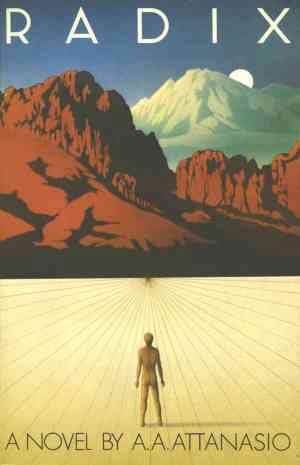
And so, for October, albeit somewhat late, we come to Radix, AA Attanasio’s debut novel. Which I’d expected to survive a reread. (The cover below is not the edition I own – a Corgi B-format paperback from 1983 – although mine does also feature a naked man.)


I don’t think anyone would ever describe Radix as a “classic”, although it was shortlisted for the Nebula Award in 1981. Certainly it impressed me enough on my first reading that I subsequently followed Attanasio’s career, buying and reading each of his novels as they hit paperback. And during the 1980s and 1990s, Attanasio churned out a succession of well-regarded and reasonably successful genre novels. Not all were sf – for example, Wyvern was an historical novel, the Arthor series was fantasy, and The Moon’s Wife was an urban fantasy. At the start of the new century, however, Attanasio seemed to drop from sight. He returned only recently, with a pair of YA fantasies.

But, Radix. In this book, the Earth has moved into the path of a Line of energy being broadcast from the centre of the galaxy. This energy was generated in another dimension, and has had catastrophic effects on the planet. In the thirty-fourth century, when the novel opens, Earth is very different. There is a map at the front of Radix, which depicts an area of North America (with north and south swapped), but which bears little or no resemblance to any territory from a real-world atlas. This is where the story takes place.

Sumner Kagan is a fat, lazy, teenaged slob. He’s also a serial killer – he puts together complicated plans in which he lures gang members who have humiliated him into traps, and then he kills them. Kagan is also the father of Corby, a voor-human hybrid who is a sort of voor messiah. The voors are an alien race with psionic powers, who have travelled to the Earth along the Line and taken human form. Kagan is arrested, beaten to near-death by the police, and sent to a penal camp in the jungle. The commandant there makes Kagan his personal project, giving him tasks which improve his physique, fitness, strength and agility, with the aim of selling him later as a slave. But Kagan escapes, and ends up joining the special forces. He trains in a swamp, goes on several missions, suffers burn-out, and ends up living with a tribe of mutants on the edge of a desert…

There’s a lot to get through in Radix. Especially since the above – the history of Sumner Kagan – is only the build-up to what the novel is really about. Which is: when the Earth moved into the Line in the early twenty-second century, a “godmind” called the Delph took up residence in the mind of an Israeli pilot, Jac Halevy-Cohen. The Delph has more or less dominated the Earth ever since. Sumner Kagan is the Delph’s “eth”, “a fear-reflection that haunted him in many human forms”, as the glossary has it. Yes, Radix has a glossary.

For three-quarters of Radix, Kagan is honed and tempered for a final confrontation – but not with the Delph, with the AI it created to manage its affairs, Rubeus, and which has turned megalomaniacal. Along the way there’s lots of weird New Age-y stuff, little of which seems to add much to the story. In fact, Radix is very much a book of two halves – there’s the straightforward sf story recounting Kagan’s adventures; and there’s the underlying battle between Rubeus and the eth, fought with the assistance of the voors (especially Corby, who is disembodied and takes up residence in Kagan’s mind). It makes for an odd reading experience…

… and one, sadly, that these days I have less patience for than I once had. Radix reads like a bizarre cross between Dune and Samuel R Delany, and I admire both. But in Radix, Attanasio was either trying too hard, or not fully in command of his prose style, because his attempts at Delany-esque language are not always successful – “He was a shark slendering…”, “The presence of people was palpable as blood”, “a dreamworld had intrigued into reality”

Having said that, Attansio’s world-building in the novel is very good. He has created an interesting backdrop for his story, and he uses it well. It is in that respect, and in the character journey undertaken by Kagan, that Radix most resembles Dune – well, that and its appendices, comprising a timeline, character profiles and a glossary.

Incidentally, Radix is actually the first book in a thematic “tetrad”. The sequels are: In Other Worlds, Arc of the Dream and The Last Legends of Earth.

I’ve read Radix several times during the past twenty-six years, but I suspect it’s one of those books I remember as being better than it actually is. It starts off well enough, and some of the set-pieces are very good, but when the New Age-y stuff starts to overwhelm the plot then my eyes start to glaze and find myself looking around for something else to read. I’ll keep the book on my book-shelves, but I’ll not be rereading it again in the foreseeable future.


5 Comments

Readings & Watchings

Somewhat later than usual, but here’s the usual roundup of readings and watchings…

Books
The Chimpanzee Complex 1: Paradox, Richard Marazano & Jean-Michel Ponzio (2009), is another European graphic novel published in English by Cinebook. The opening is a killer. It’s 2035, and an unidentified spacecraft is detected heading for a crash-landing in the Pacific Ocean. The US Navy sends a flotilla to intercept it. The spacecraft proves to be… the Apollo 11 capsule, containing Neil Armstrong and Buzz Aldrin. So who were the three astronauts who returned to Earth in 1969? Unfortunately, Paradox can’t quite keep the sheer effrontery of that opening premise going. The military determine that the reappearance of Armstrong and Aldrin justifies a trip to the Moon, which subsequently takes place. Clues then point to an unknown Soviet mission to Mars contemporary with Apollo. So off they head to the Red Planet. Paradox is done well, with excellent artwork, and designs that have clearly been thought about. The sequels, The Sons of Ares and Civilisation, are already on my wants list.

Orbital 2: Ruptures, Serge Pellé & Sylvain Runberg (2007), is the sequel to Orbital 1: Scars, and continues immediately from it. The secret of the world of Senestam proves to be less than inventive than I’d expected, but Pellé and Runberg still tell a well-rounded story with excellent artwork. For a sf graphic novel, it’s surprisingly political – which is no bad thing. Apparently, two more books have been, or are due to be, published in France: Nomads and Ravages. Hopefully, they’ll be published in English by Cinebooks soon. Interestingly, according to an interview here, Runberg claims Iain M Banks’s Culture novels as an inspiration for Orbital.

T is for Trespass, Sue Grafton (2008), is the latest in the continuing alphabetical adventures of Kinsey Millhone, a private investigator in an invented city north of Los Angeles. The next, U is for Undertow, is due to be published in January 2010. Grafton has my respect for keeping this series going for so long, and managing to keep the characters and world consistent throughout. Since the books began in the early 1980s, and the internal chronology doesn’t map onto the real world, T is for Trespass takes place in late 1987. In this one, an elderly neighbour takes a tumble and is too injured to look after himself, so his niece hires a nurse to look after him. But the nurse is a sociopath who makes a living from selling off her charges’ assets, emptying their bank accounts, and then murdering them.

The Translator, Leila Aboulela (1999), is the first novel by a Sudanese writer, who was resident in Aberdeen but apparently now lives in Abu Dhabi. The title character is Sammar, a Sudanese widow living in Aberdeen. She translates work for the university and becomes involved with a Scottish Islamic expert, Rae Isles. I’m in two minds about this one – Sammar frequently describes things as though she is seeing them “through fog and mist”, and that’s what reading this book felt like. I like lyrical prose, but this often felt over-done.

An April Shroud, Reginald Hill (1975), is an early Dalziel & Pascoe novel, and not an especially memorable one. Pascoe gets married and disappears off into the wilds of Lincolnshire for his honeymoon. Which leaves Dalziel on his own in the county. He falls in with a dysfunctional family who live in a manor house, and when people start turning up dead he realises he’s become much too close to the family. I’ve read a fair number of the books in this series, but reading early books in series with which you’re familiar isn’t always a good idea.

The Brains of Earth/The Many Worlds of Magnus Ridolph, Jack Vance (1966), is an Ace double with a pair of early Vances back-to-back. The Brains of Earth is, well, just plain silly. An alien race have decimated their world in a battle to rid themselves of invisible mind-parasites, and now they have determined to clean Earth of the selfsame parasites. so they recruit an Earthman to do it for them. Except it proves to be more complicated that that. Despite nearly inventing dark matter, this isn’t Vance’s best by a long way. The Many Worlds of Magnus Ridolph, a collection of shorts from the late 1940s and early 1950s, is better. Ridolph is part Cugel and part Kirth Gersen, and the stories read like early trying-out of plots for both of them. Both books are for completists only.

Of Worlds Beyond, edited by Lloyd Arthur Eshbach (1947), is a 1964 reprint of a compilation of essays on writing science fiction by well-known writers from the early days of the genre – Robert Heinlein, Jack Williamson, EE Doc Smith, L Sprague du Camp, AE van Vogt, John W Campbell… Not, you would have thought, the best people from whom to take writing advice, given that none of them were especially good writers. But then writing per se was not seen as important in sf in those days – or even nowadays, according to some. The interesting thing about these essays is the fixity of opinion of the writers. There’s a right way and a wrong way – and their way is the right way. The fact that each author’s way is different, and each has been successful, doesn’t to them mean their way is not the one true way to writing publishable science fiction. An historical curiosity.

Radix, AA Attanasio (1981), was October’s reading challenge novel, and I’ll be posting a piece here on it shortly.

Islands, John Fowles and Fay Godwin (1978), is a coffee-table book about the Scillies, with text by Fowles and black and white photos by Godwin. Fowles’ prose is good, but the book seems neither one thing nor the other – it’s not big enough or glossy enough to be a proper coffee-table book; it’s not informative enough to be a guidebook (nor are the photos – admittedly very nice – useful in that regard); and it’s not personal enough (cf Lawrence Durrell’s The Greek Islands) to be a book by and about Fowles…

My Death, Lisa Tuttle (2004), is a PS Publishing novella I bought in their recent sale. The narrator is an American writer resident in Scotland, as Tuttle is an American writer resident in Scotland. Her career has suffered after the recent death of her husband, and in an effort to find a project to pull her life back together, she decides to write a biography of early feminist novelist Helen Ralston. Who was also an American writer resident in Scotland. My Death ends twice – although one feels somewhat rushed – and each end gives an entirely different complexion to the story. Recommended

The Clock King and the Queen of the Hourglass, Vera Nazarian (2005), is another PS Publishing novella I bought in their sale. I thought this looked interesting when it was published, but never got around to buying it until recently. And… it’s not as interesting as I’d expected. In the distant future, Earth’s last civilisation creates a young woman to a much older genetic template. She is intended to mate with the Clock King, a man who is held in stasis for generations, and then brought for a short period… to mate with the young woman. The prose has its moments, but feels stilted in places; the world-building is a bit perfunctory; and the story is not entirely original. Overall, it felt like a valiant attempt to do something that someone else once did, only memories of the original one insisted it was better…

Age of Bronze: Betrayal Vol 3 Part 1, Eric Shanower (2008), is the first half of the third part of Shanower’s graphic novel retelling of the Trojan War. As comics go, this is a busy one, but there’s a lot to get through. Shanower is trying to be as authentic as possible, and each book includes an extensive bibliography. If it’s a bit soap-opera-ish in places, that’s perhaps from a need to humanise a story originally told using an entirely different story-telling paradigm.

Journey into Space, Toby Litt (2008). Lately a number of literary authors have written sf novels – more so than in earlier years, anyway. Some were happy to say their books were science fiction; others did all they could to distance their novels from the genre. Litt is one of the former – the Penguin web site describes Journey into Space as “science fiction at its most classic and beguiling: timeless, vast in scope and daring in execution”. Not that anyone would believe if he said it wasn’t sf: it’s set aboard a generation spaceship, which is very much a genre staple. Having said that, it’s clear Litt isn’t actually a sf writer. In parts, Journey into Space felt more like a writing exercise than an exploration of its ideas. And literary authors are often too diffident when deploying sf tropes, and that lack of confidence gives their novels a peculiar apologetic air, which often reads as old-fashioned genre-wise. I like literary fiction and I like sf, and I’ve been mostly dissatisfied by literary authors’ attempts at science fiction. Isn’t it about time a sf writer upped their game and wrote a proper literary sf novel?

Films
Marooned, dir. John Sturges (1969), features a subject I find appealing but which is typically done badly by Hollywood – the Space Race. Marooned is based on a novel by Martin Caidin, who wrote a number of books on space and space exploration, both fiction and non-fiction. In Marooned, the crew of an Apollo spacecraft are stuck in orbit after their retro-rockets fail. They’ve just spent the last five months in Skylab-like space station, so they’re not at their best. And their oxygen is running out. Cue rescue mission – sticking an experimental lifting body on top of a Titan launcher, and launching in the eye of a hurricane. The film-makers tried hard, especially at depicting zero gravity; but a lot looked wrong. The spacesuits, for example, looked mostly authentic, but had these cheap-looking red plastic helmets which looked silly. And the stock footage used for the launches mixed and matched Saturn V, Saturn IB, and Titan. Oh, and for men who had the “right stuff”, the marooned astronauts fell apart surprisingly quickly…

Annie Hall, dir. Woody Allen (1977) – I’m not an Allen fan. In fact, I dislike his films. But this is supposed to be one of his best, so I thought I’d give it a go. And… I found it mostly annoying. The only bit that amused me was when Allen dragged Marshall McLuhan into the frame from off-screen to prove that someone was misquoting him.

Blindness, dir.Fernando Mireilles (2008), was something of a surprise. I expected to enjoy this – a serious adaptation of a high concept literary/sf novel by a Portuguese writer. But I absolutely hated it. The plot is simple – people start to go blind, and because of fears of infection they are locked up in quarantine compounds. And in those compounds, society quickly breaks down. The speed with which the blind people turn into animals irritated me, their passivity in the face of threats of violence, their inability to rise above their situation… It probably works well in a novel, but in a film it makes for an excruciatingly dull and annoying experience.

Stranded, dir. María Lidón (2001), is an independent Spanish-made film about a group of astronauts who are, well, stranded on Mars. Plot-wise, it’s similar to Brian de Palma’s 2000 film Mission To Mars – astronauts are marooned on the Red Planet, but are saved by mysterious aliens. But in Stranded it’s the artefacts left by long-dead aliens which save the day. Considering that it was made for a twentieth of the cost of de Palma’s film, Stranded isn’t bad. It looks a bit cheap in places, and the characters are straight out of Central Casting, but it’s eminently watchable.

A Thousand Months, dir. Faouzi Bensaïdi (2003), is a Moroccan film and is one of those films with several intersecting stories. Some parts of it were amusing, such as the man who controlled the local television transmitter and would turn it off during the middle of a popular soap opera because he enjoyed being popular as the only person who knew what happened in it. Overall, a slow film but worth persevering.

Role Models, dir. David Wain (2008), I didn’t expect to like as much as I did. A pair of typical Hollywood dickheads have to mentor a kid each after being sentenced to fifty days of community service. It’s all typically Hollywood affirming life-lessons rubbish, but it’s also very amusing. Jayne Lynch, the founder of the mentoring programme the two join, speaks an inspired line in gibberish. And having one of the kids into live role-playing was different.

The Keeper, dir. Keoni Waxman (2009), I reviewed for videovista.net – see here.

Fragments, dir. Rowan Woods (2008), I also reviewed for videovista.net – see here.

The Gold Rush, dir. Charlie Chaplin (1925), is one of the American Film Institute’s 100 Movies – 10th Anniversary Edition, but I can’t say I enjoyed it all that much. Chaplin plays a prospector in the Alaska Gold Rush. There are some funny set pieces, but most of the film is embarrassingly mawkish. The version I watched was narrated by Chaplin, and it’s a bit weird watching something on the screen while a voice tells you what you’re seeing.

The Baader-Meinhof Complex, dir. Uli Edel (2008), tells the story of the Red Army Faction, a German terrorist group responsible for a number of murders and attacks during the 1970s. The film never quite engages with terrorists’ rhetoric, perhaps in an attempt to make them more sympathetic (which they’d need to be to carry the film). Their path to violence is clearly shown – while the film shows their response is extreme, it doesn’t present many alternatives. The groups mistreatment by the authorities after their arrest is also shown in detail. The Baader-Meinhof Complex does feel a little too slanted towards its subjects, which can make for uncomfortable viewing; but it’s still worth seeing.

Dragon, dir. Leigh Scott (2006), is a low-budget sword and sorcery film, and it shows. The acting was terrible, the CGI was poor, and the dialogue was cringe-inducing. One actor couldn’t decide if he had an American accent or a Northern Irish accent. I can remember little of the plot – lots of badly-staged sword-fights in some woods, that’s about all. Avoid.

Bridge To Terabithia, dir. Gábor Csupó (2007). Hollywood never lets a good idea go to waste. Children’s fantasies are doing well at the box office, so they dig up as many as they can find and adapt them – Narnia, The Golden Compass, Inkheart, City Of Ember, The Dark Is Rising… and now Bridge To Terabithia. Except this one is a bit different. Two lonely kids make friends and invent a fantasy land in a wood near where they live. So it’s not explicitly fantasy – either secondary world, or hidden mythology. I quite enjoyed it.

Planet Of The Apes, Beneath The Planet Of The Apes, Escape From The Planet Of The Apes, Conquest Of The Planet Of The Apes and Battle For The Planet Of The Apes. I bought the boxed set containing these films cheap on eBay since I fancied watching them. The first two I knew I’d seen before, but some of the others I was less certain. I remember seeing one back in the 1970s when we lived in Oman. The cinema was at the army barracks in Ruwais – the side of one of the buildings was the screen, and auditorium was an area surrounded by a barasti fence and containing folding chairs. In the event, it turned out I’d seen the first four before; but I don’t think I missed anything by never having seen the fifth. The quality plummets as the series continues. By Escape From The Planet Of The Apes, much of the plot is carried by characters explaining it to each other, and both Conquest Of The Planet Of The Apes and Battle For The Planet Of The Apes start with extended recaps of the entire series from the beginning. The original has its moments, and it has one of sf cinema’s great endings; but they should have stopped there.

Red Planet, dir. Antony Hoffman (2000), is the second of two Mars films from that year – the other is Brian de Palma’s Mission To Mars. And it’s hard to say which of the two is the best. De Palma’s is more realistic… up until the third act, where mysterious aliens show up and save the day. Red Planet is less realistic upfront – the Mars 1 spacecraft is too sf-nal to be plausible – but its plot and ending doesn’t involve an alien super-race. Unfortunately, it suffers from having an mostly unlikeable cast, and you don’t really care if they all die on Mars.

Leave a comment

That sound you hear is my ears ringing

It’s been a musical week for me. On Tuesday 20 October, I saw Tinariwen in concert. They’re a Tuareg band from Mali. I’ve liked their music since seeing a documentary on the Festival in the Desert seven or eight years ago. They proved much better live than I expected. I bought their new album, Imidiwan: Companions, at the gig, and it’s better than the previous one. Here’s some Tinariwen:

And then I spent Saturday 24 October in Leeds at the Damnation Festival. I’d thought about going to this the last couple of years, but the line-up never appealed. This year, it definitely did. I got to see three bands I like a great deal – Mithras, Anathema and Akercocke. Mithras played with their new line-up, with Sam Bean, ex-The Berzerker, replacing Rayner Coss on bass and vocals. Anathema performed a somewhat over-the-top “best of” set, but it was bloody good. Akercocke weren’t wearing suits. Also there were Rotting Christ, whose last album Theogonia is good. The headline act was Life of Agony, but I wasn’t too impressed. But still, a good festival – much better than I’d expected.


2 Comments

People of Fact in Fiction

There’s an interesting article on the Aqueduct Press blog regarding the use of real – dead or alive, historical or celebrity – people in fiction. This has apparently been kicked off by AS Byatt’s comments on Man Booker Prize winner, Wolf Hall by Hilary Mantel. Byatt has said in an interview that it is “appropriation of others’ lives and privacy”, and “I really don’t like the idea of ‘basing’ a character on someone, and these days I don’t like the idea of going into the mind of the real unknown dead.”

As a writer of science fiction, how relevant is this to me? After all, sf is set in the future, right? In space. With aliens. It’s not real.

Well, yes it is.

Science fiction is as real as any other genre. Sf is not just spaceships and robots. Sf is not divorced from, or irrelevant to, the real world.

I don’t have a problem with fiction writers using real people in their stories. I’ve done it myself. I’ve even had it done to me – I’ve been horribly dismembered in at least two stories by writer Jim Steel.

But I do have a problem with writers who confuse their fact with fiction.

On my Space Books blog, I’ve reviewed a number of books about the space race. And some of them have been written in a style which dramatises their subject, makes it more immediate, a more readable book and not a dry academic tome. It is presented almost as if it were fiction. When the non-fiction author describes what a person is thinking or feeling, with no citation or quote to show that this is what the person has said they thought or felt, then the author is writing fiction. But since their book is presented as fact, they’re misleading the reader. I think that is wrong.

But for a fiction writer to use fact? It doesn’t even require the “ironic distance” discussed in the Aqueduct Press piece. The text itself is fiction, and is pretty much always labelled as such. There may be other clues in the story – especially if it is alternate history.

Take, for example, my own flash story ‘The Old Man of the Sea of Dreams’ (available here). The story has three characters: Stuart A Roosa, Gerald P Carr and Paul J Weitz. It mentions two other people by name: Neil Armstrong and Iven Kincheloe. All five are real people. Three of them are still alive.

The story describes Apollo 20, a mission to the Moon which never took place. So it’s alternate history. This might not, of course, be obvious to everyone. The US went to the Moon eight times, and landed twelve men on its surface. That it happened is known to everyone. The details of each mission may not be. So a lunar landing with Stuart Roosa and Gerald Carr could conceivably be misread as fact, if a reader didn’t know the names of the twelve men who walked on the Moon.

Even the line “Apollo 20, the first mission to visit the dark side of the Moon” only really signals that ‘The Old Man of the Sea of Dreams’ is alternate history to someone who knows that the last Apollo mission was Apollo 17 (Apollo 18 was actually the Apollo-Soyuz Test Project), and that no Apollo mission visited the dark side of the Moon.

But ‘The Old Man of the Sea of Dreams’ is clearly labelled as “fiction”.

I could have invented astronauts for the story – Commander Stu Bobbington and Lunar Module Pilot Gerry Freddison. I didn’t have to use real ones. I could have crewed Apollo 20 with entirely made-up people.

But.

I used real people because I find it interesting when fiction intersects the real world. ‘The Old Man of the Sea of Dreams’ is intended to read as feasible – its plausibility rests on its feasibility. By referencing real people, I bolstered its feasibility. Iven Kincheloe really did die in 1958. He was a test pilot, and had been selected in 1957 – along with Neil Armstrong – for the USAF Man in Space Soonest programme. Conspiracy theories have been built on less.

I didn’t make a serious attempt to capture the characters of Roosa and the others – it’s a 1,000 word story, after all. Some might consider that an unfair appropriation of their names. In fact, I’d originally written the piece with Jack R Lousma as the LMP – he was the most likely candidate for Apollo 20. But I had to read out the story and Roosa and Lousma sounded too similar, so I replaced Lousma with Carr, who was actually the planned LMP for Apollo 19.

When I made the change, I didn’t rewrite the dialogue. As I said, the story is not an attempt to present real versions of the people. I’ve no idea if they talked the way I portrayed them. I don’t especially care. It’s their career baggage which interested me, and which added an additional dimension to my short story.

‘The Old Man of the Sea of Dreams’ is not the first time I’ve used real people in a piece of fiction. Another features World War I soldier-poet Wilfred Owen (it will be published next year). I’m sure there’ll be other stories – some have to be told from the viewpoint of a real person; some real people need to have stories told about them. I see no reason why a writer should limit themselves by only using invented characters.

Of course, that doesn’t mean you shouldn’t research – the character needs to resemble the real person, or the reader won’t recognise them for who they are. You can’t just appropriate their names – Roosa’s career mapped perfectly onto the plot of ‘The Old Man of the Sea of Dreams; I didn’t simply pick a random member of the astronaut corps. And besides, the final line simply doesn’t work if I’d used a made-up name instead of Neil Armstrong. My Wilfred Owen story references his poetry and writings, and the plot hinges on the fact that he did not survive World War I.

There should be no limits on fiction. Start telling writers what they can and cannot do, and the readers will suffer as well. Imagination works best when it is unfettered.


14 Comments

Advance warning: my reading challenge for 2010

Since starting this blog in late 2006, each year I’ve run a reading challenge – read one book per month to a theme, and blog the results. In 2007, it was my favourite sf novels. In 2008, it was twelve classic authors I’d not read before. This year, it’s a dozen sf novels I remember fondly from my teen years.

I’ve been thinking about what I should read next year.

And I had a jolly good idea. I’m going to read a fantasy novel each month. Specifically, I’m going to read the first novel in a fantasy series. And then I’m going to write about it, about what I thought to the book, about whether or not the book is good enough to make me want continue to read the series. However…

I don’t know which books to read. So I’m looking for suggestions. I’d like people to recommend the titles of epic fantasy novels, the first books in series. There are a few caveats – well, one caveat: there must be at least three books in the series currently available. I don’t want to read a book, only to discover I’ve got wait a few years until I can read the next one.

When I say “series”, I’m also including trilogies. Anything more than two, in other words. Er, that’s another caveat.

And before you start banging out suggestions, the following series are out because I’ve already read, or am reading, them: The Lord of the Rings, Robert Jordan’s Wheel of Time, Steven Erikson’s Malazan Books of the Fallen, Paul Park’s A Princess of Roumania, Samuel R Delany’s Nevèrÿon, anything by Michael Moorcock, George RR Martin’s A Song of Ice and Fire, Ricardo Pinto’s Stone Dance of the Chameleon, Mike Cobley’s Shadowkings, Roger Zelazny’s Amber Chronicles, Ursula LeGuin’s Earthsea , Stephen Donaldson’s Thomas Covenant or Mordant’s Need, M John Harrison’s Viriconium

So, to summarise:

  • epic fantasy
  • three books or more in the series
  • three books or more of the series published
  • not one of the above-named series

All suggestions welcomed – just leave me a comment. You’ve got nearly three months to persuade me which titles to read.


4 Comments

An Unreliable Review: Transition, by Iain Banks

“Apparently I am what is known as an Unreliable Narrator, though of course if you believe everything you’re told you deserve whatever you get.”

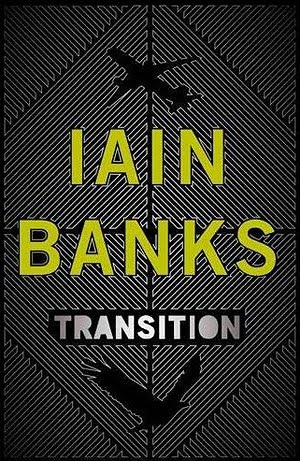
So opens Iain Banks’ Transition. It is a science fiction novel, set among and across many alternate worlds; but it has been published in the UK without the defining “M”. Transition is ostensibly about the Concern, an organisation from an alternate Earth which operates an undefined number of agents who have the ability to “transition”, to travel between alternate realities. In order to further an agenda which never quite becomes clear. Chief among these operatives is Madame d’Ortolan, who heads the Concern’s Central Council and so runs the organisation. Set against her is the rebel Mrs Mulverhill. And caught between the two is Concern agent and assassin Temudjin Oh.

The novel comprises a number of different narratives, none of which progress in chronological order. One featuring “Patient 8262” does very little until the epilogue, which gives his identity without actually explaining it. Another narrative is that of a Yuppie barrow-boy-turned-trader, who is peripherally involved. And there’s another, which appears only a handful of times, about an American film producer trying to get a project green-lit.

There is little that is actually unreliable about the story of Transition. Perhaps there’s a vague possibility that it is all confabulation, but if there are clues suggesting as much I missed them. In fact, other than the bald “I am an Unreliable Narrator” which opens the book, there’s very little in the way of narrative games in Transition. Structurally, yes – the plot is a collage of related vignettes and episodes from life histories. But that’s nothing new for Banks – his Use of Weapons is justifiably known for its innovative structure. But the structure of Transition does beg the question: is it greater than the sum of its parts?

And… I don’t think so. Banks has never been a great prose stylist – good, but not great. But his fiction has always been characterised by great imagination. Even as Iain Banks, the mainstream writer, there has been bleed-through from his science fiction persona, Iain M Banks. And while Transition is certainly not a M book in feel or presentation, it is coloured by his sf far more than any of his other mainstream novels. It’s not a M book because it is low-residue, low-profile science fiction. It’s not the in-your-face space operatics of the Culture novels.

The central conceit, the travelling between alternate Earths, is certainly science fiction; but it is never explained or rationalised. There’s a drug, septum, and a certain small percentage of the population has a talent… There’s a vague nod in the direction of the Many Worlds Hypothesis, but no real attempt at depicting the phenomenon realistically. If anything, it’s simply a device to allow Banks to present different worlds – which are constructed with much of the invention and excess of his science fiction. Sometimes too much, in fact…

The Culture at least provides Banks with a framework for his invention. And he needs it, otherwise he has a tendency to over-colour his worlds. The chief villain of The Algebraist, the Archimandrite Luseferous, is such a pantomime figure, all he is missing are twirling moustaches. And the same is true of Madame d’Ortolan in Transition. She’s not real. Neither, for that matter, is Mrs Mulverhill. They’re comic-book characters – in fact, you can almost imagine them in some brightly-coloured hyper-real graphic novel. Adrian, the 1980s trader, is more real, but even then he’s something of a cliché. And, it has to be said, yuppie excesses are an old target. Today it is the bankers, especially the incompetent CEOs who get to walk away from the wreckage with millions.

In fact, there is a sense throughout Transition of old battles being dragged back into the light. Banks has never been one to shy away from a fight, and we get the usual well-worded attacks – on libertarianism, religion, the rich, military adventurism, the ends justifying the means, torture…

The religion one is especially interesting. There have been many mentions of the novel’s assertion that Christianity is a perfect religion for terrorism.Which may be true considering its creed. But terrorism is a secular activity, and Islam, unlike Christianity, is not simply a creed and a moral framework. It is a political and judicial system, it is more tightly-interwoven into the lives of its followers than Christianity. And, it should be pointed out, all studies on suicide bombers and terrorists to date have demonstrated that they are driven more by nationalistic and political motives than they are religious.

In total, it’s hard to know exactly what to make of Transition. The total doesn’t quite add up. The Concern’s secret agenda – which is the hidden engine of the plot – is not properly geared to the story. The low-profile sf which permeates the novel gets inexplicably thrown away at the climax and replaced with, well, magic. If the villains are comic-book characters, then Oh only wins through at the end because he turns into a superhero…

On reflection, seen in that light – Transition is a hyper-real graphic novel in prose – then perhaps things begin to make sense. The need to atone for the 1980s. The brightly-coloured and highly-detailed backgrounds. The ungrounded inventiveness. The larger-than-sf characters. The way in which each vignette or episode must be treated as complete in and of itself, and yet must also be taken as a part of the greater plot. Transition feels as though Banks has adopted comic-book story-telling techniques to a prose novel. And disguised it as science fiction.

Has Banks has created a novel which can be read in three modes – mainstream, science fiction, and comic-book? Possibly. Because reading Transition solely in one of those modes renders it an unsatisfactory read. It never quite convinces as science fiction; it becomes increasingly too fantastic to work as mainstream; and its narrative is perhaps too complex to succeed as a comic-book. But it certainly makes for a (mostly) interesting read.

Someone once said of Anthony Burgess that he was a great novelist who never wrote a great novel. I’m beginning to wonder if we should say the same of Iain Banks…


Leave a comment

Waking the Dead

The eighth series of Waking the Dead finished a couple of weeks ago. And it’s difficult to know what to make of it. One character died, one resigned but then seemed to stay, one transferred out of the team, and one handed over to a replacement while she went into hospital… but her replacement cocked things up and so might not be taking over after all.

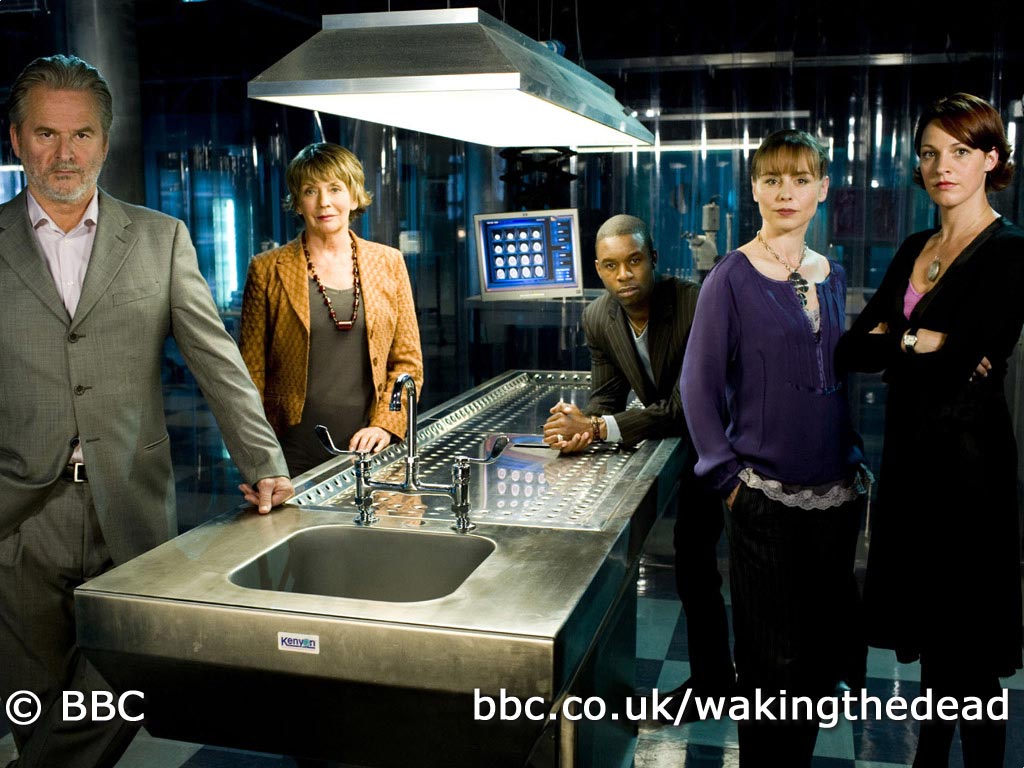
Waking the Dead, for those of you who have never heard of it, or don’t watch it, is a BBC drama about a police team which investigates old unsolved case, the Metropolitan Police’s Cold Case Unit. The programme has been broadcast annually since 2001, and each series usually takes the form of four to six two-hour episodes, each one split over two nights (typically Sunday and Monday). At present, the Cold Case Unit comprises Detective Superintendent Peter Boyd (Trevor Eve), psychological profiler Dr Grace Foley (Sue Johnston), Detective Inspector Spencer Jordan (Will Johnson), Detective Sergeant Stella Goodman (Félicité du Jeu), and forensic pathologist Dr Eve Lockhart (Tara FitzGerald).

I don’t normally write about television programmes on this blog – well, not unless they’re science fiction… But Waking the Dead is one of my favourite series. And that’s despite not being much of a fan of police procedurals. Waking the Dead, however, is not only classy drama, with high production values, it’s also very watchable. And – it is probably this which appeals to me the most – each series it does something interesting… as a police procedural and as a television drama. Past series, for example, have been themed, with each story an interpretation of the theme. It has run story-arcs in the background over multiple series. And in series eight, it put the entire cast at risk, and then failed to resolve their fates.

In fact, if there is a theme to series eight, it’s that: lack of resolution. Not one of the four stories was properly resolved. I couldn’t actually decide if this was deliberate, a choice explored by the writers, or simply evidence of poor writing. Given the programme’s history, I’m inclined to the former.

But it’s such an odd choice of theme. And its implementation seemed to undercut the plausibility of the programme.

In the first two-parter, ‘Magdalene 26’, a body found hanging in the victim’s house, which has been dead for several days, proves crucial to the investigation. Except… it is never actually identified. Initially, it’s believed to be the victim’s husband, but he later turns up alive. So who was it?

So: not resolved. One or two loose ends I can accept. Not everything needs to be tied up neatly.

But the ending of the story? The murder eventually proves to be the work of a pair of Turkish gangsters, after the victim’s millions. Boyd, claiming to be a shady financier, arranges to meet the Turks in a secluded spot. He has a pair of hidden snipers with him. Boyd pulls out his warrant card to show the Turks. One goes for his gun. Two shots ring out. The credits roll.

Hang on a minute.

They haven’t solved the case. Justice hasn’t been served. The Cold Case Unit shot the villains. That doesn’t happen in the UK.Certainly not without a great deal more provocation.

Was this, perhaps, an attempt to make the series more US-friendly? Or was it a commentary on US-style police procedurals?

The second two-parter, ‘End of the Night’, made it no clearer. Twelve years earlier, a teenage girl was raped and her younger brother murdered by a pair of men the authorities have failed to identify. The girl, now a young woman, attempts suicide, and this inspires Boyd to re-open the investigation. Eventually, the Cold Case Unit identify both rapists. The young woman learns their names. She kidnaps the man who murdered her brother and takes him to the scene of the crime, a high stone bridge over a narrow brook. She murders the killer, and then tries to kill herself by jumping off the bridge. Boyd stops her before she can. The credits roll.

Okay. A more plausible ending, certainly. But the only resolution is that of the victim’s character arc. And, like ‘Magdalene 26′, it’s a more abrupt ending than you’d expect from a television drama.

Like the previous two, the third story, Substitute’, started well enough. Eve enters into a relationship with a man, but doubts his identity. So she secretly takes a DNA swab, and checks up on him. It seems his DNA was found at the scene of a ten-year-old murder – in fact, his semen was on the victim’s body. The means by which Eve took the DNA means the evidence is tainted. But Boyd insists on re-opening the investigation into the murder. As the story progresses, the more it seems the main suspect, Eve’s lover, is not guilty. Or is he? Not that it really matters. During the investigation, the team have identified the villain of the piece. At the end of the episode, Eve has taken her lover to a remote boat-house in order to determine whether he is truly innocence. The rest of the team turn up. As does the villain and his henchman. Eve gets her answer. Boyd and the team drive away, leaving the suspect to be killed by the villain. A shot rings out. The credits roll.

Er.. what? The Cold Case Unit left their suspect to be murdered by a criminal? What happened to justice? The Cold Case Unit are members of the Metropolitan Police, aren’t they? They’ve not only allowed a murder to take place, and so condoned it, but they’ve also failed to charge the villain – against whom they have plenty of evidence.

I did wonder if this was the last series of Waking the Dead, and they were wrapping everything up. Stella had been shot in the first two-parter – and then abruptly died off-stage in hospital from a thrombosis. Spencer had jumped ship to CID, and Eve had handed in her resignation. Boyd was complicit in a murder, and clearly going off the deep end.

The Cold Case Unit was finished.

But no. The final two-parter, ‘Endgame’, seemed to be a return to form. It brought back an old villain, the psychopathic prison guard Linda Cummings from series seven, and also referenced a couple of episodes from previous series. Spencer, despite his move, was dragged back in to help. Stella’s replacement Kat was clearly now a full member of the team. Grace, however, had been admitted into hospital for treatment for cancer, and a replacement had joined the unit. Played by Gina McKee. Casting her led me to suspect she would be staying, that Grace was going to be written out. But she proved to be partly complicit in Linda Cummings’ scheme. So she’s unlikely to stay. And we still don’t know what’s going to happen to Grace.

The ending of the story was also less abrupt than those of the preceding two-parters. Cummings kidnaps Grace from her hospital bed, and threatens to kill her unless Boyd does as she says. There’s a last-minute reprieve and Grace is rescued unharmed. It is, on reflection, an almost traditional ending to these sort of stories. It is also completely at odds with the endings of other series eight stories. It’s as if the writers bent the concept of a “police procedural story ending” completely out of shape… only to let it snap back in the final two-parter. Which certainly qualifies as “interesting”.

Perhaps they had no choice – they had to leave the series as they found it. This is not unusual, given that most television programmes are made on a series by series, or season by season, basis. Some, such as Life on Mars and Ashes to Ashes (also programmes I like a great deal), have strictly-defined runs – although I believe this is a lot more common on British television than it is on US television. But still most expect to return the following year. And so they have to leave cast and story-arc in a state which does not preclude continuation.

But this doesn’t explain the events of the first three two-parters of series eight. Certainly one of the cast has gone – killed in the line of duty. Spencer is unlikely to return given his transfer. Eve resigned, but then stayed on. But perhaps she’s leaving too. Grace’s fate is unknown.

And yet, if no series nine was planned, I would have expected a more final ending to ‘Endgame’ – I suspect the title is not a hint. The more I think about it, the more I’m inclined to believe that in this series the writers were exploring the use of dramatic unconventional endings. While this may have had unintended consequences – plausibility took something of a bashing, and the various endings seemed more characterised by a lack of resolution than anything else – it does strike me as a valid, and interesting, artistic choice.

I can only wonder what next year’s theme will be. Because I certainly hope there will be a series nine.