It Doesn't Have To Be Right…

… it just has to sound plausible


Leave a comment

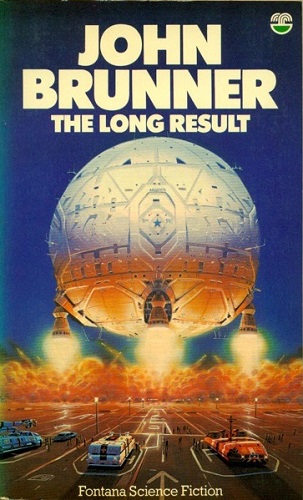
The Long Result, John Brunner

I must have last read The Long Result (1965, UK) almost 45 years ago – I’ve had a copy on my bookshelves since at least the 1980s, and it’s a paperback published in 1979 and bought new, so probably 1980 or 1981. And pretty much nothing from the book had stayed with me over the decades. Except…

Many, many years ago in my late teens I remember creating an alien race for something – a story, a role-playing game adventure; I don’t remember. I later used a variation on that alien race for a spoof space opera story written in the late 1980s and published in the very early 1990s. It wasn’t a very good story, and has thankfully vanished into obscurity. The alien – if I ever named the race, I no longer recall the name – was slightly larger than a human, with four arms, blue skin, and a vaguely equine head.

So I was a little surprised on this reread of The Long Result to discover the book was the inspiration for the alien race. In Brunner’s novel, they are the Regulans, and are pretty much indestructible. Only one appears in the book (at least until the epilogue, when a ship-full makes an appearance).

The narrator, Roald Vincent, is an assistant chief at the Bureau of Cultural Relations, the organisation which keeps tabs on Earth’s two colonies, Starhome and Viridis, and the handful of alien races so far discovered. When Starhomers turn up at Earth with a delegation of newly-contact chlorine-breathing aliens, this kicks off a series of attacks by the Stars Are For Man, a previously crank human supremacist group now turned terrorist. Vincent is in the thick of it, and manages to figure out the conspiracy before too much damage is done.

He’s supposed to be extremely clever, destined for great things, but a bit of a coaster. The narrative makes much of his uncanny ability to uncover what’s going on, yet he continually misses the most suspicious person in the entire novel.

I’ve never been a fan of Brunner’s fiction. I’ve read some of his better known works – Stand on Zanzibar (1968, UK), The Jagged Orbit (1969, UK), The Squares of the City (1965, UK) – but I didn’t like them all that much. And he wrote a lot more bad novels than he wrote good ones. So if I didn’t like the good ones… He strikes me as a writer whose reach mostly exceeded his grasp. Or is it the other way round? The Long Result makes a couple of good points, but the world-building is thin (and dated, but in an interesting 1960s futurist aesthetic sort of way), and the plot relies too much on Vincent being almost psychic at times and not at all bright at others. It’s a slight book – it took me an afternoon to read the 186 page Penguin paperback – and I’m not in the least bit surprised I remembered none of it.

Except for the Regulans. Which was a bit weird.


Leave a comment

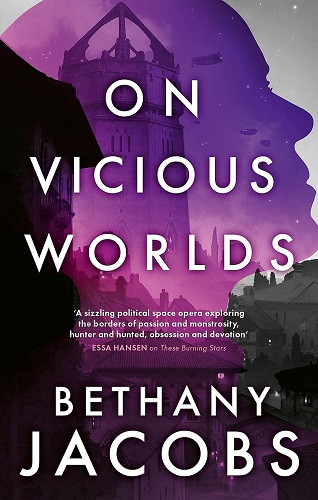
On Vicious Worlds, Bethany Jacobs

The second book of the Kindom trilogy, begun with These Burning Stars (2023, USA; see my review on Medium here). There’s a thing called Middle Book Syndrome which often affects trilogies. The first book does all the heavy-lifting for the world-building and kick-starts the plot; the final book is all about the climax for the story. So the middle one often consists of little more than re-arranging pieces on the board to set up the end-game. Jacobs makes a brave stab at avoiding the syndrome… and almost succeeds. 

Six and Chono are with the Jeveni in their ice-planet colony, reached by a stargate which has been locked against Kindom forces. But all is not well. Those non-Jeveni who were dragged along when the Jeveni escaped have been subject to, occasionally violent, prejudice. There has been a series of suspicious deaths – initially framed as suicides, but soon identified as murders – of Jeveni law enforcement officers. And there is another hacker, potentially better than Ironway, who’s been breaking important colony infrastructure. §

The identity of this hacker – called “the avatar”, but avatar of what? that’s not how you use the word – is one of the puzzles around which On Vicious Worlds (2024, USA) is structured, much as Six’s fate was in the first book. Unfortunately, it’s not as interesting; and the reveal is nowhere near as shocking, or indeed as credible.

Chono and Six return to the Kindom. Where they discover the Jeveni left behind have been forced to work in camps manufacturing vital fuel sevite – because apparently no one else in the Kindom can do it. There also seems to be some sort of power struggle going on between the three arms of the Kindom government – security, secretariat, and clergy. The secretaries seize power. They attempt to arrest Chono – who has become some sort of folk hero, although it never feels well-grounded – and Six. There’s a big fire-fight. Cue cliff-hanger ending.

They’re fun these books. Perhaps a little too Warhammer 40K, somewhat too brutal and heavy-handed; and in places it’s almost as if they’d looked to Banks’s Culture novels for inspiration and then borrowed the very things his novels were arguing against. The world-building is paper-thin in places, more so here than in The Burning Stars, and I’ve yet to be convinced some of the real-world inspirations were wise choices. The plotting is nicely convoluted, but still relentless, the action scenes well-choreographed, and there are more than enough intriguing hooks and callbacks.

If space opera had alignments, the Kindom trilogy would be chaotic evil – and Yoon Ha Lee’s Hexarchate trilogy possibly lawful evil. Given the choice, I’d sooner not read evil novels. Something lawful good, like Ann Leckie’s Radch novels, is more to my taste; or even chaotic good, such as the aforementioned Culture. But if I had to read a chaotic evil space opera trilogy, Jacobs’s trilogy would be the one.


Leave a comment

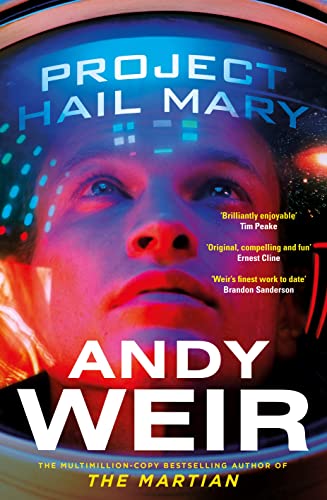
Project Hail Mary, Andy Weir

For a novel explicitly constructed as an old Analog-style puzzle story, there are four puzzles in Project Hail Mary (2021, USA) which the novel does not attempt to solve: why did I buy it, why did I read it, why was it published, and why has it been successful? I can possibly answer the first two – it was cheap, 99p in fact; and, I am an idiot. But the last two will forever remain a mystery.

Weir, of course, is best-known for The Martian (2014, USA), a surprise best-seller, originally self-published, which was then turned into a movie by Ridley Scott. The Martian is not a good book – a first-person narrative written by an unlikeable narrator, and written in the first-person for all the wrong reasons. It sold itself on its science, which is, unfortunately, not as accurate as it claimed.

Project Hail Mary is Weir’s third novel, following Artemis (2017, USA), which I have not read. In Project Hail Mary, a man wakes up aboard a spacecraft in another planetary system, with no memory of who he is or why he is there, or indeed where he is. Through chronological flashbacks, he learns he is one of three astronauts – the other two did not survive hibernation during the trip – sent to Tau Ceti. A microscopic creature has begun feeding on the Sun, and this threatens life on Earth. Tau Ceti is also infested with the microbes, called “astrophages”, but it is not losing luminance. An international project is put together to send a ship to Tau Ceti to discover why, and possibly send back a means to kill the microbes.

The microbes’ biology means they can convert mass to energy and back with no loss, making them a perfect fuel, allowing the ship to reach near light-speed. Soon after awakening, the narrator is hailed by an alien ship. It too has a single surviving crew. The alien is a rock-skinned spider-like creature which lives in a hyperbaric ammonia atmosphere. So, of course, the narrator names it Rocky. The two learn to communicate, and together discover why Tau Ceit’s astrophages have not destroyed the star.

The narrator is a high school science teacher. He was a physicist, but he published a paper on extraterrestrial life which saw him drummed out of the scientific community. Somehow or other, he ends up as an expert on the astrophage. Which is why he’s sent to Tau Ceti. He mentions repeatedly that he’s a good and well-loved teacher, which seems completely plausible as he thinks like a teenager.

Because he’s a high school science teacher, everything he encounters is solvable using high school maths. Which Weir explains in detail. All the technology, the sophisticated computers, aboard the spaceship, and yet every problem he encounters can be solved using schoolboy mathematics. It gets old very very quickly.

The astrophage is, I admit, quite ingenious, but it seems extremely unlikely to have evolved – in fact, I kept on expecting to read it was engineered. But no. Every other idea in the novel springs from the astrophage’s biology. The characters are drawn with the broadest of strokes; and while the cast is international, it’s only the handful of Russians and Chinese who don’t come across as Americans.

Many years ago, there was an international best-selling novel which taught its reader about the history of philosophy. Sophie’s World (1991, Norway) by Jostein Gaarder. I seem to remember reading it. Project Hail Mary reads like an attempt to do the same for high school maths, by showing how useful it is when, for example, trying to rendezvous with an alien spaceship, work out how not to poison yourself in an ammonia atmosphere, or even accidentally blow up the entire Earth while experimenting on microbes which are capable of total mass-energy conversion. Handy to know.

A novel that sets a low bar and all too often barks its shins on that bar. Avoid, unless you’re a masochist, or, like me, an idiot.


1 Comment

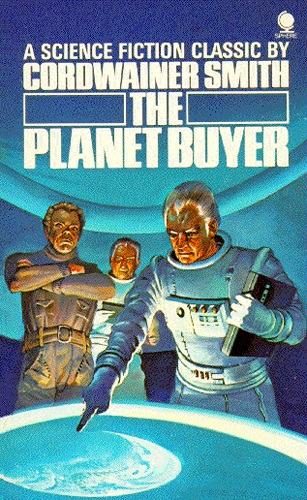
The Planet Buyer, Cordwainer Smith

Shortlisted for the Hugo Award in 1965. I suspect Smith is better-regarded these days than he was when he was writing. According to sfadb.com, he had only two Hugo nominations: a short story in 1956, and this novel (incorrectly given on the site as Norstrilia); and a Nebula nomination for a novella in 1966, the first year of the award. Norstrilia (1975, USA), by the way, is actually an expansion of The Planet Buyer (1964, USA) and its sequel, The Underpeople (1968, USA), and while I say “sequel”, it would not be entirely accurate to say The Planet Buyer is a complete novel – it even says as much in its Epilogue and Coda:

… the reason why this chronicle ends now is that the players have made the moves that will determine the outcome.

So, a somewhat baffling choice for an award for “best novel”.

Those familiar with Smith’s work will find everything they expect in The Planet Buyer. It opens on the world of Old North Australia – tellingly at one point given as Old North America, which makes more sense of the “north” – the richest planet in the galaxy, thanks to the immortality drug, stroon, which is harvested from giant mutated sheep. In order to maintain their simple dinkum cobber life-style, everything imported onto Norstrilia is charged 20,000,000% import duty. Even so, the Nortstrilians are stupidly wealthy, even more so than those moronic US-based techbros who seem determined to make humanity extinct. Rod McBan is one of the richest Norstrilians, although he has yet to come into his majority. A childhood enemy is out to get him, so he consults a secret AI he happens to have lying around, which tells him he should leave Norstrilia for Old Earth. But only after buying Old Earth. And can the AI please have permission to use Rod’s riches to manipulate the stroon futures market until he has enough money to buy Earth, please?

Rod is then smuggled to Old Earth by a Lord of the Instrumentality sympathetic to Rod’s problems (which, to be honest, seem somewhat weak sauce to drive such a momentous plot). He is disguised as a cat-man, one of the Underpeople, to keep him safe, and accompanied by C’Mell, a cat-woman who appears in other stories by Smith. There is discussion of the economic consequences for Old Earth of Rod’s ownership of the planet. There’s a reference to some prophecy or other. Rod arrives at Old Earth.

End of book.

I’ve enjoyed Smith’s stories when I’ve read them – and I read one of his collections only last November – and the Instrumentality, and Old Earth, make for an interesting setting. Smith’s prose style works more often than it doesn’t. But. Norstrilia is a somewhat dull place, and its inhabitants are not very engaging; and, unfortunately, The Planet Buyer spends much of its length on that world. I expect – I’m hoping – The Underpeople, which continues the story, is better (although it wasn’t nominated for the Hugo; go figure).

Not a book worth seeking out, given it’s only the first half of the later-published Norstrilia. Even then, I’d recommend Smith’s Instrumentality short stories, available in a number of collections, before Norstrilia or its two constituent novels.


1 Comment

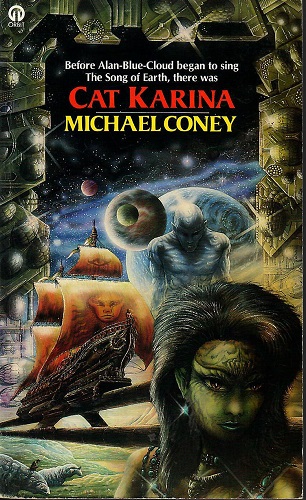
Cat Karina, Michael G Coney

The late Eric Brown, a friend of many years, was a big fan of Coney’s fiction, but for some reason Coney was one of those authors I never seemed to pick up. The first was Hello Summer, Goodbye (1975, UK) about fifteen years ago, and I thought it quite good – and later I picked up and read Charisma (1975, UK). But stopped there. I’ve read more in the last few years, and found his Amorph trilogy of Mirror Image (1972, UK), Syzygy (1973, UK) and Brontomek! (1976, UK) good examples of a type of expatriate English science fiction of the 1970s which I find strangely appealing.

Cat Karina (1982, UK) is not that. It’s set in the far distant future, the Greataway, on an Earth populated by races that have been genetically melded with assorted animals, and in which technology is anathema – in fact, even fire is banned. The novel is explicitly framed as the telling of a legend, so much so it inserts commentary on later distortions and interpretations of the story. Also in the narrative are alternative timelines, happentracks, predicated on decisions made by Karina and others which might affect the future, or Ifalong.

There’s a prophecy, but it’s really a millennia-long plan to bring about the birth of someone who can free Starquin, “the greatest person the Earth has ever known”, who was imprisoned millennia earlier, and it involves the title character, who is a Specialist, a human with animal genes, and a felina, meaning the animal genes are from jaguars. Karina lives in a village on the sailway line, a wooden monorail with wind-powered sailcars. One section of the track is too steep for wind-power, so the sailcars must be hauled up to the summit. By teams of felinos. The chief cargo on the sailway is tortugas, a highly-prized fruit grown in the mountains on heavily-guarded farms.

A handmaiden of the Dedo, a part of the Starquin’s body “in human form”, whatever that is, tries to manipulate Karina so she follows the prophecy, but Karina has a mind of her own… The main story follows the preparations for an annual sailcar race to deliver the season’s first tortugas to the coast, and the plan to use a sailcar built using forbidden technology – ie, metal. Which could mean there will no longer be a need for gangs of felinos. Which prompts a revolution, with the Specialists overthrowing the True Humans.

There is little, to be honest, all that original about the plot of Cat Karina – it runs on rails as well-greased as those of the sailway. And, it must be said, the novel does a great deal of heavy-lifting when it comes to filling in the back-history of the universe (there’s a later trilogy set in the same universe), but it does so with some smart neologisms and an impressive economy. I don’t think Cat Karina privileges world-building over story, a common fault in science fiction and fantasy, but its world-building is certainly more original and accomplished than its story. Karina is an engaging hero and well-characterised, and it never feels like she’s being pushed and prodded by the plot, even though the narrative often details other happentracks. There’s some nice invention in parts, the secret of the tortugas, for example, an important plot-point, unlike the secret of the tumps (huge torpid meat animals), which is not.

Cat Karina is a well-crafted novel, and a good example of its particular type. To be honest, I much prefer Coney’s near-future sf, but for fans of sf set so far in the future it might as well be fantasy, Cat Karina (and, I expect, the trilogy which followed it) is a good read.


2 Comments

How have the Hugos changed?

When you look at the Hugo Award fiction category nominees of the last few years, it seems like the same names keep on cropping up. Only an idiot would deny the Hugo nominees are more diverse than they were twenty years ago, but shouldn’t that mean the award now selects from a wider pool of authors? You’d assume so, given the existence of the internet. True, in recent years, the short fiction categories have been dominated by fiction published on tor.com or Clarkesworld; but in the 1980s and 1990s, the short fiction categories were dominated by fiction published in Analog, Asimov’s and F&SF.

Has anything really changed? I decided to have a look. (I was bored last weekend, obviously.)

There’s little point in comparing the representation of gender, race, nationality, etc, of nominees over the decades, as the awards are clearly far more inclusive. I was interested only in the number of writers considered by Hugo Award voters.

I split the Hugo Awards into three cohorts: early years (1953 to 1970), middle years (1971 to 2000), and present day (2001 to 2020). They’re unevenly-sized cohorts – the 1950s is not a full decade and we don’t have all the nominees for the early awards; in the 1970s, the novelette category was dropped for several years, and… 17 years (no award in 1954), 30 years and 20 years… But the split works when you consider the various cultural movements in sf and sf fandom.

big fish in a small pond

In total, over 67 years, 397 authors have been nominated for a Hugo fiction award – on average, five each in novel, novella, novelette and short story. For 1,256 nominations… 397 is a surprisingly low number. It gets even weirder when you look at how many times individual authors have been nominated. Almost half of those 397 have only a single nomination. Among the others…

The most-nominated author is Mike Resnick, with 30 nominations. The top ten looks like this:

1 Mike Resnick 30 1989 – 2012
2 Connie Willis 24 1980 – 2011
3 Robert Silverberg 23 1968 – 1990
4 Michael Swanwick 22 1986 – 2009
5 Ursula K Le Guin 20 1970 – 2003
6 Larry Niven 19 1967 – 1990
7 Harlan Ellison 18 1966 – 1994
8 George RR Martin 17 1980 – 2012
9= Poul Anderson 15 1959 – 1990
9= Orson Scott Card 15 1979 – 1992
9= Kim Stanley Robinson 15 1983 – 2018
9= Charles Stross 15 2002 – 2014

The years are first nomination to last nomination. The writers’ careers typically lasted much longer.

That’s a lot of old white men. Interestingly, the only author nominated in all three cohorts is Ursula K Le Guin, who had nominations dating from 1970 to 2003.

Among authors who have been nominated only since the turn of the century, the highest number of nominations is for Charles Stross, who managed 15 nominations in 12 years. Seanan McGuire, who has had 13 in just eight years, will likely end up beating his record.

Digging into the Hugo Award nominations for each year, it was surprising how often authors achieve multiple nominations in the same year. Seanan McGuire managed four in 2013, as did Michael Swanwick in 2003. (John C Wright also had four in 2015, but that was entirely due to Sad Puppy bloc voting.)

In early years, it was even more prevalent, with several authors appearing three times across all the fiction shortlists. John Varley even managed an unbroken six-year run, from 1977 to 1982, of two nominations per year.

The one thing the numbers do show clearly is that authors “have their day”. They will be nominated for half a dozen years on the trot, and then disappear. Some pop up a few years later, but most don’t. In some cases, it’s because their career has ended – either retirement or death – but others continue to be published but are never nominated, perhaps because they’re out of fashion or their fans no longer vote for the Hugo. Everything, as they say, shall pass.

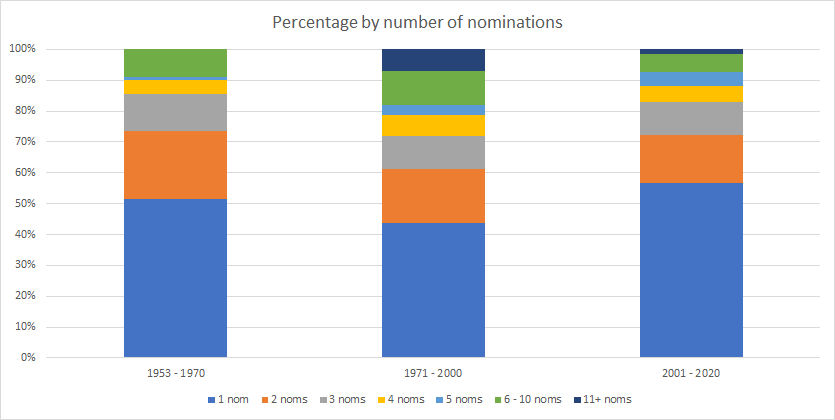
But I set off down this rabbit hole to understand if the size of the pool of writers nominated for the Hugo Awards has changed. Overall, 49% of nominees are “one-hit wonders” (a statistic slightly thrown out by the Sad Puppy campaigns of 2014 and 2015), and 16% have had only two nominations.
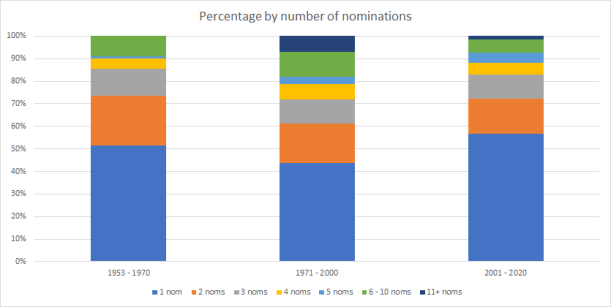
And when you look at the one-hit wonders, it’s clear present-day voters read much wider: from 1953 to 1970, 51% of nominees appeared only once; from 1971 to 2000, 44% of nominees appeared only once; and from 2001 to 2020, fully 57% of nominees appeared only once (without the Sad Puppies, it would probably be a couple of percentage points lower, but still better than earlier cohorts). I had not expected that. The second cohort, 1971 to 2000, also shows more authors being repeatedly nominated. There were indeed some authors very popular among Hugo voters during this period, such as Connie Willis and Ursula Le Guin, but also Silverberg, Resnick, Varley, Niven and Card. (Lois McMaster Bujold’s success stretched across two cohorts, so she doesn’t score so highly here.)

debut or established?

One other question occurred to me. Present day Hugo voters, it seems to me, like debut novels. Certainly, the industry has changed and debut novels are pushed much harder than they used to be, sometimes even more so than new works by established authors. The whole concept of “building a career” has gone, killed by the need for a quick profit. Best-selling series of the past, like the Wheel of Time or Malazan Books of the Fallen, took several volumes to build up to best-seller levels. That wouldn’t happen now. Instead, we get instant best-sellers, like the Kingkiller Chronicles, followed by a decade-long wait for a sequel. If this is meant to be an improvement, it’s hard to understand how.

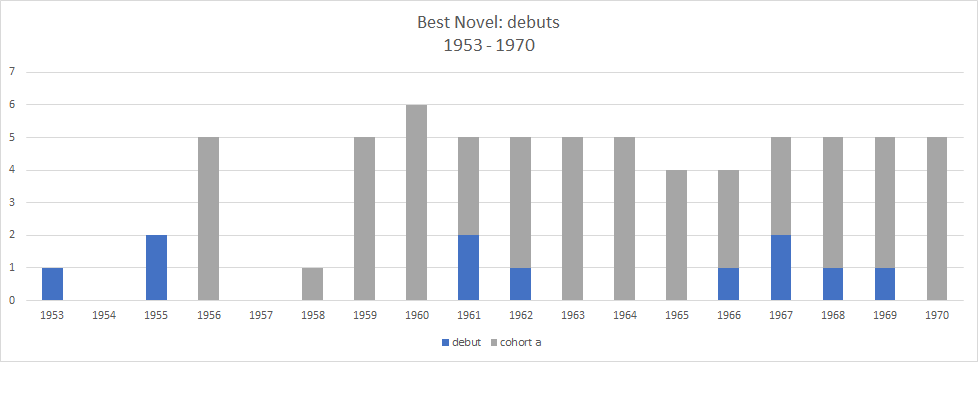
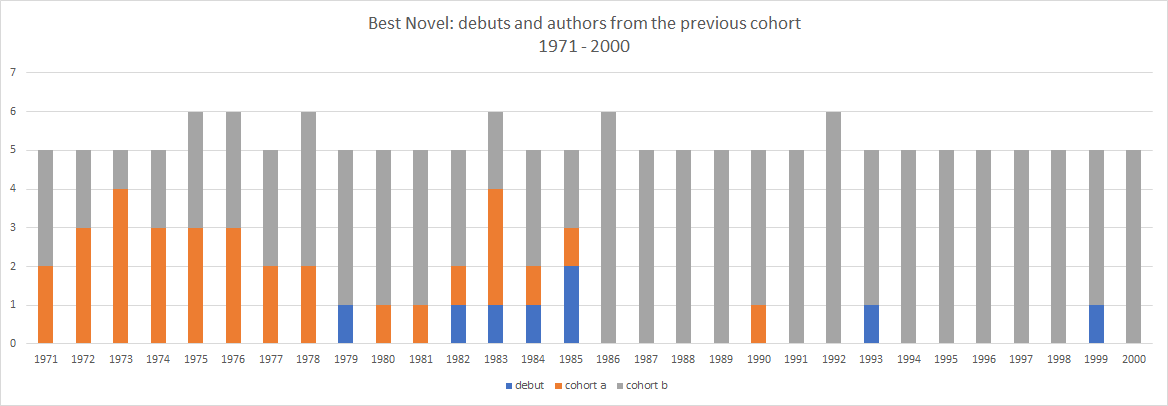
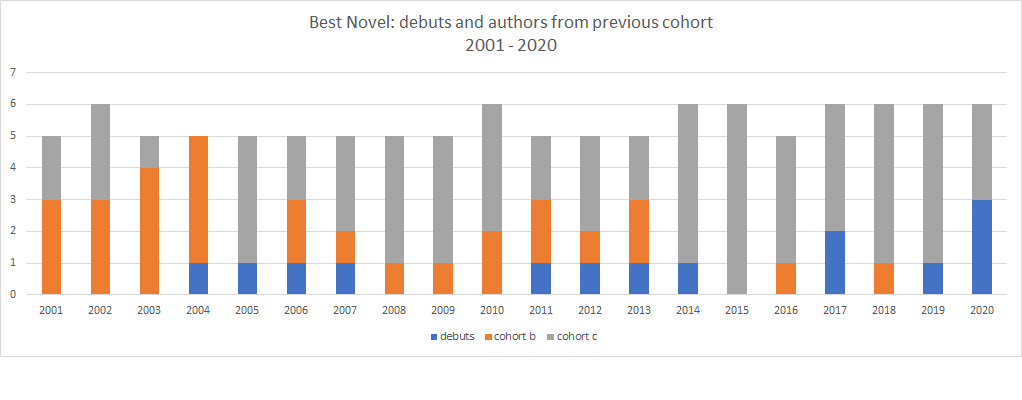
But, Hugo nominations can at least show – for best novel, specifically – which nominated novels over the years were debut novels. Popular perception – based on changes in the industry – suggest this is a recent phenomenon. So I went through every best novel shortlist, marking off those which were debuts – as in, the first book the author had published, also including collections. It’s a little difficult to be sure for the first cohort, since novels were often serialised in magazines, and it wasn’t always the serialised version that was nominated but a later hardcover/paperback release, and sometimes even both versions – ‘Dune World’, for example, was nominated two years before Dune, which was a joint-winner in 1966.

The results were… interesting.
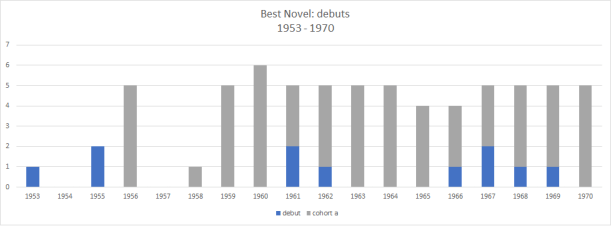
I’d have expected a few more debuts in this cohort, given the genre was relatively young. But magazines had been serialising novels from the very beginning, so most well-known authors likely had plenty of novel-length works under their belts by 1953.
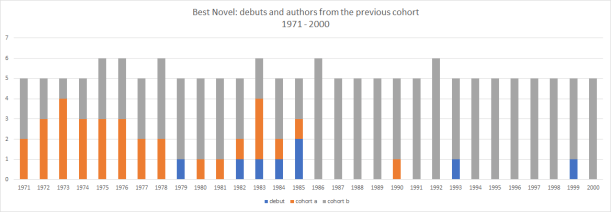
There’s considerable overlap between the earlier cohort and this one, and it takes a good fifteen years to fade away. (Perhaps I should have defined my cohorts differently – 1953 to 1965, 1966 to 1985, 1986 to 2015, and 2016 to 2020?) Aside from a blip in the early 1980s, debut novels were not that popular, appearing in only seven of the years. Interestingly, one of the two debuts on the 1985 shortlist was Neuromancer by William Gibson; the other was Emergence by David R Palmer, a fix-up of two novellas nominated for the Hugo in previous years. Palmer published one more novel and then vanished.
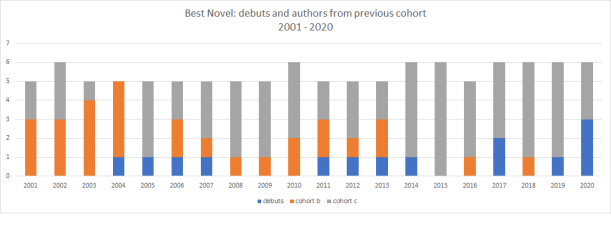
Again, there’s overlap from the preceding cohort, and it too takes around fifteen years to fade away. But debuts are also clearly more popular, appearing on the shortlists of eleven of the twenty years, and even making up half of the shortlist in 2020. On the other hand, the one debut novel on the 2004 shortlist was Charles Stross’s Singularity Sky – and he was then nominated each year for further five years. The debut novels nominated in 2011, 2012, 2013 and 2014 were by, respectively, NK Jemisin, James SA Corey (technically not a debut as one of the two authors who write under that name had been previously published), Saladin Ahmed (who has published no novels since), and Ann Leckie. At least two novels I’d thought were debuts – by Paolo Bacigalupi and Yoon Ha Lee – proved not to be, as both had published collections earlier.

in conclusion…

While recent years have seen several authors nominated multiple times, or for several years on the trot, it’s to a lesser degree than was the case in the decades before the turn of the millennium. So it may seem like the same names keep on appearing, but it was much worse in the past. On the other hand, it’s true debut novels are now more prevalent on the Best Novel shortlist than they were previously. I suspect this is a result of both social media and changes in the industry. Sf fandom has always been tribal – does anyone seriously believe Mike Resnick was the absolute best genre author of the 1990s and 2000s? – although I wouldn’t be surprised if a number of writers in twentieth-century Hugo Award shortlists owed their many nominations to logrolling…

Tribalism still plays a major role, of course, with lists of eligible works posted by influential authors, fans basically providing unpaid marketing for their favourites, and authors branding themselves as personalities separate from their novels (rather than “the death of the author”, it’s privileging the author over the work). But this is the world in which the Hugo Award now operates, and it too will likely change over the next decade or two.

additional findings

The most popular middle initial for Hugo nominees is apparently “M”.

The author with the most works published before their first Hugo nomination is Kevin J Anderson, with over one hundred novels or collections. A number of authors had published at least twenty books before their first nomination – Jim Butcher, Neil Gaiman, Frederik Pohl, Bob Shaw, Sheri S Tepper, Philip José Farmer, Michael Bishop, Robert Silverberg, Andre Norton and John Brunner.

The longest unbroken run for best novel nominations is Charles Stross, with six years. Orson Scott Card managed five years in a row.

Only Robert Silverberg has managed more than one novel on the shortlist – two in 1972 (A Time of Changes and The World Inside) and two in 1973 (The Book of Skulls and Dying Inside). He was obviously very popular then. Of course, there was also Blackout and All Clear by Connie Willis, which were published as two books, but the Hugo administrator decided to combine their votes, so giving Willis a win in 2011. As I remember, it was not a popular decision.

Only three people have been nominated for a Hugo posthumously for novel-length works. Both Edgar Rice Burroughs (died 1950) and EE Doc Smith (died 1965) were nominated for Best All-Time Series in 1966. Robert Jordan (died 2007) was, with Brandon Sanderson, nominated for Best Novel for The Wheel of Time series. And no, I can’t remember how they managed to swing that, either.
2 Comments

Reading diary 2020, #8

I was briefly tempted to review all six books on the Arthur C Clarke Award shortlist, as announced in mid-June, given there’s been a tradition of commentary throughout the award’s history. Of course, there is no guarantee I’d finish reading the books by the time the winner is announced in September. Once upon a time, the Clarke Award used to generate interesting, if occasionally controversial, shortlists. While you might not have agreed with every book nominated, the shortlist generally included books otherwise unknown that were worth reading. But things seem to have slipped these last few years. Not just the presence of Sea of Rust on the shortlist in 2018, which was quite frankly hackwork… I mean, when you remember bad nominees of the past, such as Greg Bear’s Hull Zero Three in 2012, it was at least a novel in conversation with the genre, and Bear is an accomplished craftsman… Some of the more recent nominees, unfortunately, can claim neither.

The Clarke commentary no longer takes place. An attempt to reinvigorate it several years ago with a shadow jury was loudly condemned by US fans who plainly didn’t understand what a shadow jury is and equally plainly hadn’t bothered to find out. Despite all claims to the contrary, fandom is not a community. Once upon a time, it was an emergent phenomenon of the stories’ existence. Now it’s just a part of the marketing machine, and, happily for the publishers, it costs them nothing. Five stars means less than one star. Giving a book five stars just makes you a fucking mug. And everything is dominated by the US, a nation which seems congenitally incapable of recognising that other countries exist and they do things differently there (yes, I know, that’s a time-based reference, not geographic one; but never mind). True, science fiction is an American mode of fiction, and the single largest market for its creations, so its dominance is hardly surprising. But us non-USians, while we may appreciate the genre output of the US – the stories, the novels, the films, the TV series – we don’t actually give a shit about what US fans think. Science fiction fandom is not one giant global family. It never has been. And it never should be. Vive la différence.

All but one of the books below were nominated for genre awards. One won. Deservedly, I must admit. ‘The Ballad of Beta-2’ was on the Nebula novella shortlist in 1966 (the award’s first shortlist), but lost to joint winners ‘He Who Shapes’ and ‘The Saliva Tree’. Space Opera was nominated for the Hugo in 2019. The Pleasant Profession of Robert A Heinlein won the BSFA Award in 2020. The Last Astronaut has been nominated for the 2020 Clarke Award shortlist. And Borne was on the 2018 Clarke Award shortlist. Strandloper is non-genre, and was not, as far as I can discover, nominated for any awards. You’d expect some top-drawer reading out of that bunch of accolades. A shame, then, to find it wasn’t the case.

The Ballad of Beta-2 & Empire Star, Samuel R Delany (1965/1966, USA). I’m pretty sure I first read this on a family holiday in Paris in the early 1980s. I have a memory of buying Delany’s collection, Driftglass (the Panther/Granada paperback edition), from an English-language bookshop in Paris, chiefly because I’d taken the 1977 Sphere paperback of The Ballad of Beta-2 & Empire Star with me to read during the holiday. While both ‘The Ballad of Beta-2’ and ‘Empire Star’ had stayed with me during the nearly forty years since, ‘Empire Star’ more than ‘The Ballad of Beta-2’, it must be said, I’d never bothered to reread them. Until now. And this despite being a big fan of Delany’s fiction and non-fiction. True, some of his output is hugely dated. But some of his output is brilliant precisely because it is dated. The two novellas here have aged extremely well, and while the clever Moebius-strip narrative of ‘Empire Star’ I’d remembered pretty much accurately over the last four decades, I’d forgotten how good was ‘The Ballad of Beta-2’. An anthropology student is sent to study the eponymous song, the only original piece of art created by the Star Folk, the degenerate survivors of a convoy of generation starships, who were beaten to the rest of the galaxy by progress. The story behind the song is pretty much handed to the student on a plate, but it’s an interesting story, and not at all what the reader would have expected. ‘Empire Star’ has a simple plot: Comet Jo, a plyasil farmhand in a “simplex” asteroid-based community finds a crystallised Tritovian and is told to take it to Empire Star to deliver a message. And that’s what he does. Along the way he meets people who have previously interacted with him at different points in their lives, and learns about the Lll, the only enslaved people in the galaxy and the galaxy’s greatest builders, and the war fought over them and their emancipation. I’ve long considered ‘Empire Star’ one of my favourite novellas – I reread it early this century, I seem to remember – and on this reread, my admiration of it remains undiminished. Read both of these novellas, they’re worth it. But definitely read ‘Empire Star’.

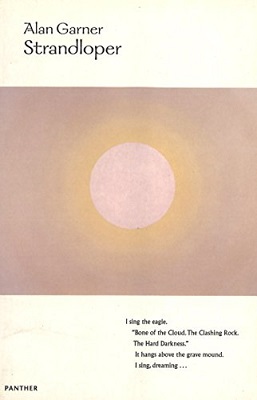
Strandloper Alan Garner (1996, UK). This was inspired by the real life story of William Buckley, a giant of a man – between 6ft 5 inches and 6ft 7 inches, apparently – and an ex-soldier, who at the turn of the nineteenth century was transported to Australia for 14 years for carrying a bolt of cloth he maintained he had not known was stolen (British justice – the envy of the world, eh?). Shortly after arrival in what is now Australia, he learnt the penal colony was being moved to Van Diemen’s Land (Tasmania), and escaped. He was taken in by the Wathaurong People and spent thirty years living among them. The protagonist of Strandloper – also called William Buckley – is transported for “lopping” the local squire’s oaks, and sedition – the latter based on a piece of paper, a “tract”, containing passages from the Bible, chosen by the squire’s son, the semi-literate Buckley had been using to practice his writing. Buckley survives passage to Australia and, like his namesake, escapes and lives among one of the local peoples. Strandloper is a disconcerting read. There is no clear sense of time running through the narrative. The dialogue is given in local dialect, and for the first section consists mostly of local nonsense words used in songs and pagan practices. The end result is a short book, only 200 pages, which packs quite a punch. I’m reminded of Golding’s Rites of Passage, although that may simply be because they share an historical period. Yet now I think about it, both novels have an impressive immediacy, in Golding’s case generated by the use of journal entries as the narrative… and the fact Garner manages it using a (relatively) straightforward omniscient POV narrative is probably the greater achievement. Previously, I had only read Garner’s children books, and enjoyed them, and a Young Adult I found less satisfying. But Strandloper is good, and persuades me to hunt down more of his adult fiction.

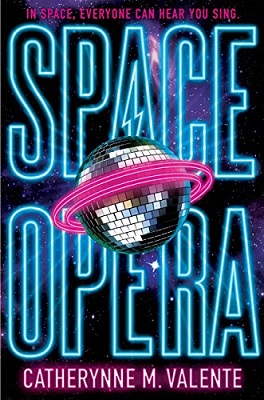
Space Opera, Cathrynne M Valente (2018, USA). This was nominated for the Hugo Award in 2019. Its genesis is simple, and explained by the author in an afterword. A US genre author discovered the Eurovision Song Contest and was much taken with it. A fellow author persuaded them to use it in a science fiction novel. There are many reasons why this is a bad idea. The US does not compete in Eurovision. People in the US have no idea what Eurovision means… and it means different things to different countries. In the UK, it is considered somewhat risible, with a side-order of resentment. In Sweden, there is a month-long televised Melodifest merely to pick the song to represent the country. Valente decided to appropriate Eurovision for a US audience and base it all on The Hitch-hiker’s Guide to the Galaxy. She failed. Not only are the references a weird mishmash of UK and US that make no sense, embedding UK cultural elements in US cultural movements, but the whole thing is a litany of megaviolence and genocide from start to finish… While Eurovision was indeed created to help rebuild links between the war-torn nations of Europe after WWII, it does not celebrate the death and destruction which occurred between 1939 and 1945. Nor does it boast of the weaponry, tactics or bodycounts of the various competing nations. Valente also chose to model her prose on The Hitch-hiker’s Guide to the Galaxy. I am not, I admit, a great fan of Adams’s novels, although I’ve read them and, when I was young, enjoyed them. But Adam’s books at least contained ideas and riffed off them. Valente’s does not. Adams’s jokes were carefully set up, and then left quickly behind, to crop up again when least expected. Valente belabours her jokes, sometimes with almost Fanthorpe levels of repetition. You end up skipping pages, trying to find the narrative. To be fair, I tried reading a Valente novel once before, Palimpsest, and ended up throwing it against the wall because it was so overwritten. And I admire Lawrence Durrell’s prose! I managed to finish Space Opera, but it was a slog. I can only recommend people avoid it. Especially if they’re fans of Eurovision.

The Pleasant Profession of Robert A Heinlein, Farah Mendlesohn (2019, UK). Reading this proved interesting after reading Gwyneth Jones’s Joanna Russ a couple of months ago. Chiefly because I have read many of the books written by both subjects. However, where Jones’s Joanna Russ persuaded me to reread Russ’s oeuvre, The Pleasant Profession of Robert A Heinlein does not do the same for Heinlein. But for a different reason. When I read Joanna Russ, I felt as though I’d missed important points in in Russ’s fiction. When I read The Pleasant Profession of Robert A Heinlein, Mendlesohn’s criticism opened up his books for me in interesting ways but didn’t substantially change what I remembered of them from my own readings. Admittedly, I read the books several decades ago, but Mendlesohn’s argument didn’t strike me as sufficient grounds to track down copies of the books and reread them (I binned most of my Heinlein paperbacks years ago). Don’t get me wrong, The Pleasant Profession of Robert A Heinlein is a fascinating read in its own right, and an informative study of Heinlein’s fiction. It is a worthy winner of the BSFA Award (even though one of the other nominees contains a critical essay on my Apollo Quartet…). I’m not entirely convinced by some elements of Mendlesohn’s analysis – for example, Mendlesohn fails to point out that Wyoming pretty much vanishes from the narrative of The Moon is a Harsh Mistress once she’s married (she becomes a hairdresser); I also thought the novel’s code-switching was cack-handed at best. The Moon is a Harsh Mistress I read a few years ago for the first time, so it’s relatively fresh for me. Other books, as mentioned above, I read back in the 1970s and 1980s, and I think the only one I’ve subsequently reread was Stranger in a Strange Land ten years ago. And now I’m starting to persuade myself perhaps I should try rereading them… Perhaps that’s the difference between The Pleasant Profession of Robert A Heinlein and Joanna Russ. The latter inspired me to read and reread Russ more urgently than the former did for Heinlein. Nevertheless, both critical works are definitely worth reading.

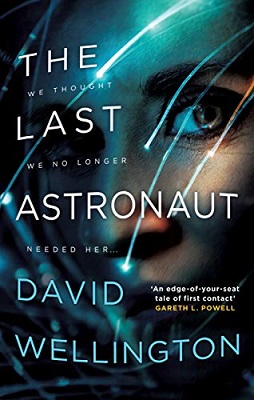
The Last Astronaut, David Wellington (2019, USA). Hmm, near-future novel about a mission to an asteroid that has just entered the Solar System. But this is several decades from now and the US space programme is dead, so they have to drag an astronaut out of retirement. This sounds right up my street… There’s a follow-up to Oumuamua thirty-five years from now, but this one is considerably bigger. Unfortunately, the US doesn’t have a space programme after their Mars mission ended in tragedy. But they cobble together a mission, crewed by 1) the geek who discovered the asteroid and realised it as was decelerating, b) a young xenobiologist, c) a Space Force pilot of the X-37 drone (that’s the same one being flown now, by the way), and d) the ex-astronaut captain of the Mars mission with all her baggage. But they’re overtaken en route by a corporate mission – who describe NASA as “the enemy” – and then spend very little time analysing the asteroid before following the corporate team inside. In a tweet, I characterised this book as being “a mashup of Rendezvous with Rama and Prometheus, with none of the sense of wonder of the first and all of the baffling stupidity of the second.” To be honest, I was being generous. The central premise of The Last Astronaut is that the asteroid is a space-based life-form, whose life-cycle requires it to crash on habitable planets in order to breed. Which makes not the slightest bit of sense. How did they evolve if they required Earth-like worlds in order to reproduce? And, apparently, the asteroid creature rapidly generates interior flora in order to feed its rapacious young… except, where does it get the energy from to grow that flora? Not to mention the asteroid creature’s ability to accelerate rapidly using solar sails. This is a sf novel written by someone who has done a little bit of research but not actually applied any intelligence to their premise. It doesn’t help the prose is the sort of bland simplistic prose of techno-thrillers, the characterisation is single-note throughout, and the Mars mission commander is repeatedly labelled a murderer throughout the book despite doing the only thing possible to save the Mars mission. Wellington has tried to update his presentation by including “interview” excerpts of the main cast (although some, I think, seem to have taken place after their deaths), and adding an “excerpt from author’s foreword to the 2057 edition” by David Wellington. I read The Last Astronaut in mounting disbelief – its complete failure to present a believable near-future, its reliance on present-day tech, its pantomime corporate villains, its hokey premise, its weirdly small cast for the story it told, its complete lack of originality… How it ended up on the shortlist of a major genre award is a fucking mystery.

Borne, Jeff VanderMeer (2018, USA). I don’t get it. I read Annihilation and, okay, Ballard did it first and Ballard did it better, but I thought Annihilation quite good, and VanderMeer is one of the good guys and his Wonderbook is a damn sight more useful as a writing tool than 99% of the how-to-write books out there. But reading Borne, I’m reminded of The Book of Phoenix and the Binti novellas by Nnedi Okorafor, both of which read like they were written by a teenager, but Okorafor has a PhD in English, and if you know that much about writing fiction, why would you deliberately write something bad? And Borne – which, it must be said, has been highly praised – did not seem to me to be very good at all. There’s this post-apocalyptic city, and a five-storey flying bear, yes, really, and a woman called Rachel who finds some sort of biotech creature which grows and grows and can imitate all manner of things. None of this makes the slightest bit of sense, nor gives you any reason to continue reading. It doesn’t help that the prose is so lazily written, such as the narrator witnessing an invisible person make a gesture, or crashed helicopters having “wings crumpled”. I read Borne and I didn’t see any reason to get invested in the story. It felt like a half-a-dozen pet images on endless recycle. I thought Annihilation was good but didn’t bother with the sequels. Borne is apparently the first in a trilogy but I definitely won’t be bothering with the sequels.


3 Comments

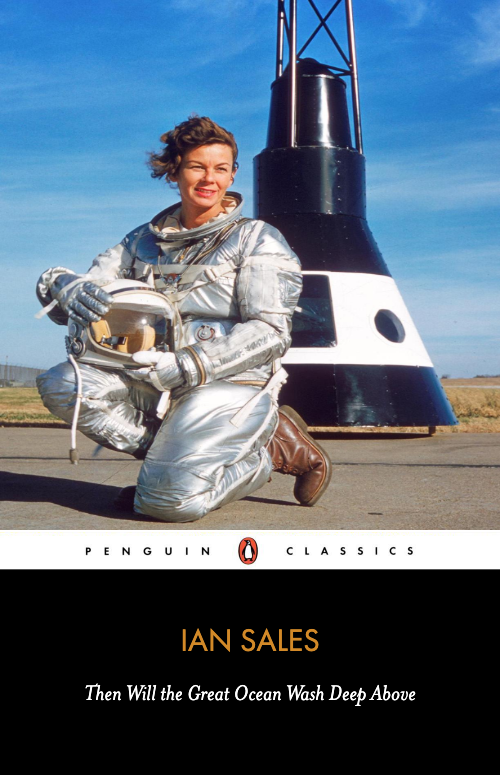
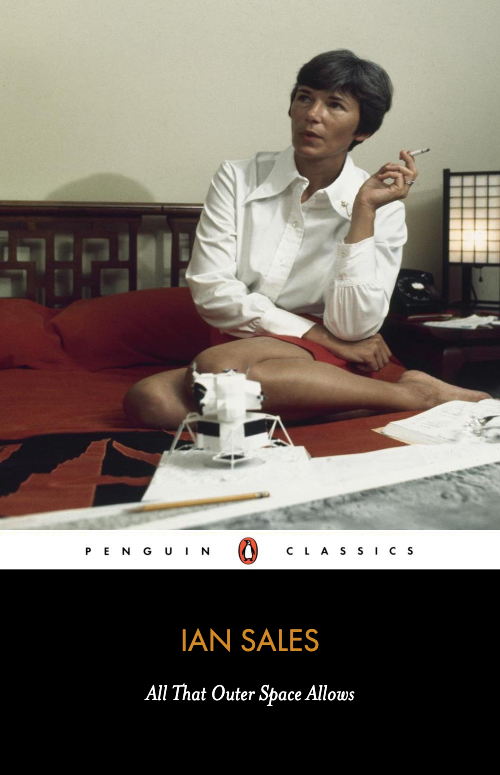
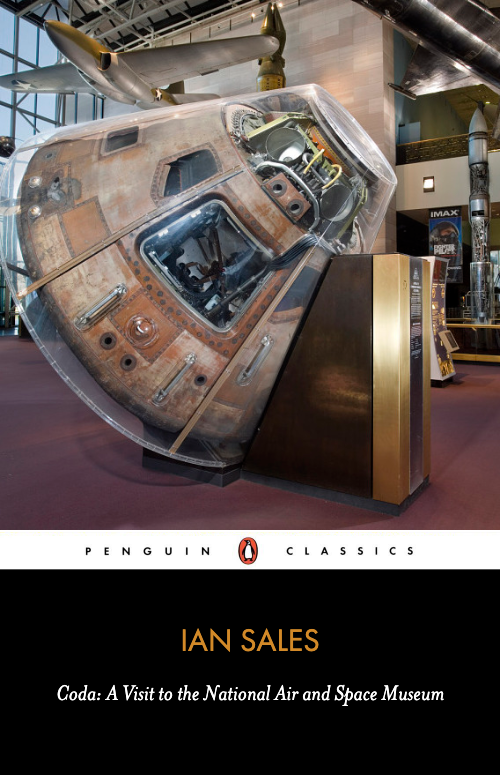
Penguin Classic Quartet

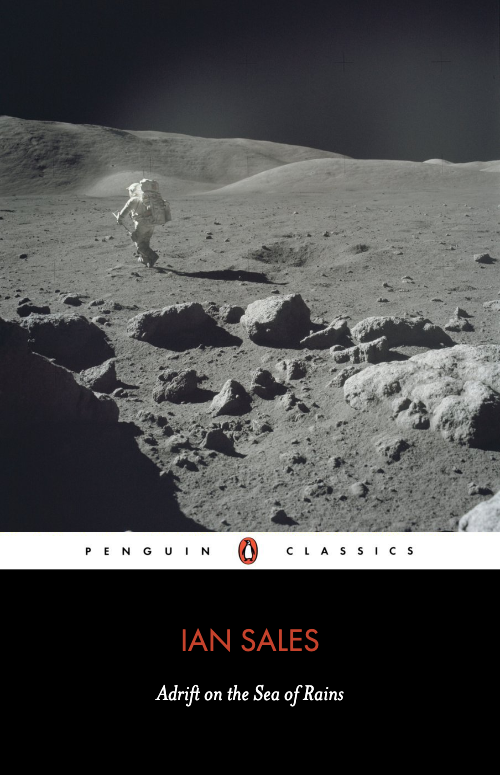
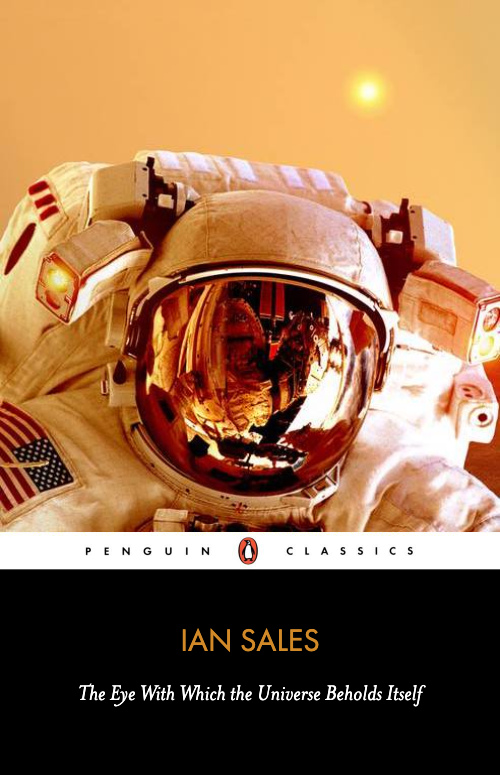
Several weeks ago someone posted a link on social media to a Penguin Classics cover generator. So for a while my Facebook TL was filled with Penguin Classics versions of friends’ books. So, naturally, I had to get in on the act. I posted the covers below on Facebook, as everyone else did; but for those of you who don’t use that platform, here they are… the totally not really bogus Penguin Classics editions of the, ahem, five books of the Apollo Quartet…


Adrift on the Sea of Rains


The Eye With Which the Universe Beholds Itself


Then Will the Great Ocean Wash Deep Above


All That Outer Space Allows


Coda: A Visit to the National Air and Space Museum


4 Comments

Airs of empire

I have for the last few years documented my reading in Reading diary posts, where I typically write about – “review” is probably too strong a word – half a dozen books. I haven’t written a blog post about a single book for quite a while – chiefly because I sort of lost the habit of blogging regularly enough for me to write about a book within days of finishing it.

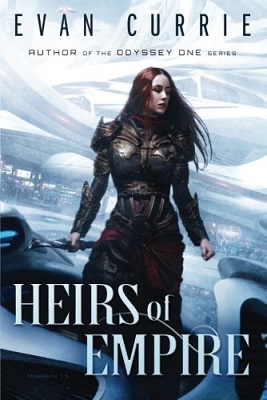
But sometimes books, or films, make good springboards for more general commentary on genre, and I think that makes for a more interesting blog post than a straight-up review. In this particular case, it’s a relatively recent space opera novel which triggered some thoughts on twenty-first century science fiction, particularly space opera; and that space opera novel is Heirs of Empire by Evan Currie, published in 2015 by 47North. It’s the first in a two-book series and is followed by An Empire Asunder (2016). I’m not entirely sure what possessed me to buy and read Heirs of Empire, to be honest. The 99p price point certainly helped. Or it could have been the fact it’s a space opera which features knights. I’ve been there, done that, so there was a certain curiosity in seeing how Currie had handled it.

But. Oh dear. Heirs of Empire reads like a self-published novel. 47North, Amazon’s own publishing imprint, is a reputable publisher – it published last year’s Arthur C Clarke Award winner! – but I find it hard to believe Heirs of Empire was actually edited. It’s not just that the prose relies overly on cliché for cheap and easy description. Or the dialogue is completely tin-eared. Or the characters are stereotypes, and not very interesting ones at that. Or even that the world-building is cobbled together from assorted past science fiction works…

A general of the emperor’s personal hyper-trained elite, the Cadre, is being transported to a remote high-security prison after a failed attempt on the throne. The train, which is travelling at hypersonic speeds, is derailed by the usurper’s confederates. He escapes, steals an advanced super-secret warship, and uses it to attack the imperial palace and seize power. Even though he failed once – or perhaps he was captured before he made his move, I forget – apparently he can still throw together a successful rebellion. He kills the emperor, but the youngest members of the imperial family, fourteen year old twins, escape. Eventually the twins are discovered by loyalist forces, and are instrumental in retaking the throne. And that’s it. The plot. Pretty much.

It doesn’t take a savvy sf reader to figure out the story is set on the inside surface of a Dyson Sphere, although the empire is bounded on all sides by an impassably high “God Wall”. Several items of technology used by the empire are also artefacts of an earlier civilisation and not understood. Much like the author and science. There is suspension of disbelief and then there is a completely inability by the writer to present anything remotely plausible even in an invented universe. That earlier hypersonic train crash? The villain survives it, losing a leg and an eye and suffering a few minor injuries. That’s: a hypersonic train crash. A few days later, sporting a prosthetic leg a few inches too short, he manages to defeat the emperor, a highly-trained swordsman, in single combat. Later, another hypersonic train is hijacked by loyalist pirates (don’t ask). But this one is pulling 30 million tons of carriages. It’s like Currie added a couple of zeroes to every figure in the story and so rendered them completely implausible. There’s a missile that apparently accelerates at 40,000 G, not to mention some parachuters who are identifiable by their terminal velocity. And cannons which can shoot 10,000 feet straight up.

In other words, the science in Heirs of Empire is complete bollocks. There’s an attempt at some sort of steampunk atmosphere, with the ships having sails and poop decks and cannons, but none of it really fits together.

It occurred to me that deploying physics uncritically – ie, without any understanding of how it works – as Currie has done in Heirs of Empire is little different in principle to deploying science fiction tropes uncritically. Which is something space opera routinely does, even twenty-first century space opera, if not especially twenty-first century space opera. Those tropes have meaning and history, they have baggage. Spaceships are basically cruise liners – and not the floating hotels of today, whose passengers rarely step foot on land during their holidays; but the cruise liners of the early twentieth century, with their “exotic” destinations and colourful posters which blatantly othered the inhabitants of those destinations. Robots are either a metaphor for slaves (in the US sf tradition) or possibly service (from a UK perspective), but given the history of automata, the trope could also be seen as a metaphor for biddable women. Real robots, CNC machines, are perfect production line workers, but you don’t see them in science fiction.

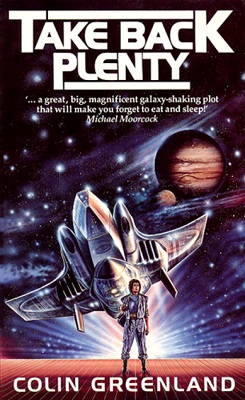
It hasn’t always been this way. New British Space Opera introduced four new elements to space opera, each one embodied by a germinal work. Consider Phlebas (1987), in fact all of Iain M Banks’s oeuvre, introduced a left-wing sensibility to a right-wing subgenre. Colin Greenland’s Take Back Plenty (1990) made knowing use of its science fiction tropes. Eternal Light by Paul J McAuley melded space opera and hard sf, applying a high level of rigour in the world-building. And… it’s a cheat, but John Clute’s Appleseed (2001), for its use of literary metaphor as signifiers for genre tropes, and which has definitely influenced current space opera, although it was published too late to be classified as New British Space Opera. Which is a term that has apparently been wiped from genre history, thanks to The Space Opera Renaissance, which repositioned it as American and re-labelled it as simply New Space Opera.

We have been here before, of course: the New Wave.

New British Space Opera was new, but not everything it introduced took hold – Alastair Reynolds has had a great deal of success with melding space opera and hard sf, for example; but where are all the left-wing space operas now that Banks is gone? New Space Opera, the US re-imagining, was a step backwards. The only element it kept was the one introduced last, the use of metaphor to disguise tropes. Yet tropes are themselves metaphors. When a space opera author uses the word “moth” to refer to spaceships, they’re applying a metaphor to a metaphor.

True, space opera was not the first to do this. When you use your computer’s graphical user interface, you’re using a metaphor of the way the computer stores and accesses data. Cyberpunk took that and invented a second-order metaphor: cyberspace. Twenty-first century space opera no longer bothers with rigour, left-wing sensibilities or a knowing use of genre tropes, but it certainly does love its second-order metaphors.

It also apparently loves overt slavery, inequality, psychopaths and sociopaths, mega-violence and seven-figure bodycounts.

There have been some improvements, however. Space opera is now a much more diverse subgenre. There are no more Men In Fucking Hats™. This can only be applauded.

It could be argued that Currie’s appalling grasp of physics in Heirs of Empire is not so much a lack of rigour in a space opera universe than an outright rejection of it, inspired perhaps by the film industry’s creative approach to the laws of physics. And so too, by extension, for twenty-first century space opera: the use of metaphors to disguise genre tropes could be seen as a rejection of what those tropes actually represent. Mind you, given that space opera seems more than happy to incorporate uncritically what was being represented in the first place… Tropes have become decoupled. All is subject to authorial fiat. Physics has become magic; space opera has become fantasy.

Space opera has thrown away the hats, but it has also thrown away the science. And these days we need science more than ever.


1 Comment

Fantasticon 2019

Fantasticon happens every year in Copenhagen, usually in September. It’s not the only con of that name, but it is the only Nordic con of that name. This year was my third Fantasticon. For the past few years, it’s been themed, and for 2019 the theme was Afrofuturism, and the guest of honour was US writer Nisi Shawl.

On previous visits – I’ve now visited the city over a dozen times – I flew from the UK, but now I’m resident in Sweden, and there’s a regular train service between Stockholm and, as we say here, Köpenhamn. Train travel is much superior to flying. And Swedish train are vastly superior to UK trains. In the company of Johan Anglemark, who had not attended Fantasticon since it moved to its current venue, I caught the train from Uppsala to Stockholm Central Station, and changed there onto the train to Copenhagen. The trip was unsurprisingly stress-free. We sat on the train for about five and a half hours, and though we crossed an international border we didn’t have to show any ID. This is not something I’m happy to give up just so a handful of very rich old white men won’t have to pay their fair portion of taxes. Fuck’ em. Better yet: lock them up.

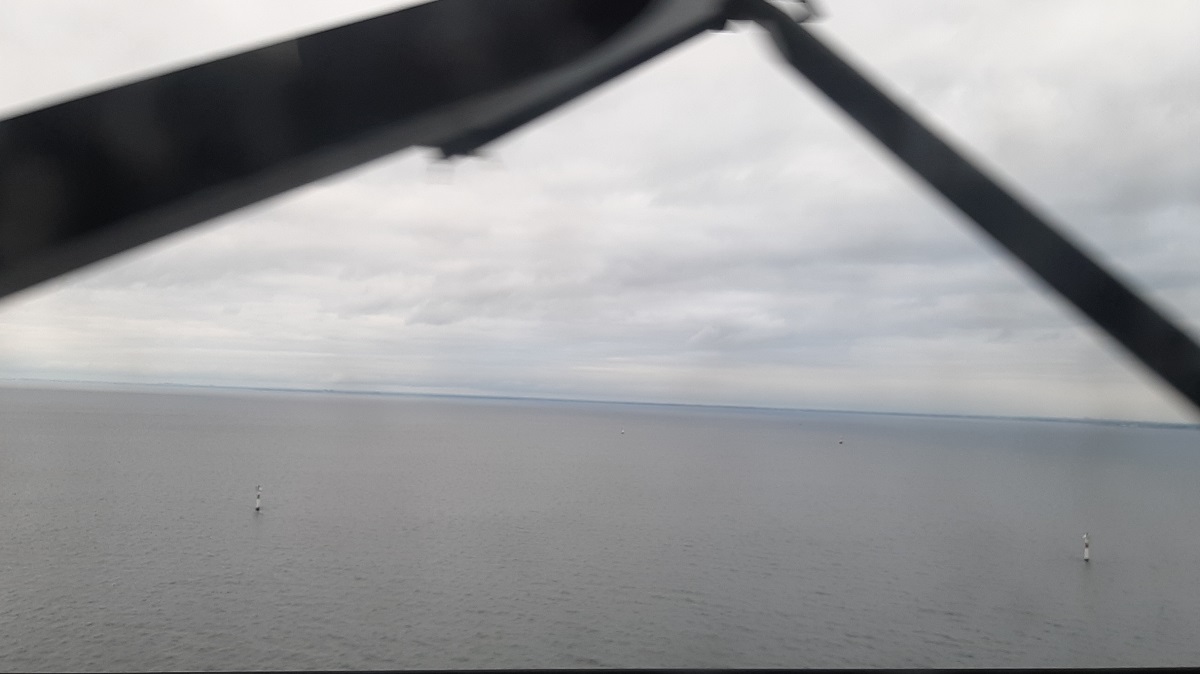
Do you know how difficult it is to take a good photo of the Öresund while crossing the bridge on a fast-moving train?

We were joined on the train at Malmö by a Swedish fan from Göteborg, Patrik Centerwall. On arrival in Copenhagen, we trekked along Vesterbrogade from the main station to our hotel, where we bumped into a couple more familiar faces. After checking in and dumping our stuff in our rooms, we headed for the Serapions Order, where the con was taking place. It’s the lodge of a sort of Danish Masonic order, in Frederiksberg, a weird sort of enclave within Copenhagen. No sooner had we met up with various other fans, then around a dozen of us, led by Danish fan Sanna Bo Claumarch, caught a bus for the now-traditional Friday night oysters, at a French restaurant, L’Éducation Nationale. Some people also had snails. I played it safe and had entrecôte. We stayed until the restaurant closed, and a group of four of us – Johan, myself, Sanna and Sidsel Pedersen – set off to walk back to Frederiksberg, a distance of about 2 km. We stopped off en route at another bar. And closed that. And then Sidsel had to catch a taxi to Valby because Edmund Schluessel’s key wasn’t working on the entrance door to his hotel. The three of us left walked back via Sankt Jøgens Sø, and I was in bed by about 3 am.

The next day, I spent the morning briefly at the con, then headed into the centre of Copenhagen – basically a march the length of Vesterbrogade to Rådhuspladsen, where I met my sister. We went for a bite to eat, followed by a wander around the comics branch of Faraos Cigarer, and then the games branch. I returned to the con in time for a programme item celebrating Samuel R Delany and his work.

Saturday evenings at Fantasticon are typically taken up with a banquet, at which the guest of honour gives their speech. I’ve attended at all three of the Fantasticons I’ve, er, attended, and the food has been excellent. After the meal, there is filk. I am, I admit, not a fan of filk. I don’t get the appeal of rewriting the lyrics of folk songs so they refer to science fiction works or fannish traditions. Apparently, the Nordic filk tradition is very much a singalong style, unlike the UK and US traditions. Unfortunately, the person invited to lead the filking did not know this. So there wasn’t much of a singalong. Also unfortunately, the lyrics to the half-dozen songs performed, which were projected onto a screen, were hardly appropriate: one featured the term “nancy boys” and jocular references to rape. The most recent sfnal reference in them was Return of the Jedi (1982). Fortunately, I’d spotted a racial slur in the lyrics sheet as the projector was being tested, and asked for it to be removed. Which it was. Shit like that should not be happening in 2019.

After the banquet, and filk, had finished, a group of us headed to Vesterbro Torv. The bar we’d visited the year before had gone, replaced by some sort of posh pizzeria. So we ended up at a bar next door, which was not as good. At midnight, they packed up the outside tables, and only Sanna, Sidsel and myself moved inside. After we’d finished our drinks, we made our way to Mikkeller, probably my favourite bar in Copenhagen (in my defence, I have not visited that many). I was back in my hotel bed by about 2 am.

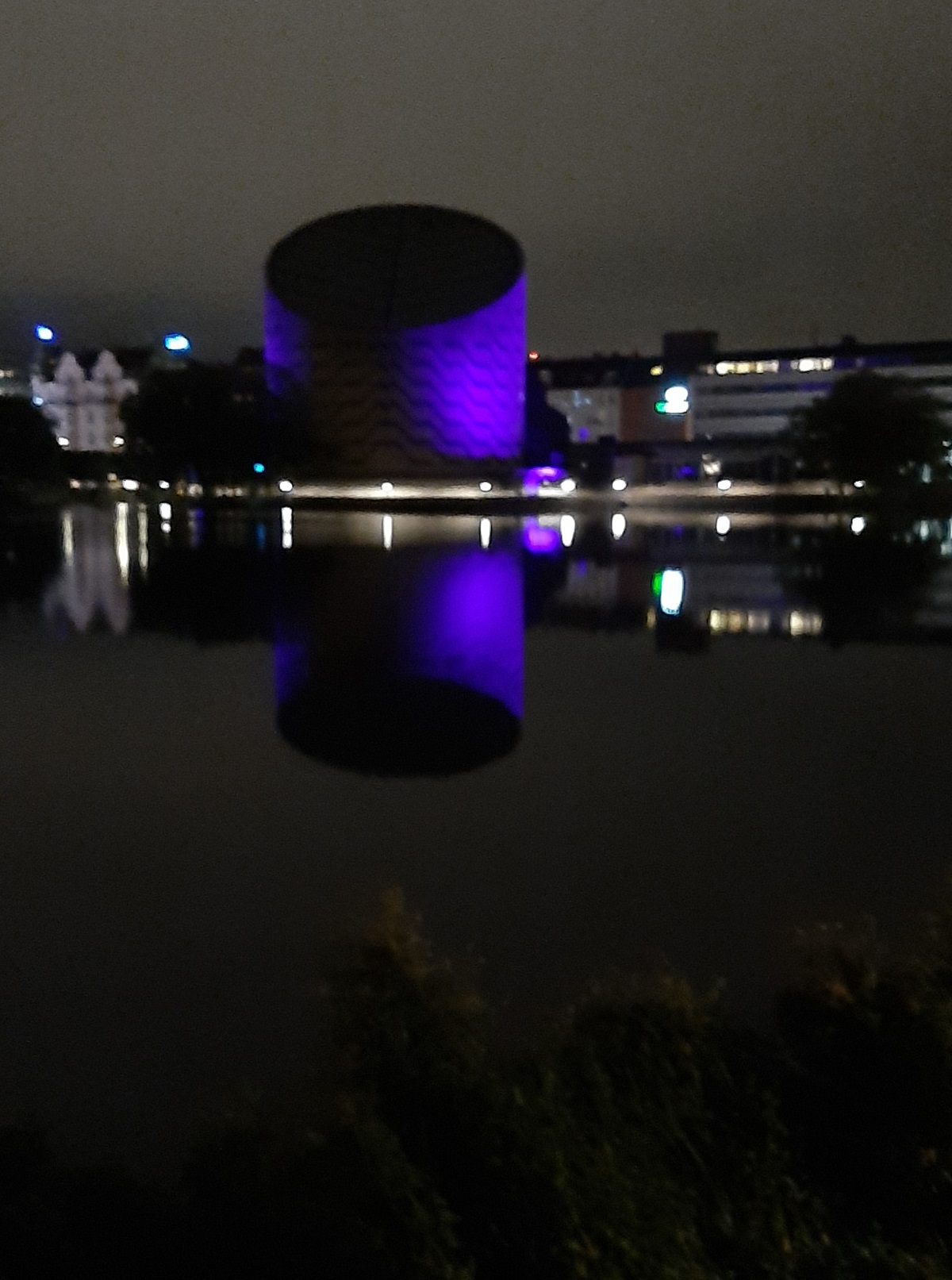
View of Tycho Brahe Planetarium across Sankt Jørgens Sø

Sunday morning demonstrated I really am getting too old for this shit. I had a bit of a lie-in – but still managed to catch hotel breakfast. I sat about and socialised for much of the day until my interview. 2019 is the fiftieth anniversary of the Apollo 11 moon landing, and I am allegedly knowledgeable on the subject – which no doubt explained why I was put on four panels about Apollo and the Moon at Worldcon this August, including two featuring an actual NASA astronaut (one of which I moderated). This likely explains why Flemming Rasch interviewing me about the Apollo programme, and my Apollo Quartet, was added to the Fantasticon programme. Amusingly, Johan had told me earlier that day about his experience at a con some years previously interviewing Iain Banks. He’d been asked to interview Banks for the programme booklet and had done so. On arrival at the con, he was then asked to interview Banks again as part of the programme. But, as he pointed out to Banks just before the programme item, he’d already asked the questions he wanted to ask. So he asked Banks if he would cooperate… and Johan admitted he asked only four questions and Banks gave 15 minute answers to each…

Which is sort of what happened in my interview. Flemming asked a question… and I was off. He managed to squeeze in another three questions. And even then he had to cut me short because the hour was up. I hadn’t actually prepared for the interview, so everything I said was completely off-the-cuff. I’m of the opinion that writers discussing how they write is boring, so instead I decided to focus on what I wrote – which I thought was interesting in its own right: the Apollo programme, Mercury 13, bathyscaphe Trieste, astronaut biographies… Plus, of course, how I came to write the Apollo Quartet, and the many non-genre inspirations I folded into it: the films of Douglas Sirk, Michael Haneke and James Benning; the fiction of Cormac McCarthy and WG Sebald… I enjoyed myself and it seemed the audience found it interesting. I was actually surprised at how much I’d managed to retain (although apparently not enough to turn straight to a page in All That Outer Space Allows to read an excerpt to demonstrate a point; oh well). Of course, as soon as the interview was over and I was back in the lounge area, I thought of loads things I could have mentioned…

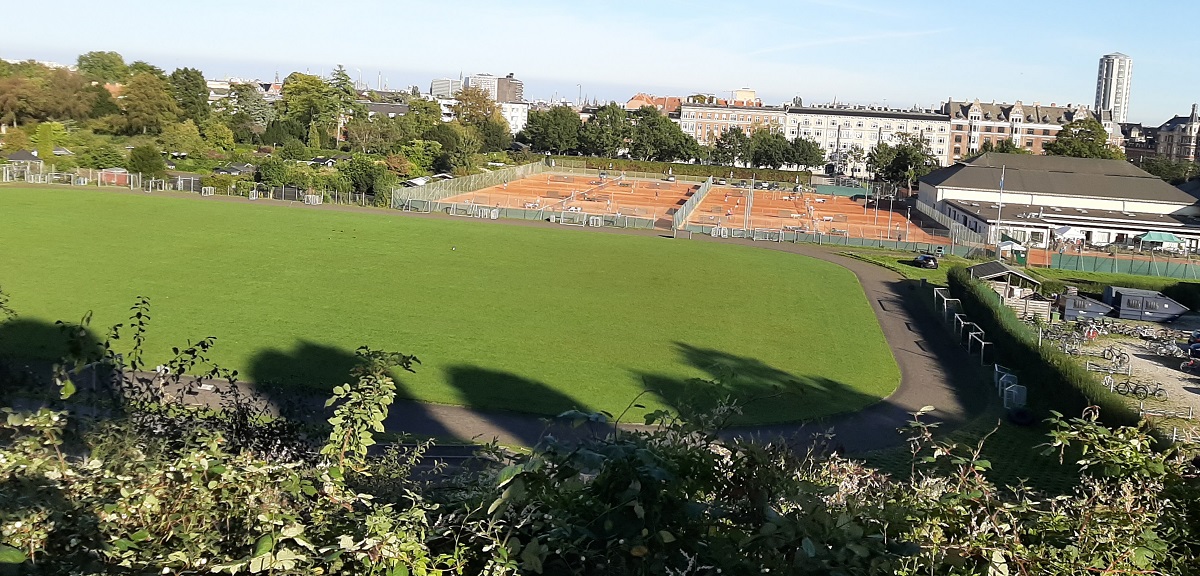
View from Frederiksberg Have

Finally, there was the closing ceremony, in which con chairperson Knud Larn handed the baton over to Flemming. And then there was the dead dog party, which takes place in Cafe Asta, next to Hotel Fy og Bi, in Valby, a 2 km walk from the con venue. (Fantasticon used to be held around the corner from Cafe Asta. Fy and Bi were a Danish silent film comedy duo.) A group of us took a route there through Frederiksberg Gardens, which features one of Copenhagen’s few hills. After sushi, we joined the others at the Cafe Asta. Which closed at half past nine. Boo. Sanna, Johan and I walked back to Frederiksberg, this time detouring through the Carlsberg Brewery, which is in the process of being gentrified into posh offices and apartments. Johan and I looked for a bar that was still open in Vesterbrogade but without success. So it was an early night. Which was probably just as well as our train back to Stockholm departed at 8:23 the next morning.

Somewhere in the Carlsberg Brewery

So that was my third Fantasticon. Nisi Shawl was an excellent guest of honour, extremely approachable and friendly, and very knowledgeable. I purchased three books – well, four, as one was an Ace double – for 5 Danish crowns each (the con was selling off a late fan’s book collection of old sf paperbacks). That’s better than I did at Worldcon. Even if three of the books I already have in storage back in the UK. There’s definitely a Nordic fan group coming together, one that attends cons in all five Nordic countries, numbering between a dozen and two dozen people. You can always be sure of spotting a familiar face, whether the con is in Reykjavik or Helsinki. One of the excellent things about this group is its multilingualism, even if it often uses English as a lingua franca. At Fantasticon, I witnessed a Danish fan and a Swedish fan in conversation, and they were each speaking in their native tongue. Of course, the Scandinavian languages are to some extent mutually intelligible, although not to everyone; but I certainly found myself understanding more Danish than on previous visits after studying Swedish for four months.

Fantasticon is not a big convention – around sixty to seventy people – but it’s a friendly one. And Copenhagen is a lovely city. It’s definitely worth attending. I’ll certainly be keeping an eye open to learn what next year’s theme will be and the identity of the guest(s) of honour…

(Apologies for not name-checking everyone I met and spoke to during the weekend.)