It Doesn't Have To Be Right…

… it just has to sound plausible


3 Comments

Best of the year 2012

It’s that time of year again when I go back through my spreadsheets of books read, films seen and albums bought, and try to decide which are the best five of each. And yes, I do keep spreadsheets of them. I even have one where I record the bands I’ve seen perform live. And no, it’s not weird. It is organised.

Back in June, I did a half-year round-up – see here. Some of the books, films, albums I picked then have made it through to the end of the year, some haven’t. This time, for a change, I’m going to actually order my choices, from best to, er, least-best.

BOOKS
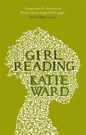
girl_reading1 Girl Reading, Katie Ward (2011)
This is probably the most impressive debut novel I’ve read for a long time. It could almost have been written to appeal directly to me. I like books that do something interesting with structure; it does something interesting with structure. I like books whose prose is immediate and detailed; its prose is immediate (present tense) and detailed. I like books that are broad in subject; it covers a number of different historical periods. And it all makes sense in the end. I’ll certainly be keeping an eye open for further books by Ward. I read this book in the second half of the year, so it didn’t make my half-year best. I wrote more about Girl Reading here.
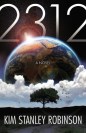
23122 2312, Kim Stanley Robinson (2012)
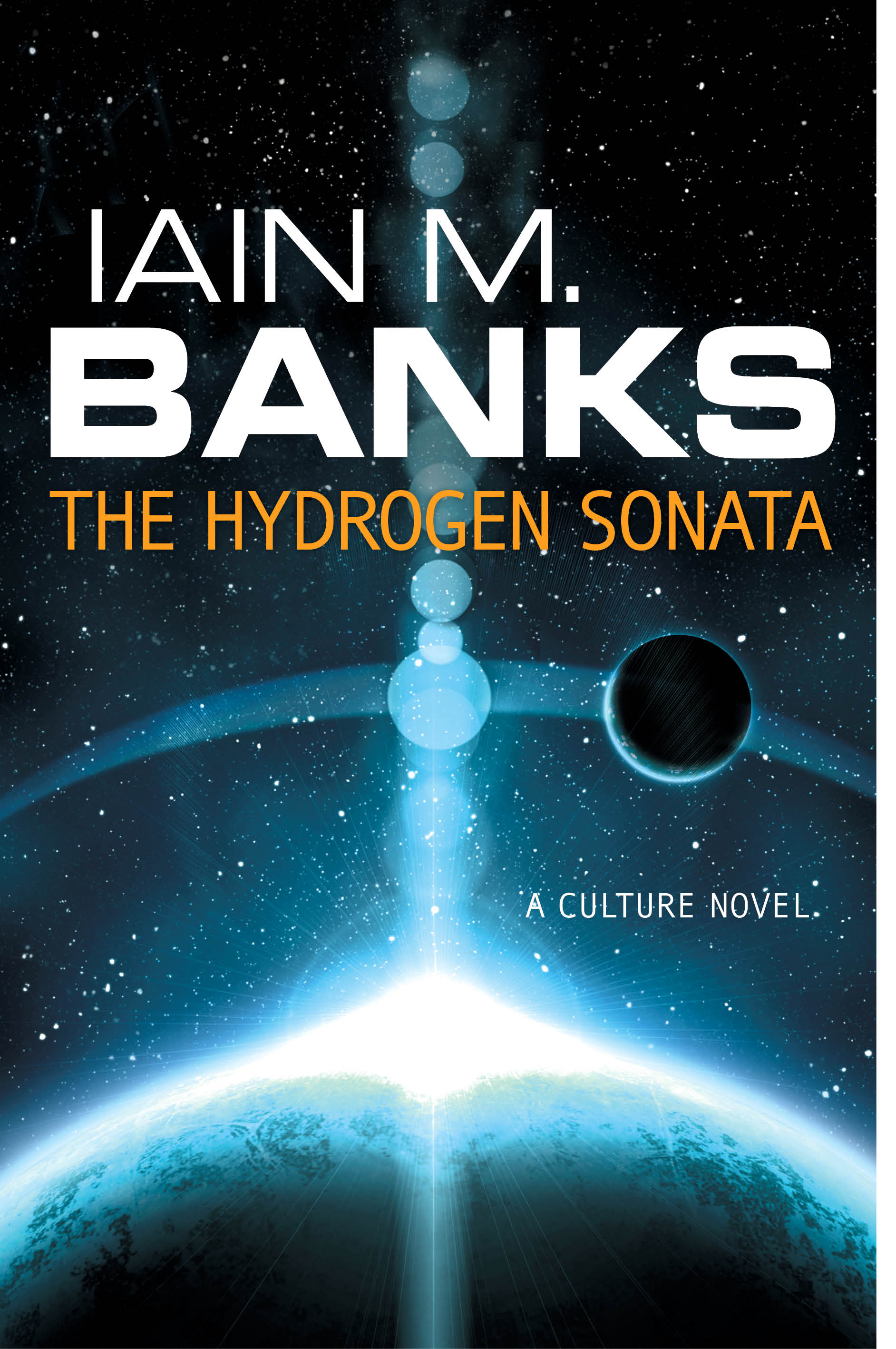
This year, I’ve actually read eleven genre novels first published during the twelve months, which I think may be a personal record. Having said that, it’s been a good year for genre fiction for me, as a number of my favourite authors have had books out. Sadly not all of them impressed (The Hydrogen Sonata, I’m looking at you). 2312 was everything I expected it to be and nothing like I’d imagined it would be. The plot is almost incidental, which is just as well as the resolution is feeble at best. But the journey there is definitely worth it. It is a novel, I think, that will linger for many years. Again, I read 2312 during the latter half of the year, so it didn’t make my half-year list. I wrote more about it here.
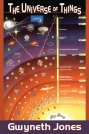
universe-cvr-lr-1003 The Universe of Things, Gwyneth Jones (2011)
Some collections aim for inclusiveness, some collections try for excellence. I’m not sure why Aqueduct Press chose the stories in this collection – it’s by no means all of Jones’ short fiction – but as a representative selection, The Universe of Things does an excellent job. I reviewed it for Daughters of Prometheus here, and I opened my review with the line: “Gwyneth Jones does not write many short stories – forty-one in thirty-seven years – but when she does, by God they’re worth reading.” This book did make my half-year list. Now I just have to read PS Publishing’s larger Jones collection, Grazing the Long Acre

intrusion-ken-macleod4 Intrusion, Ken MacLeod (2012)
The endings of Ken’s last few novels I have not found particularly convincing. It’s that final swerve from near-future high-tech thriller into heartland sf. Though the groundwork is usually carefully done, it too often feels like a leap too far. But not in Intrusion. The world-building here is cleverly done – I love the pastiche of Labour, with its “free and social market” – the thriller plot works like clockwork, and the final step sideways into pure genre slots straight in like the last piece in a jigsaw puzzle. Intrusion is another book I read in the second half of 2012, so it didn’t make my half-year list. I reviewed Intrusion for SFF Chronicles here.
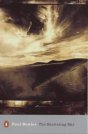
sheltering5 The Sheltering Sky, Paul Bowles (1949)
Curiously, I’d always liked the film adaptation by Bernardo Bertolucci, which inspired me to read the novel, but after finishing the book, I tried rewatching the film and found myself hating it. Mostly it was because the Lyalls, who are creepy and villainous in the novel, had been turned into comic caricatures. A lot had also been left out – though that’s not unusual, given the nature of the medium. The Arabic in the novel used French orthography, which meant I had to translate it twice to work out what it meant. And it looks like four out of the five books in this list I read after June, so the Jones collection is the only one from my half-year list that made it through to the end of the year one.

There are, however, a ton of honourable mentions – it’s turned out to be quite a good year, book-wise. They are: The Bender, Paul Scott (1963), which read like a sophisticated 1960s comedy starring Dirk Bogarde; The Door, Magda Szabó (1987), the best of my world fiction reading challenge (which I really must catch up on and finish); Betrayals, Charles Palliser (1994), a very clever novel built up from several stories, including a fun spoof of Taggart and a brilliant piss-take of Jeffrey Archer; How to Suppress Women’s Writing, Joanna Russ (1983), which should be required reading for all writers and critics; Hear Us O Lord from Heaven Thy Dwelling Place, Malcolm Lowry (1961), which introduced me to the genius that is Lowry; Ison of the Isles, Carolyn Ives Gilman (2012), successfully brings to a close the best fantasy of recent years; Omega, Christopher Evans (2008), a long overdue novel from a favourite writer, and a clever and pleasingly rigorous alternate history / dimension slip work; and Blue Remembered Earth, Alastair Reynolds (2012), the start of a near-future trilogy, which is very good indeed but also stands out because it’s not regressive or dystopian.

FILMS
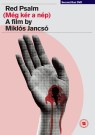
red_psalm1 Red Psalm, Miklós Jancsó (1972)
It’s about the Peasant Uprising in nineteenth-century Hungary, and consists of hippy-ish actors wandering around an declaiming to the camera. Occasionally, they sing folk songs. Then some soldiers arrive and some of the peasants get shot. But they’re not really dead, or injured. Then the landowners turn up and start espousing the virtues of capitalism. But the peasants shout them down. A priest tries to explain the “natural order of things”, but the peasants aren’t having it. Then more soldiers arrive and round up all the peasants. The ending is very clever indeed. It’s a hard film to really describe well, but it’s fascinating and weird and beautifully shot. I wrote about it here.
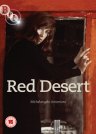
red_desert2 Red Desert, Michelangelo Antonioni (1964)
This was Antonioni’s first film shot in colour and it looks absolutely beautiful. In terms of story, it is much like his earlier masterpieces, L’Avventura, La Notte and L’Eclisse, and, like them, stars Monica Vitti. But also a (weirdly) dubbed Richard Harris. It’s a surprisingly bleak film – although perhaps not “surprisingly”, given that earlier trilogy – but it’s hard not to marvel at the painterly photography and mise-en-scène – who else would have the fruit on a barrow painted in shades of grey in order to fit in with the colouring of the surroundings? I wrote about it here. And I really must write more on my blog about the films I watch.
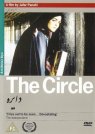
circle3 The Circle, Jafar Panahi (2000)
This is one of those films where one story hands off to another one and so on, and in which there is no real story arc, just a journey through episodes from the lives of the characters. Each of which is a woman living in Tehran, and all of whom have just recently been released from prison. They were not, however, imprisoned for doing things that would be criminal in other nations. As the title indicates, the stories come full circle, and the film’s message is far from happy or pleasing, but there is still room for hope. This film won several awards, though the Iranian authorities were apparently very unhappy with it.
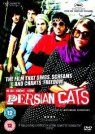
persiancats4 No One Knows About Persian Cats, Bahman Ghobadi (2009)
It’s not about cats, it’s about two musicians in Tehran who have been invited to perform at a music festival in London. But first they need to find some more musicians for their band, and they also need the necessary paperwork to leave Iran. But western-style music, which is what they play, is illegal in Iran, and there’s no way they’ll be able to get the visas they need legally. So they visit all the musicians they know, hoping some of them will be willing to go to London with them, and they also pay a well-known underground figure for the papers they require to travel. It’s an affirming film, but also a deeply depressing one.
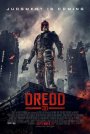
Dredd5 Dredd, Pete Travis (2012)
I was badgered into going to see this at the cinema by Tim Maugham on Twitter. I hadn’t really thought it would appeal to me. Even the fact it was touted as being more faithful to the 2000 AD character didn’t mean I’d like it. Although I grew up reading 2000 AD, Judge Dredd was far from my favourite character, and I’ve not bothered buying any of the omnibus trade paperbacks that are now available. But I went… and was surprised to find it was a bloody good film. It’s sort of like a weird munging together of an art house film and a Dirty Harry film, and strangely the combination works really well. It’s violent and horrible and grim and panders to all the worst qualities in people, but it all makes sense and fits together, and despite its simple plot is cleverly done. I plan to buy the DVD when it is available.

Iranian cinema did well this year for me. Not only did The Circle and No One Knows About Persian Cats make it into my top five, but two more Iranian films get honourable mentions: A Separation, Asghar Fahadi (2011), and The Wind Will Carry Us, Abbas Kiarostami (1999). Kiarostami I rate as one of the most interesting directors currently making films. Other honourable mentions go to: John Carter, Andrew Stanton (2012), which was undeservedly declared a flop, and is a much cleverer and more sophisticated piece of film-making than its intended audience deserved; Monkey Business, Howard Hawks (1952), is perhaps the screwball comedy par excellence; On the Silver Globe, Andrzej Żuławski (1988), is bonkers and unfinished, and yet works really well; there is a type of film I particularly like, but it wasn’t until I saw Sergei Parajanov’s The Colour of Pomegranates that I discovered it was called “poetic cinema”, and his Shadows Of Forgotten Ancestors (1965) is more of the same – weird and beautiful and compelling; and finally, François Ozon’s films are always worth watching and Potiche (2010) is one of his best, a gentle comedy with Catherine Deneuve and Gérard Depardieu in fine form.

ALBUMS
mourningweight1 The Weight Of Oceans, In Mourning (2012)
I saw a review of this album somewhere which made it seem as though I might like it. So I ordered a copy from Finland – which is where the band and the label are from. And I’ve been playing it almost constantly since. It’s Finnish death/doom metal mixed with progressive metal, which makes it the best of both worlds – heavy and intricate, with melodic proggy bits. The Finns, of course, know how to do death/doom better than anyone, but it’s been a surprise in recent years to discover they can do really interesting prog metal just as well – not just In Mourning, but also Barren Earth (see my honourable mentions below).
aquilus2 Griseus, Aquilus (2011)
A friend introduced me to this one. It’s an Australian one-man band, and the music is a weirdly compelling mix of black metal and… orchestral symphonic music. It sounds like the worst kind of mash-up, but it works amazing well. In the wrong hands, I suspect it could prove very bad indeed. Happily, Waldorf (AKA Horace Rosenqvist) knows what he’s doing, and the transitions between the two modes are both seamless and completely in keeping with the atmosphere the album generates. The album is available from Aquilus’s page on bandcamp, so you can give it a listen.
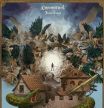
dwellings3 Dwellings, Cormorant (2011)
The same friend also introduced me to this band, who self-released Dwellings. It’s extreme metal, but extreme metal that borrows from a variety of sub-genres. I’ve seen one review which describes them as a mix of Ulver, Opeth, Slough Feg and Mithras, which really is an unholy mix (and two of those bands I count among my favourites). Most of the reviews I’ve seen find it difficult to describe the album, but they’re unanimous in their liking for it. And it’s true, it is very hard to describe – there’s plenty of heavy riffing, some folky interludes, some proggy bits, and it all sort of melds together into a complex whole which is much greater than the sum of its parts. This album is also available from the band’s page on bandcamp, and you can listen to it there. (You’ve probably noticed by now that I’m terrible at writing about music. I can’t dance about architecture either.)
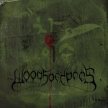
25640_woods_of_ypres_woods_iv_the_green_album4 Woods 4: The Green Album, Woods of Ypres (2009)
Woods of Ypres was a band new to me in 2012. I first heard their final album, Woods 5: Grey Skies & Electric Light, but at Bloodstock I picked up a copy of the preceding album and I think, on balance, I like the earlier one better. The music is a bit like Type O Negative meets black metal, with oboes. Sort of. The opening track ‘Shards of Love’ is, unusually for black metal, about a relationship, and it starts off not like metal at all and then abruptly becomes very metal indeed. An excellent album, with some strong riffs and some nicely quiet reflective moments. (It’s pure coincidence that I chose it as No 4 in my list, incidentally.)
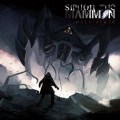
obliterate5 Obliterate EP, Siphon the Mammon (2012)
I have no idea how I stumbled across this Swedish progressive death metal band. It was probably the name that caught my attention. And it is a silly name. But never mind. Anyway, I downloaded the EP from their bandcamp page… and discovered it was bloody good. It’s technical and accomplished, with some excellent riffs and song structures. I particularly like ‘The Construct of Plagues’, which features an excellent bass-line, but the final track ‘End of Time’ is also nicely progressive. And… this is the third album in my top five which is available from the band’s bandcamp page, which surely must say something about the music industry and the relevance of labels… or my taste in music…

This year’s honourable mentions go to: (Psychoparalysis), for a trio of EPs I bought direct from the band, and which are good strong Finnish progressive death metal; Anathema’s latest, Weather Systems, which I liked much more than the three or four albums which preceded, and they were bloody good live too; Hypnos 69’s Legacy, which I finally got around to buying and was, pleasingly, more of the same (this is good, of course); Barren Earth’s The Devil’s Resolve, which is definitely heavier than their debut album, but still very proggy and weird; A Forest of Stars, which is steampunk meets black metal, and it works surprisingly well (check out this video here); Nostalgia by Gwynbleidd, who, despite the name, are Poles resident in New York, and sound a little like a cross between Opeth and Northern Oak; Headspace, I Am Anonymous, another Damian Wilson prog rock project, but I think I prefer it on balance to Threshold’s new album; and Alcest, another band new to me in 2012, who play shoegazer black metal, which, unfortunately, works much better on an album than it does live.

IN CONCLUSION
And there you have – that was the year that was. On balance, I think it’s been a good year in terms of the literature, cinema and music I have consumed. There’s been some quality stuff, and some very interesting stuff too. Which is not to say there hasn’t been some crap as well, but it seemed less numerous this year. This may be because I chose to ignore what the genre, and popular culture, value and focus more on the sort of stuff that appeals directly to me – I’ve cut down on the number of Hollywood blockbusters I watch, I no longer read as much heartland genre fiction. There’s always a pressure to stay “current”, but the more I watch genre and comment on it, the more I see that it does not value the same things I do. It’s not just “exhaustion”, as identified by Paul Kincaid in his excellent review of two Year’s Best anthologies here, but from my perspective also a parting of the ways in terms of objectives, methods and effects. I want stuff – books, stories, etc – that is fresh and relevant, that does interesting things and says something interesting. I don’t want the usual crap that just blithely and unquestioningly recycles tropes and worldviews, stories about drug dealers on Mars in some USian libertarian near-future, space opera novels in which an analogue of the US gets to replay its military adventures and this time get the result it feels it deserved…

I mentioned in a post last week that I don’t read as much genre short fiction as I feel I should. After all, my views outlined above are taken from the little I’ve read on awards shortlists and in year’s best anthologies. Just because that’s what the genre values doesn’t mean the sort of stuff I value doesn’t exist. I just need to find it. So by including a short fiction best of list in 2013, I’ll be motivated to track down those good stories, to seek out those authors who are writing interesting stories.

All of this, of course, will I hope help with my own writing. I had both a very good year, and a not so good year, in that respect in 2012. Rocket Science, an anthology I edited, and quite obviously the best hard sf anthology of the year, was published in April. As was the first book of my Apollo Quartet, Adrift on the Sea of Rains. The Guardian described Rocket Science as “superb”, which was very pleasing. And Adrift on the Sea of Rains has had a number of very positive reviews see here. Unfortunately, as a result of those two publications, I haven’t been very productive. I spent most of the year after the Eastercon working on the second book of the Apollo Quartet, The Eye With Which The Universe Beholds Itself. Those few who have read it say it’s as good as Adrift on the Sea of Rains, which is a relief. Everyone else will get to find out in January, when it’s published. But I really should have worked on some short fiction as well. I’m not the quickest of writers – I marvel at those people who can bang out a short story in a week – but each story you have published, irrespective of quality, widens your audience a little more, adds a little more weight to your name. And that’s what it’s all about. No matter how good people say Adrift on the Sea of Rains is, I’ve only sold just over 200 copies – add in review copies… and that means perhaps between 250 and 300 people have read it. Some semi-literate self-published fantasy novels available on Kindle sell more copies than that in a week…

But that’s all by the by. This post is about 2012, not 2013. Sadly, I didn’t manage to reread much Durrell to celebrate his centenary. I’ve had The Alexandria Quartet by the side of the bed for about nine months, and I dip into it every now and again, but then I have to put it to one side as I have to read a book for Interzone or SF Mistressworks… Speaking of which, I had to drop to a single review a week on SF Mistressworks, but I still plan to keep it going. During 2012, I read 41 books by women writers, compared to 63 by male writers, which is about 40% of my reading (this doesn’t include graphic novels, non-fiction or anthologies). I also reviewed a handful of books for Daughters of Prometheus, although I haven’t posted one there for several months. (I’ve no plans to drop either responsibility in 2013.) Just over a third of my reading was science fiction, and a quarter was mainstream – so sf is still my genre of choice. Numbers-wise, I’ve not managed as many books as last year – only 146 by the middle of December, whereas last year I’d managed 165 by the end of the year. But I think I’ve read some more substantial books this year, and I did “discover” some excellent writers, such as Malcolm Lowry, Katie Ward and Paul Bowles. It’s a shame I never managed to complete my world fiction reading challenge. I still have half of the books on the TBR, so I will work my way through them, though I may not blog about it.

But, for now, it’s Christmas – bah humbug – in a week. And then the start of 2013 follows a week after that. Here’s hoping that next year is better for everyone, that the good outweighs the bad, and that every surprise is a pleasant one.
6 Comments

Whoops, my finger slipped…

There you are, browsing your favourite online purveyor of books and, oh dear, you seem to have bought a bunch of them. That’s what happens to me. Well, that, and being unable to pass a charity shop without popping in to see if they have any decent books on sale. The end result is a book collection which continues to grow and mutate and evolve like some bookish monster out of Quatermass. Or something.

Anyway, here’s the latest additions…

201212096_bookhaula

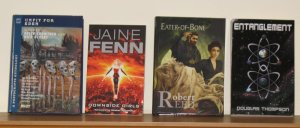
Some small press goodies: both Downside Girls, a collection by Jaine Fenn, and Entanglement, Douglas Thompson, I bought at Novacon. Unfit for Eden and Eater-of-Bone are both from PS Publishing.

201212096_bookhaulb

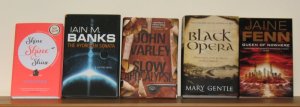
A few recent first editions – Lydia Netzer’s Shine Shine Shine I’ve already written about (see here); likewise Banks’ The Hydrogen Sonata (see here). I suspect John Varley is long past his best, but I’ll give Slow Apocalypse a go anyway. Mary Gentle’s Black Opera has been getting some positive notices. I only have the first of Jaine’s Hidden Empire novels, and Queen of Nowhere is the fifth – so it’ll be a while before I read it.

201212096_bookhaulc

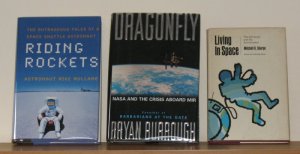
Some books for the space collection. Riding Rockets and Dragonfly are both signed. I’m told Mullane’s autobiography is a really good one. The Burrough is about the Mir space station. Living in Space was dirt cheap on eBay.

201212096_bookhauld

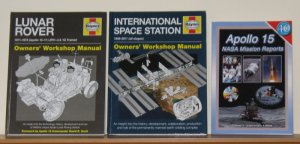
I love how Haynes have started producing these Owners’ Workshop Manuals for all sorts of things – not just the Lunar Rover and International Space Station here, but also the Millennium Falcon, Avro Vulcan, Thunderbirds, RMS Titanic, USS Enterprise, and even Dan Dare’s Spacefleet Operations. Not, of course, that anyone will ever get to own one of those. Apollo 15 NASA Mission Reports is exactly what it says on the cover. I have quite a few of the books.

201212096_bookhaule

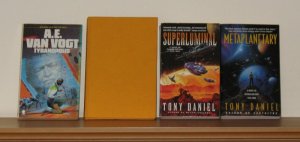
Some books bought at Novacon: Tyranopolis, AE van Vogt; The Quy Effect, Arthur Sellings; and Metaplanetary and Superluminal, Tony Daniel.

201212096_bookhaulf

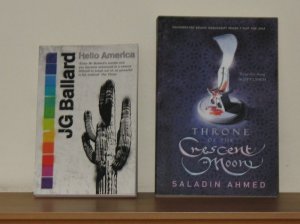
As I’ve got older I’ve found myself appreciating Ballard’s fiction more and more. So I’ve been buying the nicely-packaged 4th Estate paperbacks. Only three more after Hello America and I’ll have the lot. Throne of the Crescent Moon is an ARC, which I’m reviewing for Interzone. I’ve also interviewed the author.

201212096_bookhaulg

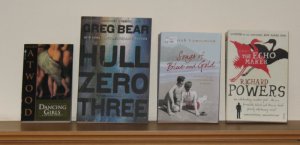
Charity shop finds: Dancing Girls, a Margaret Atwood collection; Greg Bear’s Hull Zero Three was, apparently, mystifyingly shortlisted for the Arthur C Clarke Award; Deborah Lawrenson’s Songs of Blue and Gold may not look like my usual reading fare, but it’s based on Lawrence Durrell and his relationship with his wife when they lived on Corfu; Richard Powers is an author I’ve fancied trying for a while now and The Echo Maker was a fortunate find.

201212096_bookhaulh

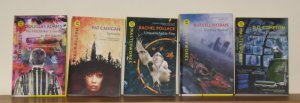
I recently won a competition on the Gollancz blog, and this was the prize: a package of SF Masterworks – The Hitchhiker’s Guide To The Galaxy, Synners, Unquenchable Fire, Riddley Walker and The Continuous Katherine Mortenhoe. Many thanks.

201212096_bookhauli

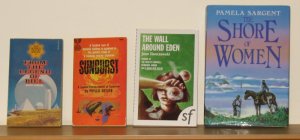
These are for SF Mistressworks and were bought at Novacon. I’ve already reviewed Phyllis Gotlieb’s Sunburst (see here). I had a copy of Mary Staton’s From the Legend of Biel and read it many years ago, but gave it away. I fancied rereading it. The Wall Around Eden is from The Women’s Press. I’ve already reviewed a Pamela Sargent anthology and collection, so The Shore of Women will be her first novel to be reviewed on SF Mistressworks.

201212096_bookhaulj

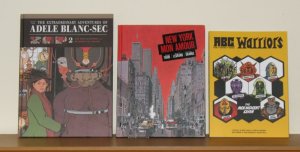
Jacques Tardi’s bandes dessinée are really very good. The Extraordinary Adventures of Adèle Blanc-Sec volume 2 is completely bonkers. I suspect there won’t be a volume 3. New York Mon Amour is a collection of noir stories set in the titular city and despite the setting there’s something distinctly non-American about them. The Fantagraphic editions are nicely put-together, but annoyingly the books are all different sizes. Argh. ABC Warriors: The Meknificent Seven I bought on the strength of fond memories of the strip in 2000AD. I shouldn’t have bothered: it’s cobbled together from war movie clichés, often with dialogue which doesn’t even reach those heights. Ah well.

201212096_bookhaulk

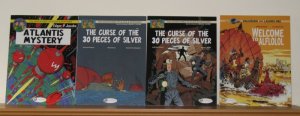
These bandes dessinée are much better. Atlantis Mystery is an original Edgar P Jacob’s story, and very text-heavy. The story is complete tosh too. The Curse of the 30 pieces of Silver, part 1 and part 2, is of much more recent vintage, and is a mish-mash of Tintin-esque mystery-adventure and Dan Brown Biblical conspiracy, with a secret Nazi cabal thrown in as the villains. (Incidentally, Amazon’s database looks completely buggered on the Blake and Mortimer books – it has Atlantis Mystery and The Curse of the 30 pieces of Silver, part 2 down only by volume number, not title; so title searches won’t work.) Welcome to Alflolol is the fourth of the Valérian and Laureline series to be published in English by Cinebook.


8 Comments

From the Sublime to the ridiculous

The Gzilt are unusual among all galactic civilisations in that the holy book of their religion has proven to be demonstrably true. It predicted scientific advances long before they were made. There was other stuff in the Book of Truth, of course – the typical moralistic posturing, the usual self-serving self-importance around which religions accrete, all that sort of stuff. But people took it seriously because parts of it actually became true.

Now, the Gzilt are about to Sublime. This means they are about to leave this universe en masse for another where everyone lives in– Well, no one really knows because those few who have returned have been mysterious and enigmatic to the point of uselessness. But Subliming is good. And the universe to which races Sublime is apparently infinitely large and infinitely wonderful and everyone there feels infinitely uplifted.

Subliming calls for celebration, so various other races are descending on the Gzilt worlds to wish the Gzilt well and to, hopefully, if given permission, loot what’s left for themselves. A representative of the remnants of the Zihdren, the Gzilt’s original mentors, who Sublimed thousands years before, turns up with some unwelcome news. But before it can be revealed the Zihdren-Remnanter ship is callously destroyed by a Gzilt battleship. This could upset things. As could the news the destroyed ship was carrying.

Also, the Gzilt were one of the original races – they’re humanoid; very much so, in fact – who agreed to band together to form the Culture ten thousand years earlier. But, for whatever reason, they chose to go their own way. There is a person in the Culture who was there at those original negotiations, and he’s still alive and it seems he might know something about the news the destroyed Zihdren-Remnanter ship was carrying. So the Culture ships hanging around to see the Gzilt Sublime are keen to find out what it was…

It doesn’t take long – less than a third of the way into the book, in fact – before Banks reveals the secret carried by the destroyed ship. The Book of Truth, it transpires, was a put-up job. By a group of Zihdren academics. For reasons of their own – which are alien, no doubt – they decided to plant a holy text which could be proven true on the primitive Gzilt. And for more than ten thousand years, that the Book of Truth might not be precisely what it claims to be has never occurred to those who take it as their creed. Even though they are allegedly civilised enough to Sublime.

But, well, they’re not really civilised at all. And Subliming doesn’t appear to be a reward for being a good bunch of highly civilised people either. Because the Gzilt response to news of the Book of Truth’s, er, true origin becoming known is to go on a berserk murdering spree. The politician in charge during the last days of the Gzilt sends one of the Gzilt Regiments to massacre another who had got wind of the destruction of Zihdren-Remnanter ship. Said politician had also promised scavenger rights to one alien race, the Liseiden, but when the Ronte win the rights instead, he causes a situation in which the Liseiden destroy the Ronte fleet.

And the final action-piece of the novel is an all-out high-bodycount attack on a blimp full of partygoers by a single-minded special forces colonel and his band of lethal attack robots.

Somewhere threading her way amongst all this is Vyr Cossont. Who has four arms. Which she needs to play a piece of music on a preposterous instrument called an Antagonistic Undecagonstring. The piece of music, which was written thousands of years before and is allegedly unplayable, is called…

The Hydrogen Sonata‘.

This is the tenth Culture novel and even before it appeared The Hydrogen Sonata was being heralded as a “return to form” (which is quite a good trick) after the disappointing Matter and Surface Detail. Unfortunately, I don’t think it is. In fact, I think Matter was a much more interesting novel.

The Hydrogen Sonata is pacey, Vyr Cossont is an engaging protagonist (though she’s somewhat at the beck and call of events), there are one or two nice bits of invention, and there are a number of conversations between Ship Minds which are fun. But. The secret of the Book of Truth is revealed early, which robs the rest of the novel of all tension. You keep on reading expecting the other shoe to drop – but there is no other shoe. The way the violence mounts is stupidly cartoonish, particularly for a people who are days away from Subliming. In fact, the second half of The Hydrogen Sonata reads more like an Arnold Schwarzenegger film adaption of a Culture novel than an actual Culture novel.

And that title? What relevance exactly does that have to the story? I know Banks’ Culture novels usually boast titles peripheral to the point of irrelevance, but Cossont’s attempt to play a piece of unplayable music has no impact on the plot whatsoever. Perhaps the title is a joke, perhaps it needs to be decoded… and since hydrogen’s symbol is H and a sonata is a word for a type of musical piece, it could read as…

The H(ot) Air.

Because as Culture novels go, The Hydrogen Sonata contains far more bluster than the other books in the series.

(Sorry, could not resist the title to this piece.)


4 Comments

Readings of recentness

And there’s me thinking I’d given up commenting on the books I’d read here on my blog…

Sunburst, Phyllis Gotlieb (1964). A review of this will be going up on SF Mistressworks this week (need MOAR REVIEWS, btw. Volunteer. Please.) Garish cover art, a strapline that reads, “A fiendish race of demonic children is spawned in the genetic chaos of a runaway nuclear explosion”, a thirteen-year-old girl as a protagonist, and a prose style that feels two decades earlier that its publication date… It’s actually not bad.

Shine Shine Shine, Lydia Netzer (2012). About which I wrote some words here.

The Maltese Falcon, Dashiell Hammett (1930). This is allegedly the best crime noir novel ever written, which doesn’t say much for the genre. I knew the story from the Bogart film, and was surprised at how faithful an adaptation it proved to be. There’s a feeling throughout the story that Hammett was blithely making shit up… and then there’s this section on the history of the eponymous bird which names various mediaeval texts and it all seems very convincing. I liked Gutman, and Hammett did a good job with his dialogue. Spade was a cypher, and I was soon sick to death of reading about his “wooden features”. Couldn’t get a handle on the femme fatale or Joe Cairo. The functional prose was, at best, functional. The film is better.

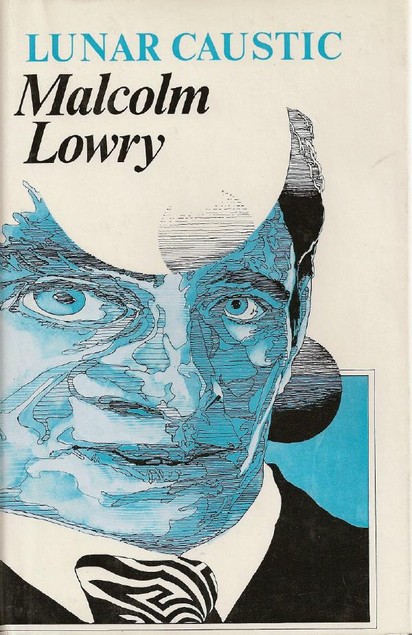
Lunar Caustic, Malcolm Lowry (1968). Which is perhaps chiefly interesting because of its publishing history. An early version of this novella was accepted for publication in Story magazine in the 1930s, but Lowry called it back. And continued to work on it. I can sort of understand the impulse. When Lowry died in 1957, he left behind several manuscript versions, and his wife and Earle Birney, a neighbour and university professor of English, spliced together this 1968 edition out of them. It’s set in a psychiatric hospital in New York and is, like much of Lowry’s fiction, partly autobiographical. There are moments of genius in it, though it does feel somewhat slight compared to some of his other novella-length fiction, especially ‘Through the Panama’. Also, its publication history has disguised the fact that it’s set in 1936, when Lowry checked himself into Bellevue Psychiatric Hospital (though he started work on it in 1934, on his arrival in New York). As a result, it feels weirdly old-fashioned for its time – given its publication year it’s tempting, for example, to read it as a contemporary of One Flew Over the Cuckoo’s Nest, which suggests that psychiatric hospitals changed very little in the intervening three decades. Lunar Caustic was intended to be a part of a seven-novel sequence, The Voyage That Never Ends, which would I suspect have been a major work of English literature. As it is, we can only treasure what little we have.

The Watcher, Jane Palmer (1986). And this one I did review for SF Mistressworks and you can see my review here.

Girl Reading, Katie Ward (2011). A very impressive debut, and almost certain to end up on my top five books of the year. I wrote about it here.

Sion, Philip Boast (1999). Boast’s weird alternate secret biblical histories are something of a guilty pleasure, but I think this one pushed the weirdness factor a bit too far. It’s set in Biblical Judea, and told from the point of view of Mary Magdalene. Except she’s not really Mary Magdalene. Whoever she is, she has lived before, and remembers historical events dating back to Moses and Abraham, and even much, much earlier. In Sion, Joseph and Mary belong to a sect, but Jesus also has brothers and sisters. And it was Jesus’ brother James who is considered the messiah of prophecy. But Jesus truly is the Son of God, although his message of love is anathema to the sect and to their conception of a messiah. Jesus marries Mary Magdalene, and after the crucifixion, Mary and child escape to France. The story is then narrated by their son, Jude, who travels and eventually discovers the Ark of the covenant and its secret. He dies and then becomes a disembodied intelligence who leaps from body to body, occasionally meeting up with his mother, who is apparently doing the same. The final section explains that Mary was a passenger aboard an asteroid starship crossing through this universe, but which crashed and stranded a group of them on prehistoric Earth. Or something. It’s not entirely clear. It’s a shame the book is so unbalanced, with far too much of the narrative spent on too detailed a description of Mary’s time in Judea. It’s only when Jude appears that it picks up pace, but even then it throws away the entire point of the plot in a hurried final section. Disappointing.

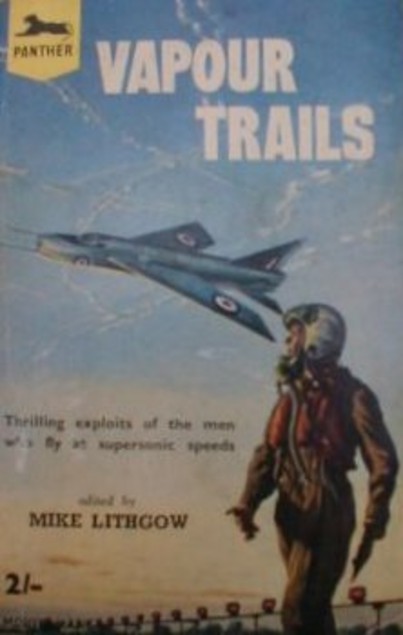
Vapour Trails, Mike Lithgow, ed. (1958). Funniest book I’ve read all year. It’s a series of essays about test piloting by British pilots of the day. You get the impression that a number of the anecdotes they recount have seen plentiful use in after-dinner speeches. The more astonishing incidents are those set during the really early days of aviation, where anyone with sufficient money could buy a plane and learn to fly it themselves. One test pilot, for example, tells of an incident in the 1920s at an airfield where he worked. A wealthy German had bought himself a Blériot plane and was learning how to fly it. Blériots, apparently, could manage an altitude of 200 feet on warms days, but only 20 feet on cold days. The German set off across the airfield in his plane, and eventually took off. Just as he was about to clear the hangars, he turned off his engine… and the plane promptly crashed. When asked why he’d turned off the engine, he explained he’d picked up a tail wind and thought that was enough to keep him flying… Recommended, even if you’re not an aviation buff.

The Ascendant Stars, Michael Cobley (2011). Is the third and final book of Cobley’s Humanity’s Fire space opera trilogy, and notable among such types of books in that it actually resolves the plot and leaves pretty much everything neat and tidy. In the previous two books – Seeds Of Earth and The Orphaned Worlds – Cobley went slightly berserk and set so many balls spinning, it was hard to keep track of them all. There was the invasion of Darien by an imperialistic alien race, there were the cyborg Legion of Avatars imprisoned in hyperspace and about to break free, the lost human colony who have been operating as mercenaries for the bad guys but have now schismed, the planned terrorist attack which turns out to be much more than it seems, and I forget what else. And it appears it’s all a feint or something because the Godhead, a vast machine intelligence resident in hyperspace, wants to transcend and needs to blow up fifty suns to do so. Cobley handles his large cast with deftness, there are some nicely-written set pieces, and his universe contains plenty of variety and diversity. However, and perhaps it’s just me, but it all feels a bit tired. The Humanity’s Fire trilogy is an accomplished space opera trilogy, but I’ve lost faith in the subgenre, in its “anything goes” ethos, its “chuck everything in” world-building… I think we’re seeing the end of new space opera, British or otherwise. It’ll either settle into a rut, much as high fantasy has done for the past twenty years, or it will slowly fade away. It already feels a bit like the twentieth century, ie a progressive experiment that people are inexplicably turning their back on – cf Leviathan Wakes. Regression is not the next step. We need something new to come along, and I think, and hope, we may be seeing New Hard Science Fiction poised to take its place…


8 Comments

Some recent readings

It’s been a while since I last documented what I’ve been reading, other than the occasional book I’ve reviewed here – such as those for my reading challenge. Not every book I’ve read not previously written about recently is worth mentioning, but here are a few that are:

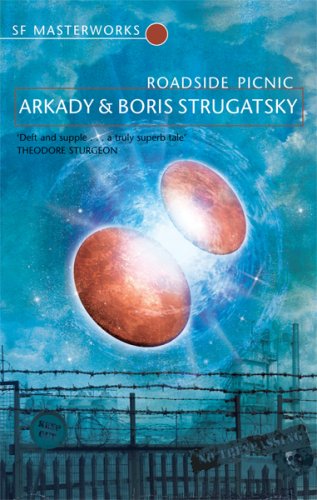
Roadside Picnic, Arkady & Boris Strugatsky (1972)
The edition I read was the SF Masterworks edition – that is, the original SF Masterworks edition, No 68 when they were numbered, which I think uses the 1977 translation. Gollancz are about to publish a new edition, using a new translation. This is doubly annoying because the new translation is apparently greatly superior to the old one, but since the edition I own is part of a numbered series I’m reluctant to replace it… Because while I love the central premise of Roadside Picnic, and I’m a huge fan of Tarkovsky’s film adaptation of it, I’m not sure why a Russian novel had to read like bad US pulp fiction. The story is set in an invented Commonwealth country, but reads like it’s set in the US, and a somewhat backwards area of the country at that. It is also rife with continuity errors and, I see from the Wikipedia page, that the internal chronology has also been completely garbled. I’d like to read the new translation to see how much of an improvement it really is, but for now I’ll stick to the film.

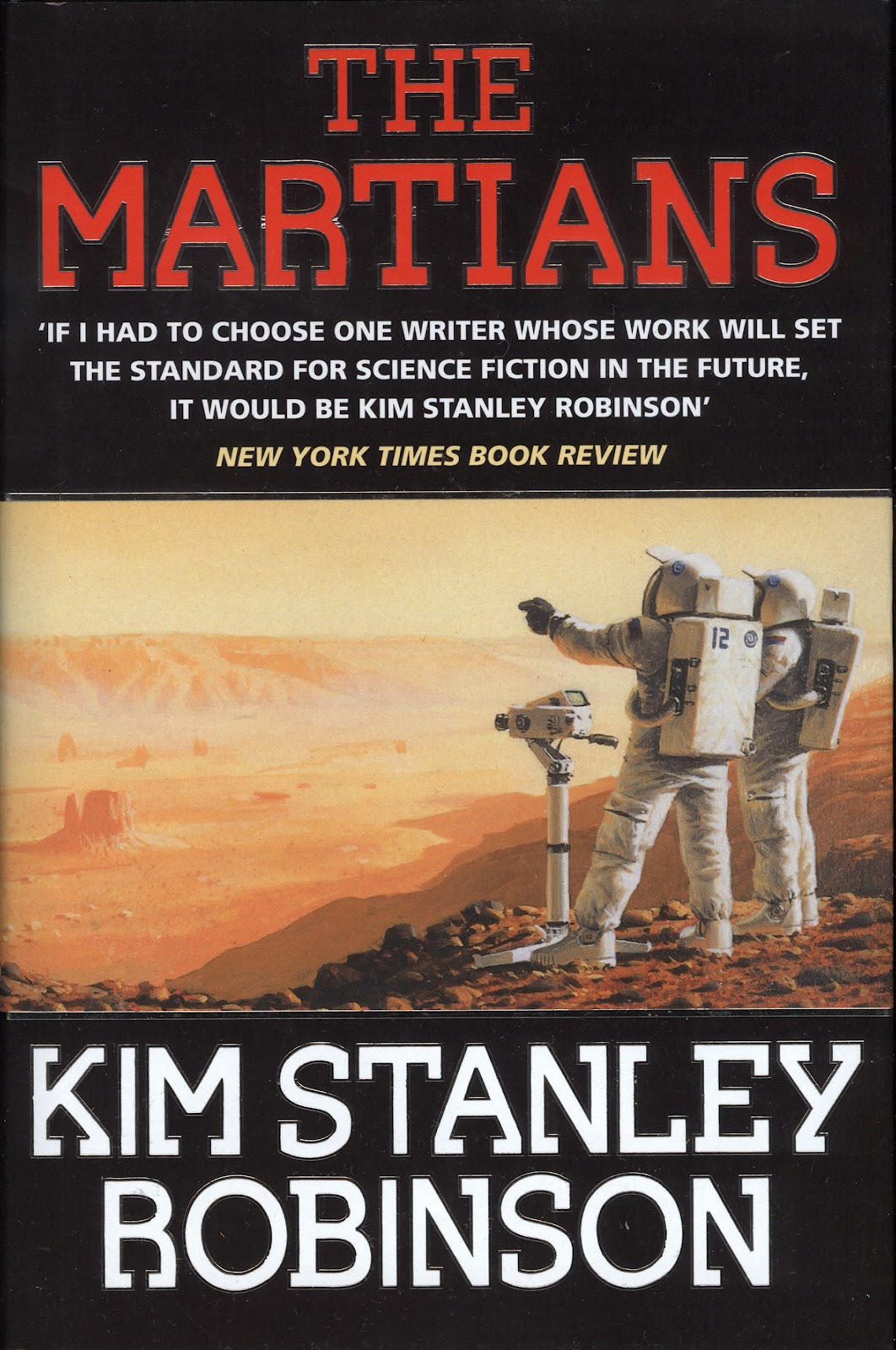
The Martians, Kim Stanley Robinson (1999)
This has been sat on my bookshelves since it was originally published in 1999, and I’ve been meaning to read it for years. But with one thing then another, and other books, it seemed to get shuffled further down the TBR. But since I needed to read up on Mars for Apollo Quartet 2, I took the opportunity of finally reading it. And I’m glad I did. The centre of the book is the novella, ‘Green Mars’, which was originally published in Asimov’s in 1985 but which I’d read in the early 1990s as one half of a Tor double (with Clarke’s ‘A Meeting with Medusa’). ‘Green Mars’ is about an expedition to climb the 22,000 ft escarpment which surrounds Mons Olympus (the diagram prefacing the novella, incidentally, has the distances all wrong: Mons Olympus is not 226 kms high, that would be stupidly huge). It’s basically a climbing story, and while Robinson succeeds in getting across the strangeness of the environment he curiously fails to mention the low gravity except in passing. Other stories in The Martians describe encounters between the two main characters of ‘Green Mars’. Some stories are alternate takes on the Mars trilogy – including one, in fact, in which the First Hundred were never sent. Some pieces read like deleted scenes from the Mars trilogy; others read like a working-out of scenes which did appear. As a companion volume to Red Mars, Green Mars and Blue Mars, The Martians does the job interestingly and well, without reading like some sort of horrible RPG supplement.

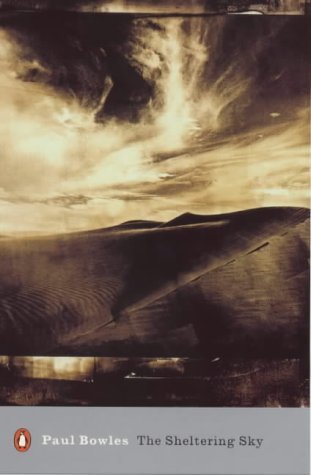
The Sheltering Sky, Paul Bowles (1949)
I watched the Bernardo Bertolucci movie adaptation of this book, loved it, then read the book, and then watched the film again… and hated it. So much had been missed out, and the Lyalls had been reduced to comic caricatures. The film seemed to rely more on its scenery than its characters’ situation. In direct contrast to the book. The Moresbys have arrived in North Africa in the late 1940s to go “travelling”. As they journey deeper into the sub-Saharan interior, so they come further adrift from the world they have left behind. This eventually results in Port Moresby dying and his wife, Kit, falling in with some Tuaregs and being taken as a wife by one. The Sheltering Sky is neither a positive nor an especially active book. The Moresbys are jaded and languid, and even their African surroundings fail to generate any enthusiasm in them. There’s a good reason why this book is a classic. Incidentally, the book’s Arabic followed French spelling rules, which meant I had to translate each word twice – ksar, for example, is usually Romanised in English as qasr – ﻗﺼﺮ: it means “palace”.

A Usual Lunacy, DG Compton (1978)
Published by The Borgo Press in the US, although a massmarket paperback was later published by Ace. For some reason, a few of Compton’s books were never published in the UK, even though he was a British writer. But he’s not the only UK sf writer that has happened to. A Usual Lunacy is pretty much pure Compton – near-future, satirical, two-handed narrative (one male and one female viewpoint character), and based around a single idea. In this case, the idea, alluded to in the title, is a viral form of l’amour fou. The existence of which is then used in an insurrectionist plot in a somewhat totalitarian near-future UK. The story is initially presented as a court case, and only through the testimony of experts and witnesses, and then flashbacks, does it reveal that it’s all to do with an aeroplane hijacking, done in order to release a rebel leader from prison. It’s not one of Compton’s best works – the background is thin, the plot is rushed, and the central conceit seems a little arbitrary. But the characterisation is spot-on, the writing is as good as ever, and it’s still a great deal better than anything Compton’s more popular contemporaries ever produced.

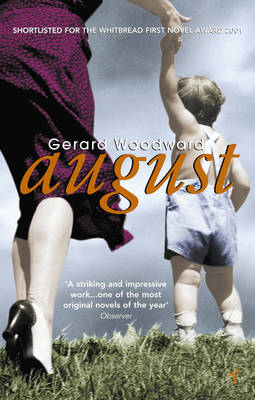
August, Gerard Woodward (2001)
Woodward is a poet who has to date written four novels and a collection of short stories. August is his first novel. I forget where I saw mention of Woodward, but wherever it was it persuaded me his fiction might appeal so I kept a weather eye open for copies in charity shops… and one afternoon scored three – August, I’ll Go To Bed At Noon and A Curious Earth – for 99p each in the same shop. Having now read the first book, I’ll definitely be reading the other two. I thought at first that August was trying a bit too hard, there were a few too many adjectives, a few too many instances of precious prose… but it soon settled down and turned good. From the 1950s through to the 1970s, each summer a family from London spend three weeks camping in a field belong to a particular farm in Wales. August is the story of those holidays, and of the family, and of what happens to it, both in Wales and London. There’s some lovely writing in it and the cast are handled especially well.

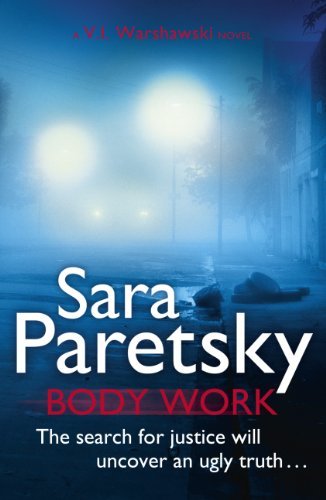
Body Work, Sara Paretsky (2010)
I’ve been a big fan of Paretsky’s novels for years. The last few, however, have felt a little disappointing. This one made a desperate effort to sound relevant, with its mentions of Twitter, Facebook and other social media, but was still based around a form of performance art that felt more 1990s than twenty-first century. Admittedly, the underlying plot – US security firms in Iraq, corporations which cheat and lie to maintain profits – is very much of this century. Warshawski’s support staff continues to grow, which makes her feel more grounded a character than before, but she doesn’t quite have that sense of belonging that Grafton gives Kinsey Milnhone. Paretsky’s books are always worth reading, but Body Work didn’t quite manage the levels of anger of the preceding Fire Sale, which is a pity.

It doesn’t look like much does it? And I suppose the number of notable books I’ve read is not especially high. But along with the above, I’ve also read Blue Remembered Earth, which I plan to write about in more depth; some research for Apollo Quartet 2 – Mission to Mars, The Mars One Crew Manual, The Fallacy of Fine-Tuning (that last one made my brain hurt); several books reviewed for SF Mistressworks; a terrible Bond collection by Fleming, For Your Eyes Only; The Piano Teacher for my reading challenge (see here); and a possible British sf masterwork, DF Jones, Implosion (it’s no masterwork, see here); some Sebastian Faulks, Human Traces (see here) and A Week in December; Kim Stanley Robinson’s 2312, see here, and Ken MacLeod’s Intrusion, reviewed on SFF Chronicles; two reviews books for Interzone; and a so-so Raymond Chandler. Of course, I’ve also been busy working on the aforementioned Apollo Quartet 2, and every time I finish a section and mark it finished, I think of something that needs layering into the prose…


3 Comments

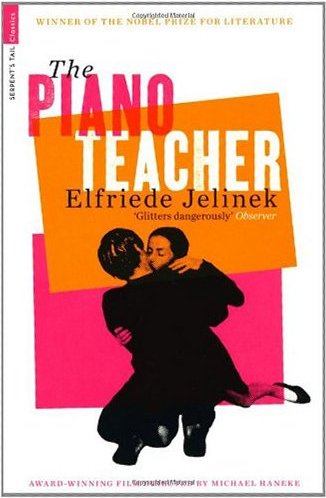
World fiction reading challenge #6: The Piano Teacher, Elfriede Jelinek

Yes, I know; this is neither the sixth month of the year, nor the sixth book I’ve read for this year’s reading challenge. In fact, the challenge has not been going very well. I got bogged down in Orhan Pamuk’s My Name is Red back in March, so gave up on it and moved onto Mariama Bâ’s So Long a Letter, which I read a month late (see here). Then I got bogged down again, but this time in Javier Marías’ Fever and Spear… And that threw me off my schedule completely – so much so that I’ve only just read June’s book, The Piano Teacher by Elfriede Jelinek, in September…

I know the story from Michael Haneke’s excellent 2001 film adaptation, and reading the novel on which a great film is based is always a hostage to fortune. Typically, books are better than the films made of them, but when the film itself is so good… Happily, the novel proved to be noticeably different to the film; unhappily, it proved a less satisfying read than the film is a viewing experience.

Erika Kohut is a piano teacher at the Vienna Conservatory. She lives with her mother, a controlling, shrewish woman. But Erika’s prim and proper demeanour hides a secret – in the evenings, she sneaks about the city, visiting peep shows and spying on prostitutes going about their business. She buys expensive clothing, which makes her mother furious as they’re supposed to be saving for a bigger and more modern apartment, but never wears it.

And then one of Erika’s students, Walter Klemmer, finds himself attracted to his teacher, and sets about seducing her. But she responds by telling him exactly how he is to woo her – it involves bondage and humiliation – but he’s not so sure he can cope with her demands. He wants to be in control, he must be in control.

The Piano Teacher was first published in 1986 in Austria, as Die Klavierspielerin, and first published in English in 1988. The edition I read, published in 2010 by Serpent’s Tail, appears to use the original Weidenfeld & Nicolson translation from 1988, which means a lot of it has been translated into idiomatic American English. It doesn’t feel right. I’ve come across this before, when a novel translated into English uses American vernacular when it’s quite clearly not set in the US nor has American characters. There must be other ways to signal that the original was written in the demotic without resorting to clichés that only apply in the US and which often date quickly.

None of this is helped by Jelinek’s propensity to jump from metaphor to metaphor within a single paragraph. It feels like a lack of control over her material, yet in all other respects Jelinek’s prose is so tightly-written and brusque that it’s plain control is one of her chief strengths. Other elements of her style I found less problematic – dialogue, for example, is not always indicated by speech marks, and is sometimes only reported. The narrative remains tightly-focused on its three main characters – Erika, her mother, and Walter – and makes for a claustrophobic read. None of the central trio are at all sympathetic. The mother is quite horrible, Walter is the embodiment of youthful male arrogance, and even Erika herself feels damaged.

The Piano Teacher is not a comfortable read, just as Haneke’s film is not comfortable viewing. It’s a book that’s easier to admire than to like. I didn’t take to it as I did to Szabó’s The Door (see here), but I do think I’d like to read more Jelinek.


4 Comments

100 Greatest Novels meme

I stumbled across mention of this list on LibraryThing. It apparently comes from The Novel 100: A Ranking of the Greatest Novels of All Time by Daniel S Burt, a specialist in Victorian literature at a US university. Burt’s book was published in 2004, but it seems like an almost stereotypical list of classic literature by Dead White Males – with a few women and POC for variety. Burt clearly has his favourites – I find it hard to believe that some authors, on matter how great, could contribute more than a single work to a Best 100. In effect, Burt is claiming that, for example, Dickens’ third best work is better than the best work of hundreds of thousands, if not millions, of other authors.

Anyway, it’s a list. Of books. Which means… book meme. As usual, bold them if you’ve read them, italicise them if they’re on the TBR.

1 Don Quixote, Miguel de Cervantes (1605, 1630)
2 War and Peace, Leo Tolstoy (1869)
3 Ulysses, James Joyce (1922)
4 In Search of Lost Time, Marcel Proust (1913-1927)
5 The Brothers Karamazov, Feodor Dostoevsky (1880)
6 Moby-Dick, Herman Melville (1851)
7 Madame Bovary, Gustave Flaubert (1857)
8 Middlemarch, George Eliot (1871-1872)
9 The Magic Mountain, Thomas Mann (1924)
10 The Tale of Genji, Murasaki Shikibu (11th Century)
11 Emma, Jane Austen (1816)
12 Bleak House, Charles Dickens (1852-1853)
13 Anna Karenina, Leo Tolstoy (1877)
14 Adventures of Huckleberry Finn, Mark Twain (1884)
15 Tom Jones, Henry Fielding (1749)
16 Great Expectations, Charles Dickens (1860-1861)
17 Absalom, Absalom!, William Faulkner (1936)
18 The Ambassadors, Henry James (1903)
19 One Hundred Years of Solitude, Gabriel Garcia Marquez (1967)
20 The Great Gatsby, F Scott Fitzgerald (1925)
21 To The Lighthouse, Virginia Woolf (1927)
22 Crime and Punishment, Feodor Dostoevsky (1866)
23 The Sound and the Fury, William Faulkner (1929)
24 Vanity Fair, William Makepeace Thackeray (1847-1848)
25 Invisible Man, Ralph Ellison (1952)
26 Finnegans Wake, James Joyce (1939)
27 The Man Without Qualities, Robert Musil (1930-1943)
28 Gravity’s Rainbow, Thomas Pynchon (1973)
29 The Portrait of a Lady, Henry James (1881)
30 Women in Love, DH Lawrence (1920)
31 The Red and the Black, Stendhal (1830)
32 Tristram Shandy, Laurence Sterne (1760-1767)
33 Dead Souls, Nikolai Gogol (1842)
34 Tess of the D’Urbervilles, Thomas Hardy (1891)
35 Buddenbrooks, Thomas Mann (1901)
36 Le Père Goriot, Honoré de Balzac (1835)
37 A Portrait of the Artist as a Young Man, James Joyce (1916)
38 Wuthering Heights, Emily Bronte (1847)
39 The Tin Drum, Günter Grass (1959)
40 Molloy; Malone Dies; The Unnamable, Samuel Beckett (1951-1953)
41 Pride and Prejudice, Jane Austen (1813)
42 The Scarlet Letter, Nathaniel Hawthorne (1850)
43 Fathers and Sons, Ivan Turgenev (1862)
44 Nostromo, Joseph Conrad (1904)
45 Beloved, Toni Morrison (1987)
46 An American Tragedy, Theodore Dreiser (1925)
47 Lolita, Vladimir Nabokov (1955)
48 The Golden Notebook, Doris Lessing (1962)
49 Clarissa, Samuel Richardson (1747-1748)
50 Dream of the Red Chamber, Cao Xueqin (1791)
51 The Trial, Franz Kafka (1925)
52 Jane Eyre, Charlotte Bronte (1847)
53 The Red Badge of Courage, Stephen Crane (1895)
54 The Grapes of Wrath, John Steinbeck (1939)
55 Petersburg, Andrey Bely (1916, 1922)
56 Things Fall Apart, Chinue Achebe (1958)
57 The Princess of Cleves, Madame de Lafayette (1678)
58 The Stranger, Albert Camus (1942)
59 My Antonia, Willa Cather (1918)
60 The Counterfeiters, André Gide (1926)
61 The Age of Innocence, Edith Wharton (1920)
62 The Good Soldier, Ford Madox Ford (1915)
63 The Awakening, Kate Chopin 1899
64 A Passage to India, EM Forster (1924)
65 Herzog, Saul Bellow (1964)
66 Germinal, Émile Zola (1855)
67 Call It Sleep, Henry Roth (1934)
68 USA Trilogy, John Dos Passos (1930-1938)
69 Hunger, Knut Hamsun 1890)
70 Berlin Alexanderplatz, Alfred Doblin (1929)
71 Cities of Salt, Abd al-Rahman Munif (1984-1989)
72 The Death of Artemio Cruz, Carlos Fuentes (1962)
73 A Farewell to Arms, Ernest Hemingway (1929)
74 Brideshead Revisited, Evelyn Waugh (1945)
75 The Last Chronicle of Barset, Anthony Trollope (1866-1867)
76 The Pickwick Papers, Charles Dickens (1836-1867)
77 Robinson Crusoe, Daniel Defoe (1719)
78 The Sorrows of Young Werther, Johann Wolfgang von Goethe (1774)
79 Candide, Voltaire (1759)
80 Native Son, Richard Wright (1940)
81 Under the Volcano, Malcolm Lowry (1947)
82 Oblomov, Ivan Goncharov (1859)
83 Their Eyes Were Watching God, Zora Neale Hurston (1937)
84 Waverley, Sir Walter Scott (1814)
85 Snow Country, Kawabata Yasunari (1937, 1948)
86 Nineteen Eighty-Four, George Orwell (1949)
87 The Betrothed, Alessandro Manzoni (1827, 1840)
88 The Last of the Mohicans, James Fenimore Cooper (1826)
89 Uncle Tom’s Cabin, Harriet Beecher Stowe (1852)
90 Les Misérables, Victor Hugo (1862)
91 On the Road, Jack Kerouac (1957)
92 Frankenstein, Mary Shelley (1818)
93 The Leopard, Giuseppe Tomasi di Lampedusa (1958)
94 The Catcher in the Rye, JD Salinger (1951)
95 The Woman in White, Wilkie Collins (1860)
96 The Good Soldier, Svejk Jaroslav Hasek (1921-1923)
97 Dracula, Bram Stoker (1897)
98 The Three Musketeers, Alexandre Dumas (1844)
99 The Hound of Baskervilles, Arthur Conan Doyle (1902)
100 Gone with the Wind, Margaret Mitchell (1936)

Not an especially good showing – I’ve only read a dozen of them. And several of them I didn’t much like: The Catcher in the Rye, The Good Soldier, On The Road… But a number of them do look interesting  and not just the ones I already have on my TBR.


3 Comments

Ten favourite books read during the lifetime of this blog

I saw this meme on David Hebblethwaite’s excellent blog (and he picked it up from The Broke and the Bookish), and I thought: that’s a good idea, my turn now. It Doesn’t Have To Be Right (It Just Has To Sound Plausible) has been running since 2006, originally on blogger.com but on wordpress.com for the past couple of years. Each year, I’ve put together a list of the best five books I’ve read that year – a habit which even predates my blog, as I used to do it for an APA I was in for a good many years. So those best of lists for each year were the obvious place to look for books for this meme.

This list of ten books are not my favourite books of all time, but they are books I liked and admired a great deal during the years 2006 to 2011. They’re also quite indicative of what it is in fiction that I like and admire. They’re in no particular order.

1 Ascent, Jed Mercurio (2007)
This has been a touchstone work for me for a number of years. Mercurio’s highly-detailed prose is something I try for in my own writing, though I do wonder if in Adrift on the Sea of Rains I’ve gone even further than Ascent does. The story of a Soviet pilot leading up to the Korean War and during the years following, Ascent paints a bleak picture of a driven man who, despite numerous setbacks, still ends up playing an important, but secret, role in the USSR’s space programme. Although its central character, Yefgeni Yeremin, is invited to train as a cosmonaut, this is not the cheerful gung-ho can-do-ism normally found in fictional treatments of the Space Race. Ascent is not a science fiction novel, and Mercurio is not a science fiction author (although he did write and produce the science fiction television series Invasion: Earth), but I felt Ascent could be read as sf – and I wrote as much here.

2 The Jewel In The Crown, Paul Scott (1966)
I vaguely recall watching the television adaptation of this when it was broadcast back in the 1980s, though all I can remember is Art Malik, Tim Piggott-Smith and Geraldine James. When I stumbled across all four of the Raj Quartet books in a charity shop for 69p buy-one-get-one-free, I thought they’d be worth a read. And when I got around to reading The Jewel In The Crown I discovered that Paul Scott was precisely the sort of literary writer whose fiction I enjoy a great deal. There is an impressive control of voice on display throughout The Jewel In The Crown, and the collage of testimonies from which it’s put together create an impressively rich and detailed portrait of life in the invented Indian city of Mayapore. After finishing The Jewel In The Crown, I added Scott to the list of authors whose books I collect in first editions (although I’ve yet to find an affordable copy of this book in first edition). I wrote about The Jewel In The Crown here.

3 Isles of the Forsaken, Carolyn Ives Gilman (2011)
I used to read fantasy quite a lot – not as much as I read science fiction, but it was probably my second choice in terms of reading material. I worked my way through most of Robert Jordan’s Wheel of Time and George RR Martin’s A Song of Ice and Fire, tried the first book of Steve Erikson’s Malazan Books of the Fallen, and ploughed my way through sundry other well-known fantasy novels. And then I completely gave it up – or rather, gave up on it. It was all rubbish. Everything was the same, there had been no real invention in it since the 1970s. It was all magic systems and thinly-disguised role-playing-games’ campaigns. But I knew the name Carolyn Ives Gilman – I’d liked her debut, Halfway Human, which was sf – and the description of Isles of the Forsaken did sound like something out of the ordinary in fantasy terms. And so it proved. There is a scene about two-thirds of the way through the novel where two of the major characters escape imprisonment by the villains. Their route takes them along tunnels and inside the mountain overlooking the city, where they find themselves in some sort of vast otherworldly library built around an apparently bottomless well. It’s an astonishing moment in a fantasy novel that is very much unlike all the other fantasies currently available; and it’s one of only a handful of books in the genre that I consider worth reading. I wrote about it here.

4 The Caryatids, Bruce Sterling (2009)
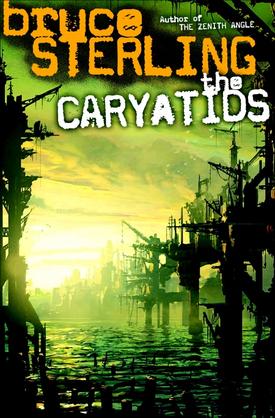
I’ve been a fan of Sterling’s writing since the 1980s, and have bought each new book by him as it was published. Not all made my top five list for their year of publication as I sometimes felt his propensity to throw out ideas on every page occasionally made uneven reads of his novels. The Caryatids, however, seemed to me like a welcome return to form – more than that, it was one of the first science fiction novels which read like a truly twenty-first century science fiction novel. The world Sterling created in The Caryatids felt like one that was reachable from the present day – or rather, felt like one that was inevitable if nothing was done in the present day to halt things like Climate Change or the collapse of capitalism. I was happy when I was asked to review the book for Interzone, and even more chuffed when I was told I’d also be interviewing Sterling. The interview is in Interzone #221 March-April 2009, and I think it came out quite well. I reprinted the review on my blog here in May of this year. Incidentally, I still don’t understand why there’s been no UK edition of this novel.

5 Spirit, The Princess of Bois Dormant, Gwyneth Jones (2008)
I’ve long maintained that Jones is the finest British writer of science fiction currently being published – although she’s not had a novel published since this one. There have been three collections since 2008, and she continues to write short fiction – and, of course, there are the YA books she writes as Ann Halam… although the latest of those, a sequel to Dr Franklin’s Island, will only be published in the US. Spirit is perhaps the closest Jones has ever come to writing space opera, and the end result is characteristically Jonesian but also seems in part to carry the flavours of several other well-known sf authors, from Samuel R Delany to Iain M Banks. The story is based on that of The Count of Monte Cristo, but the ending recasts Dumas’ tale of revenge as something less vindictive and more redemptive. I wrote about it here but the review’s cake-based conceit wasn’t as effective – or made as much sense – as I’d thought when I wrote it. Oh well, it seemed like a good idea at the time.

6 Carrying the Fire, Michael Collins (1974)
Three years ago was the fortieth anniversary of the Apollo 11 lunar landing, and in order to celebrate it I decided to read the (auto)biographies of the three astronauts involved – Neil Armstrong, Buzz Aldrin and Michael Collins – and review the books on my Space Books blog. I also read and reviewed several other books about the mission. Carrying the Fire not only proved to be the best of the three (auto)biographies, but also the best astronaut autobiography I have read to date. Collins was always characterised as the most introspective and erudite of the three “amiable strangers”, so it’s no real surprise that Carrying the Fire is so readable and so well-written. It also feels far less self-aggrandising than is typically the case for astronaut autobiographies – the nature of the job in those days demanded the sort of people who have big egos. Recently, of course, we lost one of the Apollo 11 crew, Neil Armstrong, on whom the most attention regarding the lunar missions has focused, despite his retreat from public life afterward. My review of Carrying the Fire is here.

7 Lady Chatterley’s Lover, DH Lawrence (1928)
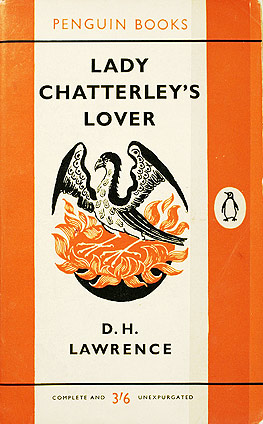
My father was the DH Lawrence fan in our family. On a trip to the US, he dragged my mother to Taos to see the chapel where Lawrence’s ashes are interred. But, despite a shelf full of books by and about Lawrence in my parents’ house, I’d never tried reading him. And then, for some reason I no longer recall, I decided I ought to have a go. So of course I picked Lawrence’s most famous – and infamous – novel. And I loved it. Like Lawrence, I’m a Nottinghamshire native, and though the Eastwood dialect he writes is much broader than the Mansfield dialect I heard throughout my childhood years, it’s still familiar. So there was an immediate geographical appeal to the book. But when Lawrence was writing about nature and the countryside, his descriptive prose really shone for me (Lawrence Durrell, a favourite writer, is also an excellent writer of descriptive prose). The characters of Mellors and Constance were also drawn much more effectively than I had expected. I so enjoyed Lady Chatterley’s Lover, that on subsequent visits to charity shops I picked up copies of Lawrence’s other books, and now have most of them – and I plan to slowly work my way through them. Incidentally, the best film adaptation I’ve seen so far of the book is Pascale Ferran’s Lady Chatterley. It’s French-language, which is initially odd, but it does seem to capture the book much more effectively than any other adaptation.

8 Evening’s Empire, David Herter (2002)
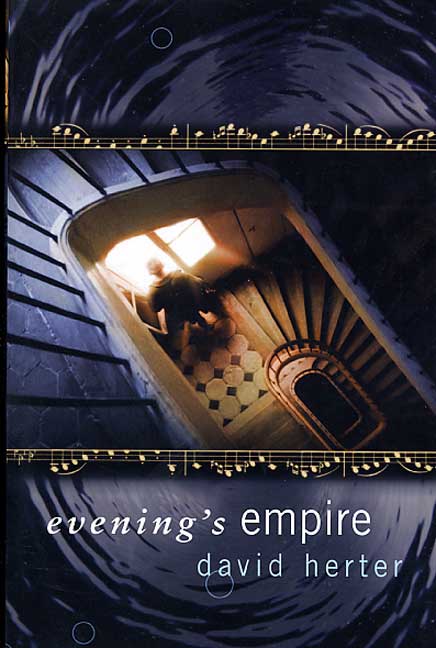
There is a trio of books by a writer whose personal views I find odious which riffs on Golden Age tropes and attempts to do something 21st century with them. I read the first two shortly after they were published – and before I knew what the author was like – and couldn’t see what all the fuss was about. They weren’t actually very good. David Herter’s first novel, Ceres Storm, plays similar games with those tropes, but it is beautifully written and very, very good. Of course, Herter remains mostly unknown whereas the previous writer now churns out best-sellers. Such is the way things work. Evening’s Empire was Herter’s second novel, and it is not science fiction. It sat unread on my bookshelves for a decade, and when I finally read it I wondered why it had taken me so long. It starts off as a (John) Crowley-esque fantasy before taking an abrupt left turn into something strange and wonderful. The main character is working on an opera based on Jules Verne, and that in turn inspired me to pick up and read Verne’s two best-known works, Twenty Thousand Leagues Under the Sea and Journey to the Centre of the Earth… but I don’t think I’ll ever really be a Verne fan.

9 Synthajoy, DG Compton (1968)
If Gwyneth Jones is the finest writer of science fiction in the UK currently still writing, then Compton is the finest sf writer in the UK who is no longer writing (and hasn’t been published since a pair of near-future crime novels published in the mid-1990s). He’s perhaps best known for The Continuous Katherine Mortenhoe (1974), which was adapted for cinema by Betrand Tavernier as Death Watch in 1979. Compton started out writing crime novels in the early 1960s, but branched out into sf in 1965 with The Quality of Mercy. British sf of that period was far better-written than its US equivalent, chiefly because it was less orientated toward, or had fewer roots in, pulpish action-adventure. Writers such as Arthur Sellings, Keith Roberts, Rex Gordon, Michael G Coney or Richard Cowper – not to mention the New Wave authors – could write rings round their American contemporaries. Even those who banged out hackwork for US publishers with impressive regularity – Brian Stableford, EC Tubb, Edmund Cooper, Ken Bulmer, etc. – were better prose stylists than the big Hugo winners like Asimov, Heinlein, Herbert or van Vogt. Compton was the best of the lot. His books read like snapshots of the 1960s and 1970s now, but they’re beautifully observed snapshots. They are the embodiment of sf novels set in the near-future that are really about the time they were written. Synthajoy‘s science-fictional content does not especially convince, and its central premise is unlikely to generate sense of wonder… but it’s a wonderfully-written portrait of a woman who is driven to crime by the behaviour of her husband, the inventor of the eponymous psychiatric technique. I wrote about it here.

10 Red Plenty, Francis Spufford (2010)
I think I’ve always had a somewhat utopian bent, and that’s only grown stronger in recent years. Science fiction has its occasional spats over pessimistic versus optimistic stories, and while I can hardly claim that Adrift on the Sea of Rains is optimistic, I have grown increasingly annoyed with the default futures far too much recent sf employs. It’s all grimly corporate and capitalist near-fascist states which only perpetuate the myth of self-actualisation through money, power and material possessions. I’d like to see that change. Yes, I know there are utopian science fictions available, but it’s the default nature of this horrible US-led invented future that I’d like to see disappear. Red Plenty, however, does not depict a communist future, a USSR which outlasted the capitalist West. It’s actual a dramatised history of events during the first half a dozen decades of the USSR. But it’s beautifully done, and it’s easy to see how the soviet system promised so much more than it ended up delivering. It presents the USSR as a dream of utopia. The fact the dream failed should not invalidate the attempt. Read Red Plenty and then tell me the American Dream is the only sustainable future. Who knows, twenty years from now we may be mocking sf novels that don’t depict the USA as a repressive and misogynist theocratic oligarchy…

special extra 11th book: Seven Miles Down, Jacques Piccard & Robert S Mietz (1961)
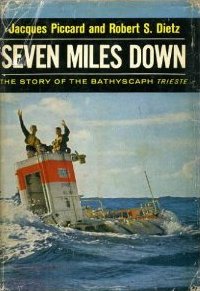
This list is supposed to be ten books – it says so in the title of the post – but I really wanted to include this book… not because it is well-written, or because it’s the best book ever published on its subject. It is, as far as I can discover, the only book published on its subject. And it’s a subject which came to fascinate me when I learnt of it in 2010. That year was the fiftieth anniversary of the first – and until only recently – visit by human beings to the deepest part of the oceans, Challenger Deep in the Mariana Trench. Like the Apollo programme, the descent of the bathyscaphe Trieste was a triumph of brute engineering, and that’s one of the reasons I find it so interesting. It’s also inspired some of my fiction. I wrote about Seven Miles Down here.


3 Comments

It only takes one book

I have only a small number of literary heroes, but in all cases my admiration of them – and my decision to collect their oeuvre – was sparked by a single book. With Lawrence Durrell, for example, it was The Alexandria Quartet, his most famous work. Likewise for Paul Scott, after I read The Jewel In The Crown, the first part of the Raj Quartet, also his most famous work. But for the latest author to join this august company, it was not their best-known work I read. It was in fact a posthumous collection. And, to be honest, the first story in it did not bode well at all. But I persevered, and the second story, a novella, proved to be very very good indeed. And pretty soon I was hooked.

The book was Hear Us O Lord from Heaven Thy Dwelling Place, and the author was Malcolm Lowry. I knew of Lowry, of course; though previously I had never read anything by him. But I’d picked out the aforementioned collection, Ultramarine and Under the Volcano from my father’s Penguin paperbacks collection to read. I have subsequently ordered more Lowry books. Lowry only saw two novels published during his lifetime – which will at least make collecting signed editions easier… When he died, he left behind a number of manuscripts which were edited by his wife and subsequently published. He also left behind several hundred poems. Here’s one of them. It’s from Selected Poems of Malcolm Lowry, published in 1962 and number seventeen in City Lights Books’ The Pocket Poets Series.

Venus
And, when you go – much as a meteor,
Or as this swaying, incandescent car,
Which, like lost love, leaves lightnings in its wake,
(And me, an aspen with its Christ in mind,
Whose wood remembers once it made a cross,
So trembles ever since in wind, or no wind)
But most like Venus, with our black desire
Which blinds me now, your light a horned curve
First; then, circling, a whitely flaming disc,
Not distance, but your phase, removes the mask –
Until you burn the brightest of all stars –
Pray then in your most brilliant lonely hour
That, reunited, we may learn forever
To keep the sun between ourselves and love.


1 Comment

One-liners

It’s been a while since I last noted here what books I’d read. Yes, I’ve given up on the readings & watchings posts, but I’d still like to record what literature I’ve consumed throughout the year. Here I shall attempt to do it in a single line per book (occasionally through the creative use of punctuation, I must admit).

A Torrent of Faces, James Blish (1967) Pleasingly detailed, somewhat dated, but a much more interesting sf novel than I’d expected.

The Girl with the Dragon Tattoo, Stieg Larsson (2005) Oof – worse than I’d expected (though I’ve heard the translation was rushed), but Blomqvist is a Gary Stu and the attempts to drag in references to the original title (Män som hatar kvinnor, Men Who Hate Women) are hamfisted to say the least.

The Immersion Book of SF, Carmelo Rafala, ed. (2010) Small press anthology of, er, science fiction; some contents better than others, though nothing stands out especially.

The Ghost, Robert Harris (2007) Blair’s biographer is murdered so pro ghost writer is drafted in and discovers something rotten in the ex-PM’s career– oh wait, it’s not Blair, it’s a made-up politician…

Devil May Care, Sebastian Faulks (2008) Faulks does Fleming and makes a pretty good fist of it – also: a Caspian Sea Monster!

Diadem from the Stars, Jo Clayton (1977) Reviewed on SF Mistressworks here.

Hear Us O Lord from Heaven Thy Dwelling Place, Malcolm Lowry (1961) Some astonishingly good novellas, some not so good short stories; planning to read more Lowry.

Islands, Marta Randall (1976) Reviewed on SF Mistressworks here.

If the Dead Rise Not, Philip Kerr (2009) Bernie Gunther in Berlin after leaving the Kripo; and decades later in Cuba – and it’s all about corruption by US mobsters over building work for the 1936 Olympics in Berlin.

Eastmodern, Herta Hurnaus (2007) Bratislava, home to some surprisingly interesting-looking Modernist buildings; as this book amply demonstrates.

The Omcri Matrix, Jay D Blakeney (1987) Reviewed on SF Mistressworks here.

Dulcima, HE Bates (1953) I read it but I’m not sure why it was written; apparently they made a film of it too…

The Maginot Line, Rob Redman, ed., (2012) Literary paperback anthology, contains some good stories, including one by a bloke called Sales.

Goldfinger, Ian Fleming (1959). A bit like the film, but with added homophobia and sexism! – Bond turns ice-cold lesbian Pussy Galore into a warm and loving heterosexual with a good rogering; plus a half-page homophobic rant by 007.

The Universe of Things, Gwyneth Jones (2011) Reviewed on Daughters of Prometheus here.

Oscar Niemeyer Buildings, Alan Weintraub (2009) Does what it says on the cover: lovely photographs of lovely buildings.

Building Brasilia, Marcel Gautherot (2010) Yet more lovely Niemeyer buildings – they should let Neimeyer design the entire world.

Jerusalem Fire, RM Meluch (1985) Reviewed on SF Mistressworks here.

So Long a Letter, Mariama Bâ (1980) April’s book for my reading challenge; I wrote about it here.

Girl, David Thomas (1995) Man goes into hospital but through implausible mix-up gets vaginoplasty; played for laughs, manages some sensitivity, but definitely from the male gaze so nothing learned.

The Maquisarde, Louise Marley (2002) Reviewed on Daughters of Prometheus here.

Machine, Jennifer Pelland (2012) Read for review in Vector; interesting approach to the central conceit, though a little muddled in execution.

Disguise for a Dead Gentleman, Guy Compton (1964) Actually DG Compton: murder most foul at a public school; some nice-ish writing but a bit all over the place structurally.

Two Sides of the Moon, David Scott & Alexei Leonov (2004) Reviewed on A Space About Books About Space here.

The Summer Book, Tove Jansson (1972) Not a Moomin in sight, just grandma and granddaughter having fun and games among Finland’s islands; simple, elegiac.

Impact Parameter & Other Quantum Realities, Geoffrey A Landis (2001) Variable collection by Analog/Asimov’s stalwart; contains a couple of good ones, but a few are surprisingly poor given their initial publication venues.

Time Future, Maxine McArthur (1999) Reviewed on SF Mistressworks here.

Valerian 3: The Land Without Stars, Mézière & Christin (1972) English slowly catches up with famous French lightweight space opera bande dessinée series.

The Jagged Orbit, John Brunner (1969) Even in 1969, Brunner should have thought twice about this – a near-anarchic over-armed US with voluntary racial segregration; painfully, embarrassingly and datedly hip.

West Coast Blues, Jacques Tardi (2009) Bande dessinée about a man who goes on the run after being mistakenly targetted by hitman; astonishingly nihilistic.

In Great Waters, Kit Whitfield (2009) European history re-imagined with mermen, sort of; a slow start, drags even slower for the first third, then gets moving… and proved actually rather good.

The White Peacock, DH Lawrence (1911) His first novel: structurally weird and the viewpoint lacks rigour, but some lovely prose and it all feels very local to me; will definitely be reading more.

Ison of the Isles, Carolyn Ives Gilman (2012) Read for review in Vector – sequel to Isles of the Forsaken (see here), and not quite the expected story; some excellent bits nonetheless, though the plot feels a little problematical.

Starship Winter, Eric Brown (2012) Third in a quartet of seasonal novellas set on the world of Chalcedony; shenanigans at an art exhibition; the weakest of the three so far.

The League of Extraordinary Gentlemen: Century 2009, Alan Moore (2012) Third and last (?) in the Century series, which sees the League sort of re-unite to defeat a stoned Antichrist.

Aliens of the Heart, Carolyn Ives Gilman (2007) Reviewed on Daughters of Prometheus here.

The Sea, The Sea, Iris Murdoch (1978) Published in 1978, from the characters’ ages would appear to be set in 1968, feels like it was set in 1958; Booker Prize winner, though felt far too long and flabby to me.

Starshadows, Pamela Sargent (1977) Collection of early short fiction with a patronising introduction by Terry Carr; will be reviewed on SF Mistressworks soon.

‘À Propos of Lady Chatterley’s Lover’ & Other Essays, DH Lawrence (1961) English literature’s one true Puritan wibbles on about masturbation (bad), the right sex (good), marriage (sacrosanct!) and obscenity (“moi?”) – he really was a dirty old reactionary…

Griffin’s Egg, Michael Swanwick (1990) Novella about, er, a group of astronauts stranded on the Moon after a nuclear war on Earth – not an inspiration, honest; nor anywhere as good as I’d vaguely remembered it.