It Doesn't Have To Be Right…

… it just has to sound plausible


6 Comments

Book haul

Things must be bad – I’ve not done one of these posts for a couple of months, and yet there only seems to be about a month’s worth of book purchases to document. Of course, this has resulted in a small victory in reducing the TBR, although it’s still somewhat mountainous… I’d actually planned to keep my purchasing at low levels for a couple of months but, of course, as is the way of things, several authors whose books I read all had new works out – August and September seems to be a popular time to release books. Unless you’re Whippleshield Books, that is…

2014-08-25 12.29.22

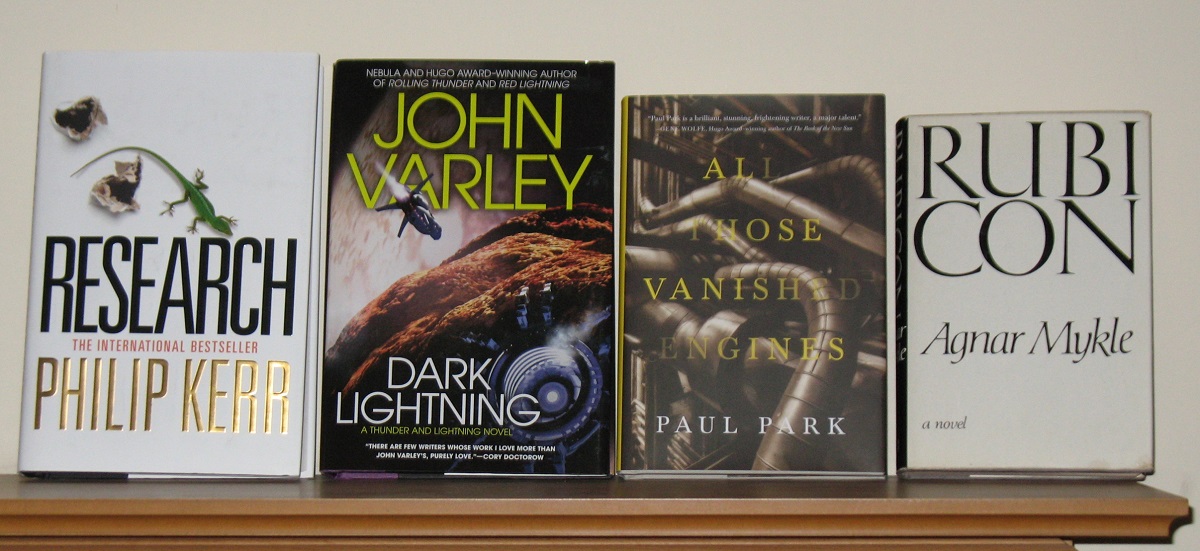
Some new first editions and an old one. Research is Philip Kerr’s latest, and about a James Patterson-like writer who’s framed for the murder of his wife. Let’s hope it’s not a James Patterson-like book… Dark Lightning is the fourth in Varley’s Thunder and Lightning series, following on from Red Thunder, Red Lightning and Rolling Thunder. I initially thought these were YA, but I don’t think they actually are. All Those Vanished Engines is a new novel by a favourite writer, and the first from him since the Princess of Roumania quartet back in 2005 – 2008. I am excited about this book. Finally, Rubicon by Agnar Mykle is one by mother found for me. I looked it up and it sounded interesting so she got it for me. Mykle seems to be Norway’s answer to DH Lawrence – his Sangen om den røde rubin (1956, The Song of the Red Ruby) was confiscated as immoral and obscene. Rubicon is the third book in a loose trilogy begun with The Song of the Red Ruby. If Rubicon is any good, I might track down Mykle’s other works.

2014-08-25 12.31.50

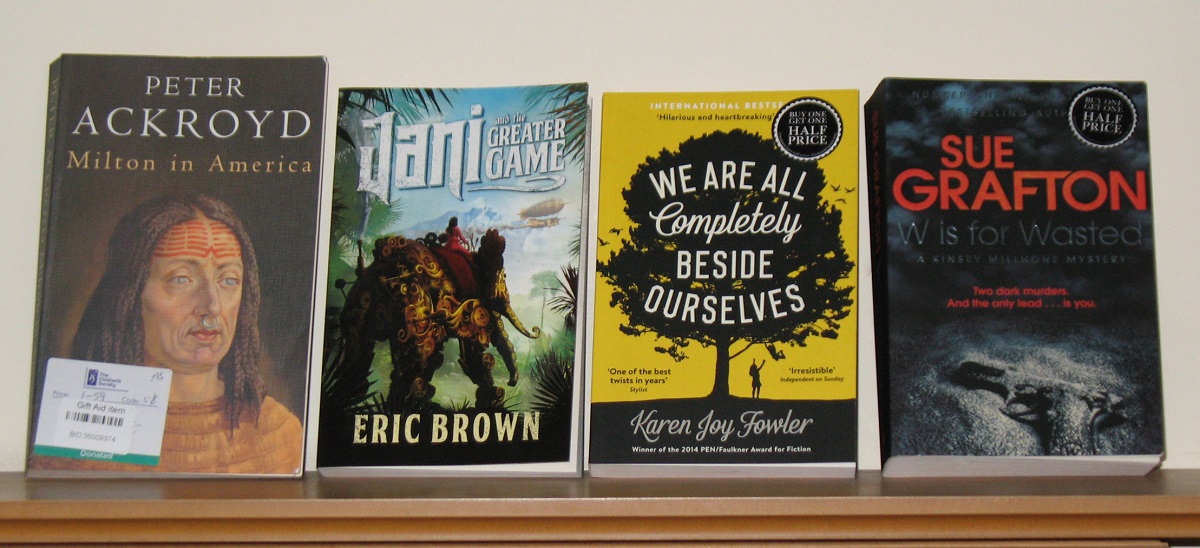
Some recent paperback purchases: We Are All Completely Beside Ourselves I bought because Karen Joy Fowler. I’ve been following Kinsey Millhone’s career for a couple of decades and W is for Wasted is the most recent installment. Grafton has kept the series’ internal chronology consistent, which means this one is actually set in 1988. Which sort of makes it historical crime fiction. Milton In America was a charity shop find. And Eric sent me a copy of his latest, a steampunk set in India, Jani and the Greater Game.

2014-08-25 12.32.34

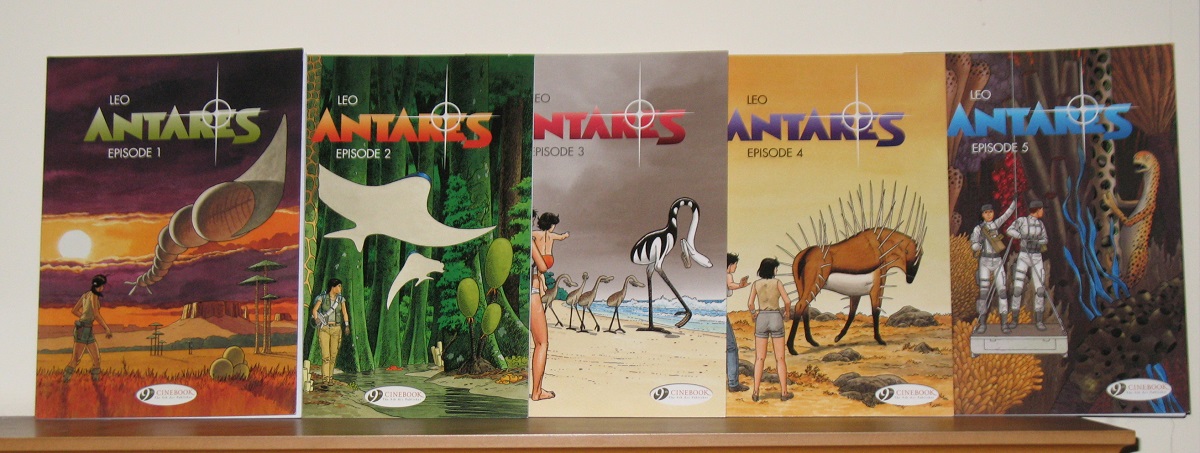
Now this is very annoying. I’d been impressed by Léo’s Aldebaran and Betelgeuse series, so I was keen to read Antares. From Wikipedia, I learnt there were five episodes in Antares, so I waited until the final volume was published in English by Cinebook… and then bought all five books. But it ends on a cliff-hanger! Argh. It’s not finished. So now I’m going to have to wait to find out what happens.

2014-08-25 12.39.41

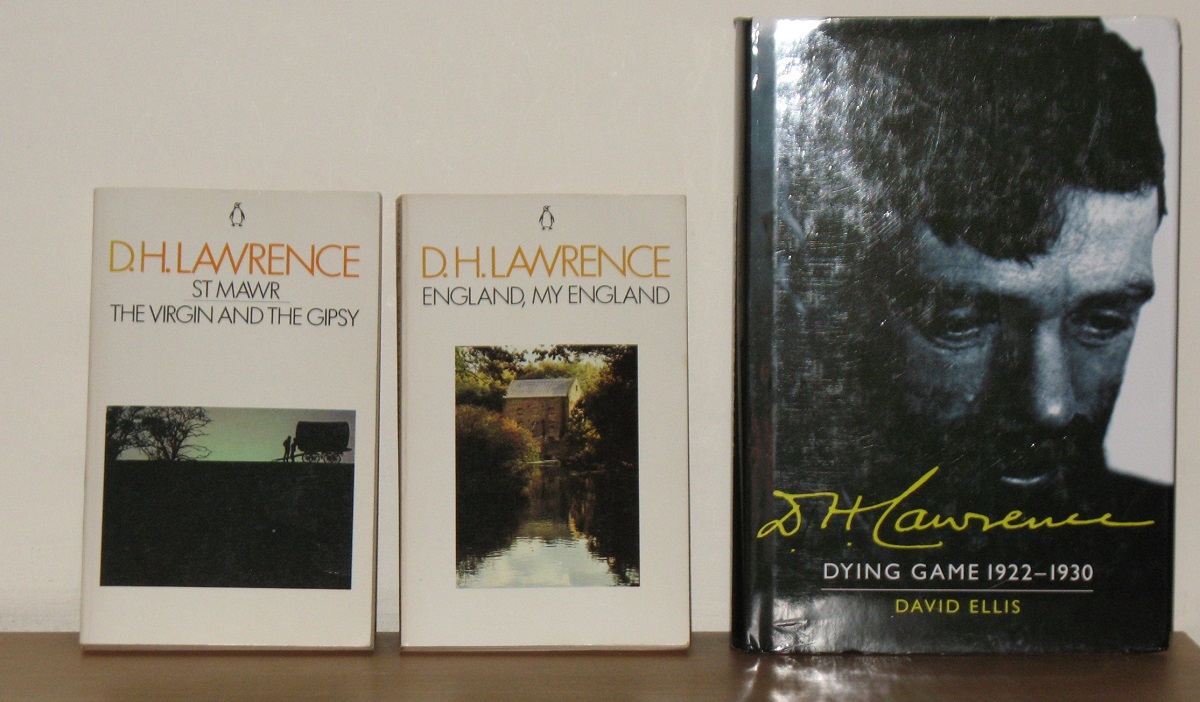
The DH Lawrence collection continues to grow. My father had the first two volumes of the Cambridge biography of DH Lawrence – The Early Years 1885-1912 and Triumph to Exile 1912-1922 – and I hung onto them. But I hadn’t realised it was a trilogy, and when I started looking for a copy of the final volume, Dying Game 1922-1930, I discovered that hardback editions were hard to find. But I found one. I also have a couple more 1970s Penguin paperbacks to add to the collection: St Mawr / The Virgin and the Gypsy (a pair of novellas) and England, My England (a collection). I probably have their contents in other books, but I’m trying to build up a set of these particular paperback editions.

2014-08-25 12.40.03

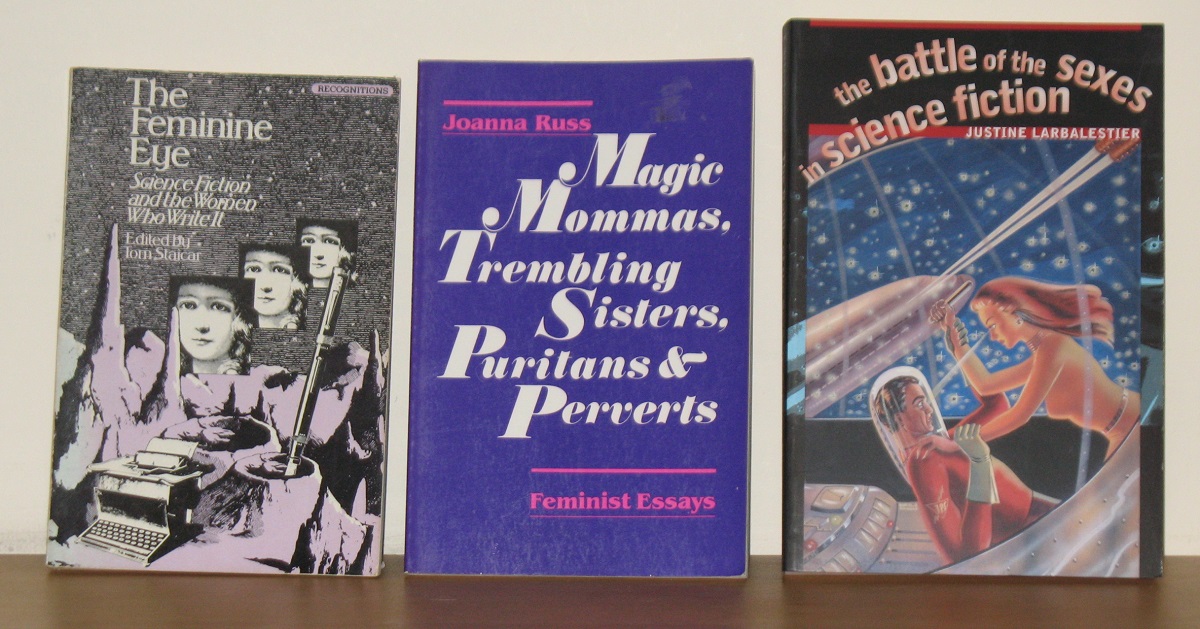
Some critical works on women science fiction writers. The Feminine Eye, edited by Tom Staicar, includes essays on Tiptree, Brackett, Moore, Norton, Cherryh and others. Magic Mommas, Trembling Sisters, Puritans and Perverts is a collection of Joanna Russ’s essays on feminism. And The Battle of the Sexes in Science Fiction is a study of, from the back cover blurb, “the role of women and feminism in the development of American science fiction” and I really need to read it for Apollo Quartet 4…

2014-08-25 12.35.02

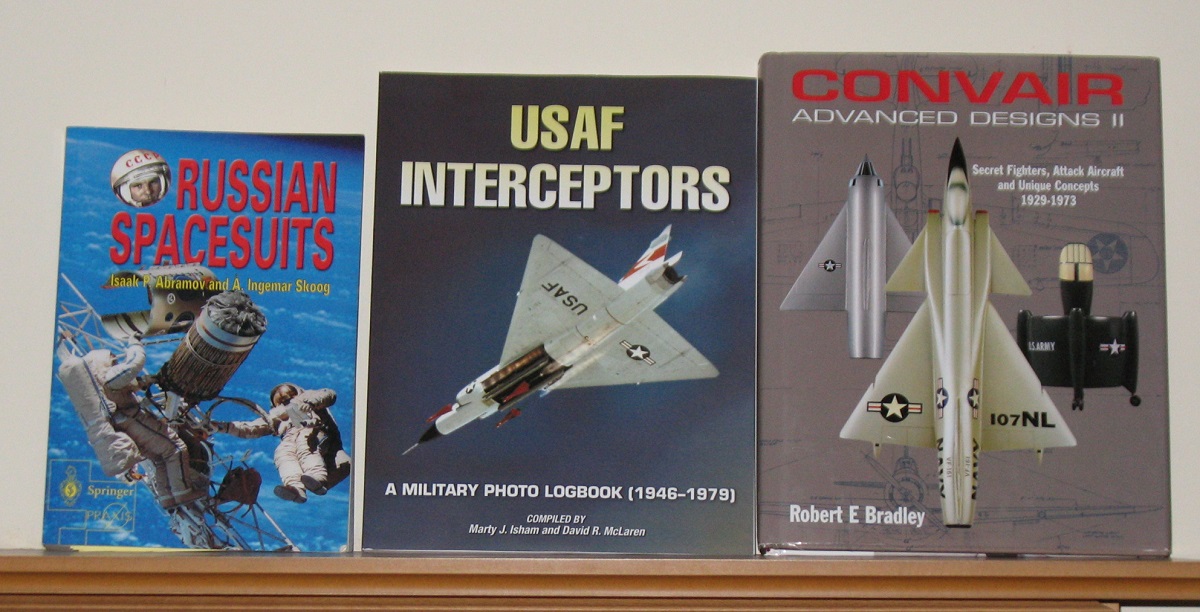
More books for the aviation collection. USAF Interceptors is a collection of black and white photos of, er, interceptor jet aircraft from the Cold War. Not as useful as I’d hoped. Convair Advanced Designs II is the follow-on volume to, um, Convair Advanced Designs, this time focusing on fighters and attack aircraft. And for the space books collection, Russian Spacesuits, which I used for research for my Gagarin on Mars story – and will likely use again at some point.

2014-08-25 12.35.35

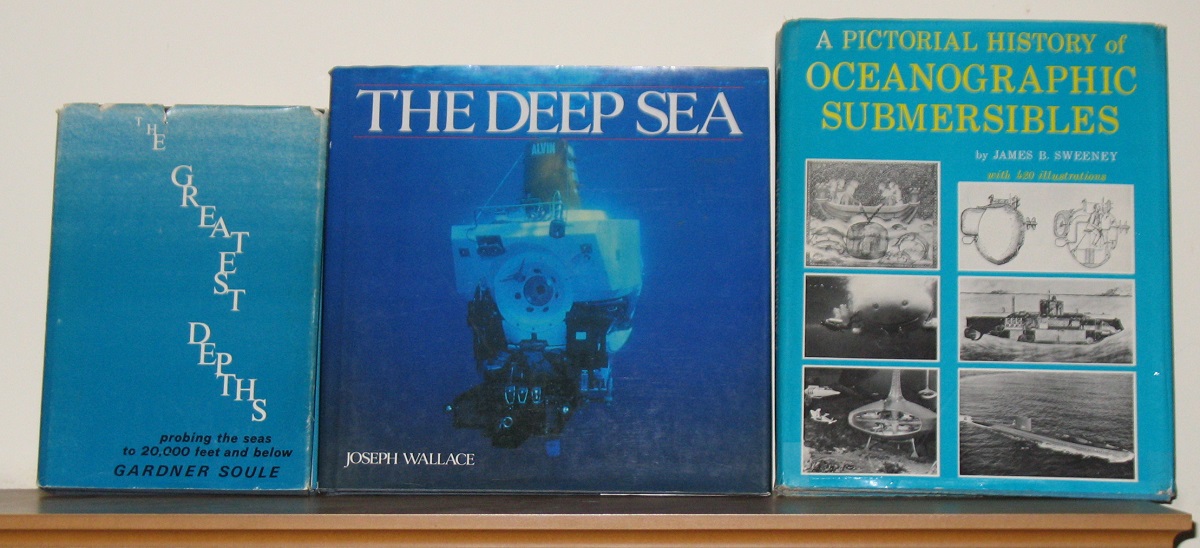
Finally, more books for the underwater collection. The Greatest Depths by Gardner Soule is a quick and not especially, er, deep study of underwater exploration and exploitation. It covers the main points, including the Trieste’s descent to Challenger Deep and the Ben Franklin’s journey along the Gulf Stream. A Pictorial History of Oceanographic Submersibles does exactly what it says on the cover. It was cheap on eBay (although I demanded, and received, a partial refund because it turned out to be a bit tatty). And The Deep Sea is a glossy coffee-table book containing some nice photos of things at the bottom of the sea.


1 Comment

Reading diary, #8

More catch-up content, I’m afraid, covering the books I’ve read over the past month or so. It’s the usual mix – some genre, some literary, some which are neither. I’m not going to write too much about each individual book, or I’d never get this post finished. And I am supposed to be doing things, after all.

MicrocosmosMicrocosmos, Nina Allan (2013). This is number five in NewCon Press’s Imaginings series of collectible, er, collections. Other volumes are by Tanith Lee, Stephen Baxter, Tony Ballantyne, Lisa Tuttle, Adrian Tchaikovsky, Steve Rasnic Tem and Eric Brown. I often find myself conflicted about Allan’s short stories – there’s no denying she writes excellent prose, but I often have trouble with the details. ‘Flying in the Face of God’ is a case in point – it’s a lovely story, and it draws its portrait of its protagonist sensitively and well, but… the whole astronaut thing seemed to me too vague and hand-wavey, and that spoiled it for me. ‘The Phoney War’, on the other hand, is less overtly sf and so I felt it worked better, particularly since Allan is excellent at sense of place.

Paintwork, Tim Maughan (2011). I’m coming to this a bit late, but I only have an ebook copy and I’m still not quite comfortable reading ebooks. All the same, I took my Nook with me on a business trip to the South Coast as I’ve been reading an ebook of Henry David Thoreau’s Walden on and off for a couple of months, but I read Paintwork instead. ‘Havana Augmented’ I thought the best of the three in the collection, with its VR mecha combat on the streets of Havana, but all are good near-future sf of a type that few people seem to be writing at the moment.

Worlds for the Grabbing, Brenda Pearce (1977), I read for SF Mistressworks. My review is here.

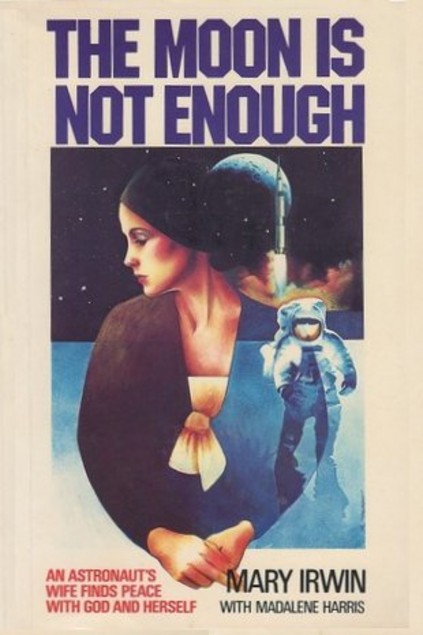
moonenoughThe Moon Is Not Enough, Mary Irwin (1978). This is the only autobiography by an Apollo astronaut’s wife I’ve been able to find. Jim Irwin, Mary’s husband, was the LMP on Apollo 15. (Nancy Conrad and Betty Grissom, on the other hand, wrote biographies of their husbands.) I suspect Irwin’s story is not unusual among the astronaut wives – a marriage that begins to fall apart due to the husband’s commitment to his work, dragged back from the brink by either church, psychoanalysis, or NASA’s insistence on “happy families”, or, in Irwin’s case, all three; or the marriage explodes as soon as hubby has been to the Moon. I read the book for research, and in that respect it proved very useful.

Cyclonopedia: Complicity with Anonymous Materials, Reza Negarestani (2008) Recommended by Jonathan McCalmont and, to be honest, I didn’t really get the joke. It’s written as a cod academic text, and probably does an excellent job of spoofing its material, but I’m not familiar with the sort of academic arguments it uses. It did remind me a lot of some of the Nazi occult science mythology – especially those books published by Adventures Unlimited Press – which create entire secret scientific programmes out of the flimsiest of evidence. The plot, such as it is, describes the War on Terror as an emergent phenomenon of humanity’s exploitation of oil, which is itself an inimical intelligence determined to rid the planet of humans. Or something.

Judgment Night, CL Moore (1952, although it was originally serialised in 1946), I read for SF Mistressworks. My review is here.

Sea of Ghosts, Alan Campbell (2011). I usually avoid fantasy, but I picked up this book because a) Martin Lewis recommended it, and b) the cover art features a deep sea diver. There’s some interesting world-building in this, and a nice line in wit, but the thinly-disguised discussions on quantum mechanics wore thin very quickly, and the unnecessary brutality was also a little wearying. I enjoyed it, but I don’t think I’ll bother with the sequels.

Second Body, Sue Payer (1979), I read for SF Mistressworks. To be honest, I didn’t think this book read like it was written by a woman, but there’s a comment on GoodReads from the writer’s granddaughter which says otherwise. My review should be appearing in the next week or two.

A Kill in the Morning, Graeme Shimmin (2014), I read for Interzone. Hitler victorious alt history with a nameless narrator who owes a little too much to James Bond.

Aurora: Beyond Equality, Vonda N McIntyre & Susan Janice Anderson, eds. (1976). I was in two minds whether to review for SF Mistressworks, since it contains three stories by male writers. But it was put together as a feminist sf anthology, the first of its kind, so I felt it too important a document in the history of women in science fiction to ignore. Review to appear in the next couple of weeks.

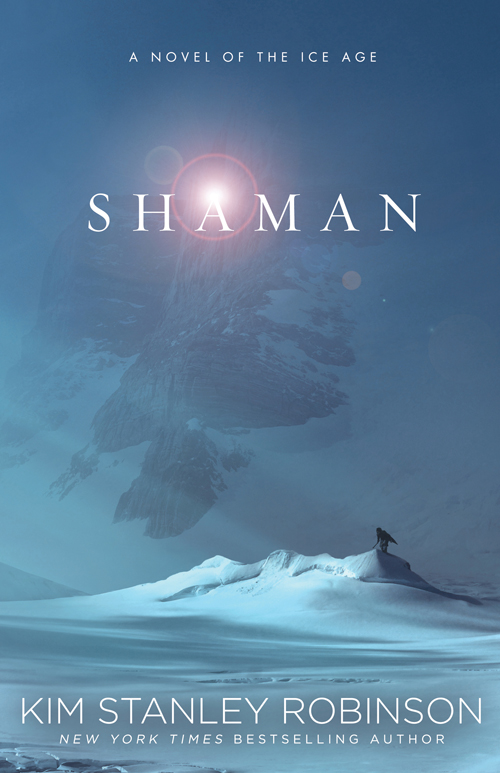
Robinson_Shaman_HCShaman, Kim Stanley Robinson (2013), I originally intended to be part of my Hugo reading, but I never got around to it at the time – not that it seems to have made any difference, anyway. And, to be fair, it would be stretching the definitions of science fiction and fantasy both past breaking point to categorise this book as either. It’s a year in the life of a twelve-year-old boy – a near-adult – in Europe some 32,000 years ago. The story was apparently inspired by the paintings in the Chauvet Cave, as filmed by Werner Herzog in his Cave Of Forgotten Dreams. I was mostly carried along by the story, although on occasion it didn’t quite convince. The Neanderthals were good, though.

A Man and Two Women, Doris Lessing (1963). I have previously found Lessing a bit hit and miss for me, often in the same novel – but I did like most of these stories. Especially the Lawrentian title story. ‘England vs England’, however, is more of a Lawrence pastiche, but I wasn’t convinced by Lessing’s attempt at portraying South Yorkshire characters. The stories set in South Africa, by comparison, were much more successful, particularly ‘The New Man’. Also good were ‘Between Men’, about a pair of mistresses, and ‘Notes for a Case History’, a potted biography of a young woman with aspirations to rise above her working-class origins.


4 Comments

Something for the weekend, sir?

A meme, of course. Provided by SF Signal. And since I’ve been a bit rubbish – well, a lot rubbish – at posting here over the past couple of months, and the tumbleweed and cobwebs are starting to look unsightly, I have seized the opportunity given by the meme to generate some uncontroversial blog content… Well, uncontroversial for me, anyway.

I’m not entirely sure what a “book snob” is – that would be someone who likes good books, yes? Well-written books, yes? I certainly wouldn’t recommend a crap book to someone. Well, not without mentioning that it was crap, and only if they’d asked for something that was so narrowly defined the only book I could think of happened to be a crap one… Many of the books I’ve recommended below I really can’t recommend highly enough. They should be required reading.

Science Fiction
Sf is my genre of choice, so I’m well-practiced in answering some of these questions. Most are books I’ve mentioned before, some I’ve even written about or reviewed – and I’ve linked to my review, where one exists.

If I were to recommend a science fiction book to a new genre reader, it would be: The Wall Around Eden, Joan Slonczewski (my review)
If I were to recommend a science fiction book with lots of action, it would be: Against A Dark Background, Iain M Banks (my review)
If I were to recommend a science fiction book to a “book snob”, it would be: Coelestis, Paul Park (my review), or Kairos, Gwyneth Jones (my review)
If I were to recommend a science fiction book series I loved, it would be: The Marq’ssan Cycle, L Timmel Duchamp
The last science fiction book I read that was recommended to me and I liked was: Queen of the States, Josephine Saxton (my review)
The last science fiction book I read that was recommended to me and I finished but disliked was: What Lot’s Wife Saw, Ioanna Bourazopoulou (mentioned here)
The last science fiction book I read that was recommended to me and I didn’t finish was: Darkmans, Nicola Barker

Fantasy
I have a low opinion of epic fantasy, so I read very little of it – and then typically only when it’s either been recommended by someone whose opinion I value, or it was written by an author I already like. I will point out that “dislike” is probably too strong a word for my reaction to the Alan Campbell. I did quite enjoy it, but not enough to bother reading the rest of the series.

If I were to recommend a fantasy book to a new genre reader, it would be: A Princess of Roumania, Paul Park
If I were to recommend a fantasy book with lots of action, it would be: Wolfsangel, MD Lachlan (mentioned here)
If I were to recommend a fantasy book to a “book snob”, it would be: Evening’s Empire, David Herter (mentioned here)
If I were to recommend a fantasy book series I loved, it would be: Isles of the Forsaken / Ison of the Isles, Carolyn Ives Gilman (review here)
The last fantasy book I read that was recommended to me and I liked was: God Stalk, PC Hodgell (mentioned here)
The last fantasy book I read that was recommended to me and I finished but disliked was: Sea of Ghosts, Alan Campbell
The last fantasy book I read that was recommended to me and I didn’t finish was: King’s Dragon, Kate Elliott

Horror
I read very little horror, so most of these will be blank…

If I were to recommend a horror book to a new genre reader, it would be: The Facts of Life, Graham Joyce
If I were to recommend a horror book with lots of action, it would be:
If I were to recommend a horror book to a “book snob”, it would be: Viator, Lucius Shepard, or X,Y, Michael Blumlein
If I were to recommend a horror book series I loved, it would be:
The last horror book I read that was recommended to me and I liked was:
The last horror book I read that was recommended to me and I finished but disliked was:
The last horror book I read that was recommended to me and I didn’t finish was:


2 Comments

Bibliomania, or another book haul post

I have an unfortunate habit of jollying myself up by buying books. I suspect I’m not alone in this. And while some of my purchases can be justified – I’m a writer, I need these books for research – others are just because I want to read them… And then they sit on my bookshelves for a decade before I finally get around to reading them. It may be even longer for some…

2014-06-27 10.25.32

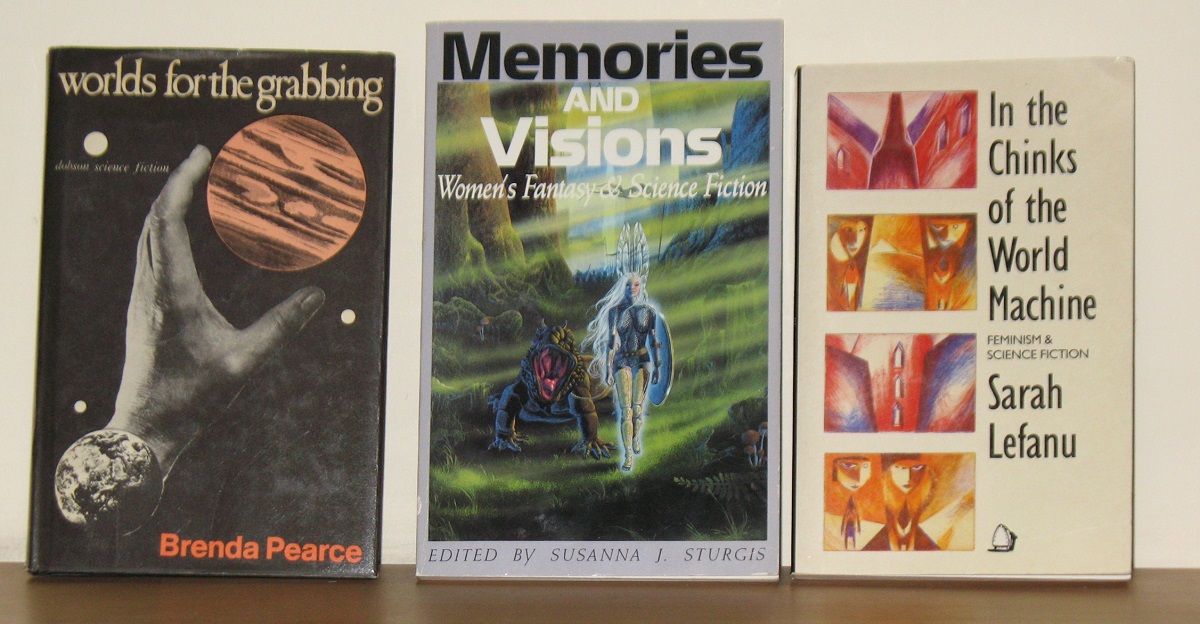
Three for SF Mistressworks. I forget where I stumbled across mention of Brenda Pearce – perhaps someone mentioned her on Twitter? Anyway, she appears to be well and truly forgotten, so I immediately tracked down Worlds for the Grabbing, the second of her two novels. I thought Memories and Visions was a critical work when I ordered it, but it proved to be a women-only anthology, containing a number of well-known names, such as Laurell K Hamilton (her second short story sale, it’s not even in isfdb.org), L Timmel Duchamp (her first fiction sale), RM Meluch and even Lorraine Schein (who will appear in my mini-anthology, Aphrodite Terra). In the Chinks of the World Machine is an important critical work on feminist sf, published by The Women’s Press in 1988.

2014-06-27 10.27.05

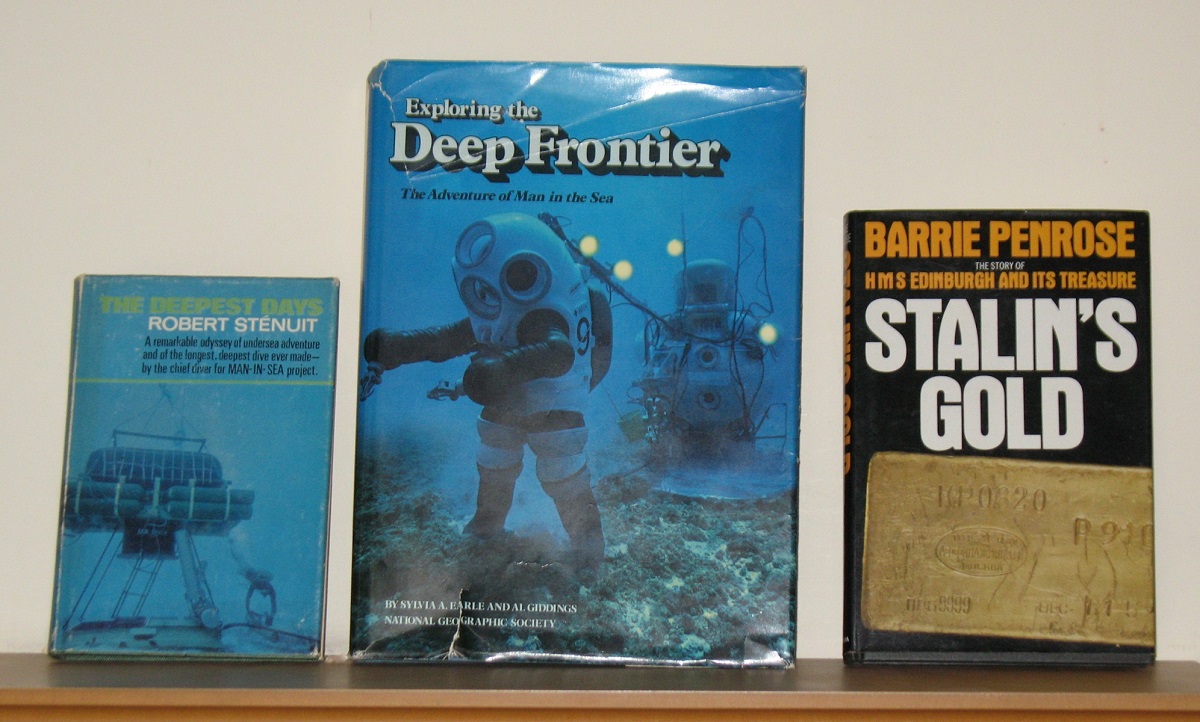
Some books for the watery research shelf. The Deepest Days was a lucky find – it’s about Edwin Link’s Man in Sea project by the diver, Robert Sténuit, who spent 24 hours on the floor of the Mediterranean and so became the world’s first “aquanaut”. Exploring the Deep Frontier is a ginormous coffee-table book by National Geographic, which I think was published to accompany a television series. And Stalin’s Gold is about the salvage operation in 1981 to recover 4.5 tonnes of gold from HMS Edinburgh, which sank in 1942 carrying part-payment from the USSR to the allies for supplies. The ship lay in 245 m (800 ft) of water, just north of Kola Bay.

2014-06-27 10.28.30

I’ve been picking up issues of Wings of Fame on eBay when I see new copies going for a decent price. Only twenty issues were published, and I now have twelve of them. Our Space Age Jets I found on eBay and I just couldn’t resist the title.

2014-06-27 10.29.36

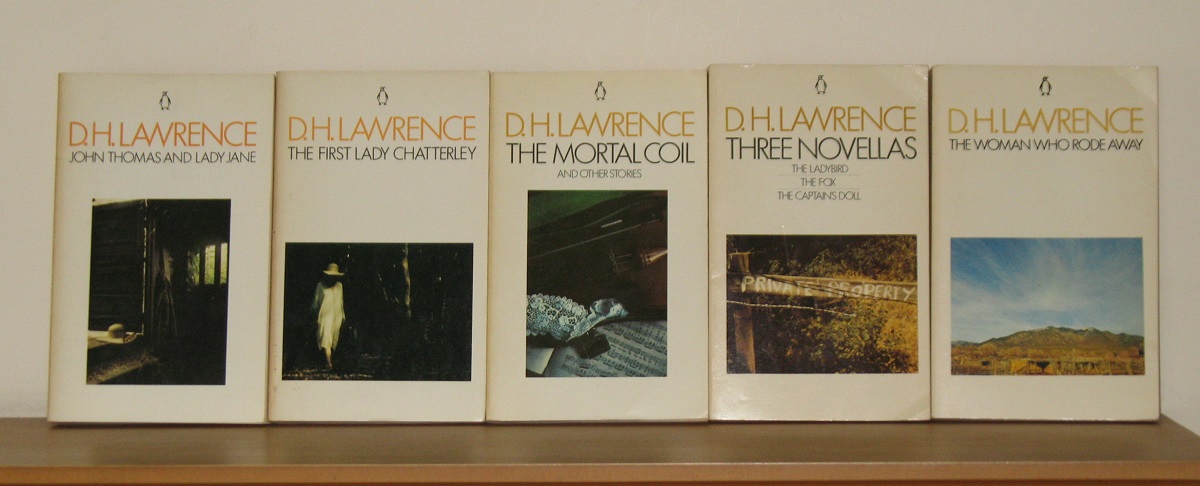
I was in a charity shop, and I found three DH Lawrence paperbacks, all in the same design: white, with Lawrence’s name in orange, and a photograph square in the middle of the front cover. I already had three the same back home, so I thought, these will make a nice set. A bit of research and I discovered that Penguin had published twenty such paperbacks between 1970 and 1977, not just the novels but also short story collections and non-fiction. So I’m going to collect them. John Thomas and Lady Jane, The First Lady Chatterley and The Mortal Coil and Other Stories were from the charity shop; Three Novellas: The Ladybird / The Fox / The Captain’s Doll and The Woman Who Rode Away I found on eBay.


3 Comments

Reading diary, #7

Here are some short book reviews. Some of them may be harsh. Feelings may be hurt. If you are of a sensitive disposition, you might want to look away. On the other hand, if you feel that a book review is just, well, a book review, then read on. You might well disagree with my assessments, it happens. And while I’ve been doing this a long time – my first book review, of CJ Cherryh’s The Tree of Swords and Jewels, was published in 1988 – and I try to be reasonably objective in discussing a book’s faults or successes, how I respond to any piece of fiction is subjective and that’s going to colour, if not inform, my review. But as a general rule, good books tend to get positive reviews, bad books get negative reviews. Unless, of course, there’s something about the book that I really don’t get on with, irrespective of its quality – but I will say as much should that be the case, so you can decide for yourself.

hiddenonesThe Hidden Ones, Gwyneth Jones (1988) This was a re-read, and I’m not sure what prompted it. Never mind, I’m glad I did re-read it. It’s the only YA novel Jones has written under her own name – apart from four books written as by “Gwyneth A Jones” back in the late 1970s – and was, I believe, written specifically for The Women’s Press’ YA imprint, Livewire. As far as I can determine, Livewire only published one other sf YA novel, Skirmish by Melisa Michaels (AKA Melisa C Michaels) in 1987, and that was a reprint of the first book of a five-book series originally published in the US by Tor between 1985 and 1988. (Interestingly, it doesn’t seem to have been published as YA in the US.) But The Hidden Ones… Adele is, to put it mildly, a troubled teen, but this may have something to do with her somewhat erratic, but powerful, psychic abilities. After getting into trouble once too often, she is sent to live with her divorced father, his new wife and their son, in the village where Adele originally grew up. Determined not to fit in, Adele wanders about the surrounding countryside and discovers the Den, a picturesque and untouched hollow in the nearby hills. But it seems the farmer who owns it has sold it to someone who intends to despoil the Den by mining it for lanthanides. Adele, a reluctant heroine, saves the Den, but it does not change her or rehabilitate her. There’s some nice writing in this – as you’d expect of Jones – particularly of the countryside, and Adele is a typically Jonesian heroine, all spiky and ill-fitting; but this is not a story about good deeds or redemption of prodigal daughters. Adele has a justifiable distrust of adults, and nothing happens in The Hidden Ones to make her think otherwise. If there’s a lesson here, I guess it’s that we will always need our rebels.
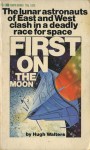
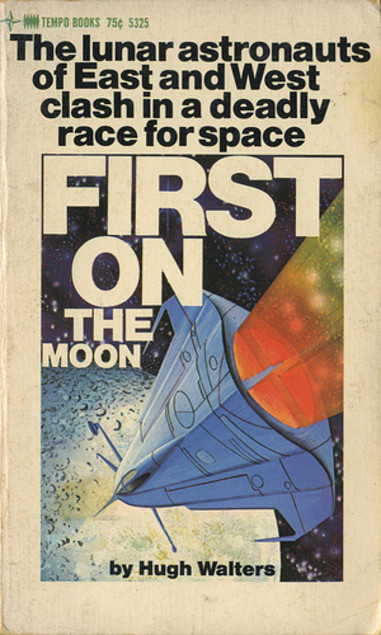
firstonthemoonFirst on the Moon, Hugh Walters (1960) I picked this up at the Eastercon because I thought, from the title, it was a pre-Apollo story about a Moon landing. And I read it this month for my contribution to Pornokitsch’s Friday Fives series – which I did about 5 Trips to the Moon. It turned out the title was a bit of a misnomer. For a start, First on the Moon is the third book in a series, and was originally published in the UK as Operation Columbus. It’s a juvenile (ie, YA), and not very good at all. The science is rubbish, the geopolitics nonsense, and the plot which drives the story complete tosh. Apparently, in an earlier novel, mysterious domes on the Moon bombarded the Earth with radiation, so the UK sends plucky teenager Chris Godfrey to bomb them from lunar orbit. In this book, Godfrey is sent on a second mission, this time with the intention of landing on the lunar surface and finding some clues about the origin of the mysterious domes. The Soviets decide to do the same as well, so there’s a bit of the old Cold War rivalry going on as well. The intense claustrophobia of a space capsule plus zero gravity is, according to Walters, severely debilitating, so Godfrey is drugged for his flight to the Moon. On the return flight, he hitches a ride with the Russian (who had destroyed Godfrey’s spacecraft because Cold War) and the claustrophobia causes them to pummel each other. Oh, and the domes are never explained – no doubt Walters left that for another book in the series… and there are twenty of them in total. I won’t be reading any of those other nineteen.

The Revolving Boy, Gertrude Friedberg (1966) I bought this at Fantastika in Stockholm last year. I’d not come across Friedberg before, and this appears to be her only published novel. I’d been told it wasn’t very good, but I must admit I liked it. Its premise was a bit silly, but Friedberg could manage a nice turn of phrase. I reviewed it for SF Mistressworks, but my review has yet to appear there.
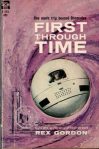
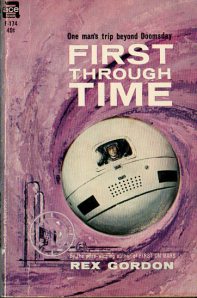
rex-gordon-first-through-timeFirst Through Time, Rex Gordon (1962) I went through a phase a couple of years ago collecting novels by forgotten UK sf authors of the 1950s and 1960s – such as Rex Gordon, Christopher Hodder-Williams, Leonard Daventry, DF Jones, Arthur Sellings… I even tracked down some of their books and reviewed them (see herehere, here, here and here). But then I got involved with SF Mistressworks – and since the aformentioned forgotten writers were all male, I stopped looking for their books. I might pick it up again one day, now that I can place the likes of Naomi Mitchison, Josephine Saxton, Brenda Pearce or Jane Gaskell alongside them in order to present some gender balance. But Rex Gordon – First Through Time was published in the UK as The Time Factor, but neither title are especially informative. A military astronaut candidate is assigned to a secret project, which proves to be a time machine. A remote sent 200 years into the future reveals the ruin of the laboratory and a skeleton… which is identified as that of the one female researcher in the team. So they send the astronaut forward in time to learn more. But he disobeys orders and leaves the machine. He discovers a world still recovering from a global disaster – he eventually discovers that an underground atom bomb test back in his time ignited the “nuclear fires” in the centre of the planet, and caused some sort of nuclear winter. Humans have subsequently split into half a dozen different types, each of which are specialised for particular tasks. Baseline humans, such as the astronaut, are prized as breeding material because the types can’t interbreed. This is really quite an odd book, and it goes in several different weird directions at once. I’m really not sure what to make of it. Perhaps Gordon was pissed when he plotted it out. Or maybe he dropped his little box of index cards full of plot ideas for future novels…

Extreme Planets, David Conyers, David Kernot & Jeff Harris, eds. (2013) I reviewed this for Interzone – my first review of an ebook for the magazine, too. I didn’t think it was very good. And no, I don’t know why Amazon thinks it’s called Cthulhu: Extreme Planets, or why the only name they list is one of the contributors, Stephen Gaskell. Having said that, the promotional material put together by the editors seems to think its title is Extreme Plants…
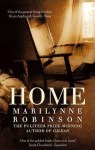
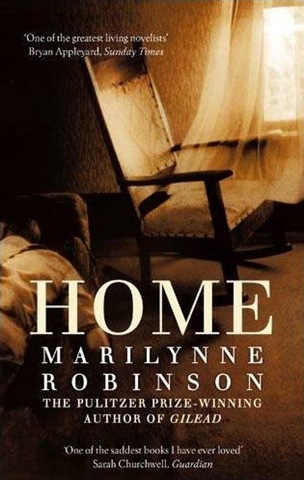
robinson-homeHome, Marilynne Robinson (2008) I must admit, I wasn’t expecting the story of Home to be set alongside that of Gilead (2004). And I see that Robinson’s most recent novel is Lila (2014), and Lila is a character in Home – so this new novel must also be set in the town of Gilead too. Glory Boughton has returned to the family home in Gilead to look after her ailing father, a retired reverend. Also due to arrive is long-lost son Jack, who has spent the years since he left home living on the fringes of society, an alcoholic, unable to hold down a job, in and out of jail, and now so frazzled by his own failure at living – though he has been clean for a decade – he trusts himself even less than those who know him. Home is a beautifully-written exploration of the relationship between Glory and Jack, and the lives they have led, especially their failures, and the pair’s relationship with their father. Their father’s closest friend is Reverend John Ames, whose letters to his son form the narrative of Gilead. If I thought Ames in Gilead felt a little too… comforting to fit as a country reverend, in Home Jack feels a little too self-reflective and sensitive to (often unspoken, frequently imagined) criticism. This doesn’t detract from the wonderfully-observed relationship he has with Glory, or indeed from Robinson’s lovely descriptive prose. But you do sometimes get the impression the people in her books are a little too… thoughtful to be entirely true to life. Nonetheless, I’ll be picking up a copy of Lila.
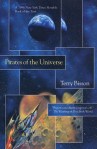
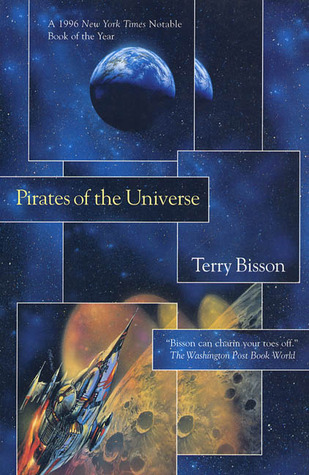
piratesuniversePirates of the Universe, Terry Bisson (1996) I’d been after a copy of this for years after reading and enjoying Bisson’s Voyage to the Red Planet back in the early 1990s. I did manage to find a copy in good nick on eBay a few years ago, but the seller refunded my money after, he explained, he’d had a “scissors accident” with the book’s cover while packaging it to post. Unfortunately, I think I may have left it too late before reading this book. Back in the 1990s, a future run by corporations in some sort of neoliberal dystopia might have seemed like jolly clever satire, now that we’re living it the joke’s worn a bit thin. True, the real world is not as bad as Bisson paints his – for a start, there’s been no World War Three, which seems to have reduced the bulk of the population of the US, if not the whole world, to subsistence levels. The plot actually concerns the farming of “Peteys”, which are some sort of pocket universes about the size of a small asteroid, which appear in cislunar space at irregular intervals. Their “skin” can be harvested and once cured is the most valuable commodity on Earth. The protagonist is a ranger, one of the hunters, and he gets involved in some plot, triggered by his brother’s escape from prison, when he goes on furlough on the Earth’s surface. There’s some nice invention on display here, but it all felt a bit past its sell-by date – not like the ideas were dated, but like they were larval forms that have been expanded and re-used many times in the decades since. Which, in some perverse fashion, did make bits of the book actually read quite modern. Sort of.
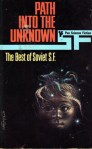
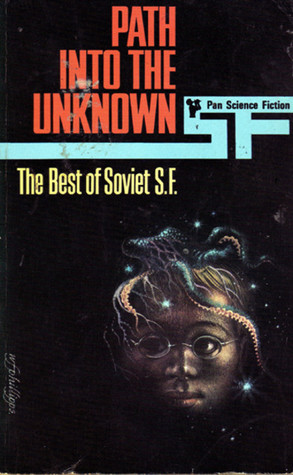
pathintounknownPath into the Unknown, anonymous, ed. (1966) I’ve seen a few places on-line claim Judith Merril edited this, but I can find nothing to substantiate that. The book itself names no editor, nor indeed any original publication data for the stories it contains. Which is bloody annoying. I’d liked to have known how old some of the stories in this anthology were, as one or two felt considerably older than others. Also bloody annoying is this need in sf to translate foreign fiction into US vernacular. Translate it into English by all means, but don’t throw away the flavour of the original by trying to recast it as middle-grade Twain or something. You’d only know the stories in this anthology were originally published in Russian by the characters’ names. And, well, yes, by some of the plots as well. ‘Meeting My Brother’ by Vladislav Krapivin had a nice central conceit, but was too long to carry it. ‘A Day of Wrath’ by Sever Gansovsky, on the other hand, was actually pretty damn good, and probably wouldn’t have looked out of place in a best of anthology in 1966. The remainder of the stories, including two by the Strugatskys, were mostly forgettable; and one, ‘The Purple Mummy’ by Anatoly Dneprov, read like something from the 1930s. Not an especially good anthology, but an interesting read as an introduction to another science fiction tradition.
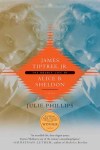
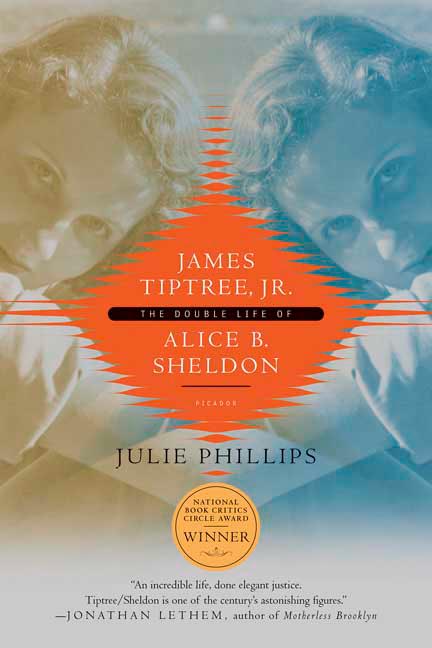
tiptreeJames Tiptree, Jr: The Double Life of Alice B Sheldon, Julie Phillips (2006) I started reading Tiptree in the late 1970s, and I knew from the start “he” was a woman as his real identity had been revealed a couple of years earlier. Over the years, I’ve sort of picked up bits and pieces of Tiptree’s “biography” – a woman who worked for the CIA, and used her work skills to create the fake identity James Tiptree, Jr. Why she went to so much trouble for what is pretty much a pseudonym, well, I never really thought about that. But I rated her short stories – especially ‘And I Awoke And Found Me Here on the Cold Hill’s Side’, which remains a favourite sf story – and at one point during the early 1980s bought as many of her books as were available at the time. And now, having read James Tiptree, Jr: The Double Life of Alice B Sheldon, it seems that what I thought I knew about Alice B Sheldon turns out not have been true after all. Yes, she did work for the CIA. But only for three years, and it was more than a decade before she started writing sf as Tiptree. She was also considerably older than I’d expected. She was born into Chicago’s upper crust in 1915, and even went on safari to Africa at the age of six. And again several times afterwards during her childhood. During WWII, she worked in photo-intelligence, which is where she met her second husband, a colonel in USAAF intelligence, and she even assisted him as he darted about post-war Europe grabbing up all the scientific and technological goodies for the US. Only later did they join the CIA. She lasted three years then went to university to study psychology, eventually earning a doctorate. Of course, reading this book made me want to read more of Tiptree’s short fiction – so I really need to get a copy of the new SF Masterworks edition of Her Smoke Rose Up Forever. James Tiptree, Jr: The Double Life of Alice B Sheldon is an excellent biography of a fascinating writer, who actually proved to have led a more interesting life than common knowledge about her has suggested. Recommended.

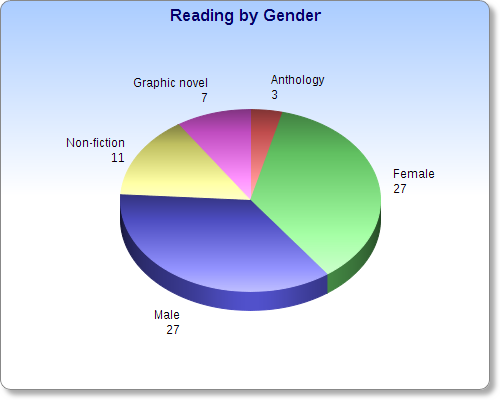
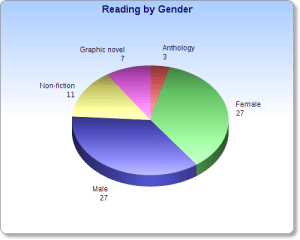
And since we’re about halfway through the year, here’s a breakdown of my reading stats by gender. I’ve separated out anthologies, non-fiction and graphic novels as categories of their own, so “male” and “female” only refers to book-length fiction (ie, novels, collections, or novellas published as standalones). Every time I finish a book by one gender, I pick up a book by the other gender. And you know what? It’s piss-easy to do. You do it like this: I’ve just finished a book written by a man, so now I will read a book written by a woman. And vice versa. It’s so simple! It’s foolproof! I bet you could do it too! Go on, give it a go.

 

reading_by_gender


5 Comments

More on women-only science fiction anthologies

Back in April, I posted a list of women-only science fiction anthologies – see here – but since then I’ve discovered two more that should have been on my list:

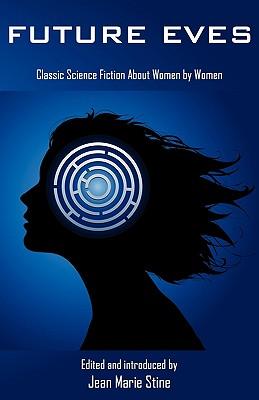
futureevesFuture Eves, Jean Marie Stine, ed. (2002) Subtitled “Classic sf by women about women”, this anthology is split into two sections: From the 1920s – ’30s and From the 1940s – ’50s. It contains stories by Leslie F Stone, Margaretta W Rea, Hazel Heald, Evelyn Goldstein, Marcia Kamien, Joy Leache, Betsy Curtis, Beth Elliott and Helen Clarkson. There’s a couple of names there new to me – Rea’s story is apparently the only one she ever had published (in Amazing, Jan 1933), Goldstein had eight stories published between 1954 and 1960, Kamien three in the mid-1950s, Leache three from 1959 to 1961, and Elliott only one in 1959. Clarkson is also known for a single story, which was reprinted in New Eves – see my review here.

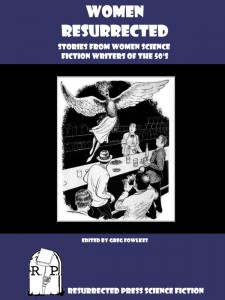
rotator_women-225x300Women Resurrected: Stories from Women Science Fiction Writers of the 50’s, Greg Fowlkes, ed. (2011) This is from a small press which seems to specialise in “resurrecting” old and forgotten genre works – not just science fiction, but also mystery and adventure. Women Resurrected contains stories by Pauline Ashwell, Marion Zimmer Bradley, Florence Verbell Brown, Barbara Constant, Betsy Curtis, Dorothy de Courcy, Miriam Allen deFord, Helen Huber, Jean M Janis, Elisabeth R Lewis, Katherine MacLean, Judith Merril, Evelyn E Smith, Lyn Venable, Ann Walker, Elaine Wilber, Therese Windser and Mari Wolf. Yet more unfamiliar names – Brown (1 story only published), Constant (2 stories), de Courcy (20 stories), Huber (1 story), Janis (2 stories), Lewis (1 story), Venable (7 stories), Walker (1 story), Wilber (1 story), Windser (1 story) and Wolf (7 stories).

None of these “unknown” writers had careers that lasted beyond the early 1960s. It’s tempting to wonder why – marriage? children? no longer welcome by editors? It also seems odd that de Courcy, with twenty stories published between 1946 and 1954, should prove so obscure, especially given that a woman sf writer – Pamela Zoline – is still known today for a single story published in 1967 (and she only published 5 in total throughout her career). Perhaps the fact de Courcy co-wrote with – husband? brother? – John de Courcy explains it. The same might also be said of Mari Wolf, who wrote alone – I mean, how can you forget a writer whose first story was titled ‘Robots of the World! Arise!’.

So that’s a pair of anthologies which focus on the early decades of science fiction and women’s contribution to it. According to Partners in Wonder by Eric Leif Davin, there were 65 women writers published in science fiction magazines between 1926 and 1949, and a further 138 who debuted between 1950 and 1960. In total, those 203 women sf writers produce 922 stories during those 34 years, averaging between 5% and 16% by title of the total contents for genre magazines throughout the period.

After 1960, of course, and the appearance of massmarket paperbacks in supermarkets, there was a huge influx of female sf readers and writers… and yet common perception still has it that women writers are a small minority – as if the situation prior to 1960 has held true for the last 50 years. Even worse, little or none of those pre-1960 women sf writers are ever collected, or appear on lists of “classic” sf… further feeding into the myth that women did not write sf during those decades. Happily, the above two anthologies prove this untrue . More like them, please.


1 Comment

May book haul

Not too many this month, so I appear to be getting my habit a little under control. More work still needed, however. On the plus-side, it’s getting harder to find irresistible bargains on eBay; on the other hand, it’s getting easier to find obscure books that look interesting…

2014-05-26 09.14.55

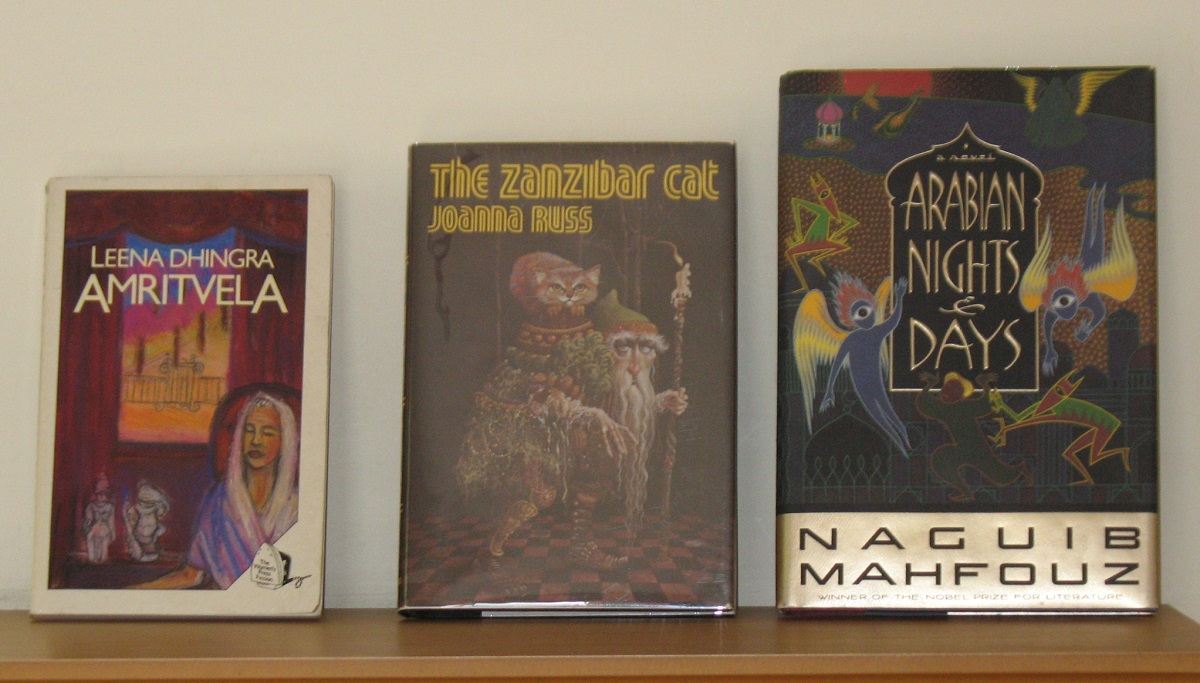
Three first editions. Amritvela is actually signed and was a couple of quid on eBay. It’s not sf, but I need to read more world fiction anyway. The Zanzibar Cat is Russ’s first collection. Arabian Nights and Days was given me by my mother. I’ve read several books by Mahfouz, and I have a couple more on the TBR. But I’ve yet to read his Cairo trilogy, as the only copies I have of it are in Arabic. That’s a project for one year – get my Arabic up to scratch so I can read them…

2014-05-26 09.15.31

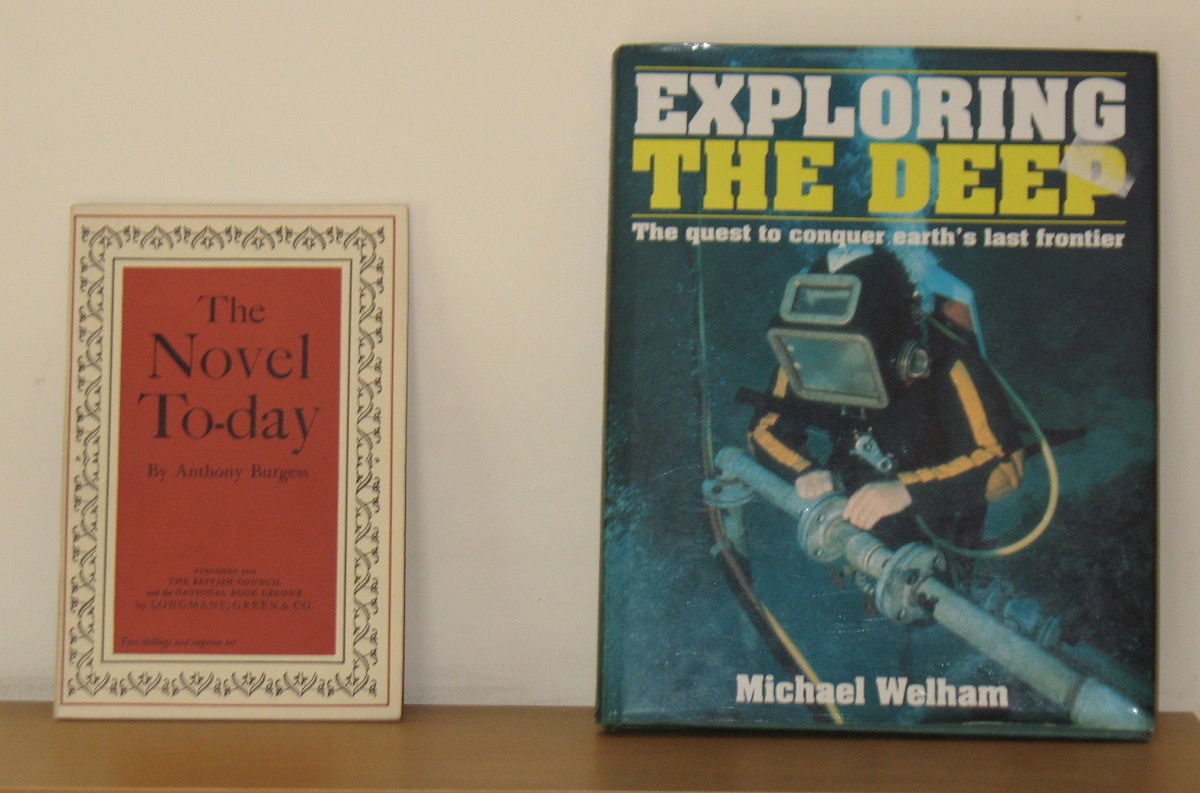
The Novel To-day was a lucky (and cheap) find on eBay. It goes in the Anthony Burgess collection. Exploring the Deep was also from eBay (and also cheap), and is a pretty good overview of its topic. Useful research material, should I ever decide to write some hyperbaric sf…

2014-05-26 09.16.11

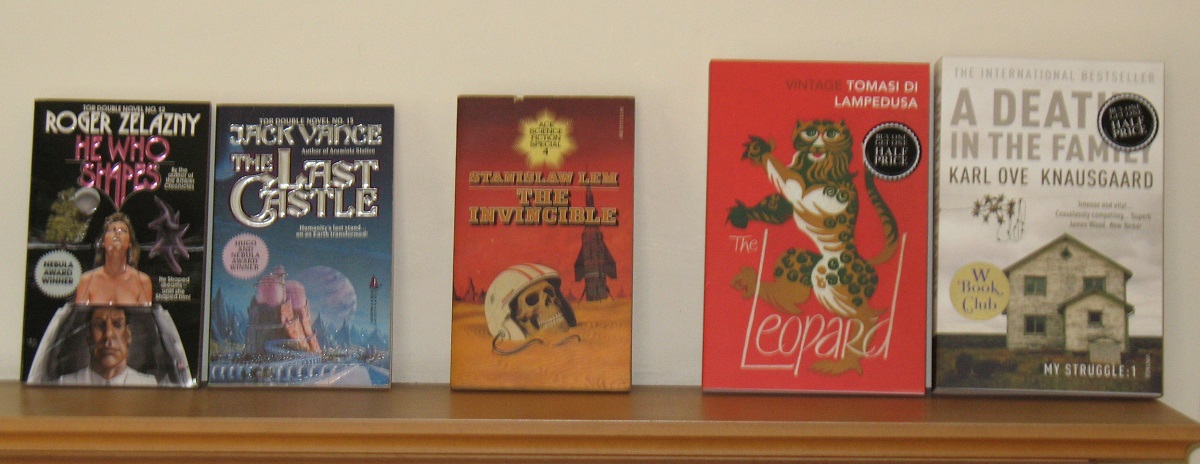
A pair of Tor doubles – No 12 He Who Shapes/The Infinity Box by Roger Zelazny and Kate Wilhelm, and No 15 The Last Castle/Nightwings by Jack Vance and Robert Silverberg. I started collecting these after a bunch of them appeared in a remainder book shop in Abu Dhabi, and over the years I’ve managed to find 28 of the 36 Tor published. Some of them are quite good, but many are rubbish. The Invincible is more Lem. The Leopard and My Struggle 1: A Death in the Family were bought as a birthday present.

2014-05-26 09.16.51

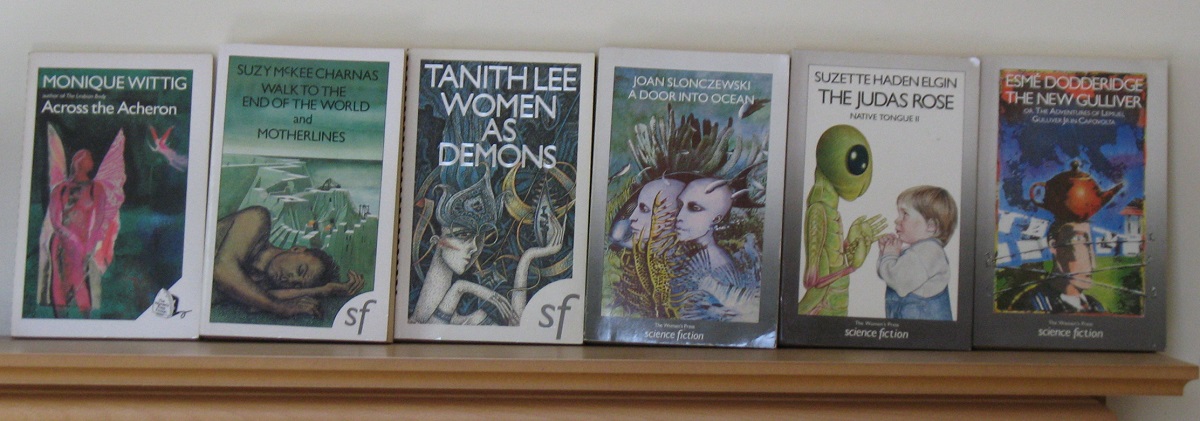
For The Women’s Press sf collection – Across The Acheron I found on eBay, but Walk to the End of the World and Motherlines, Women as Demons, A Door into Ocean, The Judas Rose and The New Gulliver were all from Brian Ameringen at Porcupine Books.  I recently updated the list of The Women’s Press sf titles on the SF Mistressworks site – see here.


1 Comment

2014 reading diary, #6

Despite the number of books I read, I don’t think I’m putting much of a dent in the TBR. I must stop buying books for a month or two. Of course, that means publishers must instantly stop publishing books I want, and booksellers must remove all the books I might desire from their shelves… Then I should be able to do it.
ride-with-the-devilRide with the Devil, Daniel Woodrell (1987) Originally published as Woe to Live on but retitled when a film adaptation was made, this is Woodrell doing McCarthy. The narrator is a German immigrant (referred to, of course, as ‘Dutch’ or ‘Dutchy’) and a member of Confederate band of irregulars. They’re bandits in all but name, displaying little or no military discipline, wearing patchwork uniforms (and often masquerading as Union soldiers in stolen uniforms). They are brutal, not particularly smart, callous, and appear to be motivated chiefly by revenge against the depredations of the Jayhawkers. One of their number is black, but he’s not a slave – he and the narrator, Roeder, become good friends, in fact – which does sort of confuse the whole issue of the war. After an attack by Union cavalry, the troop scatter and Roeder, the black guy, and two others hide out on the land of a sympathetic Southern gentleman landowner. One of the other two, Roeder’s best friend, enters into a relationship with the landowner’s widowed daughter-in-law. Soon after, the troop reconvenes and stages a raid on the home town of the Jayhawkers. By this point, Roeder has lost his taste for violence, and has belatedly recognised that his fellows are far from noble freedom fighters but violent psychopaths. I really liked Woodrell’s Winter’s Bone, but this felt too much like McCarthy-lite. I’ll keep an eye open for more books by Woodrell, but if I’d read this one first I probably wouldn’t have bothered.

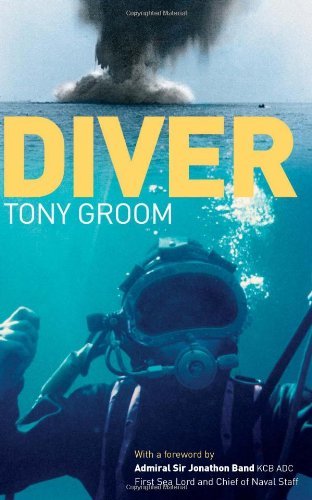
diverDiver, Tony Groom (2007) I think I was a little hungover – or rather, I was feeling insufficiently motivated to do much of anything – when I picked this book off the shelf for a bit of light reading. It proved a good choice, at least initially. The first few chapters, describing Groom’s training and early years with the Royal Navy, are very funny. He signed up determined to become a diver, made it through all the courses, got into a bit of trouble on his first posting to a minesweeper, was then sent to Tuvalu to help clear WWII mines from the waters around the atoll… before flying out to the Falklands as part of the UK task-force. The chapters on the Falklands War are quite harrowing. The Fleet Clearance Diving Team was in the thick of it, defusing bombs that had fallen on British ships but not exploded (pretty much all of the bombs were British-made, incidentally). After leaving the Royal Navy, Groom became a commercial diver in the oil industry, saturation diving in the North Sea. He makes it clear quite how dangerous an occupation it is – not just because of explosive decompression, but also because the divers are dependent on so many other people. They’re trapped inside their decompression chambers, and should the ship or barge suffer some sort of calamity there’s no escape for them. And on the sea floor, they’re totally dependent on their umbilical – though they carry ten minutes of emergency “bail-out” heliox, the umbilical also pumps hot water into their suit and should that fail they’d soon develop hypothermia. Groom has a readable chatty style, and cheerfully admits at times he may have got some of the details wrong – especially when discussing the Falklands War, as he bases his narrative on his diaries. Interesting stuff.

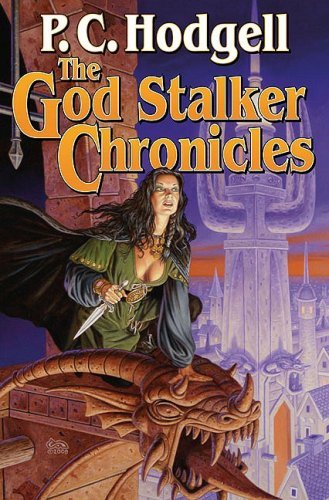
godstalkerGod Stalk, PC Hodgell (1982) I picked up a copy of the Baen reprint omnibus edition, The God Stalker Chronicles, containing both God Stalk and its sequel Dark of the Moon, at the World Fantasy Con last October. I’d sooner have bought them as individual paperbacks, rather than one humungous hardback, but it was all I could find. God Stalk is in almost all respects an ordinary epic fantasy, set in an epic fantasy world with a complex history and pantheon, and featuring a special snowflake protagonist. It’s a very likeable book, as indeed are a number of books of this type; and there are some nice touches in Hodgell’s world-building. I’d been expecting it to be a tad literary, but it’s not – it’s written in precisely the sort of prose common among books of its ilk, although it is somewhat smoother to read than most. However, where I think it fails – and this may account for its apparent obscurity – is that the learning-curve is among the steepest I’ve come across in fantasy. It doesn’t help that protagonist Jame is apparently unaware of her own history – it’s never stated that she’s amnesiac, but she was banished from her home keep by her family, spent several decades wandering, and has no memory of that time. There’s an extensive back-story to God Stalk, but Hodgell is parsimonious with the details – until they’re needed… which often results in a wodge of exposition thick with the names of gods and lords and races. The plot takes a good third of the book to get going, so it’s a bit of a slog for the first few chapters. Eventually, things start to come together – some of the foreshadowing is a little too obvious, however – and you need to refer less and less to the dramatis personae at the front of the novel. I’ve still got the second half of this omnibus to read, and I’ll decide after that whether I can be bothered to continue with the series (the seventh book is published next month). Incidentally, Jame is mistaken for a boy on several occasions – with that cleavage she has on the cover? Baen. Sigh.

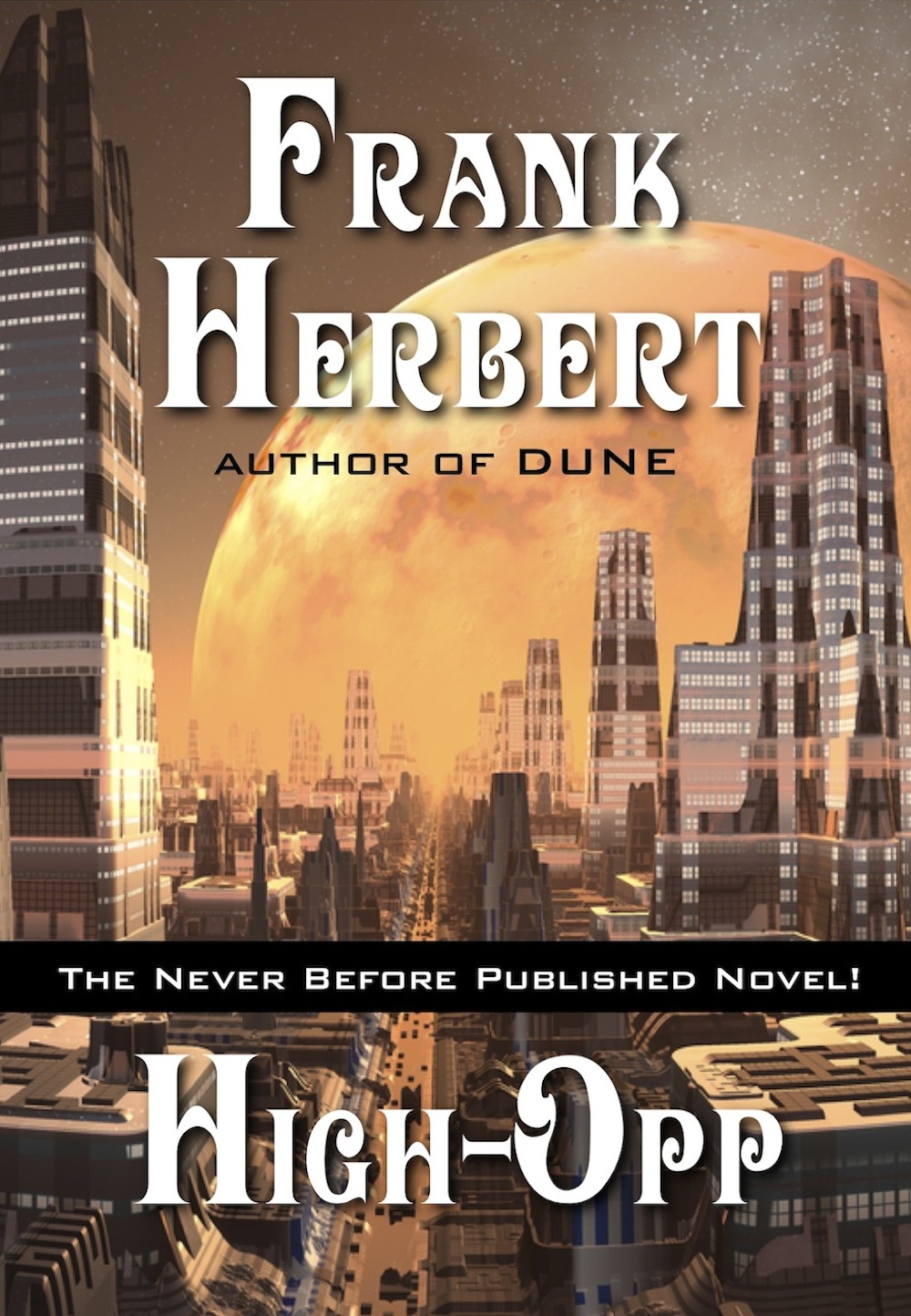
high-oppHigh-Opp, Frank Herbert (2012) Despite his success with The Dragon in the Sea, Frank Herbert had trouble selling another novel, and it wasn’t until Dune, published by Chilton, a publisher best-known for car repair manuals, that he had another book in print. During that period, he wrote a number of novels, all of which were eventually trunked. High-Opp is one of them. And, to be honest, it’s easy to see why no publisher back then would go for it. It’s also the book which contains the “fap gun” – Herbert should probably have considering renaming his future firearm. The world of High-Opp is run by opinion polls, although they’re presented pretty much as global referendums. Of course, the entire system is fixed, with a political class (all related to each other) holding all the top spots. A fast-rising star is brought low as part of a plot to overthrow those in charge, since he’s been identified as an ideal candidate to lead a rebellion by the head of BuPsych, who wants to effect a change of leadership. But he’s no tool to be used, and decides to actually smash the system. He wins the day and they make him emperor. This book is a curiosity and little more. I’m not surprised it’s taken more than half a century to see print.

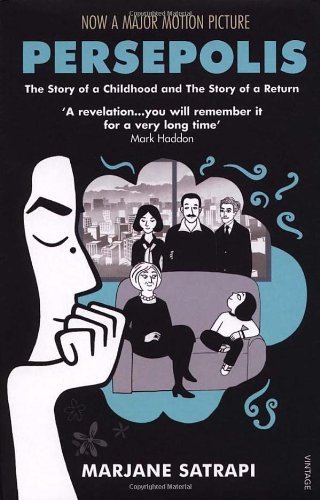
persepolisPersepolis, Marjane Satrapi (2003) This was made into an animated film in 2007, which I’ve not seen. That must be an odd experience, pretty much as if the graphic novel itself had suddenly come to life. Satrapi was royalty, her great-great-grandfather was the shah of Iran overthrown by Reza Pahlavi in 1921, but she grew up during the Iranian Revolution in 1979, and its her childhood during those turbulent years, and her family’s coming to terms with the new regime, which forms the first third of Persepolis. The Satrapis were Westernised, secular, well-off and political – and lost a lot of friends and relatives, first to Pahlavi’s secret police, then to the Ayatollah’s regime, and to the war with Iraq. Marjane Satrapi rebels, which puts her at risk from the authorities, so her parents send her to a French-speaking school in Vienna. There she experiences both friendship and racism, and at one point ends up living on the streets. She returns to Iran several years later, and once again has to learn to live in a fundamentalist Islamic state. There’s a telling scene when her friends ask her if she ever had sex while in Vienna, of course she replies, after all she’s nineteen and it’s not unusual in the West… but her friends, for all their secular views, are horrified. Persepolis is, of course, autobiographical, and while the art may be deceptively simple the story is not. Recommended.


8 Comments

2014 reading diary, #5

The alternate genders thing got thrown a little out of whack, first by deciding to put Jonathan Strange and Mr Norrell to one side for a bit (because it is fucking enormous), and then by reading a couple of trashy male-authored books while on the way to, and back from, Glasgow over the Easter weekend. But I then made up for it by reading two successive books by women, er, twice. So far this year, I’m running exactly 50:50 male:female writers, so it seems to be working…

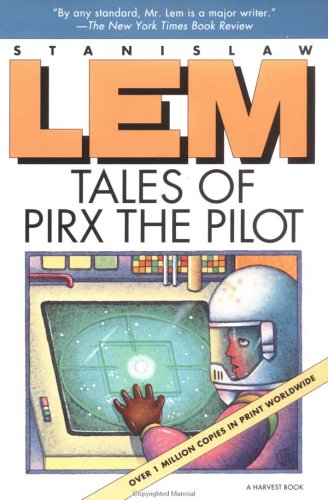
PirxTales of Pirx the Pilot, Stanisław Lem (1979) I decided I should read more Lem, especially as I’ve been finding the concerns of much male-authored US science fiction of last century somewhat tiresome; and there are these attractively-packaged Harcourt Brace Javonovitch paperbacks of some of his books available on Amazon… But they’ve already fucked up the “collection” as the only two I’ve bought so far – this one and Imaginary Magnitude – are sized slightly differently. Argh. Anyway, Pirx is a space pilot and sort of an Everyman, although he typically wins through using a combination of common sense and accidentally doing the right thing. In the five stories in Tales of Pirx the Pilot Pirx starts out as a cadet on a test-flight to the Moon, solves the mystery of the death of two scientists at an observatory on the far side of the Moon, solves another mystery which resulted in the disappearance of a patrol spaceship, witnesses an accident in space while travelling aboard a space liner, and manages to survive a flight in a spaceship that shouldn’t have been declared flight-worthy. They’re an odd mix of made-up science-fiction rubbish and realistic space travel. For example, in ‘The Conditioned Reflex’, Lem goes into a great amount of realistic detail about the lunar observatory, and the story reads like a piece of nearish-future hard sf. But ‘The Albatross’ features space liners and feels like a totally different setting. Pirx, on the other hand, is a pleasingly common-sensical hero, with a faint streak of cynicism, and he wins through as often by doing the wrong thing as he does by puzzling out what’s needed. There’s a second book of Pirx stories titled, with a great deal of imagination, More Tales of Pirx the Pilot. I think I’ll pick myself up a copy…

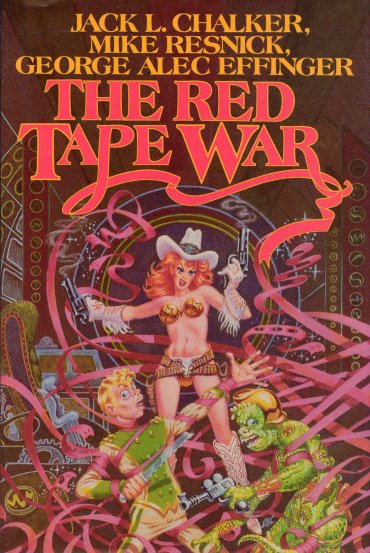
the-red-tape-warThe Red Tape War, Jack L Chalker, Mike Resnick & George Alec Effinger (1991) Ever read a book knowing it was going to be shit but you read it anyway and guess what it was total shit? The clues were all there – the cover-art, the names of the authors… And yet, against my better judgement – well, against any judgement whatsoever – I went and read the book anyway. The Red Tape War was conceived as a jolly jape by Chalker, Resnick and a third author. That third author, who they do not name, had the good sense to drop out, so Effinger was drafted in as a replacement. The idea was to write a book where they’d pass the narrative from one to the other, hopefully leaving it in such a state the writer picking up the story would have their work cut out keeping the whole thing stumbling along. Dear Tor, this is not a project that should have ever seen the light of day.

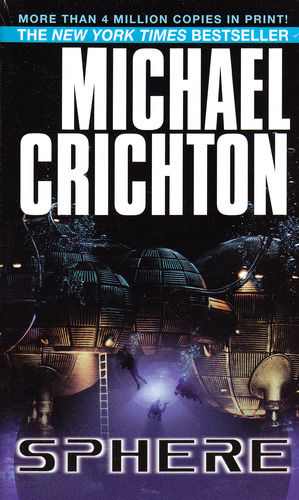
sphereSphere, Michael Crichton (1987) The movie adaptation of this has always struck me as one of those films that has all the ingredients necessary to make a good movie, yet manages to be actually quite bad. The underwater aspect fascinates me, and the central premise – a mysterious spacecraft is discovered on the ocean floor – is certainly appealing… So I read the book to see if it was any better than the film. I can now confirm it isn’t. In fact, it’s probably worse. It doesn’t help that Crichton gets some of his details wrong. The team sent to investigate the spacecraft descend to the US Navy habitat on the ocean floor, 1000 feet deep, in submersibles. At that depth, the pressure is around thirty atmospheres, so saturation diving is required. Compression would take around five hours, not the length of the ride in the submersible. And at thirty atmospheres, the heliox in a tank carried on the back would last only minutes, so the breathing mixture would be provided using umbilicals. Given that, it seems churlish to complain that the rest of the book makes little or no sense. The spacecraft proves to be from a century or so in the future, but crashed several centuries ago… after entering a rotating black hole or something. Nothing about the spacecraft is at all plausible – its design (heavy lead shielding! wtf), huge cargo bays containing, um, food, no crew… yes crew… no not really crew… But it’s the titular, er, sphere, found in the spacecraft which forms the focus of the novel, as it gives who ever enters it super powers. Or something. Which each of them uses to terrorise everyone – including themselves; and destroy the habitat which is keeping them alive at the bottom of the ocean. Stupid book. Avoid. I should have done.

We Who Are About To…, Joanna Russ (1977) I needed something to cleanse my palate after the last two books, so grabbed this off the book-shelves. I’ll be reviewing it for SF Mistressworks.

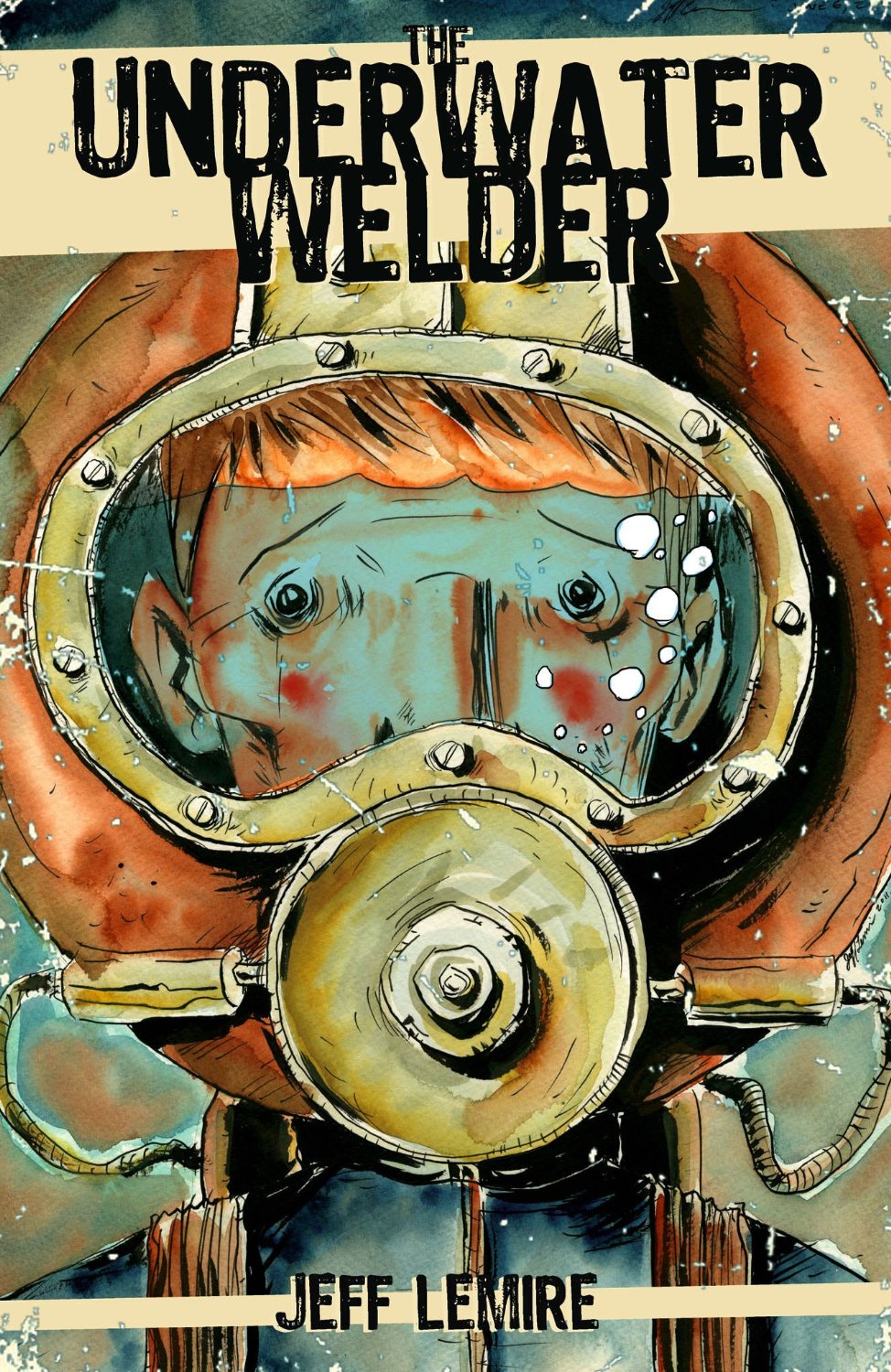
underwaterwelderThe Underwater Welder, Jeff Lemire (2012) I’d seen a few positive reviews of this, and the title suggested it would appeal to me, so I sprung for a copy. A mistake. It’s rubbish. The artwork is not at all attractive, and the story is a banal daddy issues plot. Son of wastrel drunkard dad, who was a diver in the oil industry, returns to his childhood town and follows in his father’s footsteps. On one dive, he sees something strange, something to do with an old pocket-watch that used to belong to his father, and when he surfaces, everywhere is deserted. But by this point I was so bored, I wasn’t really following the story, so I’m not entirely sure what happened. Something to do with his father, something to do with starting to treat his wife better because whatever daddy issues he had were resolved. Or something. Not worth the money. Avoid.

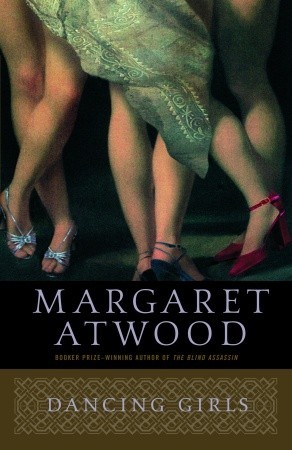
dancinggirlsDancing Girls, Margaret Atwood (1977) This is Atwood’s first collection and, to be honest, it’s actually a little dull. The contents were originally published in a variety of Canadian literary magazines. No dates are given, but I’m guessing the stories date from no more than a few years before the collection appeared. I’m still not entirely sure what to make of Atwood’s fiction. I find her novels much more successful than her short fiction, but I’ve yet to read one of them with as much power as her Alias Grace – though The Handmaid’s Tale is really very good, it’s let down by a sketchy background – and while I’ve enjoyed her other novels I’ve read, I usually feel vaguely dissatisfied by them. Her short fiction strikes me the same way – it often seems like it’s missing something. But I’m not entirely sure what it is. There’s a vagueness there that… it’s not a failure of imagination, nor a lack of writing chops; it’s part of her voice… but I’m always expecting a thicker broth so it reads as thinner than it should be. I’ll continue to read her, she’s an important writer after all; and perhaps eventually I’ll work out what it is about her fiction that leaves me so dissastified… Perhaps she’ll write something else as powerful as Alias Grace

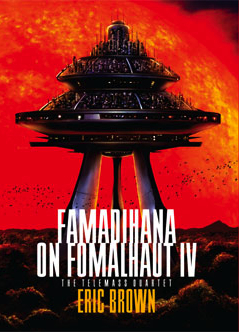
famadihana-on-fomalhaut-iv-signed-jhc-eric-brown-2075-pFamadihana on Fomalhaut IV, Eric Brown (2014) I bought this at the launch at Satellite 4, this year’s Eastercon. It’s the first of the Telemass Quartet. But that title is a bit of a misnomer. While tt’s a novella set in the same universe as Brown’s earlier Starship Seasons Quartet, there’s nothing in its plot which is predicated on “telemass” itself (a near-instantaneous interstellar matter transmission system). That strange word in the book’s title – no, not Fomalhaut, the name of a star, which is actually Arabic, fom al-haut, فم الحوت, and means “mouth of the whale” – but “famadihana”, which Wikipedia describes as “a funerary tradition of the Malagasy people in Madagascar. Known as the turning of the bones, people bring forth the bodies of their ancestors from the family crypts and rewrap them in fresh cloth, then dance with the corpses around the tomb to live music.” And the indigenous aliens of Fomalhaut IV practice a similar ritual – not that protagonist ex-copper Matt Hendrick discovers this until midway through the novel. He is on the planet to find his ex-wife and their daughter, who has been drawn there by the local church which has incorporated some of the alien rites into its creed – and promises that it can “cure” the daughter. Hendrick takes up with a local young woman – the world’s colonists are all Malagasy – and with her help, and that of her anthropologist sister, track down his missing family, and witness the titular ritual performed by the aliens. It’s solid Brown stuff, and much like the aforementioned quartet. If there’s one change I’ve noticed over the years, it’s that sex – easy sex – seems to appear more often in Brown’s stories than it did before.

Busy About the Tree of Life, Pamela Zoline (1988) She was bloody good, wasn’t she? It’s a shame this is all she wrote. I’ll be reviewing it for SF Mistressworks. (Shame about the crap cover art, though; also by Zoline.)

Queen of the States, Josephine Saxton (1987) Another SF Mistressworks book. Wasn’t too sure initially what to make of this, but the further I got into the novel the more I liked it. Saxton also had a distinctive voice, and I have to admit I find it fun to read.

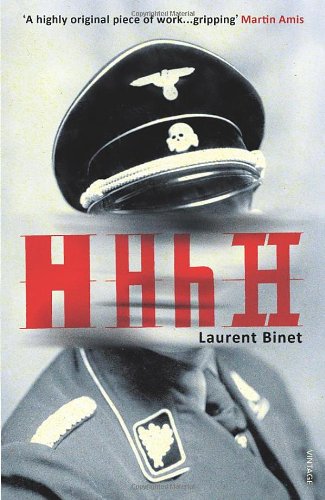
hhhhHHhH, Laurent Binet (2013) I bought this early last year as a lot of people were talking about it at the time. I don’t think otherwise I would have bothered – I mean, the title doesn’t exactly inspire, even once you know it means “Himmlers Hirn heißt Heydrich”, and is about Reinhard Heydrich, who was possibly the nastiest Nazi of them all (and who features in a (sort of) country-house murder in Philip Kerr’s eighth Bernie Gunther novel, Prague Fatale, which I’ve read (see here)). And yet, I’m really glad I bought HHhH – it’s an excellent novel, and more than that, it reads in part like a manifesto of my own writing. Because it’s not just about Heydrich – or rather, Operation Anthropoid, a secret mission by a pair of British-trained parachutists, one Czech and one Slovak, to assassinate Heydrich, who was “Protector” of the Czech Republic at the time. HHhH is also about writing about Operation Anthropoid, about Binet’s attempt to do justice to the history and the people involved, and his own response to the story, to fiction, to history, to writing about the real world. While HHhH may read like history and autobiography, and Binet makes a point of his need for verifiable facts about Operation Anthropoid and the people involved in it, we’ve no way of knowing how much of the authorial voice, and the author’s story, is actually true. Did Binet, for example, really have relationships with the women he names? Or are they invented characters? It doesn’t, of course, really matter (and HHhH has been marketed as fiction, for what it’s worth), but that concept of nailing fictional story into place with verifiable facts is something I’ve been exploring in my own fiction. I’ve yet to explore the act of writing such fictions in, er, such fictions – although many, many years ago I did have a meta-fictional sf story published in a small press magazine (it’s an apprentice work; if you’re interested, see here). Anyway, HHhH is excellent… and has certainly given me much food for thought…


1 Comment

My reviews on SF Mistressworks

It occurred to me that while most of the reviews on SF Mistressworks are reprints, all of mine are original – which means that unless you follow that blog, you won’t have seen them. So here’s a list of the sf books by women authors I’ve reviewed so far this year on SF Mistressworks:

The New Women of Wonder, Pamela Sargent, ed. (1978) The third and final all-women sf anthology edited by Sargent, at least until the two reboots in 1995. Probably the best of the three. Review here.

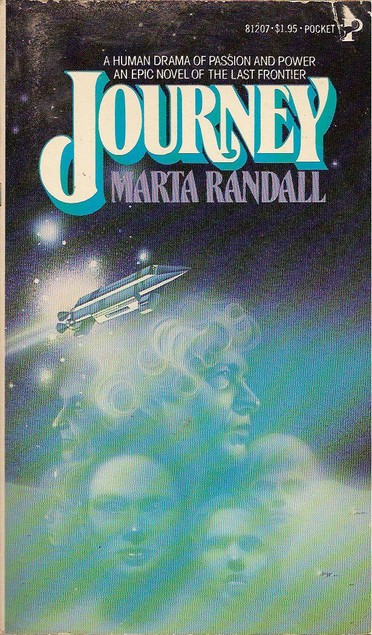
Journey, Marta Randall (1978) The first of a duology about the Kennerin family and their trials and tribulations colonising the world of Aerie. I wasn’t entirely convinced. Review here.

journey

Fireflood and Other Stories, Vonda N McIntyre (1979) McIntyre’s only collection, which is a shame as judging by the stories in this she deserves to be much better known. Review here.

The Children of Anthi, Jay D Blakeney (1985) The first of duology about the semi-feudal world of Ruantl and the adventures of galactic rogue Blaise Omari after he crashlands there. Solid core genre, although it didn’t survive this most recent read quite as well as I’d expected. Review here.

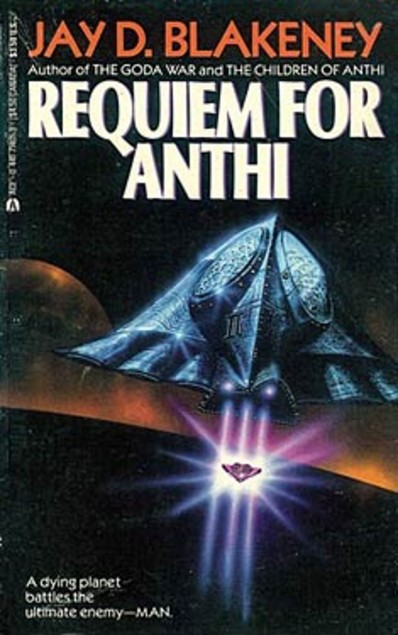
Requiem for Anthi, Jay D Blakeney (1990) The sequel to The Children of Anthi, which probably makes a better fist of the background even if the protagonists do prove to be infeasibly special. Review here.

anthi

Extra(Ordinary) People, Joanna Russ (1984) Excellent collection, containing Russ’s only Hugo win, ‘Souls’, as well as ‘The Mystery of the Young Gentleman’, which immediately became a favourite piece of short sf. Review here.

Countdown For Cindy, Eloise Engle (1962) Early Sixties tosh about the first American woman in space, a nurse sent to the Moon to look after a pair of injured scientists at the Moonbase. Very much a book of its time – its titular heroine is not going to be seen as much of a role model these days. Review here.

Still to come over the next couple of months: reviews of Ark Baby by Liz Jensen, Busy About the Tree of Life by Pamela Zoline, We Who Are About To… by Joanna Russ and Queen of the States by Josephine Saxton. I have many more eligible books than those, of course – they’re just the ones I’ve actually read and am working on reviews of at this moment.