So that was Fantasycon. It was my first. Sort of. I turned up for just the Saturday of Fantasycon 2008, but this year I stayed in the hotel for the entire weekend. For a couple of reasons: first, I didn’t go to the Eastercon, so this was my first, and probably only, con of the year; and second, they were launching Catastrophia, which contains one of my stories, at Fantasycon.
For a number of years, Fantasycon has taken place in the Britannia Hotel in Nottingham, which is actually where the first con I ever attended took place. Back then it was called the Albany. The convention was Mexicon 3 in 1989. At the time, I was living in Mansfield, “that once-romantic, now utterly disheartening colliery town” as DH Lawrence puts it. (It’s actually my home town.) I’d seen mention of Mexicon in Matrix, the BSFA newsletter, and since I’d never been to a convention before, I decided to give it a go. I bought a membership, and drove into Nottingham each day. It wasn’t the best way to attend a science fiction convention, but I haven’t looked back since.
Next year, however, Fantasycon won’t be in Nottingham, but in Brighton. Which is a bit of a shame, as Nottingham is much more convenient for me. Having said that, the Britannia is a bit of a dump. It’s a 1970s Brutalist tower block, so it looks great from the outside but the interior is showing its age; and it appears as though it was last refurbished about twenty years ago. There is, for example, a room off the main Forum Bar, used to access the function rooms at the rear of the hotel, which looks as though it once was a posh restaurant. Bizarrely, it has no windows. There are just tables and these strange niches containing banquette seats with colourful upholstery. It’s a wide corridor with tables lining it. During one conversation during Fantasycon, Neil Williamson and I decided that the hotel should put all the interior décor back as it was when the place opened in 1969, and make it into a 1970s experience. (But not with nylon sheets, I could never sleep in a bed with nylon sheets.)
While the building itself might not be up to much, the staff were friendly, the breakfast was plentiful, and the bottled Coronation Street real ale was very drinkable, so I’ve no real complaints. Having said that, every time I stay in hotels, I’m always surprised by the dwarf showers. I’m not especially tall, but the showerheads in hotel showers are always fixed to the wall at about the level of my chin. I remarked on this as I was heading down in the lift to breakfast on the Saturday. To which the diminutive Ian Watson replied, “For you, perhaps.”
The other thing about hotel showers I always forget is the magnetic shower-curtain. As soon as you step into the tub, it attaches itself to you and tries to envelop your body. Having a shower is a constant battle with a sheet of thin plasticised material. You daren’t turn to face it in case it glues itself to your face and asphyxiates you. Who needs knife-wielding psychos in the bathroom when you can be attacked by a magnetic shower-curtain? If Hitchcock were still alive, he’d make a film about it. I’m sure of it.
I also had the usual problem with the keycard for my hotel room, which required five trips down to the reception over the Friday and Saturday. It wasn’t as bad as the Hilton during the 2009 Eastercon in Bradford. My door lock there broke so often I ended up on first-name terms with the maintenance man.
I spent most of Fantasycon, as is usual at conventions, in the bar chatting to people. The various conversations I had seemed to revolve around writing more than is usually the case at an Eastercon. Most of the people I met were writers, so perhaps that’s why. I only made a single programme item, which was about short stories. A group of us ventured out of the hotel on both the Friday night and the Saturday night for food – Indian the first night, and Thai the next. The Indian wasn’t up to much. We walked into the restaurant and saw it was deserted. When we remarked on this, the waiter said, “Wait until 4 a.m.” That didn’t bode well, but we stayed. The food was nothing special. The Thai, however, was very good. The restaurant’s toilets were marked “Gent” and “Lady”, which amused us more than it should have done.
Highlight of the weekend for me was the Catastrophia launch on the Saturday afternoon. Because I have a story in it. PS Publishing were actually launching seven books that afternoon, Catastrophia being only one of them. There were about half a dozen of us Catastrophia contributors there for the launch. We sat at a long table, people bought the book and then moved down the table collecting our signatures. It took me a few goes to get my signature right – in fact, I ended up writing an exemplar on the back of the little piece of card giving my name so I knew how my book-signing signature was supposed to look. Obviously, I didn’t want to sign books with the same signature I use on cheques. One of the other PS books being launched was Cinema Futura, an essay collection on sf films. The contributors to that book – again not all of those in the book – sat at another long table on the opposite side of the bar. When it look liked our line had died down, I bought a copy and dashed across the room to get it signed. I can’t show you Catastrophia because I’ve not received my contributor copy yet. But you can be sure I’ll be sticking photos of it up here when I do.
The only other programme item I made was the raffle, compered entertainingly by Guy Adams. I was only there because I’d been given five tickets. Happily, I won two items, both of which I was quite pleased about and shall be keeping. (Sorry, Roy.)
Those two weren’t the only books I got at Fantasycon, of course. I bought a number. I actually purchased less than I usually do at cons, perhaps because I’m more of a sf fan than a fantasy/horror fan, and so there were less books which were likely to appeal to me. But there were some I wanted; others just caught my eye. You can probably guess which are which.
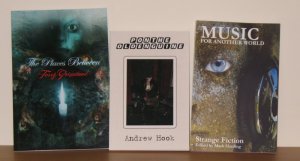 Three small press books: Terry Grimwood, Andrew Hook and Mark Harding were all at Fantasycon. I’m not sure what The Places Between and Ponthe Oldenguine are about, or even how the latter’s title is pronounced; but they looked interesting. Music for Another World is an anthology which doesn’t contain a death metal hard sf story by Yours Truly, but I got a copy anyway.
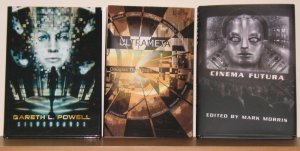 Another three small press books: Silversands is Gareth L Powell’s first novel, and is a handsomely-produced signed hardback from Pendragon Press. Ultrameta by Douglas Thompson sounded really interesting; and Cinema Futura I’ve already mentioned – it contains a sixty entries on science fiction films by science fiction writers.
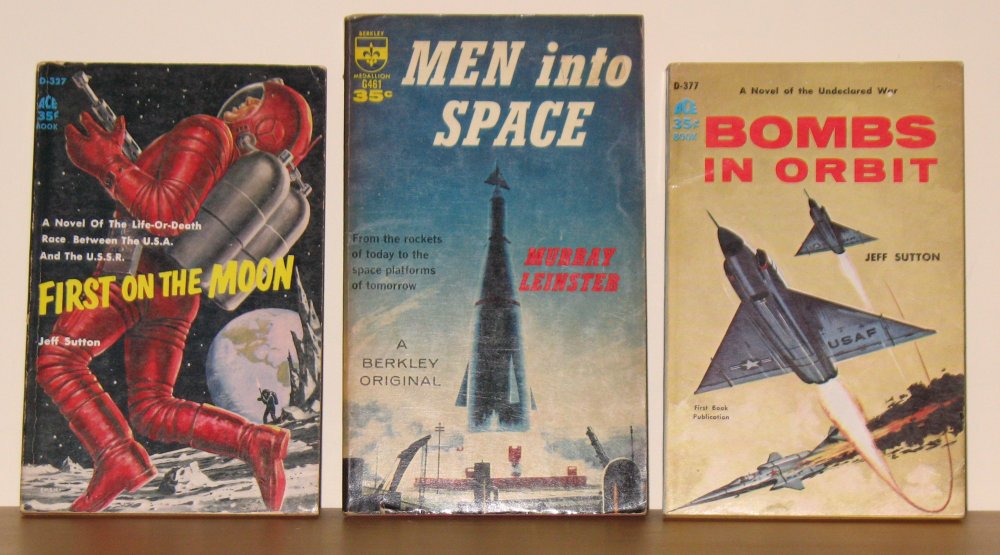
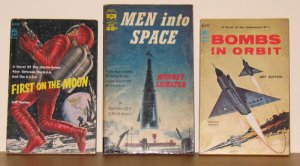 I couldn’t resist these three. First On The Moon
 is Jeff Sutton’s debut novel from 1958, and Bombs in Orbit
 is his second from 1959. They’re Cold War sf novels. Those jets on the cover of Bombs in Orbit are clearly Convair F-102 Delta Daggers. Men into Space
 is apparently based on a television series of the same name.
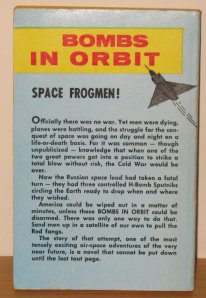 It wasn’t just the F-102s on the cover which inspired me to buy this book. As soon as I saw “SPACE FROGMEN!”, I knew I had to have it. So I did.
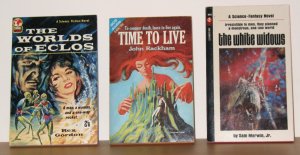 Another three 1950s sf novels. The Worlds of Eclos
 is by Rex Gordon, a British sf author of the 1950s and 1960s who seems to be mostly forgotten now. A review of his No Man Friday
 will be appearing on this blog soon-ish. Time to Live
 is one half of an Ace double, back-to-back with Lin Carter’s The Man Without A Planet. Rackham is another forgotten British sf author of last century. The White Widows
 by Sam Merwin Jr is the book which Beacon Books “spiced up” and published as The Sex War
 (see here). I plan to read both, and perhaps write about the differences.
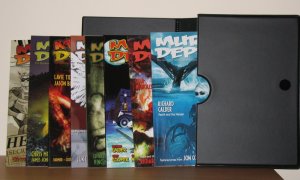
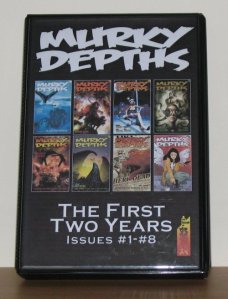 I won this in the raffle. It’s a nice sturdy box which contains eight issues of the magazine Murky Depths – which, among other things, has published a graphic novel version of Richard Calder’s Dead Girls
 . I’m looking forward to reading the issues.
So that’s the Fantasycon book haul. And that was Fantasycon. I had a good time, and I might well go next year. We shall see…
Ah yes, the “jugs” in the title of this blog post… That’s from a conversation about music which took place on the Saturday. I wanted Neil Williamson to listen to something on my iPod, but he said he didn’t have his headphones with him. I suggested getting mine, pointing out they weren’t earbuds, just normal headphones. Nor were they those big ones, jugs, that sit over the entire ear. I actually meant “cans”. But after that slip, headphones became known as jugs for the duration of the weekend.
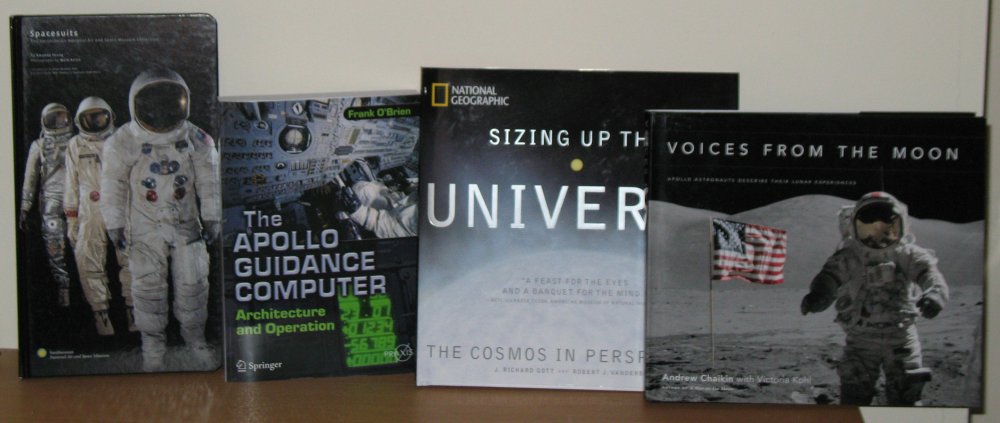
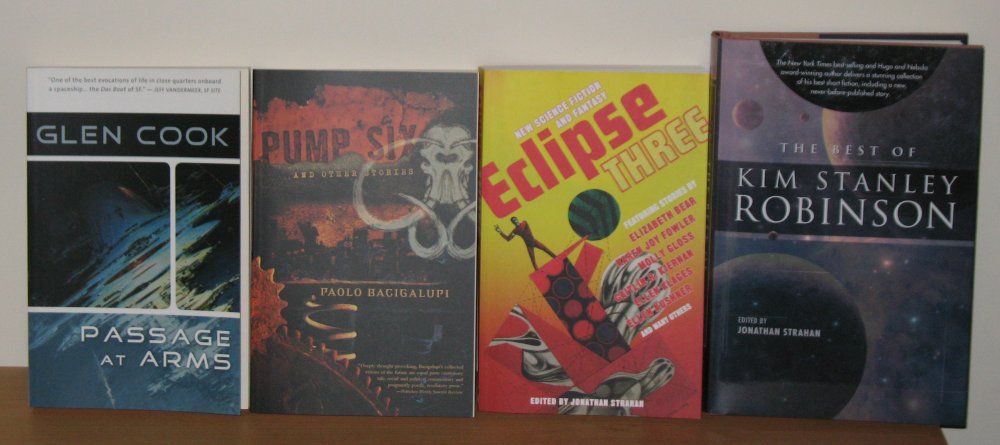


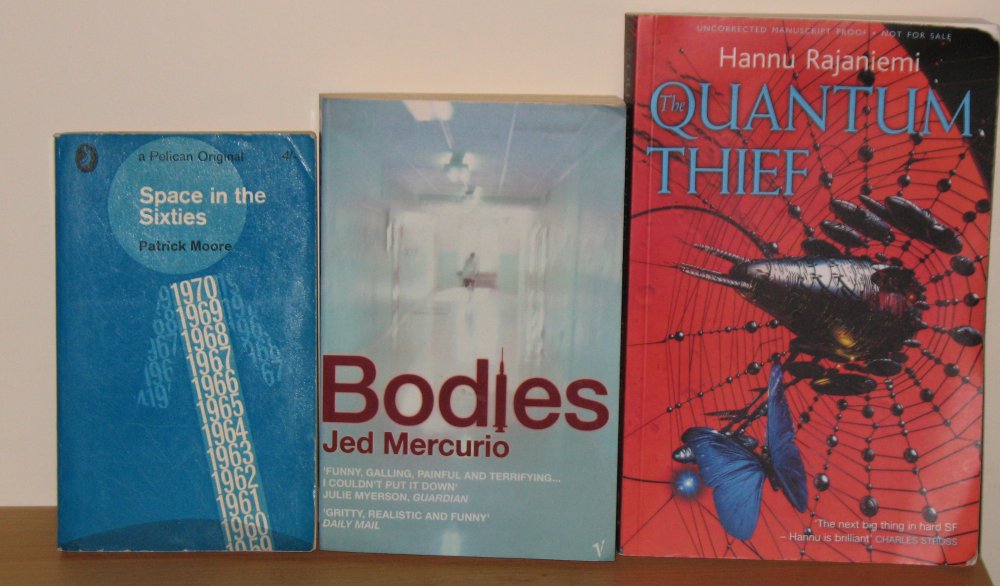


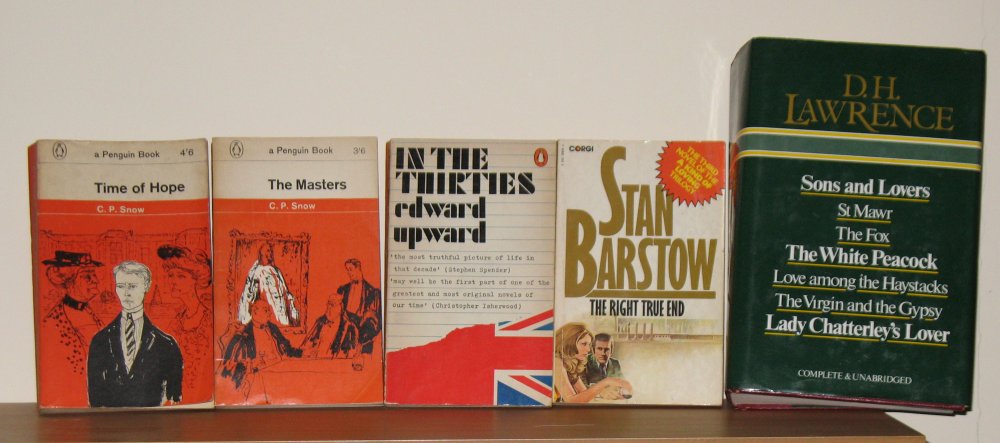
 , which contains
  ,
,  ,
,  (which I’ve read and in fact picked as one of my top five books of 2010
  and
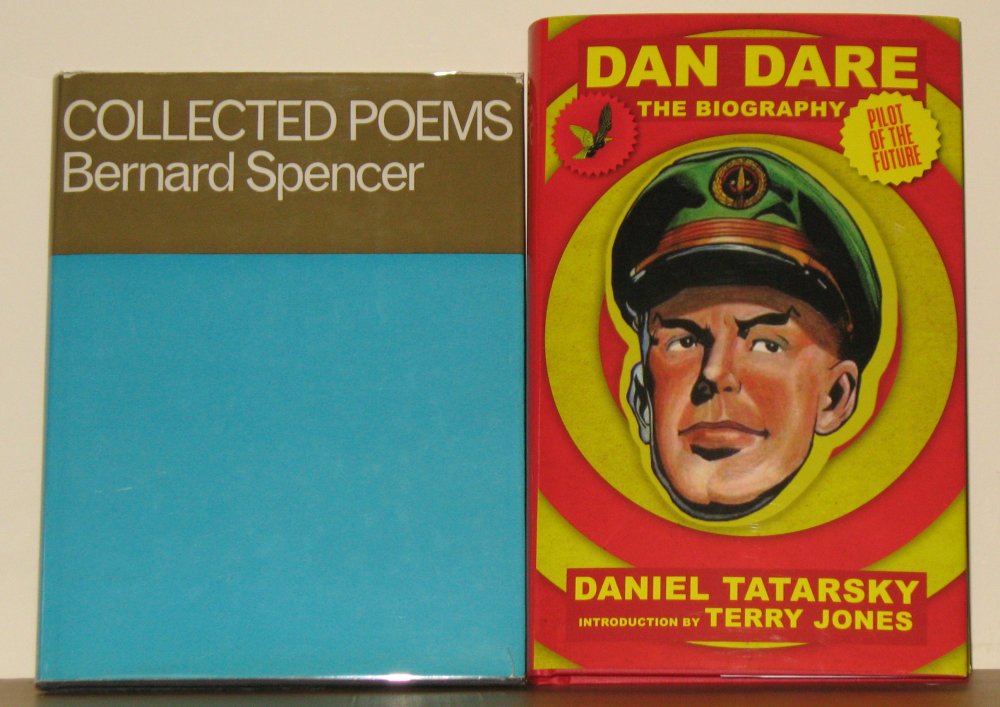
and  . In the middle is the first book of Edward Upward’s The Spiral Ascent trilogy,
  (you can find some lovely signed limited editions of his works at Enitharmon Press
  (now I just need to finds books one and two). I reviewed the 1982 television adaptation of
  for Videovista
 and
and  . I’ve always enjoyed Ursula Le Guin’s fiction, and
  was shortlisted for the BSFA Award last year – but lost out to China Miéville’s
  … which I thought very good and so bought
  . Finally,
  by Bernard Beckett is more a novella than a novel, but various approving noises were made about it last year.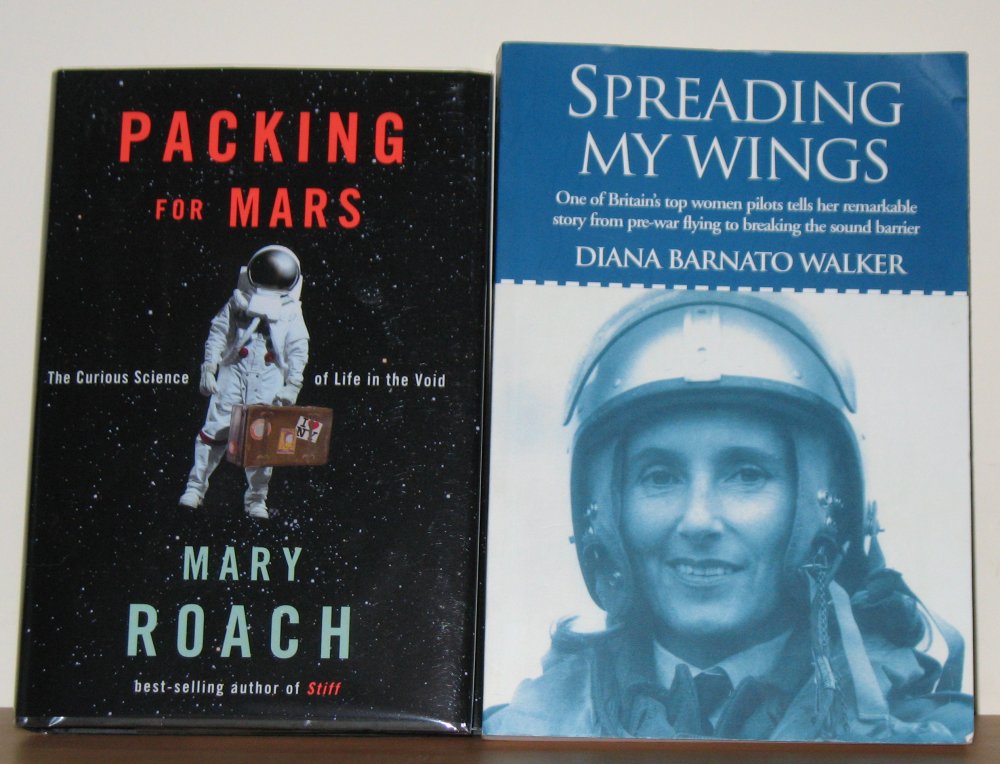
 by Mary Roach, which I’ve heard is very good and sounds as though it will very much appeal. I’ll be posting a review on my
  is the autobiography of Diana Barnato Walker, who during World War II was one of the pilots of the ATA and later became the first British woman to fly an aircraft at greater than the speed of sound. I bought the book as research for a story, but Walker is a remarkable woman and the book should prove a fascinating read.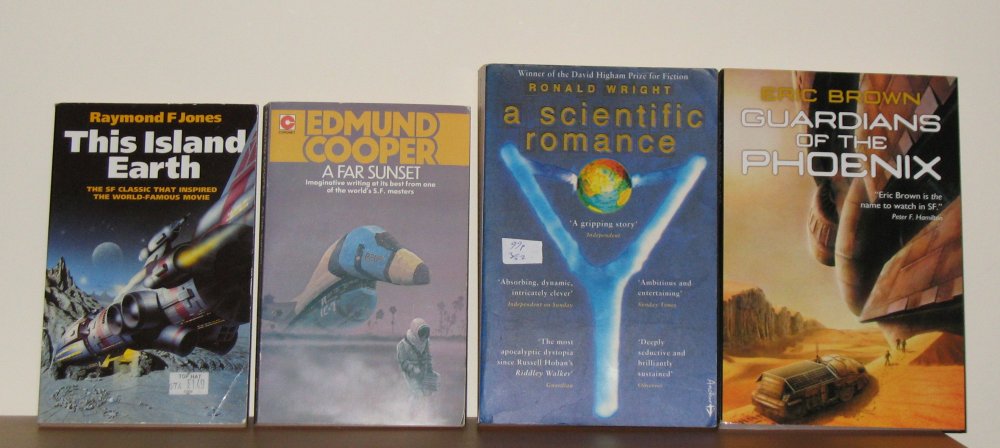
 ;
;  , Ronald Wright, about which I remember people talking back in the late 1990s;
  , Edmund Cooper, which is another of my
  by Raymond F Jones, because I wanted to know how close the 1955 film is to the source text.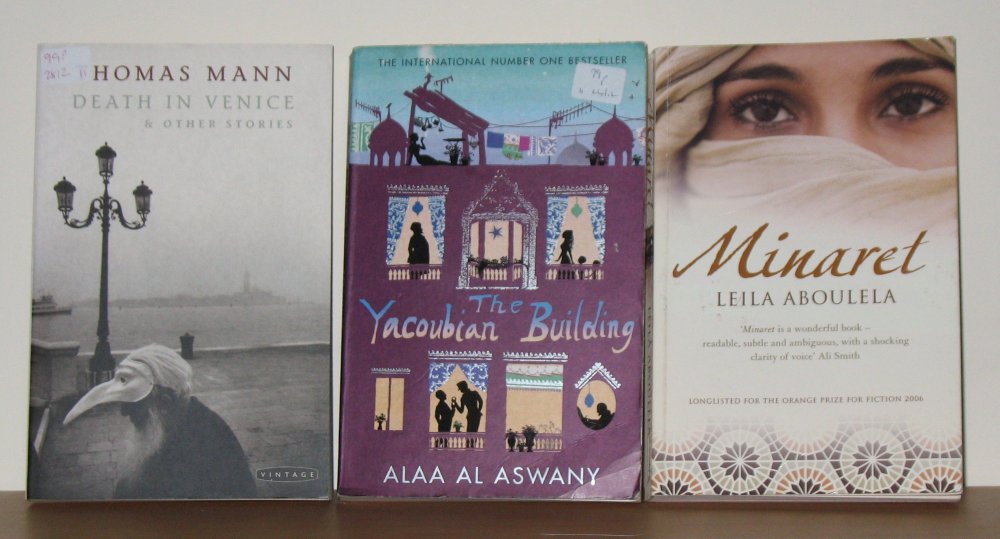
 , a collection by Thomas Mann – I’ve seen the film, but found it a little too slow to enjoy. I’ve also seen the film adaptation of Alaa Al Aswany’s
  , and thought it very good indeed. And
  is Leila Aboulela’s third novel; I’ve read her first,
  , which I thought quite good. Shame about
 by Thomas Berger is mainstream satire cast as science fiction, and I’ve no idea what it will be like.
  is a collection by one of sf’s best short story writers, Michael Swanwick.
  is the first chapbook published during WWII by the Salamander Group in Cairo. It’s very hard to find in good condition. Last of all, the latest in Cinebook English translations of the adventures of Blake and Mortimer,
  . These are fun, but a little variable in execution. For one thing, they have a tendency to use text blocks which explain what can be seen happening in each panel. The characters were invented by Edgar P Jacobs, but the ones by other hands have proven slightly better stories.


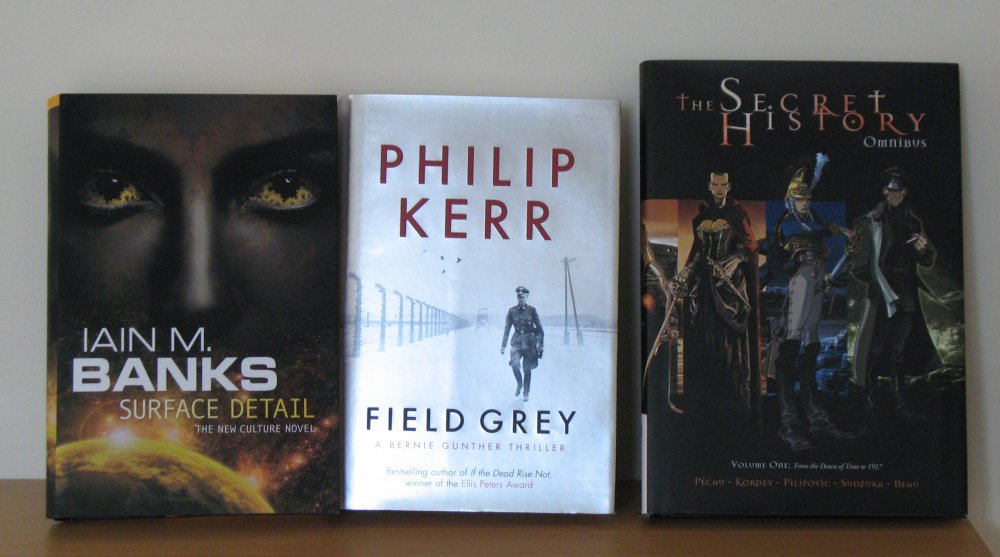
 , which I plan to read soon-ish; the latest in Philip Kerr’s Bernie Gunther series,
  ; and an omnibus edition of
  by Jean-Pierre Pécau, Igor Kordey and Leo Pilipovic, a graphic novel detailing the exploits through human history of four immortals each gifted with a powerful magic rune.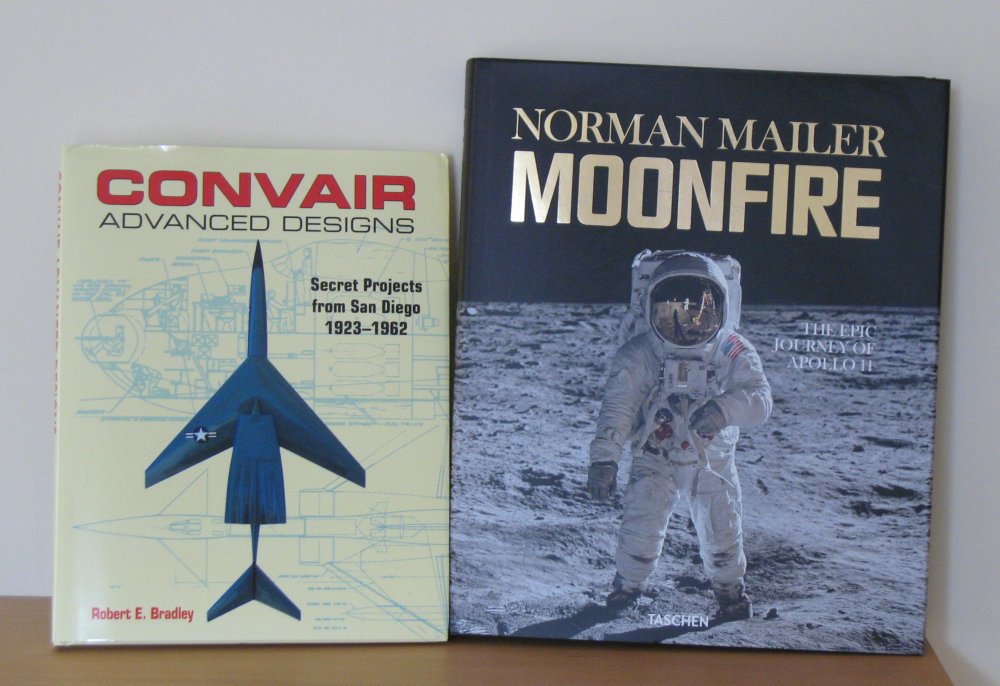
 . It’s about planes. The second,
  , is a re-issue of Norman Mailer’s 1971 book about the Moon landings,
  , but as a coffee-table tome by Taschen, with many, many excellent photographs. There’s a signed limited edition which costs around £600, and a “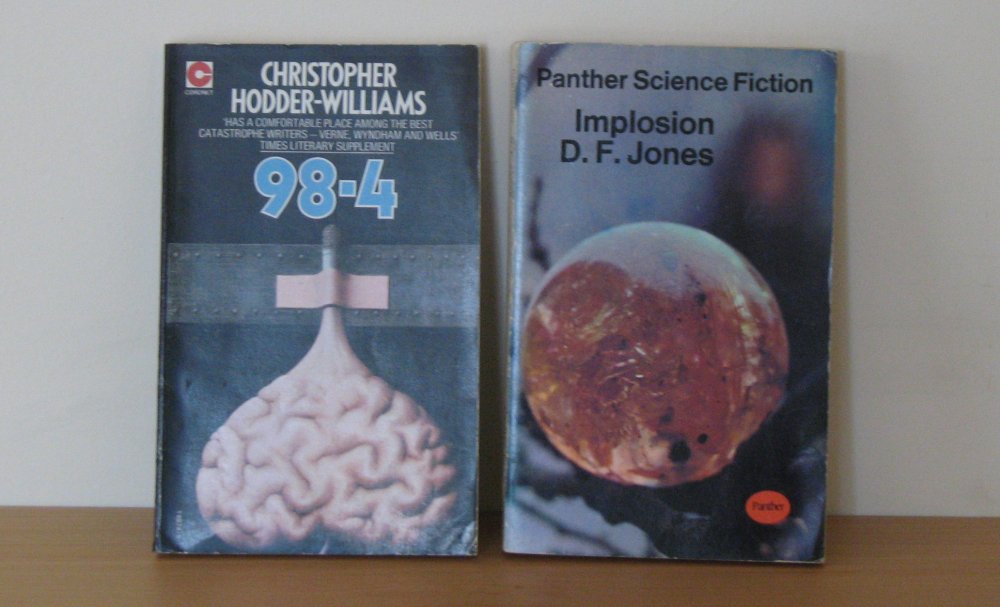
 by DF Jones, and
  by Christopher Hodder-Williams. Look at the awful cover art. They don’t do cover-art like that anymore. I’ll be posting reviews of them here, just as I did for
  (
( (
(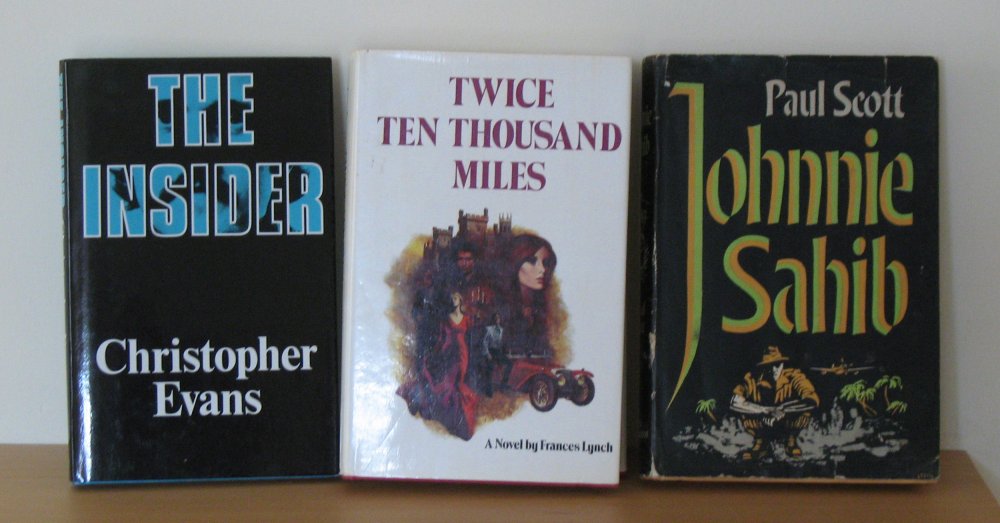
 by Christopher Evans;
  , Paul Scott’s debut novel; and
  by Frances Lynch. Yes, that last one is a



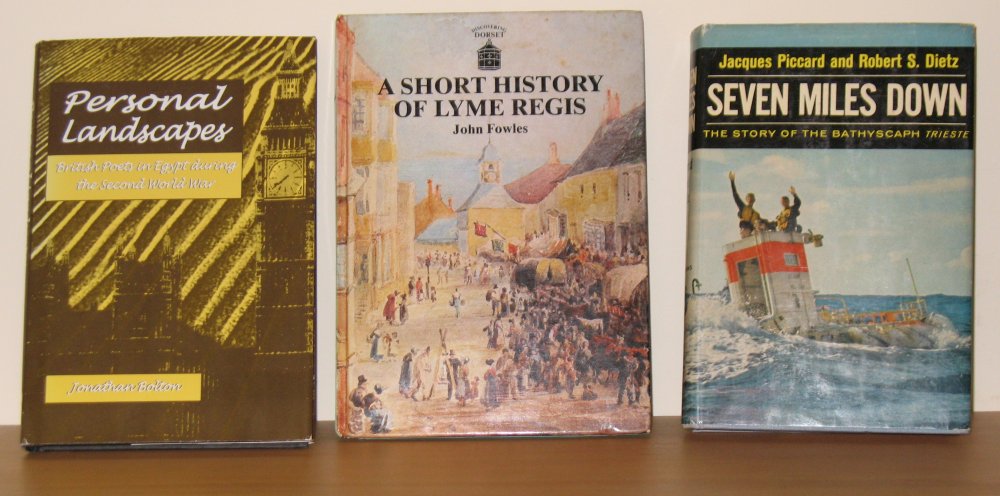
 by Jacques Piccard & Robert S Dietz, the only book written about the bathyscaphe Trieste‘s descent to the floor of Challenger Deep fifty years ago (see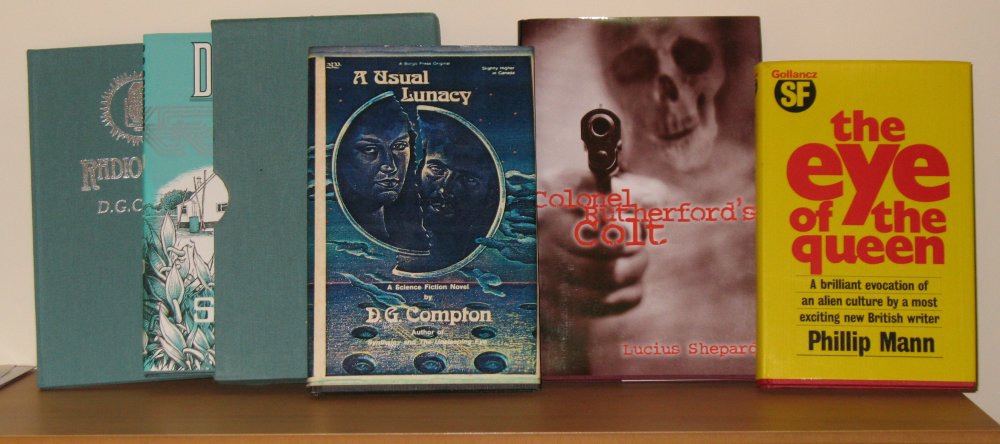


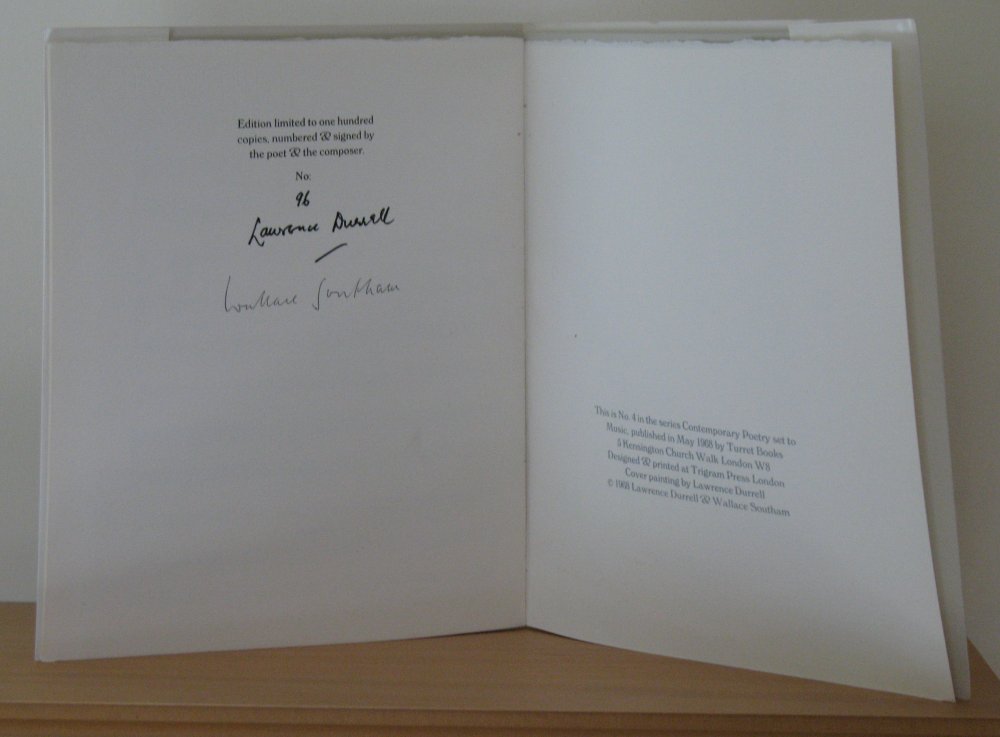
 , a signed and numbered chapbook published in 1968 by Turret Books. It contains the eponymous poem by Lawrence Durrell, and music by Wallace Southam. The pair did two such chapbooks – I’ve had the other one,
  , for a while (see this Lawrence Durrell collection post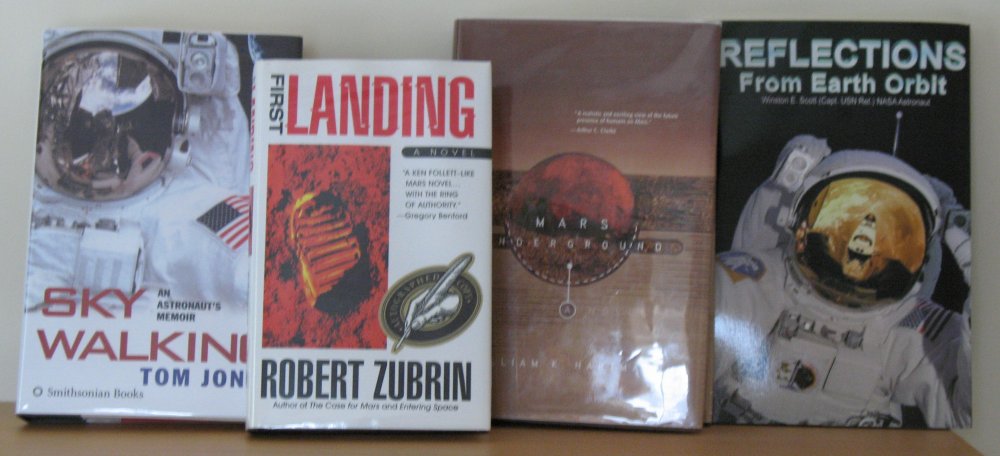
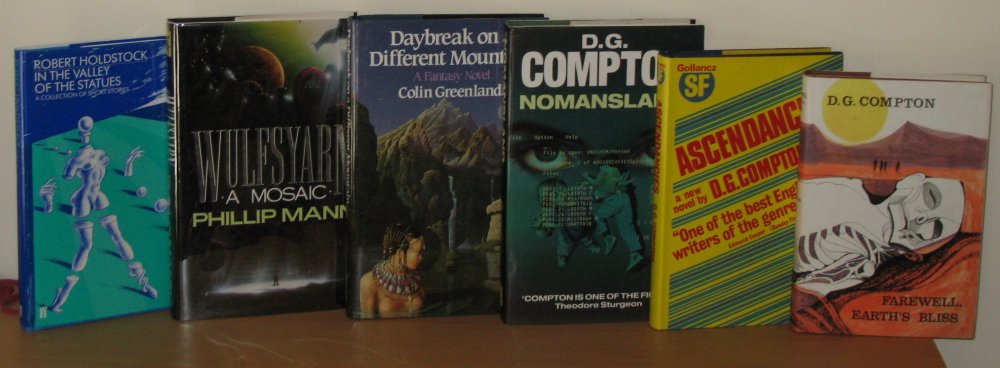
 , a collection of short stories by Robert Holdstock, who wrote chiefly science fiction before
  was published. He will be missed. Then,
  by Phillip Mann, a UK-born New Zealand-based sf author, whose last published novels were the A Land Fit For Heroes quartet from 1993 to 1996. His novels are certainly worth checking out. Next, Colin Greenland’s debut novel, a fantasy,
  . And finally three DG Compton novels:
  ,
,  and
and  . After reading
  (see
(see  It Doesn't Have To Be Right...