It Doesn't Have To Be Right…

… it just has to sound plausible


2 Comments

The books wot I bought

I was really good at World Fantasy Con and bought only about half-a-dozen books (which is considerably less than I normally buy at cons). Unfortunately, I can’t say the same for the rest of the month – I have found myself clicking “buy” a little once too often on eBay and a certain near-monopolistic online retailer of books and stuff… But, for what it’s worth, I did pick up a few bargains for the collection, and a few interesting things to read. And here they are:

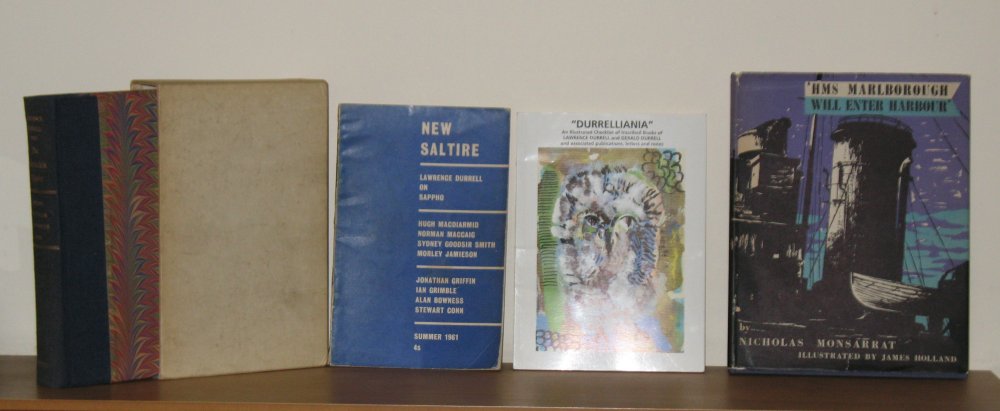
20131201a

A few books for the collection. I already had a first edition of Monsarrat’s HMS Marlborough Will Enter Harbour, but this one is signed (and it was cheap). The Alexandria Quartet is the signed and numbered limited edition from 1962, but it’s the US one (both were printed by Faber & Faber, but half were published by Dutton in the US). Durrelliana is a vanity-published illustrated checklist of works by both Durrells. And New Saltire is the summer 1961 issue of The Saltire Society’s magazine, and which contains a piece by Lawrence Durrell on his play, Sappho.

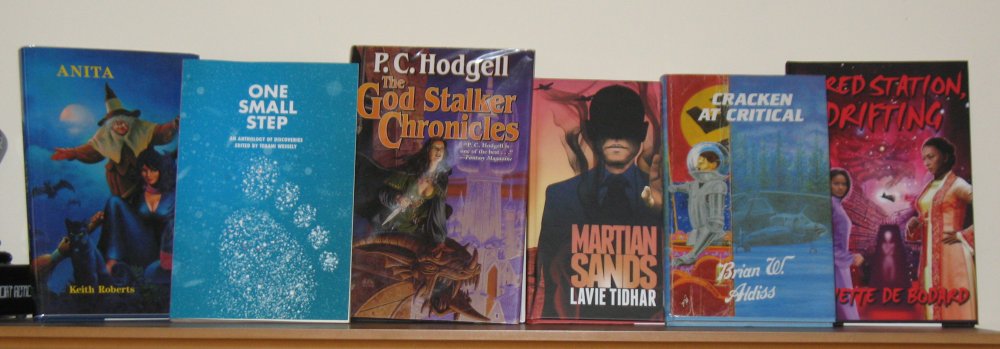
20131201b

My World Fantasy Con purchases: I should have picked up a copy of On A Red Station, Drifting at the Eastercon in April, but I’ve rectified that now. Cracken at Critical is fix-up novel, which includes one of my favourite Aldiss novellas, Equator. Not sure how Aldiss manages to squeeze in the esoteric Hitlerism, but I guess I’ll find out. One Small Step is a women-only sf anthology from Australian small press Fablecroft. Anita is a collection of linked fantasy stories by Keith Roberts, which I saw going cheap at the con. Martian Sands is by some bloke. And The God Stalker Chronicles is an omnibus of the first two books of the Kencyrath series, an epic fantasy of which I have heard good things by people who know my tastes in that genre.

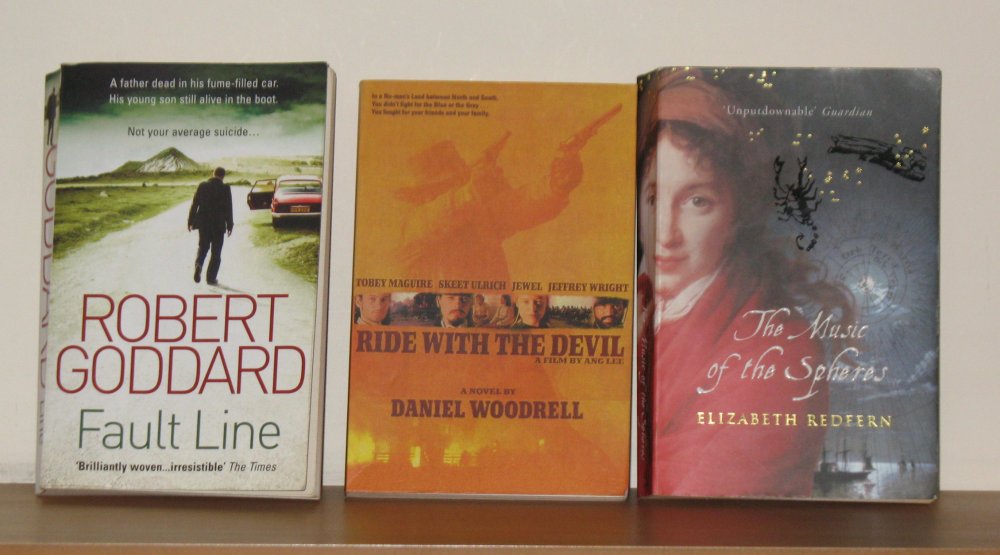
20131201c

Fault Line, Robert Goddard’s latest “thumping good read”, and Daniel Woodrell’s Ride with the Devil (AKA Woe to Live on) were both charity shop finds. I have since read the Goddard, it is like his other books. The Music Of The Spheres was given to me by my mother, who recommended it.

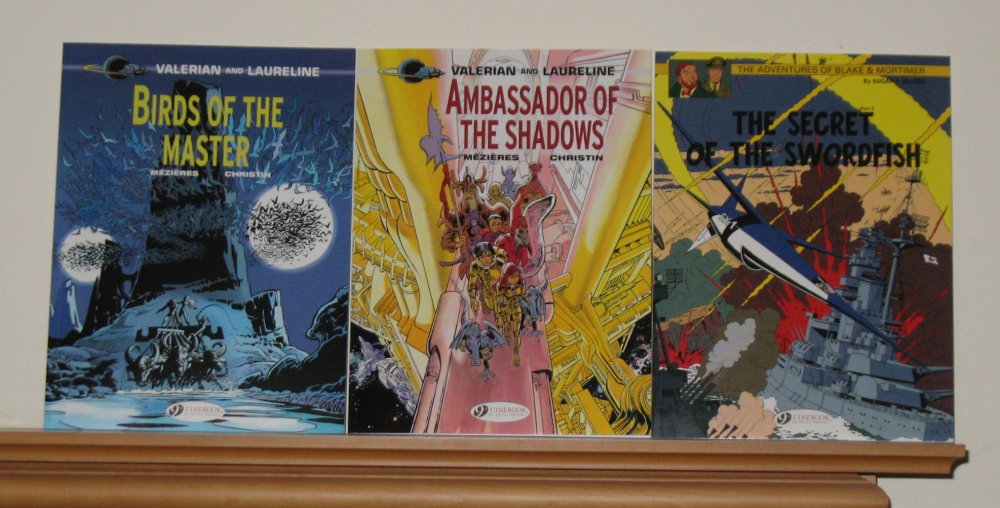
20131201d

Books 5 and 6 of the Cinebook English translations of Mézières & Christin’s Valerian and Laureline series, Birds of the Master and Ambassador of the Shadows. Fun stuff. The original French series is currently up to twenty-three volumes, with the latest, Souvenirs de futurs, published in September this year. (It’s actually volume 22, as there was a volume 0.) And The Secret of the Swordfish, Part 3 is the final part of the first Adventures of Blake and Mortimer series, originally published in 1953, but now available in English for the first time. It has not aged well, although later books in the series are quite fun.

20131201e

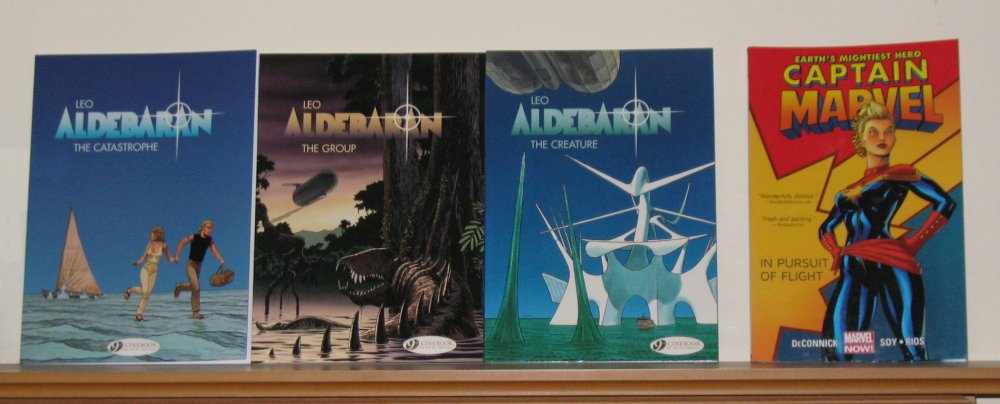
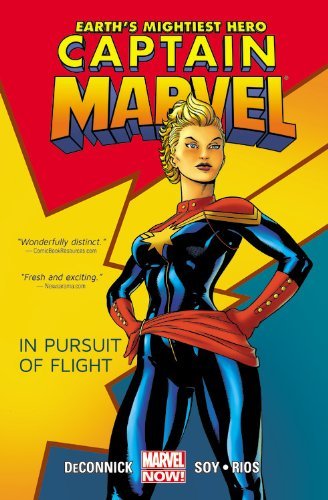
A rare purchase of a superhero graphic novel, Captain Marvel: In Pursuit of Flight, about which I write a few words here. Aldebaran volumes 1 to 3 – The Catastrophe, The Group and The Creature – are the work of Brazilian artist Léo, and are the opening trilogy in a series which continues with Betelgeuse and Antares.

20131201f

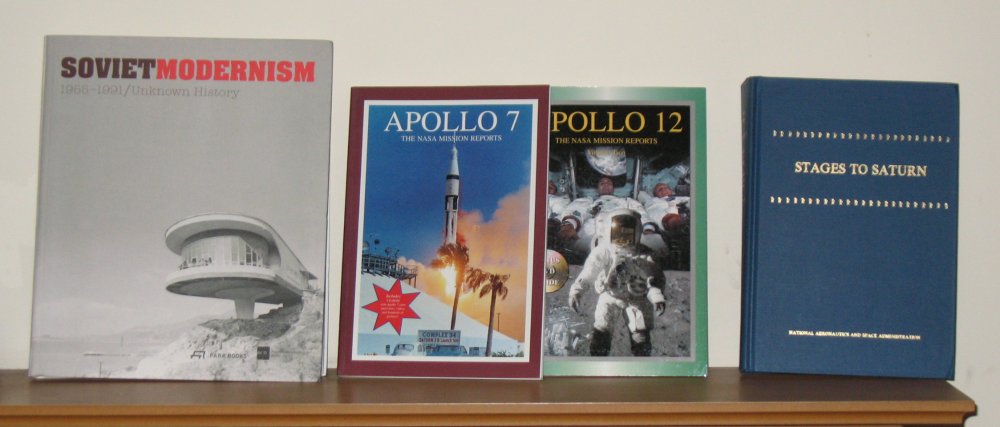
Apollo 7: The NASA Mission Reports and Apollo 12: The NASA Mission Reports Volume 2 I bought on eBay for much less than RRP. Stages to Saturn is the original NASA edition. The title refers to the launch vehicle, not the be-ringed gas giant. I find Brutalist and soviet modernist architecture really appealing, so I couldn’t resist Soviet Modernism 1955-1991: Unknown History when I spotted it. Lots of luvverly buildings.

20131201g

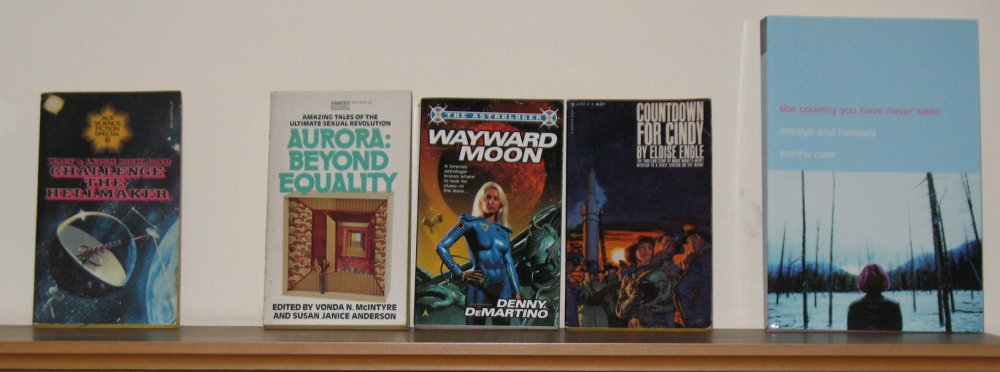
The Country You Have Never Seen is a collection of essays by Joanna Russ, found on eBay for substantially less than its going-price on Amazon. Countdown For Cindy I couldn’t resist when I saw it – MOON NURSE! I’m not sure it’s actually eligible to be reviewed on SF Mistressworks, unlike Wayward Moon, which certainly is – though I’ll have to track down a copy of the first book of the duology first. Aurora: Beyond Equality is a feminist sf anthology, not actually women-only – although the male contributors are completely unknown to me. Challenge the Hellmaker is the sixth book of the 1970s relaunch of the Ace Science Fiction Specials, a series which includes some quite obscure novels – I reviewed one by Marion Zimmer Bradley for SF Mistressworks here; it wasn’t very good.


4 Comments

The books wot I read, part the second

I seem to be spending more time of late documenting the books I purchase rather than the books I actually read. And though I do – mostly – read more books each month than I purchase, and I often want to write about them… I don’t seem to be doing so as often as I once did. It’s also that time of year when I belatedly realise that my choice of reading material hasn’t prepared me at all well for awards season. While I’ve read over a dozen books published during 2013, less than half were genre novels. Admittedly, one was Ancillary Justice, the book everyone has been talking about (see here)… But I’ve also been reading fiction from the second decade of the twentieth-century right up to 2012 during the year. Plus a lot of research – on Mars for The Eye with Which The Universe Beholds Itself, and on the Mercury 13 for Then Will The Great Ocean Wash Deep Above. And I really haven’t read as much 2013 short fiction as I promised myself I would do…

Anyway, not including the books I’ve read and reviewed for SF Mistressworks, and the books I intend to review for Daughters of Prometheus, here is the second lot of my most recentest reading…

killerintherainKiller in the Rain, Raymond Chandler (1964) A collection of previously-unpublished short stories, this made for a weird reading experience as Chandler adapted many of the stories for his novels. So the precursor to Philip Marlowe and his adventures appears several times – which means the stories sort of hover on the edge of familiarity, without actually being familiar. At least two stories contain elements of The Big Sleep, but are different enough to make you doubt your memory of that novel. Otherwise, this is solid Chandler fare – iconic, and perhaps a little too over-exposed to wear its seminal status all that well.

lanzaroteLanzarote, Michel Houellebecq (2000) This is more of a novella than a novel and is pretty much a distillation of what Houellebecq does. Bored bureaucrat goes on holiday to the titular island, reflects on the strange volcanic landscape while engaging in graphic and detailed sex with a pair of German tourists, while Houellebecq himself reflects on modern society. Some of the ideas in Lanzarote were clearly later expanded to become the novels Platform and The Possibility of an Island. Incidentally, I read Lanzarote on the train while travelling to the World Fantasy Con, and it probably isn’t the best sort of book to read while riding public transport…

sweetheartseasonThe Sweetheart Season, Karen Joy Fowler (1996) This was the novel I immediately started after finishing Lanzarote, and it’s a much better rail-journey read. The title refers to an all-female baseball team formed during the late 1940s in order to promote a brand of cereal. The women all work at the mill where the cereal is made – it’s the only industry in the town – and the novel is about them, their lives, the history of the town, and the events leading up to the team’s single season, and its after-effects. Not, you would have thought,  my usual reading fare – but this is Karen Joy Fowler, a writer whose works I have long admired (since I started subscribing to Interzone back in the late 1980s, in fact). The Sweetheart Season is really funny, contains some lovely writing, and I thoroughly enjoyed it.

hook2The Boosted Man, Tully Zetford (1974) The second in Zetford’s Hook quartet. This is pure 1970s sf hackery, and Zetford – a pen-name of Kenneth Bulmer – probably banged out all four books in a weekend. It shows. Once again, Hook is forced to land on a planet not his chosen destination. Everything initially looks grim and dirty and horrible, but then he realises the world is really a paradise. Everyone has wonderful jobs, wears the finest of clothing, eats the most delicious food, and has access to the best leisure facilities in the galaxy. Except, of course, they don’t. It’s all a mirage, induced somehow by a drug or some electronic thing – it wasn’t really clear. In reality, they’re no more than slaves, clad in rags, eating slops and being worked until they fall over and die. But HOOK SMASH. And dig those crazy eyebrows too, man. Two more books in this series and I can send them back to the charity shop. Not keepers.

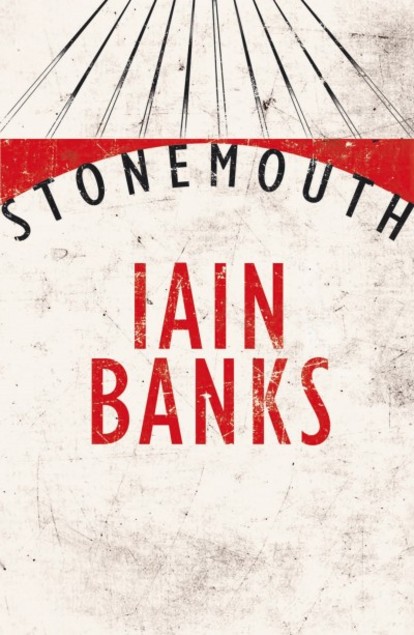
stonemouthStonemouth, Iain Banks (2012) I’m going to miss a new Iain (M) Banks appearing every year, but at least he left a substantial body of work ripe for rereading behind him. And I really must reread the Culture novels. Perhaps that’d make a good reading project for a summer. Anyway, Stonemouth is Banks’s penultimate novel, and it’s very much in the same space as The Crow Road and The Steep Approach To Garbadale. The narrator, Stewart Gilmour, left the eponymous Scottish town under a cloud five years before, but now he’s back to attend the funeral of one of the town’s two gangland bosses. He’s met with grudging acceptance – no one is going to ignore the old man’s dying wish – but he is clearly not welcome and staying longer than necessary is out of the question. It’s a while before Banks reveals why Stewart was run out of town and, to be honest, I kept on expecting something a little more shocking to subsequently be revealed. But it never came. Instead, the story builds up to a shocking confrontation. Stonemouth is classic Banks – it’s all there: the voice, the wit, the place, the semi-adolescent manglings of philosophy… It doesn’t quite have the zap of earlier works, and in places it does feel like a book written by a man in his late fifties about a group of people in their twenties. But Stonemouth does possess buckets of charm, and that’s more than enough to carry the reader through to the – surprisingly – upbeat ending.

cptmarvelCaptain Marvel: In Pursuit of Flight, Kelly Sue DeConnick, Dextor Soy & Emma Rios (2012) I went off superhero graphic novels a few years ago, and I wouldn’t normally have bothered with this one – I mean, Captain Marvel? She’s hardly a frontline superhero (although, interestingly, Marvel was originally male but the mantle was passed onto a woman). But the story of In Pursuit of Flight features the Mercury 13, so naturally my curiosity was piqued… Carol Danvers, Ms Marvel but now using the name Captain Marvel, is left an old aeroplane by Helen Cobb, a pioneering woman pilot who inspired Danvers’ own flying career. While Helen Cobb’s career is clearly based on that of Jerrie Cobb, her character isn’t – she’s a tough-talking bar-owner in the flashback sequences. The plane is a North American T-6 and the plane in which Cobb allegedly broke a world altitude record. The real Cobb did indeed fly T-6s – she ferried them down to South America for Fleetway after the Peruvian air force had purchased them from the US – but she achieved her altitude record in an Aero Commander. Danvers decides to try and prove that Cobb’s record was possible, but loses control of the plane. As it descends in a spin, the plane travels through time and Danvers finds herself on a Pacific island during World War II, helping a group of crashed WASP pilots defeat a Japanese force which has Skrull technology. The WASP pilots turn out to be the Mercury 13. Unfortunately, In Pursuit of Flight is all a bit of a mess. DeConnick has played fast and loose with her inspirations, the time travel plot doesn’t quite add up, and the artwork is not very good. I also hate it when mini-series swap artists halfway through, as this one does. Annoyingly, I see the blurb for the sequel, Captain Marvel: Down, includes the line “what threat is lurking below the ocean’s surface?”. It’s almost as if DeConnick has read Then Will The Great Ocean Wash Deep Above

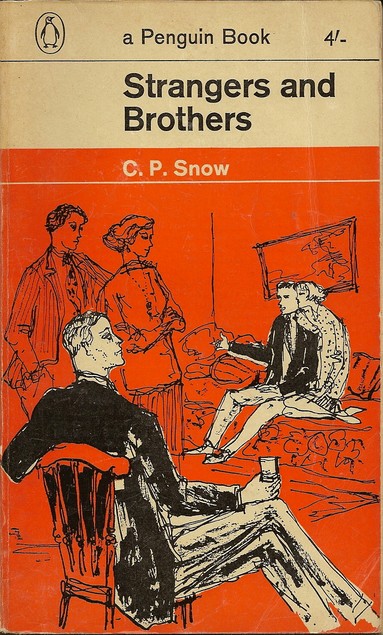
strangersStrangers and Brothers, CP Snow (1940) This was the first book of the series written by Snow, and so the series is named for it – but the book is now better known by the alternative title of George Passant. And it is him the story is about. The narrator, Lewis Eliot, is one of a group of young adults in an unnamed East Midlands town during the late 1920s. The nearest city is Nottingham, but the town is certainly not Mansfield. Snow was from Leicester, so it’s more likely to be somewhere south of Nottingham – Loughborough, perhaps. Anyway, Passant is sort of a den mother to a group of twentysomethings. He works as an articled clerk at a local solicitors, but believes he should be made partner. When one of his friends, Jack, is let go by his employer, a printer, because the printer’s eighteen-year-old son has a crush on Jack, and the local technical college cancels Jack’s bursary, Passant argues that Jack should be allowed to complete his course. But Jack, it transpires, is a bit of a chancer, and when he persuades Passant to go into business with him… it all comes to a head a few years later when Passant, Jack and Olive are had up on charges of fraud, and Lewis is called back to town from his inn of court in London to defend them. Passant’s lifestyle – parties at a local farm, at which the men and women often partner off – is called into question. Though they win the case, Lewis doesn’t find out until afterwards that fraud had been committed – though, to be fair, the fraud of which they’re accused is no more than the typical sharp business practice you find happening now among fat cats and so-called captains of industry. Strangers and Brothers is a slow read, and while it paints an interesting picture of a past decade, it doesn’t appeal as much as Anthony Powell’s not-dissimilar A Dance to the Music of Time. But I think I shall continue to read them, anyway.


4 Comments

Apollo Quartet 3 published

Apollo Quartet 3: Then Will The Great Ocean Wash Deep Above is now available from Amazon. It’s been available as an ebook for several days – on Kindle (UK | US), Kobo, and as both epub and mobi from the Whippleshield Books website.

Since MPG Biddles went into administration back in June, I’ve had to find a different printer for Whippleshield’s books, and I decided to try Amazon’s CreateSpace for the paperback edition of Then Will The Great Ocean Wash Deep Above. Which means a book of the Apollo Quartet is now available in paperback in the US for the first time. You can buy it here (UK | US).

The limited hardback edition will be delayed a week or two as I’m using a different printer, but it’s available for pre-order here.

I’ve also decided to move forward the fourth book of the Apollo Quartet, All That Outer Space Allows, and will try to get it out for the first half of 2014. Perhaps even in time for the Eastercon in Glasgow. I’ve always had a clear vision of the story – unlike books 2 and 3 when I started them – so it shouldn’t be that difficult. But we shall see what the new year brings…

In the meantime, there’s always Then Will The Great Ocean Wash Deep Above to read, in either ebook or paperback…

ETA: Those of you have already pre-ordered the limited hardback edition, or are thinking of doing so, I’m happy to provide an ebook version – in pdf, epub or mobi – free of charge immediately to ease the wait…


1 Comment

The future we used to have, part 21

These posts have always been about the Cold War, but this time it’s a little more explicit – possibly inspired by a couple of programmes which aired recently on the BBC.

early warning

21_tupolev_tu-126

Tupolev Tu-126 ‘Moss’ Airborne Early Warning

Lockheed EC-121D

Lockheed EC-121 Warning Star Airborne Early Warning

21_shackleton_aew2

Avro Shacketon AEW.2

21_dye-3

DYE-3, one of the US Distant Early Warning line stations in Greenland

21_texas_tower

A Texas Tower, a US offshore radar facility

21_hms_agincourt

HMS Agincourt, a Battle class destroyer after conversion to a radar picket

21_USS_Spinax_(SSR-489)_in_1947

USS Spinax, a submarine converted to a radar picket

first strike

21_LC-30-Pershing-missile-tactical-erector

A Pershing missile tactical erector and launcher

21_SA-4-Ganef-1S

A Soviet SA-4 Ganef surface-to-air missile system

French Pluton missiles on their transport-erector-launcher platforms

French Pluton missiles on their transport-erector-launcher platforms

21_9A84-TEL-Transloader-1S

Soviet S-300V, carrying SA-12 Gladiator/Giant air defence missiles

21_titan_missile_silo

Titan missile base under construction

21_ttitan_ii_launch

Titan ICBM

fallout

21_fallout_shelter

A fallout shelter

Nuclear Perceptions

A family-sized economy fallout shelter

21_personal_bomb_shelter

A personal bomb shelter

21_Fallout-Shelter-3

Everything you ever needed to know about fallout shelters


Leave a comment

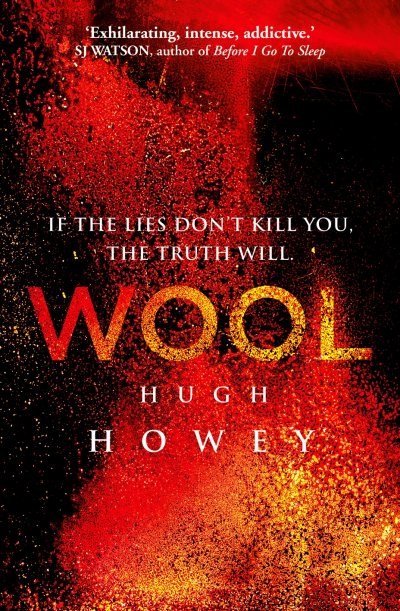
Wool, Hugh Howey

wool-by-hugh-howeyWool, Hugh Howey
(2013, Century, £9.99, 576 pp)

In the world of twenty-first century publishing, the story of the book is often more interesting than the story in the book. And so it is with best-selling science fiction novel, Wool. Originally self-published as a novelette on Amazon’s Kindle, its popularity prompted Howey to write further stories in the same setting. These were then fixed up into a novel. Which promptly sold in huge numbers. Howey earned enough money to quit his job. Publishers came knocking at his door and he sold the film rights to Ridley Scott. Hugh Howey has become the latest poster boy for self-publishing success.

Given all this, it seems churlish to complain that Wool doesn’t deserve the praise lavished upon it. Its quality is immaterial; it is a success. That is the narrative of Wool.

The narrative in the book, however, is not so happy. There is an underground silo of 144 storeys in a world that is toxic and uninhabitable. The silo’s only contact with outside is via screens, the view on which degrades over time as dirt gathers on the external lenses. At intervals, people are sent outside as punishment–and the chief crime deserving this sentence appears to be… wanting to go outside. Clad in protective gear which gives these “cleaners” around half an hour of life, they leave the silo and clean the lenses. Then they walk off into the ruined city, but fall and die before leaving sight of the lenses. Why do they always clean the lenses? Why not simply walk off and see how far they get before their suit degrades? It is this first section which formed the original novella, and the puzzle at its heart makes no sense as motivation for cleaning the lenses. It also requires the “cleaners” to be wilfully stupid and ignore what they know…

The remainder of Wool’s 576 pages build on this opening section. Since the last “cleaner” was the sheriff, a new one is required. The deputy recommends Juliette, a mechanic from the lowest levels of the silo. The mayor seconds the choice. Bernard, the head of IT, disagrees, and also seems to think he actually runs the silo. Which, it transpires, he does. Nevertheless, Juliette is made sheriff, but her appointment has set the mayor at odds with IT and Bernard soon gets his way. Juliette is arrested on a trumped-up charge and sentenced to “cleaning”. Her friends in Mechanical, however, secretly ensure she is a given a suit which will last more than thirty minutes. Juliette has also figured out the suit’s secret – this is the premise of the opening novella – and this allows her to find her way to… another silo.

The setting of Wool is science-fictional, the opening section is written in a science fiction mode; but once Juliette, who is not only a naturally-gifted mechanic and highly intelligent but also beautiful, is introduced, Wool turns into a small town soap opera. Unfortunately, this only emphasises the fact the novel’s setting does not stand up to scrutiny. The silo has a single metal spiral staircase to link its 144 levels, but such a design is impractical. The metal of the staircase would also collapse under its own weight. IT manages a server farm, but the servers do nothing. They don’t run the systems of the silo, because there are no such systems. The silos are sealed environments and possess hydroponic gardens, a mine and a well, but they could not be self-sufficient for the many generations the story implies. Wool also gives little indication of their size or population. They are deep – 144 levels must make the lowest level 450 to 500 metres below ground – but the area covered by each level is never mentioned.

Howey’s prose is readable, if very baggy, and his frequent flights of fancy fail more often than they succeed. His plotting, however, is driven by escalating jeopardy, but it is inconsistently applied, often implausible, and poorly paced. One character discovers something and is killed; another learns something different, and is arrested and sentenced to “cleaning”. Howey keeps his cast under constant pressure, and yet his writing is leisurely paced. His characterisation is typical of commercial fiction: Juliette is super-competent, and Bernard is a pantomime villain. He is, for example, the only fat person in the entire silo.

There’s an interesting story somewhere in Wool – now the first of a trilogy, to be followed next year by Shift, and then by Dust – but Howey’s writing is neither brisk, economic nor subtle enough to tell it, and his technique of applying constant jeopardy to his central cast annoys more often than it propels the reader forward.

Still, it is useless to complain. Wool is a self-publishing success story. The narrative of the book has already been written, and it says that Wool is good.

This review originally appeared in Interzone #246, May-June 2013.


3 Comments

The books wot I read, part the first

If writing about music is like dancing about architecture, then reading what someone has written about books is like looking at pictures of someone’s holiday. Sort of. So here are some snaps of my last holiday in the world of reading. Like most holidays, it had its high points and its low points. I travelled great distances but never left my armchair. I saw amazing sights but only in my mind’s eye. And I met some fascinating, and some very strange, people, some of whom I may get to meet again. Reading is the most fun you can have sitting in an armchair, and you can even do it in public. It is made of win.

TPMurdersThe Prophet Murders, Mehmet Murat Somer (2003) Since I’d got bogged down in Orhan Pamuk’s My Name Is Red (and I really do need to finish it off one of these days), I grabbed a copy of this as light alternative piece of Turkish fiction. The narrator is the drag queen owner of a nightclub in Istanbul, and when she hears of other transvestites and transsexuals dying in mysterious circumstances, she decides to investigate. Novels like this – and it’s a series, with four volumes so far translated into English – depend more on voice than they do plot. There’s nothing complicated about the murders or the investigation – the former are staged to echo the deaths of various Islamic prophets, the latter involves the narrator travelling about Istanbul and its environs talking to people. But the story is written in a relentlessly chatty style, some of the characterisation is a little mean, and the narrator is occasionally a little too good to be true. It’s fluff, but I didn’t find it appealing enough fluff to bother with the rest of the series.

TimeMachine_lg_largeThe Time Machine, Nikesh Shukla (2013) Cheryl Morgan tweeted that she’d just added this novella to her online shop, Wizard’s Tower Books, and the description sounded intriguing enough I decided to give it a go. Ashok’s mother has just died and as a way to deal with his grief he tries to recreate some of the meals she cooked and which he ate as a child. The novella includes the actual recipes. It’s a poignant piece, and well-written, and I really did like the idea of making a feature of the recipes – they’re of various Gujarati dishes and don’t appear all that difficult to make (though I’ve yet to actually try any of them).

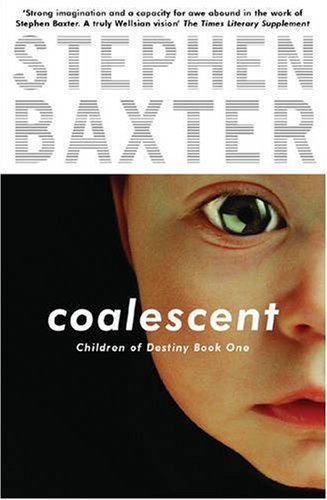
coalescentCoalescent, Stephen Baxter (2003) Many years ago, I remember Mark Plummer declaring that Stephen Baxter would be a good author to collect. What Mark clearly had not taken into account was the need for a very large room to hold such a collection. It’s not just that Baxter is prolific – 39 novels and 9 collections in 22 years – but also that most of his books are also huge. Coalescent – the first in a trilogy, natch, called Destiny’s Children – is one of these huge novels: the Gollancz hardback is 473 pages long. There are two main narratives, one set in Ancient Britain after the Romans have left, and one in the present-day. The former provides the historical context for the climax of the latter. George Poole’s father has died, and he has sort out the estate. He discovers that his father regularly sent money to a religious order in Rome, and that he has a sister in that order. So he travels to Rome to learn more. In fifth-century Britain, a young girl, Regina, is sent north to Hadrian’s Wall to stay with her grandfather after the death of her wealthy father. As it becomes clear that Rome has no interest in, or is incapable of, returning to Britain, things start to fall apart. Regina’s narrative shows how she grows up and survives in a Britain falling apart, before she eventually takes ship for Rome and forms the Puissant Order of Holy Mary Queen of Virgins. Poole, meanwhile, through an old school friend who is now a conspiracy nut, discovers that there is more to the Order than appears. It is, in fact, an all-female Hellstrom’s Hive living in an ancient labyrinth under the streets of Rome. The novel abruptly jumps into the far future and describes an attack on a human hive by members of another human civilisation. Baxter has done this before, notably in Titan, and I’m not entirely convinced it’s a useful technique. Mind you, Coalescent is the first book of a trilogy, so perhaps it suits better here. Having said that, I enjoyed the book more than I’d expected to – the two narratives didn’t seem to sit well together but were individually interesting, and once the connection had become obvious things picked up. I’m looking forward to reading the rest of the trilogy.

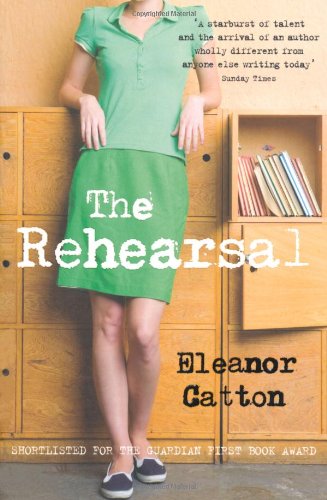
rehearsalThe Rehearsal, Eleanor Catton (2008) This was described by David Hebblethwaite as the best book he’d read in the past five years. I’d been intrigued by Catton’s The Luminaries – I bought a copy of it before it won the Booker, I hasten to add – so was quite chuffed when I stumbled across a copy of The Rehearsal in a charity shop. And… It’s very good. But it’s not as good as Katie Ward’s Girl Reading, which for me would be the best book I’d read in the past five years. The Rehearsal is a very artificial book – it’s mimetic fiction but it’s self-aware in as much as its story is a told artefact. The events of the plot are used as the basis for a play, and it’s the actors and their rehearsals which reveal what has happened. But Catton also uses the lives of the actors – they’re at a drama school – as a mirror to reflect the events the play they’re in is actually dramatising. There’s an artificiality to the prose and its structure – this is not the pure immersiveness you’d find in contemporary genre fiction, but a series of levels of story the reader must navigate. There’s a cleverness to it all that’s very appealing, even if on occasion it feels a little repetitive and draggy in places. The prose is generally very good throughout, though it rarely shines – but then The Rehearsal is not a novel which relies purely on prose style to impress. I do like stories with interesting structures, and Catton’s debut certainly qualifies. It’s a book that will need rereading… and on the strength of it, I’m glad I bought The Luminaries and I’m very much looking forward to reading it.

slamSlam, Lewis Shiner (1990) The title is a skateboarding term, although the protagonist, Dave, is not a skateboarder. But it’s also a pun, see, because Dave is an ex-con and has just been released from the slammer. A lawyer friend has arranged a caretaker job for Dave, looking after the house, and twenty-three cats, which belonged to a recently deceased eccentric old lady – her property can only be sold once all the cats have died. It all seems relatively straightforward, but then where would be the story in that? There are people who want the old lady’s house – the head of a UFO cult, and a pair of old and slightly batty treasure hunters. One of Dave’s friends from prison escapes and comes to stay – and while he’s there he arranges a large drug deal. Dave’s parole officer has taken against him, and seems to be looking for an excuse to send him back (he was in prison, incidentally, for tax evasion). And Dave gets involved, via an eighteen-year-old barmaid, with a bunch of slackers and skateboards who are squatting in a nearby eccentric house, which is built entirely of concrete, including the furniture. Slam is equal parts paean to slacker culture and lonely white male identity crisis. In places, it feels a little heavy-handed, the central relationship is a little too much like authorial wish-fulfilment, and in parts the prose feels like it’s reaching for Dhalgren without actually getting there… but there’s also well-handled cast of eccentrics, the description of place is good, and it’s all very readable. Not Shiner’s best book by any means, but he’s still an author well worth reading.

WSADF-cover-3We See a Different Frontier, Djibril al-Ayad & Fábio Fernandes (2013) This is an anthology of, as the back-cover blurb puts it, “speculative fiction stories on the themes of colonialism and cultural imperialism”. It was financed by a kickstarter campaign, to which I contributed. The editors are online friends, as indeed are a few of the authors whose stories appear in the anthology. We See a Different Frontier contains sixteen stories, plus a preface by Aliette de Bodard and an afterword by Ekaterina Sedia. Its contents are, unsurprisingly, variable, with some stories working better than others. There’s just as great a variety in style and setting – some stories are set on Earth, some on alien worlds; some are post-apocalypse, some are not. There’s an admirable consistency of theme, however, which is something not all themed anthologies manage. I liked Ernest Hogan’s gonzo steampunk ‘Pancho Villa’s Flying Circus’, and the strangeness of Dinesh Rao’s ‘A Bridge of Words’. By contrast, the straightforwardness of Rahul Kanakia’s ‘Droplet’ also worked really well. Lavie Tidhar provides one of his alternate history speculations, ‘Dark Continents’, and Sandra McDonald’s ‘Fleet’ rings an interesting variation on a post-apocalypse story. There are no bad stories in We See a Different Frontier, although not all were to my taste – but they’re all worth reading, and I did like what they said and am certain it needs to be said.

outsiderThe Outsider, Albert Camus (1942) This is apparently one of the great novels of French literature. But then On the Road is apparently one of the great novels of US literature.I couldn’t really see what all the fuss was about. A disaffected young man, more or less estranged from his mother, drifts through his life in Algeria, and eventually – more for shits and giggles than any particular reason – stabs a man to death. He is caught, confesses, is tried and convicted. And he doesn’t much care. Incidents mentioned earlier in the novel – and it’s a very short novel – are used by the prosecution to show he is precisely the sort of person who would stab someone to death: his mother dies, for example, in the first chapter, and he attends the funeral but shows no real grief. I gather this is one of those novels, like Salinger’s The Catcher in the Rye (which I studied for O Level oh so many years ago), which became something of a symbol for disaffected youth. Perhaps that means you have to read it when young, perhaps only then does it feel like it has any real meaning. Because it didn’t to me when I read it last month. There are no great insights in it, and the protagonist is more annoying than sympathetic. This doesn’t mean I think the book’s age tells against it, not at all. If I want real psychology in fiction, then I’ll read DH Lawrence… and his fiction is a further two to three decades older than The Outsider. I’m told Camus’s The Plague is his best novel. I have that on the TBR, so we shall see…

dayofthescorpionThe Day Of The Scorpion, Paul Scott (1968) The second book of the Raj Quartet, which I am getting round to reading much more slowly than I had expected. But then these are not books to read quickly. The Day Of The Scorpion is not a direct sequel to The Jewel In The Crown, although it story does follow on from the first book of the quartet – but with a different cast. This book is set in the garrison town of Pankot and the independent satrapy of Mirat. It opens with a link to The Jewel In The Crown when Sarah Layton meets Lady Manners, mother of Daphne Manners – whose alleged rape catalysed the plot of The Jewel In The Crown – while staying on a houseboat with her family in Kashmir. Hari Kumar, Daphne’s lover and the man charged with the rape, makes a brief appearance, but this is no longer his story. Superintendent Ronald Merrick, now a captain in the army, enters the Laytons’ social circle through being billetted with the fiancé of Sarah’s sister, Susan. It is, in fact, almost impossible to summarise the plot of The Day Of The Scorpion – it’s clearly a part of a bigger narrative, and those narrative threads which do appear in the book cleverly interlock and influence each other. None of the cast is admirable, and the British understandably come out of it all quite badly. The writing is excellent, Scott draws proper three-dimensional characters and he draws them deeply, and he evokes sense of place beautifully. My admiration of Scott’s prose remains undimmed. The rather naff cover art above is the first edition; and yes, that’s the edition I own (plus a paperback reading copy too, of course).


8 Comments

Apollo Quartet 3 is here… nearly

There’s only a fortnight to go until Apollo Quartet 3 Then Will The Great Ocean Wash Deep Above is officially published, so I’m now making e-ARCs available for review. I have them in PDF, EPUB or MOBI format. Leave a comment if you’d like one.

I will, of course, be publishing the book in paperback and in a signed hardback edition limited to 75 copies, just as I did for Adrift on the Sea of Rains and The Eye With Which The Universe Beholds Itself. If you’re a collector-y type person, I’m afraid the hardback edition of Adrift on the Sea of Rains is sold out but there are still copies available of The Eye With Which The Universe Beholds Itself. Get one while you can. You never know, one day it might be worth something…


10 Comments

So that was a World Fantasy Convention

While I rate a number of fantasy novels very highly, the genre is only about my fourth or fifth choice of reading material. So in the normal course of events a con devoted to fantasy doesn’t interest me much. Except, of course, that I’ll know quite a few people who’ll be there, and it’s one of the few opportunities I’ll get to see them IRL. Plus, this being a World Fantasy Con, there’ll also be several people present I wouldn’t normally get to meet face-to-face. Having said that, there may have been citizens/residents of 35 countries present at WFC, but it often felt like the “w” and the “r” were superfluous in the first word of the con’s name.

Anyway, fantasy or not, I bought my membership months ago, booked my hotel room, was ripped off by our railways – £93 for an open return! – and at the appointed time left home for Brighton. And this is how it went…

Thursday 31 October: catch tram to railway station with overnight bag and box full of copies of Adrift on the Sea of Rains and The Eye With Which The Universe Beholds Itself to sell on the small press table in the WFC dealers’ room. I prefer to travel light, especially if the journey is going to take hours, but my books are never going to sell if I always leave them at home. End up sharing a table on the train to London with a woman and her three grandchildren (all under the age of twelve). To read on the train, I grabbed Michel Houellebecq’s Lanzarote. Should have known better: I read his Platform while returning home from a con and by the time I reached home the combination of British railways and Houellebecq’s misanthropy had me fuming. To make matters worse, Lanzarote includes several very graphic sex scenes, so have to hold the paperback in such a way only I can see the page. Fortunately, the colour photographs in the book depict the landscape of the titular island… It’s a relief to finish the book and start on Karen Joy Fowler’s The Sweetheart Season, which is much more appropriate train reading material…

The trip to Brighton is pretty painless. Change trains in St Pancras, get a seat on the one heading for the south coast, listen to music on the iPod, stare out of the window, read my book. There are some spectacularly ugly buildings in London. On arrival in Brighton, jump into a taxi and get driven to my hotel, the Best Western Brighton Hotel. Which claims to be one of the best hotel in the city. In the 1980s, perhaps. It is a bit rubbish. And in the tiny lift cabin, there is sign that reads “NO SMOKING ON THIS FLOOR”. Not sure how that works. After dumping my stuff, I head up the seafront to the con hotel, the Brighton Metropole, a 400-metre walk. This is only my second visit to Brighton, and my first experience of the Metropole. I register at the convention, and pick out my giveaway books from the table full of same. God’s War I already own so I ignore that. There’s a bande dessinée which looks interesting. PS Publishing have sealed their free books inside grey plastic envelopes, so it’s pot luck. Of course, I end up with Gwyneth Jones’s Grazing the Long Acre. Which I already have. (I give it away later.) I also grab David Tallerman’s Giant Thief… only to realise later he made me buy a copy of it at the SFX Weekender in 2012. The rest of the books look like epic fantasy, so I give them a miss.

Then it’s down to the bar in search of friendly faces, which I duly find. I pretty much spend the entire evening in there. I meet up with Liam Proven, who is kipping on my floor, and we go back to my hotel to dump his stuff (which includes lots of bottled ale). Later, a large party of us go for a meal at a seafront restaurant which features an opera singer. It’s nouvelle cuisine, which means it’s presented nicely but there isn’t much of it. The opera singing isn’t up to much either. But at least the company and conversation make up for both. Then it’s back to the hotel to continue drinking and chatting. I crash out at 12:30. When I look for my bag of giveaways, I can’t find it. Oh well. At one point, I am introduced to KW Jeter. After telling him how much I enjoyed his sf novels, I add that I’m not keen on “the schlocky horror books, like Mantis.” “Ah, Mantis,” he replies, ” my favourite novel.” Oops.

Friday 1 November: get up early so I can make it down for breakfast. No buffet. You chose one of three types of breakfast from a menu, they bring it you from the kitchen. I thought hotels stopped doing that twenty years ago. Not the best breakfast I’ve ever had. In fact, I don’t even bother breakfasting in the hotel for the rest of the weekend. I grab my box of Apollo Quartet books and head for the Metropole. It is pissing it down and I get wet. Make my way straight to the dealers’ room. It is pleasingly large. As well as the usual faces, there are several dealers from abroad, such as Australia’s Ticonderoga (hi, Russell) and Fablecroft. After setting out my books on Roy Gray’s Interzone/small press table, I bimble about the room but only purchase Lavie Tidhar’s Martian Sands and a copy of Keith Roberts’ Anita (which is priced much less than usual). The rest of the day is spent bouncing between bar and dealers’ room. I have a bottle of water with me, so I stick to drinking that. I don’t manage to get lunch. Apparently, there’s a second bar serving cheap food, but I never manage to find it. The Metropole is like a rabbit warren. The function space is enormous and quite a walk – up two separate flights of stairs – from the front of the hotel and the bar.

At one point in the dealer’s room, while chatting to a dealer who has a signed first edition of Dune for sale… for $7000… I’m approached by someone who wants me to sign something. It turns out to be a copy of the anthology Where Are We Going? I also later spot copies of Catastrophia and The Monster Book for Girls. There’s also another first edition of Dune for sale, but it’s unsigned. And only £3000. One dealer, Simon from Hyraxia Books, has quite a few rare genre first editions – the aforementioned unsigned Dune, plus a signed first of Neuromancer for £1200, a first of A Wizard of Earthsea for £750…

I spend the evening on a real ale pub crawl with Liam P, Charlie Stross, Feorag, Jain Fenn, Jetse de Vries and another couple of whose names I never catch. (And yet everyone wears badges at these conventions. But at least twice I go to speak to people thinking they are someone else.) I don’t remember the name of the first pub we visit, but it is quite a trek from the hotel. It is also large, busy, noisy and very warm… and I’m beginning to regret agreeing to come along. But then we find a table shortly after getting served, things quieten down and it gets much better. Our next pub is the Prince George, which serves vegan food and was chosen so we could eat there. I’m not vegan, but I’ll eat it – and it’s likely to have more dairy-free dishes for me to choose from than a non-vegan place. The beer is very nice – we’re drinking halves so we can try a number – and my falafel burger is good. We are supposed to move onto another pub, but Charlie needs to get back to the hotel, and I’ve had enough – as have two others. so we grab a taxi back to the Metropole. The other four apparently try one more pub and then return to the con. I stay in the bar until 3:30 am. Walking back to my hotel with Liam, we witness an altercation between a taxi driver and a young couple. The young man is dressed like a pirate.

Saturday 2 November: have a bit of a lie-in, don’t bother with breakfast, and head for the Metropole. Another day bouncing between the bar and the dealers’ room. And drinking water. I manage to get lunch this time – I order the soup of the day in the bar, after verifying it is dairy-free. It’s vegetable soup but I’ve no idea which vegetable. I buy a couple more books than the previous day: One Small Step, a women-only anthology published by Fablecroft Publishing, The God Stalker Chronicles by PC Hodgell, an epic fantasy about which I have heard many good things by people who are aware of my tastes, Aliette de Bodard’s On A Red Station, Drifting, and a Women’s Press paperback of Joanna Russ’s The Two of Them. I suspect I might have that last book but I forgot my wants list so I’m not sure. It turns out later I do have it. Though I see plenty of books I want to buy, especially ones where the con is my best chance of getting them at a reasonable price (and without postage & packing on top), I don’t want to  cart loads of books as well as my unsold copies of my own books back home.

Before the con, Maureen Kincaid Speller, Paul Kincaid and Jonathan McCalmont arranged a meet-up at a Brighton pub on the Saturday afternoon, but since I don’t have a smartphone I don’t know when or where. Happily, Alex Bardy does know and comes to ask me if I’m going. I say yes. In the hotel lobby, I spot Niall Harrison, Nic Clarke and David Hebblethwaite and ask them if they’re going. They say yes. The pub is located around the back of the hotel, a five-minute walk away. I spend the next few hours at “Pubcon”, and it’s probably the highlight of the weekend (you can actually hear yourself think in the pub, which is more than can be said of the hotel bar).

After a couple of hours in the pub, it’s back to the hotel for a party thrown by my agent for his clients and industry professionals. This is in a room at the top of the hotel with great picture windows. Everyone remarks on its likeness to an evil villain’s lair, but it’s dark out so you can’t see much. As I leave, an editor from Orbit sees me and says, “Ian Sales! I know you! You liked Ancillary Justice.” What price fame, eh? Then it’s along a very blowy seafront for the launch party for Lavie’s The Violent Century. This is in the tiny basement room of a pub. It is small, busy, hot and loud. I chat to a few people, have a bad pint of some real ale, can’t have any of the free food because dairy, and then head back to the Metropole. I’m hungry so I get a meal in the hotel restaurant. But it’s nouvelle cuisine again – two halves of a new potato and a pair of broccoli florets are not sufficient vegetables. Then there’s a Del Rey launch party in one of the bars, and a Jo Fletcher Books party in one of the function rooms. I spend the rest of the evening in one or the other. (The JFB one is bigger, but when Mitch Benn gets up on stage to sing it’s too close to filk for me so I make a run for it.) At one point, there is also “Corridorcon”, which is myself, Liam and David Tallerman chatting in one of the corridors, saying hello to people we know as they pass by. One of these is Jukka Halme, who stays to chat. We are talking about the recent Swecon, Fantastika, when I ask him if he knows Miikka, one of the Finns I met there. He laughs – I gather it’s a common name in Finland. Fortunately, I remember Miikka’s surname.

It is another late night. I’m mostly drinking the beer Liam has brought. He’s carrying it around in his rucksack, and for refills we go to the toilet to pour it into our glasses. At one point, I’m doing this for Simon Clark when I realise I’m getting odd looks from a man washing his hands. I recognise him as the bar manager. Oops.

Sunday 3 November: My last day at the con. I could have extended my hotel booking and stayed on until the following day, but I decide not to. I check out of my room, and head for the Metropole. The dealers’ room is closing at noon, so I have to get my stuff out. I am on my way out of the room when I get chatting to Brian Ameringen, and in the middle of the conversation spot he has a copy of Brian Aldiss’s Cracken at Critical, which is a book I want. My last book purchase of the weekend. Myself and Liam go for food at a café a few streets away that has been recommended. I have the all day breakfast – it’s basic but more than edible. I get a few blank looks when I ask about dairy-free. This prompts a conversation back in the hotel how gluten intolerance is widely- known, but lactose intolerance isn’t – despite 75% of the world’s population being lactose-intolerant to some degree, and coeliacs less than 1% of the population (by comparison left-handed people account for around 7%). I suspect this is because during the 1980s there was a fad in the US for gluten-free food as a dietary choice – even though it is no better or no worse for you than foods that contain gluten.

I’d originally planned to catch the 13:35 to London but with one thing another end up catching the 14:45. I run into Adrian Tchaikovsky in the Metropole lobby, and he’s about to leave too. But neither he nor Annie are ready and my taxi has just arrived. I see them again at the railway station, and point out to them the train to Bedford, which goes through St Pancras, is much more convenient for their change to King’s Cross. Their tickets read Victoria Station – it seems all train ticket websites assume you have to travel to Brighton from London Victoria (and vice versa)… unless you’re travelling north on East Midland Trains, who use St Pancras as their terminus. The train arrives, but Adrian and Annie are waiting for friends. I go grab seats, and sit there receiving dirty looks from those boarding because I have my bags on empty seats. But Adrian and Annie don’t make the train. Oh well. At St Pancras, I have plenty of time to catch a train home. Though they are cheaper, I’ve been caught out before buying tickets that are only valid on one train. Now I always buy open returns. It is worth the expense. As is becoming more frequent, the reservation system aboard the train has crashed. I don’t have a reserved seat but neither can I see which seats are not reserved. Turns out the one I chose is reserved. And I only learn this when there are no other seats left. So I end up standing until Market Harborough. I’m not the only one. And there are suitcases in the aisle too, making it difficult to get from one end of the coach to the other. At one point, a bloke turns up and finds his reserved seat occupied. He asks the bloke in it to move, but the bloke refuses. He claims the train staff said over the PA that since the reservation system is not working then all reservations are void. This is not true. Myself, I’d have poured my water all over the bloke in the seat. The guy whose seat it is has to go find somewhere else to sit. Dear British people, our railway net work is shit enough without you acting like knobs on the trains. If you are in a reserved seat, then vacate it for the person who has the reservation, even if the display above the seat is not working. Refusing to do so only makes you a total prick. When I reach Sheffield station, there’s a massive queue for the taxis. I eventually get home at 8:15 pm. The cat is glad to see me.

I thought WFC was a bit of a rubbish con but an excellent weekend. I wasn’t at all interested in the programme and missed it completely. I didn’t eat enough but drank too much. I’d liked to have bought more books. And sold more of my own books. I didn’t get to meet everyone I’d hoped to meet, but as well as hanging around with friends – Colum Paget introducing me to Hal Duncan: “Do you know Hal, Ian?” Me: “Yes, we’ve known each other for years.” Hal: “No, decades.” – I also met some people I only know online and some that were new to me. I couldn’t possibly name-check everyone I spoke to. I do remember lots of really interesting conversations. And lots of people asked me about Apollo Quartet 3, so I got to bore many people on the topic of the Mercury 13.

I had fun.


Leave a comment

The floorboards are creaking

Time for another book haul post, and it’s been a good month or so book-wise. Some new books from authors whose books I like, some good bargains picked up in charity shops, and some books that look really interesting and I’m looking forward to reading… Having said that, I’m going to have to purge my collection some time soon as it’s getting a little out of hand…

20131027a

Some heartland science fiction: Evening’s Empires, On the Steel Breeze and Proxima are all new this year. Navigator is from 2007, I found it cheap on eBay.

20131027b

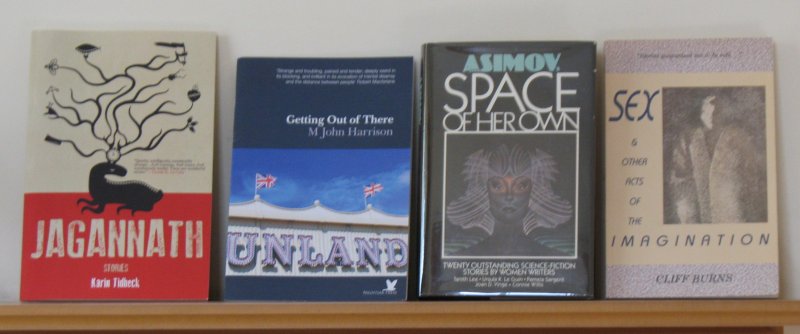
A few collections and an anthology. Jagannath: Stories I bought at Fantastika in Stockholm, Getting Out of There is from Nightjar Press (it’s signed and numbered and a bargain at £3.50; get yourself a copy), and both the women-only anthology Space of Her Own and Cliff Burns’ extremely rare first collection, Sex and Other Acts of the Imagination, were from Cold Tonnage.

20131027c

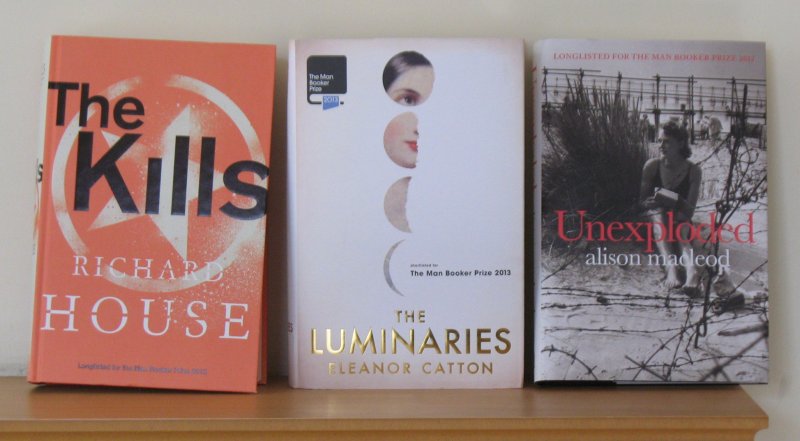
The Luminaries, of course, won the Man Booker this year. The Kills and Unexploded were on the long list but didn’t make the short list. But these three seemed the most interesting to me of the listed books.

20131027d

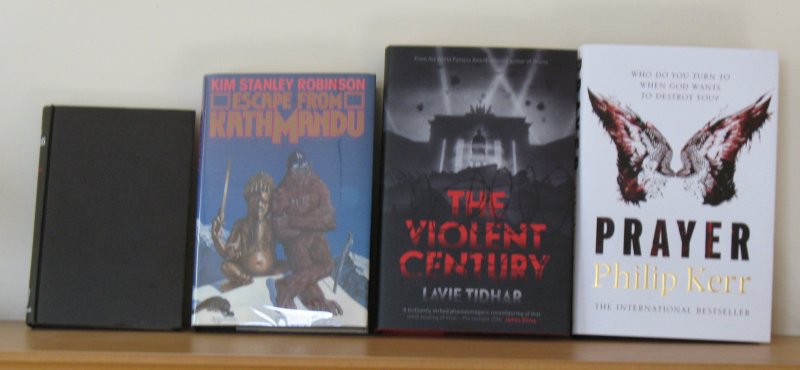
A few for the collection. The jacket-less book is Too Many Murders, and is DG Compton’s debut novel – a crime novel as by Guy Compton. These are almost impossible to find in good condition. Escape from Kathmandu is signed. The Violent Century and Prayer are both new this year.

20131027e

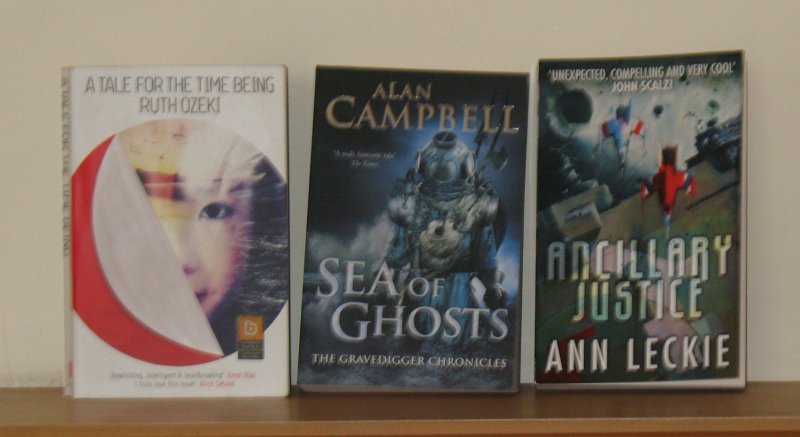
A Tale for the Time Being was also short-listed for the Booker, I found this copy in a charity shop. Sea of Ghosts I bought new after reading Martin Petto’s review on Strange Horizons (plus it has a deep sea diver on the cover); and Ancillary Justice I bought because it’s been getting extensive positive buzz of late – deservedly so: I reviewed it here.

20131027f

These three books I bought on a recent visit to Harrogate. I’ve always fancied trying Nabokov and I’m told Pale Fire is his best. Jensen and Houellebecq I pick up whenever I see copies.

20131027g

Five books of Jo Clayton’s Diadem from the Stars series. I bought these at Fantastika. To be honest, they’re not great sf – I reviewed the first two books on SF Mistressworks here and here – but I’ll read them and review them anyway.

20131027h

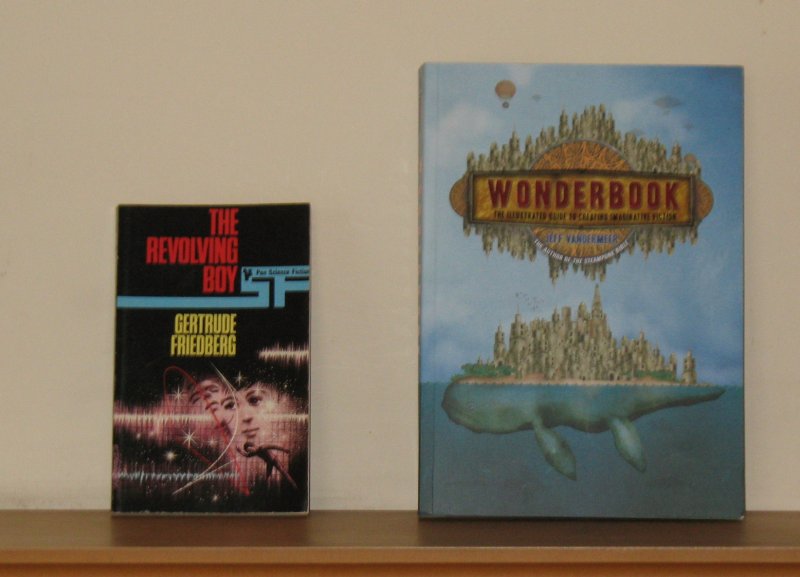
Finally, a 1970s sf novel by a woman writer I’d never heard of (bought at Fantastika) and a humungous book on writing genre I have to review for Interzone. I shall be approaching Wonderbook with a healthy scepticism, but it’s hard not to be impressed by it.

Incidentally, I make this haul 15 books by men and 13 by women, which is pretty close to parity.


7 Comments

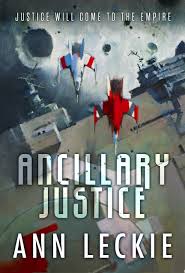
Ancillary Justice

Every couple of years, a science fiction novel appears which seems to generate a tremendous amount of positive buzz among my online genre friends and acquaintances. In 2011, it was Kameron Hurley’s God’s War, the first of a trilogy, which went on to win the Kitschies’ Golden Tentacle Award and appear on the short list for the Nebula Award. This year, it’s Ann Leckie’s Ancillary Justice, which is also a debut novel and the first book in a trilogy. I’m also seeing a lot more word-of-mouth for Ancillary Justice than I remember seeing for God’s War, and I suspect it will do better in the various genre awards than Hurley’s debut.

ancillary

But then Ancillary Justice is located much closer to genre heartland than God’s War, and the interesting things it does – and it does a number of interesting things – are, I suspect, more generally acceptable than those in Hurley’s book. Both suffer structurally, but where God’s War had a choppy start, Ancillary Justice has a weak ending… and I have to wonder if that is felt to be a more forgivable sin. Having said that, Ancillary Justice is a richer brew in heartland sf terms than God’s War – richer, in fact, than a great many 2013 science fiction novels – but I don’t feel it fully explores everything it has to say. God’s War at least aggressively interrogated its tropes. Which is not to say that I didn’t enjoy Ancillary Justice or feel it is a bad book. It is a very strong debut, and I have every intention of picking up the remaining two books in the trilogy when they are published.

First of all, let’s get the gender thing out of the way. Throughout Ancillary Justice, “she” is used as the default pronoun. This is allegedly because the narrator, Breq, comes from a culture which speaks an ungendered language. The problem here is that an ungendered language by definition possesses no gender, whereas “she” is very much a gendered term. The effect on the reader in English of using the word “she” as a default is not the effect it has on the characters within the story. Cause and effect are uncoupled. However, the effect on the reader does force a specific reading of the story. Leckie is making the reader interrogate their own perceptions of gender by using “she”, even if the argument for its use in the world of the story is weak. When Breq deals with speakers of other languages, ones that do use gendered pronouns, she frequently exhibits confusion over which pronoun to use. She uses visual clues to decide which is appropriate – there are, for instance, several references to clothing making this process difficult. But gender is not biological sex – and this is something that has been explored by science fiction over several decades. Numerous people have drawn comparisons between Ancillary Justice and Samuel R Delany’s Stars in My Pocket Like Grains of Sand which, I think, interrogates the concept of social gender more rigorously than Ancillary Justice. I like that Leckie has forced the reader to examine their own gender defaults, and I think that’s an interesting thing to do… but I’m not totally persuaded the world Leckie has created fully explores that aspect of the story.
Breq is the only surviving “ancillary” of an AI. Ancillaries are human bodies used as avatars – real-life “meat puppets”, if you will. As a result, AIs operate in effect as distributed intelligences. It’s a neat idea, but Leckie only skims the surface of it. Admittedly, for much of the book Breq is confined to a single body – once she was an avatar of the controlling AI of a warship, but now she is as effectively human as the person whose body she hijacked. Leckie plays the ancillaries as single intelligences with simply a much vaster range of sensory inputs. When Breq was One Esk, a troop of ancillaries on the troop carrier Justice of Toren, Leckie makes numerous references to the narrator’s ability to know what is happening in various different places, to call up information at will, and to monitor in great detail the human officers under whose command she serves. I’m not entirely convinced by Leckie’s presentation of an AI character, or its distributed nature – but then, to be honest, I don’t think I’ve ever found the presentation of AIs in science fiction especially convincing. Further, the plot of Ancillary Justice is actually hung from this incomplete version of a distributed intelligence – although how incomplete, or indeed different, is difficult to judge as unlike Breq we do not see that character from the inside.

While the gender thing and Breq’s once-distributed nature are the two most obviously arresting aspects of Ancillary Justice – and also appear to be the most remarked upon in reviews; as, er, I am doing in this review myself – there are a number of other elements to the story and world-building which I think are much more fascinating. I said earlier that Ancillary Justice was a rich brew, and it’s the combination of tropes Leckie has used, tropes which are not normally thrown together, or on which she has put a different and original spin, that I think make Ancillary Justice such an interesting sf novel.

Justice of Toren, the ship Breq-as-AI originally controlled, was operated by the Radch, a human civilisation led by Anaander Mianaai. Like the AIs, Mianaai has many bodies, thousands of them, and so rules the Radchaai by effectively being ubiquitous. The Radch is fervently imperialist, and has been operating a campaign of “annexation” on other human-populated worlds for over a thousand years. The Radchaai economy demands this – the Radch seem themselves as “civilised” and superior to all others (especially non-humans), and obviously they cannot maintain a society based on such a view without an ever-expanding underclass. There are many ways of reading the politics embedded in Ancillary Justice – an attack on neoliberalism, on neocons, on contemporary US politics… They all work. Nor do they overwhelm the story.

Which, such as it is, is presented in a format which hides its simplicity. Justice of Toren becomes inadvertently embroiled in an internal Radchaai struggle, kicked off by a pair of historical incidents involving alien races, most especially the Presger who are more powerful than the Radch. Ancillary Justice tells its story in two narratives strands. One is set in the present. Justice of Toren now survives only as Breq, a single ancillary survivor from thousands that had been used, or held in storage, on the ship. A second narrative takes place years earlier, when Breq was One Esk and is policing a city on a world that has been annexed. A Radchaai conspiracy intrudes, and One Esk and her officer, Lieutenant Awn, are caught up in it. Breq is the sole survivor of the fall-out from that incident and vows revenge on Mianaai. to that end, she travels to the world of Nilt to find a special undetectable gun which renders Radchaai armour useless. On Nilt, she stumbles across Seivarden, a Radchaai lieutenant recently revived after a thousand years frozen following the loss of her ship in battle. Seivarden is also now a drug addict. Breq remembers Seivarden, and decides to help her return to Radchaai space, although Seivarden is initially reluctant and ungrateful.

The two narratives build one upon the other, the historical one revealing the motivation for the present-day one, and the present-day one in turn making clear the actual events in the past. While it makes for a slow start, the structure actually allows Leckie to dole out exposition without interrupting the flow of the story. As the novel progresses, so its pace increases until the point where the two narratives meet – or rather, one is folded into the other – at the climax. Leckie’s world-building throughout Ancillary Justice is superb, and she manages to evoke multiple distinct cultures in detail. Perhaps at times the novel feels a bit like a Le Guin story crashing into a Susan R Matthews one, but that’s no bad thing – both are authors whose works I like and admire. Some have also remarked on an element of Iain M Banks to Ancillary Justice‘s world-building, though that may have been prompted by the presence of the AIs (ie, Minds) and the names of the characters. I don’t see a Banksian sensibility at work in Ancillary Justice, even though Ancillary Justice and Banks’s Culture novels are, beneath their space opera patina, both political sf.

Ancillary Justice is novel whose whole is greater than the sum of its parts. And yet some of its parts still manage that intellectual punch to the head – a “wonderpunch”, if you will – you expect in the best science fiction. There is a point in John Varley’s The Ophiuchi Hotline (1977) where the main characters travel out to the Oort Cloud and discover why aliens have been transmitting the eponymous beam of free information at the Solar System. In a meeting with these “Traders”, Varley throws away entire science fiction novels in a handful of lines –

“A few thousand. To get a representative sample. After that, we can learn humanity from each other.” He paused. “We know this is a strange request. The fact is, it is the only thing your race has to offer us. It is the only reason we have bothered to send you the things we have discovered and collected over seven million years.” (p 222)

Such a massive change in scale, delivered offhand in a few lines of dialogue, can’t help but provoke sense of wonder. Leckie does something very similar in Ancillary Justice, and it is the implications of this which I think proves one of the novel’s more fascinating elements:

When most people spoke of Radch, they meant all of Radchaai territory, but in truth the Radch was a single location, a Dyson sphere, enclosed, self-contained. Nothing ritually impure was allowed within, no one uncivilized or nonhuman could enter its confines. Very, very few of Mianaai’s clients had ever set foot there, and only a few houses existed who even had ancestors who had once lived there. (p 235)

Bear in mind that a Dyson sphere with a radius equal to the Earth’s distance from the Sun would have a habitable inner surface equivalent to 550 million Earths. Imagine the size of a civilisation which filled that and still needed to expand in order to fuel its economy. I would also guess the Dyson sphere is an artefact colonised by the Radch, since nothing in Ancillary Justice suggests they are capable of building it.

Not everyone has reacted positively to Ancillary Justice, although it’s hard to see how in comparison to other science fiction novels published this year it can’t fail to stand out. If I was afraid that the success of James SA Corey’s Leviathan Wakes meant that space opera was regressing, then I’m glad to say that Ancillary Justice shows that progress is still possible and desirable. Leckie’s novel gives me hope that science fiction is a genre it is still worth reading. Recommended.