It Doesn't Have To Be Right…

… it just has to sound plausible


1 Comment

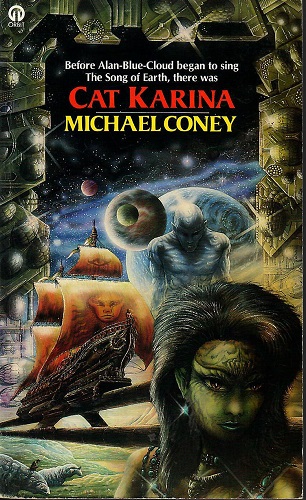
Cat Karina, Michael G Coney

The late Eric Brown, a friend of many years, was a big fan of Coney’s fiction, but for some reason Coney was one of those authors I never seemed to pick up. The first was Hello Summer, Goodbye (1975, UK) about fifteen years ago, and I thought it quite good – and later I picked up and read Charisma (1975, UK). But stopped there. I’ve read more in the last few years, and found his Amorph trilogy of Mirror Image (1972, UK), Syzygy (1973, UK) and Brontomek! (1976, UK) good examples of a type of expatriate English science fiction of the 1970s which I find strangely appealing.

Cat Karina (1982, UK) is not that. It’s set in the far distant future, the Greataway, on an Earth populated by races that have been genetically melded with assorted animals, and in which technology is anathema – in fact, even fire is banned. The novel is explicitly framed as the telling of a legend, so much so it inserts commentary on later distortions and interpretations of the story. Also in the narrative are alternative timelines, happentracks, predicated on decisions made by Karina and others which might affect the future, or Ifalong.

There’s a prophecy, but it’s really a millennia-long plan to bring about the birth of someone who can free Starquin, “the greatest person the Earth has ever known”, who was imprisoned millennia earlier, and it involves the title character, who is a Specialist, a human with animal genes, and a felina, meaning the animal genes are from jaguars. Karina lives in a village on the sailway line, a wooden monorail with wind-powered sailcars. One section of the track is too steep for wind-power, so the sailcars must be hauled up to the summit. By teams of felinos. The chief cargo on the sailway is tortugas, a highly-prized fruit grown in the mountains on heavily-guarded farms.

A handmaiden of the Dedo, a part of the Starquin’s body “in human form”, whatever that is, tries to manipulate Karina so she follows the prophecy, but Karina has a mind of her own… The main story follows the preparations for an annual sailcar race to deliver the season’s first tortugas to the coast, and the plan to use a sailcar built using forbidden technology – ie, metal. Which could mean there will no longer be a need for gangs of felinos. Which prompts a revolution, with the Specialists overthrowing the True Humans.

There is little, to be honest, all that original about the plot of Cat Karina – it runs on rails as well-greased as those of the sailway. And, it must be said, the novel does a great deal of heavy-lifting when it comes to filling in the back-history of the universe (there’s a later trilogy set in the same universe), but it does so with some smart neologisms and an impressive economy. I don’t think Cat Karina privileges world-building over story, a common fault in science fiction and fantasy, but its world-building is certainly more original and accomplished than its story. Karina is an engaging hero and well-characterised, and it never feels like she’s being pushed and prodded by the plot, even though the narrative often details other happentracks. There’s some nice invention in parts, the secret of the tortugas, for example, an important plot-point, unlike the secret of the tumps (huge torpid meat animals), which is not.

Cat Karina is a well-crafted novel, and a good example of its particular type. To be honest, I much prefer Coney’s near-future sf, but for fans of sf set so far in the future it might as well be fantasy, Cat Karina (and, I expect, the trilogy which followed it) is a good read.


Leave a comment

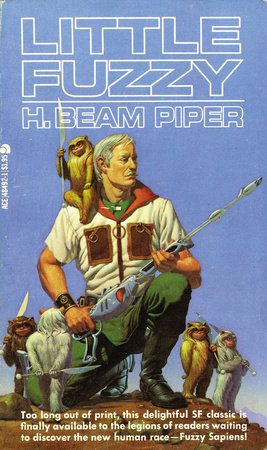
Little Fuzzy, H Beam Piper

Another allegedly classic sf novel, which was nominated for the Hugo in 1963. Dick’s The Man in the High Castle (1962, USA) won that year, and was easily the best of the shortlisted novels. Little Fuzzy (1962, USA), on the other hand, is slight, not in the least bit plausible, and opens from a position of such comprehensive US hegemony its story is pretty much unrecoverable.

The title refers to the indigenous race on Zarathustra, waist-high cute-looking furry creatures with an average intelligence comparable to that of small children. Humans have been on the world for several decades before the first “Fuzzy” appears, and the corporation which owns the planet quickly realises that a native race invalidates their ownership of the world and all its resources. So they play dirty in an effort to prove the Fuzzies either non-existent or not intelligent. A situation which comes to a head when a company bigwig stamps on a Fuzzy, killing it, and a company bodyguard is shot and killed in self-defence.

Like a lot of American sf of the period, this is resolved by people coming together, homespun legal wizardry, a general distrust of the government (and governing corporation), and a handful of native backwoods cunning from several of the cast. While the local governor is corrupt, the local Navy base is packed to the gills with upright honest officers and personnel. The corrupt mayor is a cliché, but so too is the valorisation of military probity – at least in 1962, before the Vietnam War. There are entire Hollywood movies from the 1930s through to the 1950s which use any one of those tropes on which to hang a plot. And each one is as hokey as the next. 

If anything, Little Fuzzy multiplies the hokiness. It’s a novel with far more mouthpiece characters than it needs or the reader deserves. The Fuzzies may be intelligent enough to determine their own destiny, but the humans on their side seem to treat them chiefly as precocious pets. There are many arguments to be made about the European invasion of continental North America, but this novel doesn’t even come within spitting distance of them. It’s the colonisers defending the colonised against the colonisers’ own kind, for reasons that are best not examined too deeply.


Leave a comment

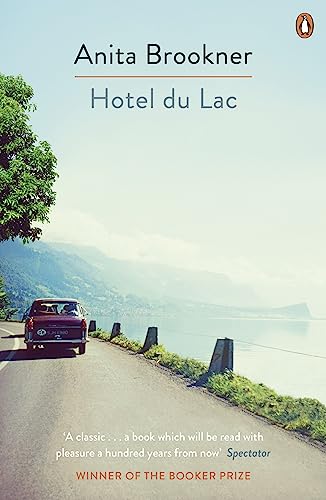
Hotel du Lac, Anita Brookner

Apparently a surprise winner of the Booker Prize back in 1984. Ballard’s Empire of the Sun (1984, UK) was the favourite, although Lodge’s Small World (1984, UK) or Barnes’s Flaubert’s Parrot (1984, UK), the only other books on the shortlist I’ve read, would have been a better winner than Hotel du Lac (1984, UK). It’s not that Brookner’s novel is bad – it’s nicely written, with some sharp insights. But. It’s set at the time of writing but reads like it takes place in the 1950s or 1960s. It’s horribly old-fashioned.

Edith Hope is a single woman in her late thirties, who writes “women’s fiction” under a pseudonym, reasonably successfully. She has a lover, a married man, and lives alone. She accepts an offer of marriage from a man, but jilts him at the altar (well, outside the registry office). Her friends, upset with her, arrange for her to spend a week or two at the titular hotel in Switzerland. It’s the end of the season, and there are only a handful of other guests: Mrs Pusey and her daughter, Jennifer; La Comtesse de Bonneuil, a caricature of a early twentieth-century European grandmother, and Monica, an anorexic (although this is never said) and beautiful minor aristocrat. A group of men stay at the hotel, among them Mr Neville, the well-off owner of an electronics company, in his fifties, smug and successful. He later proposes to Edith – marriage, but a partnership predicated on comfort and position, not love.

Throughout her stay, Edith writes long letters to her lover back in London, but does not send them. Various little scenes are enacted, Edith learns more about her fellow guests, their back-stories and their personalities. Mrs Pusey is quickly revealed as selfish and mistaken in her level of consequence. Her daughter, who is the same age as Edith, is little more than an accessory. Monica is a snob and dismissive, but surprisingly friendly. Madam de Bonneuil is deaf and a figure of (gentle) fun.

It’s all very smooth, and Edith is an engaging, if overly introspective, protagonist. But it’s all so horribly outdated. Neville takes Edith on a boat-trip across the lake, and wears a deerstalker hat. In 1984? Seriously? Edith wears gloves to her aborted wedding. Women rarely wore gloves to church – or registry offices – in the 1970s, never mind the 1980s. The women are dismissive of feminism, and define themselves in relation to the men in their lives, or who were once in their lives, or all men in general. This is not the early 1980s I remember.

If Hotel du Lac had been written and presented as historical fiction, it might have read better. Having said that, even then it wouldn’t have deserved to win the Booker.


8 Comments

An exaggeration

As Mark Twain said regarding his published death – and after four years I’m tempted to bring this blog back to life. I’d become dissatisfied with posting 100-word rants about the books I’d read and the films I’d seen, so I felt I needed to walk away. And I was annoyed at the unwanted changes WordPress had made to its editor.

But the habit dies hard – the habit of reviewing, that is; although I suppose the habit of ranting is equally enduring. Soon after shuttering this blog, I started posting longer, actual proper, reviews of books on Medium – see here – and a year or two later, I began posting shorter book reviews on Facebook. It occurred to me recently I might as well post the latter here as well. I’ll continue to post them on Facebook and LibraryThing, but I’ll leave the longer reviews to Medium… And I may well branch out here and post more than just book reviews. But no rants.

Hopefully, posting reviews here will generate conversations much as it has done on Facebook – although not just among friends. Social media these days is a cesspit – actual posts by friends are in the minority on your Facebook timeline, Xitter is a shit-filled bearpit populated by fascist morons, and Bluesky started off well but is now pretty much doom-scrolling…

Maybe it’s time for a second lease of life for the blogosphere. We shall see. Or not.


12 Comments

Reading diary 2021, #5

It’s time to retire this blog. All I’m doing is posting mini-rants-masquerading-as-reviews of books and movies, and that at increasingly longer intervals. Plus, WordPress have gone and fucked up a perfectly good product, and their new “Gutenberg” block editor is shit. It now takes ten times longer to format a blog post, and I had to trash the one I’d planned to post before this one because I couldn’t get the editor to let me format it how I wanted. If I want to use the old editor, I have to pay extra money. I’ve no desire to support a business that blackmails its customers by removing functionality and then demanding money to return it. So, fuck them.

I could, I suppose, move to another platform. Not Blogger. I was on that originally. But they kept on randomly blocking my blog because their AI had decided it was spam… and Blogger made it increasingly difficult to get it unblocked. “Customer support” is not a phrase that seems to be in Google’s vocabulary. I’ve also heard their current version is even worse than WordPress.

Other blogging platforms seem more in the nature of website-building platforms for complete idiots. All drag and drop and fixed templates and zero actual control on the part of the user. And yes, I do still use the CLI in $dayjob.

Anyway, blogs are dead, social media is a cesspool of stupidity and tribalism, fandom is a pitched battle between various groups determined to police and/or gatekeep everyone else, and who knows when physical conventions will be a thing again? (I refer, of course, to English-language genre culture.)

Anyway, for this ultimate post, I shall finish much as I’ve been going on these last few years. With sort of reviews of half a dozen books.
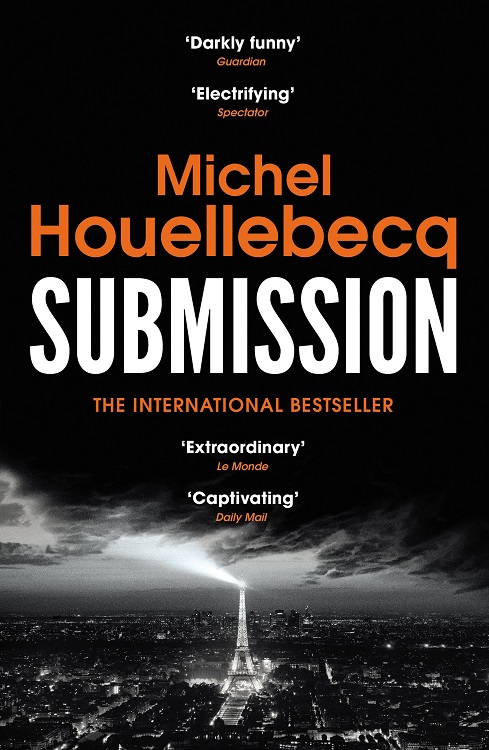
submissionSubmission, Michel Houellebecq (2015, France). I can’t decide if this novel is irresponsible race-baiting or a clever commentary on the culture war. It’s probably both. In Submission‘s 2022, a moderate Muslim candidate becomes president of France and remakes French society along moderate Islamic lines – which are not all that moderate. In a word, the patriarchy is back. Women can no longer work. The narrator is a professor at a Parisian university, who is forced to retire when the new regime takes over. While the new government greatly reduces crime, it is at the cost of women’s freedoms. Professors are “bribed” back into their positions by finding them biddable female students as wives. Which, to be fair, is not how Islam works. It is, however, how patriarchy works. And that’s definitely one of the unacknowledged planks of the right-wing adherents of the “culture war”. They hate Muslims. But they want women back in the kitchen and no brown people in sight. But I’m not sure this novel is commenting on them, and I don’t think Islam is a good vehicle to make that point. But then France has a different reaction to its Muslim citizens than the UK, and I grew up in the Middle East so I’ve lived in actual Islamic countries, and Houellebecq’s presentation of Islam is hopelessly simplified, even though he provides a character to actually explain the religion. There’s also an unacknowledged issue here. I’ve seen it in the real world. In Houellebecq’s France, women can still study, but they cannot work. So their studies are worthless. But those women don’t want their daughters to suffer the same fate, so they agitate for jobs. It’s what’s been happing in the Gulf states for the past 30 years. Houllebecq’s interpretation of an Islamic Europe is unsustainable. You can’t disenfranchise half of the population and expect that to continue unopposed. Houellebecq is a controversial figure, but much of the controversy he has manufactured himself. Submission is the sort of novel that will upset people, but it’s not really a thought experiment. it’s a piss-take. Houellebecq is upsetting the people he’s taking the piss out of. Seems fair to me.
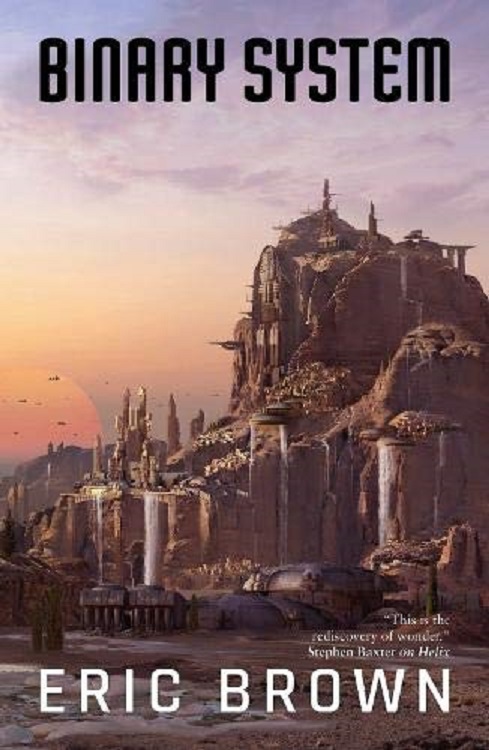
binaryBinary System, Eric Brown (2017, UK). This was originally published as two ebooks in 2016 and 2017, but that seems an odd decision since neither seem to stand on their own. It is good old-fashioned – where “old-fashioned” means 1990s – science fiction, but with updated sensibilities. To be fair, UK sf of the 1990s and English-language sf of today doesn’t require much in the way of “re-alignment”. Female protagonists were common in male-authored sf by UK writers in the 1990s; the fact it took an additional decade for female protagonists to begin appearing in US male-authored sf is another matter. And, to be fair, throughout the 1980s and 1990s, the US published a great deal more women genre writers than the UK did. Anyway. In Binary System, Delia Kemp is the sole survivor of an explosion as a ship is translating through a wormhole type thing, and finds herself marooned on a world thousands of light years away. It is inhabited by several alien races – and Earth has yet to encounter any aliens. She is taken prisoner by insectoid aliens, but then broken free by gibbon-like alien, and with him she agrees to travel south to witness the ten-yearly appearance of his god. They’re helped by a “spider-crab” alien. The insectoid aliens, she learns, are invaders, devolved ones, it’s true; but the other races, native to the planet, would be happy to be rid of them, and Kemp is worried they might at some point reach Earth. Not that she expects to ever reach Earth herself as she’s marooned so far away. It’s all very trad sf, and there are few real surprises – other than wondering how they story could have been split into two – but it’s well-crafted stuff. And if some of the tropes are a little shiny around the edges, they’re at least used by someone who knows what he’s doing. This is not Brown’s best book, but it’s emblematic of the solid, heartland, unassuming science fiction that he writes when he’s writing moderate to good sf. He’s actually written some excellent sf, but has never been popular enough for it to be noticed. Which is a shame.
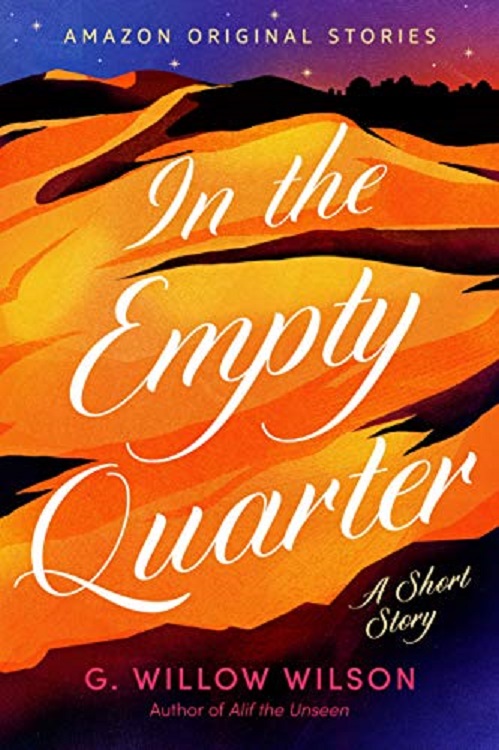
empty_quarterIn the Empty Quarter, G Willow Wilson (2021, USA). This was actually free, and I don’t think I’ve read anything by Wilson before – although I do remember she was flavour of the month some ten years ago, but has been writing comics the last few years. An American couple are in an invented city in Saudi Arabia in the 1950s, as the husband is part of a team prospecting for oil. The wife, Jean, has been shown about town – as much as she can be – by a local contact of her husband, Mahmoud, and while she’s starting to harbour romantic thoughts toward him, she’s also bored. So she persuades her husband to allow her to accompany him on a trip into the Empty Quarter, the Rub Al-Khali. But she finds herself even more bored, standing around while he works, so she explores a cave she finds in a sabkha, gets trapped, and is rescued by a djinn. I’ve actually camped in the Empty Quarter, so I know what it’s like, and I’m not really convinced by Willow’s description (which does not mean she has never visited it, of course). For one thing, she doesn’t use the term sabkha, and her description of one doesn’t quite ring true. Despite all that, the entire novella feels like packaging for a single line, “You’ve been treating me like a guest, but I’m here without an invitation”. Which is, of course, true – of the Brits and French in the first half of the twentieth century, and the Americans in the second half of the twentieth century. But the novella’s story isn’t really a commentary on that one line, just its delivery vehicle. And that, I think, is where it fails. Jean sees Saudi Arabia as “exotic”, which fits her character, but Willow seems more interested in commenting on the US’s exploitation of the Arabian peninsula than US, or indeed Western, attitudes to the cultures of the region. Having said that, this is a novella. If it disappoints, it’s because it implies a wider remit than it actually delivers on.
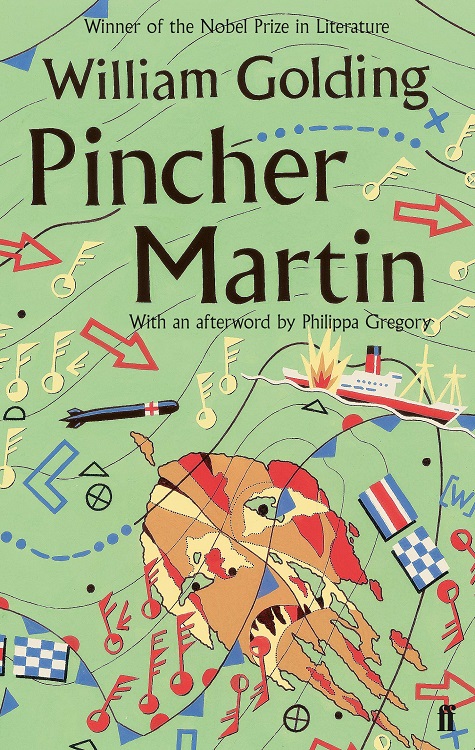
pincherPincher Martin, William Golding (1957, UK). Some friends of mine have recently been writing about William Golding, although they initially encountered him many decades ago. I did too, in a fashion, as I read Lord of the Flies at school – at least, I’m pretty sure I did – but I didn’t try another Golding novel until only a couple of years ago. So I’ve not had that long an appreciation of his books, and the few that I’ve read so far have been somewhat variable: Rites of Passage is amazing, The Inheritors is very good, but The Pyramid and The Paper Men are only mildly amusing. Pincher Martin is a remarkable book, and I think if it had been one of the first books by Golding I’d read I might perhaps hold him in as high esteem as the aforementioned friends. The title refers to a RNVR lieutenant in a destroyer in a trans-Atlantic WW2 convoy. The ship is sunk – probably by a U-Boat – and Martin finds himself on his own floating in mid-Atlantic. He manages to land himself on a tiny rock island, and has to subsist on rain water and mussels until he is rescued. As he waits, and suffers from exposure and malnutrition, flashbacks, some of which are more or less stream-of-consciousness, tell something of his past. And he was not a nice man. Much of the novel recounts, in excruciating detail, Martin’s situation and efforts to keep himself alive. It’s hard reading. And then there’s the final chapter… I’ll say there’s a twist, but I won’t spoil it. Recommended.
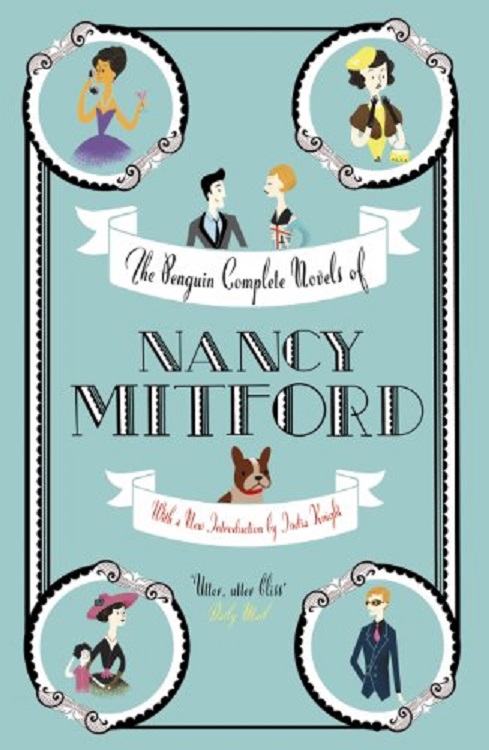
mitfordChristmas Pudding, Nancy Mitford (1932, UK). The second of The Penguin Complete Novels of Nancy Mitford, and it’s more of the same as the first. But much funnier. Some of the characters featured in Highland Fling (like Waugh, Mitford seems to have a stable of characters for her books), but this time they’re spending Christmas in the country. Amabelle Fortescue, rich widow and ex-sex worker, has hired a cottage in Gloucestershire. She invites the Monteaths to join her. Meanwhile, novelist Paul Fotheringay, a friend of Amabelle’s, whose tragic debut novel has been hailed as a comic masterpiece, deeply hurting him, has decided a biography of his favourite Victorian poet is what is needed to convince people of his serious literary nature. So he wangles a post, under a false name, as tutor to the poet’s descendant, a teenage baronet, whose home is near the country cottage rented by Amabelle. Some of the poet’s verse is reproduced, and it’s brilliant – “Think only, love, upon our wedding day / The lilies and the sunshine and the bells / Of how, the service o’er, we drove away / To our blest honeymoon at Tunbridge Wells.” The cast are grotesques, even when presented as relatively normal for the milieu, and it’s Mitford has a sharp tongue when poking fun at them and their world. But this is no social commentary – nor was Waugh’s, to be fair – and if Mitford’s humour is at the expense of her characters, it’s at least it’s  not Waugh’s contemptuous cynicism. They’re well put-together these novels. Recommended.
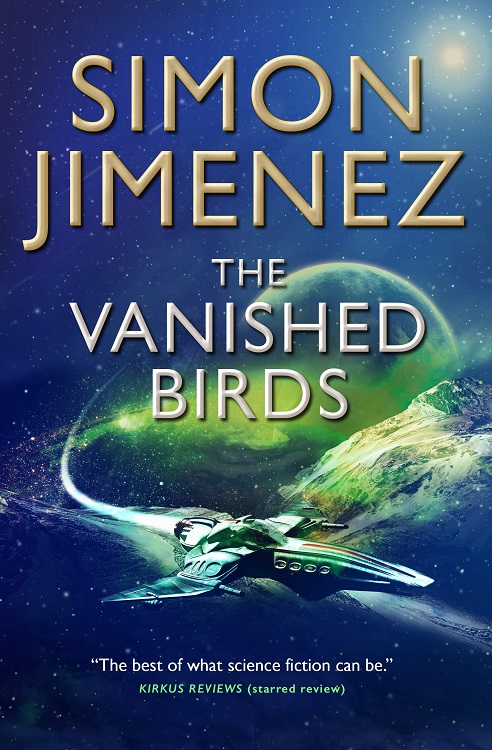
vanished birdsThe Vanished Birds, Simon Jimenez (2020, USA). I’d given up on reading US genre debuts, but then I go and pick one up and read it. To be fair, I’d heard good things of The Vanished Birds from people whose opinion I trust, and I’ve not seen it mentioned often on social media, which means it probably doesn’t appeal to the sort of people who champion books I’ve found I definitely don’t like. (And it hasn’t made any award shortlists this year.) But, oh dear. Tricked again. On the plus side, it’s better written than is usually the case – but given it was apparently a thesis for a Creative Writing MFA, that’s hardly a surprise. Unfortunately, it fails pretty much everywhere else. It opens with a section set on a world which is visited by twelve spaceships every fifteen years, there to collect… a fruit which apparently stays fresh for up to fifteen years after harvesting. The economics make no sense – there are other villages, and hence more spaceships, on different schedules, so demand for this fruit must be huge. Except… the ships only appear every fifteen years, but for them the trip takes days, and they’re away from their destination for only months. (This time discrepancy in FTL applies nowhere else in the novel.) All this has little to do with the story, which is all about a mysterious boy one such ship picks up on a trip to the planet. There are a series of spacestations, in a universe that borrows most of its visuals from media sf, especially Star Wars, and which are shaped like birds because… because why? Their architect is treated more or less like an empress, for no discernible reason. She goes into cold sleep at regular intervals and has now lived for over a thousand years. She has determined the mysterious boy has the ability to “jaunt”, ie, travel from planet to planet without a spaceship. This ability could, understandably, upset the standard corporatist US-imagined space opera bollocks universe, with its serfs and one-percenters and child abuse and slavery, all of which exist because. For all its praise, The Vanished Birds is a creative writing exercise that strives more for effect than rigour, has a plot that makes little sense, and  a universe  cobbled together from a dozen ro so properties and overlaid with the usual US science fiction fascist nonsense. (In one scene, 2,500 innocent men, women and children are herded into a room and shot dead by corporate soldiers in order to “punish” the aforementioned architect who had created the secret complex where they lived and worked. Seriously, this fascist shit needs to stop. It’s a failure of imagination, and says more about US culture than it does English-language science fiction. And The Vanished Birds will definitely be the last twenty-first century US genre debut novel I ever read – at least until those authors have several more novels under their belt.

So, that’s it. The end of a blog. It had a good run – November 2006 to April 2021. I’ll keep it up, as there are one or two posts that still get visitors, like 100 Great Science Fiction Stories by Women. But I’ll no longer be adding new content. And the URL may change as I no longer see the point in paying to redirect to my own domain.

8 Comments

Reading diary 2021, #4

I had a week off work, and spent most of it stretched out on the sofa, reading. Which is not that much different, these days, to a working day – with me stretched out on the sofa, doing $dayjob on the MacBook. I’d hoped to read more during my holiday, but got bogged down in the Márquez, which I appreciated more than I liked. Having said that, on the whole not a bad selection of books…

Highland Fling, Nancy Mitford (1931, UK). Once upon a time, I had an idea to focus my reading on British women writers of the first half of the twentieth century – I even wrote a blog post about it, here. I was already a fan of the novels of Olivia Manning and Elizabeth Taylor (not the actress), so it wasn’t much of a stretch. In the event, I only read a dozen or so qualifying novels, but it did introduce me to writers whose oeuvres I wanted to further explore – such as Pamela Frankau, Storm Jameson and Susan Ertz. I later read novels by Hilda Vaughn and Rosamund Lehmann. Nancy Mitford, however, was not on my list, possibly because she was best-known for her 1930s novels, which was a little earlier than I was interested in. But then I started reading Evelyn Waugh, and Mitford’s novels are often compared to his, and – which is probably the most important factor – The Penguin Complete Novels of Nancy Mitford on Kindle was on offer for £2.99 (that’s eight novels, btw). Comparisons with Waugh are inevitable – both wrote satirically about “Bright Young Things” during the inter-war years. Waugh’s prose is sharper, but his satire is meaner; Mitford plainly doesn’t hold her subjects in contempt, and her set-pieces are slightly more absurd than Waugh’s. In this, her first novel, her characters are put in charge of Highland castle for a shoot, despite being complete upper class twits. And destitute. Because, like Waugh, Mitford is keen to stress how poor most of the upper classes are. It doesn’t wash. Poor working class person asks bank for loan, bank says fuck off. Poor upper class person asks for bank loan, bank throws bundles of cash at them. The upper classes have always been the UK’s worst enemy, and that’s as true now as it was in the 1930s. Or even the 1130s. Highland Fling is mildly amusing – not as cutting as Waugh, but not as racist either – but, you know, if everyone wiped out the entire English upper classes I would not shed a single tear. I might fucking celebrate, though.

Love in the Time of Cholera*, Gabriel García Márquez (1985, Colombia). The title of the book and the name of the author were known to me – and are no doubt known to many people – but I had absolutely no idea about the story. And while I’ve read and enjoyed some South American literature, it’s not a tradition that figures highly in my chosen reading. The book was, of course, on offer, and it’s also on the 1001 Books You Must Read Before You Die list, so I thought it worth a punt. And after a diet of far too much bad high fantasy, it was surprisingly refreshing to read prose by someone who could actually put a sentence together. An old man in a South American country dies. The novel then flashes back fifty years to a fifteen-year-old girl, who is being wooed by a young man of middling means. Her father takes her on a road trip to stay with relatives inland in order to block the relationship. When she returns a couple of years later, she finds herself suddenly no longer in love with her suitor. He, however, continues to love her. She marries an urbane and wealthy doctor who studied in France. The story then follows both her paramour, and the years – decades – he spends trying to get on with his life, while loving her from afar, and her own life. She is seemingly content in a marriage that gives her everything but love. Her husband is widely admired, which is all he ever wanted. And the old suitor has a string of jobs and affairs, none of which change him in any meaningful way. It gets distinctly dodgy some three-quarters of the way in, when the suitor takes charge of a thirteen-year-old cousin, and then makes her his lover. That’s straight up paedophilia. I don’t care when and where the book was set, and whether it was even considered acceptable in that time and place – and surely it wasn’t? – but writers choose what they write about, and García Márquez chose to write about a relationship between a man in his fifties and a girl not yet fifteen years old. As for the rest… the story jumps around a little, and I got a bit lost in the internal chronology – suitor works for the telegraph office, then he lives in a brothel, then he gets a job with a telegraph office, and somewhere in there he unsuccessfully tries to retrieve some sunken treasure… The novel revels in the filth and squalor of its setting – obviously the cause of the frequent cholera outbreaks which lend the book its title – and though ostensibly about love and romance, its female characters often feel like walking plot-points. The novel has its moments, but its blithe treatment of paedophilia, not to mention honour killings. or just plain indifference to the preventable squalor and deaths of the poor, make it a hard book to read in the twenty-first century. García Márquez’s other really famous novel is One Hundred Years of Solitude. I suspect I’ll give it a miss.

Master of Paxwax, Phillip Mann (1986, New Zealand). I’ve been a fan of Mann’s fiction for many years, and even reviewed several of his books – positively, of course – for the BSFA’s critical journal, Vector, back in the day. I liked that Mann was considerably more literate than most of his peers, and exhibited a somewhat sideways approach to common science fiction tropes. I’d forgotten that Master of Paxwax, followed by The Fall of the Families, was Mann’s second novel, but I’d remember the broad shape of the story. What had not occurred to me at the time, and struck me quite strongly on this decades-later reread, was how much Master of Paxwax is a pastiche of Frank Herbert’s Dune. More than that – and the timing is tight, so perhaps I’m reaching – but quite a bit of the imagery in Master of Paxwax evokes David Lynch’s movie adaptation of Dune, released in late 1984. After discovering an alien Way Gate, humanity spread out into the galaxy and wiped out all (alien) competitors. This was the Great Push. Centuries later, human society has ossified into an imperium ruled by eleven Great Families, and countless other ones. The Paxwax are the Fifth Family, and Pawl, the third son, finds himself head of the family when his father and elder brother die. The second brother had joined the Inner Circle, ostensibly a semi-religious order of diplomats and advisors, but secretly the last refuge of the alien races subjugated, or even destroyed, by humanity. The Inner Circle has determined that Pawl Paxwax will return the galaxy to the aliens; Pawl Paxwax just wants to break with tradition and marry someone he loves, who is not of the Eleven Families. On the surface, this is a space opera that makes free use of the subgenre’s tropes. But there are many similarities with Dune, while not mapping directly onto its story – no white saviour narrative, no appropriation… And there’s all those aliens, of course. It is, perhaps, a more sensitively-written Dune… but it never manages Herbert’s book’s weight of background, one of Dune‘s chief appeals, because Master of Paxwax relies overmuch on space opera tropes. It’s a good book, perhaps even a forgotten space opera masterpiece, although I suspect that’s a label that applies to a great many books given the low bar most fans seem to apply to space opera…

Olive Kitteridge, Elizabeth Strout (2008, USA). I had the title of this book written down on a list of books I wanted to read, and for the life of me I can’t remember why I’d listed it. But it popped up for 99p on Kindle, I remembered the title, and my finger went straight to the “buy now” button. And having now read it, I still can’t remember why it was on that list. It won the Pulitzer Prize, but I’ve never read a book simply because it won that prize – although I’ve read books that have won it. Olive Kitteridge reminds me a great deal of Marilynne Robinson’s fiction – and I’m a huge fan of her novels; signed first editions only sort of fan – but it doesn’t have the warmth and easy domesticity of her prose. It’s set in small town USA, a foreign country of not much interest to me, north or south, and any familiarity I might have with that world, in broad stroke, is down to a shared language only and the vigorously exported parts of a culture that has pretty much inundated the rest of the Anglophone sphere. The novel is about the eponymous woman. It’s part of a fictional universe built up over several works – in this case, all contained in this “novel”, and a later novel published in 2019. Olive Kitteridge is actually a collection of linked stories, in which the title character appears, either as the PoV character or in a supporting role. She was a maths teacher at the local school, but is retired at the time the novel opens. The comparison to Robinson is not entirely unfair – both writers detail a small community in their fiction, telling the stories of several interlinked families. The Wikipedia page for Olive Kitteridge boasts a complete cast of characters from the book – that’s eight families, and half a dozen assorted other groups. Strout manages to make her characters believable – although one or two seem to be defined solely by a couple of traits – despite the fact most of them only appear for a handful of pages. Much as I enjoyed the Olive Kitteridge, I doubt I’ll bother with the sequel.

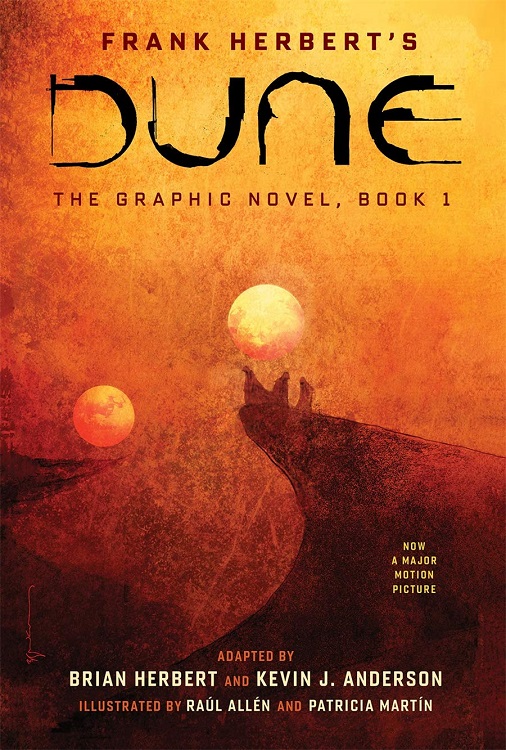
Dune: The Graphic Novel, Book 1, (Frank Herbert), Brian Herbert, Kevin J Anderson, Raúl Allén & Patricia Martín (2020, USA). Despite repeated attempts to find further means of cashing in on the Dune corpus, by 2010 interest had clearly begun to wane and two planned Dune books by Brian Herbert and Kevin J Anderson were quietly cancelled (although another trilogy was completed and published). With, it must be said, good reason: their additions to the Dune universe have been uniformly shit. But then the Dune film – its second movie adaptation – was greenlighted, with no less than semi-auteur box-office darling Denis Villeneuve at the helm, and the Dune universe suddenly got a shot in the arm. I’d thought this graphic novel adaptation was, like the earlier Marvel one, tied in to the new movie adaptation. But now I’m not so sure. The artwork in the graphic novel doesn’t appear to match the production design from the Dune movie trailer. Which suggests it’s yet another cash-in. On the one hand, the graphic novel is faithful to the novel. But it fluffs some scenes – the banquet scene especially – and puts too much emphasis on others, such as the gom jabbar scene. But, worse than that, everything looks disappointingly generic. Lynch’s film had its problems, but it looked absolutely gorgeous. It had exactly that level of over-elaborate design you’d expect of Frank Herbert’s universe. I doubt Villeneuve’s production design will match it. The graphic novel art looks, well, boring. The characters appear far too ordinary and similar and, disappointingly, there’s no intricate detail in the backgrounds. This is the blandest version of Dune that has been produced yet. I will, of course, be buying books two and three.


Leave a comment

Watching diary 2021, #7

We had a fit of spring weather, then another week of snow and sub-zero temperatures, and now the sun is shining again… It seems weird to mention the weather, given what’s currently happening. I remain fervently glad I’m in Sweden. It’s not handled the pandemic well but, unlike the UK, it has at least not descended in fascism. On the other hand, I’m reminded of the same fascist tricks being pulled by Thatcher’s government back in the 1980s. They ultimately failed then, they will ultimately fail now. Although the current crop of greedy intellectual lightweights have had much greater impact  – first Austerity, and now Brexit. As I’ve said before, they belong in prison.

No box-set bingeing this time. Still working my way through Water Rats. Which has started to get increasingly implausible. What is it about TV programmes? TV show starts to shed audience, so let’s make it even less fucking believable? I read somewhere about the “idiot ball”, the mythical token held by the character who has to act like a complete idiot – usually out of character – in order for that episode’s plot to work. Now, let’s be clear. This is shit writing. It’s not a TV writing convention. It’s a consequence of TV writers being bad at their jobs. As is my own invention: the “penis hat”. This is worn by the character who acts like a complete dick to make the episode work. This may not necessarily be out of character, and may even be a character parachuted in just for that episode. Sadly, penis hats are all too common in real life, so their presence in a TV drama is hardly implausible… but it’s still a cheap trope, and any writer worth their salt would avoid it.

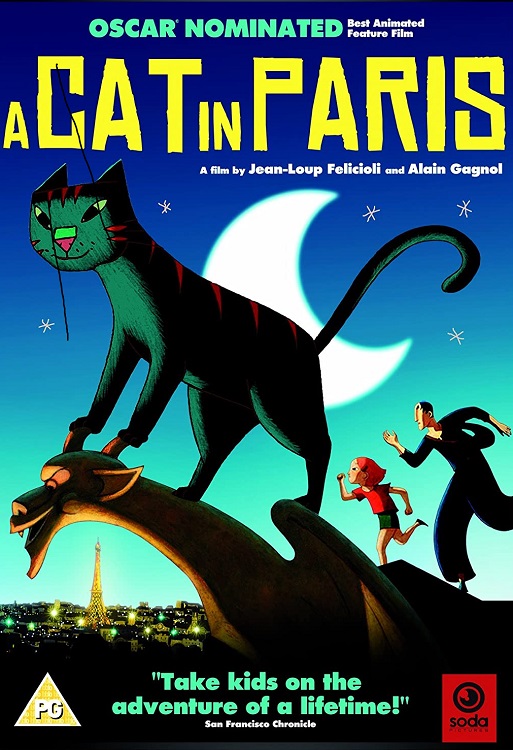
A Cat in Paris, Jean-Loup Felicioli & Alain Gagnol (2010, France). An animated feature about a cat who accompanies a cat burglar – get it? – called Mr Cat – get it? – during his burglaries. The cat spends its days as the pet of Zoé, whose mother is a police inspector trying to prevent a known gangster from stealing a priceless statue. Zoé and Mr Cat get dragged into it all when Zoé’s nanny turns out to be an accomplice of the gangster. I wasn’t too keen on the highly stylised look of the animation, and the film never really seemed to be sure whether it was a comedy or a drama. The version I watched was dubbed into English, with a weird mix of US and UK actors, and so accents. While the setting was identifiably Paris, it all felt a little trans-Atlantic. Meh.

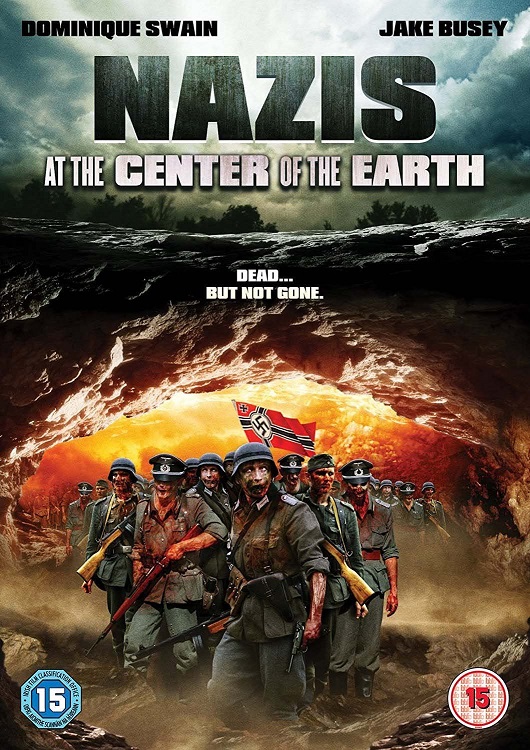
Nazis at the Centre of the Earth, Joseph Lawson (2012, USA). I have no fucking idea why I watched this. Okay, it’s by the Asylum, and while their “mockbusters” are pretty much always really bad, they sometimes spin a few interesting changes on the original material. The title to this film, like that of most of their films, is perhaps more descriptive than the movie they’re ripping off, but I’m fairly sure Nazis at the Centre of the Earth is a pastiche of Iron Sky 2: The Coming Race. But it’s not always easy to tell, because the Asylum usually don’t even bother spoofing the original’s plot. Here, a team of international scientists at the South Pole inadvertently find an entrance to the hollow Earth, where the Nazis have set up shop after losing WWII. Doctor Mengele has been trying to find a means to extend the lives of the surviving upper echelon Nazis, but grafting on the skins of those they capture is not doing the trick. (This is not a film that’s high on, well, credibility.) One of the American scientists introduces Mengele to foetal stem cells, which Mengele uses to reanimate Hitler’s head on a robot body. And Hitler is going to use his zombie Nazi army to take over the world… It would all be sorts of fun if it weren’t so badly done. But then that pretty much describes all of the Asylum’s movies…

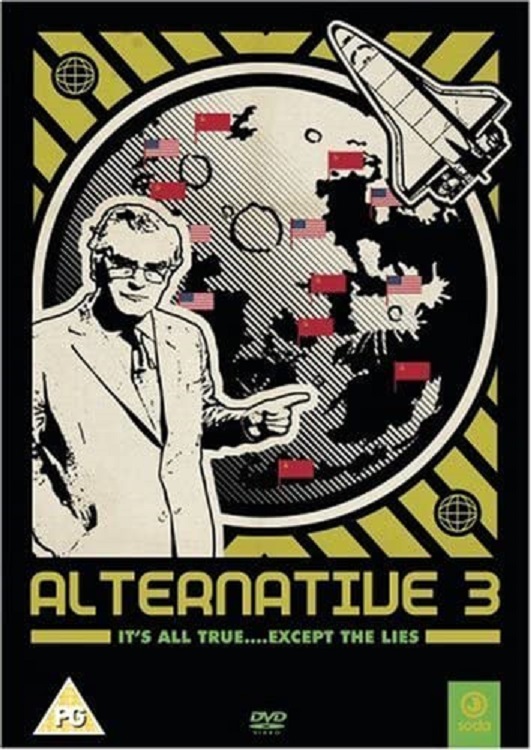
Alternative 3, Christopher Miles (1977, UK). I thought I’d seen this before, but apparently I was familiar only with the title. It’s highly regarded as a piece of 1970s British science fiction television, and that’s during a period which produced a lot of really strong science fiction television. And  having now seen it, I can understand why. Alternative 3 was originally intended to be broadcast as an April Fool’s joke, but not actually shown until June. It opens discussing the mysterious deaths and disappearances of several people in the UK from various professions, and gradually leads up to the suggestion they’ve become part of a programme to settle Mars because Earth is due to suffer imminent climate crash. Alternative 3 is very much a product of its time – a 1970s UK documentary. But it’s cleverly done, and if the UK it presents has none of the actual diversity of the UK of the 1970s, that was the nature of British television back then. Which is still a tad better than that of other nations. Most present-day viewers won’t relate to the 1970s setting, but it’s worth a go for sf fans (and those of us who do remember the 1970s).

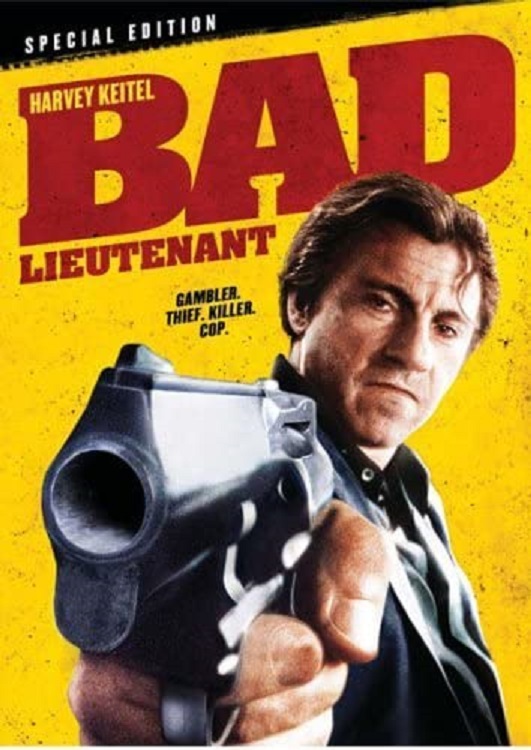
Bad Lieutenant, Abel Ferrara (1992, USA). The sequel to this film, Bad Lieutenant: Port of New Orleans, is in many respects a typical Nicolas Cage movie – ie, completely batshit and more often bad than it’s anything else – but it was also directed by Werner Herzog, who also does batshit but does it well. And in Bad Lieutenant: Port of New Orleans that manifests in a single scene that is just so bizarre it is inexplicably good. Bad Lieutenant, on the other hand, is a cheap thriller made by a cast and crew that were mostly drugged up at the time, and directed by a man who was usually good at making cheap thrillers that sometimes transcended their origins. I’m not convinced this one does. Keitel plays Keitel, and I’ve never really understood why people cast him, although he has more screen presence here than in other films I’ve seen him in. The plot runs on well-oiled rails, the supporting cast are a collection of genre stereotypes, and it all seems entirely pointed, in a sort of more-by-accident-than-design sort of way. Worth seeing once.

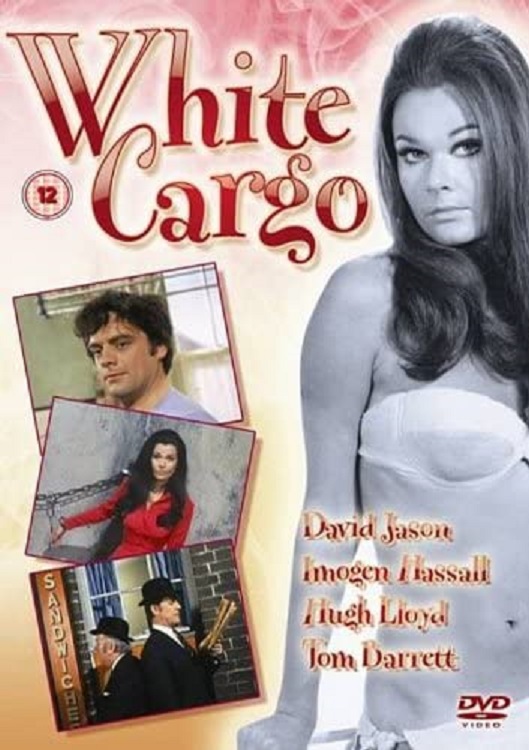
White Cargo, Ray Selfe (1973, UK). The title alone is red flag here – but this is the early 1970s, and the UK, and and there’s a good reason why most early 1970s British films – and not just “British sex comedies” – have vanished into obscurity… And this should almost certainly have been one of them. But somebody somewhere decided to upload it to Amazon Prime. And I was foolish enough to watch it. David Jason, who has apparently not aged for at least half a century, plays a hapless government clerk who becomes embroiled with a group which smuggles British women to overseas markets – the old “white slavery” trope… which was little more than an astoundingly racist and sexist white male sex fantasy. I write “was”, although I suspect there are many men who still subscribe to it. White Cargo makes an especially poor fist of it even for its time – with an inept hero who fantasises success before failing in reality, racist caricatures for the villains, and women with zero agency. One aspect I suspect is relevant to our times – the hero who imagines himself 007, but fails to even open a door without falling over, which is a pretty good description of the UK’s current government…

Carol, Todd Haynes (2015, UK). I’ve always wanted to like Haynes’s films more than I do. After all, he made a pretty good homage, Far from Heaven, to my all-time favourite film, All That Heaven Allows. And the first half of Safe is a pretty good commentary on the central character’s life-style, before the film turns into some weird treatise on “chemical sensitivity”. Carol is an adaptation of a semi-autobiographical novel by Patricia Highsmith, and is very much unlike her other novel – but the film is not unlike Haynes’s other movies. Highsmith’s life was… complicated. More so during its time than it would be now, of course. And its time was 1950s USA. Carol is the glamorous wife of a successful husband. She meets a young woman who works in the toy department of a department store. The two enter into an affair. And the rest plays out pretty much as you’d expect it to in 1950s USA. The whole is beautifully shot and played, much more so than Haynes’s other films – but also slightly less interesting because of that. His other films subverted expectations, but Carol does not.

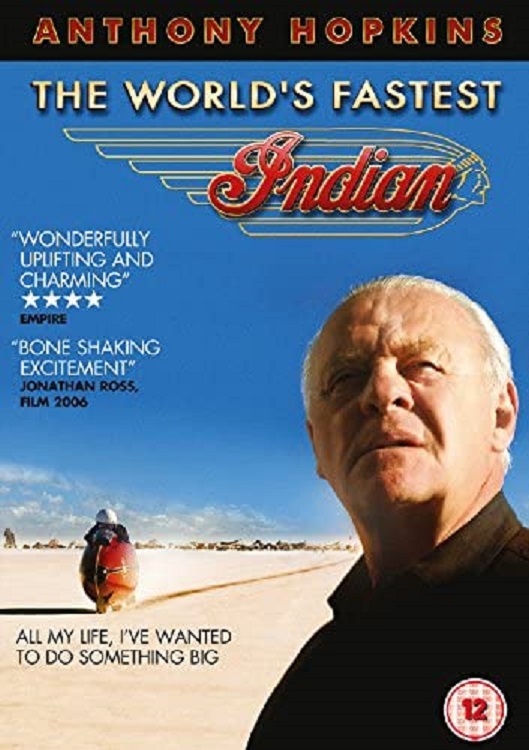
The World’s Fastest Indian, Roger Donaldson (2005, New Zealand). The title refers to a motorcycle.  It was perhaps not the most culturally-sensitive name for a motorcycle marque, but the film takes place in the late 1950s and early 1960s, and the motorcycle itself dates from the 1920s. The film is also based on a true story. New Zealand motorcyclist rebuilds an Indian Scout motorcycle so it can break the world land speed record for motorcycles with engines of less than 1000 cc capacity. He travels to the US with his motorbike, take part in Speed Week, and eventually breaks the record. Along the way, he makes lots of friends. While Munro was reputedly an easy-going and likeable bloke, the film pretty much condenses his decades-long record-breaking career into a single trip to the US, in which Munro had no idea what needed to be done or what would happen. Little of which was true. By all accounts, Munro’s character is close to that depicted by Anthony Hopkins in the film. Although Hopkins’s accent was far from close to Munro’s. Or even a New Zealander’s. The rest is fantasy. But it’s an entertaining feel-good family film, and not your usual subject. Enjoyable.


Leave a comment

Watching diary 2021, #6

Yet more Aussie crime shows. Water Rats, this time, which is about the Sydney Water Police, although they seem to get involved in all sorts of crimes. Part of the fun is spotting faces and then figuring out where you first saw them. And it’s not always another Aussie police series. One minor character turned out to be a major character from Canadian series The Murdoch Mysteries a decade or so later. And Claudia Black plays the cheating wife of the victim in another episode. Amazon Prime have also done the usual and screwed up the seasons, not only broadcasting them in the wrong order, but even mis-numbering and misnaming them. So Season 4 Episode 13 ‘Double Play’, according to Amazon Prime, turns out to actually be Season 3 Episode 14 ‘Soft Target’. While not a problem normally, both of the two principal detectives are away for several episodes at different times, so others fill in – and it’s all bit random which of those replacement partners is going to appear in the next episode. Not to mention episodes referencing events in episodes that have yet to be shown. Amazon’s curation of their data is piss-poor. Sooner or later, it will be their undoing. Assuming anyone actually gives a shit about accuracy or facts or even truth by then…

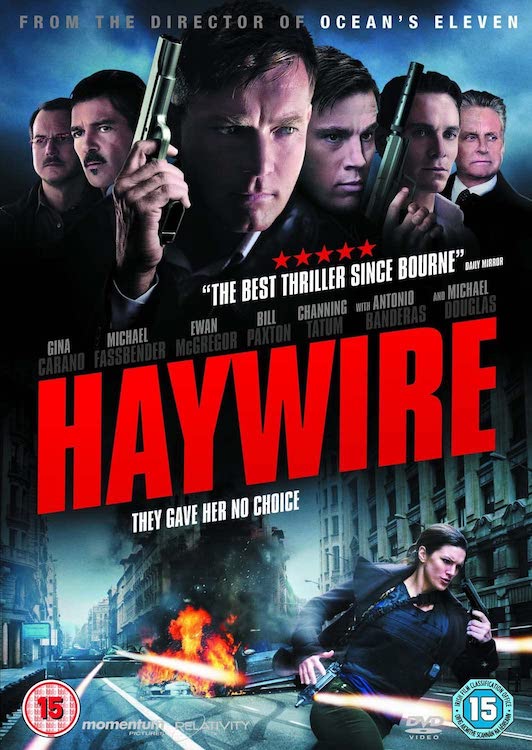
Haywire, Steven Soderbergh (2011, USA). Soderbergh is sort of like an auteur but not really an auteur. He makes films as if he were an auteur but he makes resolutely commercial films. If Terence Malick has amassed so much influence he can make the films he wants in Hollywood, then Soderbergh can do the same… as long as the films are commercial. In Haywire, Gina Carano – you know, the Trumpist actor who got fired from The Mandalorian for tweeting fascist shit – plays a US government assassin who is specifically recruited for a protection job, only for it to go horribly wrong, and then certain other things happen, which persuade her everyone is out to kill her. It’s all completely implausible, but Soderbergh is a safe pair of hands and the end result is a polished thriller. Apparently, he wanted the fight scenes to be as realistic as possible… and it works. A good cast – except for Carano; let’s not ignore someone’s shitty views just because they were involved in a project you liked – and a convoluted plot, although not too convoluted, and good action sequences. You could watch worse.

I Vinti, Michelangelo Antonioni (1952, Italy). The film opens with an assortment of scans of newspaper stories apparently showing the lawlessness of the immediately post-war youth. The newspapers look genuine, and the three stories which make up the film are apparently based on true stories… but it’s all very lurid and sensationalised, and even the fact it’s by Antonioni can’t really make much of such thin material. The first is set in France. A pair of teenage boys – although these are 1950s teenagers, so they look like they’re in their late twenties – shoot a friend who claims to have buried treasure. The second takes place in Italy, and concerns a youth involved in smuggling cigarettes. The third, set in the UK, is the most interesting. A young man finds a murdered woman’s body on a nearby common, and uses it to get himself in the newspapers. Eventually, he admits he murdered the woman, but only after his new-found fame as the body’s discoverer has failed to earn him the admiration of the young ladies. I was somewhat surprised the man was allowed to write his own story for the newspapers. Seems extremely unlikely. One for completists.

Il merlo maschio, Pasquale Festa Campanile (1970, Italy). The image depicted on the poster for this film is pretty much all I can really remember from this movie – a fevered dream in which the protagonist, a cellist in an orchestra, played his wife’s naked body instead of his instrument at a concert. The cellist’s career is stalling, his conductor picks on him repeatedly… but he finds solace in his wife’s appearance. His wife’s naked appearance. Only in Italy. And only in the 1970s…. The cellist’s fantasies grow ever more lurid, and his wife seems content to go along – and everything climaxes at a concert where the cellist’s wife is accidentally disrobed. The words “Italian sex comedy” generally indicate a film is definitely to be avoided, especially when it was made in either the 1960s or 1970s. Much like “British sex comedy”. Sadly, Il merlo maschio is pretty much a textbook example.

Shree 420, Raj Kapoor (1955, India). The “420” refers the section of the Indian Penal code for “cheating”, much like advance-fee frauds are known as 419s after the Nigerian Criminal Code section number. The director plays a country bumpkin – modelled on Chaplin’s Little Tramp – who moves to Mumbai and ends up a con man after falling in with the wrong crowd. But this is a Bollywood film, so there has to be a boys-meets-girl, etc, plot, and here, Kapoor meets the love of his life on his way to Mumbai, but she rejects him when she learns he’s defrauding the poor. Of course, he eventually sees the error of his ways and wins back his lady love. This is classic rom com Bollywood (rather than cast-of-thousands historical epic Bollywood) at its best, and the signature song, which is performed twice, ‘Mera Joota Hai Japani’ (‘My Shoes are Japanese’), is definitely one of the catchiest Bollywood songs I’ve heard.

Slave of the Cannibal Gods, Sergio Martino (1978, Italy). Yet another Shameless release available on Amazon Prime. I’ve no idea how many I’ve watched so far, but it must be at least thirty or forty. I only rate three or four of them, which is not a particularly good hit ratio, but most are worth seeing at least once. Except perhaps not this one. Ursula Andress plays the wife of an anthropologist who disappeared while on an expedition in New Guinea. She arranges with a local anthropologist, played by Stacy Keach, to retrace her husband’s movements… Which leads them to a sacred island. Which all the locals are too scared to visit. For good reason. The title is a clue. But not fearless Ursula! You can guess the rest. This film is from the lower end of the Shameless gialli releases, and even though it was filmed in Sri Lanka, and so the scenery looks convincing, it’s hammy stuff. One for fans.

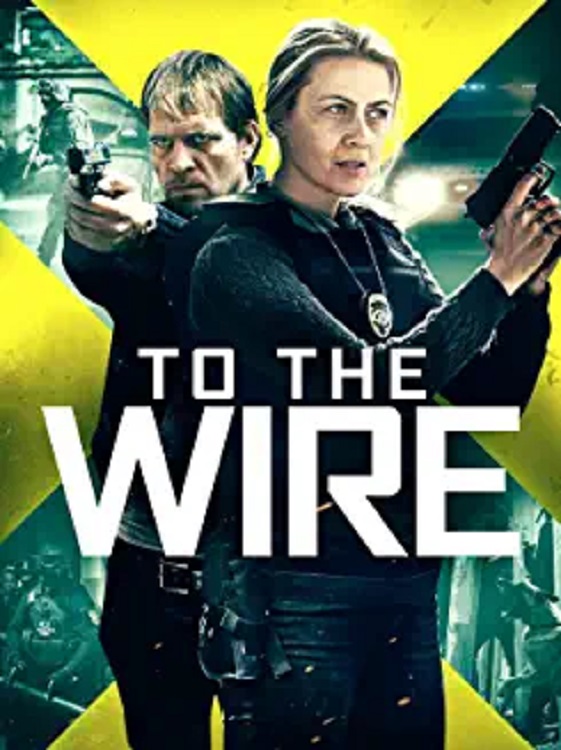
To the Wire, Károly Ujj Mészáros (2018, Hungary). Amazon Prime insists on recommending the latest shit Hollywood movies to me, despite the fact I don’t watch them, but there’s some good stuff available on the platform. It just takes a fuck of a lot of searching. I don’t recall how I found this Hungarian thriller, but it was a good find. A detective with severe anxiety issues is called to help when it looks like two murders are connected. Except it seems there are several more, and so a serial killer must be operating in Budapest. To the Wire (AKA X or The eXploited; the Hungarian original title apparently translates as X – Deleted from the System) was clearly inspired by David Fincher’s Se7en, but actually presents a story that is very much tied in with the country’s culture and recent history. This isn’t serial killer murders people because psychopathology – as pretty much all such US films are. Here, the victims were killed, and their deaths staged as suicides, for a solid reason. The film has a dark washed-out look in keeping with its story, and most scenes open with aerial upside shots of the city. An interesting, if overly quirky, lead, a solid serial killer mystery, a resolution that’s specific to Hungary and its recent history, and good cinematography. Definitely worth tracking down.

The Daughter, Simon Stone (2015, Australia). A man who has lived in the US for decades returns to Australia for his father’s second marriage – to his much younger housekeeper. The “American” is a reformed alcoholic, but events in Australia drive him back to drink. It’s all to do with the daughter of his best mate, and the identity of her real father. The American’s father owns the local mill, the town’s single biggest employer, and it has just declared bankruptcy, which has created a lot of bad feeling. Mostly a small Australian town drama – where the one big false note is when the two blokes head to the nearest big town, end up in pub near the university, and are later picked up by two female uni students. A strong cast – Sam Neill is excellent as the crotchety granddad, Geoffrey Rush is under-used as the mill-owner, and Anna Torv mostly sleepwalks through her role as the housekeeper/bride-to-be. The rest were pretty much unknown to me.


2 Comments

Reading diary 2021, #3

My reading remains a little bit all over the place. I’ve been keeping an eye on the Kindle daily deals, and picking up books that look interesting when they’re going cheap. I’ve even bought a few I’ve read previously and have in storage back in the UK. I’ve had the Kindle now for two years, and it has 200 books on it already. Which, when I think about it, is certainly less than I used to buy when I lived in the UK and bought paperbacks and hardbacks from all manner of places, online and IRL. Even better, I’ve read about 70% of the books I have here, although there are still half a dozen or so I brought with me two years ago that are still unread…

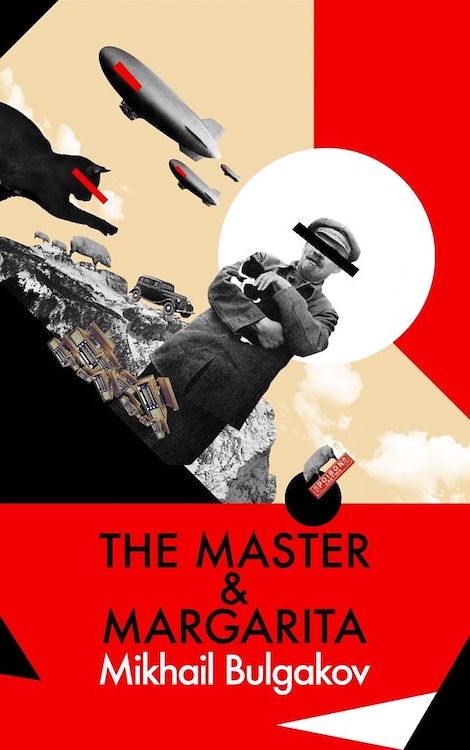
The Master & Margarita, Mikhail Bulgakov (1966, Russia). This is a book that’s mentioned often, sometimes in genre conversations given its fantastical content. In brief, the devil visits Moscow and involves himself – with the help of a personal assistant and a very large cat, that talks and walks upright – with various people, who suffer as a consequence. I’m not a big reader of Russian fiction – in translation, obviously – War and Peace many years ago, a couple of novels by the Strugatsky brothers, some Solzhenitsyn, We last year, and now this. I remember enjoying War and Peace, and the Solzhenitsyns were good, but the translations of the Strugatskys’ novels into idiomatic American English didn’t do them any favours… But I can’t say I thought either We or The Master & Margarita particularly good books or enjoyable reads. The story leaps all over the place, and it’s all very excitable. Some parts consist of one character telling another character what happened to them. Other parts seem to make little sense or directly contradict themselves. On the plus-side, it’s all very Russian and the culture in which the novel is set comes through on every page – which is more than could be said for the Strugatskys novels I read. The Master & Margarita is on the 1001 Books You Must Read Before You Die list, and while it’s preferable to yet another literary novel about a college professor suffering a mid-life crisis, is it really the best mid-twentieth-century Soviet literature could produce? Or is it chiefly revered because it’s critical of the USSR? Some of the best Soviet films are pretty much propaganda – being anti-USSR does not make a Russian novel, or film, good in and of itself. The US spent almost a century so worried its proletariat would see through its structural inequality, it demonised communism to the extent half of the population still believe social healthcare is evil, and most of them can’t see that Putin,. ie capitalist Russia, is far more dangerous than the USSR ever was. Sigh.

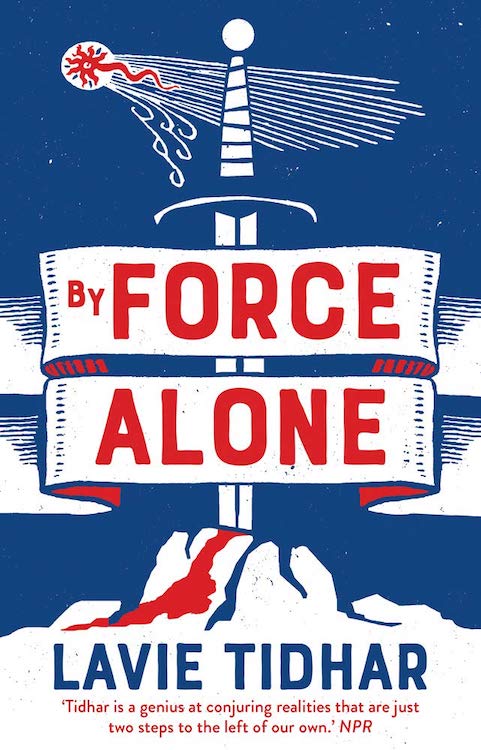
By Force Alone, Lavie Tidhar (2020, Israel). I’d say the last thing the Matter of Britain needs is another interpretation, but King Arthur has been reinvented a number of times, and it does seem somewhat fitting given the nature of the myth – a hero for a time when he’s needed. Except, of course, most retellings of the Matter of Britain aren’t actually about the time of the retelling, and are usually no more than badly-faked historical stories distorted by the lens of the present. Which is also true of By Force Alone. But here it’s deliberate, very much so. In typical Tidhar fashion, By Force Alone makes heavy play with present-day cultural references. Arthur’s early years, and the formation of the Round Table, read like a cross between The Sopranos and a Guy Ritchie movie. But, Tidhar being a genre author, the novel features a weird mix of fantasy and science fiction tropes. It’s very much a book of two halves; and in the second half, a meteor impacts in Scotland, thought by all to be a dragon, and the area around the impact site is heavily poisoned, but also generates strange magical effects. Tidhar manages to graft the Grail Quest onto this, including rivalry among the Fae over the champions they have chosen. By Force Alone hits the main beats of the legend, but it’s a singular interpretation of it, one which, unlike most Matter of Britain stories, neither romanticises nor valorises Arthur and his knights, nor presents them as avatars of English exceptionalism (they weren’t, of course, English; assuming they ever existed, that is). I didn’t need another spin on King Arthur, but Tidhar delivered one and I find myself glad he did. If there’s any justice, this novel will kill the Arthuriana genre stone dead. And Guy Ritchie’s career.

Devil’s Road, Gary Gibson (2020, UK). I think this novella is set in a world explored in other works by Gibson – a novel, I believe, or perhaps more than one. I’ve not read his last few books, so I’m not sure. In the world of Devil’s Road, an experiment gone horribly wrong opened a portal to other dimensions in an invented island nation in the Far East, and out of this portal came various kaiju – ie, monsters. They’re confined to the island by an international blockade, and once a year because reasons a handful of people are allowed to race around the island for prize money. Dutch McGuire, the only person to have survived repeated races, is broken out of a Russian prison to compete once more. But this time she’s to help an industrialist get hold of some alien tech discovered on the island by a rival corporation. I didn’t think people still wrote science fiction like this. The whole ersatz cyberpunk kick-ass heroine thing is pure 1990s, although the kaiju add a twenty-first century spin. I really like Gibson’s space opera series, but this novella did nothing for me. But then I’m the sort of person who loves the films of Ishiro Honda but thought Pacific Rim was rubbish.

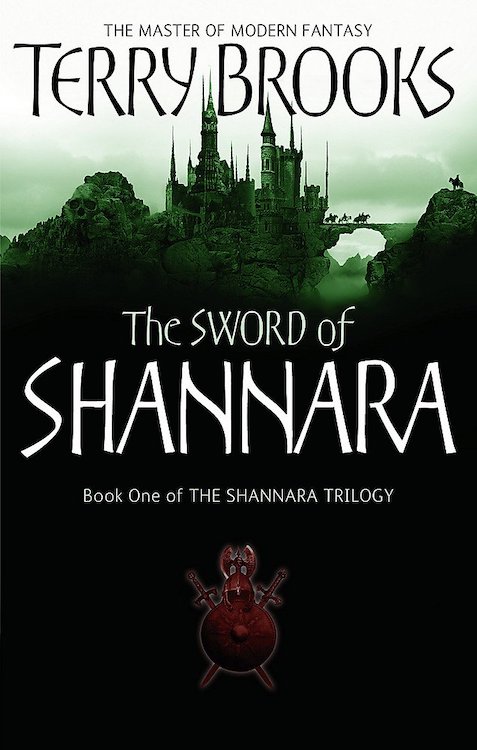
The Sword of Shannara, Terry Brooks (1977, USA). It was on offer, okay? TThe Sword of Shannara was also the first of the high fantasy best-sellers, and since I’m in the middle of a (partial) reread of the Wheel of Time series, I thought it might be worth seeing what this novel was like. I shouldn’t have bothered. It’s fucking dreadful. A “Valeman” on his way home one night is scared by some giant flappy thing in the sky, and then waylaid by a scary man over seven foot tall with a goatee. Except the scary man is well-known to the Valemen (they live in a vale, see), although he is very mysterious. Cue info-dump. The Valeman’s adopted brother is half-elvish, and is actually the only surviving relative of an ancient elvish king. Because of this, he’s the only person who can wield the Sword of Shannara, an ancient, er, sword, and defeat the Warlock Lord, an evil sorcerer who is about to invade the Four Lands and kill everyone. Or maybe just enslave them. It’s not clear. There’s the good guys – one of which is a dwarf, and another is Boromir in all but name – and they have to make their way to Druid’s Keep to retrieve the sword before the evil gnome army. But the gnomes get there first, and Shea (the naming is absolutely terrible in this book), the half-elf half-not-a-hobbit-honestly, is separated from the others and ends up travelling into absolutely-not-Mordor chasing after the titular sword. Meanwhile, the others are involved in defending Tyrsis – which is definitely not Minas Tirith – against a huge army of gnomes and rock trolls… This was the first of the big-selling Tolkien rip-offs, and I can’t honestly see what its appeal is. Did people just want another LotR with the serial numbers filed off? And were they so desperate for it, they’d accept this sub-literate crap? Even now, fantasy fans still recommend this book – and then they do that thing, which is absolutely fucking stupid, of explaining that the first few books are not very good but “it gets a lot better around book four or five”. Seriously, fuck off. I’m not going to read half a dozen shit 700-page novels to reach one which is “better”, especially since as a fan of the series, the person recommending it clearly has no idea what a good book actually is. Books like this should no longer be in print. They do the genre a disservice, they do its readers a disservice.

Settling the World, M John Harrison (2020, UK). Harrison is a writer whose works I admire more than I like. I do indeed like some of Harrison’s novels a great deal, but they’re the more explicitly genre works, and the sort of liminal fantasy he usually writes doesn’t appeal to me all that much. Settling the World is a career retrospective of sorts, so it includes both the stuff I like and the stuff that does little for me. Although all of it, of course, is beautifully written. The early works are those sort of mannered, very English, almost a pastiche of 1940s and 1950s English prose, stories, but twisted through a genre sensibility. Well-written, but there’s little here to stand out. True, there’s a strange imagination at work, which lifts even those sorts of stories above others of the same type. The title story is a case in point – the narrator is a very English agent of some unidentified bureaucratic service, who is tasked with spying on “God’s Highway”, a stretch of alien road that appeared on UK soil after God – a giant insect – was discovered on the far side of the Moon (only in the UK, apparently, which is also typical of this sort of fiction). The final line of the story is not the kicker it may have been when the story was published, but then the story is nearly half a century old. But the title story is not the collection, and what Harrison wrote in the early 1970s is not what he wrote in later decades. And is still writing. As I mentioned before, I find the liminal stuff doesn’t work as well for me, but even in those stories Harrison has a real genius for dropping in snippets of conversation that sound like parts of actual real conversations. And even if the individual story doesn’t seem to quite gel, there’s more than enough good writing to carry the reader through. At a time when publishers seem to want us to read only debuts, we need to support those writers who have had careers lasting several decades. It might sound like heresy, but a new novel by someone whose debut was twenty years ago is likely to be a better novel than someone whose debut novel was last month. We need to support a rich ecosystem of genre writers, so they have careers stretching decades, so they improve, the genre improves, our appreciation and enjoyment improves. Chasing the shiny new is a mug’s game, and just means readers are buying into the publishers’ desperate scramble for quick profit.

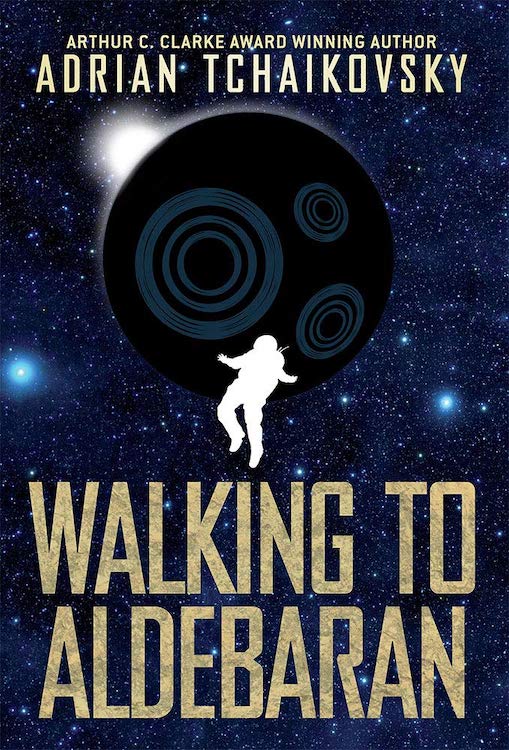
Walking to Aldebaran, Adrian Tchaikovsky (2020, UK). Some time around 2028 or 2030, British science fiction will consist only of books published by Adrian Tchaikovsky. But there will still be several hundred such books published each year. I’ve no idea how he manages to write so much. True, Walking to Aldebaran is a novella and, it has to be said, clearly written quickly. I’ve not read much of Tchaikovsky’s fiction, but certainly the other works I’ve read were quite huge novels with much better prose than this. Walking to Aldebaran is narrated by Gary Rendell, an astronaut who was part of a mission to explore an alien object discovered in the Oort Cloud. A team is landed in an opening in the artefact, and it becomes clear it’s some sort of space/time gateway that provides access, via tunnels and corridors and chambers, to an uncountable number of planets scattered throughout the galaxy. The novella is told in alternating chapters, in which Rendell describes how the mission to the artefact, called the Crypts, came together, and his experiences since the mission landed on/in the Crypts. Unfortunately, Walking to Aldebaran reads like someone wandering through a dungeon – the tunnels are apparently made of stone, which makes no sense… until you realise it’s just a dungeon. The final twist – that the narrator has become a dungeon monster themself – really does little to redeem a dungeon-exploration story layered onto a fairly standard Big Dumb Object. This is a series of well-used fantasy RPG tropes given a science-fictional spin, with no real resolution. Expect it to appear on an award shortlist or two next year.


4 Comments

Watching diary 2021. #5

Not much box-set bingeing this time. There was The Broker’s Man, a TV series starring Kevin Whately, apparently filmed in between episodes of Lewis. Despite being made in the late 1990s, it feels like it was made a decade earlier. It’s no surprise Whately is better remembered for Lewis. He plays an ex-copper who now investigates insurance claims. The first season saw him end up in hospital every episode. The series changed format for the second season, and budget too, it seemed – and two of the supporting characters were played by entirely different actors… I missed The Broker’s Man when ti was broadcast on British TV because I was in the Middle East. Should have left it like that.

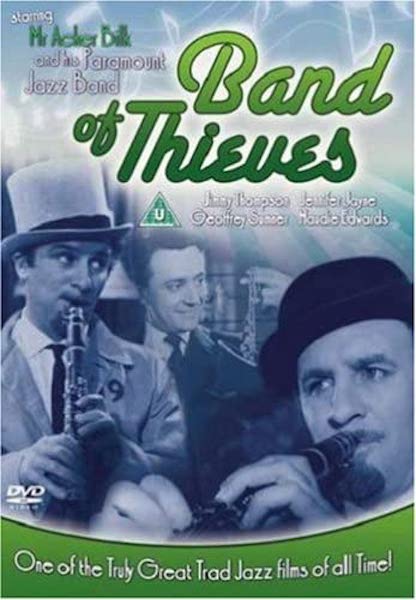
Band of Thieves, Peter Bezencenet (1962, UK). I’ve mentioned the Renown Pictures available on Amazon Prime before. This one has a simple plot – while in prison, a group of inmates form a jazz band under the auspices of the warden. They are eventually released. An upper crust wastrel sort of chap hires them to play in his new café, but also to follow their previous careers during a tour of the country – his contacts among the gentry, their criminal skill-set. All very British, and entirely implausible in 21st century UK. The leader of the band is Acker Bilk, who I once saw perform live in Abu Dhabi in the early 1980s. I remember it well. It was by the side of the pool at the Sheraton Hotel. One bloke was so drunk he fell in the pool. Another couldn’t get his disposable camera to work and threw it over the wall in disgust. Bilk was drunk, but didn’t drop a note. He did tell several off-colour jokes, however. Fun times.

Frankenstein and the Monster from Hell, Terence Fisher (1974, UK). An admirer of Frankenstein – and there’s a red flag – approaches the sanatorium where Frankenstein died, and discovers he didn’t die after all and in fact is continuing his experiments. The two continue to experiment, which basically involves creating a monster from a couple of sanatorium inmates… Neither of which, I think, were actually dead when they were chosen as donors. The nubile mute daughter character also pops up again – seems to have been quite a popular trope at Hammer… I have a lot of time for Hammer films, although they’re very much of their time, and even then that’s probably giving them more credit than they’re due. They were made on the cheap and it usually shows. They made a brand out of tackling the best-known horror monsters of their time, but they managed to do it with a level po-faced seriousness only the British, and possibly the French, ever really pulled off. They’ll never be great cinema, but there’s something to be admired about them.

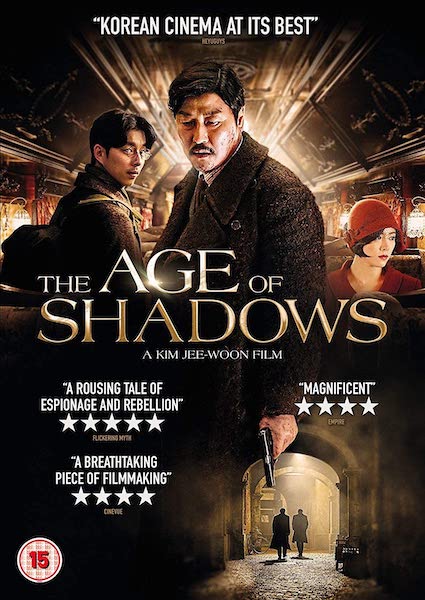
The Age of Shadows, Kim Jee-woon (2016, South Korea). During the 1920s, Korea was occupied by the Japanese, and they were brutal occupiers. A police captain, working for the Japanese, who used to be a member of the resistance, is present when a friend who stayed in the resistance movement is shot to death by the police. He’s then tasked by the new Japanese head of the police in Seoul with tracking down and apprehending the head of the resistance. But when he realises that a Japanese police officer has been undermining his investigation and that, as a Korean, he was never going to be rewarded for his work… then the police captain begins to work with the resistance, helping them to smuggle some explosives from Shanghai to Seoul on the train. An excellent period drama. Despite an action-packed opening sequence, it takes a while for the plot to shift into gear, but once the characters have sort of settled and the story gets going, this is good stuff. Recommended.

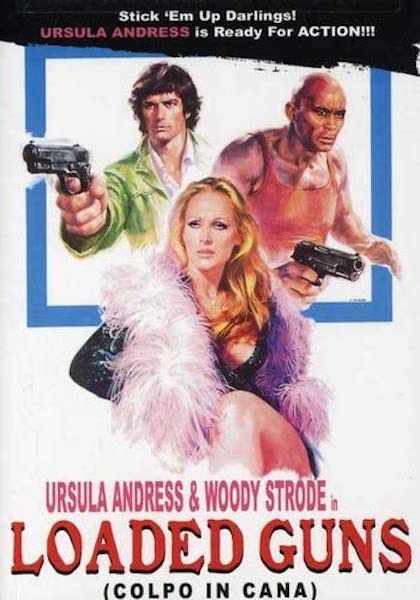
Loaded Guns, Fernando di Leo (1975, Italy). Ursula Andress plays an air hostess who gets unwittingly involved in a war between two drug lords. At least, I think it was unwittingly. She is asked to deliver a message to one drug lord, but there seems to be a third group who steal drugs from one drug lord’s goons and money from the other’s, and interrupt deals, until a war kicks off. And Andress seems to be involved. The story was a fairly typical poliziottesco, but it seemed the film was mainly made in order for Andress to display her legs as often as possible. The film had its moments – an all-out fist-fight between the two drug gangs in an empty funfair at the end has to be seen to be believed – but the story tried to be a bit too clever and failed dismally to pull it off.

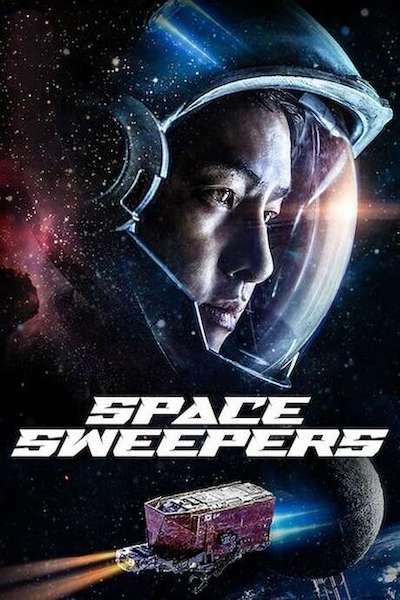
Space Sweepers, Jo Sung-hee (2021. South Korea). I’ve seen so much love for this film, but it strikes me they’re all missing the point. Yes, it presents a multi-cultural future – but it’s only US and UK films that don’t. Don’t celebrate something that’s common in other cinemas because it doesn’t exist in yours. Sadly, in all other respects, Space Sweepers is the usual neoliberal near-futura corporatist bollocks. Earth is near-dead, and the super-rich – or, “citizens” – all live comfortable and privileged lives in some giant orbital habitat. But, being in orbit, there’s a lot of  space junk… The “space sweepers”, who are all non-citizens, and one unsuccessful flight away from having their ships impounded – could it get any more clichéd? – collect the junk. One such ship finds a young girl in a piece of wreckage. She’s alive… and also apparently an android who contains a fusion bomb. Eco-terrorists plan to use her to destroy the citizens’ habitat. Except, she’s not a bomb. And the terrorists aren’t terrorists. But the villain of the piece is a pantomime billionaire fascist piece of shit (all credit to the actor for managing to play the role without permanently corpsing). Having said all that, the special effects are quite spectacular. But a lot of the science is complete bollocks. “Krypton waves”? WTF? An entertaining pizza-and-beer sf tentpole blockbuster, that’s fun if you don’t think too hard – well, don’t think at all – and if you’re happy with all that 1980s cyberpunk crypto-fascist bullshit. Of course, it will probably win the Hugo Award this year.

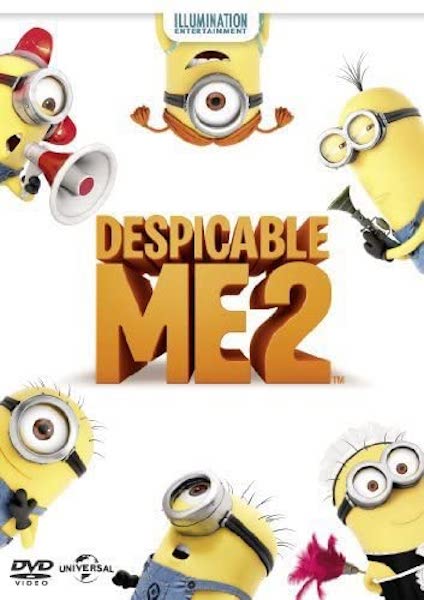
Despicable Me 2, Pierre Coffin & Chris Renaud (2013, USA). I have been known to actually laugh while watching films, even comedy films, but it doesn’t happen very often. I don’t mean laughs of disbelief, those are quite common. But actual that’s-really-funny laughs. Apparently, Confucius once said the funniest sight in the whole world is watching an old friend fall off a high roof, which I guess means he was a fan of slapstick. Despicable Me, and this sequel, Despicable Me 2, being animated, include a lot of slapstick, a lot of very funny slapstick. You know, with the Minions. But it also makes clever use of its premise. And if it tends to mawkishness as, inevitably, all US animated films do, because it probably says they need to do that in some book about a cat or something, well, you can always fast-forward through those bits these days. Formulas for success are usually self-fulfilling because only the formulaic then becomes successful. Which the Despicable Me films are mostly not. A twenty-first century US animated film that made me laugh. Worth seeing.

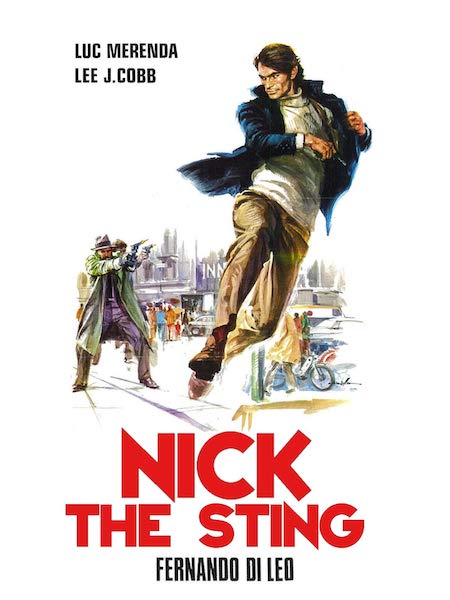
Nick the Sting, Fernando di Leo (1976, Italy). A mobster boss fakes having his safe robbed, and plants a ring from the “stolen” jewellery on a small-time con man, in the hope the con man is either arrested or fences the ring, and so provides evidence of the robbery. The mobster will then claim the insurance. After two failed attempts on his life, the con man hatches an overly-elaborate sting to have his revenge on the mobster, which involves a feeble disguise no one seems to see through, and a mock-up of a Lugarno police station with a cast of a hundred or so extras. None of it seems to go smoothly, although that’s all part of the con man’s cunning plan. There’s an interesting use of split-screen at times, but the rest of it is stupidly complicated and stupidly implausible. Di Leo apparently worked as a director-for-hire, and was not happy with the finished movie. Hard to disagree.

The Titan, Lennart Ruff (2018, UK). A few years from now, the climate has crashed and the NATO governments decide there’s a desperate need for a new home for humanity. They pick Titan. As you would. I mean, so what if it has a surface pressure of 1.45 atmospheres, surface temperature of -180C, completely toxic atmosphere, and is flooded with radiation from Jupiter? Oh, and it’s 1.3 billion kilometres from Earth. Obviously, it’s the, er, obvious choice. Settling the moon without either terraforming it or altering humanity is impossible. They decide to re-engineer a squad of military volunteers to survive on Titan. So, pretty much Frederik Pohl’s Man Plus, then, but with Titan instead of Mars. But this is a movie, so a serious commentary on the difficulty, ethics or ramifications of the process is not going to happen. Instead, the sole survivor of the programme goes on a murderous rampage because lost humanity. Complete tosh. Avoid.