
The last few books in this series seem to have followed a formula, although not the same formula as the first half dozen or so books in the series. I mean, they’re now third-person and present tense, a change that happened in book twelve, rather than first person-past tense, but there’s been a definite pattern since the change in narrative style. To wit, a puzzling murder occurs and Scarpetta is asked to consult, and it turns out to be about her, probably involving the French mobster family, the Chandonnes, and it’s all about destroying Scarpetta’s reputation or her relationships with her loved ones or close friends.
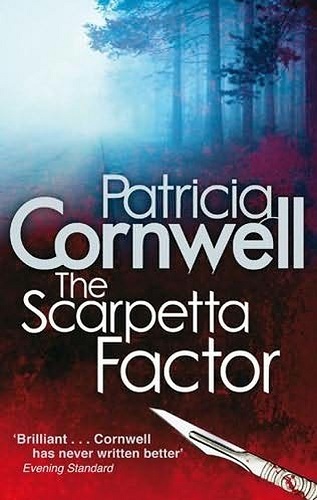
In The Scarpetta Factor (2009, USA), a woman is found dead in Central Park, apparently mugged and raped while jogging. But something about the body and the trace evidence doesn’t ring true to Scarpetta. Also under investigation is the disappearance a week or so earlier of a fabulously wealthy broker, the daughter of a recently deceased Wall Street mogul. There’s no apparent link between the two crimes, but…
Then there’s Dr Walter Agee, the psychologist consultant who persuaded the FBI to put Benton Wesley, Scarpetta’s lover, into the protected witness programme, so she thought he was dead for several books… But now Agee is penniless and discredited, and appearing as a resident expert on a CNN true-crime show, the same one on which Scarpetta occasionally appears.
Everything somehow or other links together, without feeling like a stretch, even if some of the characters seem to have suddenly appeared with a retconned back-history, or play not entirely convincing roles in the story. The puzzling murder which kick-starts the plot is, as usual, cleverly done; but, also as usual, there’s a lot of flailing around and then the story rushes to a neatly tied-up solution. Three pages from the end, I was wondering how Cornwell would wrap everything up… and she did it. It made sense and no plot threads were left hanging, but blink and you miss it.
It’s hardly a surprise a series of – to date – 28 books featuring the same protagonist, the same supporting cast, and the same general type of story should prove formulaic. What is surprising is that it’s becoming clear only one of the plot-threads in each novel is actually interesting. Everything wrapped around it – the endless attacks on Scarpetta’s reputation, the familial squabbles, the Chandonne family vendetta, the US LEO inter-service rivalry – is not especially interesting and, if anything, detracts from the puzzle murder which kicks off the plot.
Having said that, I’ve another eleven books to go, so perhaps things will improve…
 It Doesn't Have To Be Right...