Whenever a book-related meme pops up, I love to jump on board. And apparently there’s one currently doing the rounds: “List 10 books that have stayed with you in some way. Don’t take more than a few minutes and don’t think too hard. They don’t have to be ‘right’ or ‘great’ works, just ones that have touched you”. I saw this on Liz Bourke’s blog here, and decided to have a go.
I’ve done something similar before, I think, but not for quite so many titles… Which made this one a bit harder than expected. But here they are, in the order in which the books occurred to me:
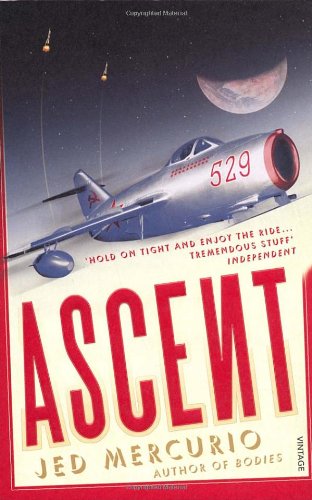
1Ascent, Jed Mercurio (2007), a novel I hugely admire and which has inspired me in my own writing. 2The Alexandria Quartet, Lawrence Durrell (1957 – 1960), because on reading it I fell in love with Durrell’s prose and began collecting everything he had ever written. 3The Undercover Aliens (AKA The House That Stood Still), AE van Vogt (1950), bonkers California noir meets pulp sf, and the only van Vogt novel I’d ever recommend to anyone. 4Dune, Frank Herbert (1965), still the premier example of world-building in science fiction. 5Dhalgren, Samuel R Delany (1974), the sf novel I’ve probably reread more times than any other. 6Coelestis, Paul Park (1993), one of my top five favourite novels of all time. 7Dan Dare: The Red Moon Mystery, Frank Hampson (1951 – 1952), the scene where Hank and Pierre first see through the clouds hiding the surface of the Red Moon haunted me for years as a kid. 8Cotillion, Georgette Heyer (1953), the first of hers I read, and her novels are still my chief comfort reading. 9The Barbie Murders, John Varley (1980), I fell in love with Varley’s Eight Worlds, and the title novelette still remains a favourite. 10Guardian Angel, Sara Paretsky (1992), I’ve always preferred crime fiction written by women, and Paretsky is why – this was the first of hers I ever read.
Not such a great showing gender-wise – only two women out of ten. While there are certainly a great number of women writers I admire and whose novels and short stories I love, I spent my formative years reading mostly science fiction, and sadly it was chiefly science fiction by male writers. There were exceptions – in amongst all those books by Heinlein, van Vogt, Simak, EE ‘Doc’ Smith, Harrison, Herbert, Tubb, Vance, etc, I read and became a fan of Cherryh, Le Guin, Van Scyoc, Julian May… Later, I discovered Gwyneth Jones, Mary Gentle, Joanna Russ, Leigh Brackett… and now, of course, I think most of the twentieth-century science fiction I read is by women writers.
A few weeks ago in a review of Kate Wilhelm’s ‘The Infinity Box’ – see here – sf critic Paul Kincaid mentioned it was one of his favourite novellas. He also provided a link to an earlier post on another blog giving his favourite science fiction novellas – see here. So, of course, I started thinking about a list of my own… and immediately hit a couple of snags…
I like the novella, I think it’s an interesting length. It gives you the freedom to experiment you don’t have in a novel, and the room to experiment you don’t have in a short story. The four books of the Apollo Quartet are novellas, and I plan to write further at that length. But. Novellas are not as common as short stories – because they’re harder to write and harder to sell – and, as I tried putting together a list of ten favourite novellas, I discovered that few of them are all that memorable. It’s likely down to pure numbers: I’ve read so many short stories that I can quite easily think of ten which have stayed with me over the years. But ten novellas? Have I read enough for a critical mass of favourites to form?
The first few choices were easy. But then I had to resort to various collections and anthologies to prompt my memory. I also discovered that some of my choices were actually novelettes…
I hate the novelette.
It is a completely useless category. According to the Hugo Awards, a short story is up to 7,499 words, a novelette between 7,500 and 17,499 words, and a novella between 17,500 and 39,999 words. Anything over that is a novel. Back in the day, magazines apparently offered different pay rates for short stories, novelettes and novellas, and some magazines – well, Asimov’s and Analog – still list stories by category in their table of contents. But the novelette as a category serves no useful function for readers. There are short stories and there are novellas. Why do we need something in between? So the Hugo and Nebula Awards can hand out more awards to the voters’ friends? Most genre awards only have a short fiction category, they don’t even make a distinction between short story and novella…
But, as I said earlier, I like novellas, and I think it’s important to recognise them in the annual awards merry-go-round. But, please, kill the novelette. Expunge it, exterminate it, marmelize it, remove it from every ballot and magazine TOC.
Anyway, my favourite novellas… After some research, I managed a list of ten, all of which were categorised as novellas by isfdb.org. But restricting myself to stories of 17,500 to 39,999 words meant I’d been forced to chose some novellas I would be hard-pressed to call favourites. So I thought, sod it. I don’t care if some of them are novelettes. I reject the bloody category anyway. Which is how I ended up with the following ten novella/ettes…
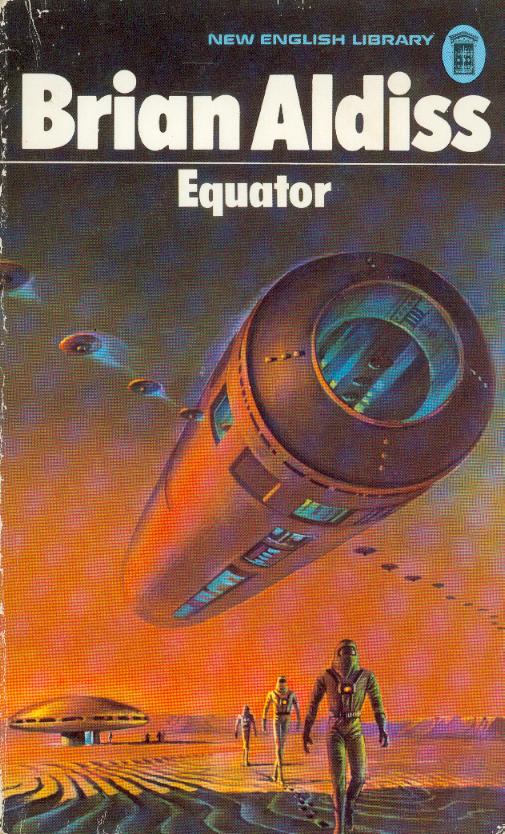
‘Equator’, Brian W Aldiss (1959)
One of the things about a favourite piece of short fiction is that you can remember where you first read it. This was in an anthology called The Future Makers which I was given as a present one Christmas or birthday back in my early teens. The story itself is a piece of spy fiction with added aliens, and there’s something about its 1950s thriller template that makes it more memorable than it would be otherwise. It was also published separately as a novel under the same title.
‘Empire Star’, Samuel R Delany (1966)
Delany was one of my favourite writers during my teens and twenties, and I read everything by him I could lay my hands on. Dhalgren remains a favourite novel. But I remember being really impressed by the Moebius strip-like structure of this novella when I first read it. And it still impresses me on rereads. I first read it as one half of a Sphere double with ‘The Ballad of Beta-2’, and I’m pretty sure it was while on holiday in Paris with the family in the early 1980s.
‘The Barbie Murders’, John Varley (1978)
I’ve been a fan of Varley’s fiction since first reading one of his Eight Worlds short stories, but I can’t actually remember when I first read him. Having said that, ‘The Barbie Murders’ is not an Eight Worlds story but an Anna-Louise Bach one – although like many of the former, it’s set on the Moon. There is something very creepy about the story’s central premise – a cult in which all the members have had themselves surgically remade to resemble Barbie; and Varley uses this idea to ask questions about identity. I also think this is one of those stories which exists in that Schrödinger’s-Cat-like area between utopia and dystopia.
‘Identifying the Object’, Gwyneth Jones (1990)
This story (it’s one of ones on this list that’s actually a novelette) first appeared in Interzone #42, December 1990, under the title ‘Forward Echoes’. It’s the story that turned me into a collector of Gwyneth Jones’ fiction, Later, she amended it and it was published under its new title as the title story in a chapbook by Swan Press of Austin, Texas. The story takes place in the same world as Jones’ Aleutian trilogy, Buonarotti stories and Spirit: The Princess of Bois Dormant.
‘Forgiveness Day’, Ursula K Le Guin (1994)
I first read this in the collection Four Ways to Forgiveness, and of the four novellas in that collection, it’s the one that stood out the most for me. There are a lot of stories set in the Ekumen which could have made it onto this list, but most of them aren’t really long enough to qualify as novellas.
‘Beauty and the Opéra or the Phantom Beast’, Suzy McKee Charnas (1996)
I read this in the issue of Asimov’s in which it appeared, March 1996. In my contribution to the Acnestis APA a couple of months later, I described it as “brilliant” and wrote that “if it doesn’t get nominated for a Hugo or a Nebula, then there’s no justice”. In fact, it was shortlisted for the Hugo as a novelette and the World Fantasy Award as a novella (which proves my point above), and shortlisted for the Tiptree.
‘Marrow’, Robert Reed (1997)
Science fiction is full of Big Dumb Objects, from Niven’s ringworld to Clarke’s Rama, but most are associated with quite dull pieces of fiction. Reed’s ‘Marrow’ is told with a very clinical, detached voice, which only heightens the impact of the BDOs which furnish this novella. There’s the Great Ship, a slower-than-light starship the size and shape of a gas giant, and there’s the title world itself, which exists at the core of the Great Ship. This novellas was later fixed up into a novel of the same title.
‘Secrets’, Ian Watson (1997)
When I first read this in Interzone #124, October 1997, I characterised it as one of Watson’s occasional completely-off-the-wall stories, the ones he churns out every now and again that are even more bonkers than his usual output. It’s about jigsaws, Vidkun Quisling, Nazi occultism, and getting naked in an Oslo park. I liked it a lot, and it was certainly memorable. And then it re-appeared as the first section of the novel Mockymen, and it seemed even more mad, and I liked it even more. It reads like fantasy, and to use it as the opener for a sf novel (about aliens invading Earth) demonstrates such an insane view of genre that it’s hard not to admire its brazenness.
‘Arkfall’, Carolyn Ives Gilman (2008)
I read this as a standalone chapbook published by Phoenix Pick, which I’d purchased after being mightily impressed by Gilman’s fantasy Isles of the Forsaken. I reviewed ‘Arkfall’ for Daughters of Prometheus – see here – and yes, its setting could almost have been designed to appeal to me, but it was the social world-building Gilman does in the novel that, I think, most impressed me. It is certainly a novella that has haunted me since I read it.
So there you have it, ten pieces of long short fiction of novella-ish-type length. I suspect if I were to try the same exercise a couple of years from now I might come up with a slightly different list. But this will do for now. And I’m serious about getting rid of the novelette.
Time for another report from my ongoing mission to read every book I own. There is no five-year plan – actually, there is: A Five Year Plan, a thriller by Philip Kerr, which I read back in February 2005… What I mean is, there is no end in sight – in fact, it recedes further from me with each passing month. Must. Read. More. Books. (Yes, yes, I know: I could also try: Must. Buy. Fewer. Books. But don’t be silly, that’ll never happen.)
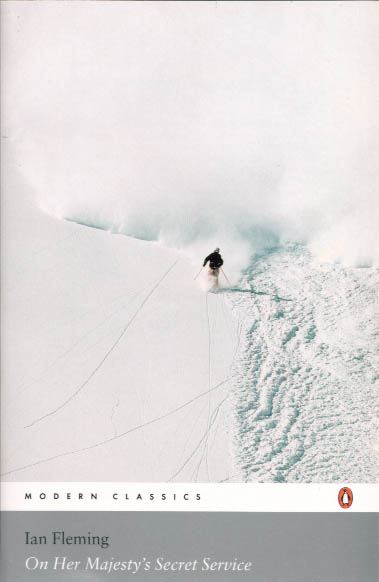
On Her Majesty’s Secret Service, Ian Fleming (1963). This is the one where Bond gets married, and then his wife is killed soon afterwards. The woman he marries is the daughter of a Sicilian mafia boss, but she’s been to finishing school and her previous husband was a wastrel Italian count so she’s now a contessa; and, of course, she’s beautiful. And suicidal. The book opens with Bond rescuing her from a suicide attempt when she throws herself into the sea. The actual plot concerns a fiendish plan by Blofeld to destabilise the UK by destroying its agriculture. There’s a mountain-top health centre in Switzerland run by a mysterious scientist – who may or may not be Blofeld – and Bond infiltrates it in the flimsiest of disguises. He finds it populated by a number of young English women, all there ostensibly to be cured of phobias and allergies. But they’re actually being brainwashed into performing a series of tasks to poison British agriculture. When Bond meets the centre’s owner, Comte Balthazar de Bleuville, he just knows he’s Blofeld, even though he doesn’t resemble Blofeld at all. Plastic surgery, you see. Anyway, Bond foils Blofeld’s fiendish plot – the English women are caught before they can cause any damage, and British forces launch a raid on Blofeld’s health-centre but Blofeld escapes. Afterwards, Bond gets married, Blofeld attempts to kill him, and his wife dies in the attack. There’s a good sequence when Bond escapes from Blofeld’s hideaway by skiing down the mountain – bizarrely, it reads more like the cinematic Bond than Fleming’s original. The science practiced by Blofeld is completely bogus, and the only connection between the villain of this book and the villain of Thunderball is Bond’s conviction that they are one and the same man. Fleming’s treatment of Bond’s father-in-law, the Sicilian capo, is deeply racist; and it goes without saying that the women throughout the book are little more than plot tokens or adjuncts to Bond’s masculinity. This is actually one of the better Bond novels I’ve read so far, though I still don’t think they deserve their immense popularity. I’d always assumed their success was due to the films, but apparently there was a James Bond strip in the Daily Express, which ran from 1958 to 1983. While the hardback of Casino Royale apparently sold out three print-runs within thirteen months in the UK – but flopped in the US: they retitled it You Asked For It, and even renamed 007 as “Jimmy Bond” in the paperback reprint – I do wonder if it’s the newspaper strip which, by bringing the character to a much larger audience (under Beaverbrook the Daily Express had the largest circulation of any newspaper in the world), really made Bond a twentieth-century cultural icon.
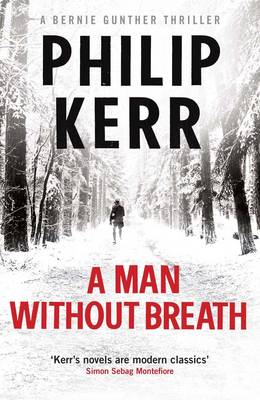
A Man Without Breath, Philip Kerr (2013). That’s me completely up-to-date on the Bernie Gunther novels, at least until a new one appears. In A Man Without Breath, Gunther has moved to the War Crimes Bureau, and is sent out to Smolensk because several buried bodies have been found in a nearby wood by German troops. The Germans suspect the bodies belong to Polish officers, killed by the Russians, who had allegedly shipped the Poles they had captured off to POW camps. The wood is Katyn Wood. When a pair of soldiers from a nearby signals detachment are found murdered in Smolensk, Gunther is asked to assist by the local field police. The more he investigates the double murder, and the circumstances surrounding it, the more he’s convinced there is some sort of conspiracy in place among the senior German officers in Smolensk. Meanwhile, other War Crimes Bureau investigators have found yet more murdered Poles buried in Katyn Wood… If Prague Fatale was a piss-take of a country house murder – including a locked room mystery! – A Man Without Breath is pure World War II behind-the-lines thriller. The plot hangs from two very real atrocities committed during the war – the Katyn Massacre, and another performed by the Germans (revealing it would constitute a spoiler, so I won’t). Kerr places Gunther firmly in the middle as all these events come to a head, and while he’s not responsible for resolving them, he is certainly the one who makes sense of them and puts the pieces together for the reader. One of the difficulties with writing historical fiction involving well-documented people and events is that everything must end up as it does in the history books. This is not Inglourious Basterds, Hitler and the Nazi bigwigs do not get gunned down before 1945. The larger events depicted in A Man Without Breath are actual history, and you can read about them on Wikipedia. The same is true of the movements of the more important figures. So when Hitler makes a flying visit to Smolensk in the novel, that’s what he actually did in the real world. Kerr does this really well. And having read science fiction for so many years, I’m finding myself increasingly drawn to fiction which includes elements I can go and look up afterwards. In fact, that’s something I try to write myself – even though what I write is science fiction…
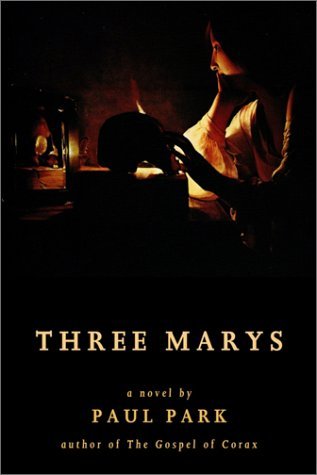
Three Marys, Paul Park (2003). After writing four excellent science fiction novels, one of which remains my favourite sf novel of all time, Park decided to write a couple of books set in Biblical Palestine. The first was The Gospel of Corax, a sort of alternate life of Jesus, in which he wasn’t crucified but wanders eastward, dispensing magic and theosophist philosophy. Three Marys is a more historical novel and, as the title indicates, takes as its protagonists three women called Mary who each knew Jesus – Mary Magdalene, Mary of Bethany and Jesus’ mother, Mary. I’m a big fan of Park’s writing, but first century Palestine is not a place and time that especially interests me. I’ve read one book set there this year, Philip Boast’s Sion (see here), but that was quite a strange book. Park’s is far better historically-grounded, and reads much more convincingly than Boast’s did. The three title characters are also beautifully drawn. But… I don’t find Jesus interesting as either a historical or a religious figure, and I struggled to gain purchase on Three Marys despite its lovely prose. I suspect I may have to reread it one day, but for now I’d say it was a book I admired far more than I enjoyed.
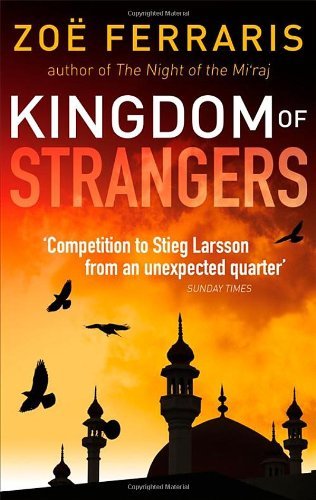
Kingdom of Strangers, Zoë Ferraris (2012). The third book in Ferraris’ Jeddah-set murder-mysteries. A body is found in the desert after strong winds have blown sand from a dune by a road. The body is that of a young woman, has had its hands removed and appears to be several years old. The police investigate and eighteen more bodies are found in the area. It looks like Jeddah has a serial killer on its, er, hands, and no one knew about it. This is not unexpected: given the frequent abuse and mistreatment of female expatriate maids and nannies – many of them run away and the police rarely bother to look for them. Meanwhile, the Filipina mistress of Imbrahim Zahrani, the policeman in charge of the serial killer investigation, has gone missing, and he’s worried that knowledge of his affair will leak out and torpedo his marriage and career. Forensic pathologist Katya Hijazi is also keen to get involved on the serial killer case, but most of the police officers don’t want women working on it. She has also agreed to marry her fiancé, which creates a bit of a problem as the police think she is already married (and she wouldn’t be allowed to work there if she were unmarried). The setting of Ferraris’ novels makes for interesting reading, and while the crime aspects of the plot often seem incidental to documenting the lifestyle of the Saudis, it all hangs together entertainingly. I never actually lived in Saudi myself, only on the Gulf coast, but Ferraris’ portrayal does match what I know of the country and its inhabitants. She has a group of sympathetic and well-drawn protagonists, handles her supporting cast well, and I think I’m going to continue to read the books as they’re published.
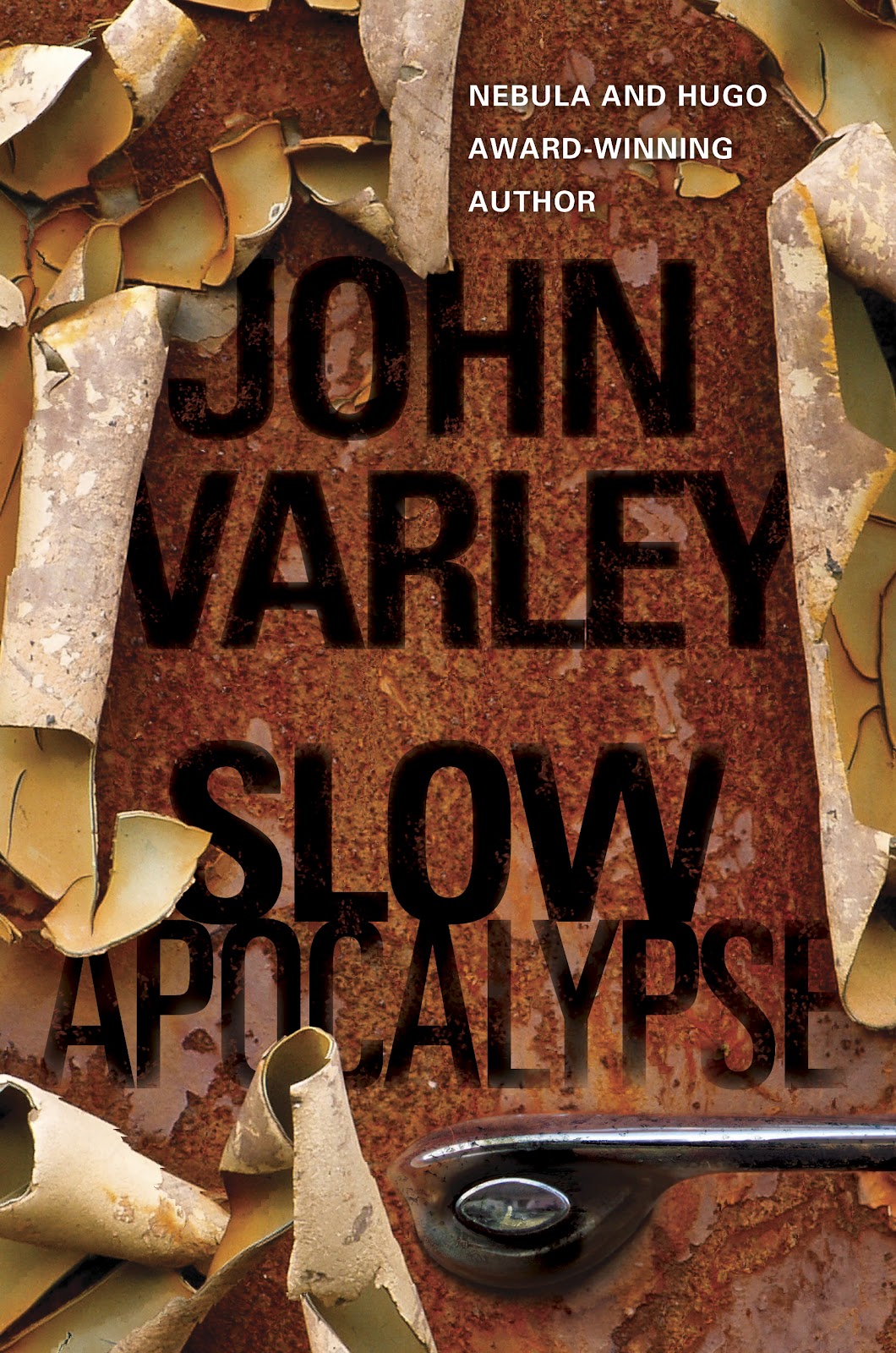
Slow Apocalypse, John Varley (2012). I fell in love with Varley’s short fiction when I first read some of it back in the 1980s, and his The Ophiuchi Hotline remains a favourite sf novel. I even sort of like Millennium, the film adaptation of his short story ‘Air Raid’, which he then novelised as, er, Millennium. Since 1998’s The Golden Globe (which I really must reread one of these days), I’ve bought his books in hardback on publication – he’s no longer published in the UK, so I’ve had to order them from the US. Sadly, none of his recent novels have quite matched up to those earlier works. And, unfortunately, Slow Apocalypse is more of the same. A Hollywood-based television writer, Dave Marshall, learns from a secretive ex-military contact that the US experimented with a bacteria to render enemy oil fields unusable, but that the scientist responsible turned rogue and released the bug into the wild. Marshall thinks the story is excellent material for a movie, one that will reinvigorate his stalled career. Then oil wells around the world start to explode… Soon, there’s very little petrol available, and other resources – such as food – which rely on petrol for transportation also become scarce. A huge earthquake then strikes Los Angeles, near-destroying the city, and society collapses. Marshall and family join together with their neighbours in the canyon in which they live to safeguard their houses. Because he heard the story early, Marshall has managed to stockpile plenty of supplies, but he’s afraid his neighbours may soon want to him to “share”. Also, their current redoubt is unsustainable for much longer – especially after a huge brush fire sweeps out of the hills and renders most of the city uninhabitable. The government is proving no help, and aid is virtually non-existent. So Marshall agrees to travel south with a group of close friends and colleagues, in search of somewhere sustainable to settle. It’s plain that Slow Apocalypse was written as a commercial disaster novel, and if it gives Varley’s career a boost than that’s all to the good. But. I found it really dull. Much of the book consists of Marshall – with wife or daughter – driving about LA and witnessing the damage done to it by the quake and subsequent breakdown of law and order. The whole thing reads prescriptively. There are a number of quite good action set-pieces, but they’re not enough to enliven the narrative. There’s also a Heinlein-esque mouthpiece character, but Varley has always been able to make such characters more palatable than Heinlein ever did. The plot is as predictable as a Hollywood movie, and might well follow Hollywood’s over-used three-act arc. Disappointing.
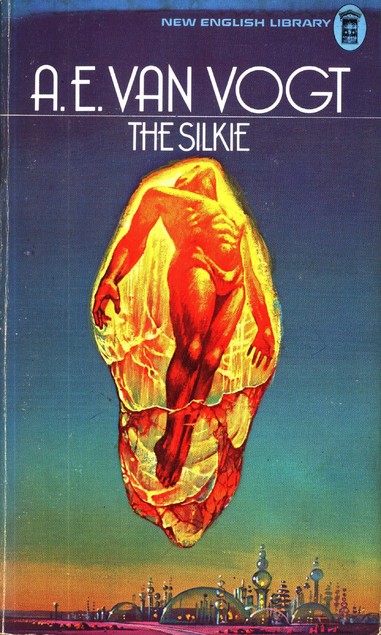
The Silkie, AE van Vogt (1969). Sometimes I wonder if something in my brain doesn’t work quite the way it should. I have very little time for Golden Age authors, but for some reason I keep on fooling myself that I have a soft spot for the works of one of them: AE van Vogt. I think his The House That Stood Still is very nearly a bona fide sf pulp classic, and some of his other novels can be entertaining in a not-quite-coherent way. But. He made his career out of the advice given in a how-to-write book, which basically said to break any narrative down into 800-word sections which must always end on a cliff-hanger. And it’s pretty clear in most of van Vogt’s fiction that when he finishes a section, he’s no real idea of what’s going to happen next. It’s often plain he’s no idea what’s going on within sections. His prose is competent at best; he mangles science, philosophy and history at will; and he has fixed-up and expanded so many of his stories, it’s impossible to say where some begin and others end. The Silkie is a fix-up and it reads like one. The book opens with a prologue, and it’s actually not that bad. It’s set in the present day in the Caribbean. A scientist and his daughter have been invited to the island of a secretive scientist who claims to have discovered immortality. Instead, the daughter meets a Silkie… a human capable of metamorphing into a seal-like creature which is equally at home underwater. And then the story completely changes, and we’re in outer space and Silkies apparently have a third form, which allows them to live, and move about, in space. There are also Variants, who are the products of Silkies and human women – all Silkies are male – but are not full Silkies. But they get written out of the story once van Vogt has finished with them. Which is pretty quickly. There’s a Variant boy who has astonishing mental powers and may be a threat to the Silkies, so the hero defeats him. Then it turns out there’s an alien attacking the Silkies, so the hero defeats it. And then it turns out there are bad Silkies who live in an asteroid inside the orbit of Mercury. So they weren’t invented by the scientist in the prologue after all. But they’re not really bad because they’re actually unknowingly under the control of a giant alien blob that’s older than the universe. But the hero defeats it. And discovers everything is all part of a plot by yet another alien race. So he defeats them… And it’s one damn thing after another, and each threat is written out of the story as soon as it’s vanquished, and its presence and/or defeat has no repercussions or ramifications on later parts of the story. The Silkie reads like the science-fictional ramblings of a drunk who has no grasp of plot, story-arc, continuity or rigour.
Hull Zero Three, Greg Bear (2010). I stumbled across a copy of this in a local charity shop, and bought it because it was on the Clarke Award shortlist last year. So it must be good, right? I generally have a lot of time for the Clarke Award juries’ choices, although every now and again they pick books which to my mind don’t seem to be award-worthy. This was one of them. A man wakes on a giant spaceship, with no memory of who he is or what he is supposed to do. All he can remember is that he is a Teacher, and will be needed when the generation ship reaches its destination and begins the settlement of a new world – information he chiefly recalls from a dream fed to him while he was in cryogenic hibernation. He ends up running around the ship with a bunch of strange people – not your normal-type humans – encountering monsters and such, and eventually discovering why he was woken and what has happened to the ship. All the time I was reading this book, I was thinking: why is this spaceship so bloody huge? There’s one scene where the group enter a vast room with a catwalk across its middle and an enormous window in its floor. Why is it so big? If it’s an observation room, it doesn’t need to be so huge. It makes no sense – enormous chambers need more steel to build, more air to provide a breathable atmosphere of the required pressure, and more energy to heat. It’s stupid. The whole spaceship seemed to have been designed by a production designer for a B-movie. As, in fact, did the story. Systems aboard a generation starship come to blows over one of the mission’s objectives… monster movie in space results. I couldn’t see why Teacher specifically had been woken, why the generation ship had been designed in such a stupid manner, and by the end of the book I no longer cared. Bear has written much better than this, and this monster movie book didn’t deserve to be on the Clarke shortlist.
Okay, so SF Signal posted this last Sunday, but I was in Berlin then, with no access to a computer. And yes, I had an excellent time, despite the weekend’s inauspicious start: getting up at 2:30 am, wandering down to the kitchen to make breakfast and stepping on a slug; and then getting to the airport and realising I’d left my credit and debit cards at home (fortunately, I had plenty of cash). Anyway, the meme…
My favorite alien invasion book or series is…?
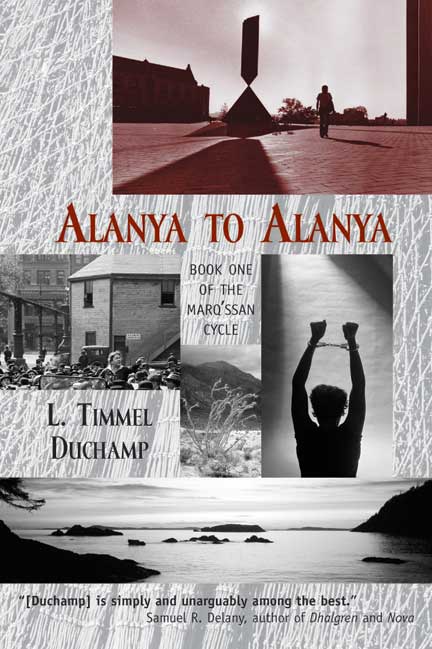
Probably the Marq’ssan Cycle by L Timmel Duchamp, although Gwyneth Jones’ Aleutian trilogy runs a close second. Duchamp’s five novels – Alanya to Alanya, Renegade, Tsunami, Blood in the Fruit and Stretto – document the arrival on a near-future Earth of an alien mission which will only talk to women. Supporting character turned chief villain Elizabeth Weatherall is one of the genre’s best creations. Jones’ White Queen, North Wind and Phoenix Café cover similar ground, but from a more global perspective. It also features, like Duchamp’s quintet, an extremely well-drawn antagonist in Braemar Wilson. Both series are intensely political and among the smartest books in science fiction.
My favorite alternate history book or series is…?
The Apollo Quartet, of course. But seriously: I’d say Ascent by Jed Mercurio, but naming it as alternate history might constitute a spoiler. It could also be argued that the superb Ash: A Secret History by Mary Gentle is alternate history. I think I’ve read my fair share of Hitler-victorious alternate histories, and I suspect there are very few changes remaining to be rung on that particular trope. Not being American, I’ve little interest in their civil war and how it might have ended differently. Stephen Baxter’s alternate take on the US space programme, Voyage, appeals for obvious reasons. And many sf novels of the past written about exploring Mars and the Moon may not have been written as alternate history, but they pretty much qualify as it now. Unfortunately, most twentieth-century sf novels about twenty-first space travel, such as those by Steele or Bova, suffer from being, well, not very good. Sadly, early and alternate space travel doesn’t seem to be an area of the genre that has attracted writers with much in the way of writing chops. Which is a shame.
My favorite cyberpunk book or series is…? Metrophage by Richard Kadrey, the book which folded cyberpunk back into science fiction. Everything that came after is just the twitchings of a dead subgenre.
My favorite Dystopian book or series is…?
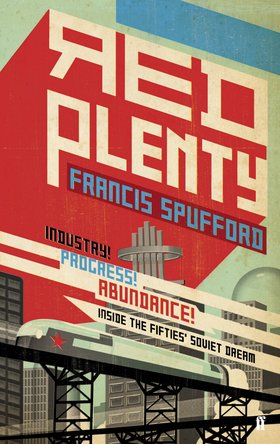
Dystopia is in the eye of the beholder. If you read Francis Spufford’s excellent Red Plenty, you’ll see that not everyone thought the USSR was a dystopia. And for all the UK’s fabled streets of gold, it’s starting to look more and more like a dystopia each day to those of us living here. As for reading about dystopias… I don’t think it’s been done especially well in science fiction – but then Nineteen Eighty-Four casts a long shadow. Some of DG Compton’s works from the 1970s might be considered dystopian, such as The Continuous Katherine Mortenhoe; and in Ascendancies, he manages to find a dystopian story in a near-utopian society. JG Ballard wrote plenty of novels and short stories which might qualify, but no specific title springs to mind – it’s probably best to consider his entire oeuvre as dystopian fiction. And you can’t really go wrong by reading them all.
My favorite Golden-Age sf book or series is…?
AE van Vogt’s The House That Stood Still (AKA The Undercover Aliens), which mixes California noir and pulp sf and just about manages to get away with it, is one of my favourite sf novels. It’s completely bonkers, of course; but it’s one of van Vogt’s more coherent works. Which isn’t saying much. Recently, I’ve read some early sf by women writers and found it much better than the so-called classics I read as a kid – these days, I find EE ‘Doc’ Smith, Robert A Heinlein and Isaac Asimov near-unreadable. There’s also an early Brian Aldiss novel, Equator, which I really like, though it’s more like spy fiction with added aliens than science fiction per se. Which may be one reason why I find it so appealing.
My favorite hard sf book or series is…?
The Apollo Quartet, of course. But seriously: it’s probably Kim Stanley Robinson’s Mars trilogy. I don’t read that much hard sf as such. When I need my real science kicks, I read books about space or deep sea exploration. There are very, very few hard sf novels which come even remotely close to emulating the authenticity those books possess.
My favorite military sf book or series is…?
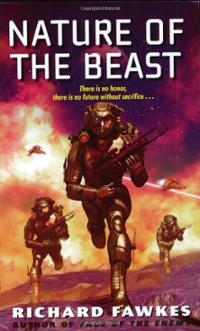
I don’t have much time for military science fiction, though in the past I’ve read my fair share – including David Weber, Tanya Huff, Elizabeth Moon, Jack Campbell, David Feintuch, John Steakley, and probably a few others. The only such books left on my book-shelves, and which may well get purged should I ever get around to rereading them, are Richard Fawkes’ Face of the Enemy and Nature of the Beast, which I remember as quite interesting. Also worth a go is Shariann Lewitt’s debut novel, Angel at Apogee, and her two Collegium novels, Cyberstealth and Dancing Vac. And if any of CJ Cherryh’s books qualify, then they’re certainly worth reading.
My favorite near-future book or series is…?
I don’t think I have one. I’ve always been a fan of John Varley’s Eight Worlds novels and short stories, but do they count as near-future? Gwyneth Jones’ Kairos, a favourite novel, was near-future when it was published, but that was back in 1988 – and these days it reads more like alternate history. The same might well prove true of Ken MacLeod’s excellent Intrusion a decade from now. Another excellent near-future novel is Maureen F McHugh’s China Mountain Zhang, though despite being two decades old it has yet to become alternate history – perhaps because it doesn’t feel like it’s set in a near-future which might well happen.
My favorite post-apocalyptic book or series is…?
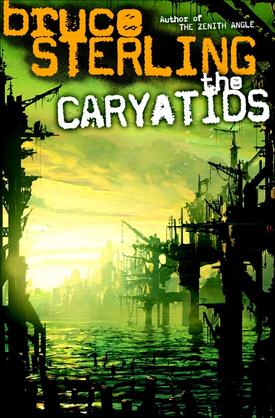
To be honest, I’m not interested in how Americans would react should their society collapse, nor do I believe that every single person on the planet would react in that way. Which pretty much discounts ninety-nine percent of post-apocalyptic novels. The only one that springs to mind as different is Bruce Sterling’s The Caryatids, which shows the world – all of it – coping with the aftermath of climate crash and nation-state failures. Perhaps the best of the more traditional post-apocalyptic novels is Joan Slonczewski’s The Wall Around Eden, in which mysterious aliens save isolated pockets of humanity. It reads like a masterclass in sf and deserves to be back in print.
My favorite robot/android book or series is…?
Science fiction’s treatment of robots has always been silly. They’re either human in all but name and yet treated like slaves, or blatant signifiers for slaves. In remarkably few sf stories do they actually resemble real robots.
My favorite space opera book or series is…?
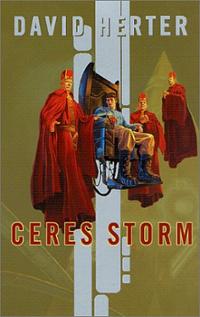
I’ve always enjoyed Iain M Banks’ Culture novels, though I think the individual parts are not as impressive as the sum of them. Colin Greenland’s Take Back Plenty has always been a favourite space opera too, and I remember being impressed by Scott Westerfeld’s The Risen Empire when I read it many years ago. Likewise David Herter’s Ceres Storm, which I read back when it was published in 2000. I really must reread it one of these days…
My favorite steampunk book or series is…?
I don’t read steampunk. There’s nothing in it that appeals to me. Airships? Pfft. Give me supersonic jets every time. Brass? Useless metal. And anyway, steel is more emblematic of the British Empire than brass. Difference engines? NASA didn’t put twelve men on the Moon using clockwork computers, did they?
My favorite superhero book or series is…?
I used to read superhero comics by the likes of Warren Ellis and Alan Moore, but went off the whole genre several years ago. I can no longer think of anything nice to say about the genre.
My favorite time travel book or series is…?
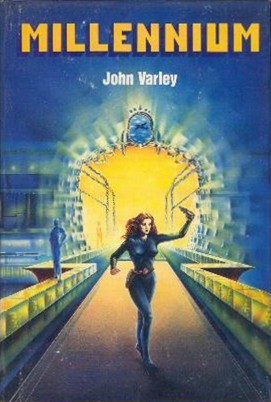
I’m more likely to read and enjoy an historical novel than I am a time travel one. I can’t off the top of my head think of any time travel novels that I hold in especially high regard. I remember enjoying Peter Delacorte’s Time on My Hands, which is set in 1940s Hollywood. And Stephen Baxter’s The Time Ships takes Wells’ The Time Machine and runs with it… and runs… and runs… I’m a big fan of John Varley’s short story ‘Air Raid’, and I still have a soft spot for the film adaptation Millennium, despite its godawful production design… which does mean I really like the novel written by Varley of the film adapted by Varley of the short story written by Varley…
My favorite young adult sf book or series is…?
I don’t read YA books. I am no longer sixteen, and haven’t been for a few decades.
My favorite zombie book or series is…?
I don’t read zombie books. I don’t even like zombie films. Maybe one day somebody will do something interesting with the trope, but I’m not holding my breath.
The 3 books at the top of my sf/f/h to-be-read pile are…?
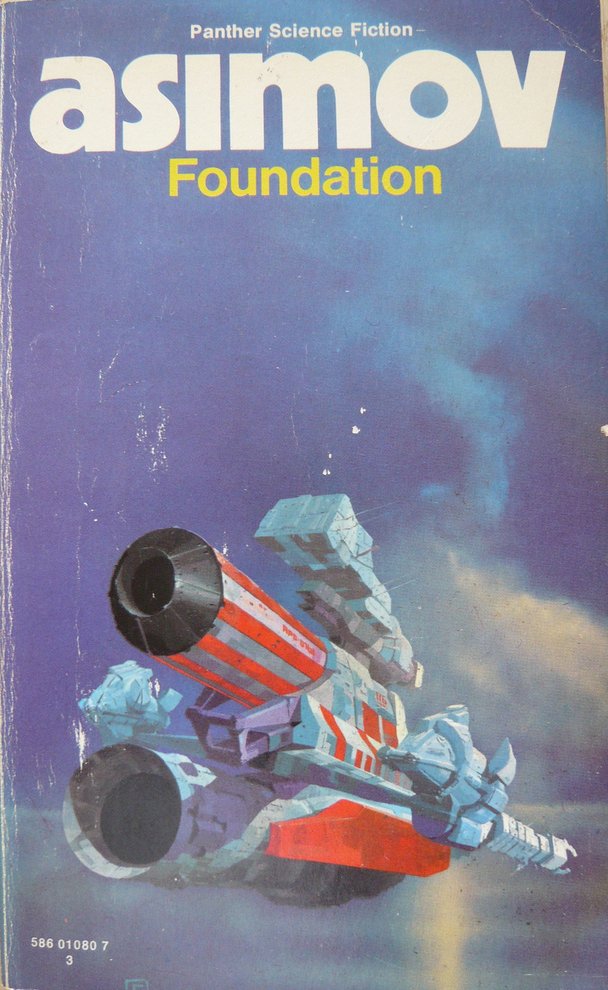
Last month, I foolishly agreed to read and blog about half a dozen classic sf novels, so I have The Moon is a Harsh Mistress and Foundation to look forward to over the next couple of weeks. Other than that, I have some reading for SF Mistressworks, and I hope to sneak in a few more recent genre novels as well, but I’ve yet to decide which ones. In fact, when you have a TBR of around 700 books, it’s often difficult to pick what to read next and I can sometimes spend ten or twenty minutes feeling really indecisive as I wander from one bookcase to the next…
And now I’ve finished this I’ll no doubt think of books I should have mentioned. Oh well. The more observant among you might also have noticed that all the links on this post go to Foyles using their affiliate scheme (except for the one link to a DVD). I found it relatively easy to use – a little fiddlier than Amazon’s, but not unworkably so. We’ll see how it works out.
I promised a book haul post and here it is. Unusually, this month’s haul consists chiefly of research books, and first editions for various collections. Which actually probably makes it a little more expensive than is typical… Oh well.
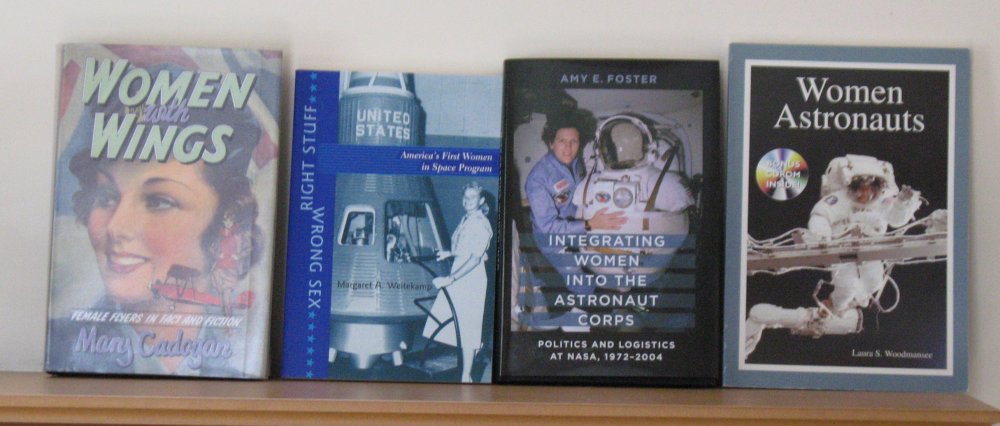
I bought these for research for Apollo Quartet books 3 and 4 – so yes, as promised, the role of women is much increased in the second half of the quartet. These four books – Women with Wings, Right Stuff, Wrong Sex, Integrating Women into the Astronaut Corps and Women Astronauts – only apply to part of the planned stories for the two novellas, however. I guess you’ll have to buy Then Will The Great Ocean Wash Deep Above and All That Outer Space Allows when they’re published to find out precisely how…
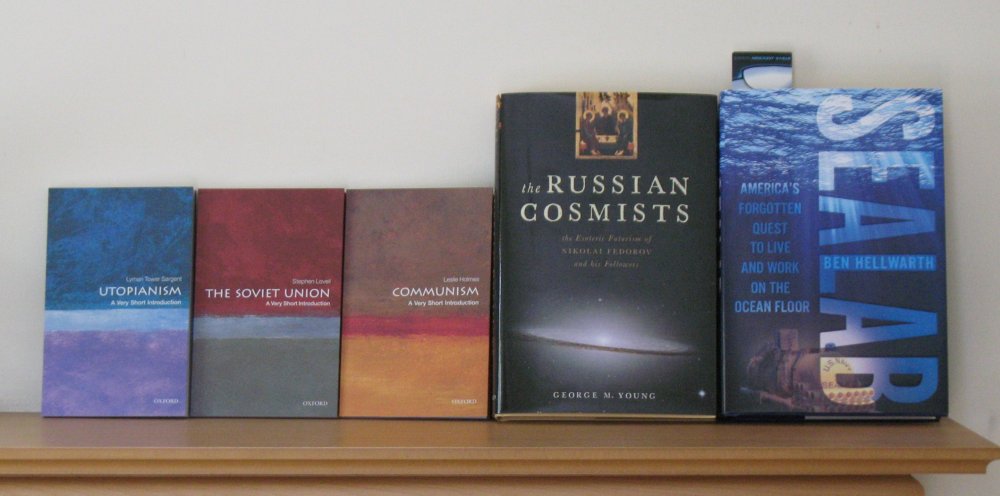
More research. Sort of. Sealab I bought just because it looked interesting. And as the bookmark indicates, I’m about a third of the way into it and it is interesting. Fascinating, even. I may well post about it later. The Very Short Introductions – Utopianism, Communism and The Soviet Union – are quite useful research tools, though they’re obviously only starting points. The Russian Cosmists is for a novel I’m working on. I started the novel the year before last when I had a bash at NaNoWriMo. I managed 15,000 words before giving up, but I recently realised that if I restructured it and took the plot in a different direction, I could end up with something quite interesting.
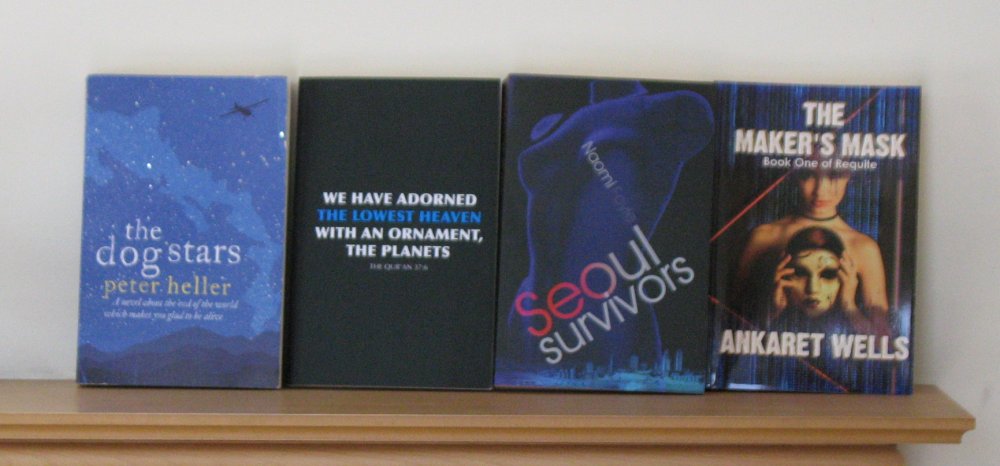
A bunch of genre works. The Dog Stars was shortlisted for the Clark Award this year. I found that copy in a charity shop. The Lowest Heaven is an ARC of the latest anthology from Anne Perry and Jared Shurin. This ARC is just the stories, but the finished product will apparently contain a number of astronomical photographs. It’s due out next month. Seoul Survivors I have to review for Interzone. And The Maker’s Mask is a self-published work I stumbled across on Amazon. From what I’ve read of it so far, it seems quite fun.
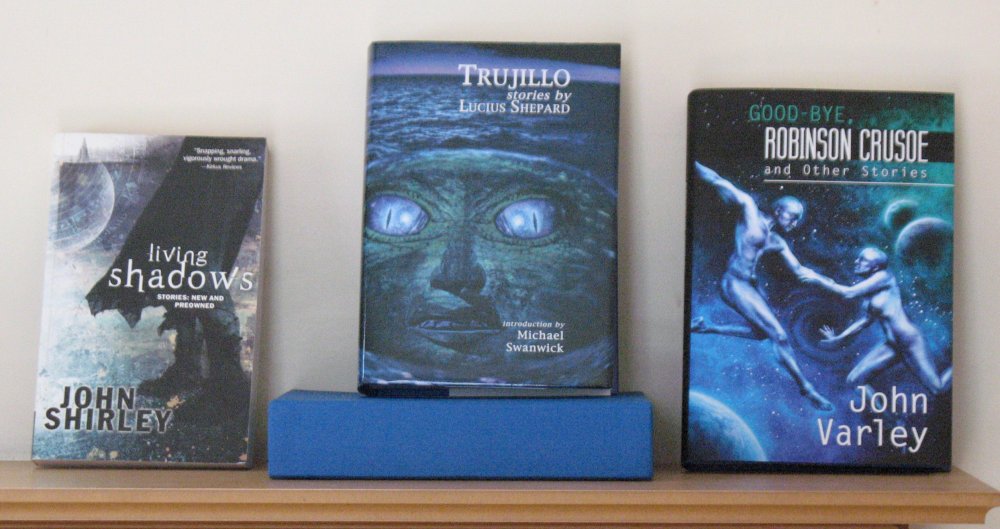
Some signed genre collections. I’ve been a fan of Varley’s fiction since the early 1980’s, so there was no way I was going to miss buying Good-Bye, Robinson Crusoe, even if I have most of its contents in other collections. Trujillo I picked up cheap on eBay. It’s out of print and difficult to find – especially the slipcased edition. I also have the Night Shade Books edition, although this PS Publishing one includes the title novel and some additional short stories. Living Shadows was another cheap eBay purchase.
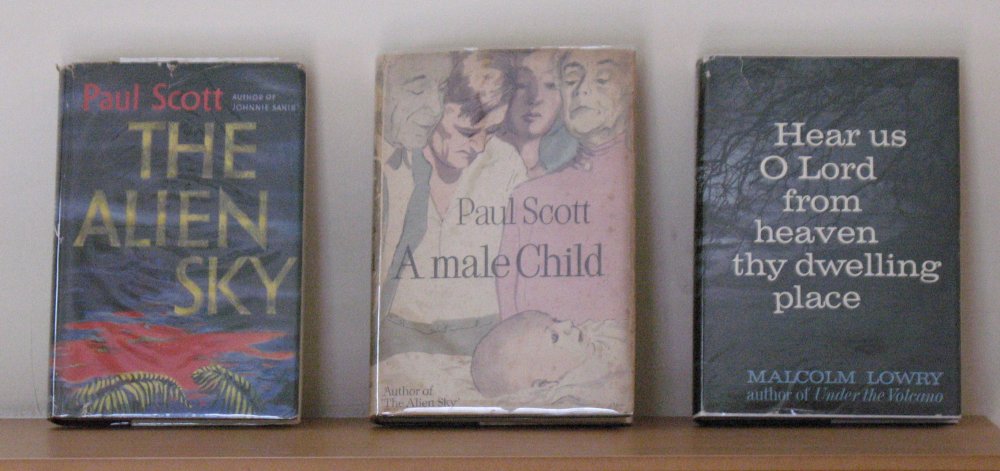
These, er, weren’t cheap. The Alien Sky and A Male Child are first editions of Scott’s first and third novel, from 1953 and 1956. Despite the enduring popularity of The Raj Quartet, Scott’s other works are really difficult to find – especially the early ones. Happily, a Cambridge-based bookshop put some of his books up on eBay recently. So I bought them. Hear Us O Lord from Heaven Thy Dwelling Place is a 1962 first edition of Lowry’s first posthumous collection. It contains ‘Through the Panama’, which is currently one of my favourite pieces of novella-length fiction. It was sold by the same shop as the Scott novels.
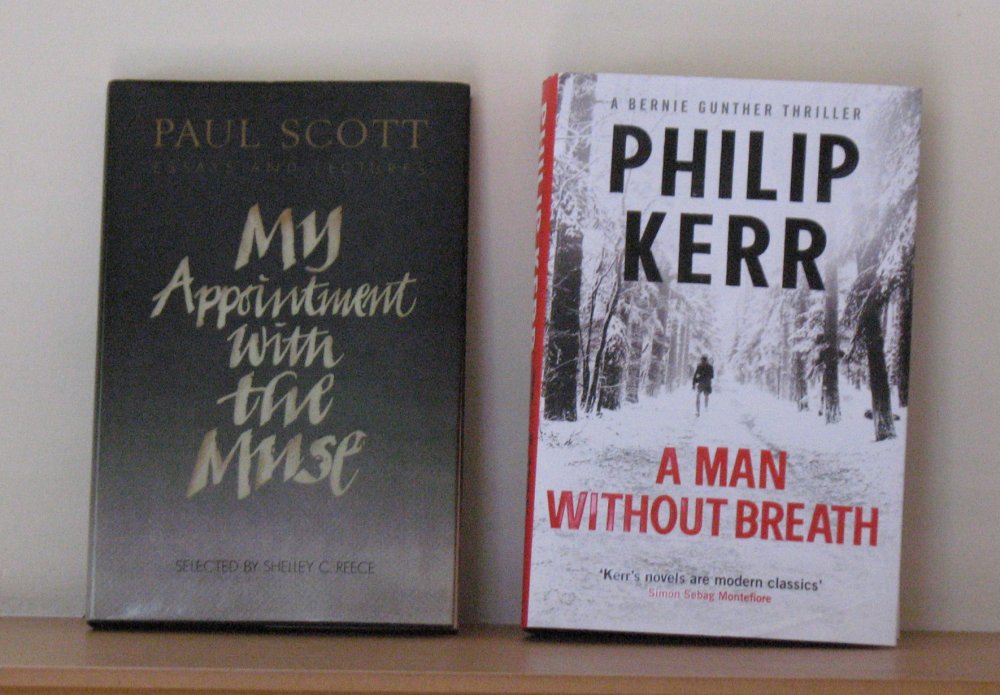
Finally, My Appointment with the Muse is a posthumous collection of Scott’s essays and talks. A Man Without Breath is the ninth and latest in Kerr’s Bernie Gunther series. I only have to read the novel prior to this one, Prague Fatale, and this one and I’m up to date.
A couple of weeks ago, abebooks.com published a list of 50 Essential SF Novels, about which, of course, there is much to argue. This prompted a discussion on Twitter between Jared Shurin of Pornokitsch, James Smythe of The Explorer, and myself. We decided to each generate our own list of 50 essential sf novels, which we would post over two days – 25 books per day. Jared’s list is here and James’ list is here. The rules were simple: the definition of science fiction up to the individual, novels only (so no collections or anthologies), novellas allowed, graphic novels (or bandes dessinées) also allowed, only one book per author, and only books that you have yourself read.
It proved a harder exercise than I expected. I could have picked 50 of my favourite sf novels – but what made them “essential”? Instead, I chose novels across a mix of science fiction modes and subgenres. I also wanted a gender-balanced list, but unfortunately couldn’t manage it – only 16 of the 50 writers below are female. That one-book-per-author rule did no help at all. There are many women sf writers who probably belong on this list, but whose books I’ve not actually read – such as Octavia Butler, MJ Engh, Charlotte Perkins Gilman, CL Moore, Judith Merrill, Carol Emshwiller, Marge Piercy, Naomi Mitchison… I could only choose those I’d read.
But, the list. Here it is, the first twenty-five novels of fifty that every self-respecting sf fan should have on their bookshelves, given in order of original publication. The remaining twenty-five will appear tomorrow.
1Frankenstein†, Mary Shelley (1818)
The original proto-sf novel and a bona fide classic of English literature. Of course it’s essential.
2The Time Machine†, HG Wells (1895)
Another proto-sf novel. Time travel is a well-established subgenre, but which time travel novel is the most essential in a collection? I submit it is this one. Far too many time travel stories use the trope merely to improve matters for the protagonist. Well’s classic describes, and comments on, the time of its writing through the future history of humanity.
3A Princess of Mars, Edgar Rice Burroughs (1912)
Edgar Rice Burroughs has a lot to answer for – this planetary romance arguably fixed science fiction as a pulp genre, and it took a good forty or more years for sf to break free. A Princess of Mars is a silly book, with its Gary Sue hero and naked Martians, its magical science and its simplistic set-up… but it is also an essential stop on the road to modern science fiction.
4Metropolis, Thea von Harbou (1926)
One of the genre’s first novelisations – if not the actual first – as it was based on the 1924 screenplay of Lang’s film. It’s all a bit overwrought and florid, in direct contrast to the movie, but its message remains timeless.
5Last And First Men†, Olaf Stapledon (1930)
It starts in the twentieth century and finishes two billion years later. It also throws away more idea for novels within its pages than any other book in the entire sf canon. Except perhaps Stapledon’s own Star Maker, which I’ve not read yet…
6Nineteen Eighty-Four*, George Orwell (1948)
For some reason, totalitarian dystopias haven’t been especially common in genre sf – perhaps because this one did it so well; or perhaps because most sf writers and fans aren’t willing to engage with politics that don’t match their own… Where dystopias do appear in sf (they’re more common in literary fiction), they’re generally little more than background, a dim setting against which some noble-browed hero can shine.
7The House That Stood Still, AE van Vogt (1950)
Like many early sf writers, van Vogt was hugely prolific. Also like them, most of his stories and books were not very good. In this one, van Vogt crashed together noir and pulp sf, and the result is something which stands above everything else he wrote (despite the occasional characteristic silliness). It’s essential because it’s emblematic of genre fiction of the period. If Philip Marlowe and Flash Gordon had a baby, it would look like this book.
8The Sword of Rhiannon, Leigh Brackett (1953)
Planetary romance as a subgenre is hard to take seriously. We’ve put robots on the surface of Mars, we know there are no ancient civilisations, no canals, etc. But Brackett was an order of magnitude better than most writers working in this subgenre, and it shows. This is probably her most characteristic planetary romance.
9The Stars My Destination†, Alfred Bester (1956)
Thinking about it, I don’t know why this book is “essential”, but I do know that any sf book collection without it feels incomplete. It is in many ways the distillation of 1950s sf, a crazy pulp re-imagining of The Count of Monte Cristo, which revels in its pyrotechnic prose.
10Solaris*, Stanisław Lem (1961)
The Anglophone world is not, of course, the only one with a sf tradition. Many countries have strong sf traditions. Such as Poland – and Solaris is perhaps the best-known Polish sf novel by the Polish sf writer best-known outside Poland. It’s also an excellent film (but that was made by a Russian).
11Dune*†, Frank Herbert (1965)
On a prose level, Dune is not especially good. It’s also unevenly structured. But its world-building is second to none, and it is the first truly immersive sf novel. All that praise for its ecological theme is just hogwash to disguise the fact that most males when they were teenagers wanted to be Paul Atreides.
12A Torrent of Faces, James Blish & Norman L Knight (1967)
Overpopulation is a common theme in sf, and the first three-quarters of the twentieth century were awash with Malthusian nightmares. This one shows its age somewhat, but its prose is very nicely detailed and its story is well-balanced.
13Camp Concentration, Thomas M Disch (1968)
People do things – mostly nasty – to other people, and sometimes sf writes about it. This is not the best-known sf novel about an experiment to increase the intelligence of a human being, but it is the best one.
14The Fifth Head of Cerberus†, Gene Wolfe (1972)
You’d think that a genre of fiction with the word “science” in its name would be clever. But it isn’t always. Sometimes, however, it can be very clever. Like The Fifth Head of Cerberus, which is a sort of cunning puzzle in fictive form.
15Rendezvous With Rama*†, Arthur C Clarke (1972)
Some people think sf is all about Big Dumb Objects, and Clarke’s Rama is probably the most iconic BDO of them all. A mysterious alien vessel, seemingly dormant, enters the Solar System and then leaves it. This is sf as fiction of the ineffable. Ignore the inferior sequels.
16Crash, JG Ballard (1973)
Good sf is about the real world, no matter when and where it is set. Or what happens in the story. Crash is avant garde, it is brutal, it can and will offend. But it also says something important about people’s relationship to technology.
17The Continuous Katherine Mortenhoe†, DG Compton (1973)
A quarter of the world’s CCTV cameras can be found in the UK. It is the most-surveillanced nation on the planet. And yet it’s not some horrible Stalinist totalitarian state – as sf insists would be the case. (Our current lords and masters seem to prefer Dickens as a model.) The Continuous Katherine Mortenhoe shows the ultimate in paparazzi – a reporter who has had one eye secretly replaced with a television camera. His subject just wants to be allowed to die in peace. But it’s not going to happen. A sf novel that says something important, now more than ever.
18The Dispossessed†, Ursula K LeGuin (1974)
Too much sf ignores politics, content to describe some simplistic system which meets the needs of either story or writer. Given the breadth of the genre and the size of its toolbox, it’s a shame sf doesn’t try more often for meaningful political commentary in its fictions. Happily, some writers have made a career of doing so, and LeGuin is among the best at this. As this novel demonstrates.
19Dhalgren†, Samuel R Delany (1974)
There aren’t many sf novels which could legitimately make it onto a list of twentieth-century literary classics, but Dhalgren is one of them.
20The Female Man*†, Joanna Russ (1975)
This is not just a book about women-only worlds, it is also an excellent explanation of why such worlds need to exist. Sf is far too useful a tool to be merely tales of action/adventure in outer space. This book demonstrates why, and does it in a way that cannot fail to affect readers.
21Hello Summer, Goodbye, Michael G Coney (1975)
There are not that many sf novels in which humans never appear – possibly because it’s a difficult trick to pull off well. But Coney manages it in this beautifully-written coming of age story set on an alien world.
22A Scanner Darkly†, Philip K Dick (1977)
One word: drugs. This is Dick’s best novel – perhaps not his druggiest, or funniest, or most paranoid; but certainly the one where all three elements work together most effectively. Happily, it doesn’t read like he made it up as he went along, even if he did. Which is more than can be said for the bulk of his oeuvre.
23The Ophiuchi Hotline, John Varley (1977)
Varley set three novels and a number of novellas and short stories in his Eight Worlds universe. In it, mysterious aliens have destroyed human civilisation on Earth, leaving only those on the other planets and moons of the Solar System to survive – as best they can. Happily, they have access to advanced technology beamed in blueprint form from Ophiuchi. A silly conspiracy plot provides the excuse for a travelogue through the Eight Worlds, before reaching an ending that actually throws away an entire novel’s worth of ideas. But this novel is an excellent example of sf’s penchant for optimism in the face of adversity.
24Gateway†, Frederik Pohl (1977)
Another one of sf’s better-known Big Dumb Objects. The space station of the title is a mysterious depot for alien FTL starships, which humans use Russian roulette-fashion to fire themselves off into the rest of the galaxy, hoping to return with riches. It’s like the National Lottery, but with aliens off-stage somewhere (instead of hosting the prime-time game shows).
25The Wanderground, Sally Miller Gearhart (1979)
There has been a strong tradition in sf throughout its history of women-only utopias – from Charlotte Perkins Gilman’s Herland in 1915 through works by Francis Stevens, Marge Piercy, Joanna Russ, Pamela Sargent, Suzy McKee Charnas, Sheri S Tepper, Nicola Griffith, and others. Sadly, it’s been marginalised by a readership who would sooner read about derring-do by manly men. The Wanderground is not entirely women-only – the men still live in the cities, and they’ve not changed their ways much – but the women-only settlements in the hills are something very much different. Perhaps there’s a bit too much magical powers about it all, but this novel possesses a great deal of charm.
The remaining twenty-five essential sf novels will be posted here tomorrow.
note: * means the book is also on abebooks.com’s list; † means the book is in the SF Masterworks series.
There you are, browsing your favourite online purveyor of books and, oh dear, you seem to have bought a bunch of them. That’s what happens to me. Well, that, and being unable to pass a charity shop without popping in to see if they have any decent books on sale. The end result is a book collection which continues to grow and mutate and evolve like some bookish monster out of Quatermass. Or something.
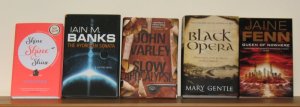
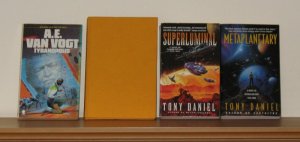
A few recent first editions – Lydia Netzer’s Shine Shine Shine I’ve already written about (see here); likewise Banks’ The Hydrogen Sonata (see here). I suspect John Varley is long past his best, but I’ll give Slow Apocalypse a go anyway. Mary Gentle’s Black Opera has been getting some positive notices. I only have the first of Jaine’s Hidden Empire novels, and Queen of Nowhere is the fifth – so it’ll be a while before I read it.
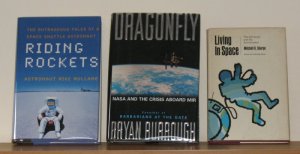
Some books for the space collection. Riding Rockets and Dragonfly are both signed. I’m told Mullane’s autobiography is a really good one. The Burrough is about the Mir space station. Living in Space was dirt cheap on eBay.
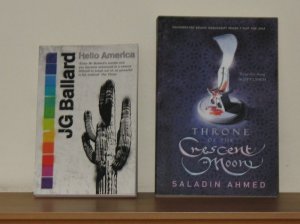
As I’ve got older I’ve found myself appreciating Ballard’s fiction more and more. So I’ve been buying the nicely-packaged 4th Estate paperbacks. Only three more after Hello America and I’ll have the lot. Throne of the Crescent Moon is an ARC, which I’m reviewing for Interzone. I’ve also interviewed the author.
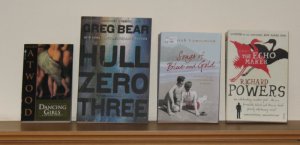
Charity shop finds: Dancing Girls, a Margaret Atwood collection; Greg Bear’s Hull Zero Three was, apparently, mystifyingly shortlisted for the Arthur C Clarke Award; Deborah Lawrenson’s Songs of Blue and Gold may not look like my usual reading fare, but it’s based on Lawrence Durrell and his relationship with his wife when they lived on Corfu; Richard Powers is an author I’ve fancied trying for a while now and The Echo Maker was a fortunate find.
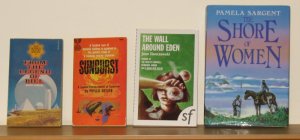
These are for SF Mistressworks and were bought at Novacon. I’ve already reviewed Phyllis Gotlieb’s Sunburst (see here). I had a copy of Mary Staton’s From the Legend of Biel and read it many years ago, but gave it away. I fancied rereading it. The Wall Around Eden is from The Women’s Press. I’ve already reviewed a Pamela Sargent anthology and collection, so The Shore of Women will be her first novel to be reviewed on SF Mistressworks.
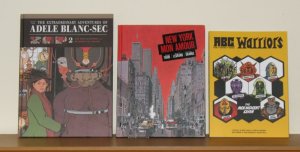
Jacques Tardi’s bandes dessinée are really very good. The Extraordinary Adventures of Adèle Blanc-Sec volume 2 is completely bonkers. I suspect there won’t be a volume 3. New York Mon Amour is a collection of noir stories set in the titular city and despite the setting there’s something distinctly non-American about them. The Fantagraphic editions are nicely put-together, but annoyingly the books are all different sizes. Argh. ABC Warriors: The Meknificent Seven I bought on the strength of fond memories of the strip in 2000AD. I shouldn’t have bothered: it’s cobbled together from war movie clichés, often with dialogue which doesn’t even reach those heights. Ah well.
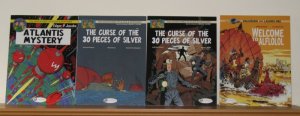
These bandes dessinée are much better. Atlantis Mystery is an original Edgar P Jacob’s story, and very text-heavy. The story is complete tosh too. The Curse of the 30 pieces of Silver, part 1 and part 2, is of much more recent vintage, and is a mish-mash of Tintin-esque mystery-adventure and Dan Brown Biblical conspiracy, with a secret Nazi cabal thrown in as the villains. (Incidentally, Amazon’s database looks completely buggered on the Blake and Mortimer books – it has Atlantis Mystery and The Curse of the 30 pieces of Silver, part 2 down only by volume number, not title; so title searches won’t work.) Welcome to Alflolol is the fourth of the Valérian and Laureline series to be published in English by Cinebook.
This year is almost over, but what will the new year bring? I already have more than a dozen titles from 2012 on my wish list. They are (in alphabetical order by surname of author):


 It Doesn't Have To Be Right...