Things must be bad – I’ve not done one of these posts for a couple of months, and yet there only seems to be about a month’s worth of book purchases to document. Of course, this has resulted in a small victory in reducing the TBR, although it’s still somewhat mountainous… I’d actually planned to keep my purchasing at low levels for a couple of months but, of course, as is the way of things, several authors whose books I read all had new works out – August and September seems to be a popular time to release books. Unless you’re Whippleshield Books, that is…
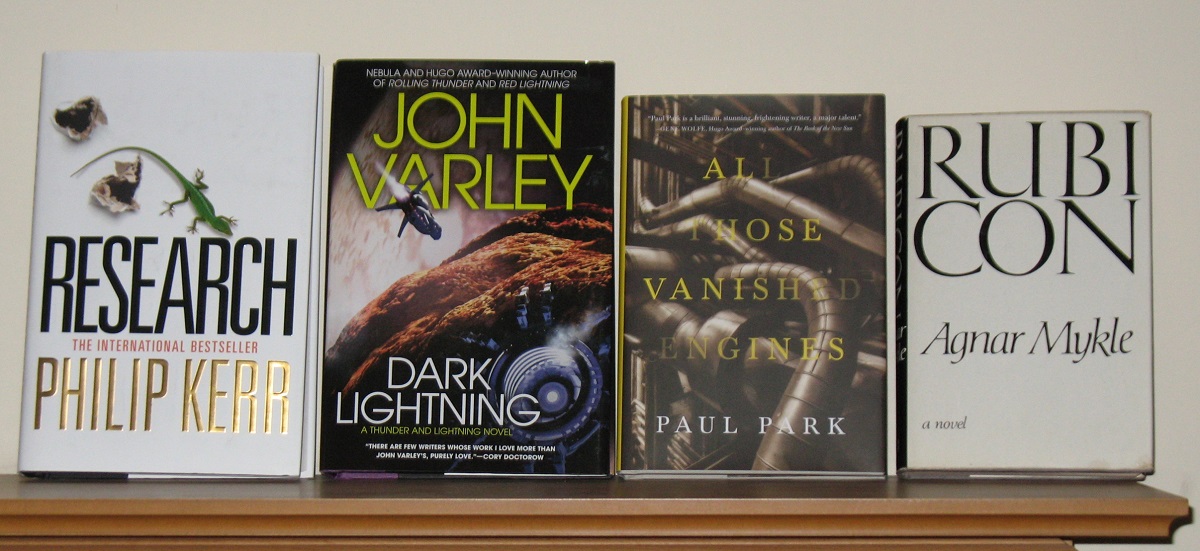
Some new first editions and an old one. Research is Philip Kerr’s latest, and about a James Patterson-like writer who’s framed for the murder of his wife. Let’s hope it’s not a James Patterson-like book… Dark Lightning is the fourth in Varley’s Thunder and Lightning series, following on from Red Thunder, Red Lightning and Rolling Thunder. I initially thought these were YA, but I don’t think they actually are. All Those Vanished Engines is a new novel by a favourite writer, and the first from him since the Princess of Roumania quartet back in 2005 – 2008. I am excited about this book. Finally, Rubicon by Agnar Mykle is one by mother found for me. I looked it up and it sounded interesting so she got it for me. Mykle seems to be Norway’s answer to DH Lawrence – his Sangen om den røde rubin (1956, The Song of the Red Ruby) was confiscated as immoral and obscene. Rubicon is the third book in a loose trilogy begun with The Song of the Red Ruby. If Rubicon is any good, I might track down Mykle’s other works.
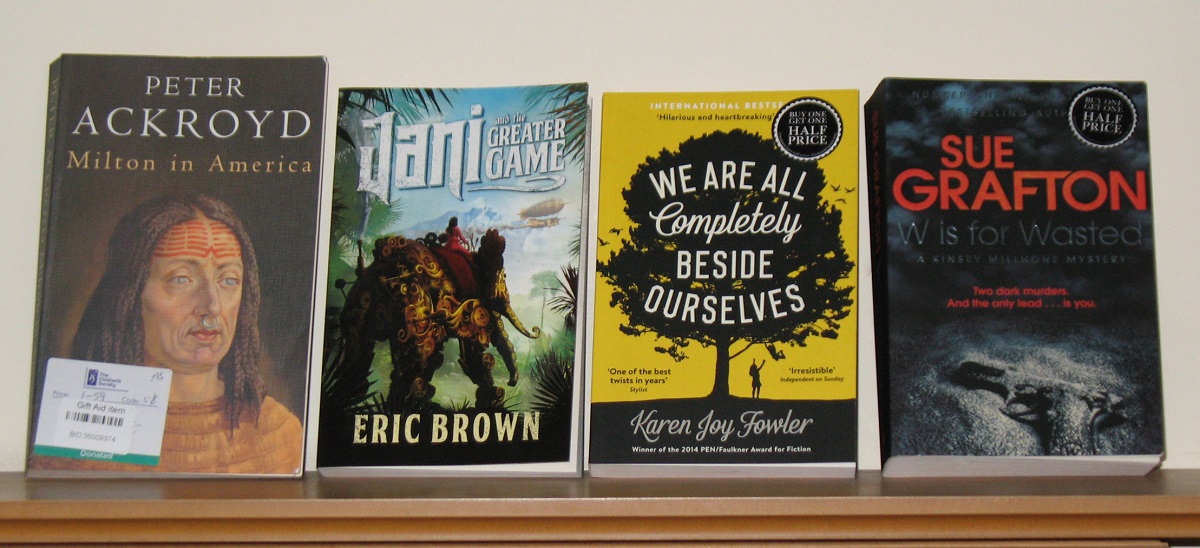
Some recent paperback purchases: We Are All Completely Beside Ourselves I bought because Karen Joy Fowler. I’ve been following Kinsey Millhone’s career for a couple of decades and W is for Wasted is the most recent installment. Grafton has kept the series’ internal chronology consistent, which means this one is actually set in 1988. Which sort of makes it historical crime fiction. Milton In America was a charity shop find. And Eric sent me a copy of his latest, a steampunk set in India, Jani and the Greater Game.
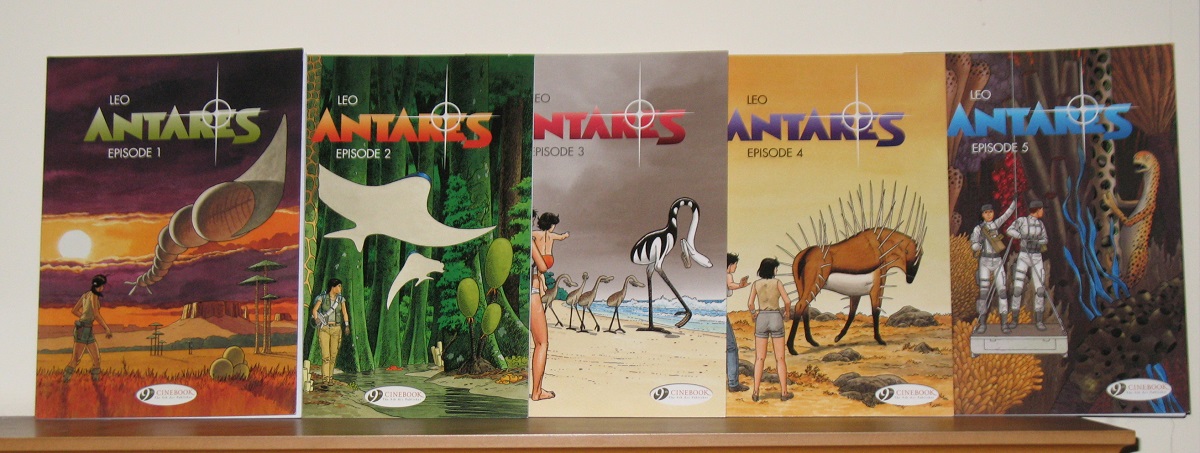
Now this is very annoying. I’d been impressed by Léo’s Aldebaran and Betelgeuse series, so I was keen to read Antares. From Wikipedia, I learnt there were five episodes in Antares, so I waited until the final volume was published in English by Cinebook… and then bought all five books. But it ends on a cliff-hanger! Argh. It’s not finished. So now I’m going to have to wait to find out what happens.
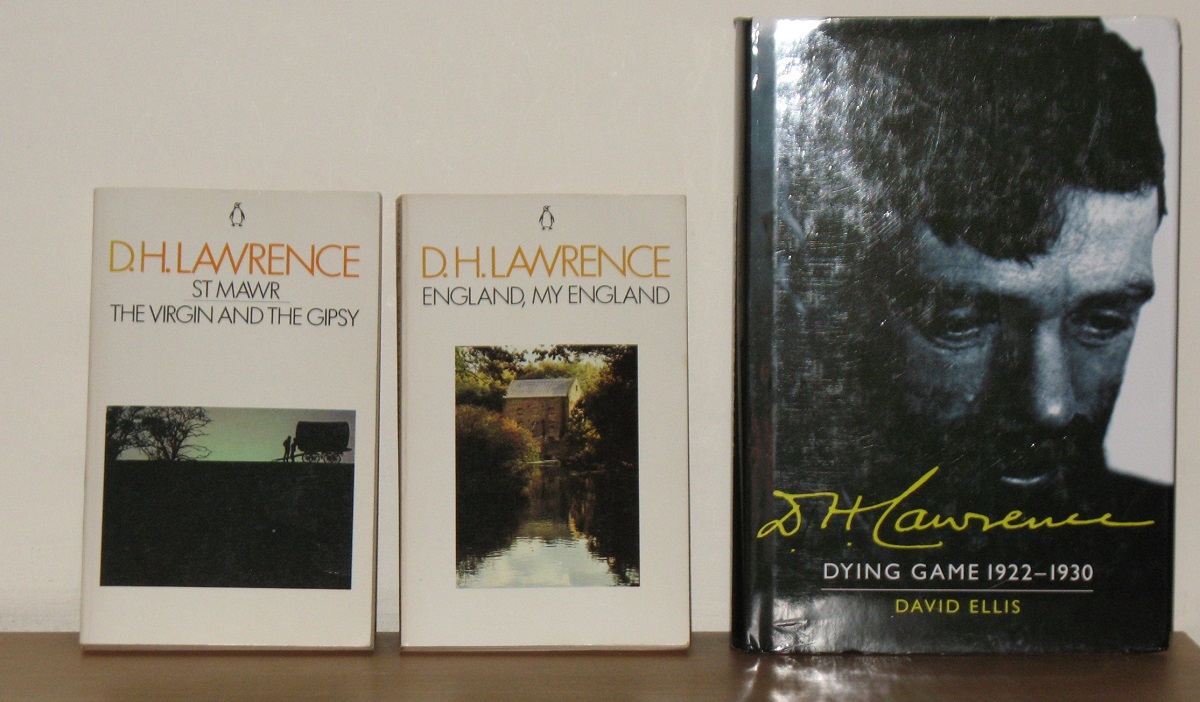
The DH Lawrence collection continues to grow. My father had the first two volumes of the Cambridge biography of DH Lawrence – The Early Years 1885-1912 and Triumph to Exile 1912-1922 – and I hung onto them. But I hadn’t realised it was a trilogy, and when I started looking for a copy of the final volume, Dying Game 1922-1930, I discovered that hardback editions were hard to find. But I found one. I also have a couple more 1970s Penguin paperbacks to add to the collection: St Mawr / The Virgin and the Gypsy (a pair of novellas) and England, My England (a collection). I probably have their contents in other books, but I’m trying to build up a set of these particular paperback editions.
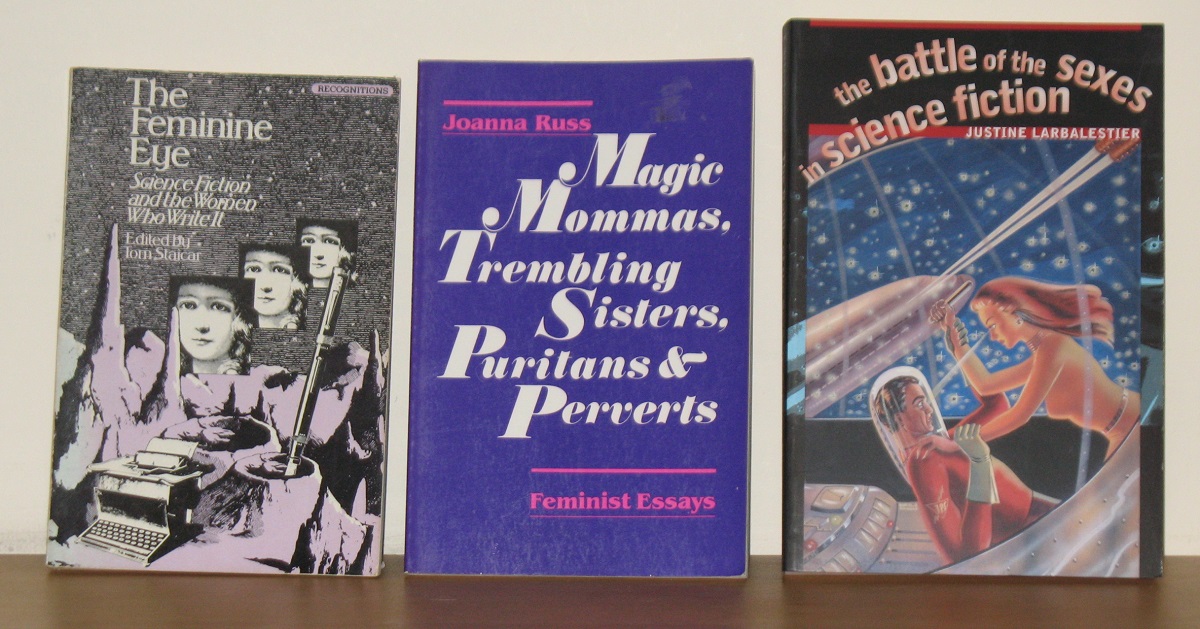
Some critical works on women science fiction writers. The Feminine Eye, edited by Tom Staicar, includes essays on Tiptree, Brackett, Moore, Norton, Cherryh and others. Magic Mommas, Trembling Sisters, Puritans and Perverts is a collection of Joanna Russ’s essays on feminism. And The Battle of the Sexes in Science Fiction is a study of, from the back cover blurb, “the role of women and feminism in the development of American science fiction” and I really need to read it for Apollo Quartet 4…
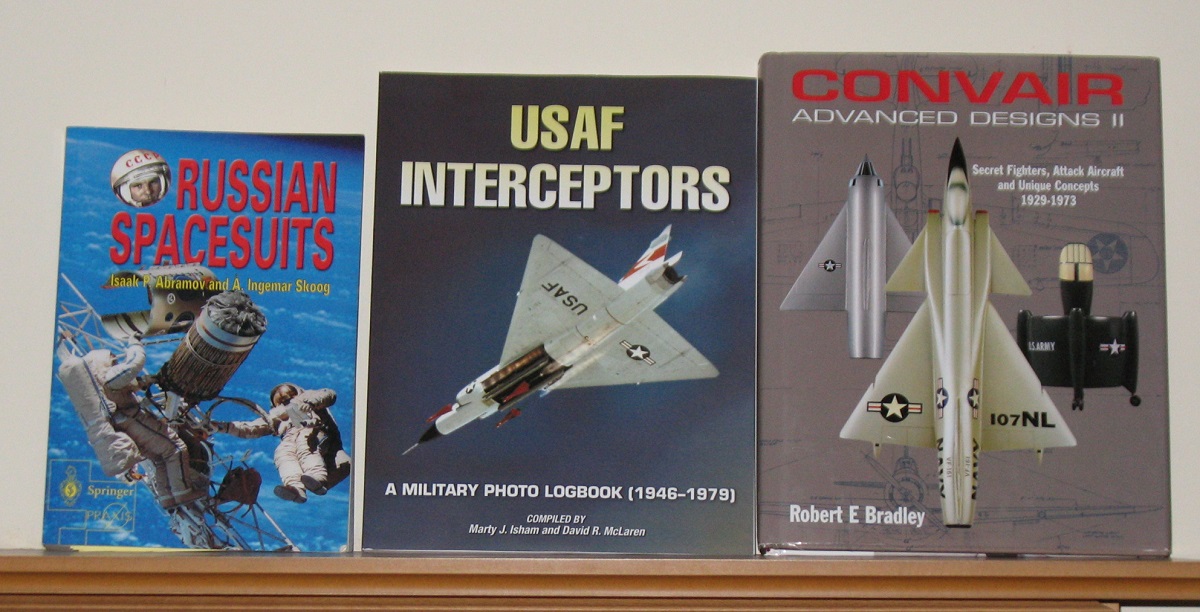
More books for the aviation collection. USAF Interceptors is a collection of black and white photos of, er, interceptor jet aircraft from the Cold War. Not as useful as I’d hoped. Convair Advanced Designs II is the follow-on volume to, um, Convair Advanced Designs, this time focusing on fighters and attack aircraft. And for the space books collection, Russian Spacesuits, which I used for research for my Gagarin on Mars story – and will likely use again at some point.
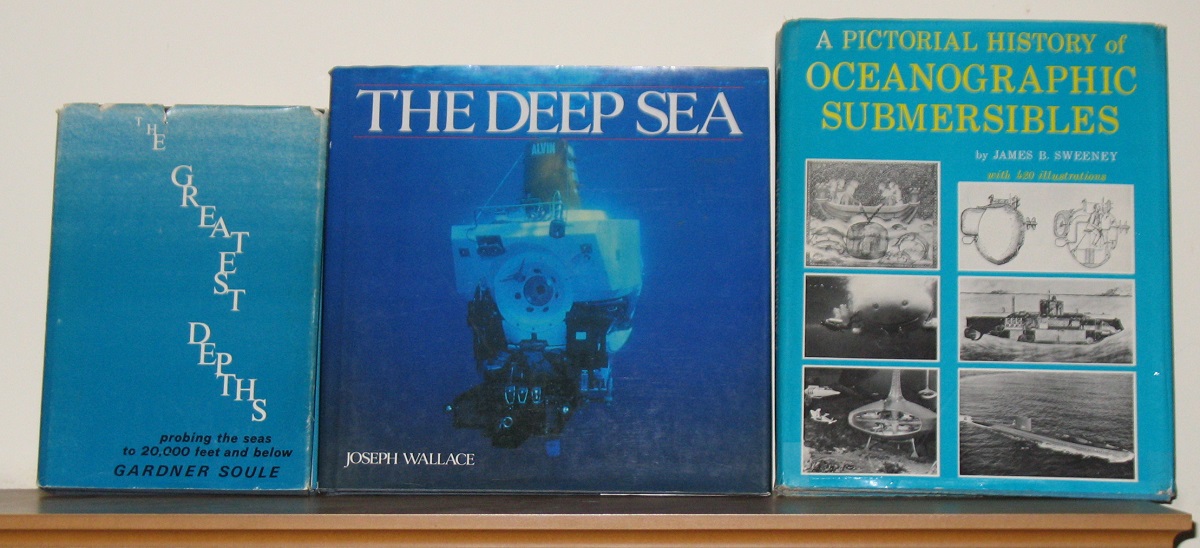
Finally, more books for the underwater collection. The Greatest Depths by Gardner Soule is a quick and not especially, er, deep study of underwater exploration and exploitation. It covers the main points, including the Trieste’s descent to Challenger Deep and the Ben Franklin’s journey along the Gulf Stream. A Pictorial History of Oceanographic Submersibles does exactly what it says on the cover. It was cheap on eBay (although I demanded, and received, a partial refund because it turned out to be a bit tatty). And The Deep Sea is a glossy coffee-table book containing some nice photos of things at the bottom of the sea.
These are the ones I’ve found so far. I’ve put them in order of year of publication.
Future Females: A Critical Anthology, Marlene S Barr, ed. (1981) The somewhat garbled description of this book on Amazon contains the following wonderful, if inelegant, line, “if the mere mention of the genre causes a ruffling of academic feathers, then relating [it] to women is analogous to placing all those simply ruffled feathers in front of a wind machine”. The book contains essays on feminist utopias, Joanna Russ, Marge Piercy, Ursula K Le Guin… and, er, Star Trek, and Alexei Panshin. Contributors include Joanna Russ and Suzy McKee Charnas, among others.
The Feminine Eye, Tom Staicar, ed. (1982) Subtitled “Science Fiction and the Women Who Write It”, this contains individual essays on Leigh Brackett, CL Moore, Andre Norton, CJ Cherryh, James Tiptree Jr, Suzy McKee Charnas, Marion Zimmer Bradley, Suzette Haden Elgin and Joan D Vinge.
How to Suppress Women’s Writing, Joanna Russ (1983) This is not specifically about women writing science fiction, but it’s such an important piece of work about writing by women that I thought it worth mentioning. (Do you own a copy? If not, why not?)
Worlds Within Women, Thelma J Shinn (1986) This was published by the ever-expensive Greenwood Press, is subtitled “Myth and Mythmaking in Fantastic Literature by Women”, and “examines some seventy novels by twenty-four women writers”.
In the Chinks of the World Machine, Sarah LeFanu (1988) Taking its title from James Tiptree Jr’s story ‘The Women Men Don’t See’, this book is split into two parts. The first analyses a number of sf works by women writers, and their place in the genre in the history, as evidence of LeFanu’s “thesis that science fiction is the ideal form for the fusion of feminist politics with the imagination” (from the back-cover). The second part contains individual essays on the works of James Tiptree Jr, Ursula K Le Guin, Suzy McKee Charnas, and Joanna Russ.
Where No Man has Gone Before, Lucie Armitt, ed. (1990) This is a Routledge book, and has contributions by Lisa Tuttle, Gwyneth Jones, Josephine Saxton and Sarah LeFanu, on topics such as CL Moore, Katherine Burdekin, Doris Lessing, Mary Shelley, Hollywood science fiction and YA sf.
A New Species, Robin Roberts (1993) An overview of science fiction from a feminist perspective, albeit at an undergraduate level – according to Marleen S Barr in a review here. Barr also provides a few quotes from the book – I think this one is true and important, “Feminist science fiction exposes sexism and condemns female exclusion from science and science fiction”.
Utopian and Science Fiction by Women: Worlds of Difference, Jane L Donawerth & Carole A Kolmerten, eds. (1994) Contains a dozen essays on, among other subjects, Margaret Cavendish, Sarah Robinson Scott, Jane Gaskell, Charlotte Perkins Gilman, Naomi Mitchison, and Octavia Butler.
Frankenstein’s Daughters: Women Writing Science Fiction, Jane Donawerth (1996) This appears to consist of three chapters: 1, Utopian Science in Science Fiction by Women; 2, Beautiful Alien Monster-Women – BAMS; and 3, Cross-dressing as a Male Narrator. There is also an epilogue, Virtual Women in Global Science Fiction, which covers non-Western women sf writers. There are some notes on the book on the website of sf writer Alison Sinclair here.
Women, Science and Fiction: The Frankenstein Inheritance, Debra Benita Shaw (2000) If the excerpt provided on Amazon is any indication, this looks fascinating – with chapters on Charlotte Perkins Gilman, Katherine Burdekin, CL Moore, Margaret St Clair, James Tiptree Jr and Marge Piercy.
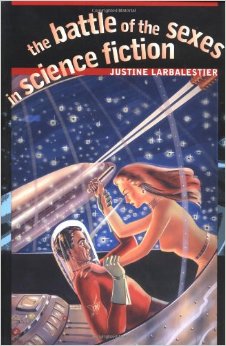
The Battle of the Sexes in Science Fiction, Justine Larbalestier (2002) An historical study of women, and the presentation of women, in science fiction – from 1926 to 1973, during the career of James Tiptree Jr, and among the books selected by the Tiptree Award.
Partners in Wonder, Eric Leif Davin (2005) This is subtitled “Women and the Birth of Science Fiction, 1926 – 1965”, and is an historical analysis of the women who were published in genre magazines during science fiction’s early decades.
Lost in Space: Probing Feminist Science Fiction and Beyond, Marlene S Barr (2006) Barr spreads a wider net – including film, and non-sf film, television programmes and a variety of both female and male writers – in order to present her case that feminist sf is better consider as feminist postmodern literature.
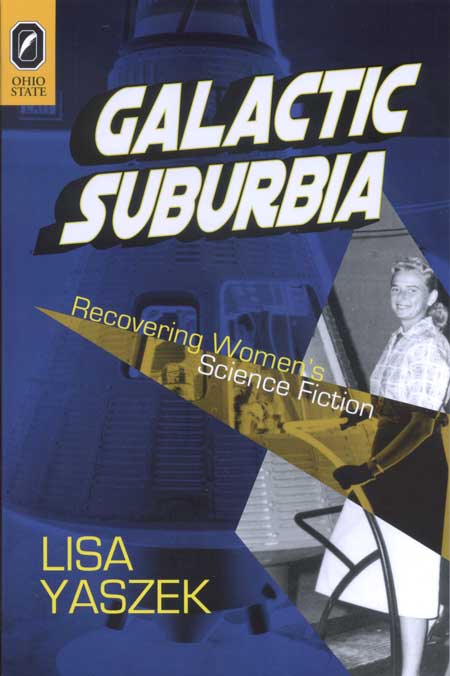
Galactic Suburbia: Recovering Women’s Science Fiction, Lisa Yaszek (2008) The cover illustration is of Jerrie Cobb standing in front of a Mercury capsule mock-up, and while the book appears to contain some inaccuracies regarding the Mercury 13, it also presents an interesting argument regarding the historical presentation and uses of science fiction by women writers.
The Secret Feminist Cabal, Helen Merrick (2009) The book’s page on the Aqueduct Press website pretty much says all that needs to be said about this (click on the title).
Women in Science Fiction and Fantasy, Robin Anne Reid, ed. (2009) A series of essays which cover the historical contribution of women to genre fiction, from the Middle Ages through to 2005, and also branches out to cover “Heroes or Sheroes”, comics, genre poetry, games, “Feminist Spirituality” and WisCon.
The Past That Might Have Been, the Future That May Come, Lauren J Lacey (2014) Part of a long-running critical series, currently at 45 volumes, this is number 43. It has four chapters, covering: 1, Beastly Beauty and Other Revisioned Fairy Tales; 2, Tampering with Time in Historical Narratives; 3, Working through the Wreckage in Dystopian Fiction; and 4, Becoming-Alien in Feminist Space Fiction.
We’re halfway through 2014, which is a year, I believe, of no prior literary, cinematic or even science-fictional significance. No matter, I have certainly consumed some significant literature, cinema and music for the first time during 2014, or at least during this first half of the twelve-month. As usual, there’s a top five and a paragraph of honourable mentions for each.
Et voilà!
BOOKS 1Life After Life, Kate Atkinson (2013) I nominated this for the Hugo, but since it features no spaceships or dragons it was always going to be a long shot. And, what a surprise, it didn’t get a look-in. I’d never read Atkinson before – my only exposure to her work was the BBC Jackson Brody adaptations with Jason Isaacs – so I was surprised at just how effortlessly good this book was.
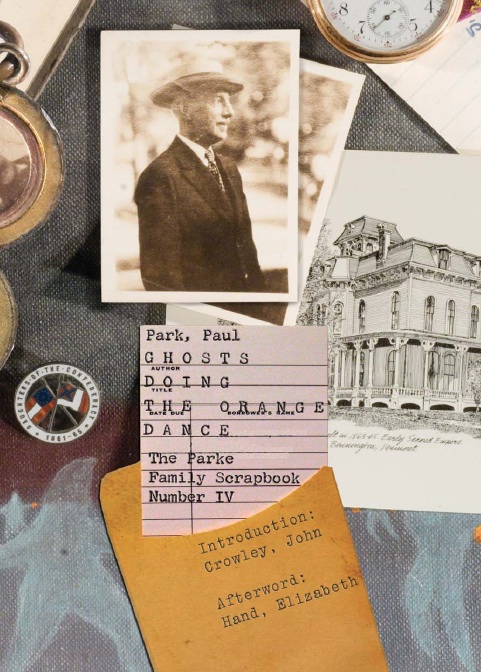
2Ghosts Doing the Orange Dance, Paul Park (2013) I also put this novella on my ballot, and it too never made the shortlist. The title refers to a painting, painted by one of Park’s relatives, which may or may not show an encounter with extraterrestrials. This is an astonishingly clever piece of meta-fiction, in which Park explores his own family tree and fiction, and creates something strange and interesting. And beautifully written too.
3The Machine, James Smythe (2013) And a third book I read for the Hugo. And also nominated. And – yup, you guessed it – it didn’t appear on the shortlist either. Ah well, my first – and last – attempt at involving myself in the Hugo awards… I won’t make that mistake again. The Machine, however, did make it onto the Clarke Award shortlist, and was even considered by many the favourite to win. A Ballardian near-future with some sharp prose.
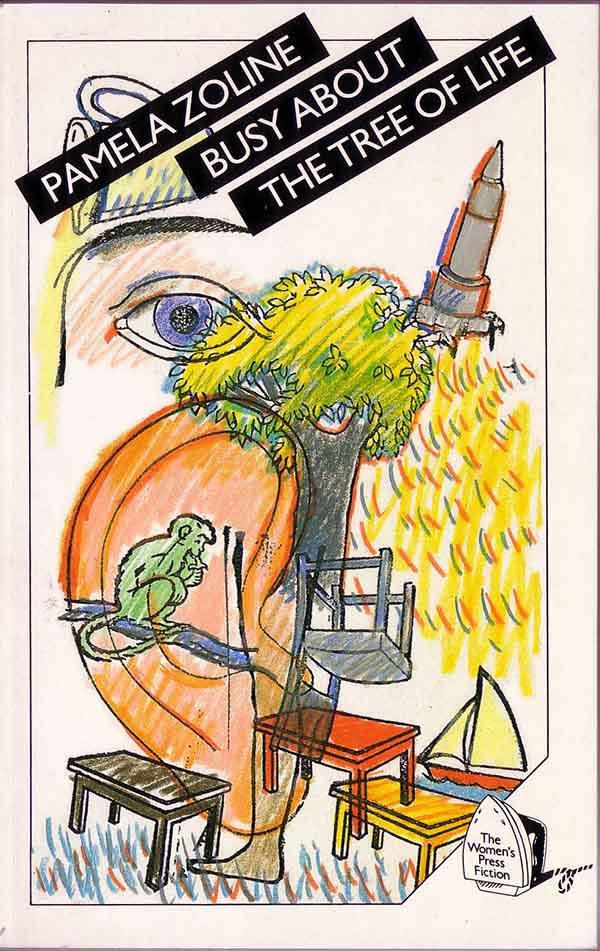
4Busy About the Tree of Life, Pamela Zoline (1988) I read this for SF Mistressworks, but my review has yet to appear there. Zoline is best-known for her 1967 short story ‘The Heat Death of the Universe’, and she didn’t write much else – a further four stories, in fact. All are collected here. Unsurprisingly, this is one of the strongest sf collections around. It really should be back in print.
5Europe in Autumn, Dave Hutchinson (2014) This is a surprise – a book in my best of the year in its actual year of publication. I’m pretty sure that’s a first for me. Europe in Autumn is a pleasingly cosmopolitan near-future thriller that takes an interesting twist reminiscent of Ken MacLeod’s novels… but very different all the same. Sure to be on some shortlists next year.
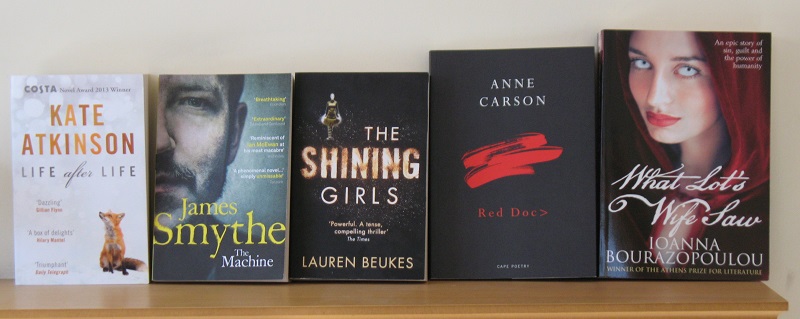
Honourable mentions: Two books from my Hugo reading made it onto my top five – even if they didn’t make the award shortlist (as if) – and I’m going to give another one a mention here: Anne Carson’s Red Doc> (2013), a narrative poem which managed more art in its 176pp than all fourteen volumes of The Wheel of Time; also very good was Olivia Manning’s last novel, The Rain Forest (1974), a somewhat Lowry-esque farce set on a small island in the Indian Ocean; from reading for SF Mistressworks, Joanna Russ’s collection Extra(ordinary) People (1984, my review here), her novel We Who are About To… (1977, my review here) and Josephine Saxton’s Queen of the States (1986, my review here); and finally Laurent Binet’s HHhH (2013), which offers a fascinating perspective on literature, history and writing about history as fiction.
Two women and three men in the top five, and five women and one man in the honourable mentions. I have made an effort in 2014 so far to maintain gender parity in my fiction reading – and, as can be seen, it does make a difference. On the other hand, there seems to be more genre fiction in my picks this year than is normally the case – over half were published explicitly as genre, and a further three published as mainstream but make use of genre conceits. Which makes a top five that is entirely genre – which I think is a first for me for a good many years.
FILMS 1Beau Travail, Claire Denis (1999, France) Beautifully photographed – and if that seems common to my choices, cinema is a visual medium – but also sharply observed. However, what knocks this film from merely good to excellent is the final scene – and if you’ve seen it, you’ll know what I mean.
2Under The Skin, Jonathan Glazer (2014, UK) Scarlett Johansson guerilla-filming in Glasgow, playing the part of an alien harvesting men for some unexplained reason (in the film, that is; in the book it’s for meat). It’s the film’s refusal to annotate or explain that makes it.
3Blow-Up, Michelangelo Antonioni (1966, UK) After you’ve finished marvelling how young both David Hemmings and Vanessa Redgrave look in this film, you begin to realise how beautifully each shot is framed. It’s perhaps not as painterly a film as Antonioni’s stunning Red Desert, and perhaps its plot boasts too many echoes of that of L’Avventura… but this is excellent stuff.
4Call Girl, Mikael Marcimain (2012, Sweden) A political thriller based on a real scandal during the 1970s, known as the Bordelhärvan scandal, involving senior politicians and under-age prostitutes. Filmed with that sort of stark Scandinavian realism that is its own commentary.
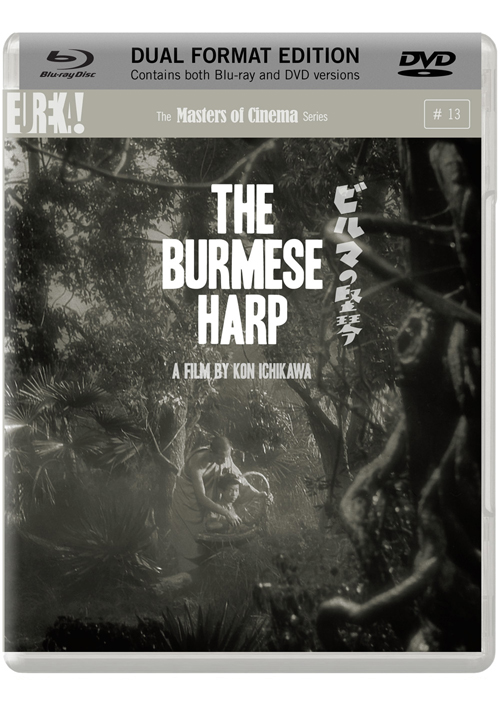
5The Burmese Harp, Kon Ichikawa (1956, Japan) A Japanese soldier in Burma just after WWII chooses to stay in the country as a travelling Buddhist monk, with the intention of providing a proper burial for all the soldiers killed during the fighting and whose bodies have been left to rot. What really makes this film, however, is that the rest of his company use choral singing to maintain their morale, and throughout the film they put on impromptu performances.
Honourable mentions: Upstream Colour Shane Carruth (2013, USA), is an elliptical, often beautiful, film and the complete antithesis to Hollywood mind-candy; Kin-Dza-Dza!, Georgiy Daneliya (1986, Russia), is completely bonkers but somehow manages to make its more ludicrous aspects seem completely normal in its world; Head-on Fatih Akın (2004, Germany), an intense drama about a Turkish-German couple and a marriage of convenience; Man of Iron, Andrzej Wajda (1981, Poland), is based on the strikes in the Gdańsk Shipyard during the 1970s, and mixes real fact and fiction – Lech Wałęsa appears himself and is also played by an actor; The Best of Everything, Jean Negulesco (1959, USA), its first half is the sort of well-photographed 1950s melodrama that really appeals to me, but it’s a shame about the film’s second half; Like Someone in Love Abbas Kiarostami (2012, France), displays Kiarostami’s typically elliptical approach to story-telling which, coupled with its realness, makes for beautiful cinema; and finally, a pair of films by Piotr Szulkin: Ga, Ga. Chwała Bohaterom (1986, Poland), the blackest of comedies, takes a hero astronaut and subjects him to a litany of inexplicable indignities; and Wojna Swiatów – Następne Stulecie (1981, Poland), even blacker and more cynical, in which a popular TV presenter becomes first a tool of the oppressors, then a rebel, but will be remembered ever after as a collaborator.
And once again I have failed to pick a single Hollywood film – well, okay, the Negulesco is a Hollywood film, but it’s also 55 years old. So perhaps I should have said a recent Hollywood film. This doesn’t mean I haven’t watched any, just that none of them were any good.
ALBUMS 1Shadows Of The Dying Sun, Insomnium (2014) A new album by Insomnium on this list is hardly a surprise, but this band really is bloody good. As I’ve said before, if you look up “Finnish death/doom metal” in the dictionary, all it says is “Insomnium”.
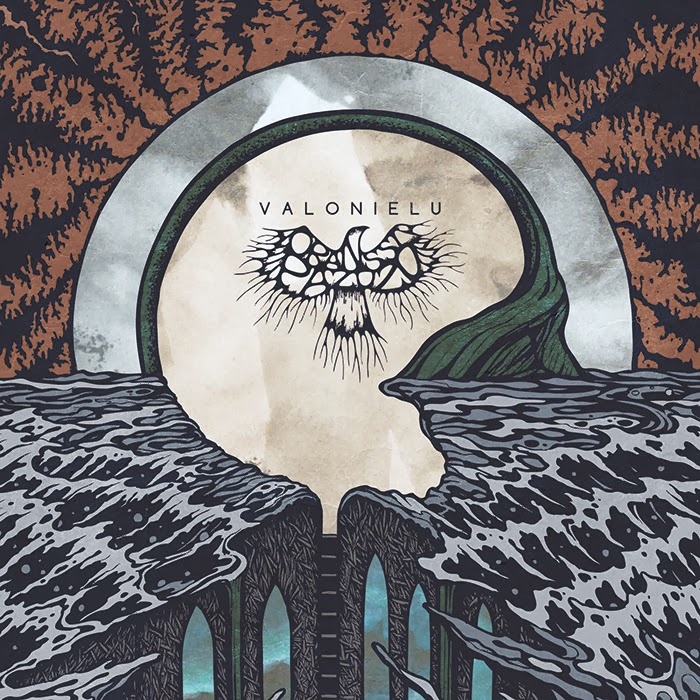
2Valonielu, Oranssi Pazuzu (2013) I actually purchased this in 2013, but too late to make that year’s best of. It’s… well, it’s a recipe that doesn’t deserve to work, but actually does so brilliantly – space rock plus black metal. Weird and intense and very very strange. It should come as no surprise to learn the band are from Finland.
3From a Whisper, Oak Pantheon (2012) A US band that plays a similar black/folk/atmospheric metal as Agalloch, but seems a little more… metal in places. This is their first full-length album after a debut EP, and I’m looking forward to whatever they produce next.
4The Frail Tide, Be’lakor (2007) This Australian band’s latest album made last year’s Top 5, so why not their debut this year? Their complex melodic death is enlivened with some nice acoustic passages in this. Excellent stuff.
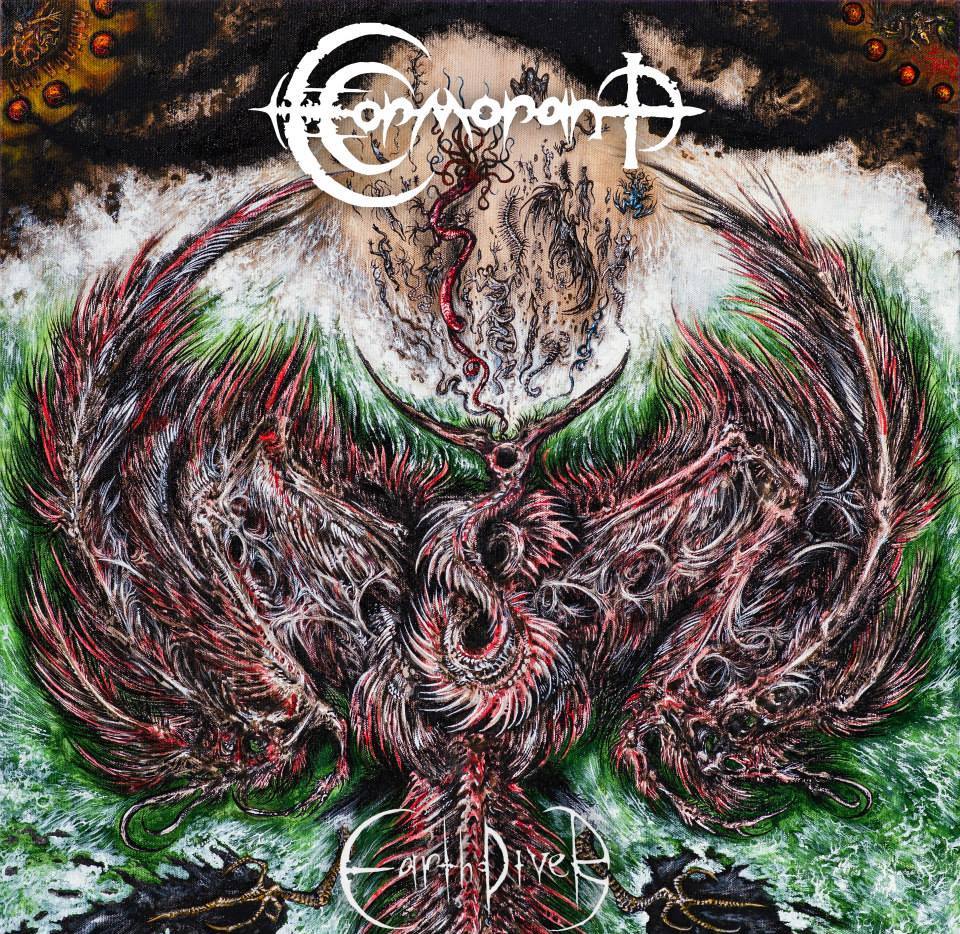
5Earth Diver, Cormorant (2014) Another self-release by a band that refuses to be pigeon-holed and quite happily shifts through a number of metal genres during each epic track. And they do write epic tracks.
Honourable mentions: 25th Anniversary of Emptiness, Demilich (2014) is a compilation of unreleased and rerecorded material from classic Finnish vocal fry register death metal band, an important document; Stone’s Reach, Be’lakor (2007), the band’s sophomore release and every bit as good as their other two, but their debut’s acoustic sections gave it the edge; The Void, Oak Pantheon (2011), is the band’s debut EP and an excellent harbinger of their later material; Restoration, Amiensus (2013), any band that manages to mix Agalloch and Woods of Ypres gets my vote; Older than History, Master of Persia (2011), Iranian death metal which makes good use of Iranian music traditions to produce something excellent.
Not too many this month, so I appear to be getting my habit a little under control. More work still needed, however. On the plus-side, it’s getting harder to find irresistible bargains on eBay; on the other hand, it’s getting easier to find obscure books that look interesting…
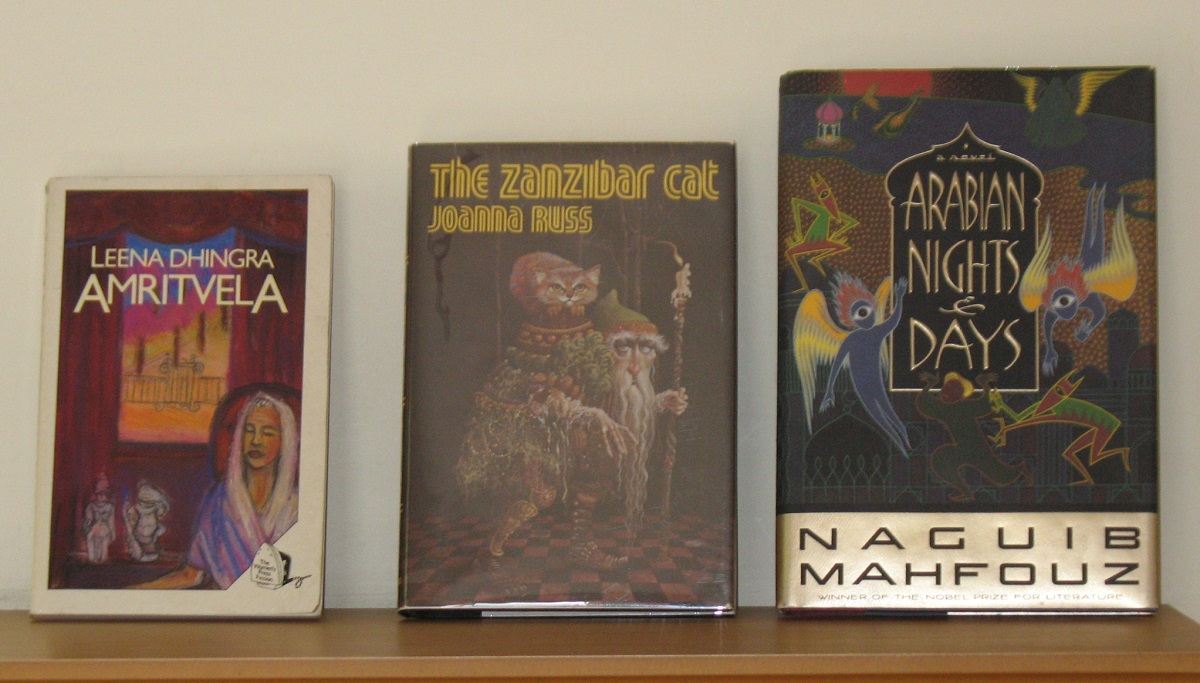
Three first editions. Amritvela is actually signed and was a couple of quid on eBay. It’s not sf, but I need to read more world fiction anyway. The Zanzibar Cat is Russ’s first collection. Arabian Nights and Days was given me by my mother. I’ve read several books by Mahfouz, and I have a couple more on the TBR. But I’ve yet to read his Cairo trilogy, as the only copies I have of it are in Arabic. That’s a project for one year – get my Arabic up to scratch so I can read them…
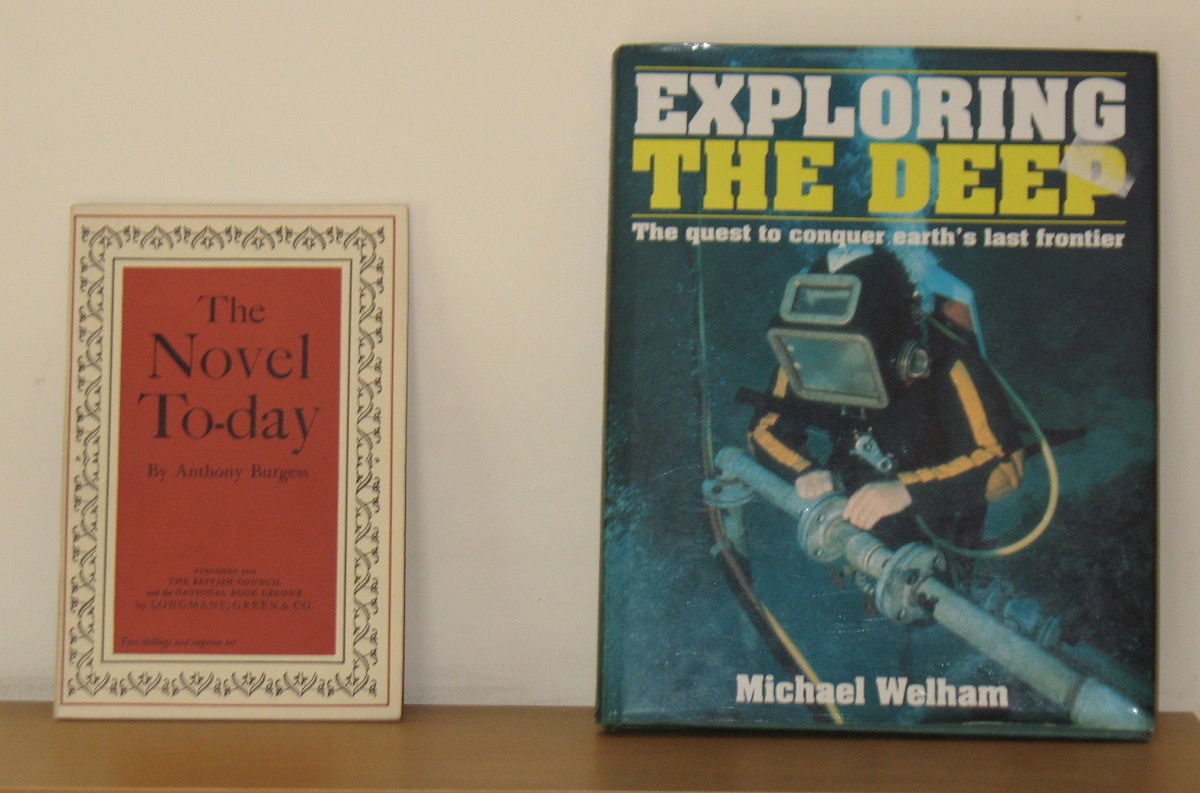
The Novel To-day was a lucky (and cheap) find on eBay. It goes in the Anthony Burgess collection. Exploring the Deep was also from eBay (and also cheap), and is a pretty good overview of its topic. Useful research material, should I ever decide to write some hyperbaric sf…
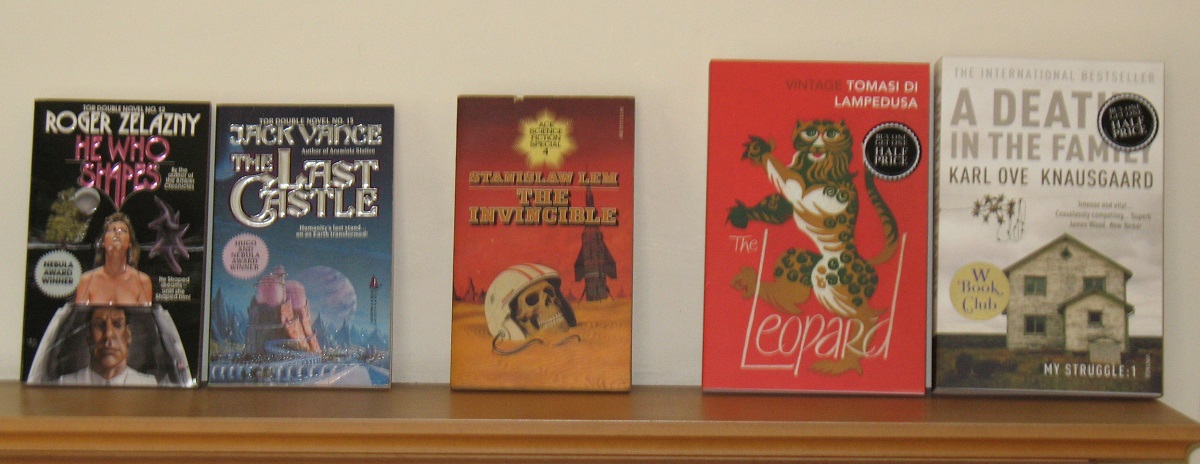
A pair of Tor doubles – No 12 He Who Shapes/The Infinity Box by Roger Zelazny and Kate Wilhelm, and No 15 The Last Castle/Nightwings by Jack Vance and Robert Silverberg. I started collecting these after a bunch of them appeared in a remainder book shop in Abu Dhabi, and over the years I’ve managed to find 28 of the 36 Tor published. Some of them are quite good, but many are rubbish. The Invincible is more Lem. The Leopard and My Struggle 1: A Death in the Family were bought as a birthday present.
It occurred to me that while most of the reviews on SF Mistressworks are reprints, all of mine are original – which means that unless you follow that blog, you won’t have seen them. So here’s a list of the sf books by women authors I’ve reviewed so far this year on SF Mistressworks:
The New Women of Wonder, Pamela Sargent, ed. (1978) The third and final all-women sf anthology edited by Sargent, at least until the two reboots in 1995. Probably the best of the three. Review here.
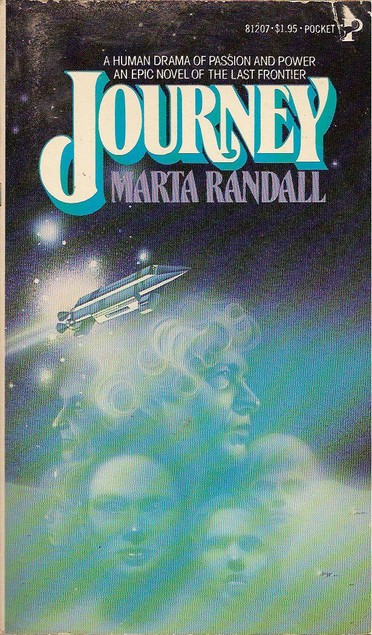
Journey, Marta Randall (1978) The first of a duology about the Kennerin family and their trials and tribulations colonising the world of Aerie. I wasn’t entirely convinced. Review here.
Fireflood and Other Stories, Vonda N McIntyre (1979) McIntyre’s only collection, which is a shame as judging by the stories in this she deserves to be much better known. Review here.
The Children of Anthi, Jay D Blakeney (1985) The first of duology about the semi-feudal world of Ruantl and the adventures of galactic rogue Blaise Omari after he crashlands there. Solid core genre, although it didn’t survive this most recent read quite as well as I’d expected. Review here.
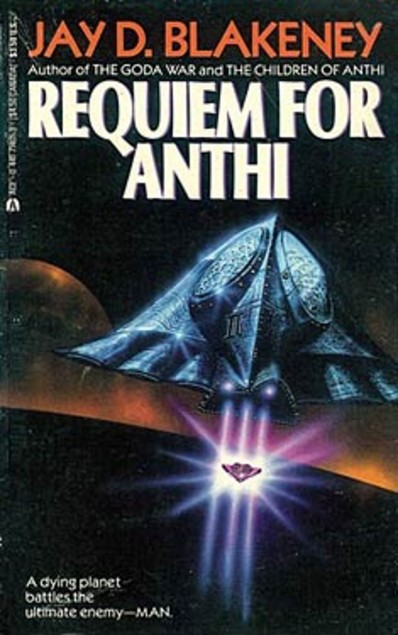
Requiem for Anthi, Jay D Blakeney (1990) The sequel to The Children of Anthi, which probably makes a better fist of the background even if the protagonists do prove to be infeasibly special. Review here.
Extra(Ordinary) People, Joanna Russ (1984) Excellent collection, containing Russ’s only Hugo win, ‘Souls’, as well as ‘The Mystery of the Young Gentleman’, which immediately became a favourite piece of short sf. Review here.
Countdown For Cindy, Eloise Engle (1962) Early Sixties tosh about the first American woman in space, a nurse sent to the Moon to look after a pair of injured scientists at the Moonbase. Very much a book of its time – its titular heroine is not going to be seen as much of a role model these days. Review here.
Still to come over the next couple of months: reviews of Ark Baby by Liz Jensen, Busy About the Tree of Life by Pamela Zoline, We Who Are About To… by Joanna Russ and Queen of the States by Josephine Saxton. I have many more eligible books than those, of course – they’re just the ones I’ve actually read and am working on reviews of at this moment.
A couple of times while reading books to review on SF Mistressworks, I’ve wondered why a book is no longer in print, especially given that many inferior ones still are. A recent such review – it will appear tomorrow – had me thinking about which out-of-print books I’d like to see available once again, books that only saw one or two editions a decade or more ago. It proved a harder list – even limited to five – than I expected. For one thing, the SF Gateway has been doing an admirable job in bringing a number of books back into “print” as ebooks; some of my favourite sf novels have appeared over the last few years in the SF Masterworks series; and many authors have made their back list available as print-on-demand books or on Kindle, such as Marta Randall or Gwyneth Jones. But there are still some books that I think should be re-introduced to a twenty-first century audience:
The Wall Around Eden, Joan Sloczewski (1989). I reviewed this for SF Mistressworks (see here) and thought the book a masterclass in science fiction writing. The last edition in print was from The Women’s Press in 1991. It really deserves to be made available once more.
The Complete Short Stories of Joanna Russ, Joanna Russ. This is a cheat – there’s no such book. But if assorted male authors have had their collected short fiction published, then why not Russ? Her last collection was in 1988, and by my count she had almost seventy pieces of short fiction published. It’s long past time for a collected works.
Coelestis, Paul Park (1993). Okay, so it’s one of my favourite sf novels and I also happen to think it’s one of the best sf novels ever written… But it saw only a single hardback and paperback release in the UK and US and has been out of print ever since.
The Steerswoman’s Road, Rosemary Kirstein (2003). This was an omnibus of two earlier novels, published in 1989 and 1992 (neither of which were then reprinted), but the omnibus appeared only in a single edition and has never been reprinted since. It should be – the books are excellent. See my reviews on SF Mistressworks here and here.
The Grail of Hearts, Susan Shwartz (1992). This is a superior fantasy which has apparently never been reprinted since its paperback edition in 1993.
Anyone else have any genre books they’d like to see back in print?
ETA: By my count Russ had 56 stories published, plus six Alyx stories and two set in the Cthulhu mythos. All but fourteen have been collected.
… Although I think it’s been longer than a month since my last book haul post. Which may explain why so many books appear in this one. Except my book haul posts always seem to feature a large number of books… I really must cut back on the number I buy. I managed to read nine books in one weekend during February, which took less of a chunk out of the TBR than I’d have liked since I’d bought so many damn books that month. Ah well. The following are the usual mix of subjects and genres and stuff.
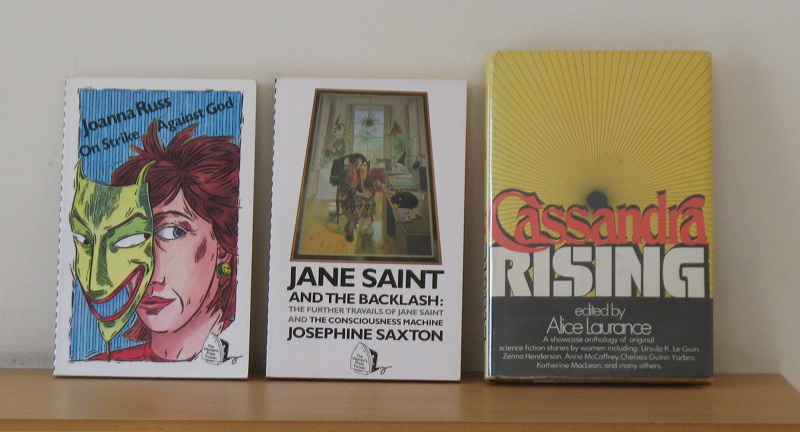
Some books for SF Mistressworks. Cassandra Rising is a SFBC women-only sf anthology, and the only copy of it I could find happens to be signed by half the contributors. Oh well. Jane Saint and the Backlash is the sequel collection to Saxton’s The Travails of Jane Saint, which was also published by The Women’s Press. On Strike Against God isn’t, as far as I’m aware, genre, but I’ll decide whether it’s suitable for SF Mistressworks once I’ve read it. All three books were bought on eBay.
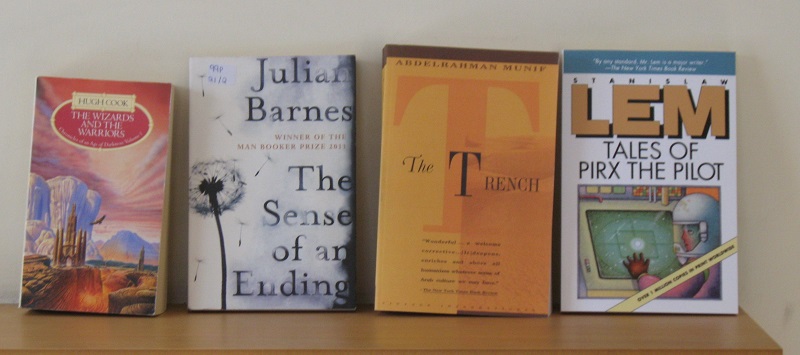
An assortment of paperback fiction. I want to read more Lem, hence Tales of Pirx the Pilot. Which reminds me, I must get a copy of the film adaptation – I found a website the other day that sells Russian DVDs (many of which have English subtitles). The Trench is the sequel to Cities of Salt, a novelisation of the US exploitation of the Saudi oil reserves, which I enjoyed (see here). The Sense of an Ending was a charity shop find; it was shortlisted for the Man Booker Prize. The Wizards and the Warriors is the first book of the Chronicles of the Age of Darkness, which I’ve heard isn’t too bad – now I have the first three books I’ll see what they’re like.
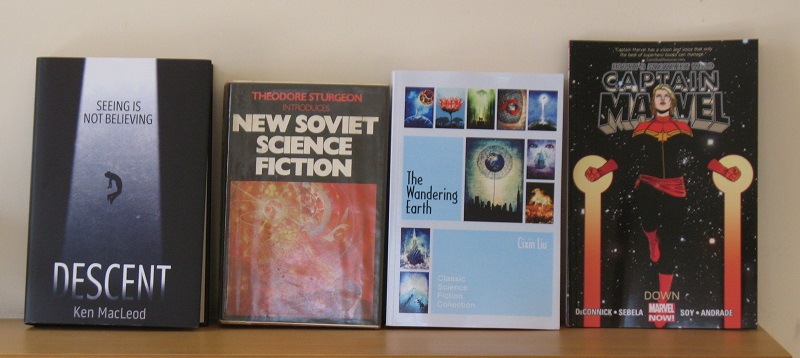
An assortment of hardback fiction. And a graphic novel. The stories of Captain Marvel 1: In Pursuit of Flight (see here) and this second volume, Captain Marvel 2: Down, have pretty much the same inspirations as Apollo Quartet 3, Then Will The Great Ocean Wash Deep Above. It’s as if Kelly Sue DeConnick took the two narratives of my novella and wrote her own versions of them – except, of course, the timing makes that impossible. Both feature a character called Helen Cobb, clearly based on Jerrie Cobb. The first Captain Marvel graphic novel is about the Mercury 13, and the second partly takes place at the bottom of the sea in a ship and plane graveyard. A very weird coincidence. Sadly, the story is mostly typical superhero fisticuffs, and the art is pretty poor. Cixin Liu’s fiction has been recommended to me many times, so I decided to pick up a copy of The Wandering Earth, a collection of his novellas translated into English for the first time. Browsing on eBay one day, I discovered that Macmillan had published a series of Soviet sf books back in the 1970s. New Soviet Science Fiction is an anthology, but the series also featured several novels. I smell a collection coming on. Finally, Descent is Ken MacLeod’s latest novel.
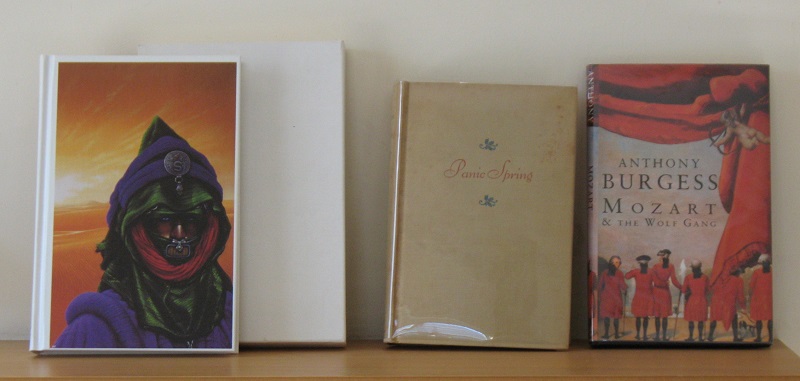
Some collectibles. Mozart & the Wolf Gang is a signed first edition. The other two books are among the most expensive I’ve ever bought – I won’t say how much each cost, it’s a little embarrassing. Panic Spring is Lawrence Durrell’s second novel, which was published under the name Charles Norden as his first did so badly. This is the US first edition, sadly, not the UK. Eye is a collection by Frank Herbert and copiously illustrated by Jim Burns. There were 175 slipcased, signed and numbered editions published, and now I have one of them.
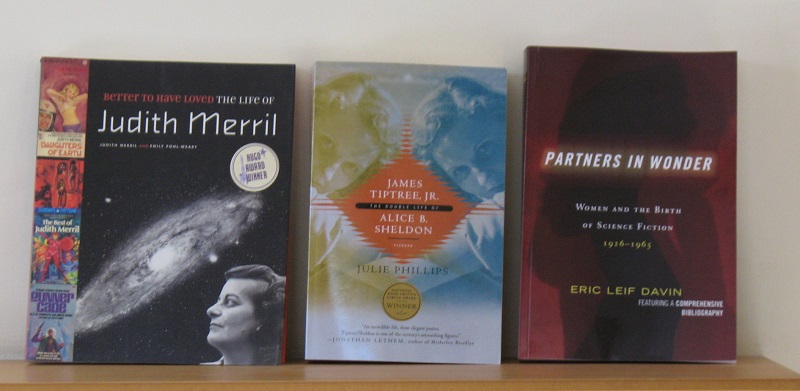
Research material for Apollo Quartet 4, All That Outer Space Allows. The final novella of the quartet will be about Apollo astronauts, of course it will… sort of. But it’ll chiefly be about an astronaut’s wife, and women science fiction writers – hence a pair of biographies of the latter: Judith Merril’s, Better to Have Loved; and James Tiptree Jr’s, The Double Life of Alice B. Sheldon. Partners in Wonder is about early women sf writers – I might write about it for SF Mistressworks after I’ve read it…
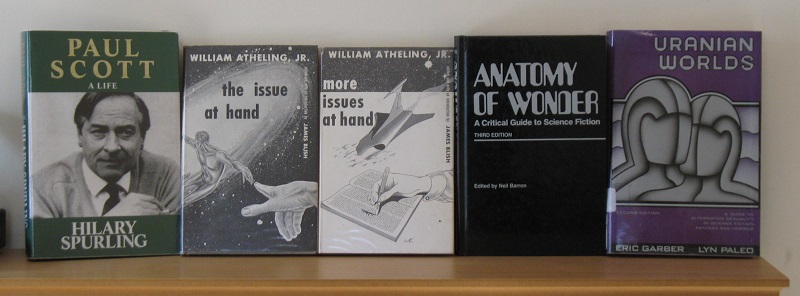
Some reference books, genre and otherwise. The Issue at Hand, More Issues at Hand and Anatomy of Wonder were all bargain purchases from Cold Tonnage. Uranian Worlds I decided to buy when I was trying to look something up online with very little success. I bought it from an Amazon marketplace seller; the book proved to be an ex-library copy, but the seller cheerfully refunded me half the selling-price. Paul Scott: A Life is a biography of, er, Paul Scott.
I was really good at World Fantasy Con and bought only about half-a-dozen books (which is considerably less than I normally buy at cons). Unfortunately, I can’t say the same for the rest of the month – I have found myself clicking “buy” a little once too often on eBay and a certain near-monopolistic online retailer of books and stuff… But, for what it’s worth, I did pick up a few bargains for the collection, and a few interesting things to read. And here they are:
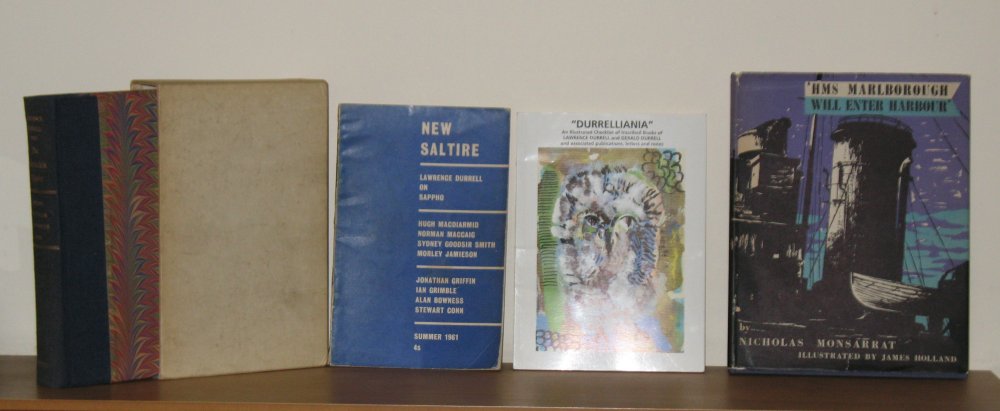
A few books for the collection. I already had a first edition of Monsarrat’s HMS Marlborough Will Enter Harbour, but this one is signed (and it was cheap). The Alexandria Quartet is the signed and numbered limited edition from 1962, but it’s the US one (both were printed by Faber & Faber, but half were published by Dutton in the US). Durrelliana is a vanity-published illustrated checklist of works by both Durrells. And New Saltire is the summer 1961 issue of The Saltire Society’s magazine, and which contains a piece by Lawrence Durrell on his play, Sappho.
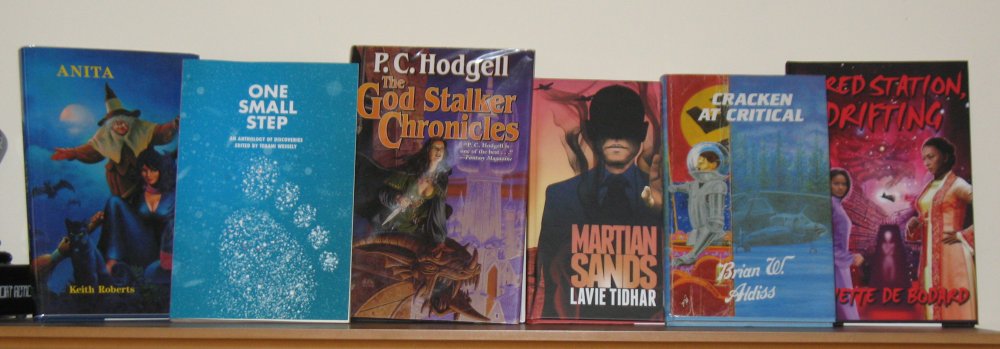
My World Fantasy Con purchases: I should have picked up a copy of On A Red Station, Drifting at the Eastercon in April, but I’ve rectified that now. Cracken at Critical is fix-up novel, which includes one of my favourite Aldiss novellas, Equator. Not sure how Aldiss manages to squeeze in the esoteric Hitlerism, but I guess I’ll find out. One Small Step is a women-only sf anthology from Australian small press Fablecroft. Anita is a collection of linked fantasy stories by Keith Roberts, which I saw going cheap at the con. Martian Sands is by some bloke. And The God Stalker Chronicles is an omnibus of the first two books of the Kencyrath series, an epic fantasy of which I have heard good things by people who know my tastes in that genre.
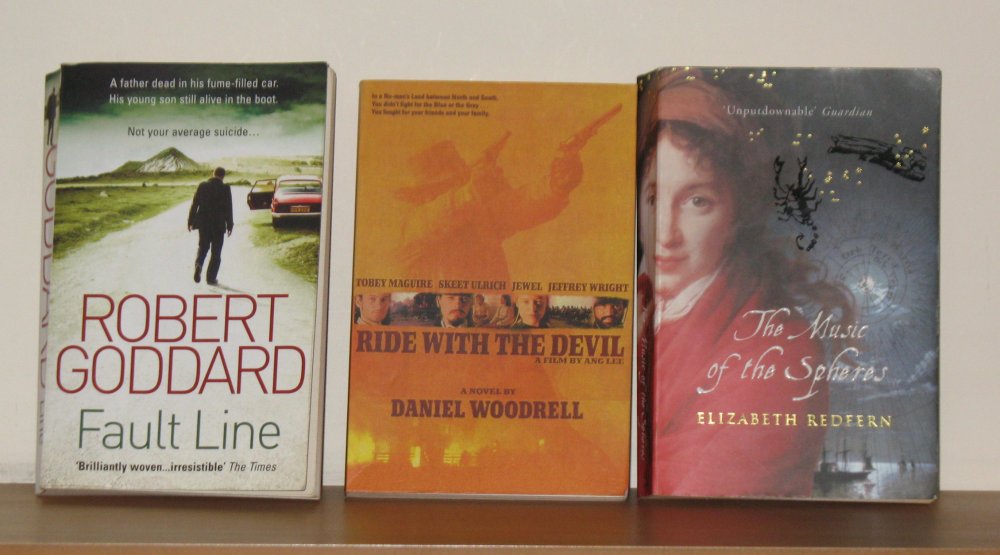
Fault Line, Robert Goddard’s latest “thumping good read”, and Daniel Woodrell’s Ride with the Devil (AKA Woe to Live on) were both charity shop finds. I have since read the Goddard, it is like his other books. The Music Of The Spheres was given to me by my mother, who recommended it.
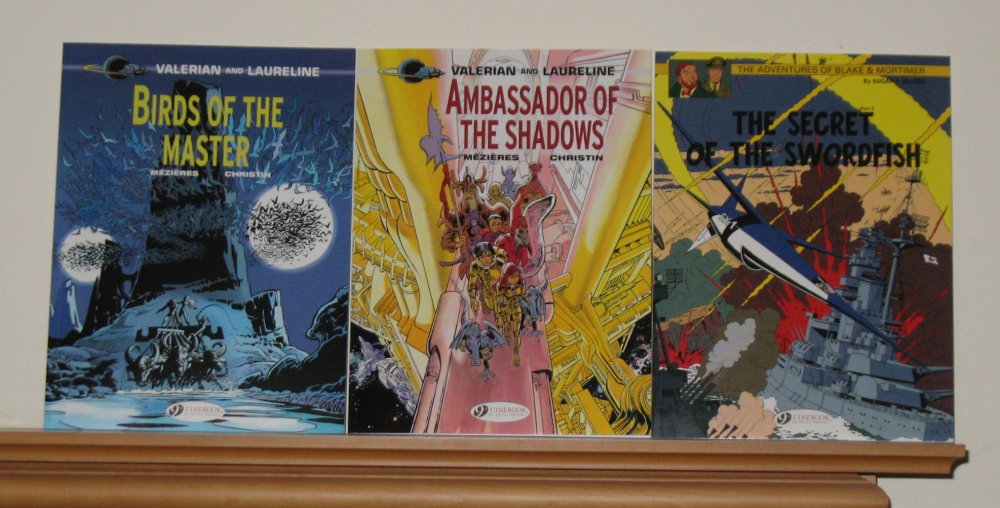
Books 5 and 6 of the Cinebook English translations of Mézières & Christin’s Valerian and Laureline series, Birds of the Master and Ambassador of the Shadows. Fun stuff. The original French series is currently up to twenty-three volumes, with the latest, Souvenirs de futurs, published in September this year. (It’s actually volume 22, as there was a volume 0.) And The Secret of the Swordfish, Part 3 is the final part of the first Adventures of Blake and Mortimer series, originally published in 1953, but now available in English for the first time. It has not aged well, although later books in the series are quite fun.
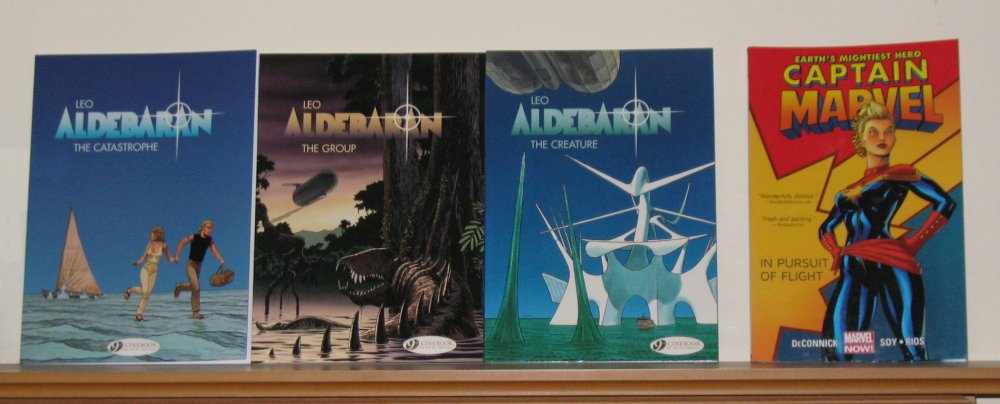
A rare purchase of a superhero graphic novel, Captain Marvel: In Pursuit of Flight, about which I write a few words here. Aldebaran volumes 1 to 3 – The Catastrophe, The Group and The Creature – are the work of Brazilian artist Léo, and are the opening trilogy in a series which continues with Betelgeuse and Antares.
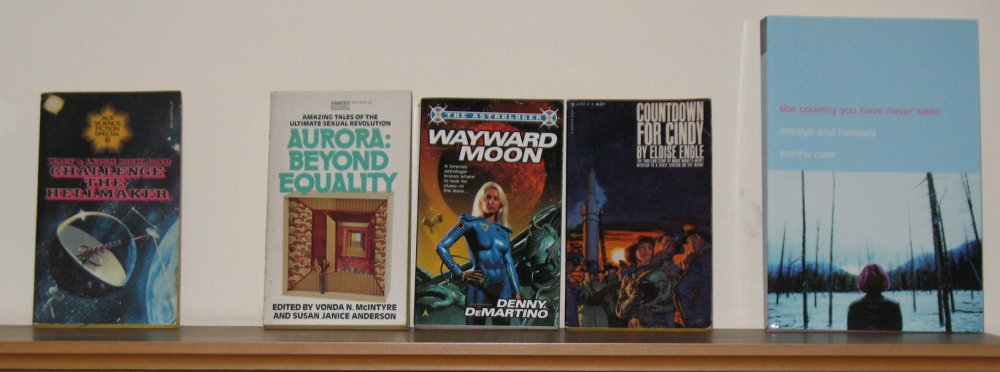
The Country You Have Never Seen is a collection of essays by Joanna Russ, found on eBay for substantially less than its going-price on Amazon. Countdown For Cindy I couldn’t resist when I saw it – MOON NURSE! I’m not sure it’s actually eligible to be reviewed on SF Mistressworks, unlike Wayward Moon, which certainly is – though I’ll have to track down a copy of the first book of the duology first. Aurora: Beyond Equality is a feminist sf anthology, not actually women-only – although the male contributors are completely unknown to me. Challenge the Hellmaker is the sixth book of the 1970s relaunch of the Ace Science Fiction Specials, a series which includes some quite obscure novels – I reviewed one by Marion Zimmer Bradley for SF Mistressworks here; it wasn’t very good.
Some people go “ooh shiny”, others go “ooh book”. Clearly, I belong to the latter category. And just to make matters worse, I even make books myself. As Whippleshield Books, I add to the great mass of books that exists in the world today – and the somewhat smaller mass of books that exists in my house. Only two so far, but a third later this year and at least two next year. Meanwhile, I continue to buy books by other people because books. Like these ones:
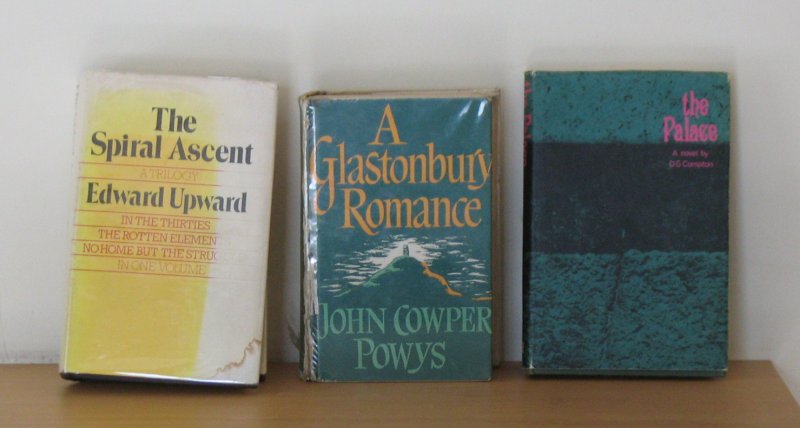
A trio of hardbacks: The Palace is DG Compton’s one and only (as far as I’m aware) mainstream novel, and very hard to find. I don’t think it even made it into paperback. I found this copy on abebooks.co.uk, it was not cheap. A Glastonbury Romance was a charity shop find; it’s ex-library and a bit tatty, but never mind. The Spiral Ascent is… Well, you see, it goes like this: I had a copy of the first book of the trilogy, In the Thirties, in its original Penguin paperback edition. I wanted books 2 and 3 to match… but I couldn’t find them. So I decided to get the omnibus edition instead – and I found this signed edition on abebooks.co.uk. The cover is a faded but still. Signed. Incidentally, you can download the entire trilogy in PDF format from here, but still… books. You can also get some lovely small press books by Upward from Enitharmon Press here.
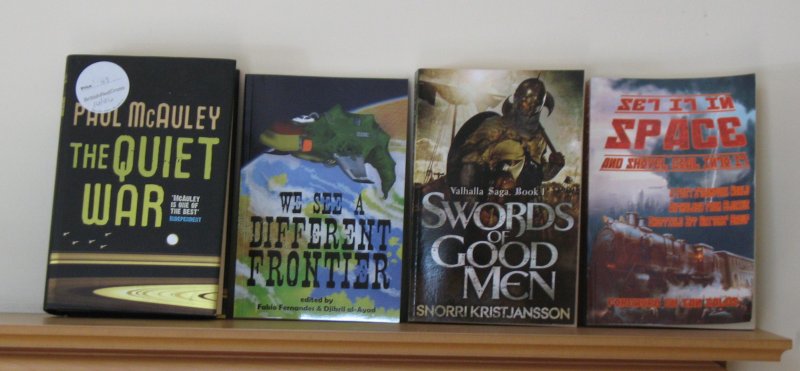
Last year, I bought a copy of The Quiet War on eBay because the seller said it was the hardback edition. It wasn’t, it was a trade paperback. I complained and received a partial refund. Earlier this year, I read the book… and I had problems with it. And then this month, I found this hardback copy of it in a local charity shop. So of course I bought it. Bargain. We See A Different Frontier is a collection of postcolonial genre stories. Swords of Good Men I have to review for Interzone. Fantasy, meh; but… Vikings. Set it in Space and Shovel Coal into it is the second anthology by the Sheffield Science Fiction and Fantasy Writers Group, and the introduction is by Yours Truly.
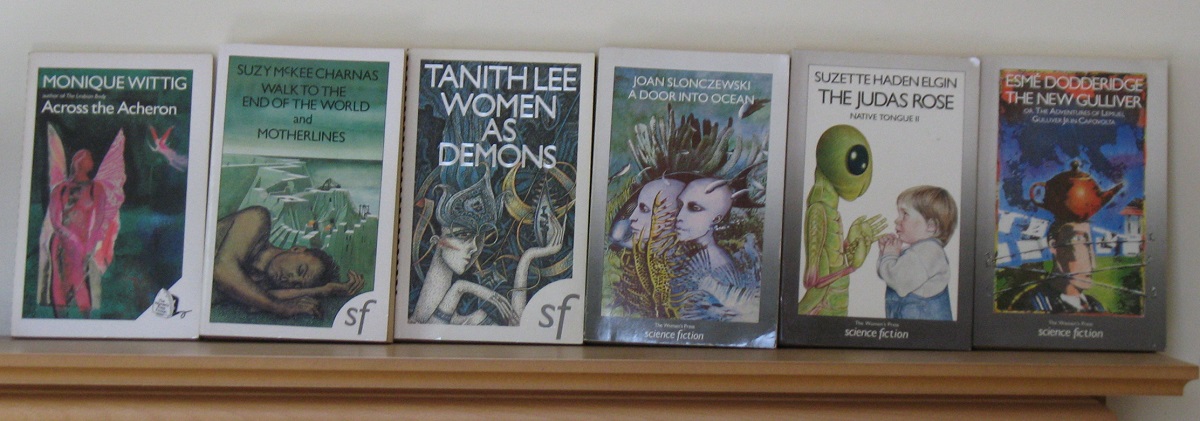
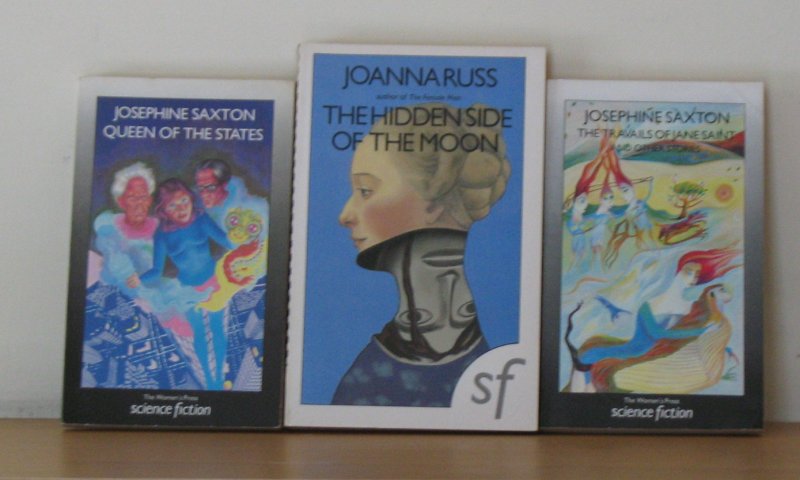
Three Women’s Press sf books for the collection – I now have two dozen of them – sent to me by The Space Merchants in exchange for a copy of Night and the Enemy, a graphic novel by Harlan Ellison and Ken Steacy I no longer wanted. Expect to see these three books reviewed on SF Mistressworks at some point.
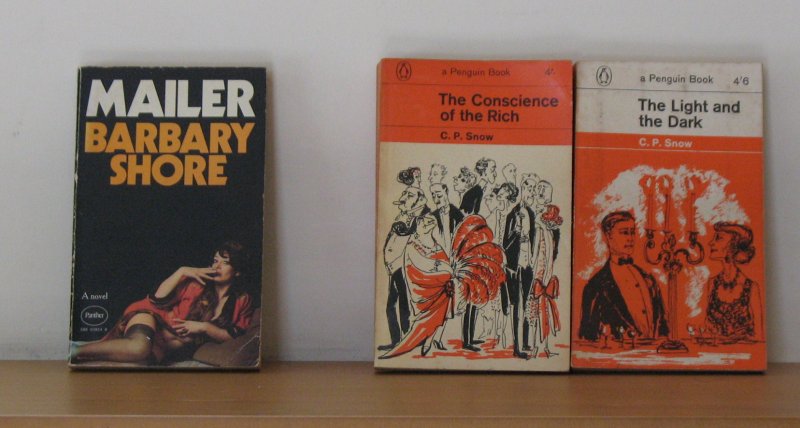
Three paperbacks by two dead white males. I’ve read the first book of Snow’s Strangers and Brothers and I plan to read the entire series. The Conscience of the Rich and The Light and the Dark are books three and four respectively (by internal chronology, not year of publication). Of course, I will only buy matching editions – the 1960s Penguin paperback editions. A local charity shop had a bunch of 1970s Norman Mailer paperbacks in – just look at that cover – and I picked out Barbary Shore. I may go back and buy the others, if they’re still there.
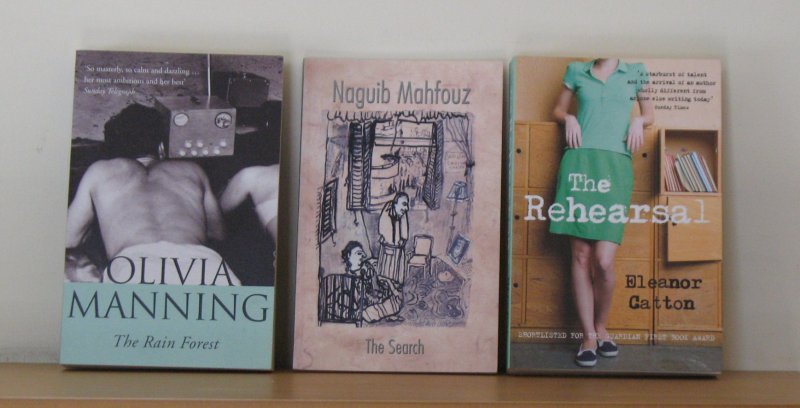
Three charity shop finds. Eleanor Catton’s The Luminaries has been longlisted for the Booker and looks very interesting, so I was quite chuffed to stumble on a copy of her first novel, The Rehearsal… which David Hebblethwaite tells me is the best book he’s read in the past five years. You don’t expect to find Naguib Mahfouz novels published by the American University in Cairo Press in Yorkshire charity shops, but I found one. I read Mahfouz whenever I stumble across copies of his books. I still have his Cairo trilogy – in Arabic, of course – to read… Olivia Manning’s The Balkan Trilogy and The Levant Trilogy – also adapted for television as Fortunes Of War – are brilliant, so she’s a name I certainly look out for during my frequent trawls through books in the local charity shops. The Rain Forest was her last novel.
A couple of weeks ago, abebooks.com published a list of 50 Essential SF Novels, about which, of course, there is much to argue. This prompted a discussion on Twitter between Jared Shurin of Pornokitsch, James Smythe of The Explorer, and myself. We decided to each generate our own list of 50 essential sf novels, which we would post over two days – 25 books per day. Jared’s list is here and James’ list is here. The rules were simple: the definition of science fiction up to the individual, novels only (so no collections or anthologies), novellas allowed, graphic novels (or bandes dessinées) also allowed, only one book per author, and only books that you have yourself read.
It proved a harder exercise than I expected. I could have picked 50 of my favourite sf novels – but what made them “essential”? Instead, I chose novels across a mix of science fiction modes and subgenres. I also wanted a gender-balanced list, but unfortunately couldn’t manage it – only 16 of the 50 writers below are female. That one-book-per-author rule did no help at all. There are many women sf writers who probably belong on this list, but whose books I’ve not actually read – such as Octavia Butler, MJ Engh, Charlotte Perkins Gilman, CL Moore, Judith Merrill, Carol Emshwiller, Marge Piercy, Naomi Mitchison… I could only choose those I’d read.
But, the list. Here it is, the first twenty-five novels of fifty that every self-respecting sf fan should have on their bookshelves, given in order of original publication. The remaining twenty-five will appear tomorrow.
1Frankenstein†, Mary Shelley (1818)
The original proto-sf novel and a bona fide classic of English literature. Of course it’s essential.
2The Time Machine†, HG Wells (1895)
Another proto-sf novel. Time travel is a well-established subgenre, but which time travel novel is the most essential in a collection? I submit it is this one. Far too many time travel stories use the trope merely to improve matters for the protagonist. Well’s classic describes, and comments on, the time of its writing through the future history of humanity.
3A Princess of Mars, Edgar Rice Burroughs (1912)
Edgar Rice Burroughs has a lot to answer for – this planetary romance arguably fixed science fiction as a pulp genre, and it took a good forty or more years for sf to break free. A Princess of Mars is a silly book, with its Gary Sue hero and naked Martians, its magical science and its simplistic set-up… but it is also an essential stop on the road to modern science fiction.
4Metropolis, Thea von Harbou (1926)
One of the genre’s first novelisations – if not the actual first – as it was based on the 1924 screenplay of Lang’s film. It’s all a bit overwrought and florid, in direct contrast to the movie, but its message remains timeless.
5Last And First Men†, Olaf Stapledon (1930)
It starts in the twentieth century and finishes two billion years later. It also throws away more idea for novels within its pages than any other book in the entire sf canon. Except perhaps Stapledon’s own Star Maker, which I’ve not read yet…
6Nineteen Eighty-Four*, George Orwell (1948)
For some reason, totalitarian dystopias haven’t been especially common in genre sf – perhaps because this one did it so well; or perhaps because most sf writers and fans aren’t willing to engage with politics that don’t match their own… Where dystopias do appear in sf (they’re more common in literary fiction), they’re generally little more than background, a dim setting against which some noble-browed hero can shine.
7The House That Stood Still, AE van Vogt (1950)
Like many early sf writers, van Vogt was hugely prolific. Also like them, most of his stories and books were not very good. In this one, van Vogt crashed together noir and pulp sf, and the result is something which stands above everything else he wrote (despite the occasional characteristic silliness). It’s essential because it’s emblematic of genre fiction of the period. If Philip Marlowe and Flash Gordon had a baby, it would look like this book.
8The Sword of Rhiannon, Leigh Brackett (1953)
Planetary romance as a subgenre is hard to take seriously. We’ve put robots on the surface of Mars, we know there are no ancient civilisations, no canals, etc. But Brackett was an order of magnitude better than most writers working in this subgenre, and it shows. This is probably her most characteristic planetary romance.
9The Stars My Destination†, Alfred Bester (1956)
Thinking about it, I don’t know why this book is “essential”, but I do know that any sf book collection without it feels incomplete. It is in many ways the distillation of 1950s sf, a crazy pulp re-imagining of The Count of Monte Cristo, which revels in its pyrotechnic prose.
10Solaris*, Stanisław Lem (1961)
The Anglophone world is not, of course, the only one with a sf tradition. Many countries have strong sf traditions. Such as Poland – and Solaris is perhaps the best-known Polish sf novel by the Polish sf writer best-known outside Poland. It’s also an excellent film (but that was made by a Russian).
11Dune*†, Frank Herbert (1965)
On a prose level, Dune is not especially good. It’s also unevenly structured. But its world-building is second to none, and it is the first truly immersive sf novel. All that praise for its ecological theme is just hogwash to disguise the fact that most males when they were teenagers wanted to be Paul Atreides.
12A Torrent of Faces, James Blish & Norman L Knight (1967)
Overpopulation is a common theme in sf, and the first three-quarters of the twentieth century were awash with Malthusian nightmares. This one shows its age somewhat, but its prose is very nicely detailed and its story is well-balanced.
13Camp Concentration, Thomas M Disch (1968)
People do things – mostly nasty – to other people, and sometimes sf writes about it. This is not the best-known sf novel about an experiment to increase the intelligence of a human being, but it is the best one.
14The Fifth Head of Cerberus†, Gene Wolfe (1972)
You’d think that a genre of fiction with the word “science” in its name would be clever. But it isn’t always. Sometimes, however, it can be very clever. Like The Fifth Head of Cerberus, which is a sort of cunning puzzle in fictive form.
15Rendezvous With Rama*†, Arthur C Clarke (1972)
Some people think sf is all about Big Dumb Objects, and Clarke’s Rama is probably the most iconic BDO of them all. A mysterious alien vessel, seemingly dormant, enters the Solar System and then leaves it. This is sf as fiction of the ineffable. Ignore the inferior sequels.
16Crash, JG Ballard (1973)
Good sf is about the real world, no matter when and where it is set. Or what happens in the story. Crash is avant garde, it is brutal, it can and will offend. But it also says something important about people’s relationship to technology.
17The Continuous Katherine Mortenhoe†, DG Compton (1973)
A quarter of the world’s CCTV cameras can be found in the UK. It is the most-surveillanced nation on the planet. And yet it’s not some horrible Stalinist totalitarian state – as sf insists would be the case. (Our current lords and masters seem to prefer Dickens as a model.) The Continuous Katherine Mortenhoe shows the ultimate in paparazzi – a reporter who has had one eye secretly replaced with a television camera. His subject just wants to be allowed to die in peace. But it’s not going to happen. A sf novel that says something important, now more than ever.
18The Dispossessed†, Ursula K LeGuin (1974)
Too much sf ignores politics, content to describe some simplistic system which meets the needs of either story or writer. Given the breadth of the genre and the size of its toolbox, it’s a shame sf doesn’t try more often for meaningful political commentary in its fictions. Happily, some writers have made a career of doing so, and LeGuin is among the best at this. As this novel demonstrates.
19Dhalgren†, Samuel R Delany (1974)
There aren’t many sf novels which could legitimately make it onto a list of twentieth-century literary classics, but Dhalgren is one of them.
20The Female Man*†, Joanna Russ (1975)
This is not just a book about women-only worlds, it is also an excellent explanation of why such worlds need to exist. Sf is far too useful a tool to be merely tales of action/adventure in outer space. This book demonstrates why, and does it in a way that cannot fail to affect readers.
21Hello Summer, Goodbye, Michael G Coney (1975)
There are not that many sf novels in which humans never appear – possibly because it’s a difficult trick to pull off well. But Coney manages it in this beautifully-written coming of age story set on an alien world.
22A Scanner Darkly†, Philip K Dick (1977)
One word: drugs. This is Dick’s best novel – perhaps not his druggiest, or funniest, or most paranoid; but certainly the one where all three elements work together most effectively. Happily, it doesn’t read like he made it up as he went along, even if he did. Which is more than can be said for the bulk of his oeuvre.
23The Ophiuchi Hotline, John Varley (1977)
Varley set three novels and a number of novellas and short stories in his Eight Worlds universe. In it, mysterious aliens have destroyed human civilisation on Earth, leaving only those on the other planets and moons of the Solar System to survive – as best they can. Happily, they have access to advanced technology beamed in blueprint form from Ophiuchi. A silly conspiracy plot provides the excuse for a travelogue through the Eight Worlds, before reaching an ending that actually throws away an entire novel’s worth of ideas. But this novel is an excellent example of sf’s penchant for optimism in the face of adversity.
24Gateway†, Frederik Pohl (1977)
Another one of sf’s better-known Big Dumb Objects. The space station of the title is a mysterious depot for alien FTL starships, which humans use Russian roulette-fashion to fire themselves off into the rest of the galaxy, hoping to return with riches. It’s like the National Lottery, but with aliens off-stage somewhere (instead of hosting the prime-time game shows).
25The Wanderground, Sally Miller Gearhart (1979)
There has been a strong tradition in sf throughout its history of women-only utopias – from Charlotte Perkins Gilman’s Herland in 1915 through works by Francis Stevens, Marge Piercy, Joanna Russ, Pamela Sargent, Suzy McKee Charnas, Sheri S Tepper, Nicola Griffith, and others. Sadly, it’s been marginalised by a readership who would sooner read about derring-do by manly men. The Wanderground is not entirely women-only – the men still live in the cities, and they’ve not changed their ways much – but the women-only settlements in the hills are something very much different. Perhaps there’s a bit too much magical powers about it all, but this novel possesses a great deal of charm.
The remaining twenty-five essential sf novels will be posted here tomorrow.
note: * means the book is also on abebooks.com’s list; † means the book is in the SF Masterworks series.




 It Doesn't Have To Be Right...