
Another catch-up on what I’ve been reading of late, before this blog turns entirely into a film blog or promotional posts for All That Outer Space Allows or A Prospect of War (damn, I went and mentioned them, damn). Er, anyway, I do still read books and here are some of them.
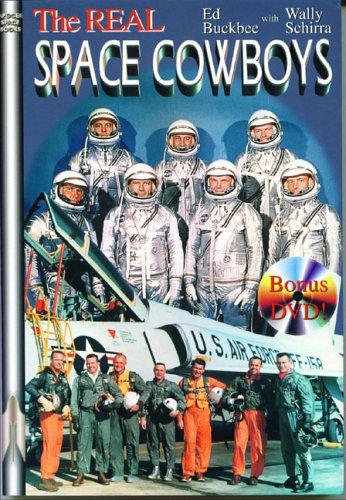 The Real Space Cowboys, Ed Buckbee, with Wally Schirra (2005). I picked up a signed copy of this a few years ago, but never got around to reading it. It’s pretty much a hagiography of the Mercury Seven, based chiefly on conversations and interviews with them in years prior to publication (many of them had died before this book was published – Grissom in 1967, Slayton in 1993, Shepard in 1998 and Cooper in 2004). Nonetheless, it’s well-presented – which Apogee Books are generally good at, even if sometimes their editing leaves a little to be desired – and makes for an interesting read. Buckbee started out in NASA public affairs, before becoming director of the US Space & Rocket Center and then US Space Camp. He knew all the astronauts personally, and much of the book is presented as a conversation among the Mercury 7. Not a bad read.
 Stained-Glass World, Ken Bulmer (1969). Bulmer was a prolific sf author with, according to Wikipedia, over 160 novels published under his own name and assorted pseudonyms. The reason for that huge output is because Bulmer was a complete hack. As is evidenced in Stained-Glass World. It’s a bit of a tired set-up, workers living in a lawless urban wasteland a century or more after society has collapsed, the rich living it up in their glass towers and enjoying a life of drugs and debauchery, and somewhere in the background is a police state but there’s little in the book to support it, or indeed the entire world as presented. The plot is thin at best, and somewhat confused – there’s a group of “Uppers” down among the workers, hunting for “Joy Juice”, which is apparently extracted from workers under the influence of another drug. None of this makes sense. There’s a lot of violence, a lot of description of urban decay and ruins, and some especially dumb future slang (a Bulmer speciality, I suspect). Avoid.
 The Leopard, Giuseppe Tomasi di Lampedusa (1958). I saw the Visconti film adaptation of this back in October 2013, and liked it enough to think it worth reading the novel on which it was based. Which is, according to Wikipedia, “considered one of the most important novels in modern Italian literature”. The story takes place in the 1860s on Sicily, during the unification of Italy. It’s about the Salina family, particularly the head of the family, Prince Fabrizio, who represents the old order, and his nephew and putative heir, Prince Tancredi, who first joins Garibaldi’s Redshirts and then the army of the king of Sardinia (who goes onto become king of Italy). While the family is holidaying in their palace at Donnafugata, Tancredi meets Angelica, daughter of the local mayor (a successful and corrupt local landowner), and marries her. When Fabrizio is asked to join the new kingdom’s senate, he refuses and recommends the mayor, as he considers him more in tune with the coming times. There’s a Lawrentian atmosphere to much of The Leopard – especially when Prince Fabrizio goes hunting while at Donnafugata – but it’s also a much more political novel than anything Lawrence wrote. Now I want to watch the film again.
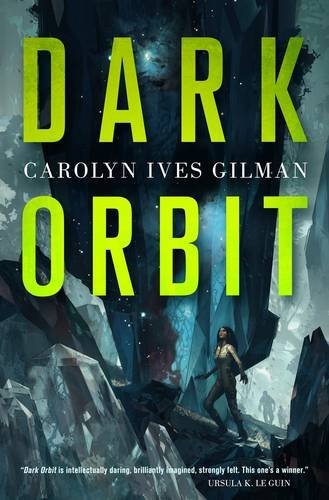 Dark Orbit, Carolyn Ives Gilman (2015). According to an accompanying press release, David Hartwell of Tor approached Gilman and “asked her to write a science fiction novel based on [my] enthusiasm for her short fiction”. Which does make you wonder why Gilman’s excellent fantasy duology, Isles of the Forsaken and Ison of the Isles, were published by ChiZine. Still, self-serving promotional press release aside, Dark Orbit is a short-ish sf novel set in Gilman’s Twenty Planets – as are some of her novellas, such as ‘Arkfall’ and ‘The Ice Owl’ – and I read it to review for Interzone. On the whole, I liked it, and it did some interesting and clever things… but I didn’t think it quite as successful as the aforementioned fantasy novels.
Prisoner of Conscience, Susan R Matthews (1998). This is the second book of Matthews’s Jursidiction series, and while it didn’t read as well this time around as I remembered, it’s still part of a superior sf series. I used to buy Matthews’s books as soon as they were published. It’s a shame her career seems to have gone down the toilet. I reviewed the book on SF Mistressworks here.
 Stalin’s Gold, Barrie Penrose (1982). In 1942, HMS Edinburgh sank in the Barents Sea after being attacked by German warships. She was part of a convoy which had delivered munitions to Murmansk for the Russians, and was carrying back five tons of gold bullion in payment. For fifty years, the wreck – and the gold – sat in 800 feet of Arctic water, too deep for anyone to salvage. But, by the late 1970s, thanks to North Sea oil, the technology existed to recover the bullion. This is the book of the successful expedition to retrieve it. A Keighley-based salvor put together a consortium with sufficient cash and resources to get the contract from the Ministry of Defence to recover the gold. What distinguished his proposal from others was that he planned to use saturation divers, rather than explosives and submersibles. Given that the MoD had designated the wreck of the HMS Edinburgh a war grave, it gave him the advantage (as did a mole he had in the ministry). An Aberdeen-based diving company, Wharton-Williams, provided the divers and equipment, a German shipping company, OSA, provided the ship, and Decca Racal provided the navigation and sensing gear. The consortium would get to keep 45% of the gold, the British govenment would take 37% and the Soviet government 13% (the Russians also had a pair of observers onboard). Penrose spends a third of the book describing the convoy and ensuing battle during which HMS Edinburgh sank. The remainder of the book focuses more on the Yorkshireman, Jessop, and is light on the technical aspects of the salvage. The writing is also pretty poor. There is, in fact, a British television documentary on the whole thing, “Gold from the Deep”, and some of the quotes Penrose uses seem to have been lifted straight from it (the documentary is available on Youtube here – a poor quality transfer, though).
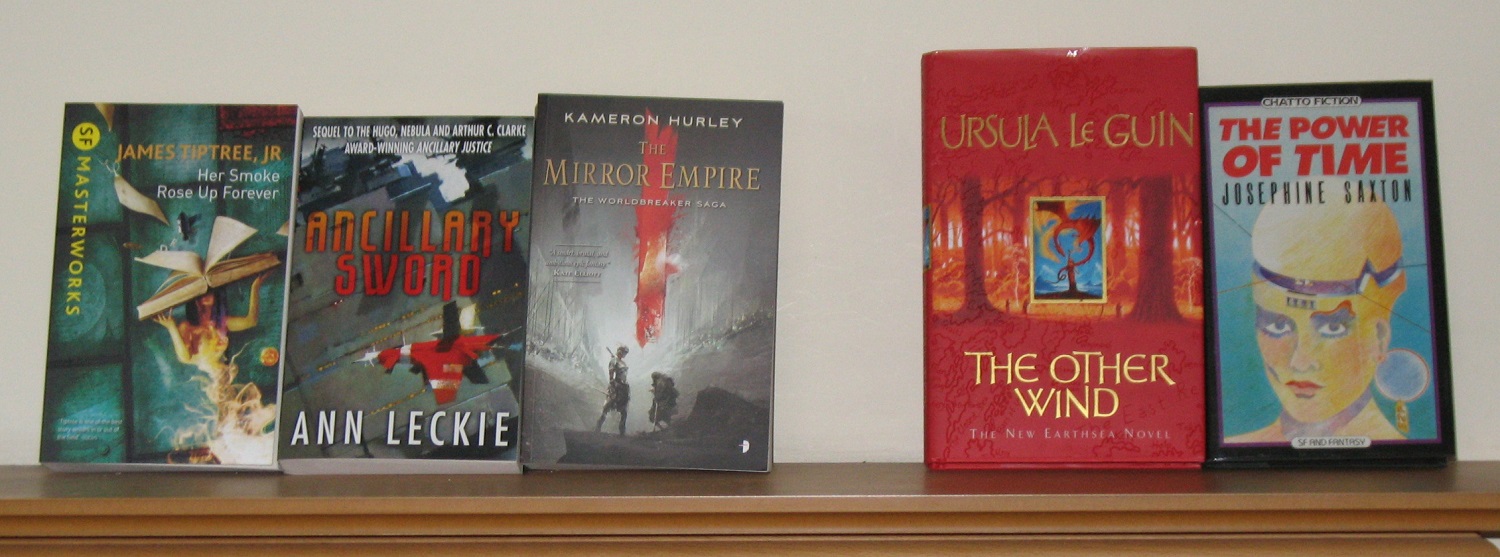
 The Island Of Dr Moreau, HG Wells (1896). Although Wells wrote over fifty novels, most people likely only know him for four – The Time Machine, The War of the Worlds, The Invisible Man and this one, The Island Of Dr Moreau. The edition I read was, as pictured, the SF Masterwork hardback – and it took me less than half a page to spot the introduction was by Adam Roberts. Anyway, the story is relatively straightforward – the narrator’s ship collides with a derelict (until the twentieth century, derelicts were surprisingly common, with several hundred floating around the world’s oceans and seas). The narrator is the only survivor and is picked up by a ship delivering animals to an unnamed island. Also aboard this ship is a man called Montgomery, who lives on the island as assistant to a scientist with a shady past, Moreau. The ship dumps the narrator, Prendrick, on the island with Montgomery, and so Prendrick learns of Moreau’s experiments on animals, making them into “Beast Men”. It’s all a bit handwavey – there’s no explanation of how the Beast Men are made intelligent enough to speak or overcome their animal natures. Of course, it all goes horribly wrong – coincidentally while Prendrick is there, and coincidentally, he’s the only survivor. To be honest, I thought Wells laid it all on a bit thick. Prendrick’s outrage and horror crops up on almost every page, and the Beast Men don’t feel especially nuanced. Not Wells’ best, although the central premise is certainly memorable.
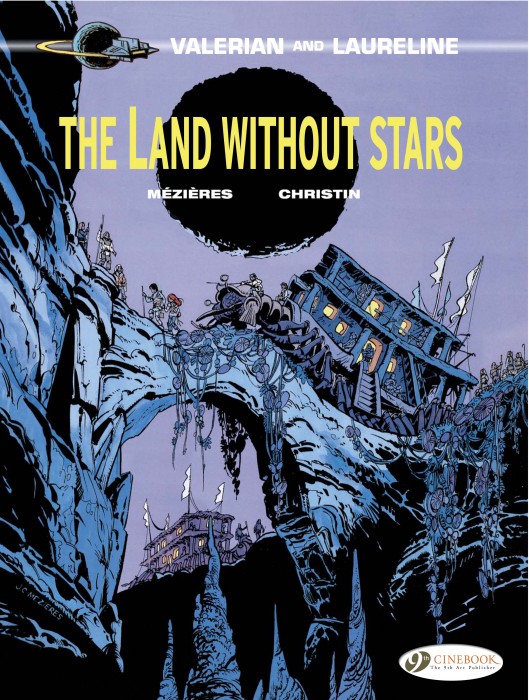
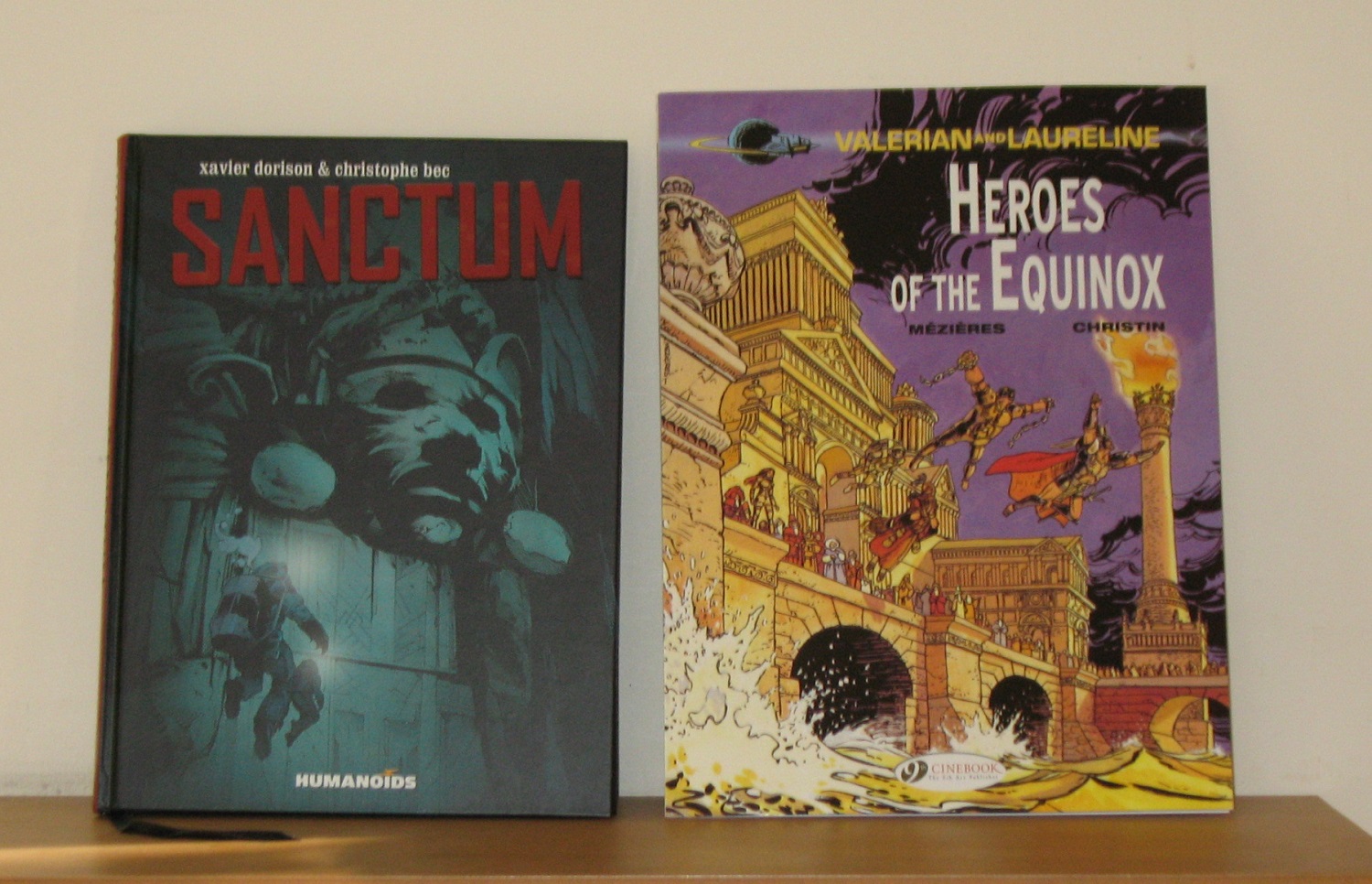
 Châtelet Station, Destination Cassiopeia, Jean-Claude Mezières & Pierre Christin (1980). This is book eight in the long-running Valerian and Laureline (Valèrian, Agent Spatio-Temporel) series. It is also a pretty smart piece of work… which is more than you can say for most science fiction comics. Valerian is in 1980s Paris investigating some strange manifestations, while Laureline is in the Cassiopeia constellation looking into the possible source of the phenomena. The two communicate telepathically, and share their findings… but this is the first of a two-parter so what they find doesn’t really help explain what’s happening. However, where Châtelet Station, Destination Cassiopeia is particularly good is in the noir-ish feel to Valerian’s investigation in Paris. It’s especially effective when contrasted with Laureline’s adventures on alien worlds. It’s hard to believe this is thirty-five years old. I can’t think of a UK or US sf comic from the same period of comparable quality – not even 2000AD back then was as good as this.
 The Septimus Wave, Jean Dufaux, Antoine Aubin & Étienne Schréder (2013). And this is the twentieth book in the also long-running Blake and Mortimer series. Although linked with Hergé’s Tintin – the first Blake and Mortimer story appeared in the Tintin Magazine, and the comic uses a similar ligne claire style – series creator Edgar P Jacobs chose not to prevent its continuation after his death. He died in 1987, and only actually wrote and drew half a dozen of the Blake and Mortimer books. The series was restarted in the 1990s and has been going strong ever since. The Septimus Wave is a sequel to an earlier Jacobs title, The Yellow “M”, in which evil scientist Septimus brainwashes series villain Colonel Olrik into committing a series of crimes. But Septimus is now dead, and Mortimer is experimenting with Septimus’s equipment – except he’s not the only one. And there’s something else riding piggyback on Septimus’s “Mega Wave” generated by Mortimer and the others. Apparently, some of the post-Jacobs entries in the series have upset fans by being a bit too clever or something, and while The Septimus Wave is by no means the best of the new Blake and Mortimers I do like the fact they’re a bit more sophisticated than Jacobs’ own stories.
 He Who Shapes / The Infinity Box, Roger Zelazny / Kate Wilhelm (1965/1971). The Zelazny won the Nebula for best novella, and I’d like to say I’m mystified as to why – but this is a science fiction award from the mid-1960s, so perhaps complaints about quality are beside the point. And, well, it’s by Zelazny, who is allegedly one of the genre’s great prose stylists… But there’s fuck-all evidence of it in ‘He Who Shapes’, just a piece of sixties sexism tricked out with some handwavey conceit. Everyone smokes like chimneys and what little non-central-conceit extrapolation is weirdly limited – computer-driven cars! huge skyscrapers! suicide epidemic! Anyway, Render is a Shaper (spot the cunning pun there? My aching sides), which means he can therapeutically direct patient’s dreams undercarefully-controlled conditions. But then a woman blind from birth who is already qualified as a psychiatrist asks Render to help her become a Shaper. He initially refuses, but then agrees to use his talents to help her acclimatise herself to “sight” – or rather, what she would “see” in the dreams she would be directing should she become a Shaper. Nonsense. And Render starts to fancy her, and so finds himself trapped in one of her dreams. Rubbish. ‘The Infinity Box’ is even weirder, and seems to spend much of its length in search of a plot. A widow moves into a neighbours’ house while they’re on holiday, and the narrator finds himself drawn to her, so much so he begins to experiencing what she is experiencing, and even manages to briefly control her. It also turns out the woman is a photographer and sees the world very differently to everyone else – she can see the entire lifetime of everything she looks at. While nicely written, and Wilhelm handles the narrator’s relationship with his wife well, the two elements of the plot don’t actually fit together, and the implausibility of both badly affects the story’s credibility. There are two possibly good stories here but Wilhelm managed to produce a single confused one out of them.
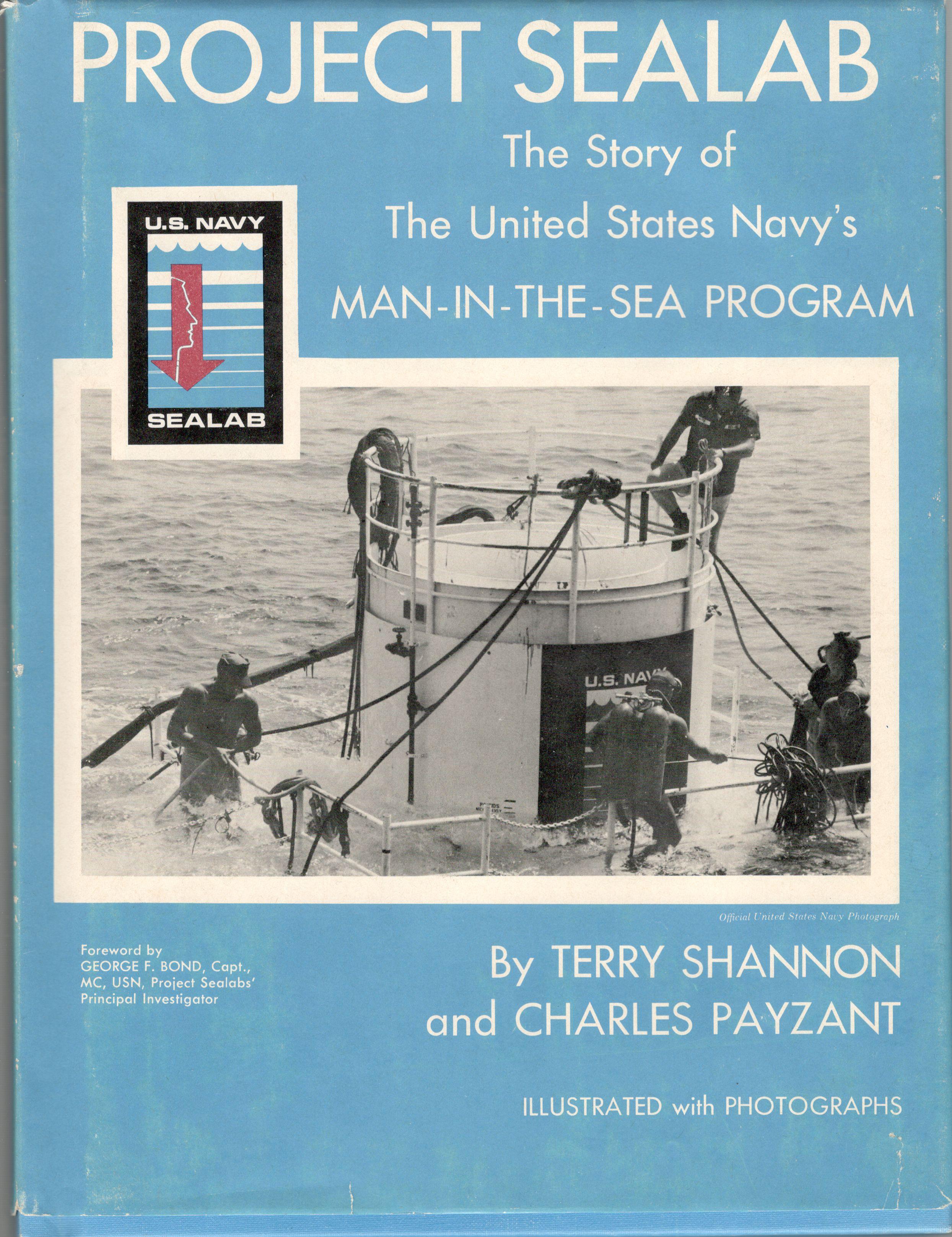 Project SEALAB, Terry Shannon & Charles Payzant (1966). A lucky find on eBay. At the time this was written and published, SEALAB III had yet to take place, so the book ends on an optimistic note… Which is unfortunate as SEALAB III was a disaster – while struggling to fix a leak in the habitat, which was on the ocean bottom 600 feet deep, prior to occupying it, one of the divers died, possibly as a result of sabotage. It was enough to stop the programme. And this despite SEALABs I and II being very successful (and Mercury 7 astronaut Scott Carpenter was involved with the second one). Project SEALAB is a somewhat simplistic run-through of the two habitats (well, it is a “junior” book), but it’s copiously illustrated with photographs, which is pretty cool. Incidentally, there are a pair of US Navy films on the two projects, and they’re available online – SEALAB I here and SEALAB II here.




 It Doesn't Have To Be Right...