I’m a big fan of KSR’s fiction, because of the subjects he tackles and his treatment of them just as much as the stories he tells. He doesn’t just make use of common sf tropes, he interrogates them. A lot more sf authors should do that.
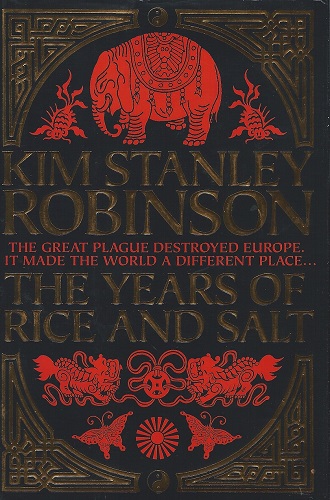
The Years of Rice and Salt (2002, USA) may be an alternate history, but it’s not a story set in a world which differs from ours due to some change in the past; it is in fact several stories – ten of them. Nor is it the book promised by its back-cover blurb, which posits a story set in a present-day world in which the Black Death in the fourteenth century killed 99% of the population of Europe instead of one-third. As a result, other civilisations flourished. Obviously, they flourished in real history – but in KSR’s novel they ended up dominating the world. The Years of Rice and Salt is not that either. It’s not a history of the world following on from the jonbar point. Which I suppose would be almost impossible – and huge! – to write. Like Laurent Binet’s Civilizations (2019, France), it is a series of vignettes which skip forward through the centuries, and around the world, from the Black Death to the present day.
The linking conceit is that there is a group of people, connected eternally as a “jati”, who are repeatedly reincarnated. They die, spend time in the bardo, and are then reincarnated – as humans, or as animals. Allowing KSR to provide a focus point from which to hang to ten different stories taking place over the centuries in his alternate history. Sometimes the members of the jati remember their earlier lives, but usually they don’t.
The Black Death wipes out Europe. The Islamic Empire is never dislodged from the Iberian Peninsula. The Chinese continue to war on their western border, but also explore east and eventually settle the western coast of North America. A progressive empire develops in southern India. A league of Native American nations in central North America form a federation and keep their independence. There is a decades-long war which involves all three of the major world powers – the Indian empire, the Islamic empire, and the Chinese empire. Once the dust has settled, a new world order prevails. The various members of the jati are present, or pivotal, in some of the more important events in this 700 year history. Which also take place all over the world – Samarkand, Beijing, the Great Lakes, an Islamic city in western France, a Chinese San Francisco, and so on…
It’s fascinating stuff. The linking text is, to be honest, a not especially interesting mechanism to give the novel structure, and the ten “books” in The Years of Rice and Salt would be equally engrossing without them. KSR’s research is impressive – but not perfect: at one point, he states the Islamic punishment of cutting off the right hand of criminals is worsened because it forces criminals to use their left “unclean” hand when eating. That’s the whole point of the punishment. But the invented history KSR has created is astonishing. It feels all too real, which I guess is the point of the novel. Recommended.
I’ve read a number of Priest’s novels over the years – I think the first was The Glamour (1984, UK) back in the late 1980s. And there was a period in the late 1990s when I read each new novel by him as it hit paperback. That ended with The Separation (2002, UK), which I seem to recall had a troubled publishing history. It was nearly a decade before his next book appeared, by which point he’d sort of dropped off my radar, before slowly creeping back intermittently over the next couple of decades.
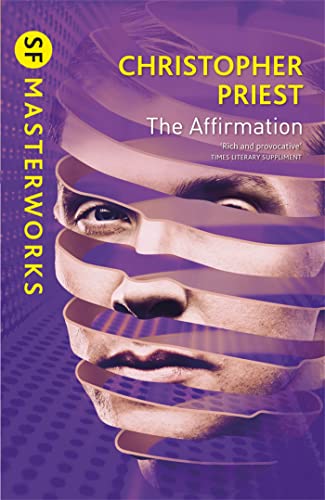
Which is not to say I didn’t like what I’d read, and I’d always admired his writing, and sort of planned to catch up with the works I’d missed. Hence, The Affirmation (1981, UK), which was originally published 44 years ago, and joined the SF Masterworks series in 2011. It’s also the first novel to feature the Dream Archipelago, which Priest returned to several times, in a collection and a further three novels.
In 1976, twenty-nine year old Peter Sinclair suffers a breakdown after a string of appalling luck over a few weeks – his father dies, he’s made redundant, his landlord evicts him, and his girlfriend dumps him. He decides to write his autobiography as a form of recovery. But as he writes, he searches for a “greater truth” by disguising its setting. So the UK becomes Faiandland, London is Jethra, and everyone in Sinclair’s life is given another name.
In this “autobiography”, Sinclair has won a lottery for immortality treatment, and travels south by ship to Collago, an island in the Dream Archipelago. There is a side-effect to the treatment: amnesia. So Sinclar must document his life in order to help the clinic’s therapists restore his memories. But this version of Sinclair has written an “autobiography” too, about his life in London…
The narrative drifts back and forth between Sinclair in the UK and Sinclair in the Dream Archipelago, each one muddying the other. UK Sinclair is clearly in a bad state. He’s rescued by his sister, and then his girlfriend turns up and the two reconcile and move in together. It does not go well. Faiandland Sinclair is not sure he wants to be immortal, even after entering into a relationship with the Dream Archipelago avatar of his girlfriend.
The Dream Archipelago is first presented as an invention of Sinclair, which explains its inconsistencies and the somewhat unharmonious names. It’s equatorial, the northern continent is inhabited, the southern continent is uninhabited, but there’s a war and the islands form a neutral zone. The point being Sinclair’s invented world is not very convincing. But Sinclair is so invested in it – intellectually and emotionally – that he has trouble determining which is which. Details slip and slide between the two, especially after Sinclair has taken the treatment and is trying to regain his memory.
The Affirmation is… unsettling, and cleverly done. Priest covered similar ground in later novels, and in a manner that was more sophisticated. Which is hardly surprising. He had a singular oeuvre, which is definitely worth exploring, and I clearly have more catching up to do.
I found myself completely uninterested in genre awards this year, despite being nominated for two last year (and it’s not like I had anything eligible for any of this year’s awards anyway – well, my one published piece was a spoof coda to the Apollo Quartet, but it was probably unreadable unless you’d actually read the quartet). I suppose my indifference is partly a result of the lacklustre shortlists generated by the various awards last year. But there’s also the increasing disconnect between what the awards mean and the works they’re rewarding. Yes, yes, popular choice wins popularity contest, news at ten and all that. And, true, there’s always been a bit of personality cult about the popular vote awards, which is why so few people keep on winning so many awards, and currently it’s a different set of faces to those of ten or even twenty years ago. A more diverse set of faces, which is good, but given the size of the field these days it would not be unreasonable to expect more variety.
And then there’s the way social media has completely fucked up awards, not to mention the cutting back on promotion by publishers which has normalised the sort of grasping self-promotion bullshit, as epitomised by elegibility posts, that is now common. There may have been an element of awards going to people not to works in the past, but now it’s pretty much nakedly out there.
I suspect I’m not alone in my apathy. I saw almost no conversation about the BSFA Award longlist, and last year’s Clarke Award was notable for its lack of commentary…
Which neatly leads into a recent development which plans to address that last: the Clarke Award Shadow Jury, put together by Nina Allan and hosted online by the Anglia Rusking University’s Centre for Science Fiction and Fantasy. Shadow juries are nothing new – hell, we even have a Shadow Cabinet in our government – although I think this is the first time it’s been done for a genre award. And it’s a really strong shadow jury – I actually know more people on it than I do on the actual Clarke Award jury – and I’m looking forward to seeing their thoughts on the books that have been submitted (there’s a list of submissions here).
A quick scan down that submission list, and I can see a number of interesting books… but I can also see a lot of commercial crap that I hope gets nowhere near the shortlist.
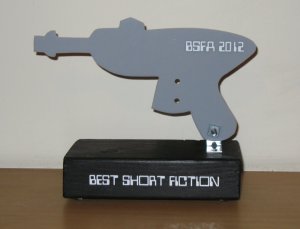
And speaking of shortlists… the BSFA Award shortlist has now been announced. And there are some… odd choices. (And they still haven’t sorted out whether it’s named for the year of elegibility or the year the award ceremony takes place. It’s fucked up at least two year’s worth of trophies in the past. It’s not difficult. Fix it.) I understand the BSFA has around 800 members (yes, I’m one of them), and few of them actually bother nominating or voting. I mean, I’m sure Adam Roberts: Critical Essays is an excellent book, but I doubt more than a handful of people have read it – and yet two of the essays in it have made the non-fiction shortlist. And I count six appearances of NewCon Press across the four shortlists.
But the big one is the novel shortlist, and it looks like this:
The Beckett is the third book of a trilogy, the first of which won the Clarke Award in 2013, and both books one and two were also shortlisted for the BSFA Award. The Chambers is also a sequel, and the first book seemed to make every English-language genre award shortlist in existence… except the BSFA Award. Europe in Winter is the third book of a trilogy, and both books one and two were previously shortlisted for the BSFA Award (and the Clarke Award). Sullivan has made the BSFA Award twice previously, in 2004 and 2011, and Occupy Me is her first sf novel since that 2011 nomination. Azanian Bridges is Wood’s first novel.
Quality of the various books aside, that’s an unadventurous shortlist. Seriously, two book threes from trilogies, of which all the previous installments were also shortlisted? True, some of those earlier volumes have also been picked by Clarke Award juries. Yes, I know, small pool of voters, large field, familiar names – and even faces, as half of the shortlist regularly attend the Eastercon (members of the convention also get to vote on the shortlist). And yes, the nominees are good people (and some of them are friends of mine). But I’m not voting for them, I’m voting for the work.
The BSFA Award is a popular vote award, so I shouldn’t be all that surprised that the same old names keep on cropping up. I look to juried awards to give a better indication of what’s good in the genre in a particular year. But I also remember when the BSFA Award actually used to be a pretty good barometer of what was good in the British sf field in a year. Not so much for the short fiction category, that was always a bit of a crapshoot, but certainly the novel category. And now I find myself wondering: when did that stop being true? I don’t doubt the books shortlisted this year are good books – well, except for the Chambers, as I wasn’t at all impressed by A Long Way to a Small, Angry Planet – since I’ve read and enjoyed those earlier installments by Beckett and Hutchinson, and have heard good things about the Sullivan and Wood. But I can also see several novels on the longlist (see here) that were more than good enough to make the shortlist. Even then, only thirty-five novels were longlisted. Thirty-five! The Clarke Award submission list is eighty-six novels. (And only twenty-seven nominations in the BSFA Award short fiction category!).
I honestly don’t see the point of awards for short fiction anymore – I wrote as much in an editorial for Interzone back in 2015. I get that awards are a celebration, but what exactly are we celebrating? Back in the day, sf was a ghetto, and it was all reverse snobbery elitism. Awards were an affirmation of that. But it’s been open season on sf tropes now for several decades, and science fiction is still playing the same old game. And this during a period when the field has exploded, not only all over the internet, with way more fiction venues out there now than there were twenty or thirty years ago, but also serious efforts to bring non-Anglophone sf to Anglophone audiences. It’s almost becoming axiomatic that the only people reading genre short fiction these days are other writers of genre short fiction. Sf has always been self-fertilising, it’s one of the genre’s strengths, but that’s ridiculous.
They’ve tried revamping the BSFA Award a couple of times over the last few years, but I’m not convinced their changes have had much impact. For what it’s worth, I think they should drop the short fiction and non-fiction categories, institute a new award for non-fiction/criticism separate from the BSFA Awards, and limit the BSFA Award to best sf novel published in print in the UK and best piece of sf artwork to appear in print in the UK. But leave the definitions of genre up to the voters. No longlist or two-stage nomination process. Just keep it simple. December and the following January each year to nominate five novels and five pieces of artwork each. Top five in either category makes it to the shortlist. Then it’s business as usual: voting and an awards ceremony at the Eastercon. Let’s not just celebrate science fiction, let’s celebrate science fiction in the UK. And with the most visible forms of it – novels, which appear in book shops; and art, which can be plastered all over the internet. That sounds horribly Brexit-ish, which is not my intention at all – I voted Remain, and am hugely pissed off by all this Brexit shit – but the fact remains that when you’re addressing a parochial electorate it’s best to keep it parochial. And let’s not forget that authors from many other nations get published in the UK (although perhaps not as many non-Anglophone ones as we’d like).
I started out this post documenting my apathy toward genre awards, and ended up getting a bit excited about what they could be. And I guess it’s that disconnect, that sense of disillusionment, that fuels my annual awards annoyance. But in the world we have today, and all the shit that’s going to go down in 2017, praying for an asteroid strike is too much of a long shot. And, short of causing every Nazi newsaper in the UK to spontaneously combust, or Corbett and May to give the finger to the Nazi cabal pulling all the strings, we can at least do something positive in the world of science fiction and make a proper job of this celebration-type thing we call an award.
I’m not really a big fan of popular vote awards, but having been a member of the British Science Fiction Association for over twenty years, and having attended, on and off, the annual Eastecon for around the same period, I’ve usually voted in the BSFA Award. I’ve also found that the shortlists frequently align quite well with my own tastes in the genre – something, obviously, that isn’t all that surprising when you’re a member of the core constituency.
Recent years have seen several changes to the awards. While the categories have finally settled at four – novel, short fiction (ie, any length shorter than novel), non-fiction and art – rules on eligibility have been affected by the advent of the internet and ebooks. Novels have to be published in the UK in the previous calendar year, which is pretty straightforward. Unless – and this is a fairly recent change – they’re ebook-only, in which case, as long as they’re available to UK residents (except the new EU VAT rules on digital products may scupper that from 2015 onwards). Back in the 1990s, short fiction also had to be UK-published, but now there is no such restriction. Likewise for non-fiction and art.
This year, however, a couple of more fundamental changes have been put in place. First, voters can now only nominate four works in each category. Previously, they could nominate as many as they wanted. And novels don’t have to be published in the UK, providing the author is British. The BSFA has also begun crowdsourcing a list of eligible works – although the list could do with some serious curating as there’s a lot of ineligible and duplicated entries on it.
This is all a long-winded way of presenting my own four choices in each category. Which are these:
I really went off short fiction in 2014. Everywhere I looked, the same sort of genre short stories were being published, and it wasn’t a sort I much cared for. As a result, I had to do some last minute reading, which meant some skim-reading of various magazines (I only read one anthology published in 2014 and it was poor; I didn’t buy any published during the year), some clicking through of links on posts of recommendations… and even then I couldn’t actually find four pieces of short fiction I felt were any good. The three listed above were ones that stood out for me during my headlong reading. It’s not the best way to pick something for an award, but then is there a best way?
Paul Kincaid has been an insightful genre critic for a long time, so a collection of his essays gets my first pick, especially since the book contains pieces on many of my favourite genre writers. The Strange Horizons Symposium I thought particularly well done, and I’m surprised it didn’t generate more comment. McCalmont has been writing some really interesting stuff about genre fandom for a while now, but I thought his piece on current short fiction was especially good. Allan is one of my favourite online genre critics, and her extended review, over some twenty posts, of The Mammoth Book of SF Stories by Women was a text-book example of the right way to review a large anthology.
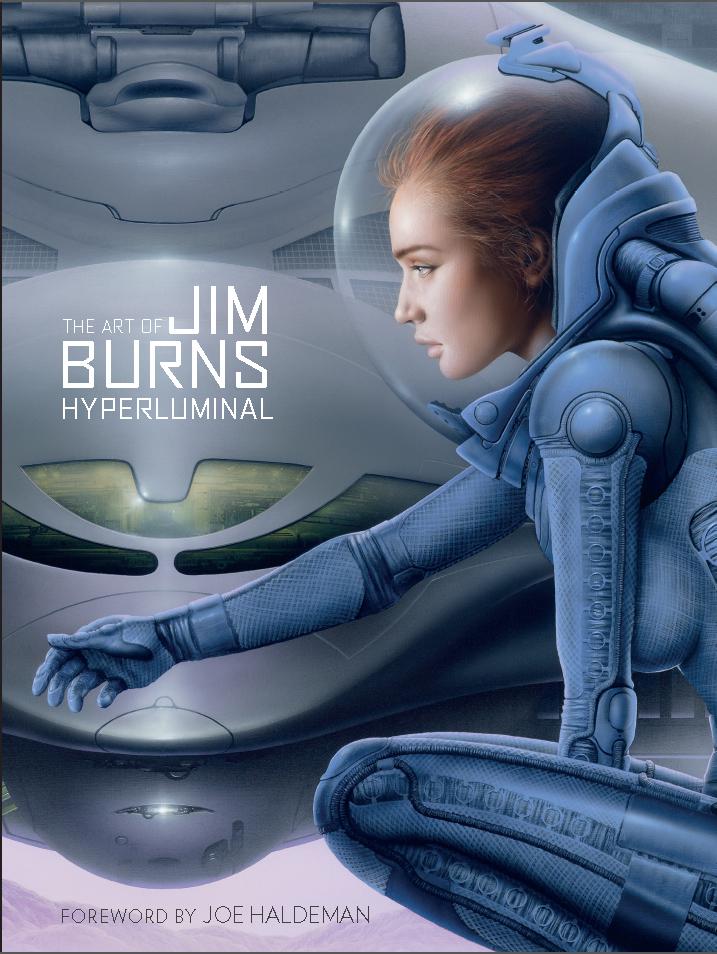
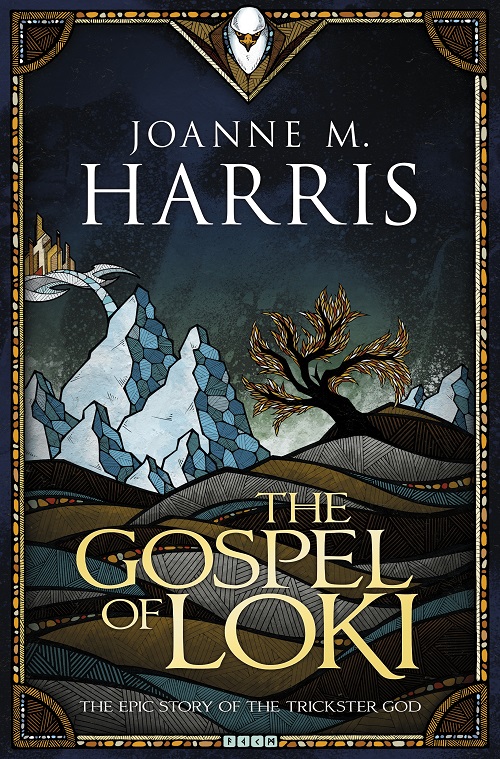
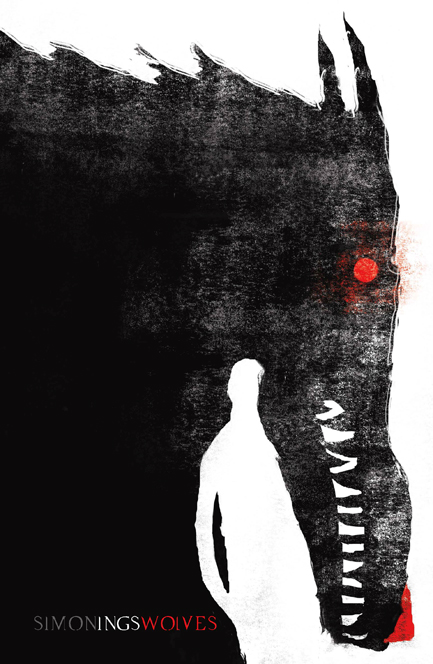
art 1 Cover of Mars Evacuees by Sophia McDougall, Andy Potts (Egmont) 2Hyperluminal, Jim Burns (Titan Books) 3 Cover of The Gospel of Loki by Joanne M Harris, Andreas Preis (Gollancz) 4 Cover of Wolves by Simon Ings, Jeffrey Alan Love (Gollancz)
My first choice was an easy pick. That really is a striking piece of cover art. I wasn’t sure whether Hyperluminal counted as art or non-fiction, but it’s a book about art, and I’ve always loved Jim Burns’s art, so I’m putting it here. I then spent one evening last weekend trawling through SF Signal’s forthcoming books posts for inspiration… and both The Gospel of Loki and Wolves jumped out at me. So to speak.
ETA: Apparently, the art award is for “single image” only, which means Hyperluminal is ineligible. So I need to find something else to nominate instead. I’ll update this post when I’ve found something, but for now I’ll Hyperluminal in place even though I’m not nominating it.

 It Doesn't Have To Be Right...