It Doesn't Have To Be Right…

… it just has to sound plausible


Leave a comment

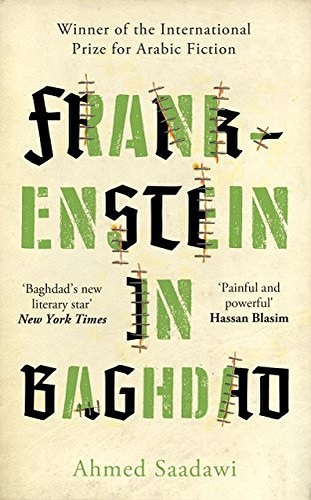
Frankenstein in Baghdad, Ahmed Saadawi

Very little science fiction has been translated from Arabic into English – in fact, I knew of only one other author, Emirati Noura Al Noman, and she hasn’t been published since 2014. Ahmed Khaled Tawfik wrote several sf novels, most notably Utopia (2008, Egypt), and a little hunting revealed it had been translated into English – but with his name spelt Towfik. There’s been plenty of fantasy translated from Arabic, however, from Alf Laylat wa Layla to Naguib Mahfouz, and a number of contemporary writers. Having said that, Frankenstein in Baghdad (2013, Iraq) was not published as category sf, and likely only deserves the label because its central conceit references Mary Shelley’s novel, a proto-sf novel. (The English title, incidentally, is a direct translation of the original Arabic title.) It was nominated for both the Arthur C Clarke Award and the International Booker Prize.

The central conceit of Frankenstein in Baghdad is actually not at all rigorous as science fiction. It’s a neat twist on the original – the monster (because of course Frankenstein is the doctor) in Saadawi’s novel is made from the body parts of victims of IEDs in post-invasion Iraq, and the monster’s mission is to avenge those deaths. But Saadawi seems more interested in telling a more general story about life in present-day Baghdad, as seen through the eyes of a handful of characters. Chief among these are the junk dealer Hadi, who originally creates the monster in some sort of fever dream; Mahmud, a young journalist, who takes Hadi’s tales of a monster semi-seriously, but is more interested in becoming like his rich and powerful editor; Elishva, an old Armenian woman who mistakes the monster for her long-dead son; and General Majid, who runs a secret police bureau of astrologers and magicians who predict bomb attacks in the city.

The novel bounces around between these characters, and a handful of others, mostly centred around the area of Bataween, and occasionally focusing on the monster. Who has discovered that once it avenges the death of one of the people whose parts make up its body, that body part rots and falls off. So the monster needs new parts – and it reaches the point where, with its own small army of followers, it too begins murdering people to keep itself together (so to speak).

The monster is a great invention, and there’s so much commentary that could be attached to the concept, but Frankenstein in Baghdad doesn’t seem all that interested in it. It’s more like an introduction, or a framing narrative, to the personal stories of the book’s cast. Which is a shame. It’s a good novel, don’t get me wrong, and its descriptions of life in post-invasion Baghdad are both heart-breaking and enraging.

A good novel, but one that feels like it failed to capitalise on its central idea.


Leave a comment

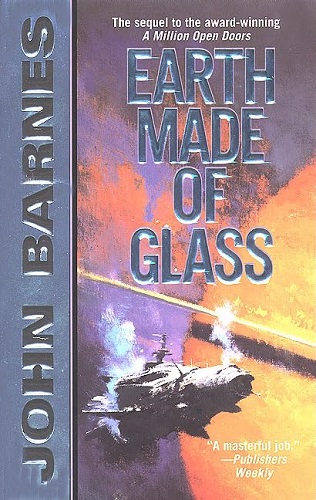
Earth Made of Glass, John Barnes

A sequel to A Million Open Doors (1992, USA), which I did not like much, also set in Barnes’s Thousand Cultures universe and featuring the same characters, Girault and Margaret Leones. Earth Made of Glass (1998, USA) was shortlisted for the Clarke Award in 1999.

This second Thousand Cultures novel is, I think, a better book – at least, I liked it slightly more – but not for the right reasons. Like the novel preceding it, the story could easily take place in the present-day. It doesn’t need to be science fiction. In A Million Open Doors it was toxic masculine society versus repressed puritanical society. Here, it’s racist society versus enclosed society. In the first novel, the two cultures were invented, openly so, but invented based on a set of principles. In Earth Made of Glass, the two cultures, which share the limited habitable area of the world of Briand, are appropriated. The Tamil Mandalam are an attempt to create the culture of southern India in the first few centuries CE, specifically that which generated the Cankam, a huge body of epic poetry often considered to be the historical highlight of Tamil literary culture. The Maya of Kintulum, on the other hand, are a best-guess at how the Maya actually lived. None of those involved in setting up the two cultures had any connection, cultural, racial or geographic, to them.

By the time the springer arrives at Briand, the Tamil and the Maya hate each other, and consider each other to be less than human. A past disaster has resulted in a Maya shanty town outside the Tamil capital of Tanjavur. Ethnic violence is commonplace. The main Maya city of Yaxkintulum is completely off-limits to the Tamil. Girault and Margaret are sent in undercover to find some way to stop the ethnic violence and bring both cultures peacefully into the Council of Humanity fold.

Barnes does a good job of describing Tanjavur and its culture, but the endless racism towards the Maya gets tiresome very quickly. (As does the joke about people trying to pronounce Girault correctly.) And when the action shifts to Yaxkintulum, it proves just as fascinating a place (and, ironically, the Maya relied heavily on AI to invent the stories and myths which are carved into every available surface in the city). The Maya want to improve relations, and embark on a risky plan. They send a Mayan prophet to Tanjavur, with a message to not let their lives be defined by their literary corpus or mythology. Things began to look up, but then rapidly go downhill.

The two cultures are fascinating, but it feels like a guilty pleasure. Occitan and Caledony in A Million Open Doors were entirely invented; Tamil Mandalam and the Maya are not. They’re very deliberately skewed takes on real cultures. It feels like misuse, or perhaps even abuse, even though they make for a more interesting read than the dull Occitan and Caledon cultures. There is also a major female player in the plot – she’s not a character because Barnes’s characterisation of her is basically “slut”, but she has more impact on the story than anyone else. Every mention of her leaves a bad taste in the mouth. Even more so, when the narrative seems to expect the reader to admire the most racist of the Tamils.

There were two more novels after Earth Made of Glass, The Merchants of Souls (2001, USA) and The Armies of Memory (2006, USA). There’s mention in both A Million Open Doors and Earth Made of Glass of an alien race whose artefacts have been discovered in numerous places, and that sort of makes me want to read the rest of the quartet, even though I may find lots in them I don’t like…


Leave a comment

Memory of Water, Emmi Itäranta

Shortlisted for the Clarke Award in 2015 – and it’s not often a translated work makes it onto the award shortlist. In fact, the only one prior to Memory of Water (2012, Finland) was Stanisław Lem’s Fiasco (1988, Poland), although there have been four since Itäranta (Frankenstein in Baghdad (2013, Iraq), The Electric State (2017, Sweden), Vagabonds (2011/2012, China) and The Anomaly (2020, France)).

Memory of Water was originally published in Finnish. There’s no mention of a translator, and Itäranta lives in the UK according to the bio, so I’m guessing she translated the novel herself. That might explain a couple of word misuses, such as “the hidden core of the profession pertains that tea masters were once…”, and “woolgathering” when context suggests it should be “digressing”. Less understandable is the use of Scandinavian Union as the name of the novel’s setting, when it seems to be set in Finland, which is not a Scandinavian country, and both Sweden and Norway are described as polluted and uninhabitable.

Several centuries from now, climate crash, and war, has drastically changed the face of the Earth. Many former nations are now underwater, and the Chinese rule pretty much everywhere. Water is so scarce it is controlled by the military. Noria is the daughter of a tea master, and his apprentice. He shows her the family secret: a hidden spring.

After Noria’s father dies, she becomes tea master, and her mother moves to the capital, Xinjing. In a nearby garbage dump, Noria and her friend find a series of CD-ROMs which contain the log of an expedition to the Lost Lands (ie, Sweden and Norway) several centuries previously. The expedition was presumed lost and the Lost Lands uninhabitable. The novel never actually reveals what’s in the logs, only that it contradicts what everyone has been told. Noria, and her best friend, to whom Noria revealed the secret of the spring, decide to retrace the route of the lost expedition. Before they can set off, the military arrest Noria.

Memory of Water is not the first sf novel to feature a Chinese-controlled future. Two examples which spring (ahem) to mind are Gwyneth Jones’s Bold as Love quintet (2001-2006, UK) and David Wingrove’s Chung Kuo series (1989-1997 and 2010-2014 and 2017-2024, UK). Nor is it the first sf novel set in a Europe mostly underwater. Despite that, Memory of Water’s setting never quite convinces. The writing is lovely, and the surroundings are described in poetic and leisurely detail (sometimes somewhat over-leisurely). But the scarcity of water doesn’t – I’m tempted to say “hold water”, but that would be cruel. Anyway, it doesn’t seem entirely credible, and if it were indeed true then I doubt the tea ceremony would still exist centuries later. The fact Sanja can fix “past-technology”, including a CD-player, is not really feasible either, but it breaks suspension of disbelief less than the water thing.

Which is a shame, as the “water thing” is what the novel is actually about.


Leave a comment

A Million Open Doors, John Barnes

Nominated for both the Nebula and the Clarke Awards. Barnes seemed to have a moment in the mid-to late-1990s, with a Hugo nomination, three Nebula nominations and three Clarke nominations. But no wins. And nothing since then except appearances on the Locus Award/readers’ poll pretty much every year until a decade ago (for his last published novel, in fact). A Million Open Doors (1992, USA) is only the second book by Barnes I’ve read – I read Mother of Storms (1994, USA) back in 1999.

A Million Open Doors is the first of four novels set in the Thousand Cultures. Taking place several centuries from now, Earth has colonised a number of worlds, each of which is home to one or more “cultures”, groups of people – ethnic, national, religious, some even completely invented. Like Nou Occitan, which is supposed to be some sort of Iberian Romantic culture of troubadours and duellists, but is really just massively sexist. The worlds were colonised by slower than light ships, but now “springers”, instantaneous transport, even across interstellar distances, connect them together.

When Giraut catches his paramour in flagrante delicto with a gang of “Interstellars” (youths aping what they think is an Earth culture by “beating up and degrading young girls”), he accompanies a friend to Caledony, which has just received its first springer. Caledony is a religious culture, which uses Christianity to justify some garbled economic philosophy. Giraut opens a school to teach Occitan culture – music, duelling, poetry, dancing, painting, etc – to the joyless Caledons. Unfortunately, the success of the Centre for Occitan Arts prompts a coup by hardliners, house arrest for the previous government, martial law and armed mobs on the streets.

To build support, Giraut and his liberal Caledon friends stage a camping trip across the continent, but there’s an accident in the mountains, resulting in several fatalities. While dashing back to get into communications range, Giraut discovers the ruin of an alien city. Meanwhile, while he was away, Council of Humanity troops have overthrown the hardliners…

Reading A Million Open Doors, I had trouble working out why it was science fiction. Yes, other planets, springers, spaceships, etc, but you could set the story on Earth. Some community full of rapists, another full of nutball religious types – I’m pretty sure you could find two towns that qualify in the US. Even the alien ruins could be the ruins of some prehistoric American culture. All the rest is just bells and whistles.

And when a science fiction novel is not science fiction, then what’s the point of it? And you also have to wonder why the novel appeared on two science fiction award shortlists. In other respects, it’s all just a little too textbook. Giraut is a male chauvinist, but he comes to value and respect women – and even falls in love with one who isn’t even attractive and whose physical flaws he mentions repeatedly. Two characters are killed irretrievably – the technology exists to bring people back using personality recordings, and there’s even an example to illustrate it, the victim of a brutal sexual assault, torture and murder. (This is not just everyday sexism, this is everyday sexual assault.) The bad guys get their just desserts – except, well, not really, a friend who insulted Giraut is humiliated (with a spanking), and the villainous pastor who seized power on Caledony is imprisoned off-world.

A Million Open Doors lost the Clarke to Jeff Noon’s Vurt (1993, UK), and the Nebula to Doomsday Book (1992, USA) by Connie Willis (Sarah Canary (1991, USA), Karen Joy Fowler, or China Mountain Zhang (1992, USA), Maureen McHugh, would have been better winners). Even so, it didn’t belong on those shortlists. It’s mediocre, its one idea is in service to a story that doesn’t even need to be science fiction, and it’s offensive in parts.


Leave a comment

More longer

I mentioned my other blog a few months ago. I post longer, less-frequent reviews there. I also promised to post links here to those reviews. I forgot. Here are the last three:

From the 2024 Arthur C Clarke Award shortlist, The Ten Percent Thief by Lanya Lakshminarayan (see here).

And from this year’s Arthur C Clarke Award shortlist, The Ministry of Time by Kaliane Bradley (see here).

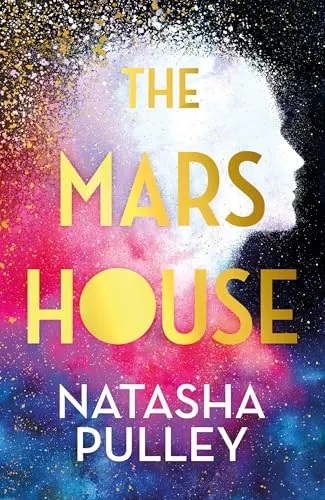
And, sadly, a book that didn’t make any award shortlists, The Mars House, Natasha Pully (see here).


Leave a comment

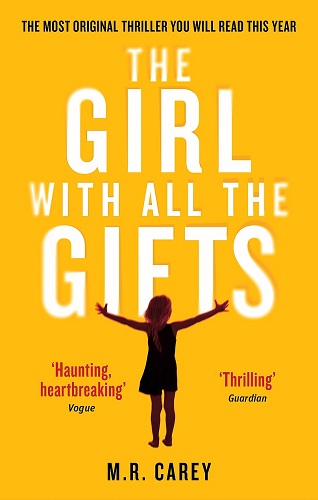
The Girl with All the Gifts, MR Carey

I’d heard The Girl with All the Gifts (2014, UK) was zombie fiction, and I don’t like me zombie fiction no matter how you spin it, and that includes The Passage (2010, USA), so I had no great expectations for this, even though: a) it was nominated for the Clarke Award (but lost out to Station Eleven (2014, USA), a book I admit I did not like), b) I’ve met Mike Carey and he’s a nice guy, and c) it was on offer at 99p.

There’s a “but” implicit in all that, and yes, I did think The Girl with All the Gifts was actually pretty good. It opens firmly focused on the titular girl, Melanie, who is in some sort of research facility. Clearly, she’s not an ordinary girl – she has to be locked into a wheelchair for classes, she eats once a week (a bowl of worms), and the staff of the underground bunker where she lives is scared of her and her classmates. 

Carey doles out his information slowly and carefully. The UK – the world – has collapsed following a plague of some sort, which has reduced the bulk of the population to flesh-eating zombies, or “hungries”. But Carey provides a rationale – the zombie fungus which infects ants, takes over their bodies and forces them to climb plants in order to provide a higher platform to spore (and which really exists), has crossed the species barrier and infected humans.

Melanie is infected, but she is different. As are her classmates. She may crave human flesh, when triggered by pheromones, but she’s not mindless, she can think like a normal human being – if anything, she actually has a genius-level IQ.

Junkers  – Mad Max-like survivalists – attack and overrun the military base holding Melanie and her classmates. Melanie escapes with Sergeant, the head of base security, a trooper, Dr Caldwell, the head of the research programme, and Miss Juneau, a teacher on whom Melanie has a crush. They must travel south to Beacon City, the sole bastion of uninfected humans in the UK.

As they make their way through a deserted London, populated only by “hungries”, they learn more about the fungus. Sadly, Caldwell is something of a Mengele figure, happy to sacrifice people if it leads her to a better understanding of the fungus, and her willingness to let the others die gets annoying quickly. Having said that, she does discover Melanie’s secret – although her proposed “cure” would kill Melanie, and the kids like her they’ve encountered as they travelled toward Beacon – but not necessarily save humanity.

I do not, as I said, like zombie fiction much, and The Girl with All the Gifts is pretty much a zombie novel. But the use of the real-life zombie fungus to explain it, the focus on the disease, rather than just using it as a mechanism for menace, lifts this novel above others of its ilk. I rather enjoyed it. A good Clarke nominee, I think.


Leave a comment

Reading diary 2020, #9

It seems my last Reading diary post upset a few people. I’m not in the slightest bit bothered, of course, because those people are the selfsame ones whose opinions I said I didn’t care about and, er, it’s that which has upset them.

But back to the books. This post includes another Clarke Award nominee. I’m not sure if I’ll read the others. Two I would certainly like to, but there’s something about ebooks… well, I’m reluctant to buy them when they’re priced the same as the paperback edition. I mean, at least you get an object for that money with the paperback. As yet, the three nominees I’ve yet to read have not been on offer on Kindle. I may bite the bullet at some point, but when there’s so much else to read I’m not in a rush.

Meanwhile, I’ve been doing quite a bit of comfort reading – mostly Georgette Heyer, er, when they’re available for 99p on Kindle; although I’m also enjoying novels by Alice Chetwynd Ley – which I don’t bother writing about here. Of the books I have written about below… One was a reread by a favourite writer, although I’ve no idea when I originally read it. One was by another favourite writer, but I found it bitter and disappointing. One is, as mentioned earlier, a Clarke nominee. One was by a writer I’d been meaning to read for many years but had never quite got around to (one of their novels looked interesting, but reviews were lukewarm). And one is another instalment in a series I’ve enjoyed, although I found this one a little disappointing.
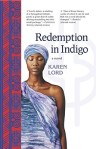
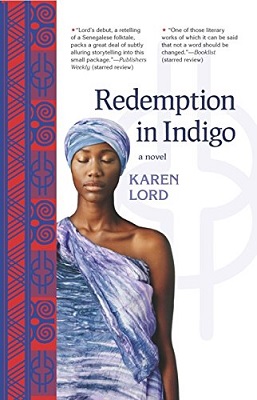
Redemption in Indigo, Karen Lord (2010, Barbados). This was a freebie, or rather a “BONUS BOOK!”, as a strip of paper tucked into the book informed me. I’d ordered a copy of And Go Like This by John Crowley from Small Beer Press (this was not the John Crowley first edition I accidentally ordered twice, by the way), and they included Redemption in Indigo free of charge. All of which is incidental. I was pleasantly surprised by Redemption in Indigo, although to be fair it has had mostly positive reviews. It’s not my favourite type of story – it is, in fact one I generally avoid. The book is structured as a tale told about a woman in a Senegalese-inspired fantasy world who leaves her husband, is gifted with the power of chaos, learns some important lessons at the hands of the god who previously held that power – as does he, of course – before giving the power back and finding contentment. The story is overtly told, and the identity of the narrator is part of the world-building. There’s nothing especially remarkable about either the story or the world-building. While the prose harkens back to older styles of story-telling, it’s a mode that’s been used quite a lot in fantasy fiction. Fortunately, Redemption in Indigo succeeds because it has bags of charm. Its story is not always nice – horrible things happen – but it feels pleasant, and it makes for an enjoyable read. This is a nice book, despite its plot, and the genre needs more of them.
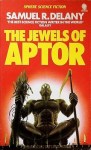
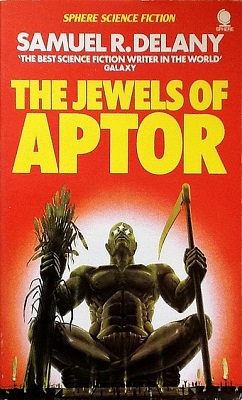
The Jewels of Aptor, Samuel R Delany (1962, USA). I know I’ve read this before – I’ve certainly had the Sphere paperback edition pictured for several decades – so it was probably back in the late 1970s or early 1980s. And having now reread The Jewels of Aptor, nothing pinged any memories. Oh well. A poet and a sailor sign aboard an expedition to rescue the Goddess Argo’s sister from Aptor, a distant continent of horrors and monsters. They are joined by a four-armed boy who is telepathic. Once Geo and Orson and Snake have explored some of Aptor, it’s clear the continent was once technological and suffered an unspecified “atomic” disaster. Quite how this exists alongside a mediaeval style civilisation on Leptor, which is where Geo, Orson and the Goddess Argo are from, is never explained. Perversely, if the book has a flaw, it’s that it has too many explanations. Whenever something happens, Geo and Orson speculate on what it might mean, or what is being planned. Most of the time they’re wrong; most of the time, it reads more like the author is trying to figure out the plot. But for a work by a nineteen-year-old, this is a better novel than by some current authors twice Delany’s age when he wrote it. Yes, it’s an early work, and the plotting is a bit hit and miss, but the beginnings of the language are there, as is the singular approach to the genre. When I think about what Delany has written over the years… He was a genre stalwart and award winner but has since moved out to the edges of genre, and yet has continued to be one of the real innovators in science fiction, both as a writer and a critic, and more people in genre should pay attention to him.
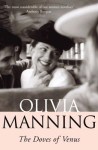
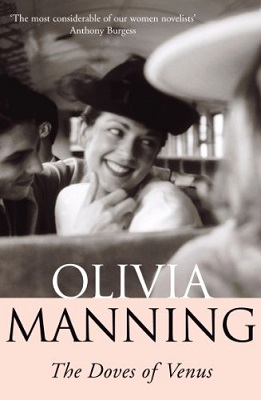
The Doves of Venus, Olivia Manning (1955, UK). I’ve been a fan of Manning’s writing since reading her The Balkan Trilogy and The Levant Trilogy (they were adapted for television as Fortunes of War). Manning spent World War II outside the UK after her husband was first posted to Romania… followed by Greece, Egypt and Palestine. She then returned to England, where she remained until she died in 1980. And The Doves of Venus is clearly written by someone who had tasted better and now found the UK miserable and close-minded. I can sympathise. The book is set in the 1950s but is partly based on Manning’s own life in London during the 1930s. An eighteen-year-old young woman tries to make her own way in London. She meets a man, much older, whose wife has left him, and enters into an affair. Her lover’s wife comes back. She makes friends with a woman at work and they visit the friend’s rich uncle in the country. And so a small group of people sort of circle about each other, meeting up unexpectedly, some living hand-to-mouth, but others rich but parsimonious… and I suppose part of the problem with this novel is that its cast is too small for its story, and the way they keep on bumping into each other seems wildly implausible in a city the size of London. The protagonist, Elsie, is well-drawn and refreshingly independent, especially so given the period (and this was written in the 1950s too), although she’s woefully naive when it comes to her lover (albeit not entirely implausibly). But the 1930s casts a shadow over The Doves of Venus its purported setting can’t overcome. I’ve read other novels set in London during the 1930s, set in the same group of people to which Manning belonged, such as Lawrence Durrell’s Pied Piper of Lovers (1935), and it bears more resemblance to The Doves of Venus than, say, many of the films I’ve watched that were set, and made, in 1950s Britain. There’s also that bitter air to the novel, the feeling of constraint and close-mindedness, that is hard to get past. Manning’s books apparently received mixed reviews on release, with The Balkan Trilogy and The Levant Trilogy generally highly regarded and other books less so. I think she has an oeuvre worth exploring, even if it is variable, and the aforementioned trilogies certainly giver her a huge amount of credit. One for fans.
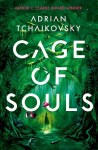
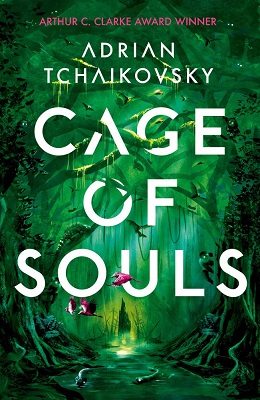
Cage of Souls, Adrian Tchaikovsky (2019, UK). I’ve now read half of this year’s Clarke Award shortlist. And… oh dear. One nominee is a space opera du jour, also nominated for the Hugo and Nebula (which it did not win), and spends more time on world-building and its protagonist’s love life than it does on plot or ideas. Another is a near-future B-movie, poorly-written hackwork filled with recycled tropes. And now, Cage of Souls… Tchaikovsky is scarily prolific, banging out novels in a range of genres and subgenres with inhuman rapidity. He previously won the Clarke in 2016 for Children of Time, and the BSFA Award this year for its sequel, Children of Ruin. I’ve read the first, but not the second. His other books have been fantasy or steampunk. Cage of Souls is, at least, quite well-written – certainly above average for the genre, but not really stand-out prose – but unfortunately it also reads like a novel Robert Silverberg could have written in the 1970s. It is bizarrely old-fashioned. It is set during the final days of Earth, when only a single city, Shadrapar, remains. So who the stranger in the line, “How can I describe to you, a stranger who will never know it, the place of my birth?”, is something of a mystery. The characters have mostly contemporary names, and are pretty much exclusively European. There are very few women in the cast, and they’re chiefly defined by their attractiveness. The words “man” and “mankind” are used to refer to humanity. And the plot assumes that after hundreds of thousands of years of civilisation, humanity will have regressed to something like late nineteenth-century USA, or, er, early twenty-first century USA. The narrator is sent to the Island, a prison located in the middle of distant swamp, where the inmates are treated worse than slaves, and could be killed by the guards for no reason – the Marshal even murders one of each new intake of prisoners simply to prove that he’s a hard bastard. I honestly thought we’d got this sort of nonsense out of our system. Yes, there’s all those self-published mil sf and space operas, but who takes them seriously? Except recently there have been announcements about new space operas by established writers, and it’s the same tired old genocide in space shit. Is it the times? The US and UK are currently led by half-witted corrupt incompetents who make Nero look “strong and stable”, and both have dismally failed to contain the pandemic, with catastrophic consequences… So the genre starts churning out mindless genocidal crap as some sort of antidote? Seriously? Sf is, I admit, a US mode of fiction, but we are under no obligation to accept uncritically its specifically American tenets. Having said that, it wasn’t until two thirds into this novel I realised Tchaikovsky was riffing off Gene Wolfe’s The Book of the New Sun, and while I have to applaud the ambition – and my feelings toward Wolfe’s fiction are conflicted – the comparison does Cage of Souls few favours. I looked at the full submissions list for the Clarke Award and it took me no more than five minutes to find a dozen books more interesting than those on the actual shortlist. I’ve not read much Tchaikovsky but I’d consider him a safe pair of hands – and he did win the BSFA Award this year – but I have to wonder why Cage of Souls was picked for the shortlist because it doesn’t feel at all like twenty-first century science fiction.
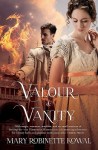
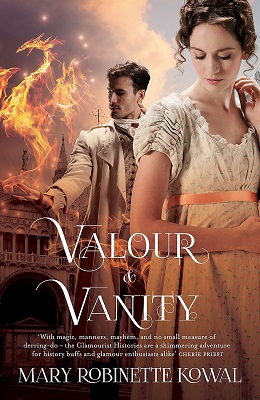
Valour and Vanity, Mary Robinette Kowal (2014, USA). This is the fourth book in a, to date, five book series about a married pair of “glamourists” in the early eighteenth century. Or, in other words, Austen with magic. Or maybe Heyer. Except… while the husband’s patron is the Prince Regent, the tone doesn’t really match Heyer’s Regency novels. On the other hand, they’re lighter, and more overtly romantic, and less wittier, than Austen. Still, they’re fun. In this instalment, David and Jane Vincent are visiting Italy, chiefly to work with Venetian glassmakers. Their ship is attacked by corsairs while travelling from Trieste to Venice, but it all turns out to have been part of a scam to steal the pair’s secret of invisibility. Kowal manages a mostly English feel to her prose, although the level of emotion is obviously aimed at a contemporary US audience rather than a British one (and certainly not a UK audience of Austen’s or Heyer’s times). However, something about Valour and Vanity never quite gelled for me. Perhaps it was the fawning depiction of Byron, or the excessive interiority, or the overly-complicated convolutions of the plot, or the flatness of the supporting cast. Having said that, to get to book four before delivering a duff instalment is a notable achievement. I’m obviously going to pick up the final book, and I hope more will appear.
8 Comments

His master’s voice

So, a couple of days ago I tweeted a short quote from the book I was reading, one of this year’s Clarke Award finalists, and remarked that I was surprised to find the position expressed in the quote in a genre novel published in 2017. Most people who saw my tweet were as dismayed as I was – although, to be fair, they saw only my quote.

Which changes things. Apparently.

The book in question is Sea of Rust by C Robert Cargill, and the exact quote was “Gender is defined by genitalia”, which is spoken by the book’s narrator, Brittle, a robot, in a paragraph in which “she” admits that robots have no gender, it is not something “she” has ever thought about, but she henceforth chooses to define herself as female.

Two people I consider friends – very smart people both, and genre critics whose opinions I respect* – decided to insult my intelligence by questioning by understanding of how narrative works. Because the offending phrase – and it is offensive – was spoken by a character, they stated, that does not mean it reflects the author’s sensibilities. As another friend pointed out, I have myself written fiction featuring Nazis – and I have: ‘Wunderwaffe’ – but that obviously does not make me a Nazi. This is indeed true. Cargill has written a novel about robots, in which the first person narrator is a robot… but obviously he is not a robot himself. I never claimed this.

But the people arguing against my comment were themselves making the same assumption about me they were accusing myself of making against Cargill. Except, I think my position is backed up by the narrative.

When an attitude or sensibility exists in a narrative with no basis in the narrative for it, then it is reasonable to assume it is an attitude or sensibility of the writer. Because of course there’s a distinction between what a character professes to believe and what the writer might believe. But that also assumes the writer has removed every last vestige of their worldview or sensibilities from a text. And that’s frankly impossible. There will be attitudes they have never questioned, and they will likely colour what they write. So when Cargill writes about gendering robots – and, let’s face it, why would the concept even occur to a robot character? – and while there are no dates mentioned in the novel, let’s assume the robots began to appear in the second half of the twenty-first century… True, gender identity could have gone backwards since then, and we’ve certainly seen a lot of backwards social movement since Trump and Cameron/May took power, since the rise of the right… But there’s no evidence in the narrative for the position on gender advanced by the robot narrator. What’s inside the narrative does not apply.

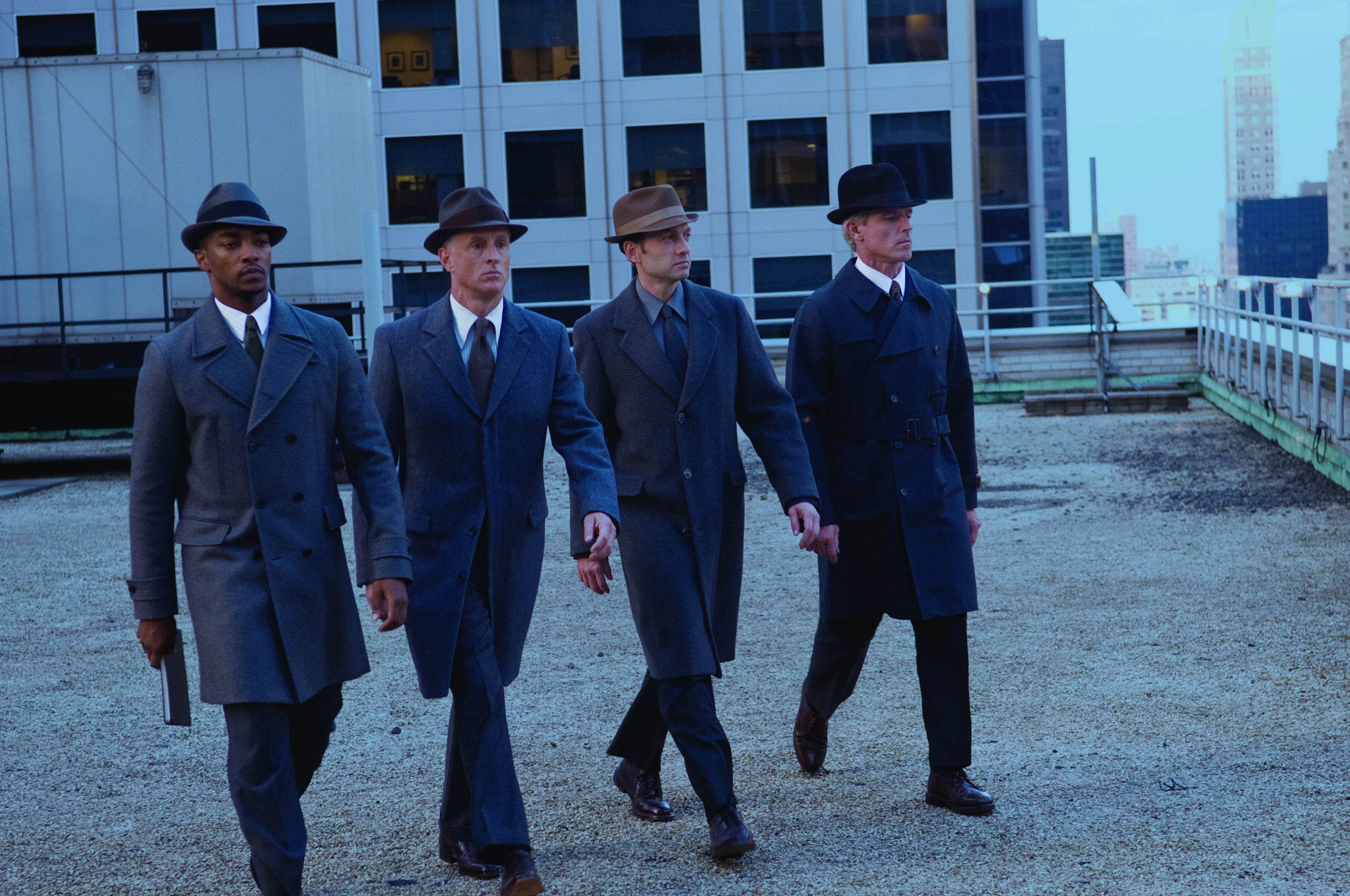
You all know how much I hate Asimov’s fiction. I’ve labelled it “men in fucking hats sf”, because no matter how far in the future it is set, all the men wear hats. And men did indeed routinely wear hats when Asimov wrote his stories in the 1940s and 1950s. It’s a real-world sensibility he unthinkingly imported into his world-building. It is not an attitude of the characters that hat-wearing is normal, it is an attitude of the writer. It is men in fucking hats.

And so back to Sea of Rust. What is in a narrative has to have a foundation in the narrative. Otherwise its foundation is external. In fiction, when a character holds a specific plot-oriented worldview which dictates their actions, that worldview is documented within the text – and, in many cases, the cause of that worldview is also documented… and occasionally actually forms a narrative thread itself. Robots are machines and have no gender. Fine. Robots, for reasons the narrative of Sea of Rust chooses not to explore, adopt gender. Fine. But when a robot character says, “Gender is defined by genitalia”, they’re not parroting a robot position on gender, nor is there evidence in the text they’re parroting a position in the text’s invented world… Ergo, it’s a sensibility of the writer that has leaked through into the narrative. It is a fucking hat, in other words.

So yes, I do understand how narrative works. I also understand how writing works. And while I may not be as accomplished at writing as others… and I may place a higher value on narrative rigour than most people… I stand my original position:

Unless the narrative evidences a foundation for a sensibility or attitude, then it’s reasonable to assume it is a sensibility or attitude of the author that has leaked through into the narrative.

And given that, it is indeed fair to comment on said attitude or sensibility. I stand by the tweet that kicked this all off. I happen to think Sea of Rust is a bad book for a number of reasons – and I’m baffled it made the shortlist – but I absolutely think it’s fair to accuse the author of believing “gender is defined by genitalia” on the strength of the words in the book.

Oh, and for the record, genitals are not gender. And any novel, genre or otherwise, published at this time, needs to justify in its narrative any position opposite to this or risk being called out.

* And whom I still consider friends, of course.


Leave a comment

All the awards that’s fit to print

I found myself completely uninterested in genre awards this year, despite being nominated for two last year (and it’s not like I had anything eligible for any of this year’s awards anyway – well, my one published piece was a spoof coda to the Apollo Quartet, but it was probably unreadable unless you’d actually read the quartet). I suppose my indifference is partly a result of the lacklustre shortlists generated by the various awards last year. But there’s also the increasing disconnect between what the awards mean and the works they’re rewarding. Yes, yes, popular choice wins popularity contest, news at ten and all that. And, true, there’s always been a bit of personality cult about the popular vote awards, which is why so few people keep on winning so many awards, and currently it’s a different set of faces to those of ten or even twenty years ago. A more diverse set of faces, which is good, but given the size of the field these days it would not be unreasonable to expect more variety.

And then there’s the way social media has completely fucked up awards, not to mention the cutting back on promotion by publishers which has normalised the sort of grasping self-promotion bullshit, as epitomised by elegibility posts, that is now common. There may have been an element of awards going to people not to works in the past, but now it’s pretty much nakedly out there.

I suspect I’m not alone in my apathy. I saw almost no conversation about the BSFA Award longlist, and last year’s Clarke Award was notable for its lack of commentary…

Which neatly leads into a recent development which plans to address that last: the Clarke Award Shadow Jury, put together by Nina Allan and hosted online by the Anglia Rusking University’s Centre for Science Fiction and Fantasy. Shadow juries are nothing new – hell, we even have a Shadow Cabinet in our government – although I think this is the first time it’s been done for a genre award. And it’s a really strong shadow jury – I actually know more people on it than I do on the actual Clarke Award jury – and I’m looking forward to seeing their thoughts on the books that have been submitted (there’s a list of submissions here).

A quick scan down that submission list, and I can see a number of interesting books… but I can also see a lot of commercial crap that I hope gets nowhere near the shortlist.

And speaking of shortlists… the BSFA Award shortlist has now been announced. And there are some… odd choices. (And they still haven’t sorted out whether it’s named for the year of elegibility or the year the award ceremony takes place. It’s fucked up at least two year’s worth of trophies in the past. It’s not difficult. Fix it.) I understand the BSFA has around 800 members (yes, I’m one of them), and few of them actually bother nominating or voting. I mean, I’m sure Adam Roberts: Critical Essays is an excellent book, but I doubt more than a handful of people have read it – and yet two of the essays in it have made the non-fiction shortlist. And I count six appearances of NewCon Press across the four shortlists.

But the big one is the novel shortlist, and it looks like this:

The Beckett is the third book of a trilogy, the first of which won the Clarke Award in 2013, and both books one and two were also shortlisted for the BSFA Award. The Chambers is also a sequel, and the first book seemed to make every English-language genre award shortlist in existence… except the BSFA Award. Europe in Winter is the third book of a trilogy, and both books one and two were previously shortlisted for the BSFA Award (and the Clarke Award). Sullivan has made the BSFA Award twice previously, in 2004 and 2011, and Occupy Me is her first sf novel since that 2011 nomination. Azanian Bridges is Wood’s first novel.

Quality of the various books aside, that’s an unadventurous shortlist. Seriously, two book threes from trilogies, of which all the previous installments were also shortlisted? True, some of those earlier volumes have also been picked by Clarke Award juries. Yes, I know, small pool of voters, large field, familiar names – and even faces, as half of the shortlist regularly attend the Eastercon (members of the convention also get to vote on the shortlist). And yes, the nominees are good people (and some of them are friends of mine). But I’m not voting for them, I’m voting for the work.

bsfa2012

The BSFA Award is a popular vote award, so I shouldn’t be all that surprised that the same old names keep on cropping up. I look to juried awards to give a better indication of what’s good in the genre in a particular year. But I also remember when the BSFA Award actually used to be a pretty good barometer of what was good in the British sf field in a year. Not so much for the short fiction category, that was always a bit of a crapshoot, but certainly the novel category. And now I find myself wondering: when did that stop being true? I don’t doubt the books shortlisted this year are good books – well, except for the Chambers, as I wasn’t at all impressed by A Long Way to a Small, Angry Planet – since I’ve read and enjoyed those earlier installments by Beckett and Hutchinson, and have heard good things about the Sullivan and Wood. But I can also see several novels on the longlist (see here) that were more than good enough to make the shortlist. Even then, only thirty-five novels were longlisted. Thirty-five! The Clarke Award submission list is eighty-six novels. (And only twenty-seven nominations in the BSFA Award short fiction category!).

I honestly don’t see the point of awards for short fiction anymore – I wrote as much in an editorial for Interzone back in 2015. I get that awards are a celebration, but what exactly are we celebrating? Back in the day, sf was a ghetto, and it was all reverse snobbery elitism. Awards were an affirmation of that. But it’s been open season on sf tropes now for several decades, and science fiction is still playing the same old game. And this during a period when the field has exploded, not only all over the internet, with way more fiction venues out there now than there were twenty or thirty years ago, but also serious efforts to bring non-Anglophone sf to Anglophone audiences. It’s almost becoming axiomatic that the only people reading genre short fiction these days are other writers of genre short fiction. Sf has always been self-fertilising, it’s one of the genre’s strengths, but that’s ridiculous.

They’ve tried revamping the BSFA Award a couple of times over the last few years, but I’m not convinced their changes have had much impact. For what it’s worth, I think they should drop the short fiction and non-fiction categories, institute a new award for non-fiction/criticism separate from the BSFA Awards, and limit the BSFA Award to best sf novel published in print in the UK and best piece of sf artwork to appear in print in the UK. But leave the definitions of genre up to the voters. No longlist or two-stage nomination process. Just keep it simple. December and the following January each year to nominate five novels and five pieces of artwork each. Top five in either category makes it to the shortlist. Then it’s business as usual: voting and an awards ceremony at the Eastercon. Let’s not just celebrate science fiction, let’s celebrate science fiction in the UK. And with the most visible forms of it – novels, which appear in book shops; and art, which can be plastered all over the internet. That sounds horribly Brexit-ish, which is not my intention at all – I voted Remain, and am hugely pissed off by all this Brexit shit – but the fact remains that when you’re addressing a parochial electorate it’s best to keep it parochial. And let’s not forget that authors from many other nations get published in the UK (although perhaps not as many non-Anglophone ones as we’d like).

I started out this post documenting my apathy toward genre awards, and ended up getting a bit excited about what they could be. And I guess it’s that disconnect, that sense of disillusionment, that fuels my annual awards annoyance. But in the world we have today, and all the shit that’s going to go down in 2017, praying for an asteroid strike is too much of a long shot. And, short of causing every Nazi newsaper in the UK to spontaneously combust, or Corbett and May to give the finger to the Nazi cabal pulling all the strings, we can at least do something positive in the world of science fiction and make a proper job of this celebration-type thing we call an award.


3 Comments

Awards, rewards and self-publishing

Adrian Tchaikovsky’s Children of Time won the Clarke Award, which was a surprise – but a pleasant one. At least the book I’d expected to win didn’t take the prize; but, sadly, neither did the book I wanted to win. I had Children of Time pegged more as a BSFA Award book than a Clarke Award, but when I wrote about it in August last year I predicted good things would happen to it. And I’m happy for Adrian, who is a thoroughly good bloke (and scarily prolific). Children of Time is one of the very few books I started reading on the day of purchase – and it was completely by accident. I’d bought the book at Edge-Lit 4, but during the journey home I finished the novel I’d brought to read on the train and so turned to Children of Time. I wonder if it’s repeatable…

I’ve written about the Clarke Award shortlist elsewhere, and about the individual books on it in scattered Reading diary posts on this blog. It was – and I’m not the only person to use this word – a lacklustre shortlist. The Clarke has always been a boundary-pushing sort of literary award, but the last few years it seems to have been circling its metaphorical wagons. There has been surprisingly little commentary about the books on the shortlist this year, despite it being the award’s thirtieth anniversary, despite the extended period between the announcement of the shortlist and the announcement of the winner. But when most commentary on sf these days seems to consist of brainless hyperbole on social media, having all the criticial insight of marketing copy, it’s plainly a problem much wider than an award shortlist. In today’s genre conversation, books receive either five stars or one star. It’s a piss-poor excuse for a conversation, and it’s poisoning the genre. Not only is sf blanding out, we seem to be actively encouraging it to do so…

110962_web

Which makes the award’s decision to allow self-published works to submit baffling. The vast majority of self-published books are derivative commercial sf, space opera or military science fiction. It’s precisely the sort of sf you’d hope the Clarke Award would avoid. Of course, there are also self-published works which are anything but commercial – and may well have been self-published for that very reason. But the award director cites the examples of Becky Chambers’s The Long Way to a Small, Angry Planet and Jeff Noon’s Channel Skin (which I’ve not read) as good reasons for including self-published works. Of course, the Chambers was already eligible because it had been picked up and published by Hodder. I’m a bit annoyed the award bent the rules to allow me to submit All That Outer Space Allows – which was also selected for the Tiptree Award’s honour list – but then hasn’t seen fit to hold it up as an example of a self-published novel that was worthy of submission.

I deliberately set out when writing each book of the Apollo Quartet to upset the expectations of readers, something I had the freedom to do because I was self-publishing. And while that has seen the books win one award, be nominated for a further two, and appear on the honour list of another… I’ve sold only 3700 copies since April 2012. And Dreams of the Space Age, a collection of short stories set in the same, er, space as the Apollo Quartet, published in April of this year… well, I can barely give them way – 86 copies sold since its launch. However, I don’t have the marketing clout or the distribution channels of a major publishing imprint, so this was hardly unexpected. To be honest, I’d actually expected Adrift on the Sea of Rains to sink without trace.

Because I self-published, because I had no expectations of commercial success, so I was free to write something challenging. The fact that some people appreciated that enough to nominate the books for awards was a huge surprise. And I saw that as grounds to write even more challenging sf. Which at least might have stood me in good stead for some awards. Except now the Clarke Award appears to prefer more commercial works, and by opening itself up to self-published books, is likely to become yet more commercial. I’m guessing, of course; but you can’t get more commercial than the Firefly fanfic that is The Long Way to a Small, Angry Planet

It’s an inevitable conclusion, and one that has plainly occurred to Adam Roberts, who has gone on record as saying he will no longer write challenging science fiction novels as he would sooner not have his books ignored. And I think to myself I would sooner write more difficult sf. On the other hand, success brings its own acclaim, and it’s astonishing how popular books become “awesome” and “amazeballs” and “the best book ever written”. Which is not to say challenging works can never be popular, nor commercial works possess literary quality, nor literary works enjoy commercial success… But we’re in danger of losing what’s best about science fiction if the only game in town is “most popular kid in the playground”… And I was going to write something about lone voices in the wilderness being the only ones to carry the flame, but that really is a mixed metaphor too far… But it’s not unrealistic to expect, to hope, that the Clarke Award is skewed toward challenging science fiction novels, and not the dull, and often juvenile, meat-and-potatoes/bread-and-butter sf which sells by the yard (and is likely written by the yard too), and which appears to comprise the vast undifferentiated mass of self-published science fiction.

But I’m speculating – and we shall see next year how the Clarke Award implements its expanded remit. A juried award at least has the advantage of not being bent out of shape by eligibility posts, or fan and tribe affiliations; and for that reason I look to the Clarke as a truer picture of what the word “best” means in science fiction in any given year. I would hate to lose that…