
It Doesn't Have To Be Right…

… it just has to sound plausible


1 Comment

Drawn strips

UK comics have traditionally followed an anthology format, with each issue containing a number of different stories or installments of a serial. This is very different to the US tradition, in which a single story occupies a whole issue, or series of issues. And while US comics have pretty much entirely been stories of super-powered men and women in brightly-coloured tights, most UK comics were typically humorous (Beanie, Dandy, Whizzer and Chips, etc), war-related (Warlord, Victory, etc), or science fiction (2000 AD, Starlord, etc).

But there is another comics tradition, which only rarely appears in the US or UK – the bande dessinée. In continental Europe, science fiction has often been driven by these “drawn strips”, much more so than it has been in Anglophone countries. Every now and again, some of the more popular bandes dessinées are picked up by English-language publishers, translated and introduced to an English-speaking audience. Cinebook have been doing a sterling job in this regard over the last few years, but they’re by no means the first.

I’ll admit to being a fan of sf bandes dessinées, though I don’t buy them as often as I’d like to. Most, of course, have not been translated into English – although they may well have been translated into most other European languages. Anyway, here are the ones I have. Most are in English, but some are in French.
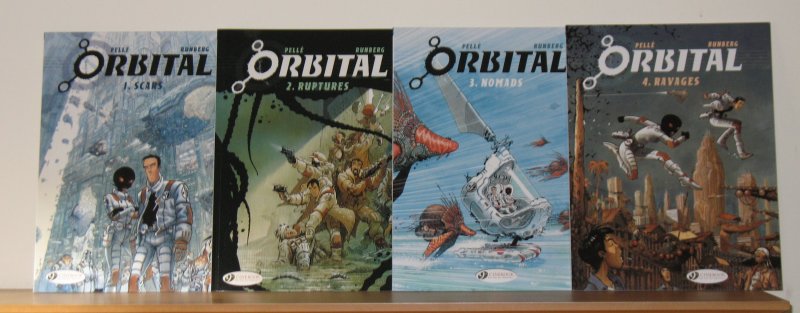
Orbital, written by Sylvain Runberg and drawn by Serge Pellé, is solid space opera of a type which rarely appears in graphic form in English. A human and a Sandjarr, members of two races that were at war several years before, are put together as diplomat-troubleshooters, and have various adventures.
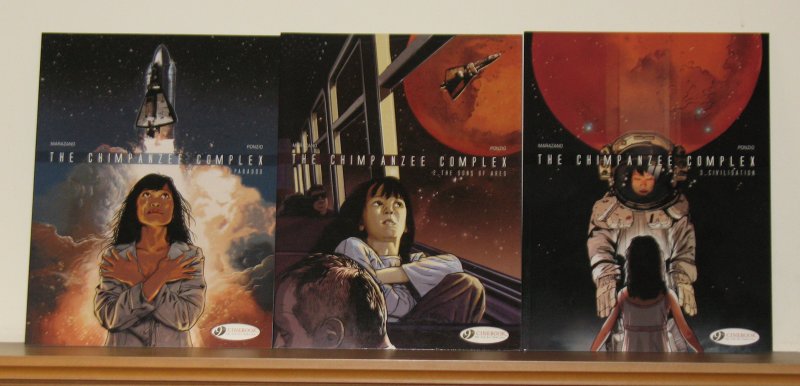
The Chimpanzee Complex, written by Richard Marazano and drawn by Jean-Michel Ponzio, opens brilliantly – in 2035, a copy of the Apollo 11 Command Module splashes down in the Pacific, but only Armstrong and Aldrin are aboard. A mission to the Moon is hastily cobbled together to discover the CM’s origin. This then moves onto Mars, where the crew find a colony of cosmonauts led by Yuri Gagarin. Sadly, the final volume doesn’t quite sustain the level of inventiveness, but it does do something quite weird and interesting with the story.
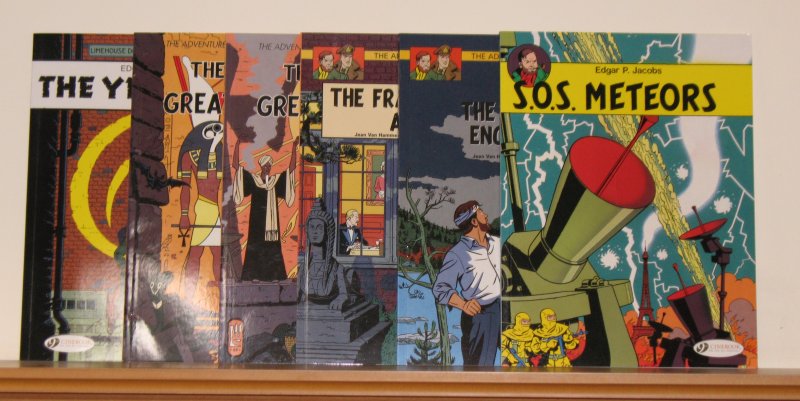
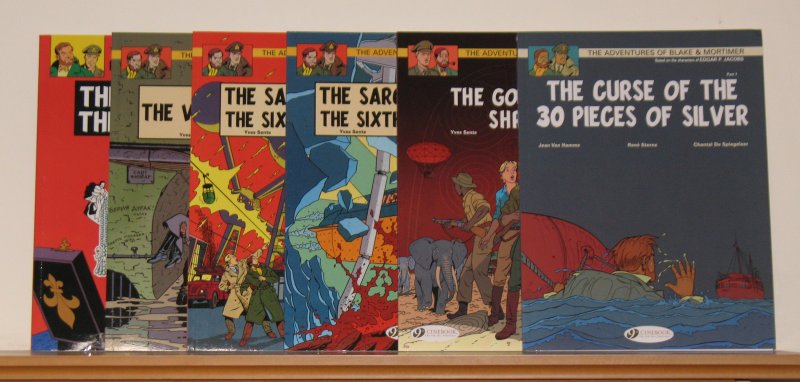
One of the big bandes dessinées series is Edgar P Jacob’s The Adventures of Blake and Mortimer. It first appeared in  Tintin Magazine in 1946, and continued through to Jacobs’ death in 1987. Since then, new stories have appeared from Jacobs Studios. To date, Cinebook have translated and published 13 books. Like Tintin, they’re all drawn in a ligne claire style, and while they’re often text-heavy (often with text describing what’s visible in the panel), the stories are generally a quite cleverly-done mix of history and science fiction.
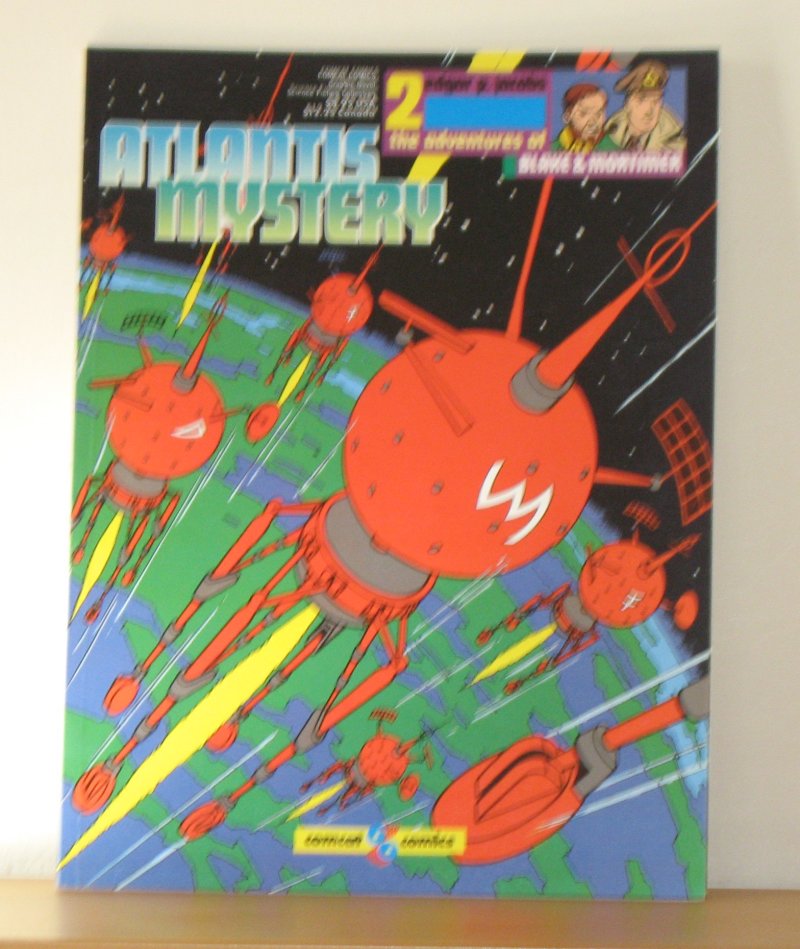
There was an earlier attempt to introduce Blake and Mortimer to an English-speaking audience. Back in the early 1990s, US publisher Catalan Communications published two Blake and Mortimer books. I found this one in Abu Dhabi. It has since been republished as volume 12 in the Cinebook editions of the series.
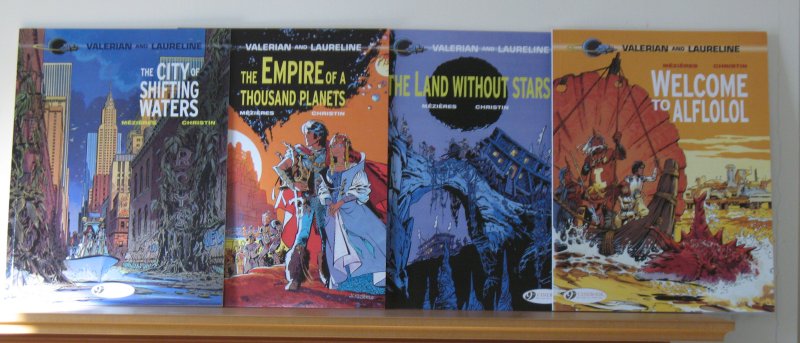
Another big bande dessinée series is agent spatio-temporel Valérian et Laureline. This started in 1970, and there are now twenty volumes available. So far Cinbeook have translated and published the first four.
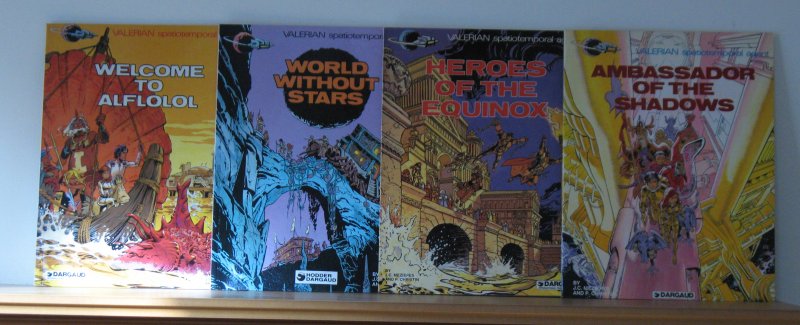
Again, there was an attempt to introduce Valerian and Laureline to English-speakers back in the 1980s. A US subsidiary of the French publishers, Dargaud, translated and published four random volumes – numbers 3, 4, 6 and 8. I’ve no idea why they stopped.
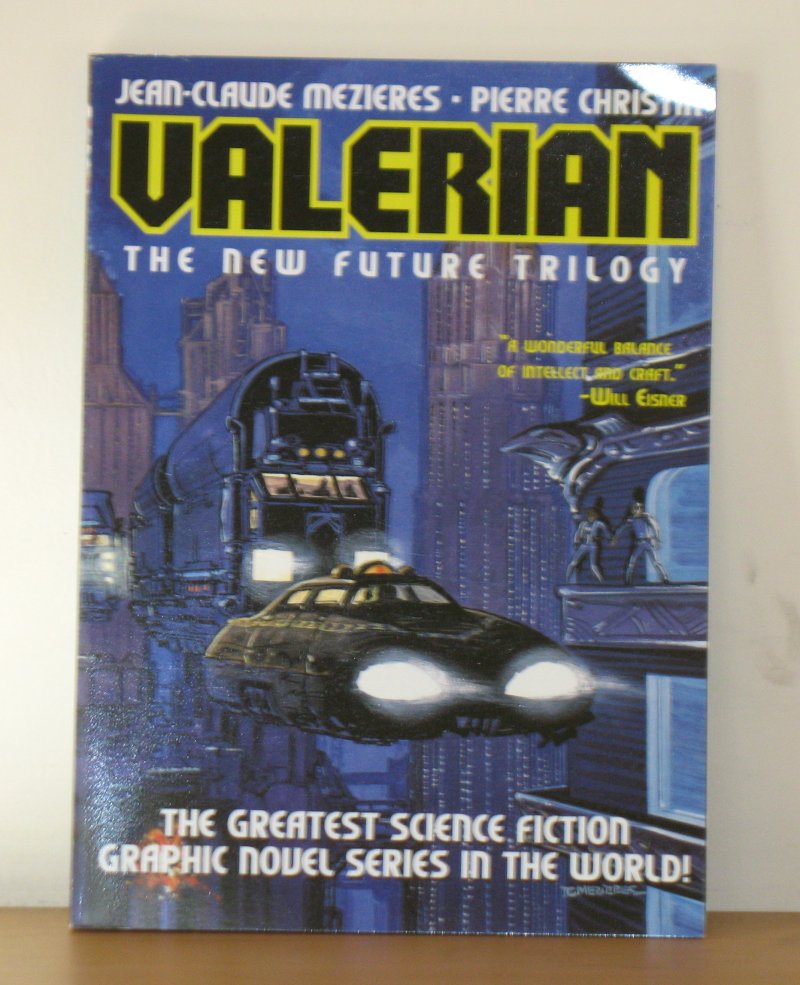
In 2004, ibooks published an English-language omnibus of three Valerian and Laureline stories – numbers 13, 14 and 15.
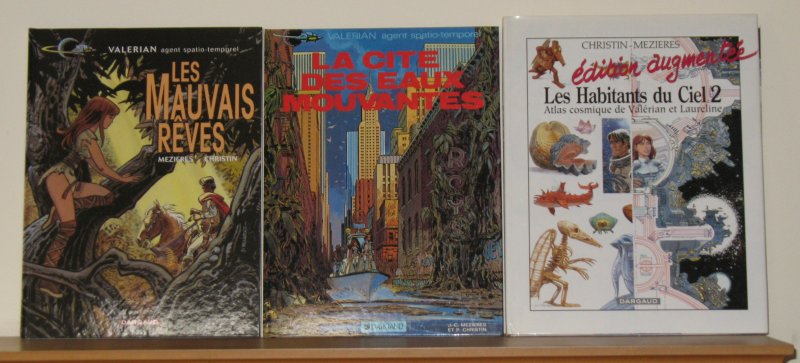
And here are some of the original French editions, including a prequel published in 1983 and the second of two encyclopedias about the universe of the two spatio-temporal agents.
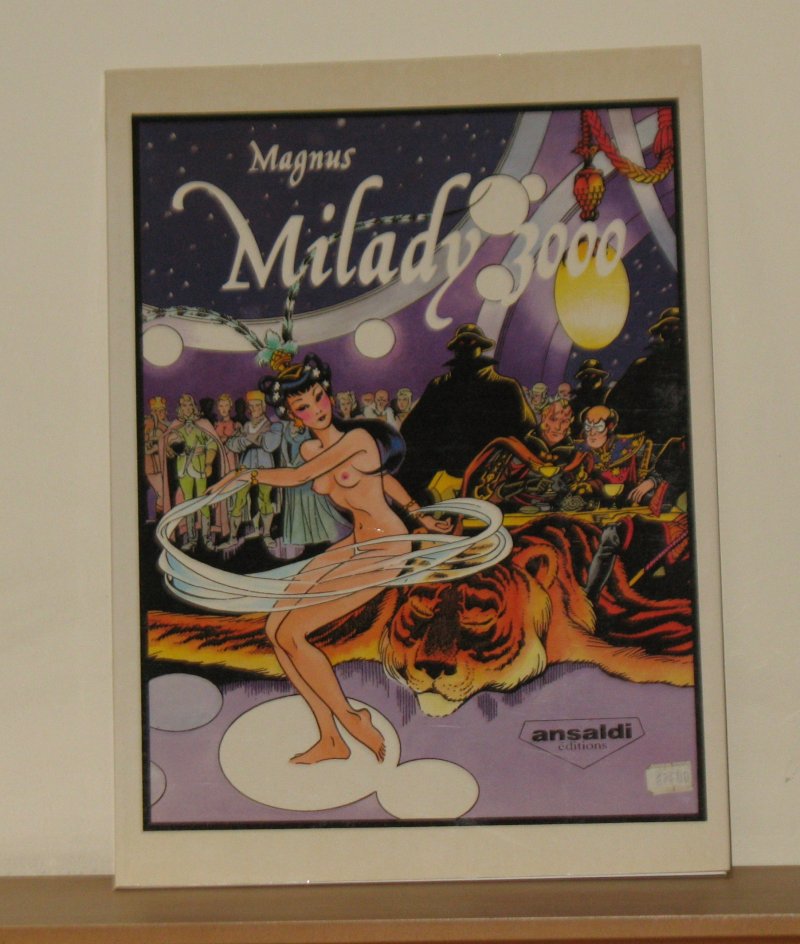
I’m not sure why I have this. This copy of Milady 3000 is a French translation of an Italian comic. It’s far future space opera, and quite well done. It apparently lasted from 1980 to 1984, and appeared in both Métal Hurlant and Heavy Metal.
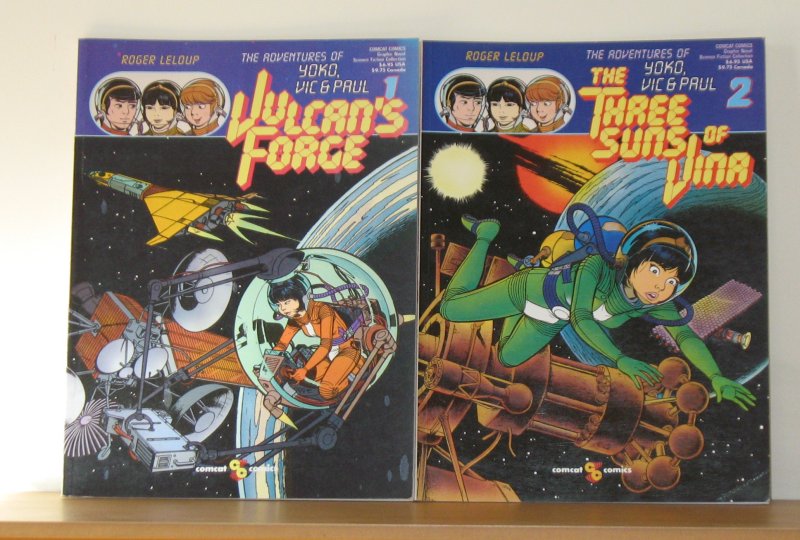
The Adventures of Yoko, Vic and Paul is another popular series being republished by Cinebook. These two books are earlier editions by Catalan Communications. The series began in 1970 and currently comprises twenty-five volumes. Catalan Communications published only the two I have, but Cinebook has so far reached volume seven.
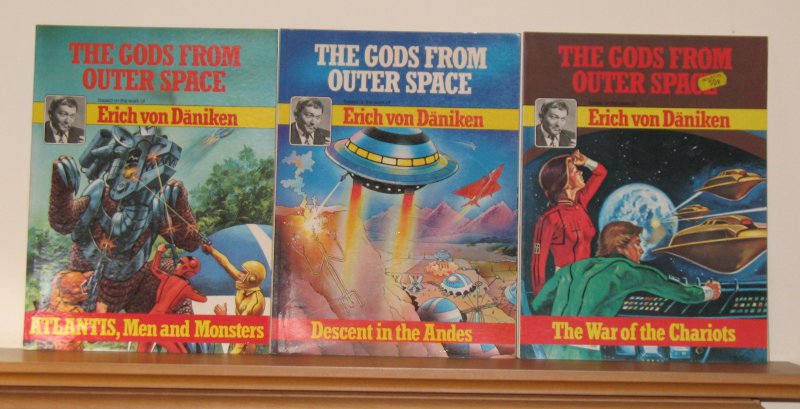
I’ve had these for years, and I can no longer remember where or when I bought them. They’re English translations of a Polish series based on the works of Erich von Däniken. I think only these three volumes were published in English, though there were eight originally in the Polish series.
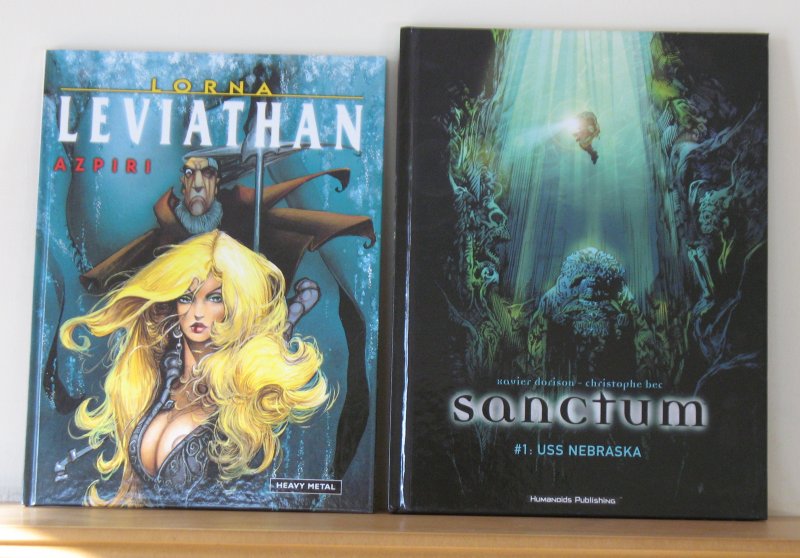
Lorna is originally Spanish, by Alfonso Azpiri, and has appeared in Heavy Metal. Leviathan is the fourth of six books featuring Lorna, and I’ve no idea if any others have been published in English. It’s definitely not for, er, children. Sanctum is a three-part French series by Xavier Dorison and Christophe Bec. As far as I can determine, only the first volume has been published in English. So it looks like I’ll be getting the French “Intégrale” edition to find out how the story ends…
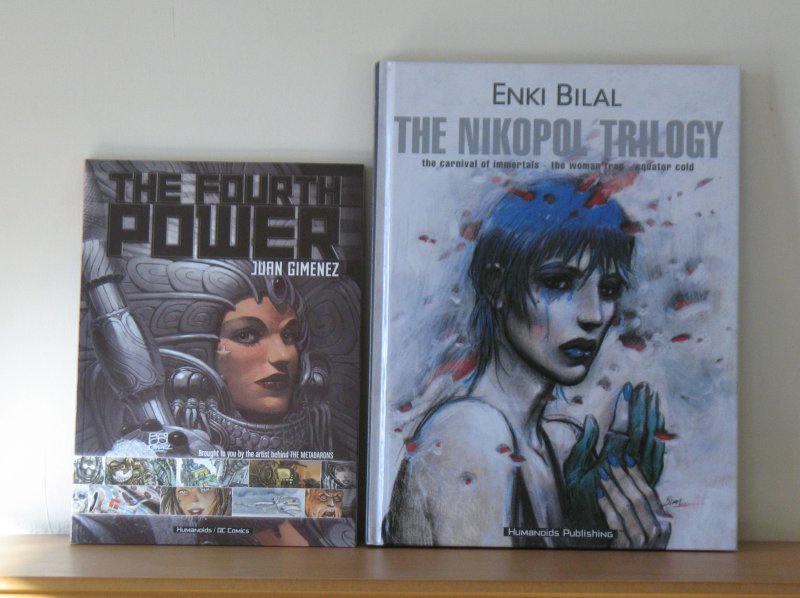
The Fourth Power is a full-on space opera bandes dessinées by Juan Giménez, an Argentine artist who illustrated Alejandro Jodorowsky’s Metabarons series. The Nikopol Trilogy by Enki Bilal was the basis for Bilal’s live-action/CGI film Immortal.
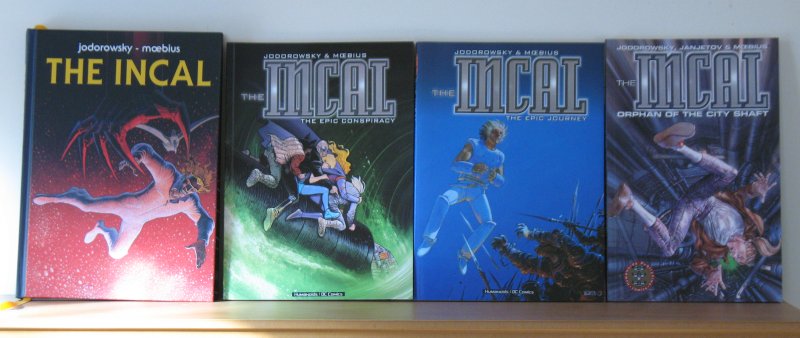
No post on bandes dessinées is complete without mention of Alejandro Jodorowsky, and his most famous work, The Incal. It may well be, however, better known for Moebius’ artwork than Jodorowsky’s script. It’s been published several times in English. Back in the early 1990s, Titan Books published several volumes; then Humanoid Associates, the English-language arm of the French publishers, published four volumes; and last year, Self Made Hero published a very nice omnibus edition. I’ve only managed to find three of the four Humanoid Associates editions, but now I have Self Made Hero edition I don’t need to complete the set…
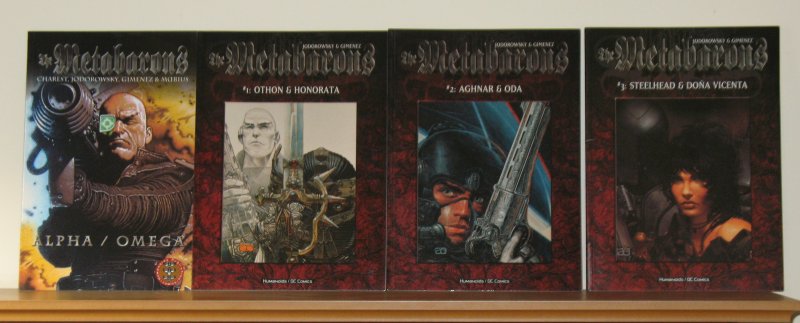
Another popular Jodorowsky series, this time illustrated by Juan Giménez. There is, I believe, a Metabarons RPG. The French originals stretches over nine volumes, but only the first six, in three omnibus volumes, are available in English.
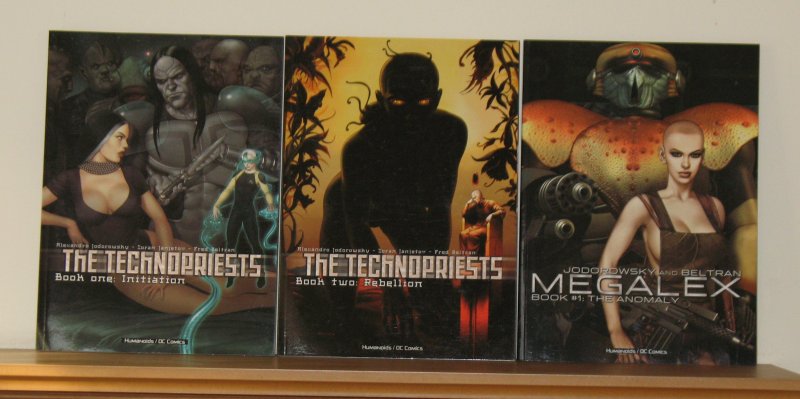
Technopriests, written by Jodorowsky and illustrated by Zoran Janjetov, is even more bonkers than the Incal or Metabarons. Humanoid Associates have to date only translated the first two of the eight-volume series. Megalex is a three-volume series, illustrated by Fred Beltran, but only the first book is available in English.
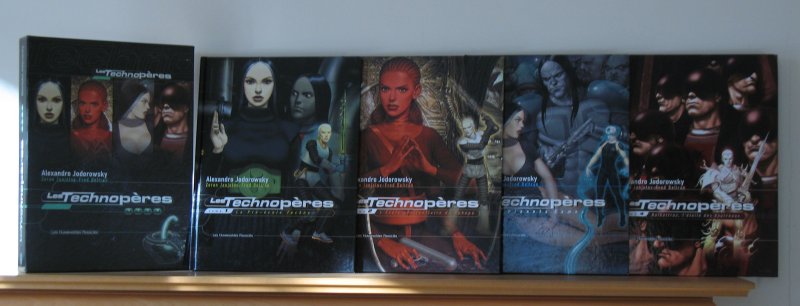
However, I have the first four volumes of Les Technopères in French, plus a presentation box for them. I just need to get hold of the remaining four volumes…


5 Comments

30 films in 30 words

Well, I used to do readings and watchings posts, and since I did 30 words on 30 books, I should do the same for the movies I’ve watched. It’s the usual eclectic mix, of course.

Bunny Lake Is Missing, Otto Preminger (1965)
American expats newly arrived in London misplace young daughter, but then it seems daughter might never have even existed. Police very confused. But all a cunning plot. Curiously low-key thriller.

Limitless, Neil Burger (2011)
Just think what you could if you had total mental focus. Why, you could make movies like this one. Smart drug leads to smarter than expected film. Actually worth seeing.

The Girl with the Dragon Tattoo, Niels Arden Oplev (2009)
Swedish TV series original. Swedish Nazi back during WWII proves to be psycho killer. Big surprise. Journo and hacker chick investigate. Interesting thriller with good characters and sense of history.

The Girl Who Played With Fire, Daniel Alfredson (2009)
Lisbeth Salander tracks down her evil dad, ex-KGB bigwig. He tries to kill her but she won’t be put down. Thriller series turns silly as Salander develops superpowers. Or something.

The Girl Who Kicked the Hornets’ Nest, Daniel Alfredson (2009)
Salander’s evil dad was protected by secret group within Swedish spy services as Millennium trilogy jumps shark. Drawn-out courtroom drama stretches credulity way past breaking-point. Makes 007 look eminently plausible.

Red Psalm, Miklós Janscó (1972)
Hippie paean to 19th century Hungarian peasant revolts, with much socialist declaiming, folk songs, striding about and a complete lack of coherent plot. Brilliant. Loved it. More please. Review here.

Mr Deeds Goes To Town, Frank Capra (1936)
Simple but honest man inherits fortune and elects to do good with it. Establishment aren’t having it and try to have him declared mentally unfit. Heart worn blatantly on sleeve.

Grave of the Fireflies, Isao Takahata (1988)
During WWII, kids run away from mean aunt and hide out in abandoned air-raid shelter. Of course, they’ve no idea how to cope on own. Sad story spoiled by mawkishness.

Claire’s Knee, Éric Rohmer (1970)
Fifth of Rohmer’s Six Moral Tales. Educated French middle-class people pontificate on love while one of them fantasises about a teenage girl’s knee. Too many words, not enough insight. Meh.

Red Desert, Michelangelo Antonioni (1964)
A dubbed Richard Harris visiting Ravenna gets friendly with his friend’s wife, mentally-fragile Monica Vitti, in beautifully-shot industrial landscape. Incredibly painterly film. Slow but involving. Brilliant. Loved it. Review here.

Ivan’s Childhood, Andrei Tarkovsky (1962)
Tarkovsky’s first feature film. Orphaned boy acts as scout behind enemy lines for Red Army in WWII. Many touches of Tarkovsky genius but much more straightforward than his other films.

Torment, Alf Sjöberg (1944)
Bergmans’ first film, though he only provided script. Moody student carries on with corner-shop girl, but she is murdered – and nasty teacher did it. Hitchcockian thriller seen through distorting mirror.

, Frederico Fellini (1962)
Saw La Dolce Vita years ago and not impressed, so surprised to discover I loved this. Marcello Mastroianni meditates on life and art while making sf film. Huge ending. Glorious.

Heaven Can Wait, Ernst Lubitsch (1943)
Technicolor New York in 19th century as dead self-effacing millionaire Don Ameche is sent to Hell and is forced to reveal he was actually a nice bloke. Not a classic.

Melancholia, Lars von Trier (2011)
Planet on collision course with Earth. Everyone panic. Except people with clinical depression, that is. Lovely photography, good acting, bollocks physics. Can’t honestly see why people rate this so highly.

My Night at Maud’s, Éric Rohmer (1969)
Third of Rohmer’s Six Moral Tales. Catholic stalks young woman, then talks about religion, fidelity and love with friend and his girlfriend all night. Lessons to be learned. I think.

Gentlemen Prefer Blondes, Howard Hawks (1953)
Marilyn Monroe and Jane Russell whoop it up among dirty old men on liner to Europe. It’s a cunning plot to force Monroe’s beau to declare. Goes wrong. Technicolor fun.

Summer With Monika, Ingmar Bergman (1953)
Young working-class lovers run away to Swedish islands. Monika gets pregnant, they return to the real world. But Monika’s not the home-making type. See, it was grim in Sweden too.

Santa Sangre, Alejandro Jodorowsky (1989)
Boy grows up in circus, witnesses mother have her arms cut off by mad knife-thrower. Years later, she uses him to commit crimes. It’s by Jodorowsky. So it’s completely bonkers.

Les Enfants Du Paradis, Marcel Carne (1945)
The lives and loves of assorted theatre types in early 19th century Paris. Three hours long, and feels like it. A classic to many, I found it slow and dull.

Pocketful Of Miracles, Frank Capra (1961)
Homeless lady is lucky charm for gangster in 1920s New York in cross between Cinderella and Pygmalion. Played for laughs but not much is a laughing matter. Capra’s last film.

The Magician, Ingmar Bergman (1958)
Max von Sydow gurns in title role as three town worthies take the piss out him in 19th century Sweden. Science vs magic and the fight is fixed from start.

Shadows Of Forgotten Ancestors, Sergei Parajanov (1965)
Earlier “poetic cinema” by director of The Colour of Pomegranates. Beautifully-shot, absolutely fascinating, makes no sense whatsoever. More please.

Sucker Punch, Zack Snyder (2011)
They’re mental patients. No, they’re prostitutes. No, they’re super agents in steampunkish fantasy world. In corsets and stockings. Kick-ass women as exceptional – and hot – tools of patriarchy. Wrong message.

Captain America, Joe Johnston (2011)
Possibly the best of the recent rash of superhero films. Retro-action during WWII as Cap sells war bonds across US and then tackles Red Skull in his lair. Almost fun.

Black Swan, Darren Aronofsky (2010)
Ballet dancer driven to dance perfectly driven to madness. Well-played, though not the most original story ever. At least her shoes weren’t red. Have yet to figure out Aronofsky’s career.

Highlander 5: The Source, Brett Leonard (2007)
Worst film in a bad franchise, and possibly worst film ever made. Even the covers of Queen songs were terrible. There can only be one. Nope. Fear for your sanity.

Transformers 3: Dark of the Moon, Michael Bay (2011)
More coherent than earlier Transformers films, but just as offensive. Irritating, stupid, and wrong, wrong, wrong. It’s not big and it’s not clever – someone should tattoo that on Bay’s forehead.

The Imaginarium of Doctor Parnassus, Terry Gilliam (2009)
Carnival-type caravan wanders London and there are wonders within. Famously whimsical director produces another piece of whimsy. Yawn. Heath Ledger died during film, but story was rescued. Still dull, though.

Szindbád, Zoltán Huszárik (1971)
A classic of the Hungarian New Wave, just like Red Psalm. Just shows how individual are responses to such films. Loved Red Psalm, but found this one a bit dull.


1 Comment

30 words on 30 books

I shamelessly stole this idea from Pornokitsch, who did the same yesterday. Since I’m not doing my readings & watching posts this year, I thought thirty words on the last thirty novels I’ve read might be a good way of mentioning my recent reading. But 30 words is actually harder to do than it looks…

Final Days, Gary Gibson (2011)
Discovery on planet orbiting distant star reached by wormhole suggests future is fixed and immutable. World starts to fall apart. Nice Apollo re-enactment but otherwise not that much stands out.

The Member of the Wedding, Carson McCullers (1946)
Tom Sawyer-ish Frankie daydreams of brother’s wedding. A GI mistakes her age, wants to get frisky. Lovely writing, though it’s hard not to suspect Frankie is wrong in the head.

Like A Sniper Lining Up His Shot, Jacques Tardi (2010)
Graphic novel adaption of French thriller set in the UK. Assassin like father like son. With guns. And gore. Not much more to be said. Tardi is definitely worth reading.

Bodies, Jed Mercurio (2002)
Incompetent doctors get away with murder on the NHS. New houseman is horrified. He learns to work with the system. A favourite writer but it will scare you off hospitals.

City of Pearl, Karen Traviss (2004)
First human colony disappears, rescue mission discovers aliens protecting them. Mix of hard sf and space opera. Nice heroine, not so interesting aliens. Oozes competence without suggesting more. Review here.

The Bender, Paul Scott (1963)
Should have been a film with Dirk Bogarde. 1960s wastrel goes begging for cash and sparks family crisis. Great wit, great writing, and an astonishing postmodern interlude. Recommended. Review here.

Leviathan’s Deep, Jayge Carr (1979)
Freak alien resembles humans. They want to conquer her planet and fall in love with her. She scuppers their plans. Somewhat old-fashioned sf, though protagonist well-drawn. Review on SF Mistressworks.

The Bookman, Lavie Tidhar (2010)
Literary and pulp potage which stripmines steampunk tropes. Orphan adventures, starts cleverly in Victorian Lizard London but loses steam about halfway through before Bond-esque Vernian finish. The first of three.

Omega, Christopher Evans (2008)
Man recovering from terrorist bomb explosion dreams himself into alternate self in a world where WWII never ended. Very cleverly done, alternate world very real, great writing. Recommended. Review here.

Angel At Apogee, SN Lewitt (1987)
Princess pilot, a hot-shot of course, proves to be catalyst which rejoins three sundered races on three separate planets. Interesting debut, though perhaps a little over-egged. Review on SF Mistressworks.

The Fat Years, Chan Koonchung (2009)
China prospers while rest of world in financial crisis. Interesting window on Chinese society, though unsatisfactory as a novel – the plot is explained in a final chapter info-dump. Review here.

The Fall, Albert Camus (1957)
Pompous ex-lawyer monologues at stranger in Amsterdam bar and over several days tells him of his somewhat boring fall from grace. Mercifully short, though there’s some insightful writing in it.

Selected Poems, Lawrence Durrell (1956)
It’s a book of poems. And they were selected. By Lawrence Durrell. He did this several times. Except when he wasn’t collecting his poems for his Collected Poems. More here.

Betrayals, Charles Palliser (1994)
A story told through several stories – including a superb pisstake of Taggart, and a righteous skewering of Jeffrey Archer. Superbly done, though perhaps needed the stories tying together more. Recommended.

Leviathan Wakes, James SA Corey (2011)
Solar system shenanigans as alien virus wreaks havoc for corporate profit. Who needs New Space Opera? Regressive: no diversity, old school sexism, implausible villainy. Mostly right physics. Avoid. Review here.

Native Tongue, Suzette Haden Elgin (1984)
Men repeal rights of women, so they secretly develop women’s language. Interesting linguistics, good female characters, though characterisation of men not so convincing and world-building weak. Review on SF Mistressworks.

This Island Earth, Raymond F Jones (1952)
Manly engineer saves the galaxy by demonstrating good old US engineering know-how. Womanly PhD does his ironing and cooking. Happily they don’t write them like this any more. More here.

The Lady in the Lake, Raymond Chandler (1944)
Mixed-up femme fatales don’t fool Marlowe in hunt for rich man’s missing wife. Not the cunningest murder-mystery plot and Marlowe often gets away with murder. Strong on place and time.

The Door, Magda Szabó (1987)
In Hungary, writer hires housekeeper, who proves to be old school peasant and a right character. Fascinating portrait of housekeeper, thoroughly enjoyed it. Soon to be major film. Review here.

The Unorthodox Engineers, Colin Kapp (1979)
Collection of sf shorts in which lateral thinking engineers solve seemingly intractable problems. Dated, problems not especially unsolvable, nor especially original. Entirely forgettable, in fact. Hard book to find, though.

Journey to the Centre of the Earth, Jules Verne (1864)
Story not as good as Nemo’s though text is more pleasingly detailed. Science horribly dated, of course, and often wrong. Characters bizarrely emphatic – except for phlegmatic Icelandic guide. Historical document.

Arkfall, Carolyn Ives Gilman (2008)
Novella set on human-colonised Europa-like planet with interesting socialist society. Woman and male tourist find themselves on unintended journey after seaquake. Promises more than it delivers but still worth reading.

Kamikaze l’Amour, Richard Kadrey (1995)
Kadrey channels Ballard and Shepard in rock star epiphany in California overrun by Amazonian jungle. Not sure how original was 17 years ago but is not now. After Metrophage, disappointing.

Smart-Aleck Kill, Raymond Chandler (1958)
Collection of four shorts. Simple direct prose, strong on place and time, though plotting something of a direct line and characterisation sketchy. More for noir fans than normal readers, possibly.

Embassytown, China Miéville (2011)
Truthful aliens get hooked on impossible Ambassador’s speech. World falls apart. Narrator teaches aliens to lie and saves planet. Interesting ideas but old-fashioned science fiction. Likely award-winner. Sigh. Review here.

Dr No, Ian Fleming (1958)
Bond in Jamica. Again. Racial stereotype has evil plan to do evil. Bond foils, with help of trusty local. He nearly dies in the process, but he gets girl. Again.

The Incal, Alejandro Jodorowsky & Moebius (1981)
Seminal bande dessinée allegedly cobbled together from failed Dune film project. Light and dark Incal combine to save galaxy from evil Darkness. Completely bonkers. Lovely art. Everyone should own copy.

Alias Grace, Margaret Atwood (1997)
Character study of true life murderess from 1840s. Clevery done – never quite determines innocence or guilt, though very detailed on life and crime. Lovely writing. Possibly Atwood’s best novel. Recommended.

The Planet Dweller, Jane Palmer (1985)
Hot flushes and giant aliens that live inside planets. Cartoon aliens that want to conquer galaxy. Hit and miss comedy, but too fantastical for sf. Review soon on SF Mistressworks.

The Ginger Star, Leigh Brackett (1974)
By-the-numbers swords and planets. Manly hero brought up by animals battles way across barbarian planet to save mentor. Been there, done that. Yawn. Review soon on SF Mistressworks.