It Doesn't Have To Be Right…

… it just has to sound plausible


4 Comments

Reading diary, #31

Been a while since the last one of these. I have been reading, of course, and I’ve even managed to get into the habit of polishing off a few pages when I get home from work. And now that Dayjob Horrible Project has moved into a slightly less frantic phase (but only slightly less), I can start getting some writing done… including those reviews I owe people… Meanwhile, here are some short paragraphs, that aren’t really reviews, about books I’ve read…
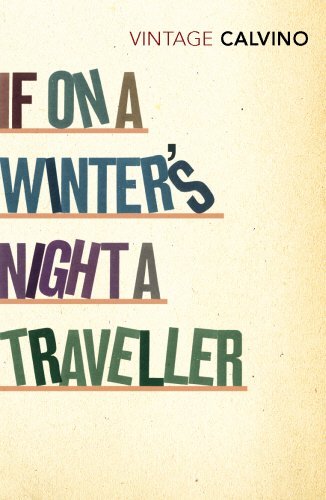
if_on_a_wintersIf on a winter’s night a traveller*, Italo Calvino (1979). You are reading a book which opens with the line, “You are about to begin reading Italo Calvino’s new novel, If on a winter’s night a traveller,” and you think, sigh, metafiction. But this is Italo Calvino, and so you take the advice Calvino offers: “Relax. Concentrate. Dispel every other thought”– Hang on, every other? How will you know which ones to dispel and which ones to keep? And yet, it is perhaps sound advice as you read about a reader who reads a book only for his reading to be cut short, and when he goes looking for a complete copy of the novel he was reading he discovers he had been reading an entirely different book altogether… And at the book shop he meets a young woman who is also interested in this literary mystery he has uncovered, and together they discover yet a third novel mixed in with the previous two. But then he meets the young woman’s sister and becomes involved in her schemes… and at some point both young women end up in one of the narratives you are reading about him reading… And yet despite this literary shell game, where the narrative peas seem to proliferate out of sight under the cups, the whole is intensely readable and not in the slightest bit confusing. In parts it reminded me of Nabokov’s Pale Fire, although without the prissiness. It certainly convinced me I should read more Calvino – If on a winter’s night a traveller may be one long literary trick, but it’s gloriously done. Bravo.
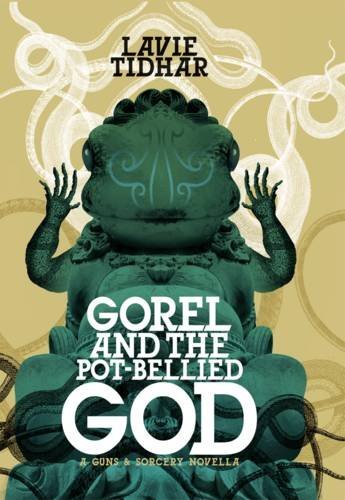
gorelGorel and the Pot-Bellied God, Lavie Tidhar (2011). And from the sublime to, er, Tidhar. This is the first of his “gunpowder fantasies”, which I take to mean generic heroic fantasies but with firearms. (Obviously the guns and bullets and gunpowder are all made by magic, as fantasy worlds rarely have an industrial base.) Gorel travels to Falang-Et, the home of a frog-like race, in order to steal their most sacred magical object (not that he knows exactly what it is). En route, he meets up with a bird-like man and a fish-like woman, and the three join together for the theft. Which doesn’t go quite as planned. Of course. That’s the nature of these sort of story. The setting hovers on the edge of strangeness and familiarity. I’m not that widely read in this type of fantasy, or New Weird, but I think there’s a bit of Lovecraft in there somewhere; and probably some Clark Ashton Smith and William Hope Hodgson, for all I know. Whatever it is, the combination is pretty effective. The book’s novella-length works in its favour too, although the prose is occasionally a little too light on detail. It’s still not my thing, but I did enjoy it.
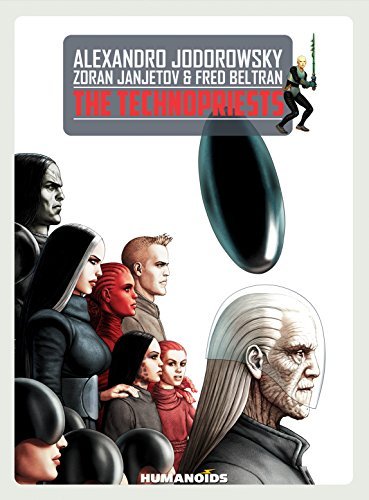
technopriestsThe Technopriests Supreme Collection, Alexandro Jodorowsky, Zoran Janjetov & Fred Beltran (2013). Originally published between 1998 and 2006, the eight-book bande dessinée series collected in this omnibus follow the fortunes of Supreme Technopriest Albino, and his two siblings, as he rises through the technopriest hierarchy while the other two track down the three pirates who raped their mother and so fathered them. The story is framed as Albino’s reminiscences during a journey to lead 50,000 technopriests to a new home in a distant galaxy. When the three were born, the mother rejected Albino and his four-armed red-skinned sister Onyx, and lavished all her affection on grey-skinned Almagro. She started up a business making “kamenvert” cheese, which became a galactic monopoly. But Albino wanted to be a videogame creator for the technopriests, only he proved to have much greater talent in that area than anyone had expected… This is not Moebius – the art is gorgeous, but all the characters are somewhat pumped up, so to speak. Happily, Jodorowsky’s off-kilter inventiveness is abundant. Although it takes a few twists and turns, it’s a more straightforward morality tale than The Incal or The Metabarons, and in parts it does feel a little like it’s retreading ground already covered in those earlier series. But if you like Jodorowsky’s bandes dessinées, you’ll like this one.
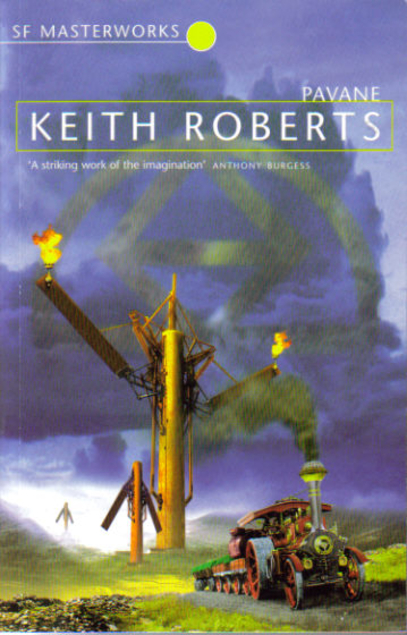
pavanePavane, Keith Roberts (1968). I’ve had this book for years – I collected the original SF Masterworks series as they were published – and was fairly sure I’d read it many years before. But having now read it (again?) I’m not so sure. I think I may have read a part of it as a short story – it’s a fix-up, after all. The central conceit has made it a touchstone work for an entire genre – alternate history or counterfactual stories. In Pavane, Queen Elizabeth I was assassinated and the Duke of Medina Sidonia successfully invaded England. The book is set at the time of writing in a Catholic Britain which is technologically far behind the real 1968 – obviously because of the Roman Catholic Church. It’s handled well – society seems to be stuck in the late 1600s, and some areas of science and technology not much past then. The first chapter, for example, is about a steam-powered road train. There is also a chain of great semaphore stations stretching the length and breadth of the country, as electricity has not been discovered nor radio invented. I’ve certainly heard it said that the Catholic Church set back science in Europe by about a thousand years, but I’ve never seen it argued with any degree of intellectual rigour. True, Hero of Alexandria had his aeolipile in the first century CE, and all the work done by Islamic medics, mathematicians and astronomers was completely ignored by the Church… But Roberts’s premise needs to be taken with a pinch of salt, since quite a few places – like the Holy Roman Empire – remained under Roman Catholic influence for a long period and progressed pretty much at the same pace as everywhere else. Still, Roberts was one of British sf’s better writers, and if Pavane isn’t his best book, it’s still a good one. ‘The White Boat’ is worth the price of entry alone. Worth reading.
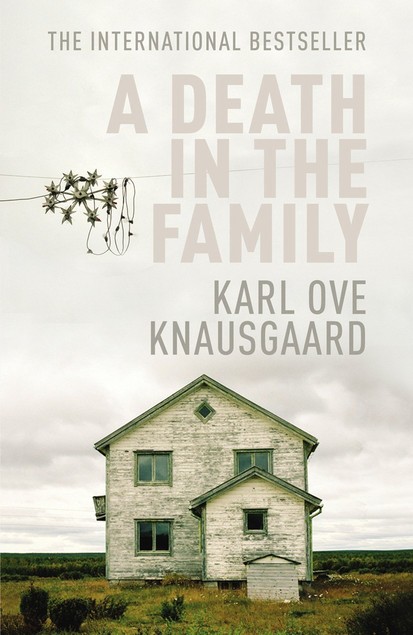
death_familyMy Struggle 1: A Death in the Family, Karl Ove Knausgård (2009). Yes, I know the cover the book spells it Knausgaard, but the proper Norwegian is Knausgård; and no, I don’t know why the publisher felt a need to “Anglicise” it, as it’s not exactly hard to write. But anyway. This is the first book in a six-volume autobiography – as I write this five volumes are currently available in English – although for some reason the series has been published as fiction. Knausgård, it seems, prefers the term “novel” because he wrote the books as if they were fiction, although they were based closely on his own life. Certainly it’s true the level of detail for something set thirty years ago suggests fiction more than reminiscence. A Death in the Family covers Knausgård’s teen years in Tromøya in southern Norway, his friends, the girls he fancies, his introduction to alcohol, and his difficult relationship with his parents. In the second half of the novel, Knausgård tries to come to terms with the death of his father, and the state his grandparents have fallen into since their son’s death. I’ll admit I found the level of detail fascinating, even though the story itself is mostly banal. And the weird distancing effect between adult Knausgård presenting his memories and the lack of self-awareness by the teen narrator made for an interesting juxtaposition. I think I’ll give the second one, A Man in Love, a go…

old_devilsThe Old Devils*, Kingsley Amis (1986). “Professional Welshman” Alun Weaver returns to his South Wales hometown after a career in London as a writer and poet and TV pundit. His old friends are in two minds about his re-appearance. And that of his wife, Rhiannon. Yet they welcome the pair pretty much with open arms, and some private bickering. And a lot of drinking. One of the good things about The Old Devils is that, on the one hand, the various characters are conflicted about the Weavers’ return; on the other, things quickly settle into what is clearly a well-established routine. A number of past events resurface and cause a few problems, but they seem to be resolved with a surprising lack of drama – in fact, the most dramatic scene is prompted by the pettiest of disagreements. There’s often some nastiness on display – and of all the characters, it’s the wives who are treated worst. One might almost suspect Amis was a misogynist – one wife is cruelly mocked by her friends, another has her character assassinated, and a third heartlessly abandons her husband. The men are old codgers and drunkards, and amusing at times, but The Old Devils‘ one-sidedness does get wearying as the novel progresses. I’ve no idea why The Old Devils is on the 1001 Books You Must Read Before You Die list.

1001 Books You Must Read Before You Die count: 126

Leave a comment

Triple-stacked

I’ve now got into the habit of dumping books at charity shops, or giving them away to friends, once I’ve read them, unless I have a specific reason for wanting to keeping them – such as, they’re part of a series I’m collecting; or, they were really difficult to find… Back in the day, it was: buy a book, read it, keep it. But space is finite and the desire for books is not. Some of the books below will be staying once they’ve been read, some will not. So it goes.

IMG_4150

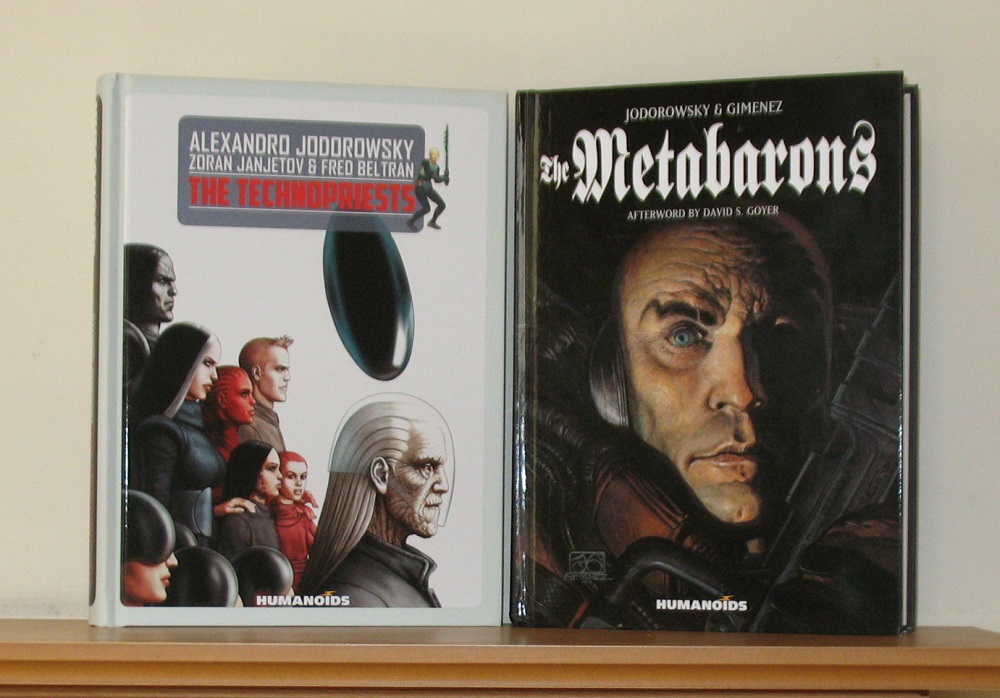
I bought the first couple of volumes of both these series a few years ago, and even bought the first volumes of The Technopriests in French… but for some reason, the series were never fully translated into English… until these omnibus editions appeared. Which I bought. I wrote here about The Metabarons; I have yet to tackle The Technopriests.

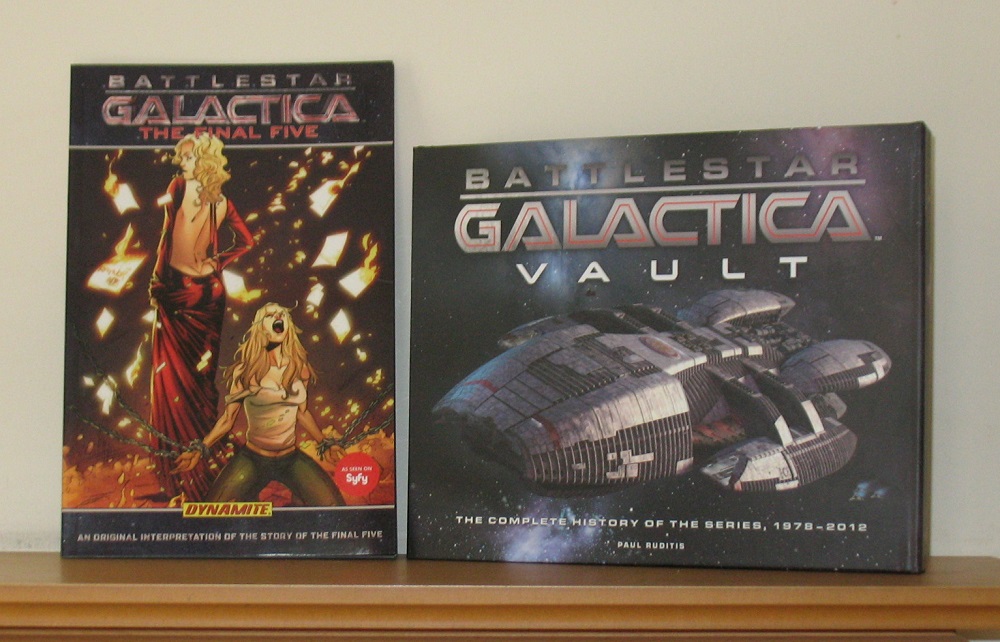
IMG_4151

These two I bought to accompany a rewatch of Battlestar Galactica (I bought the ultimate edition on Blu-ray for a very cheap price on one of Amazon’s Prime Days). The Final Five I wrote about here – it’s confusing and not very good. Battlestar Galactica Vault I expected to be like the Alien Vault published a few years ago – lots of background info and concept designs… But it’s not. It’s just a straightforward history of the show, albeit well-illustrated.

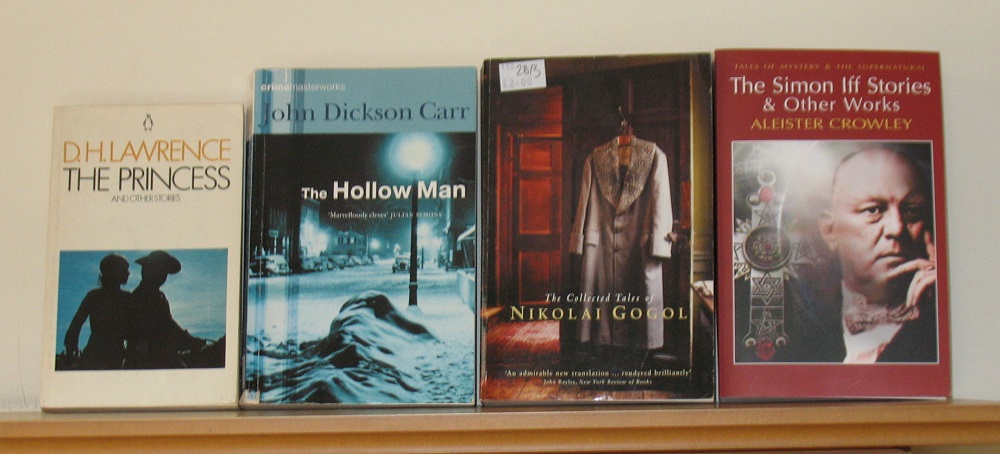
IMG_4152

Some charity shop finds – except for The Princess and Other Stories, which I bought on eBay and which joins the other DH Lawrence Penguin paperbacks in that series I have. I hadn’t known Aleister Crowley wrote fiction, so I bought The Simon Iff Stories and Other Works to see what they were like. Sokurov references Gogol quite a lot in his films, so I picked up The Collected Works of Nikolai Gogol so I could follow them. And whenever I see a Crime Masterwork I’ve not read, even if they’re a bit tatty, I buy them – hence The Hollow Man – although I’ve been a bit slow about reading the half-dozen I’ve found so far.

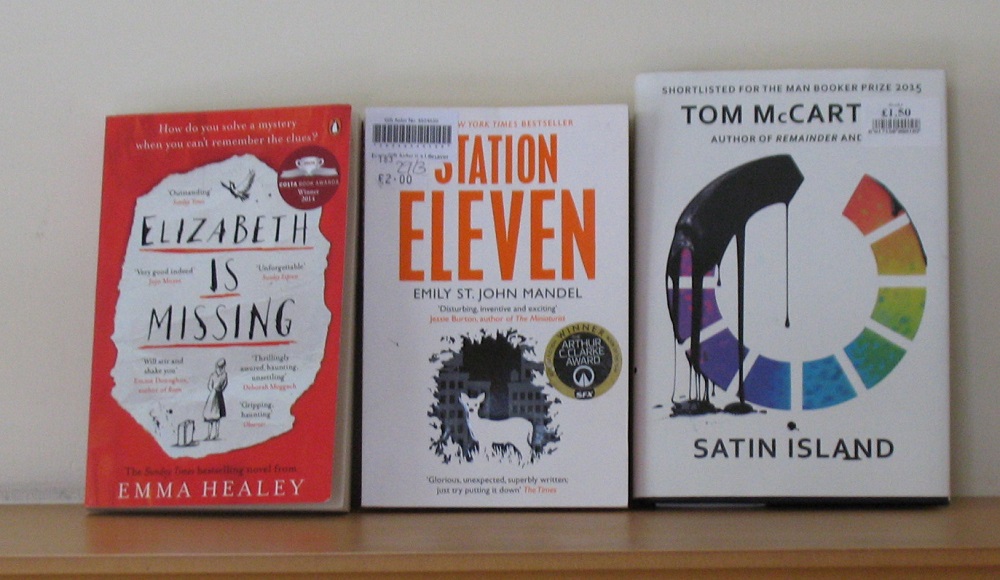
IMG_4153

Even more charity shop finds, but more recent books this time. Satin Island was shortlisted for the Booker, Station Eleven won the Clarke. I’ve already read Elizabeth is Missing – I wrote about it here. I still can’t remember who recommended it to me and why.

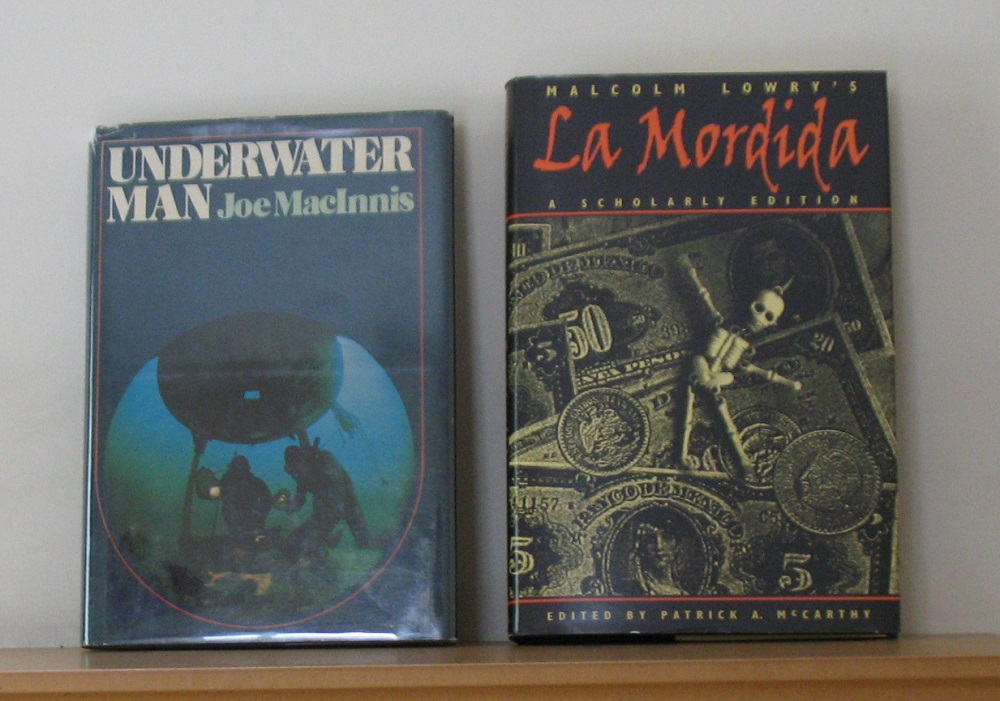
IMG_4154

Underwater Man is the second of two Joe MacInnis books I bought (see here for the other), but it took a bit longer to arrive as the seller was in Canada. La Mordida is another scholarly edition of a Lowry work – it’s a draft of an unpublished novel Lowry wrote about a trip to Mexico in 1945.


5 Comments

Reading diary, #27

Although I’ve been appending a count of books read from the 1001 Books You Must Read Before You Die list to these reading diary posts, I’ve not been making much of an effort to work my way through that list – certainly not to the extent I’ve been doing with the 1001 Films You See Before You Die list. Of course, reading a book requires more of an investment in time than watching a film, and I suspect there are fewer books on the book list of the sort I’d enjoy than there are films on the film list. Anyway, there are no books from the list in this post, although I do have about a dozen somewhere on the TBR. Just thought I should mention that.

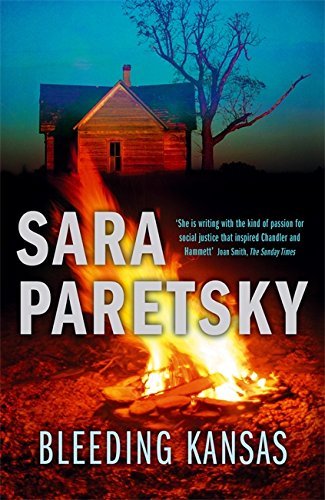
bleeding_kansasBleeding Kansas, Sara Paretsky (2008). I am a big fan of Paretsky’s Warshaski novels – my mother took me to see Paretsky being interviewed by Val McDermid at the Harrogate Crime Festival last year – although it’s taken me a while to get round to reading her non-Warshawski novels. I read Ghost Country while at Bloodstock, a metal festival, last year, and thought it very good. Bleeding Kansas is… less good. It’s apparently based in part on Paretsky’s own teen years in Kansas, before she moved to Chicago; and, I suspect, although I rather hope not, based on the people she knew from that time. Because they are pretty much all mean-minded and prejudiced Bible bashers (is there any other sort?). Especially one family, who use their faith to justify all manner of bigotry and nastiness. The story focuses on Lara Grellier, the teenage daughter of one of the farming families in the Kaw River Valley. Her mother Susan is fascinated by a Grellier ancestor, who helped slaves during the Civil War, and survived several attacks by Quantrill and other pro-slavery “Border Ruffians” (the title of the novel refers to that period), but has a mental breakdown after the death of her son in Iraq. A lesbian Wiccan from Chicago has just taken over the dilapidated mansion of the local, deceased, gentry; and the Schapen family, mean-spirited relious types to a person, have accidentally bred a pure-red heifer which an apocalyptic Jewish sect from Chicago want in order to to rebuild the Temple in Jerusalem. Meanwhile, everyone else tries to get by, without being too hateful – at which they don’t always succeed – or too liberal, which would of course see them tarred and feathered and driven out of the county. I really don’t have any sympathy for people who think their religion excuses their appalling behaviour (I’m looking at you, North Carolina), and I’m really not interested in reading about such people. It’s to Paretsky’s credit that she’s even-handed in her treatment of her caste of bigots and idiots, but that does make you wonder why she wrote the book in the first place. Yes, Warshawski is a champion and plays a champion’s role, and that’s part of the character’s appeal – so it seems self-evident that to go against type would result in characters most of Paretsky’s readers are going find unlikeable, and so create a novel most would find a less-than-enjoyable read. The Amazon reviews, interestingly, seem evenly split among the stars ratings, on both UK and US sites.

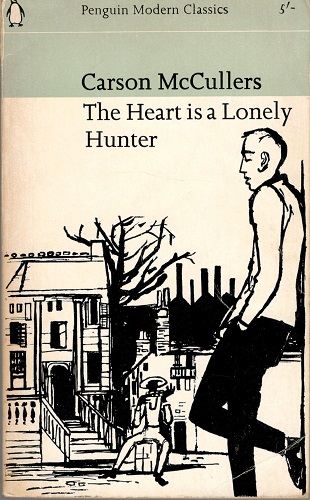
heart_hunterThe Heart is a Lonely Hunter, Carson McCullers (1940). This is one of a pile of Penguin paperbacks from the 1960s I inherited from my father. Some of his collection I wasn’t interested in, but I kept many – including four by Carson MCullers: The Member of the Wedding I read a while ago but wasn’t that impressed; The Heart is a Lonely Hunter is her first full-length novel and probably her best-known work, and I liked it a great deal more; still to come are Clock Without Hands and a collection, The Mortgaged Heart. A pair of deaf and dumb men (referred to throughout as “mutes”; actually, one is only deaf, but speaks so infrequently everyone assumes he is unable to do so), live in a small town somewhere in Georgia in the 1930s. One of the two men becomes mentally ill and is sent away to an asylum. The other, Singer, moves into a boarding-house and becomes a sort of listening post for a variety of characters, who come to talk at him and relax in his company. There’s something obviously Christ-like about Singer, although McCullers never quite makes it explicit. The novel actually focuses on four of Singer’s “friends”: a teenage girl who loves music, a drunken labour activist, the widowed owner of a local café, and a black doctor who is a communist and preaches Marxism to his family at Christmas. I enjoyed this a great deal more, and thought it much better, than the earlier MCullers novel I’d read. There was apparently a film made of it, which changed the setting to the 1960s. Not sure how that would work…

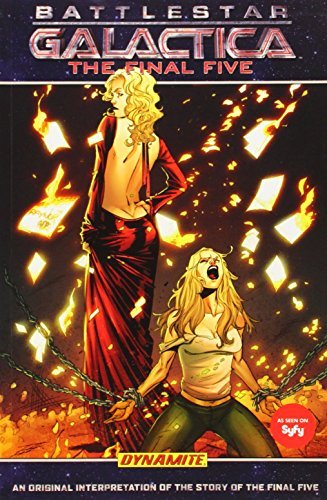
bsg_final_fiveBattlestar Galactica: The Final Five, Seamus Kevin, Fahey, David Reed & Nigel Raynor (2009) I bought this to read while rewatching Battlestar Galactia from the beginning, because it professed to tell the back-story of its titular characters (the five of the Twelve Cylon “skin jobs” whose identities were not revealed until very late in the series). As is the case with most such tie-in graphic novels, the art is pretty awful. Unfortunately, the story doesn’t make much sense either. Perhaps I should have waited until I’d finished my rewatch before reading it, maybe then it would have made more sense. I can’t remember from my previous viewing of Battlestar Galactica if Earth was supposed to have an ancient technological society which then disappeared (leaving no evidence of its existence; strange, that…), or not. From what I do remember, the Galactica arrived at Earth in its prehistory – although there was another Earth-like world in there somewhere, although that planet destroyed itself in a nuclear war. Anyway, I was put off a bit by the generally bad art, and since my comics reading these days seems to be limited to translated bandes dessinée (I’m no longer interested in reading about fascists in tights), so I’ve probably lost the knack of reading US graphic novels. But maybe if I give The Final Five a go after I’ve watched all of Battlestar Galactica again… (I bought the Blu-ray ultimate collection, £100 off, in a recent Amazon Prime Day – it includes everything… the pilot mini-series, the webisodes, Caprica, the whole lot. Totally worth what I paid for it – and yes, I still consider Battlestar Galactica the best television sf series ever made, and among the best television series ever made of any genre.)

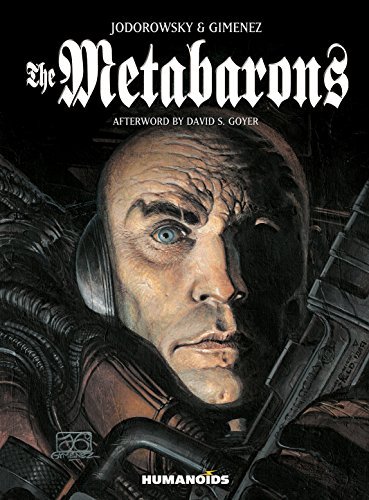
metabaronsThe Metabarons: 40th Anniversary Edition, Alejandro Jodorowsky & Juan Giménez (2015). The Metabaron bandes dessinée originally appeared between 1992 and 2003, and while the original Metabaron character appeared in The Incal in 1981, I’m still not sure how that works out to a “40th anniversary edition” in 2015. Anyway, it’s a nice hardback omnibus of all the Metabaron stories, so who cares? The story is framed as a story told by the robot Tonto to the robot Lothar, both of whom look after the Metabunker, the home of the last Metabaron, No-Name. The Metabunker is located in a deserted city-shaft on a deserted world, and No-Name is absent for much of the length of The Metabarons. There’s a reason for this framing narrative, but explaining it would constitute a spoiler, so… Tonto explains how the first Metabaron, owner of a marble planet, was forced to reveal the existence of the epiphyte, a substance which counteracted gravity, to the Emperor and Empress, and so became fabulously wealthy, and was given the title Metabaron. He was also a superlative warrior, and with his new-found enormous wealth set out to improve his skills and his killing technology. And also institute the various traditions which were carried down through five generations to No-Name: that there can only be one Metabaron, so the son (or daughter) must kill the father, and that part of the training involves some form of mutilation and replacement prostheses. Jodorowsky wrote The Incal after the failure of his Dune project, and some of his work on Herbert’s novel ended up in that bande dessinée. But there’s also a lot of Dune in The Metabarons – there’s a Bene Gesserit analogue, a pain test that copies the one undergone by Paul Atreides (but involves real physical damage), and even mentat-like advisors to the Emperor and Empress. There’s also stuff that’s pure Jodorowsky – such as the Emperor and Empress being succeeded by a pair of conjoined twins of different genders, the Emperoress. Some of it is a bit silly. The third Metabaron, for example, is Steelhead, so called because his father shoots off his head as a baby, but his mother manages to fashion a robotic one in time to save his life. Um, right. The artwork throughout is gorgeous, and the story is pretty much pure-strain space opera. Totally worth buying.

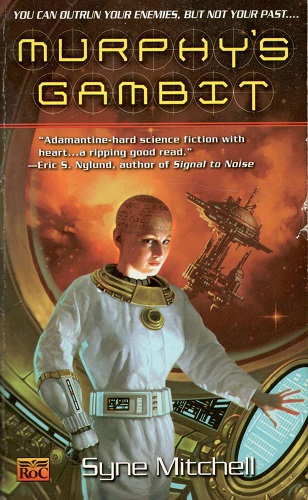
murphys_gambitMurphy’s Gambit, Syne Mitchell (2000). I read for review on SF Mistressworks. I forget where I stumbled across mention of this novel, and with a publication year of 2000 it only just sneaks into SF Mistressworks’s remit, but it looked intriguing enough for me to buy a cheap copy on eBay… which proved to be a bit tattier than expected. Ah well. Not a keeper anyway. As should be clear from my review here.

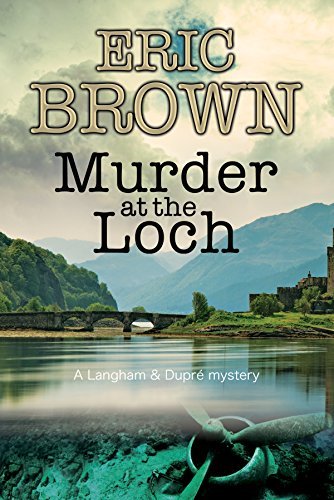
murder_lochMurder at the Loch, Eric Brown (2016). Eric is a friend of many years, although I wouldn’t read these books – Murder at the Loch is the third in the series – if I didn’t enjoy them. True, they won’t set the crime genre alight, and they might even be described as a bit “cosy”, but they’re fun undemanding reads, and it’s clear the author’s heart is in the right place. The stars are Donald Langham, a crime novelist, and his fiancée, Maria Dupré, a French immigrant, who works for his literary agent. The stories are set in the 1950s, which means the author doesn’t have to worry about mobile phones and the like generating so many plot contortions the story falls apart (in fact, part of the plot of Murder at the Loch involves the cast being cut off for several days at a Scottish castle, with no way to telephone for help). While the back-story makes mention of WWII – in fact, it triggers the plot in in this book – and there are number of small details which anchor the novel to its time and place, it does sometimes read a little like it takes place in a political and historical vacuum. But that’s a minor quibble. Langham and ex-army pal and now PI, Ryland, are called up to Scotland by their old CO, Major Gordon, who now runs a posh hotel in a renovated castle. Someone took potshots at him and a guest a couple of days previously, and he’s understandably worried. What follows is a fairly typical country house mystery plot, with a few twists. Sunk in the loch is a Dornier Do 217 from early 1945, and its presence is a mystery as the Germans had stopped bombing the UK by then. It was while attempting to salvage this that Gordon and his Dutch engineer were shot at. Also resident in the hotel, or turn up shortly after Langham and Ryland arrive, are Gordon’s Byroneseque layabout son, an aloof Hungarian countess, a German aircraft enthusiast, a retired academic investigating the castle’s ghosts, and the three staff, including a young woman who is more of a family friend. A snow storm cuts off the castle, the Dutch engineer is brutally murdered, and you can’t really get a more faithful implementation of the country house murder template than that. But if the identity of the killer isn’t all that hard to figure out, and the clues dropped along the way make the motive as plain as day, it’s all handled with a nice light touch and very readable prose. I pretty much read Murder at the Loch in an afternoon, and sometimes that’s the sort of book you want to read.

1001 Books You Must Read Before You Die count: 122


2 Comments

2015, the best of the year

On balance, 2015 wasn’t a bad year for me. Things improved in $dayjob, goodish things happened in my little corner of genre, and I read a number of excellent books and watched lots of excellent films. Music-wise, it was both successful and not so successful: I discovered some more new bands on Bandcamp, and this year we went VIP for Bloodstock and it really was worth the extra money; but I saw fewer bands live than in previous years, and none of my favourite ones toured the UK – and if they did, it was only in the big cities, like London, Birmingham or Glasgow. But, like I said, some excellent books and films – so much so, I had trouble picking my top five in each. But I did finally manage it.

Oh, and I got a new cat. Oscar. He’s two years old, and I’d forgotten how much of a pain young cats can be.

books
A strange year of reading, on reflection, and I’m not entirely sure why. I read some books as research for All That Outer Space Allows (which was published this year), I read some other non-fiction books (on space and aircraft and submersibles, mostly), I read some sf novels for SF Mistressworks and some more recent genre works… And I decided to widen my reading to include more classic literature. While I like to think of myself primarily as a science fiction fan, of late I’ve found it hard to generate much enthusiasm for recent sf. In part, that’s due to the way fandom is changing as a result of social media and online promotion, but also because a lot of current sf seems to me more interested in style rather than content. I like sf ideas and sense of wonder, but I also like good writing, sophisticated themes and a willingness to experiment with form and structure. While some works which meet those criteria were indeed published in 2015, those I came across didn’t feel especially progressive. Which is why you’ll notice a few notable titles missing from my top five below (and I have only one, in fact, that was actually published in 2015).

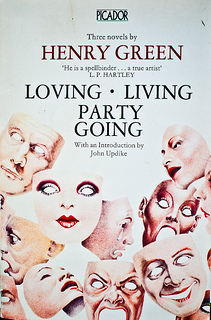
loving1 Loving, Henry Green (1945).
An author new to me in 2015, and despite being about a subject – life belowstairs in the Irish country house of an English nob during WWII – that doesn’t interest me in the slightest, Green’s writing was wonderful and his narrative technique amazing. I will be reading more by him – hell, I plan to read everything he ever wrote.

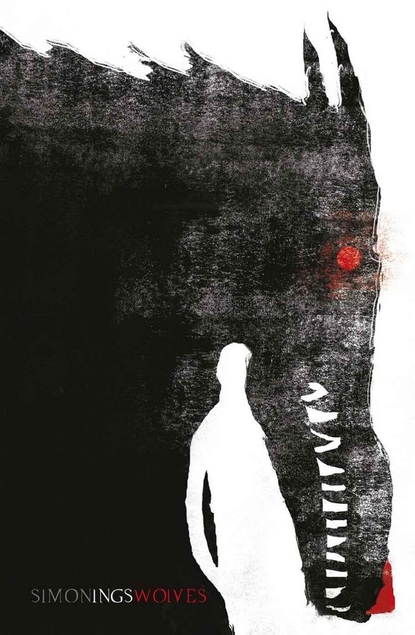
wolves2 Wolves, Simon Ings (2014).
There was some small fuss when this appeared in early 2014, but by the time awards came around it had been forgotten. Which was a shame. And I wished I’d read it in time to nominate it last year – because this is plainly one of the best sf novels of 2014. The focus of his novel tends to drift a little as the story progresses, but Ings has still managed to produce one of the smartest works of sf – if not the smartest work of sf – of the last few years.

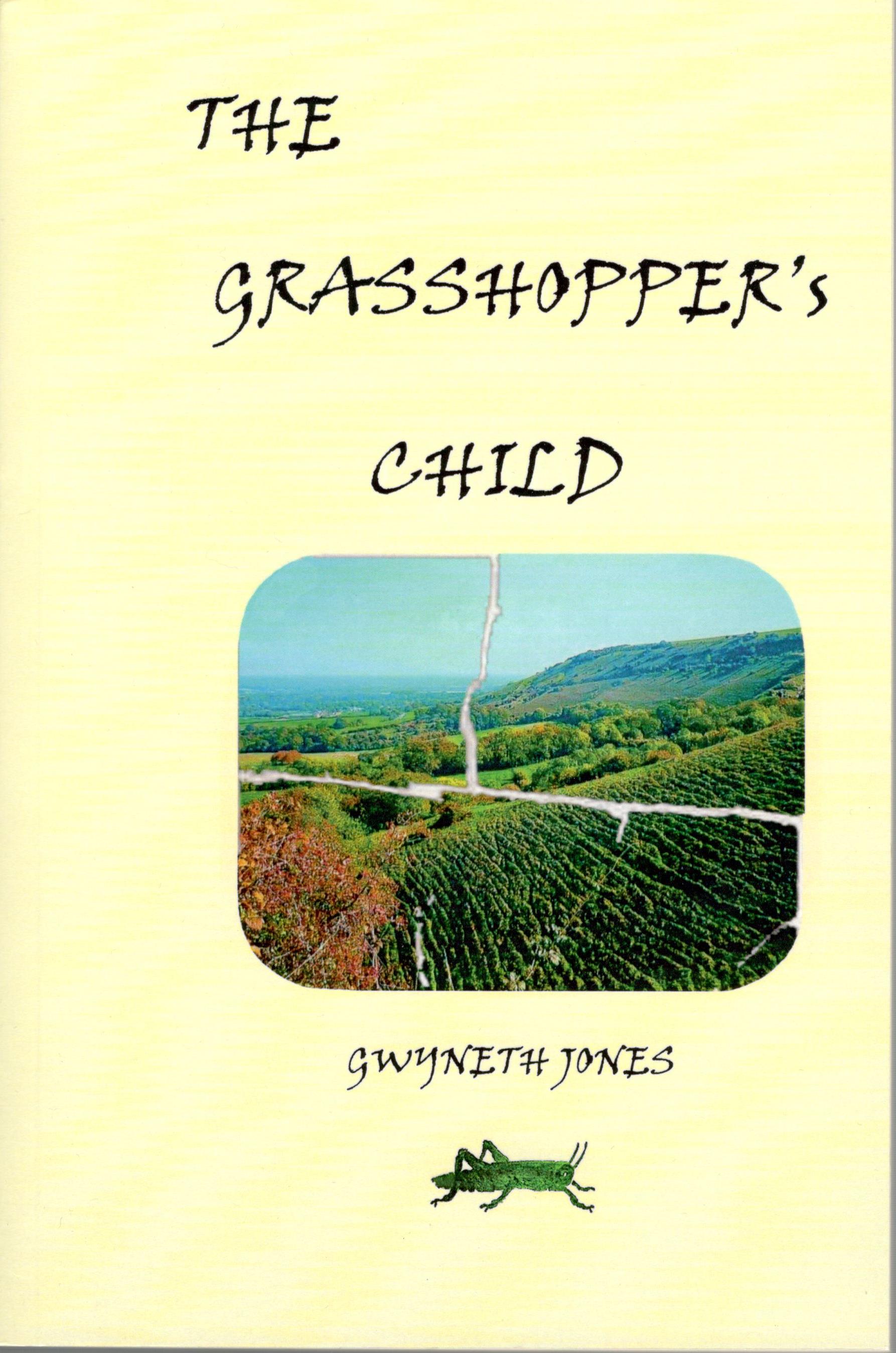
grasshopperschild3 The Grasshopper’s Child, Gwyneth Jones (2014).
A new Gwyneth Jones novel is cause for celebration, even if it’s a YA addendum to the non-YA Bold as Love quintet. But there’s a reason Jones is my favourite science fiction writer, and they’re all evident in this short novel. On the one hand, this is a smart YA novel and I’m no fan of YA fiction; on the other, it’s Gwyneth Jones and her Bold as Love world. But it’s also self-published, so it needs to be on as many best-of lists as possible so that Jones keeps on writing. (And why was it self-published? Do the major UK genre imprints not want to publish new work by the country’s best sf writer?)

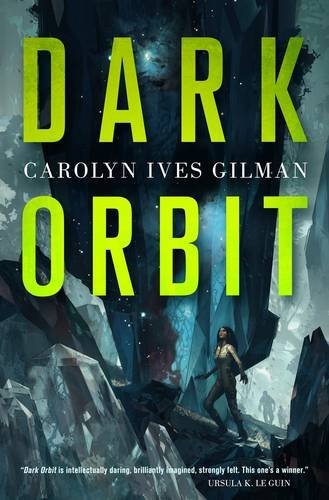
darkoribt4 Dark Orbit, Carolyn Ives Gilman (2015).
I’ve been saying for years that Gilman is a name to watch, and she has at last been given the opportunity to demonstrate it to a wider audience. (She amply demonstrated it with her fantasy diptych from ChiZine Publications back in 2011/2012, but genre commentators can only apparently see what appears from major imprints – which is, if you’ll forgive me, fucking short-sighted). Anyway, Dark Orbit deservedly received a lot of positive reviews, and though to me it didn’t quite feel like Gilman firing on all cylinders, it showed great promise. More from her, please.

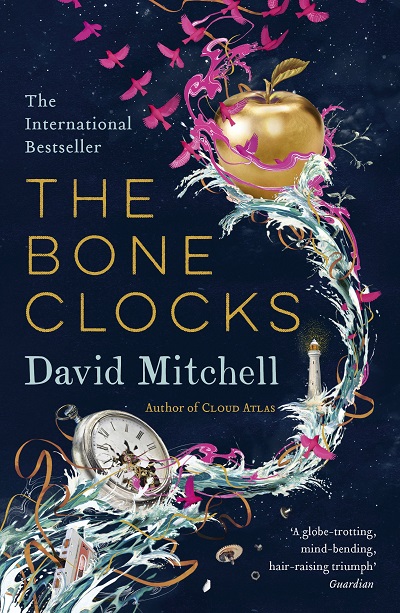
bone_clocks5 The Bone Clocks, David Mitchell (2014).
Friends have been singing the praises of Mitchell for years, but I’ve never really understood why. I mean, I enjoyed Cloud Atlas, and I thought it was clever… but it did seem a little over-praised. But The Bone Clocks is the novel that all the praise had led me to believe Cloud Atlas was. It’s his most insightful yet – and also his most genre.

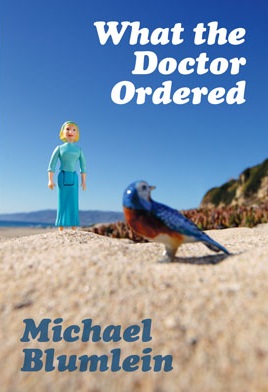
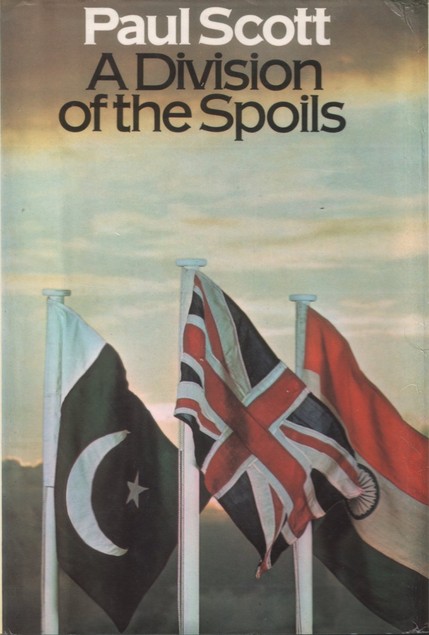
Honourable mentions: a few titles got bumped from best of the half-year top five, although they were excellent books and probably didn’t deserve to be demoted – namely, The Leopard, Giuseppe Tomasi di Lampedusa (1958), a classic of Italian twentieth-century literature (a bloody good film too); A Division Of The Spoils, Paul Scott (1975), the final book of the Raj Quartet and as beautifully written as the other three; and What the Doctor Ordered, Michael Blumlein (2013), wich showcases why he remains one of my favourite genre short story writers. Also read and noteworthy were: Strange Bodies, Marcel Theroux (2013), a literate mystery based on an interestingly odd premise; Pale Fire, Vladimir Nabokov (1962), my first by him and, though perhaps overly prissy, excellent; One Thousand and One Nights, Hanan Al-Shaykh (2011), a bawdy, and multiply-nested retelling of some of its title’s stories; Housekeeping, Marilynne Robinson (1981), her beautifully-written debut novel; and Galactic Suburbia, Lisa Yaszek (2008), used for research and a fascinating read.

films
I went all-out on the 1001 Movies you Must See Before You Die list in 2015. So much so, in fact, that I signed up with a second DVD rental service, Cinema Paradiso, because they had some films from the list that weren’t available on Amazon’s Lovefilm by Post. And I bought an Amazon Fire TV Stick too, which gave me access to even more movies. Meanwhile, I purged my DVD collection of all the superhero films (why did I buy them in the first place?) and the shit sf movies (why did I buy them in the first place?), not to mention lots of other films I’d bought over the years. My collection is now looking very different, much more of cineaste’s collection (even though I say so myself), with lots of works by Sokurov, Dreyer, Murnau and Benning – and from earlier years, Bergman, Tarkovsky, Kieslowski and Haneke, among many others.

The 1001 Movies You Must See Before You Die challenge has been… interesting. It introduced me to the works of James Benning. I’ve also seen a lot of not very good films that really didn’t belong on the list (mostly from Hollywood, it has to be said). And I’ve seen a lot of early cinema, most of which proved quite interesting. Only one of the five films in my top five was not a “discovery” from the 1001 Movies You Must See Before You Die list.

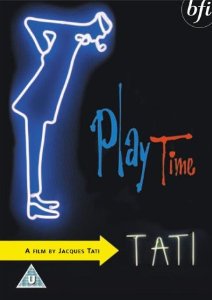
playtime1 Playtime, Jacques Tati (1967)
How could this not be my number one choice? It certainly was halfway back in June, and it remains so now at the end of the year. I loved its Brutalist production design, its situational humour, its wit… it is a work of cinematic genius. I’d watched a rental DVD but I loved it so much I bought a Blu-ray copy for myself… and then bought a boxed set of Blu-rays of Tati’s entire oeuvre. A film that went straight into my personal top ten best films of all time.

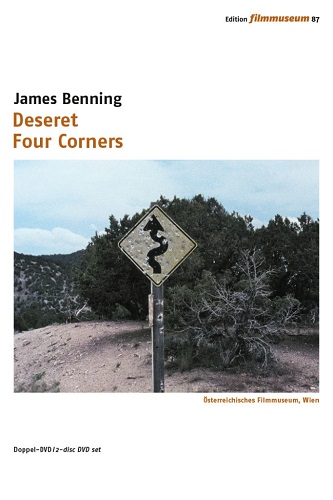
deseret2 Deseret, James Benning (1995)
Ever loved a film so much you went out and bought every DVD you could find by that director? Oh wait, I did that for Tati. But I also did it for Benning. Fortunately, Östereichesichen Filmmuseum have been releasing Benning’s films on DVDs the last couple of years, so there were a few for me to get. And yet… Deseret is static shots of Utah landscape, and later cityscape, while a voice reads out stories from the New York Times from 1895 to the present day. It is cinema as art installation. And I loved it. I am now a huge Benning fan. And I have all of the DVDs that Östereichesichen Filmmuseum have released. And am eagerly awaiting more.

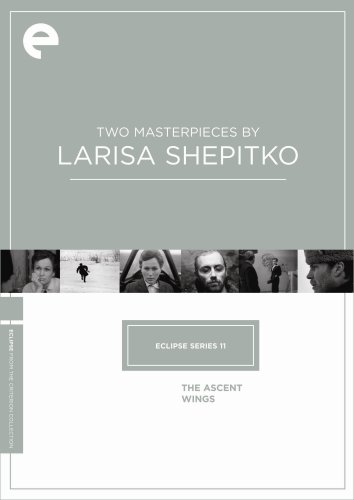
shepitko3 Wings, Larisa Shepitko (1966)
Shepitko’s Ascent is on 1001 Movies You Must See Before You Die list, but the only copy of it I could find was a Criterion double with Wings. I bought it. I watched Ascent. It was good. But then I watched Wings. And it was so much better. A female fighter pilot of the Great Patriotic War, and Hero of the Soviet Union, is now the principal of a school. It’s an artful juxtaposition, more so because the protagonist is female. And it was Shepitko’s debut film. War films, like Ascent, strike me as too easy as choices for assorted lists, but the social drama versus war of Wings is much more interesting. This film should have been on the 1001 Movies You Must See Before You Die list. I’d also like to see more by Shepitko.

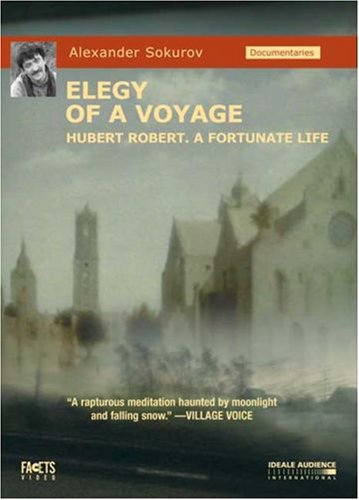
elegy_voyage4 Elegy of a Voyage, Aleksandr Sokurov (2001)
Come on, you didn’t expect me not to have a Sokurov film on this list, did you? I’m being nice by not putting five on it. Well, okay, five maybe could have made it, but one was a rewatch from previous years and so didn’t count. But four could have done. (Yes, the other three are in my honourable mentions below.) Elegy of a Voyage is one of Sokurov’s documentaries, but it’s more of a meditation than an informational film, in which Sokurov muses on journeys and art, particularly ‘The Tower of Babel’ by Bruegel.

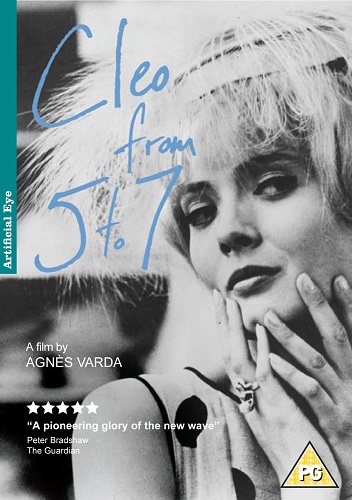
cleo5 Cleo from 5 to 7, Agnès Varda (1962). I have found the Nouvelle Vague to be something of a mixed bag – in fact, I’ve found the oeuvres of Nouvelle Vague directors to be something of a mixed bag. But the only Varda I’d seen prior to Cleo from 5 to 7 was a documentary from 2000. Cleo from 5 to 7 may have covered similar ground to some of Godard’s 1960s films, but it does it so much better. Loved it.

Honourable mentions: two films were dropped from my best of the half year list, one a Sokurov, one a documentary: Jodorowskys Dune (2013) is a fascinating look at a major sf film that never happened, but still left its fingerprints all over sf cinema; Stone (1992) is a typically enigmatic drama from Sokurov… but I could just as easily mention Whispering Pages (1994; which he knocked together after his financing fell apart, but it still manages to hit all those Sokurovian notes), or Spiritual Voices (1995; a documentary about Russian soldiers on the Afghanistan border whose first 40 minutes are a static shot of a Siberian wood). But there’s also Tati’s Mon oncle (1958), nearly as good as Playtime; James Cameron’s Deepsea Challenge (2014), an excellent documentary on his visit to Challenger Deep, only the third person to do so; American Dreams (lost and found) (1984), another Benning piece with an unconventional narrative; Salt of the Earth, Herbert J Biberman (1954), an astonishing piece of social realism drama that deserves to be better known; Sleeping Beauty, Clyde Geronimi (1959), easily the best of the Disney feature films. Day Of Wrath (1943) was another excellent film from Dreyer, Effi Briest (1974) was I thought the best of the Rainer Werner Fassbinder box set I watched, and 2 or 3 Things I Know About Her (1967) was a Jean-Luc Godard that I was surprised to find I liked very much.

albums
I spent much of the year further exploring Bandcamp, and so stumbled across yet more excellent music. I did not, however, see much music live this year – Sólstafir were excellent back in February, Voices and Winterfylleth were very good in September, and highlights of this year’s Bloodstock included Ne Obliviscaris, Sumer, Opeth and Agalloch.

1 Sidereus Nuncius, Apocynthion (2013)
Spanish progressive death metal, not unlike NahemaH (also Spanish, and a favourite band… although they disbanded last year). It seems a little unfair to describe a group’s sound by how much like another band’s it is, but metal these days is such a wide and diverse genre labels are often next to useless. Apocynthion play prgressive metal with clean and growl vocals, some death metal song structures, sound effects and samples, a heavy post-metal influence and a great deal of technical ability.

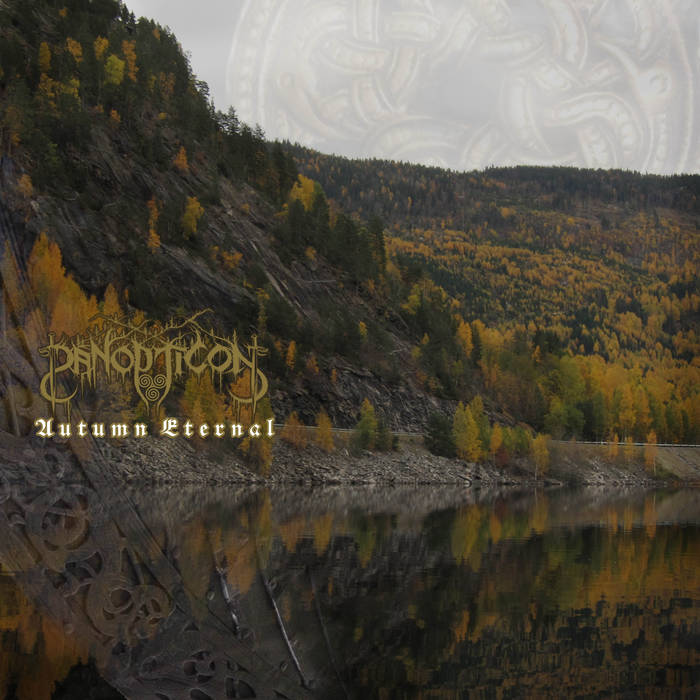
panopticon2 Autumn Eternal, Panopticon (2015)
Panopticon’s Kentucky from 2013, with its mix of black metal and bluegrass, is an astonishing album… but I picked it for my best of last year. Their new album (I say “their” but it’s a one-man show) mixes folky acoustic parts with intense black metal, and it works really well.

3 Ghostwood, Navigator (2013)
This is polished progressive rock with a little bit of djent thrown into the mix, with solid riffs and some catchy hooks. They described themselves as “for fans of Porcupine Tree”, although I think this album is better than most of that band’s albums.

grorr4 Anthill, Grorr (2012)
A relatively recent discovery this one, Grorr play progressive death metal, but more like Gojira than, say, Opeth. There’s all sorts in here – bagpipes, sitar, various types of drums. It’s a wonderfully varied album, but still coherent.

5 An Act of Name Giving, Butterfly Trajectory (2015)
Anothe rrecent discovery. Butterfly Trajectory also play progressive death metal – there seems to be a common theme to this top five… They’re from Poland, and while their sound is quite Opeth-ish, they’re a good deal better than fellow countrymen Gwynbleidd who play similar material. Butterfly Trajectory seem to like their progressive bits a tad more than their death metal bits, which works really well.

Honourable mentions: Worst Case Scenario, Synesthesia (2015), French progessive death metal with plenty of other musical styles thrown in, excellent stuff; Kyrr, Kontinuum (2015), Icelandic post-metal, a little more commercial than fellow countrymen Sólstafir… whose Ótta (2015) and Svartir Sandar (2011) are excellent heavy post-metal albums; Cold and the Silence, Martriden (2015), yet more shredding from excellent medlodic death metal group, who seem to have gone a bit funkily progressive with this new album, and it works really well; and finally, RAMA, RAMA (2015), which is a weird mix of doom, stoner, psychedelic and desert rock all in a three-song EP.


3 Comments

Reading diary, #3

It’s been a bit of an odd month, reading-wise. Mostly science fiction, both new and old – three for review, one for Vector and two for SF Mistressworks.

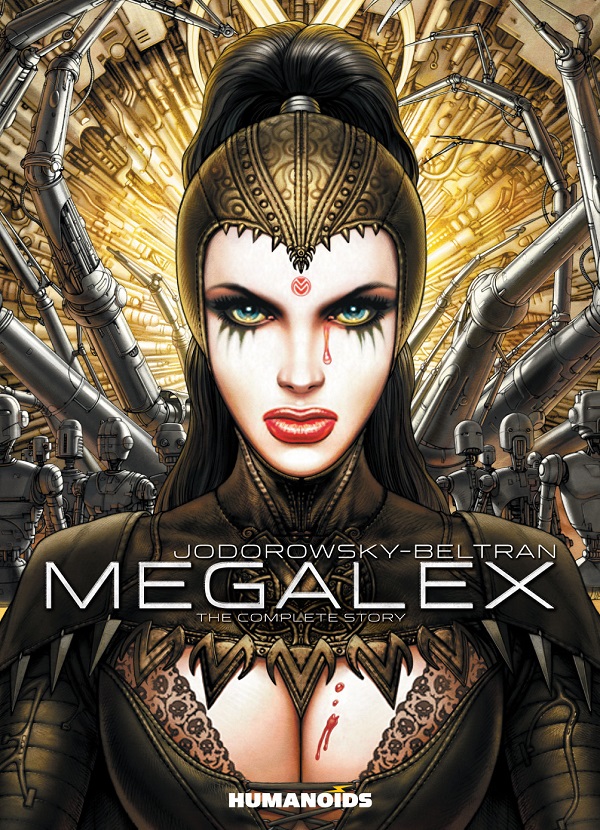
MegalexCoverMegalex, Alejandro Jodorowsky & Fred Beltran (2014). I picked up a copy of the first volume of this several years ago, but parts two and three never seem to have appeared in English. I thought about getting the original French editions – and might well have done so, had this omnibus edition not been published last year. The original bandes dessinées – L’anomalie, L’ange Bossu and Le cœur de Kavatah – appeared in 1999, 2002 and 2008, respectively. Beltran’s art apparently tends to the pneumatic, and two of the lead female characters are implausibly buxom. The plot borrows a number of devices Jodorowsky has used before – in fact, even the setting feels a little second-hand too. A world has been turned into one giant city, except for a small area of forest. A glitch in the clone factory results in a dimwitted giant of a clone, who manages to escape and join the rebels living underground, who are led by a hunchback. The king’s daughter is searching for love, but her touch kills. The rebels attack the palace and kidnap the princess – but the hunchback is not killed by her touch. And his hunch turns out to conceal a pair of wings. The princess and winged man conjoin and become a winged hermaphrodite, which leads the rebels to victory over the evil king and queen. It’s not Jodorowsky’s best work by any means. It all feels a bit recycled, and though Beltran’s art is gorgeous, it’s a far too much objectifying. Despite a career in bandes desinées stretching back to 1966, Jodorowsky hasn’t really done anything science-fictional that beats The Incal.

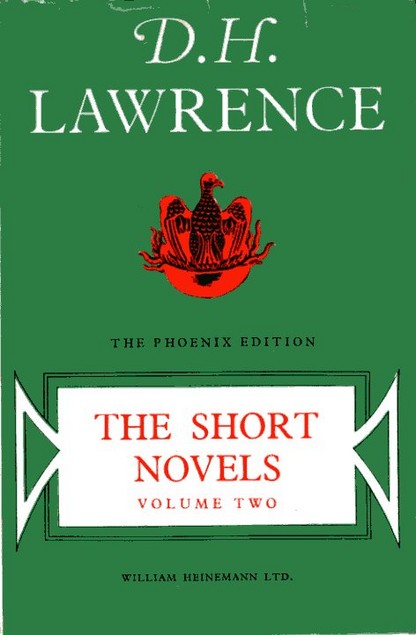
shortnovels2The Virgin and The Gipsy, DH Lawrence (1930). I decided to read this “short novel” before watching the 1970 film adaptation sent to me by Amazon rental. It was apparently written around 1926, but discovered among DH Lawrence’s papers after his death in 1930 (the novel, that is, not the film adaptation), and published later that same year. It… actually reads like a parody. Flighty virginal young woman is attracted by animal charm of handsome gipsy, but then a local dam bursts and floods the area and the gipsy saves the young woman from the waters. So that’s 1930’s prize for Most Obvious Sexual Metaphor Ever to David Herbert, and this is a man who never let a metaphor for sex or sexuality go unmolested. There’s also some anti-semitism on display – the virgin makes friends with a Jewish divorcee (who is not actually divorced) and her laid-back boyfriend, and there are over-frequent references to the woman’s ethnicity. Lawrence was always very good about writing about landscape, although that’s not so much in evidence in this short novel. But he was also really good at interiority and there’s plenty of that on display here. It’s not Lawrence’s best work of those I’ve read – although it seems to have been critically well-received.

The Kif Strike Back, CJ Cherryh (1985). I reviewed this on SF Mistressworks here.

The Grasshopper’s Child, Gwyneth Jones (2014). A new novel from Jones. W00t. It’s a YA novel set in the world of the Bold as Love series. I reviewed it for Vector.

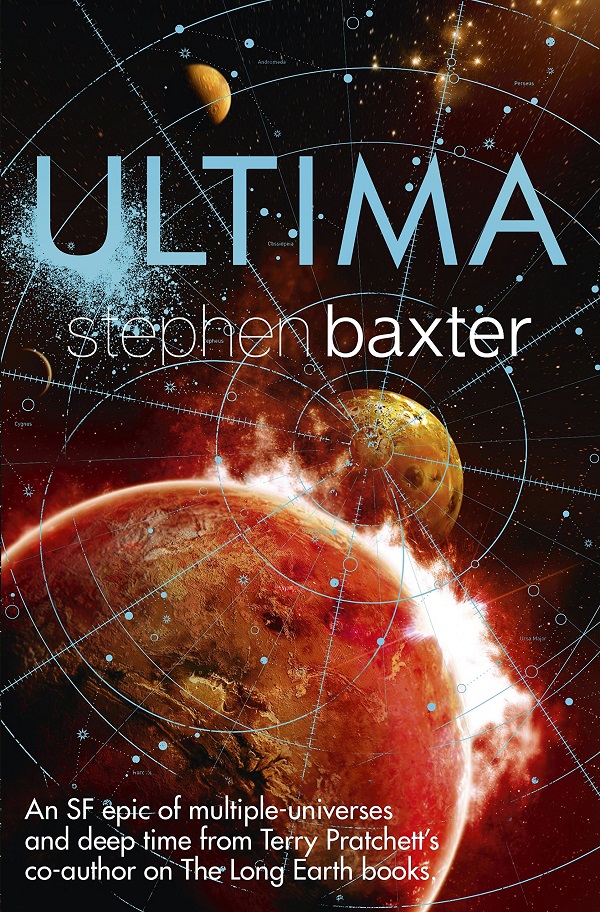
ultimaUltima, Stephen Baxter (2014). The sequel to Proxima – did you see what he did there? Proxima: nearest; Ultima: furthest. Where the first was near-future sf, this one drags in Baxter’s other great interest, alternate history. It seems that the Hatches which allow for easy travel over interstellar distances (instantaneous for the traveller, but light-speed is not violated), also trigger “resets” of history – or shift the protagonists into alternate histories. In the first, the Roman Empire makes it into space but despite making use of “kernels” (magic energy wormhole-y type things) as a power source, it doesn’t appear to have progressed much beyond the first century CE. And then it’s an interstellar Aztec Empire, which also uses kernels and has built a giant fuck-off O’Neill cylinder but still runs pretty much along the same lines as it did when Cortés stumbled across Tenochtitlan. It’s quite an impressive sustained act of imagination, but not in the least bit plausible. The book also suffers from juvenile characterisation – a running joke involving a lead character, a grizzled Roman legionary – wears thin soon after the third mention but Baxter keeps it going right to the bitter end. There’s lots of clumsy exposition, and a central premise that doesn’t really convince. Baxter has done much better than this, and it all feels a bit by-the-numbers and banged out over a quick weekend. Disappointing.

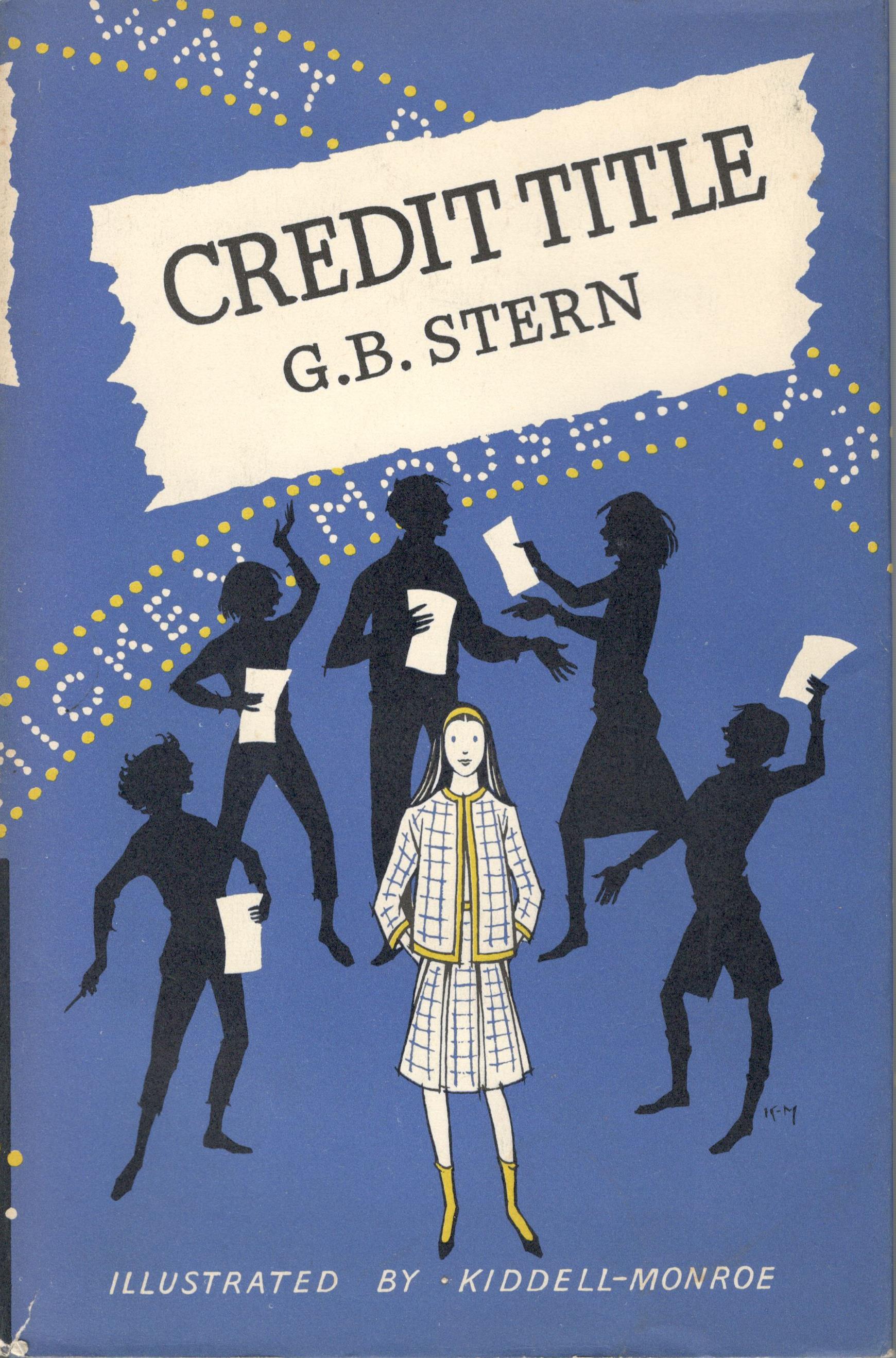
credit_titleCredit Title, GB Stern (1961). GB Stern is Gladys Bronwen Stern, a British writer who published some forty novels between 1914 and 1964. I should have guessed from the cover art, but I didn’t realise Credit Title was a “junior novel” when I bought it on eBay. Oh well. It’s set in 1933. Sharon’s father is a director in Hollywood, but they move back to England when he marries Meryll Armstrong, who already has six children. Sharon has been dreaming of being part of a large family – inspired by a series of books about the “Rectory Family” – but the reality proves disappointing. They expect her to be stuck-up because she’s lived in Hollywood, and this colours the way they treat her. It’s all very terribly-terribly and breathless and patronising, a bit like the Narnia books – and I should have picked another Stern book to see what she’s like.

The Power of Time, Josephine Saxton (1985). Review to appear on SF Mistressworks soon.

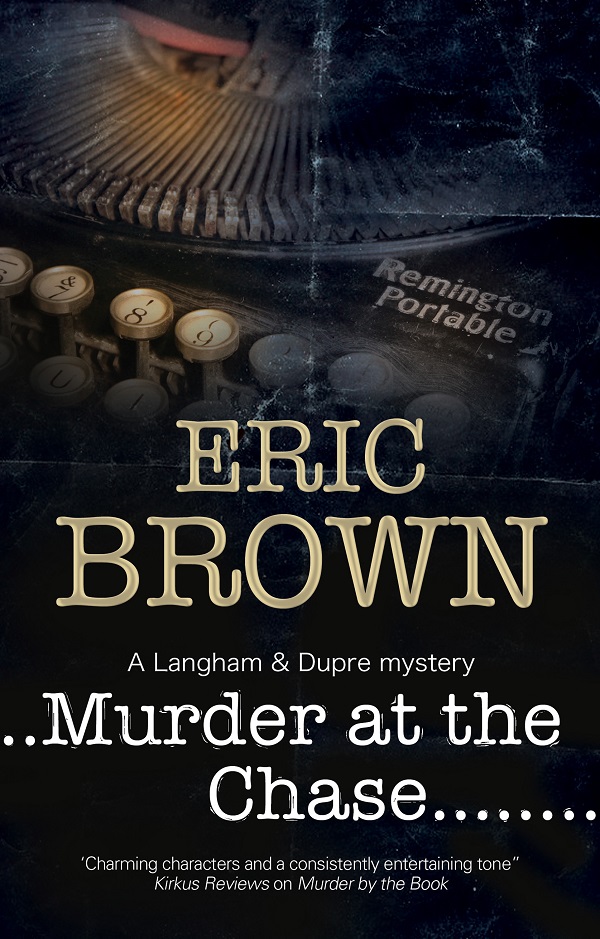
murder-at-the-chase-2Murder at the Chase, Eric Brown (2014). This is the second of Brown’s 1950s-set murder mysteries featuring thriller writer Donald Langham and his fiancée literary agent Maria Dupré. In this book, they’re invited to unravel a locked-room disappearance of another mystery writer, and it turns out it’s all to do with a satanist who may or may not have been born over one hundred years earlier. Brown evokes his period well, and his two protagonists are eminently likeable. He even manages a nicely liberal view of humanity that wasn’t common in 1955 – two of the secondary characters are gay, and despite it being illegal at the time, pretty much everyone seems surprisingly tolerant when confronted with it. The locked-room puzzle is disposed of disappointingly quickly, but then there’s a murder and what looks like a suicide… And it all gets wrapped a little quickly and tidily for comfort. I suspect these are not written to be cosy mysteries, but they’re beginning to resemble them. They need to be a bit edgier – Brown is capable of it, he handles his period with aplomb and his characters with assuredness. But the plot is all a bit rushed, and the ending is far too tidy.

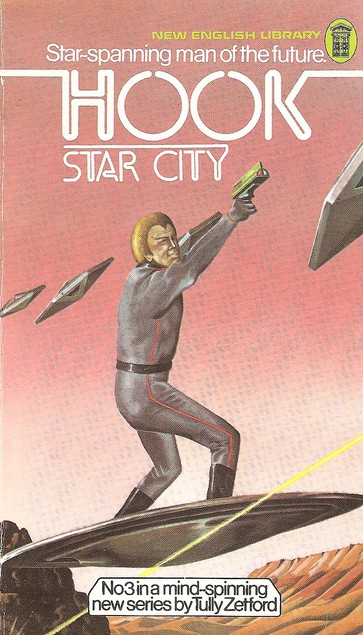
hook3Hook 3: Star City, Tully Zetford (1974). This is the third book in the quartet featuring Hook of the funny eyebrows. Zetford was a pseudonym of Ken Bulmer, and it’s even more hacky than the stuff he put out under his own name. In this one Hook has teamed up with four others to steal a collection of cultural artefacts (weighing 50 kg), but the other four intend to cut him out of the deal. But Hook turns the tables on them, loses his payment for the haul at the titular star city, and then loses the money he steals to make good on his losses… before he ends up saving the unsophisticated natives of the planet the star city orbits who are being hunted for sport. This is disposable stuff, a couple of hours’ reading you’ve forgotten ten minutes after chucking the book onto the pile of books that are going to the charity shop. Best forgotten, and I suspect the author felt that way too.


2 Comments

Reading diary, #2

Most of the reading I’ve been doing over the past month or so has been dipping into research books as I wrangle Apollo Quartet 4 into shape. (Not long now. Honest.) So there’s not been that much of yer actual reading of fiction. Except for, well, the following…

The Luck of Brin’s Five, Cherry Wilder (1977). I read this for SF Mistressworks. My review is here.

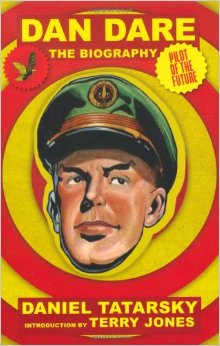
darebioDan Dare: A Biography, Daniel Tatarsky (2010). Back in the late 1970s, my parents bought me a Hamlyn anthology of Dan Dare stories one Christmas, containing ‘The Red Moon Mystery’ and ‘Safari in Space’, both of which remain my favourite Dare stories. Several years ago, I collected the full set of Hawk Publishing Dan Dare reprints (see here). So when a “biography” of Dare was published a couple of years ago, I picked up a copy. And… it’s not very good. The book tells the story of Marcus Morris and Frank Hampson, and how Eagle was begun. But the writing throughout is terrible, and I spotted several inaccuracies (on things not related to Eagle, to be fair). There are some nice colour plates, particularly of the mock-ups of the first issue, and a useful appendix giving plot summaries of all the Dan Dare stories published in Eagle. But there are better books about Hampson, and reading about Dan Dare is no substitute for reading the actual Dan Dare comic strips.

whatdoctororderedspread0What The Doctor Ordered, Michael Blumlein (2013). I’ve been a fan of Blumlein’s fiction since first reading him in Interzone back in the 1980s. Unfortunately, he has not been exactly prolific – three novels to date, and What The Doctor Ordered is only his second collection after 1990’s The Brains of Rats. Which doesn’t mean there aren’t a few stories still uncollected. What The Doctor Ordered collects fourteen stories, dating from 1997 to 2012, and originally appearing in a variety of venues, such as F&SF, Asimov’s, Flurb and a handful of original anthologies, mostly horror or dark fantasy. The one thing I’d forgotten during all the years I’d not read Blumlein was how bloody good he is. His three novels are all too different to really get a handle on him as a novel writer. But his short fiction really is very, very good. Best story in here is ‘Isostasy’, although ‘The Roberts’ is also excellent. Blumlein’s fiction is unsettling in ways that I think few authors manage to be. His prose is clinical and sharp, and he paints realistic pictures… into which he drops something fantastical that nonetheless manages to fit in. And then he twists it in ways that makes it seem all the more uncomfortable. One of the best collections I’ve read in recent years.

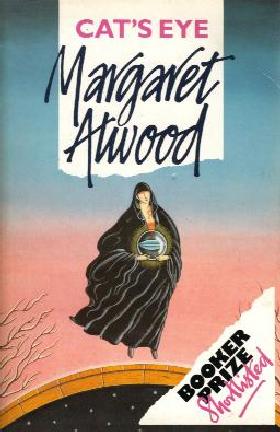
catseyeCat’s Eye, Margaret Atwood (1988). The narrator of this novel is a middle-aged artist, Elaine, who has returned to Toronto to attend a retrospective of her career. This triggers a series of long extended flashback sequences, in which she remembers her childhood in the city, particularly her friendship with three schoolfriends, one of whom was a cruel bully; but she also remembers her college years and her early years as an artist. That bullying schoolfriend, Cordelia, haunts Elaine, even in the present – although the tables did eventually turn, and while Elaine never bullied Cordelia to the extent she was bullied herself, Elaine does recount how Cordelia unravelled over the years and eventually ended up in a sanatorium. If Cordelia’s decline is signposted throughout the novel, then I missed most of it, though her fall as an ironic mirror image of Elaine’s rise to success did seem a little too obvious. Cat’s Eye was a surprisingly easy read, and if the early chapters, detailing Elaine’s childhood, were a little grim and hard to take in places, there was plenty more in the novel to balance them. Worth reading.

Cautionary Tales, Chelsea Quinn Yarbro (1978). Another book read for review on SF Mistressworks. My review is here.

raj4A Division Of The Spoils, Paul Scott (1974). The fourth book of the Raj Quartet, and the war is over in Europe, the Americans have dropped their atom bombs, but there is still Malaysia to be taken back from the Japanese. In India, demission of power from the UK is a certainty – the socialist government back home are focusing on domestic issues, and are not interested in Empire. This novel introduces Guy Perron, played by Charles Dance in the TV adaptation (and probably the character most remembered after Timothy Piggot-Smith’s Ronald Merrick), who despite his privileged background has managed to stay a sergeant throughout the war. He meets Merrick, who is now a major dealing with the Indian army deserters who joined the Germans and Japanese, and is detached to his staff. Through Merrick, he also meets Sarah Layton, whose narrative figured prominently in both The Day Of The Scorpion and The Towers Of Silence. Also prominent in the narrative is Nigel Rowan, who made a brief appearance in one of the earlier books. Rowan and Perron are old school-mates, as was Hari Kumar – whose false imprisonment as a political detenu by Merrick, who is wrongly convinced Kumar raped Daphne Manners (the events surrounding this form the core of the first book, The Jewel In The Crown). Through Rowan, Perron and the Laytons, Scott examines the route to independence and its effect on Britons living in India, weaving in and out of the plot of the preceding three books as they relate to Perron, Rowan and Sarah Layton (the TV adaptation went for a straight chronological structure, and misses a lot of the books’ arguments and subtleties). Scott is quite scathing in his critique of the Raj, and of the British who ruled India. It’s not hard to understand why these four books are considered classics, they’re certainly amongst the best post-war British literature I’ve read. I suspect I’ll be rereading them again one day.

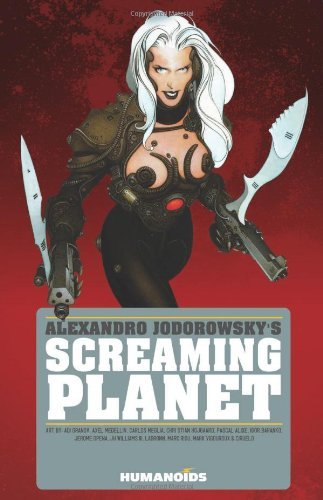
screamingplanetAlexandro Jodorowsky’s Screaming Planet, Alexandro Jodorowsky & various artists (2013). I’m a fan of Jodorowsky’s films and bandes dessinée, but I knew nothing about this title when I bought it. Still, Jodorowsky… It proved to be a linked anthology of short pieces, written by Jodorowsk but drawn by a variety of artists, which featured in the relaunched Métal Hurlant. A sentient planet is mistreated by its natives so badly it somehow makes them build an enormous metal head, into which it decants its personality, and which is then blasted into space – this is the “screaming planet”. And as it journeys through the cosmos, it passes by other worlds and its presence affects one or more people on those worlds. The story themselves are linked only by the giant head passing in the sky. Some work better than others. This is minor Jodorowsky – although he does confess in an introduction that he is used to working at longer lengths and found writing these “short stories” challenging.


4 Comments

The bookcase is not enough

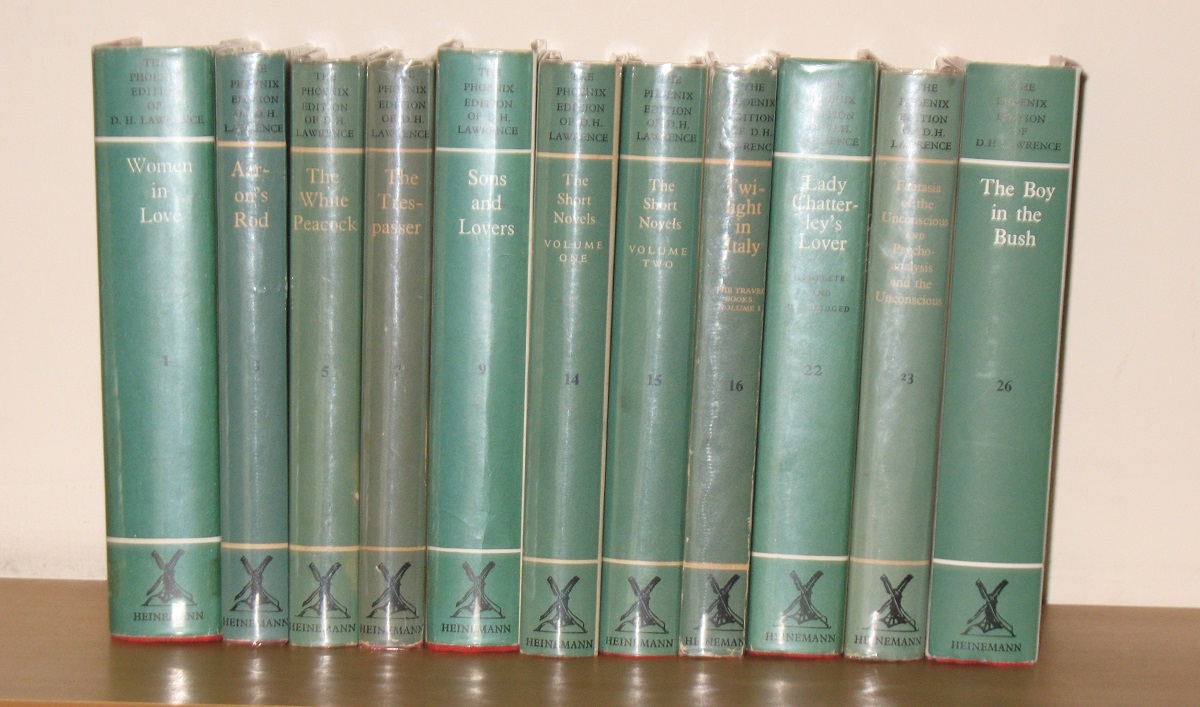
I was very good in January and purchased only three books, but then I went a little mad once February started. So while the TBR actually shrank during the first month of the year, I’m not sure it will do so this month. I was finding it increasingly difficult to track down copies in good condition of the specific paperback editions of DH Lawrence’s books that I’m collecting – which was not made easier by the big secondhand book sellers on eBay putting up photos of different editions to the ones they were actually selling… But then I discovered that during the fifties, sixties and seventies, Heinemann had published a set of, I think, twenty-six “Phoenix Edition” hardbacks of Lawrence’s books. And there just happened to be someone on eBay selling ten of them as a job lot for a reasonable price… And I bought another one too. Now I’ve got eleven of the books, of course, I’ve got no room for them. So it goes.

2015-02-09 12.38.37

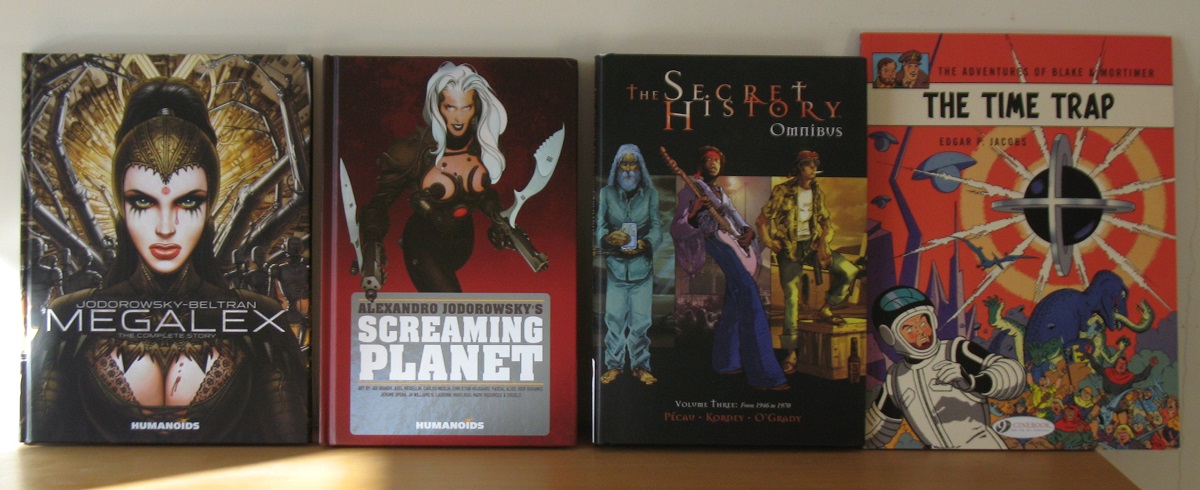
There’s a tale and a half to tell about The Adventures of Blake & Mortimer 19: The Time Trap and Amazon Logistic’s inept attempts to deliver it – suffice it to say, I ended up with three copies of the book (one of which is in Denmark). It’s an early story from the series, and not as good as later ones. I’ve been waiting a couple of years for the third volume of The Secret History, so I’m glad it’s finally available. Might have to reread the first two volumes first, though, to remind me of the story… And finally, well, Jodorowsky – what more needs to be said? Jodorowsky’s Screaming Planet is new to me. It’s apparently ten stories Jodorowsky was commissioned to write for Métal Hurlant. I have the first volume of the Megalex series, but the subsequent instalments never appeared in English. I was planning on getting the lot in French, but then Humanoids went and published an English-language omnibus,  Megalex: The Complete Story. Might still the get the French editions one day, though.

2015-02-07 13.28.29

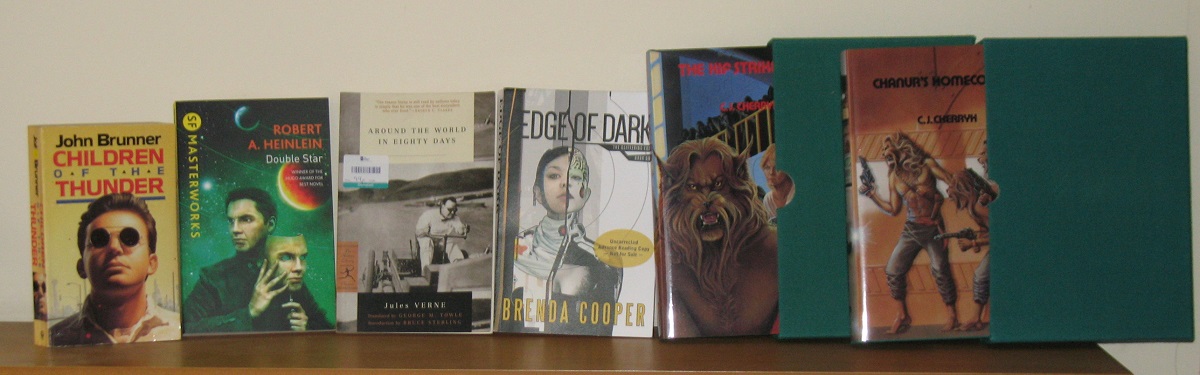
After buying the Phantasia Press editions of The Pride of Chanur and Chanur’s Venture a few months ago after one too many glass of wine, and then discovering that several years ago I’d bought a signed first edition of Chanur’s Legacy, the final book of the quintet (published by DAW but never in a Phantasia Press edition)… Well, I just had to complete the set, didn’t I? So The Kif Strike Back and Chanur’s Homecoming; both of which will, of course, be reviewed on SF Mistressworks some time this year. I have been somewhat lax over the last year or so in keeping up with the SF Masterwork series, chiefly because many of the more recent books have either been reprints from the original series, or are of books I’ve previously read and am not bothered about owning a copy… But but but Heinlein, I hear you cry. Well, I’ve never actually read Double Star, and the last SF Masterwork I bought was the Tiptree collection, so I think it’s allowed. Edge of Dark is an ARC from Pyr, which I reviewed for Interzone. It was a bit meh – as you will no doubt learn should you subscribe to Interzone. Children of the Thunder and Around the World in 80 Days were both charity shop finds.

2015-02-07 13.29.00

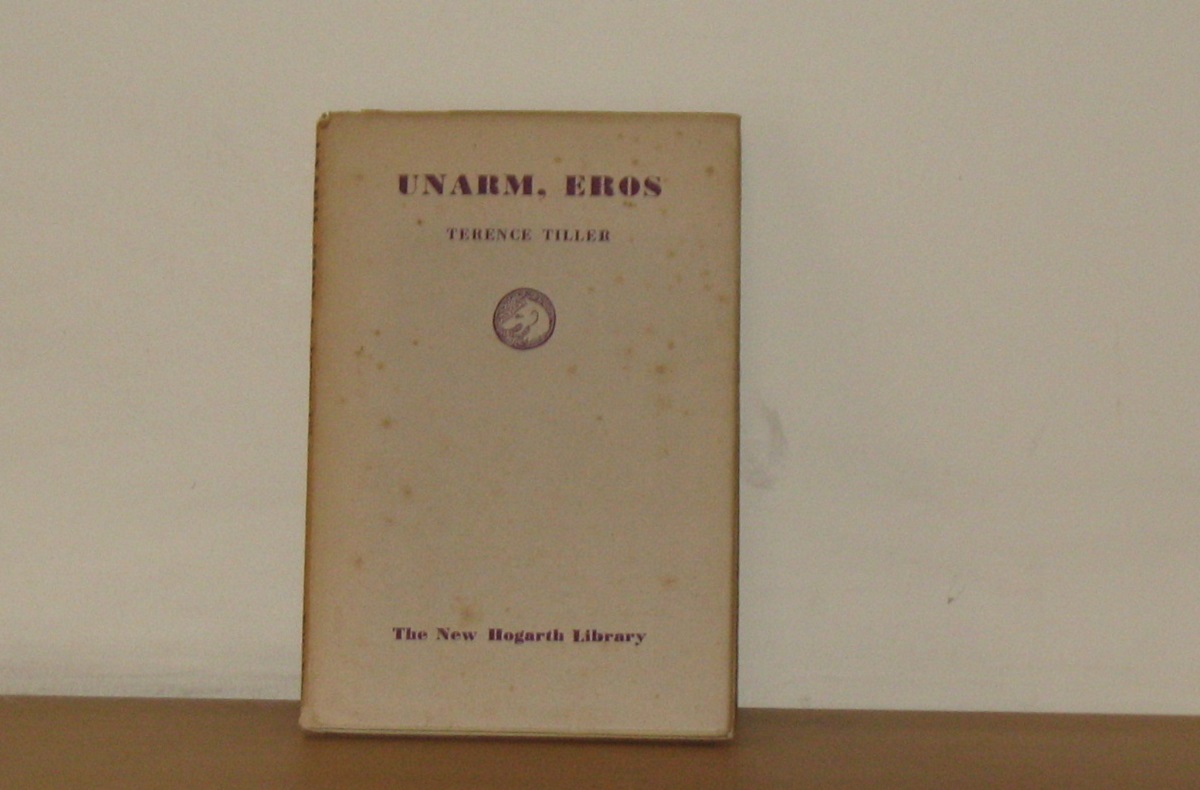
I’m a fan of Terrence Tiller’s poetry and have several of his collections, so I was quite chuffed when Unarm, Eros popped up on eBay. It’s also a review copy, and includes the review slip… from 15th January 1948.

2015-02-07 13.29.46

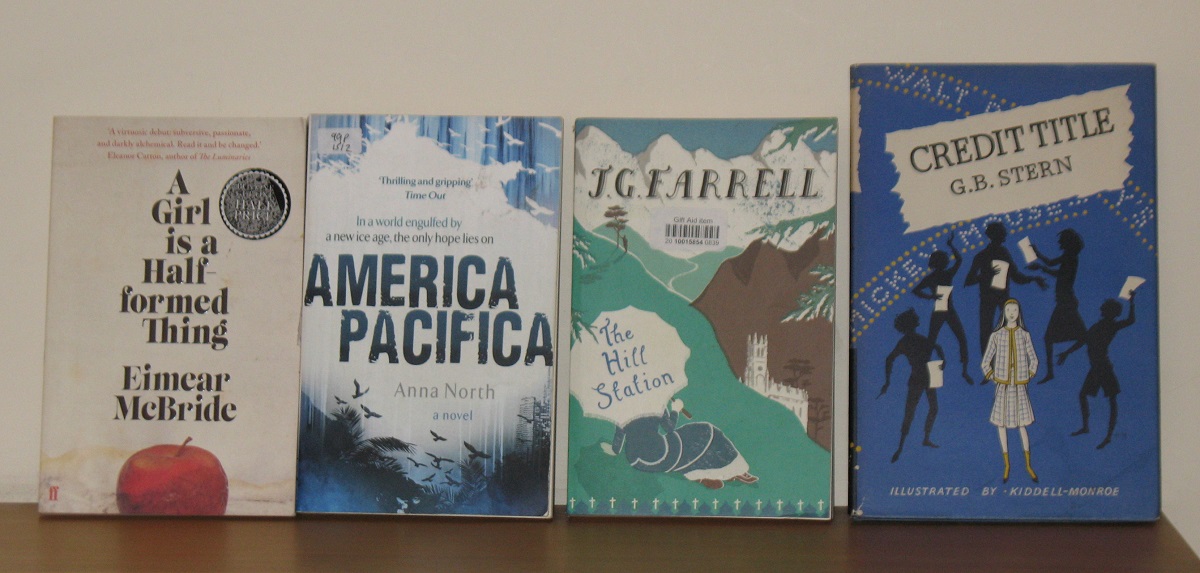
I read Farrell’s The Siege Of Krishnapur over Christmas 2013 and was much impressed, so when I spotted The Hill Station in a charity shop it was an easy decision to buy. I plan to read more Farrell. America Pacifica was, I seem to recall, one of those literary novels that borrows from science fiction and which was talked about a couple of years ago. It was also a charity shop find. A Girl Is a Half-formed Thing was a charity shop find too, and another book I remember being highly praised. Credit Title is by one of the authors from my informal project to read some postwar British fiction by women writers – GB Stern is Gladys Bronwyn Stern – and I suppose I should have guessed from the cover art, but the book cover flap describes Credit Title as a “junior novel”.

2015-02-07 13.30.23

I mentioned the DH Lawrence Phoenix Editions earlier, and here are the eleven volumes I now own, in all their green-jacketed glory. They are: 1 Women in Love, 3 Aaron’s Rod, 5 The White Peacock, 7 The Trespasser, 9 Sons and Lovers, 14 The Short Novels Volume 1, 15 The Short Novels Volume 2, 16 Twilight in Italy, 22 Lady Chatterley’s Lover, 23 Fantasia of the Unconscious & Psychoanalysis and the Unconscious, and 26 The Boy in the Bush. I will certainly be tracking down more…
2015-02-07 13.31.05

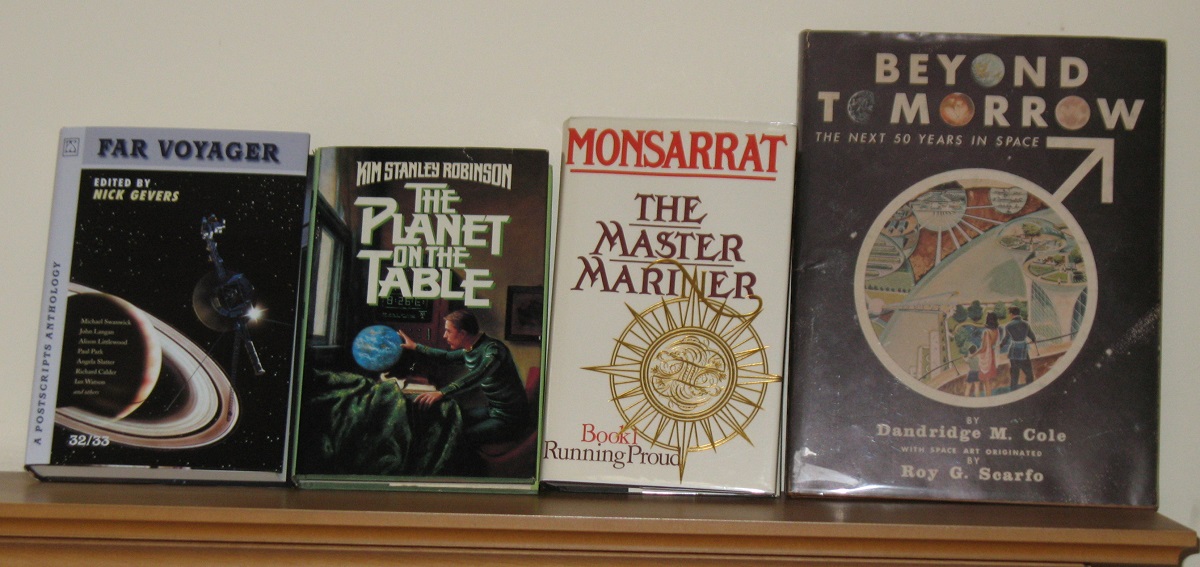
I found some illustrations from Beyond Tomorrow online on some blog, and liked them enough to hunt down a copy of the book. It took a while, as it’s quite hard to find. But I managed it. I might well write about it at some point. Postscripts 32/33 Far Voyager is the latest “issue” of the magazine that became an anthology, and I’m in it. In fact, it’s my story which provided the title for the book. The Master Mariner: Running Proud is a favourite novel. A signed first edition popped up on eBay, so I bought it… only to discover I already had a signed first edition. Ah well. At least this new copy is in much better condition. And I guess I now have a signed first edition of The Master Mariner: Running Proud for sale. The Planet on the Table is also signed, but the only edition I already owned was a paperback, so that’s all right. It could do with a new jacket, however.


1 Comment

First haul of the year

Though, strictly speaking, it’s not – some of the books below were brought to me by Santa. But this is certainly the first book haul post of the year. And it’s the usual mix of first edition hardbacks, charity shop finds, literary fiction, science fiction, and books on or about other things all together…

20130126b
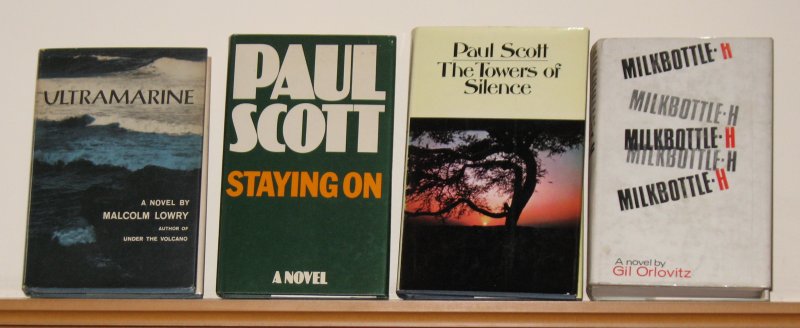
Some literary first editions. I read Ultramarine over Christmas and it is very good indeed. I will read more Lowry. Milkbottle-H was recommended by someone on LibraryThing and this was the only edition of the book I could find. Paul Scott is a favourite writer, and both The Towers Of Silence and Staying On are for the collection.
20130126a
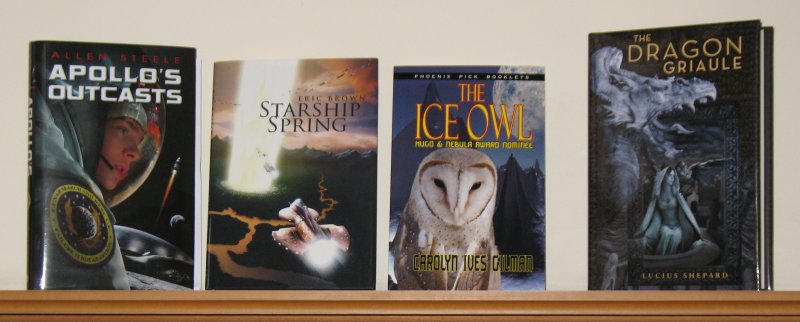
Some genre first editions. Apollo’s Outcasts I’ll be reviewing for Vector. I should know about this sort of stuff, right? Starship Spring is the final book in Eric Brown’s Starship quartet – I bet you can guess the titles of the other three. The Ice Owl is a novella by Carolyn Ives Gilman. I shall be reviewing it for Daughters of Prometheus. The Dragon Griaule is a beautiful-looking collection from Subterranean Press. I have all of its contents as separate novellas… except for the one original to this book. Which they clearly put in so that people like me would buy it.
20130126d
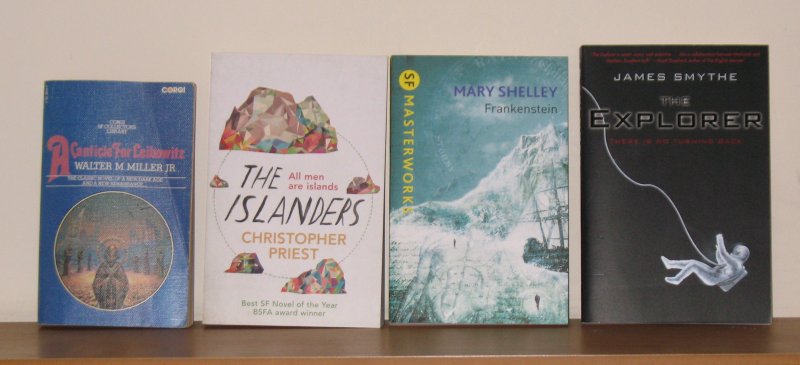
Some genre paperbacks. Unbelievably, I have never read A Canticle For Leibowitz. Good job I found this copy in a charity shop, then. The Islanders was a Christmas present. Frankenstein joins the other SF Masterworks. And The Explorer was sent to me by James Smythe (I swapped it for a copy of Adrift on the Sea of Rains).
20130126c
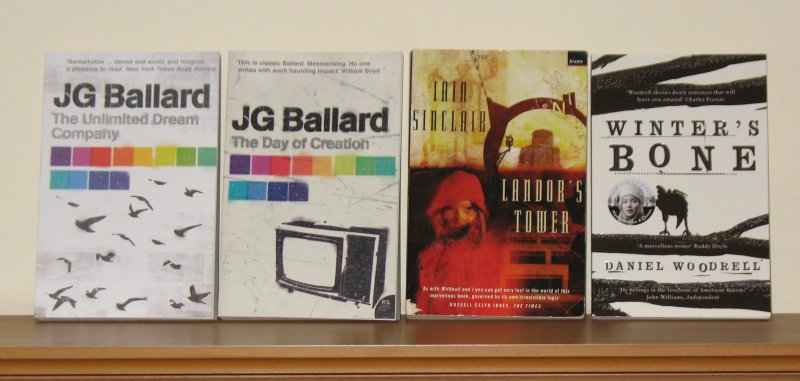
Non-genre paperbacks. Two more of the attractively-packaged Ballard paperbacks, The Unlimited Dream Company and The Day of Creation. That’s all of them now. I’ve been picking up Iain Sinclair novels – this one is Landor’s Tower – when I see them in charity shops, but have yet to actually, er, read them. Winter’s Bone I wanted to read after being very impressed by the film adaptation. Santa gave it to me.
20130126e
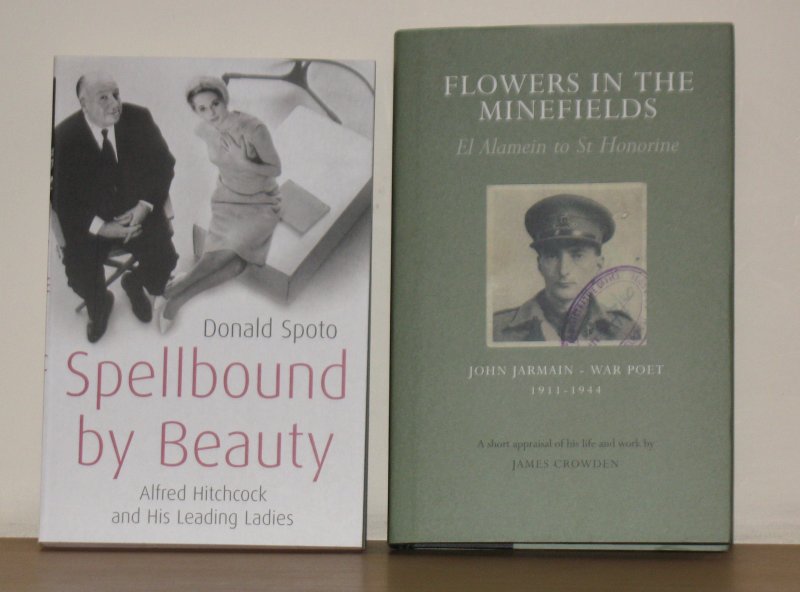
I’ve always rated Hitchcock as a director, so I made an effort to watch The Girl, the TV movie about his relationship with Tippi Hedren during the filming of The Birds and Marnie. It was excellent. Spellbound by Beauty is the book it was based upon. John Jarmain is one of my favourite poets, and Flowers in the Minefields is a collection of his poems and letters, with commentary. It is, I think, the only book about him ever published.20130126f
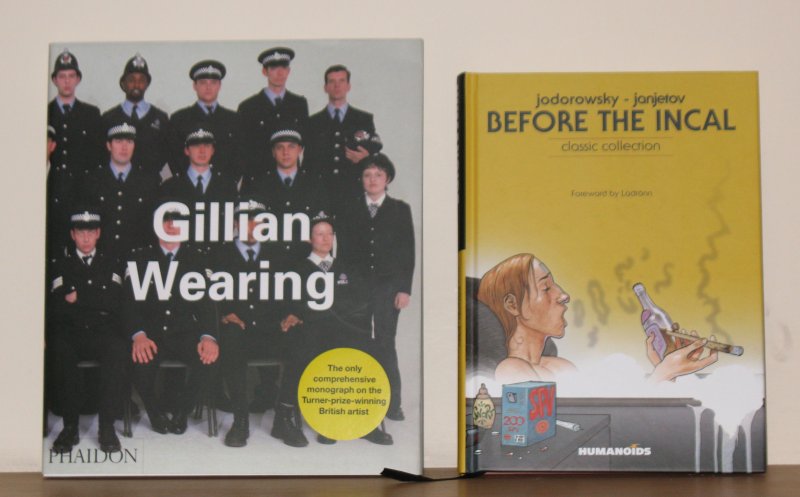
During a visit to Louisiana, a modern art museum in Denmark, over Christmas I saw some photographs by Gillian Wearing, and was sufficiently intrigued to pick up a book about her work. Before The Incal is a prequel bandes dessinée and it is excellent.


24 Comments

Ian’s 50 essential sf novels, part 2

Day two and here are my essential sf novels, from 26 through to 50. See here for Jared’s on Pornokitsch and here for James Smythe’s.
To me, what constitutes science fiction has always been quite clear, and my numerous attempts at defining the genre have merely been a way of communicating that certainty. But what does “essential” mean? I found that much harder to define. Yes, I relied a lot on my favourite novels when compiling this list – I thought they were brilliant, therefore they must be essential. Except several of them I could not quite squeeze in. My favourite DG Compton novel, for example, is Synthajoy, but in yesterday’s list I instead included The Continuous Katherine Mortenhoe – because I think it covers a theme more essential to a true exploration of the science fiction genre. Likewise, I wanted to include Jed Mercurio’s Ascent, a novel that has been a touchstone work for my own writing for several years. But it only hints at being alternate history in its final pages, and it barely qualifies as space fiction. Oh well.

We readily agreed that graphic novels, or bandes dessinées, were allowed. I picked the most obvious choice – see number 26 below. I’d like to have chosen Dan Dare or the Trigan Empire, but I don’t think either really characterises a tradition in British sf comics – certainly not one that continues to this day. So, much as I love them, I found their inclusion hard to justify.

Certainly, there were movements during the last few decades in sf which I needed to represent in my list: cyberpunk, steampunk, New Space Opera… As long as I picked one work from each, and could justify its presence, then job done. The works I chose for those subgenres are not the most obvious ones, but I think they’re the most important – or  I certainly believe they deserve to be. Others may disagree.

Anyway, the list…

26 The Incal, Alejandro Jodorowsky & Moebius (1981)
In France, there is a strong sf tradition associated with comics, or bandes dessinée. Not all of these have been translated into English – sadly. The Incal is one of the most popular bandes dessinée, and rightly so. It is completely bonkers, beautifully drawn, and an excellent example of what the medium can do.

27 Downbelow Station, CJ Cherryh (1981)
Cherryh has been churning out muscular hard sf since 1976, and she’s still going. Somehow she has managed to stitch all these novels in to a single future history. It’s an astonishing achievement. This book is perhaps her best-known, and is very much characteristic of her oeuvre.

28 Native Tongue, Suzette Elgin Haden (1984)
Women-only utopias do not happen overnight – though from some of the novels which feature them you might think so. Native Tongue charts one route, starting from a near-future in which women are reduced once again to the status of chattel. The development of a women-only language, Láadan, is instrumental in overturning this situation. This novel is both linguistic sf and feminist sf.

29 The Handmaid’s Tale, Margaret Atwood (1985)
The scary thing about this book is that it’s completely made-up but it feels like it could really happen – might be happening now, in fact. You see it in the news every day, and sometimes you have to wonder what is going through people’s heads – the Young Earthers and Creationists, the congresswoman who publicly declares women should not have the vote, New Mexico recently passing a law which requires rape victims to carry pregnancies to term… I’d consider making such people read this book, but I have a horrible feeling they’d consider it utopian fiction…

30 Last Letters from Hav, Jan Morris (1985)
Hav is not a real place, though you might be fooled into thinking so as you read this novel. Very early proto-sf often couched its tall tales in the form of travel journals, but once Gernsback bootstrapped the genre into existence, as a form of sf it seemed to go into decline. A pity, if Last Letters from Hav is any indication of what it can do.

31 Metrophage, Richard Kadrey (1988)
Say “cyberpunk” and everyone immediately thinks of Neuromancer. But I’m not convinced that’s an especially essential book – cyberpunk has become a lifestyle, and does it really matter which novel – arguably – booted it up into existence? What is essential, however, is the book which folded cyberpunk back into science fiction. This one. It marked the end of cyberpunk as a sf literary movement. All the cyberpunk novels and stories that followed were just twitchings of the subgenre’s rotting corpse.

32 ‘Great Work of Time’, John Crowley (1989)
This is one of my two slightly sneaky inclusions. We did agree to allow novellas, and many novellas are indeed published as independent books. But this one never was – it first appeared in the collection Novelty. It is possibly the best time paradox story ever written, with the possible exception of Ted Chiang’s The Merchant and the Alchemist’s Gate.

33 Take Back Plenty†, Colin Greenland (1990)
New Space Opera has been good for science fiction. But if this book had been its model rather than Banks’ Culture novels, it could all have turned out very differently. Take Back Plenty celebrates the pulp side of sf, and does so with intelligence, wit and verve. It is one of the genre’s best books.

34 The Difference Engine†, William Gibson & Bruce Sterling (1990)
Another slightly sneaky choice, as Sterling appears alone at the end of this list. The term “steampunk” was coined by KW Jeter, and his Morlock Night and Infernal Devices are emblematic of the subgenre. But they’re not actually that good. The Difference Engine is good. It is the one steampunk novel that stands head and shoulders above the rest of the subgenre (which is now, sadly, a lifestyle).

35 Stations of the Tide, Michael Swanwick (1991)
This sf novel is the only one I can think of which mixes science fiction and Southern Gothic. It’s a mashup that shouldn’t by rights succeed. But it does. It is a rich and strange book – and sf needs to be rich and strange more often.

36 Sarah Canary†, Karen Joy Fowler (1991)
Not all first contact novels involve hardy explorers beaming down onto an alien planet and trying to communicate with mysterious aliens. Sometimes the mysterious aliens are here on Earth; and sometimes we will never know if they were alien or even if we have made contact. This book is proof that sf does not need to be about the future, spaceships, robots, time travel, or giant computer brains.

37 Red Mars*, Kim Stanley Robinson (1992)
This is the definitive novel on the near-future colonisation of another planet – in this case, our neighbour, Mars. Enough said. (Don’t forget to read the sequels too.)

38 China Mountain Zhang, Maureen F McHugh (1992)
Near-future sf is difficult to do well, if only because the author is expected to have some sort of magical crystal ball. But sf has never been predictive, and when it has got something right it’s been a happy accident. China Mountain Zhang is a near-future novel, but that’s incidental. It is beautifully written. That’s all that matters. McHugh is one of the genre’s very best writers.

39 Dark Sky Legion, William Barton (1992)
We may never find a way to circumvent the speed of light. Which means 90% of science fiction is just so much magical hogwash. But some writers have tried to envisage a distant future in which the speed of light restriction still holds true. This is the best of the bunch. It also does something interesting philosophically – and sf is traditionally not very good at that.

40 A Fire Upon the Deep, Vernor Vinge (1992)
Some space operas aren’t New, though they appeared while New Space Opera was doing its thing. The central premise of A Fire Upon the Deep, the Zones of Thought, is one of those ideas that shows why sf is such an important and vibrant mode of fiction. The somewhat ordinary plot attached is almost incidental.

41 Fatherland, Richard Harris (1992)
One form of alternate history is vastly more popular than any other: Hitler winning WWII. It’s impossible to write a story based on it that is neither derivative nor clichéd. This is probably the best of the lot – because it is set decades after the War, and is only peripherally concerned with the fact of the Nazi victory.

42 Coelestis, Paul Park (1993)
There are many themes which science fiction rarely tackles. Postcolonialism is one. It smacks too much of the real world – and too much of the real world that is not the First World – for most sf writers and readers. Coelestis treats the subject with intelligence, and then goes on to deconstruct the colonial identity of one of its protagonists. A masterwork.

43 Shadow Man, Melissa Scott (1995)
Among the many themes covered by sf over the decades has been sexuality and gender. The most famous such novel is LeGuin’s The Left Hand Of Darkness, but given the one-book-per-author rule I couldn’t pick that. (And besides, its treatment of its hermaphroditic humans is somewhat problematical.) Scott complicates matters here by throwing in five genders and nine sexual preferences and, while the gender politics are still a little iffy, this is an essential exploration of the theme.

44 Voyage, Stephen Baxter (1996)
This is not only alternate history, it is also space fiction: it is an alternate history of a NASA mission to Mars. The research is impeccable, and it makes a highly plausible fist of its premise. Space fiction has been chiefly dominated by writers who are not very good, which is unfortunate. Happily, Baxter can write well, and he does so in this book.

45 Ash: A Secret History, Mary Gentle (2000)
Is it science fiction, or is it fantasy? The world of the title character does seem more fantastical than sfnal, but it’s wrapped in a near-future narrative which is resolutely sf. And the way the two narratives interact, and change each other, is definitely straight from science fiction’s toolbox.

46 Light, M John Harrison (2002)
This is perhaps the most literary science fiction novel ever written (not counting, of course, the two sequels). Or perhaps it’s the most science-fictional literary novel ever written. On balance, I suspect the former – it is too steeped in genre to be wholly accessible to readers of literary fiction. That still makes it essential for sf readers, however.

47 Life, Gwyneth Jones (2004)
Surprisingly, working scientists are not especially popular as protagonists in science fiction. This novel is about one. And science. It is also brilliant.

48 Alanya to Alanya, L Timmel Duchamp (2005)
First contact is a genre staple. This novel – the first of the Marq’ssan Cycle quintet – is not the first in which the visiting aliens choose to speak only to women, and which subsequently prompts a global crisis. It is, however, notable for a near-future world in which the ultra-rich rule openly and cruelly. Elizabeth Weatherall, PA to the chief villain of this book, goes on in later volumes to become one of the genre’s great villains in her own right. Go read all five books.

49 The Road, Cormac McCarthy (2006)
Post-apocalypse is such a well-established subgenre that recently most such novels have been by writers of literary fiction. And this is the best of those. It’s also much better than any genre post-apocalypse novel. Sadly, the trope has now been so over-used it’s become banal. Someone needs to do something different with it.

50 The Caryatids, Bruce Sterling (2009)
We look at the world today and see impending climate crash and the collapse of national economies… but no sf novel except this one has dealt with such a scenario. It’s for good reason that Sterling was one employed as”Visionary in Residence” at a Californian university. Essential reading for the near-future.

And that’s it. I think I’ve covered all the major bases. Not every book in my list of fifty is a blinding piece of literary genius – this is science fiction, after all… But I think my choices show a good spread of themes and subgenres, and every book is certainly worth reading. I couldn’t get everything in, however. Some choices were just too hard to justify. For example, one subgenre of sf I was keen to have on my list was early space travel. Unfortunately, I’ve not read Garitt P Serviss or Willy Ley, and there’s a reason why High Vacuum (1956), First on the Moon (1958) and The Pilgrim Project (1966) are forgotten. So, no early space travel. Instead, I have Voyage as my entry for realistic space fiction (as if I’d really pick Bova, or Steele, or their like).

Finally, it has been a little dismaying putting together this list to discover how many of my selections are out of print. Some have recently been made available after many years OOP, either in the SF Masterworks series, or as ebooks through the SF Gateway. Respect to both for that. But others on my list have languished in obscurity since their original publication. This, I feel, doesn’t invalidate their, er, essentialness. After all, books don’t stay in print because they are essential, they stay in print because they’re popular, because people keep on buying them.

We have no real agreed academic canon in genre fiction, no fixed list of sf novels which teachers and lecturers turn to when designing courses on the subject. Yes, there are several books that people point to when the word “classic” is mentioned, but most of those are artefacts of the genre’s history. They were not chosen because experts in the subject have over the decades deemed them the best science fiction has produced in its eighty-seven years. Perhaps it’s good that sf is democratic in that regard… but when it elevates Foundation, Starship Troopers, the Lensman series and the like to greatness, I have to wonder…


5 Comments

Recent notable reading

In other words, we’ll not bother mentioning the crap ones, or the ones that are meh – though I did include one that was so bad, people should be warned off it. I’ve also excluded those I’ve read for review elsewhere – on SF Mistressworks or Daughters of Prometheus (for which I have a backlog of reviews to finish and post).

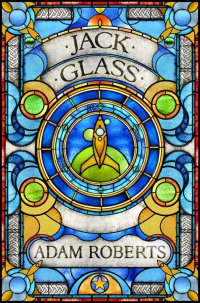
JACK-GLASS-by-adam-robertsJack Glass, Adam Roberts (2012)
Which I read too late in the year to consider for my best of the year post. Adam Roberts’ novels in précis always sound interesting and appealing, and yet I still need to find the right way to read them. This one I think I’ve come closest. It is, as Adam himself describes it, an attempt to “collide together some of the conventions of Golden Age science fiction and Golden Age detective fiction”. It opens with an impossible escape, told from the point of view of the escapee. Next is a murder-mystery. Finally, there is a locked-room mystery. All three involve the mysterious figure Jack Glass. This is a gruesome and quite Dickensian novel. The Solar System is filled with disenfranchised poor, living in fragile space habitats, while a hierarchy of the ultra-rich and privileged live a life of luxury. But the possibility of FTL – even though against the laws of physics – threatens this situation by providing an escape to the stars. And that’s the maguffin driving the three sections of the novel. The characters are a bit annoying, especially their speech patterns, and perhaps there’s a little too much authorial sleight of hand used in places to delay the solution, but it all hangs together very entertainingly and readably. Though I’ve only read about four or five of Adam’s novels, this one was the most enjoyable – perhaps because it felt the most authorial, despite managing to capture the tone and verve of Golden Age sf.

asonoftherockA Son of the Rock, Jack Deighton (1997)
A somewhat old-fashioned sf novel – it wouldn’t have looked out of place among British sf of the 1970s; and I hold British sf of the 1970s in high regard – and well-written, but with a mostly unlikable narrator. It’s set in a sort of future galactic human co-prosperity sphere, in which primitive worlds are exploited for raw resources. The population also undergoes an anti-ageing treatment, which is so endemic that signs of ageing, and old people themselves, are viewed with fear and hatred. The narrator works for a mining company, but before taking up his post he goes on a Grand Galactic Tour. On the world of Copper, he meets the titular character, an old man, who both repels and fascinates him. It also seems the old man sees a kindred spirit in the narrator. Later, after he joins the mining company, the narrator chooses not to take the anti-ageing drug – his grandmother reacted badly to it, and the condition is genetic so he could also suffer from it – and over time becomes a freak in society. There’s some very nice description in the book, and the premise is handled well, but it feels a little old-fashioned in places, and the supporting cast are nicer than the narrator is. Definitely worth reading, however.

David-Mitchell-The-Thousand-Autumns-of-Jacob-de-ZoetThe Thousand Autumns of Jacob De Zoet, David Mitchell (2010)
I took this with me to Denmark to read over Christmas, as it had been sitting on my TBR since November 2010. And I’m glad I did. It is the late 1790s and the title character has arrived at the Dutch East-Indies Company’s trading post in Japan, Dejima in Nagasaki’s harbour, to assist a new manager root out corruption. But the novel is only sort of about de Zoet. It’s also about the Japanese midwife he falls in love with, and the bizarre shrine where she becomes a prisoner when her father dies, and how de Zoet beats the British attempt to muscle in on the Japanese market. It reads like straight historical fiction – although that shrine holds a horrible secret, which seems to have given its monks immortality. The period detail rings true and it’s clear Mitchell did plenty of research. They were a horrible venal, nasty, brutal and racist lot in those days, and Mitchell pulls no punches. It doesn’t make for sympathetic characters, so it’s impressive Mitchell manages to carry the story with such an ugly cast. I think this is the best of Mitchell’s novels – yes, even better than Cloud Atlas.

the-godless-boys-978033051336401The Godless Boys, Naomi Wood (2011)
This one got a lot of positive word of mouth last year, so I thought it would be worth a go. In 1951, a Secular Movement opposed the increasing hold the churches had on British society. This prompted a government backlash. The secularists were rounded up and exiled to an island off the north-east coast of England. In 1977, there was another wave of church burnings, and yet more people were sent to the Island. And on the Island, a decade or so later, a group of youths, led by Nathaniel, see themselves as guardians of the inhabitants’ godlessness. That is until a young woman arrives, looking for her mother, who disappeared in 1977 and was implicated in the burning of a church. I wanted to like this book, but it was trying so hard to be A Clockwork Orange, and failing, that it annoyed me. The Island came across as some parody of “grim Up North”, the neologisms felt horribly forced, and I never really got a good handle on the age of the protagonists. It comes as no surprise to discover that Wood has a MA in Creative Writing.

ultramarineUltramarine, Malcolm Lowry (1933)
So I read ‘Through the Panama’ in Lowry’s only collection, Hear Us O Lord from Heaven Thy Dwelling Place, and was blown away. Perhaps the rest of the collection wasn’t as impressive, but I wanted to read more. Happily, I’d grabbed the aforementioned collection, Ultramarine, Lowry’s first novel, and Under the Volcano from my father’s Penguin paperback collection. But I also went further and picked up some first editions of his other books. And, er, Ultramarine, his first novel. Again. The edition I have, in both paperback and hardback, is the 1962 revised edition of the 1993 original – revised, obviously, not by Lowry, who died in 1957, but very much based on his part-written revisions for the novel (which he had done in order to bring it in line with a planned seven-novel sequence titled The Voyage That Never Ends (actually used for a collection of Lowry’s “fictions, poems, fragments, letters”)). The narrator of Ultramarine – who is loosely based on Lowry himself, as indeed are most of his protagonists – joins the crew of a tramp freighter as a mess-boy, but is not liked by the rest of the crew. The book takes place in the Far East, while the ship is moored at Tsjang-Tsjang. This is a book you should read for the writing, which is excellent. There’s not much in the way of plot. The characters are superbly drawn, often just through dialogue. It’s easy to see why Lowry was such an important writer.

ninthlifeThe Ninth Life of Louis Drax, Liz Jensen (2004)
Whenever I see a Liz Jensen book I’ve not read in a charity shop, I buy it. But I think I shall start buying them new because I’ve yet to be disappointed with any of her books I’ve read. And that’s not something I can say for many of the authors I read regularly. The Ninth Life of Louis Drax is set in France in the present day, and the eponymous character is an accident-prone ten-year-old boy currently lying in a coma after falling down a cliff at a family picnic. His father is also missing and, according to the mother, responsible for pushing the boy off the cliff. Louis has just been moved to a new hospital for coma patients in Provence, and the doctor in charge – who alternates the narrative with Louis himself (apparently speaking from within his coma) – finds himself unprofessionally drawn to the boy’s mother. Essentially, The Ninth Life of Louis Drax is a murder-mystery, but one eyewitness is lying and the other is comatose – but is speaking to the reader via a worldview which obfuscates their meaning. It’s all very cleverly-done, and if the ending comes as no great real surprise, the journey to that point was not wasted. Definitely must read more of Jensen’s books.

OsamaOsama, Lavie Tidhar (2011)
Originally published by PS Publishing – the edition I have – then brought out in massmarket paperback by Solaris. Winner of the World Fantasy Award last year, and a surprising omission from several other shortlists (though it made the BSFA Award shortlist). It would be unfair to say I did not come to this book with high expectations. Happily, they were met. A private detective based in Ventiane is tasked with tracking down Mike Longshott, the mysterious author of a series of pulp novels which feature Osama bin Laden as a vigilante hero. This is not, of course, the world we know. Though there are echoes of it there, and as the PI draws closer to Longshott so those echoes begin to ring louder and louder. Interspersed between the chapters are short pieces of reportage on terrorist attacks from our world. It’s not hard to figure out what’s going on, and the prose sometimes stumble – trying to pastiche pulp prose at one point, then not at another. There’s also an odd substitution of “dawdle” for “doddle”, and Lavie reveals his secret love for the music of Eva Cassidy. But it’s certainly a worthy award winner and fully lives up to its audacious title.

farnorthFar North, Marcel Theroux (2009)
This was shortlisted for the Arthur C Clarke Award in 2010, but lost out to Miéville’s The City & The City. It is yet another US post-apocalypse novel. The writer is British, but the son of US author Paul Theroux; and the novel is actually set in Siberia. The central premise is that Siberia was opened to American settlers, but then some sort of catastrophe did for the rest of the world, and those remaining in the “Far North” gradually succumbed to the usual violence, rape and warlordism. Theroux can’t decide if his settlers adopted Russian culture, or simply transplanted their own – he makes reference to both situations. The narrator of the story is a young woman who acts as constable for a town in which she is the only survivor. She encounters a group of slavers, and later witnesses a plane crash. That crash persuades her that somewhere there is a settlement with technology – albeit primitive technology. She sets off to find it, and is captured by those slavers… I’m a little puzzled how this made the Clarke shortlist. True, it’s literary fiction that’s science fiction in all but name, which means the quality of writing is generally much better than genre fiction displays. It also means the genre tropes are presented as if they’ve never been used before. Except post-apocalypse has been done before – in literary fiction. The first third of Far North, in fact, was trying hard to be The Road. And failing. The fact it later abandoned that template – and introduced some magic glowing substance, for no good reason – couldn’t prevent it from being as banal as most post-apocalypse novels are.

before-the-incalBefore The Incal, Alejandro Jodorowsky & Zoran Janjetov (2012)
It’s not that The Incal required a prequel, but Jodorowsky has done a clever job here of explaining stuff you were perfectly happy to swallow unexplained in that book, as well as set things up beautifully for the later story. Janjetov’s art nicely emulates Moebius’ style – in fact, according to the introduction it was Jodorowsky’s observation that Janjetov’s style was similar to early Moebius that prompted him to write Before The Incal in the first place. All the characters from The Incal are here, and the story cleverly sets them up for the roles they will later play. The whole thing is not quite as bonkers as The Incal (though it is still quite insane), but it’s beautifully drawn, and this is a handsomely-produced volume on a par with Self Made Hero’s lovely edition of The Incal.

regimentRegiment of Women, Thomas Berger (1973)
A 1970s sexual satire. Oh dear. I haven’t read a book as bad as this for quite a while, and I’ve seen more biting satire on gender roles in a Two Ronnies sketch. A century or so from now, in what amounts to the ruins of the twentieth century, the women are in charge. But they dress and behave just like men – in fact, “effeminate” means behaviour currently associated with dumb macho males. Men, of course, wear pretty dresses, make-up, high heels and pantyhose, and behave like the sort of women a dumb 1970s sexist imagines women behave. Men also have breast implants. Yes, that’s right: the women are in charge, but the men conform to male gaze. Georgie is a secretary at a publishing house, but after getting unintentionally drunk at a friend’s, he is caught in public dressed as a woman – ie, in trousers, shirt and tie. He is arrested. Transvestism is illegal, but the police are convinced he is some sort of dangerous subversive. Georgie manages to break out of prison, and meets the Male Underground. They persuade him to infiltrate a Sperm Camp, where men are milked for their sperm for ex-utero procreation. (Women’s sex with men consists solely of anal penetration with a dildo, usually without the women undressing; and, most often, it’s rape.) In prison and in the Sperm Camp, Georgie encounters Harriet. She’s a woman but she just wants to dress and behave like a man – ie, wear pretty dresses, make-up, high heels and pantyhose… It’s a monumentally stupid set-up. Berger has to go through so many contortions to overcome the obvious flaws in his world, and none of his “explanations” are even remotely plausible. And that’s not to mention the deeply offensive views on gender roles on which the entire plot is based. Mystifyingly, this book has a 3.46 average on Goodreads, with quite a few 5-star reviews. Incidentally, I don’t recall any POC characters in it.