It Doesn't Have To Be Right…

… it just has to sound plausible


2 Comments

Reading diary, #10

With all the dipping into books I’ve been doing for research for All That Outer Space Allows, I’ve not been reading as much as usual – although I have managed to fit in several reads for review for SF Mistressworks. And, er, several books which I’ve actually written about at greater length… which is something I’ve not done on here for a while either.

Dark as the Grave Wherein My Friend is Laid, Malcolm Lowry (1968). My love of Lowry’s prose remains undimmed. I wrote about this book here.

Women as Demons, Tanith Lee (1989). I reviewed on SF Mistressworks – see here.

my_name_is_red1My Name is Red, Orhan Pamuk (1998). I originally picked up this book for a world fiction reading challenge a couple of years ago, but got bogged down about halfway in and gave up. I eventually decided to give it another go, and this time I managed to finish it. In Istanbul in the late sixteenth century, the Sultan asks a retired and highly-regarded miniaturist to manage the creation of a book to celebrate his reign. But this book will not be illustrated in the Persian style, as is considered proper and religiously correct, but in the European style (depictions of people and animals is haram in Islam; hence Islamic art’s focus on calligraphy and architecture). But one of the miniaturists secretly approached to provide illustrations, or part of the illustrations, disagrees with the project and murders one of the other miniaturists. The novel is structured as first-person narratives by all those involved, including the murdered victims, the daughter of the man managing the project, and a young man who has returned to Istanbul after years in the provinces to ask for the daughter’s hand… It’s not the fastest-paced of murder-mysteries, and Pamuk seems fond of presenting the same piece of information from several different viewpoints so they more or less contradict, or at least, confuse each other. But I did think My Name is Red was very good… although I wasn’t so taken I plan to seek out Pamuk’s other novels.

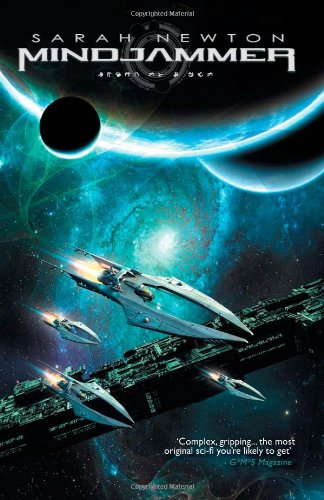
mindjammerMindjammer, Sarah Newton (2012). This novel set in the world of a sf role-playing game of the same name and is, I believe, chiefly intended to support the RPG rather than vice versa. Which no doubt explains some of its set-up, like ,for example, the fact that it follows the adventures of a group of four military specialists from varied backgrounds (ie, both above and below the law). They’ve been sent to a rediscovered human polity as a Security and Cultural Integrity Force team by the New Commonality of Humankind in order to ensure everything about the newly-discovered world, Solenius, is exactly as it seems. Except, of course, it’s not. The plot of the novel basically comprises the four SCI agents stumbling from one violent encounter to another, interspersed with fact-filled info-dumps, while a number of villains twirl moustaches and gloat evilly. Mindjammer is space opera turned up to eleven, which is both its appeal and its worst problem. Space opera needs those clunky wodges of exposition, it needs a relentless plot filled with violence, discovery and violent upsets, it needs to rely on clichés because there isn’t much room for anything else… And when you have a space opera based on what is clearly a rich and lovingly-designed role-playing game universe… One for fans of the subgenre as much as it is for fans of the RPG; but yes, one for fans, I think.

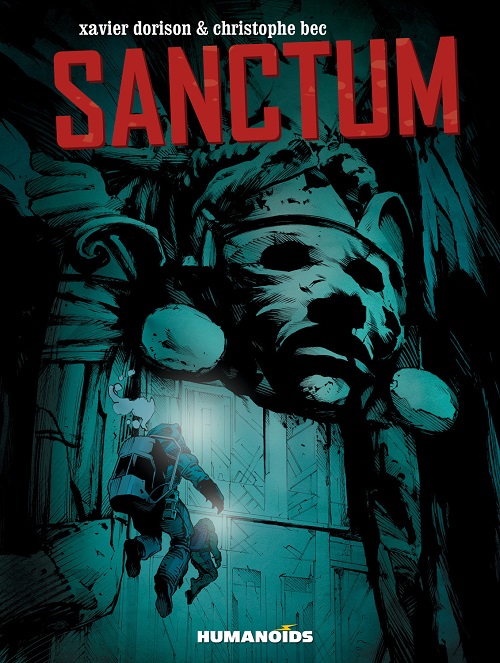
Sanctum_zoomedSanctum, Xavier Dorison & Christophe Bec (2014). I picked up a copy of the first part of this a few years ago, but it’s only recently an omnibus edition of all three parts has appeared in English (I was tempted to buy it in French, but never got around to it). Sadly, after all that wait, I can’t really say it was worth it. Some things it does very well, but it also fails quite badly in other respects. The opening section, in which a US submarine stumbles across a wrecked Soviet sub in an underwater chasm off the coast of Syria is done well… Except it all takes place at 4,000 feet, and you can’t have people diving that deep – the pressure would crush them. And should you somehow manage to saturation dive at nearly 120 atmospheres, you’d be decompressing for weeks afterwards. The US submarine is also infeasibly large inside, and reminded me of the Russian mining submarine in the BBC’s execrable The Deep (which I wrote about here). Near the Soviet wreck, the divers find the entrance to an ancient temple. Which is where the story turns all Lovecraftian, as the temple proves to be a magical prison for a Sumerian demon, which the Americans inadvertently release. The art is uniformly good throughout – it was intended to be cinematic, and it works well in that respect – and the story does hang together, even if the pacing is a little slow. But the author should have done a little more research and not sacrificed plausibility for drama.

All Those Vanished Engines, Paul Park (2014). I am a big fan of Park’s fiction. I wrote about this book here.

Isaac Asimov’s Space of Her Own, Shawn McCarthy, ed. (1984). I reviewed on SF Mistressworks – see here.

A Month Soon Goes, Storm Jameson (1962). The first read in my informal project to try a number of British women writers from the first half of the twentieth century. And I enjoyed it very much. A polished piece of work. I wrote about it here.

suicideexhbThe Suicide Exhibition: The Never War, Justin Richards (2013). This was a freebie from Fantasycon, and I only picked it up after spotting the Nazi Black Sun and flying saucers on the cover. And this was despite recently reviewing Graeme Shimmin’s A Kill in the Morning, another occult Nazi alternate history, for Interzone and not being very impressed. A secret section of the British intelligence services called Station Z crops up in various places, intriguing a man and a woman who are plainly intended to be the series main protagonists. They are duly recruited and learn that Station Z is fighting against Reichsführer Himmler’s new secret occult weapon, ancient technology some of his Ahnenerbe officers have discovered in ancient barrows scattered across Europe. Unfortunately, also in said barrows are alien creatures which are, well, are completely ripped off from the hand-creatures in Alien, and some sort of alien parasite which keeps the ancient kings interred in the barrows still alive, sort of – and who promptly go on a violent rampage once released. Oh, and there are some flying saucers too, which may be linked to the ancient aliens. It’s all complete tosh, and appallingly researched. Incidentally, the title refers to an exhibition laid on in the British Museum for the duration of the war and which the Museum didn’t mind losing should the Germans bomb the crap out of the building. It’s also mentioned later as a metaphor for Station Z or something, but its presence in the story is so trivial it seems completely undeserving of providing the title. Avoid.

Across The Acheron, Monique Wittig (1985). I reviewed on SF Mistressworks – see here.

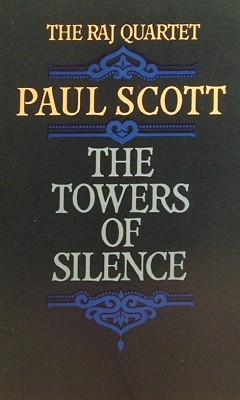
towersThe Towers Of Silence, Paul Scott (1971). This is the third instalment of Scott’s Raj Quartet. I must admit to a little confusion when I started the book. I was pretty sure I’d not read it, but the story seemed very familiar. At least, it sort of did. And when the narrative referred to something I remembered clearly from an earlier book in the quartet, but here it all happened off-stage, I realised that Scott was covering ground previously described but this time from different characters’ viewpoints. So, for example, when Sarah Layton goes off to Calcutta and has her adventures there, The Towers Of Silence remains behind in Pankot and, in the person of Barbie Batchelor, we get to witness Mabel Layton’s death at first hand. Barbie, incidentally, is a superb creation, an ex-Mission teacher who has retired to Pankot and shares Rose Cottage with Mabel as her companion. She’s played in the television series by Peggy Ashcroft, who is the best thing in the programme, and captures Barbie perfectly; although the rest of the series is a little disappointing as it misses so much interiority out that most of the characters comes across as unrepentant racists. The books, however, are built on cleverly-nuanced character studies, so they’re vastly superior to the TV series.

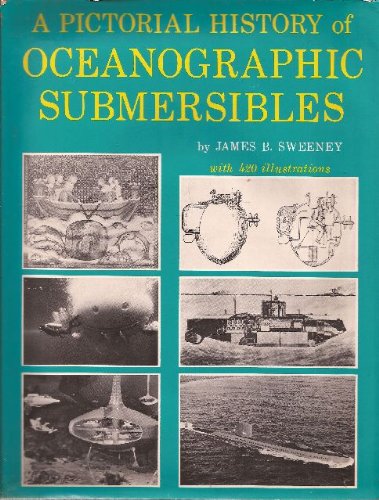
sweeneyA Pictorial History of Oceanographic Submersibles,, James B Sweeney (1970). I picked this up cheap on eBay, and it proved to be ex-library so I got a partial refund. I should have sent it back – while it covers the early history of submarines reasonably well, as soon as it reaches WW1 it’s almost as if the world shrinks to only the US and its concerns. The chapter on WW2 is especially bad – it reads as though only the USA and Japan operated submarines, with only brief mentions of German U-Boots (which are not U-Botes, as the book writes at one point) and British mini-submarines. It’s also deeply racist – the Japanese are referred to as “the little people from the land of the Rising Sun” and dropping an atomic bomb apparently caused Hiroshima to be “blasted into immortality”. The writing throughout is terrible, and while I’ve spotted no blatant inaccuracies there is plenty that is given such an American emphasis it mendaciously implies every single advance in the field was made by that country.


8 Comments

All Those Vanished Engines, Paul Park

I’ve been a fan of Park’s fiction since first reading Coelestis (1993), a copy of which I bought in 1994 in a book shop I used to frequent when I lived in Abu Dhabi. It has been a favourite genre novel ever since. Over the years since, I’ve tracked down copies of his other books – first editions, natch – and read them. So when I learnt he had a new novel due, six years after the fourth and final book of the Princess of Roumania quartet, The Hidden World (2008), well, I was pretty excited. I discovered the book actually comprised three linked novellas, one of which had originally appeared in F&SF in January 2010 under the title ‘Ghost Doing the Orange Dance’, but had then been revised and published by PS Publishing in January 2013 under the same title. I’d read the PS version early in 2014, and even nominated it for a Hugo. There was also a short story, which shared the title of the new novel, that had originally been commissioned to accompany a sound installation by Stephen Vitiello at the Massachusetts Museum of Contemporary Art in September 2011.

all-those-vanished-engines-paul-park-base-art-co

Clearly, All Those Vanished Engines the novel was going to be something of a fix-up. And if Ghosts Doing the Orange Dance was any indication, it was also going to meta-fictional. Fix-ups fell out of favour several decades ago, but they were very popular during science fiction’s first few decades. AE van Vogt’s entire novel output, for example, is arguably comprised of fix-up novels. But as both the market for short genre fiction and genre novels has changed, so fix-ups have become increasingly rare. But All Those Vanished Engines is actually not much like a fix-up novel. Nor is it like another well-known science fiction novel comprised of three linked novellas, Gene Wolfe’s The Fifth Head of Cerberus (1972). Or indeed much like another sf novel of three novellas, Kim Stanley Robinson’s Icehenge (1984). Chiefly because All Those Vanished Engines is not much like a novel as such.

All Those Vanished Engines opens with the line,” Maybe the first part of the story would be called The Bracelet, or else Bracelets would turn out to be the better name”. In point of fact, we already know it is called ‘Bracelets’ – the title is given on the preceding page. The bracelet which supplies the title for Paulina’s story is comprised of “intertwining strands”. Which is a not only a fair description of ‘Bracelets’ the novella, but also the novel as a whole. And the use of the name Paulina is also telling. Not only is it a female version of the author’s name, Paul, but Park used it himself as a pen-name on a Forgotten Realms tie-in novel for Wizards of the Coast, The Rose of Sarifal, as by Paulina Claiborne and published in May 2012. The writing of The Rose of Sarifal also features in All Those Vanished Engines‘ second novella.

Paulina lives in an alternate 1881, and she is writing a story set in 1967 – “Paulina had a habit of slipping away into an invented world over which she might pretend to have control” –  in a form of fractured English, featuring a boy called Matthew. As Paulina’s story progresses, her world and Matthew’s world begin to intertwine, so much so that Paulina’s own life’takes on the form of the sort of story she is imagining for Matthew. An assassin gatecrashes the United Daughters of the Confederacy’s Mardi Gras ball and kills many of those present. Paulina is rescued by her cousin, Colonel Adolphus Claiborne, CSA, who reveals she is the daughter of the Yankee empress, and the assassin, Lizzie, is her clone, and that he plans to use Paulina in an assassination plot against the empress. But Paulina escapes, meets up with Matthew, and the two end up hiding from an invasion of Wellesian Martians… By two-thirds of the way through ‘Bracelets’, the two narratives – Paulina’s real adventures, and her invented ones – have become so entangled, we’re no longer sure if the protagonist is Paulina or Matthew. The world of the story seems to have changed to accommodate Paulina’s inventions; she has lost control of her invented world.

The second novella is titled ‘Three Visits to a Nursing Home’, and it opens with the line: “This is how the second part begins…” There then follows the text of the short story from the MASS MoCA sound installation. After that is an explanation of the origin of the short story, in which Park himself describes how he met Vitiello and offered him “a list of rhetorical devices, from which he chose onomatopoeia and, to a lesser extent, strategic repetition”. (This is clearly a joke – the story is to accompany a sound installation, after all.) At the opening of the exhibit, Park meets a woman who tells him that the subject of his story is still alive, and living in a nursing home. She also reveals that she was a student of Park’s late mother, and likely met Park when he was a teenager. Park goes on to write The Rose of Sarifal for Wizards of the Coast, and to first take, and then teach, creative writing at a local college. In his class is a woman called Traci, who is writing a novel which Park realises is a thinly-disguised version of Traci’s relationship with Park’s mother, which echoes Constance’s relationship mentioned earlier. In Traci’s book, Park himself is called Matthew. Park discusses her novel with her, making suggestions regarding technique that he himself is using in the narrative of All Those Vanished Engines.

The sound installation is real, The Rose of Sarifal is an actual published Forgotten Realms novel, Park does indeed teach writing, albeit science fiction (at Williams College, Williamstown, Massachusetts, according to Wikipedia). Some of the biographical details of Park’s life – a mother who was a published literary professor, a partner whose mother was born in Bucharest, an autistic sister – may also be true, although which is which cannot be determined without further extra-textual knowledge (in a 2000 interview on infinity plus, for example, Park mentions that his mother taught literature). But then the three poles of ‘Three Visits to a Nursing Home’ are entirely extra-textural – the sound installation, The Rose of Sarifal, and Park’s own life. Just as Paulina and Matthew’s lives are intertwined in ‘Bracelets’, so are Paul’s and Matthew’s in this novella – and again, in both narratives, one world is presented as fictional (Paulina’s “invented world”, Traci’s novel), while the other is the first-order fictional narrative of the novel we are reading, which contains sufficient actuality to nail it into place in the real world.

The final novella is ‘Ghosts Doing the Orange Dance’, and the title is a reference to a painting which Park, the narrator, believes represents his grandfather’s encounter with extraterrestrials. The story itself is about Park’s family, his parents and grandparents, and their ancestors (the PS Publishing edition helpfully includes a family tree). It opens with a potted history, and the telling admission that “every memoirist and every historian should begin by reminding their readers that the mere act of writing something down … involves a clear betrayal of the truth”, which echoes the opening to Ursula K Le Guin’s The Left Hand Of Darkness (1969): “I’ll make my report as if I told a story, for I was taught as a child on my homeworld that Truth is a matter of the imagination” (Park’s novel, Coelestis, it is worth noting, covers broadly similar ground, both conceptually and in terms of the physical journey by the two main characters, to The Left Hand Of Darkness).

As Park discusses his family’s history, so he reveals more of his own circumstances – and they do not entirely match those given in ‘Three Visits to a Nursing Home’. In this novella, for example, Park takes a class in writing meta-fiction, his partner is different, his sister is called Katy not Elly, and the novel from Park’s real-world oeuvre he makes mention of is A Princess of Roumania (2005). As the story progresses, it is slowly revealed that this is not the world we know, but a near-future dystopia, which ends with an invasion by the dead in a chilling link back to the first novella of the novel. Park spends much of his time untangling the lives of his ancestors, chiefly to understand the meaning behind the titular painting. But he also spends a lot of time in Second Life, a real-world online virtual world – which, in this novella, forms the overtly fictional world, much as Matthew’s and Traci’s do in the earlier two novellas.

There are so many references to Park’s actual oeuvre in All Those Vanished Engines – not just obvious ones, clearly linked in the text to earlier novels; but also characters named for characters in other of his novels. Then there is Park’s own life, and the mirror images of it which are presented in two of the three novellas. As Dire Straits famously sang, “Two men say they’re Jesus / One of them must be wrong”. Except both Parks in All Those Vanished Engines are plainly not the real Park. They are as much a fiction as the invented worlds, as much a fiction as the presentation of the act of creating those invented worlds.

To describe All Those Vanished Engines as “meta-fiction” feels like labelling any random novel as “a work of fiction”. It misses the extent and – to steal a phrase from Frank Zappa – the “interconnectedness of all things” within the three novellas. However, what makes this novel even more astonishing is that it seems likely it was not originally conceived as a whole. Park has taken elements of his own recent history and knitted them into a work of fiction on the nature of fiction and the act of creating it. The end result is as much about writing genre fiction as it is about the history of the Parks and Claibornes back to 1664. The writing, as you would expect from Park, is lucid, often elegant, and a pleasure to read. All Those Vanished Engines is one of the best genre novels I have read this year, if not for several years. But its very nature means it is unlikely to noticed by the various genre awards (although perhaps the Nebula will shortlist it).

I am myself extremely fond of re-engineering narrative structures in fiction; and of, well, I suppose “pile-driving” is perhaps the best description, the foundations of a story into the real world. I like that everything in a work of genre fiction can be Googled, that the elements used within a story have this extra dimension provided by the real world, a richness that cannot be contained within the pages of a short story, novella or novel. All Those Vanished Engines does both of these, but it also takes it a step further – some of those piles stretch down into Park’s own novels, giving a bedrock of actual published fiction on which the stories in All Those Vanished Engines securely rest. This is a novel which can be reread, and in which a fresh read will always find something new – because as your knowledge of Park in the real world grows, perhaps by reading some of his other novels, so too will that knowledge enrich your reading of All Those Vanished Engines.

And that’s quite a remarkable achievement.


Leave a comment

Structural engineering for fiction

There are many ways to be innovative in fiction writing, but the method which appeals to me the most is in looking at the different ways in which narratives can be structured – not simply in order to tell a story, but also in order to direct how the reader experiences that story. It’s something I was conscious of while writing the Apollo Quartet.

The most obvious structure, and the most common, is the linear narrative, in which events are ordered chronologically from start to finish, and typically seen from a single viewpoint. Then there is the multi-threaded narrative, in which different viewpoints all offer differing views of the events described by the story. There is also the time-slip narrative, in which two or more narratives running in different time contexts together lead to, or explain, the resolution. In most of these stories, the resolution offered to the reader is the one experienced by the protagonist. While in a multi-threaded or multi-viewpoint narrative, the reader might be possessed of more information than the protagonist, and so have a better understanding of the reasons for, or the nature of, the resolution, the end of the story is still immersive inasmuch as it takes place within the story.

structure-axo-q-theatre

While writing the Apollo Quartet, I decided to play around with the concept of narrative structure. I started out with a variation on common narrative structures, but with each instalment moved the focus of narrative understanding further out of the story and closer to the reader – while still maintaining what appeared to be a typical narrative format.

Corkscrew chronology with double twist
Adrift on the Sea of Rains has two narrative threads, one moving forward in time from the first line of the novella, and the second a series of flashbacks which are presented in reverse chronology. Both feature twist endings – but the twist of the reverse chronology narrative is what kickstarts the forward chronology, in effect forming a closed timelike loop of the entire story.

Delayed reaction external resolution
In The Eye With Which The Universe Beholds Itself, there are still two narratives, and they’re time-slipped, one in 1979 and one in 1999, but I wanted the novella to have two resolutions – one experienced by the protagonist, and one that only the reader understood from clues buried in the narrative and ancillary texts. I structured the novella to give what I called “a B-52 effect”, named for the cocktail not the jet bomber. I’d come across the idea of a coda “hidden” behind a glossary in Iain M Banks’s Matter – although I’m told Tolkein did it in The Lord of The Rings – and I really liked the idea of a short section after the end of the story which redefined everything the reader had read. But I decided to take it one level further and not categorically state what it was that redefined the story. I would include clues, scattered throughout the narrative and glossary, and the coda would be the final piece of the puzzle. In other words, the reader figures out the resolution for themselves outside the story.

Narrative action at a distance
And in Then Will The Great Ocean Wash Deep Above, I chose to put more of a burden on the reader. In part, this was a consequence of the stories I was determined to tell. I wanted a narrative featuring the Mercury 13, I wanted a narrative featuring the bathyscaphe Trieste… but how to connect the two? I considered a number of somewhat obvious solutions before having an epiphany one day while making my way to the pub to meet up with friends. I wouldn’t connect them, I’d let the reader find the connection – but I would give hints to that relationship. And the chief element of that relationship is that actions in one narrative world could turn out to have consequences in the other narrative world, despite there being no actual relationship between the worlds – in fact, their only relationship is that they run side-by-side within the pages of Then Will The Great Ocean Wash Deep Above. The connection between the two is not only completely artificial, it’s an artefact of the nature of reading.

Narrative context mismatch
I’m reluctant to discuss the fourth book of the quartet, All That Outer Space Allows, in too much detail, but I will reveal that it’s structured according to what I call “narrative context mismatch”. Like the preceding three books, the narrative or narratives will on the surface appear to be straightforward, either chronologically linear or time-slip, but there is more going on than initially meets the eye – and it’s both a consequence of the act of reading and the artificial nature of story.

Novellas, I’ve found, are perfect vehicles for this sort of structural engineering or experimentation. Short stories are simply too short, and while there’s nothing preventing any of the above being used in one, the word-length may make them too obtuse for the reader as there’s simply not enough room to provide all the necessary clues. Novels, you would think, would make for more fertile ground – and there are indeed novels which do some very interesting things with their narrative structures, I’m thinking especially of Ash: A Secret History by Mary Gentle and Lord Byron’s Novel: The Evening Land by John Crowley. But novels are also a far more commercial format for fiction, and as a result – particularly in genre – they tend to stick to tried and tested narrative structures. The experimentation, if it does exist, typically occurs in the setting or viewpoint.


Leave a comment

The habit of moderation

I have always believed in that old saw: moderation in everything, including moderation. Except when it comes to book-buying. You can never have too many books. You can, however, own more books than you can comfortably read – but, again, there’s nothing actually wrong with that. Sooner or later, you will read those books. It may take a few years, perhaps even a decade or two, but it’s not like you’re never ever going to read them. Because otherwise what would be the point in buying them?

So here are some books I intend to read at some point…

2014-10-19 13.21.20

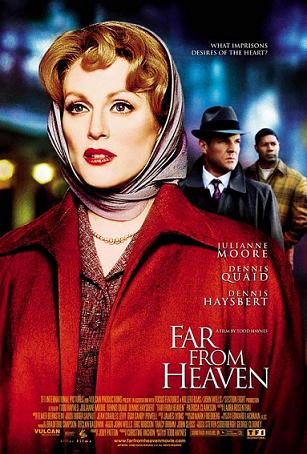
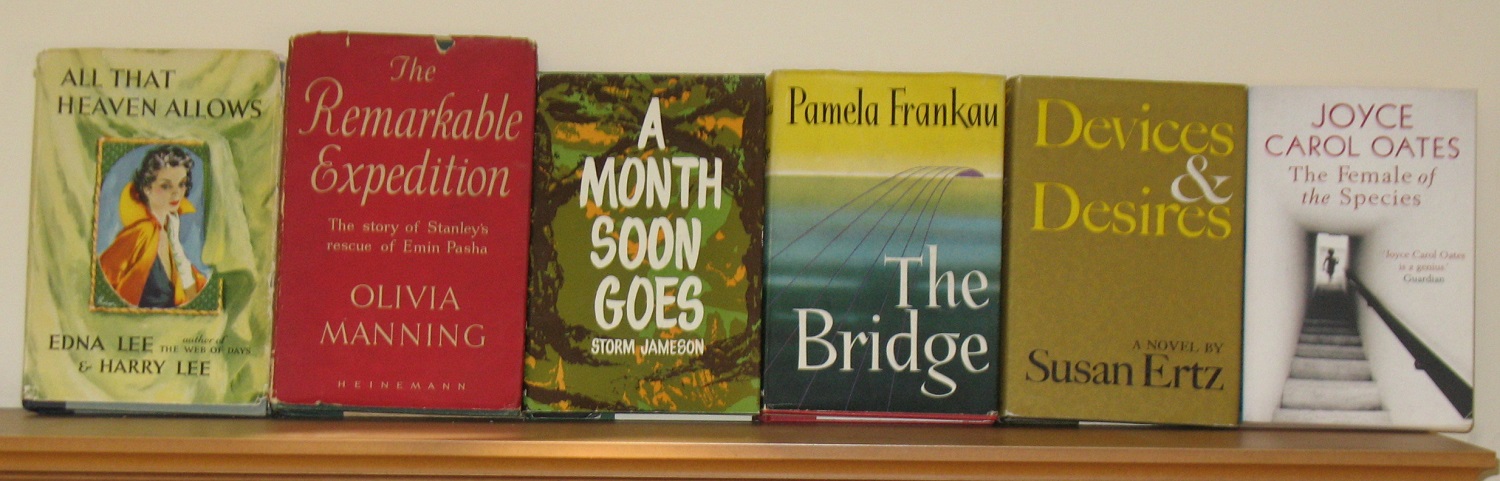
Given my love of the film, it was only natural that I’d want to read the book from which it was adapted, All That Heaven Allows; but it was bloody hard to find a copy. I managed it though. For my next informal reading project, I’m trying books by British women writers of the first half of the twentieth century I’ve not read before and who could arguably be considered “forgotten”. The Remarkable Expedition doesn’t actually qualify on two counts: a) it’s non-fiction, and b) I’m a fan of Manning’s books anyway. A Month Soon Goes, The Bridge and Devices & Desires, however, all certainly qualify. Finally, some more Joyce Carol Oates, a charity shop find, The Female of the Species

2014-10-19 13.23.05

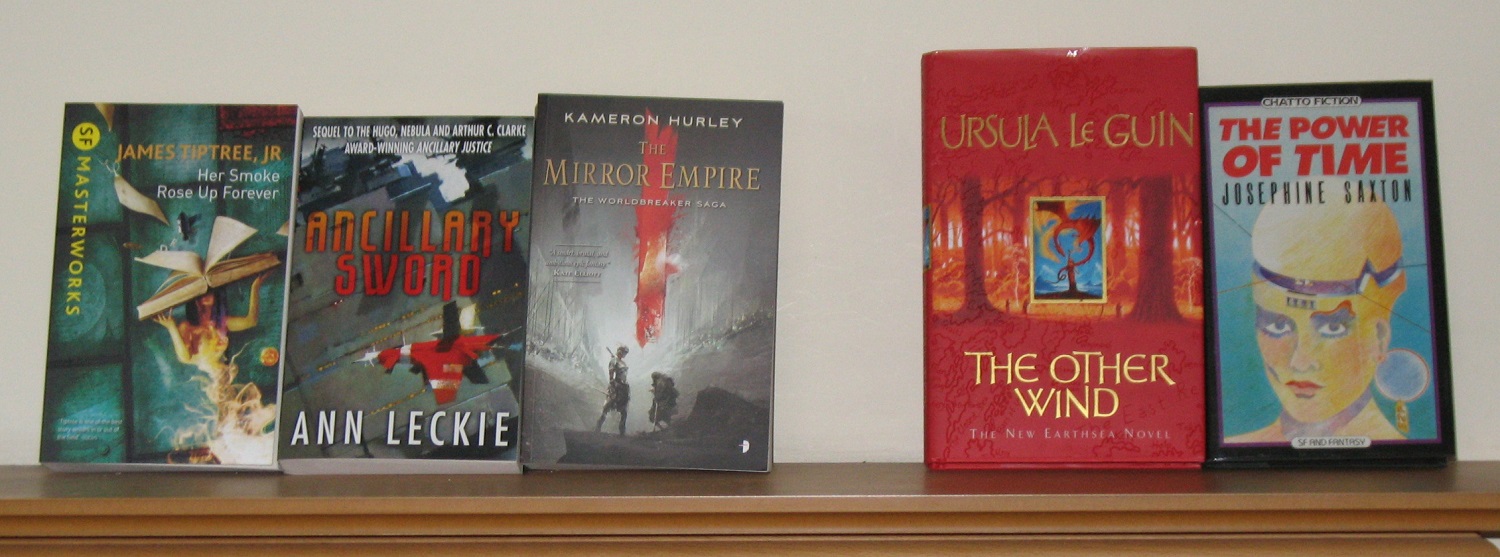
Some genre by female writers: I’ve not been as completist about collecting the new un-numbered SF Masterworks as I was the numbered ones (so I should be grateful, I suppose, that they are un-numbered), but Her Smoke Rose Up Forever was a definite want from the moment it was announced. After last year’s awards massacre by Ancillary Justice, which I famously liked, I couldn’t not read Ancillary Sword. And after liking the Bel Dame Apocrypha, the same is true of The Mirror Empire. While working on Apollo Quartet 4, I made reference to a story by Josephine Saxton… but I didn’t have a copy of it. So I found a (signed) copy on eBay of The Power of Time, which contains the story, ordered the book, it arrived the next day, I read the story… and discovered it was a serendipitous choice for my novella. The Other Wind was a lucky charity shop find.

2014-10-19 13.24.47

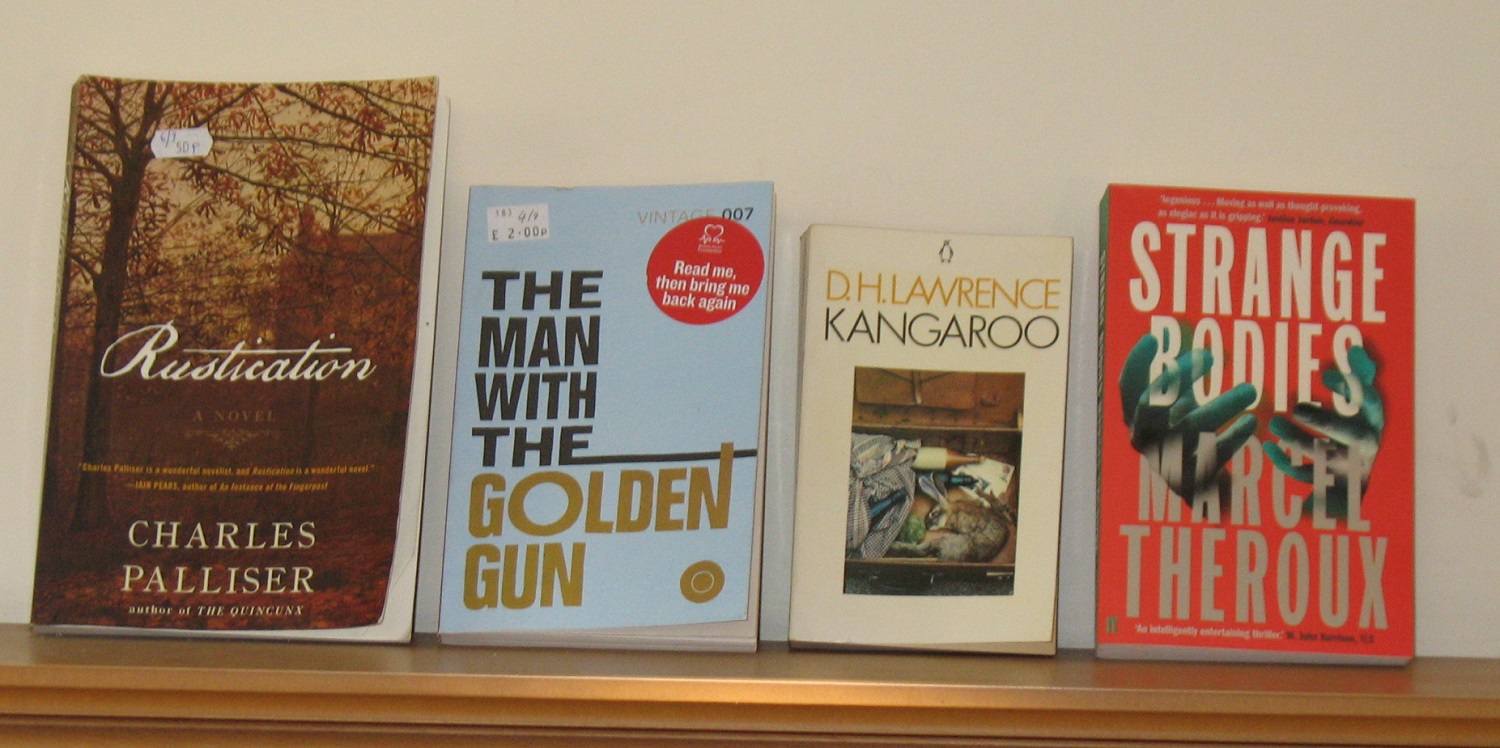
I’m a fan of Palliser’s novels, but I hadn’t known he had a new book out – he’s not exactly prolific, five books in twenty-five years – so Rustication was a very happy charity shop find. I’ve been working my way through the Bond books, hence The Man with the Golden Gun, although I don’t think they’re very good. Kangaroo is another one for the DH Lawrence paperback collection. And Strange Bodies was praised by many last year so I thought it worth a try (despite not being that impressed by Theroux’s also highly-praised Far North).

2014-10-19 13.25.58
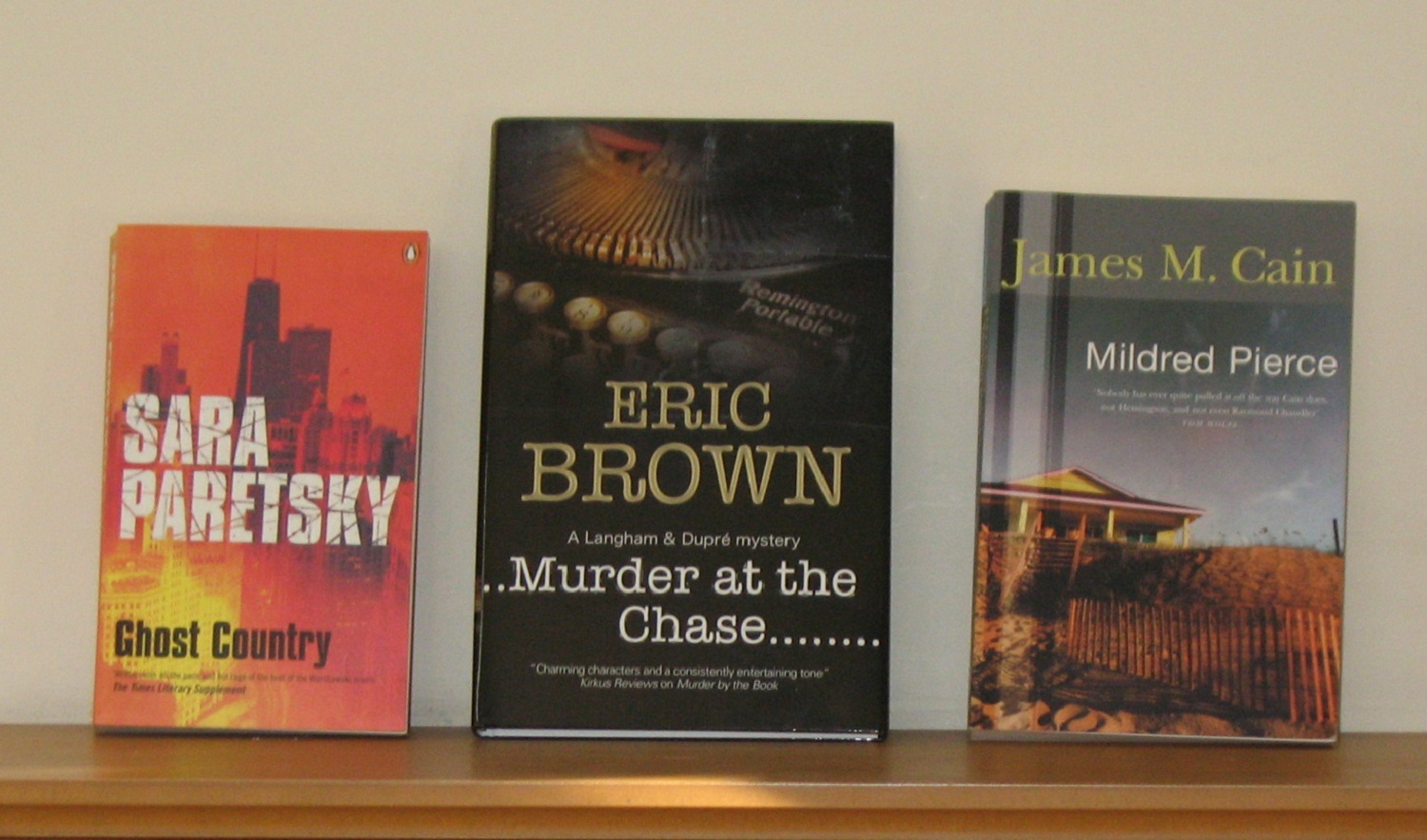
Some crime fiction – actually, I don’t think Ghost Country is crime, although Paretsky is of course best known for her VI Warshawski series of crime novels. Murder at the Chase is the second of Brown’s 1950s-set Langham & Dupree novels. I’ve seen the film and the television mini-series, so I thought it was about time I read the book Mildred Pierce.

2014-10-19 13.26.21

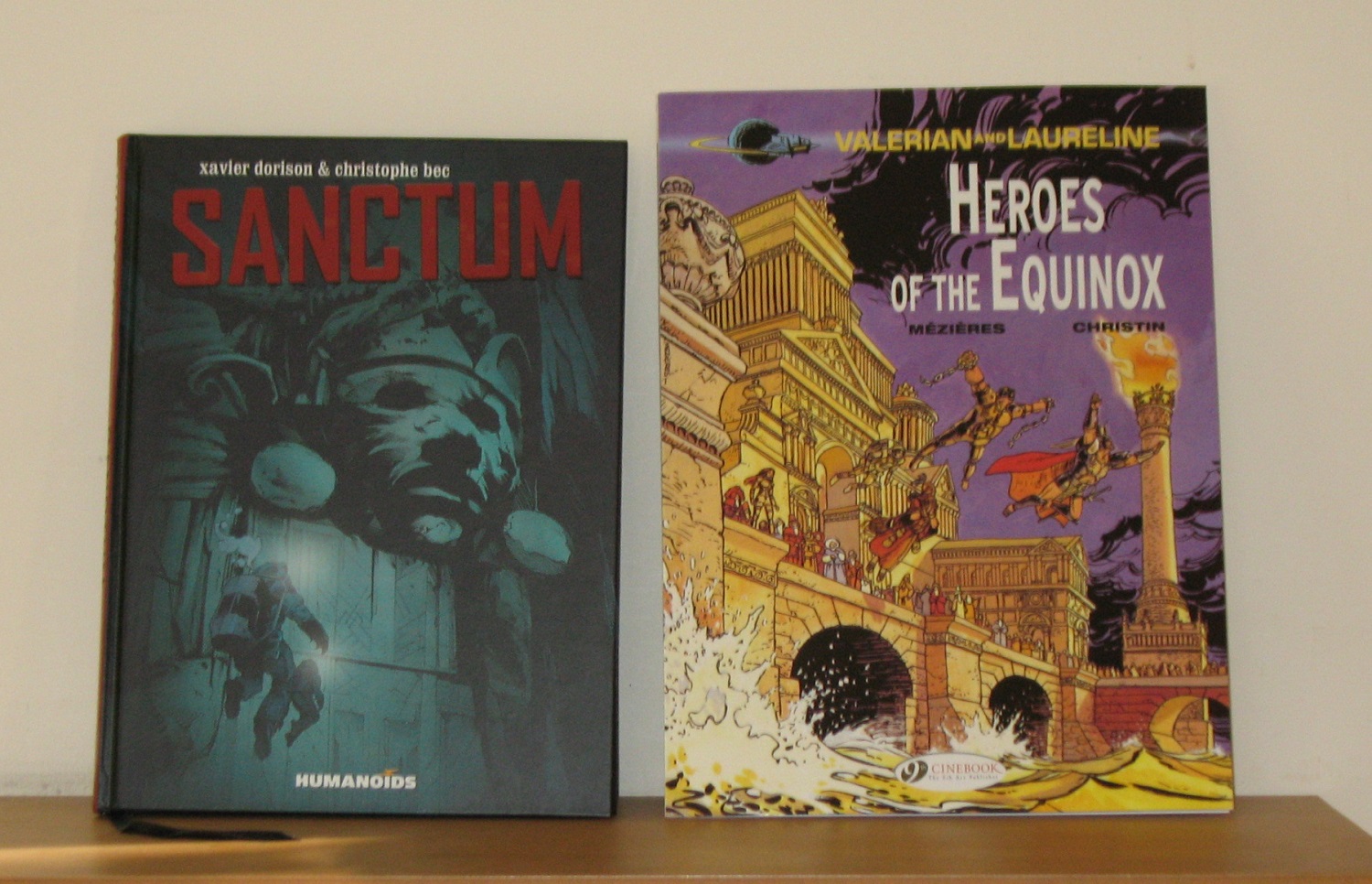
I read the first part of Sanctum a few years ago but never managed to track down English translations of parts 2 and 3. I was going to buy the French omnibus edition at one point, but then spotted this English version on Amazon one day. It has its moments, but I’m not sure it was worth the wait. Valerian and Laureline 8: Heroes of the Equinox is, er, the eighth instalment in a long-running sf bande dessinée, and they’re very good, if somewhat short.


4 Comments

A Month Soon Goes, Storm Jameson

This is is the first book in my informal project to read as many postwar British women writers as I can, particularly ones that appear to have been forgotten. Storm Jameson was prolific and successful, writing around sixty books between 1919 and 1976 – fiction, criticism, biography and history. None of her books appear to be in print now. At least two of her novels, In the Second Year (1936), set in a fascist Britain, and Then We Shall Hear Singing (1942), about a Nazi invasion of an invented country, qualify as science fiction although I’m not aware of them being claimed by the genre. A Month Soon Goes (1962), however, is pure mainstream and, I believe, fairly typical of her oeuvre – though, of course, I will have to read more to say for certain.

storm-jameson-1

Storm Jameson

Sarah Faulkner is a celebrated diseuse – ie, a female artiste who entertains with spoken monologues – famous on both sides of the Atlantic. Her husband, Edward, is around twenty years older than her, so close to seventy when the novel opens. He lives in a ramshackle manor near the village of Callisfont, which is where Angry Young Man playwright Mark Smith is trying to write a follow-up to his successful debut. He chose the village because his grandmother was born there. Mark meets Edward, and is invited up to Callisfont House for dinner the following day. There, he meets Edward’s daughter, Harriet, who has just turned eighteen, Edward’s secretary, Medbourne, and a close friend of the family, the writer Arnold Hudson, who has not had a novel published in eight years. Mark holds all these in contempt – except Harriet, whom he considers little more than a child – but he becomes a frequent visitor to the manor, not just because the food is better than at the village inn but also because he gets on quite well with Edward. Mark’s complaints also sound somewhat familiar:

“Certain things are better. But nothing is changed. There are still nauseatingly rich people and poor people; power is still in a few hands, class is still a stumbling block, education crazily unequal, social equality a myth.” (p 13)

And then Sarah Faulkner turns up.

She has returned home after four years of touring, and it’s made clear she has been an absentee wife and mother for pretty much her entire adult life. She’s also been having an on-and-off affair with Arnold – and many other men. She brings two staff with her, a masseuse and a personal assistant. Sarah is quite a creation: charismatic, gloriously selfish, and completely aware of the power she has over people and unafraid to use it. She immediately begins making promises to Harriet, which she then later blithely goes back on – eventually deciding Harriet should be married off to a neighbour, a bluff and somewhat dim-witted member of the landed gentry in his forties. Harriet, of course, doesn’t want this. It is soon revealed that Sarah’s visit home has been prompted by her finances – she is notoriously bad at keeping the fortune her act earns her, and wants Edward to sell of a piece off his land to a developer. He refuses to do so. Meanwhile, Mark finds her compelling, Arnold comes to the conclusion he has been used, much like every man in Sarah’s life, and Harriet tries to get either her mother or Mark to take her away from Callisfont…

And then Edward dies in his sleep.

amonthsoongoes

A Month Soon Goes is definitely the product of a writer with years, if not decades, of career behind them. The prose is polished to a fine gloss, the characters are drawn sharply, and the setting is equally well mapped out. The book does feel most like, however, a BBC Play for Today from the 1960s and 1970s, where every line of dialogue is a barbed insult or a put-down. Though it is set in 1958 – May and June 1958, to be precise, as the jacket copy states – a lot of the commentary still holds true today. Not just Mark’s complaint, mentioned above, of the corruption of the rich and entitled (the complicity of our political masters with corporation seems to be a twenty-first century development; but then the multinationals are the new aristocratic houses), but also some of Sarah’s comments on the role of women in society. While she recognises her lifestyle would be considerably more acceptable had she been a man, she’s also quite hypocritical and happy to marry Harriet off to a local squire (and only so she no longer has to take responsibility for her daughter). But then Sarah’s selfishness really is quite astonishing – she only gets away with because she’s so charming. Jameson, incidentally, doesn’t have to tell us this, it’s there in the way Sarah talks and behaves.

I wasn’t entirely sure what to expect when I started A Month Soon Goes. Something like Olivia Manning or Elizabeth Taylor, I thought. If this novel is any indication, then yes, Jameson is indeed a similar writer… although perhaps a tad more commercial than them. I certainly plan to read more Jameson – in fact, I’ve already ordered a copy of The Road from the Monument, also published in 1962, from eBay. Well, it was only 99p for a first edition…


5 Comments

Moving pictures, #10

And 2014 continues to be the year of the films and I continue to get my money’s worth out of Amazon film rentals. Seriously, would you find the movies I’ve been watching on Netflix? I think not. Annoyingly, this month I discovered that my “region-free” Blu-ray player isn’t actually region-free – well, not for Blu-ray discs, only for DVDs. And apparently unlocking them is a lot more difficult than it is for DVDs. So it looks like I’ll have to buy myself a new properly region-free Blu-ray player… But on with this instalment of films seen…

Again, films from 1001 Movies You Must See Before You Die are asterisked, although I’ve since found a rival list which actually has more films on it I’ve seen and which I think belong on such a list. And I’ve just checked the list the above links to, which is where I got the list I’m using from in the first place – and the bastards keep on changing it. They’ve added more 2013 films – and so must have dropped others to make room for them. So how exactly are you supposed to see all the films on the list if they keep on changing it? Argh.

Dogville, Lars von Trier (20036, Denmark) Notable chiefly for being the film in which von Trier used black box theatre staging – ie, no scenery, just chalk lines with labels, and only a handful of props. Nicole Kidman plays the girlfriend of a mobster who runs away, seeks sanctuary in the titular small mountain town, where she performs everyday task as payment for sanctuary. But the tasks get more and more onerous, until she’s treated like a slave and then actually assaulted. I enjoyed the film up until the point where the violence started and Kidman was abused. It seemed… unnecessary. Von Trier had already made his point.

nicole-kidman-dogville

Whisky Galore!*, Alexander Mackendrick (1949, UK). This was based on a novel by Compton MacKenzie, who also wrote the screenplay, which was in turn based upon a real incident. In 1941, the SS Politician was wrecked off the coast of the Outer Hebridean island of Erisday, and the islanders looted it of its cargo of whiskey. In the film, the SS Politican becomes the SS Cabinet Minister, and Eriskay becomes Todday. There are a couple of sub-plots, including a romance, but the bulk of the film is concerned with the battle of wits between the islanders and the authorities over the missing whiskey. Mildly amusing. There is apparently a sequel, Rockets Galore! (1957), which sounds much more kind of thing (but at £145 for the DVD, I’ll not be buying it any time soon…).

The Blair Witch Project*, Daniel Myrick & Eduardo Sánchez (1999, USA) I’d managed to avoid seeing this for fifteen years, and would happily have done so for another fifteen… if it hadn’t been on the 1001 Films list and if I hadn’t found a copy for £1 in a charity shop. But at least I can now say I’ve seen it. The found footage concept might well have been fresh and exciting back in 1999, but it’s been used, if not over-used, so much since that you end up treating the film as if it were filmed normally. And in that regard The Blair Witch Project does not score well. It is mostly dull, the scares are driven chiefly by the reaction of the cast rather than the situation they’re in, and the ending falls completely flat. There were apparently nine million sequels, but I shall not be bothering with them.

The Man Who Loved Redheads, Harold French (1955, UK) This popped up on one of those “people who bought this also bought…” things when I was buying a DVD and it was very cheap and looked mildly interesting, so I bunged it on my order… It’s based on a Terrence Rattigan play and is very silly for much of its length, but there’s a surprising and quite interesting twist at the end. A man spends his entire life seeking a lost love – a young woman he met as a teenager – and encounters women who look like her at various points in his life, all played by Moira Shearer. It’s all very terribly terribly – he’s in the Civil Service and a baronet or something – although one of Shearer’s incarnations is a shop girl and it’s played smartly.

manwholovedreadheads03

The Gleaners and I*, Agnès Varda (2000, France), is one of those documentaries where the film-maker slowly inserts herself into the subject being filmed. It begins by studying people who hunt for edible vegetables among those rejected by farmers, such as potatoes that are too small, or too oddly-shaped to sell to their corporate masters… but it soon moves on to film homeless people in and around French cities. And as Varda involves herself with these people, so she begins to sympathise with them and their attitudes. I had not expected to like this, but I thought it really good. I think I’d like to see more films made by Varda.

The Great White Silence*, Herbert G Ponting (1924, UK) Scott took Ponting with him on his ill-fated expedition to the South Pole in 1910 as the expedition’s photographer, and this documentary was put together from the footage Ponting shot with a cinematograph. There is straight footage of Scott and his fellows as they leave New Zealand and sail to Antarctica, set up camp, and explore the surroundings. The footage of Scott’s fatal attempt on the pole itself is done using stand-ins as Ponting remained at the main camp with the rest of the expedition. There is also some quite effective model work. The whole is a fascinating, and quite affecting, record of Scott’s expedition. Apparently, it was not a commercial success at the time and Ponting died a pauper, but it has been subsequently re-evaluated and has taken its place as one of the great documentaries of all time. Recommended.

The-Great-White-Silence-30562_1

Wadjda, Haifaa al-Mansour (2012, Saudi Arabia) Not only is this the first film made in Saudi Arabia to be entered for international competition, but it was also written and directed by a woman, a Saudi national woman. That’s quite an achievement. The story, about a girl who rebels against societal expectations by demanding a bicycle, is perhaps nothing new but it’s handled well, the cast are uniformly good – especially Waad Mohammed in the title role – and it makes some pointed observations about Saudi society (so much so, in fact, I’m a little surprised the Saudi authorities allowed it – they’re not exactly known for their liberal tendencies).

Star Trek Voyager – Season 1 (1995) Having worked my way through all seven seasons of Star Trek: The Next Generation and Star Trek: Deep Space Nine, it was more or less inevitable I’d eventually find myself doing the same for Star Trek: Voyager. Initially, DS9 was considered the best of the franchises, but it seems time has been kinder to Voyager than it has to the other two. While Voyager’s set-up was just a reboot of the original Star Trek series, and its central casting all come out of, er, Central Casting, with their “back-stories” and “character conflicts”… But it actually hangs together quite well, and the format does give the series a lot more freedom in terms of story-of-the-week. But, of course, this is 1990s television drama, so there has to be at least one story arc… And Voyager falls back on the Trek staple of the omniscient aliens who, well, they’re only omniscient as far as the plot dictates, and then they’re not. Still, you don’t watch Trek for rigour, scientific or dramatic. Actually, I’m not sure what you do watch it for…

Women Without Men, Shirin Neshat & Shoja Azari (2009, Iran), is set in Iran but was actually filmed in Morocco, as director Shirin Neshat has been banned from visiting Iran since 1996. It takes place in 1953, during the US-led coup which put the shah back in power – which the Americans engineered because prime minister Mosaddegh has nationalised the Iranian oil industry. The film follows four women during this period, a prostitute, the wife of a general (ie, part of the secular elite), and an unmarried woman  and her religious friend. It’s been likened to Haneke’s The White Ribbon, but I can’t see it myself. Yes, Women Without Men is an excellent film, although a recurring image of the women walking along a road in the open country seems more The Discreet Charm of Bourgeoisie than it does Haneke to me.

women-without-men-route-vers-la-retraite

Suspiria*, Dario Argento (1977, Italy) I am not much of an Argento fan, I prefer Brava – though I’ve only seen a small handful of movies by either director. On the strength of this film, I see little reason to change my mind. It has its moments, and the mise en scène is… interesting, all Dutch angles and saturated colours and ersatz Expressionist set designs. A young woman joins a strange ballet school, but it appears to be haunted and lots of strange events occur, including a rain of maggots while the pupils are readying themselves for bed, a few gruesome deaths, and the frequent appearances of a mysterious heavy-breather. It was a fun film, but I’m a bit baffled as why it should be on the 1001 films list.

Festen*, Thomas Vinterberg (1998, Denmark). This is not a film to watch if you’re feeling misanthropic. A large and affluent Danish film gather at the country hotel they own to celebrate the sixtieth birthday of the patriarch. During the celebratory dinner, one of the sons accuses his father of sexually abusing him as a child, and of abusing his twin sister – who has committed suicide in the hotel shortly before the celebration. The family try to laugh off the son’s accusation, but as the weekend progresses the family begins to fall apart. This was the first film made according to the Dogme 95 rules, so it’s made entirely with hand-held cameras and natural lighting, which gives the picture a somewhat grainy look throughout. An excellent film.

Sweet Sweetback’s Baadasssss Song*, Melvin van Peebles (1971, USA) I may have an incorrect number of s’s in the title of this film, but I’m pretty sure I’ve got the right number of a’s. A young African American, Sweet Sweetback, working in a brothel is “volunteered” to be arrested as a suspect in a murder – they know he’s innocent, but the police need to arrest someone to appease the community, and plan to release Sweet a few days later for “lack of evidence”. But the police also arrest a Black Panther, who the police beat up, but he’s defended by Sweet and the two manage to escape. Sweet goes on the run, heading for Mexico, and en route has several adventures, including a run-in with a gang of Hells Angels. There’s a definite amateur feel to the film, but the use of montage was done extremely well – and not something you saw in films of that period.

Punishment Park, Peter Watkins (1971, USA) Watkins is a documentary maker, and while Punishment Park is both fictional and more than forty years old, it could easily be a documentary of twenty-first century USA. Hippies, draft-dodgers and other political undesirables are taken out into the desert, charged and sentenced at a kangaroo court in a marquee tent, and then given a choice – a full sentence served in a federal prison, or three days in “punishment park”. This later requires them to cross 53 miles of California desert without food or water in three days, while being chased by armed police and National Guard. If they make it, they can go free. Despite, or perhaps because of, it’s faux-documentary presentation, this was a brutal film. A bit too talky in places, and some of the dialogue felt a little too… not staged, but not natural either, but the sort of dialogue where characters explain their thoughts and feelings and attempt to do the same for others – the sort of dialogue that only appears in fiction, in other words. Nonetheless, an excellent film, and was that really ought to be on the 1001 films list.

punishmentpark

Man of Marble*, Andrzej Wajda (1976, Poland) I saw the sequel to this, Man of Iron, before I was aware of this film. But when Second Run – who I heartily recommend, they have released some amazing DVDs – released Man of Marble, I immediately bought a copy. I like Polish cinema, some of my favourite films are from Poland, and a number of directors I greatly admire are Polish… but Wajda was one I’d mostly missed out, for some unknown reason. I’m now rectifying that. The title of this film refers to a statue of a worker who became a national hero after breaking a record for laying the most bricks in a working day during the building of a new socialist town. A film student is making a documentary about him for her thesis two decades later, but what she discovers – that it was all created and managed as propaganda; and what prompted the hero’s later fall from grace – means it becomes increasingly difficult for her to make her film. Man of Marble follows both the film student and the brick-layer, swapping effortlessly between the two decades. Like Man of Iron, it felt like a television series edited into a single long episode, but with high production values; but that worked in its favour. I really liked this film. And I can’t disagree with its presence on the 1001 Films list.


Leave a comment

Serendipity strikes again

Sometimes, when you’re working on a piece of fiction, and you’re wondering perhaps if this marvellous plan you have in your head and you’re trying to get down is a) achievable and b) not going to result in ridicule from all those who will read it… Sometimes, when you’re in that space, an artistic decision turns out to be just so right, you can’t help but feel it really is going to work after all. This has happened for all of the Apollo Quartet… and today I had my moment of serendipity for the fourth book, All That Outer Space Allows.

The protagonist of the story – it will be a short novel rather than a novella, around 50,000 to 60,000 words – is a science fiction writer, and she is married to a test pilot who is selected by NASA for the Apollo programme. For one scene, I needed the names of some women sf writers who had had stories published in 1965. One of the names I picked was Josephine Saxton – her debut, ‘The Wall’, appeared in the November 1965 issue of Science Fantasy. I wanted my protagonist to say something about the story after reading it, but I didn’t have a copy. Fortunately, it was collected in The Power of Time and I found a copy of the book on eBay. So I bought it…

sfnov1965

The collection arrived the following day, I read ‘The Wall’… and discovered its central metaphor fitted in perfectly with the general shape of All That Outer Space Allows.

I love it when that happens.

On the other hand… I remember sitting in the Bijoux Bar in the Raddison Edwardian Hotel, Heathrow, the day after the launch of Adrift on the Sea of Rains, and describing to Maureen Kincaid Speller the plot of All That Outer Space Allows. Yes, even back in April 2012, I knew what it was about and what the title would be. But now I’m about a quarter of the way into writing it, and it’s shaping up somewhat differently to that original plan. For a start, it’s proving to more about science fiction, and the history of science fiction, than I had intended. It’s also going to be more of a work of imagination than the preceding three books, chiefly because I can find no direct documentation I can use to help me evoke the time and place. For example, I can tell you the average temperature on 1 April 1966 in Lancaster, California, was 66.8°F, but I’ve found only a handful of photos online of the city taken during that year. And, of course, astronauts wives are not as well documented as the astronauts themselves. I’m having to do my research by reading between the lines…

But if it was easy, I wouldn’t do it. Would I?


1 Comment

Moving pictures, #9

Yet more moving pictures watched by Yours Truly. The plan to watch those 1001 films before I die continues apace, although perhaps if the title of the list is to be believed I should slow down a bit… Nah. Once I’m done, I’ll just set about making a list of my own, or find another list – 1001 East European Films To See Before You Die, or something… (Incidentally, I’ve marked films from the 1001 films list with an asterisk.)

Silk Stockings, Rouben Mamoulian (1957, USA) Another Fred Astaire / Cyd Charisse musical, with a plot taken from an earlier film starring Greta Garbo, Ninotchka (1939) – yes, the “Garbo laughs!” film – about a Soviet envoy sent to Paris to bring back three missing attachés, only to be seduced by the decadent West herself – not its political freedoms, I hasten to add, but its lingerie. It’s all very silly, Charisse’s accent is not even remotely convincing, and most of the songs are forgettable. The three attachés are mildly amusing – especially Peter Lorre – but then they are played as clowns. Even as a Charisse/Astaire vehicle, this film fails on many levels. It’s as fluffy as candy floss and that’s what it’ll turn your brain into when you watch it.

Orphée*, Jean Cocteau (1950, France) Cocteau’s re-working of the Orpheus myth works amazingly well, although it starts off somewhat dubiously, with rive gauche types in the Café des Poètes being all beatnik and full of themselves. But once the viewpoint settles on Orphée and follows him, with the princess, to the ruined chateau, and then the following morning back to his home and wife, Eurydice, the film starts to pick up… and pretty soon it turns fascinating. Some of Cocteau’s optical tricks are a bit feeble, even for 1950, but they’re effective all the same. I’d like to watch the other two films in the trilogy now, please.

orphee

Starship Troopers: Invasion, Shinji Aramaki (2012, Japan) I still think Verhoeven’s film was a superb treatment of Heinlein’s novel, and while the second Starship Troopers film was dull, the third at least made an effort at satire – it was, admittedly, cheesy as hell, and pretty ham-fisted, but in a good way. However, most people it seems only care about power armour and killing bugs, and think life is like the Vietnam War which was of course cool. They are stupid people, and this is a film made for them. It’s an all-CGI follow-on that uses the same characters and production design as Verhoeven’s masterpiece but has all the subtlety and intelligence of a FPS. It even includes a gratuitous female nude scene. In a CGI film. This is Starship Troopers for spotty oicks who really need to get out of their basements every once in a while.

Meet Me In St Louis*, Vincente Minnelli (1944, USA) Given that this film is set in St Louis, and all the characters are resident in the city, you have to wonder about the title. Teenager Judy Garland’s family is set to move to New York, but she fancies the boy next-door… so they sing a bit, the other kids get into a few scrapes, and eventually papa sees the errors of his ways and they all stay in St Louis. Yawn.

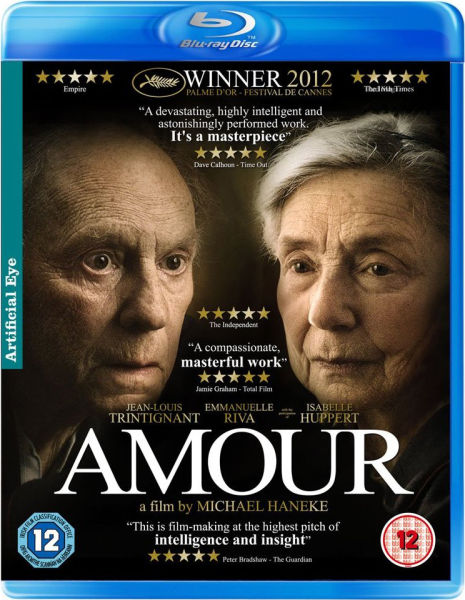
Funny Games, Michael Haneke (1997, Austria) I’ve had this for a while, and had tried watching it last year but had given up halfway through. Not because it was bad, but because it was too uncomfortable. I finally got around to giving it another go and managed to make it all the way through to the end – and it was still really uncomfortable. Mostly it’s the motive-less violence. The two young men who invade the family home are creepy, and their smug condescension only makes their violence even more unsettling. On the other hand, the moments when the film breaks the fourth wall are genius – although I remain ambivalent about the remote control rewind bit, as it seems a bit too much. Finally, if you’ve not watched any Haneke, why not?

but-you-want-a-plausible-ending

47 Ronin, Carl Rinsch (2013, USA) Keanu Reeves in a CGI-heavy treatment of a story that’s so popular in Japan it is its own genre, Chūshingura. Reeves plays a half-Japanese, half-English man, who is treated like a lowly servant, but secretly happens to be a master swordsman. Or something. Apparently the film lost $152 million, making it second only to The 13th Warrior as the most expensive box office bomb ever. That takes real talent with such a well-known story, but I suspect Reeves’ presence helped.

Cat People*, Jacques Tourneur (1942, USA) I have no idea how this film ever got made – I mean, with an elevator pitch that goes “a woman thinks she’s descended from a race of people who turn into cats when sexually aroused”, it’s hard to imagine any producer, even back in 1942, greenlighting the movie. But then things were different back then – Cat People was written and produced by Val Lewton, who ran RKO’s horror unit, and he was given free rein providing the films did not exceed $150,000 each to make, and didn’t run longer than 75 minutes. Lewton’s supervisors, however, provided the films’ titles. I can’t actually remember much of the plot of the movie, although it’s considered a classic of its type.

Cave Of Forgotten Dreams*, Werner Herzog (2010, Canada/UK) Herzog’s documentaries are as odd as his fictional movies, but he has a real talent for picking fascinating topics. And so he does here: Chauvet Cave in France, site of the oldest cave-paintings so far discovered, some of them dating back 32,000 years. Admittedly, the film was doubly fascinating as I’d just finished reading Kim Stanley Robinson’s Shaman, which was itself inspired by the paintings in Chauvet Cave. And now that I’ve seen it, I want to get the Blu-Ray version.

The Colour of Pomegranates, Sergei Parajanov (1968, USSR) This was a rewatch, and while the film is an astonishing spectacle, I still have no idea what it’s about. I’m also surprised it’s not on the list of 1001 films. Nominally about the life of eighteenth-century Armenian poet Sayat Nova, the film comprises a series of tableaux intended to represent episodes from his life (although Sayat Nova is actually played by a woman, Sofiko Chiaureli, who played a further five parts in the film). The Colour of Pomegranates is impossible to describe, you really have to watch it. After watching it for the first time, I bought the other three films by Parajanov available on DVD in the UK – Shadows Of Forgotten Ancestors, Ashik Kerib and The Legend of the Surami Fortress – but he made several more and they really ought to be made available too.

Pomegranates_snapshot

Nashville*, Robert Altman (1975, USA) I’ve never much of an Altman fan, perhaps because I came to cinema after the elements which made his films stand out had become commonplace, such as over-lapping dialogue, semi-improvisation and multiple narratives. The film follows the lives of various musicians in the titular town, most of which have somewhat clichéd story-arcs. Apparently, the actors all wrote their own songs, which probably explains why they’re so bloody terrible. I mean, I’m not a fan of country and western, but the music throughout Nashville is really bad. I’m puzzled why this film should make the 1001 films list but The Colour of Pomegranates doesn’t – in fact, Nashville is one of six Altman films on the list, so I guess the list-maker was a fan… although they don’t appear to be that much of a cineaste…


12 Comments

Post-war women writers of the twentieth century

One type of fiction I enjoy reading as much as science fiction is British post-war literary fiction, but most of the authors of this type I know are male – Lawrence Durrell, Paul Scott, Malcolm Lowry, Angus Wilson, Kingsley Amis, etc. The only two women writers which fit my somewhat arbitrary definition of “post-war” – ie, started sometime in the 1930s or 1940s, active until the 1950s or 1960s – whose books I keep an eye open for are Olivia Manning and Elizabeth Taylor. (Although there are a few women writers who started writing later that I’ve read, such as Muriel Spark, Iris Murdoch and Bernice Rubens.)

Recently I decided it was time to remedy my ignorance of women writers of this period and, with the help of a few people on Facebook and Twitter, I put together a list of seventeen female authors who had books published between 1925 and 1969 (and one or two earlier than that). Two of the authors I’d heard of before – Stella Gibbons’ Cold Comfort Farm is a well-known novel, and I’ve seen the film adaptation; and I have the Women’s Press paperback of Naomi Mitchison’s Memoirs of a Spacewoman (but I was astonished while researching this list to learn how many books she’d had published). The remaining names were completely unknown to me. And, I hasten to add, my list is undoubtedly incomplete, even given that I excluded some writers because they weren’t published after WWII, or because they published exclusively in genre, either science fiction, fantasy or crime.

The plan is to read something by each of these writers – it’s unfair to describe them as “forgotten”, as several still have books in print, either as Penguin Modern Classics, Vintage Classics, Virago Classics, or even by small presses such as Persephone Books. A few, however, will require some patient hunting on eBay and ABEBooks. If I like what I read, I may well consider those writers alongside Manning and Taylor as ones whose oeuvres I plan to work my way through.

Elizabeth Bowen (1899 – 1973)
Born in Ireland, but married an Englishman – although the marriage was reportedly never consummated (but she did have numerous affairs). Her first book, The Hotel, was published in 1927, and her last, Eva Trout, in 1968. She wrote ten novels, a children’s book, and twelve short story collections. Many of her books are still available as Penguin or Vintage Classics. Eva Trout was shortlisted for the 1970 Booker Prize, but lost out to Bernice Rubens’ The Elected Member.

Lettice Cooper (1897 – 1994)
Grew up in Leeds, where she briefly worked for her family’s engineering firm, but she spent most of her adult life in London. I’m not entirely sure how many books she wrote – Wikipedia only gives a “Selected Works” listing a dozen books, beginning with her first, The Lighted Room (1925). She never married, was the book reviewer for the Yorkshire Post between 1947 and 1957, and was awarded an OBE in 1978 for her work as leader of the campaign to secure Public Lending Rights.

O Douglas (1877 – 1948)
The pen-name of a Scottish novelist, Anna Masterton Buchan, the younger sister of author John Buchan. Her first novel, Olivia in India was published in 1912, and her last, The House that is Our Own in 1940. She also wrote a dozen other novels, a memoir of her brother, and an autobiography. Her novels were mostly set between the wars in small Scottish towns and villages.

the-day-of-small-things-o-douglas-2

Susan Ertz (1894 – 1985)
Born in the UK to American parents, and spent much of her life shuttling between the two countries. She wrote twenty novels and two short story collections, beginning in 1923 with Madame Claire. Her last book was The Philosopher’s Daughter in 1976. Her novels are allegedly “sentimental tales of genteel life in the country” (according to Wikipedia). One, In The Cool of the Day (1960), was made into a film, starring Jane Fonda, Peter Finch and Angela Lansbury.

Pamela Frankau (1908 – 1967)
Born in London, the daughter of novelist Gilbert Frankau, she was extremely prolific, writing thirty-seven books between 1927 and 1968 (the last was published posthumously). Her novel, The Bridge (1957), which I’ve bought, has the following on the cover-flap: “The bridge spans the distance between this world and the next. A writer called David Nielson walks across the bridge, after the moment of his death. On the way, he meets his past selves, from the child he was, to the man who died in middle-age. He re-lives with each of them, a high moment in his life, a moment of adventure, sin and tragedy, unresolved then, awaiting his judgment now.”

Frankau, Pamela - A Wreath for the Enemy old paperback cover

Stella Gibbons (1902 – 1989)
Best-known for her first novel, Cold Comfort Farm (1932), she wrote a further twenty-three novels, three collections of short stories, a children’s book and four poetry collections. Her last novel, The Woods in Winter, was published in 1970.

Storm Jameson (1891 – 1986)
Born in Yorkshire, she moved to London and lived there for the rest of her life. She was married to the writer Guy Chapman, and wrote two sf novels: In the Second Year (1936), set in a fascist Britain, and Then We Shall Hear Singing (1942), about a Nazi invasion of an invented country (I’m not aware of these books being claimed by science fiction; perhaps they should be). She also wrote a couple of books under pseudonyms – two as James Hill and one as William Lamb. I have A Month Soon Goes (1962), which is “a light comedy with a chorus … Sarah Faulkner, celebrated diseuse, who has come home to rest after four years of touring in Europe and America…”

Rosamond Lehmann (1901 – 1990)
The daughter of the man who founded Granta magazine, her first novel, Dusty Answer (1927), apparently caused a bit of a stir with its frank depictions of schoolgirl sexuality. Two of her novels were made into movies, The Echoing Grove (1953) and The Weather In The Streets (1936). The latter novel sounds especially interesting – according to Wikipedia: “Stylistically, the novel uses techniques and forms that were pioneered by modernist writers such as Virginia Woolf and James Joyce, with a fragmented narrative style building up a complex interiority that helps us to explore subjects that were relatively taboo during the 1930s such as female sexuality”.

Naomi Mitchison (1897 – 1999)
Born in Edinburgh, and originally a scientist like her elder brother JBS Haldane, but with the outbreak of WWI she turned to nursing. She wrote over 90 books, and was made a life peer in 1964 with her husband, Labour MP Gilbert Richard Mitchison. Her novel Memoirs of a Spacewoman (1962) was in the Women’s Press sf series, and her The Corn King and Spring Queen (1931) is seen by many as the best historical novel of the twentieth century.

E Arnot Robertson (1903 – 1961)
The pen-name of Eileen Arbuthnot Turner (née Robertson). A journalist and film critic, she wrote eleven novels, beginning with Cullum in 1928 and ending with The Strangers on My Roof, published posthumously in 1964. She was known as a popular “middlebrow” novelist, and one of her early novels was adapted into a movie by Cecil D BeMille.

GB Stern (1890 – 1973)
Gladys Bronwyn Stern wrote around forty novels, several books of literary criticism, half a dozen plays and ten autobiographies. Like many of the women in this list, she lived in London for much of her life. The National Portrait Gallery holds four portraits of her, and her novel The Ugly Dachshund (1938) was made into a film of the same name by Disney in 1966.

Jan Struther (1901 – 1953)
The pen-name of Joyce Anstruther, best-known for her character Mrs Miniver, who first appeared in a series of columns in The Times in 1937, were collected into book form in 1939, and made into an Oscar-winning film starring Greer Garson and Walter Pidgeon in 1942. She also wrote a number of hymns. In the 1940s, Struther moved to the US, where she remained until her death.

MrsMiniver

Hilda Vaughan (1892 – 1985)
A Welsh writer who began writing in 1925 with The Battle to the Weak and whose last novel was The Candle and the Light in 1954. She was married to the writer Charles Langbridge Morgan. Due to ill-health, she did not write anything for the last two decades of her life, although she did try to get her earlier novels re-issued – unsuccessfully. Many of her books are now back in print as she is considered a prominent writer of Welsh literature in English.

Rebecca West (1892 – 1983)
Born Cicely Isabel Fairfield, and described by Wikipedia as “widely considered to be among the important public intellectuals of the 20th century”, she wrote a dozen novels between 1918 and 2002 (her last two books were published posthumously). In 1947, Time described her as “indisputably the world’s number one woman writer”. She also wrote a lot of non-fiction, and was an active feminist and liberal. She was made a CBE in 1949 and then a dame in 1959 for contributions to British literature.

Dorothy Whipple (1893 – 1966)
A Lancashire-born and -based writer of some eighteen books and described by JB Priestley as the “Jane Austen of the 20th Century”. She was very popular in the 1930s, and two of her novels were made into films. Five of her short stories were recently broadcast on Radio 4 in The Afternoon Reading.

Every Good Deed

Antonia White (1899 – 1980)
Born Eirine Botting, she wrote a dozen books. She seems to have had a somewhat tempestuous personal life, having been married three times by the time she reached thirty, and spending a year in a public asylum. She was expelled from school at age fifteen for writing a novel, which she planned to give to her father, and which apparently featured characters indulging in bad behaviour. She did not write again until after her father’s death in 1924.

EH Young (1880 – 1949)
Emily Hilda Young wrote eleven novels between 1910 and 1947, and a pair of children’s books. In 1980, the BBC broadcast a television adaptation of some of her novels, chiefly Miss Mole (1930), under the title Hannah. Originally from Northumberland, she moved to London after the death of her husband at the Third Battle of Ypres, and moved in with her lover and his wife. She was a best-selling novelist in the 1920s and 1930s.

This will be, I think, a long-running project. I’ve already bought a couple of books on eBay – first editions, too, because first edition. And they proved cheaper than brand-new paperback editions from Amazon. I’ll also be keeping an eye open in charity shops. I’ll initially try one book by each writer, and see how that goes.


2 Comments

The writer writing writer writings

I fell in love with Malcolm Lowry’s fiction after reading the novella ‘Through the Panama’ in his collection Hear Us O Lord from Heaven Thy Dwelling Place (1961). While I’d been aware of his Under the Volcano (1947), a novel generally acknowledged to be a classic of twentieth century English-language literature, number 11 in the Modern Library 100 Best Novels in fact (ignore the readers’ list: only blatant ballot-stuffing or rank stupidity could put four books by Ayn Rand and three by L Ron Hubbard in the top ten), I had never actually read anything by him. But my father had three of his books – the aforementioned pair and Lowry’s debut, Ultramarine (1933); the two novels are in fact the only books Lowry saw published during his lifetime – and I took them for myself as I fancied giving them a try…

And now I have everything he wrote – a lot of which was published posthumously – some of it even in first edition (but not Under the Volcano, since first editions of it cost around £800).

UnderTheVolcano

But. ‘Through the Panama’, which first appeared in Paris Review in Spring 1960 – it’s unlikely Malcolm Lowry, who died in 1957, submitted it himself; it was more probably his wife, Margerie Bonner Lowry – features Malcolm Lowry’s fictional alter-ego Sigbjørn Wilderness, and is a complex mix of fiction, autobiography and meta-fiction. It’s an astonishing piece of work but, as I soon discovered when I read Ultramarine, Under the Volcano and the posthumous Dark as the Grave Wherein My Friend is Laid (1968), it’s actually more like a concentrated form of Malcolm Lowry’s approach to writing. Ultramarine was based on his experiences aboard a tramp freighter, aboard which he spent five months at age eighteen before starting at Cambridge University. Some of his experiences which appeared in Ultramarine also make an appearance – off-stage – in Under the Volcano, although reading the prior book is by no means a requirement for reading Under the Volcano.

But it’s in Dark as the Grave Wherein My Friend is Laid where really interesting things start to happen… You’ll have to bear with me for a bit as this is somewhat complicated… Malcolm Lowry started work on Under the Volcano while staying in Mexico in 1936, and finished it two years later. He left Mexico for Los Angeles, where he met his second wife, Margerie; and then spent the next eight years editing and rewriting the novel. It’s set in the Mexican town of Quauhnahuac, and covers the events of single day in the life of the Consul, Geoffrey Firmin, an alcoholic, whose divorced wife has just returned to him. In 1945, Malcolm and Margerie Lowry returned to Mexico (a return for him, anyway), and settled in the town of Cuernavaca. During this time, Under the Volcano was under consideration with a British publisher, and Malcolm was worried it might be seen as too similar to Charles Jackson’s 1944 novel, The Lost Weekend, the film adaptation of which, starring Ray Milland and Jane Wyman, and directed Billy Wilder, was proving a hit in the cinemas as Malcolm and Margerie travelled south from their home in Canada. The trip to Mexico proved successful both personally and professional – although Malcolm’s drinking did reach similar levels to those of his earlier visit to Mexico and those attributed to the Consul in Under the Volcano… However, while in Cuernavaca, Malcolm heard back from Jonathan Cape, who asked for substantial changes to be made to Under the Volcano before they would publish it… but Malcolm successfully defended his novel with a long and detailed analysis of it. Malcolm also took copious notes throughout the Mexico trip and, once back in Canada, he realised these were effectively a novel. So he set about turning them into one, and he worked on it on-and-off, until his death in 1957. The book was eventually edited by Margerie and published in 1968 as Dark as the Grave Wherein My Friend is Laid.

darkasthegrave

In Dark as the Grave Wherein My Friend is Laid, Sigbjørn Wilderness and his wife Primrose have returned to Mexico eight years after Sigbjørn left. He is awaiting news from a British publisher about his novel, The Valley of the Shadow of Death (which was actually the original title for Under the Volcano), and is worried that it might be rejected due to similarities to the novel and film Drunkard’s Rigadoon. The couple travel from Mexico City to Cuernavaca, which Sigbjørn now discovers has chosen to publicise that its name in Nahuatl is Cuauhnahuac, a fact he’d eight years previously taken great pains to uncover and had thought would “disguise” the setting of his novel. While in Cuernavaca, Sigbjørn explains the town’s relationship to the setting of The Valley of the Shadow of Death to his wife – she is familiar with the story as she typed up the manuscript – and begins drinking heavily, much like Geoffrey Firmin in Under the Volcano.

So what we have is Malcolm Lowry writing a novel in which he appears as Sigbjørn Wilderness, who is the author of a book Malcolm Lowry himself wrote, which is set in the Mexican town which is the setting of both Under the Volcano and Sigbjørn’s The Valley of the Shadow of Death, and this novel Malcolm Lowry has written is based upon Malcolm Lowry’s own return visit to the town where he wrote, and in which he set, his most famous work, Under the Volcano. Sigbjørn and Primrose also visit some of the nearby towns and villages, such as Oaxaca, Tlaxcala and Yautepec, and each place is seen in light of Sigbjørn’s previous time in Mexico and his fictionalisation of it in The Valley of the Shadow of Death. The same is also true of the people they meet, and their relationship to the characters in The Valley of the Shadow of Death. Some two-thirds of the way into Dark as the Grave Wherein My Friend is Laid, Sigbjørn hears back form his publishers – they want him to make substantial changes. Primrose persuades him to stick to his guns and defend his novel, which he does.

“Your book is regarded here as having potential importance and integrity.” His heart leaped, he almost shouted out to Primrose, who was as excited as he and waiting for the verdict in the bedroom, but – at this point, another letter fell out. It was the reader’s report, and he seized upon it. “The author has overrreached himself. This book will naturally call to mind the recently successful novel and film Drunkard’s Rigadoon…” (p179)

E044_gabrial13_jan_malcolm

Malcolm and Margerie Lowrie at their Calle Humboldt villa

Structurally, Dark as the Grave Wherein My Friend is Laid is not so adventurous – it’s a linear narrative, beginning as Sigbjørn and Primrose fly south across the United States, and ending with Sigbjørn finally laying to rest the ghost of The Valley of the Shadow of Death, or perhaps of its inspirations and writing, which has haunted him throughout this visit to Mexico. But it’s the melding of real-life and fiction which I find so fascinating about the book. Under the Volcano was at least, on the surface, a straightforward act of literary creativity. While its settings and cast may have been inspired by Malcolm Lowry’s own time in Mexico during its writing from 1936 to 1938, it was still first and foremost a novel. (Which is not to say that it’s not partly autobiographical, as Malcolm Lowry had certainly done that before in Ultramarine.) But in Dark as the Grave Wherein My Friend is Laid Malcolm Lowry has fictionalised the autobiographical elements of his fiction, folding what was real in the invented back into an invented perspective of the real. And that I find a very interesting thing to do. It allows for a whole host of meta-fictional games to be played within the text – and Malcolm Lowry plays most of them: not just Sigbjørn commenting on The Valley of the Shadow of Death, which is effectively Malcolm Lowry himself commenting on Under the Volcano, but also Malcolm Lowry as author commenting on Dark as the Grave Wherein My Friend is Laid and on Sigbjørn Wilderness. Dark as the Grave Wherein My Friend is Laid can be enjoyed as a work of fiction without having read Under the Volcano, but it’s plain that reading Malcolm Lowry’s magnum opus first deeply enriches the Dark as the Grave Wherein My Friend is Laid reading experience.

Malcolm Lowry’s reputation waned after the publication of Under the Volcano, chiefly because he had nothing else published in the years following (and Under the Volcano had taken him nine years and two months to write). He became known as an “underground” writer, one admired only by the cognoscenti. After his death, Margerie Lowry kept his literary legacy alive, and saw to it that works he had never quite actually finished were edited and published… such as Dark as the Grave Wherein My Friend is Laid. There’s no doubt in my mind that he was one of the greatest English-language writers of the twentieth century.