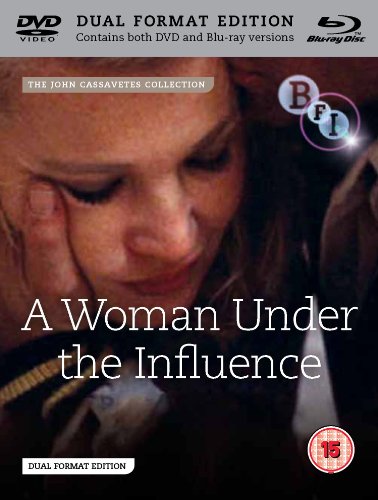
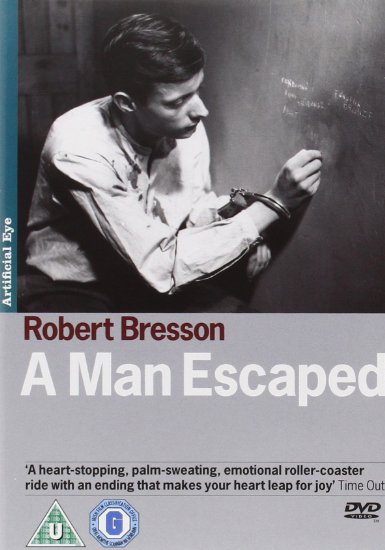
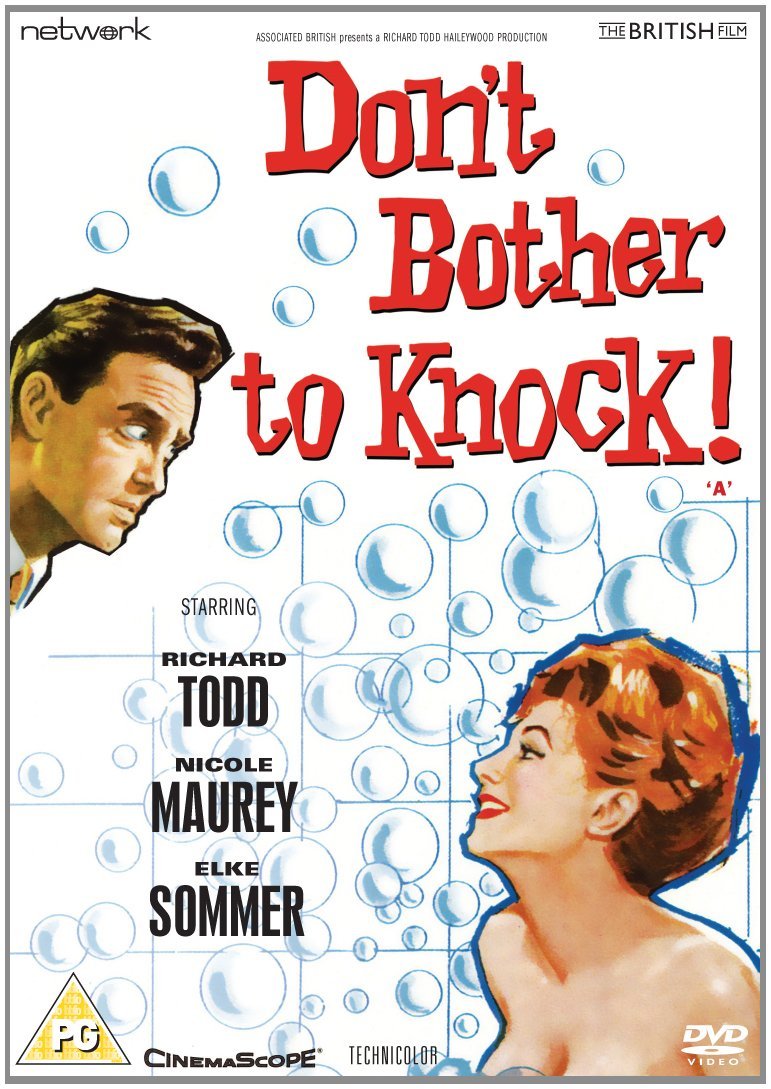
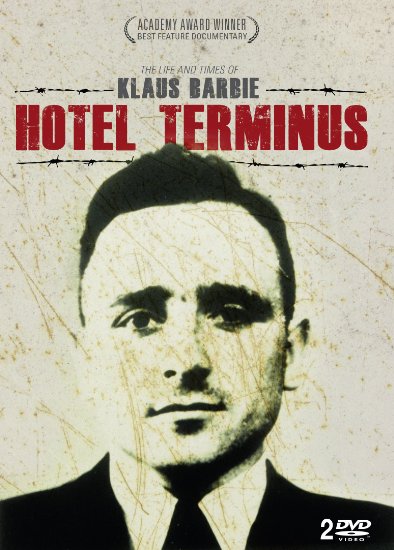
It Doesn't Have To Be Right…

… it just has to sound plausible


3 Comments

Reading diary, #12

Recent reads. I think I need to up my game, I don’t seem to be reading at my previous speeds. Admittedly, quite a bit of my reading has been somewhat heavier than is usual…

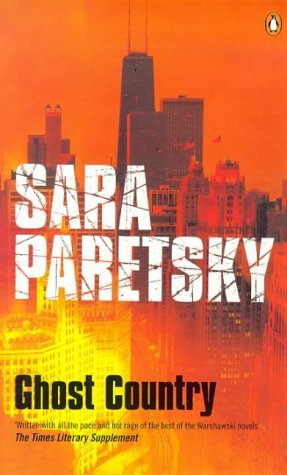
ghost_countryGhost Country, Sara Paretsky (1998). One of Paretsky’s two non-Warshawski novels, although this one is set in present-day Chicago like the VI books. There’s a world-famous opera singer, who is an alcoholic and slowly losing her grip on reality. Her career is already in the toilet. There’s a doctor who wants to practice psychiatry at a prestigious Chicago hospital, but the highly-respected consultant in charge of the department is more concerned with cutting costs so would sooner give patients drugs. There’s the granddaughter of the cost-cutting consultant, who can’t compete with her older sister, a high-flying lawyer, and runs away from home. And there’s a homeless woman who thinks the rusty water leaking from a broken pipe inside the outside wall of a top hotel’s garage is the blood of Mary, and she worships at a small shrine she has built there. Their stories all, of course, interact, and Paretsky uses them to deliver a stinging indictment of US private healthcare, hypocritical middle-class Christians, and the move to a more right-wing neocon Christian society. None of the men in the novel, with the exception of the psychiatrist, are sympathetic; but neither are they unconvincing. This is not a book to read if you’re looking for mind candy or comfort reading – it will make you angry. True, everyone gets what they deserve, and though the story is bleak the ending isn’t; but it’s still a very angry novel. Worth reading, nonetheless.

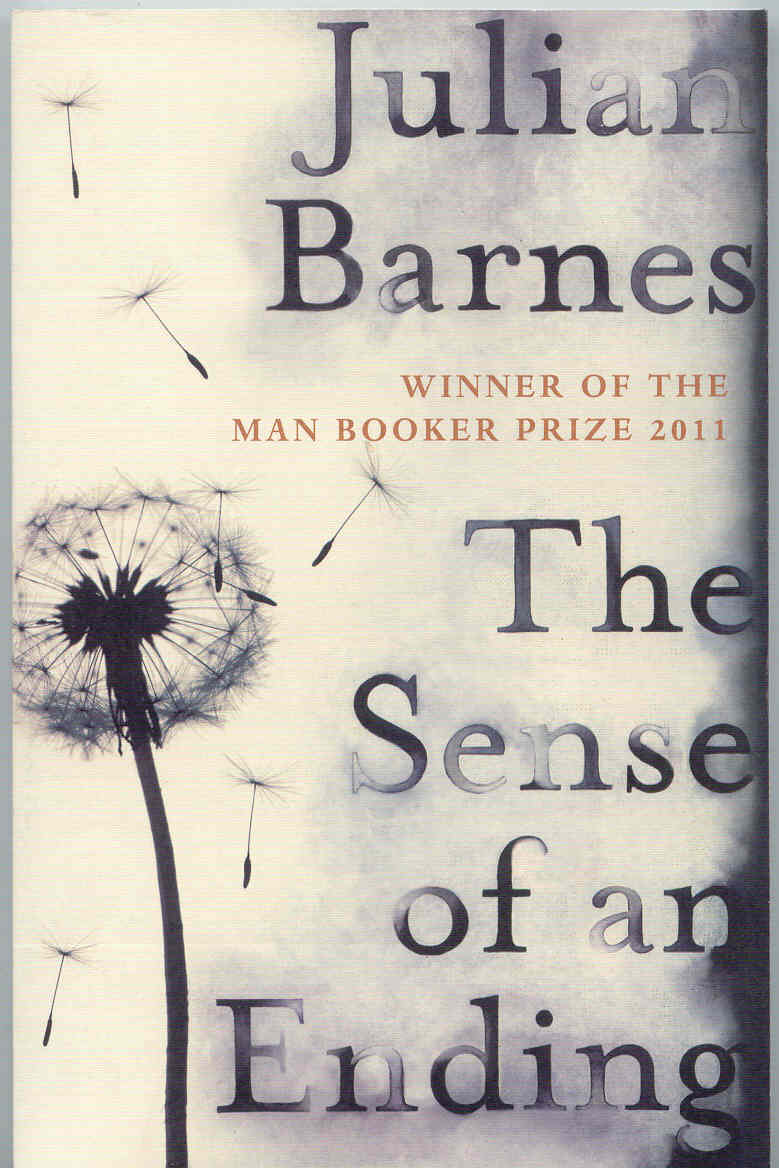
The-Sense-of-an-EndingThe Sense of an Ending*, Julian Barnes (2011). Three lads at school in the 1960s are joined by a fourth, a clever outsider called Adrian. The first half of The Sense of an Ending describes those halcyon days, as narrated by one of the three, Tony. After school, the four go their separate ways – Adrian to Cambridge, Tony to Bristol uni. At Bristol, Tony meets a young woman, Veronica, and the two enter into a relationship. She invites him home one weekend to meet her parents. But Veronica is, to put it mildly, hard-going, and Tony and her split. He later hears that Veronica has taken up with Adrian. Tony writes the pair of them a shitty letter. Some months later, Adrian commits suicide. The novel then jumps forward forty years to the present day. A solicitor contacts Tony – who is divorced but on good terms with his ex-wife, and has a grown-up daughter – and tells him he has been left £500 by Veronica’s mother. Also bequeathed to him is Adrian’s diary. But the solicitor does not have this as it’s currently in the possession of Veronica, who is reluctant to give it up. So Tony embarks on a campaign of flattery, cajolery and stubborn persistence, via email, in order get the diary from Veronica. She is enigmatic, arrogant and clearly contemptuous of Tony – repeatedly telling him he “doesn’t get it”. Through Veronica, he meets a group of mentally-disabled people, and then over the course of several weeks insinuates himself into their world… and so discovers that one of them is Veronica’s brother and Adrian’s son. The end. Throughout the second half of The Sense of an Ending, Tony is sneered at by Veronica for not getting something he could never have known about. That he figures it out in the end still makes Veronica’s actions senseless and completely undermines the plot. The Sense of an Ending won the Man Booker in 2011, but to be honest I can’t see why. It reads like a more polished Iain Banks novel, and while it’s good, the doggedness of its narrator and Veronica’s behaviour are not well-grounded, which makes it all feel a bit unsupported plot-wise.

Chanur’s Legacy, CJ Cherryh (1992). I read this to review on SF Mistressworks. It’s the final book of the Compact Space quintet, and its story is more of a pendant to the plot of the earlier four books that it is a continuation or closure. Still, I liked it – see here.

all_that_heaven_allowsAll That Heaven Allows, Edna Lee & Harry Lee (1952). The novel from which my favourite film was adapted – and it wasn’t easy to find a copy. Initially, the film seems to follow the novel quite faithfully: Cary’s friend cries off from a lunch engagement, so Cary invites Ron Kirby, the man maintaining her garden, to join her instead. Later, Cary accompanies Harvey to the country club for a dinner party, and there one of her late husband’s friends makes a drunken attempt to kiss her. Cary’s two grown-up kids, Ned and Kay, are pretty much the same in both book and film. Ned is a stuffed-shirt, a Princeton conservative who will no doubt grow up become an arsehole; Kay is more nuanced in the novel, her head still full of juvenile sociology and politics, but sympathetic to her mother’s situation. Ron, however, is more or less a cipher in the novel. He doesn’t have Rock Hudson’s easy charm, and it’s not altogether obvious what Cary sees in him. One thing the novel does show, however, is how cleverly the party scene in the film introduces Ron’s bohemian friends and lifestyle. There is no mention of Walden or Thoreau in the book. And the old mill building Ron restores to make a home for Cary and himself is in the book an old barn. All That Heaven Allows, although it made a great film, is not great literature. It’s by no means pulp fiction, nor some tawdry May-December romance novel; but I’m not really surprised it’s vanished into obscurity and that copies are extremely hard to find. Ignore the book, watch the film.

1001 Books You Must Read Before You Die count: 116


Leave a comment

Moving pictures, #21

Another diary entry from my road trip along the celluloid highway. Which is a particularly crap image, but never mind. Yet more movies, anyway. A few from the 1001 Movies list, a few from favourite directors, and a crap anime from Amazon Prime. I also joined a new rental DVD service recently, Cinema Paradiso. Impending changes to Amazon’s services don’t look too good, so I may have to look for an alternative. Cinema Paradiso boasts a library of 80,000 DVDs, which is impressive. I’ve also found several films on their site I want to see that Amazon don’t have. We’ll see how it goes for a couple of months.

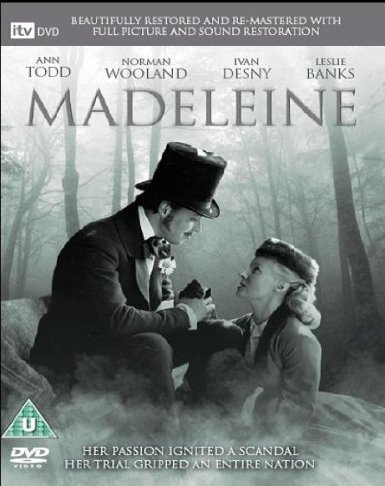
madeleineMadeleine, David Lean (1950, UK). This was apparently based on a real story, about the murder of a French emigré draper’s assistant by his lover, Madeleine Smith, the daughter of a wealthy Glasgow businessman, in 1857. Lean apparently made the film as a “wedding present” to his wife, Ann Todd, who had played the title role on stage. I’ve never really been convinced Lean was a great director – he made a couple of great films, however – and Madeleine is usually considered his slightest work. And so it is. The cinematography makes effective use of angles and shadows to give the film a sinister aspect, but Todd doesn’t really come across as flighty enough, or calculating enough, as Madeleine. And the final part of the film, covering her trial, is mostly dull. The film may be notable because Madeleine was found “not proven”, a verdict unique to the Scottish justice system, but any Brit with two brain cells to rub together knows of “not proven” anyway. A mildly entertaining but mostly forgettable Sunday afternoon film.

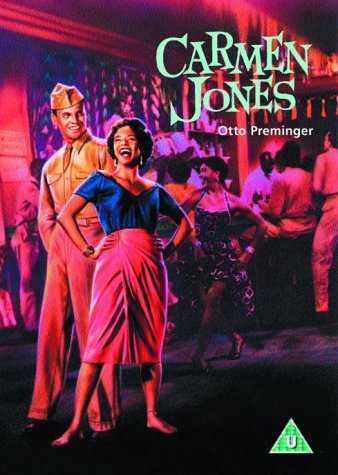
carmen_jonesCarmen Jones*, Otto Preminger (1954, USA). The title is adapted from the work on which the film is based, Bizet’s opera Carmen, although this is no opera but a 1950s musical. With an all-POC cast. I am not, it must be said, a huge fan of musicals, and there’s only a handful I’ll actually watch and enjoy. Carmen Jones was, I admit, better than many I’ve seen, but I didn’t think keeping Bizet’s original score but using contemporary lyrics, by Oscar Hammerstein, and vocals worked all that well. The story takes place during WWII and opens at a parachute factory in North Carolina where the title character works. She is arrested for fighting and sent to a nearby town to be jailed, escorted by a young soldier. It all goes downhill from there – she absconds, he is sent to the stockade. Later he’s released and tracks her down, but gets into fight with his sergeant and ends up fleeing with her to Chicago where he hides out while Carmen is seen out and about with a champion boxer. It all ends badly. None of the musical numbers really stood out, and the story was certainly grim enough to qualify as a tragedy; and I can sort of see why it might have made the 1001 Movies list.

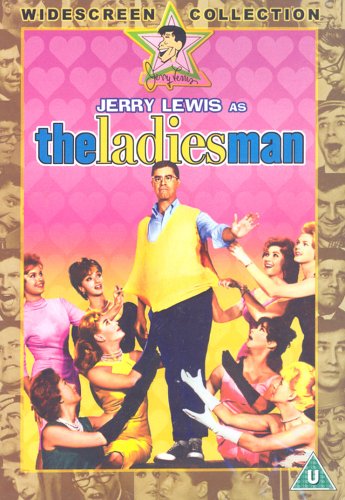
ladies_manThe Ladies Man*, Jerry Lewis (1961, USA). I’d a feeling I’d seen this before, and as soon as the camera pulled back and revealed the house interior was one giant set like a doll’s house, I knew I had. But I’m not surprised I’d forgotten pretty much everything else about the film: Jerry Lewis is so annoying throughout, his antics simply don’t stick in memory. In The Ladies Man, he plays the houseboy in a huge house filled with young women boarders. And, er, that’s about it. There are one two slapstick routines that are mildly funny. A running joke about Baby, the owner’s pet, which terrorises everyone with its loud lion-like roar, but proves to be a small basset, is feeble at best. A reality TV show then asks to shoot an episode from inside the house, and Lewis of course manages to ruin everything. The doll house thing is clever and done well, but that’s not enough reason for this film to appear on the 1001 Movies list.

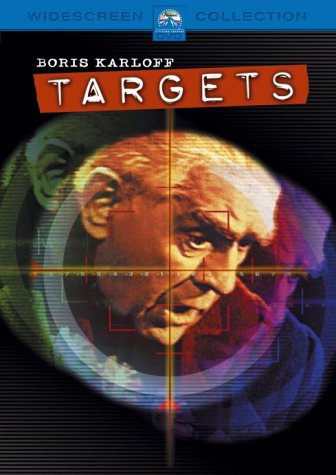
targetsTargets*, Peter Bogdanovich (1968, USA). I know Bogdanovich chiefly for the two films he made for Roger Corman using bits of Soviet sf film Планета бурь, Voyage To The Prehistoric Planet and Voyage To The Planet of Prehistoric Women. Oh, and I’ve heard of The Last Picture Show, of course. But Targets was completely new to me… and having now seen it, I can’t say I really understand why it was on the 1001 Movies You Must See Before You Die list. It was Boris Karloff’s last film, and he’s reasonably good in it – but he was pretty much playing himself, an actor near retirement chiefly known for horror movies who has been asked to make one last film. Bogdanovich plays the director who has persuaded Karloff to work for him. And then there’s a sniper who goes on a killing spree. It’s all a bit B-movie, even without the presence of Karloff, or the final showdown in, of course, a drive-in movie theatre.

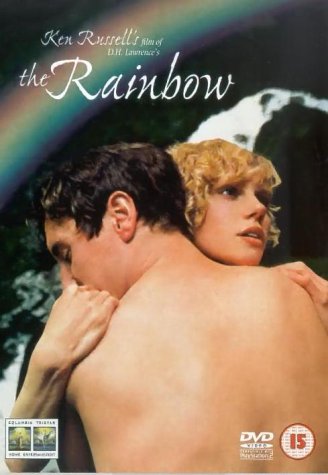
rainbowThe Rainbow, Ken Russell (1989, UK). Russell did quite a few Lawrence adaptations during his career, but this one is generally overlooked. Probably because it’s not very good. It’s only the final third of the novel for a start, which follows the Brangwen family through three generations. Russell focuses only on the last, in the person of Ursula Brangwen, who, in the early 1900s, has an affair with a teacher at her school, meets a young man but turns out his offer of marriage, goes off to the city to teach at a school, and then turns her back on everything to go her own way. The film hits the highpoints, but glosses over much of the novel’s internalising, which flattens Ursula as a character and makes her considerably less interesting. The Rainbow was also shot in Cumbria, which is not Derbyshire – and it showed. I liked the book a great deal, I can’t say the same of the film.

kingdomThe Kingdom*, Lars von Trier (1994, Denmark). I’v been steadily working my way through von Trier’s oeuvre, in no particular order, and while some of his films I really don’t like at all – such as Dogville – he’s never less than interesting. The Kingdom, a supernatural television mini-series set at Rigshospitalet, one of the largest hospitals in Denmark. Shot entirely on grainy video using handicams, it initially has the feel of a cinema verité documentary, but the cast are clearly acting, which sort of undoes that. And then the plot gets stranger and stranger… leading to a brilliantly weird sequence in which the hotel director and health minister visit the neurology department, where much of the story takes place, and witness first a patient, a porter and the senior registrar bricking up a hole in a wall in a basement corridor, a surgical team implanting a tumourous liver into one of the hospital’s pathologists, and a woman giving birth in a neurology consulting room. And, of course, there’s the visiting Swedish consultant, played by Ernst-Hugo Järegård, who ends each episode on the building’s roof, bellowing “Danskjävlar!” (an insult) into the night sky. There’s a special edition box set containing both the first and second series of The Kingdom. I think I’ll get myself a copy.

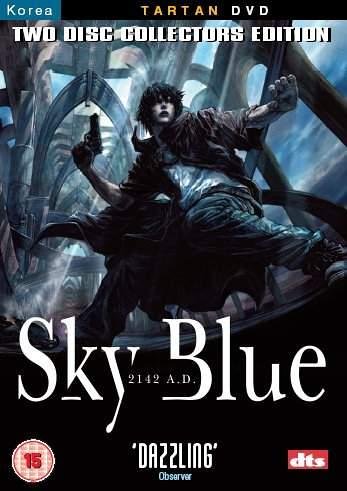
sky_blueSky Blue, Moon-saeng Kim (2003, South Korea). I found this on Amazon Prime and it looked like it might be worth watching. It wasn’t. Set next century, after the Earth has been turned into a toxic wasteland, there’s a high-tech city in which everything is wonderful, and all the workers live out in the wasteland, mining “carbonite” [sic] to power the city’s systems. And then there’s a romantic triangle between nasty city guy, enigmatic wasteland guy (who fled the city years before), and good city woman. During its 86 minutes, Sky Blue manages to hit every cliché going, which is quite an achievement. Bits of it, however, looked very pretty – the backgrounds are all CGI but the characters are cel animation. Nonetheless, best avoided.

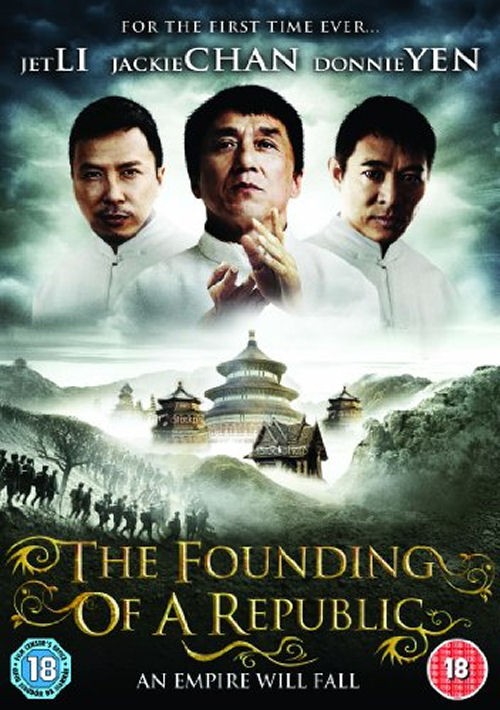
founding_of_a_repblicThe Founding of a Republic, Sanping Han & Jianxin Huang (2009, China). Found this in a charity shop and it looked interesting. The DVD cover art is also deeply misleading – I spotted Jet Li, and I think I saw Donnie Yen, but I don’t recall seeing Jackie Chan. And I find it very annoying they have Li’s name above Yen’s face, and vice versa. As the title suggests, the film tells of the founding of the modern Chinese state, opening with the Double Tenth Agreement in 1945 between Mao Zedong and Chiang Kai-shek. But the agreement doesn’t hold for long, war kicks off once more, and eventually the Communists triumph. The films jumps from historical character to historical character, returning only to Mao Zedong and Chiang Kai-shek at intervals. I suspect the characterisation of Mao Zedong is not entirely accurate, he seems altogether too jolly. Still, despite feeling like a flick through a history book at a speed a little too quick to really understand what’s going on, this wasn’t too bad. Some impressive set-pieces, anyway.

1001 Movies You Must See Before You Die count: 615


Leave a comment

The future we used to have, part 28

Time for another one of these posts, because it is. Some are real, some never made it off the drawing-board.

air

BAC/Aerospatiale Concorde

BAC/Aerospatiale Concorde (sadly, I never got to fly in one of these)

Tupolev Tu-144

Tupolev Tu-144

Boeing 2707 SST

Boeing 2707 SST

Lockheed L-2000 SST

Lockheed L-2000 SST

sea

hovercraft_srn3

SR.N3

hovercraft_srn4

SR.N4

hovercraft_srn6

SR.N6 (I nearly had the chance to ride in one of these when I was a kid)

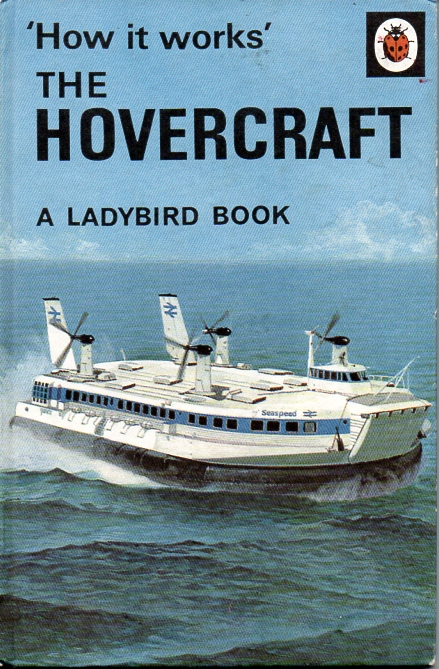
hivercraft_ladybird

I think I used to have a copy of this

land

LR Alvis Stalwart

Alvis Stalwart (I rode in one of these on a visit to SEME at Bordon when I was in the Upper VI)

alvis_saladin

Alvis Saladin (I went to uni in Coventry and lived for a year on Fletchamstead Highway, where Alvis would test-drive their tanks at night)

scammell_heavy_haulage

Scammell heavy haulage tractor and trailer (a relatively common sight on British roads in the 1970s)

landrovercounty110

Land Rover County 110 (back in the 1980s my boss had one of these, and I drove it quite often)

space

USAF's Manned Orbiting Laboratory

USAF’s Manned Orbiting Laboratory

Controlled touchdown, probably at Edwards, fpr Gemini spacecraft

Controlled touchdown, probably at Edwards, for Gemini spacecraft

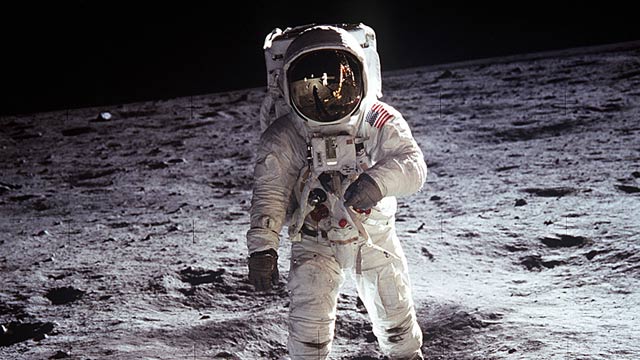
Landing on the Moon using a Gemini spacecraft

Landing on the Moon using a Gemini spacecraft

"Big G" - a proposed 12-man Gemini spacecraft

“Big G” – a proposed 12-man Gemini spacecraft


5 Comments

Moving pictures, #20

Bit of an epic Moving pictures post this time as I try to get up to date with my recent viewing. The usual mixture of movies, of course, although perhaps a few too many American ones. Never mind.

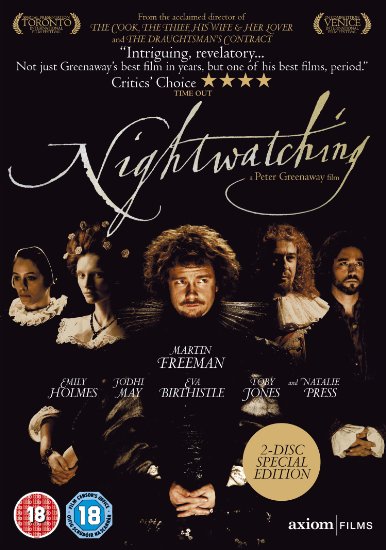
nightwatchingNightwatching, Peter Greenaway (2007, UK). This is the first of Greenaway’s “Dutch masters” trilogy – I actually saw the second one first, Goltzius and the Pelican Company– and this time is about the life of Rembrandt van Rijn. Played by, of all people, Martin Freeman. This is very much the Greenway I remember from the 1980s and early 1990s, although it was the sets, rather than the staging and camera work, that made it feel more like a play than a film. I’d not really enjoyed Goltzius and the Pelican Company, and when I started watching Nightwatching I didn’t initially think Freeman was very convincing as Rembrandt, but he won me over and the movie definitely turned more interesting as it progressed. Not bad.

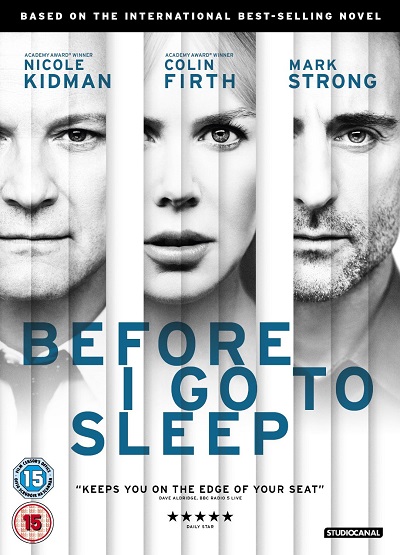
before_i_go_to_sleepBefore I Go To Sleep, Rowan Joffe (2014, UK). So I got my Fire TV Stick, and went looking on it for a movie to watch, and this looked like a recent thriller that might do the job and… oof. What a nasty film. I’m sorry, but when your plot is predicated on violence toward women, then perhaps you need to rethink your story. Nicole Kidman plays an amnesiac who wakes every day not knowing what has happened to her over the past decade. Her husband, Colin Firth, explains that she was in a car accident, and suffered brain damage. Except that’s not true. As she slowly discovers, partly as a result of documenting each day secretly, something therapist Mark Strong has suggested to her. The final twist is, to be honest, a bit obvious. Despite the cast and the polished production, this leaves a horrible taste in the mouth. Best avoided.

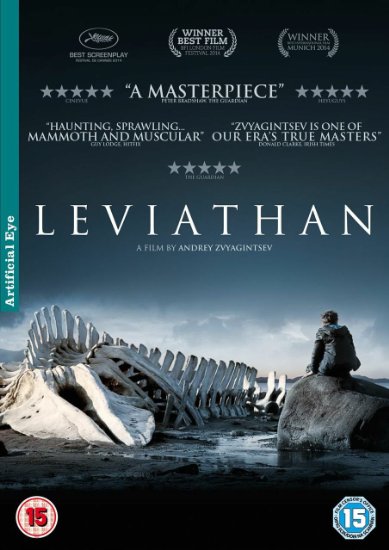
leviathanLeviathan, Andrey Zvyagintsev (2014, Russia). Perhaps Russian films such as Night Watch and Black Lightning might have got all the box office, but Russia has churned out some quality drama too (and not just by my beloved Aleksandr Sokurov). Kolya is a car mechanic, whose land has been compulsory-purchased by the town council, allegedly for a transmitter; but Kolya is pretty sure the corrupt mayer just wants to build himself a house there. He’s tried the local court, but they’re in the pocket of the mayor. As are the police. And the purchase price is far from what the land is worth. The more Kolya struggles, the worst his situation becomes. So he rants and raves and hits the vodka, but none of it helps. Beautifully-photographed, intensely and depressingly realistic. Definitely worth seeing.

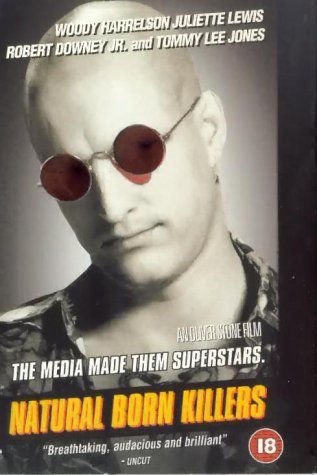
natural_born_killersNatural Born Killers*, Oliver Stone (1994, USA). As indicated by the asterisk, this is one from 1001 Movies You Must See Before you Die list, and I very much doubt I would have otherwise watched it. Or re-watched it. Sort of. Back in the 1990s I bought the CD of the sountrack by Trent Reznor (I was a fan of Nine Inch Nails in those days) and listened to it quite a lot. Unlike other OSTs, the Natural Born Killers one featured dialogue from the film between songs. And there was enough of it to actually peice together the plot of the film. As I discovered when I watched it. Otherwise, the movie seemed to be trying too hard to become a cult film, failing dismally, but in its failure actually getting closer to that status than it did by design. If that makes sense.

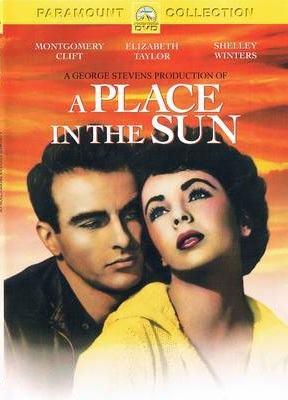
A-Place-In-The-Sun-1951-Front-Cover-38596A Place in the Sun*, George Stevens (1951, USA). Hollywood churned out a lot of worthy but dull films during the 1950s and 1960s, usually based on highly-regarded novels – in this case, Theodore Dreiser’s 1925 novel, An American Tragedy. This is definitely one of them. Montgomery Clift plays the scion of a poor branch of the family who visits his rich industrialist uncle and asks for a job. He’s given a lowly position, despite being a relative, and is supposed to work his way up the corporate ladder. Because hard work. Because American Dream. Unfortunately, there’s a nubile fly in the ointment in the shape of Elizabeth Taylor and… you know how it goes. Ambitions thwarted by actual situation – personified by women, of course – leading to foolish plan to get rise to top back on track, usually results in someone’s death, hero ends up in prison. The book should have been called An American Cliché. Not worth the effort. Meh.

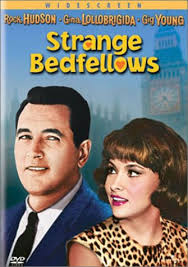
strange_bedfellowsStrange Bedfellows, Melvin Frank (1965, USA). This film is nothing to do with the sf anthology I recently read (see here). This is a Rock Hudson / Gina Lollobridigida vehicle, in which they play divorcees who temporarily get back together because he needs to show he’s happily married to land a job. The film is actually set in London, though clearly only the stock footage was shot there and neither of the stars actually visited the city. It gave the whole film a bit of a soap opera feel. The Technicolor wasn’t up to its usual gorgeousness, the banter felt a bit lacklustre (although Gig Young was excellent), and it all felt even more inconsequential that most movies of this type do. I enjoyed it, but there are better Rock Hudson rom coms / melodramas out there.

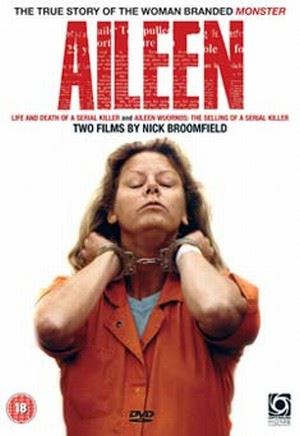
aileenAileen Wuornos: The Selling of a Serial Killer / Aileen: Life And Death Of A Serial Killer*, Nick Broomfield (1992/2003, UK). I added the latter to my rental list (because asterisk), but the disc also included the former, so I watched both. Aileen Wuornos was the US’s first serial killer – or at least the first one ever caught. She killed seven men in Florida in 1989 and 1990, claiming self-defence after she’d been arrested. But over the course of her trial and her time on death row, she changed her story several times. Aileen Wuornos: The Selling of a Serial Killer documents how the media exploited Wuornos and her trial – some of the police officers involved were paid large sums by Hollywood producers for film rights, for example, and later were made to resign. In Aileen: Life And Death Of A Serial Killer, Broomfield interviews Wuornos shortly before she is executed. If the first film painted her as the victim of a system determined to see her executed because she was a woman serial killer, ten years in prison had clearly unbalanced her. Definitely worth seeing.

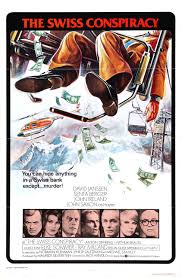
the_swiss_conspiracyThe Swiss Conspiracy, Jack Arnold (1976, US/Germany). There’s probably a very good reason why I bought this DVD but I’m buggered if I can remember what it was. The film is a pretty run-of-the-mill thriller starring Ray Milland and David Janssen, and notable only for being shot entirely in Zürich. It’s about, of course, a Swiss bank. Senta Berger and Elke Sommer are watchable, but Janssen is a bit too gravelly for his allegedly louche character, and John Saxon hams it up like a slab of gammon as a mobster. There’s a passable chase scene, but this doesn’t really even pass muster as a Sunday afternoon film.

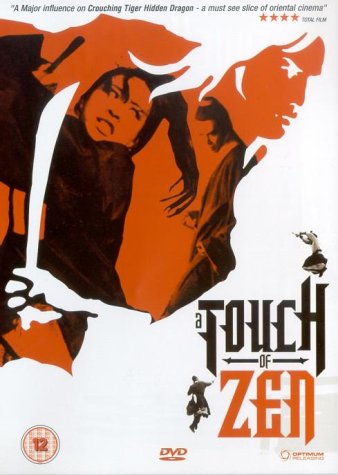
a_touch_of_zenA Touch Of Zen*, King Hu (1971, Taiwan). This is apparently an important early wu xia film, but I can certainly verify it is a long and dull one. A painter in a small town becomes embroiled with a fugitive from imperial justice, a young woman who’d tried to warn the emperor of his eunuch’s corruption. Although the film is about the woman, Yang, it’s the painter, Ku, who is the centre of the story. I remember that the film was so long it was pslit into two, and Ku seemed mostly a bumbling oaf. Some of the fight scenes looked a little clumsy given the current state of the wu xia art. But mostly I remember that it dragged on and on and on. But I’ve seen it now. Huh.

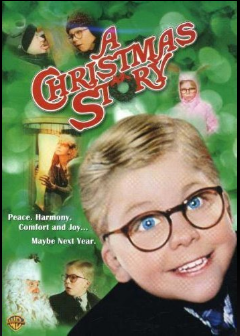
A-christmas-Story-DVDA Christmas Story*, Bob Clark (1983, USA). If this hadn’t been on the 1001 Films You Must See Before You Die list, I’d never have bothered renting it. Certainly there’s nothing in its description which would recommend it to me – a boy’s Christmas, loosely based on a series of nostalgic columns from a US newspaper. And having now seen it, I can thoroughly not recommend it. The writer of the column narrates the film, which is set in the mid-1940s – and bizarrely, there is no mention of WWII, it’s almost as if the US were not at war – and focuses chiefly on the narrator’s boyhood self and his determination to get an air rifle for Christmas – which, of course, no one thinks he should have. I really didn’t like this film. Cloying manufactured nostalgia, which works by elevating the absolutely trivial to emotional life-or-death. Avoid.

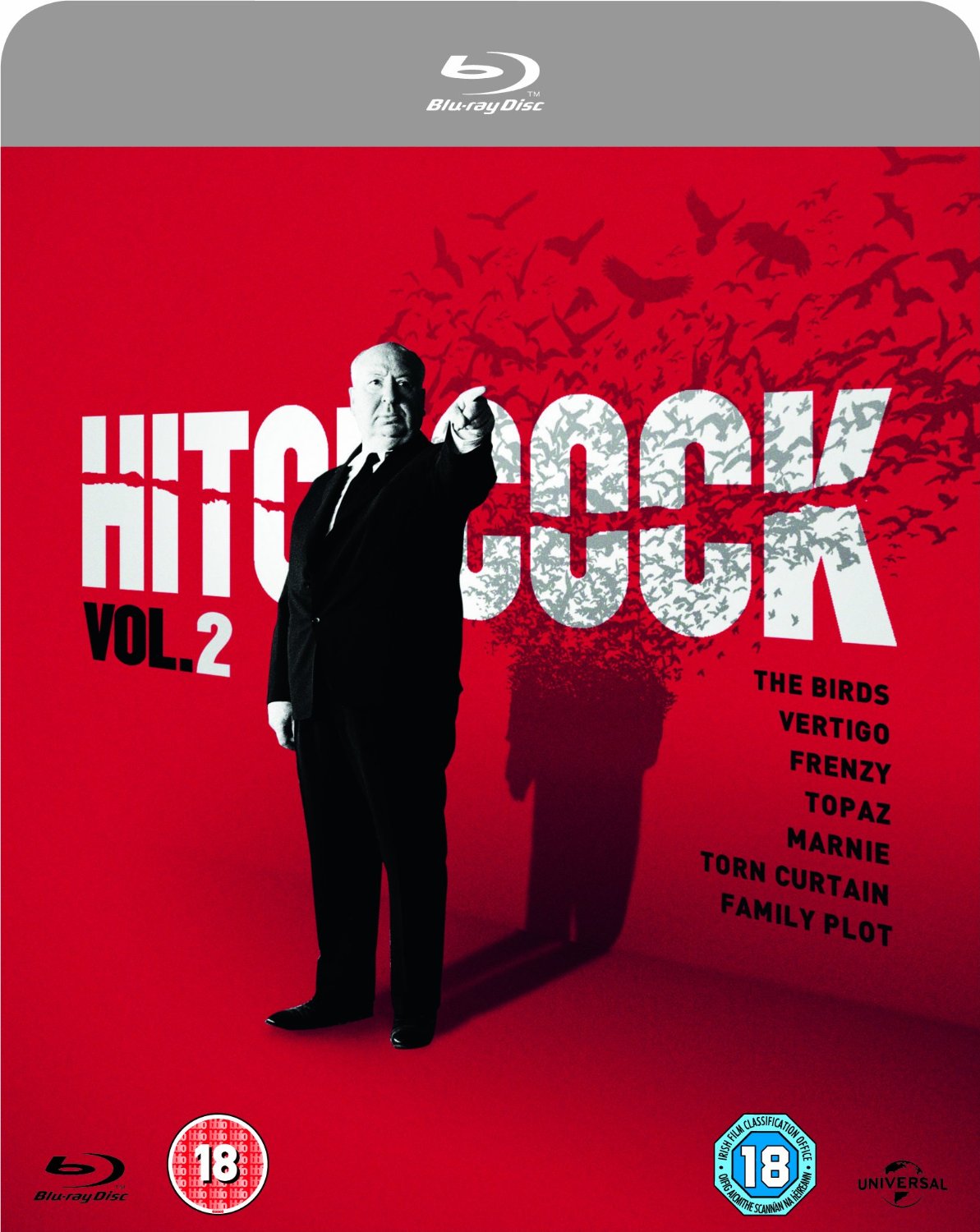
hitchcock2The Birds, Alfred Hitchcock (1963, USA). During the recent Prime day on Amazon, I spotted the two Hitchcock collections on Blu-ray going for less than half price. I already had them on DVD – in fact, they were among the first DVDs I ever purchased – but at that price it was worth “upgrading”. And the first one I watched from my new Blu-ray collection was The Birds from Vol 2, probably because it was a Hitchcock film I’d not rewatched for a long time. As I soon discovered, because I’d completely forgotten the framing story, in which a socialite played by Tippi Hedren flirts with po-faced attorney Rod Taylor in a pet shop, and then drives up the coast to backend-of-nowhere town Bodega Bay where he’s gone to spend the weekend with his widowed mother and much younger sister. She ingratiates herself into the family, and even ends up spending the night Taylor’s ex-girlfriend, who is the local school teacher. And then the birds attack. It’s all a bit random. And the special effects show their age in a number of ways. But Hitch maintains an impressive level of creepiness throughout, and successfully ups the peril as the attacks progress. A bona fide classic.

1001 Films You Must See Before You Die count: 611


4 Comments

Reading diary, #11

There are a couple of books in this post which likely deserve full-on reviews, but I don’t do that any more (not unless they’re associated with a “reading project” or something, or for a venue such as Interzone or SF Mistressworks), so you’ll have to make do with this. I’ve also decided to institute a new feature and, as I do in my Moving pictures posts, asterisk those books which can be found on the 1001 Books You Must Read Before You Die list (I’m using the 2013 list, as that was the first one I found). To date, I’ve read 115 books on the list, including the one asterisked below, and to be honest there are a number I don’t think I’ll ever bother reading… But others look they might be worth a go – as indeed was Henry Green…

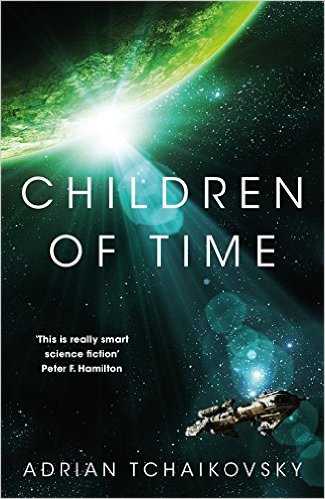
children_of_timeChildren of Time, Adrian Tchaikovsky (2015). I sort of read this by accident. I bought it at Edge-Lit 4, and on the train ride home I finished the book I’d taken to read during the journey there and back, so I started Children of Time. And since I’d started it, I decided to continue reading it. Which I think makes it one of the very few books I’ve actually bought and then started on the same day. The elevator pitch for this novel didn’t sound all that appealing, and the author is better known for a ten-book fantasy series, so I wasn’t sure what to expect. What I found was a polished sf novel with several neat twists on the generation starship story (it seems to be the generation starship’s year, with this and Kim Stanley Robinson’s Aurora). The world the ship plans to colonise, and the only possible candidate its crew have found, unfortunately turns out to have been terraformed and colonised millennia earlier. By spiders (the result of a human seeding programme that went wrong). The novel alternates between events on the ship and the development of the spider civilisation – and the latter narrative is absolutely fascinating. Tchaikovsky puts a few spins on his generation ship tropes, although it soon devolves into a well-visited territory. Which was a little disappointing – but on balance the spiders more than make up for it. I wouldn’t be surprised to see this on the BSFA Awards shortlist next year.

Skin, Ilka Tampke (2015). I reviewed this for Interzone. I picked the book as one of my choices based on the one-line description in the email sent out to reviewers. It turned out to completely different to what I had expected. It’s a Celtic historical fantasy that sort of hovers on the border of YA and adult fantasy. Bits of it worked really well, but the narrator was such a special snowflake it sort of spoiled things for me.

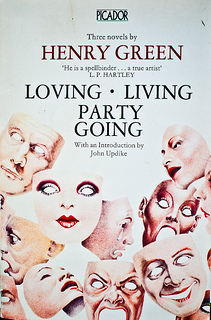
lovingLoving*, Henry Green (1945). According to the back cover of the Picador omnibus paperback I own which contains Loving, Green is “the most neglected writer of our century”. The book was first published in 1978, and that may well have been true then, but he has apparently seen something of a revival in recent years – there’s a 2005 edition of the same book, but with an introduction by Sebastian Faulks rather than John Updike; and Green has a number of other novels in print. Which is all, I suppose, beside the point; suffice it to say I knew only Green’s name and nothing about his oeuvre when I started Loving. Perhaps I’d expected something not unlike Olivia Manning’s novels, she was after all a contemporary, and I do like Manning’s fiction. Loving, however, proved to be entirely different; and excellent for reasons that make it nothing like Manning’s books. It’s set belowstairs in a large house in rural Ireland during World War II. Not only are the staff worried about the war, but also about their own situation in an neutral country should the Germans invade. And, of course, there’s the house to manage, and their employers to wait upon. The novel opens with the death of the butler, and chiefly follows Raunce’s efforts to get himself promoted into the vacant position. Green makes no concessions to his readers, the characters and their relationships have to be inferred from the narrative, much of which is dialogue. Science fiction may over-rely on dialogue to carry its stories, but it never does it with the skill and control of voice Green manages. I’ll definitely be reading more of his novels.

Godsfire, Cynthia Felice (1978). This is one of several paperbacks I bought from Alvarfonden at Archipelacon, with the intention of reviewing them on SF Mistressworks. Which is what I did – see here. I liked it.

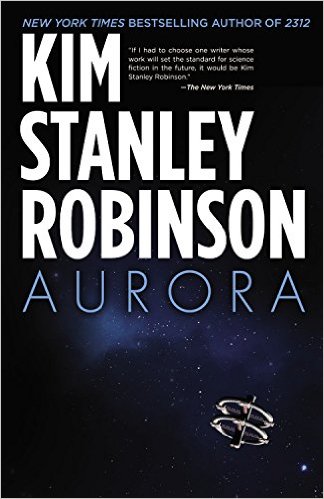
auroraAurora, Kim Stanley Robinson (2015). I’ve been a fan of Robinson’s work for many years, and, so I was told, this was one of his best, even better than 2312. So, of course, being completely contrary, I enjoyed it, thought it quite good, but… not as successful as 2312. The story follows the arrival of a generation starship at Tau Ceti after 170 years in flight, and is told by the vessel’s AI as a study in narratology and a sort of experiment in making the AI more human. The narrative focuses on Freya and first follows her as she goes on a wanderjahr through the twelve biomes which make up the ship. Then there’s the attempt to colonise a moon of one of Tau Ceti’s exoplanets. But that goes horribly wrong, and leads to a civil war on board between those who want to terraform another moon and those who think they should return to Earth. Freya is the de facto leader of the latter faction, and the final section of the book details the ship’s return to Earth and Freya’s experiences once there (those who flew back hibernated for the trip, using a technique in the feed beamed to them from Earth). As a thought experiment on how some elements of a generation starship might operate, Aurora makes for a fascinating read. There’s some handwavey stuff – not least the narrating AI – and many of the mechanical issues are glossed over. However, where the book fails for me is in its human side. Although a number of different cultures are present on the ship, everyone acts like twenty-first century Californians, displaying the sort of liberal individualistic sensibilities more likely to be found on the western seaboard of the US than in the seventh generation of a generation starship’s passengers. For example, there are complaints people are not free to have children as and when they want, but you’d think something like that would have long been accepted. And then there’s the violence between the “stayers” and the “backers”, which for a group of 1200 people who have known only the biomes, didn’t ring true. I was, however, amused that Freya and the others clearly returned to the Earth of 2015 – there were a few backhanded digs at social media and an indirect mention of hipsters. I’m still in two minds about Aurora. The setting is very clever, but the characters are thin and unconvincing; and like 2312, it’s all about making the Earth a fit place to live – because there’s nowhere else in the universe we can do so.

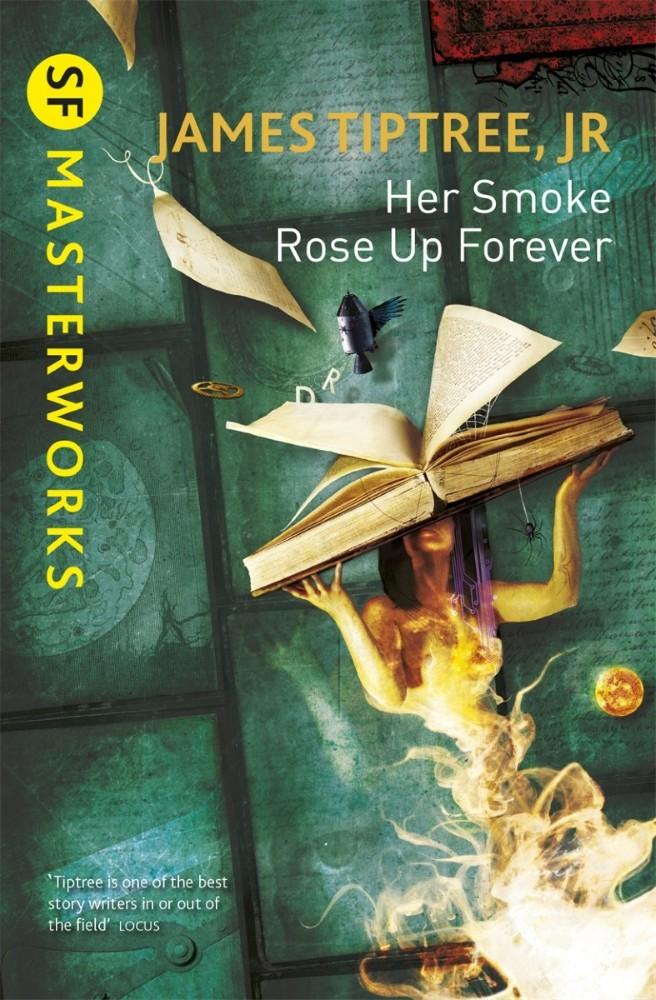
her-smoke-rose-up-foreverHer Smoke Rose Up Forever, James Tiptree Jr (1990). When I first started reading Tiptree back in the late 1970s – it was Ten Thousand Light-Years from Home, originally published in 1973 but my edition was the 1978 paperback – I knew “he” was a woman, but from what I’d read somewhere I thought the pseudonym was in order to protect the author’s career with the CIA. It never occurred to me Ali Sheldon used it because she was a woman. Now I know better, of course. In the early 1980s I bounced out of Tiptree’s Brightness Falls From the Air, and never quite got back into reading her. Well, at least not with the same fervour as before. I’ve reread Ten Thousand Light-Years from Home over the years several times, not to mention the odd story in various anthologies, but it wasn’t until Her Smoke Rose Up Forever appeared in the SF Masterworks series – deservedly so, I might add – that I really decided to give her a reread in earnest. I would normally review this book for SF Mistressworks, but I’ve already got a review lined up by someone else; and besides, I’ve probably reviewed half of the contents in reviews of other anthologies anyway. For the record, not every story in here shines, but a number of them so do very brightly – ‘The Screwfly Solution’, personal favourite ‘And I Awoke And Found Me Here on the Cold Hill’s Side’, ‘The Women Men Don’t See’, even ‘The Man Who Walked Home’ (a story which has haunted me since I first read it decades ago). There are stronger collections in science fiction out there, but not many.

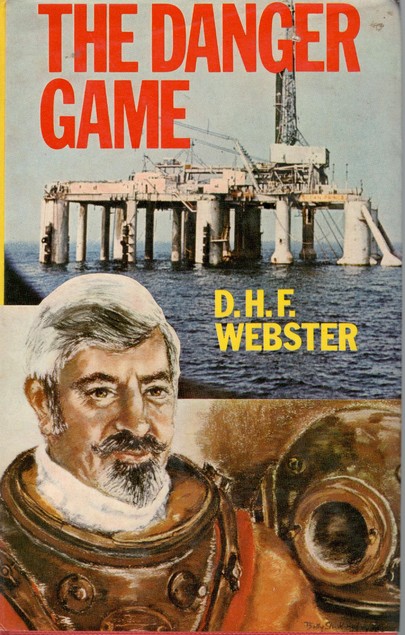
the_danger_gameThe Danger Game, DHF Webster (1978). The author joined the Royal Navy in the nineteen-fifties as a diver, then ran a salvage operation for a while, but that eventually folded due to a lack of contracts. He was employed as a manager for a booze merchant in his home town of Bradford, when an old Navy buddy contacted him and asked him if he’d be interested in working in the North Sea, as the industry was desperate for qualified divers. The Danger Game is about Webster’s years as a commercial diver, and given some of the things he describes the title seems apt. During the early sixties, things were very different, and a lot of deep dives were done on air – 200 feet deep, that’s about seven atmospheres, on air. Nitrogen narcosis, “rapture of the deep”, was not only common, it was expected, and divers frequently surfaced with little or no memory of the final tasks they’d performed. The same was true of the bends, pretty much everyone suffered from it several times, usually because of mistakes with the air supply requiring a quick trip to the surface, or because the wrong tables were used. But they had decompression chambers on deck, so a few hours sealed in one of them and they were right as rain. Although lots of divers perished, it seems a miracle the entire industry wasn’t shut down it was so dangerous. But, of course, because oil. Anyway, a short and reasonably informative read, although likely of worth only to those interested in the subject.

1001 Books You Must Read Before You Die count: 115


Leave a comment

Books do furnish a room

I may be putting up these book haul posts less frequently, but the book collection seems to grow at its usual pace. I take care to purchase fewer books each month than I read, so the TBR is being slowly whittled down. But the book-shelves are still double-stacked, and the spare room has books piled all over the floor. I’ve dumped lots of books I knew I’d never get around to reading at the charity shop; and I’ve foisted off quite a few genre books at the York and Sheffield socials, but I still need to have a big clear-out… Anyway, here are the latest additions.

2015-08-02 11.35.16

Some new science fiction. Children of Time and The Last War I bought at Edge-Lit 4, where, of course, A Prospect of War made its first appearance in hardback. Aurora was purchased from a certain online retailer. I’ve already read Children of Time and Aurora, and they’ll both appear in my next Reading diary post.

2015-08-02 11.36.56

Some mainstream(-ish) paperbacks. The War of the End of the World was a book I’d planned to read for a fiction-in-translation reading challenge back in 2012. The challenge foundered about halfway through the year, but some of the books I’d picked I still fancied trying. It’s taken me until now to buy a copy of this one. The Bone Clocks and Kolymsky Heights I bought in Harrogate, using a book voucher given to me by my employer, while in the town to hear Val McDermid interview Sara Paretsky at the Crime Festival. The Davidson was recommended by a number of people a couple of months ago, and though I kept an eye open no copies had appeared in my local charity shops. Collected Stories I bought after reading Jonathan McCalmont’s reviews of Salter’s short fiction on his blog, Ruthless Culture.

2015-08-02 11.38.01

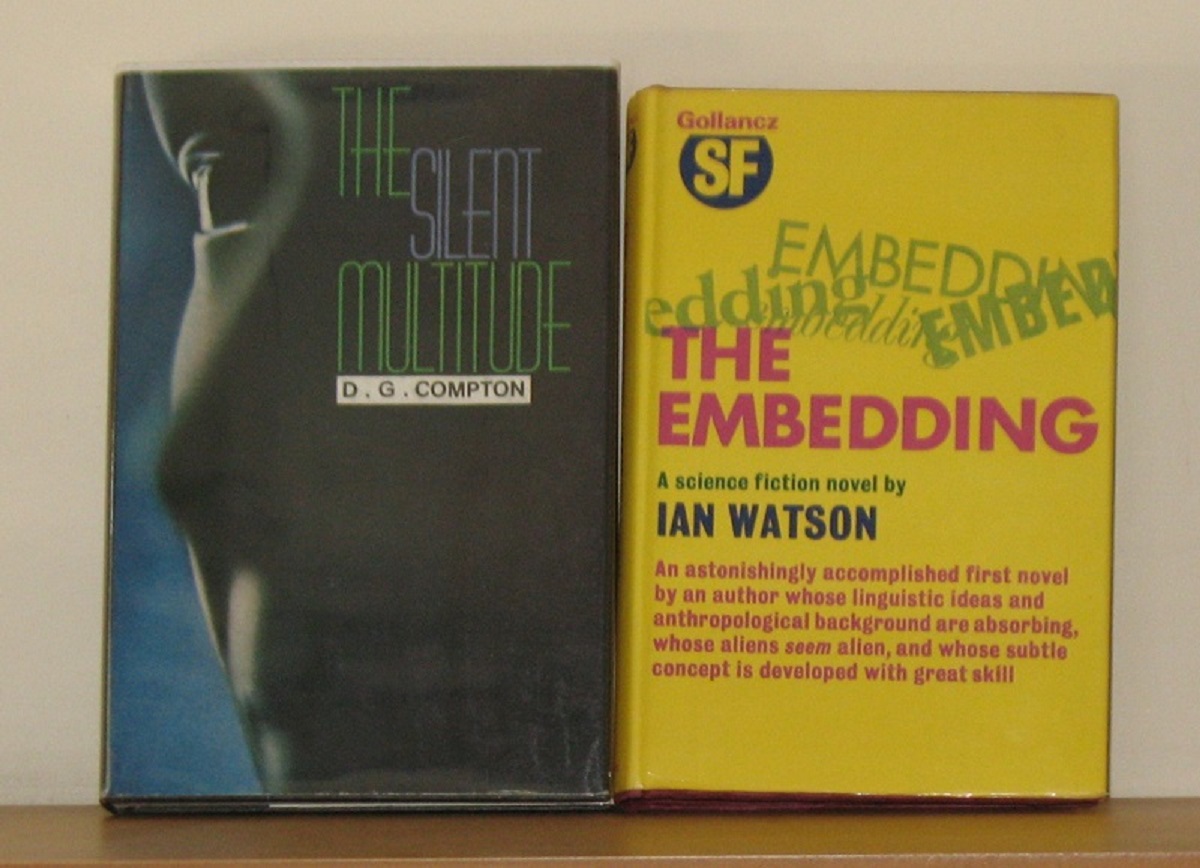
This was my prize from the Edge-Lit 4 raffle: six HP Lovecraft books in flash new hardback editions from PS Publishing. Given some of the other prizes, I think I did exceedingly well.

2015-08-02 11.38.49

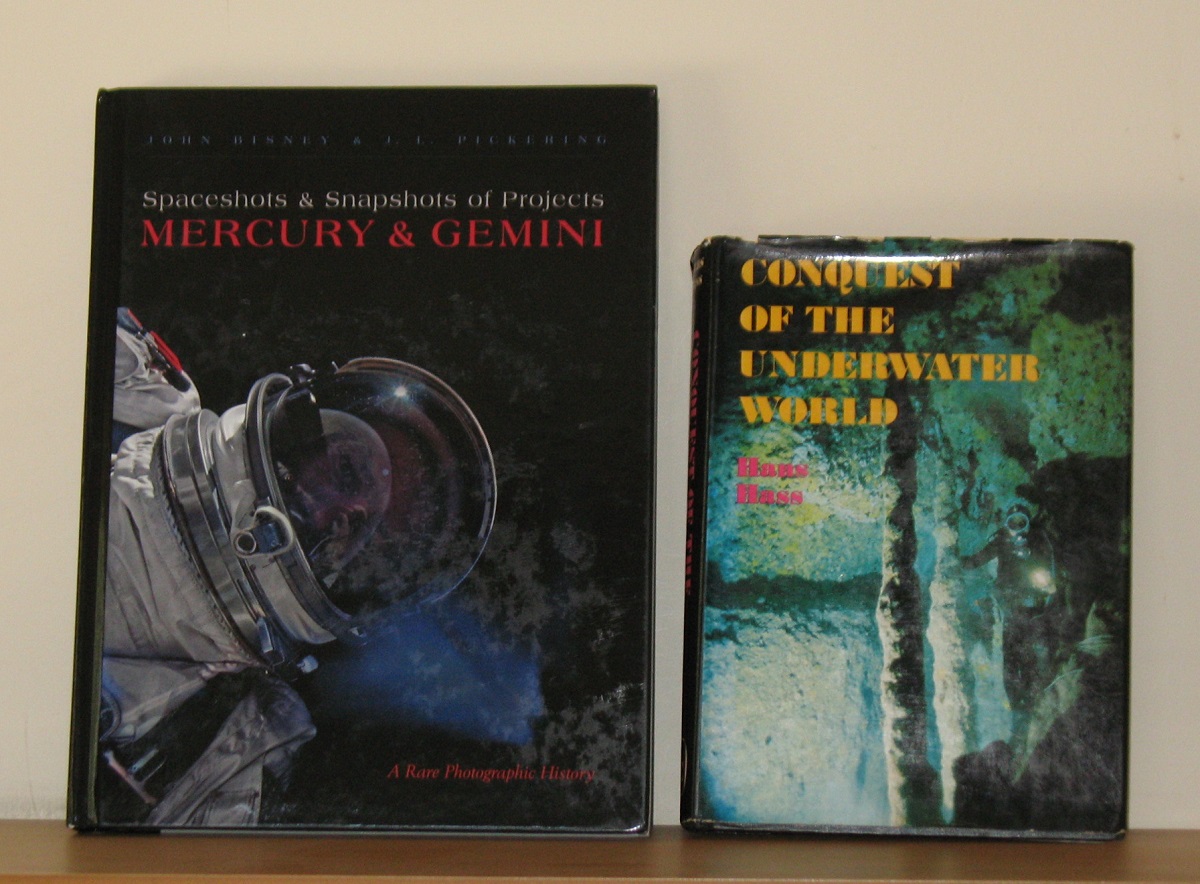
A pair of deep sea books. Ocean Outpost, a study of undersea habitats, was cheap on eBay. Discovering the Deep, a glossy coffee-table book thick with science, is a new publication.

2015-08-02 11.39.12

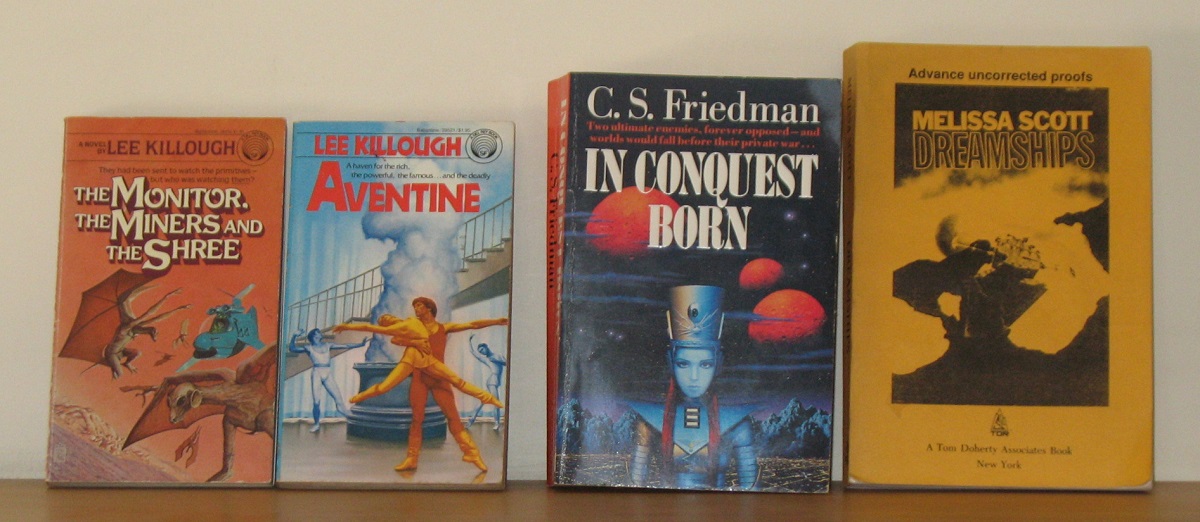
Some genre paperbacks: Skin is an ARC, I’m reviewing it for Interzone; Wolves was on a couple of award shortlists last year; I’ve been a fan of Hanan al-Shaykh’s writing for several years, so I’m looking forward to reading her spin on One Thousand and One Nights; and The Saga of Eric Brighteyes is the second book in NewCastle Forgotten Fantasy series, which I bought because of course I really need to start collecting another series of books… Actually, it was cheap on eBay, so it’s not like I went out of my way for it.

2015-08-02 11.41.54

A new Lawrence Durrell book. From the Elephant’s Back is a collection of previously-unpublished essays and letters was published by the University of Alberta. The Silkworm is the second pseudonymous crime novel by JK Rowling. I thought the first a bit meh, but my mother found this copy in a charity shop and after she’d read it she passed it on to me.


5 Comments

What is it about space opera?

It often seems to me that space opera has within itself to be all things that are science fiction. Most writers, however, treat it as little more than action-adventure in space, or the fall of some historical empire transplanted to an interstellar canvas (with added cool techno-gizmos). Given the size of that canvas – there are literally no limits – there’s more than ample opportunity to ask relevant questions and play through the various answers. Some space opera authors have indeed done so – Iain Banks springs to mind: in his Culture novels he often examined the morality of intervention in other sovereign states’ internal affairs. Sadly he’s an exception, rather than the rule.

So why is it so few space operas do little more than pit one group against another, usually differentiated by either race, class or politics? Or show an interstellar polity torn apart from within or without? And the science fiction, well, that’s embodied in the background or some maguffin around which the plot revolves.

valerian

One of the chief elements of a space opera which the subgenre rarely seems to interrogate is the whole idea of an autocratic or feudal interstellar polity, in which custom and tradition has embedded an oligarchy so deeply in place it can only be dislodged by actually razing the polity to the ground. Historically (real history, that is), rulers claimed divine descent and so justified their exalted position – this was probably the second biggest con ever perpetrated on humanity, after the concept of an afterlife (capitalism comes a close third) – but any such claims of godly DNA are risible at best, deluded at worst. And if those rulers didn’t actually claim divine descent, they certainly claimed divine right – ie, they ruled in the name of the gods, with the gods’ permission and blessing. Quite how you prove that is beyond me, but it certainly happened – and there are probably a few royals out there who are so stupid or inbred they still believe it.

But let’s assume a space opera empire is ruled by a particular dynasty for the same reasons that such dynasties ruled in real history, ie, canny politics and/or historical accident, and park that for a moment. What about the actual society, its various levels and the lack of social mobility? What Herbert called “fraufreluches” in Dune. I can understand the need for a tightly-controlled society in an artificial environment such as a space station – everybody’s lives depend on people not breaking things – but space operas in the main presuppose a galaxy of earth-like planets ready to be colonised by land- and resource-hungry humanity… Except, wait, they can’t be all that land-hungry because a lot of space operas feature worlds that are either populated to a ridiculously dense degree, or almostly entirely empty. And those densely-populated worlds… A world like Trantor or Coruscant, it would be impossible to feed the population of such a world, it’s just not physically possible to ship in the foodstuffs required to support a population of a trillion or more (Wikipedia gives Corsuscant’s population as “Approx. 1 trillion”, although the Wookiepedia claims three times that; isn’t the internet wonderful?). Assuming an average of 2,500 calories per person per day, for the entire population that’s equivalent to about 5 billion (or 15 billion) cows a day.

For a highly technological (ie, “magical” per Clarke’s dictum) space opera, most problems, not just food, would be magically solved by magical science and magical engineering – replicators, or something like that. If there’s no scarcity, you’d expect the society to be relatively flat, and any social classes that have shaken out have done so depending on whether the empire follows an egalitarian socialist model or a more restrictive model based on, well, any variety of right-wing ideologies. I’ve said in the past that science fiction – and especially space opera – is an inherently right-wing mode of fiction, irrespective of the politics of its writers. Just look at the various societies depicted in science fiction texts, look at the solutions proposed to the problems presented by science fiction texts. It’s said that editor Donald A Wollheim once ran a straw poll among sf fans on the best form of government and “benevolent dictatorship” proved most popular. Even back in the 1960s and earlier, when science fiction traded on the assumption its fans were “better” than readers of other modes of fiction (“fans are slans”), that’s still a horribly juvenile result. But then look at genre’s various role models, and then count all those Marxist space operas…

The idea of science fiction, or indeed any mode of fiction, as primarily a form of “entertainment” has often been used to poison the debate regarding the genre’s uses. Some people – often stupid ones – will champion fiction as a literature of ideas, a vehicle for thought experiments, and then pooh-pooh concepts or approaches they don’t like as “message fiction”. All fiction is message fiction. It’s only the content of the message, and the power of its vector, which differs. And, of course, the ability of the reader to pick up the message.

But space opera… Most space operas require huge, often cumbersome, authoritarian political structures in place at the start. And there’s usually an associated fascination with all the pomp and circumstance and cool uniforms that go with such structures – er, Star Wars anyone? (And now we have Imperial Stormtroopers appearing at conventions and such… Er, they were the bad guys, you know.) Of course, the better entrenched the power structures, the greater the equity gap, the more melodrama there is when the empire burns. But where space operas so often fail is in showing the consequences for everyone. Heroes must by definition have sufficient agency to either destroy or save the empire, but those embedded in the power structures are far from the only victims. As the title of Robert Sheckley’s 1972 story has it, ‘Zirn Left Unguarded, the Jenghik Palace in Flames, Jon Westerley Dead’ – palaces are, after all, home to more than just empresses and emperors. In CL Moore’s excellent Judgment Night, the two protagonists, Princess Juille and Egide, prince of the H’vani, actually meet at a “pleasure moon” which is, naturally, purely for the use of the upper classes and, as in other space operas, the only non-aristocrats mentioned are servants or soldiers.

foss_palace

I freely admit that when I started writing my space opera trilogy, An Age of Discord, I chose to base the plot on a well-established story template from consolatory fantasy: someone is trying to unseat the emperor, for reasons not clear when the story opens. Toppling the throne, of course, does not necessarily entail a complete destruction of the empire, it might just be a dynastic struggle. But this is a consolatory fantasy, which sort of presupposes an elemental battle between good and evil – and a dark lord makes a better villain than an ambitious cousin. I had no intention of using a moral landscape painted in such primary colours in my trilogy, and it was while considering the alternatives that it occurred to me I should present the irruption caused by the plot across all levels of imperial society. To some extent, I had to consider this: the main protagonist, the “peasant hero” was by definition a member of the lowest sector of society.

But there’s a paradox there. While the fight may affect, or indeed include, all levels of society, the conditions which define defeat or victory exist only in the uppermost levels. So I had no choice but to elevate my peasant hero if he was to play any sort of useful role in the struggle – and this in a society in which social mobility is near-impossible. I could show how the consequences applied to all social levels, and I felt I needed to show that – so  I had to make a discussion on the society of my interstellar empire an important element of the plot. Which I did. A Prospect of War opens with three main narrative threads – one features serfs (I call them proletarians), another has a pair of middle-class (ie, yeoman) characters pretending to be proletarian, and the final one is firmly yeoman (but also features aristocrats). There’s no getting away from involving the upper sectors of society if the stakes are empire-wide, so I had to introduced them – but by making one of the protagonists a peasant hero, I could use the mechanism of his elevation to the position required to lead the fight as commentary.

I based the empire of A Prospect of War on an historical model and I built a fictitious history for my empire which justified its various institutions. (Chiefly, I admit, by limiting the technology of my empire such that Age of Reason technology was more than sufficient to maintain society.) I also went for pomp and circumstance. I gave everyone uniforms, and then I described them (I even worked out a colour scheme for the uniforms of army regiments). I described the architecture because that’s another good signifier of monolithic social structures and embedded power groups. I used the sword – the carrying of it, the legal right to use it – as an indicator of social class. In other words, I made it as plain as I could that here was a society that had not, and could not, change or progress. Except by violent upheaval. Which I even signposted – the empire of A Prospect of War is around 1300 years old, and came into being when a powerful admiral used his fleet to seize the throne of the preceding empire.

The term “space opera” was coined as a pejorative, a reference to “horse opera”, which were bad Western stories. In the decades since the term first appeared, its meaning has changed, and those works boasting the label have gained a measure of respect that now puts them on a par with other types of science fiction. Moore’s Judgment Night, mentioned earlier, was first published as a magazine serial in 1943. Wilson Tucker coined the term “space opera” in 1941. I’ve no idea how Judgment Night was originally received by its readers – perhaps at that time it had not even been identified as space opera. It’s certainly a classic of the subgenre now. But like early classics in any genre or subgenre, it deals chiefly with archetypes and its tropes have long since become clichés (sadly, in Judgment Night‘s case, several elements of its plot seem to have been forgotten by science fiction for several decades, such as a princess leading the defence of the empire). For me, A Prospect of War had to function not just as an entertaining space opera, but also as a commentary on space opera – and, to some extent, consolatory fantasy. I’d like to think I managed to do so, but that’s for the book’s readers to say.


Leave a comment

Moving pictures, #19

Yet more movies, of varying quality, worthiness and entertainment value. Which I shall continue to document, even if a year from now I read what I’ve written and wonder why the hell I watched a particular film.

scarlet_streetScarlet Street, Fritz Lang (1945, USA). Godard’s Le Mépris has almost spoiled Lang’s films for me. There I was, picturing him as some sort of industrious Modernist German film-maker but in that movie he played a louche Prussian aristocrat with monocle and cigarette holder. And yet he made some wonderful noir films, full of Modernist sets and starkly-lit shots. Scarlet Street boasts plenty of the latter, but none of the former. Edward G Robinson plays a meek cashier. After a party celebrating his twenty-five years of faithful service, Robinson gets involved with femme fatale Joan Bennett, and is consequently persuaded to commit various crimes to support her… while he indulges in his hobby of painting. And then his art suddenly becomes desirable, but Bennett claims to be the painter and… well, it all gets a bit complicated after that. Scarlet Street is a well-made film, of course, but there’s nothing in it that makes it stand out from others of its time and genre.

picnic_at_hanging_rockPicnic at Hanging Rock*, Peter Weir (1975, Australia). So I’ve watched several of Weir’s films over the years and he’s not a director who’s really stood out for me – I mean, Witness, Dead Poets Society, The Mosquito Coast… er, Green Card? This is middle-brow, if not lower, Hollywood entertainment, sometimes with a nod at worthiness – Gallipolli, for example – but just as often not. But Picnic at Hanging Rock is on the 1001 Films You Must See Before You Die list, and I was aware of the regard in which it was held, so… Okay, the mystery is never solved and I can see how that sort of bounces you out of your typical Hollywood box, and the movie is also resolutely Australian, to a degree that a film such as Mad Max most certainly isn’t, so that perhaps some people thought better of the film than it deserved. Because it is, to be honest, a bit dull. It is also, to be fair, a period piece and it does present its period well. But, meh.

orientalelegyA Humble Life, Aleksandr Sokurov (1997, Japan). The third of Oriental Elegy‘s three documentaries – did I mention I managed to buy a copy for £25 and currently copies go for £200 to £300? Anyway. Like the other two films, it was made in Japan and takes as its topic an old Japanese woman who lives alone in an old house in a small mountain village. It is also engimatic, features Sokurov’s trademark distortion of the image, such that it often appears like a painting, and lots of intense close-ups. Sokurov documents the woman’s daily activities, often without voice-over, and achieves more in setting tone and mood than incidental music could have done (although Sokurov often makes excellent use of music). This is perhaps the most elegiac of the three films on the disc, and I’ll be watching again. Several times, no doubt.

bird_crytals_plumageThe Bird with the Crystal Plumage*, Dario Argento (1972, Italy). This was apparently Argento’s first film, and it’s pretty obvious it’s a giallo right from the start. An American writer resident in Rome – you can only tell he’s American because he mentions it in conversation, as, of course, his dialogue is dubbed into Italian – witnesses a man attack a woman in a gallery late one night. He fails to break into the gallery, but does scare off the attacker. Another passer-by calls the authorities, who arrive in time to save the woman, who had been knifed. Then further murders following the same modus operandi take place, and the inspector in charge of the case asks the American for help in solving it. It’s all very giallo, and there’s a twist in the end which I probably should have spotted, but it’s probably closer to Mario Bava’s Baron Blood and Lisa and the Devil than it is to Suspiria. I’m not entirely sure why it makes the 1001 Films You Must See Before You Die list, but there’s a lot of films on there I could say the same about.

bamboleLe Bambole, Franco Rossi et al (1965, Italy). This is another one of those Italian anthology films, which are, of course, about women – well, women as men see them – and perhaps might once have been described by Brits as “sex comedies” given that at some point the actresses usually end up clad in only their lingerie. The first of the four “episodes” is about a young woman on the telephone to her mother while her husband slouches about the apartment trying to amuse himself until she is ready to accept his sexual advances. The second has Elke Sommer looking for the ideal father for her child – something to do with the shape of his ears – before eventually recognising the suitability of her young and virile guide about town. The third sees a wife trying to rid herself of her husband so she can be with her lover, only for her various plans for his demise to go awry. And the final section is apparently an adaptation of a segment of Boccaccio’s The Decameron and stars Gina Lollobrigida, but to be honest I can’t really remember what it was about.

ace_in_holeAce in the Hole*, Billy Wilder (1951, USA). Oof, this was nasty one, not the sort of thing you’d expect from Billy Wilder. A disgraced big city reporter pulls into a small New Mexico town and persuades the local paper owner to take him on. A year later, while covering a rattlesnake hunt he learns of a local man trapped by a rockfall in a cave. It’s the story he’s been waiting for. If it gets syndicated, it could get him back into the big time. So when a mining engineer proposes shoring up the cave and then digging out the trapped man, the reporter vetoes it and instead they start to drill down from the top of the cliff. Meanwhile, the media has picked up the story and descended on the region. It becomes a complete circus. The reporter, of course, is loving it as he controls access to the trapped man. Meanwhile, the days pass, the trapped man weakens… The ending hardly comes as a surprise – people who play with others’ lives in flms generally get their comeuppance. Although, of course, it’s the trapped man who pays the bigger price. I can sort of see why this is considered a classic, but it leaves a nasty after-taste and for that reason I couldn’t like it.
1001 Films You Must See Before You Die count: 606


1 Comment

Moving pictures, #18

I bought an Amazon Fire TV Stick in their recent Prime Day, so these Moving pictures posts may become a little less frequent as I can now catch up on some 2015 television series I’ve missed. Because, despite having umpty-zillion cable television channels, there’s generally fuck-all on them worth seeing or that I haven’t seen before. One channel, for example, has been back-to-back episodes of Gene Roddenberry’s Andromeda for several weeks. Why? And other channels have gone right back to the first seasons of their most popular television shows, which of course I’ve already seen. Anyway, this all sort of explains why I watch so many movies…

tranceTrance, Danny Boyle (2013, UK). A charity shop find. Boyle is a name I know, though I can’t say I’m a fan, and the plot sounded twisty-turny enough to promise a reasonable night’s entertainment. And so it proved. James McAvoy works at a high-end auction house when a very valuable painting is stolen by thief Vincent Cassell and a team of thugs. During the robbery, McAvoy is beaten about the head by Cassel and subsequently suffers retrograde amnesia. Which is a problem, as he was actually in on the robbery and seems to have hidden the painting before apparently handing over the case containing it (under feigned duress) to Cassel. So McAvoy visits hypnotherapist Rosario Dawson in order to recover his lost memories… and it then gets all twistier and turnier. And there you have it. Thrillers this twisty-turny are nothing new, and the twenty-first century seems to have added a level of unnecessary gloss, and even-more-unnecessary gore – not to mention an often dodgy treatment of the female characters – and Trance is one of these in pretty much all respects. You’ll watch it, you might well enjoy it, but a couple of days later you’ll probably need hypnotherapy in order to remember it.

world_without_sunWorld Without Sun, Jacques-Yves Cousteau (1964, France). This is one of a number of documentaries Cousteau made about his underwater exploits, but I bought this one because it focused on Conshelf Two, the habitat he built ten metres underwater in the Red Sea. I remember Cousteau from my childhood, his films were a staple of Middle East English-language television channels, so I knew all about the Diving Saucer and the Calypso and I have fond memories of the films featuring them. But Conshelf Two I find much more interesting these days, so hence my purchase of this. And it was… weird. They all smoke! In an undersea habitat! Two of the divers spend a couple of days in a heliox environment in a tiny habitat much deeper, and the first thing one of them does on his return to Conshelf Two is… light up his pipe! The underwater photography was, of course, excellent and fascinating, and Cousteau’s narration was interesting and informative. But the sight of half-naked Frenchmen smoking Gauloises in a metal box thirty feet underwater is just…

from_the_new_worldFrom The New World, Pt 1 (2012, Japan). This was the second anime mentioned by David Tallerman, and while I sort of liked his first recommendation – Royal Space Force: Wings of Honnemâise, see here – I really didn’t take to this one at all. (He did say, incidentally, to ignore the somewhat dodgy cover – but, of course, Amazon rental only send me the disc so this is actually the first time I’ve seen it and… oof, it is pretty dodgy.) Anyway, From The New World is apparently based on a novel by Yusuke Kishi, and the anime adaptation is done in that big-eyed tiny-nosed style which is what most people probably think of when they think of anime. The story is set in the distant future, long after humans start manifesting psychic abilities and so bring about the collapse of civilisation. But everything is now happy and peaceful and agrarian – or so it seems. Much of the story concerns Saki Watanabe being trained in the use of her powers, her friends and lovers at special powers school, and a long adventure in which Saki and some friends get involved in a war between two groups of Monster Rats and there’s this creature which spends an entire episode giving them a history lesson and… I found this really quite dull. While I began to think more kindly of Royal Space Force: Wings of Honnemâise several days after watching it, I can’t say the same of this. Just Not My Thing. At All.

ordinary_peopleOrdinary People*, Robert Redford (1980, USA). A week or so after watching this film from 1001 Movies You Must See Before You Die and I’m having trouble remembering what it was about. I can recall it was Robert Redford’s directorial debut, and it was nominated for a load of Oscars… but the story has mostly gone. Something about a teenager suffering after a suicide attempt, and Mary Tyle Moore as his completely unlikeable mother. Let’s see… There’s an American family, middle-class, affluent, normal by Hollywood middle-America standards, and the eldest son drowned in a boating accident before the film started, the younger son has been suffering from survivor guilt and attempted suicide before the film started… and things on the home front are now pretty fraught. But the son is seeing an unconventional psychiatrist and the therapy seems to be working. However, things are getting worse at home because mother is being mean and father’s peace-keeping isn’t always successful and… yawn. Cross this one off the list, I’ve seen it, I’m likely never to watch it again and I’m perfectly happy with that.

the_passionate_friendsThe Passionate Friends, David Lean (1949, UK). The DVD cover alone should tell you this is a romantic triangle story, and the year and country indicates that it is, of course, all terribly terribly, with Ann Todd married to Claude Rains but still in love with ex-boyfriend Trevor Howard, against a backdrop of the Swiss Alps, and based on a novel by, of all people, HG Wells. It’s structured, as many British romantic dramas of the time seem to be, as a series of extended flashbacks. Todd arrives at a Swiss hotel, and learns that Howard has booked into the room next her, quite by coincidence. And so the film goes back nine years to Todd and Howard’s relationship, and then slowly winds its way forward through Todd’s rejection of Howard, her marriage to Rains, and thence to the meeting which opens the film. And from there it moves smoothly into a rekindling of their relationship, hubby finds out, divorce papers served, etc, etc. I actually quite enjoyed this – Todd is very watchable, the flashbacks explained the story rather than confused it, and the ending was a pleasant surprise. It’s a minor Lean work, although to be fair I’m pretty sure that everything he did except Lawrence of Arabia, Doctor Zhivago and The Bridge On The River Kwai was a minor work…

jupiter_ascendingJupiter Ascending, Wachowskis (2015, USA). I waited for the DVD before watching this because, well, what I’d heard about it didn’t bode all that well. It did, however, prove to be mostly accurate. You can call Jupiter Ascending bollocks or tosh or fluff or any number of terms that basically require you to turn off your brain before you attempt to watch it, but it is nonetheless undeniably pretty. This is a film which exists because of its visuals, and the fact they don’t entirely make sense is irrelevant. The story, a rags to riches, toilet cleaner to heiress to the entire galaxy, is just so stupid it completely bypasses the stupid filter. Eddie Redmayne is bloody awful as the main villain, Mila Kunis as the eponymous heroine is a charsima-free zone, and Channing Tatum’s character, a soldier engineered from dog/human genes, is just too daft to take seriously (not to mention Sean Bean’s half-human/half honeybee). There is some very pretty CGI, lots of gurning, evil villainess Tuppence Middleton looks weird for half the film but that’s because she’s wearing make-up so she appears old, and I really can’t remember most of the plot even though it’s only been a couple of weeks since I saw the film. Ten years from now, no one is going to be sticking this on their list of “ten great sf movies”, not unless they have zero critical faculties.

orientalelegyDolce, Aleksandr Sokurov (2000, Japan). This is one of three films on Sokurov’s Oriental Elegy DVD, which is extremely hard to find. I’d seen one or two copies on eBay and Amazon, going for between £200 and £250 each, which was way more than I was prepared to pay no matter how much I admire Sokurov as a director. But then a copy of Oriental Elegy popped up on eBay with a Buy-It-Now price of £25. I bought it. I was a little worried the item had actually been mislabelled, as there was no photograph, but it not only turned out to be a proper copy of Oriental Elegy but also still in its shrinkwrap. Result. But, Dolce… Sokurov’s documentaries resist easy classification, some more so than others. This one opens with a quick summary of the life of Japanese writer Toshio Shimao, a series of photographs with Sokurov in voiceover, the sort of stuff he started his career doing back in the early 1980s with Dimitri Shostakovich: Sonata For Viola, patching together archive footage and photographs to form a narrative. Dolce then becomes an interview of sorts with Mihao Shimao, who talks about her life with her father, although not in a conventional interview-sense, more as private reminiscences spoken out loud while alone (in Japanese, which Sokurov then speaks in Russian, and then appear in English subtitles). It’s affecting stuff, and very Sokurov – which means it’s likely to take a number of rewatches before I begin to understand exactly what is being said. Which is, of course, one of the reasons I like Sokurov’s stuff so much.

exterminating_angelThe Exterminating Angel*, Luis Buñuel (1962, Mexico). I have so far found Buñuel a bit hit and miss for me, but this particular film I found I liked the idea of it much more than I liked the execution. Which is not to say it’s a bad film – on the contrary, it’s very good. But the premise is one I find particularly appealing… but I do wonder if perhaps it wasn’t stretched out a bit too long. A group of affluent people meet up for a dinner party. Over the course of the evening, the servants quit and leave for no reason. The diners retire to the sitting-room… and then find they can’t leave it. At first it seems that they have no desire to, and start bedding down for the night. But then it becomes obvious they are psychologically incapable of doing so – for reasons no one understands. And as their “imprisonment” continues, so their civilised veneer is stripped away and their bestial natures are revealed. Now I don’t believe in all that “animal natures” crap, but I do like the idea of people being mysteriously trapped in a room which has a clear and obvious exit. Buñuel makes a proper meal of his conceit, before eventually reeling it all back, and leaving cast and audience no wiser as to what has happened. I liked that. Worth seeing.

1001 Movies You Must See Before You Die count: 603


1 Comment

Reading diary, #10

I’ve given up on writing actual full-length book reviews on this blog – you know, a post about a single book, covering it in some detail. I do that for SF Mistressworks and Interzone (and occasionally Vector). Besides, I read so widely these days, it would seem weird to review only science fiction books here, not to mention only recent science fiction novels. These reading diary posts strike me as an acceptable compromise – a couple of hundred words on every book I’ve read, irrespective of genre or year of publication – serving both to remind me of what I’ve read as well as perhaps point followers of this blog at something they might find worthwhile reading.

And after my last reading diary was almost all genre fiction, this one sees something of a return to form, with only a pair of sf books, and a third which was published as literary fiction but was shortlisted for the Arthur C Clarke Award in 2008 (it lost out to Richard Morgan’s Black Man).

the_rainbowThe Rainbow, DH Lawrence (1915). Three books into working my way chronologically through Lawrence’s novels, and he’s yet to move outside of Nottinghamshire and Derbyshire (I’ve also read the later Lady Chatterley’s Lover, which also takes place in Notts). The Rainbow follows the Brangwen family through several generations, from the 1840s through to 1905. It starts with the family patriarch before eventually settling on Ursula, who comes of age at the turn of the century, is fiercely ambitious, and ends up teaching at a local school. It’s a more structured novel than The White Peacock and Sons and Lovers, although only inasmuch as the passage of years provides a framework for the story – it still has a tendency to randomly move from one member of the family to another, and it’s not always clear where the novel’s focus lies. But Lawrence’s descriptive prose, particularly in regard to the landscape, shines; and he brings his usual detailed, if occasionally heavy-handed, eye to the emotional landscapes of his cast. I set out to work my way through Lawrence’s oeuvre because a read of Lady Chatterley’s Lover persuaded me I’d been missing out by avoiding him, and because my father was a huge Lawrence fan. The more I’ve read, the more I too have become a fan of his writing – and collecting the books is fun too, of course.

voiceoutramahA Voice Out of Ramah, Lee Killough (1979). I picked this up from Alvarfonden at Archipelacon in Mariehamn – did I mention I went to a con in Finland, well, the Åland Islands to be precise, and it was excellent? – anyway, I bought this with the intention of reviewing it for SF Mistressworks. I’d come across Killough’s name in an anthology of sf by women, but I’d never read anything else by her. I started the book while waiting for my connecting flight to Manchester in Helsinki Airport, and ended up finishing it before my flight was called (it was a five hour wait). And I really liked the novel. As you can no doubt tell from my review on SF Mistressworks here.

strange_bedfellowsStrange Bedfellows, Thomas N Scortia, ed. (1973). This I also bought from Alvarfonden, and read during the flight from Helsinki, and train journey from Manchester. And I suspect it’s the worst sf anthology I’ve ever had the misfortune to read. I mean, just look at that strapline on the cover: “Can sex survive the space age?”. I’m guessing yes it will, it’ll survive a whole lot of things, like climate crash, nuclear armageddon, global economic meltdown… maybe even the heat death of the universe. There are nineteen stories, two are by women (Chelsea Quinn Yarbro and Miriam Allen deFord); the remainder are by a mix of well-known names (Silverberg, Sturgeon, Aldiss, Farmer), and a few that were unknown to me. The stories, on the other hand, are full of the worst of early seventies sensibilities – the Silverberg is about a young man who discovers he has mental powers and uses them to stalk women, there’s a section titled “Toujours Gay” which opens with the frankly awful ‘The World Well Lost’, another story has serial rape as the “twist”, and the Aldiss is racist and features sexual slavery. The rest are either worse, or completely unmemorable. Best avoided.

The-Cuckoos-CallingThe Cuckoo’s Calling, Robert Galbraith (2013). According to the blurb on this book, it was a huge best-seller and then the author was revealed as JK Rowling, which is not how I remember it happening. The Cuckoo’s Calling received several positive reviews and sold modestly. Then someone at Rowling’s solicitors (I think) leaked Galbraith’s true identity, and sales shot up overnight by about 5000%. But hey, let’s rewrite history anyway and make out that it’s not Rowling’s name that sells books, that’s she still a really good writer even when no one knows it’s her. So, of course, it comes as little surprise to find The Cuckoo’s Calling is… okay. It has too many words for its story and could have done with losing 100 pages, the most interesting thing about its hero, Cormoran Strike, is his improbable name, and the whole thing feels like it was written by someone who’s a little bit out of touch. A supermodel falls to her death from her penthouse flat and the police initially rule it suicide. But the supermodel’s brother, a solicitor, thinks this is wrong and hires Strike to investigate. At the same time, a new temp has started as Strike’s secretary, and she proves to be highly competent and very much in love with the idea of being a private investigator – parts of the novel are written from her perspective. The plot moves smoothly, but it feels wordy, yet nowhere near literary enough to be literary fiction. There are a few digs at the ultra-wealthy, which feel like they’re the result of personal experience, but mostly Strike’s life seems to belong to an earlier decade. I now have a copy of the sequel, The Silkworm, but I’m not expecting it to be any better.

researchResearch, Philip Kerr (2014). John Houston is a mega-selling author, who runs an “atelier” of writers – he comes up with the stories, they bang out the actual prose… and the books are of course sold under Houston’s name. It makes him millions of dollars a year and his writers a comfortable living. If this sounds a little familiar, it’s because Houston is clearly based on James Patterson. But Houston has decided to pack it all in. He wants to write something himself, to prove he has the writing chops. So he closes down his atelier and pays off his writers… Shortly afterwards, his wife is found murdered in their Monaco apartment, and Houston has done a runner. The police contact Don Irvine, the first writer to join Houston’s atelier (the two were friends and colleagues at an advertising agency), but he can shed no light on the murder. And then, as you’d expect to happen in a novel such as this, Houston contacts Irvine, pleads innocence and asks for Irvine’s help. Which he is happy to give. The novel is broken into sections, alternating between first-person narrations from Irvine’s and Houston’s point of view. And pretty soon things aren’t what Houston, Irvine or even the Monaco police thought they were. As thrillers go, there’s not much in here that hasn’t been done before. However, Kerr does a top job of satirising mega-selling authors of the likes of Patterson, their books, and the publishing industry which supports them. For that alone, it’s worth reading.

the_carhullan_armyThe Carhullan Army, Sarah Hall (2007). I picked up this in Oxfam in Micklegate, just before the York pub meet back in May. I’d been after a copy for a while, so I was pretty chuffed when I found this one. I had high hopes too of the novel, as it had been repeatedly recommended to me, but initially I wondered if it had been over-praised. It’s structured as segments of found testimony by Sister, who leaves her husband to join a women’s militia based at a remote farm. In the near-future UK of the book, the economy has crashed, the US sends aid, and an oppressive political regime is tightening its grip on an already downtrodden and poor population. Once Sister reaches Carhullan, the militia’s farm, the story picks up, and when she is recruited to the women’s army which is planning a coup on a local town, then it really moves into gear. By the end of the novel, I was much more impressed than I had been after the first dozen or so pages. On balance, definitely worth its position on the Clarke Award shortlist (and arguably better than the eventual winner).