It Doesn't Have To Be Right…

… it just has to sound plausible


Leave a comment

My BSFA ballot

I’ve now posted my votes for the BSFA Award – the deadline is midnight 31 January. And only works on the longlists here can be nominated.

In previous years, members of the BSFA simply nominated works in each of the categories they felt deserving of an award – initially as many as they wanted, but then restricted to four choices – and the final shortlist comprised those works with the most nominations. This year, a first round of nominations (again, four per person per category) produced the longlists linked to above, and now the second round of nominations will lead to the shortlists. Which will then be voted on at the Eastercon at the end of March. It’ll be interesting to see what effect this new process has on the award. Certainly, anyone that didn’t get their act together in December last year, and so didn’t get their chosen works onto the longlists, has now missed their chance. I suspect a few works that might have proven popular with the BSFA membership have missed out as a result. I’m pretty sure, for example, that Carter Scholz’s ‘Gypsy’ – the novella, not the collection – was eligible, but no one nominated it for a longlist (I didn’t read it until after the longlists were published, or I might have done).

Anyway, there are longlists. And I have selected my four choices for each category which I think deserve to be on the shortlist. The novel category wasn’t too difficult, although I was determined to avoid easy picks. I suspect, for example, that Kim Stanley Robinson’s Aurora might make the final cut, although I didn’t think it his best. The longlist certainly helped when it came to the art category – instead of trawling across the internet for suitable works, I had only to look at the longlist (and yes, I did nominate four pieces for it myself, so it’s not like I didn’t do some trawling across the internet). My non-fiction candidates are exactly those I nominated for the longlist. The short fiction category… Well, I worked my way through all those that were available to me, and even went so far as to buy a copy of Wylding Hall from PS Publishing – which was certainly worth it as it has made my ballot.

So, for what it’s worth, here are my nominations from the longlists for the BSFA Award shortlists (in alphabetical order):

novel
1 A God in Ruins, Kate Atkinson (Doubleday)
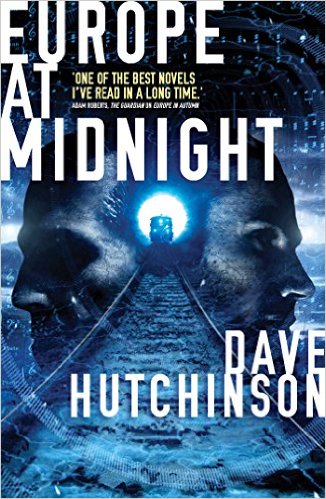
2 Europe at Midnight, Dave Hutchinson (Solaris)
3 Glorious Angels, Justina Robson (Gollancz)
4 Children of Time, Adrian Tchaikovsky (Tor)

I expect the Hutchinson to make the shortlist as there’s been a bit of buzz about it – and deservedly so. The Robson might make it on name recognition – she’s been shortlised four times before – and I think Glorious Angels is less polarising than her Quantum Gravity quintet might have been. The Tchaikvosky will, I think, lose out to KSR, which would be a shame. The Atkinson is a long shot – a few people have recommended it, but despite Life After Life I don’t think she has much traction among BSFA members.

short fiction
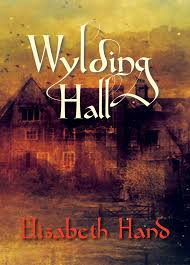
1 Wylding Hall, Elizabeth Hand (PS Publishing)
2 ‘Islands off the Coast of Capitola, 1978’, David Herter (tor.com)
3 ‘Manifesto of the Committee to Abolish Space’,’ Sammy Kriss (The New Inquiry)
4 A Day in Deep Freeze, Lisa Shapter (Aqueduct Press)

The Hand was recommended and proved a good call – but it’s a PS novella, so not free to read. That might count against it. The Shapter is my own nomination for the longlist – but again, it’s from a small press and can’t be read for free online. A shame as it’s really very good (so is the Hand too, of course). Both the Herter and the Kriss are free to read online. I’ve been a fan of Herter’s fiction for many years, and only wish he were more prolific. The Kriss is… a beautifully judged piece of trolling, and award-worthy for that reason.

non-fiction
1 ‘What Price, Your Critical Agency?’, Jonathan McCalmont (Ruthless Culture)
2 Rave and Let Die, Adam Roberts (Steel Quill Press)
3 ‘{and then} a writing life beyond reviews’, Maureen Kincaid Speller (Paper Knife)
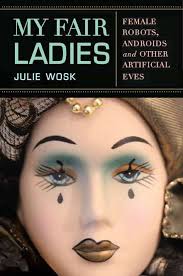
4 My Fair Ladies, Julie Wosk (Rutgers University Press)

Maureen Kincaid Speller and Jonathan McCalmont are some of the best fan-writers we have in the UK (even if both would dispute the label). (And I see no good reason to nominate a piece of US fan-writing for this UK-based award.) The two pieces above are important elements in a conversation which I think deserves to be read by more people in genre. Adam Roberts is one of our best genre critics, and I don’t want him to pack it in. The Wosk caught my fancy on a certain very large online retailer one day, and it’s a fascinating piece of work, if focused more on media sf rather than written sf.

art
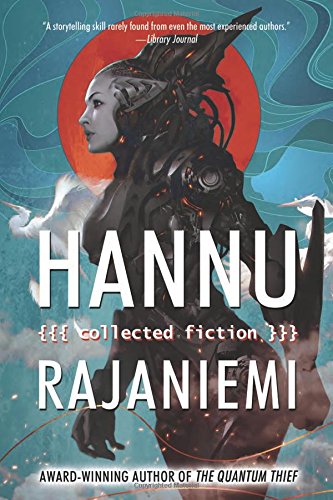
1 cover of Hannu Rajaniemi: Collected Fiction, Luis Lasahido (Tachyon)
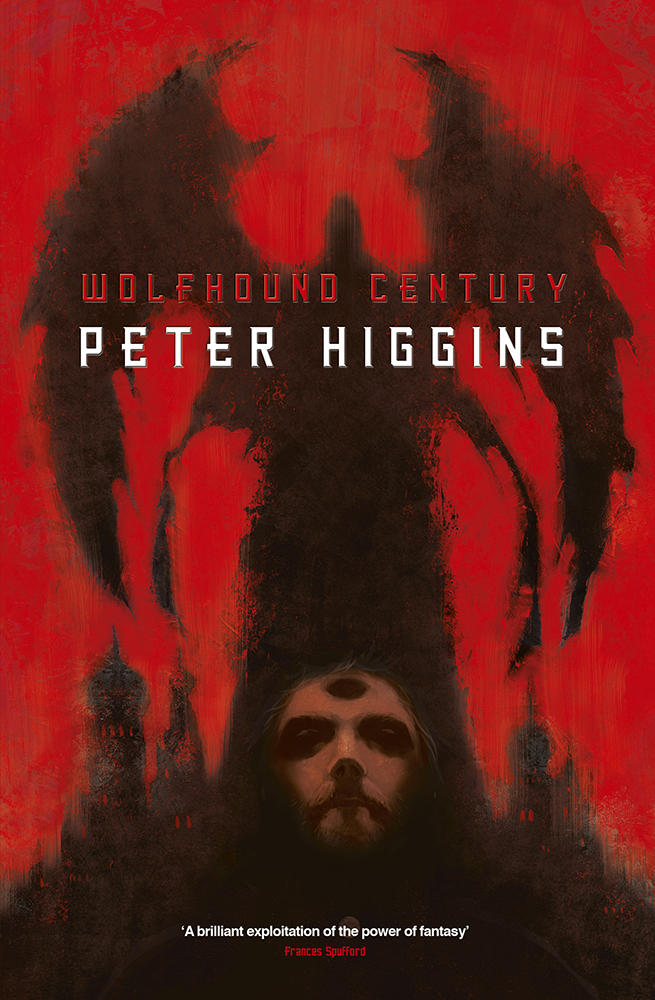
2 cover of Wolfhound Century (2015 edition), Jeffrey Alan Love (Gollancz)
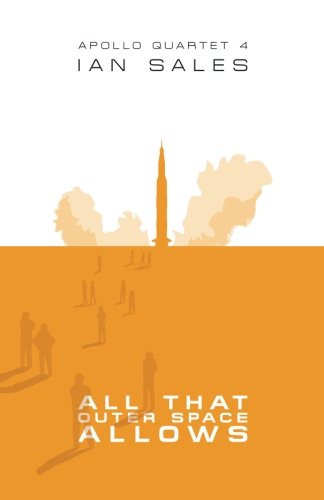
3 cover of All That Outer Space Allows, Kay Sales (Whippleshield Books)
4 illustration for ‘Songbird’, Vincent Sammy (Interzone # 257)

Four lovely pieces of design, covering a variety of styles. If the cover of a certain self-published novel appears in my list of four, it’s because I think all four quartet covers are excellent but it’s only this last which is eligible – and all four covers are brilliantly done, relevant to each book, and yet each one a simple but highly effective design. But then I do like that sort of stuff a lot – as does my sister, of course – and was fascinated by a visit at Christmas to Finn Juhl’s House at the Ordrupgaard Museum.

8 Comments

Reading diary, #21

The first batch of 2016’s reading, which, er, seems to be entirely works from last year. I don’t normally read a great deal of recent fiction, and especially books that are less than twelve months old – although, to be fair, I need to get my choices in for the BSFA Award before the end of the month… And some of them feature below. It’ll be interesting to see if the longlist approach has made much of a difference to the shortlist. (I note that ‘Gypsy’, the title novella of the PM Press collection, see below, was actually eligible but no one appears to have nominated it for the long list. Which is a shame.)

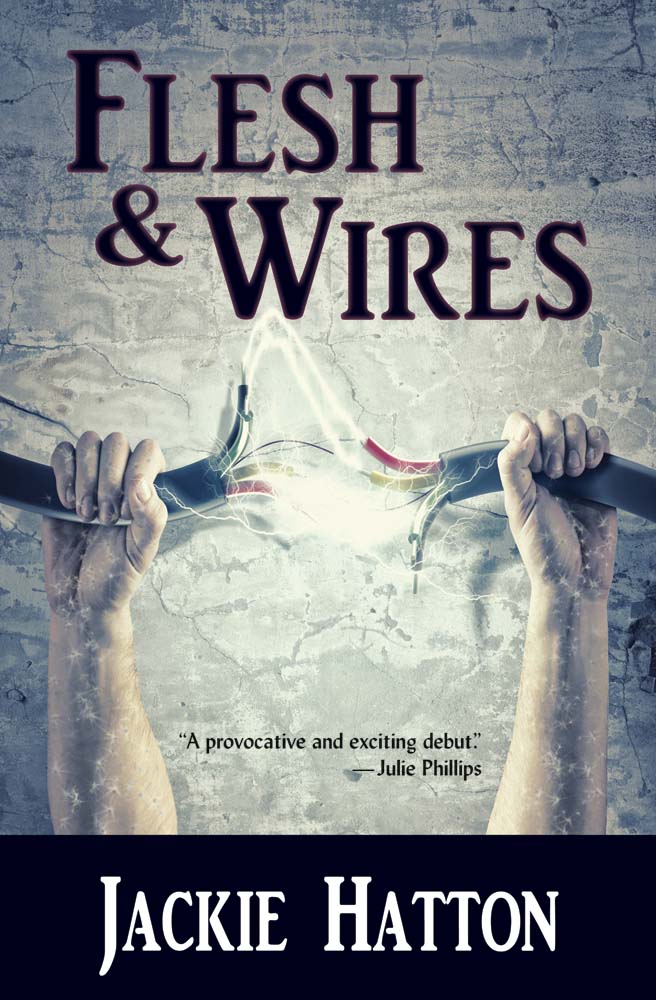
fleshandwiresFlesh & Wires, Jackie Hatton (2015). So I went on the Aqueduct Press website with the intention of buying both Elysium and Necessary Ill, both books I’d been planning to pick up for a while… and I saw mention of Flesh & Wires, as well as a pair of novellas, A Day in the Deep Freeze (which I’ve nominated for the BSFA Award) and The XY Conspiracy, bunged them into my basket and bought them… And the first of the three novels I read was Flesh & Wires. To be honest, the blurb made the novel sound more interesting than it proved to be. Which is not to say it wasn’t good. The set-up worked, the plot worked, the characters were well-drawn, there were just some elements of the background which read as confused and a little, well, clichéd. The Earth was invaded by aliens, who killed off most of the population, but kept some women, and turned them into sort of cyborgs by means of “wires”. But then the aliens died of an Earthly disease, and a new set of aliens, Orbiters, turned up, and sort of helped the surviving women – and handful of men – to rebuild. The novel is set in a small town just south of New York, and told chiefly from the point-of-view of a powerful “wired” woman who is the de facto leader of the town. When her brother, long thought dead, turns up and proves to be representing the Orbiters – and is not not at all honest about his intentions; and then a group of Orbiters exiled to Earth also appear, casting doubt on what the protagonist had believed of the current state of affairs… The end result is a solidly feminist sf novel that perhaps relies over much on somewhat dodgy tropes but manages to put a fresh spin on its plot. I’d also like to go on record as stating that Aqueduct Press publish some bloody good sf, and it’s always a pleasure to place orders with them.
my_fair_ladiesMy Fair Ladies, Julie Wosk (2015). Subtitled “Female robots, androids and other artifical eves”, which pretty much describes its topic to a tee. The author was inspired by the discovery of a mannequin’s head in a street fair, and from that starting point goes on to cover historical representations of artificial women in Greek mythology, by Shaw and other late nineteenth-century/early twentieth-century writers, before moving into films, television, robots occupying the uncanny valley, and finally artists, such as Cindy Sherman (although no mention of Gillian Wearing or Lenae Day), who explore the concept of “perfect manmade” women through their art. While the book goes into detail on early literary artificial women, later literature – particularly science fiction – is mentioned only in relation to film or television adaptations. So, no Susan Calvin, Asimov’s robot psychologist who behaved like a robot herself; nor the women of EE ‘Doc’ Smith’s Masters of Space, who are all too eager to be uploaded into replacement robot bodies because it means “their tits won’t sag”; nor even Helen O’Loy. The list of fictional female robots and cyborgs on Wikipedia gives remarkably few examples from sf stories or novels, so perhaps it’s a topic written sf hasn’t tackled that much… although it feels like it has done; too prudish, perhaps, or maybe it required more self-examination than male writers of two-fisted space adventures were capable of; and female writers had more than enough material writing about real women. Anyway, fascinating stuff. One for the non-fiction BSFA Award.
large_737_gypsyGypsy, Carter Scholz (2015). I’d never heard of Scholz, although apparently he is held in high regard. Looking at some of the comments on this book, it’s clear he has plenty of genre friends in San Francisco/Oakland, where he lives – including Kim Stanley Robinson – and where PM Press is based. None of which is a reflection on Scholz’s ability, more on the requirement of connections and patronage in genre in order for good fiction to get noticed. And ‘Gypsy’, the title novella of this collection, is very good indeed. It’s 2015’s third generation starship story, and probably the best of the three as a generation starship story. Tchaikovsky’s Children of Time scores well because of its spider civilisation, Kim Stanley Robinson’s Aurora has some good bits about narratology… but Scholz’s ‘Gypsy’ goes for real science and engineering and paints a bleak picture – one not helped by the driving force behind the flight being the immanent collapse of Earth’s biosphere. Not that the flight itself provides any answers. The remainder of the collection comprises a somewhat tired epistolary short story, an essay about US economic shenanigans, a story presented as house committee testimony, and an interview with Scholz. I have a lot of time for Scholz’s approach to genre, as given in his interview, but only the title novella seems a good expression of it.

europeEurope at Midnight, Dave Hutchinson (2015). I thought Europe in Autumn a very good, if a little confused, novel – a superior near-future spy novel, it took an unexpected swerve around two-thirds in, which unsettled the plot but managed not to upset it. And now the sequel, Europe at Midnight, follows that swerve further around the curve and results in a very different novel of a type of science fiction that likely occupies a small place all its own in the genre’s corpus. In the nineteenth century, a wealthy family invented a new English county, which somehow came into being in a reality sideways from ours, and then subsequently expanded into Europe to form a Little England writ large: the Community. Which, it seems, has teeth. The novel opens in the Campus, a pocket universe 200 miles across which comprises one huge university, now having difficulty recovering after a bloody coup. The new Professor of Intelligence is suspicious of the Faculty of Science, but his investigations result in the termination of his position and a take-over by the Science people, who have suspiciously modern weapons. Fortunately, he escapes to our Europe… where he comes under the control of the UK intelligence services. Despite that disconcerting start, we’re now back in future spy novel territory… but even then, Europe at Midnight seems to slip across hidden borders into parallel fictions – much as some of its cast do – as it tells a story about Europe, the Campus and the Community which is only actually revealed in the final chapter. This is good stuff – a novel that cleverly runs our future alongside our memories of our past, and sets the scene for a war between the two. I’ll be nominating this for the BSFA Award.

wylding_hallWylding Hall, Elizabeth Hand (2015). This appeared on the BSFA Award short fiction longlist, and was recommended by several people whose opinions I trust – and, it had to be said, the précis did sound interesting… so I bought it, read it, and I’m giving it one of my four slots on my BSFA Award ballot. An acid folk group in the very early seventies hires the eponymous country manor to rehearse and record their second album (following the suicide of the group’s original singer; she was also the girlfriend of the band’s main creative force). Wylding Hall is a strange place, but this novella doesn’t go for in-your-face ghosts and apparitions but a much more effective general atmosphere of uncertainty. Windhollow Faire come across as a believable band, and the links to the darker side of English folklore are well-handled. The story is told as the decades-later reminiscences of the band members, a technique which is especially effective as it gives it the authority of a Sky Arts documentary. I have only a couple of minor niggles – back then, a grammar school would have been more posh than a comprehensive, and Radio 3 – not BBC 3 – was always more into classical and jazz, not folk; and John Peel was on Radio 1, which was the station mostly likely to play electric folk at that time.

1001 Books You Must Read Before You Die count: 121


3 Comments

Moving pictures 2016, #1

A few people have said they’ve enjoyed these posts, so that’s enough for me – I’m going to keep them going. Otherwise, I guess, it’d be weeks between content appearing on this blog. Having said that, I really should write another one of my rants about science fiction, they usually go down well… But, for now, it’s movies and more movies…

cria_cuervosCría Cuervos*, Carlos Saura (1975, Spain). There are films you feel you really ought to like, given their subject and how well they’ve been made. I suspect Cría Cuervos is one such film. An eight-year-old girl witnesses a mistress visit her father on the night of his death, but she believes she was herself responsible for his death because she added “poison” to his glass of milk earlier that evening. She takes the glass from her dead father’s bedside and carefully washes it. Her mother appears in the kitchen, and the two talk. The father was a senior military officer in Franco’s fascist government. After the funeral, their mother’s sister is brought in to look after the girl and her two sisters – because their mother had died years before (in a clever bit of casting, Geraldine Chapman – the director’s partner at the time – plays both the mother and the adult version of the protagonist, who appears occasionally to comment on the events of her childhood). The children’s aunt is not a very good substitute mother, and the young girl obsesses over the “poison” she had given her father – which later proves to be nothing more than bicarbonate of soda – so much so that she even offers it to her mute grandmother. There is something contained about this film, the fact that Franco’s regime exists but impinges only peripherally, and yet the whole film is itself a commentary on that regime. It is, on reflection, a clever film, one that deserves more than single watching. I’m not convinced its child protagonist is necessarily a strong enough character to centre the film – and more ought to have been made of her future self’s appearances – but the way her life allegorizes Spain as a whole is effective. A good film.

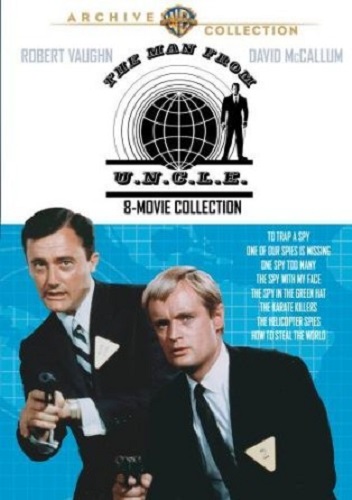
uncleThe Man from UNCLE Movies: To Trap a Spy, One of Our Spies is Missing, The Spy with My Face, One Spy Too Many, The Spy in the Green Hat, The Karate Killers, The Helicopter Spies, How to Steal the World (1966 – 1968). I have no idea what possessed me to buy this boxed set of eight movies, expanded for theatrical release from episodes of The Man from UNCLE (I refuse to put full stops in the word, we don’t do that in the UK – abbreviations, initialisms and acronyms aren’t written with them in British English). Anyway, the men from UNCLE, Napoleon Solo and Ilya Kuryakin. One of the many cable channels to which I have access had been showing these films and I caught a couple. They weren’t very good, but I thought it worth seeing the rest… Hence the DVD box set. And, well, as expected, they weren’t especially good. To Trap a Spy stars Luciana Paluzzi as the femme fatale, but she’s completely wasted. The Spy in the Green Hat has a frankly bonkers Jack Palance as the villain, ably assisted by Janet Leigh as an unhinged secretary/assassin (the best character, it has to be said, in the lot). It’s near impossible to pick a “best” film as they’re all so bad – and often cheap, too. Despite the familiar faces of the guest stars, the movies still boast television-episode budgets, and there’s an English-looking house somewhere in Hollywood or Bel Air used as a mansion in a variety of European countries. Having said all that, Vaughn is impressively suave as Solo, McCallum is, er, McCallum, and THRUSH is still a dumb name for an evil organisation. Complete tosh.

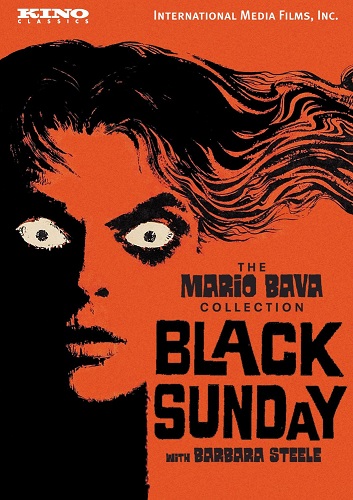
black_sundayBlack Sunday*, Mario Bava (1960, Italy). This was apparently the first film Bava directed and wrote – and it’s on the 1001 Movies You Must See Before You Die list… which is why I watched it. I’ve seen comments which praise its cinematography, but Bava was always a bit of a stylist – and it’s a failing of critics everywhere and at any time that genre should somehow be treated differently, as if the same rules of style do not apply because, well, horror. Absolute bollocks. Genre is an attribute of the story, not of how the story is told. Having said that, Bava’s style was certainly distinctive, and often OTT. In Black Sunday, a witch is executed in the seventeenth century, but two hundred years later, a pair of innocents discover her grave and inadvertently bring her back to life. There are no surprises here, but it’s all done with panache and a somewhat more artistic approach to such stories than may have been common previously. Fun, but I’m not sure why it’s on the 1001 Movies You Must See Before You Die list.

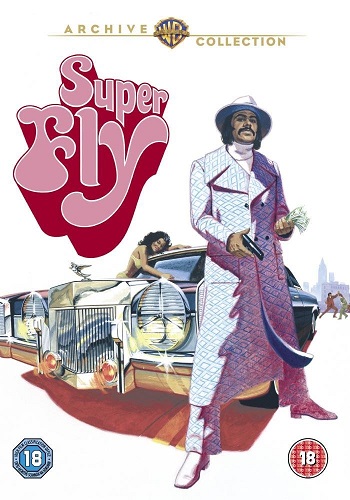
superflySuper Fly*, Gordon Parks Jr (1972, USA). Because blaxploitation films became a thing in the 1970s, the 1001 Films You Must See Before You Die list feels an obvious need to acknowledge their existence by including a few on its list, without actually thinking it possible to build a list in which such movies are not necessary. Because if you make a list that’s 50% American, then it’s going to be racist by definition – hence the need for three films by Gordon Parks Jr. Include more films by, for example, Ousmane Sembène, Souleymane Cissé, Mahamat Saleh Haroun, Mehdi Charef, or any other film-maker from the African continent. In fact, the list has remarkably few Arab directors on it – none from Egypt’s enormous film industry, no Palestinian directors such as Elia Suleiman (a favourite of mine, I admit), although one or two Iranian directors and Israeli directors are listed. All of which has has no bearing on Super Fly, which is a relatively ordinary early seventies thriller, notable because its hero is a villain and the film more or less presents his career as the one of the few open to people of colour. Which is likely true in the US – then and now. Not a great film, and I suspect its implications would be lost on ninety percent of its audience – which does render its inclusion in the list somewhat moot.

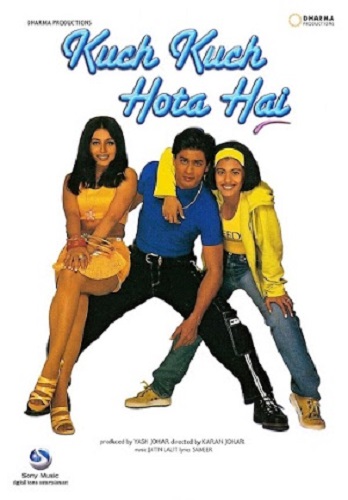
kuchKuch Kuch Hota Hai, Karan Johar (1998, India). After watching Deewaar by mistake late last year, and having really enjoyed Dilwale Dulhalia Le Jayenge earlier in the year also, I went and stuck a bunch of Bollywood films on my DVD rental list. And Kuch Kuch Hota Hai was the first to arrive. My expectations were… pretty much based on Dilwale Dulhalia Le Jayenge, rather than Deewaar, and Kuch Kuch Hota Hai met them all – it even starred Shah Rukh Khan again (despite being released in the same year as Dilwale Dulhalia Le Jayenge). SRK, while at college, fell in love with the principal’s daughter, who had joined after studying in the UK, they married and had a baby. Sadly, the mother died in childbirth. Eight years later, daughter Anjali reads the final letter left by her mother and learns that she was named for SRK’s best friend at college. The original Anjali is about to get married, but young Anjali thinks her father would make a better husband. There’s also a long flashback sequence explaining how SRK, Tina (young Anjali’s mother) and original Anjali meet and become friends/lovers. Plus songs and dance routines. I loved it. That decision to add some Bollywood to my rental list? Totally vindicated. I will admit to a secret hope – many years ago, in a taxi in Abu Dhabi I heard a song from a Bollywood film playing on the radio, and it managed to cover about fifteen musical genres in less minutes. A friend later told me the film in which the song had appeared, but I have since forgotten the title and would love to stumble across it. But, Kuch Kuch Hota Hai was just a fun film from start to finish. I tweeted while watching it that “Bollywood was Hollywood dialled up to eleven”, and so it is. I have been bemoaning the preponderance of Hollywood films in my viewing last year, but Bollywood makes a perfect replacement. More such films have been added to DVD rental list.

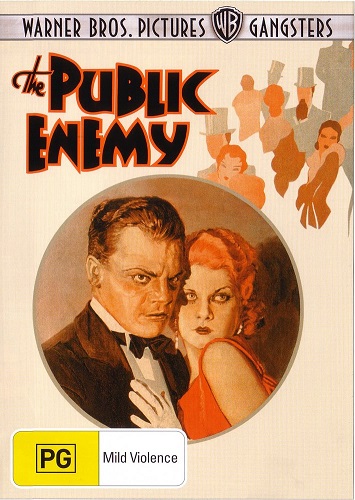
public_enemyThe Public Enemy*, William A Wellman (1931, USA). One of the drivers of early Hollywood success appears to have been gangster movies, and I’m not entirely sure why. There are certainly other stories that are just as dramatic. I guess Prohibition fucked up the US more than it cares to admit. Not that the US would ever admit it’s been pretty much fucked-up since it was founded. Anyway, the end result is that many gangster movies of the 1930s all resemble each other – I kept on forgetting I was watching The Public Enemy, and confusing it with either Scarface or Angels with Dirty Faces. Although, sadly, it wasn’t a patch on Scarface. Cagney plays a gangster who makes good selling beer to bars – not that the bar owners have much choice, and much like the plot of Scarface – and argues often with his war hero brother. And, er, that’s about it. Cagney is a gangster, there is much gangsterly violence, Cagney dies a gangsterish death. The end. Watch Scarface, ignore all the other movies of like ilk.

1001 Movies You Must See Before You Die list: 704


1 Comment

Reading diary, #20

A new year, more books read (some of which are actually from the Christmas holiday, but never mind).

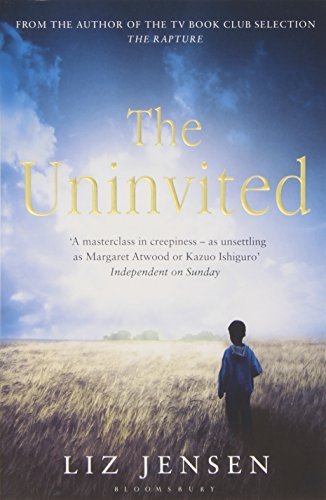
the_uninvitedThe Uninvited, Liz Jensen (2012). I am a Liz Jensen fan, although I don’t make as much of an effort to read her books as I should do. True, whenever I see one in a charity shop, I buy it. But, seriously, I should be buying her books new from a retailer – online or otherwise – because they are that good. Consider it a personal failing. In The Uninvited, the narrator, who suffers from Asperger’s, finds himself drawn into an investigation into children who have murdered their parents. And there seems to be an epidemic of such murders. In all cases, the children have no idea why they committed murder, and seem completely unaffected by their actions. Jensen never gives you quite what you expect – and that’s as true of this novel as it is of any of her others. The narrator’s condition is handled expertly, the circumstances of the deaths he investigates are presented convincingly, and the actual plot of the novel actually seems almost plausible. I’m not the only one with a failing here – we should all be reading Liz Jensen. And The Uninvited is as good a place to start as any.

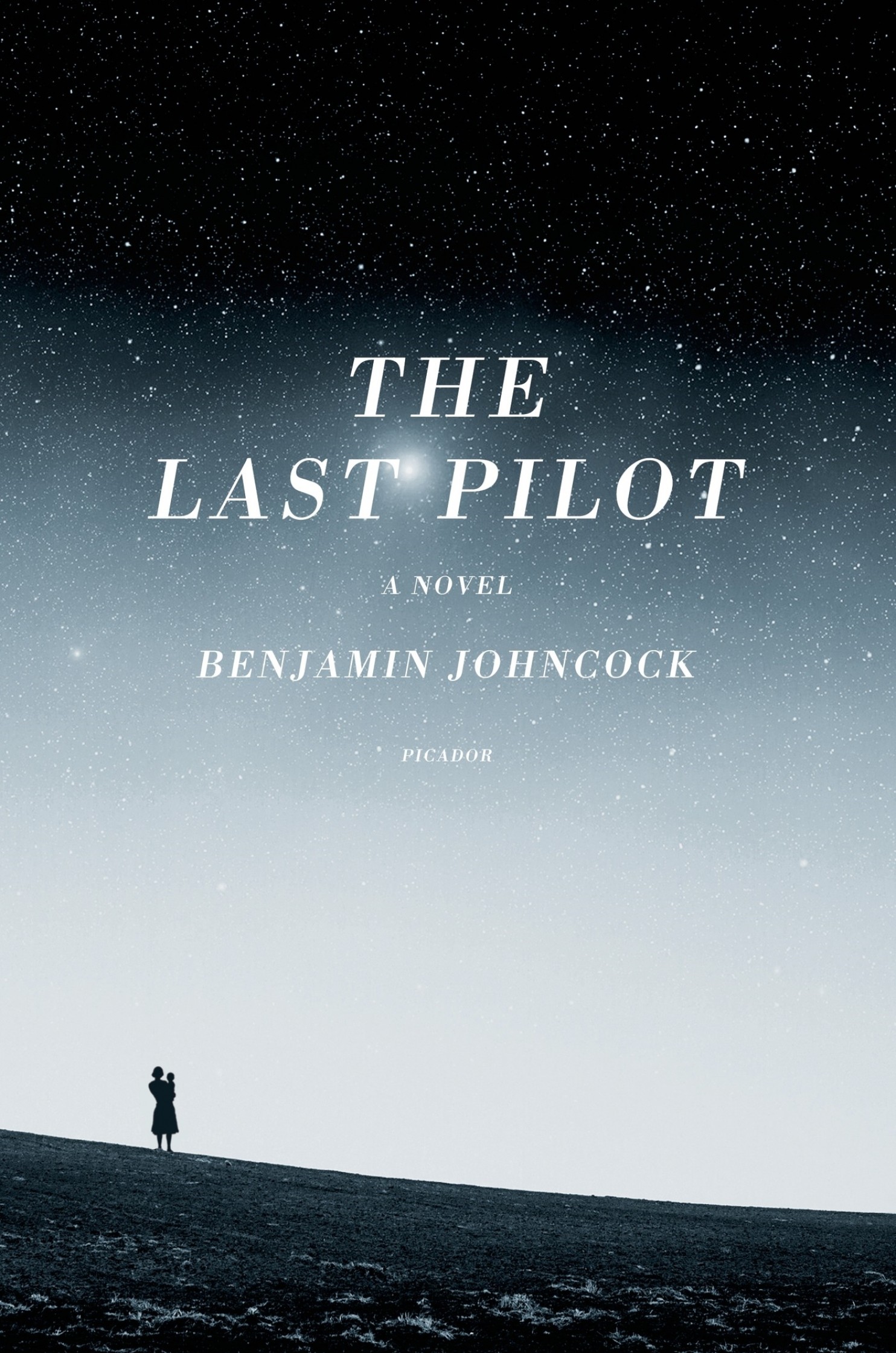
Last Pilot_PicadorThe Last Pilot, Benjamin Johncock (2015). How could I not read this? A test pilot at Muroc Air Force Base (later renamed Edwards) in the late 1940s becomes an astronaut in the Apollo programme. This is exactly the same ground I covered in All That Outer Space Allows, although I did it from the wife’s point of view. And my take is a lot more technical. As far as I can determine, Johncock’s Jim Harrison takes the place of Dave Scott (Apollo 15 commander), although Scott does actually appear toward the end of the book. Also, while many aspects of Harrison’s persona life are invented, many incidents assigned to Harrison actually happened to others. Harrison is there when Yeager breaks the Sound Barrier in 1947, he gets assigned to the X-15 program and then to the X-20 program, before eventually joining NASA and becoming an Apollo astronaut. Also like All That Outer Space Allows, The Last Pilot focuses on its protagonist’s marriage. Although Harrison and his wife try for children for years, they’re not successful – but then, against all odds, as is usually the case in fiction, they have a girl. But she sickens and dies of cancer at the age of ten, and her death slowly tears the marriage apart from within. If lit fic is unfairly characterised as fiction about middle-class marriages disintegrating, then The Last Pilot is lit fic – albeit with a test pilot/astronaut as its protagonist. It is well-researched, well-written, and Johncock cleverly covers plenty of ground by assigning so many documented incidents to his protagonist. But – and I can actually say this: it’s not the book I would have written. And my own novel coloured my reading of Johncock’s – almost certainly unfairly. It’s a good piece of work, certainly – but I would have preferred something a little more interesting as the plot’s engine… And lots more technical detail.

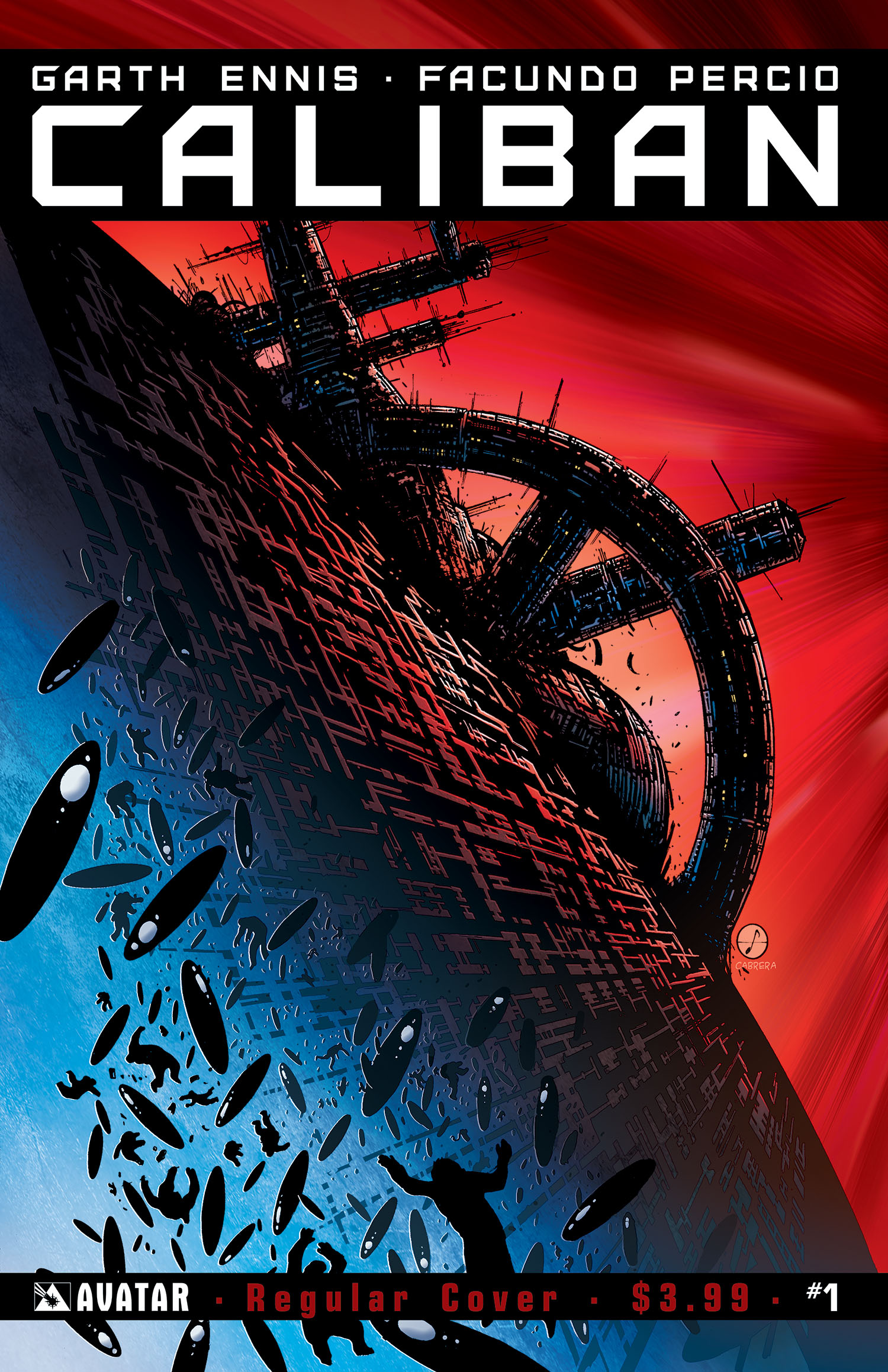
Caliban-1Caliban, Garth Ennis & Facundo Percio (2015). This was the first of two graphic novels I bought in Faraos Cigarers in order to make up my numbers on my 150 book reading challenge. To be honest, the shop also had an impressive number of Moebius collections, and I would have bought them like a shot – but they were all in Danish. Sigh. Instead, I had to make do with substandard US/UK sf graphic novels like this one. A spaceship collides with a mysterious alien spaceship in hyperspace and the crew of the former decide to explore the latter. Guess what – this proves to be a bad move. There’s like some alien virus thing which takes over one of the crew and leads it to slaughter all the others. This is pretty much Event Horizon meets Alien. A thoroughly unimpressive and derivative piece of science fiction in graphic form. Seriously, given the stuff produced by France, Anglophone graphic sf needs to step up its game big time.

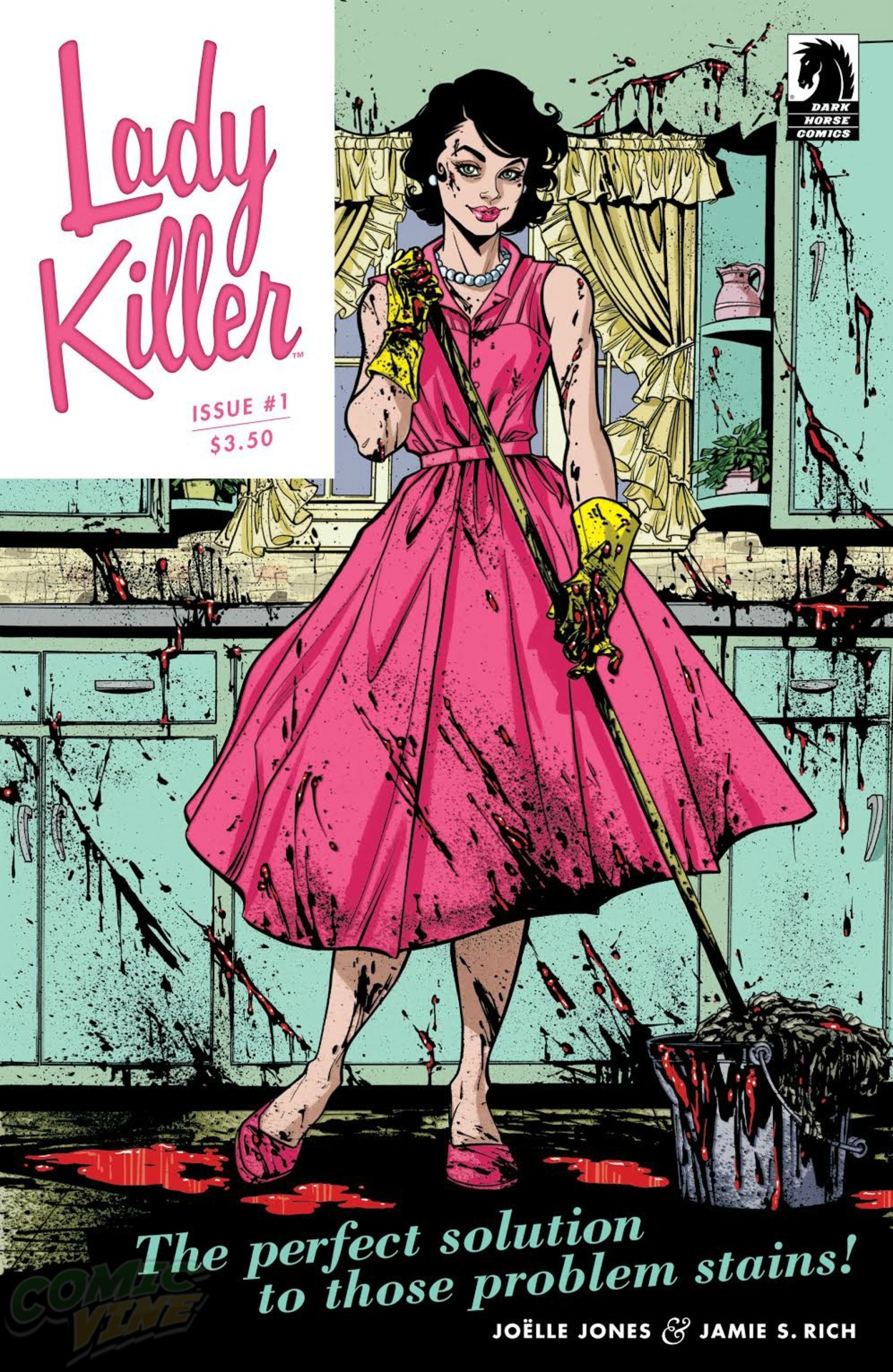
4263805-1+lady+killer+1+cover+final+designLady Killer, Joëlle Jones & Jamie S Rich (2015). And this was the second graphic novel from Faraos Cigarer. It was the also the more appealing of the two. Nineteen-fifties housewife secretly works as an assassin on the side. Sadly, the plot is almost pure cliché from start to finish – after several successful, and very bloody, jobs, there’s one which proves she’s not a totally heartless killing machine. Meanwhile her boss has decided she’s going to become a liability – because she’s a woman. Perhaps there could have been more housewife stuff (probably not of interest to your average comics fan) to provide a better contrast with the killing and gore, but despite that the art is really very nice indeed. It’s just a shame the story couldn’t think beyond its boundaries – I mean, there’s plenty of room for commentary on fifties society, something a little more subtle than the blunt instrument that is a housewife-assassin (who actually masquerades as a Bunnygirl at one point!). But this is hardly Moebius, or any bande dessinéee, so I guess I should take what I can get.

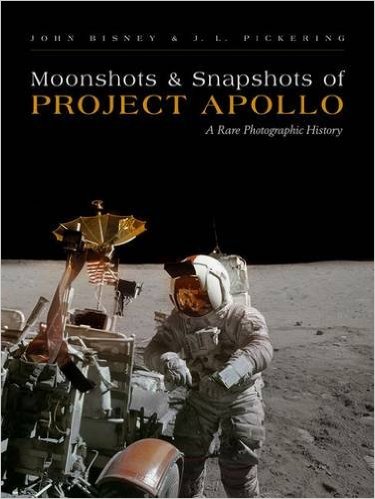
moonshotsMoonshots & Snapshots of Project Apollo, John Bisney & JL Pickering (2015). The second of two books by the authors about – well, the title pretty much gives it away. Like Spaceshots & Snapshots of Projects Mercury & Gemini, the authors have selected photographs not normally seen in these sorts of books. There are, of course, a huge number of books about the US space programme (not so many about the Soviet one, obviously), which does make you wonder how some people didn’t know who Neil Armstrong was – even if Project Apollo ended forty years ago with ASTP and that’s pretty much ancient history to some. But Mercury, Gemini and Apollo – not to mention Vostok, Voskhod and the many versions of Soyuz – were an astonishing achievement, and sadly seem nowadays to be little more than fuel for a lucrative nostalgia industry rather than an actual stepping stone to further achievements in the human exploration of space. It’s tempting to think that two hundred years from now all this might be indistinguishable from some sort of science fiction documentation project, like one of those mockumentaries about invented rock bands – but what a project! So much documentation! And all the cross-referencing! (All of which, of course, means people who think the Moon landings are a hoax are complete idiots.) Anyway, there’s a huge number of books on twentieth-century space exploration, and it’s almost impossible to keep up with them. But these two by Bisney and Pickering would look good in any space books collection.

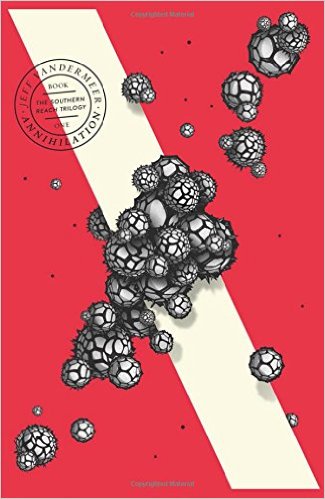
annhilationAnnihilation, Jeff VanderMeer (2014). This is a good book, one of the better ones genre fiction produced in 2014. Let’s get that out of the way. It is also completely not my thing. If I had to vote for it on a shortlist, it would be because of its recognisable quality not because I liked it. I’ve already decided I won’t be bothering with parts two and three. Four women are sent into Area X, a wilderness area which manifests strange behaviours, as the latest in a number of expeditions, of which all the previous were unsuccessful. The women are never named – the narrator, whose journal forms the narrative, explains that the expeditions do not use names since referring to each other by profession is considered safer within Area X. A day or two after their arrival, they find a structure which the narrator calls the Tower but the others refer to as a tunnel. It is a staircase circling down into the earth to an unknown depth. Along the wall of the staircase is a line of glowing script, possibly fungal in nature, written by a creature several levels lower. None of this is explained. And deliberately not so. As I commented in a Twitter conversation with Jonathan McCalmont a few days ago, prompted by John Clute’s review of David G Hartwell & Patrick Neilsen Hayden’s 21st Century Science Fiction in The New York Review of Science Fiction (see here)… Clute’s point that science fiction colonises the universe – “to make the future in our own image” – resonated with some of my own thoughts on the genre. To me, the universe is explainable but not necessarily knowable, and I prefer science fictions which reflect that. Area X in Annihilation is plainly neither knowable nor explainable, and is clearly not meant to be. It’s an artistic choice, but it’s one that doesn’t interest me.

1001 Books You Must Read Before You Die count: 121


1 Comment

Moving pictures, #42

This is the last lot of movies watched in 2015 – only three of them, in fact. Well, two movies and a season of a television series. I’m still unsure whether to continue these posts this year – what do people think? Is it worth it? I mean, I do tend to watch a broad variety of films, and while I can hardly recommend every one I’ve watched, I’ve certainly discovered directors and movies I greatly admire. I’d hope readers of this blog find these posts useful.

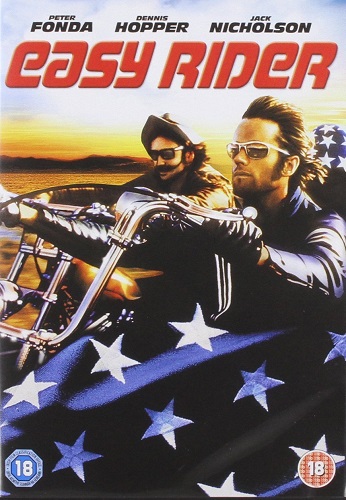
easy_riderEasy Rider*, Dennis Hopper (1969, USA). There are films you know about but never get around to watching – and it’s hard not to know about an icon of US counter-culture like Easy Rider. But I’d never seen it. Unfortunately, such knowledge often results in you thinking you know what to expect. Like two guys on choppers, driving around the US, complaining about The Man. And while elements of Easy Rider might well be described as such, I actually found myself really enjoying it because it proved to be so much more. There was the music, of course – all very much of the time, but not especially obvious choices. The cinematography was surprisingly good, especially of the US landscape. The film tries for a thriller plot, but mostly fails because it’s been filmed in that less-than-rigourous manner in which actors were expected to improvise, and non-professionals were involved. Neither fact, of course, is a criticism – in fact, they can result in superior movies (except for comedies, that is, especially Seth Rogen ones). But they did somewhat upset my expectations… albeit in a good way. Despite the fact it’s likely an invention, or probably never existed, I still can’t help buying into the beardy long-haired hippy on a chopper turning their back on society thing – even though it never came to anything, and most of them ended up as either CEOs of successful hedge funds or sellers wildly improbable products that no one was interested in… I’d like to see this again; I think it bears rewatching.

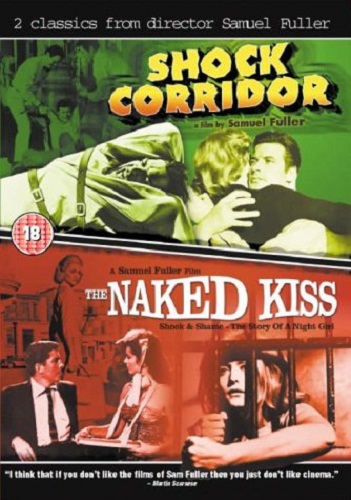
sohck_corridorShock Corridor*, Samuel Fuller (1963, USA). I know Fuller’s name from The Big Red One, which I watched last year (it’s on the 1001 Movies You Must See Before You Die list, of course; as is Shock Corridor). Although clearly done on the cheap, I thought The Big Red One a superior WWII movie, and I’m not that much of a fan of the genre. Shock Corridor, however, is an early work, a black-and-white OTT noir thriller. I wasn’t expecting much, but I ended up loving it. I plan to buy the Criterion Collection edition – and The Naked Kiss, which I’ve not seen but was made around the same time. But, Shock Corridor… A reporter poses as a patient to infiltrate a mental hospital where a patient was murdered the previous year. The crime is still unsolved, but clearly someone inside the hospital was responsible. Of course, the burden of presenting as mentally ill eventually causes the reporter to become mentally ill. But he does solve the crime. It’s all completely over-the-top – the patients are all pretty much clichés of mental patients, but Constance Towers plays a good role as the reporter’s girlfriend. In fact, she makes the film. It’s also a little weird seeing Roscoe P Coltrane play a straight role. Great stuff.

hammer_houseHammer House Of Horror – Complete Collection (1980, UK). I remember these being broadcast back in 1980. I was at boarding school, and we stayed up late to watch them. I only saw a few of the thirteen episodes, however – or at least, I only have memories of a few of the episodes. Two in particular have always stood out – ‘Guardian of the Abyss’, in which a Satanic cult use Dr Dee’s original scrying glass to summon a powerful devil; and ‘The Carpathian Eagle’, which featured Suzanne Danielle as a young woman who picks up men and cuts out their hearts. Last year, the Horror channel (one of the hundred or so cable channels I have on Virgin Media which rarely show anything of interest) broadcast the entire series, but again I only managed to catch a couple of episodes. Thirty-five years later, the one thing that struck me about the episodes I watched on cable telly was that they were so very late nineteen-seventies. And they weren’t very scary at all. I’d been a little afraid they were – ‘Guardian of the Abyss’ had given me nightmares when I watched it back in 1980. So I decided to get the DVD set, and… Well, they’re not really horror, they’re more thrillers, often with only a hint of the supernatural. They were also a lot better than I’d expected. Production values were pretty high for the time (okay, so the same manor house appeared under different names in multiple episodes, but never mind), the cast were pretty high-powered – Denholm Elliott, Peter Cushing, Brian Cox, Jon Finch, Simon MacCorkindale, Paul Darrow, Diana Dors, Warren Clarke, Dinah Sheridan… – and the final twists weren’t always blindingly obvious. Perhaps one or two episodes felt a bit stretched for their 51 minutes running time, but others were very effective in the scares department. When the DVD set arrived, I wondered why I’d bother ordering it, but having now seen all thirteen episodes I’m glad I did. ‘Guardian of the Abyss’ is still hugely creepy, if no longer nightmare-inducing; the plot of ‘The Carpathian Eagle’ is far more obvious than I’d remembered but is still good drama; and there are also fun episodes like ‘The House that Bled to Death’ (Carrie, in a semi-detached),’ A Rude Awakening’ (Denholm Elliott trapped in a sequence of nested nightmares), ‘Visitor from the Grave’ (woman kills an attacker, but he continues to haunt her), and ‘The Two Faces of Evil’ (scary hitchhiker proves to be a doppelgänger of a woman’s husband). Good stuff.

1001 Movies You Must See Before You Die count: 701


1 Comment

Moving pictures, #41

This year’s viewing is nearly done. It has been the Year of Films. A huge number of them. Sadly, not all were especially good. But I did “discover” the films of Jacques Tati and James Benning, and started to obsess over the films of Aleksandr Sokurov. So not all bad then. The following movies pretty much take me to the end of the year. I’ve yet to decide what I plan to do about documenting my film-watching next year. I’m hoping I won’t be spending as much time watching DVDs, so I might well follow the same format. But we’ll see how it goes…

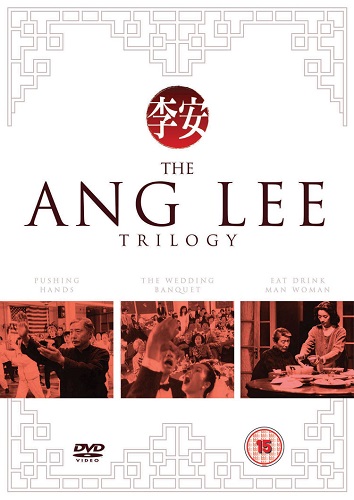
ang-lee-trilogy-dvd-coverThe Wedding Banquet*, Ang Lee (1993, Taiwan). I’m fairly sure I’ve seen a variation on this story, although the particulars escape me at the moment. Taiwanese expat has moved to the US, and is now living with partner Simon in Manhattan. His parents, however, think he is straight and are still trying to fix him up with a suitable wife. To forestall them, and to help out, he agrees to marry a tenant of his, a Taiwanese artist with no money. But then the parents want to visit and they bring $30,000 to pay for a sumptuous wedding. Son manages to keep the ceremony low-key, but his parents use the money on a huge banquet at a local Chinese restaurant run by a man who had been the father’s driver when the father had been a senior officer in the army. I am, I admit, somewhat conflicted about Ang Lee’s films. I’ve enjoyed many of them but not enough to seek out his oeuvre. He strikes me as good, but not great. His films are, at least, wide-ranging in topic, but though several of them appear on the 1001 Movies You Must See Before You Die list, including this one, none to me feel really deserving.

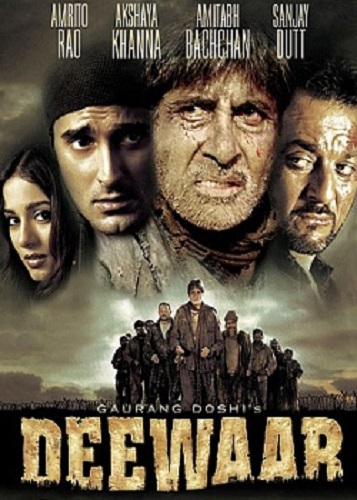
deewaarDeewaar, Milan Luthria (2004, India). I watched this film by mistake. As you do. There’s a Deewaar on the 1001 Movies You Must See Before you Die list, but it was made in 1975 – although it does also star Amitabh Bachchan. But I rented the wrong one (actually, the other isn’t actually available for rental). By the looks of it, the two films are completely different. Ah well. This one, the 2004 film, is about a group of Indian soldiers held as POWs by Pakistan since the 1971 India-Pakistan War. Without India’s knowledge. But one of the prisoners escapes and tells the son of one of the imprisoned men, a war hero, and together they plan an escape. Over the film’s three hours, Deewaar manages to hit every WWII POW movie cliché with impressive accuracy. There are, of course, since this is Bollywood, a couple of musical numbers, but they are uncharacteristically restrained – just lots of singing and very little dancing. But then it is a POW film. Despite not planning to watch it, I quite enjoyed Deewaar – so much so, I went and stuck a dozen or so Bollywood films on my DVD rental list. But it looks like if I want to see the 1975 Deewaar I’m going to have to buy a copy. Oh well.

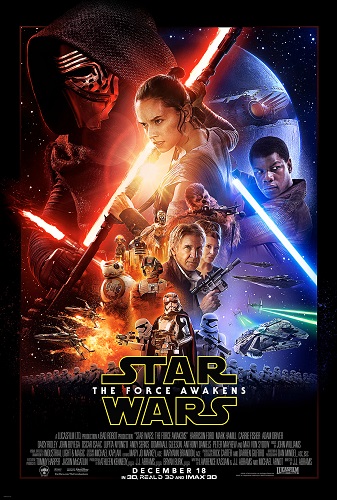
star-wars-force-awakens-official-posterStar Wars: The Force Awakens, JJ Abrams (2015, USA). Criticising The Force Awakens is starting to feel like spitting on Mother Teresa, but let’s face it, Abrams is a piss-poor director and The Force Awakens is a well-produced piece of fan service that does little more than reboot the Star Wars franchise (completely trashing SWEU in the process) while nonetheless making not the slightest bit of sense from start to finish. My twelve-year-old nephew, of course, loved it. I loved the original Star Wars film when I was eleven – but that film was a thousand times better than this one. So… there’s the First Order, which is supposed to be some sort provincical fascist troop, except they can afford Star Destroyers and even have enough money to convert an entire world into Starkiller Base, which is sort of like the Deathstar only MOAR BIGGAH. Then there’s the Republic, which beat the Empire – as in the original trilogy – except it doesn’t seem to care much about the First Order because it just sits around and waits to get blown up (in one of the most undramatic planet-blowing-up scenes in cinema history). And then there’s the Resistance, which is… resisting whom exactly? And it only has a handful of X-Wing fighters, so it’s not like it’s much of a threat against the Star Destroyer-equipped First Order anyway. I’ll not bother reiterating the plot, which pretty much hits all the beats of the original Star Wars film, though I welcomed both Rey and Finn as protagonists (and decry Disney’s failure to include Rey in most of their merchandising). There are a couple of really annoying plot holes, however. First, the Millennium Falcon sits there unlocked and fuelled, ready for Rey to steal it. As if. And where did she learn to pilot starships anyway? Poe Dameron’s reappearance, having been thought dead for two-thirds of the film, is handled really badly. Abrams does the amazingly fucking stupid thing he does in his films where a character sees a planet thousands of light years away explode in the sky above him. FFS. Actually, that’s not even stupidity, that’s contempt for his audience. The Millennium Falcon gets through the shield around Starkiller Base by approaching the planet at lightspeed. So why don’t the X-Wings? Why do they need the shield dropping? Finn was a “sanitation engineer” on Starkiller Base. Seriously? They use stormtroopers to empty the bins? Isn’t that a bit of a waste of all that combat training? Not that it seems to have been much use with Finn. Now, I enjoyed The Force Awakens, and I’ll likely watch it again some time. But it is not a good film, and adds almost nothing to the Star Wars franchise (although it certainly removes a lot: the entire SWEU, in fact). The most interesting thing about The Force Awakens has been the cultural phenomenon it has generated. All that crap about spoilers, all that rubbish about criticising it being a heinous crime. It’s not a patch on the 1977 Star Wars and, dare I say it, is a good deal less inventive than The Phantom Menace. Disney have taken a much loved intellectual property, which had been product from a week after its release, and turned it into twenty-first century product. And that’s not a compliment.

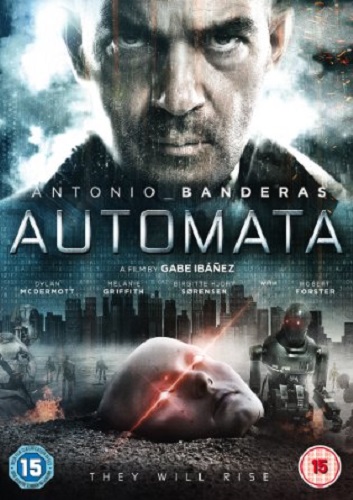
automataAutomata, Gabe Ibáñez (2014, Bulgaria). What an odd film. It starts out like Blade Runner, but then keeps the plot but changes tack to become a robot-hunter flick. Antonio Banderas plays the Deckard role, a cop who stumbles across a robot that proves to be a little more than it should be – it can break the “Second Protocol” (only the first and third of Asimov’s Three Laws of Robotics make an appearance in this) and so repair itself. He ends up getting abducted by one of these robots, and taken out into the desert surrounding the city – the result of climate crash or nuclear war is not made clear, but certainly it’s radioactive. The film doesn’t seem to know what self-awareness is, and confuses it with heuristic programming. Melanie Griffith plays a “clocksmith”, someone who modifies robots, and she is terrible, some of the worst acting I’ve seen in a long time. The film is also over-lit, often badly so (and so lights reflect off Banderas’s sweaty face where light sources are not supposed to exist), and filmed in DV so the image is sharp and clear and pretty unforgiving under the over-lighting. The robots, however, at least look like robots and not sexy women modelled in chicken-wire, and although the background makes very little sense and seems to over-rely on over-used cyberpunk tropes, the plot mostly hangs together. The supporting cast are all British (despite the Bulgarian money and locations and Spanish director), many doing bad to middling American accents. For some reason, Automata reminded me of Enki Bilal’s Immortal Ad Vitem, and while less inventive than that film it is more convincing.

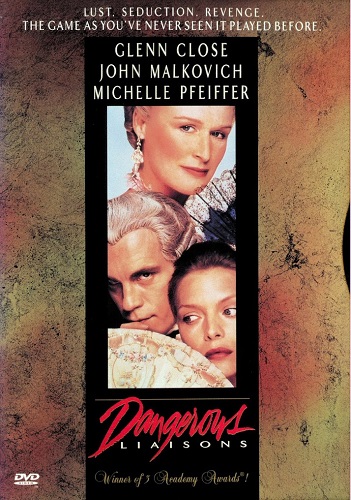
dangerouslDangerous Liaisons*, Stephen Frears (1988, USA). I’ve known of this film for years, decades even, but never actually watched it. But, as the asterisk indicates, it’s on the 1001 Movies You Must See Before You Die list so I bunged it on my rental list and lo and behold it arrived. And… meh. I really didn’t take to it. Glenn Close plays a manipulating marquise, John Malkovich plays a scheming vicomte, and both Uma Thurman and Michelle Pfeiffer play the vicitms of their sexual machinations. There’s lots of walking around in period costume – 1780s France, that is – and Malkovich issuing protestations of his undying love to Pfeiffer and she rebuffing him because, well, because he’s a sociopathic sexual adventurer, and then he explains himself to Close and… But, of course, Pfeiffer eventually succumbs to his blandishment. Amd Thurman too falls from grace. And Close gets her revenge. And… yawn. Keanu Reeves is there too, and he still can’t bloody act. He’s more wooden than a bloody wooden spoon. Bit dull this, and yet another inexplicable entry on the 1001 Movies You Must See Before You Die list.

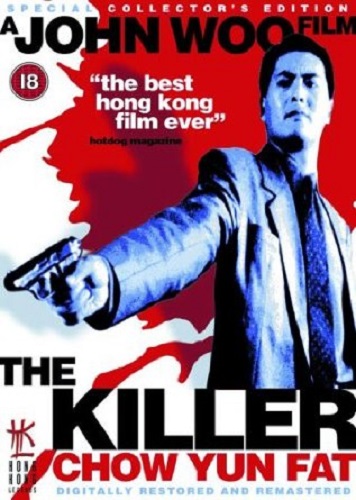
the_killerThe Killer*, John Woo (1989, Hong Kong). Back when I lived in Abu Dhabi, DVDs weren’t that easy to come by – mostly thanks to censorship – but VCDs were readily available. And most of the latter were Hong Kong films. It seems that city had adopted the format with a vengeance (unlike Europe and the US). As a result, I bought a number of VCDs of Hong Kong action films, including quite a lot by Jackie Chan. And it’s those films The Killer reminded me of. Chow Yun Fat plays a gentleman assassin. On one of his jobs, he inadvertently blinds a night-club singer. So, hiding his identity, he returns to her, pays for treatment, and slowly falls in love with her. Meanwhile, the police are after him, as are a bunch of gangsters. Which means lots of slo-mo shoot-outs, although perhaps not with so much of the signature Woo, two guns, both held horizontal, while the shooter leaps in slow-motion for cover. It is amazing, however, that Fat never gets hit by those firing at him, at least not until the end of the film when the plot requires it. As Hong Kong actioners go, this is a superior example, but Hong Kong is such a huge cinema people are likely to find something more to their taste than this random sample from the 1001 Movies You Must See Before You Die list (Woo’s later success in Hollywood notwithstanding… um, or perhaps that’s responsible for his appearance on the list).

1001 Movies You Must See Before You Die count: 699


Leave a comment

The year in moving pictures

In 2015, I decided to try and watch as many films as I could on the 1001 Movies You Must See Before You Die list, started subscribing to a second DVD rental library, and bought myself an Amazon Fire TV Stick. As a result, I watched 571 films during the year, of which 115 were rewatches (some more than once). In among those were 170 from the aforementioned list.

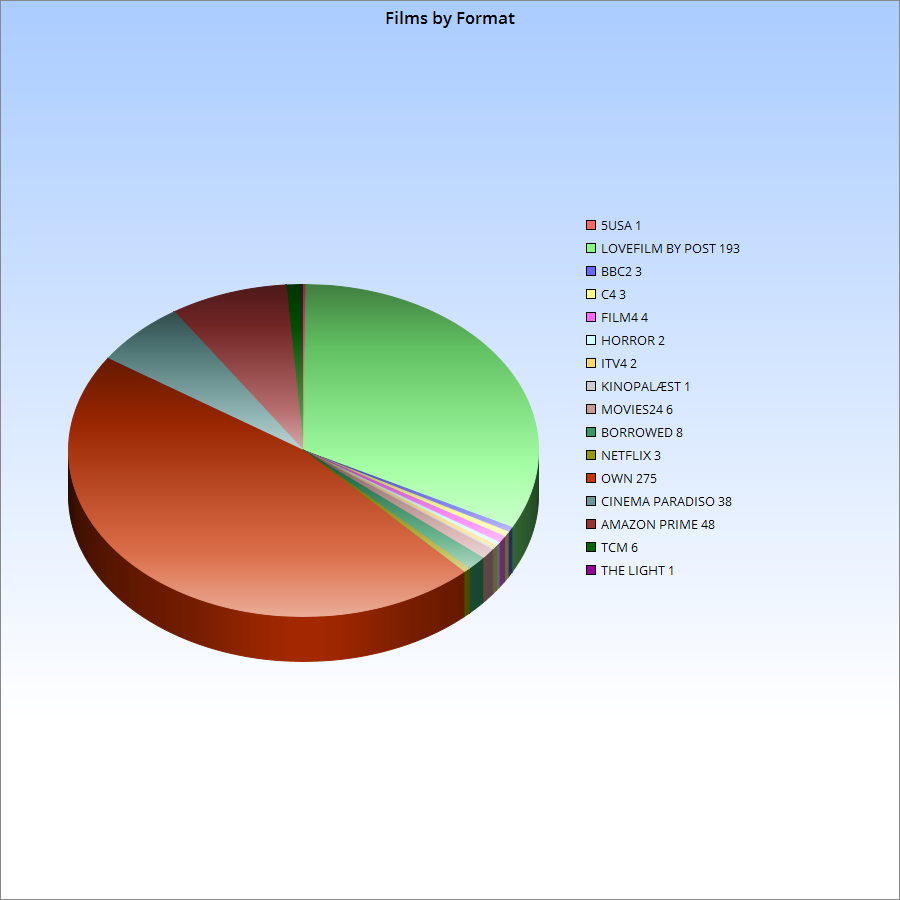
The bulk of the movies I watched were DVDs or Blu-rays I’d purchased myself. (I bought a multi-region Blu-ray player so I could watch Region A Blu-rays.) But I also watched quite a number from Amazon’s Lovefilm by Post. See below.

2015_films_by_source

Kinopalæst is the cinema in Denmark where I saw Star Wars: The Force Awakens, and The Light is the cinema in Leeds where I saw SPECTRE. Yes, they were the only two films I saw at the cinema. I did quite well on my Amazon Fire TV Stick – 48 movies, all of which were included free with Amazon Prime.

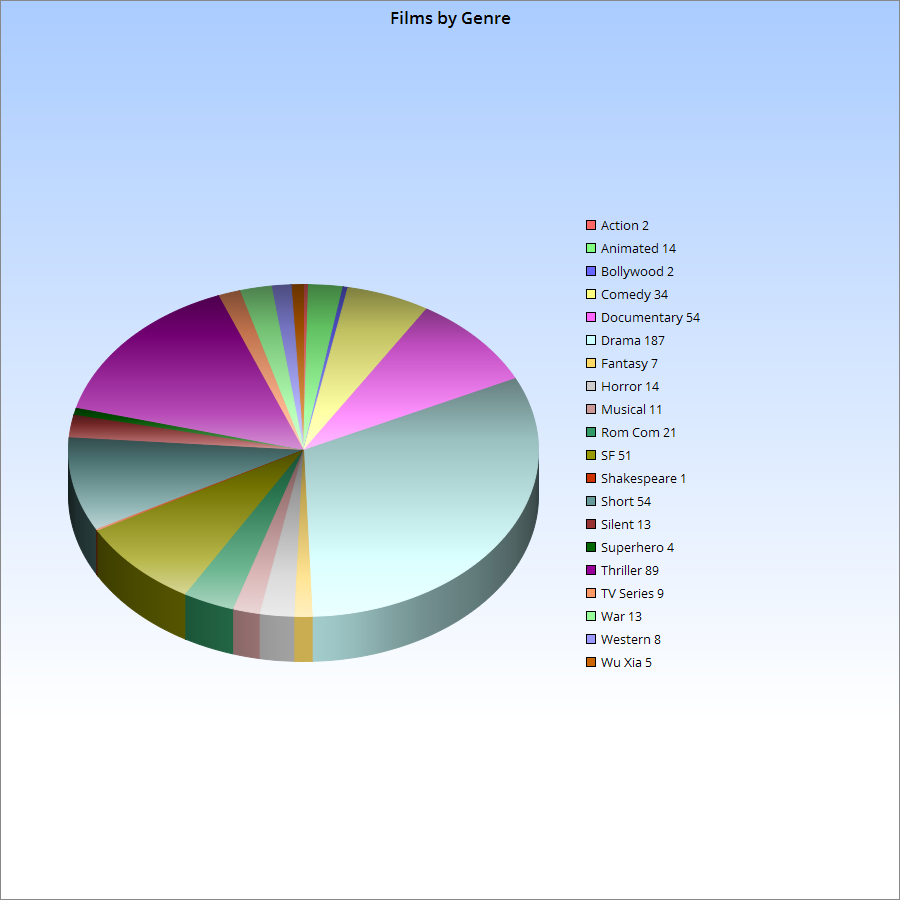
In terms of genre, drama seems to have done especially well, although admittedly it’s a broad term and perhaps some of the films I’ve categorised as drama might better be labelled something else. Anyway, see below.

2015_films_by_genre

The two Bollywood films were from the 1001 Movies You Must See Before You Die list – or rather, one of them was: the other, Deewaar, proved to be a 2004 film of that title and not the 1975 one on the list (although both starred Amitabh Bachchan). Although last year I rented several of the plays from the BBC’s Shakespeare Collection from the late 1970s/early 1980s, the one Shakespeare movie this year was Laurence Olivier’s Henry V, which I thought very good.

By decade, the films I watched pretty much follows the same graph for books read: the current decade is the most popular (surprisingly), and there’s a steady increase through the decades which peaks at the 1960s. See below.

2015_films_by_decade

The late nineteenth-century/early twentieth-century were a result of watching some early Dreyer silent movies and a DVD collection, Early Cinema – Primitives and Pioneers, because one of the films on it was on the 1001 Movies You Must See Before You Die list.

By nation makes for an interesting graph. Although I’ve been working my way through the 1001 Movies You Must See Before You Die list, which includes movies from many different nations (but over half are from the US, sadly), I’ve been a fan of world cinema for years and many of my favourite directors work in non-Anglophone cinema. See below.

films_by_country

The high number from Russia is no doubt due mostly to Aleksandr Sokurov, a favourite director; for Denmark because of Carl Theodor Dreyer, and for Germany it’s probably Rainer Werner Fassbinder. Only two from Sweden – I obviously need to watch more Bergman…

Speaking of favourite directors, Sokurov comes out top for 2015 with 33 (most, it has to be said, were rewatches). Second is Jacques Tati, a 2015 “discovery”, at 15, then James Benning, another 2015 “discovery”, at 13. The remaining top ten goes as follows: Rainer Werner Fassbinder (12), Alfred Hitchcock (11), Carl Theodor Dreyer (10), Lars von Trier (8), Sergei Eisenstein (6), and lastly George Stevens, Michael Curtiz, Leni Riefenstahl, Jean-Luc Goddard and Jean Cocteau (5).

I finished the year having seen 703 movies on the 1001 Movies You Must See Before You Die list, and a quite large pile of DVDs and Blu-rays on my To Be Watched list. I plan to keep on with the list in 2015, although I think I’ll take it a bit slower, perhaps spend some evenings each week reading rather than film-watching. Plus, it’s getting to the stage now where I have to purchase titles in order to watch them as they’re not available for rental. We’ll see how it goes.


Leave a comment

The year in reading

I managed to read 152 books in 2015, beating my Goodreads Reading Challenge target of 150 by two. So, not bad going. Admittedly, there were a couple of “cheats” in there – for example, I bought a pair of graphic novels from Faraos Cigarer in Copenhagen on 28 December so I could be sure of making 150 by the end of the year. I likely wouldn’t have bought them otherwise. But never mind. However, I did manage to read ten books from the 1001 Books You Must Read Before You Die list, which is pretty good (for the record, they were: The Quest for Christa T., The Leopard, The Island of Dr Moreau, The Rainbow, Loving, The Sense of an Ending, Pale Fire, Frankenstein, The Old Man and the Sea and One Day in the Life of Ivan Denisovich).

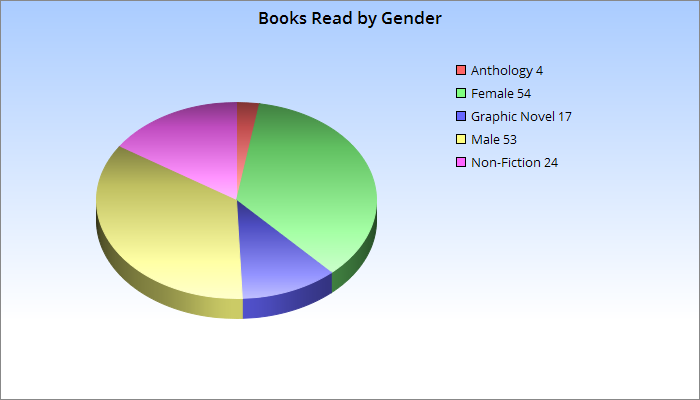
I also managed to read more women writers than men in 2015, although it was close, with only a single title in it. See below.

2015_books_by_gender

I plan to continue alternating genders in my fiction reading for the foreseeable future. Although many of the women writers I read were for review on SF Mistressworks, and my project to read some post-war British women writers didn’t really get into gear, I did discover a couple of non-genre female writers I’d like to read more by, such as Karen Blixen, Sarah Hall and Pamela Frankau.

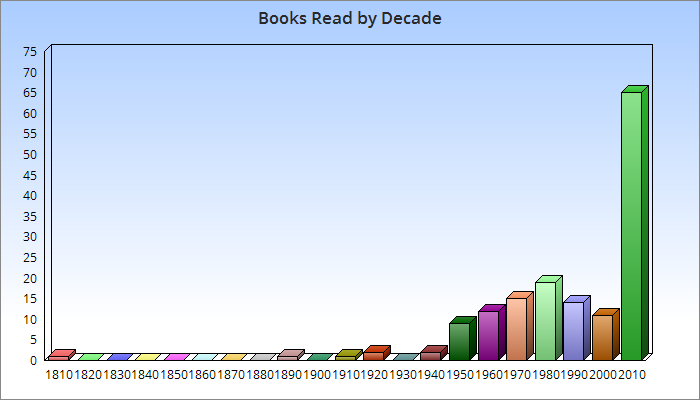
I was surprised to discover how much of my reading is of books from the last five years. I’d have thought it more evenly spread across the decades – although more in the last three or four decades than earlier. But apparently not. See below.

2015_books_by_decade

The one title in the 1810s was, of course, Mary Shelley; and the one in the 1890s was, naturally, HG Wells. The title from the 1910s and the two from the 1920s were by DH Lawrence. The 1970s and 1980s books, I suspect, mostly came from reading for SF Mistressworks.

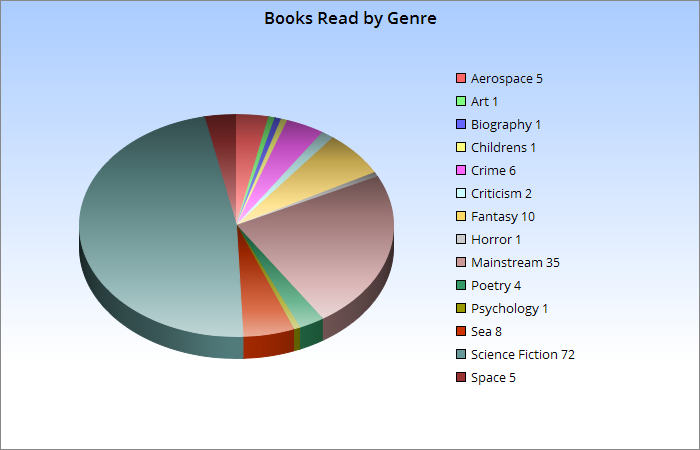
Which also probably explains why science fiction continues to dominate my reading – nearly half at 47%. Mainstream is next at 23%, then fantasy at 7% and crime at 4%. See below.

2015_books_read_by_genre

In 2016, I’d like to read more mainstream fiction and less science fiction. I’d also like to read more non-fiction – on, of course, my favourite topics: space and deep sea exploration. But also criticism. I have, after all, a couple of bookshelves full of critical works on science fiction and my favourite authors. (The one children’s novel, incidentally, was by Nathan Elliott, a pseudonym of Christopher Evans, and was read for completeness’s sake; it wasn’t worth it.)

By country (of origin of the writer), the books I read stayed mostly close to home – pretty much half of my reading was by British authors. Followed by the US. France makes a good showing because I read a number of bandes dessinée during the year – they also account for Belgium’s presence. See below.

2015_books_by_country

Not counting the bandes dessinée, I read only half a dozen translated works, and I really should do better. There are certainly authors from other countries I’ve read in previous years I’d like to read more by – like Elfriede Jelinek or Magda Szabó or Abdelrahman Munif. Perhaps I should resurrect my World fiction reading challenge from 2012? It stumbled to a halt that year when I got bogged down in Orhan Pamuk’s My Name is Red and Javier Marías’s Fever and Spear. But I’ve read both of those now, and should be able to find twelve books by writers from nations whose literature I’ve never tried. I probably have a few candidates on the TBR already…

In fact, on the subject of reading resolutions for 2016, I stumbled across (via Eve’s Alexandria) a thing called Read Harder. It’s from Book Riot and is a list of 24 criteria for choosing books to read in 2016. There are a couple of categories I’m not at all interested in (reading aloud, audio books, food memoirs, middle grade fiction), so I’ll replace them with a few of my own…

Read Harder (the Ian Sales version) 2016

  1. Read a horror book
  2. Read a non-fiction book about science
  3. Read a collection of essays
  4. Read a novel by a writer from a country whose literature you’ve never read before*
  5. Read a novel by a woman writer published before 1900*
  6. Read a biography (not a memoir or autobiography)
  7. Read a dystopian or post-apocalyptic novel
  8. Read a book originally published in the decade you were born
  9. Read a book that has won the Orange/Baileys Prize*
  10. Read a book over 500 pages long
  11. Read a book under 100 pages
  12. Read a book by a person that identifies as transgender
  13. Read a book that is set in the Middle East
  14. Read a book that is by an author from Southeast Asia
  15. Read a book of historical fiction set before 1900
  16. Read the first book in a series by a person of colour
  17. Read a non-superhero comic that debuted in the past three years
  18. Read a book that was adapted into a movie, then watch the movie
  19. Read a non-fiction book about feminism or dealing with feminist themes
  20. Read a book about religion (fiction or non-fiction)
  21. Read a book about politics, in your country or another (fiction or non-fiction)
  22. Read a book related to cinema or film-making*
  23. Read a play
  24. Read a book with a main character that has a mental illness

The asterisked challenges are my replacements. The rules state it’s okay to use the same book for multiple categories. And I’m pretty sure I can do about half straightaway just from the TBR. Even so, 24 books in a year is an easy target. One or two are going to be easy – I gave up on reading superhero comics several years ago, so the only graphic novels I read now do not feature men in tights or improbably pneumatic women. I mentioned Abdelrahman Munif earlier, and I have his The Trench on the TBR, so that’s the Middle East book. And I have Karen Armstrong’s The Bible: The Biography on the TBR too (it’s, er, been there a few years, tbh). I have a number of critical works on feminist science fiction, and I went and drunkenly bought that book of plays by Anton Chekhov earlier in the year. Anyway, we shall see how it goes…

I also plan to continue working my way through the oeuvres of DH Lawrence and Malcolm Lowry, as well as reading more books by Henry Green and Karen Blixen, and more from the 1001 Books You Must Read Before You Die list.

I’ll be posting a year in films piece some time over the next few days as a companion to this post.


1 Comment

Reading diary, #19

One more of these and that’ll see my entire 2015 reading documented. After I’ve posted that, I’ll do a summary “year in reading” post, you know, with pie charts and shit. I’ve already done my best of the year post (see here), even though the year had yet to finish then but everyone does it early so never mind. And I can always carry over any candidates I missed to next year’s best of, anyway…

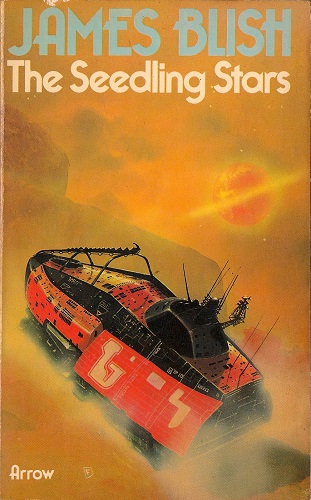
seedlingstarsThe Seedling Stars, James Blish (1957). Back in the early 1980s, I was a big fan of Blish’s fiction – possibly because Arrow had repackaged them with Chris Foss covers – and bought and read a dozen or so. I still have them. But one I’d missed was The Seedling Stars, so I tracked down a copy on eBay a few years ago – with, of course, the Foss cover art – and stuck it on the TBR. I had a feeling I might have read it before – certainly, ‘Surface Tension’, the penultimate story in the collection wasn’t new to me, although I’m not sure where I’d previously read it. But the other two novellas and one short story didn’t ring any bells. All four are about “pantropy”, which is genetically engineering humanity for environments rather than terraforming worlds. In ‘Seeding Program’, Earth has sent an agent to infiltrate a colony on Ganymede created by the leader of the pantropy movement and whose inhabitants have all been engineered before birth to survive on the Jovian moon’s frozen surface. It’s not in the slightest bit convincing, and the plot could just have easily been translated to any random Earth location. In ‘The Thing in the Attic’, the theocratic society of the gibbon-like humans of Tellura is causing them to stagnate, but when one freethinker is exiled he and his companions trek over the mountains and discover a starship of humans who have come to see how the colony is doing. Solid nineteen-fifties science fiction, perhaps a little preachy in places, and not especially memorable. ‘Surface Tension’, however, is memorable. In this novella, tiny humans have been seeded in a series of ponds on the one small piece of land on a water world. Again, a freethinker (male, of course) persuades his fellows to build a special vehicle to explore the world “above the sky”. The sentient amoebas are a little hard to swallow (so to speak), but it’s a fun setting and Blish makes good use of it. The final story, ‘Watershed’, is very short and takes place on a starship heading for Earth. The crew are baseline humans and the passenger is an engineered human from another world. The crew are also hugely racist toward their passenger. Who points out that baseline humans are now the minority among the colonised worlds. I suspect I would have enjoyed this collection a whole lot more if I’d read it back in the early nineteen-eighties when I read all those other Blish books…

Slow_Bullets_by_Alastair_Reynolds_WSFA_CoverSlow Bullets, Alastair Reynolds (2015). I decided to hang on for the signed, numbered WSFA Press edition of this novella, rather than buy the original Tachyon Publications edition. And it’s a smart little hardback they’ve produced – except… they’ve got the ISBN wrong, and re-used one from one of their previous novellas. Argh. You would not believe how many things that screws up. The title of the novella refers to devices implanted in people which store their memories, allowing their actions during a vast war between worlds to be recorded. They’re called “slow bullets” because they’re implanted in the leg and then slowly work their way up to lodge in the chest. But the actual plot of Slow Bullets concerns Scur, who is captured and tortured by a war criminal from the other side, left for dead, but then wakes up aboard a transport carrying war criminals and other prisoners. Except something has gone wrong and it looks like everyone aboard had been left in hibernation for thousands of years… This is typical Reynolds – a universe which he perhaps might not have visited before but nonetheless feels like one of his, and a plot predicated on horrible violence which still manages to slingshot off an optimistic and redemptive ending. It is, in fact, pretty much about as Reynolds as you can get and, as a result, your mileage may vary. I enjoyed it, some bits more than others.

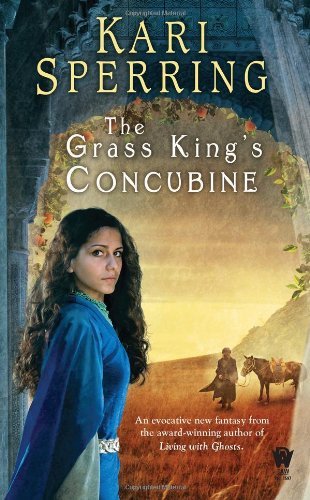
grass_kingThe Grass King’s Concubine, Kari Sperring (2012). I bought this after it was pointed out that I don’t read enough by fantasy by women writers by the author herself (it was a general admonishment on Twitter, not one personally directed at me, but I felt it was a fair comment). And I’m glad I did. I am not a huge fan of epic fantasies – I’ve read a fair number of them, and no longer find their tropes or stories interesting. Happily, The Grass King’s Concubine is nothing like an epic fantasy. Fantasy, yes; and a very cleverly done one. But not epic. And that’s meant as a compliment. Aude is the daughter of a rich land-owner, not old money but rich enough to be accepted into high society, but she is curious as to the source of her family’s wealth and determined not to marry and become just another trophy wife. After a couple of visits to the Brass City, the Dickensian industrial part of the city where she lives, she ends up running away with provincial officer Jehan. Aude’s search ends up with her being forcibly taken to the WorldBelow, ruled by the Grass King; and Jehan is taken there by a pair of ferrets who can take human form and act as guardians to the gate. Aude is a refreshingly forthright and active female protagonist, and there’s a welcome line of social commentary running throughout The Grass King’s Concubine. The fantasy elements are also interesting, original and well thought-out – Aude’s explorations of the Grass King’s palace are particularly well-drawn. If I had to recommend a modern fantasy novel I’d be more than happy to recommend this one. Go and get yourself a copy.

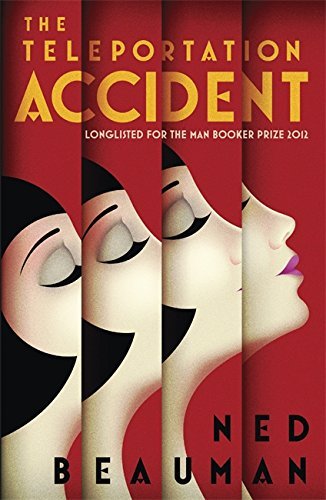
teleportation_accidentThe Teleportation Accident, Ned Beauman (2012). Having read this, I now understand why Lavie Tidhar is such a fan of the book. It addresses some of his favourite subjects. Myself… I enjoyed it, thought it amusing in parts and cleverly done overall, but I wasn’t taken with the engine which drives the plot. The title refers to a piece of stage machinery, first invented in the late eighteenth-century, which allows for the rapid, and apparently instantaneous, changing of scenery. In Weimar Berlin, Egon Loesser is trying to build a new version of that machine, but one that moves the cast around rather than the scenery. But during a test it goes wrong and dislocates both arms of the actor wearing it. Loesser is one of those horrible comic protagonists you find yourself inadvertently rooting for – he’s self-centred, fixated on his sex life (or lack thereof), and nasty to pretty much everyone he meets. It is Loesser’s lack of a girlfriend, and desire for the nubile Adele Hitler, which drives the plot, as Loesser chases her to Paris and then onto Los Angeles, at each place bumping into friends and acquaintances (some Jewish, some not) from Berlin. It all ends up with Loesser getting involved in a WWII project at a LA university to build an actual teleportation machine, which may or may not work and which may or may not have something to do with the strange murders which have been occurring on the campus. A fun read, even outright funny in places, although not particularly pleasant and often only saved by its cleverness.

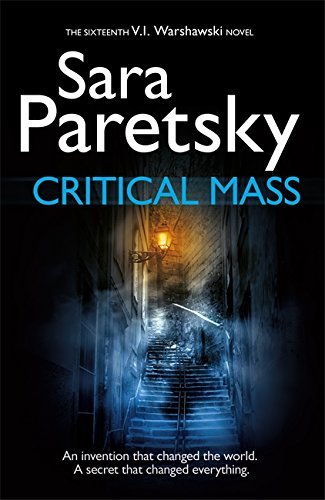
critical_massCritical Mass, Sara Paretsky (2013). I’ve been a fan of Paretsky’s novels since reading Guardian Angel back in the early 1990s. I’d borrowed it from my mother, and liked it so much I made an effort to read more of the VI Warshawski series… and have done ever since. Earlier this year, my mother took me to see Sara Paretsky speak (with Val McDiarmid) at the Harrogate Crime Festival. The plot of Critical Mass is a little more convoluted than most Warshawski novels, but the villains of the piece are, as usual, the rich. Vic’s friend Lotte receives a panicked phone call from the junkie daughter of a friend from Lotte’s childhood back in Vienna just before the Anschluss. Vic investigates, but the bird has flown, and all that remains is a shot-up meth lab and a dead body (male) in a nearby field. It turns out the woman’s younger brother, who is a physics whiz and works as a software engineer at a big computing firm, has also gone missing. The CEO of the company, whose father invented ferromagnetic memory, is worried he has taken one of their secret projects to a rival firm, but the clues suggest to Vic he disappeared for other reasons. There are also flashbacks to Lotte’s childhood, focusing on a young Jewish woman who is a gifted physicist but finds it hard to be taken seriously and eventually ends up as slave labour on one of the Nazis’ atom bomb projects. The story bounces around between two seemingly unrelated crimes before the two eventually, and cleverly, interlock. The only sour note is a pair of DHS agents who behave like mindless thugs rather than professional federal agents and a CEO who thinks it’s worth murdering people to safeguard the reputation of his company. But otherwise, this is a good Warshawki and worth reading – and it also sheds light on a little-known aspect of early twentieth-science and World War Two.

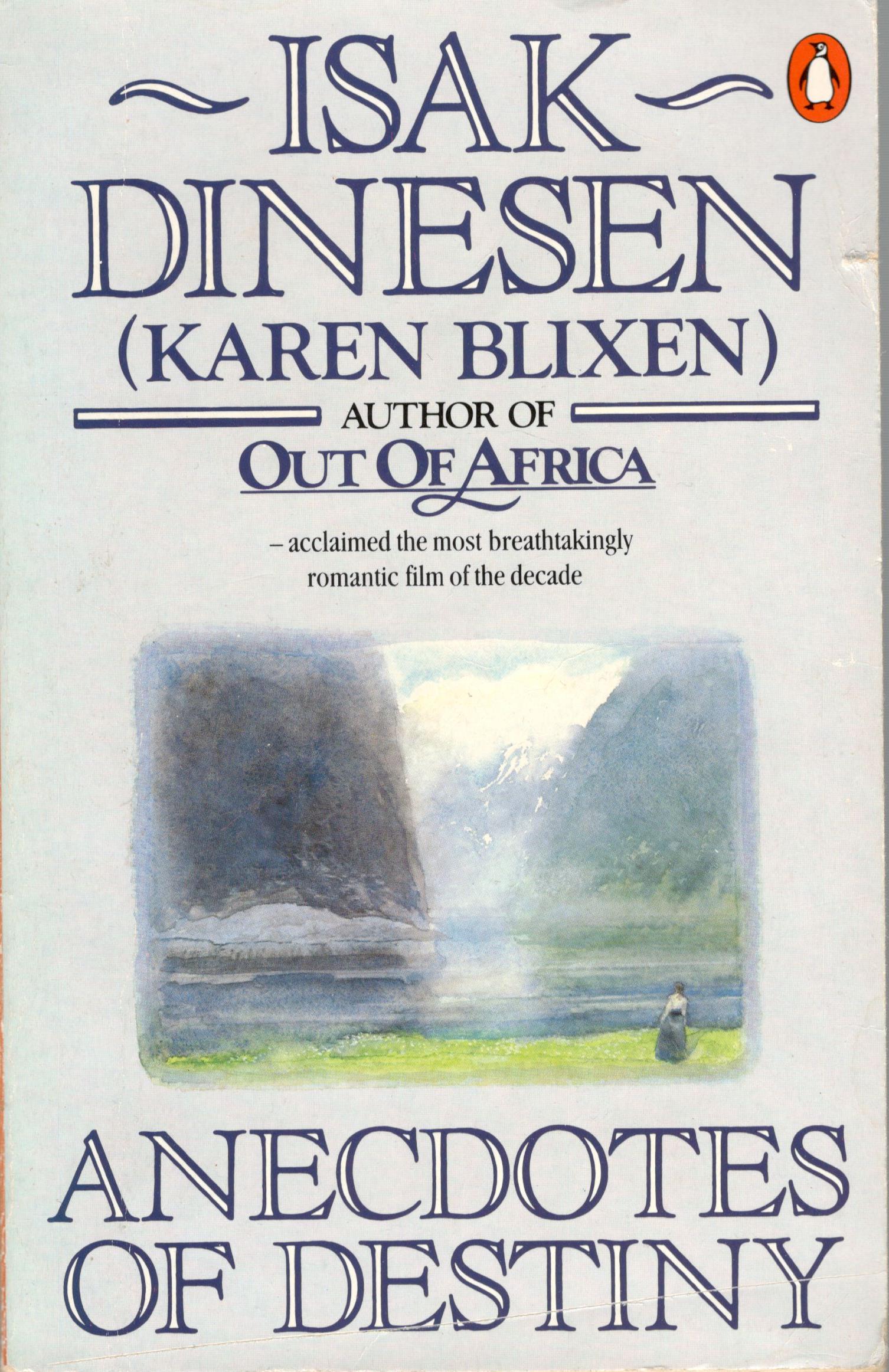
anecdotesAnecdotes of Destiny, Karen Blixen (1958). After watching Out of Africa, I fancied reading something by Blixen, so when I spotted this collection in a charity shop, I bought it. And since I was spending Christmas in Denmark, I thought it appropriate to take it with me and read it there. Anecdotes of Destiny has apparently been republished under the title of the most famous story in it, as Babette’s Feast and Other Stories, which I’m glad I spotted now as it’d likely confuse me later if I stumbled across the latter book. As it is, the original title does the collection a disservice as its contents are far from “anecdotes”. True, the opening story story pastiches a tale from 1001 Nights, and my heart sank a little when I read it. But ‘Babette’s Feast’ is wholly different and a great deal better. Best in the collection, however, is ‘Tempests’, about a young woman in Norway who joins a travelling theatre and then saves a ship from foundering during a storm, and it quickly became a favourite novella – and would make an excellent film too. A very good collection, overall, and I plan to read more by Blixen.

1001 Books You Must Read Before You Die count: 121


3 Comments

Moving pictures, #40

Cracking on, so to speak… More cinematic consumption by Yours Truly.

BSG1978Battlestar Galactica (1978, USA). So this Black Friday seems to have infected the UK from the US (and to be fair it’s a better tradition than the UK’s home-brand Black Friday) and Amazon had a whole bunch of mostly uninteresting deals going, but one which caught my fancy was the re-imagined Battlestar Galactica Ultimate Collection on Blu-ray for £60 reduced from £160. To which I succumbed. And then the following week, they had Cyber Monday, and fuck knows what the fuck that is, but Amazon were selling a bunch of stuff cheap, among which was the original Battlestar Galactica series from 1978, plus the much-maligned Galactica 1980 sequel series, on Blu-ray for half-price at £20. So I bought it too. Foolishly. And watched it. Even more foolishly. I remember Battlestar Galactica quite fondly from the 1980s – it used to be on at 6 pm on BBC2 in Janet Street-Porter’s “yoof” spot. Much as I loved the universe of Star Wars, so I loved the universe of Battlestar Galactica. The uniforms, the spaceships, the, er, well, that was about it. Certainly not the stories. After all, who can forget the episode in which they spend an hour trying to figure out how to put out a fire on the Galactica before deciding to “let the vacuum in”? And the mangling of English in pursuit of a futuristic dialect is both annoying and embarassing – “frak” is okay, “felgercarb” is acceptable, but “chancery” is not the right word for a casino, and when a warrior goes on leave it’s not a “furlong”. Argh. I was, however, surprised by how closely the rebooted series followed the plots of the original series. Not entirely, obvs – but some of them were a lot closer than I’d remembered. The original Battlestar Galactica remains a notable piece of science fiction television, even if it was designed to totally cash in on Star Wars, and the things it did right mostly, but not always, outweigh the things it got wrong. Which is more than can be said for Galactica 1980

sensoSenso*, Luchino Visconti (1954, Italy). Visconti is a director I think well of – he has directed a number of films I admire. So I was predisposed to like Senso, despite knowing little about it. Other than the fact it was a period drama, which is not necessarily in my book a fact which might affect my opinion. And so it proved. Senso is a good period drama, but I’m not sure why it is a better period drama, other than perhaps its director’s name. Admittedly if its period is not of interest to audiences, that’s hardly the fault of the film-maker. But the whole point of period dramas is that they’re recognisable – or something about them is recognisable – to the viewer. For Senso, this is undoubtedly true of an Italian audience, much as it would be for Visconti’s excellent The Leopard… But Senso, for all its plaudits, never quite manages to evoke its time and place as a time and place sufficient to persuade audiences of its story. To be honest, I don’t recall much of the film (I write these posts a week or two after viewing the movie) and from what I do remember it struck me as mostly unsuitable romances during a period when such a thing existed and had very real social consequences. Nothing in the cinematography stood out, which I would have expected of a film by Visconti. He’s done better, and I’m surprised this one made the 1001 Movies You Must See Before you Die list.

BSG1978Galactica 1980 (1980, USA). Ever watched something – several episodes of something – and then wonder why the fuck you bothered? Admittedly, Battlestar Galactica, the original 1978 TV series, is far from great television. But even fans of that are hard-pressed to say something nice about Galactica 1980. It’s not just that the project started off with a dumb premise, but also that the premise was shot down by the network after the pilot and then replaced with an even dumber premise. It’s a generation after the original Battlestar Galactica ended and its stars all have better things to do except Lorne Greene whose career must have been in the toilet as he’s back but this time with a fake beard. And there’s another villain, another nasty member of the Council, played by Richard Lynch, who also played a villain in an episode of the previous series. The “ragtag fugitive fleet” has finally reached Earth, but our world is, er, far too technologically primitive to help them fight the Cylons. But Betamax! I hear you cry. Walkmans! Sinclair ZX81s! Ford Pintos! Legwarmers! So Xavier, the councillor played by Lynch, decides to travel back in time in order to boost Earth’s technology – and the period he chooses is – yawn – Nazi Germany in the 1940s. Peenemünde, to be precise. Xavier is going to help von Braun invent the V-2. But grown-up Boxey – now called Troy because Boxey is a dumb name, even for a kid – and Barry van Dyke sidekick Dillon are sent back after Xavier – whose name is at least not pronounced ecks-avier because that’s not how you fucking pronounce it, you fucking stupid X-Men – and manage to destroy the V-2 prototype as it launches and so, er, stop V-2s from raining death and destruction on London– no, wait. That happened anyway. Anyway, they don’t change history. Xavier escapes to another time period to continue his dastardly plan. However. The network didn’t like the idea of Galactica warriors chasing Xavier through time-period-of-the-week and asked for a rethink. So we got… space scouts! A bunch of kids from Galactica are stranded on Earth, chaperoned by Troy and Dillon, who decide to disguise the kids as a scout troop. The remaining six episodes involve Troy and Dillon having adventures in USA 1980 – including a cringeworthy double episode featuring Wolfman Jack – sometimes with, sometimes without, the super-strong, high-jumping super scouts who can also turn invisible. The final episode is a flashback in which Starbuck crashlands on an alien world, finds a crashed Cylon fighter, reprogrammes one of the Cylons into a middle-American, and then becomes the father – without actual sex – with a mysterious and flighty young woman of the young genius who directed Galactica’s strategy in earlier episodes. Both, I should add, remain remarkably clean during their ordeal. And the woman wears a quite flimsy nylon dress. Even the Cylon is shiny as fuck. Battlestar Galactica is pants; Galactica 1980 is an entire underwear department. I expect the Blu-ray will prove useful at persuading unwanted guests it’s finally time to leave…

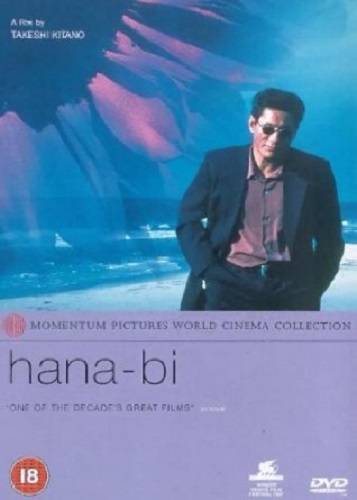
hanabiHANA-BI*, Takeshi Kitano (1997, Japan). According to Wikipedia, the title of this film should properly be in all caps. So that’s how I’ve done it. I have a lot of time for Takeshi Kitano – he has a wonderfully varied oeuvre, and some of his films are actually classics (plus if you don’t love the final musical number in his version of Zatoichi then you are clearly not human). This, however, is an early work, although apparently not early enough not to be known to display his trademark. er, trademarks. Such as gory violence. Which it contains in abundance. The film also follows an achronological narrative. Kitano plays Nishi, a police officer, whose wife has cancer. His partner is confined to a wheelchair after a shootout with a Yakuza. Nishi retires, and finds himself in debt to a Yakuza loan shark. So he masquerades as a police officer and robs a bank. The film skips back and forth in time, without clues (remember Gwyneth Paltrow’s plaster on her face in Sliding Doors?), which initially makes the film hard to follow. But it soon becomes clear and starts to grip. The moments of violence are shocking and bloody. Nishi, however, remains a cipher. A good film and a deserving entry on the 1001 Movies You Must See Before You Die list, I think.

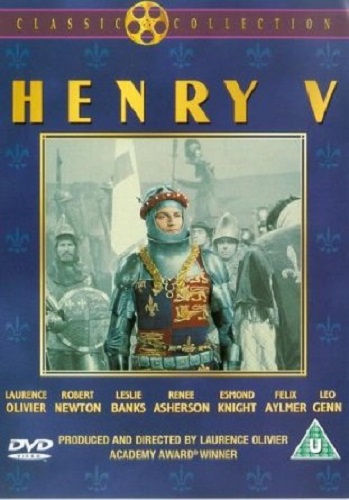
henry_vHenry V*, Laurence Olivier (1944, UK). One of the joys of following the 1001 Movies You Must See Before you Die list has been finding films you really enjoy and/or greatly admire that you would not otherwise have come across. Now I respect Shakespeare, and I’ve been intermittently working my way through the BBC adaptations of his plays (I really ought to buy the damn boxed set), but he’s hardly my first choice, or second , or third, choice of viewing. More so for a 1944 adaptation. By Olivier, who, for all his evident ability, has been characterised as a “luvvie”. So, unexpectedly, I found myself really liking his staging of Henry V. Not because he’s chopped it down to a suitable movie length, or because everyone acts like an actooor (including some godawful Welsh characters)… but because he chose to represent the world of his play as towns and cities are represented in mediaeval art, because he framed the play as a play, and because he staged the battles really quite effectively. It works, it works really well. From the opening pan across a model London to the Globe Theatre, its cast and audience, to the not-quite-Technicolor of its costumes and sets, to the faux mediaeval representations of places to the battle itself… it all works wonderfully well. It is Shakespeare made real. It’s not the dry play as learnt by schoolgirls and schoolboys, it’s visceral and real… and yet still a play. I had expected Henry V to be dull and firmly up its own arse, but in fact it is a great piece of cinema. It needs a proper re-issue , remastered on Blu-ray, not some afterthought “classics” DVD release.

hearts_darknessHearts of Darkness: A Filmmaker’s Apocalypse*, Fax Bahr & George Hickenlooper (1991, USA). I like Apocalypse Now, I think it’s a good film. It wears its inspiration a little too obviously on its sleeve, but it doesn’t suffer because of that. And some of the supporting cast pretty much define stereotypes of Vietnam War movies (except Dennis Hopper’s character, which is a stereotypically Dennis Hopper character). Hearts of Darkness: A Filmmaker’s Apocalypse, however, is the documentary about the making of Apocalypse Now, a notoriously difficult film to make. Partly it was money – Coppola had to stump up his own cash, and it still went over-budget. Partly it was the location – the Philippines stood in for Vietnam, and despite promises by the government the borrowed military helicopters often disappeared with little or no notice to fight rebels. And partly it was Coppola not knowing what the fuck he was doing. Then there was Marlon Brando, who demanded $3 million for three weeks’ work, and who then spent days sitting around discussing his character’s motivation. What a prima donna. Seriously, that’s totally unprofessional behaviour, and I doubt his name on the credits added significantly to the movie’s takings. Coppola also spent a week filming Harvey Keitel in the lead role, before firing him and casting Martin Sheen (Sheen is very, very good, but it would have been interesting to see what Keitel was like, but sadly no footage is included). Hearts of Darkness: A Filmmaker’s Apocalypse is an object lesson in how not to make a film – there are a few problems which are a result of the location, but the main takeaway is that Coppola didn’t know what he was doing and bit off more than he could handle. Having said all that, Apocalypse Now is a genuine piece of classic cinema, but so perhaps it was all worth it…

1001 Movies You Must See Before You Die count: 696