It Doesn't Have To Be Right…

… it just has to sound plausible


Leave a comment

Shards of Honor, Lois McMaster Bujold

Bujold was pretty much ubiquitous on the Hugo Award shortlist throughout the 1990s and early 2000s. True, the Hugo has its favourites, and they have their moments, and then the favourites change. At the time, I couldn’t see the appeal of Bujold’s Vorkosigan series – I read a couple of them, but they seemed somewhat bland and derivative, and not what I would have expected of award-winning science fiction novels. They’re not, of course – not what you’d expect of award-winning sf novels, that is, just instalments in a well-liked, comfortable sf series, and it was the series which kept on winning awards, not the novels.

And yet, reading Shards of Honor (1986, USA) now – a reread as I’d read it once before back in the 1990s – the one thing that stands out is how… polished it all is. It was Bujold’s debut novel, but by internal chronology it’s the second book in the Vorkosigan series. The main hero of the series, Miles Vorkosigan, isn’t even born when the novel takes place – it is, in fact, about his parents.

Cordelia Naismith is an officer of the Beta Colony Survey, when her team on an uninhabited Earth-like planet is attacked by Barrayaran soldiers. She is left behind when her team-mates escape, only to be captured by Aral Vorkosigan, the captain of the Vorkosigan ship in orbit, who has himself been marooned after a mutiny by his ship’s political officer. Barrayar is a militarist empire, with an old-style aristocracy and a Soviet-like “Political Education” apparatus. Vorkosigan is completely old school, a man of honour, a stiff-necked aristocrat, and known as the Butcher of Komarr.

Naismith and Vorkosigan have to trek some 200 kilometres to reach a Barrayaran supply cache, with a brain-damaged Beta Colony officer. Unfortunately, they’re met by the mutinous political officer and his cronies, who take them prisoner. But Vorkosigan turns the tables, only for the political officer to mutiny again. Which this time is foiled by Naismith, shortly before she escapes.

Oh, and the two fell in love during the trek and Vorkosigan proposed marriage to Naismith. Despite her feelings for him, she refused.

And that’s what the novel is about: Beta Colony Survey officer and Barrayaran military aristocrat, a romance. There’s an invasion, a space battle, a gratuitous rape/torture scene, a military defeat, lots of fatuous Betan politics (including a running joke about the Betan president, “I didn’t vote for him”), and brutal Barrayaran court intrigue.

Like Jack McDevitt’s novels, there’s not much here that’s actually science fiction. Set in the future, yes. Lots of different interstellar polities, yes. But it’s all very, well, American (even the aristocratic Barrayarans, who resemble Hollywood depictions of European royalty more than anything else). There’s a few sf bells and whistles – plasma mirrors, stunners, disruptors, plasma arcs (all weapons), plus spaceships and stargates and so on. Several years ago, I invented the term “Ruritanian sf” to describe this sort of genre fiction – see here.

It’s all very entertaining and smooth, with a pair of likeable leads (important for romance, of course), and a background that seems both familiar to sf readers and yet also a tiny bit different – no doubt helped by the sympathetic treatment of what would normally be the bad guys. I can understand the appeal – well-defined universe, good buys to root for, bad guys to boo and hiss, and a fixity of worldview common to US sf.

Shards of Honor is one of the few Vorkosigan novels which didn’t get nominated for an award, although, to be fair, it was Bujold’s debut novel. I enjoyed it, and I’ll continue reading the series – but this is science fiction that doesn’t challenge, and I usually expect more of the sf I read.


Leave a comment

On the Calculation of Volume I, Solvej Balle

It’s probably premature to review this first volume before having read the rest – although only two have so far have been published in English, the third is due in November, the fourth in April next year… and to date only six of the planned seven have been published in the original Danish. (I should point out it’s not On the Calculation of, volume 1, but On the Calculation of Volume, part one.)

The basic premise is: antiquarian book dealer Tara Selter, resident in France, visits Paris to purchase new books for the home-based business she runs with her husband. While there, she wakes up one morning and discovers she is reliving the previous day. In fact, every day from that point on is 18 November. Just like Groundhog Day.

She returns to her husband, and explains the situation to him. But the following morning… is 18 November again for her, and she has to explain all over again. And again. And again. While she is stuck in time, he continues travelling forward day by day.

Tara tries several different ways to live – spending the day over and over again with her husband, living in his shadow as he repeats his 18 November… She discovers that any changes she makes carry over to her next 18 November – so if she takes food from village shops, their stock diminishes on the one day she inhabits. She explores the limits imposed on her as he lives the same day over and over again – some items return back to the beginning of the day with her, some are lost to 19 November, and so on.

It’s all very cleverly worked-out, and written in an appealing flat lucid prose. This first volume (did you see what I did there?) is Tara exploring the “rules” which seem to govern her situation, both in her home village and in Paris. She inevitably grows distant – first from her husband, then from other people, then from her own life. The novel – it’s short, only 166 pages – is almost entirely set-up. But then there are seven books (each one also short) in the series. Nonetheless, On the Calculation of Volume I (2020, Denmark) doesn’t feel abrupt or incomplete. It reads like the first step on a journey toward the solution of an impossible mystery (although the shadow of Groundhog Day does lie a little heavy across it).


Leave a comment

Deep Six, Clive Cussler

The seventh book featuring Dirk Pitt, NUMA Special Projects Director and all-round man’s man and action hero, but actually the sixth book as Cussler managed to sell a trunk novel, set and written before his debut novel, having now become a best-selling author. Trunk novels should generally stay trunk novels, and Cussler’s is no exception. I should point out that Deep Six (1984, USA) may have been Cussler’s seventh actual novel, but in 2025 Cussler, who died in 2020, has 27 Dirk Pitt novels in print (the last two written by his son), 21 NUMA Files novels written by assorted hands from his atelier, 18 Oregon Files novels, 15 Isaac Bell Adventures novels, and 12 Fargo Adventures novels. I make that 93 novels. That’s a fucking large, or a fucking productive, hacktelier atelier. 

Deep Six is set in 1989, five years after it was published. A tramp freighter disappears in the 1970s with a bank robber aboard. It is discovered ten years later because it was carrying a cargo of barrels of stolen US Army nerve gas, one of which has leaked and killed hundreds of people off the coast of Alaska. Pitt amazes everyone by quickly finding the ship. The barrels of nerve gas are taken away to be buried, but Pitt is intrigued by the ship itself, a Liberty ship from World War 2 from which all identification has been removed. He investigates further, and learns it was operated by a shady Korean shipping company, now based in New York.

Meanwhile, the president of the US, vice-president, speaker of the house, and a senator are off on a weekend trip on the presidential yacht, the USS Eagle (the last presidential yacht was actually the USS Sequoia, which was sold off by Carter in 1977). Overnight, a heavy fog drops, and when it lifts everyone aboard the yacht has vanished. The Administration desperately tries to cover up the fact the president is missing…

… and who has actually been kidnapped by the aforementioned Koreans, who have been paid by the Soviets, and a Soviet neuroscientist plans to brainwash the president and insert a controlling microchip into his head…

It’s action all the way as Pitt ends up involved in the hunt for the missing politicians. A Soviet liner in the Caribbean is blown up and sunk – and Pitt’s latest lover is aboard, so he’s involved in that too. But the Koreans have her, so he’s after them in a desperate race to find their secret laboratory before they kill everyone. The climax involves a battle on the Mississippi delta between the machine-gun-armed Koreans on a tug and a company of ACW re-enactors with muskets on a paddle-wheel steamer. Exciting stuff, even if not in the slightest bit credible. And the only reason Pitt found them is because the Korean shipping company named all their ships after towns on the Mississippi delta – er, what?

I’m beginning to wonder if Cussler had a time-machine and visited 2025. In Night Probe! (1981, USA), the US and Canada merged – which didn’t happen in the real world, obviously, although Trump clearly thought he could make it happen. In Deep Six, the president is controlled by the Soviets (although a microchip in Trump’s brain would be ineffective as his brain is clearly ineffective, but he’s still Putin’s puppet), he wants to pull the US out of Nato, there are troops on the streets of Washington, and the US is no longer a democracy. Hmmm. I don’t recall a tech billionaire who believes the laws of physics don’t apply to him in Raise the Titanic! (1976, USA), however. And while Iceland featured in Iceberg (1975 USA), Greenland wasn’t mentioned.

Still, another twenty Dirk Pitt novels to go…


Leave a comment

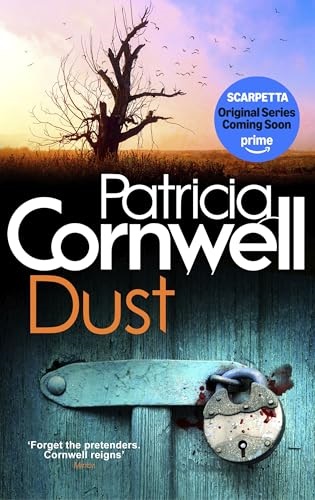
Scarpetta 20: The Bone Bed, Patricia Cornwell

The twentieth book in the Kay Scarpetta series. Only nine more to go – including the one due this October. The title refers to a palaeontological dig in Alberta, Canada. A female paleontologist disappeared and several months later Scarpetta is sent an anonymous email containing a short video of the missing woman and a photo of a severed ear. Despite Scarpetta having no connection to palaeontologist, the place in Canada, or even dinosaurs.

Then the body of a woman turns up in Boston Bay, tied to a buoy. Scarpetta manages to recover the body intact. Shortly afterwards she is in court being cross-examined by the lawyer of a billionaire industrialist who has been charged with hiring the murder of his missing wife. But the body in the bay is not her.

And when they do identify the body, it turns out she was someone Marino was flirting with on Twitter, so he comes under suspicion…

Initially, it all seems like yet another plot to destroy Scarpetta’s career and reputation, a feeling only reinforced by the grilling she gets in court and the FBI investigating Marino. But it actually isn’t. It’s just your common or garden psychopath serial killer, of which the US has plenty, and Scarpetta’s involvement is more by accident than by design, or at the very least a happy and contrived coincidence on the part of the killer.

It also starts to look like Scarpetta is going to dangle herself as a victim, only to turn the tables – as in many other books in the series. But again, the killer abducts her only because of, er, happy coincidence, and for other reasons she’s rescued by the usual gang – Lucy, Marino, etc.

I’ve no idea if Cornwell was deliberately teasing the reader with hints of her more formulaic books, but I did like the fact The Bone Bed (2012, USA) didn’t hew closely to the formula. The title came from an actual bone bed visited by Cornwell, which inspired the novel – but it’s actually more or less peripheral to the story. She could have dropped the murder of the palaeontologist and it wouldn’t have substantially changed the plot.

A middling Scarpetta novel, I think. Slight above average, but not one of the more memorable ones. In its defence, it focuses more on crimes, and a killer, who has absolutely nothing to do with Scarpetta.


Leave a comment

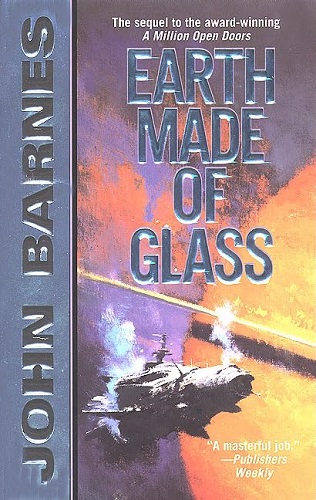
A Million Open Doors, John Barnes

Nominated for both the Nebula and the Clarke Awards. Barnes seemed to have a moment in the mid-to late-1990s, with a Hugo nomination, three Nebula nominations and three Clarke nominations. But no wins. And nothing since then except appearances on the Locus Award/readers’ poll pretty much every year until a decade ago (for his last published novel, in fact). A Million Open Doors (1992, USA) is only the second book by Barnes I’ve read – I read Mother of Storms (1994, USA) back in 1999.

A Million Open Doors is the first of four novels set in the Thousand Cultures. Taking place several centuries from now, Earth has colonised a number of worlds, each of which is home to one or more “cultures”, groups of people – ethnic, national, religious, some even completely invented. Like Nou Occitan, which is supposed to be some sort of Iberian Romantic culture of troubadours and duellists, but is really just massively sexist. The worlds were colonised by slower than light ships, but now “springers”, instantaneous transport, even across interstellar distances, connect them together.

When Giraut catches his paramour in flagrante delicto with a gang of “Interstellars” (youths aping what they think is an Earth culture by “beating up and degrading young girls”), he accompanies a friend to Caledony, which has just received its first springer. Caledony is a religious culture, which uses Christianity to justify some garbled economic philosophy. Giraut opens a school to teach Occitan culture – music, duelling, poetry, dancing, painting, etc – to the joyless Caledons. Unfortunately, the success of the Centre for Occitan Arts prompts a coup by hardliners, house arrest for the previous government, martial law and armed mobs on the streets.

To build support, Giraut and his liberal Caledon friends stage a camping trip across the continent, but there’s an accident in the mountains, resulting in several fatalities. While dashing back to get into communications range, Giraut discovers the ruin of an alien city. Meanwhile, while he was away, Council of Humanity troops have overthrown the hardliners…

Reading A Million Open Doors, I had trouble working out why it was science fiction. Yes, other planets, springers, spaceships, etc, but you could set the story on Earth. Some community full of rapists, another full of nutball religious types – I’m pretty sure you could find two towns that qualify in the US. Even the alien ruins could be the ruins of some prehistoric American culture. All the rest is just bells and whistles.

And when a science fiction novel is not science fiction, then what’s the point of it? And you also have to wonder why the novel appeared on two science fiction award shortlists. In other respects, it’s all just a little too textbook. Giraut is a male chauvinist, but he comes to value and respect women – and even falls in love with one who isn’t even attractive and whose physical flaws he mentions repeatedly. Two characters are killed irretrievably – the technology exists to bring people back using personality recordings, and there’s even an example to illustrate it, the victim of a brutal sexual assault, torture and murder. (This is not just everyday sexism, this is everyday sexual assault.) The bad guys get their just desserts – except, well, not really, a friend who insulted Giraut is humiliated (with a spanking), and the villainous pastor who seized power on Caledony is imprisoned off-world.

A Million Open Doors lost the Clarke to Jeff Noon’s Vurt (1993, UK), and the Nebula to Doomsday Book (1992, USA) by Connie Willis (Sarah Canary (1991, USA), Karen Joy Fowler, or China Mountain Zhang (1992, USA), Maureen McHugh, would have been better winners). Even so, it didn’t belong on those shortlists. It’s mediocre, its one idea is in service to a story that doesn’t even need to be science fiction, and it’s offensive in parts.


Leave a comment

Walking Practice, Dolki Min

The debut novel of a South Korean illustrator, recently translated and published in English, and one of four winners of the Otherwise Award this year. The narrator is an alien living in Seoul who must concentrate on presenting a human appearance, or they’re liable to sprout arms and legs and eyes in odd places. They enjoy dating people online, arranging to meet them at home for sex and then, well, eating them. Yes, the narrator presents as both male and female during the story, and the title refers in part to the different gaits required to pass as each gender. 

The prose tries to maintain a chatty tone, which I found grating. I know almost nothing about contemporary Korean literature, so I’ve no idea if it’s a popular style there (although I recall something similar in Greek Lessons (2011, South Korea) by last year’s Nobel laureate Han Kang when I read it earlier this year). I’ve read enough translated fiction, and even fiction in its original language and then translated into English (Swedish and French fiction, mostly) to know there’s a difference between translation and transliteration – and sometimes the latter often fails to take culture into account, both the original and that of the language being translated into (the same occurs all the fucking time from UK to US English, of course). The English translation of Roadside Picnic (1972, USSR) by the Strugatsky brothers didn’t work for me because it relied too much on American idioms, and I don’t expect to find them in a Russian novel. Larsson’s Millennium trilogy was translated by an American who’d lived and studied in Denmark but was unfamiliar with many elements of Swedish culture and society. It showed. On the other hand, the English subtitles for a Swedish detective show I watched recently failed completely to transliterate a common Swedish expression because there was no obvious way to do so and keep the original sense.

Then there’s the writing system… Korean, of course, has its own writing system, Hangeul, and it’s very different to the variations on the Latin alphabet used by many other languages. An afterword by the translator points out the difficulties she had representing the author’s Hangeul orthographic tricks in the Latin alphabet. The nearest she could manage was through varying the kerning – which, as she admits to worrying about, does indeed look like bad typography or misprints.

Obviously, there’s more to Walking Practice (2023, South Korea) than the tone of its narrative and the fact the English reading experience is a poor copy of the Korean reading experience. There’s a cinematic feel to the story, but unlike a movie there’s no story arc or resolution. Korean cinema doesn’t follow Hollywood story paradigms – it’s something to do with cats at present, isn’t it? – which is a good thing, and I’ve seen many excellent South Korean films. In future, I think, I’ll stick to their movies.


1 Comment

Chatterton, Peter Ackroyd

I knew I’d read this before, but I thought it was back in the very early 1990s. It turned out I was thinking of Hawksmoor (1985, UK) and although I’d read Chatterton (1987, UK) before, it was in 2004. Ackroyd is one of those authors whose books I don’t make an effort to search out, but will happily read and enjoy when I stumble across them… as I have done around half a dozen or so times to date. I should probably read more of them.

Chatterton is about Thomas Chatterton, a precocious poet and satirist, who committed suicide at the age of seventeen in 1770. He’s chiefly known for forging the poetry of an invented fifteenth-century monk, Thomas Rowley, and influencing the Romantic poets of the early nineteenth-century. Ackroyd’s novel has three narratives: Chatterton’s life shortly after he moved to London and leading up to his death; the circumstances surrounding the painting of ‘The Death of Chatterton’ some 80 years later by Henry Wallis, using Romantic poet George Meredith as a model; and in the present day, unsuccessful poet Charles Wychwood stumbles across a painting which suggests Chatterton faked his suicide, and later finds papers suggesting Chatterton forged a number of famous poem by Romantic poets.

The two historical narratives are great. Chatterton in period is convincing. Wallis, Meredith and Meredith’s wife, Mary, are even more convincing in London of eighty years later. Unfortunately, the present-day narrative (as of the year the book was published) is not so good. The characters are grotesque, mostly caricatures – not just the old couple who own the hidden-away junk shop where Wychwood finds the painting, but also Wychwood himself, and especially the ageing spinster novelist, Harriet Scrope (I mean, look at the name!), who then gets involved.

It’s a shame. It’s a fascinating mystery – or rather, it isn’t a mystery, but Ackroyd manufactures a mystery of it and does it well. But pretty much everyone involved in Wychwood’s present-day investigation is unlikeable and contemptible (with a handful of exceptions). Also, while Ackroyd’s wordplay works for the historical narratives, it feels over-egged in the contemporary narrative.

Having said all that, I’d actually remembered nothing of the novel from my previous read. So I’m glad I reread it… and it reminded me I really should read more of Ackroyd’s fiction.


Leave a comment

Black Wolf, Juan Gómez-Jurado

The second book in a trilogy featuring Antonia Scott, a neurodivergent super-genius who works for a secret European agency dedicated to solving high-profile crimes. She’s assisted by Jon Gutiérrez, a gay Basque police detective. The two first appeared in Red Queen (2018, Spain), which was adapted for television in 2024.

In Black Wolf (2019, Spain) The pair are asked to assist in investigating the attempted murder of a Russian mobster’s girlfriend in Málaga. The girlfriend escaped, and is now on the run, but the mobster did not – and it turns out she was the financial genius behind all his shell companies and money laundering schemes. And because of that, the head of the Russian mob in the area wants her dead. So he asks his superiors back in Russia to send him some help, and they send the Black Wolf, a renowned assassin.

But when Scott and Gutiérrez stumble across a shipping container containing dead women who’d been trafficked to Spain, and the container is linked to the dead mobster, Scott is determined to take down the Russian mob in Málaga. But things aren’t as simple as they seem. Someone is attacking the organisation Scott works for, the police in Málaga are not as honest as they should be, and even the Black Wolf has her own agenda.

It all comes to a head in a villa in the woods near Madrid during a snowstorm. The Russians attack, and the handful of good guys – Scott, Gutiérrez et al – in the house have to hold out until the police arrive. Black Wolf is a more straightforward narrative than Red Queen, and its focus on the Russian bratva in Spain leaves less room for social commentary. There are still plentiful hooks to the third book, White King (2020, Spain), however. This is a good series, with a pair of engaging leads, and is already being compared to Larsson’s Millennium trilogy, although I’d argue it’s probably better, and I can understand why the first book was adapted for TV. It would be nice to see the other two adapted as well.


Leave a comment

Soul Music, Terry Pratchett

I’ve heard it said the Grateful Dead were not actually very good live, but every now and again everything would sort of fall into place and it would be an almost transcendental experience – and it was those moments which led to their popularity. I’ve no idea if that’s true, but I do know that such moments can happen at a live performance. I remember one gig at Corporation in Sheffield – I forget the year, or who was the main act, but a support act was playing. I was standing with two guys, complete strangers, and none of us was impressed. Then the band started a new song and all three of us said, “Now that’s interesting.” (For the benefit of non-Brits, that means it was good.)

In Soul Music (1994, UK), Pratchett takes those moments – generated here by magic, and by some magical force for its own ends – to chart (see what I did there?) the invention of a new kind of music in Ankh-Morpork. A harpist from Llamedos (read it backwards) moves to Ankh-Morpork. Unable to afford a license to perform, the harper falls in with a troll and a dwarf, and the three form a band, The Band With Rocks In (because the troll is a drummer and his drums are, er, rocks). The harper’s, er, harp is broken at an unlicensed performance, but he finds a new one in a mysterious shop that mysteriously appears mysteriously. And that changes everything. Suddenly, all The Band With Rocks In’s performances are like those mythical Grateful Dead performances.

Meanwhile, Death has left his post, upset over the death of his apprentice and adopted daughter, so his granddaughter takes over the role. But she’s not especially good at it. When she turns up to the Mended Drum at which the harpist – now calling himself Buddy (referencing a pop star who died, um, 66 years ago), and the troll has taken the name Cliff (a rock joke, and referencing a pop star who, I suspect, will never die)… The harpist is supposed to die at the gig, but instead Death’s granddaughter allows him to live… which only makes the music magic more powerful…

Pratchett has a great deal of fun taking the piss out of the music industry, although many of his references are a good thirty years earlier than the year the book was published. And some of the jokes about bands on the road were already clichés when Pratchett made use of them. Neither of which means the book isn’t amusing. And the Death/Death’s granddaughter narrative makes for a good contrast – and introduces some interesting characters (and makes use of several old ones).

I find the music industry a more interesting target than some of the targets in earlier Discworld novels, but it does occasionally feel like the jokes are a little too obvious and the commentary not as pointed or insightful. Having said that, my taste in music is… niche, and quite specific, and has regularly been misrepresented in popular culture. So perhaps that got a little in the way when I read Soul Music. All the same, I enjoyed it, although I wouldn’t put it in the top five of Discworld novels (of the ones I’ve read).


1 Comment

Subspace Explorers, EE ‘Doc’ Smith

There is a Brian Aldiss story, ‘Confluence’ – I’ve referenced it a number of times in reviews – which consists of amusing dictionary definitions of words from an alien language. Such as “SHAK ALE MAN: the struggle that takes place in the night between the urge to urinate and the urge to continue sleeping”. And, “YUP PA: a book in which everything is understandable except the author’s purpose in writing it”. Sadly there’s no word that means “a book in which everything is understandable except a person’s reason for reading it”. Which is certainly true when it comes to the works of EE ‘Doc’ Smith, and most especially Subspace Explorers (1965, USA). It was a reread for me, but I last read it when I was twelve or thirteen, and I remembered pretty much nothing of it. Sadly, I cannot go back to that state of blissful ignorance.

Several centuries from now – exactly when is impossible to tell as the world-building is extremely poor – the Earth is split into a WestHem and EastHem: the first is a corrupt democracy controlled by corrupt unions, and the second is a tyranny masquerading as communism. In fact, the entire political set-up of the novel is cobbled together from US knee-jerk right-wing myths: communism evil! unions bad! politicians corrupt! big government bad! monopolistic corporations good! There are also colonies on a number of other worlds, all of which were settled, and are run, by corporations. Spaceships travel through subspace to journey between these worlds and “Tellus” (the Latin name for Earth, which Smith, bizarrely, used in all his fiction). 

A spaceship, the Procyon, suffers some sort of catastrophe in subspace. There are only five survivors – the first officer, the astrogator, the daughter of the owner of the biggest oil company in existence and wed to the first officer only hours earlier, her friend who is also the girlfriend of the astrogator, and a scientist who later turns out to be the giantest brain in all of human history. The oil magnate’s daughter is an oil dowser, and the subspace wreck has given her super mind powers, which she then teaches to the other four…

Meanwhile, the nasty old unions in WestHem are trying to break the corporations, who want to automate everything in order to keep down inflation (er, what?). The copper miners threaten to strike, because copper is apparently vital in the future. But the psionic five can dowse for metal, and they find a huge copper deposit on another planet for GalMet, the mining monopoly, also based offworld. The copper miners’ strike fails, so the milk truck drivers go on strike, because centuries in the future milk is once again delivered to people’s homes in bottles and this is so vital to life on Earth that a strike could cause society to collapse… The corporations break the strike using giant-sized battle tanks to deliver the milk (yes, really).

Anyway, the corporations defeat the nasty unions, inadvertently triggering a nuclear war, but never mind, the corporations’ “superdreanought” spaceships manage to destroy the missiles before they cause any important damage. The corporations trigger a WestHem election, but lose it to a coalition of all the political parties – which are all corrupt and evil, of course. But never mind. “Enlightened self-interest”, AKA unregulated corporate operations, will win out eventually. Then the corporations’ blockade of Earth Tellus is broken by a mysterious fleet of superdreadnoughts from an unknown planet.

Then it turns out one corporation, previously unmentioned in the novel, has for more than 200 years been running a secret world with a strictly-regimented “feudal” society (it’s not feudal, of course, because Smith clearly doesn’t know what feudalism is). That’s where the mysterious fleet came from. (The Company Agents are all electrically-charged, and they wear rubber-soled boots, so if anyone touches them – which is just, no, just too fucking stupid for words.) Our hardy heroes, the five from the shipwreck mentioned earlier, with the amazing mind powers, who by now have taught pretty much everyone on the corporation-run planets their amazing mind powers, free the Company serfs on The Company World. But the Company serfs had been infiltrated by agents from a secret world settled by the USSR! And with only five pages to go our hardy heroes defeat them too! 

I went into Subspace Explorers with low expectations. It not only failed to meet them, it dug a bottomless pit and then dived into it. Reading the infantile take on politics and economics used by Smith, his hatred of unions and valorisation of unregulated corporations, the implication inflation is more dangerous to a nation than nuclear war, I can only wonder how many of the techbros responsible for the shit state of the world today were influenced by it. We may mock sf and its “Torment Nexus”, but right-leaning politics as understood by a five-year-old such as that described in Smith’s novel, has probably caused more damage. Subspace Explorers is not just bad, it can cause brain damage. Techbros may well name-drop the Culture, but it wouldn’t surprise me to learn Musk, Altman, Andressen, Thiel et al have read and assimilated this novel.

If you ever meet anyone who claims to like Subspace Explorers, back away slowly from them. Then turn around. 

And run.