It Doesn't Have To Be Right…

… it just has to sound plausible


12 Comments

The Hugos 2019, novellas

I attended the Worldcon in Helsinki in 2017 – and had a great time – which meant I was eligible to nominate and vote for the Hugos that year and the year following. I did neither. In either year. I’ll be attending the Worldcon this year in Dublin. Which means I’m once again eligible to nominate and vote for the Hugo Awards. Again, I’ll be doing neither. The Hugos have never really aligned with my tastes, and I refuse to vote for people on shortlists that comprise works. However, as an eligible voter, I have access to the Hugo Voter Pack. Which is pretty much everything on the various shortlists. This year, I decided to actually have a go at reading the shortlisted works. I doubt I’ll finish the novels before the con itself – and, to be honest, I’ve not even started them – but the novellas, novelettes and short stories… those I can do. The other categories I don’t care about.

First up are the novellas. Because it’s a length of fiction I like, both to read and to write. Of the six works on the shortlist, four were by authors whose names I’d heard of before and, in some cases, even read previously. One was vaguely familiar and one was completely unknown to me. In the order in which I read them…

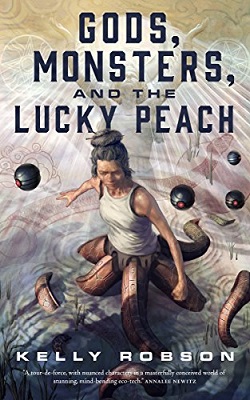
Gods, Monsters, and the Lucky Peach, Kelly Robson. I don’t think I’ve read anything by Robson previously, but her name sounded vaguely familiar– Ah, she won a Nebula for Best Novelette last year, and is another of the Clarkesworld/Tor.com stable, members of which have appeared on many shortlists in the last couple of years. Gods, Monsters, and the Lucky Peach was published by Tor.com. In fact, five of the six novellas on this year’s shortlist were published by Tor.com. Which is a problem. Anyway, Gods, Monsters, and the Lucky Peach is set on a post-climate crash Earth, in which a much-reduced population live in small high-tech communities. There are people who work on fixing the damage caused by the climate crash, in an effort to create a world that can be repopulated to former levels. The protagonist of this story is one of them. She also has eight prosthetic legs, like an octopus. And she is part of a team, if not its leader, which submits a proposal for an environmental impact study which involves time travel back to Sumeria. It sounds messy as fuck, but Robson manages to make it all hang together. There are problems: it’s not entirely clear what the team from the future are trying to achieve, the personal politics are confused with the wider political situation, and the POV is peculiarly narrow given the world-building. It actually reads like part of a series where much of the world-building was handled in earlier works, but I’m not sure that’s the case. It’s a reasonably well-handled piece, and the prose itself neither stands out nor is an obstacle – and the latter is certainly something that could be said of other nominees. I’m not sure if it deserves to be on the shortlist… but on balance, I’d say its presence is not embarrassing.

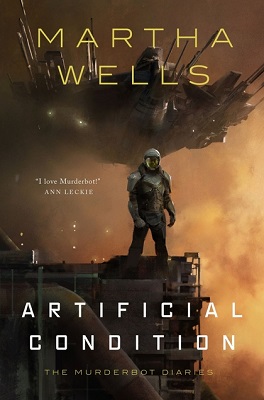
Artificial Condition, Martha Wells. Another problem with the novella category – indeed, with the Hugo Awards over the last few years as a whole – is the preponderance of sequels. Martha Wells, previously better-known for mid-list fantasy series, published three of her Murderbot novellas in 2018. (The first was published in 2017.) That’s a series. Artificial Condition is the second instalment. None of them stand alone. There are indeed cases where the second instalment in a series is better than the first, but in this case the first instalment, All Systems Red… won the Hugo Award for Best Novella last year. Come on, people, read a little more fucking widely. It would be understandable if the Murderbot series were astounding, the best sf published for many years… But they’re not. They’re entertaining, and even a little bit clever in places. But fun as they may be, they’re not award-worthy. And if you’re nominating fiction because it was “fun”, you appear to have misunderstood the meaning of the word “best”. The thing about “best” is that you have to recognise something as being of high quality, higher quality in fact than pretty much everything else you read, you don’t necessarily have to have enjoyed it or thought it was fun. The two are quite different. Any old wine will get you pissed, but the good ones won’t have you gagging every time you take a sip. At least not for the first half-dozen glasses. What we have here is a novella that gets you pissed without you actually noticing the flavour of the vintage – and I’d submit that’s not what awards are about, at least not awards that have the word “best” in their title. I enjoyed Artificial Condition. I might even read the rest of the series. But I really can’t see this as award-worthy and its nomination says more about the award than it does the genre.

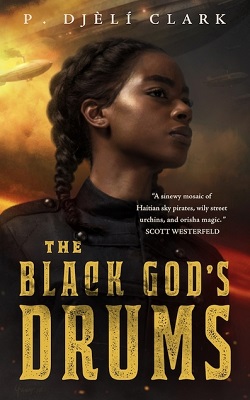
The Black God’s Drums, P Djèli Clark. Clark won the Nebula Award for Best Short Story this year (the story is also nominated for the Hugo), but appears to have come pretty much from nowhere. True, The Black God’s Drums was published by Tor.com, but his short story was published in a magazine I’ve not come across before. Also true, there seems to be a great love for debuts in recent years’ popular vote genre awards (seriously? why?), but that doesn’t mean the nominated works are necessarily bad. The Black God’s Drums is a bit busy, but it’s an interesting melding of ideas – alternate history, steampunk, voodoo magic and gods – and if it suffers it’s because its ideas makes its plot all a bit too obvious. Streetwise urchin protagonist has connection to powerful goddess; said goddess makes unexpected appearance at story climax to save the day. It’s not quite that simplistic, but the telegraphing here is as blatant as it comes. Obvious foreshadowing is better than none, but a little subtlety goes a long way. The plot is pretty much a staple of, well, fiction in general: nutter steals superweapon to wreak vengeance on city, random people come together to foil the plot (because there’s no organised government response to these sorts of things, ever). Does The Black God’s Drums belong on the shortlist? About as much as the Robson, I think. Its presence is hardly embarrassing, but if this and the Robson are the best the genre can produce in a given year then there’s still a long way to go…

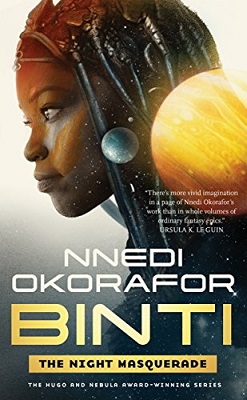
Binti: The Night Masquerade, Nnedi Okorafor. Like Clark, Okorafor also appears twice in this year’s Hugo nominations – for this novella and for the Black Panther comic she scripted. I have to admit I don’t understand the acclaim her fiction receives. She’s a fascinating person and is an excellent role model, but what little fiction by her I’ve read has struck me as simplistic and badly-written. It doesn’t help that Binti: The Night Masquerade is the third and, I think, final part in the Binti series. I read the first, and thought it interesting, if not particularly well put-together. But it was much better than this one, in which this happens and then that happens and then something else happens and then Binti is killed and then she comes back to life and then it all abruptly ends. It doesn’t help that the title refers to a nightmarish figure who appears to Binti, and yet the name of it – the Night Masquerade – clearly indicates it’s a fucking fake but everyone is too fucking stupid to realise. Anyway, Binti returns home but her family are dead, except they’re not really, and there are two races at war with each other but it’s almost impossible to keep straight because Okrafor is more interested in Binti’s feels than she is setting the scene. I’m no fan of exposition, and I disagree entirely with Kim Stanley Robinson’s statement “it’s just another form of narrative”, and “streamlining exposition into the narrative” is another piece of writing advice that gets my back up… Which is not to say there’s zero info-dumping in Binti: the Night Masquerade. There’s plenty. But it’s all about Binti and her culture, or that of her male companion. The rest of the world is so sketchy it might as well have been made-up on the spot by Binti herself. I really do not rate these novellas, and I’m mystified by the love shown to them.

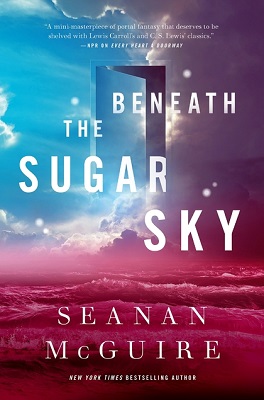
Beneath the Sugar Sky, Seanan McGuire. Yet another sequel. This is the third instalment in the Wayward Children series, about which I know nothing… but can pretty much guess what it’s about from this novella alone. Think Miss Peregrine’s Home for Peculiar Children. Sort of. But less clever. McGuire’s prose is so bland it rivals Gaiman’s. Except, that is, for the occasional flight of fancy, none of which actually work. The story is all “poor fat girl who is actually a princess in another reality” tagging along with some friends who try to help a fellow “wayward child” at a school for children who have spent time in other worlds and can’t cope in the real one. The central conceit is, I admit, quite neat, and McGuire clearly has a great deal of fun with it. But it all reads like poor-me fiction and a single idea stretched well past breaking point. The first volume in the series, Every Heart a Doorway, won the Hugo and Nebula awards in 2017, and I’m told it’s better than this one. And the second instalment, Down Among the Sticks and Bones, was nominated last year. But Beneath the Sugar Sky‘s presence on the shortlist says more about the power of McGuire’s fanbase than it does the quality of her fiction.

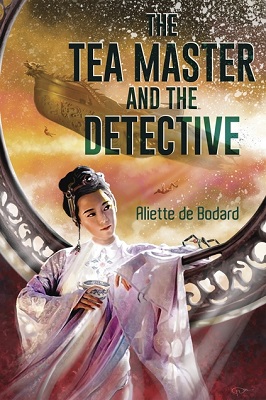
The Tea Master and the Detective, Aliette de Bodard. I’ve been and on-and-off fan of de Bodard’s fiction since first reading one of her stories in an issue of Interzone just over ten years ago. I say “on-and-off” because her science fiction appeals to me much more than her fantasy. And while I remember a number of sf stories set in an Aztec-dominated world, she is best-known these days for her Xuya universe stories, a Vietnam-based far future. (The universe itself is shortlisted for the Best Series Hugo Award, which is not how I thought the Best Series Hugo Award worked, and I’m surprised there’s more than 250,000 words in the short stories and novellas, but no novels, set in the Xuya universe.) Anyway, the “tea master” is a ship mind (more McCaffrey than Banks, if I’ve interpreted the text correctly) and the detective is a woman with a chequered past who hires the ship mind for a simple task. During which they discover a body that clearly did not die of natural causes. The mystery of the victim’s death is intertwined with the mystery of the detective’s past, although one is not a consequence of, or reflects on, the other. But both have satisfying conclusions, and the novella makes good use of its setting. The Tea Master and the Detective is not, as a friend said to me, the best Xuya story de Bodard has written, but it’s a good one. and to my mind, it’s easily the best on this year’s Hugo shortlist.

So there you have it. I’m not going to vote on any of the above, but if I had to choose a winner it would be The Tea Master and the Detective. If I were in a good mood, I’d vote de Bodard, then Robson, then Clark, and everything else below no award. If I were in a bad mood – which is more likely, I suppose – then it’d be de Bodard and everything else below no award.

I had thought this might prove a fun exercise. In fact, I’m discovering why I no longer follow the Hugo Awards. Ah well. Next up, the novelettes…


Leave a comment

Moving pictures 2019, #15

Despite my best intentions, I’ve actually got worse at keeping this blog up to date. But then, it’s been a funny old month-and-a-bit: moving apartment, SFI twice a week, a couple of red days, and then a very long weekend in the middle for Åcon, followed by Swecon two weeks later. Which may explain the delay, but not the pretty odd selection below. It’s just the way it worked out.

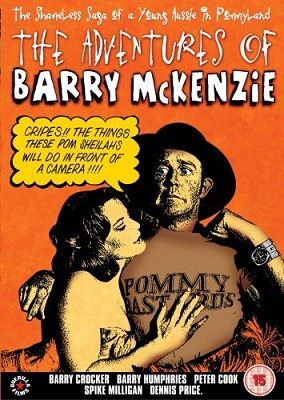
The Adventures of Barry McKenzie, Bruce Beresford (1972, Australia). Remember that time you were down the pub and some bloke told a joke that seemed funny at the time but you were pissed and so was everyone else but but not everyone thought it was funny and in sober hindsight you realise it wasn’t at all funny and was in fact borderline offensive if not outright offensive and if you had been with a more diverse group of friends they probably wouldn’t be friends anymore? Well, that’s this film. Which is why it’s a little embarrassing to write about The Adventures of Barry McKenzie, in which a racist and homophobic young Australian man visits the UK and has humorous adventures, ostensibly at the expense of the English, but he comes across as, well, racist and homophobic, so hardly a good advertisement for Australian manhood. Not that the English behave particularly well, as they’re depicted as either corrupt or even more racist than the Australians. The film was commercially successful but Beresford later said it blighted his career. Making shit films will do that. And just because a film is popular in its time, that doesn’t mean it’s not shit. And I don’t mean “shit” here as in “not well-made” but rather “offensive”. So I can understand Beresford’s complaints. A film to avoid.

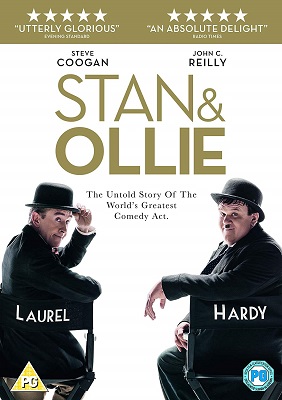
Stan & Ollie, Jon S Baird (2018, UK). In the 1950s, shortly before the end of their careers, Stan Laurel and Oliver Hardy toured the UK. This much is fact. It was partly to drum up interest – financially, mostly – in a film project of Laurel’s, a signature reworking of the Robin Hood legend. But the film producer played the comic duo for fools and the UK promoter of the tour did a less than stellar job. It is somewhat disappointing to learn that despite a career in Hollywood Laurel and Hardy were just as easy to fool as those who had stepped off the bus the night before. The film even shows them being smart about contracts… only to have them not actually learn anything from the incident. But that’s real life. And so is this film. It conflates a few things, changes a few minor details, but it’s essentially true to the pair’s final tour of the UK. And their reasons for doing it. But in any biopic, ninety percent of the appeal comes down to the depiction of the subjects, and in that respect Stan & Ollie scores very highly. Steve Coogan has Stan Laurel’s mannerisms down to a tee, although occasionally he does feel more like an actor playing a part; but John C Reilly is a pretty much a perfect Babe Hardy. I’ve seen a lot of Laurel & Hardy films over the years, I have even seen a few documentaries about the pair. And Reilly is extremely convincing. The pair of them make the film, but Reilly more than Coogan.

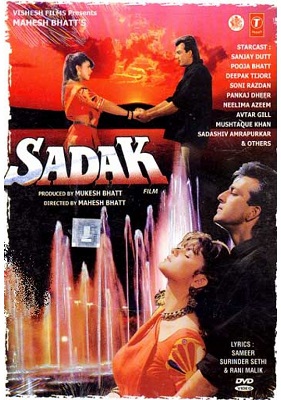
Sadak, Mahesh Bhatt (1991, India). According to Wikipedia, this film was inspired by Scorsese’s Taxi Driver, although to be honest I didn’t spot the resemblance myself and I’m not sure how closely one maps on the other. The one thing I do remember about Sadak is that it was more like a Hollywood musical in places. Several of the musical numbers had everyone come together on what were clearly indoor sets purporting to be street scenes to sing and dance. And maybe a bit like the TV series Taxi, that one with Danny DeVito and Andy Kaufman. The film centres on Ravi, a good-natured but insomniac taxi driver, who one day stumbles across the beautiful  Pooja, shortly before she is kidnapped and indentured to an evil transgender brothel keeper. One of Ravi’s passengers had been a celebrity cop, so Ravi enlists his help in rescuing Pooja. But it doesn’t go as planned, as nothing does in films of this sort, even Bollywood ones, and the final scenes sees a shootout between the good guys and the bad guys. Ravi is left for dead, but uses the last of his strength to have vengeance on the bad guys and finally rescue Pooja. Happy end. Sadak felt more 1970s than 1990s, although the transfer was much better than would have been usual for a Bollywood film from the earlier decade. I couldn’t decide if the musical numbers were deliberate pastiches – the opening one, for example, reminded me of one of the songs from Grease in its staging. If you’re into Bollywood films, you’ll get an evening’s entertainment out of Sadak, even if it does take some swallowing in places.

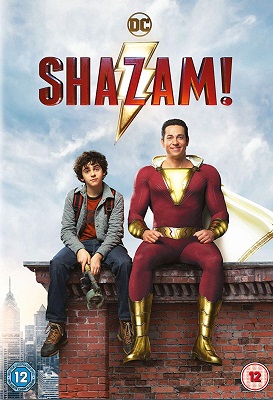
Shazam!, David F Sandberg (2019, USA). DC have had real trouble creating a property with the appeal of MCU’s properties. Which is odd, when you think about it, because they’ve got some big super-powered guns in their arsenal. But they’ve rebooted Batman that many times… and Superman too… and only recently did they finally realise that Wonder Woman was commercially viable (despite a successfully syndicated TV series decades ago), and as for the rest… Aquaman is DC, right? I forget. It was complete bobbins, but very entertaining (see here). There was that Justice League movie. I think I’ve seen it (apparently, I have – see here). So it must have seemed to DC like the most natural thing in the world to pick a second-rate hero like Shazam and make a big budget film about him. The central premise of Shazam! is the super-powers are passed from person to person, and the film’s first act sees those powers being given to a fourteen-year-old boy. Who, when he says the magic word – bet you can’t guess what it is – and transforms into a superhero, he’s a grown man but he’s still got the mind of a kid. It makes for a good joke… when used sparingly. The plot is something to do with a previous candidate for the powers who, peeved he was rejected, turns all-out evil and abducts Shazam’s friends and stuff like that. The movie had its moments, but it’s considerably less memorable than Aquaman, even if my overriding memory of the latter is endless battle scenes and a treasure map that required the use of a statue of a Roman emperor who didn’t exist until centuries after the map was made. Oops. Anyway, a bottle of wine and something trashy to eat like pizza, and Shazam! could be considered suitable accompaniment.

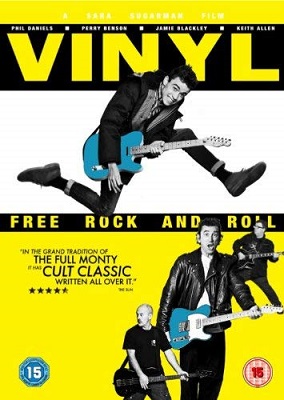
Vinyl, Sara Sugerman (2012, UK). Titling films is important. Sometimes it’s why people watch them. So to title a film Vinyl – an over-used title – when it really has nothing to do with vinyl, ie, LPs, seems like a pretty dumb decision. But that’s what they did here. And it’s even based on a true story. Which also had nothing to do with vinyl. But Vinyl is a film about music and bands, so it’s not like there isn’t some link. In the early 2000s, the members of a punk band popular twenty years earlier all meet up at the funeral of a friend. They’ve all got their own lives, not all of which has been successful. After a piss-up, they jam. The following morning, one of them cleans up the song they spontaneously wrote while pissed, and they all decide it’s good enough to give their band a second lease of life. Except the A&R man of their old record label disagrees. He likes the song, but he’s not interested in a band of fortysomething washed-out punks. So the band hire a bunch of young people to play the part of the band responsible for the song. It works. They get a contract. And the single is successful. But then the fake band members decide they’re a real band and they want a proper career… Vinyl was apparently filmed almost entirely in Rhyl, and much of the cast – with the exception of a handful of lead roles – were local players. The end result is a small town British – well, Welsh – comedy, with perhaps a little too much profanity but some good comic set-pieces, and a story that sounds almost entirely implausible despite being (mostly) true.

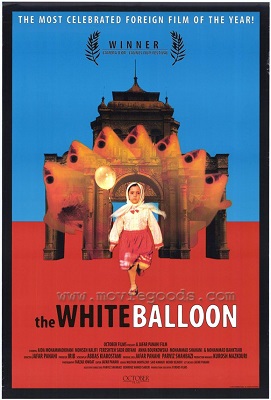
The White Balloon*, Jafar Panahi (1995, Iran). There are several films from Iran on the 1001 Movies You Must See Before You Die list, although most are either by Abbas Kiarostami or Mohsen Makhmalbaf. (The former actually provided the script for The White Balloon.) The presence of movies from Iran on the list is no surprise – its cinema has some excellent directors and has produced some excellent films. I’m not sure I’d put The White Balloon in that group – I think I preferred Panahi’s later The Circle – as I can think of a number of other Iranian films I thought better. The story involves a young girl who wants a goldfish and eventually nags her mother into giving her the money for it. But she loses the money, and it’s only with the help of a white balloon given her by a street boy selling balloons that she retrieves it. The White Balloon is very much a product of Iranian cinema, which is why it probably didn’t stand out for me all that much. It’s not structurally innovative, which both Kiarostami and Makhmalbaf are known for. It’s as well-acted and as well-shot as any number of Iranian movies I could name – but it seems to lack their mordant wit and black humour. It’s a good film and worth seeing, but I’m not sure it belongs on the 1001 Movies You Must See Before You Die list. Which could be said of many films on the list – and the presence of quite a few of them is downright mystifying.

1001 Movies You Must See Before You Die count: 940

2 Comments

Moving pictures 2019, #14

Since moving to Sweden, I’ve pretty much had access only to Amazon Prime. I bought my Blu-ray player with me, and a bunch of discs, but I’ve yet to set it up. Funnily enough, they don’t sell 3-pin to 2-pin electrical plug adaptors here, only the reverse…

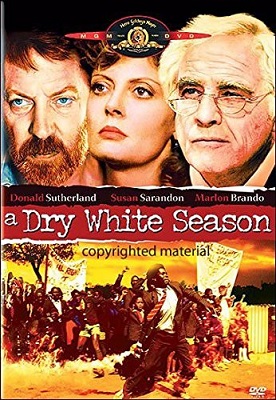
A Dry White Season, Euzhan Palcy (1989, USA). This is based on a novel by noted Afrikaner author André Brink, originally published in 1979, and apparently banned in South Africa. Which is hardly surprising. What is surprising, however, is that the book was around for over a decade before apartheid was ended, and the film for three or four years. And while apartheid was rightly reviled and condemned internationally, I’m surprised books and films which showed its true horror, such as A Dry White Season, weren’t more widely known. Which hardly normalises apartheid, but certainly makes international resistance to it by individuals entirely passive and ineffective. Of course, it doesn’t help when your government – for me at that time, that would be Thatcher’s – cosy up to these vile regimes, or even worse, like Pinochet’s, which more or less much makes them criminals by association. So no, Thatcher does not deserve a statue. Anyway, A Dry White Season. A black teenage boy is rounded up by the police during a schoolboy protest, even though he wasn’t involved in it. His father, the gardener at a posh Afrikaner school, tries to have his son’s criminal record wiped as he was innocent. But then is himself arrested as a “black activist” and tortured. He dies during interrogation. One of the school’s teachers, a famous ex-rugby player and “friend” of the gardener, tries to help out and gets embroiled in the whole thing. He decides to get justice for the dead man, which involves taking the state security police to court for his death. He loses the case. Soon afterwards, he is murdered by a state security police officer. This is grim stuff, and all the ore so for being set in a real world regime that behaved pretty much exactly as depicted. Apartheid was an abomination. A Dry White Season makes an excellent fist of its story, and Donald Sutherland, despite a somewhat wobbly accent, is good in the lead role. Worth seeing.

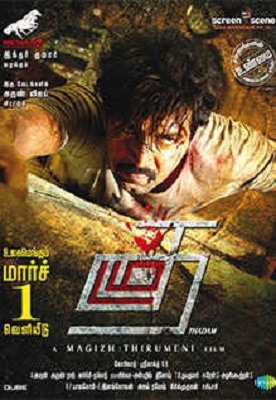
Thadam, Magizh Thirumeni (2019, India). A successful engineer spots a young woman he fancies on his commute to work – in fact, she works in the same building. He tries asking her out, she plays hard to get, but eventually she agrees. The two are very happy together. But then she heads off to a distant city for a celebration of some kind and is never seen again. Rumour has it she ran off with another man. Some time later, a man is brutally murdered in his apartment. The investigating police find a video taken on a phone from the balcony of a neighouring flat during a party – and it clearly shows the engineer on the balcony of the murdered man’s apartment around the time of the murder. He is arrested, but it seems he has an alibi. Meanwhile, it also transpires the engineer has a doppelgänger, who works as a con man and gambler on the streets. He turns up at the police station where the engineer is being held, after being arrested for drunk-driving. So now the police have two identical men, one of whom murdered the victim, but both have alibis. It turns out the pair are twins, who separated when their parents divorced and the two now hate each other. But one of them must have committed the murder, even though both have alibis. The court reluctantly lets them go. This is a clever thriller, and while it’s pretty long by Western standards, it never flags. It kept me guessing for much of its length, although the resolution is hardly a surprise. But if you’re going to watch a polished thriller, why not watch an Indian one?

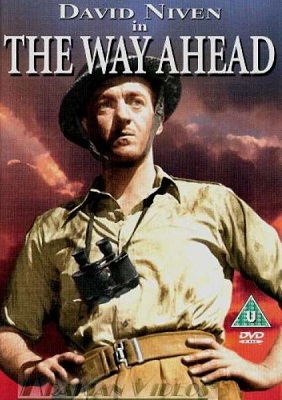
The Way Ahead, Carol Reed (1944, UK). Given when this film was made, and its topic, I suspect it was partly, if not wholly, intended to encourage more people to sign up to fight. And yet it shows the British armed forces are just as shit and incompetent as Evelyn Waugh’s novels make them out to be – as indeed does their record in both WWI and WWII. (The modern British Army, however, is a highly effective and professional fighting force, often hamstrung by poor equipment bought by politicians.) Anyway, a number of men from various walks of 1940s UK life are conscripted. En route to their barracks, they have an encounter with an army sergeant that does not go well. Lo and behold, he turns out to be their platoon sergeant when they finally reach barracks. And they’re all convinced he – William Hartnell – has it in for them. In fact, the opposite is true: he thinks they’ll make good soldiers. The film follows them through their training, including all their whinging and attempts to shirk, and ends up with them being sent to fight, only to be re-assigned elsewhere before the battle… but their ship is torpedoed and they have to fight to for their lives. This is a surprisingly honest depiction of British conscription during the war, and of some of the characters are closer to caricature that’s hardly unexpected given the broad strokes with which they’re drawn. As WWII films go, it makes a good antidote to the bombastic crap both the UK and Hollywood churned out in the decades immediately following the WWII.

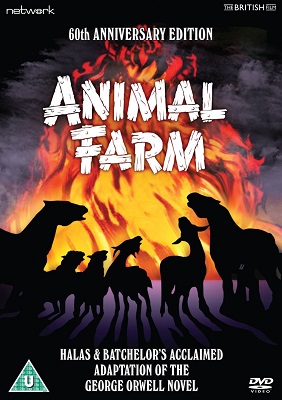
Animal Farm, John Halas & Joy Batchelor (1954, UK). Orwell’s novella seems an obvious candidate to turn into an animated film, but it took nearly a decade before it reached the screen. Perhaps it was too political for Hollywood – this adaptation is British, after all. Except… Hollywood has made plenty of political films, even ones that directly criticised Hitler. The story of Animal Farm, unfortunately, lends itself too well to animation, and what is clearly a political parable becomes something that feels more like a cartoon without jokes. There’s some good animation here, but I suspect afficionados of the artform are going to be the only ones who really appreciate it. To my eye, nothing especially stood out, and Orwell’s message felt like it was tacked on than the actual point of the piece. Worth seeing almost certainly, but be prepared to be disappointed.

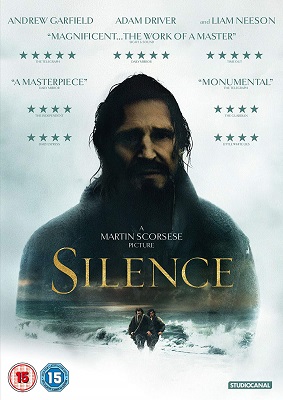
Silence, Martin Scorsese (2016, USA). In the seventeenth century, the Japanese shogunate cracks down on Christianity and imprisons, or executes, all the Christian priests and missionaries in the country. Two Jesuits are sent to Japan from Portugal a few years later to search for a priest who chose to renounce Christianity rather than be executed. After all, who wouldn’t? Seriously, if you’re that invested in an idea you’d give your life for it, chances are it’s not a good idea. And religion, particularly Christianity, is not a good idea. It’s caused far more harm and destruction than atheism. Funnily enough. Anyway, Andrew Garfield and Adam Driver, a pair of naive young Jesuits, are smuggled into Japan, where they discover Christianity flourishing underground despite being outlawed. Yay for risking execution and torture in service to a promise of an afterlife. Like you’ll ever fucking know whether it exists or not. Show me someone who’s  come back. With proof. Heaven is one of the biggest marketing scams in history of humanity. Up there with the divine right of kings, capitalism, trickle-down theory and white supremacy. Anyway… Scorsese is an experienced and accomplished film-maker, so it’s comes as no surprise that Silence is a well-made film. Although it does still feel like a series of longeurs stitched together by brief moments of drama. In part, that’s the nature of the story Scorsese is telling – it’s spread across years, for one thing. The cast all give good performances, but in places there’s just so much open emotion up there on the screen it feels like a wet Sunday in winter. I’ve never been a Scorsese fan – at least not of his films, but very much so of his World Cinema Project and his work to restore and promote non-Anglophone cinema. That’s always made me feel like I should like his movies more than I do. Silence is by no means a disappointing film, and it ticks all the boxes as an historical drama, but it’s not a film I can have strong feelings about.

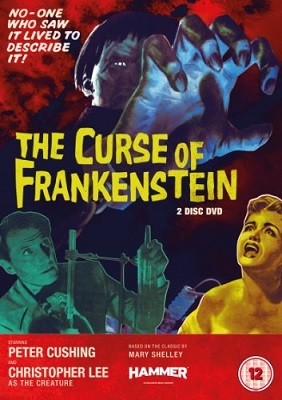
The Curse of Frankenstein, Terence Fisher (1957, UK). This was apparently the film which established Hammer as a maker of horror films – and they made some classic, if somewhat cheap, horror films during their time. Melvyn Hayes – better known to Brits of my generation as the female impersonator from the sticom It Ain’t Half Hot Mum, plays a young Victor Frankenstein who engages Robert Uruquhart, a disgraced scientist, as his tutor. Hayes grows up to be Peter Cushing. And he and Uruquhart manage to recreate life. But Cushing takes it further and creates a human – his monster, played by Christopher Lee. The film takes a number of liberties with the novel, mostly by almost entirely ditching Shelley’s plot. Th end result is pretty much archetypal Hammer Horror material, almost a template for their later movies. The Curse of Frankenstein grossed more than seventy times its production cost during its release, according to Wikipedia, and spawned a number of sequels. It was not especially well-received by critics. It’s not a very good film, and it would take some real mental gymnastics to try to claim it as one. But it’s certainly germinal, and while none of the film it led to ever be classified as works of cinematic art, they did what they did well and with a welcome sensibility. I don’t like modern horror films, I’m far too squeamish. But I’d happily work my way through Hammer Horror’s back-catalogue, and consider myself richer for having done so.

1001 Films You Must See Before You Die count: 939


1 Comment

Reading diary 2019, #5

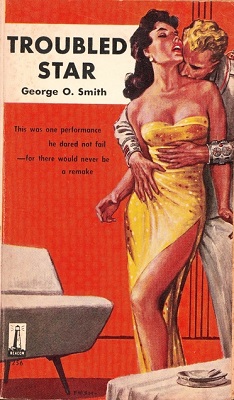
I’m sort of getting into this ebook thing. Four of the books below are ebooks; the other two are paperbacks I brought with me. And no, I don’t know why I brought Troubled Star. It’s a duplicate copy, and I have much cleaner copy in storage, so I probably just threw it in the suitcase rather than bin it.

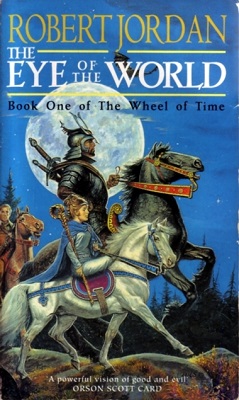
The Eye of the World, Robert Jordan (1990, USA). Members of the 2017 Worldcon in Helsinki, which I attended, were given an ebook copy of all fourteen volumes of Robert Jordan’s Wheel of Time series as it had been shortlisted for the Best Series Hugo Award. I’d previously read up to book ten or eleven, I forget which, and had the next volume in the series sitting unread on the bookshelves. I distinctly remember reading the first six or so books. I’d seen them in Books Gallery in the Liwa Centre in Abu Dhabi, and bought them because I wanted to know what it was that had made them such massive sellers. I read them in quick succession. And to this day, I’ve no idea why they sold so many copies. They were badly-written, bloated and derivative. But now that I have my Kindle, I thought it might be time to time finish off the series. Which meant starting from the beginning. So I reread The Eye of the World. I thought it might prove an interesting exercise, seeing what I thought to it now, twenty-five years or so after my previous read. And, well, my opinion of the book has not substantially changed. The writing still struck me as poor, the characterisation is simplistic at best, and a lot of the world-building consists of over-used tropes and borrowings. What I hadn’t noticed previously was how badly-structured the novel is, with the entire story pretty much wrapped up in the final chapter, after long chapters of travelogue that barely advanced the plot. On the other hand, knowing how the story pans out (well, most of it) and seeing the story hooks here (even if many of them weren’t actually planted) was just enough to keep me from throwing the book (well, Kindle) at the wall or gouging my eyes out. And in the series’ favour, it’s not grimdark, so it’s not gratuitously violent, rapist or sexist. Which is not to say it doesn’t feature all three – but not to grimdark’s offensive levels, nor, like grimdark, does it try to make a virtue of their inclusion. The reread wasn’t entirely painless, and I think it might take me longer to work my way through all fourteen books that I had initially expected… but I’m still going to try and do it.

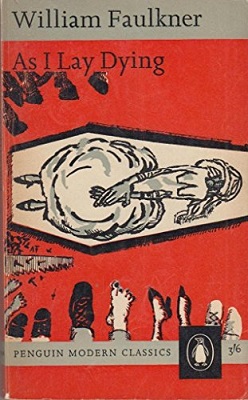
As I Lay Dying, William Faulkner (1930, USA). Although Faulkner was a name known to me, I’d read none of his books and knew nothing about him or his works. But my father had two novels by him, which I took, and I read one, The Sound and the Fury, last year and was hugely impressed. So I picked up a couple more on eBay. And I brought them with me to Sweden. The first of these was As I Lay Dying, arguably Faulkner’s best-known and most highly-regarded novel. There’s even a commercially successful metal band named after it. The story is told from several viewpoints, each in their own voice, and it concerns the death of Addie Bundren, and her husband’s attempt, with family and friends, to take her body to a neighbouring town to bury her among her kin. But all that is either incidental, or merely the trigger, for what happens in each narrative. It all takes place in Faulkner’s native American South – Mississippi, I think, for the most part – and the language reflects the setting. Despite As I Lay Dying‘s reputation, I didn’t find it as impressive a work of literature as The Sound and the Fury, possibly because the latter had the more adventurous structure, and I’m big on novels that experiment with narrative structure. But that’s really damning it with faint praise as this is full-on classic American Literature, and though not all works and writers described as that appeal to me, I do admire Faulkner’s prose a great deal. Definitely worth reading.

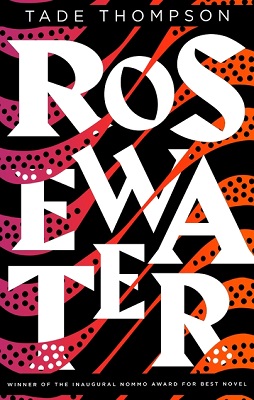
Rosewater, Tade Thompson (2016, UK). I’d heard so much about this, and it was shortlisted for the BSFA Award this year (despite being originally published in 2016, but never mind), and it was 99p on Kindle… so I bought it. And I read it. And… There’s a good story in Rosewater, but it throws too much in, like a writer not sure which of their ideas have real merit so they chuck them all in hoping that at least one makes the grade… And because there’s so much going on, the story doesn’t seem to have much of a clue where it’s heading for much of its length. Is it about the titular city and the alien entity around which it has grown, and the regular frenzies of miracle healing it creates? Or perhaps it’s about Kaaro, who works for the Nigerian intelligence service (or a side-branch of it) and has telepathic powers – as do many others – also created by the alien entity? Or maybe it’s about Bicycle Girl, a semi-mythical figure who seems to be associated with a village that disappeared and now exists in an alternate dimension or pocket universe, created by entirely human tech? There is currently something of a feeding frenzy in sf about African genre fiction, which is all a bit white man’s tears as the various African nations – Africa is not a country – have literary traditions going back centuries or longer and many of them have had their best writers and works translated into English for decades. They just don’t happen to be category genre. So sf from a Nigerian writer – as Thompson is – should, were the genre not so overwhelmingly white- and Americo-centric, not really be cause for celebration. But sf is as it is, and Thompson’s origin and the setting of Rosewater play a major part in reviews of the book. That’s just as racist as ignoring the book because of the author’s race. There’s no doubt Thompson could be a major voice in UK sf – he’s based in London – and Rosewater amply demonstrates that. This is a strong debut, but it’s a messy piece of work to make an award shortlist. A few years from now, Thompson will be churning out award-worthy books. But that’s more a criticism of awards than it is the author.

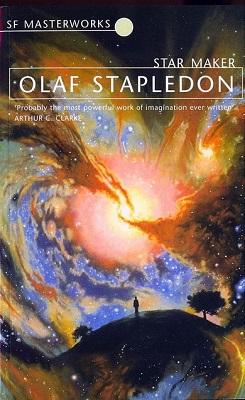
Star Maker, Olaf Stapledon (1937, UK). I have the SF Masterwork edition of this book – that’s the one from the original numbered series – but that’s in storage now. I bought a 99p copy on my Kindle so I could read it. I’ve no idea if the two editions are the same – they can’t be that different, I’d have thought, since this isn’t a work that needed translating. But the copy I read certainly had more than its fair share of OCR errors and typos. There’s not much of a plot to review: the narrator is an Englishman of the 1930s who falls asleep on a hillside and becomes a disembodied galactic traveller, as you do. He visits various worlds, learns to cohabit the minds of certain of their inhabitants, and they too join him on his travels, until he is more of a gestalt intelligence than the man he once was. Stapledon describes the various types of civilisation his observer visits, and while they’re initially based on extrapolations of Earth biology – even the symbiotic races, which play such a great part in the book – but soon it transpires the stars are sentient, and then the galaxies too. This is sf on the grandest scale, and it’s unlikely it would wash these days because it only really works with a style that’s no longer commercially acceptable. It’s not that genre fiction of the past fifty years has been stunted in any way, or has held off from Stapledonian scales because he did it first – Stephen Baxter’s entire career is ample rebuttal to that – but more that the style which allowed Stapledon to what he did is no longer considered commercially viable. Is that a bad thing? Not really. We still have Stapledon. He’s in the SF Masterworks series, and his books are readily available in a variety of editions as ebooks. Obviously, these are, paradoxically, historical documents, but for those who know what they’re getting into, they’re definitely worth a go.

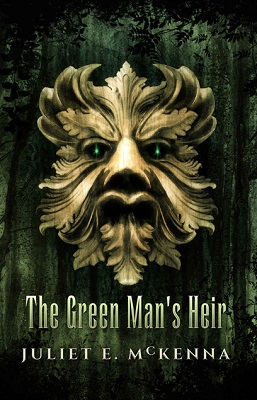
The Green Man’s Heir, Juliet McKenna (2016, UK). Another Kindle book that was 99p, but this time as a promotion. The author tweeted the book was reduced, and since I’d never read anything by her – she mostly writes fantasy, which, er, Wheel of Time reread above aside, I don’t normally read – and The Green Man’s Heir is urban fantasy, which I definitely don’t read… But the plot sounded interesting so I thought it worth a go. And I’m glad I did give it a punt. The narrator is Daniel Mackmain, a jobbing carpenter who happens to be the son of a dryad. Which means he is plugged into the mythological world based on landscape. So when a woman is brutally murdered near where Mackmain lives, and a dryad gives him enough to clues so he thinks he might be able to solve the case… The Green Man’s Heir is a mashup of mystery novel and fantasy novel but it works because it’s centred on its hero and not focused on its central crime. The story moves on from the murders and pulls in romance, but it all ends in a place that feels entirely a consequence of what has gone before. This is clearly a book by someone who knows what they’re doing. And if their earlier fantasy series have not made the big time, I hope this one does – there’s a sequel – because it’s good stuff. It may be a bit Mythago Wood meets Midsomer Murders, but it does it well and it certainly does it a great deal better than the last of those two.

Troubled Star, George O Smith (1957, USA). Back in the day, Galaxy magazine provided a free paperback with every issue. For some reason, after several issues they handed this over to Beacon Books, better known for publishing hospital romances, and they decided the books should be a little more, well, suggestive. So they rewrote a bunch of sf novels and published them. I’ve managed to collect them all, and most of their original editions, or author-preferred editions, chiefly so I can compare the two. Because, to be honest, they didn’t exactly choose good novels. Much as I love AE van Vogt’s The House That Stood Still, the Beacon Book version of it, The Mating Cry, adds little, and in fact only makes the female lead less sympathetic. I don’t have a copy of the book on which Troubled Star is based – originally published under the same title in February 1953 – but I think I can guess what’s been changed. It’s not very subtle. Anyway, three scouts for a galactic transportation company are on Mercury in the Solar System (note to sf writers: only capitalise when it refers to the Sol system, and the planets of any other star are a planetary system not a solar system). Anyway, Earth is in the way of a new hyperspatial route or something, and no, I’ve no idea if Douglas Adams had read this although he may have done. There’s a sex scene – that’s the Beacon touch – but this is otherwise true to its origins: pulp sf. I can claim a legitimate interest, although that’s wearing thin, but I suspect no other reader can. Avoid.

1001 Books You Must Read Before You Die count: 134


Leave a comment

Moving pictures 2019, #13

Once again, I’ve managed to get a bit behind with these posts. In fact, I’ve not been blogging much since moving to Sweden. Starting a new job. New town. New country. All that. I also moved apartments a couple of weeks ago, and now have a five kilometre walk every day. And I’ve started Swedish lessons, two days a week after work. But I really need to get on top of my blogging. I was hoping the move would help me kick off the writing again but, naturally, there’s an adjustment period… although I do have to keep reminding myself that I’ve only been here for two months. It feels like a lot longer. In a good way, of course.

Jashnn – The Music Within, Raksha Mistry & Hasnain S Hyderabadwala (2009, India). The title refers to a wannabe rock god, who dreams of stardom but doesn’t seem to have much of a clue how to go about it, even though he has a band and write songs. He doesn’t, for one thing, even know what a demo is. He lives with his sister, who is the mistress of a rich businessman. One day in a cafe, he chats up a beautiful young woman, and they start seeing each other. But it turns out she’s the sister of the businessman, and he doesn’t want Jashnn dating his sister – so much so, he threatens to cut Jashnn’s sister off without a cent. Jashnn’s girlfriend is so incensed, she moves in with Jashnn, who is now living in the place where the band rehearse. And she becomes their manager, introduces them to the concept of a demo, and takes them round the various record labels. But the businessman owns the record company, so he gets them thrown out. And it all comes down to a talent contest – as it always does in films of this sort. Jashnn has dropped out of his band, so they enter without him. But his girlfriend convinces him to perform as a last-minute contestant. Which he does. But the businessman has the judges in his pocket. Except… he gives a long impassioned speech explaining that Jashnn’s song really moved him and now he’s completely changed his mind and won’t be the evil bastard he had been previously and Jashnn can keep on seeing his sister, he won’t throw Jashnn’s sister out of her house, and everyone can live happily ever after. A polished piece of Bollywood, but romantic tosh from start to finish.

The Lego Batman Movie, Chris McKay (2017, USA). It was free to watch on Amazon Prime. That’s my excuse and I’m sticking with it. The original The Lego Movie (see here) was sort of fun, except for the horribly intrusive daddy issue swerve in the story toward the end. The Lego Batman Movie is, well, more of the same, but instead focuses on the titular superhero. The film is a relentless sequence of jokes, most of which manage to be funny. The Joker turns the tables on Batman by surrendering – along with all his fellow super-villains – so giving Batman no reason to exist. But it’s all a cunning plot, because Batman steals Superman’s Phantom Zone Projector to send the Joker to the Phantom Zone, which is what the Joker was hoping, because he promptly escapes and brings with him all manner of villains from assorted intellectual properties. There’s a running joke about Bruce Wayne accidentally adopting Dick Grayson, which a is bit uncomfortable in places, but then Batman decides to turn him into Robin (resulting in one of the films better comedy sequences). Still, it’s a Lego movie and you get what it says on the tin. I’m not entirely sure who these films are aimed at – the jokes are a bit too knowing for kids, but Lego is a child’s toy. I guess Lego have done well with these films, then, to position them for such a wide audience.

Dastak, Mahesh Bhatt (1996, India). This was Sushmita Sen’s first film. She was crowned Miss Universe in 1994, and in Dastak she plays herself, a winner of the Miss Universe contest, who is being stalked by a killer. The policeman assigned to look after her turns out to be an old schoolmate, and romance soon blossoms between the two. Which the stalker does not like. And, er, that’s pretty much it.  Although released in 1996, the film feels like it’s a decade or two older. The violence is all a bit pantomime, and I can’t honestly remember any of the musical numbers. But Sen is good in her first film role – not that it seemed to require much acting – and the stalker plot follows the usual story beats, with the stalker escalating each time he feels Sen’s behaviour doesn’t meet with his approval. Meanwhile, the police have no clue to the stalker’s identity. But at least moustachioed cop gets to kindle a romance with his charge. For all its by-the-numbers plotting, and despite the fact it was clearly a star vehicle for Sen, I quite enjoyed Dastak. Perhaps it was because it was a Bollywood film but it felt more dramatic than is usually the case for a Bollywood film of that time. I mean, I’ve seen some excellent Indian thrillers, like Thadam and Kahaani (see here), but they were twenty-first century films. Anyway, not a bad film.

The Getting of Wisdom, Bruce Beresford (1977, Australia). A friend told me that prior to the 1980s pretty much every internationally-recognised film made in Australia was shot by one of two directors. I’m guessing Breresford was one of the two. The Getting of Wisdom was his fifth film and is adapted from a 1910 novel by Henry Handel Richardson (despite the name, a female Australian author), which has apparently been in print continuously since then – so, quite highly regarded, then. Laura Tweedel Rambotham is a provincial naif from a small village who is sent to a boarding-school in Melbourne. The other girls are all snobs, so she finds it hard to fit it. But she’s a gifted pianist and makes friends through her talent. She also invents a romance with the school’s visiting priest, engineering encounters with him in such a way the other girls believe the relationship is real. Until it’s abruptly revealed to be a lie. I wasn’t entirely sure what to make of The Getting of Wisdom. It seemed a bit cobbled together in parts. It probably didn’t help that the source novel is more a series of escapades than an actual straight-through plot, and the film reflected that. I’m glad I saw it, but I can’t say I’d recommend it.
Manikarnika: The Queen of Jhansi, Krish & Kangana Ranaut (2019, India). Apparently Amazon bought the distribution rights to this film immediately after its theatrical release in India. Which is why it’s on Amazon Prime. Although not why it’s free to Prime members. I’ve seen a few recent Indian films available on Amazon Prime, and I think the same deal applied to them. Just to confuse matters, Amazon are releasing them in different language versions – Hindi, Tamil, Telugu and sometimes Malayalam. Anyway, Jhansi is famous for its queen, who fought against East India Company at a time when it pretty much had all the various kingdoms, sultanates and principalities sewn up, and was busy robbing them blind in the name of English commerce and good Queen Vic. Manikarnika was having none of that, and refused to submit. So the British threw an army at her. Strangely, all the British characters in this film had South African accents, although apparently it was just Americans doing bad British accents. Other than that, the film is a long sequence of battle scenes, which are rendered extremely well, with much CGI, or courtly intrigue, most of which involves the British being perfidious or Manikarnika being heroic. It’s good stuff, but no one could accuse it of being subtle. And it’s a definitely a piece of history British people would benefit from learning about, especially all those arseholes who think the British Empire was some sort of noble endeavour that brought all the good things to most of the planet. Was it bollocks. It was a shameful period of British history, and movies like Manikarnika: The Queen of Jhansi give an excellent indication why. Worth seeing.

Area Q, Gerson Sanginitto (2015, Brazil). Stop me if you’ve heard this before. There’s a place where several people have gone missing, and then returned claiming to have been abducted by aliens. For reasons never made entirely clear, an award-winning journalist is sent to that place to look into the matter. The journalist is currently trying to find his young son, who disappeared some months previously. The journalist interviews some of the abductees, and they seem to have been genuinely changed by the experience. Then he is abducted himself, and learns that his son was also abducted. This is all being told to another journalist after the events, because the original journalist’s career bombed after he came back claiming to be an abductee. Area Q differs slightly in its presentation of this over-used and somewhat dated premise because it’s Brazilian. The journalist is an American from LA, but the abductions (except for the son) all take place near a mountain in Brazil. It adds a strange gloss to what is a bog-standard plot strung together from unbelievable clichés. It doesn’t help that the acting is not very good, and the script pretty terrible. Definitely one to avoid.

1001 Movies You Mist See Before You Die count: 939


Leave a comment

Fools like us

So a well-respected literary author goes and writes a novel that everyone knows is science fiction, and that everyone knows he probably knows his science fiction, but he decides to claim that not only is his novel not science fiction it actually covers ground not covered by science fiction and perhaps this is a ripe area for exploration by literary authors…

Do I really need to say who, what book and the specifics of his argument?

Naturally, he was roundly condemned by science fiction writers, critics and readers – some more than others – but, just as naturally, their condemnation was as damaging and misguided as said literary author’s misguided, but likely entirely self-serving, remarks had been.

As genre fans, we’ve been there before, perhaps too often to count:

The literary author who uses a science fiction trope but claims it is not science fiction:
I don’t have a problem with this. I don’t even think of them as “tourists”, as some do. They’re approaching genre tropes from an entirely different direction, they don’t have the history, they don’t have the context; and, sometimes, that’s exactly what the trope needs to shine new light on it, to view it from a fresh perspective.

The literary author who uses a science fiction trope but claims it is entirely their own invention:
This one is pretty much indefensible. Who these days would write a story without bothering to research it? “Hey, I’ve just written a novel about artificial people and no one else has ever done that before” is just so lacking in self-awareness, it makes its utterer a perfectly legitimate target of every critic and pundit in existence.

True, literary authors sometimes make a complete fucking hash of their science fiction tropes – see Spaceman of Bohemia on last year’s Arthur C Clarke Award shortlist. On the other hand, some novels published as sf make a complete fucking hash of their sf tropes – see Sea of Rust on last year’s Arthur C Clarke Award shortlist.

It could be argued any such complaints about either of the above points are invalid unless the critic has read the book in question. Which is bollocks. It’s not the work itself being criticised, it’s the trope’s origin or history, as given by the literary author, that’s under discussion. And you don’t need to read through 100,000 words of jewel-like, or whatever, prose to know that.

I actually like it when literary authors make use of genre tropes in their fiction. They have a tendency to deconstruct the trope because they’re not invested in its history and prior usage. Sometimes, that manifests as “re-inventing the wheel”, but even so they frequently bring a new approach to something that has probably been deployed uncritically in genre circles for decades. And most genre tropes need a critical re-appraisal. All those fucking robots… I mean, it’s the twenty-first century and we’re still writing uncritically about a metaphor for slavery?

Which neatly brings us back to the not-so-cunningly disguised novel which kicked off this blog post. I freely admit I’ve not read Ian McEwan’s Machines Like Us, and have no plans to do so. I gave up on his fiction after 2005’s Saturday, although I did mistakenly read Solar (2010) some years later. I probably should have given up on his fiction back in 1997 or 1998. I don’t need to read Machines Like Us. There’s been an extensive publicity machine promoting the book. Because McEwan is a writer who gets that treatment, whether or not his books deserve it. A cynic might even suggest the whole “I’ve done AI better than the entire corpus of science fiction” thing is just part of the marketing strategy.

I have also read other genre works by literary authors who claimed not to write genre, or were reluctant to accept the label when called out on it, and I admire their books: Lawrence Durrell’s Tunc and Nunquam, John Fowles’s A Maggot, Jed Mercurio’s Ascent, Jenny Erpenbeck’s The End of Days, Kate Atkinson’s Life After Life, Katie Ward’s Girl Reading, David Mitchell’s The Bone Clocks… But then it’s not like I need to reel off titles as there are no end of highly-regarded novels which make use of genre tropes but are never identified with the genre.

As I said, I don’t have a problem with that.

It’s nice when they give the nod to genre – as Michael Chabon has done, as Margaret Atwood eventually did, as Doris Lessing has done, as Michel Faber has done… There are some blindingly good genre works available from those four names alone, none of which were published as genre. Genre is not a private club, it just has some members who are a little more… invested in it than others, and they can be somewhat over-protective.

But then the publicity machine for Machines Like Us comes along, and it’s like we’re back in the 1950s or 1960s. It’s like genre is still a ghetto of its own making, but this time it’s someone outside who’s shoring up the walls. It feels like a step backwards because it is a step backwards. Genre writers are forever handicapped by being seen as genre writers.

But literary fiction is just a genre, I hear you cry. Except, well, it’s not. No one really sees it as that. True, it often doesn’t sell as well as actual genre fiction – science fiction and fantasy. It has the prestige genre fiction lacks (and any claims that genre fiction doesn’t need that prestige are just reverse snobbery), and occasionally there’s a break-out literary fiction novel which knocks an author up a level, like McEwan’s Atonement, not that advocates of literary fiction would use anything as crass as units sold as a metric of quality…

There is genre fiction, there is category genre fiction, there is fiction written within the tradition that is genre. There is also fiction that might look like any one of those three, but has only a passing knowledge of them. That neither invalidates it nor makes it inferior. It is what is in the fiction which defines it. But it is also the ur-text which defines it. And ur-text has as much loyalty to genre as any individual trope does.

Having been so in the past does not make it so now or in the future. Which is a horribly vague way of saying that some tropes have actually been handled better by non-genre writers. Alternate history is an excellent example. Jenny Erpenbeck’s The End of Days is a superior example. But even populist novels, such as Len Deighton’s SS-GB, often seem more exemplary of the sub-genre than alternate history novels published as category science fiction.

We should be applauding how genre tropes are used, not where they are used. Had McEwan written something truly groundbreaking with Machines Like Us, then yes, fold it into the genre conversation. It seems he hasn’t, so that’s pretty much academic. But when the genre can co-opt, for example, The Underground Railroad, and even include it on genre award shortlists, what’s the problem with the genre conversation incorporating non-category genre works?

Fault them for their quality, as you would a genre work. Not for their choice to use genre tropes.


1 Comment

Top five science fiction films

I saw someone recently tweet for requests for people’s top five science fiction films and I thought, I can do that. Then it occurred to me I’ve watched around 3000 movies in the past few years, and many of them were science fiction. So those films I think of as my favourites… well, surely I’d seen something that might lead to a new top five? Even if nothing sprung immediately to mind… True, I’m not that big a fan of science fiction cinema, and most of my favourite movies are dramas. And most of the sf films I have seen were commercial tentpole US movies, a genre I like even less…

I went back over my records, and pulled together a rough list of about fifteen films – it seems most of the sf films I’ve seen didn’t impress me very much – and then whittled that down to five. And they were pretty much old favourites. Which sort of rendered the whole exercise a bit pointless.

Or was it?

Top of my list is Alien, directed by Ridley Scott and released in 1979. Although distributed by 20th Century Fox, I’ve always counted it as a British film, as it was an entirely UK-based production, and in fact used many of the UK-based talent that had been working on Alejandro Jodorowsky’s aborted Dune movie. I’ve always loved Alien, pretty much since its theatrical release. Which is a bit weird as it was given an X-certificate, and I would have just turned thirteen when it was released. But I read the novelisation by Alan Dean Foster; I had the collectable magazines and books, even Giger’s Alien (published by Big O according to my copy, but by Morpheus International according to the internet). I fell in love with the world of Alien, with the grimy lived-in appearance of the Nostromo, with the weirdness of the boomerang spaceship, with the look of the alien creature itself. Which doubtless explains why I’ve never really rated any of the sequels. Alien did it first, Alien kept it simple, Alien did it best. The less said about the prequels, the better…

But if we’re talking science fiction cinema worldbuilding, there are plenty of other movies which might qualify. I love the production design of David Lynch’s Dune: the uniforms, the spaceships, the sets… It’s just a shame Lynch’s vision was so badly mangled by the studio, and that Lynch himself made quite a few questionable choices when adapting the novel. Other prime examples include Metropolis, Forbidden Planet, Blade Runner, Starship Troopers, Brazil, The Fifth Element, the various Star Trek films, the Star Wars movies… Or perhaps something more recent, such as Mortal Engines, anything from the MCU, Jupiter Ascending, Prospect, Science Fiction Volume 1: The Osiris Child, The Lure… Except the only film out of that lot I especially rate is The Lure, and I’d classify it as horror rather than science fiction. (Oh, Metropolis is good too, of course.)

Of course, those are films that required new worlds built out of whole cloth – there’s even a book about it: Building Sci-Fi Moviescapes (my copy, of course, is in storage). There are those that made do with the real world, making clever, or innovative use, of existing buildings and landscape. Examples include Alphaville, Crimes of the Future, Rollerball, even Interstellar (mostly). One of the most imaginative uses of location for a sf film I’ve seen is Footprints on the Moon, which manages to create a plausible invented country out of a pair of Turkish seaside resorts. Sadly, though I like the film a great deal, it’s not quite good enough to make my top five.

A film which also creates a new world out of clever location shooting makes the second slot on my list: François Truffaut’s Fahrenheit 451. I’m not a fan of the book, but I’m a big fan of Brutalist architecture and there’s plenty of that in the Fahrenheit 451 film. Plus a monorail. And Montag’s A-frame house in its leafy suburb with the silver birches and G-Plan furniture. It doesn’t look in the slightest bit futuristic – especially not now – but I love the film’s look and feel. (Except maybe the fire engine; not so keen on that.) But it’s not just the visuals, you also have Julie Christie playing two roles, the story’s focus on censorship (not television), the fact it ditched the stupid robot dog from the book, and Truffaut’s elegiac ending.

Science fiction films are not all set in the future or invented worlds. Some are set at the time the film was made. Girls Lost, set in early twenty-first century Sweden, might well have made my top five, but its central premise is just too fantastical. And Thelma, set in early twenty-first century Norway… well, telekinetic powers are a science fiction staple. At least they are in written science fiction. They’re more of a horror trope in cinema, and Thelma would also have made my list but it’s clearly a horror film.

An older film, one which depicts a 1980s Sweden, albeit far from any centre of civilisation, is Andrei Tarkovsky’s Offret, AKA The Sacrifice. Like Girls Lost and Thelma, its genre credentials are somewhat wobbly, but the fact it’s about a nuclear apocalypse, a very real concern during the Cold War and one much used by science fiction, pretty much since the genre’s early twentieth century origins, just about clinches it as science fiction for me. Okay, so Erland Josephson makes a deal with a higher power to put everything back and that’s hardly science-fictional, but never mind. Watching Offret is a harrowing experience, and science fiction cinema rarely manages that.

Most people, if they had to pick a Tarkovsky movie – and why wouldn’t they pick one? – would probably plump for either Solaris or Stalker. But the latter’s urban wasteland setting might suit its story but can hardly be called worldbuilding. And I’ve seen too many Soviet bloc sf films from the 1960s and 1970s to find anything special in Solaris‘s production design. They’re both great sf films, but I much prefer the look and feel of Herrmann Zschoche’s Eolomea to Solaris, although the latter is the better movie.

It’s not just actual Soviet and East German films, however. There are also the US ones from the 1960s which New World Pictures cobbled together from Soviet special effects footage, the best of which is Curtis Harrington’s Queen of Blood (containing footage from Небо зовет).

Offret takes slot number three.

When I wrote about building whole new worlds for science fiction movies, I very carefully didn’t mention one particular film, which takes place on another planet ruled by an entirely invented civilisation… but is actually a very old genre property. 2012’s John Carter. My number four choice. It did badly at the box office and its cast is hardly top-drawer. But it’s a gorgeous-looking piece of cinema, and its script makes some very adventurous decisions about its story-telling which, to my mind, totally paid off (longeurs notwithstanding). I’m not a fan of the books – they’re very much historical documents, and the tropes they introduced have been so extensively used and reworked in the decades since it would be impossible to make them fresh. But the basic story possesses a primal appeal, and although John Carter does complicate its plot with its nested endings, I think it gives the film a contemporary narrative sensibility. John Carter is a seriously under-rated movie, and it’s a pity corporate politics pretty much killed it.

That’s four movies, and the final slot was, as is usually the case, the hardest to fill. I could think of a number of films which almost made the grade. There’s Dredd from 2012, a bona fide, and ultra-violent, science fiction art-house movie, but it’s too thin on plot. Or Cargo, a Schweitzer-Deutsch film from 2009, which is a bit of a hodge-podge of genre tropes, some of which border on cliché, but looks pretty good and is about as science-fictional as you can get. Going a bit further back, there’s Peter Watkins’s Privilege from 1967, which is a clever, and quite funny, dystopian satire. Or Jonathan Glazer’s Under the Skin, in which an alien in the person of Scarlet Johansson drives around Glasgow in 2013 picking up men to provide meat for her home world.

However… I decided to go for a completely left-field choice for movie number five: The Untamed, a Mexican film directed by Amat Escalante, released in 2016. It’s a good example of a type of cinema I especially like, slow cinema. It is enigmatic. It has a documentary feel. And yet you have no idea where it’s going for pretty much its entire length. It also shows that science fiction can be used to illuminate the lives of people in the real world, it doesn’t always need fancy worldbuilding, expensive CGI or imaginative location shooting. Sometimes it just needs the introduction of something strange into the mundane.

So that’s my top five science fiction films. As of 2019. Ask me again in a year or two and it will probably be different.

I’ve no doubt missed out a huge number of eligible movies: I  either because I’ve not watched them, don’t think they’re any good, or just simply didn’t remember (despite trawling back through my film-watching records). I’ve also not mentioned any anime films, although many of them might well qualify. I’ve watched some excellent ones – anything by Makoto Shinkai, for example; or the Neon Evangelion movies – but I don’t love anime as much as I do live-action, and besides they probably deserve a list of their own. Another day, perhaps.


1 Comment

Reading diary 2019, #4

The first book in this post I read before leaving the UK, but I’m not sure why I didn’t include it in an earlier Reading diary. Two of the books I read on my Kindle (well, one was a reread), and the remaining three I brought with me in my 26 kg suitcase.

I’ve been avoiding the English Bookshop here because I don’t want to buy new books just yet. Once I’ve read most of the two dozen I brought with me, then I’ll start buying some more. Although there are a couple of new books I want in hardback… like the last Bernie Gunther novel… and the new one from Nina Allan…

The Adventures of Blake & Mortimer 25: The Valley of the Immortals, Part 1, Yves Sente, Peter Van Dongen & Teun Berserik (2018, Belgium). Unlike the Adventures of Tintin, with which the Adventures of Blake and Mortimer are closely linked, Blake and Mortimer survived the death of their creator. Edgar P Jacobs set up a studio to continue the series, and it’s been churning them out ever since. And, to be honest, the studio’s stories have been better than Jacobs’s ever were. Until, it seems, this one. Sort of. The Adventures of Blake & Mortimer 25: The Valley of the Immortals is a sequel to one of Jacobs’s most famous stories, The Secret of the Swordfish, which was pretty much a Yellow Peril narrative. To be fair, The Adventures of Blake & Mortimer 25: The Valley of the Immortals soon leaves Jacobs’s invented Asian evil empire – actually called the Yellow Empire – behind, and focuses on real Chinese history, specifically the Communists and Kuomintang, both of which are after a recently discovered artefact from third-century BCE China. As is a warlord who plans to use it to declare himself emperor. Mostly, this is all good stuff, but while dragging in the Yellow Empire slots the story into the Blake and Mortimer universe, and gives continuity to the characters, it leaves a bad taste and the book would have been better for ignoring it. One of the good things about the series has been that it has changed with the times. Tintin’s earlier adventures are racist as shit, and because The Adventures of Tintin ended with Hergé’s death, there are no new stories to offset those early works. Because Jacobs founded a studio to continue the Adventures of Blake and Mortimer, we have new stories – more, I think, than Jacobs actually wrote – which have kept pace with sensibilities (and have also become increasingly sophisticated in their stories). If you like Tintin, then you should be reading the Adventures of Blake and Mortimer. There are twenty-five of them, so you’ve got some catching up to do.

To Play the Lady, Naomi Lane (2011, USA). Someone recommended this to me a long time ago, but it was only available on Kindle and at that time I didn’t own one. But now I have one. And To Play the Lady was cheap. So I bought it and, er, read it. And I wish I could remember who recommended it. Because it wasn’t very good. The background is a bit identikit, and there’s doesn’t seem to have been much thought put into it. The protagonist is a complete Mary Sue, and accrues powers as the story progresses. Which is not to say the story doesn’t have its good points. Provincial aristocrat’s daughter is sent to the palace to be a maid of the queen, but she’s a bit of a tomboy and has been taught all sorts of unfeminine things. Her origin brings her into conflict with the other maids – all the daughters of peers of the realm – and her abilities at riding and archery cause problems because they’re not exactly ladylike. And it also turns out she has a rare magical talent and has to be individually tutored by the royal sorcerer… Sigh. There’s a breezy tone to the narrative, which is fun, and having a queen’s maid as the focus of a story gives an interesting perspective, but… Jenna Mallory, the protagonist, is so Mary Sue-ish it gets annoying quite quickly. The book is the first in a series, and the second book, To Serve the King, appeared in 2016. So if this is a trilogy, the final book is not likely to appear until 2021. I may well give the second book a  go, but I’m in no great rush to do so.

Dune, Frank Herbert (1965, USA). It probably doesn’t need to be said that this was a reread. I last read Dune in 2007 and blogged about it here. But I didn’t bother with the sequels on that reread, and since the Gateway ebook collection of all six Dune books was only 99p, I decided to buy it and work my way through all of them. Starting with, er Dune. It’s a book I know well, so I was more interested on this reread in how it compared to what I remembered. And yes, the writing is still pretty terrible for much of its length – especially in sentences that contain the phrase “terrible purpose” – but the worldbuilding is still among the best the genre has produced. However, my reading was focused on the scenes. And… the ones I remember liking rang a bit false, such as the time Duke Leto and Paul fly out to see a spice harvester in action. But other scenes I hadn’t liked, like the banquet scene, I much preferred this time around. What I hadn’t forgotten was the casual misogyny and homophobia, which very much made the book a product of the 1960s. I’d also forgotten how slipshod was Herbert’s worldbuilding: some things he’d made an effort to disguise, but in other places he’d simply slotted the Arabic word straight in. There didn’t seem to be much logic to it. Fifty-five years after it was published, Dune remains popular – Denis Villeneuve, movie flavour of the month in some genre circles – is currently filming an adaptation. In two parts, if rumour is to be believed. And there may well be a television series following on from the movies. But while there is a certain timelessness to the universe of Dune, Dune the novel is very much a book of its time. Had it been re-invented each decade, perhaps it would be an even bigger property that it is. Although I suppose the awful Brian Herbert and Kevin J Anderson sequels and prequels could be considered “re-inventions” but they’re pretty shite. If I had a Swedish crown for every time I’ve heard someone say they’d read Dune but not its sequels, or that Dune is the best of the series and the rest are not worth reading, well, I’d be living in a Swedish palace. A small one. And yet it’s completely untrue. Frank Herbert conceived the first three books as a single story, so all three really need to be read in order to understand the point Herbert was trying to make. And I’ve always maintained the writing improved, at the sentence level, as the series progressed. This is hardly controversial – the more Herbert wrote, the better he got at it. I’m hoping that particular conviction will survive my reread. We shall see. But the take-away from this reread: the best-loved scenes disappointed, but the scenes I’d not liked as much previously read much better than I’d expected.

Forcible Entry, Stewart Farrar (1986, UK). I’d been after this books for years, although I forget why, when a copy popped up on eBay. The book was only ever published in hardback, and the hardback was published by Robert Hale, which no doubt explains why it had proven so hard to find. Unfortunately, I lost the auction on eBay for the book… but found a copy for less on abebooks.co.uk from a seller in Australia. (I see there’s now a copy on Amazon going for £590. I paid nowhere near that.) And, after all that, was it worth it? I understand most of Farrar’s fiction revolves around witchcraft and Wicca – I believe he practiced it himself – and certainly a coven of witches makes an appearance in Forcible Entry. But the story is mostly about parapsychology research, particularly telepathy and astral projection. Matthew is a professional photographer and dying of cancer. He also volunteers as a test subject at a parapsychology study run by the university. Which is where Sheila, an attractive young woman, works as an office manager. The two prove to be gifted at astral projection. On one such trip Matthew, knowing he is dying, steals Sheila’s body. So while his real body dies of cancer in hospital, Matthew takes over Sheila’s body and feigns amnesia to cover any mistakes he might make in his impersonation (he had been studying her for weeks beforehand). However, Sheila had been an unwitting agent of the CIA investigating an organisation that wants to use people with parapsychological abilities for nefarious reasons. But not everyone is convinced by Matthew’s impersonation of Sheila – especially her American boyfriend, who involves a coven of witches to undo the possession – and when Matthew is forced to kill to defend his secret… It’a an interesting premise, and Farrar’s prose is readable and unremarkable. I’m surprised the book is not better-known – or rather, surprised it never made it to paperback, because there’s certainly a market for it. But then, I don’t think many of Farrar’s novels made it to paperback, so it seems his chief readership was library borrowings. There were a couple of other Farrar novels offered by the seller on eBay who was selling Forcible Entry, and one or two of them looked interesting. But I’m not going to go out of my way to track down his books, although if I see one going cheap I might give it a go.

With Fate Conspire, Mike Shupp (1985, USA). Back in the 1990s, I corresponded online with Mike Shupp. We were members of an online sf novel writing group, although both of us were using the group chiefly as motivation. Anyway, Shupp had published a five-book series, The Destiny Makers, between 1985 and 1991, but nothing else. And nothing since that online sf novel writing group – he was working on something new, and it looked good, but it hasn’t appeared in the years since. To be honest, I suspect With Fate Conspire is not a book that would see publication today. Not because it’s bad – it isn’t, it’s actually quite good. But it makes zero concessions to its readers, and it’s often a struggle to figure out what’s going on. Partly that’s because the plot is about time travel, and partly because it’s set on an Earth 90,000 years from now which is very different. But Shupp further complicates matters by fracturing his narrative. Tim Harper is a Vietnam vet physics student who gets caught in the field of a time machine sent from the future. He figures out how to use it, and travels back to the time it was sent, 90,000 years from the present-day. It’s a world in which some ten percent of the population are telepaths and they are strictly apolitical after two world wars caused by their interference in national affairs. But where Harper ends up is in the last stand-out against a world-state, and they decide to use the time travel technology to change the past and maintain their independence. With Fate Conspire does not make this easy. The narrative jumps about, and does not even mention some of the more important plot elements, and reading the book is a struggle to figure out what’s going on. I don’t have a problem with this, but I suspect present-day editors would. With Fate Conspire is definitely a book a written by an engineer. Happily, I have all five of the series and I brought them with me to Sweden. The next book is titled Morning of Creation. Expect it to appear in a blog post sometime in the next month or so.

Black Mischief, Evelyn Waugh (1932, UK). This was one of a bunch of Evelyn Waugh novels my mother found me in charity shops. In Harrogate. Where they obviously have a somewhat different class of customer to Sheffield. Although, to be fair, it’s a rare charity shop that will keep 1950s Penguin paperbacks on their shelves. And they were pretty tatty copies too. Black Mischief is set in the invented African island-nation of Azania. There are two African language-groups, one native to the island, the other invaders several centuries earlier. Plus Arabs, legations from assorted European nations, churches from the major religions, and a variety of hangers-on and chancers. The current ruler dies and his son, only just down from Oxford, takes the throne. And is determined to drag his country into the twentieth century (the fourth decade of it, at least). Waugh lays out the history of his invented country with impressive clarity. The story then shifts to London and Basil Seal, a character from Waugh’s earlier novels, a dissolute upper class wastrel, who happens to know the new emperor of Azania and fancies getting out of London. So he travels to Azania, hooks up with emperor, and is made Minister of Modernization. He’s in it for what he can get, of course, but he’s out-matched by pretty much everyone else in the country. Had Black Mischief been written a few decades later, it might have aged better. Because it’s horribly racist. It’s not just the language, it’s the treatment of races other than English. Waugh mocks the English quite heavily; and the French too. Especially their legations. But his treatment of the Sakuyu and Wanda relies on racial caricatures, as does his characterisation of Youkoumian, an Armenian Jew. Perversely, the one non-English character who isn’t treated racistly is the new emperor, who comes across as woefully naive, if well-intentioned, and the sort of over-educated naif so beloved of Oxbridge comedies. Not one of Waugh’s best.

1001 Books You Must Read Before You Die count: 134


2 Comments

Moving pictures 2019, #12

More Amazon Prime viewing. The Blu-rays I brought with me are still in their shrinkwrap, sitting on a shelf across the room and mocking me. Currently, my viewing comprises assorted series from Swedish TV, such as Midsomer Murders (it’s worse than I thought), Antiques Road Trip, Murder She Wrote (known here as Mord och inga visor, Murder without evidence) and NCIS: New Orleans (which is even less believable than all the other NCIS franchises put together). On Amazon Prime, I’ve been watching Andromeda, which is a bit like a TV adaptation of a campaign for a space opera role-playing game played by fourteen-year-olds…

Fortunately, I’ve managed to find some halfway decent – and some quite excellent – movies to watch to keep me sane. And, of course, I’ve been reading books… although I’ve no idea why I decided to reread the Wheel of Time just because I have the whole series on my Kindle (courtesy of Worldcon75) and The Eye of the World is so bad it’s doing my head in…

The Eagle Huntress, Otto Bell (2016, Kazakhstan). The Mongolian nomads in the Altai Mountains use eagles to hunt, particularly foxes, as hunting eagles is now considered more of a traditional sport than a survival skill. Aisholpan is thirteen years old, and she wants to be an eagle hunter. But it has always been the preserve of men. Her father is happy to train her because he thinks she has a real gift for it. Together, they capture an eaglet, which she then trains to hunt with her. She enters the annual eagle hunting competition at Ulgii… and wins. But her critics refuse to consider her a real hunter until she has caught a fox in the mountains. Which she then does. It’s a well-travelled narrative – girl wants to follow traditionally male occupation, demonstrates gender barrier is entirely arbitrary, and even excels at it… But it’s a story that bears telling over and over again. Because some men just do not get it. Women can do everything men can do. And when any man says that some thing is not for women, whether it’s hunting with eagles or programming computers or flying jet fighters, then that’s nothing more than sexism. The fact Aisholpan wins the eagle hunting competition – and okay, the judges might have cut her some slack on some of the events because of her age and gender, but her eagle actually broke competition records in other events – only demonstrates that any gender bar to the sport is complete nonsense. Anyway, The Eagle Huntress is beautifully shot, does an excellent job of presenting the people it documents, and tells a heart-warming story that should be better known. Recommended.

The History of Time Travel, Ricky Kennedy (2014, USA). It seems like an obvious conceit, and the most obvious example of it is the Back to the Future movies, but I don’t think time travel has been given the mockumentary treatment before, particularly time travel that keeps on changing its own history. The History of Time Travel opens with a factual account of the discovery of time travel – it only works to the past, not to the future – by a scientist and a wound-down WWII research project sometime during the 1960s. But the invention proves of little use. There’s some discussion of the Grandfather Paradox, and the ethics of interfering in the past… exemplified by the inventor travelling back in time to save his mother from dying when she gave birth to him… And the mockumentary then continues on from a point where two brothers invented time travel in the 1980s… and one of the went back in time to prevent their mother from dying in a car crash… And with each attempt to change the past, a new present is formed, their effects mostly confined to those associated with the inventors but occasionally spreading out further – leading in one timeline to the event depicted on the poster. And even to a time war between the US and USSR. The History of Time Travel is a shoestring affair, but they’ve taken care over making sure the script is consistent and logical, and that does them credit. Some of the “archive footage” is effectively done, even if the acting isn’t brilliant, and the continual rewriting of history as one or the other or both of the brothers goes back in time to save their mother or father actually works quite well. To be honest, I’d sooner see films like The History of Time Travel – made on the cheap, by people who were clearly invested in it and in science fiction – on the Hugo Award shortlist than some multi-zillion dollar semi-fascist Hollywood MCU tripe. But then the Hugo Award’s dramatic presentation categories have always been both a complete waste of time and a trash fire.

I Remember You, Óskar Thór Axelsson (2017, Iceland). This opens like a fairly typical Nordic noir, with a body found in a church, hanged, with crosses carved into her back. The policewoman investigating the case links it to the disappearance of a boy decades earlier. She finds a photo showing him with eight of his classmates, six of whom have since died in mysterious accidents. And all with crosses carved into their backs. The policewoman is being helped a by a doctor, whose own young son disappeared a few years earlier during a game of hide and seek with friends. Meanwhile, a man and two women – one is his pregnant wife, but he’s having an affair with the other – are trying to turn an abandoned building in an abandoned whaling station on a small island into a B&B. Half of the films made on planet Earth… well, if they’re not about sons having father issues, they’re about fathers trying to deal with the loss – permanent or temporary – of their sons. And 99.9999% of the time it’s supremely uninteresting. I Remember You, however, actually folds the disappearance of the doctor’s son into its plot, it’s not just “motivation” or back-story. Because solving the disappearance from decades before eventually leads to the doctor learning what happened to his son. Despite all that, I Remember You is not straight-up Nordic noir, as many of those involved in the story at intervals, and not entirely clearly, see the first missing boy. The supernatural aspect adds to the noir, making the story even more tense and leaving some things unexplained. I Remember You took a while to get started, but it was definitely worth the wait. Recommended.

Kaashmora, Gokul (2016, India). This is not a Bollywood film, but a Tamil-language movie, so Kollywood. I’ve definitely seen Tollywood films (both Bengali and Telugu-language), but I don’t think I’ve seen any Kollywood films before. Anyway, Kaashmora is from Chennai and Wikipedia describes it as a “supernatural action comedy”, which isn’t far off the mark. The title refers to a TV celebrity ghost-hunter, who is actually a complete fake. A young woman wants to study him for her doctoral thesis. The two of them, plus a handful of relatives, all of whom, it transpires, were born under the same star sign, end up in a haunted palace – where centuries before a princess ran away with her lover, a prince of a rival kingdom, but was brought back by the king’s war hero general… who then murders the king, seizes the throne and takes the princess as his wife. But she kills him, but is killed by him. The two of them, plus twelve henchmen, have been haunting the palace ever since. And now Kaashamora, the doctoral student and assorted relatives, all born under the sing, are present ad the general can use them to lift the curse. Kaashmora starts out as a comedy, but the flashback explaining the back-story is a complete CGI action fest, and when all the principals are in the haunted palace, there’s CGI flying around all over the place, and it’s all quite gruesome but also very funny. Perhaps the film is over-long, but then Indian films do run longer than Western ones. I enjoyed it. Worth seeing.

Icebreaker, Nikolay Khomeriki (2017, Russia). Yes, I know, the DVD cover says The Icebreaker, but I’m pretty sure the credits of the version I watched simply called it Icebreaker. But then Russian doesn’t have articles anyway, so it doesn’t make any difference. The film is set in the 1980s, during the last years of the USSR. A Soviet icebreaker in the Antarctic (although I’m pretty sure at least one subtitle mistakenly referred to it as the Arctic) finds itself trapped after a close encounter with a huge iceberg. The captain is demoted, and a replacement sent out by helicopter. But the helicopter breaks down on landing, so now they’re all completely trapped. And the fuel is running out. The Soviet authorities promise a rescue mission, but they’re dragging their feet because someone in the ministry delayed the ship’s departure and that’s what ultimately created the current situation. You wouldn’t think there’d be all that much drama there – and certainly very little action – but Icebreaker manages to find plenty. I’ve no idea where they filmed it, but it looked very convincing. And it has a happy end, which actually comes as something of a surprise. The Russians have been churning out well-made commercial blockbusters for a number of years now – although, to be fair, even some of the older Soviet big budget commercial movies were worth seeing – and it’s a shame their distribution is so patchy outside the Russo-speaking world. But for Amazon Prime, I’d never have seen Icebreaker, or a number of other films like it, and even then I stumbled across it more by accident than by design. Worth seeing.

The Tundra Book, Aleksei Vakhrushev (2011, Russia). I’m not sure why I ended up watching two documentaries set in areas that were once part of the former Soviet Union. It just sort of worked out that way. Unlike The Eagle Huntress, however, The Tundra Book is set on the Chukchi Peninsula, in the far east of Russia and still part of the country. It’s a desolate place, and the most sparsely-inhabited region of Russia. The Tundra Book is about Vukvukai, a native of the region, who is in his seventies and leads an extended family that manages a herd of some fifteen thousand reindeer. And, er, that’s what the film is about. The cinematography is impressive, but the story isn’t very dramatic. Interesting, yes, but not dramatic. It’s a fascinating look at a way of life that’s about as far from my own as it is possible to imagine, but at 105 minutes it’s perhaps a longer than the subject matter needed. But still good.

1001 Movies You Must See Before You Die count: 939

ETA: I have it on good (Swedish) authority than “Murder without evidence” is a mis-translation of Mord och inga visor, which literally means “murder and no songs”, and is actually a pun on a Swedish expression ord och inga visor, “words and no songs”, which means “a harsh criticism”. Tack, Johan.


2 Comments

Moving pictures 2019, #11

This is the first post of films watched after my move to Sweden. I brought my Blu-ray player and my Amazon FireStick with me, but unfortunately the television in the hotel apartment I’m renting has no HDMI slot, so I can’t use them. I’ve been watching films on Amazon Prime on my laptop. Which has somewhat limited my ability to write blog posts or, well, fiction. Both of which I planned to do more often when I got here. Ah well. Perhaps when I find somewhere more permanent to live…

The Quatermass Xperiment, Val Guest (1955, UK). I’m pretty sure I saw this many years ago. If so, it was before I started documenting the movies I watched. Certain scenes felt very familiar… but there are number of British films from the same period which are quite similar… so maybe I have seen it before, maybe I haven’t. The Quatermass Xperiment is a film adaptation of a television series, originally broadcast in 1953 by the BBC. A British scientist, played in the film by an American, with no attempt at sounding British, but played by Brits on television, sends three astronauts on an experimental rocket into space. They lose contact… and the rocket later crashes in a field in the country. Only one astronaut has survived – in fact, there’s no trace of the other two. But that one astronaut seems to have caught some sort of space germ, which slowly turns him into a monster and sends him on a murdering spree. The film ends with Quatermass and flunkeys cornering the monster in Westminster Abbey, which has been closed for renovations. I’d like to see the TV series on which this film was based, because the film is a straight up monster movie and though it tries hard to be thoughtful its story is just too B-movie. Meh.

Quatermass II, Val Guest (1957, UK). It doesn’t take a genius like, er, Quatermass, to spot that this movie is a sequel to the one above. And like The Quatermass Xperiment, it was also adapted from a television series from 1955. Quatermass is once again played by American Brian Donlevy (although two different British actors had played the role in the two TV series). This time, small missile-shaped meteorites have been landing in Essex, and nearby is a secret government project researching new sources of food. Except it’s not researching that. Not anymore. As Quatermass soon discovers. The meteorites contain some sort of organism, which takes people, leaving them with a telltale scar, and these alien-inhabited people are using the government project as a bridgehead to take over the Earth. By growing a giant alien inside an oil tank. Or something. Apparently, The Quatermass Xperiment was extremely successful, so makers Hammer Film were keen to capitalise on it. Unfortunately, Quatermass II was outperformed at the box office by another Hammer movie, The Curse of Frankenstein, and so Hammer decided to focus on making horror movies. (They returned to Quatermass in 1967, with Quatermass played by Andrew Keir, a Scot.) Quatermass II is a much better film than its predecessor, although like the earlier film it climaxes with a giant monster. Both are very much films of their time, and while they resemble B-movies they’re generally better thought-through and smarter than US B-movies. But I’d still like to see the original TV series. Incidentally, when searching on Amazon Prime for these films, be careful. There are free versions available and pay-to-play versions. I’ve seen that a few times on Amazon Prime. Streaming, eh?

Mahler, Ken Russell (1974, UK). You’re never entirely sure what you’re going to get when you sit down to watch a Ken Russell film. Some of them are really quite bad, and yet others are absolutely brilliant. Mahler falls somewhere between the two. It looks cheap – despite being set in Mahler’s native Austria, it was clearly filmed in the UK – but there are some impressively-staged scenes. And some outright bonkers ones. It is not, after all, every day that you watch a movie featuring a dream sequence in which a dominatrix in SS uniform whips the protagonist on a mountain-top while he is tied to a giant sword… Robert Powell plays the title role, and the film opens with Mahler returning to Austria on a train, a famous composer and conductor – “I live to compose, I conduct to live,” he tells a reporter. His life story is told in a series of flashbacks – the antisemitism he experienced as a child, his later conversion to Catholicism (for, it is suggested, chiefly professional reasons), the death of his daughter… I know nothing of Mahler’s music and, to be honest, the film has not made me a fan of it. But I am a fan of Russell’s films – well, many of them – and while Mahler apparently, according to Wikipedia, “by 1985 the film had recorded a net loss of £14,000”, I actually liked it a lot. It’s bonkers, but in a good way. Powell is okay, but Georgina Hale as Mahler’s wife is better. There is some lovely photography of the Lake District – okay, it’s supposed to be Austria, but it’s still very nicely shot. I’d been in two minds about Russell’s films about composers, since they’re not people that really interest me, but if the others are like Mahler then I’m quite keen to see them.

Tycoon, Pavel Lungin (2002, Russia). The first film by Lungin I watched was The Island, AKA Остров, which was released on DVD in the UK by Artificial Eye. That was back in 2015. Since then, I’ve watched Tsar (see here), a later film, and now Tycoon, AKA Олигарх, an earlier film. And, to be honest, they don’t much feel like all three were made by the same director. True, those first two are both about faith, although the stories they tell are very different – although Tsar is a lavish historical re-enactment. Tycoon, however, feels like a made-for-TV movie, and it’s somewhat surprising it was allowed to be made, given how critical it is of Russian oligarchs and the government corruption which created, fostered and profited from them. And still does. The film opens with the police seizing the offices of Infocar, the holding company of billionaire oligarch Platon Makovski. On his way home, Makovski is killed by a rocket attack on his car. The film then jumps back to 1985, when four childhood friends attended an economic symposium.. Shortly afterwards, they decide to go into business together, selling jeans they’ve stonewashed. And from there, it’s one business scheme after another, until a Georgian who manages a Lada factory joins then and they become automobile dealers. The film doesn’t really explain how Makovski and his friends became so powerful and rich. The business deals they do on-screen, often put together with the help of underworld contacts, or abetted by the Kremlin, don’t seem the sort to lead to a personal wealth of $5 billion, as mentioned at the start of the film. Through a series of flashbacks, Tycoon shows Makovski’s rise through its flashbacks, while the present-day narrative continues after his death as some of the old guard in the Kremlin move in on the company, with the help of one of the friends. It’s apparently based on a true story, but some of the details are too vague to convince, and the present-day events are a little too byzantine to be realistic. Still worth seeing, however.

Just Another Love Story, Ole Bornedal (2007, Denmark). There are not many films that start with the protagonist lying dead on the street, while he explains that he’s dead. It’s been used plenty of times in written fiction, but I’m fairly sure it’s not all that common in cinema – although I’ve a vague feeling I’ve seen a 1940s noir film that used something similar. Anyway, protagonist Jonas is married with two kids and a life that doesn’t seem to be going anywhere. On the road one day with his family, he narrowly avoids an accident – but the woman in the other car was not so lucky and is seriously injured. Jonas goes to see her in the hospital, where he learns she has lost her memory. They won’t let him see her, so he lies and says he is the woman’s boyfriend, Sebastian. But all her family are there in her hospital room, and they’ve never met Sebastian – the woman met him while on holiday in Thailand, and had only just returned to Denmark. They take Jonas at his word. So he begins a double-life: Jonas with his family, Sebastian with the injured woman. But then Sebastian turns up… And it seems he’s being chased by Chinese gangsters because he stole some diamonds from them. Just Another Love Story is a feeble title, but this is a smart modern thriller, with a contemporary twist on a noir-ish story. Worth seeing.

The Dawns Here Are Quiet, Stanislav Rototsky (1972, Russia). During WWII, a detachment of Soviets soldiers who man an anti-aircraft gun in Karelia are spending too much drinking and womanising, and the sergeant in charge complains to his superior officer. So the troop are re-assigned and the sergeant is sent an all-female platoon. Things go well for a while, until early one morning one of the soldiers spots a pair of German paratroopers. So the sergeant picks five of the female soldiers, and they go out to kill the Germans. Except, it turns out there’s a whole platoon of them. But they still have to stopped. And while reinforcements have been sent for, it’s going to be a while be they reach Karelia. The bulk of the film is the cat and mouse game, shot entirely from the Soviet point of view, as the sergeant and five young women try to get themselves into a position where they can ambush the paratroopers, which involves taking a path through a swamp known only to the sergeant, and eventually ends up with a running firefight in which the Soviets are badly out-numbered. For some reason, The Dawns Here Are Quiet has been presented on Amazon Prime as a two-parter, which proved confusing as I hadn’t noticed and the film ended up very abruptly. But it was definitely worth hunting down the second part as this is an excellent film. It was nominated for the Best Foreign Language Film Oscar in 1972, but lost out to Luis Buñuel’s The Discreet Charm of the Bourgeoisie, and I’m not entirely sure that film is actually better, or not so much better it would not be a difficult decision to choose between the two. Recommended.

1001 Movies You Must See Before You Die count: 939