It Doesn't Have To Be Right…

… it just has to sound plausible


Leave a comment

Moving pictures 2019, #20

Some more movies…

Seat 25, Nicholas Agnew (2017, UK). There’s an international mission to Mars, but it’s one-way. Twenty-four trained astronauts will be sent to settle the Red Planet, But there is room for one more, and that position will be taken by the winner of a lottery. A young woman in the UK wins the ticket, but is given time to break the news to her family – assuming, that is, she accepts – before it is announced publicly. It’s a neat idea and a good hook from which to hang a low-key drama. The world-building is very light, and mostly concerned with infomercials about the mission to Mars. The story stays entirely focused on the young woman who has won the seat: her life, her husband, her friends, her parents and in-laws, her colleagues… She keeps her win secret from them all, but kicks off a few “hypothetical” discussions to see how they would react if she told them she was going on a one-way trip to Mars. If this were all there were to the film, then it would be a neat little drama. Unfortunately, whoever wrote the script doesn’t seem to have advanced socially since the 1970s. Not only is the young woman brow-beaten by her husband, but the dynamics between the couple are a good thirty years old. And her in-laws crack jokes about people in Africa living in mud huts. Who does that? I heard shit like that when I was at school. And that was many decades ago. It wasn’t funny then either. Seat 25 could have been a good indie film, but it was ruined by gender politics and race relations from the 1970s.

M. Butterfly, David Cronenberg (1993, USA). This is based on a true story. A French accountant at the French embassy in Beijing was seduced by, and entered into long a relationship with, a Chinese opera singer who specialised in playing female roles. The accountant believed the singer was female and never learnt his true gender, even believing an adopted son presented by the singer was his natural son. Even though the Frenchman didn’t realise he was actually in a relationship with a man, and it was never revealed to him, the fact he was in a relationship with a Chinese national was enough leverage to “persuade” him to pass secrets to the Chinese authorities. This went on for two decades. And the Frenchman only learned the true gender of his lover when they were both arrested for spying in 1983. Cronenberg’s film is adapted from a 1988 play by David Henry Hwang, which takes some liberties with the actual story – mostly by compacting the chronology, as far as I could tell. When Cronenberg makes mainstream movies, I can’t honestly tell the difference between his work and any other director’s. The body horror stuff is obviously so signature that any film that doesn’t feature it doesn’t seem like a Cronenberg film. Which is a shame, as he’s an excellent director, and M. Butterfly tells its story entirely convincingly, more so, I think, because Jeremy Irons is perfect as the Frenchman. It works as a slightly off-kilter drama, but it’s off-kilter, I think, more because of the story than because of anything Cronenberg brings to it. Nonetheless, worth seeing.

Nefertiti, Queen of the Nile, Fernando Cerchio (1961, Italy). I wonder how many people don’t realise Italy had a huge film industry and churned out movies by the metre. It wasn’t all Antonioni, Fellini, Rossellini, De Sica or Visconti. There was a long series of Hercules films, for example. Not to mention all those “spaghetti westerns”, the sf movies, giallo films, and loads of international thrillers. Some had US stars in lead roles (usually ones whose careers were on the slide). Nefertiti, Queen of the Nile is, of course, an historical film, a swords-and-sandals movie, starring Jeanne Crain (who plays Nefertiti), Edmund Purdom and… Vincent Price. Purdom and Crain are in love, but high priest Price marries Crain off to the new pharaoh. Who happens to be best mates with Purdom. The romantic triangle is tangled up with the overthrow of the state religion, and the institution of a new monotheistic religion. But this is all standard fare: a mid-sixties mangling of history presented as melodrama. It just happens to be from Italy instead of Hollywood. The film also features several really fake-looking fights between Purdom and a lion. Avoid.

Madadayo, Akira Kurosawa (1993, Japan). This was Kurosawa’s last film and while not one of his signature samurai historical films it was definitely an historical film. It’s set in the late nineteenth century and concerns a retired teacher and those of his pupils he stayed in touch with. It’s immediately obvious from the first five minutes of this movie that Japanese teachers and pupils have a different relationship to those in the West. I mean, most of what I know about pupil-teacher relations has been gleaned from films; as indeed for UK schools, since I went to a public school (not a prestigious one) and it wasn’t unusual for pupils of that school to stay in touch with teachers on an irregular basis for a few years after they’d graduated. But in Madadayo, the “pupils” are young men starting their careers, and yet they visit their old professor, throw a party for him, and ensure his retirement is as intellectually rich as his career was. And they did this every year, for decades. Which unfortunately means Madadayo is not exactly heavy on plot. It’s an elegiac piece, the handing over from one generation to the next, embodied in a teacher and his pupils, which feels like the most obvious of metaphors, but… Madadayo is a nice film. It’s well-played, extremely well-filmed… but ultimately its story is so slight it’s a wonder it lasts 134 minutes. One for fans of Kurosawa, I suspect, although I did enjoy it.

Dumbo, Tim Burton (2019, USA). Disney seems to be on a mission to rebuild its brand in the twenty-first century, and it’s chosen to do so by creating “live-action” versions of its classic films, so kids can enjoy cutting-edge versions of old school animations their parents loved as children. As a strategy, it makes sense… but it’s resulted in some odd films. I can’t really see how a piece of Tim Burton whimsy is intended to appeal to the same market as the original Dumbo back in the 1940s. Sure, tastes have changed considerably since then, as have sensibilities. But this new Dumbo is a great deal darker than the original. For a start, it opens with a  soldier returning home from WWI, minus an arm. His home is a travelling circus, owned by Danny DeVito, and he left his two children there while he was away fighting. The story more or less follows the original – as far as I know, as it’s been decades since I saw it – but all with that Tim Burton heightened reality look and feel. DeVito’s circus is failing financially and a successful rival wants to buy him out. But then his single elephant gives birth to a new calf, initially considered a freak because of his over-sized ears. Turns out the baby elephant can fly. And he’s a big draw. The circus’s fortunes begin to improve. But then millionaire Michael Keaton turns up and proposes a partnership between the circus and his New York amusement park. But all is not well at the amusement park, which does bear some resemblance to some sort of twisted Disney World, but the good guys triumph, there’s a a nice environmentally-friendly message, and even a somewhat perverse dig at corporatised entertainment. I’ve never been a Tim Burton fan, but this is the second one by him I’ve seen recently that stars Eva Green and, well, I sort of quite enjoyed it too.

Kursk, Thomas Vinterberg (2018, France). Back in the day, disasters such as the sinking of the Kursk, a Russian nuclear-powered Oscar Class submarine, would have been the a natural subject for a made-for-television movie, with a cast of nobodies all speaking English with bad Russian accents. Instead, we get a French film with a Belgian star and a Danish director who co-founded the Dogme 95 movement with Lars von Trier. Needless to say, the Dogme 95 rules were not in force in Kursk. The story is well-known – submarine sinks after unexplained interior explosion, men are trapped, no rescue is made in time – but the film is very good on the Russian authorities’ poor response to the incident. Initially, they denied the sinking, then they delayed releasing details… The Royal Navy had already offered help but was rebuffed. Perhaps they could have saved some of the crew if given permission early enough, but it seems like pointless speculation. The rich and powerful will always protect their own interests first, whether they’re oligarchs or admirals. Kursk does an excellent job of presenting the  interior of the submarine, both before and after the disaster, but it does all feel a bit like a CGI-fest. We have perhaps became too used to disasters from disaster movies, or just straight-up thrillers, such that we no longer feel compassion, or fear, for those in real peril. Kursk is a good film and worth seeing, for all that it’s framed as a disaster movie and they’re generally best avoided.

1001 Movies You Must See Before They Die count: 940


1 Comment

Reading diary 2019, #7

I was never much of a fan of ebooks, but circumstances forced me to use them. Because of my move, I got a Kindle and, since it took a while for me to find somewhere reasonably permanent to live, I was reluctant to buy hardbacks or paperbacks due to the hassle of shifting them from one address to another. So the Kindle has proved extremely useful. In the last three months, my reading has been around 80% ebook. There are some books I would like to keep as physical copies, which means I’m not going to buy them as ebooks. I have some catching up to do there, however.

Meanwhile, below are: a paperback I brought with me to Sweden, and five ebooks I bought once I was here, two of which I actually have as physical copies, but in storage back in the UK.

Lord of the Flies*, William Golding (1954, UK). This was Golding’s debut novel, and probably the only book for which he is known by most people. Which must have rankled. I have a feeling I read this at school, perhaps when I was eleven or twelve, although the only novels I remember reading at that time as part of my schooling are Cider with Rosie and The Cruel Sea. But I did read a lot then. In fact, it was around that time I was introduced to science fiction when a lad in my class lent me a copy of Starman Jones. Another boy in the year below me then lent me some EE ‘Doc’ Smith Lensman novels… and the rest, as they say, is history. Lord of the Flies has sort of entered British culture and its central conceit is part of the country’s popular consciousness. That conceit is, of course, schoolboys marooned on a desert island who start behaving like, well, children. Everyone remembers Piggy and his glasses, but he’s not the focus of the story. (I’ve not seen the film adaptation, from 1963 or 1990, so I don’t know if either made changes.) There is Ralph, mysterious and charismatic (and reads like Golding recalling a school boycrush), who is more or less dragooned into leadership. And there is Jack, leader of a choir, who fancies himself a leader (so is the Boris Johnson of the group). Ralph rightly insists on a signal fire to attract the attention of any passing ship. But Jack is more interested in hunting wild pigs. The conflict splits the group of schoolboys, and Piggy is accidentally killed. It has been said that Lord of the Flies is not as universal as it’s proclaimed to be, because its cast consists entirely of white British schoolboys (mostly) from the middle classes and above. This is only a problem if you think Lord of the Flies was intended to be, well, universal. I don’t think it is. It’s about public schoolboys (well, mostly; I think a few are not). If Golding was making a point that might be applicable to a much wider group then he wouldn’t have been so careful about the make-up of the marooned boys and their group dynamics. I know very little, I admit, about Golding’s life, or his thoughts on writing, so I may be projecting. But Lord of the Flies strikes me as too carefully staged and cast to be chiefly allegorical – an assumption based on a reading of only third of his oeuvre, I admit. But careful writers are careful writers, and careful writing is a good indicator of a habit of carefulness, much as a history of stupid decisions is a good indicator of stupidity (hello, Boris Johnson). I finished Lord of the Flies surprised it was Golding’s best-known work as it felt too slight. And this after reading The Pyramid (see here) and The Paper Men (see here). Perversely, though they felt too much like what they were, they also felt more… considered than Lord of the Flies. This is not to say it’s a bad book, but it is more of an historical document than its reputation would suggest. Read it by all means, but Golding wrote more interesting novels and they would be better reads.


Time Was, Ian McDonald (2018, UK). I’d heard a number of good things about this novella, and while I’m usually sceptical about recommendations, and, to be honest, I’ve bounced out of McDonald’s novels on a number of occasions, but… it’s a novella, and it was on offer on Kindle. So I went for it. And I’m glad I did. The purported Nazi invasion of Shingle Street, Suffolk, has pretty much entered WWII mythology. McDonald posits it as a Project Rainbow-like experiment (AKA The Philadelphia Experiment), which actually results in sending two men careering independently through time. Unfortunately, they happen to be in a relationship. Fortunately – and this provides the entry to the story – they communicate using a collection by an obscure poet, left in antiquarian bookshops scattered throughout Europe. (Reading this novella, I was reminded of the Italian publisher who published a pirate edition of DH Lawrence’s Lady Chatterley’s Lover, banned in the UK at the time, and was so embarrassed at how it successful it was he sent royalties to Lawrence.) So Time Was is sort of a literary detective novel because the obscure collection is really obscure. But it also hints at a relationship between two men that leaves evidence scattered throughout the twentieth century. It’s cleverly done. And, I must admit, it did remind me of something, or perhaps several somethings – but I couldn’t think what. Which is not presented as a criticism. If anything, those echoes of other half-remembered stories added to Time Was. I liked this novella a lot, and I’m surprised it didn’t make more award shortlists. It won the BSFA Award, and was shortlisted for the Campbell and Dick, but didn’t even warrant mention for the Hugo or Nebula. A shame. This is an excellent novella.

Dune Messiah, Frank Herbert (1969, USA). The Dune series reread continues, although perhaps not as quickly as I’d hoped. It’s all down to me, of course; there’s nothing stopping me reading the books one after the other. Except I have a habit choosing something different to my last read for my next one. Probably not a great strategy when reading a series – but given this year I also decided to have a go at rereading the Wheel of Time series, and I’m pretty sure I wouldn’t survive reading those books in quick succession… Anyway, Dune Messiah. Popular wisdom would have it that Dune Messiah is the best of the original Dune trilogy – or, as some would day it, the best of the Dune sequels. Which tells you how wrong popular wisdom is. Dune Messiah is not a sequel – Herbert conceived of the trilogy as a whole, although perhaps not in detail. It’s also not the best of the three. Neither, to be honest, is the first book, Dune. Which means it must be the third one… but I’ve yet to reread it. Dune Messiah is set some years after the end of Dune. Paul Atreides is now emperor and has become increasingly disenchanted with the institution he has created. Meanwhile, there is a plot to kill him, led by some Fremen who fought with him and are unhappy with the changes to Arrakis. There are also a series of sub-plots. Princess Irulan, Paul’s wife, is angling for an heir, and has joined a conspiracy with a Guild navigator, a Tleilaxu Face-Dancer and a Bene Gesserit. It’s clear they all have different objectives, and it’s a marriage of convenience, so to speak (marriages of convenience pop up a lot in the Dune books). Meanwhile, Chani is pregnant and Paul knows she will die in childbirth. Which she does. She has twins, which Paul had not foreseen. And it turns out the Tleilaxu are more interested in finding a trigger for the ghola Hayt, a clone of Duncan Idaho, to recover Idaho’s memories. While rooting out the plot to kill him, Paul was permanently blinded by a “stoneburner”, a type of nuclear weapon. It’s Fremen tradition to abandon blind people in the desert, and eventually that’s what Paul does: walks out into the desert. Some years later, a blind Fremen called the Preacher appears in Arrakeen, the capital city of Arrakis, and rants against the regency that has taken over from Paul. Is Dune Messiah better than Dune? Yes. The prose is much better-written. But then it improves as the series progresses, so that’s no surprise. But where Dune had the fifteen-year-old Paul Atriedes as its focus, a character readers, especially male teen ones, can glom onto, Dune Messiah has no one. Which means it reads as a more distanced narrative. Paul is presented as a tragic figure – in fact, no one in the book is all that sympathetic, except perhaps, perversely, Princess Irulan. (Since first reading the book in my teens, I’ve always been fascinated the most by Skytale, the Tleilaxu Face-Dancer.) Dune was definitely a book of two halves: ‘Dune World’ and ‘The Prophet of Dune’. But Dune Messiah also feels like a book of parts, perhaps because its sub-plots don’t gel especially well. To some extent, that’s down to Herbert’s decision to have a cabal of four plotters all pursuing different aims, and a plot to kill Paul on top of that. It makes for a busy narrative, and yet Dune Messiah is only 256 pages. So the plot jumps around and Herbert skimps on some of the detail. Dune Messiah reads like Herbert stringing together his favourite scenes from the story he had planned. It works – better than Dune does, to be honest – but it does feel more like a best-of than a coherent narrative. The Dune series is a science fiction institution, and is likely to be even more so in the future. After decades of trying to raise the profile of the Dune series, leading to the questionable decision to publish a series of shit novels by Kevin J Anderson, Herbert Limited Partnership have finally got their wish, with a two-movie adaptation of the Dune directed by Denis Villeneuve and a supporting TV series. Dune is going to be up there with Lord of the Rings and Game of Thrones. The good news is the books are just as capable of supporting the cross-platform media giant Dune will become as Tolkien and GRRM. This is not necessarily a compliment. However, the Dune series reread continues and perhaps I will surprise myself with my re-evaluation of the following books…

Lethal White, Robert Galbraith (2018, UK). Speaking of series, my mother lent me the first Cormoran Strike novel, The Cuckoo’s Calling, and, while I wasn’t overly impressed, it did strike me as interesting enough to continue with the series. Not because Galbraith was really JK Rowling (to be honest, I’ve only read Harry Potter and the Philosopher’s Stone) but because The Cuckoo’s Calling sort of fell between the stools of crime fiction and literary fiction without actually being good examples of either, and yet still managed to present a pair of sympathetic characters more than capable of carrying a number of novels. And so I read The Silkworm and Career of Evil… and now Lethal White. The continuity between novels is good, even if the individual novels continue to suffer from that unfortunate fall between two stools. However, Galbraith does at least choose interesting subjects around which to base her novels (okay, so yes, Career of Evil was structured around the songs of Blue Oyster Cult, and I’ve been a fan of the band since my schooldays). Lethal White is, to be honest, more of the same. A politician somewhere between Boris Johnson and Jacob Rees-Mogg (AKA between arsehole and scumbag; or vice versa), is murdered. He had been the subject of a Strike investigation, which proves embarrassing. And so Cormoran and sidekick Robin Ellacott (Robin, get it?) have to solve the murder – initially thought to be suicide under weird circumstances (a time-honoured Tory tradition) – and clear the wife and estranged son of blame. But everyone seems to have an alibi. As mentioned previously, Lethal White does well as a follow-on from the previous book, and its central crime is sufficiently puzzling to drive the plot. But there’s a strange whiff of approval for the central Tory character, and I’m not sure if I misread the novel because this is JK Rowling and even vast riches wouldn’t turn her into a fan of Boris Johnson. Although, to be fair, Michael Heseltine might be a better model, and the extremism of the current Conservative Party has helped rehabilitate him and he’s now seen as almost moderate. I’m not saying the Galbraith novels are good – either as novels qua novels or as crime novels. But they’re certainly very readable and they do seem to have a somewhat sideways approach to crime… and this is in a genre which doesn’t necessarily prize originality.

Araminta Station, Jack Vance (1987, USA). I first read this many years ago, probably soon after it was published in 1989 (the edition pictured, the NEL A-format paperback, is the one I own), which was a few years before I started recording the books I read. For some reason, I never got around to picking up copies of the two sequels, Ecce and Old Earth and Throy, until many, many years later… Then I never got around to actually reading them. And now, of course, they’re in storage. Happily, all three books of the trilogy are available as ebooks from the SF Gateway, so I picked up the first as a reread. The planet of Cadwal has been declared off-limits to development and is ostensibly policed by a group based at the eponymous station. Which has existed so long its workings have come to define its society. Glawen Clattuc is a teenager likely to take a middling position in the Araminta bureaucracy. But enemies of his father arrange for him to be given a much lower ranking than he deserves. He goes to work for the station’s police force. At a festival, Glawen’s girlfriend disappears, believed murdered and her body shipped off-world in a wine cask. There’s a suspect, but no evidence to charge him. There’s also a plot brewing in Yipton, an offshore community composed entirely of Yips, a human subspecies used as temporary labour at Araminta Station. All of which results in Glawen being sent on a mission to another world, where he ends up imprisoned in a monastery. And that, and the plot in Yipton, seems to link into mutterings about opening up Cadwal for development… I remember reading Vance’s last couple of sf novels in the late 1990s and early 2000s, and being disappointed by them. And the Cadwal Chronicles trilogy were the novels published prior to those. So my expectations weren’t especially high. Happily, Araminta Station proved to be Vance on fine form. It’s busier than most of his other novels, but it’s also better plotted. The characterisation also seemed less arbitrary than I recalled in other novels. And the comic lines were good too.

The Battle to the Weak, Hilda Vaughan (1925, UK). A few years ago, I put together a list of postwar British women writers. Some of them were already known to me – Olivia Manning, Naomi Mitchison, Elizabeth Taylor – and not all of them began their careers after WWII, but there were undoubtedly some particularly big names from the period I chose to ignore… Not, I hasten to add, that I considered my list in any way complete. It was a selection. And I did indeed track down books by some of the names on the list – Katherine Burdekin, Susan Ertz, Pamela Frankau, Storm Jameson, E Arnot Robertson, GB Stern… and Hilda Vaughan. Who, it turns out, probably didn’t really fit on the list, although her last novel was published in 1954, as she was chiefly active between the wars and is probably better considered a contemporary of DH Lawrence than a postwar writer. And, in fact, The Battle to the Weak, her first novel, has much in common with Lawrence’s novels. A young woman from a poor farming family in mid-Wales is sent to stay with an aunt at a seaside town. There she meets a young man, and the two fall in love. Unfortunately, it turns out he’s the son of her father’s mortal enemy, a neighbouring farmer he’s been violently clashing with for years. The son was given to his aunt at a very young age and more or less adopted, so he’s not at all involved in the feud. When the young woman’s father learns the identity of her fiancé, he forbids the wedding. As does the fiancé’s father. So the fiancé goes off to Canada to make his fortune. The young woman prepares to join him, but her father fights with her sister, who falls down the stairs and is paralysed from the waist down. The woman puts her plans on hold to look after her sister. Years pass. The sister dies. The young woman prepares to move to Canada. Then the father dies, so the young woman stays on to help her mother. The man in Canada writes and tells the young woman he couldn’t wait and has married. Years pass. The man returns to Wales, and the two eventually reconnect. In its depiction of rural life in the 1920s, The Battle to the Weak is very Lawrentian. There’s also a cross-generational aspect. But Vaughan’s novel is much more grim than anything Lawrence wrote. The lives she documents are hard, and the men – bar a couple of exceptions, one of which is the fiancé – are monsters. Especially the father. The prose is typical of the period, but it’s good. If you like fiction from the early part of the twentieth century, then Vaughan is definitely worth a go.

1001 Books You Must Read Before You Die count: 135


Leave a comment

Moving pictures 2019, #19

Yet more films. Getting closer to being up to date. The last week or two I’ve been mostly watching TV series, which I don’t blog about, which should help me get my movie-watching fully documented.

Jesus Christ Superstar, Norman Jewison (1974, USA). I have a vague memory of my parents owning the original soundtrack to this – the original stage musical, rather than this film adaptation – many many years ago. Or it might have been Hair. In fact, now I think about it, perhaps it wasn’t Jesus Christ Superstar because it’s a Lloyd Webber/Rice musical and I don’t remember ever owning any of those on vinyl (actually, it was a rock opera first). Although we did go to see Cats once at some West End theatre in the early 1980s. But Jesus Christ Superstar is, er, about a certain prince of the House of David, a deposed ruling dynasty in occupied Judea and who, two thousand years later, has probably been responsible for more than deaths than Stalin, Mao, Hitler, Pol Pot and the Black Death combined. And it’s a musical. Of course. The story mostly focuses on the relationship between Jesus and Judas. The latter thinks Jesus is not practising what he preaches, an attitude present-day televangelists seem to share, and so leaving himself vulnerable to the Roman authorities. But, of course, Judas is a Bad One, and gives up Jesus to the Romans. Who is then strung up on a cross. And his followers adopt the cross as his symbol. You’d think that would be the last thing he’d want to see if he ever came back. Jesus Christ Superstar is actually framed as a group of actors and musicians staging the original play in an Israeli desert (cunningly suggesting that all of Israel is an inhospitable desert; but that’s a discussion for another day). The framing narrative works really well as a conceit, and the deliberate use of anachronisms throughout the film is very effective. But it’s a musical, so the music… The opening track is really good, as is the one sung by the Pharisees, but a lot of the other songs were less memorable. It’s all sing-through, like Jacques Demy, with only one or two lines of spoken dialogue. Which has the advantage of making the segues into the songs feel like a natural part of the narrative, rather than imposed by the format. I had no idea what to expect when I started watching Jesus Christ Superstar – a not uncommon occurrence for me when watching films, it must be said – but I kind of liked it? I’m by no mean a Lloyd Webber/Rice fan, or indeed a fan of musicals in general; but I do like 1970s rock and I do like idiosyncratic approaches to narrative cinema.

Fanney Khan, Atul Manjrekar (2018, India). And from one musical to another. Although calling a Bollywood film a musical is a bit tautological. The title refers to the singer in a band who never makes the big time. Instead he ends up working in a factory and brings up his daughter with dreams of stardom. She enters a singing competition but doesn’t win because of her weight. So her father kidnaps the latest star, Baby Singh, in order to use blackmail to give his daughter a singing career. This is hardly the most original plot on the planet. But then Bollywood has never used original plots, preferring to put its own spin on well-known stories. And so it does here. The friend asked to look after the kidnapped singer falls in love with her and the two end up in a relationship. The kidnapper becomes a folk hero. And the daughter, despite several setbacks, ends up as a successful singer. This a big-time feel-good film, and does it really well. I mean, I don’t put on a Bollywood film expecting to be depressed, but some do feel-good bit better than others, and Fanney Khan certainly excelled at it. Worth seeing.

Cold War, Pawel Pawlikowski (2018, Poland). I’m not sure what to make of Pawlikowski, a Polish film-maker who is not Polish, in as much as he grew up and is based in the UK, but nevertheless makes Polish films. Mostly. He started out in documentaries, before making several British features films. But his last two have been Polish. They have also been very good. Cold War is filmed in black and white and is set in the years following World War II. A man and woman fall in love. He’s older than her. She’s a singer and he’s a music teacher. The film takes place over several years, both in Poland and in France, after they’ve managed to leave Poland. Most reviews of this film have rightly pointed out that the cinematography is gorgeous. But the music around which the story is structured is also good, and the two leads do an excellent job of carrying the movie. This is a quality piece of film-making and Pawlikowski is definitely a name worth noting.

Wilson City, Tomás Masín (2015, Czechia). This much is actual history: the city of Bratislava, now capital of Slovakia, was chiefly known as Pressburg, since it had a large German-speaking population. Other names included Prešporok (Slovak), Prešpurk (Czech) and Pozsony (Hungarian). But after the First World War, the city was briefly named Wilsonov after President Woodrow Wilson of the US, in an attempt to encourage US protection when the city declared itself a free city in order to resist annexation by the newly-formed Czechoslovakian state. It didn’t work, the city became part of Czechoslovakia and was renamed Bratislava. The film Wilson City is set during the years just before that name change. A demon is loose and the US sends an FBI agent to help catch it. The mayor assigns a police cadet to assist the agent. But there are other things also happening – the mayor wants to cede the city to the US, which is why he plans to rename it Wilsonov, or Wilson City. For all that it tackles a serious bit of history, Wilson City is definitely a comedy. But a slightly off-kilter one. And the FBI agent, Food, is a really oddball character. Worth seeing.

Henry V, Kenneth Branagh (1989, UK). There is a certain type of thespian-turned-director, almost always male, who seems to feel a need to prove, well, something by directing themselves in a movie adaptation of a play by Shakespeare. And it’s pretty much always one of the history plays. To be honest, this isn’t actually a bad thing. Laurence Olivier’s 1944 film of this same play is actually pretty good; and Orson Welles made three films of Shakespeare’s plays (sort of: Chimes at Midnight was cobbled together from several plays, including Henry V) and they were pretty damn good. But Branagh. He’s so young in this film. I mean, he’s six years older than me and he’s been there on television and in films since the early to mid-1980s, so about as long as I’ve been a consumer of popular culture. He plays King Henry as soft-spoken but very much aware of his power, which does seem a bit weird to modern sensibilities since we would expect there to be something more underpinning that awareness than “divine right”. The battle scenes reminded me a great deal of both Olivier’s and Welles’s takes, in the use of close-in camera work to hide how few actors and extras were actually involved. Plus lots of mud. The other notable thing about Branagh’s adaptation is the number of faces recognisable to anyone who grew up on British TV during the 1980s. It’s almost a who’s who. Olivier’s version used some interesting cinematic techniques and some clever staging. Welles relied on his acting chops and some clever script-writing. I’m not sure what Branagh brings to the table. There’s a very 1980s brashness to his adaptation: a contemporary and un-theatrical presentation of violence, and a development of the characters which owes more to the language of cinema than the language of the theatre. It’s not entirely successful. Emma Thompson plays her role as Katharine, daughter of the French king, but isn’t very convincing. Some of the actors’ accents are a bit wobbly. And Branagh’s king sometimes seem more Godfather than noblesse oblige. But it’s worth seeing. And now I wish I hadn’t put my box set of BBC adaptations of Shakespeare’s plays into storage and brought it to Sweden with me. Ah well.

Pan Jinlian’s Revenge, Wu Shuang (2016, China). Pan Jinlian is a famous figure in classical Chinese literature. She is the central character of The Plum in the Golden Vase and also appears in Water Margin. She is effectively an archetypal character in ancient Chinese literature. She was considered beautiful but was married to a man most thought ugly. She had an affair with a handsome warrior, and she and the warrior poisoned her husband. The husband’s brother, however, investigates and discovers the truth. In Pan Jinlian’s Revenge a young man from the present is accidentally set back in time to the seventeenth century. He is familiar with the story of Pan Jinlian, and so very surprised when he actually meets her and her husband. She is, after all, a fictional character. The film is pretty much the young man trying to prevent Pan Jinlian’s husband from being murdered by his wife. It’s a conceit that clearly works best for viewers familiar with the source material. I have not, I admit, read any classical Chinese literature, although I would like to. But a bit of Googling helped while I was watching Pan Jinlian’s Revenge, although the film could certainly be enjoyed without it as a straightforward timeslip romance (sort of). I mean, it’s not an especially well-made film, more the polished output of a studio that churns out movies, possibly for TV, to a tight schedule. It looks like it was filmed in a heritage village, the cast are good without having any noticeable screen presence, and the story moved on well-oiled rails to its finish. I enjoyed it, and was interested to learn of Pan Jinlian, but that’s about all I could say.

1001 Movies You Must See Before You Die count: 940


Leave a comment

Me at Worldcon, with Apollo

So it’s the Worldcon in two and a bit weeks, and this year it’s in Dublin. And I’m going to be there. Last time I was in Ireland was around fifty years ago, so my memories of the trip are pretty much non-existent. Something else that happened fifty years is the Apollo 11 moon landing. And, somehow or other, I seem to have been put on a bunch of panels on that very subject…

My schedule looks like this:

Apollo at 50
16 Aug 2019, Friday 10:00 – 10:50, Second Stage (Liffey-B) (CCD)
Getting men on the Moon was certainly an achievement, but it is nearly 50 years since anyone was there and the Apollo launchers, unlike Soyuz, have been abandoned for years. Beyond the obvious spectacle, was Apollo all for nothing? Was the spectacle itself enough? Panellists consider the legacy of Apollo.
Jeanette Epps, Ian Sales (M), Dr David Stephenson, Geoffrey A Landis , Mary Robinette Kowal

Artemis: Apollo’s big sister
17 Aug 2019, Saturday 11:00 – 11:50, Second Stage (Liffey-B) (CCD)
Recently NASA selected three lunar landers for taking scientific instruments to the Moon. This is the start of many steps towards the goal of returning to the Moon in 2024. What needs to be done, what is planned, and how does this compare with initiatives from other countries?
Jeanette Epps, Becky Chambers, Alan Smale (M), Ian Sales, Geoffrey A Landis

Alternate Apollos
17 Aug 2019, Saturday 13:00 – 13:50, Wicklow Hall-1 (CCD)
We know how the Apollo landings turned out, but it could have gone quite differently. Armstrong and Aldrin could have crashed, or landed safely but been unable to take off again. What might have happened if Apollo 18 and the Apollo Applications programme hadn’t failed? If the Soviet N1 launcher had succeeded, could they have reached the Moon first? Panellists consider alternate histories of Apollo.
Henry Spencer, Ian Sales (M), Dr Laura Woodney, Gillian Clinton

Shoot for the moon: lunar depictions in SFF
19 Aug 2019, Monday 11:00 – 11:50, Liffey Hall-2 (CCD)
For as long as there has been science fiction there has been a fascination with the moon. What role does the moon play in cultures around the world and how do those cultures incorporate it into their speculative fiction? Our panel will discuss why the moon holds such a powerful allure as a subject for writers and whether the discovery of more distant heavenly bodies has had an impact on lunar fiction.
Ian Sales (M), Ian McDonald, Joey Yu, Hester J Rook, Jeffery Reynolds

The good news – sort of – is I’m moderating three of the panels, which means I don’t have to say anything intelligent, just keep the discussion moving. Which is just as well since most of the other panellists are actual rocket scientists. On the one hand, the above are good meaty topics, ones that interest me – one of the reasons, of course, why I wrote the Apollo Quartet. On the other, actual rocket scientists.

The more observant among you will have spotted the names of some successful sf authors above, including a Hugo Award finalist. And, er, also a Guest of Honour. Coincidentally, I’ve read some of their books, although not necessarily the ones appropriate to any of the panels.


Leave a comment

Moving pictures 2019, #18

I still have a bunch of these before I’m up to date. These films are from early June.

A Date for Mad Mary, Darren Thornton (2016, Ireland). Mary has just been released from prison and returns to her home in Drogheda. Her best friend Charlene is about to be married and Mary is one of the bridesmaids. And she needs a date. She also has to run a number of errands for the bride-to-be, such as arranging a hen party. And sorting out the wedding photographer. But Charlene’s friends, and the other bridesmaids, were never really Mary’s friends, and though Charlene insists nothing changed while Mary was inside they are clearly drifting apart. So Mary tries to find herself a boyfriend for the wedding, while trying to ignore that things have changed in Drogheda. Mary bumps into the wedding photographer, the two begin seeing each other, despite neither considering themselves gay. But it’s the wedding photographer Mary takes the wedding. I didn’t know what to expect when I started watching A Date for Mad Mary, but it turned out to be a well-played girl-meets-girl movie, with a good cast, a plausibly story and a realistic setting. Worth seeing.

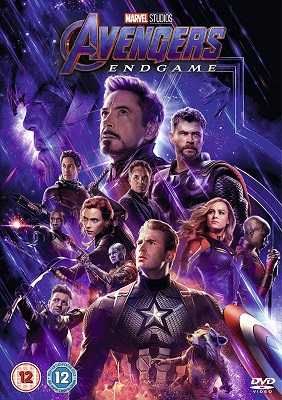
Captain Marvel, Anna Boden & Ryan Fleck (2019, USA). This has been one of the most divisive films of the year, if not the most divisive film so far in the MCU. And, typically, all the fuss had nothing to do with its quality. There is a type of fan out there, of comics and of films, who simply can’t accept a story in which a woman is the hero. They are of course male. And intellectually-challenged and immature. Not only upset with a tentpole MCU movie being about a female superhero, they flew into a frenzy when they saw a deleted scene from the sell-through release showed Captain Marvel subduing a biker who’d made a sexist advance to her. It’s not a good scene, and adds little to the film (which is probably why it was cut), but what Marvel did is trivial when you consider that fridging is so prevalent in movies it’s an actual trope. That’s fucked up. I am, as I’ve said before many times, not a fan of the MCU films, or indeed of superheroes in general. One or two of the films I’ve found entertaining, but they’re only really impressive as showcases of the state of the art in CGI, and not always then. Captain Marvel made some odd story choices, likely a result of a difficult production, with far too many throwaways that added little or nothing. The use of de-ageing on Samuel R Jackson and Clark Gregg was weird and distracting. And the plot jumped around all over the place, with the final big reveal being obvious from about ten minutes in and so it pretty much fizzled. But there was a lot to like. Marvel is the most interesting superhero to carry a film, and as an origin story Captain Marvel beats being bitten by a radioactive spider, but the power Marvel has by the end of the film… Why are there zillions of superheroes when you have one that’s so powerful no one can stand against her? It’s like everyone has sticks and there’s one person walking around with a chain-gun. Star Trek used to do it all the time, with its god-like aliens like Q. Despite all that, Captain Marvel was one of the better MCU movies I’ve seen.

The Nugget, Bill Bennett (2002, Australia). Like most of the films in this post, I stumbled across The Nugget on Amazon Prime. It’s a low-budget Australian movie, although star Eric Bana has appeared in several Hollywood movies and even played a memorable villain in the first of the execrable Star Trek reboots. I say “memorable” but just about the only things that were memorable in that film were its egregious ignorance of the laws of physics and lack of rigour. Oh, and its plot, which didn’t make the slightest bit of sense. Happily, none of those are accusations that can be levelled at The Nugget. Three layabout road workers own a plot of land in the bush where they hope to find gold. And then, purely by accident, they discover a massive nugget, the biggest ever found. The story then follows a typical path – it was also used in Ousmane Sembène’s Mandabi (see here) – in which the three men and their wives spend they money they will get from the nugget before they’ve even sold. And they don’t even know how to sell it. And then it goes missing, but they figure out who has stolen it. You can pretty much guess the ending. A fun light comedy. And very Australian.

Images, Robert Altman (1972, UK). This is one of those films that reminds you of other films. The obvious reference is Don’t Look Now, although that was released a year after this one. But critics at the time thought it resembled Polanski’s Repulsion from 1965. A successful author of children’s books, Susannah York, is told her husband is having an affair, although she finds no evidence of it. Every now and again, however, her husband appears to be an entirely different man. So they move to a small cottage in the Irish countryside, in the hopes York will have the peace and quiet to work and recover. But her husband still keeps on changing into that stranger, and she even spots a doppelganger of herself at various times. Little in this film made sense, but I don’t think it was intended to. Perhaps it was supposed to represent York’s decaying mental state, but the ending scotches that reading. When you finish watching a film, you like to think it was worth the two hours it took. Not just the quality, but also the story. And that’s where Images failed. It seemed relatively straightforward, but by the end you had no idea what it was supposed to be about. Avoidable.

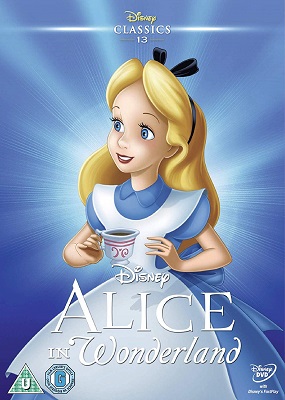
Aladdin, Ron Clements & John Musker (1992, USA). I’ve been slowly working my way through the Disney animated films, not to any plan or timetable it must be said, and it’s often surprises me how few of them I’ve seen. Especially those originally released in the 1980s and 1990s. Which includes Aladdin. I know the story, of course – I’ve read 1001 Nights (various versions), but I knew it even before then, from… the pantomime? I’ve no idea – and I had some sort of vague recollection of some details of the film from back when it was released… Aladdin is a humble, but attractive, street urchin. An evil vizier uses him to break into a cave of riches (this part of the film didn’t seem to follow the original story much) but leaves him trapped inside. He manages to escape, thanks to a genie (voiced by Robin Williams). He returns to the city, disguised as a rich prince, and woos the sultan’s daughter. But the evil vizier plans to marry Princess Jasmine himself and so take the throne. The rest of the story was pretty much by the numbers. With songs. The chief draw here is Williams as the genie, and that’s going to totally depend on how much you enjoy Williams doing the Williams shtick. Which, for me, is not that much. The animation was clean, the character designs were, well, nice, and it all seemed a bit, well, bland. It felt like Disney Product. Meh.

Snow White and the Seven Dwarfs*, David Hand (1937, USA). I’m pretty sure I’ve seen this before, although it must have been when I was a kid because I have no specific recollection of it. But, like a lot of early Disney films, much if its contents have become cultural memory, so it’s hard to know what’s personal memory and what’s learned second-hand.  It’s even harder when you have a story as well-known as Snow White. You know how it goes. Evil queen is told Snow White will eclipse her in beauty, so she has the huntsman take Snow White into the forest and kill her. Which is what you would totally do if someone a couple of decades younger than you turned out to be prettier. The huntsman does not kill Snow White, who runs away and stumbles across a cute cottage occupied seven dwarfs. And so on. It’s all very 1930s, but then classic Disney films were very much products of the decade in which they were made… and I suppose that might also hold true for more recent Disney animated movies, except everything the studio does these seems way more productivised. Snow White and the Seven Dwarfs is generally considered one of Disney’s best films, if not its absolute best one. It’s definitely top ten, perhaps even top five. Unlike Aladdin (see above), it has bags of charm so it seem churlish to complain Snow White herself is completely insipid. But the dwarfs, happily, are anything but. Still, I wanted to put it at number one, or perhaps even in the top three. It’s very good. But there are a few that are better.

1001 Movies You Must See Before You Die count: 940


6 Comments

Reading diary 2019, #6

My reading seems to be all over the place of late. Mostly it’s because I’ve been limiting myself to buying ebooks, and only when they’re cheap. I did bring some books with me, and I bought a few at the recent Swecon, but I put a lot of unread books into storage. So with less to choose from, my reading has proven less planned. Ah well.

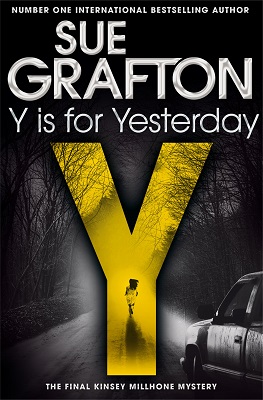
X, Sue Grafton (2015, USA). I’ve been a fan of Grafton’s Kinsey Millhone novels since discovering them back in the mid-nineties. As well as being good crime novels with an engaging narrator, Grafton’s decision to keep the internal chronology consistent irrespective of how long it took her to produce a novel has meant each book has slipped further and further back into the past. Even now, thirty-seven years after the series began – or rather, thirty-three years from A to X – and X is still set in the 1980s, albeit towards the end of the decade. Millhone is hired by a local rich woman to check up on the son she gave up for adoption decades before, and who has just been released from prison after committing a string of burglaries. She does as asked but then discovers the man was no relation… and that the rich woman is the estranged wife of millionaire, and the two are trying to screw as much money out of each other as possible. Throw in a string of missing women and the man responsible for their deaths, identified by Milhone, and who then begins stalk her. Plus an elderly couple who have moved into Milhone’s neighbourhood but do not prove to be who they claim… It’s a bit busier than most of the Milhone novels, and the millionaire man and wife plot actually has a happy end; but these are good books and definitely worth reading.

Embers of War, Gareth L Powell (2018, UK). This won the BSFA Award earlier this year, although I don’t chose the books I read because they won awards (ha!). I’d sort of gone off space opera in recent years as none of the stuff being published really appealed – and, to be honest, most of it seems to resemble military sf more than it does space opera. But UK space opera is a different beast to US space opera, and closer to my sensibilities. I’d also heard a few good things about Embers of War… But, well, having now read it, I’m not entirely convinced. Powell’s decision to tell his story using a number of different points of view in short chapters, I think, worked against it. It didn’t help that so many of the voices were similar, including that of the ship’s AI whose story the novel ostensibly is (in fact, Embers of War is the first in a series about the ship; the sequel is Fleet of Knives). Anyway, the ship Trouble Dog used to be a warship but is now a de-armed rescue ship with your typical space opera crew of misfits. A spaceliner is attacked by a mysterious enemy while visiting a planetary system whose planets were all reshaped into giant sculptures by a powerful and long-dead alien race. Trouble Dog goes to the rescue. Meanwhile, the target of the spaceliner attack – and why do sf novels think it’s acceptable to murder thousands in pursuit of just one person? It needs to stop – has managed to survive and finds herself on the surface of the planet known as the Brain (because, er, it looks like one). She discovers a labyrinth inside the planet – this part of the novel reminded me a great deal of a favourite sf short story, ‘A Map of the Mines of Barnath’ by Sean Williams – and so discovers its secret. The real identity of the woman was not hard to figure out, and it’s the reason why people want her dead – although given she was following orders at the time, it did seem a bit like they were going after the wrong person. The last Powell novel I read was The Recollection back in 2011 (see here), and I thought that started well but then turned boringly generic. Embers of War suffers from the latter as well. The world-building is all a bit too identikit and the ideas feel somewhat second-hand (cf my mention of the Williams story earlier). The characterisation is either bland or relies on quirks, and the prose is readable without being memorable. Readers who like BDOs and alien puzzles will find something to their taste here, but for me this is just Extruded Space Opera Product, with little or nothing that makes it stand out.

The Paper Men, William Golding (1984, UK). I’m having trouble making up my mind about Golding. Until a couple of years ago, I knew him only as the author of Lord of the Flies – his debut novel and his most famous, which must have really hurt – but then I read Rites of Passage and was very impressed. I picked up several of his books in a charity shop, so I had more to read. But… I’m reminded of John Fowles’s oeuvre: he wrote a couple of novels that were stunning pieces of work, but also a number that were almost emblematic of the output of a British white middle-class middle-brow male writer and so not so good. I think Golding was a better writer than Fowles, although none of his books, other than his debut, were as successful as either The Magus or The French Lieutenant’s Woman (and while the latter is an excellent piece of work, the former is very much the sort of book that’s admired only by people in their early twenties). So too with Golding: a handful of beautifully-written but quite strange novels, and then some that are pretty much emblematic of the output of a British white middle class male writer, although perhaps never middle-brow. And The Paper Men falls into the latter category. It’s a first-person narrative by a famous writer who has managed to build a successful career out of a critically-acclaimed and commercially-successful novel and a series of much less successful follow-on works. But he’s seen as an important man of letters, and a US academic turns up on his doorstep asking to be his official biographer. The writer refuses. Shortly afterwards, the writer’s marriage breaks up and he heads off to foreign parts. There’s then a sort of hallucinatory chase around the world, with the biographer trying, and failing, to gain permission to access the writer’s papers. There’s something more going on there, or at least it feels like there should be, but if it’s a reference to anything it pass me by. There’s some very male-gazey – well, pretty lecherous – depictions of the biographer’s young wife, and a number of situations with border on farce. In fact, at times The Paper Men feels like it’s supposed to be a comic novel, even though it’s not at all humorous for most of its length. I’ll certainly read more Golding, but the last two books by him I’ve read have been somewhat disappointing.

The Bitter Twins, Jen Williams (2018, UK). I read the first book in this trilogy earlier this year (see here), and only did so because some friends were extremely effusive with their praise of it… I mean, I’m not a fan of heroic fantasy, although I’ve read a lot of it in the past, and I’m pretty sure there’s very little overlap between my taste in genre fiction and that of the one friend who praised these books the most… But I’m happy to read outside my comfort zone because how else would I discover new authors to like and admire? While bits of the first book, The Ninth Rain, didn’t entirely work for me, I do like fantasy worlds that are couched as science-fictional – and vice versa, of course – so there were definitely things to appreciate there. Enough, at least, to read the second book. Which is, I think, better than the first. And middle books of trilogies generally are not that. It’s better because it introduces a mystery in one of its narratives, gives it a satisfying conclusion, and also uses it to reveal some deeper background about the world. On the other hand… there was something about the writing style which didn’t quite click with me. It wasn’t until a chat at a con with the aforementioned friend where she mentioned “cock-blocking” and quoted a particular line from The Bitter Twins that I figured out what it was about the prose that was giving me trouble: it was written like fan fiction. The author was having far too much fun with their characters, to the extent that “having fun with characters” was driving the story rather than the plot. I’m not saying this is a bad thing. That friend? She’s a big fan of fan fiction, so it’s an approach and style of narrative that appeals to her. I don’t have that background – she had to explain what “cock-blocking” was to me – and I prefer my narrative voice distanced (see pretty much every Reading diary post on this blog). Despite that, the world-building in this trilogy remains very good – in many respects, it reminds me of Jemisin’s award-winning Broken Earth trilogy – and while the good guys tend to be a bit too good to be true at times, the villains of the piece are interesting. Worth a go.

Air Force!, Frank Harvey (1959, USA). I think it was the cover art which prompted me to buy this. I do like books about the Space Race, and while a cherry-picker was never used to deliver astronauts to their space capsule – whatever capsule that’s supposed to be on the cover – it all looked close enough to reality to appeal. If you know what I mean. The contents turned out to be somewhat different to what I’d expected. For a start, I’d thought it was non-fiction, a series of essays written for the popular press about the Space Race, or extrapolations of its future. It turned out to be entirely fictional, albeit based on extrapolations of the state of aviation and space technology in the US at the time.  There are eight stories, originally published chiefly in the Saturday Evening Post. One story is about the first X-15 flight to achieve orbit (the X-15 never did), another is about a pilot whose wife is pressurising him to leave USAF and go into business but his successful prevention of a disaster on a flight persuades him to say. Another story has a fighter pilot “demoted” to transport planes but he manages to prevent a fatal crash during a catastrophic failure of his plane’s systems and that persuades his superiors he should be back flying fighters. It’s all very gung-ho and USAF rah rah rah, and while the technical details are spot-on, the extrapolations are closer to the military’s wishful thinking than what actually happened. This is Man In Space Soonest rather than Skylab, if you know what I mean. The prose is not even serviceable, it’s “journalese” and presents each story as a cross between fiction and a personal account. It’s fun, if you’re into mid-twentieth century US aviation fiction, but its appeal these days, ie sixty years later, is going to be limited pretty much to fans of that. Like, er, me.

A Big Ship at the End of the Universe, Alex White (2018, USA). I should have known from the title… and its sequels’ titles (currently A Bad Deal for the Whole Galaxy and The Worst of All Possible Worlds). This is the Becky Chambers school of titling books, and I’m not a fan of Becky Chambers’s novels. Although to be fair, I was unimpressed with A Big Ship at the End of the Universe for a number of reasons, of which its terrible title was probably the least objectionable. The bad news starts pretty much on the first page. This is a far-future space opera universe… and it has magic. There’s no sense to it, clearly it was added because the author it was a cool idea. Half the stuff magic does in the book is also done by technology. Why would they do that, build a technological solution to a problem already solved by magic? It’s like that throughout the story. But, you know, some people like tech and magic; the fact it makes no sense, that it destroys any rigour the universe might claim to possess, is not a deal-breaker for them. It’s certainly a hurdle more easily scaled by some readers than others. Had that been my only issue with A Big Ship at the End of the Universe, then I’d have simply written it off as “not for me”. But… The novel opens with car race on a space station and it’s clear this is a sport all worlds enjoy and follow, and there’s a lot of money and prestige invested in it, much like Formula 1 in the real world. During the race, one of the drivers, the favourite to win the championship, witnesses the murder of her rival by a strange masked magical figure who seems to have EVEN MOAR magical powers than is known to be possible. The driver is charged with the murder, fears for her life, and does a runner (despite belonging to one of the richest families in the galaxy). Meanwhile, a woman who makes a living selling fake treasure maps to gullible treasure hunters finds herself being hunted by unknown assailants. And she is one of those rare people who have no magical ability whatsoever. Both end up being kidnapped by, and then dragooned into, the crew of the Capricious, an ex-warship from the losing side of an earlier war. The map-seller was once a member of the crew but walked away when the war ended. Bad feelings remain. The plot is all about a super-warship that disappeared during the war, and somehow the super-magic assassin is associated with it. After some internal tensions, the crew of the Capricious track down the ship with authorially imposed ease, but then find themselves the targets of a group of super-powerful magicians, including the aforementioned assassin, who seem to have no trouble razing rich and powerful galactic institutions to the ground. And that is this novel’s biggest problem. The villains are super-powerful, and their strategy of slash and burn is at complete odds with the conspiracy’s previous actions, and it all seems EVEN MOAR implausible than having random magic powers in a technological space opera universe. And if that weren’t enough, the hardy band of adventures otherwise known as the crew of the Capricious still manage to win the day. They are massively outgunned, hugely outgunned… But they win. A battle, not the war – as indicated by the presence of sequels. I mean, there’s suspension of disbelief and there’s suspension of disbelief. The presence of magic is stretching it, but I’m willing to go with it. The rest? No! Dial it back, FFS. It’s nonsense. Super-villains taken down by hardy adventurers with no special powers? There’s no rigour here, no attempt at it. It’s like the author just threw “cool” ideas at the page with no regard for what fitted. It’s not like the plot is super original, because it’s not, in fact it’s a pretty standard one for RPGs (and “ordinary” player-characters overcoming super-powered NPCs is also pretty common in RPGs). Anyway, A Big Ship at the End of the Universe is not a good book. I will not be continuing with the series.


2 Comments

Moving pictures 2019, #17

I am so behind on these. My lack of internet access for a couple of weeks didn’t stop my movie-watching, but it did prevent me from blogging about what I’d seen. Expect a few more of these before I’m up to date.

Asura: The City of Madness, Kim Sung-su (2016, South Korea). It’s been nearly two months since I watched this and, to be honest, all I can remember is it was a well-made Korean gangster film. There was an opening scene, I recall, in which the mayor of a city unveils a a new high-profile development, you know the sort, all skyscrapers for the rich, doesn’t really address any social or economic problems the city might be experiencing, but is supposed to attract investment, although no one says from whom… Anyway, the mayor is physically attacked by the city’s DA (or its Korean equivalent) and it’s made clear there’s some enmity there – and which side of the law the mayor is on. I also remember a fight between two police officers, one of whom was corrupt but I can’t remember which, and a guy falls off a rooftop and is impaled on some steel rods, and it was pretty damn realistic. But that’s about all I recall. A polished piece of work… I should really watch it again.

Ladies vs Ricky Bahl, Maneesh Sharma (2011, India). The daughter of a rich businessman is brought home drunk one night by her new boyfriend. The boyfriend impresses the father with his ambition and business acumen, and admits he comes from a family that fell on hard times when he lost his inheritance, a large villa worth millions, after the tenants took it over and he can’t afford to get them evicted. He does a deal with the father, who buys the villa at a knock-down price and sends in his own heavies… Except the villa never belonged to the boyfriend and he’s now vanished with the cash he was paid. A PA is tasked with buying a particular – and very expensive painting – for a client of her boss, and manages to do a shady deal with a gallery owner to get the painting… Only to be embarrassed in front of the client when it proves to be a fake. The boyfriend and the gallery owner are the same bloke – Ricky Bahl, obvs – and it turns out he has more victims. All young women. So they get together and plan to turn the tables on him. Which they do. Via an elaborate scam. Which doesn’t exactly go according to plan. Most Bollywood movies are fun, but this one I thought especially entertaining. The central conceit didn’t outstay its welcome over the typical Bollywood running time, and it was nice to see a film that privileged the women’s point of view (Bollywood films are good at that, by the way, much better than Hollywood). A good film to watch on a Saturday night with a pizza and beer instead of the latest MCU tosh.

The Colony, Florian Gallenberger (2015, UK). There’s a science fiction film, I think, with the same title, but this movie is based on a true story. The Chilean government, the one run by that evil monster Pinochet, you know, Margaret Thatcher was buddies with him, allowed a German paedophile to set up a “religious retreat” in the south of the country. And the Chilean government used it as a cover for a torture centre. It’s countries like that the US should be invading, but instead they support them. Of course they do. Because they’re all the same. Anyway, a German working for the opposition is taken by the secret police. His girlfriend, also German, tracks him down to the aforementioned cult headquarters, and enrols in the cult in order to rescue him. It’s films like The Colony which make you despise the ruling classes of every country – and with good reason. Pinochet and his regime committed countless crimes against humanity, and yet he was treated like royalty by the governments of most Western nations. He should have been carted off to the ICJ and imprisoned for life. And so should every government leader who treated him like a legitimate head of state. They were fine forcing regime changes in Iran, fucking up Central America and invading Iraq, but they bent over backwards to help a fascist dictator who used a convicted paedophile as cover for a torture centre. FFS. Good film, horrible story.

The Favourite, Yorgos Lanthimos (2018, UK). I’m not sure what to make of Lanthimos. Dogtooth was very strange but also very good. I wasn’t so taken with either Attenberg or The Killing of a Sacred Deer. And now we have The Favourite, which on the one hand presents as straight-up historical drama, but on the other seems slightly off-kilter throughout. Which is, it has to be said, totally a Lanthimos thing. The story is about Queen Anne (1702 to 1707) and her relationship with Sarah Churchill, Duchess of Marlborough, ancestor of that idol beloved of the right-wing, a supposed man-of-the-people who was aristocracy through and through, but let’s not stop actual facts get in the way of right-wing mythology. Anyway, the Churchills were just as perfidious back in the 1700s as they were in the 1900s, and this is starting to sound like I sympathise with an actual queen of England, which of course I don’t, but… I don’t give a shit about Anne, Elizabeth, Edward, George, whatever name they choose to take… and even less about those with access to royalty and the wit to manipulate that tribe of inbreds. Olivia Colman puts in a star, if not award-winning, turn as Queen Anne. But we’re still talking about a small, and diminishing, gene pool with unsupportable power over the general population based on self-serving myths and the so-called weight of history; and films such as The Favourite – which is indeed well-made – only show how unsupportable and irrelevant that situation increasingly is.

Dhoka, Pooja Bhatt (2007, India). There is a suicide bomber attack at a shopping mall, and a policeman’s wife is among the victims. But then it transpires she was the bomber. And he doesn’t understand this. He had thought he was happily married. He’s shut out of the investigation, obviously, but decides to look into matters on his own. He learns that a corrupt police inspector had arrested his father-in-law as a suspected terrorist and the father-in-law had died during torture. When the policeman’s wife insists on filing a complaint, she is stripped and photographed by the corrupt inspector, and then raped. So she and her brother begin visiting an imam who persuades them to become suicide bombers. The policeman is too late to save his wife, but perhaps he can save his dead wife’s brother. For all that Dhoka covers a sensitive topic – and you don’t see Hollywood making movies about domestic terrorism – it all felt a bit overly melodramatic. True, it is a Bollywood film and melodrama is baked into the formula; but the scenes with the corrupt police inspector were so OTT, it undermined the story. There are hundreds of Bollywood (not to mention Kollywood and Tollywood) free to watch on Amazon Prime, new and old, and more appearing seemingly every day. So there’s plenty to chose from. I’ve generally been lucky with my picks, but this was a rare duff one.

Mary Poppins Returns, Rob Marshall (2018, USA). Before watching this, I rewatched Mary Poppins. I say “rewatched” although it’s been three or four decades, I think, since I last saw it, so it was more like an actual “watch”. But Mary Poppins was a cultural touchstone when I was growing up, so it’s not like I needed to see the film to remind myself what happens in it. And so it proved. Then I watched the sequel. Which, to be honest, I didn’t expect to like. The son from the original film has grown up to become Ben Wishart. He was an artist but now he works as a clerk at the bank his father worked at. And he has two children, who are surprisingly well-behaved (and precocious), but he still ends up with the latest incarnation of Mary Poppins, Emily Blunt, And she’s bloody good. Blunt not only nails Poppins, she redefines it as her own. Jack, a lamplighter and once apprentice of the original film’s chimney-sweep, played of course by an American, although he makes a much better fist of his accent than Dick Van Dyke ever did, seems mostly out of his depth. Not to mention the musical number where Blunt puts on a cockney accent and blows him completely out of the water. There’s a cleverly-done animated sequence, although I seem to remember the one in the original film was pretty good too, but not as comic. Sadly the songs in the new film are nowhere near as memorable, although the fact I remember the original movie’s songs may be because we had a LP of Disney songs when I was a kid and played it repeatedly… I’m glad I took the time to watch Mary Poppins before watching Mary Poppins Returns. I think it definitely added to my enjoyment of the sequel. And I was surprised to find myself enjoying it. Worth seeing.

1001 Movies you Must See Before You Die count: 940


2 Comments

Apollo 11 x 50

Today is  the fiftieth anniversary of the first landing on the Moon. So the media is full of science fiction writers commenting on the event, many of whom weren’t even alive when it happened. To be fair, I was only three when Armstrong took his “one small step”, and the only Apollo mission I actually remember watching was ASTP. It’s not like science fiction writers are even experts on the Apollo missions, or indeed actual realistic space exploration. Not unless they’ve written a novel about it. Which some have.

I did too. It was a few years ago now. The Apollo Quartet, published between 2012 and 2015.  I’d planned to publish an omnibus edition in time for today, but then I went and moved countries… So, sorry, no omnibus edition. But the four individual volumes are still available on Amazon, in paperback, audiobook and Kindle editions.

1 Adrift on the Sea of Rains

2 The Eye With Which The Universe Beholds Itself

3 Then Will The Great Ocean Wash Deep Above

4 All That Outer Space Allows

All four are based on alternate visions of the Apollo programme – except for All That Outer Space Allows, which takes place during the actual Apollo programme (but is still alternate history).

For those wanting more realistic space-based science fiction, there is also Dreams of the Space Age, a collection of short stories.


3 Comments

The Hugos 2019, novelettes

Apologies for the inadvertent silence. I moved to a new apartment across the city a few weeks ago and the new place didn’t have internet access. So I had to order broadband service and buy a router, and then resolve a few technical issues (which we won’t go into). But the good news is: I’m back online. Obviously. And the new apartment is very nice.

But on with the post…

Let me get this out of the way first: there is no such thing as a novelette. There are novels, there are novellas and there are short stories. I don’t know when the novelette was “invented” but I understand it chiefly came into being in order to pay some writers on a different scale to others. These days, it’s just another category to hand out prizes to friends. The only places you’ll see the term novelette used is on the contents pages of US print genre magazines – and how relevant are they these days? – or on the shortlists of US genre awards – and how relevant are, er… It’s a completely meaningless category. Kill it now.

We still have it among the multitudinous Hugo Award categories. Many of which, incidentally, should also be binned. But that’s an argument for another day. Officially, a novelette is a piece of fiction between 7,500 and 17,500, although I do like Wikipedia’s definition that it’s a “novella, especially with trivial or sentimental themes”. Sounds about right.

I should also point out that while my taste in genre fiction differs from those who currently nominate and vote for the Hugo Awards, there is plenty of sf available that is to my taste. It just doesn’t get nominated for the Hugo Award. Fans of the Hugo like to think they speak for the entire genre, but they don’t. And the award itself likes to think it’s representative, if not emblematic, of the genre, but that’s just marketing bullshit. The Hugo Award is a small oxbow lake in the river of genre, and if it keeps its fans happy then all to the good. But it’s also an award it’s hard for me to escape as I attend conventions and follow the genre on social media. My decision to read, and blog about, the fiction nominees this year was prompted chiefly by a desire to see how far it had drifted from my taste (or vice versa). I admit I read critically. It’s almost impossible not to when you’ve spent decades reviewing books for various magazines, and even written fiction yourself. Not everyone who votes reads critically. Which does not invalidate their vote. Or my comments.

As with the previous post, here are the six nominees, in the order in which I read them:

The Only Harmless Great Thing, Brooke Bolander. Unlike the other nominees, this is the only novelette to have been published independently as a book. By Tor.com. Like a novella. All the others appeared in magazines, online or otherwise. Except this is not entirely true: the Connolly and Gregory below may not have been published in paperback, but they were published as independent pieces of fiction on the Tor.com website. So that’s five of six novellas and three of six novelettes published by Tor.com. Anyway, during WWI the US used women to paint glow-in-the-dark radium on watch-faces and the like, and many of them died from, or were disfigured by, cancer. Bolander has taken this historical fact and run with it. In her story, elephants were involved – and were smart enough to be communicated with using a special sign language – and an attempt by the US to train elephants to work with radium instead of young women results in the death of a nasty piece of work supervisor and the public execution, by electrocution, of the elephant responsible for his death. This is juxtaposed with a near-future narrative in which a young woman wants to genetically engineer elephants to glow in the dark as a warning of the nuclear waste buried beneath land which will be bequeathed to them. None of this last narrative makes the slightest bit of sense, but it’s presented as if its the anchoring narrative thread. Another thread is told from an elephant’s POV and, well, it doesn’t really work. Or feel necessary. There’s a really cool story somewhere in The Only Harmless Great Thing but the way it’s been presented doesn’t to my mind do it any favours. Too much of it is unnecessary – and while I’m all for writers being clever, in fact I both relish and admire it, the cleverness here lies in the narrative set in the past, which are handled well, and not in the near-future narrative or the elephant POV ones. Which is a roundabout way of saying that The Only Harmless Great Thing really didn’t work for me.

‘When We Were Starless’, Simone Heller (Clarkesworld Oct 2018). A friend complained about the lack of translated fiction in this year’s Hugo Award shortlists, which is certainly true. However, Aliette de Bodard is not an Anglophone, although she writes in English; and neither is Simone Heller, who is actually Germanophone, or whatever the appropriate phrase is. Anyway, Heller, although German, writes in English, or certainly has done for this novelette. It’s set on an unnamed planet, perhaps even a future earth, in which the dominant species are some form of chameleon-like lizard, if that makes sense, who make their living from salvaging tech and materials from a dead civilisation. The main character is a scout for a nomadic band, and she stumbles across what appears to be a planetarium with a controlling AI. Everything is filtered through the character’s worldview – so she doesn’t recognise what the building is, and she thinks the AI is some sort of spirit. Anyway, it’s all somewhat predictable: her views are not in step with the rest of the tribe, she strikes a deal with the AI, is subsequently censured by tribe, but when they’re attacked by an endless horde of ravening beasts, she strikes a deal with the AI, which helps save the day. It’s all nicely done, and very science-fictional, but the world-building doesn’t really stand up to scrutiny. Is it set on a post-apocalypse earth? Where did the lizards come from? Or the monsters which attacked them? ‘When We Were Starless’ feels a bit, well, flash. It’s all surface: a standard plot, a setting that makes little sense… but nice visuals and a nice turn of phrase. I can see how it might appeal to some people, but it didn’t do much for me.

‘The Last Banquet of Temporal Confections’, Tina Connolly (Tor.com 11 Jul 2018). There’s this baker in this random fantasy world who discovers how to bake memories – or rather, triggers for memories, because the memories are personal – into cakes, and the nasty regent forces him to work in the royal kitchens and employs his wife as taster so the baker doesn’t poison the regent. There’s a joke about herbs and thyme buried somewhere in the world-building here, but it’s not worth mentioning and while it may have inspired the novelette the end result is a great deal more, well, something. From the first paragraph, it’s clear the wife has some plot in hand to have her revenge on the regent. But first we have to go through a bunch of recipes, plus associated back-stories for each, as lead-up to the resolution. Which pretty much means your mileage is going to depend on how much you enjoy all the guff about the various cakes. Which I didn’t. I like landscape writing, not culinary writing, And while there’s a clear conceit here that works through its ramifications with admirable rigour, I’m one of those people who find writing about baking pretty dull. And the fantastical conceit here doesn’t make it any more interesting. If anything, its focus on taste and memory tends to overshadow the actual situation – evil regent, brother held to ransom to produce pastries, wife employed as taster, etc. Not my, er, cup of tea.

‘Nine Last Days on Planet Earth’, Daryl Gregory (Tor.com 19 Sep 2018). The idea of following a character over a lengthy period by describing selected periods in their life many years apart is hardly a new one. I used it myself in a story that was published in a literary magazine (although the story was science fiction). Gregory makes good use of it here in his description of an invasion of Earth by alien “invasive” plant species. And it works, because the alien plant is integrated into the life of the narrator. I don’t have a problem with episodic narratives, whether they have a clear through-line or not; and ‘Nine Last Days on Planet Earth’ certainly has a clear through-line. The story opens in 1975 and ends in 2028. The author was apparently ten in 1975 (he’s a year older than me), so it’s unlikely he remembers enough about the year to do a good job of evoking it. And so it proves. (Of course, 2028 is nine years in the future, so how is he supposed to “remember” it?) But this is not a story that bothers much with time or place, using labels to signal setting to the reader. It doesn’t actually matter that much, because the narrative is chiefly focused on LT’s relationship with his partner and their life together. ‘Nine Last Days on Planet Earth’ I thought slow to start, but once it got going it was pretty good reading. I liked its episodic narrative, I liked its central relationship, and I liked the way it linked the alien plant to the relationship. Often, genre stories literalise metaphors, or are based around thumpingly obvious metaphors of their premise. ‘Nine Last Days on Planet Earth’ falls into the latter category, but it doesn’t make a meal of its metaphor, and leaves it sufficiently open to interpretation. It’s nice to see some restraint.

‘The Thing About Ghost Stories’, Naomi Kritzer (Uncanny Nov/Dec 2018). That’s not a title that’s going to make me rush out and buy a copy of the magazine – but that’s because I’m not a fan of ghost stories. Which just goes to show you, as this was the best story on the shortlist. By quite a margin. The narrator is a folkorist who’s studying ghost stories. But the novelette is also about her life and her relationships, particularly her relationship with her mother. As part of her work, the narrator meets a number of mediums (the only time “mediums” is permissible as the plural of “medium”), but of course she is sceptical about their abilities. Her work allows her to come to terms with her mother’s death, as well as celebrate the relationship they had before her death. The story drops in lots of authentic-sounding detail about the folkloric study of ghost stories – which convinced me, and may well have been completely made-up. But the story also handled its central premise extremely well, maintaining a sceptical tone throughout but hinting perhaps there was some truth to it. ‘The Thing About Ghost Stories’ really is a cut above the rest of the shortlist. It’s not like the prose on a sentence level is that much more impressive – it’s good, without being showy (whereas far too much genre short fiction these days is showy without being good); but it unfolds its plot, based entirely on its premise, in an almost textbook-like fashion. Some stories simply strike you as well-crafted, and those are the ones that should be appearing on genre award shortlists. This is definitely that. The last genre work I remember reading that was put together so well, despite being something that would not ordinarily appeal, was Joan Slonczewski’s The Wall Around Eden, which I read years ago and even wrote about for Locus magazine.

‘If at First You Don’t Succeed, Try, Try Again’, Zen Cho (B&N Sci-Fi and Fantasy Blog 29 Nov 2018). Unlike the other nominees, this novelette wasn’t published in an explicitly fiction-publishing venue. As far as I can work out, the B&N blog is more of a house magazine, and ‘If at First You Don’t Succeed, Try, Try Again’ is the second of its “SFF Originals”, with one by Ursula Vernon published in 2017. The title refers to an imugi’s attempts to become a dragon (this is Korean mythology), and after two failures, a thousand years apart, it’s inadvertently witnessed by a young American woman of Asian extraction. The sight is enough for her to turn her life around. The imugi, disguised as a human woman, visits the American woman, now an astronomy professor, but is surprised to discover that astronomy is the very subject, “the Way”, it has been studying in order to make it to heaven and become an actual dragon. So it stays. And enters into a relationship with the professor. And the two live very happily for many decades. It’s all a bit glib and the imugi’s characterisation is simplistic at best, but the story has bags of charm and makes good use of its premise. I don’t think it’s especially good, but I enjoyed it – to a degree it overcame its weaknesses, unlike a couple of the novelettes above. I’ve not read anything by Cho before, although I’ve heard mostly positive noises about her debut novel, Sorcerer to the Crown (and I do like me some Regency). I’m tempted to give the novel a go. As for ‘If at First You Don’t Succeed, Try, Try Again’, it’s hugely likeable, if not especially impressive on a technical level.

The novelette category, despite my refusal to admit the form has a right to existence, has, for the Hugo Award this year, I think, produced better fiction than the novella category. Which is sort of ironic given the Wikipedia quote above. But some of the above, had they been nominated as novellas, would have made that category much stronger.

As in my novella post (see here), if I were going to vote on the Hugo Award novelette category, I’d put ‘The Thing About Ghost Stories’ at number one, followed by ‘Nine Last Days on Planet Earth’ and then ‘If at First You Don’t Succeed, Try, Try Again’. The Only Harmless Great Thing, ‘The Last Banquet of Temporal Confections’ and ‘When We Were Starless’ would all go below No Award.


Leave a comment

Moving pictures 2019, #16

More movies. I’m still a bit behind on these. I had thought moving to Sweden would give me more time to work on my blog, and my writing, but it hasn’t worked out that way. Yet. But perhaps as I get settled… I spent a while learning the layout of my local supermarket, only for them to completely re-arrange it. I wasn’t the only one thrown by the change – for a few days, pretty much all customers were quizzing the staff as to the new location of various items. Having said that, shopping is definitely a skill you need to relearn when moving to a new country. Supermarkets are different, food is different. It’s not a hard skill to learn, it must be said, but it’s not something you expect to have to learn. Unlike the language.

Anyway.another bunch of films; some recent, some not….

Siren, Jesse Peyronel (2013, USA). This is a small independent film made by a British director, starring US actress Vinessa Shaw in the title role and that British bloke from Eastenders, who had the shit kicked out of him by Captain Marvel in a deleted scene in, er, Captain Marvel which caused all the man-boys on social media to spontaneously burst into man-tears, in the other lead role. Shaw plays a woman who produces a pheromone so powerful she has to live in seclusion because men fall instantly in love with her (she appears as their fantasy mate to them), which obviously causes huge problems. Given what men are like. To women. Then along comes Robert Kazinsky, who appears to be unaffected by her chemical charms… because he has no sense of smell (knocked out of him by an Iraqi shell during the illegal US invasion and occupation of that country). Actual real love might blossom… There’s a none-too-subtle twist about three-quarters of the way in, but this wasn’t a bad little film at all. It handled its premise well, the two leads were watchable, and while the script wasn’t actively good it was better than that of many a tentpole blockbuster.

Iron Sky 2: The Coming Race, Timo Vuorensola (2019, Finland). If you haven’t seen Iron Sky, you won’t get much from the sequel. If you have seen Iron Sky, you’ll know whether or not you can be bothered to watch the sequel. For what it’s worth, I enjoyed Iron Sky. While I found its humour a little puerile, the production design was great and the premise an absolute winner. To be fair, having previously seen all the Star Wreck films, I had some idea what to expect comedy-wise, so it wasn’t a deal-breaker. Iron Sky 2: The Coming Race manages to turn Iron Sky up to eleven in pretty much all areas… although the humour still remains chiefly juvenile and some of the jokes overstay their welcome. A home-built Russian UFO arrives at the heavily-damaged Nazi base on the dark side of the Moon, and its pilot agrees, after some violent drama, to take some of the (“good”) Nazis to the South Pole to find the Holy Grail in Agartha, the land inside the hollow earth, to save the moonbase. Which is where some other Nazis fled after WWII. Including Hitler. And various other incarnations of evil. Like, er, Steve Jobs. It turns out reptilian aliens colonised the Earth hundreds of millennia before, uplifted humans, and now live in Agartha, occasionally taking human form, such as the leader of the Nazi moonbase. As in the first film, there are some excellent sfx and a few really good set-pieces. The script varies wildly but presents an interesting group of characters. I remember seeing the advance publicity for Iron Sky and being excited about it… only to be a little disappointed by the final product. There’s been a lot of advance material about Iron Sky 2: The Coming Race, but it was harder to know what to make of its use of its references – Bulwer-Lytton! vril! hollow earth! Agartha! Hitler! secret Nazi South Pole bases! I mean, even if Iron Sky 2: The Coming Race were just like Iron Sky, there’d be plenty in there to entertain for those familiar with the mythos. That Iron Sky 2: The Coming Race turns its plot into an action story sort of works in its favour, but the juvenile glee the film takes in its premise and mythos acts slightly against that. Worth seeing… but I suspect you’d have to be a fan to watch it more than once.

Vox Lux, Brady Corbet (2018, USA). For an industry which has been creating celebrities out of nobodies for over a century, Hollywood seems strangely unable to tell a story on that topic in any meaningful or plausible way. And when it comes to Vox Lux, which appears to be a personal project of the director, it’s hard to know what to make of it. Or indeed when he was trying to say. A teenage girl survives a school shooting (if the US won’t introduce gun control, as the UK and New Zealand did after gun massacres, at least they’ll inspire some books and films…), and with her older sister writes a song in response, which becomes an internet hit. This kickstarts the girl’s career. Jump forward twenty years or so and now she’s a successful pop star. And she’s done all the self-destructive pop star things. And is still doing some of them. She also has a teenage daughter, who watches this behaviour from the sidelines with no power to stop it. Yawn. Then a terrorist shooting is linked to the singer because the terrorists wore masks that featured on a promo video of her biggest hit. Bit fucking tenuous. But this is not a film out to make much sense. In fact, in places it seems Corbet is more about the visuals than the story-telling, despite the former being an aspect of the latter. Natalie Portman puts in a good turn in the lead role, but she’s a quality actress. If you like films that are more style than substance, that add nothing to the genre of rock-star-in-decline movies, then you might enjoy this. Otherwise: don’t bother.

X: The Man with the X-Ray Eyes, Roger Corman (1963, USA). The title is pretty much the plot of this classic B-movies from Corman’s New World Pictures. There is a man. He invents a substance which allows eyes to see across a much wider spectrum. He experiments on himself. Guess what happens. As his ability to “see” increases, so his mental stability worsens. It doesn’t help that star Ray Milland was once an A-lister and must have slid pretty far to end up in a Corman movie. But even his past reputation can’t save this. It also doesn’t help that he’s wearing a pair of silly circle lenses that clearly are none too comfortable. It’s all very formulaic, with the title explaining the villain and giving a big nod to the story. Milland comes a cropper in the end, of course he does. That’s how these sort of horror films work. On the other hand, there are some nice psychedelic effects, and the scene where Milland is at a party and can see through everyone’s clothes is probably what the movie is chiefly famous for. X: The Man with the X-Ray Eyes is, I guess, worth seeing at least once. But only after several beers.

Spider-Man: Into the Spider-verse, Bob Persichetti, Peter Ramsey & Rodney Rothman (2018, USA). I’m not a fan of the MCU films, and I can pretty much take or leave 99% of animated movies. When I start seeing lots of praise from many different quarters for a film that is both of them… I’m going to be sceptical. But you never know, chances are I’d probably watch it at some point anyway, so why not sooner? And, well, it’s not really my bag, but once it had finished I was pretty much convinced it’s one of those animated movies that’s a complete game-changer. Like The Incredibles. It doesn’t just raise the bar, it shifts it to an entirely new level. The story was no great shakes, just fairly typical MCU bobbins, but the presentation was superb. Not just the animation, but the design, the use of the screen real estate, everything that made it an animated movie and not just a movie. The script was not terrible, perhaps even a cut above other MCU movies, but it’s not a film where the fact it’s a superhero film is its defining characteristic. So it’s a bit weird it’s won so many accolades, including an Oscar. I mean, an Oscar going to what actually might be an excellent film is something of a novelty. And yet, you can guess it’s not the story that led to those prize wins and nominations, it’s the way the film looks, the way it’s put together, and it’s a surprise to see that recognised so universally. Spider-Man: Into the Spider-verse, as I said, immediately struck me as a game-changer, and its impact in the cinema world seems to demonstrate that. Whether anything will actually change is another matter. I suspect it will. I also suspect any sequel will prove disappointing. That seems to be the way it works. But definitely see Spider-Man: Into the Spider-verse. You will not be disappointed.

Badrinath ki Dulhania, Sashank Khaitan (2017, India). Pretty much every Bollywood movie goes something like this: boy meets girl, something happens, boy loses girl, something else happens, boy gets girl back. Happy end. It’s a very successful formula and it’s produced some very entertaining Bollywood films. Like this one. In Badrinath ki Dulhania, you have the wastrel son of a rich man, who doesn’t want an arranged marriage because he’s seen how unhappy one has made his elder brother. Wastrel son falls in love with a spirited and educated young woman and eventually manages to persuade her to marry him. But she jilts him at the altar. He tracks her down to Singapore, where she’s training to become cabin crew for an airline. After much arguing, and an overnight stay in jail, he mends his ways and the two are finally reconciled. Happy end. Much singing and dancing along the way, of course. The movie makes some important points about dowries and women’s roles and expectations, despite being pretty light-hearted Bollywood rom com entertainment (quite a few twenty-first century Bollywood films are good on gender politics commentary in present-day India, better than Hollywood, in fact). I picked this film at random from the large number of Bollywood films on Amazon Prime (including most of Guru Dutt’s films! Watch them!), and enjoyed it a great deal. A good one.

1001 Movies you Must See Before You Die count: 940