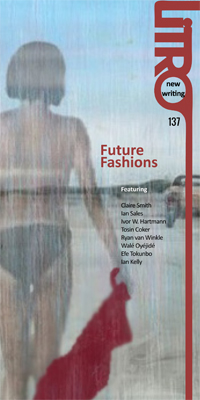
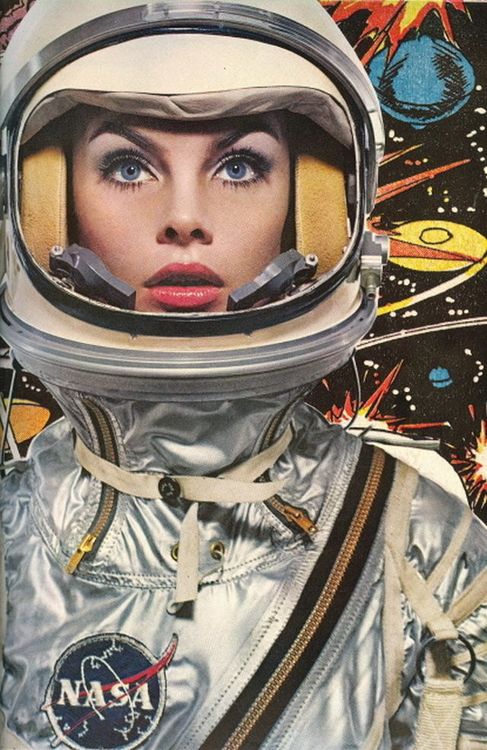
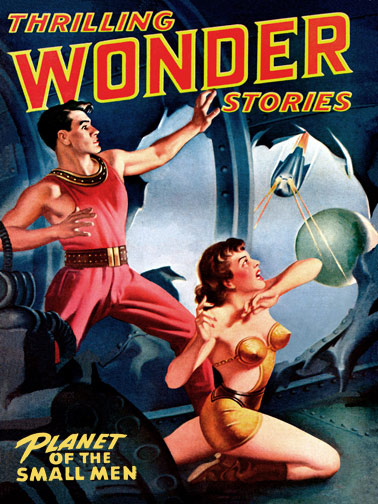
The September issue of Litro Magazine, #137, is out now, so if you’re in London pick yourself up a copy. Each issue of Litro is themed, and this month’s theme is Future fashions. Hence my story in the issue, ‘The Spaceman and the Moon Girl’, which is about Apollo astronauts and space age fashion designers such as André Courrèges, Pierre Cardin and Emilio Pucci. There’s also fiction and poetry by Ivor W Hartmann, Tosin Coker, Ryan Van Winkle, Walé Oyéjidé and Efe Tokunbo, plus an article on future fashion in cinema by Claire Smith.
Category Archives: science fiction
Science fiction has lost the plot
I recently finished The Dog Stars by Peter Heller, which was not published as science fiction but was shortlisted for the Arthur C Clarke Award last year. In it, a flu pandemic has killed 99% of the population of the US, and the survivors have, of course, turned to warlordism and survivalism. It’s not a very good book – its presence on that shortlist is, frankly, mystifying. One character appears to be ripped off from John Goodman’s part, Walter Sobchak, in The Big Lebowski; and the narrator apparently suffered minor brain damage previously from a bout of meningitis and so narrates the novel in mildly-broken English… which serves no purpose in the story at all.
Anyway, warlordism and survivalism… There’s a long tradition of such post-apocalypse tales in science fiction and I’m sure we can all think of at least half-a-dozen examples. I’ve objected before to the assumption that the survivors of any apocalypse would immediately start killing each other, when clearly cooperation is the only sustainable strategy for survival.
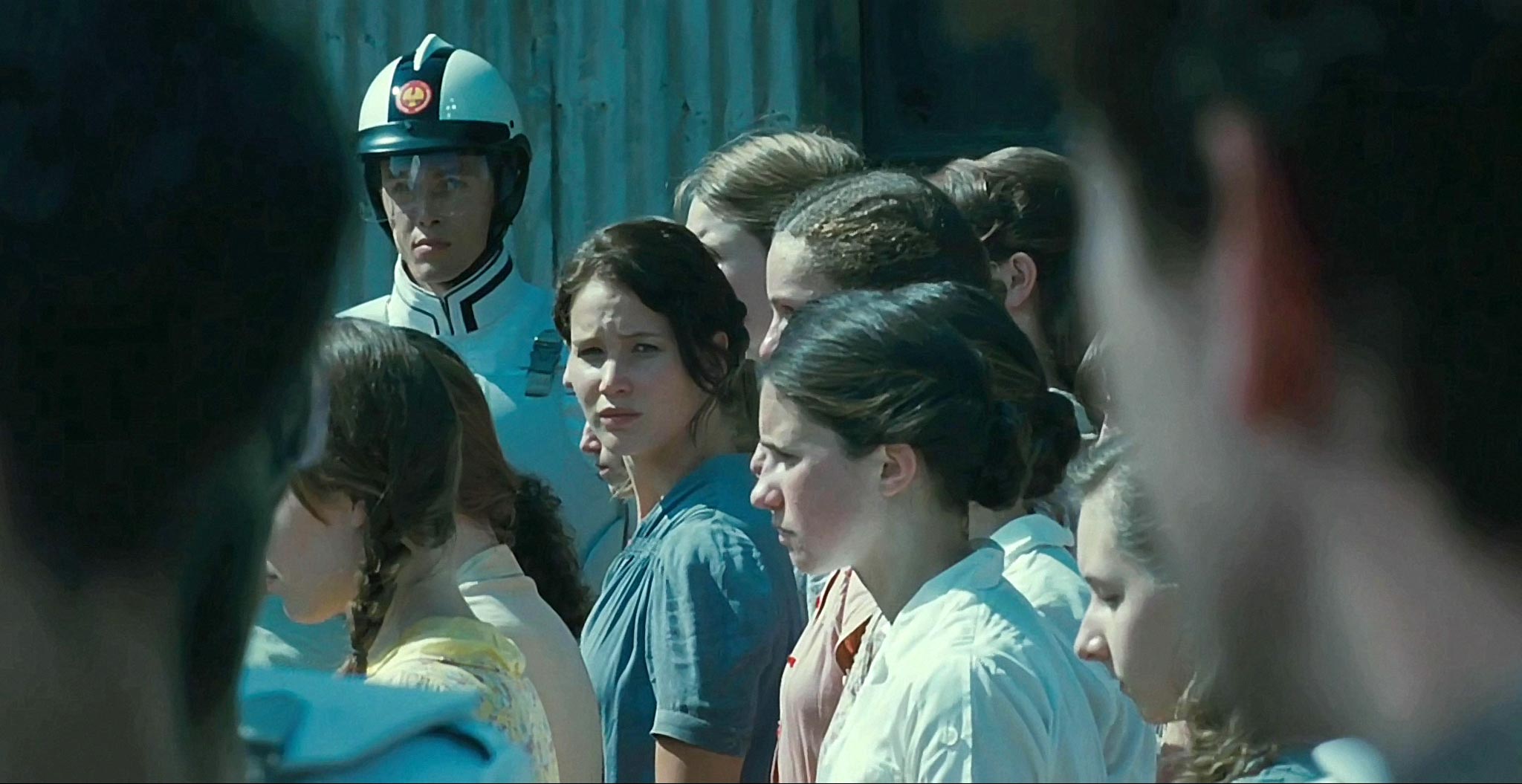
And then there’s the dystopia, a much-beloved setting for YA. In almost all cases, a privileged elite enjoy lives of luxury while the bulk of the population either scrabble for a living below the poverty line, or are rigorously oppressed with no freedom to object; or both. I can understand the dystopia’s appeal for the YA market. In order to “break” the setting, which is the point of the story, the protagonist needs to be a super-special snowflake – which not only feeds into teenage narcissism but also relies upon, and reinforces, the risible “Great Man of History” theory, which is itself the sort of nonsense kids believe.
It could be argued that such dystopias only reflect the real world, that their popularity is a symptom of the times we live in. Perhaps that’s true. Certainly the UK is currently governed by a cabal of greedy fascists who are hell-bent on selling off as much of the country as possible to their plutocrat friends. There is not much difference between Downing Street and Panem’s Capitol.
It strikes me that these two branches of science fiction are actually conditioning us to accept our current situation. Dystopia readers are waiting for a Katniss – and then everything will be all right. Post-apocalypse readers know they’re currently better-off, even if they’re being oppressed, than they would be with gangs of marauding slavers, rapists and murderers roaming the countryside. Science fiction was once a literature which encouraged change, which explored ways and means to effect changes. Now it’s comfort reading, it makes us feel good about our reduced circumstances because at least we’re not suffering as much as the fictional characters we read about.
And if it’s not apocalypses and dystopias, it’s interplanetary or interstellar wars. Making us feel good about our governments’ military adventurism. And fictional universes that embody so many libertarian sensibilities it’s becoming increasingly hard to argue that right-wing politics are not the default mode for the genre. Even left-wing authors create worlds built on right-wing principles, as if dramatic stories were impossible any other way. Which is simply not true.
Once upon a time, science fiction was driven by an outward urge. True, we know a great deal more about our planet and our universe than we did then. But there is still a lot we don’t know – the depths of the oceans, for example, remain mostly unexplored. We’ve found over 1800 exoplanets, but the furthest we’ve trod is our own moon, 400,000 km away – and that was over forty years ago anyway. What happened to that urge? Where are the science fiction novels inspired by it? I can perhaps think of only a handful published in the past twelve to eighteen months which might qualify.
The bulk of sf currently being published seems more designed to accommodate us to our meagre lot. It’s not holding up a mirror to our times, it is complicit with those forces which shape the modern world. It is telling tales to maintain the status quo by showing just how improbable, how impossible, meaningful change is.
A friend is currently trying to put together a list of sf novels about climate change – and it’s perhaps telling that most such science fictions take place after the climate has crashed. It’s almost as if we’re unable to prevent it – it’s going to happen and there’s nothing we can do about it. Except, of course, there is. There are lots of things we could do. But certain powerful interests in the modern world don’t want the changes preventing climate crash would entail. So we have become resigned to consuming stories in which climate crash is a faît accompli.
Back in 1926 when Hugo Gernsback published the first issue of his magazine and so created the genre, he saw “scientifiction” as a possible force for good. And it’s certainly true that fiction can have profound effects on the real world – and not just in terms of inspiring nerds to invent new gadgets. These days, however, science fiction has all importance of middle-class fad foodstuffs. We consume it like we consume Greek yoghurt – and it’s not even that, it’s more like a bee flew over a pot which was then filled with curdled milk from a dog they found wandering the back streets of Athens…
So what went wrong? When did we become so resigned to the present, so resigned to our powerlessness, that we began to ignore not only change but the possibility of change in our science fictions? And what can we do about it?
Sales report
Loncon 3 is now in full swing. I am not there. After spending last weekend in a field in Derbyshire, drinking and watching a number of metal bands perform, I can’t say I’m especially bothered about missing the Worldcon (though I’m sorry I won’t have the chance to meet IRL a few visitors to the UK I know only from online). Bloodstock was good – I think I enjoyed the music more this year than last, even though initially I hadn’t been that keen on the line-up. Highlights were the sets by Obsidian Kingdom and Shining, and the crowd’s performance during Evil Scarecrow’s set. Other good stuff included Orphaned Land (twice), Rotting Christ, Winterfylleth, Old Corpse Road and Voices. The weather behaved – mostly. It hammered down on the Sunday, and everywhere got wet and muddy, but it cleared up by the evening. Security this year was much improved; the toilets were much worse. A good festival, nonetheless.
Meanwhile… these summer months so far have felt spectacularly unproductive, and there have been days when I’ve had trouble working up the enthusiasm to write, edit, or even get started on a book review… Which is not to say I’ve done nothing. It just feels like it. I’m assuming reviews count. I wrote a fair few of those during June and July. Four for SF Mistressworks, in fact: We Who Are About To…, Joanna Russ (here); Busy About the Tree of Life, Pamela Zoline (here); Worlds for the Grabbing, Brenda Pearce (here); and Judgment Night, CL Moore (here). A fifth went up this week – The Revolving Boy, Gertrude Friedberg (here) – and I have another two suitable books I’ve read but I’ve yet to start on the reviews – Aurora: Beyond Equality, edited by Vonda N McIntyre & Susan Janice Anderson; and Second Body, Sue Payer. I also reviewed Extreme Planets, edited by David Conyers, David Kernott & Jeff Harris, for Interzone (the anthology’s publishers really need to sort out its Amazon page); and I have another book sitting on this desk beside my laptop to review for them, which is, er, already late. (I’ll have it done by the end of the week, Jim. Honest.)
Whippleshield Books continues to quietly stumble along. Sales of Adrift on the Sea of Rains have just passed 1100, those of The Eye With Which The Universe Beholds Itself are over 500, and Then Will The Great Ocean Wash Deep Above has to date managed a tardy 200-or-so units sold. I’m determined to get the final book of the Apollo Quartet, All That Outer Space Allows, out before the end of the year, although at present I can’t predict exactly when. (Which reminds me: I need to buy some more ISBNs.) Aphrodite Terra, however, should appear some time next month. (The contributors were paid on acceptance, so any delay is more annoying than anything else.)
Also, next month, I’ll have a story in Litro magazine. The issue has a “future fashion” theme, and my story, ‘The Spaceman and the Moon Girl’, is about astronauts and space age fashion designers. Sort of. Postscripts #32/33: Far Voyager should also be out some time this year, with my story providing its title. And later this year – no date as yet – Tickety Boo Press are publishing an anthology Space: Houston, We Have A Problem, which contains my story ‘Red Desert’.
ETA: I forgot to mention I contributed a couple of Friday Fives to Pornokitsch – one on sf novels about first missions to the Moon titled, with a great deal of imagination, ‘5 Trips to the Moon’; the other about sf movies set at the bottom of the ocean, ‘5 Pieces of Soggy Sci-Fi Cinema‘.
Something for the weekend, sir?
A meme, of course. Provided by SF Signal. And since I’ve been a bit rubbish – well, a lot rubbish – at posting here over the past couple of months, and the tumbleweed and cobwebs are starting to look unsightly, I have seized the opportunity given by the meme to generate some uncontroversial blog content… Well, uncontroversial for me, anyway.
I’m not entirely sure what a “book snob” is – that would be someone who likes good books, yes? Well-written books, yes? I certainly wouldn’t recommend a crap book to someone. Well, not without mentioning that it was crap, and only if they’d asked for something that was so narrowly defined the only book I could think of happened to be a crap one… Many of the books I’ve recommended below I really can’t recommend highly enough. They should be required reading.
Science Fiction
Sf is my genre of choice, so I’m well-practiced in answering some of these questions. Most are books I’ve mentioned before, some I’ve even written about or reviewed – and I’ve linked to my review, where one exists.
If I were to recommend a science fiction book to a new genre reader, it would be: The Wall Around Eden, Joan Slonczewski (my review)
If I were to recommend a science fiction book with lots of action, it would be: Against A Dark Background, Iain M Banks (my review)
If I were to recommend a science fiction book to a “book snob”, it would be: Coelestis, Paul Park (my review), or Kairos, Gwyneth Jones (my review)
If I were to recommend a science fiction book series I loved, it would be: The Marq’ssan Cycle, L Timmel Duchamp
The last science fiction book I read that was recommended to me and I liked was: Queen of the States, Josephine Saxton (my review)
The last science fiction book I read that was recommended to me and I finished but disliked was: What Lot’s Wife Saw, Ioanna Bourazopoulou (mentioned here)
The last science fiction book I read that was recommended to me and I didn’t finish was: Darkmans, Nicola Barker
Fantasy
I have a low opinion of epic fantasy, so I read very little of it – and then typically only when it’s either been recommended by someone whose opinion I value, or it was written by an author I already like. I will point out that “dislike” is probably too strong a word for my reaction to the Alan Campbell. I did quite enjoy it, but not enough to bother reading the rest of the series.
If I were to recommend a fantasy book to a new genre reader, it would be: A Princess of Roumania, Paul Park
If I were to recommend a fantasy book with lots of action, it would be: Wolfsangel, MD Lachlan (mentioned here)
If I were to recommend a fantasy book to a “book snob”, it would be: Evening’s Empire, David Herter (mentioned here)
If I were to recommend a fantasy book series I loved, it would be: Isles of the Forsaken / Ison of the Isles, Carolyn Ives Gilman (review here)
The last fantasy book I read that was recommended to me and I liked was: God Stalk, PC Hodgell (mentioned here)
The last fantasy book I read that was recommended to me and I finished but disliked was: Sea of Ghosts, Alan Campbell
The last fantasy book I read that was recommended to me and I didn’t finish was: King’s Dragon, Kate Elliott
Horror
I read very little horror, so most of these will be blank…
If I were to recommend a horror book to a new genre reader, it would be: The Facts of Life, Graham Joyce
If I were to recommend a horror book with lots of action, it would be:
If I were to recommend a horror book to a “book snob”, it would be: Viator, Lucius Shepard, or X,Y, Michael Blumlein
If I were to recommend a horror book series I loved, it would be:
The last horror book I read that was recommended to me and I liked was:
The last horror book I read that was recommended to me and I finished but disliked was:
The last horror book I read that was recommended to me and I didn’t finish was:
Fables of the Deconstruction, #1: Robots
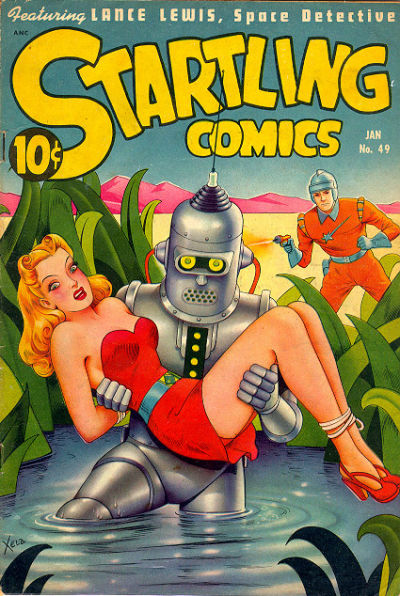
All too often, people point at the tropes in a piece of fiction and use them to categorise it. This story has spaceships in it, therefore it’s science fiction; this one has elves, so it must be fantasy. One of the tropes often used to “identify” sf is the robot – well, a robot is clearly the product of technology, it’s an artificial person, a mechanical man or woman (or neither). What’s not science-fictional about that?
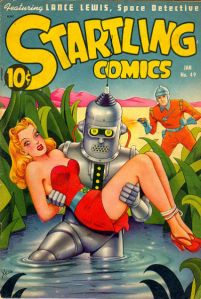
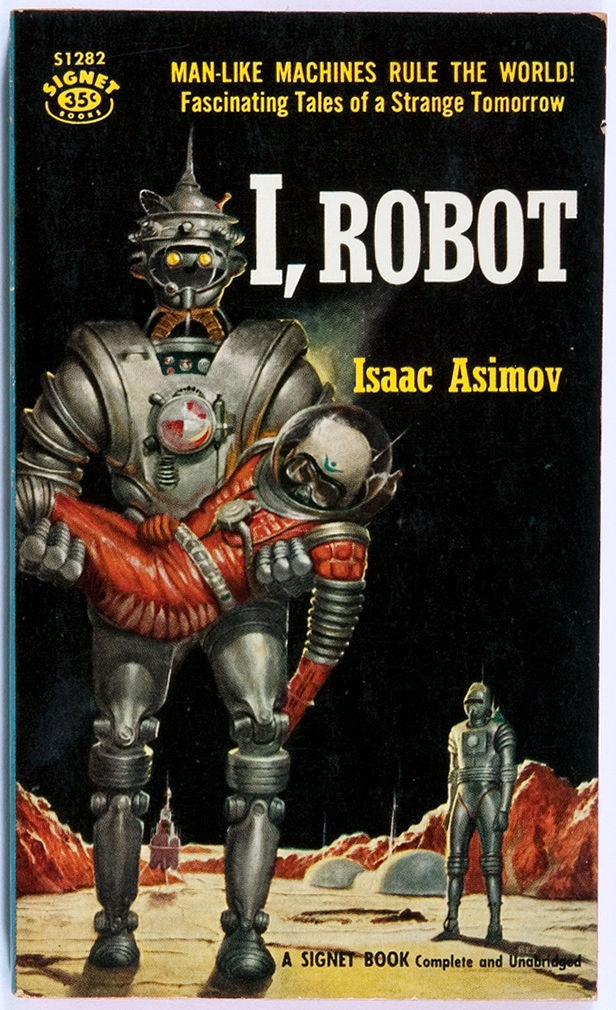
The term “robot” comes from Karel Čapek’s RUR (1920), and is derived from the Czech word robota, a local form of serfdom in which serfs had to work only for a specified number of days each year for their liege. RUR was first translated into English in 1923 but, according to the OED’s Science Fiction Citations, the word’s first appearance in English wasn’t until 1925, in a novel by French-born British writer Thomas Charles Bridges, The City of No Escape. However, it was the mid-1930s before “robot” appeared in US science fiction magazines. It was then, of course, co-opted by Isaac Asimov, who wrote some forty short stories and a few novels (it’s hard to be precise as Asimov spent much of his later years trying to stitch his oeuvre into one great stupid shared future history, featuring both psychohistory and robots).
Čapek’s robota were actually biological – what are now commonly referred to as “androids” – so I’m not entirely sure why the term was adopted for purely mechanical beings. Perhaps this was because the mechanical being was an already existing trope: the automaton. (The SF Encyclopedia indicates there was a story in the November 1931 issue of Amazing titled ‘Automaton’.) But automata were real things – marvels of mechanical ingenuity, show-pieces, designed to display their inventor’s cleverness and so win them the patronage of some wealthy potentate; and they were often fake (the Mechanical Turk, for example). Automata were typically good for a single task, and in no way a replacement for a human being.
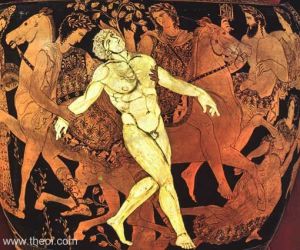
Go even further back, of course, and you have the golem, an automaton powered and controlled entirely by magic. There are also automata in Greek mythology, built by Hephaestus – such as Talos, the giant bronze man who protected the island of Europa (although it seems the clockwork owl in Clash Of The Titans is an invention of the film’s writers). But neither automata nor golems fit in with early science fiction’s burning enthusiasm for science and engineering, for technology. If electronics magazines showed readers how to build their own television sets, their readers were hardly likely to be interested in a mechanical servant which required magical incantations to operate.
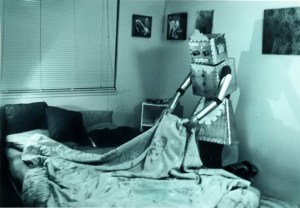
And yes, servant – because technology exists, so these magazines would have you believe, to make life easier and more comfortable, and what could improve comfort more than a servant – to do the cooking, cleaning, laundry, fetch the mail, etc. And because these robots are servants, so they must be in the shape of a human being. Unlike real servants, however – and here lies their obvious superiority – they don’t require wages, food or rest, will always perform tasks to the high standard required, and will never be lazy, sullen, unresponsive or rebellious. In other words, robots are perfect slaves, but without offending anyone’s delicate morals. This could, however, be taken too far, as in Jack Williamson’s ‘With Folded Hands…’ (1947), in which robots do such a good job of looking after humanity that the race becomes too weak to survive without them. Or they could prove so ubiquitous that some humans might believe they were robots themselves, as in Margaret St Clair’s ‘Asking’ (1955) – although once the protagonist learns her true nature, she adopts all the arrogance of a slave-owner toward robots.

In the real world, robots are entirely different. They’re more often referred to by a name specific to their purpose, such as a Computer Numerical Controlled Machine or Autonomous Underwater Vehicle or space probe. They’re built for specific tasks, or to perform within specific spheres of operation; and programmed only for that task or for that sphere. They’re used in situations that are too dangerous for human beings – eg, AUVs and space probes – but they’re not capable of everything a human could do. Or they’re used to perform repetitive tasks more quickly, more frequently and more accurately than a human could. In such cases, building robots in the form of a human being is not an advantage.
Science fiction, however, rarely shows robots as CNC machines, AUVs or space probes, but almost always as anthropomorphic machines. (Although Star Wars didn’t – not only is R2-D2 one of the most famous robots in sf cinema, but remember the variety of robot forms in the Jawa Crawler?) The SF Encyclopedia claims robots have proven popular in sf cinema because they can be played by human actors. (These days, of course, they’re done using CGI.) But in written sf? Why this insistence on human form? Why this need to present them as mechanical humans? After all, pretending robots are human is effectively treating them as an underclass, as slaves. If they are human in all but origin – something which applies just as much to artificially-created persons, such as the title character in Paolo Bacigalupi’s The Windup Girl, – if they are human to that degree, then to treat them as not-human is no more than scientific bigotry, it’s the sort of immoral rationalisation used by owners of slaves.
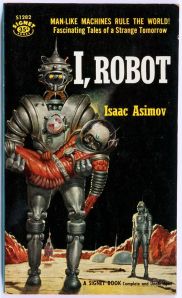
There are certainly science fictions featuring robots which question the morality of their existence, but they’re uncommon. Asimov used his robots to solve simplified moral conundrums, based around his Three Laws, which are themselves a moral code reduced to a single dimension – a moral code, that is, which does not question the existence or ownership of robots. Implicit in the use of anthropomorphic robots in almost every science fiction is an acceptance of slavery. And, to make matters worse, such robots are often then dehumanised – Cylons referred to as “toasters” in Battlestar Galactica, for example. Having created these ersatz people and enslaved them, they need to be reduced to the status of machines in order to justify ownership. They’re the people we demonise because we want to excuse our poor treatment of them, because we want to justify our belief that they are inferior to us. Much like the Tories are doing to the poor and unemployed in 21st Century Britain – calling them “skivers” and “scroungers”, as if it is their own fault, it is something they’ve done themselves, which means they’re not as good, not as human, as everyone else.
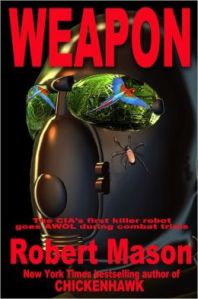
And speaking of Cylons, they’re another form of robot common in science fictions: the killer robot. Arguably, these sorts of robots are more common in twenty-first century science fictions (horribly old-fashioned Hugo-nominated stories by Mike Resnick notwithstanding). Robots make an excellent enemy because they are implacable – unlike humans, or even aliens, they will not stop, they cannot surrender, and you can destroy as many of them as possible without worrying about the morality of it all. Likewise, generals can sacrifice countless numbers of robots for the most trivial of gains, and it doesn’t really matter since they’re little more than smart bombs. It’s the machine-nature of war-robots that is stressed, and not their human-like qualities. Owning people, it seems, is fine in sf, but the genre still feels some small qualms at killing them in great numbers.
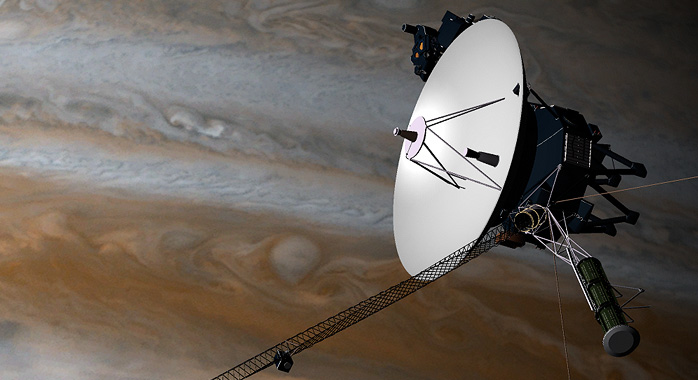
Of course, real robots are not people. No matter how sophisticated their programming, the code which drives them is still a series of IF and WHILE and FOR loops. Any operation they perform must be part of their programming… or they can’t do it. Even if they do have the right snazzy tool fitted to one of their manipulator arms. Smartphones are pretty damn clever devices, but no one would ever consider them more than a machine. The same is true of supercomputers, Voyager 1, Curiosity, a UAV or those dancing industrial robots in that old Volkswagen advert.
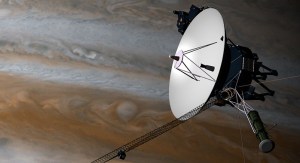
Perhaps people think there are no dramatic possibilities, other than in military sf, in robots-as-machines. Perhaps that’s why authors and film-makers have their robots look and behave like human beings. But once upon a time, science fiction’s spacecraft all used to resemble pointy rockets, of the sort painted by Chesley Bonestell in those Collier’s Magazine articles by Wernher von Braun. Look at the cover art of any late twentieth century or twenty-first century science fiction novel, however, and you’ll now see a huge variety in sizes, shapes and designs of spaceships.
What I think would be interesting would be to ditch the anthropomorphic robot, the ersatz human, with all its dodgy moral baggage, and instead treat robots as they actually are – like space probes, CNC machines, UAVs: ie, accept that they are products of their programming, they are tools, very sophisticated tools, but ones which can only perform tasks for which they have been designed and programmed. After all, it’s the twenty-first century, we shouldn’t be presenting worlds in which people, artificial or otherwise, are enslaved; we should be creating visions of the future in which technology plays a true role, is not just setting or a piece of hand-wavery used to justify magical maguffins. Far too many science fictions use genre tropes as little more than window-dressing for stories based on historical templates and loaded with historical baggage.
Loncon 3 and me
As you likely all know, the Worldcon this year takes place in London. So they’re calling it Loncon, the third of that name as there were previous Loncons in 1957 and 1965. It will take place from 14 to 18 August at ExCel, which is some sort of humungous exhibition centre in Docklands. It also seems it’s going to be the biggest Worldcon so far. All of which is academic as far as I’m concerned, as I won’t be going.
I did buy an attending membership, and I volunteered to be on programme items. I was asked to be on one panel, but I turned it down. It was not a topic that interested me, or one I felt could usefully contribute to. All of which is, again, pretty much moot.
There are a number of reasons why I’ve decided I’m no longer attending Loncon 3. One of them is that I had hoped to have Apollo Quartet 4 All That Outer Space Allows and Aphrodite Terra ready for the con. But that’s not going to happen, so I think I’d better spend the time working on them. Loncon 3 is also the weekend after a metal festival, and I doubt I could recover from one in time for the other.
There are lots of people I’d hoped to meet IRL at Loncon 3 for the first time. Back in 2005, at the Glasgow Worldcon, I remember such plans failing spectacularly – but then the “voodoo board” wasn’t very effective… These days, of course, social media and smartphones make it all so much easier. Another time, perhaps. Helsinki in 2017?
More on women-only science fiction anthologies
Back in April, I posted a list of women-only science fiction anthologies – see here – but since then I’ve discovered two more that should have been on my list:
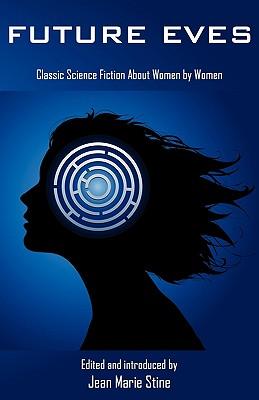
Future Eves, Jean Marie Stine, ed. (2002) Subtitled “Classic sf by women about women”, this anthology is split into two sections: From the 1920s – ’30s and From the 1940s – ’50s. It contains stories by Leslie F Stone, Margaretta W Rea, Hazel Heald, Evelyn Goldstein, Marcia Kamien, Joy Leache, Betsy Curtis, Beth Elliott and Helen Clarkson. There’s a couple of names there new to me – Rea’s story is apparently the only one she ever had published (in Amazing, Jan 1933), Goldstein had eight stories published between 1954 and 1960, Kamien three in the mid-1950s, Leache three from 1959 to 1961, and Elliott only one in 1959. Clarkson is also known for a single story, which was reprinted in New Eves – see my review here.
Women Resurrected: Stories from Women Science Fiction Writers of the 50’s, Greg Fowlkes, ed. (2011) This is from a small press which seems to specialise in “resurrecting” old and forgotten genre works – not just science fiction, but also mystery and adventure. Women Resurrected contains stories by Pauline Ashwell, Marion Zimmer Bradley, Florence Verbell Brown, Barbara Constant, Betsy Curtis, Dorothy de Courcy, Miriam Allen deFord, Helen Huber, Jean M Janis, Elisabeth R Lewis, Katherine MacLean, Judith Merril, Evelyn E Smith, Lyn Venable, Ann Walker, Elaine Wilber, Therese Windser and Mari Wolf. Yet more unfamiliar names – Brown (1 story only published), Constant (2 stories), de Courcy (20 stories), Huber (1 story), Janis (2 stories), Lewis (1 story), Venable (7 stories), Walker (1 story), Wilber (1 story), Windser (1 story) and Wolf (7 stories).
None of these “unknown” writers had careers that lasted beyond the early 1960s. It’s tempting to wonder why – marriage? children? no longer welcome by editors? It also seems odd that de Courcy, with twenty stories published between 1946 and 1954, should prove so obscure, especially given that a woman sf writer – Pamela Zoline – is still known today for a single story published in 1967 (and she only published 5 in total throughout her career). Perhaps the fact de Courcy co-wrote with – husband? brother? – John de Courcy explains it. The same might also be said of Mari Wolf, who wrote alone – I mean, how can you forget a writer whose first story was titled ‘Robots of the World! Arise!’.
So that’s a pair of anthologies which focus on the early decades of science fiction and women’s contribution to it. According to Partners in Wonder by Eric Leif Davin, there were 65 women writers published in science fiction magazines between 1926 and 1949, and a further 138 who debuted between 1950 and 1960. In total, those 203 women sf writers produce 922 stories during those 34 years, averaging between 5% and 16% by title of the total contents for genre magazines throughout the period.
After 1960, of course, and the appearance of massmarket paperbacks in supermarkets, there was a huge influx of female sf readers and writers… and yet common perception still has it that women writers are a small minority – as if the situation prior to 1960 has held true for the last 50 years. Even worse, little or none of those pre-1960 women sf writers are ever collected, or appear on lists of “classic” sf… further feeding into the myth that women did not write sf during those decades. Happily, the above two anthologies prove this untrue . More like them, please.
SF Mistressworks in Sci-Fi Romance Quarterly
Starting this month, Sci-Fi Romance Quarterly will reprint a review from SF Mistressworks. You can download #3 Apr-Jun 2014 of the magazine here. For this first appearance, they’ve chosen my review of Vonda N McIntyre’s Fireflood and Other Stories. I’m very happy with Sci-Fi Romance Quarterly’s offer to host a SF Mistressworks review each issue as it will bring some excellent science fiction by women writers to a wider – and appreciative – audience.
Memory jog
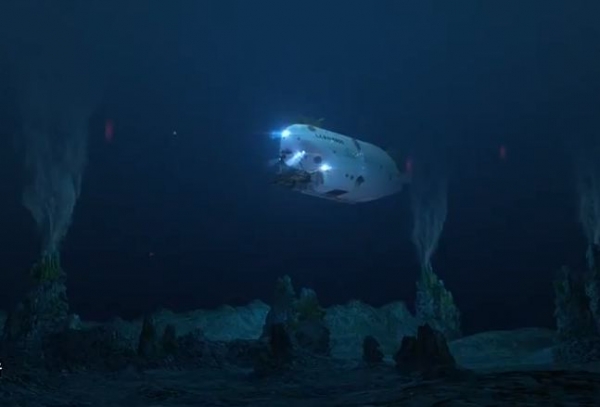
The latest issue of Perihelion Online Science Fiction Magazine has appeared, and among its many fine stories is one of mine – ‘Waters of Lethe’. It’s about a bathyscaphe journey to the bottom of Europa’s world-ocean. Sort of. You can read it here.
I’ve now written stories which feature Wilfred Owen, Spitfires, the Bell, Apollo astronauts, flying boats, rocket sleds, bathyscaphes… What to do next?
Fables of the Deconstruction
I’ve recently been reading a new science fiction anthology for review for Interzone and this, coupled with David Hebblethwaite’s remarks on science fiction awards here and Nina Allan’s comments here, has brought into focus some elements of my increasing dissatisfaction with the genre and its resistance to progress. Especially hard science fiction.
David complains about the lack of experimentation in form in sf, but I think there’s also a lack of experimentation in settings and narratives in hard sf. It’s all very well using cutting-edge science, the latest descriptions of exoplanets or the moons of Jupiter… But it always remains outside, outside the reader’s viewpoint on the plot, outside the characters’ psychology, their motivations or perceptions or worldview. While it’s true human beings need a specific environment to survive, and will take their society and transplant it wherever they may find themselves, irrespective of that external environment… their new surroundings will affect them, will change them. Not only must they make accommodations with their location, but their society will likely change as a result. But it rarely seems to in science fiction stories. Writers simply transplant a society little different to the writer’s present to their new environment, and add some technological bells and whistles to justify its presence. Even worse, they often model their society on an older one, such as the Wild West, with all its lawlessness and amorality, and stick it on, say, Io. How progressive is that? It’s not, of course. For all the story’s gimmickry and ideas, it still posits the sort of individualistic and brutal human (male, usually) that hasn’t characterised human society for centuries and is certainly unlikely to do so in the future.
To me, hard science fiction’s inability to reflect its settings in the psychology of its protagonists is a failure of the imagination. A good non-genre example would be Paul Scott’s Raj Quartet, comprising The Jewel In The Crown, The Day Of The Scorpion, The Towers Of Silence and A Division Of The Spoils. It covers the years leading up to, and during, the independence of India, but much of the story is set among British expatriates in the country. While the British in India built communities that were models of those back home in the UK, they could not help but evolve into something different through contact with the country’s population. And the people living in those countries changed too – so much so that they often suffered culture-shock on their return to Britain.
If you look further afield in sf, particularly in the short fiction market, there’s plainly a twenty-first century strain of the genre, one which freely borrows imagery and tropes from fantasy and New Weird. It also displays a greater spread of settings, societies and protagonists. Personally, I think the focus on imagery is mostly surface and usually hides a lack of sfnal progress – that’s progress in terms of how science fiction works, of course; the elements which go together to create science fictions and so differentiate them from other works of literature. The other areas in which sf is progressing – diversity, non-binary gender, etc – I think are excellent and long past due.
All this makes hard sf’s insistence on sticking to old story patterns all the more puzzling. I once defended hard sf from an accusation of being inherently right-wing. I still think it’s not right-wing, though I recognise many of its proponents write from a right-wing perspective. But certainly the subgenre is reactionary and conservative (with a small “c”, note). It doesn’t have to be. The laws of physics may be immutable, but there’s nothing that says human societies always tend to the Competent Man (usually a white Westerner) lording it over others by virtue of his competence, wits and willingness to commit violence. In fact, that’s a pretty offensive characterisation of human society. It’s sadly also widely prevalent in hard sf (and in sf too, in a wider sense).
Nina Allan, in her post, writes that sf no longer seems to comment on political and social issues, nor displays “evocative and original use of language”. She also makes a very useful distinction – between authors who write from within science fiction and authors who “draw their influences from science fiction”. Both her and David’s comments are addressed to the former – as are mine.
I think Nina makes some interesting points, but her comment about language seems to me to forget that science fiction is chiefly a genre of commercial fiction, with much of its DNA provided by pulp fiction. The current economic climate (well, actually, the global economy the neoliberals and neocons have gifted us over the past thirty years) means publishers prize commercial science fiction more than they do literary science fiction. The small presses – and self-published authors, to some extent – have picked up the latter baton, but they are still small fry in a large profit-driven ocean. When writing commercial fiction in any genre, there’s a tendency to stick to tried and tested – and familiar and lucrative – patterns. So it doesn’t really surprise me that prose in sf novels is blanding out, or even that ideas and the presentation of those ideas is tending to more… comfortable forms. I can rue this, I can compare it unfavourably with the situation thirty or forty years ago… but there are too many things that need to change, many of which the publishing industry has no control over, before it can be resolved. Plus, there are other issues which need to be addressed first – notably the lack of diversity, and the preponderance of sexism and racism – and it’s good that the sf conversation keeps on talking about these topics and is making progress at combatting them.
But. Science fiction. The stuff that makes these stories what they are. Nina uses this year’s Clarke Award shortlist as a barometer of the state of the genre. Which is not necessarily a fair argument. It has never been part of the award’s remit, and the jury are, as she acknowledges, all too human – in fact, I suspected one of the judges of championing the Mann but when I asked they said they hadn’t… which only shows the danger of making such assumptions. And speaking of Phillip Mann’s The Disestablishment of Paradise, for all the book’s faults, it can’t be accused of not being experimental in form. True, its structure is hardly original – a story-within-a-story, with “author” interpolations, plus ancillary material presented as appendices – but neither is it the far more common straightforward linear narrative, or indeed the relatively common dual narrative, past versus present, of the eventual winner, Ancillary Justice.
The point I’m trying to make, which unfortunately I keep on ruining by drifting from the point, is that the science-fictionalness, to coin a phrase, of a text, particularly hard sf, has not appreciably progressed for decades. I don’t doubt that the bulk of sf authors in years past never really bothered to interrogate or deconstruct the tropes they used – although some did, Samuel R Delany certainly did – and likewise very little present-day science fiction makes a serious attempt at examining the science-fictional assumptions, the tropes and genre furniture, of which it makes use. Nor do they explore the psychology of their protagonists. These, I think, are not only a missed opportunities, but also make sf, for me, a less interesting genre than it could be in the twenty-first century.
So let’s add these things together – from David, the lack of experimentation in form; from Nina, the lack of contemporary commentary; and from myself, the failure to examine what science fiction actually does and why it does it… Surely there’s something in among that lot worth exploring? Which is why the hard sf anthology I mentioned in the opening paragraph of this post proved so disappointing a read – and also seemed to be so emblematic of much that I feel in sf isn’t working for me. The anthology’s contents certainly met its theme, and they definitely qualified as “hard science fiction”… but there were so many unaddressed assumptions implicit in the stories, and so little examination of what makes a story hard sf rather than simply sf, that I couldn’t understand why the editors had even bothered to put it together.
Science fiction is by definition fecund terrain for stories. Hard sf may add some restrictions, but that should in no way limit how it tells its stories. Why can’t sf writers dig a little deeper into the tropes they use so blithely? Why can’t they take science fiction apart, examine it from all angles, and then put it back together in interesting ways? I’d not only like to see that happen to a much greater extent than it does presently, I’d like to see it as the default mode for writing science fiction – especially hard science fiction.