It Doesn't Have To Be Right…

… it just has to sound plausible


1 Comment

Genesis of the Cylons

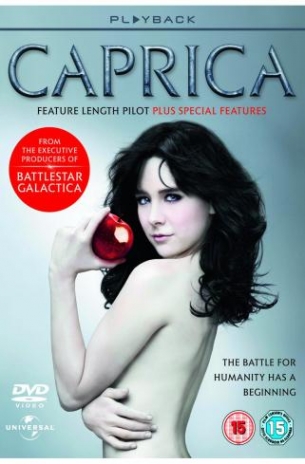
When a television series pilot opens with what seems to be a vision of hell – writhing naked bodies, men fighting bloodily to the death, people being shot, human sacrifices – and then later features a suicide bomber on a train… you know you’re not watching your usual anodyne and juvenile science fiction series. But then Caprica is the new series from the makers of the re-imagined Battlestar Galactica, and Battlestar Galactica could never have been described as “anodyne and juvenile”.

Caprica is set fifty-eight years before the events of Battlestar Galactica – in fact, Commander Adama is a child in the Caprica pilot – and sets out the events which led to the creation of the Cylons and their eventual revolt against the humans.

Daniel Graystone (Eric Stoltz) is the CEO and driving force behind an electronics company on the world of Caprica, one of the Twelve Colonies. He invented the holoband, which provides access to a virtual world or cyberspace called V-Space. At present, he’s working on a robot soldier for the Caprican government, but is having little success. Graystone’s teenage daughter, Zoe, is a computer genius. She has invented an AI copy of herself, called Zoe-R, in the virtual nightclub she and her friends frequent in V-Space. It’s the nightclub which is the aforementioned vision of hell.

Joseph Adams (Esai Morales) is a lawyer on Caprica, although he is originally from Tauron. He has connections with the Ha’la’tha, an organised crime syndicate on that world, but refuses to do their bidding.

As in Battlestar Galactica, the Twelve Colonies practice pantheism – and again, their gods share the names of the Greek pantheon. But Zoe and two school friends have turned their back on the gods and embraced monotheism. They are secretly members of a group called the “Soldiers of the One”. Zoe and her friends run away to Gemenom, where they hope to contribute to the monotheistic cause. They don’t get very far. One gets cold feet and doesn’t even get on the maglev train to the starport. And, while on the train, another reveals that he is carrying bombs strapped around his middle. Which he promptly detonates.

Daniel Graystone and Adams meet at the enquiry into the terrorist attack. Adams’ wife and daughter were on the same carriage as Zoe and her suicide bomber school friend.

It’s not hard to see where the story will go. Graystone is struggling with his robot, his daughter has created an AI. Put the two together and you have a… Cybernetic Lifeform Node (which is, I must admit, a particularly naff backronym). This, then, is the genesis of the Cylons.

Adams’ role in the story is less immediately obvious. Towards the end of the pilot, he admits his family name was originally Adama, and vows to change it back. This certainly explains his connection to Battlestar Galactica, if not to the story of Caprica. Because up until that point, he has only been used by Graystone, chiefly by approaching his Ha’la’tha contacts and asking them to steal a chip created by a competitor which Graystone needs to load Zoe-R into the Cylon. Adama’s payment for this will be an AI of his dead daughter.

One of the things that made Battlestar Galactica such compelling viewing was its full-frontal assault on the difficult subjects not normally tackled by sf television series. Perhaps sometimes it tried too hard to be edgy, and so sacrificed rigour for the issue of the week. Opening Caprica with a terrorist bombing shows the series certainly plans to continue Battlestar Galactica‘s dramatic use of contentious topics. While the programme makers have married this to a religious war – monotheism vs pantheism – they’ve also demonised the monotheistic worldview by defining it using only a black and white moral framework. There’s no reference to a creed, or a body of law, only the repeated insistence that morality is polar and imposed on humanity by their god. It feels overly simplistic, as if the monotheistic cult were invented by Zoe and her teenage friends.

Also appealing in Battlestar Galactica was the care and depth of detail with which its world had been built. Admittedly, it’s easy enough to create a futuristic, and not quite recognisable, world when the programme is almost exclusively set inside various spaceships. It’s harder to do for a programme set in a city – especially if the city is not entirely CGI. Caprica uses production design to show that it predates Battlestar Galactica, but it doesn’t quite work. Hats and old-fashioned suits are not enough. Of course, Caprica of sixty years prior to Battlestar Galactica is not going to map on any comparison between now and a US city of the 1940s. But there are enough differences between the two Earth time periods – not just the clothes; but the cars, the sensibilities, the technology… – to at least suggest that Caprica doesn’t really feel as though it takes place sixty-eight years before Battlestar Galactica.


Also somewhat problematical is Graystone’s motivation. He’s a fat cat captain of industry. He wants his Cylon to succeed because it means a huge contract from the Caprican government. Zoe-R is a means to an end – on first meeting her in the V-space nightclub, he dismisses her as a sophisticated software construct, not a true AI. Yet he offers to create a similar AI of Adama’s dead daughter. Not his wife, but his daughter. And Adama comes close to seriously considering the offer, even though he has a son (who grows up to become Commander Adama of Battlestar Galactica).

According to Caprica‘s makers, the programme will be a soap opera of sorts, focusing on the Graystone and Adama families. A rich industrialist with a low ethics threshold versus a lawyer who denies his crime syndicate background as a matter of personal morality sounds way too much like a loaded scenario, especially given the simplistic moral framework the Cylons are plainly going to inherit from Zoe-R… Nonetheless, I suspect it will be addictive viewing and I plan to buy the Season One DVD boxed set of Caprica when it is released in UK later this year.


12 Comments

Why bother writing science fiction?

You want to be a writer, you want to write. But why science fiction? Of all the modes of fiction you could write, why choose sf?

You’re not going to be hip, you’re not going to be relevant. Even during the Apollo programme, sf wasn’t relevant. In 1969, Neil Armstrong was the first human being to step onto the Moon; the following year, the Hugo Award for best science fiction novel was awarded to… The Left Hand of Darkness by Ursula K Le Guin. It’s an excellent novel, but it has nothing to do with space travel. Even the year before, the Hugo went to Stand on Zanzibar by John Brunner, a novel about over-population.

You’ll not get any critical plaudits – not from outside the genre, anyway. Science fiction has been accused of cardboard characters, lumpen prose, in-yer-face exposition, and idiot plotting and, to be fair, it’s not an entirely unfair accusation. Nor is it wholly accurate. Those who claim characterisation and prose style are unimportant in sf because it’s all about the ideas, they’re nincompoops. That’s like saying eating food is not about the taste, it’s about the calories.

Sf doesn’t sell very well – in fact, you’ll probably never be able to give up the day job. And the nearest you’ll get to a jet-setting lifestyle is gazing longingly at contrails in the sky. You might get free trips every now and again, but it’s more likely to be to Derby than Rio de Janeiro. If you’re really lucky, you might be asked to appear on a television programme. It’ll be on BBC4, however, so no one will watch it.

Then there’s that blank look you’ll get when you tell people you’re a writer and they ask what sort of books you write. As soon as you say “science fiction”, the smile will congeal on their face and they’ll wander off to watch some paint dry. Unless it’s a sf fan who’s asked you, of course. In which case, they’ll probably tell you exactly what was wrong about your last story or novel. Assuming, that is, they’ve a) heard of you, and b) read it. Neither of which is guaranteed.

Then there’s all that stuff you need to be an expert in. Yes, you can just Make Shit Up, but readers’ credulity only stretches so far. And they all have different thresholds – some will just wow at the ringworld, others will (famously) work out that it’s inherently unstable. And there’s definitely a level of knowledge, especially in the sciences, below which you cannot drop. No -300 degrees Celsius on your icy moon, for example. No supernovas visible in nearby star systems at the exact moment they occur. No, er, breathable atmosphere and water oceans on Venus. The closer you get to the real world, the more you have to make sure it’s right (or, at the very least, highly plausible). Aliens, artificial intelligences, faster-than-light travel, time travel… they’re not real, so no one’s going to cavil if they don’t operate as they do in other authors’ novels. It’s often seen as an advantage if they don’t, if their workings are entirely original to your story.

Because you have to continually struggle to be original and inventive. You have to write as though everyone who reads your story or novel has read every other sf story or novel that’s ever been published. There are no shortcuts. You’ve got build an entire world, or universe, and it’s got to be entirely off the top of your head. Yes, there are tropes you can recycle, used furniture, characters from central casting, but unless you’re being deliberately knowing you won’t be forgiven for making use of them. Well, you might get away with using some, providing there’s plenty that is original in your story or novel.

But.

You probably want to write science fiction because you’ve been reading it since you were a kid. You’re a fan. You can’t even imagine writing anything else. That may well be the best reason in the world to write anything. But there are lots of other wonderful things science fiction can do. It’s a wide genre, there’s room for a whole universe of things. There’s even space in there for things that – ssh, don’t tell anyone – for things that are not really science fiction. You can pretty much set the boundaries yourself. There are all those sub-genres, for a start: space opera, cyberpunk, hard sf, alternate history… In fact, there are so many, people have been arguing about them since 1926.

Also, let’s face it, world-building is fun. You can do as much or as little as you like; you can show as much of it, or as little of it, as you like. You have a level of power over your creation no other genre can match. Many of the visuals are pretty cool too – all those eyeball kicks and special effects on the page. This is stuff you’re never going to see in real life. After all, sf is as big as your imagination. It’s only limited by what you, the writer, can’t conceive. Sort of like a reverse strong Sapir-Whorf Hypothesis. Writing sf, you not only broaden your readers’ horizons, you stretch your own as well. You can’t help it – it’s the nature of the genre.

Then there’s the whole community that comes attached. It’s a vocal community, and it can be as condemning as it can be approving. But on the whole sf readers are a friendly bunch, and they’re not afraid to make their opinions known. I don’t know if sf has the largest online presence of all the modes of fiction, but I suspect it has the largest in comparison to the size of its market.

On the whole, I think the pros outweigh the cons. It’s not just the vast canvas available for stories, but the breadth and variety of the genre itself. There’s not much you can’t do. There are no other modes of fiction which offer the same openness to different approaches or different styles. You can be as relevant as you desire. And sf has permeated popular culture so much you can even be hip, if that’s your thing.

As a writer, that kind of freedom is liberating.

1 Comment

Talking about science fiction

We all know the UK economy is in a terrible state, and it’s not all that different in other countries. Massive deficits, swingeing cuts. Looking at the future, it seems no one’s going to be wearing shades for a while. Except perhaps science fiction writers. After all, isn’t sf known for mapping the way to utopia as often as it treads the road to dystopia? Isn’t sf famous for proposing solutions to situations before they become problems, for warning what might happen if things don’t change?

Well, yes and no.

Science fiction has never been predictive, at least no more so than is necessary for plausible world-building. The one sf prediction most often quoted, Arthur C Clarke and geostationary satellites, wasn’t even from a sf story but from a technical paper published in Wireless World. Which is not to say that history has turned many of the future worlds built by science fiction into quaint alternate history. The need for verisimilitude can sometimes resemble futurology, since both depend upon extrapolation. But for science fiction, it’s done for dramatic effect and need only be as complete as is required in the story.

Nor is science fiction didactic. Hugo Gernsback may have said that he saw sf as “an idea of tremendous import, but it is to be an important factor in making the world a better place to live in, through educating the public to the possibilities of science and the influence of science on life which, even today, are not appreciated by the man on the street”, but it’s doubtful that policy lasted more than a handful of years. As a young sf reader, I learnt a lot by reading science fiction but a) educating the reader was unlikely to be the story’s chief objective, and b) a lot of what was espoused was, well, wrong – or rather, was opinion presented as fact.

Which doesn’t mean that sf is entirely escapist, or written purely to be escapism. According to John Gray, in an article in the New Statesman, sf “pursues an inquiry into what it means to be human”, a narrowing of the focus of “the bourgeois notion of fiction as a criticism of life”. Yet he also adds that science’s role “has been to gauge the limits of the species”. Science’s role, I would have thought, is to explain the world around us.

The public perception of sf, in all media, is weighted towards escapism. But when Gray claims that the situations documented by science fiction are no longer seen as open to change, or resolution, that human beings cannot “shape the future”, his explanation is that the genre has become more personal. The world, or universe, is no longer at stake in sf stories.

Where is he pointing? Space opera routinely puts the galaxy in peril, and it’s possibly the most popular sub-genre of sf at present. It is also, possibly, the most escapist. Nor am I convinced sf ever really had the power to affect the real world: either by inspiring those who read it – the cliché of the sf reader growing up to become a scientist – or the warning implicit in a sf story being taken seriously by the general public. When did people start looking to sf for answers? 1984 and Brave New World are rubbish examples because they’re not generally considered to be sf. Even HG Wells stands across the genre rather than within it.

Yet what Gray says is partly true. Look at the shortlists for the various sf awards this year, and much of sf nominated seems entirely personal, about the problems of individuals and not worlds. The stories and novels seem less inclined to identify problems or offer solutions. The sf of 2010, if the shortlists are any guide, no longer offers maps to the future, dystopian or utopian. Science fiction is said to be a genre in conversation with itself, but once upon a time it was also in conversation with the future. That discussion seems to have dried up; indeed, science fiction and the real world, of whatever period, no longer appear to be on speaking terms…

There seems to me to be a misperception here. Someone looks at the critically-acclaimed shiny new – the awards shortlists, in other words – and sees nothing comparable to Well’s utopian blueprints or Orwell’s cautionary tale. But those two books were never emblematic of sf. And awards shortlists rarely reflect the state of the genre.

There are indeed lots of people talking in sf – not just China Miéville, not just the dead white European males named in Gray’s article. Perhaps, yes, the biggest conversation sf is having is with itself, but there are those talking to the future and talking about the real world – Jetse de Vries’ Shine anthology and DayBreak Magazine, Bruce Sterling’s The Caryatids, Ian McDonald’s Brasyl, to name but a few.

One branch of sf may be growing increasingly escapist, and another trying to drop the science all together and rename itself “speculative fiction”… but still the genre’s remit stretches in scale from the cosmic to the individual. Which leaves room somewhere in the middle for all manner of world-changing, all manner of conversation with who- and whatever. Just because Planet Earth is in trouble, it doesn’t mean everyone is talking about it, or indeed has to. But someone will be. Science fiction is a broad church.

And quite a noisy one, too.


4 Comments

Meme Time

I was just thinking to myself this morning that it’s been a while since a meme went around. So, of course, one popped up. I got this from Paul Kincaid‘s LJ page, and it seems especially appropriate given my summer reading project. The list looks like it was taken from the Periodic Table of Women in SF (PDF).

The meme goes like this:

Bold the women by whom you own books (or books including works by them). Italicize those by whom you’ve read something of (whether short stories, non-fiction, or fiction). Star those of whom you’ve never heard.

Andre Norton
CL Moore
Evangeline Walton
Leigh Brackett
Judith Merril
Joanna Russ
Margaret St Clair
*Katherine MacLean
Carol Emshwiller
Marion Zimmer Bradley
Zenna Henderson
Madeline L’Engle
Angela Carter
Ursula Le Guin
Anne McCaffrey
Diana Wynne Jones
Kit Reed
James Tiptree, Jr
Rachel Pollack
Jane Yolen
Marta Randall
Eleanor Arnason
Ellen Asher
Patricia A McKillip
Suzy McKee Charnas
Lisa Tuttle
Nina Kiriki Hoffman
Tanith Lee
Pamela Sargeant
*Jayge Carr
Vonda McIntyre
Octavia E Butler
Kate Wilhelm
Chelsea Quinn Yarbro
Sheila Finch
Mary Gentle
*Jessica Amanda Salmonson
C J Cherryh
Joan D Vinge
Teresa Nielsen Hayden
Ellen Kushner
Ellen Datlow
Nancy Kress
Pat Murphy
Lisa Goldstein
Elizabeth Ann Scarborough
Mary Turzillo
Connie Willis
Barbara Hambly
*Nancy Holder
Sheri S. Tepper
Melissa Scott
Margaret Atwood
Lois McMaster Bujold
*Jeanne Cavelos
Karen Joy Fowler
Leigh Kennedy
Judith Moffett
Rebecca Ore
Emma Bull
Pat Cadigan
Kathyrn Cramer
*Laura Mixon
Eileen Gunn
Elizabeth Hand
Kij Johnson
Delia Sherman
Elizabeth Moon
*Michaela Roessner
Terri Windling
Sharon Lee
Sherwood Smith
Katherine Kurtz
Margo Lanagan
Laura Resnick
Kristine Kathryn Rusch
Sheila Williams
Farah Mendlesohn
Gwyneth Jones
*Ardath Mayhar
Esther Friesner
*Debra Doyle
Nicola Griffith
*Amy Thomson
Martha Wells
Catherine Asaro
Kate Elliott
Kathleen Ann Goonan
Shawna McCarthy
Caitlin Kiernan
Maureen McHugh
Cheryl Morgan
Nisi Shawl
Mary Doria Russell
Kage Baker
Kelly Link
Nancy Springer
J K Rowling
Nalo Hopkinson
Ellen Klages
Tananarive Due
M Rickert
Theodora Goss
*Mary Anne Mohanraj
SL Viehl
Jo Walton
Kristine Smith
*Deborah Layne
Cherie Priest
*Wen Spencer
K J Bishop
Catherynne M Valente
Elizabeth Bear
Ekaterina Sedia
Naomi Novik
Mary Robinette Kowal
Ann VanderMeer

Given that I have quite a few year’s best anthologies, I may well own, or have read, short fiction by some of those on the list I’ve not put in bold or italics. And some in italics – which I know I’ve read – I might have a story by them somewhere in an anthology or magazine, so they should also be in bold.


7 Comments

Three Sets of Five for the Summer

Everyone should have a project for the summer months. I have plenty of writing projects all ready, but I thought I should have a reading one too. Not just that list of books I want to read and plan to work my way through, something a bit more… structured. Which I can write about here.

And I’ve come up with just the thing. I have on my book-shelves three quintets I really want to read – and which, coincidentally, I have to date only read the first book of each. The quintets are:-

The Canopus in Argos Archives, Doris Lessing

  1. Shikasta
  2. The Marriages Between Zones Three, Four and Five
  3. The Sirian Experiments
  4. The Making of the Representative for Planet 8
  5. The Sentimental Agents in the Volyen Empire

The Bold as Love Cycle, Gwyneth Jones

  1. Bold as Love
  2. Castles Made of Sand
  3. Midnight Lamp
  4. Band of Gypsies
  5. Rainbow Bridge

The Marq’ssan Cycle, L Timmel Duchamp

  1. Alanya to Alanya
  2. Renegade
  3. Tsunami
  4. Blood in the Fruit
  5. Stretto

Starting in July, I’m going to work my way through the fifteen books listed above. I’ll decide once I’ve begun whether to post per book or per quintet.


36 Comments

The Ten Best Science Fiction Books… Ever

Everyone loves lists. Contentious lists are even better. So here’s one: the ten absolute best science fiction novels ever published – written by sf authors, published by sf publishers. These ten books show what the genre is capable of when it aims to be more than mindless escapism. They are fiercely intelligent, beautifully written, meaningful, inventive, rigorous, and sf from the first word to the last. They are, in chronological order:

The Fifth Head of Cerberus, Gene Wolfe (1972). A collection of three novellas – but not a cheat, as the three are linked and form a novel together. This is the sort of science fiction that can be read and enjoyed, and then carefully puzzled through to determine what was really going on. Wolfe is a tricksy writer, and in The Fifth Head of Cerberus he’s at his tricksy-est.

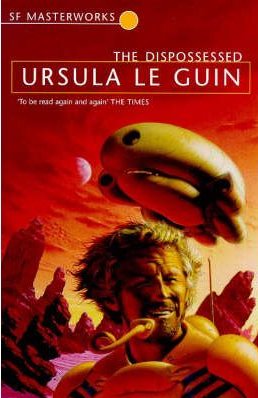
The Dispossessed, Ursula K Le Guin (1974). Donald Wollheim once claimed that the benevolent dictatorship was the government of choice of sf fans. That’s clearly what comes of reading too many space operas with interstellar empires and the like. And yet sf also has a history of documenting the road to utopia. All that benevolent dictator stuff is nonsense, of course – it’s as much fantasy as the Competent Man as hero. Thankfully, not everyone subscribes to it. The Dispossessed is a political book – it’s even subtitled “An Ambiguous Utopia” – and it’s political in a way that makes you think, that shows you what sf is really for.

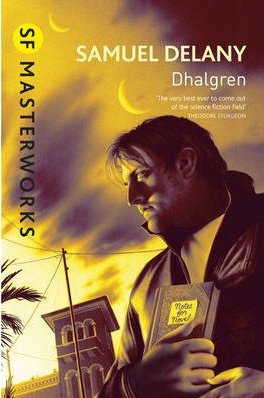
Dhalgren, Samuel R Delany (1975), is definitely science fiction – it’s in the relaunched SF Masterworks series, for a start – even though it’s proven extremely popular outside the genre. Sometimes it reads like a novel of its time, sometimes it seems almost timeless. But every time you read it, it’s different. It is also the most profoundly literary book in this list, and from an author who is steeped in genre.

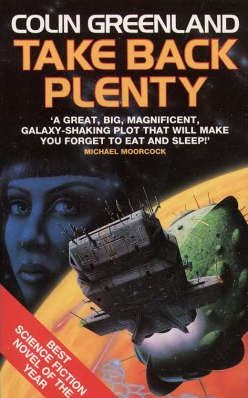
Take Back Plenty, Colin Greenland (1990). Yes, so Iain M Banks’s Consider Phlebas arguably kicked off the whole New British Space Opera thing in 1987, but to my mind the movement didn’t really gel until the appearance of Take Back Plenty three years later. I remember the buzz the book caused – and I remember on reading it discovering that it was as good as everyone said it was. I reread it a couple of years ago, and it’s still bloody good. So why is it not in the SF Masterworks series, eh?

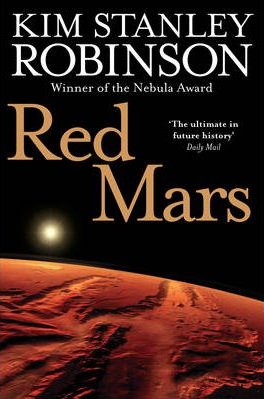
The Martian trilogy, Kim Stanley Robinson (1992 – 1996), is a bit of a cheat as it’s three books. While many are full of admiration for the first book, Red Mars, but not so keen on the sequels, Green Mars and Blue Mars, I maintain that the whole is greater than the sum of its parts. You need to read Green Mars and Blue Mars after you’ve finished Red Mars because the first book only poses a small handful of the questions the three books ask and attempt to answer.

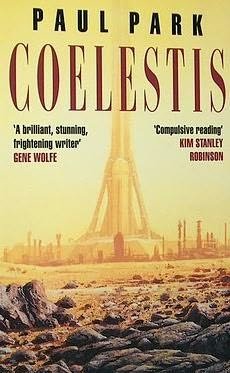
Coelestis, Paul Park (1993), was once described by John Clute as “Third World sf”, but I prefer to think of it as “post-colonial sf”. But not “post-colonial” in the same way as Ian McDonald’s River of Gods. I was an expat until only a few years ago, so it’s no surprise I’m drawn to fiction which documents the British expat experience abroad – hence my admiration for Lawrence Durrell’s Alexandria Quartet and Paul Scott’s Raj Quartet. While Park is an American, Coelestis is infused with that same atmosphere. Plus Park is one of the best prose stylists in this list. Why has this book been allowed to go out of print? Someone publish a new edition, please.

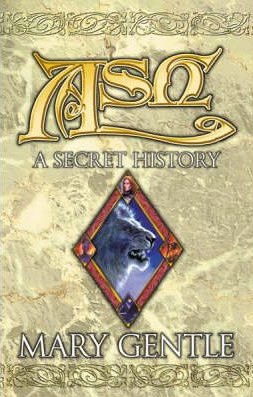
Ash: A Secret History, Mary Gentle (2000). This is the biggest book on this list – it contains nearly a million words. It is, with Red Mars, one of the most rigorous too. Rigour is important in sf – you can’t just make shit up as you go along (but you can, of course, as Iain Banks is fond of putting it, “blow shit up”). The bulk of the story may be set in an alternate mediaeval Europe, but it is not fantasy. It is clever, it is visceral, it is also physically heavy.

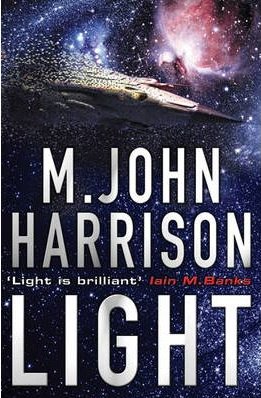
Light, M John Harrison (2002). They say Harrison is a writer’s writer, and the prose in Light certainly suggests as much. Light is also one of those novels that’s often described as one which “redefines” science fiction. Which it does. Sort of. But not by coming up with something new, only by shedding new light on those genre tropes being over-exercised at the turn of the century. They say that sf is a genre in conversation with itself, which makes Harrison one of sf’s sharpest conversationalists.

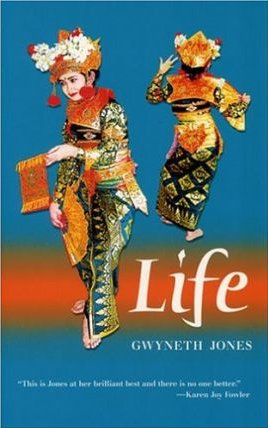
Life, Gwyneth Jones (2004). I need only repeat David Soyka from his review of this book on sfsite.com: “You can stop reading right now and go out and buy the book. Otherwise, you’ll have to endure yet another one of these diatribes about how science fiction doesn’t get any respect from the literary mainstream. Because you can’t read this book and not reflect on the fact that had this been written by, say, Margaret Atwood, Life would be receiving more of the widespread attention it deserves.”

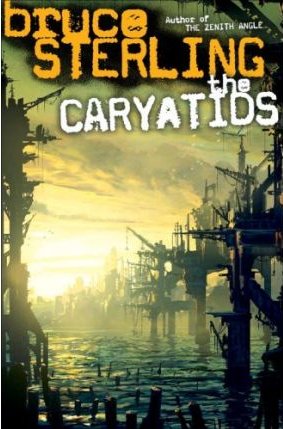
The Caryatids, Bruce Sterling (2009). I’ve never believed sf should be predictive, but if any sf writer could be called an “architect of futures” then it would be Bruce Sterling. And in The Caryatids he has produced his most inventive and meaningful conversation with the future yet. It is the best book he has written. So why hasn’t it been published in the UK? Why is there only a US edition of this excellent book?

These are not “seminal” sf novels, they are not “classics”, they are not even especially popular. But they are “best” in the true meaning of the word – i.e., “of the highest quality”. If you haven’t read them, you should do so immediately.

Now tell me which books I’ve missed off my list. No mainstream authors slumming it in the genre, please. And I don’t care what impact a book had in, or outside, the genre. It has to be, in your eyes, one of the best-written science fiction novels ever published. And that doesn’t mean the “most entertaining”, or any other excuse used to justify flat writing, cardboard characters, or simplistic plotting. I’m not talking about fit for purpose; I’m talking about excellence in writing, in prose, in literature, in genre.


Leave a comment

Another review of ‘Killing the Dead’

Gav at NextRead has reviewed my story ‘Killing the Dead’ from Postscripts 20/21 ‘Edison’s Frankenstein’ as part of his Shorty Story Month.

He says it’s “a quick clever tale that asks a serious question about what is important to humanity when travelling across the stars for journeys that will take unknown generations to complete”.

See the full review here.