
Last week, I was invited to give a talk – along with two other speakers – to the University of Sheffield Natural History Society. The topic was “science in science fiction”. This wasn’t quite the same as my only previous other public engagement, at the National Space Centre in February. This wasn’t a reading, it wasn’t about my books. So I had to write a new speech. And presentation slideshow. I stuck to a similar topic, however: real space and space travel and how science fiction has traditionally been getting it wrong.
Despite a couple of technical problems, the talk went well. First, Pieter Kok, Senior Lecturer in Theoretical Physics at the university, spoke about time travel and showed how to solve the grandfather paradox using quantum mechanics. Then it was my turn. And finally, David Kirby, Senior Lecturer in Science Communication Studies at the University of Manchester and author of Lab Coats in Hollywood, talked about the use of science consultants in Hollywood films. We then had a short Q&A session.
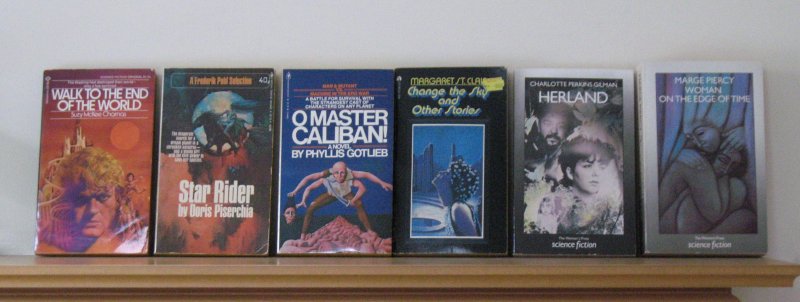
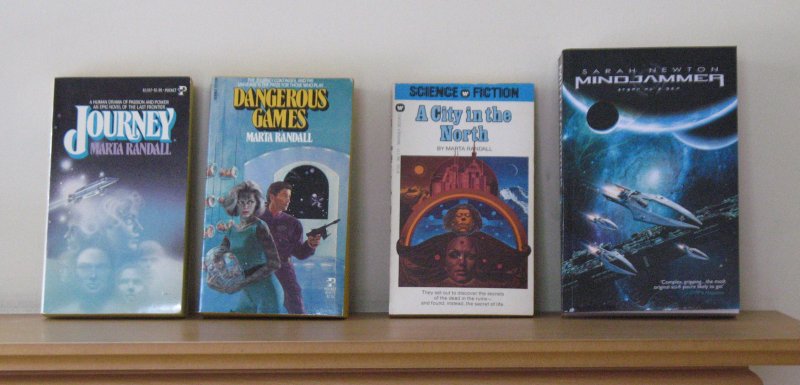
It was a fun evening. I don’t think my delivery was as polished as it could have been – I’m still not used to public speaking. And I did feel really old sitting in a venue full of students. A couple of them spoke to me afterwards – I think I may have upset them with my talk. I was a little dismayed that most of the sf novels they mentioned were all a good twenty or thirty years old, though one did name Ken MacLeod’s Learning The World. The society then laid on a barbecue, but because it was raining they just bought food into the venue – a burger, corn on the cob and coleslaw. I spoke to a couple of lecturers who were present, and then caught the tram home in time to watch the +1 edition of that night’s episode of In Plain Sight.
And here is the talk I gave (I’ve inserted the slides as jpegs):
INFINITE INSPIRATION: SPACE AND SCIENCE FICTION IN LITERATURE

My name is Ian Sales and I write science fiction. But you won’t find any of my books in the local Waterstone’s as I’ve yet to sell a novel to a publisher.
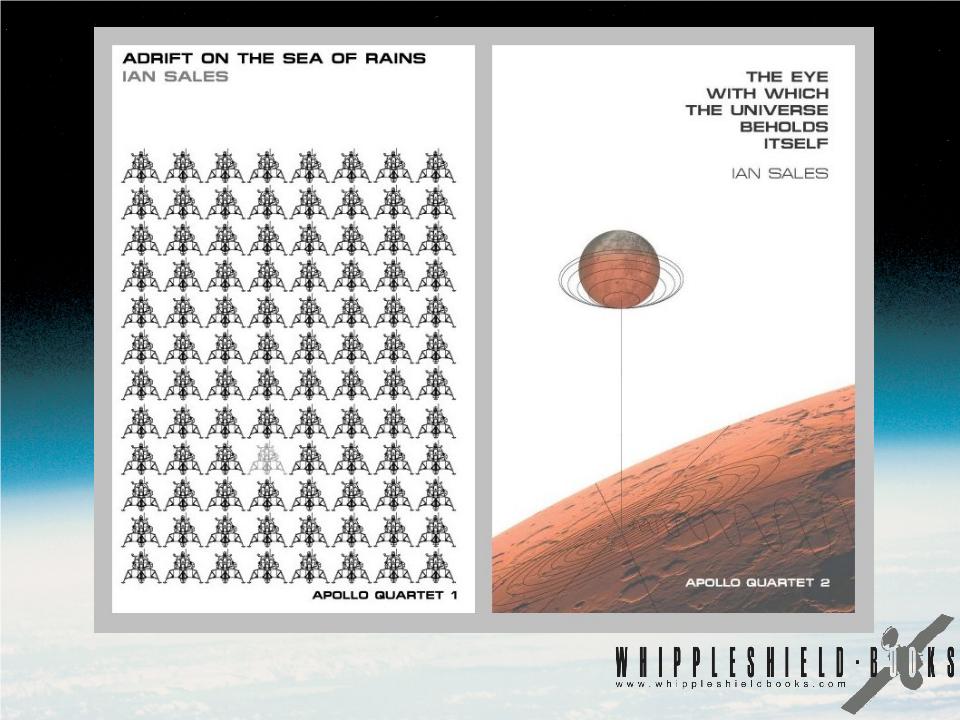
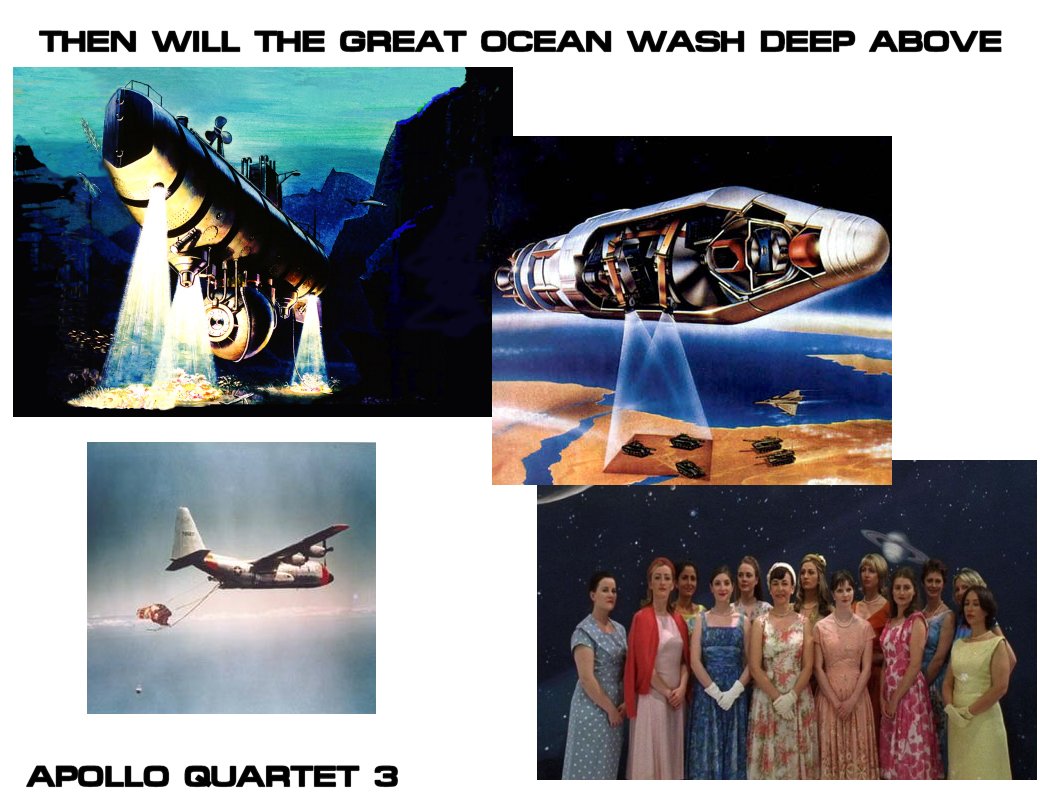
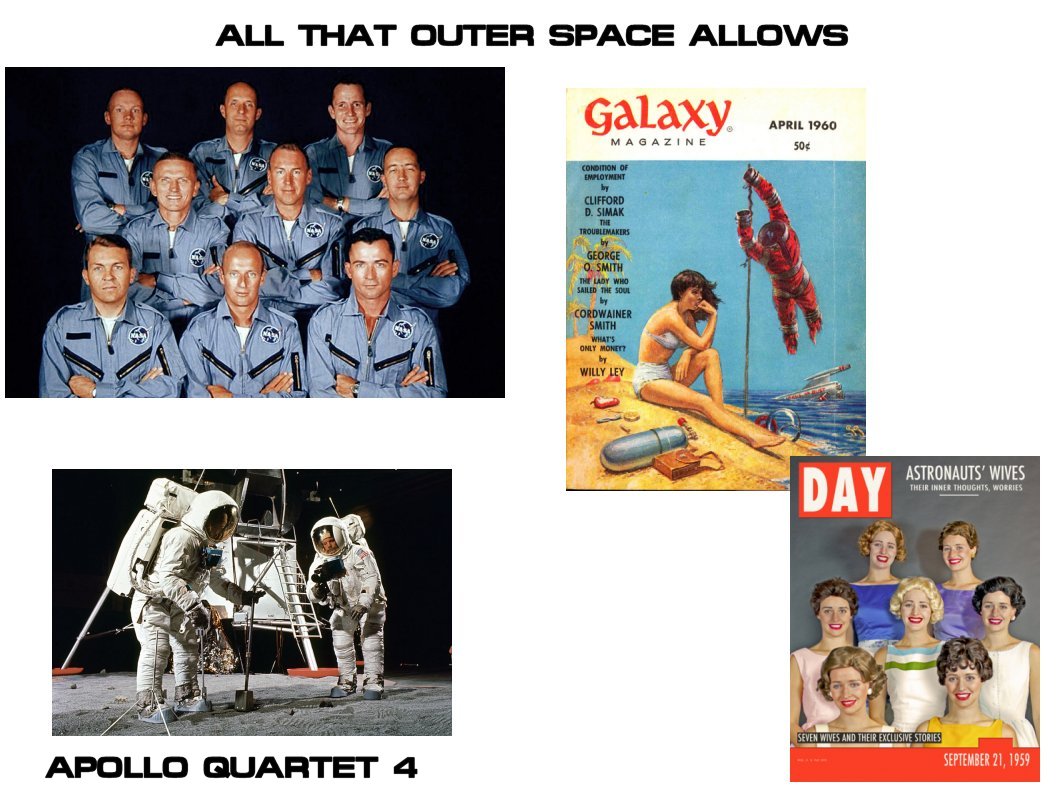
But I have written and published two parts of a quartet of novellas, called the Apollo Quartet: Adrift on the Sea of Rains and The Eye With Which The Universe Beholds Itself.

Adrift on the Sea of Rains won the BSFA Award in the short fiction category earlier this year.
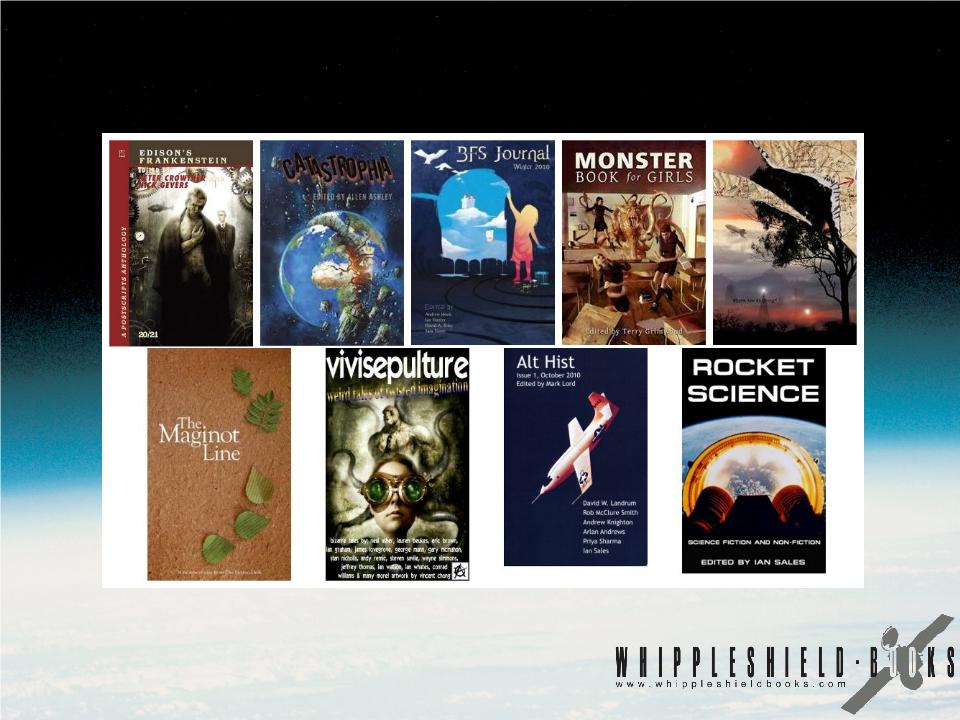
I’ve had short stories published in a number of anthologies and magazines, and last year I also edited an anthology, Rocket Science, for Mutation Press.
Tonight, I’ll be talking about space and space travel in science fiction literature.

You probably all recognise this quotation – in fact, most of you, even the non-sf readers, have probably read the science fiction novel in which it appears. And yet, despite the vast, huge, mind-boggling bigness of space, Arthur Dent, Ford Prefect, Trillian and Zaphod Beeblebrox zip about the galaxy as if it were no bigger than the South Seas.
But space really is big.

Last month, Voyager 1 – the most distant human-made object from Earth, some 18 billion kms away – left the Solar System. It’s not aimed at any particular star but it will pass within 15 trillion kilometers of Gliese 445, 17.6 light years away.
At its current speed of 38,000 kph, it’ll reach there in 40,000 years.
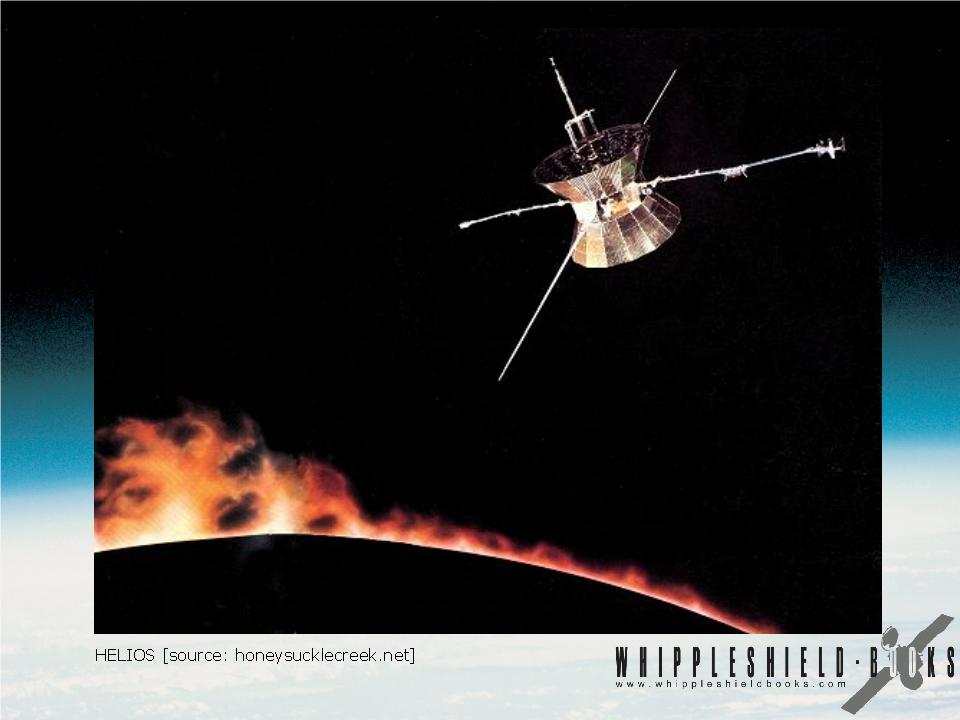
The fastest human-made objects ever built were the Helios-A and -B space probes, launched in 1974 and 1976 by West Germany and NASA. They reached a velocity of 252,792 kph. That’s London to New York in 79 seconds.

The fastest human beings ever were the crew of Apollo 10, who hit 39,897 kph during their return from the Moon. That’s London to New York in 8 minutes and 20 seconds.

Our nearest star is Proxima Centauri. It is 4.24 light years away, 4 years and 3 months at light-speed. But those Helios probes, the fastest objects ever built…
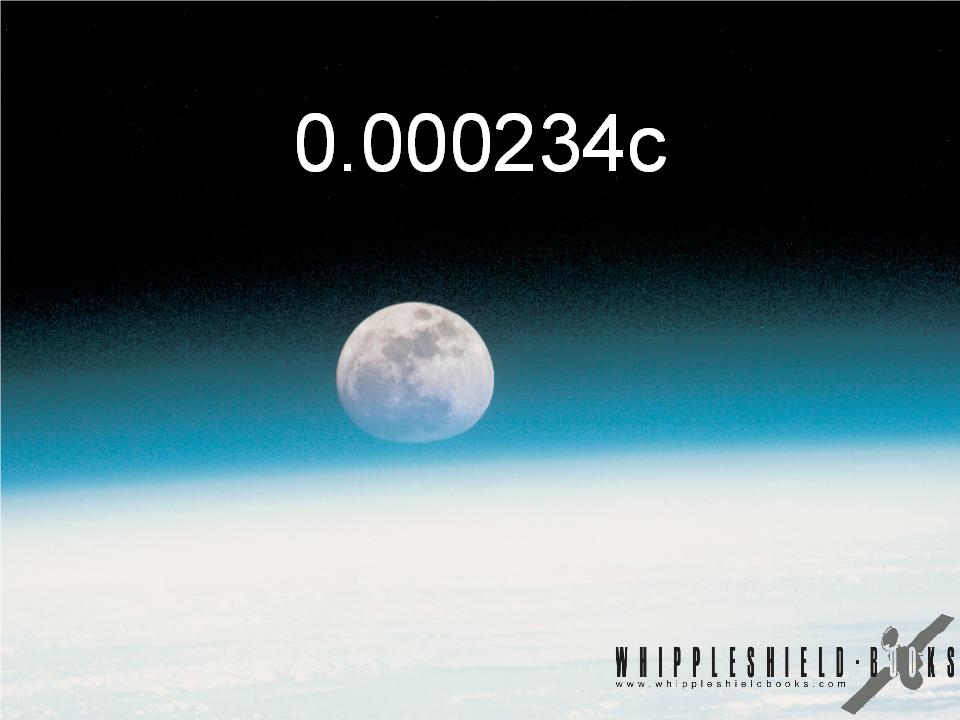
… they only reached 0.000234% of light speed. It would take them 13,000 years to get there. If Voyager 1 were heading toward Proxima Centauri it would take it nearly 74,000 years.
So, you see, space is really really really big.
But you wouldn’t know it if you read science fiction. In novels by Iain M Banks, Peter F Hamilton, Lois McMaster Bujold or Elizabeth Moon, humans or aliens flit about the galaxy in starships, travelling from planet to planet in either hours, days or weeks.
But space in science fiction plays a metaphorical role. It is a signifier of distance. And distance itself is a measure of strangeness or exoticism.
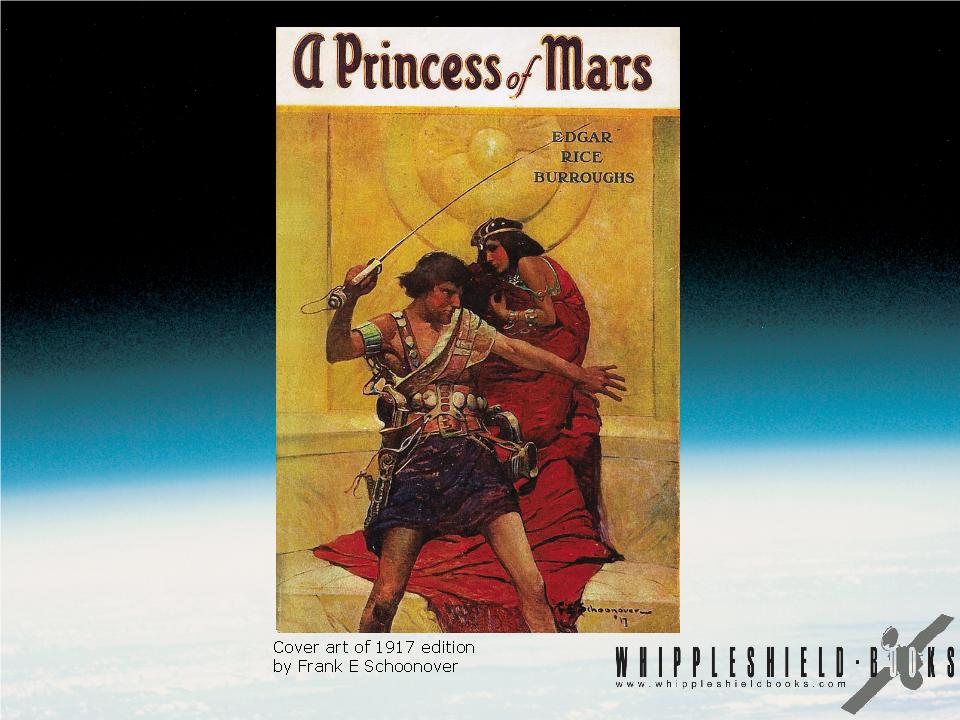
In science fiction’s early days, Mars was a common locale for stories – not just Edgar Rice Burroughs’ A Princess of Mars in 1912, but also Robinsonades like Rex Gordon’s No Man Friday from 1956.

However, as scientists learned more about the Red Planet, so it became closer and less exotic. Locales in sf moved further afield. But by that point, the limits of the knowledge of the time had been reached, so imagination took over. The worlds were made-up, with no basis in reality. The universe itself became a fiction.
And that’s how science fiction continues to treat it.
Because it’s all about distance.

To Westerners of yore, the South Seas were exotic. And I mean that just as much in its demeaning colonialist definition as I do its less provocative meaning. Africa, South America – they were the same. Both were a long way away – weeks or months by sea travel. Science fiction authors just substituted weeks on the open sea with weeks in a spaceship.
Which is why spaceships in science fiction pretty much resemble ocean-going ships.

They have bridges, they have crew stations for everything from communications to navigation. They have cabins and wardrooms and storerooms. They have captains and first officers and chief engineers.
Real space travel isn’t like that at all.

Back in April 1961, just over fifty years ago, the human race sent someone into space for the first time. Yuri Gagarin orbited the earth in a steel ball 2.3 metres in diameter. That’s about as unlike an ocean-going ship as you can get.
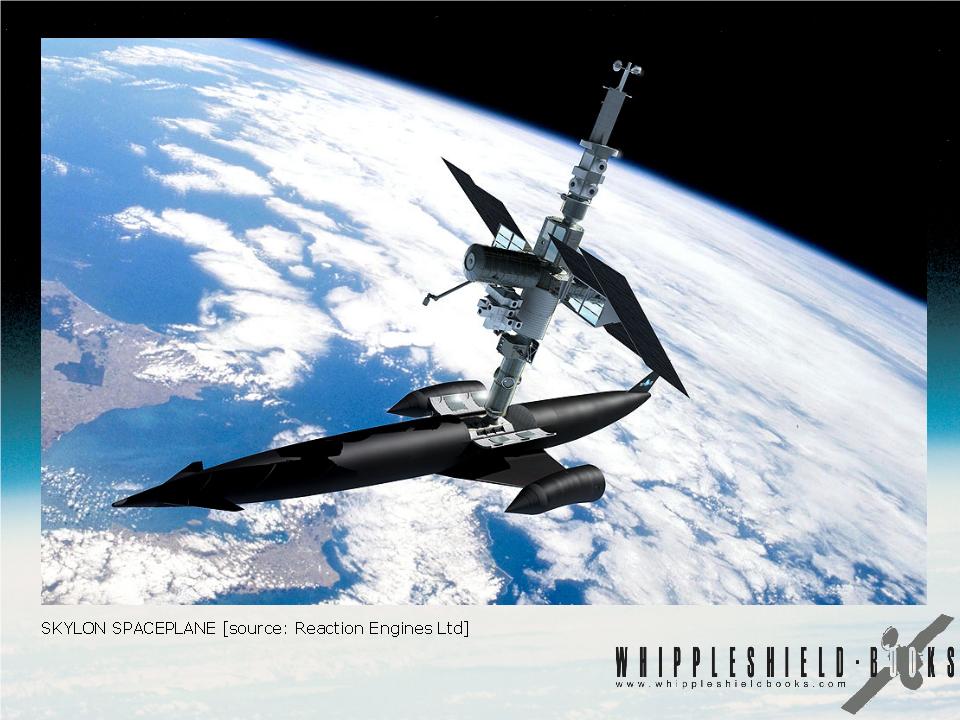
This is the Skylon, a spaceplane being developed here in the UK by Reaction Engines Ltd. It can carry passengers, but it doesn’t have any crew. It’s completely automated.

The Boeing X-37B is robotic.
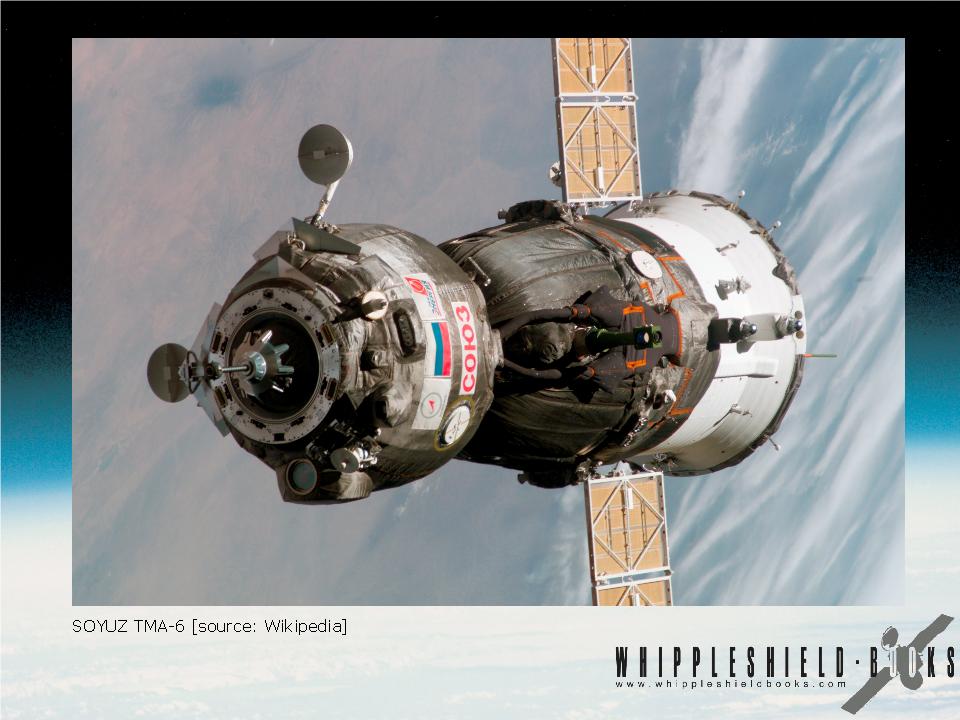
Even the Soyuz is chiefly controlled from the ground.
Real spacecraft are tiny.

On each of nine Apollo missions, three men travelled to the Moon in a command module with an interior volume of 5.9 cubic metres. That’s about the same as a Ford Transit van.

The Soyuz is even smaller – the re-entry module is only 2.5 cu metres. It’s so small, in fact, that in order to fit in three seats, the centre seat has to be set back from the other two – so the person sitting in it, the commander, can’t even reach the control panel. They have to use a small stick to press the buttons.
There are other issues, as well. It’s all very well travelling to other stars and planets at physics-busting speeds, but it’s no good to you if you arrive there dead.

Given current technology, a fast transit journey to Mars would take about 150 days. It would be expensive, of course – vastly, hugely, mind-bogglingly expensive, in fact. But we don’t know yet how to keep those astronauts alive. We have yet to build a Closed Environment Life Support System capable of keeping human beings alive in space for any useful length of time.
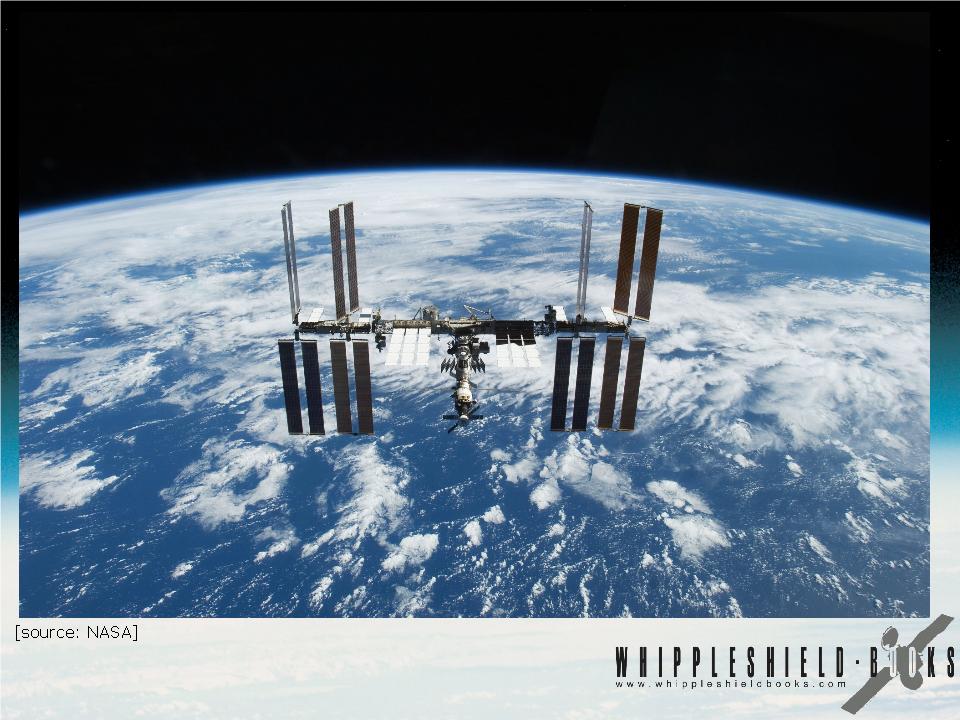
Our only beachhead on the real universe, the International Space Station, requires around eight supply missions per year. And it’s only 400 km away.
But even before we take that first step, we have an obstacle to overcome. And it’s a biggie.

Our gravity well.
The best method we have to date for throwing things into orbit is a chemical rocket. And it’s horribly inefficient. You have to chuck away most of the rocket to get off the planet. It took 2.3 million kilos of Saturn V to send 45,000 kg to the Moon. That’s throwing away 98% of the total mass.
Worse, rockets are limited by the very science which makes them possible.
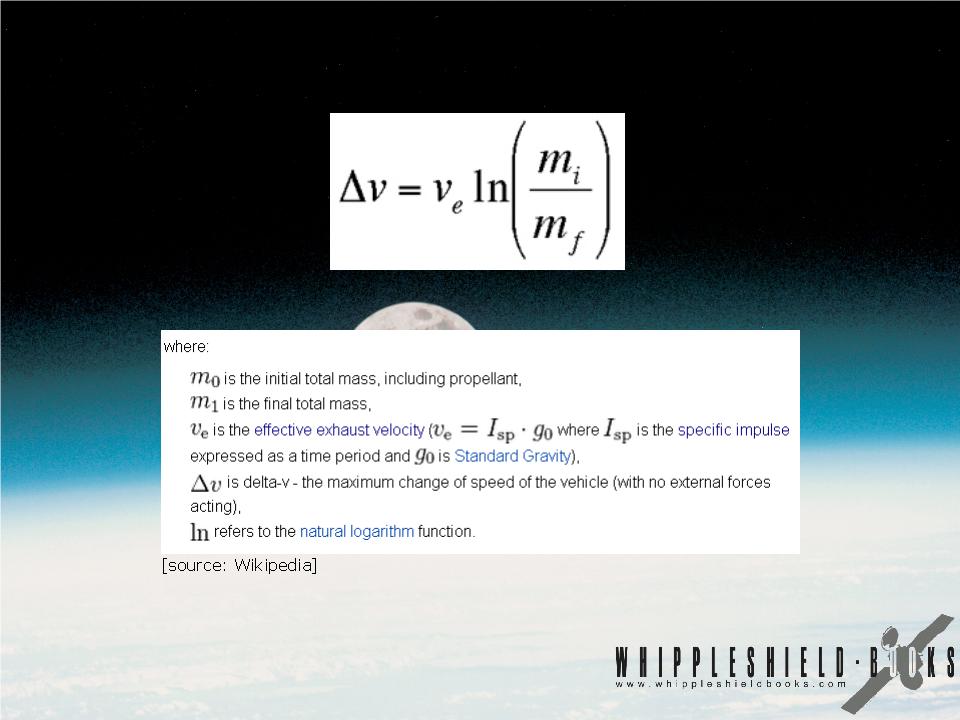
This is the rocket equation.
The important variable here is ve, the effective exhaust velocity. (It’s “effective” because, for obvious reasons, it’s lower in atmosphere than in vacuum.) The problem with exhaust velocity is that it’s determined by the propellants used in the rocket, and there’s only so much energy that can be generated from a chemical reaction involving two specific propellants. You can’t magically make dinitrogen tetroxide and a 50/50 mixture of hydrazine and unsymmetrical dimethylhydrazine generate more energy than it does. Chemistry doesn’t work like that. Those, incidentally, were the fuels used by the Saturn V to send men to the Moon.
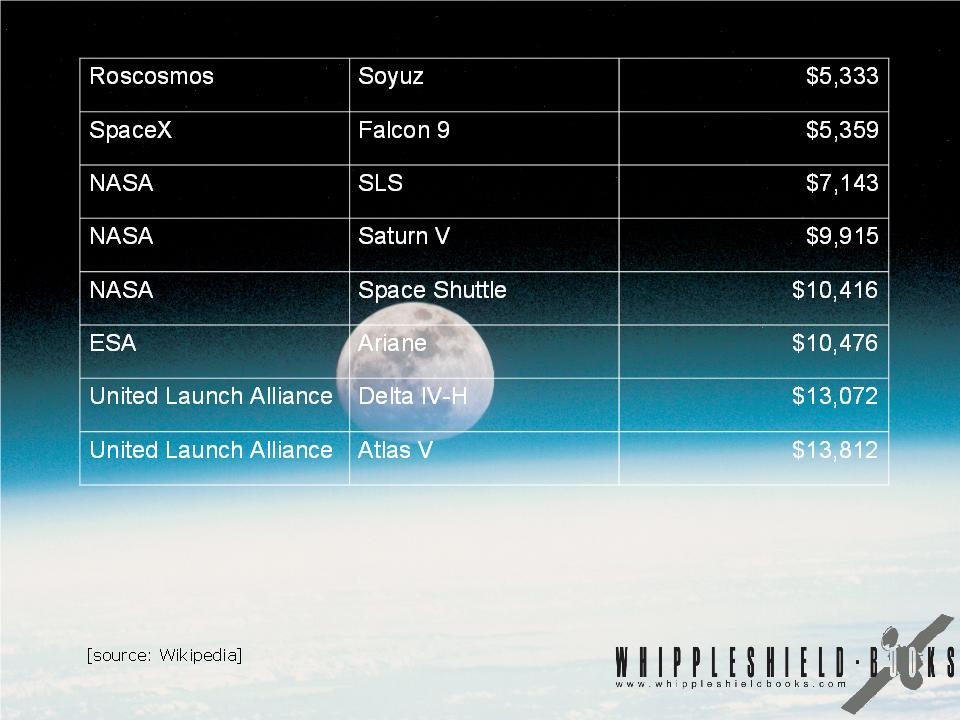
Because getting into orbit is so inefficient, it’s correspondingly expensive, between five and ten thousand dollars per kilo. Which means you need to make the most of what you can throw up there. Spacecraft are tiny because every kilo counts. You don’t want to waste valuable weight on cabins and wardrooms.
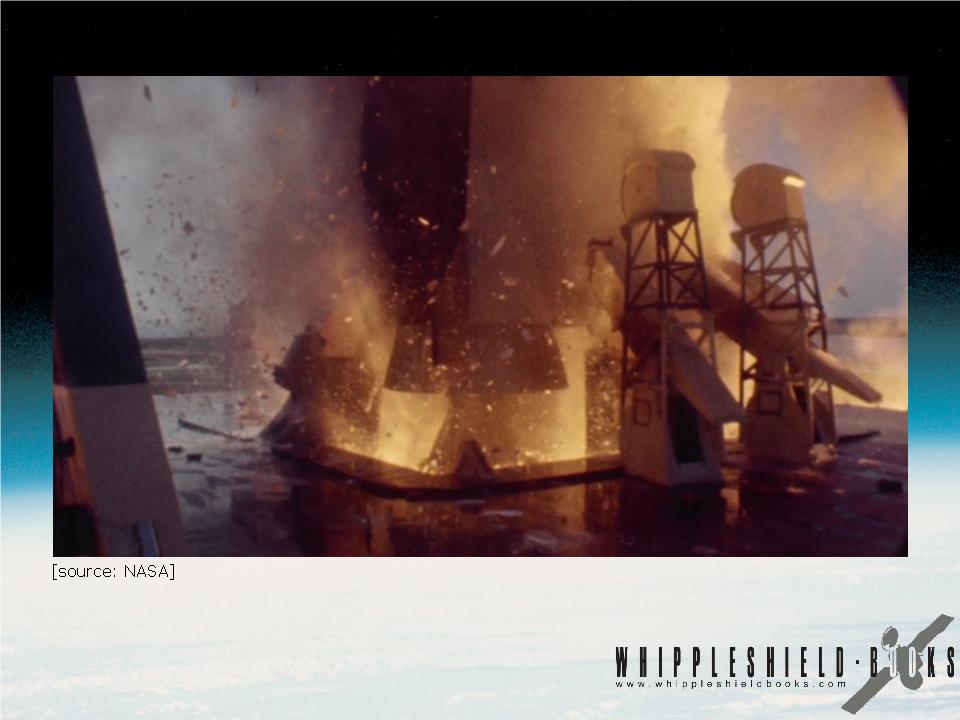
Of course, if you had some magical means of propulsion that could power your spaceship to escape velocity without all that chemical inferno, then it would be a different matter. But we don’t, and science fiction has a bad tendency to gloss over that lack. Authors wave their hands and invoke the phrase “anti-gravity”, but really it’s not at all scientific.
The same is true of interstellar travel.

Science fiction likes its hyperspace drives and warp drives and FTL drives and such, but they’re about as scientific as an Infinite Improbability Drive. Even theoretical ones like the Alcubierre Drive would require more energy to operate than actually exists in the universe, so that’s not going to happen any time soon.
Which begs the question – how important is the science in science fiction?
There are science fiction novels which contain bona fide science, or have premises based on real science:

… like Greg Benford’s Timescape or Poul Anderson’s Tau Zero or Gwyneth Jones’ Life or anything by Greg Egan. But they’re more the exception than the rule.

You can’t even say that once upon a time sf stories were all about the science, even though the inventor of the genre, Hugo Gernsback, described science fiction in 1926 as:
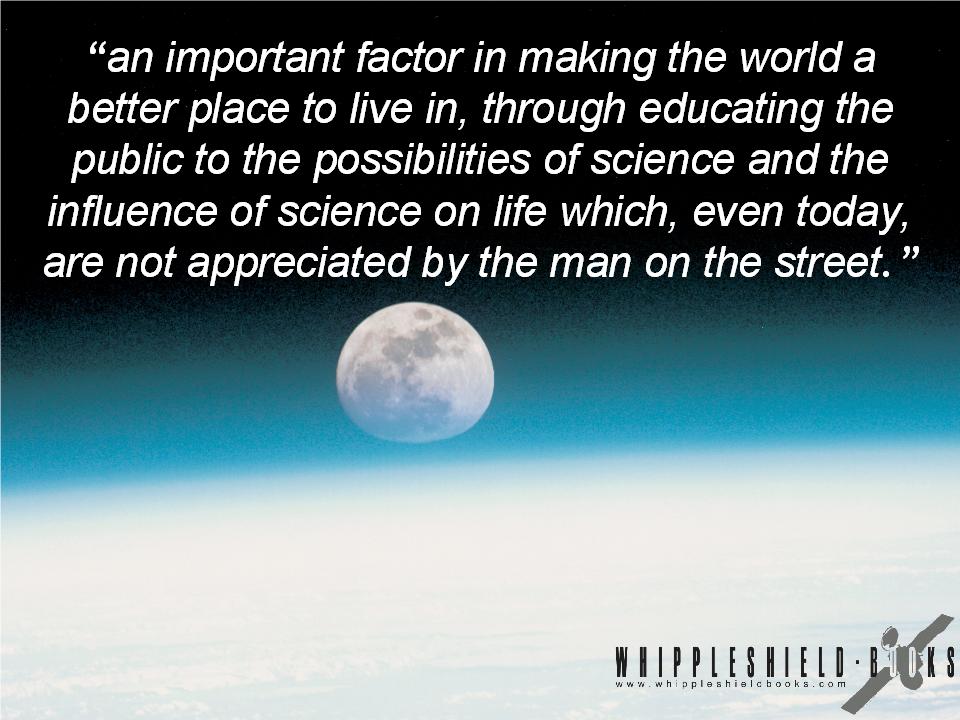

Science fiction was born in the white-hot enthusiasm for technological progress implicit in the electronics magazines of the 1920s. But few of its purveyors were trained scientists, and when the genre was repositioned at the end of that decade as yet another form of pulp adventure fiction, whatever scientific credibility it had demanded subsequently lapsed. Since then, it could be said science fiction has been little more than a mechanism for delivering bad ideas to impressionable members of society.
In other words, science fiction is, and always has been, scientifically bankrupt.
Happily, the genre’s name comprises two words, and if the genre has long since lost the intellectual rigour demanded by one of those words, it has at least always been driven by the second. Science fiction is fiction, it is…
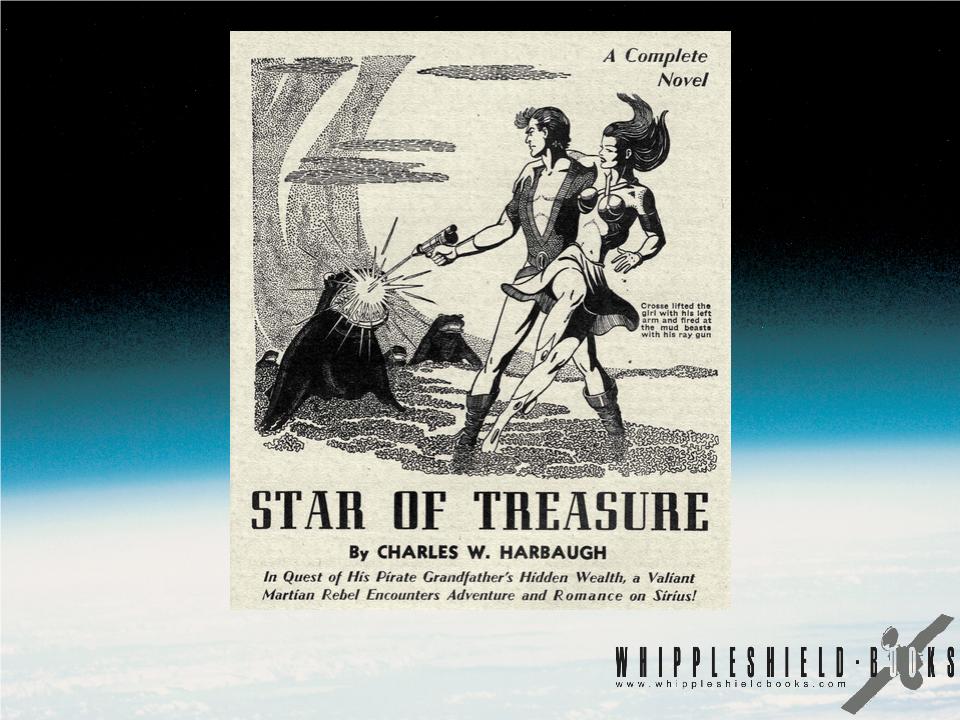
… stories. And it is in its approach to those stories that it comes closer to science than any other mode of fiction. It posits a rationalist scientific worldview. It might fumble the details, or just make them up out of whole cloth, but it recognises that the real universe is a place where…

… physics and chemistry and biology and such all hold sway. It may use magical science and technology, but it’s still science and technology, it is still assumed to work like science and technology. It doesn’t work because. It doesn’t require divine powers or chicken entrails or a magic hat.

Despite the fact science fiction gets it wrong so frequently and so consistently, I still prefer to call it that and not “speculative fiction”. All modes of fiction are essentially speculative. Telling stories is a way of speculating about something. By unpacking the abbreviation “sf” as science fiction, it tells us it’s a mode of fiction which views the world with a scientific eye – even if its actual scientific record is pretty damn poor…
As I’ve outlined, we have a fifty-year tradition of real space travel, but science fiction insists on using its ocean-going ships in space.

We know the universe is even more vast, huge and mind-bogglingly big than Douglas Adams could even imagine, but science fiction still pretends interstellar distances are crossable within a human lifetime.
Here’s an example of that mind-boggling bigness:

… the Sculptor Wall is a superstructure of galaxies. It’s 370 million light years long, 230 million light years wide and 45 million light years deep. That’s millions of light years.

In kilometres, that’s 3,500 with 18 zeroes after it. And the Sculptor Wall’s not even the largest superstructure we’ve found.
The more science tells us about the universe, the less significant we discover we are. By manipulating our sense of scale, science fiction puts us back where we want to be – at the centre. Important. Sf humanises a universe which is completely indifferent to us.
And, in order to do that, science fiction writers all too often fall back on metaphors that they, and their readers, find comfortable. The chemist’s down the road.
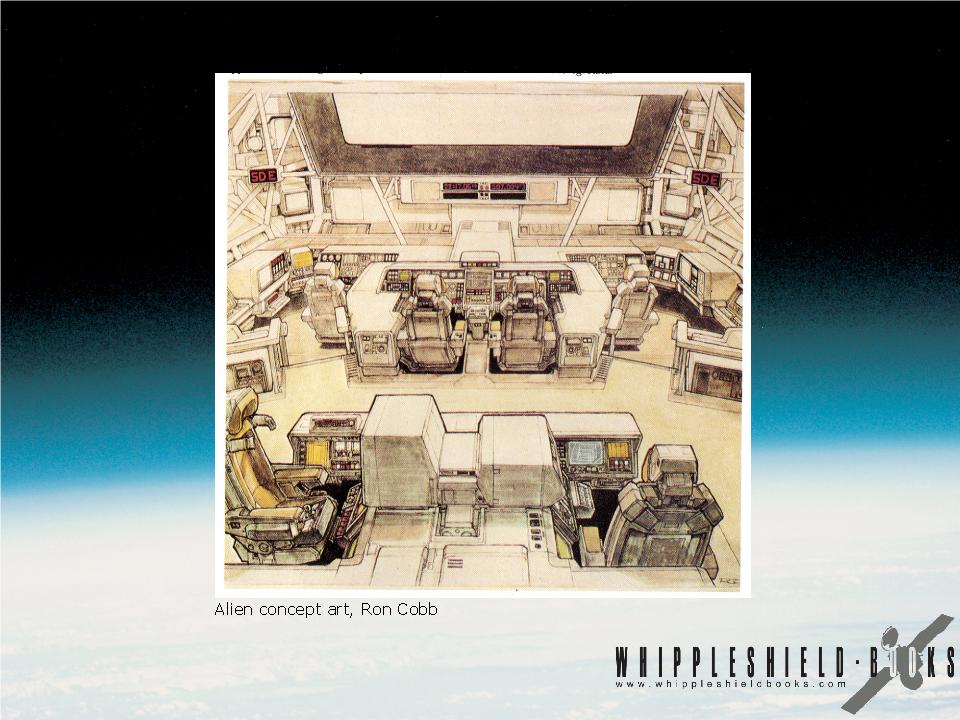
Spaceships with a captain sitting in a big important chair on a bridge. The real world isn’t like that, real space travel isn’t like that, real interstellar distances aren’t like that.
As Korzybski might have said, “the metaphor is not the thing itself”. But use that metaphor too much and too often, and it might as well be – even if it has become completely decoupled from the thing it metaphorises.
Of course, it may well be that we’ll hit a Kuhnian paradigm shift sometime in the future and render everything I’ve said so far completely irrelevant. It may well be that all those science fiction novels of galactic adventure really are maps of the future.
But I’m not holding my breath.


 It Doesn't Have To Be Right...