It Doesn't Have To Be Right…

… it just has to sound plausible


1 Comment

Fragment

So a year or two ago I had this idea for a postmodern planetary romance, a Leigh Brackett-style story as much about story as it was about the events in its strange and implausible world. But like most such projects – and I have an embarrassingly large number of them – it never got beyond some vague ideas and a couple of hundred words. I had a great title, ‘Gods of Saturn’, and what I thought was a pretty cool opening, but then other new shiny ideas captured my attention and my postmodern planetary romance got filed away in a forgotten folder. Until now. Maybe one day I’ll do something with it, actually finish it off perhaps, but for now it qualifies as one of those “stories that never were”, of which I have far more than I care to enumerate. But rather than let it go totally to waste and, in part, to perhaps prompt me into actually working on it and maybe finishing it, here’s the opening of ‘Gods of Saturn’ for you to enjoy…

Of all the winds which blow across the sand seas, an easterly is the most disagreeable. From that quarter, the town of Kumpara boasts no defence against the scouring grains of sand. The western wall of Pu Chou rises behind Kumpara’s tumbled blocks, and curves enfolding arms to north and south. But to the east: nothing.

There was, however, much which could be said about the couple who strolled along Kumpara’s long stone jetty one day in the Age of Helium, as small wisps of easterly wind whipped up dancing devils of sand.

Kumpara had seen better years, but had yet to reach the nadir of its decline; or its subsequent rise to quiet gentility. See it now, and perhaps you would find it hard to picture the narrow streets thick with blinding red dust, the sand whipped into fountains fifty feet high, and every house shuttered and doors firmly bolted. Those who lived there knew better than to risk the wind’s wrath.

A local spy – and there was one – who watched the young couple will have deduced they were strangers to Kumpara. The wind was not yet dangerous, but only the foolhardy or ignorant remained out once it began to blow. So too did their garments advertise their origins. The young lady was dressed in a fashion yet to be seen in the town. The eye in the telescope might have glimpsed the split skirt which was common at that time in the capital city, Xu; the high-collar, with its arcane symbols of rank and allegiance; the long gloved sleeves. Her companion was equally well-dressed.

As they turned to stroll back along the jetty, some feeling or whim caused the young woman to look back. She halted, head turned and, as if conjured into being by her gaze, features formed on the face of Saturn. The lemon and orange and tan stripes swirled like the ingredients of some decadent cocktail. It was a vast face, a face which filled the planetary canvas on which it appeared, and it caused the spy to drop his telescope and scramble from his vantage point.

As a result, he did not see the reactions of the Xuan lady and her companion. He did not see her turn her back on the face in disdain.

If such an occurrence sounds remarkable but the couple’s reaction does not, it is because at that time the gods of Saturn would often manifest on the face of the gas giant. From their celestial vantage point, they would gaze on each of the moons and on each of its civilisations. Their impact depended very much on the moon’s distance from Saturn. Here on Janus, where Saturn occupies a significant portion of the horizon, the gods held sway more than on, say, distant Iapetus.

When a god appears, all see him or her. When a god speaks, only those to whom they direct their instructions hear.

Lady Eresu turned to Captain Quradu and took his arm. She gently pulled him about. “Ignore him, Quradu,” she said softly. “He cannot harm us.”

The captain dropped his hand from the butt of his tantalum-pistol. That looming face – its presence alone in the sky suggested great power. Quradu looked up at Lady Eresu – as befitted her rank, she was a head taller than he – and noted her lack of concern.

Leave a comment

I might need a bigger hat

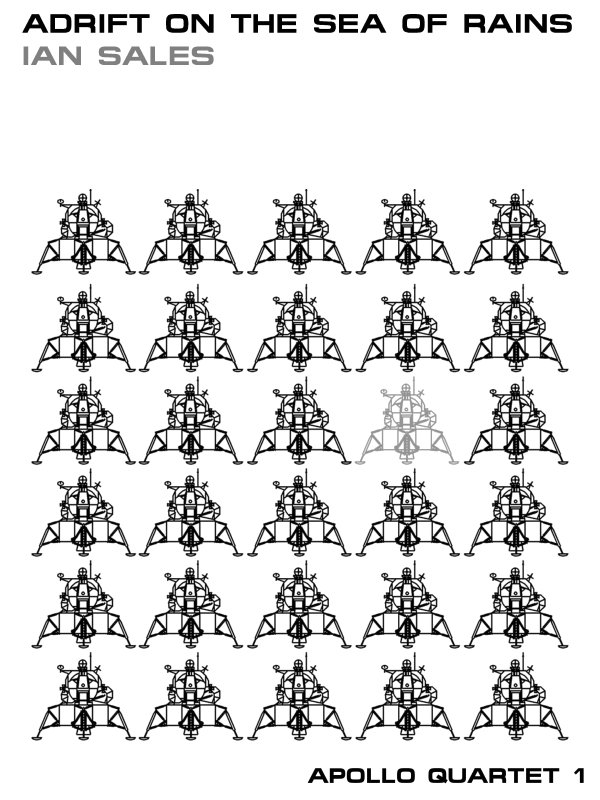
People continue to say nice things about Adrift on the Sea of Rains. Colum Paget has written a long positive review of it on his blog here. Gary Dalkin was nice about it in his review here. And Richard Palmer has also written positively on it here. And have I previously mentioned the five star review on Amazon.co.uk here and the review on LibraryThing by Robert Day here?

So, the pressure is well and truly mounting for the second book of the quartet…


1 Comment

It’s the way I tell ’em

I’ve been thinking this week about how I set about writing fiction, and it struck me that I do most of it in my head long before I sit down and start typing. Once I’ve decided what I want to write about, I start thinking about plots and worlds and characters and scenes and themes… It’s only when I have enough of those clear in my head that I start to put the sentences together using a word processor…

And once I begin the actual physical process of writing, then I start the research. The two feed into each other. Things I find in my research prompt changes in the story; the way the story develops opens up areas I need to research. Even then, everything is mutable: that first draft is mostly a brain dump larded with research. After that comes the actual shaping of the text. And revision. Lots of revision.

A case in point is the next book of the Apollo Quartet. Even before I started Adrift on the Sea of Rains I knew what the second book, Wave Fronts, would be about. It would have two narratives – call them A and B. A would be set in the present of the story, but B would be set some 100 years later. The combination of the two would explain the resolution (with supporting arguments in a glossary).

But while fleshing out the synopsis a week or so ago, a detail I added to the background of narrative A’s protagonist struck me as something worth expanding. In fact, the more I thought about it, the more I realised it provided a better dramatic counterpoint to narrative A than narrative B did. So I decided I would now tell the story using narrative A and narrative C. Narrative B would be incorporated into the glossary.

I was happy with this. Then I saw Lavie Tidhar’s review of Adrift on the Sea of Rains here. And it gave me an idea, a way to add more drama to narrative C. I already had a thematic link between the two narratives, but this new idea not only reinforced that, it also strengthened other areas of the story. It made the choice of protagonist much more plausible – in fact, it made him the only choice of person as the protagonist.

So it’s a good job all this had happened in my head. If I’d had to rewrite a 20,000-word document, I don’t think I’d have been so quick to completely re-invent the story. But the end result is, I believe, a now much stronger novella. With glossary.

Unfortunately, the original title no longer fits quite so well…


2 Comments

A man of taste and distinction

Steampunk and science fiction author Lavie Tidhar, whose novel Osama was this year shortlisted for the BSFA Award but cruelly not for the Arthur C Clarke Award, has reviewed Adrift on the Sea of Rains on his blog. He writes: “This is probably the best piece of science fiction I’ve read so far this year, and would be a more than worthy nominee for a BSFA Award next year.” Which makes me most happy indeed.

Lavie’s review, in all its complimentary glory, is here. As he says himself, I urge you to read it.


4 Comments

I am literary

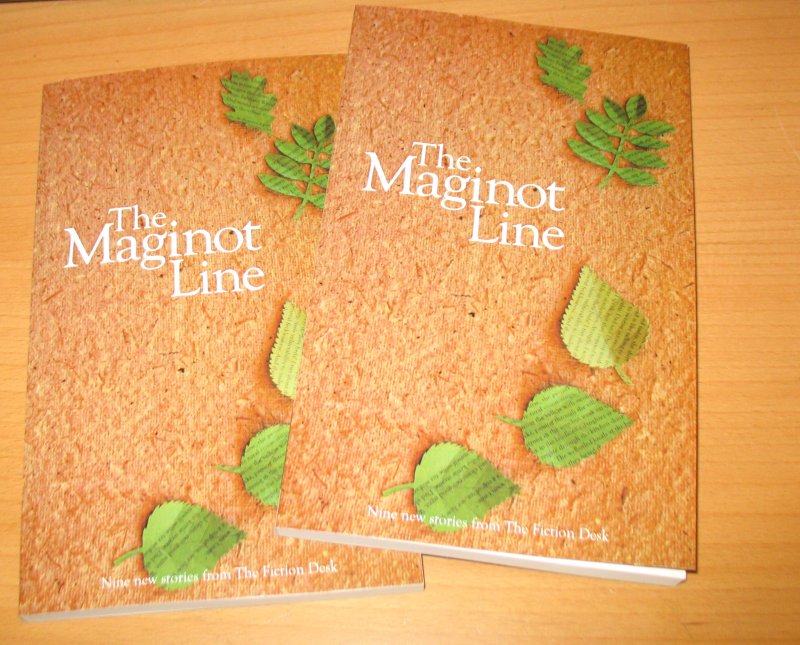
My contributor copies of The Maginot Line, the third anthology from The Fiction Desk edited by Rob Redman, have just arrived. It is not a genre anthology, and marks my first appearance in a non-genre venue.

The Maginot Line contains nine stories, one of which is by me: ‘Faith’. I’m not entirely sure how to describe ‘Faith’. It’s about the US and Soviet space programmes. Sort of. It’s about astronauts. Sort of. And it’s about nineteen turns.

The other eight stories look very good indeed, and I’m looking forward to reading them. For the record, the contents are:

  • Matt Plass, ‘The Maginot Line’
  • Mandy Taggart, ‘The Man of the House’
  • Justin D Anderson, ‘Automatic Pilot’
  • Benjamin Johncock, ‘The Rocket Man’
  • Andrew Jury, ‘Exocet’
  • Shari Aarlton, ‘The Pest’
  • Claire Blechman, ‘Trevor Gets Shot’
  • Harvey Marcus, ‘Blind’
  • Ian Sales, ‘Faith’

Now go buy a copy.


Leave a comment

Pimp and circumstance

Praise continues to trickle in for Adrift on the Sea of Rains…

On Twitter, Dave Hutchinson (@HutchinsonDave) tweeted: “I recommend that you beg, steal, borrow (but preferably buy) Adrift on the Sea of Rains by @ian_sales, because it’s a little cracker”, and then added on Facebook, “All people of good intent should read Adrift on the Sea of Rains by Ian Sales, as I did today. I loved it.”

On Twitter, Martin McGrath (@martinmcgrath) tweeted, “Cracking novella (and appendices)”, and Stuart Wallace (@soapyfrogs) said, “just read and loved ‘Adrift On The Sea Of Rains’ … More please!”

On his blog, Early Days of a Better Nation, Ken MacLeod wrote about alt.fiction and mentioned that Adrift on the Sea of Rains was “very good indeed”.

Robert Day has written a very nice review of it here on LibraryThing, and Cliff Burns has given it a five-star review on Amazon here.

Plans to create an internet Whippleshield empire continue apace. I’m still working on the website, but as soon as it’s up and running I’ll make sure everyone knows. I am also now the proud owner of a copy of Scrivener, and I plan to use that to create EPUB and MOBI editions of Adrift on the Sea of Rains. So expect it to be available for Kindle in a week or so.

Meanwhile, I need to get cracking on with the second book of the Apollo Quartet, Wave Fronts, in which the first man on Mars investigates the disappearance of Earth’s first exoplanet colony and discovers something which will completely change humanity’s relationship to the universe…


Leave a comment

A little lunacy…

I did toy with the title “A taste of green cheese”, but fortunately good sense prevailed. Almost. Anyway, you’ve seen a photograph of the boxes containing it, you’ve seen its cover-art, and you’ve even seen the first review ever of it… So I thought I’d give you a little teaser of Adrift on the Sea of Rains. Here are the first three paragraphs (and a relevant picture):

SOME DAYS, WHEN it feels like the end of the world yet again, Colonel Vance Peterson, USAF, goes out onto the surface and gazes up at what they have lost.

In the grey gunpowder dust, he stands in the pose so familiar from televised missions. He leans forward to counterbalance the weight of the PLSS on his back; the A7LB’s inflated bladder pushes his arms out from his sides. And he stares up at that grey-white marble fixed mockingly above the horizon. He listens to the whirr of the pumps, his own breath an amniotic sussurus within the confines of his helmet. The noises reassure him – sound itself he finds comforting in this magnificent desolation.

If he turns about – blurring bootprints which might otherwise last for millennia – he sees the blanket-like folds of mountains, grey upon grey, and a plain of the same lack of colour, all painted with scalpel-edged shadows. Over there, to his right, the scattered descent stages of LM Trucks and Augmented LMs fill the mare; and one, just one, still with its ascent stage. Another, he knows, is nearly twenty years old, a piece of abandoned history; but he does not know which one.

You’ll have to buy the book to read the rest of it. It will be on sale at Eastercon (6 – 9 April) and at alt.fiction (14 – 15 April). And I hope to have a website up within a couple of weeks where it can be purchased direct.