Another gallop through the movies I’ve watched over the past couple of weeks. My viewing patterns have not changed much since I started working from home. So how I’m supposed to fit in all this stuff now being offered free while I’m self-isolating is beyond me…
November, Rainer Sarnet (2017, Estonia). Weird fantasy film set in some grim village and filmed in stark black and white. Not sure what I made of this one. It looked beautiful, for all the dirt and grime, and the weird skeleton-like figure made of pipes and things, apparently animated by magic, which the farmer used as a slave. Worth seeing.
Who Saw Her Die?, Aldo Lado (1972, Italy). George Lazenby, in his second film after he turned down Bond, a giallo set in Venice, and which has subsequently been deemed a career-best performance. To be fair, I still think OHMSS was the best Bond film, and there wasn’t much in Who Saw Her Die? that struck me as all that different to the acting in that movie. A sculptor, separated from his wife, has his young daughter visiting, but she goes missing and later turns up murdered. He rushes around, trying to figure out who the killer was, as the police are far too inept. A good use of the setting, but not a very original plot.
The Exception, David Leveaux (2016, UK) is based on one of those novels that rewrites twentieth-century history, specifically Nazi history, and sort of makes the Nazis a little fluffier and nicer, which is of course total bollocks. In this case, Kaiser Wilhelm was exiled to an estate in the Netherlands. A “good” Nazi (it’s hinted he was upset at the Katyn Massacre) is assigned to captain the kaiser’s bodyguard. Where he falls for one of the Dutch servants. But – shock! horror! – she’s really a British spy. Meretricious tosh. A well-made film, well played by its cast, but the sort of invidious rewriting of history that starts to make fascism “friendly”. The Allies in WWII did not just fight a country that broke a treaty, they fought a regime that attempted genocide. Remember that.
The First of the Few, Leslie Howard (1942, UK). And from the irresponsible rehabilitation of past villains to actual propaganda of the time. The titles refers to RJ Mitchell, the designer of the Spitfire, played by Howard, directing himself. The film covers the main points of his life – he died of cancer in 1937, before the Spitfire entered service with the RAF – and it’s all very rah rah rah, which is hardly unexpected given when it was made. I can’t say Howard ever appealed to me as leading-man material, but he had many interesting strings to his bow and it’s a shame his life was cut short. The First of the Few has some good aerial sequences, particularly of Schneider Trophy flights, and real footage of RAF pilots during the war, but the Wikipedia rabbit-hole it sends you down is more interesting than the movie itself.
Invincible, Konstantin Maksimov (2018, Russia). In July 1942, a Soviet KV-1 tank destroyed sixteen German tanks, two armoured vehicles and eight other vehicles in a battle. The surviving crew were given medals. Invincible is the story of that tank crew in that battle and, while it’s good visceral in-the-thick-of-it WWII tank action, it makes enough errors to alienate those most likely to find the film appealing. I am not a tank fan, I hasten to admit; but that is a thing, especially with the popularity of online MMORPGs like World of Tanks. In Invincible, the Soviet tanks are mostly models that didn’t appear until 1943. Likewise the German tanks. And the KV-1 tank at the centre of the film… every shot it fires at a German tank destroys that tank; every shot fired at it, however, bounces off. Disappointing.
Sholay, Ramesh Sippy (1975, India). There are many best of Bollywood movie lists out there. I suspect this film is on most of them. It is an epic Western, Bollywood-style, and it does it with all the qualities that makes Bollywood Bollywood. In abundance. A thakur, who was once a policeman, asks a warden to track down two small-time crooks he arrested years before – prompting an extended flashback sequence – because he has a task for them. It turns out they’re in prison – where the new warden seems to have modelled himself on a cross between Benny Hill and Hitler – but quickly escape. The thakur wants the crooks to capture a local dacoit, and he will pay them handsomely over and above the published reward. The rest of the film is a long drawn-out war between the two groups. And, yes, it’s epic. Worth seeing.
Fear and Desire, Stanley Kubrick (1953, USA). Kubrick’s first film, which he tried to remove from his cv. A small group of soldiers crash their plane behind enemy lines, and must make their way back, past an outpost occupied by an enemy general. The film stars Virginia Leith as a local peasant woman who is taken prisoner by the soldiers, and Kubrick interestingly makes everything generic so the two countries are unidentifiable. But this is journeyman work, and probably only of interest to Kubrick fans.
Heaven & Earth, Oliver Stone (1993, USA). I’ve a feeling I’ve seen this before, but I can’t be sure. I’m not much of a fan of Stone’s films. He’s had an interesting career, to be sure, and has been very distinctive in the stories he chooses to tell. But it’s easy to see why some succeeded more than others. Heaven & Earth was apparently a flop, and it’s not hard to understand why: for all that it meant well, it’s a dull movie. Young Vietnamese woman suffers depredations at hands of Viet Cong and US forces in Viet Nam War (no matter how true, no matter how often those deeds need to be laid at the feet of the US… American audiences will continue to turn a blind eye), eventually marries a US soldier, returns to US with him, but his life is falling apart, he gets violent and… This is not a bad film, it tells an important story. But neither of its leads have the presence to carry the story through its 140 minutes. A shame. It had something worth saying – which might not be unusual for Oliver Stone, but is for the US movie industry as a whole.
Kidnap Syndicate, Fernando Di Leo (1975, Italy). A poliziottesco, in which a gang kidnap the young son of a wealthy construction mogul, but are attacked by the lad’s best friend, so they take him as well. The construction mogul refuses to pay the ransom, so the kidnappers kill the other boy to motivate him. The dead boy’s father, a mechanic, vows revenge and tracks the kidnappers down. A solid thriller.
Wild Rose, Tom Harper (2018, UK). I tweeted while watching this that I was “watching a feel-good film set in Glasgow so of course it is as miserable as fuck”. The protagonist is a single mum fresh out of a twelve-month stint in prison who dreams of becoming a country singer. She has a good voice but a real attitude Fortunately, the woman she cleans house for takes a shine to her, and arranges for her to meet BBC DJ Bob Harris, and later throws a party to raise funds to send her to Nashville. I don’t much like country music, but I did enjoy this film – it wasn’t really as miserable as all that.
The most recent of these to hit cinemas is Underwater by William Eubank, actually completed in 2017 but not released until this year. It’s tempting to think the delay was a consequence of the lack of originality of its plot and the complete fucking witless hash it makes of its setting… But then JJ Abrams is a successful film director, so perhaps not.
Tian Industries – despite the name, this is no trans-Pacific production – is drilling for oil in the Mariana Trench, 11,000 metres below the surface of the Pacific Ocean. Kepler 822, the control centre for the drilling station, is located 1500 metres above the trench’s bottom. It is apparently connected to a surface facility by an elevator and umbilical shaft. Which would be, er, 9.5 km tall.
An earthquake strikes Kepler 822, causing parts of the structure to rupture. The Mariana Trench is part of a subduction system – that’s what actually created the trench – and also part of the Pacific “Rim of Fire”. According to the USGS, around 90 percent of the world’s earthquakes take place in the Rim of Fire. So building a facility there that’s not earthquake-proof would be incredibly fucking dumb.
Sadly, the dumbness does not end there.
I have written on this blog before about deep sea exploration and undersea hyperbaric environments. I have even written about the Mariana Trench and the three – to-date – visits to it. The thing to remember about the Mariana Trench is its depth – approximately 11,000 metres, or 36,000 feet, or seven miles. At that depth, the pressure is intense: nearly 1,100 atmosphere, or 7.5 to 8 tons per square inch. A facility built to operate at those depths needs to be able to withstand that enormous pressure.
Happily, human beings don’t need to survive such intense pressure. They can live and work in nice sealed habitats with internal pressures of one atmosphere. The highest recorded depth reached by a human being, incidentally – and it was simulated in an hyperbaric chamber on land – is 701 metres, or 70 atmospheres. A thousand atmospheres would turn a human being into a smear in a nanosecond. Yet that is exactly how the survivors of the quake escape from Kepler 822: they put on diving suits, take an elevator down to the sea-bottom – where the pressure is 1,100 atmospheres! – and then walk 1.5 kilometres to a drilling station. At least, that’s the plan.
Unfortunately, the plan is complicated by… a monster. Well, monsters. And they kill off the survivors one by one.
Science fiction often talks about something called “suspension of disbelief”, often “willing suspension of disbelief”. In the contract between reader, or viewer, and writer, or film-maker, the reader has chosen to accept something that is plainly either untrue or implausible. They will accept for the purposes of the fiction that the world operates according to that authorially-imposed phenomenon. A universe in which human beings can travel meaningful distances within a single lifetime is itself one of science fiction’s most fundamental tropes and entirely dependent on suspension of disbelief.
In the real world, we have Newton’s Third Law: to every action, there is an equal and opposite reaction. That applies just as much to suspension of disbelief. So, call that reaction – appropriately, given the film under discussion – implosion of disbelief.
Implosion of disbelief occurs when a fiction is set in a world whose governing rules and laws map onto the physical rules and laws of our own world but are inconsistently applied and so break those rules and laws in ways that undermine the workings of that universe. It may well be that some of the tropes which trigger it have become cinematic convention – the starship rumbling as it crosses the screen, starfighters banking in space… Some, I suspect, might be on the way there, but should not be – like, bombs in space. FFS.
Underwater is a textbook example of implosion of disbelief. It makes a point of discussing pressure in dialogue… and then every single example of the effects of high pressure in the movie is completely wrong. When Kepler 822 implodes – and this is in the first ten minutes of the film – the viewer sees a wall of water rush down a corridor. When the USS Thresher (I have mentioned this before) sank in 2,600 metres of water, it has been calculated the two sides of the submarine’s hull met at a combined speed of 75,000 kph. That’s not a “rushing wall of water”, that’s “blink and– splat!”. FFS.
Later, Underwater‘s survivors leave Kepler 822. They put on fancy diving suits – perhaps they’re supposed to be Atmospheric Diving Suits, with 1 atmosphere inside for the comfort and safety of the diver… but the current record for an ADS is around 610 metres… and one capable of surviving 11,000 metres would look like a small tank. But they can’t be at 1 atmosphere inside Kepler 822 because they have a moon pool. Which means the air pressure inside matches the water pressure outside. Except it’s not a true moon pool, because once they’re below water, they must open a hatch… and that causes a huge increase in pressure – enough to implode one of the survivors’ diving suit. FFS.
These are, it turns out, remarkable diving suits. Capable of withstanding 8 tons per square inch, yet their helmets can be smashed open with several blows of a fire extinguisher when the wearer is running out of oxygen. Strong enough to withstand that pressure, yet weak enough to shatter after several sharp blows. FFS.
Oh, and let’s not forget the power-source for Kepler 822, which is some sort of spinning thing, and might be, from the dialogue, a nuclear reactor, although it resembles no known nuclear reactor. Happily, it threatens to explode when an impetus is needed to evacuate Kepler 822, and can be made to explode when the monsters threaten to overrun the facility. Nuclear reactors, of course, do not explode. And explosions, of course, cause pressure waves, even underwater, ones that would not only kill the pursuing monsters but also those being pursued. FFS.
It’s true not every person who watches a movie set in the depths of the ocean knows how that environment operates. The same is also true of films set in space – although the concept of vacuum is perhaps more widely understood than that of a hyperbaric environment. Both are intensely hostile; both will kill you in a heartbeat. Neither needs to be made “survivable” for good drama. Underwater‘s complete fucking misrepresentation of the hadal zone, the parts of the ocean below 6,000 metres, only makes it look like an incredibly fucking stupid film. The fact its plot is a “soggy Alien” is pretty much irrelevant. And the fact the “mother” monster is clearly modelled on Cthulhu, which leads to a shot sure to appeal to Lovecraft fans, not enough to offset the film’s other myriad faults.
It doesn’t matter that most of the cast – Kristen Stewart especially – successfully inhabit their roles, because their roles are badly written. It doesn’t matter that the film manages to cram a four-act plot into 95 minutes with impressive economy, because the plot is wholly derivative. And it doesn’t matter that the cinematography is actually good, because it is photographing something that causes implosion of disbelief.
Perhaps, at a time when it’s easy to turn to things that comfort, we should be looking outside our comfort zone. They say the sales of “bucket list” books are up. So… for films, turn off that Hollywood blockbuster. For TV, put down from that box-set you’ve binged on half a dozen times before already. Try something new.
The following films are not new to me, and one or two may not be new to many people. They are, as of the end of March 2020, my ten favourite films. (The list changes often, but this is what is is now.) The movies appeal to me for a number of different reasons, but the one thing they all have in common is that I can watch them – and have watched them – many times. I love every frame of them, in some cases with a passion that borders on mania. Those that are adapted from books, I have hunted down copies of the books and read them. Those that have been novelised, I have read the novelisation. Neither diminished the appeal of the films.
The films are…
All That Heaven Allows, Douglas Sirk (1955, USA). This one should come as no surprise to people who know me. A 1950s melodrama by a master of the form, starring Jane Wyman and Rock Hudson, and based on a novel by mother and son Edna and Harry Lee. The film looks absolutely gorgeous from start to finish, but is also a razor-sharp skewering of US social classes.
A River Called Titas, Ritwik Ghatak (1973, India). Based on a novel, which is actually more of a collection, by Adwaita Mallabarman, which documents the lives of the villagers who live on the banks of the titular river, and its tributaries, and from which background Mallabarman came. Ghatak was a singular talent and made a handful of remarkable films, but this one is world-class, a harrowing tale about a man who loses his wife, as well as a perfect ethnographic documentary of a lost way of life.
Playtime, Jacques Tati (1967, France). The amount of money spent on this is legendary – the set was so large it was dubbed “Tativille”. But every centime spent is visible there on-screen. The humour is pure Tati, although perhaps less inventive than in other films, but the commitment to the world Tati built for the movie is astonishing.
Lucía, Humberto Solás (1968, Cuba). Cuba has one of the great forgotten cinemas. It has produced a number of world-class movies for more than half a century, and among those films Solás is a name to be reckoned. Lucía, like many Cuban films, is an exploration of the country’s history, through the lives of three women living in three different periods. It is its treatment of its material that is especially impressive. But watch more Cuban cinema, it is excellent.
The Second Circle, Aleksandr Sokurov (1990, Russia). If I have a favourite director, which I do, it is Aleksandr Sokurov. He makes both documentaries and narrative films, and the rigour of his work is astonishing. He is also not afraid to experiment with cinematic techniques, and many of his films use the presentation of the story as commentary on the story. I would be hard-pressed to pick a favourite Sokurov film, but the simplicity of this one has always appealed to me.
Red Desert, Michelangelo Antonioni (1964, Italy). I’m a big fan of Antonioni’s films post-L’Avventura and his new approach to cinema. But it is only in Red Desert that it really comes into its own. This is motion picture as art. It’s too long to be a video installation, but my love of this film is one of the reasons I love video installations. It is not just a new form ofe cinematic narrative, it is a new cinematic narrative language.
Alien, Ridley Scott (1979, UK). I was too young to see this film in the cinema when it was released, but I had already fallen in love with it because of its production design. And I still love it for that reason. It also has one of the most basic plots on the planet, and manages to present it flawlessly. If it has faults, they are a result of the state of the cinematic art in 1979. Alien kept its story simple and succeeded precisely because of that. None of its sequels have matched it.
Dunkirk, Christopher Nolan (2017, UK). I’m not a huge fan of Nolan’s films. Interstellar struck me as two movies badly welded together, neither of which made much sense. Inception felt like it thought it was cleverer than it actually was. So when I first watched Dunkirk, I was surprised by how much it appealed to me. It’s totally immersive, and yet entirely plotless. It’s far too emotional to be a documentary, yet it has a documentary’s authenticity.
Girls Lost, Alexandre-Therese Keining (2015, Sweden). As mentioned earlier, this list has changed many times over the years, and Dunkirk and these last two films are all recent additions, watched for the first time in 2018. In Girls Lost – Pojkarna, The Boys, in Swedish – three teenage girls who are being bullied at school drink a potion and turn temporarily into boys of the same age. There are numerous Disney films with a similar precis, but Girls Lost certainly does not play its conceit for laughs. Despite that precis, its story feels completely believable.
War and Peace, parts 1 to 4, Sergei Bondarchuk (1966, USSR). There is no good version of these four films in existence, despite its stature, its technical accomplishments, its expense, its sheer sweep and grandeur. The original 70 mm prints were left to rot, and only a 35 mm print, filmed in parallel and adapted for television broadcast, survives. Which makes watching it an odd experience, due to weird flips between dubbing and subtitling, not to mention French and German not being translated at all. But the film series truly is epic and deserves all its accolades. There is supposedly a fully-restored version from a recently-found print released by Criterion, but the only one currently available from them is a previous version.
In the past week or so, I’ve seen lots of people and companies offering their products – books, comics, films, songs – free of charge to people who are self-isolating. While the sentiment is certainly welcome, I already have more than enough books to last me a couple of months, and I can always download more ebooks without venturing into a shop. I also have access to a couple of streaming services, not to mention a backlog of about fifty Blu-rays to watch. During the day, of course, I’m working – it’s been common practice at my employer for people to work from home quite often, and now the offices are closed and everyone is doing it…
So, I have to wonder: all this free time we supposedly now have, where is it? Mine was already filled with reading books and watching movies. Was everybody else out every evening, every weekend? (Of course, I recognise that some people are actually out of work because of the pandemic, and they have my sympathy.)
Anyway, speaking of films, here’s another roundup of the last few weeks’ viewing. I’ve now finished all ten seasons of Stargate SG-1, and I’m two-thirds of the way through Twin Peaks season 3 (and enjoying it very much). I should also note I don’t mention every movie I’ve seen, since some are just not worth mentioning and others I might have written about previously.
Room at the Top, Jack Clayton (1959, UK). This is generally reckoned to be the first kitchen sink drama, and also holds the record for the shortest on-screen time by an actor to be nominated for an Oscar – Hermione Baddeley, Best Supporting Actress, who appeared on the screen for 2 minutes and 19 seconds. Laurence Harvey plays a clerk who moves from one West Yorkshire mill town to another and a slightly better position. He sets about social climbing – and this is actual class warfare, not whatever Americans think it is, with Harvey’s working-class origins set against upper middle class arrogance (financed by the riches of a working-class man made good). The ex-RAF boyfriend is an especially horrible piece of work. Very good film.
Birds of Prey, Cathy Yan (2020, USA). I’m not a big fan of superhero films. Actually, I’m not a fan of them at all. There are perhaps two or three that are any good, and perhaps a couple more that were genuinely ground-breaking when they were released but have not stood the test of time especially well. These days it’s getting hard to tell the difference between a superhero movie and a Lego movie. Margot Robbie was good as Harley Quinn, in as much as she committed totally to it. But this sort of stuff goes stale really quickly.
My Favorite Brunette, Elliott Nugent (1947, USA). It’s good to know that pastiches of noir are pretty much as old as noir itself, although My Favorite Brunette, a Bob Hope vehicle, sends up far more than just the tropes its Chandleresque plot depends upon. There are several digs at other Hollywood properties, and even at other roles played by some of the cast. Dorothy Lamour is the femme fatale who shows up in a private detective’s office looking for help. Unfortunately, it’s not the PI behind the desk but the baby photographer, and wannabe gumshoe, from across the hall, and he’s completely useless. As he subsequently proves. The story is told in flashback by Hope as he waits for his execution in prison for murder. Better than expected.
Live Like a Cop, Die Like a Man, Ruggero Deodato (1976, Italy). Every time I look on Amazon Prime, yet more gialli seems to have been added. Technically, Live Like a Cop, Die Like a Man is a poliziottesco movie – the title, which is the best thing about it, is a bit of a clue. Tarantino has apparently praised this film, but there’s very little that’s impressive about it. The movie opens with a group of black marketeers being machine-gunned to death by a gang who control smuggling. A cop who had turned a blind eye to smuggling and the like finds his scruples being abused when it comes to murder and drugs. But he’s in too deep to get out. Unfortunately, his father is an old school police sergeant with a much more fixed view of right and wrong. So the detective ends up killing his father. Meh.
Satte Pe Satta, Raj N Sippy (1982, India). There’s these seven brothers, and they live on a remote farm, there’s lots of singing and dancing, and stop me if you’ve heard this before… The oldest brother controls the other six, who behave like animals, but then he gets married – although his bride has no idea what she’s let herself in for – and her influence gradually humanises them… And then film takes a complete left turn, when the six brothers meet a wealthy paraplegic heiress and her five friends, and it turns out the heiress’s guardian is trying to murder her. And he hires a killer who is the spitting image of the oldest brother (the same actor, obvs). This can only be Bollywood. An attempt on the heiress shocks her into walking again, the killer mends his ways, and everyone lives happily ever after. Except the evil guardian. Has to be seen to be believed.
Rulers of the City (AKA Mister Scarface), Fernando Di Leo (1976, Italy). Another poliziottesco movie. There are these two rival gangs in an Italian city, one of which is run by Jack Palance. A low-level runner in the other organisation comes up with a plan to defraud Palance out of a substantial sum, but it backfires and the two gangs go to war. Surprisingly dull, and the chirpy narrator/lead annoys more than anything else. Avoidable.
Dr Terror’s House of Horrors, Freddie Francis (1965, UK). Five men occupy a compartment in a British train, when they are joined by Peter Cushing. Who then pulls out a pack of Tarot cards, and uses it as a prop in order to trigger flashforward stories detailing the horrible deaths of each of the five men. It’s all resolutely 1960s British horror, with its usual mix of familiar faces (to Brits, anyway), bad special effects, slightly off-centre takes on horror tropes, and a sort of theatrical seriousness that only UK films of the period achieved. One for fans of the genre and period – or rather, the genre during that period – which I am sort of finding myself becoming. (Oh, and this is not Hammer, but Amicus.)
Prometheus, Ridley Scott (2012, UK). I remember my excitement when this film was announced – Ridley Scott returning to the Alien franchise! Wow. Alien is one of the best science fiction films ever made, and even though each sequel was worse than the film preceding it, surely Scott could, after 33 years and a highly successful career, make something really good? But oh dear. What a load of fucking tosh. Prometheus looks great, but makes zero sense – from the incompetent sociopathic “experts” hired for the mission, to the risible scene where Noomi Rapace and Charlize Theron run away from the rolling boomerang spaceship along the same line it is rolling. The universe of the Alien franchise was, much like that of Star Trek, one that sort of developed as the franchise progressed, but Prometheus, through some bad story choices, ended up not only retconning it but rendering much of it nonsensical. As a standalone film, it looks great but suffers from idiot-plotting and idiot characters; but it did far more damage to the franchise than it did to Scott’s reputation.
Stolen Kisses, François Truffaut (1968, France). It’s nine years since The 400 Blows, and lead Jean-Pierre Léaud is now a young man, fresh from a dishonourable discharge from the army – the general who gives him his papers rightly asks why he bothered to enlist in the first place – and hooking back up again with family and friends. And, er, that’s it. He ends up in a job working for a detective agency, while trying to maintain a relationship with his girlfriend. But he goes undercover in a shoe shop, falls for the owner’s wife, and jeopardises both his job and his relationship with his girlfriend. I like a lot of Truffaut’s films, and there’s no denying his knowledge of technique and cinematic history, but I suspect there’s something about these Antoine Doinel movies that does not translate. Still, two more to go, perhaps they will be better.
Ali Zaoua: Prince of the Streets, Nabil Ayouch (2000, Morocco). This film is on one of those 1001 movies you must see lists, although not the one I’ve been trying to complete, and I can’t remember exactly which one. However, it certainly belongs on as many as possible. It’s not an especially well-made film – the cast are mostly not professional and it shows, and the story feels like it should be guerrilla film-making but the actual production clearly is not. The story is set among the homeless boys of Casablanca. One breaks away from a gang with three impressionable friends. He plans to be a cabin boy on a dhow, and has even secured the friendship of a captain. But he’s killed in an encounter with the rest of the gang. So the three remaining boys decide to have him buried properly, as a “prince of the streets”, and as they attempt this they learn more about his life and dreams and the captain who befriended him. Good stuff.
Return to Oz, Walter Murch (1985, USA). Not being American, I have no particular attachment to Oz. There’s the film with Judy Garland and… well, that’s it. Baum apparently wrote fourteen Oz books, and the first one was adapted numerous times. I’ve not read any of them. Return to Oz, however, is a sequel to the 1939 film and unconnected to the books. It is also a completely bizarre take on the source material. The Wheelers are very 1980s – leg-warmers and roller skates! But Tik-Tok is almost prescient, and his explanation of how his brain works could have come from any twenty-first century sf novel. The use of animation for the Cowardly Lion, Tin Woodsman and Jack Pumpkinhead works much better than expected. There’s a sort of off-kilter approach to the property that actually turns the movie into something much more interesting than the various remakes of 1939’s The Wizard of Oz, no matter what gimmick they threw at the camera, like disco or roller-skates. I have a weird liking for this film.
The Tenant, Roman Polanski (1976, France). I know, we shouldn’t be watching Polanski films, the man is still wanted for raping a thirteen year old girl in the US – despite Tarantino’s back-handed attempt to partly rehabilitate him – and The Tenant was the last film he made before that incident. There’s no denying he was a talented filmmaker, although his good films are a great deal better than the rest of his oeuvre. Sadly, The Tenant falls into the latter category. Polanski himself plays the title role and, for whatever reason, he decided to turn his story set in Paris and based on a French novel into some weird US parody of France by casting US actors and giving them dialogue consistent with that nationality. No wonder it was panned when it was released. Avoid.
It’s been a while since my last post. I have no excuses. And now the world is falling apart – and if I was glad I moved to Sweden last year, I’m profoundly grateful now given all that’s going down. Still, social distancing doesn’t mean I can’t write blog posts. If anything, it should result in more opportunities to write them. And maybe even some fiction. We shall see. For now, another quick run-through of my recent viewing.
Glitterbug, Derek Jarman (1994, UK). Yet more Jarman. Often described as his final film, it’s a compilation of shorts – home movies, pretty much – shot by Jarman but put together by others for a BBC2 programme and broadcast after Jarman’s death. There’s a sort of narrative, given that the shorts document Jarman’s life and travels and friendships, especially that with Tilda Swinton, who appears in several of the films. It’s definitely one for fans, although by its very nature it could hardly not be.
Song of the South, Harve Foster & Wilfred Jackson (1946, USA). A Disney mix of animation and live-action that has almost achieved cult status for being so racist. It’s based on the Uncle Remus stories, which are not themselves racist although the presentation of them, and the black culture of the time, relied overmuch on racist stereotypes. It’s clear Disney were not making an explicitly racist film and just screwed up big time. But… the US is the world leader in racism, so it’s no surprise Disney made such a bad job despite relatively benign intentions. Given the amount of time that’s passed since the film’s release, it’s perhaps safest to view it as an historical document – it’s still racist, and still offensive, but structurally, and production-wise, it’s also very much a Disney film of its time. It’s not a bad movie per se, but I’m glad it’s a movie that’s considered offensive – because a world in which it was not considered offensive would not be a very nice world. This is not an opinion I will share on Twitter…
Color Out of Space, Richard Stanley (2019, USA). Stanley comes out of retirement for a pet-project adaptation of a favourite Lovecraft short story – and not the first time the story has been adapted. This version stars Nicolas Cage in “slightly unhinged” mode, which actually works really well with the material, but does unfortunately throw the rest of the cast into the, ahem, shade. The presentation of the alien colour – a weird violet shade – also works well. But despite all that, this is just a grade a tad higher than B-movie.
The Goldfinch, John Crowley (2019, USA). Literary bestseller from a couple of years ago from a literary sensation who has managed to publish three novels in nearly thirty years, all of which have been hugely successful. How does that work? Especially when their stories are so dull. I’m told the novel is good, but this movie has very little to recommend it. Dull New York literary stereotypes in some sort of dull New York stereotype plot kickstarted by an atrocity – an entirely implausible bombing of an art museum – that leads to a secret no one really cares about that apparently blights a number of dull New York literary stereotype lives. Literary fiction has a bad name because of films like this. Avoid.
I worked my way through the Harry Potter movies over a couple of weeks. I’ll not bother listing the titles. There’s an interesting transformation that takes place as the series progresses. Initially, it’s all Jenkinson Goes to Wizard School and jolly magical public school japes. I’m completely mystified by how popular the series – the books, that is – became. They’re not very well written, not very well constructed, and entirely ignorant in their uncritical borrowing of children’s fantasy tropes. By about the fourth film, however, it’s all turned into a bit of a generic high fantasy, with its Peasant Saviour and Dark Lord and Wise Mentor and back-story and mythos. Rowling’s completely tone-deaf approach to appropriating tropes and world-building from a variety of sources throws up a few interesting variations, and some of the characters do start to develop real pathos. But then it all turns into wannabe Star Wars, and then the bad guys are outed as complete Nazis, and you have to wonder how anyone could see the last two films, or read the final book, and not see the somewhat thumpingly obvious allegory. Sigh.
The Singing Ringing Tree, Francesco Stefani (1957, Germany). I’ve been told this movie has psychologically scarred a generation of German children, and it’s easy to understand why. I only survived unscathed thanks to the fortifying effects of a bottle of wine – not fortified wine, I hasted to add, although that might have proven more effective. The Singing Ringing Tree is a fairy tale of some sort, turned into a feature film. But, well, weird.
The Silence, Mohsen Makhmalbaf (1998, Iran). A blind boy in Tajikistan is forced to support his family. His blindness has given the boy super astute hearing and he hires himself out as a musical instrument tuner. Unfortunately, whenever he hears music, he forgets whatever it is he is supposed to be doing. Makhmalbaf had always been somewhat elliptical when ti comes to plot and this film is no exception. But it looks great and tells a good story, so worth seeing.
Aliens, James Cameron (1986, USA). Many people think this is the best of the Alien films. They’re wrong. While Cameron did an amazing job of world-building, he turned the Gothic horror of the first film into just another Vietnam War movie. Thirty-five years later, a lot of the dialogue is embarrassingly bad, although the special effects, world-building and plot have stood the test of time. The whole Vietnam soldier thing just doesn’t play these days, and certainly not outside the US, even if it ever did. A polished addition to the franchise, but only looks good when its sequels are considered.
Sye Raa Narasimha Reddy, Surender Reddy (2019, India). Tollywood historical epic, three hours of over-the-top resistance to East India Company depredations of Andhra Pradesh. The title character tries to unite all the feuding warlords to fight the British but even being some sort of super-duper paragon isn’t enough to win their support. There’s been a bunch of these films in recent years, although none, of course, end happily – the British weren’t kicked out until 1947, as any fule kno. Bloody entertaining films, though.
Alien 3, David Fincher (1992, USA). A famously difficult production that has few fans even today. I was surprised at how, well, good-looking a movie it was. I’d also forgotten how English too. None of the sequels are a patch on the original, but this was surprisingly better than I’d remembered.
Alien: Resurrection, Jean-Pierre Jeunet (1997). I loved the movies Jeunet made with Caro, so putting the pair of them on the next entry in the Alien franchise should have produced cinematic gold. But, oh dear… I’d remembered the film as being pretty bad, but this rewatch did not go well. The dialogue was appalling, even worse than Aliens, and Ron Perlman’s character was a walking cliché and hugely offensive. A few nice set-pieces could not rescue a plot that makes no fucking sense whatsoever.
Dishonored Lady, Robert Stevenson (1947, USA). Hedy Lamarr was great. Very clever woman, led a fascinating life. Not, it has to be said, a brilliant actress, although she’s very watchable in this star vehicle. Successful art editor under pressure from various men in her life has a breakdown, chucks it all away, downsizes, takes a new identity and becomes a painter. Hunky pathologist lives next door, romance ensues, but past returns to haunt her. They churned these out by the Swedish mile (that’s 10 km, by the way) back in the 1940s.
The Garden, Derek Jarman (1990, UK). Experimental film from one of the UK’s best experimental directors. The effects are a little crude, even for 1990, although the film was made with a small budget, and the “subjective musings” which form the bulk of the film are hardly subtle… but then Jarman was reacting to a far-from-subtle attack on gay culture. Jarman had an excellent eye and there is some stunning imagery here. It sometimes obscures the plot – but the experimental nature of the movie more or less blends it all together into something greater than the sum of its parts. Still a huge fan of Jarman’s films, which would have come as a complete surprise to twenty-year-old me.
Parasite, Bong Joon-ho (2019, South Korea). Surprising winner of this year’s Oscar for Best Picture (and other Oscars), the first non-English film to ever win it. It’s a bafflingly non-safe choice for the awards, and claiming it won because it was the best of the nominated films is to ignore the entire history of the Oscars. I liked how it made the house a character in the film, although the final act was all a bit OTT and violent, no doubt deliberately so.
The Palace, Pan Anzi (2013, China). Star-crossed lovers meets palace intrigue in Qing Dynasty China, during the reign of the Kangxi emperor (1661 – 1722). Girls are taken at a young age and trained to be palace servants. Some years later, servant woman A and prince X fall in love, but prince X mistakes servant woman B for his love, but servant woman B is having an affair with prince Y, and both X and Y are involved in separate plots for the throne, so Y stitches up X and gets him thrown into prison, where A visits him, but he’s blind so he thinks it is B, but then Y makes his move but he’s backing the crown prince, who fails and so Y is imprisoned and X is released, and X discovers it’s A all along that he’s loved. It’s a fairly standard romance plot, if somewhat convoluted. Well handled with good period detail. Apparently panned by Chinese critics, though.
This year, I’ve decided not to continue with my previous years’ practice of writing a few hundred words about half a dozen films in a post. Instead, I’ll keep it to a sentence or two per film, and post my Movie roundups less frequently. Hopefully, that’ll force me not to rely on easy content and actually write blog posts that are a little meatier, like, you know, actual criticism. I used to do it once, you know. But about science fiction, not movies. And I’d like to do it again.
Alien, Ridley Scott (1979, UK). I make no apology for it: Alien is one of my favourite films and one of the best movies, to my mind, the genre has produced. Forty years on, and the film still holds up really well, although some of the physical effects looks a bit cheap by modern CGI standards. But still a ground-breaking film.
Tag, Sion Sono (2015, Japan). Extremely weird Japanese film about a schoolgirl who finds herself in a series of violent encounters, like a high school massacre, and it’s all to do with levels in a video game – which is not spoilery as it’s pretty easy to guess. Quite gory in places, and sort of fun when it’s not being too weird.
Heroes of the East, Lau Kar Leung (1978, China). Not really China as this is a Shaw Brothers movie, from Hong Kong, which in 1978 was a British protectorate. It’s notable for pitting Japanese martial arts against Chinese ones, but it’s pretty clear where the film-makers’ sympathies lie (clue: it was made in Hong Kong). As a 40 year old kung fu movie, it’s not bad; as a wu xia movie, bearing in mind the current state of the genre, it leaves a lot to be desired. Still worth seeing, but with the right expectations.
Shelter, Eran Riklis (2017, Israel). Taut thriller in which a Mossad agent babysits a Lebanese informant undergoing plastic surgery in Germany. The US and UK press and governments are happy to parrot the propaganda of the Israeli regime but there are plenty of Israeli – and Palestinian – creators in cinema and literature who give much more nuanced, and accurate, views on the situation. Worth seeking out.
Terminator: Dark Fate, Tim Miller (2019, USA). In which the protagonists of a 1984 cult film – that’s 36 years ago, by the way – are dragged out of retirement, as are the actors who played them, in service to a plot that retcons the retcons of the franchise. And possibly the retcons of the retcons of the rectons too. If this were a book they would say, “trees died for this”. Arnie displays surprising gravitas but he still can’t fucking act.
Lost and Found, Melvin Frank (1979, USA). Dreadful seventies “lit fic” movie in which neurotic US academic marries forceful UK secretary after they have a series of semi-humorous encounters while holidaying in the Alps. Marriage does not go as expected. No shit. There are thousands of novels written on this same subject, one or two of them might even be worth reading. The same is likely true for movies.
Cider with Rosie, Philippa Lowthorpe (2015, UK). Surprisingly late adaptation of a 1959 book, which I studied at school. Which makes me sound older than I am. I read it in the late 1970s, okay? It’s all West Country post-WWI bucolicism, which proves to be less a celebration of a lost way of life than an elegy to it. Surprisingly effective and affective.
Hustlers, Lorene Scafaria (2019, USA). Not intended as a J.Lo vehicle, but she plays a major role and steals the film. After the 2008 financial crisis shrinks their client base, a group of lap dancers start rolling brokers. It’s basically criminal but I’ve no sympathy for the brokers, they’re the scum who impoverished everyone and still walked away with seven-figure bonuses. They belong in jail. Certainly more than the women in this film who stole from them. Smart thriller.
Horrible Histories: The Movie – Rotten Romans, Dominic Brigstocke (2019, UK). The Horrible Histories schtick – jokey versions of UK history for kids, with jokes and songs – has been going now for a while and quite successfully. This is their first try at a feature film and it’s well, more of what they do. It’s pretty much the legend of Boudicca, centred around a useless Roman teenager who upsets Nero and finds himself posted to Brittanica and the daughter of a Celtic chieftain whose father has been ripped off big-time by the Romans. The relationship is a children’s TV staple, there’s plenty of comedy through the use of anachronisms, and it all climaxes with the Battle of Watling Street. Not that much is known about Boudicca – no one knows how or when she died, for example – but the film makes a feature of its research. For all that it’s a comedy, this is smartly-told actual history.
Shoot First, Die Later, Fernando DiLeo (1974, Italy). Typical giallo police procedural from the title right through to the story’s climax. Corrupt detective discovers there’s a line he won’t cross – drugs, of course – but it’s too late, they have him by the short and curlies. Bodies start to turn up, and the detective gets increasingly desperate as he tries to hide his complicity. But his father, a tough old police sergeant, becomes suspicious… I’ve said before that gialli are an acquired taste, and some stand out more than others… but many are little more than Italian takes on US B-movies. Which, sadly, this one is.
Blue, Derek Jarman (1993, UK). I remember when this film was released and the idea of screen that displayed a single colour for 79 minutes, while voices told the story of the film… struck me as unreasonably pretentious and a waste of whatever government money was involved in the making of it. Having since, to my surprise, become an enormous fan of Jarman’s works. and having now watched Blue – several times, it must be said – I love it. I could listen to Nigel Terry’s voice all day. And the shade of blue on the screen – International Klein Blue – is weirdly relaxing. It’s a bit like listening to an audio book in bed with the lights off, but the blue is more peaceful than a darkened room. The more Jarman I see, the more I think he can do no wrong.
The Designated Victim, Maurizio Lucidi (1971, Italy). Giallo take on Strangers on a Train. Ad exec wants to sell out (and head for South America with his mistress) but wife refuses to sell their share. In Venice, he meets a louche aristocrat who proposes a deal: he will kill the wife if ad exec will murder aristocrat’s brother. And when ad exec refuses, aristocrat murders his wife anyway and frames ad exec. Very much a 1970s Italian thriller, not helped by the aristocrat’s uncanny resemblance to Russell Brand.
El Angel, Luis Ortega (2018, Argentina). Borderline accurate treatment of twenty-something serial killer Carlo Robledo Puch, active in Argetina in the early 1970s, and played with an impressive lack of affect by Lorrenzo Ferro. Puch and his fellows were petty criminals, who robbed shops and nightclubs, but Puch was clearly a psychopath and was eventually indicted for eleven murders and seventeen robberies. Plus assisted rape and attempted rape. These were not nice people, and the film is very clear about that.
Bedelia, Lance Comfort (1946, UK). US novel about a woman with a succession of husbands who died suspicious deaths, by the author of the novel from which classic noir Laura was adapted, transplanted to the UK thanks to the author’s poor treatment by Hollywood over her previous novel. Those were the days. The transplant works fine, although the Yorkshire accents are suspect, and Margaret Lockwood shows she should have had a much bigger career; but it’s all a bit clichéd and the thin gloss of Englishness can’t save a standard noir plot.
1917, Sam Mendes (2016. UK). “Fake single take is remarkable achievement”. Which is sort of what all the reviews said. Which is a bit like praising Tobey Maguire for his building-swinging abilities in Spider-Man. Not a patch on Dunkirk, and everyone comes out of it a bit too, well, nice. I mean, we all know most of the officers were inbred halfwits with about as much military sense as the Empress of Blandings. That’s what most of the poetry says, that’s what most of the novels set during WWI says. 1917 feels a bit like the cinematic equivalent of a Jessie Pope poem, and given the current situation in the UK its timing, and possible motive, is somewhat suspicious.
Draug, Klas Persson & Karin Engman (2018, Sweden). Low budget horror film set in eleventh century Sweden, in which a member of the king’s guard and his adopted daughter, a shield maiden, head for the deep forest to track down a missing missionary. They suspect pagan rebels, but the culprit is far less earthly. Atmospheric, and good turns by most of the cast. The final twist isn’t much of a surprise but the trip there more than pays off. Worth seeing.
This is it, the last Moving pictures post for 2019. Only #34, compared to #69 in 2018 and #70 for 2017. Let’s see what 2020 brings.
Once Upon a Time in Hollywood, Quentin Tarantino (2019, USA). This is apparently Tarantino’s last film as he’s said he won’t make anymore. Many have also called it the best movie he has ever made – or at least a triumphant return to form. I’ve never been much of a fan of Tarantino or his work. He chooses excellent cinematographers, but his stories are cobbled together from strings of clichés, often with bizarre swerves in the final act. His dialogue can be good, however. Anyway, Once Upon a Time in Hollywood is about an ex-TV cowboy looking to restart his moribund career, which involves various parodic encounters with Hollywood archetypes. He is driven around town by his old stunt double, who now acts his chauffeur and dogsbody. Both characters are well-drawn, the only well-drawn ones in the entire film, in fact. The important element in Once Upon a Time In Hollywood is that the TV cowboy lives next door to Roman Polanski and Sharon Tate. Tate, of course, was famously murdered by members of Charles Manson’s cult. And this is where Tarantino introduces his swerve: the TV cowboy foils the murder. What I don’t understand, however, is the point of the film. It’s alternate history, but alternate history introduces a change in order to explore the consequences and ramifications of that change. Tarantino doesn’t do that. His change, his “jonbar point” (a horrible coinage), is meaningless. It comes at the end of the movie – a long movie – and its trivial impact is quickly dispatched with some voice-over narration. I mean, if you’re going to do alternate history, at least do it. Here it’s just a cheap gimmick, and that detracts from what has gone before.
La Chiesa, Michele Soavi (1989, Italy). The film opens with a troop of Teutonic knights slaughtering a village and burying the bodies, not all of which were dead, in a mass grave. Supposedly because they were devil-worshippers. They then build a massive cathedral on the site. As you do. Cut to the 1980s and the cathedral is now apparently in the centre of a bustling European city. It’s the new librarian’s first day at work – and who knew cathedrals have libraries? somewhat ironic for institutions that have spent much of their existence suppressing knowledge – and down in the catacombs he meets an artist restoring the cathedral’s frescoes. Which sets in motion a chain of events that results in various mediaeval technology mechanisms sealing the cathedral and trapping all those inside it, after the librarian finds a seal in the floor in the catacombs, manages to open it, and releases all that mediaeval evil (ugh, not a phrase that trips lightly off the tongue). Which promptly causes everyone locked inside to go mad and see demons, and engage in sex or violence or both. For a piece of schlocky Italian horror from the 1980s, this was considerably better than expected. According to Wikipedia, the film had quite a convoluted genesis, and the director was keen to make something “more sophisticated” than the usual run of giallo horror. I’m not sure that he succeeded in doing that but La Chiesa is a pretty good horror movie of its time and reminded me in places of the Hammer House of Horror TV series. Worth seeing.
The Ash Lad: In the Hall of the Mountain King, Mikkel Brænne Sandemose (2017, Norway). The Ash Lad is like Cinderella, but male. And stupid. Mostly. Basically, everything he touches he fucks up. But he’s also incredibly lucky, and amiable with it, so everything turns out right for him in the end. He picks things up, mostly rubbish, and hangs onto it because he doesn’t understand why people would have thrown it away. And it proves to be just what he needs to get past various obstacles thrown in his path. In the invented fantasy country of the film – I don’t think it’s supposed to be an historical representation of a real Nordic country, as it all looks a bit identikit West European high fantasy… Anyway, the kingdom is cursed: if the princess is not betrothed by her eighteenth birthday, bad things will happen. An arrogant prince from Denmark turns up to ask for her hand – the Swedes and Norwegians have an… interesting opinion of the Danish – so she runs away. Meanwhile, Ash Lad has accidentally burnt down the home he shares with his father and two brothers, and so has gone off to make his fortune in order to make good on the destruction he has wreaked. His brothers follow to keep him from harm. But he ends up rescuing them from various fantasy encounters. And also rescuing the princess. Of course. The Ash Lad: In the Hall of the Mountain King looked good, although perhaps a little too CGI-dependent, and it was all very amiable and the story ran along well-established rails. The characterisation of the Danish prince was amusing. It was perhaps a bit generic, although that wasn’t helped by the version I watched being dubbed into American English rather than keeping the original Norwegian soundtrack and providing subtitles. But if you like films that straddle the line between Western European high fantasy and fairy-tale… this is way better than anything by Uwe Boll.
The Strange Vice of Mrs Wardh, Sergio Martino (1971, Italy). Edwege Fenech, a French-Algerian actress, made a number of giallo films, and was probably as popular a leading lady in that genre as Barbara Bouchet, if not more so. True, gialli were not known for the calibre of their acting, but certainly Fenech (and Bouchet) had more screen presence than many other giallo leading ladies of the time. Fenech plays the title role in The Strange Vice of Mrs Wardh – the “h” apparently added after a threatened lawsuit by a real Mrs Ward (hm, maybe I should try the same every January…) – the wife of a US diplomat in Vienna sent a series of blackmail letters by a serial killer. Wardh is afraid her ex-lover is the killer, and turns to her new lover to help her. You can guess where this is going… Well, perhaps not, as there are twists within twists. Like many giallo films, The Strange Vice of Mrs Wardh treads a fine line between sexploitation and female agency – although Fenech’s character triumphs here, and all the male characters are revealed as either venal or stupid. There are several dream sequences, however, each a sort of cross between soft porn and horror, which seem designed more to titillate than present Wardh as a kick-ass heroine. And a party sequence which seems like it comes straight from Beyond the Valley of the Dolls. Giallo is an acquired taste, although the more you’re exposed to it, the more you begin to appreciate and enjoy it. The Strange Vice of Mrs Wardh is a stylish thriller, albeit very much of its time, and if the level of acting is not all that impressive – although Fenech is generally worth watching – and the dialogue often cringe-worthy, it’s well-framed and well-shot. A good example of its type.
Ad Astra, James Gray (2019, USA). I’ve heard so much bad press about this film, I’m tempted to like it just to be contrary. Which is sort of how I went into it. And there are things to like… but also things to dislike. But the hate the film has received seems odd given its content. It presents a convincing portrait of its world, which is not so unusual in these days of CGI – but it’s a hard sf world and it sticks to it pretty much throughout. Okay, so the lawlessness of the Moon is the usual libertarian sf bollocks but that’s hardly a blocker as people have been writing stupid shit like that since the 1940s. The opening scenes set on the space antenna are visually spectacular, although I’m not entirely sure such a structure could actually exist, you know, a tower stretching into the upper atmosphere, or perhaps hanging from orbit. But then protagonist Brad Pitt is pushed from pillar to post by Space Command when it turns out his father, who disappeared decades before during a Grand Tour, may be responsible for the “power-surge” (er, what?) which caused lots of damage in the inner Solar system. Space Command sends Pitt to the Moon, then Mars, and along the way he learns more about his father’s mission. There’s a flatness to Pitt’s character – literalised in his ability to maintain a low heartbeat even under stress – that’s echoed in the presentation of his world, a sort of distant but realistic portrayal of an inhabited Solar system a century or so hence (although I think the film is set only a few decades from now). I accept that a well-realised hard sf world will likely blind me to deficiencies in plot, but when sf cinema (Hollywood’s version of it, at least) seems to be dominated by movies that display little or no rigour in world-building and nonsensical plots (see below), I see no problem with my opinion. Ad Astra may be your usual “daddy issues” movie – although expecting Hollywood to produce anything else these days seems to be more of a fantasy than much of its output. I hate “daddy issues” films but Ad Astra worked quite well for me – perhaps because of my aforementioned blind spot – and while it’s by no means a great film, it does make me wonder at all the hate that’s been directed at it. I think it’s a better movie than that suggests.
Star Wars IX: The Rise of Skywalker, JJ Abrams (2019, USA). That’s it, the end of Star Wars. Until the next trilogy. Because I don’t see Disney giving up on such an enormous cash cow, not until they’ve absolutely milked it to death, or fucked it up so bad its fandom has turned completely toxic and the latter seems to be already happening to some degree. I’m not a Star Wars fan, or even a SWEU fan, although I have fond memories of the original trilogy and have enjoyed some of the tie-in movies. But this “final” trilogy is a poor thing indeed, especially its last installment. The whole thing reeks of bits and pieces cobbled together, inspired by visuals which actually fail willing suspension of disbelief. That last is, of course, pretty much Abrams’s career in a nutshell: he makes movies that look good but the eyeball kicks do not stand up to a moment’s scrutiny. And in the case of Star Wars IX: The Rise of Skywalker neither does the plot. There’s this secret planet of a race that’s supposed to have died out – the Sith – which has a fleet of millions of star battleships, with no indication of how and where they were constructed or indeed where their crews came from. And the planet can only be reached if a person is in possession of one of two navigation maguffins – Sith wayfinders – because of course a conspiracy to control the galaxy, which has already succeeded at least once before, would only have two navigation maguffins to reach its secret home world. Which is also a profound misunderstanding of how physics or cosmology work, FFS – and proves to be pretty much meaningless anyway because everyone ends up there for the final big battle. Gah. Why bother? It’s impossible to have an intelligent conversation about Star Wars IX: The Rise of Skywalker because the material is not actually up to it. The hand-wavy relationship between Rey and Kylo Ren that seems to ignore time and space is the only thing that works in the movie, because – and no, “love” is not some magical force that transcends space and time, and anyone who believes that should not be put in charge of a ride-on mower, never mind a billion-dollar franchise – because the presentation of their Force-linked relationship in the trilogy actually works quite consistently and fits within the universe. There are some nice set-pieces in Star Wars IX: The Rise of Skywalker, and the light sabre battle between Ren and Rey on the wreck of Death Star 2 is impressively spectacular, if over-long. But movies are more than a series of eyeball kicks – perhaps someone should tell Abrams – and Star Wars IX: The Rise of Skywalker fails on every other movie metric. It retcons some of the incidents in The Force Awakens. Badly. Carrie Fisher’s CGI “performance” is actually distracting – she deserved to be there as much as anyone, if not more so than most of the cast, but the footage they used makes her comes across as flat and unconnected to the story. Hollywood proved its point: it can place deceased actors in movies… but it also proved the results are unsatisfactory. At present. (Star Wars is a safe laboratory to test it out because fan service. This is not a good thing.) A blow-by-blow account of the deficiencies of Star Wars IX: The Rise of Skywalker would be as long as the film itself. Unfortunately, one thing this new trilogy has revealed is that fandom is happy to find the things it wants in the films whether they exist or not. And that includes sophistication. These are commercial space opera movies, made it would seem with an eye chiefly on the visuals, “what looks good”. Whether or not anything in it a) fits in the universe, or b) makes fucking sense, is of no consequence. Writers working in the SWEU were given a bible; it seems the directors of this new trilogy should have been given one too.
1001 Movies You Must See Before You Die count: 942
I’ve been doing these best of the year posts since 2006. Which is a long time. They’ve never been the best of what was published or released during the year in question. I’ve never chased the shiny new, so there wouldn’t be enough material there for a best of and, really, how could it be a best of if there’s only a dozen items to chose from? So all those best of 2019 releases, they’re mostly bollocks. Unless the person has read/seen everything. Which I doubt. They’ll have only have read/seen the stuff they like, which just feeds into the whole online fandom tribalism thing.
Anyway, my best of… is the best among what I’ve read (books), watched (films) or listened to (albums) during the year in question. I don’t limit my consumption of culture to genre. Which does, I admit, make my best of lists something of a mixed bag.
books
It was an odd year, reading-wise. I set my reading challenge target at 140, the same as last year, but managed only 112 books. The move northwards was partly responsible, although not entirely. Several of my favourite writers published new books, but I only managed to read a couple of them – including, unfortunately, the last one we’ll ever seen from one author as he died in November. Overall, it was not a year of especially high quality reading – I read a number of enjoyable books, but none really blew me away. (Several did prove especially bad, however.) It made the year’s best of list much harder to put together than usual. Deciding to reread two series – Dune and the Wheel of Time – probably didn’t help, although I’ve only got three books into either series so far. The plan wasn’t to read the instalments back to back, but to take my time working may through the series. So it’ll be a while yet before I finish them.
1Longer, Michael Blumlein (2019, USA). I’m not sure this deserves the top spot, but it’s such a close call between the top three so I gave it to Blumlein because we lost him in 2019 and I think he was a seriously under-rated author. Longer is, I think, a work that will reward revisiting and will linger, because Blumlein packed a lot into his prose – his later works were almost ridiculously dense, especially when compared to the genre works getting all the buzz throughout the year… Sadly, Blumlein doesn’t have a body of work coherent enough – and much of it is no longer in print – for it not to fade away, which is a huge shame. He was bloody good. Do yourself a favour and read one of his collections.
2Big Cat & Other Stories, Gwyneth Jones (2019, UK). Speaking of collections, Gwyneth Jones is a writer better-known for her novel-length works but her short fiction is just as good – if not, in some cases, actually better. But she’s no longer considered commercially viable by the major imprints, which is why this collection was published by a small press, the ever-excellent NewCon Press. That’s a crying shame. She is the best science fiction writer still currently being published the UK has produced. True, “still being published” is a bit hand-wavey as I don’t think Jones is in contract – her last novel-length work was 2008’s Spirit: or, the Princess of Bois Dormant, and her pendant to the Bold As Love Cycle, The Grasshopper’s Child, from 2015 was self-published; but she does still have short fiction published, including a novella from Tor.com in 2017. Her career is not as robust as it once was, certainly – even her Ann Halam books seem to be mostly out of print – but she has yet to retire. Big Cat & Other Stories shows she’s still on fine form. This is good stuff, none of that awful over-writing currently in fashion, just sharp prose, clever ideas worked out carefully, no flashy reskinning of tropes to hide a paucity of ideas… Well, you get the picture.
3The Waterdancer’s World, L Timmel Duchamp (2016, USA). I read two Duchamp novels in 2019 – this one and 2018’s Chercher La Femme, but this one I found the better of the two. It’s a purely human story, and also very political, both of which play to Duchamp’s strengths. A colony world is suffering both economically and culturally under the yoke of its occupiers, a situation not helped by the fact the world’s upper classes are routinely educated on the occupiers’ home world and take on board its culture. It’s a much better exploration of colonialism than I’ve seen in any other genre work – colonialism is a favourite topic of twenty-first century fantasy – and Duchamp has created another great character in Inez Gauthier. Duchamp remains one of my favourite genre writers with good reason.
4As I Lay Dying, William Faulkner (1930, USA). I read my first Faulkner in 2018, The Sound and the Fury, and was blown away. This book had less of an explosive impact, but the prose was so good it deserves a place on this list. The idea that books could be all about the writing doesn’t seem to have occurred to many of the genre commentators I see on social media, or if it has they have very little idea of what constitutes good prose. By twenty-first century sensibilities, Faulkner could be considered problematic in some respects, given he wrote about the deeply racist South. But the two novels by him I’ve read don’t strike me – and I admit to a degree of ignorance here – as problematical in a way that doesn’t accept them as historical documents. Which is not to say I would accept historical documents that are explicitly racist or whatever. I just have yet to find it in Faulkner, and I don’t know enough about the man to know if I’m likely to find it.
5The Sudden Appearance of Hope, Claire North (2016, UK). I tried the first two North novels several years ago and enjoyed them, but never thought of them as anything other than above average. This one strikes me as much more ambitious, and I applaud that ambition, whether or not it was entirely successful. The Sudden Appearance of Hope is a book that wears its research lightly, but still demonstrates North has done her homework. Its plot has a few too many targets, but it wears its heart on its sleeve and I happen to agree with its politics. The novel tries to be more than it is, and doesn’t entirely succeed, but it shows a damn sight more literary ambition than most successful genre works.
Honourable mentions:Brideshead Revisited, Evelyn Waugh (1945, UK), generally acknowledged to be Waugh’s best novel, and indeed one of English fiction’s great novels and, while I’m not sure it’s the best Waugh I’ve read, it’s certainly less offensive than a lot of his oeuvre. Planetfall, Emma Newman (2015, UK), Newman’s sf novels had been recommended to me several times but I take most recommendations with a pinch of salt… I finally bit the bullet and this one proved a pleasant surprise. The Green Man’s Heir, Juliette E McKenna (2016, UK), although I’ve been sort of meaning to read one of McKenna’s novels for a number of years, it took a 99p ebook promotion for me to try, and I found myself really liking this book’s mix of urban fantasy and rural crime novel. Time Was, Ian McDonald (2018, UK), I’ve bounced out of McDonald’s novels on a number of occasions so I usually don’t bother with his stuff, but a 99p ebook promotion on this novella persuaded me to give it a go, and I found it to be an engaging and well-constructed time-travel love story/mystery.
films
If it was an odd year for books, it was a quiet one for movies. In 2018, I watched 563 films new to me. In 2019, I managed only 242. Less than half. Partly this was due to my relocation – I no longer had access to as many films (no more rental DVDs by post, no more 1-day delivery from a certain online retailer) – but it was also thanks to some box set bingeing, including five seasons of Stargate SG-1, five seasons of Andromeda, seven seasons of Futurama, three seasons of First Flights, and yet another rewatch of Twin Peaks, among other assorted TV series.
1Aniara, Pella Kågerman & Hugo Lilja (2018, Sweden). Well, I couldn’t not give this the top spot, could I? An adaptation of a 1956 epic poem by Swedish Nobel laureate Harry Martinson, and set on a spaceship on a routine trip between Earth and Mars. But a meteoroid strike damages the ship and it goes off-course, with little or no hope of rescue. The film presents the ship as a cross between a shopping mall and a Baltic ferry, and its low-key presentation of a world in which people regularly travel between planets amplifies the distress as rescue proves impossible.
2The Untamed, Amat Escalante, (2016, Mexico). When a film opens with a woman having sex with a tentacled alien, you’d be forgiven for thinking it was Japanese. It’s a thing there, I believe. The Untamed then moves onto documenting a failing relationship between a young couple, in which the husband is having an affair with a man, a nurse, who makes friends with the woman who has sex with the alien… and it all sort of circles back around. Despite the presence of the alien, this is very much a film about humans and their relationships, told in a slowly-revealed almost-documentary way.
3Zama, Lucrecia Martel (2017, Argentina). I’d been impressed by Martel’s earlier films – she is one of several female South American directors making excellent movies – so I was keen to see Zama when it was released on DVD. It’s a more straightforward film than her other work, a straight-up historical movie set in the late eighteenth century in a remote part of Argentina. It looks absolutely gorgeous – especially on Blu-ray – and if it’s not perhaps as compelling as some of Martel’s earlier films, it’s still an excellent movie.
4Eva, Kike Maíllo (2011,Spain). Daniel Brühl plays a robotics researcher who returns to his research after a decade away, and finds in the daughter of his old partner the perfect model for the robot he is building. Except the girl turns out to be a robot, the previous project Brühl walked away from, completed by his partner. The eponymous robot girl is the star of the movie – although Brühl and his robot butler, Max, come a close second. This is one of those films set a few years from now that still manages to look like the near-future even a decade after it was released.
5Spider-Man: Into the Spider-Verse, Bob Persichetti, Peter Ramsey & Rodney Rothman (2018, USA). Everyone said this was an amazing film, but I’m not a fan of MCU and most animated films leave me cold, so I was in no great rush to see it. I mean, Marvel has been turning out cartoon versions of their comics since the year dot and they’ve all been pretty much as disposable as the paper on which the comics were printed… But Spider-Man: Into the Spider-Verse was apparently something different. And, I was surprised to discover, it was. I can’t say I was taken with either the characters or the story, but the way it was animated, its look and feel, that was astonishing. I described it here on my blog as a “game-changer”, and I think it will certainly change the way animated films look over the next few years.
Honourable mentions:War and Peace, part 4, Sergei Bondarchuk (1967, Russia), the final part of the most epic adaptation of Tolstoy’s, er, epic, and possible one of the most epic films of all times; am eagerly awaiting the new Criterion Collection remastered version. What We Do in the Shadows, Taika Waititi (2014, New Zealand), Waititi’s humour had not clicked with me in his previous films, but in this one it seemed to work really well and I chuckled all the way through. Sherman’s March, Ross McElwee (1986, USA), I watched this because it was on the 1001 Movies You Must See Before You Die list and, to be honest, I wasn’t expecting much of it, but I loved the way McElwee’s life sort of took over his researches, and yet he still managed to make a fascinating documentary. Thadam, Magizh Thirumeni (2019, India), a polished Kollywood thriller, which kept me guessing to the end – one of a pair of twins is a murderer, but which one? Peterloo, Mike Leigh (2018, UK), somewhat polemical retelling of an important event in English history that should be much better known than it is – local magistrates ordered the army to attack working class people at a rally to protest their lack of an MP, 18 people are known to have been killed. Space Pirate Captain Harlock, Shinji Aramaki (2013, Japan), not, at first glance, the sort of movie that would get an honourable mention from me but, despite the usual incomprehensible plot, this CGI anime looks gorgeous, has some really interesting production design, and the characters are not quite as clichéd as usual (well, almost not). The Wandering Earth, Frant Gwo (2019, China), which is a not a great movie per se, but as the first international sf tentpole blockbuster from China – financing problems notwithstanding – it deserves some mention; it also looks pretty damn good, and its story is so relentless it steamrollers over any plot-holes.
music
When I left the UK, I gave six boxes of CDs to a friend to dispose of as he saw fit. I’d ripped them all, of course. Unfortunately, my old USB drive – which contained all the ripped MP3s – then decided to go on the blink. And I’d never backed it up. So I lost it all. Well, not all – I’d ripped some albums to a newer USB drive and that still works. Nonetheless, on my move to Scandinavia, I found myself without access to much of my favourite music. While the last few years had seen my listening decline, I can’t go totally without. So I did something I swore I’d never do: I bought a subscription to Spotify. Which has had the perverse consequence of me listening more to 1970s rock than my usual death metal, because those bands are better served by the platform. Ah well.
However, several of my favourite bands released new albums in 2019, and I also stumbled across several albums new to me, which received much play.
1Deformation of Humanity, Phlebotomized (2018, Netherlands). I actually contributed to the kickstarter for this album back in 2015, but I’ve no idea what happened because I never received the CD and only learnt the album had been released because I follow the band on Facebook. But I can’t hold a grudge against them because Deformation of Humanity is a brilliant album. It’s the Phlebotomized of the 1990s, but much better-produced and with twenty years of progression built in. Album closer ‘Ataraxia II’ is a near-perfect instrumental.
2Scars II (The Basics), Panopticon (2019, USA). One of my favourite tracks on 2018’s The Scars of Man on the Once Nameless Wilderness double album was an acoustic track called ‘The Itch’ whose lyrics were a savage attack on Trump and Republicans. Scars II (The Basics) is an entire album of acoustic songs, including ‘The Itch’, although it’s the only one with that lyrical content.
3Miami, James Gang (1974, USA). I’ve liked the James Gang’s music for a couple of decades, although I’d only ever heard the original trio, the one that included Joe Walsh. I hadn’t known Tommy Bolin, who I knew from his stint in Deep Purple, had been a member. That is until I subscribed to Spotify and started listening to the albums the James Gang recorded after Walsh’s departure. Miami has Bolin’s stamp all over it, and I really do like Bolin’s guitar-playing. This album got a lot of play.
4In Cauda Venenum, Opeth (2019, Sweden). They’ve yet to match their high-water park of 2001’s Blackwater Park (wow, was it really that long ago?), and not everyone has been a fan of their relentless drift into 1970s prog. I didn’t mind Heritage, but Pale Communion and Sorceress felt a bit forgettable. Happily, In Cauda Venenum, originally planned as a Swedish-language album but then also recorded in an English-language version, is something of a return to form. Åkerfeldt has said in interviews he wanted to make something “bombastic” and this album certainly qualifies in parts. The pure proggy bits also seem less, well, gratuitous than in preceding albums.
5Unsung Prophets & Dead Messiahs, Orphaned Land (2018, Israel). The last couple of years I’ve sort of lost track of some of my favourite bands, and only learnt of new releases more or less by accident. Orphaned Land I’ve liked for many years, and have seen them perform live three times, but I discovered Unsung Prophets & Dead Messiahs when I followed them on Spotify in mid-2019. They are perhaps a little more melodic than they were previously, and perhaps even a little, well, less bombastic. There are some excellent tracks here, and some guitar-playing to rival that of founding guitarist Yossi Sassi, who left the band in 2014.
Honourable mentions:Garden of Storms, In Mourning (2016, Sweden), they’ve yet to deliver an album as consistently brilliant as 2012’s The Weight of Oceans, but there’s always at least one track on each album that blows you away. Illusive Golden Age, Augury (2018, Canada), it’s been a 9-year wait since Augury’s debut, but here’s more of their trademark batshit progressive death metal. Heart Like a Grave, Insomnium (2019, Finland), it all seems a bit over-polished these days, but Insomnium are still the dictionary definition of Finnish death/doom. No Need to Reason, Kontinuum (2018, Iceland), I’m not sure what you’d classify this band as other than, well, Icelandic; it’s doomy post-metal but very melodic, and even a bit like Anathema in places. The Hallowing of Heirdom, Winterfylleth (2018, UK), an acoustic album from a black metal band known for their acoustic interludes; like the Panopticon above, it works really well. Teaser, Tommy Bolin (1975, USA), I started listening to Bolin’s solo albums after liking his work in the James Gang; I find his solo stuff slightly less satisfying, perhaps because he covers a lot of musical genres and I prefer his rock songs; but this is still good stuff and it’s a tragedy he died so young.
Gosh, only thirty-three Moving pictures posts and less than a fortnight left in the year. Last year, I hit post #33 in early June and finished the year on post #69. Which I guess means I’ve watched a third as many films in 2019 as I did in 2018. My move to the far north is not entirely responsible, although it did result in something of a life-style change (for the better, I hasten to add). But I’ve also been watching more television series box sets than in previous years, because of, er, reasons. I don’t know; perhaps it was too easy previously to find the sort of movies I wanted to watch – I was, after all, subscribed to two postal DVD services…
The Girl on a Motorcycle, Jack Cardiff (1968, UK). I have seen many films made in the 1960s, that could only have been made during the 1960s – and some of them also starred Alain Delon or Marianne Faithfull – but The Girl on a Motorcycle must be a top contender for the most 1960s film I’ve ever seen. And, astonishingly, it’s a British film. Faithfull plays the nubile daughter of a bookshop owner in rural Alsace. She’s engaged to be married to the local school-teacher, but then Delon, whole lives over the border in Germany, walks into the bookshop. A friendship that is clearly not innocent, although apparently no one can see it, sees Faithfull and Delon doing the rumpy-pumpy, and enjoying the freedom of the roads on Delon’s motorbike. He even teaches her how to ride a motorbike. And then buys her a motorbike as a wedding present. The film opens with Faithfull leaving her husband, and riding her motorbike into Germany to visit Delon. The story is mostly told in flashback, with voiceover by Faithfull. There are several psychedelic dream sequences. And the film ends with Faithfull dying in a pretty gruesome road accident. It’s all very 1960s, and while both Faithfull and Delon both smoulder on screen, there seems to be little chemistry between them. The shots of Faithfull riding are also patently fake, which does not help, although that may not have been such a hurdle back in 1968. But the film fails chiefly, unlike French films of the period, because it feels too calculated. There’s a feeling of rejection of commercial cinematic values evident in most Nouvelle Vague movies, and while The Girl on a Motorcycle seems superficially similar to them, it doesn’t exhibit that attitude. Which, perversely, makes it feel like more of an historical document then they do. Still worth seeing, however.
The Red Monks, Gianni Martucci (1989, Italy). I had thought this was another of the many gialli made available on Amazon Prime by Shameless, but when I went looking for the DVD cover art I discovered it wasn’t. It is, of course, giallo, and if it wasn’t directed by Lucio Fulci, it might as well have been. Which is somewhat ironic, as the makers went out of their way to associate Fulci’s name with it, first by crediting him as “director of special effects”, when he had never set foot on set, and then later marketing it as a movie “by Lucio Fulci”, which was only dropped when Fulci threatened to sue… There may well be a signature style to various giallo directors’ movies, but at present I see giallo itself as more of a signature style. In other words, I could identify a giallo movie, but whether it was directed by Fulci, Miraglia, Bazzoni or Petri I’ve no idea, although I think I might be able to spot a Bava or Argento… The Red Monks seems fairly representative, and somewhat average, for gialli. A young man inherits a mysterious castle, moves in, and has various strange encounters, which seems to involve lots of expository flashbacks, none of which in total actually make much sense. One for fans of giallo only.
Eva, Kike Maíllo (2011, Spain). I should not be surprised when I see an actor performing in a language other than their native tongue, and I say that as someone who speaks several languages (to varying degrees), but my upbringing has been mostly English-language and the Anglophone world is a dismayingly monoglot one… Which is a long-winded way of saying I should not have found Daniel Brühl’s presence in this film at all remarkable. Especially since, as I discovered on looking him up on Wikipedia, he was born in Spain and his mother is Spanish. But I knew him as a German actor, with several English-language roles under his belt, so there was a moment when he began speaking Spanish, with apparently native fluency – not that I would be able to tell the difference – that caused a moment of cognitive dissonance. Which is soft of appropriate to Eva. Brühl plays a robotics researcher in a near-future Spain, who returns home several years after walking out on a project to build a robot with real emotions. He picks up where he left off, but needs a source for the emotional model he plans to create for the robot he abandoned, a robot child. He spots a young girl and recruits her. It turns out she’s the daughter of his girlfriend, who was also a robotics researcher, who married Brühl’s best friend after he left. Except, it then turns out – slight spoiler here – the young girl is in fact a successful prototype of Brühl’s original robot, except she does not know it. Eva was one of those near-future films which treats its setting with a matter-of-factness that does more to ground the story than any amount of flashy effects. And with its top-drawer cast – not just Brühl, but the actors playing Eva herself and Brühl’s robot, Max, are really good. And, it all looked really good too. I wouldn’t be surprised if this film makes my best of year list.
The New York Ripper, Lucio Fulci (1982, Italy). Apparently this is the only film by Fulci which is still censored in the UK. I am horribly squeamish, and refuse to watch any film that has at some point been described as “torture porn”, and don’t really enjoy watching modern horror films, but I didn’t have any problems with The New York Ripper. For a start, it’s a 1982 film, so the effects, while gruesome, are patently special effects. They don’t look real enough to trigger my squeam. They are, however, pretty gross and brutal. It’s the usual giallo serial killer stuff, which means a string of seemingly unrelated, but vicious murders, usually of attractive women while undressing, but the plot which knits together the murders and the investigation often doesn’t make much sense when you think about it. I mean, you look up a giallo film on Wikipedia, and it usually takes a couple of thousand words to summarise their plots. Not because they’re complicated, but because they’re not entirely logical. To be honest, I’m not sure why The New York Ripper continues to be censored. It’s pretty tame by modern horror effects standards. Its sensibilities are early 1980s and Italian, which is likely to offend twenty-first century viewers more. Fans of giallo, and Fulci, are probably the only people likely to enjoy the film, but I still think Shameless are doing a marvellous job releasing these movies on DVD (and Amazon Prime).
The Arrow, Don McBrearty (1996, Canada). The UK had the TSR.2 and Canada had the Arrow. Both were prototype high-performance military aircraft, years ahead of anything produced by the US or USSR. Both projects were cancelled after a change of government, and everything to do with the aircraft was completely destroyed. Neither project managed to stay within budget or meet the original deadlines, but then neither has any military aircraft the UK has bought from the US. In fact, after the cancellation of TSR.2, the UK government was forced to buy the General Dynamics F-111 – but had to cancel the order due to significant cost and development time overruns. The Avro Arrow was a Mach 2 interceptor, designed to meet encroaching Soviet bombers over the Arctic and shoot them down with missiles, before they could drop nuclear bombs on either Canada or the US. The requirements were ambitious, but the eventual design promised to meet them. Unfortunately, that ambition turned the Arrow into a bit of a money-pit, and by the time the project was cancelled Avro had bought so many suppliers, in order to ensure it had parts and materials it needed for the aircraft, that it was one of the largest companies in Canada. There’s little doubt the Arrow was a ground-breaking aircraft but, given the Soviets never sent a fleet of nuclear bombers over the pole to North America, in hindsight it seems it was a solution for a problem that never manifested – or at least could be avoided by other, less expensive, means. (Well, “less expensive” in financial terms, definitely not cheaper in political terms, given the US’s hegemonic drive.) The Arrow, a straight-to-TV docu-drama hits all the main points of the story, although it takes several notable liberties, such as suggesting the Canadians invented the delta-wing and area-rule, or that one Arrow escaped the scrapyard. Dan Aykroyd plays Crawford Gordon, the industrialist brought in to make the Arrow reality, like, well, like every other Aykroyd character, but the real Crawford Gordon was actually a fascinating person. As drama, The Arrow doesn’t really stand out, but it’s of interest to aviation buffs because of its subject. Incidentally, after the cancellation of the Avro Arrow, most of the engineers who had worked on it – many of whom were British – were recruited by US aviation companies and were instrumental in putting the Americans on the Moon.
Gemini Man, Ang Lee (2019, USA). I must admit I’ve never been that much of a Lee fan. He’s a name I know, but I couldn’t tell you what he brought to his movies that any other director might not have brought. He’s certainly had a go at pretty much everything – Jane Austen, wu xia, MCU, literary adaptation… well, lots of literary adaptations, pretty much all North American, from Annie Proulx to Daniel Woodrell… And now we have Gemini Man, a high-concept thriller. Which incidentally bears no resemblance to the TV series of the same name starring Ben Murphy… The twist premise of Lee’s Gemini Man, kept carefully hidden for the first third of the movie but given away on the movie poster (doh), is that star Will Smith is an assassin, the most accuratest that evah lived, but he’s getting old and wants to retire, so his masters decide to “retire” (ho ho) him using their new young super-talented assassin, who happens to be… a clone of Will Smith. So you have like a cat-and-mouse chase movie where the hunter and hunted are equally matched because they’re the same person. Sort of. There’s an impressive amount of dumb in the premise, and the fact the film was actually made gives you little confidence in the collective intelligence of Hollywood. But even stories that are bad on paper can occasionally make good films, and Lee is a relatively good pair of hands… But even he can’t make Gemini Man into more than just a tired CGI-heavy thriller. It doesn’t help that Smith (old) opens the film by shooting a man in a fast-moving train from at least a kilometre away, an astonishing if somewhat implausible feat, but then spends pretty much the rest of the movie missing everything he shoots at. Because plot. I would be surprised if there such a thing as an “Ang Lee fan”, and if there were, their lives must be a rollercoaster ride of elation and disappointment. Gemini Man is definitely the latter. Even for them.
1001 Movies You Must See Before You Die count: 942
An interesting selection of films in this post, even if I say so myself: a giallo, a contemporary German comedy that demonstrates the country has a much better approach to refugees than almost all other European nations, a US movie from the 1001 Movies You Must See Before You Die list, a well-meaning but turgid biopic by a celebrated US director, and a brand-new Swedish science fiction film based on an epic poem from 1956 by a Swedish Nobel laureate. You won’t find that in an issue of Empire magazine.
Four Flies on Grey Velvet, Dario Argento (1972, Italy). Yet more giallo. I seem to have been on a bit of a run of giallo. Thanks to Shameless. It’s been fun, although gialli are not exactly known for making much sense. In this one, the drummer of a rock group is attacked by a stranger and accidentally stabs him to death. A mysterious man in a mask photographs the incident. But then it turns out the attacker is not dead, and he and the man in the mask blackmail the drummer. And then there’s a dream in which the drummer dreams he is being decapitated in an arena. And it’s all to do with someone who was committed to an insane asylum years before and now appears to be stalking the drummer with the intention of murdering him. But that somehow means just about every other character in the film has to be murdered first. Or something. The title refers to an image photographed from one of the victim’s retinas, which is supposed to be of the last thing they see, but which is of course complete and utter nonsense. I can’t remember what the “four flies on grey velvet” prove to be, but they’re instrumental in the drummer realising who the homicidal maniac is. Argento has made better films than this, although some of them made as little sense as this one. But, I think, is part of the appeal. Of course, it doesn’t always gel, and I don’t think it does here. Everything in gialli is pretty much broad brushstroke, but parts of Four Flies on Grey Velvet felt cartoonish. One for fans.
Wilkommen bei den Hartmanns, Simon Verhoeven (2016, Germany). The refugee/immigration question is one that has vexed many minds these last few years, and provided the foundation for several scumbag politicians’ careers. I have a simple philosophy: I cannot begrudge people wanting to improve their lives and I’m grateful that opportunities through immigration are possible – and I say that as an immigrant myself – but I also think that when you bomb people’s homes you can’t really complain about them moving into other countries. Germany has decided to interrogate immigration through its literature, films and television – to a much greater extent, it seems, than the UK, where it’s left in the realms of racist polemic. In Wilkommen bei den Hartmanns the titular family want to do something for a local refugee centre that is under threat and are persuaded to take in Diallo, a Nigerian. Diallo is a wide-eyed innocent, wise beyond his years, and the whole thing is played as a gentle comedy that plays as much on Diallo’s perception of German character as it does on the interactions between the Hartmanns and their friends and acquaintances. The father is a surgeon who refuses to admit he is ageing, the daughter is a perpetual student in search of love, and the son is a workaholic involved in some project in Shanghai which has resulted in him neglecting his young son. Diallo, of course, brings the family back together, helps the daughter find love, and the son reconnect with his son. This is feel-good family comedy/drama, but it’s also about a topic important to Europe and it handles that subject well. worth seeing.
Slacker*, Richard Linklater (1990, USA). Whenever film-makers turn their cameras on real people, they hit a problem. Real people are boring. That’s why most films are implausible narratives. Because they make for entertaining stories. Of course, the people in Slacker are actors – but they’re not playing characters so much as they’re playing archetypes. I can understand the artistic impulse that led to Linklater turning his camera away from a structured narrative based on characters with arcs and clear motivations, but the end result is depressingly dull. I also suspect time has not been all that kind to Slacker, as the characters he trails across the screen have since turned into stereotypes and clichés, and I’m not entirely convinced they weren’t stereotypes and clichés when the film was made. I’m not sure why the film was included on the 1001 Movies You Must See Before You Die list, but the list is US-heavy and Slacker is a good candidate for the chop so it can be replaced by a better non-Anglophone movie. But at least I can now cross it off the list.
Kundun, Martin Scorsese (1997, USA). I had not thought it possible until watching this film, and I’m still slightly boggled by the fact it was by Martin Scorsese, but how do you make a biopic of the Dalai Lama that is boring? Actually, I don’t need to know how – because Kundun is it. The film hits the main points of the life up to 19097 of Tenzin Gyatso, the 14th Dalai Lama – his reincarnation in a village near the Chinese border, the test given him to confirm his identity, his removal to Lhasa, his installation as Dalai Lama, the Chinese occupation, and the Dalai Lama’s eventual flight to India for safety. It’s all very episodic, which is hardly surprising given it’s a gallop through a person’s life from 1937 to 1959. And while the movie looks really nice, with some impressive cinematography, it wasn’t filmed on location in Tibet – for obvious reasons – and Morocco isn’t an entirely convincing stand-in. I’ve seen Kundun on some variations of the 1001 Movies list – if not that actual list in one of its yearly incarnations, then a rival list – but I don’t think it deserves a place. Scorsese has made better movies, and while Kundun tells an important story, it doesn’t tell it particularly well.
Aniara, Pella Kågerman & Hugo Lilja (2018, Sweden). A spacecraft en route to Mars on a relatively routine voyage is knocked off course and its passengers and crew attempt to adapt to a voyage that may be years longer than the weeks originally planned. The movie is based on an epic poem by Swedish Nobel laureate Harry Martinsson, originally published in 1956, so we’re not talking about your usual source material. I’ve heard some people complain the film borrows its visual aesthetic from movies such as 2001: A Space Odyssey and Solaris, but I don’t think that’s entirely fair. It shows the titular spacecraft as entirely ordinary, more like a hotel/shopping mall than a spacecraft, but that’s hardly an original idea – the RMS Titanic famously shared its interior decor, for the non-steerage passengers at least, with the Hotel Adelphi in Liverpool – and if there’s any style present in the production design in Aniara then’s a sort of generic Scandinavian style, which perhaps echoes the clean lines of 2001: A Space Odyssey‘s production design if not the Soviet modernism of Tarkovsky’s film. Aniara does, however, share a bleakness of vision with Solaris. First, the crew hide the true situation from the passengers. Then, as the ship’s systems begins to break down, so does the ship’s society. There is a brief respite when an alien object appears, and they work together to capture it, in the hope it contains fuel they can use to return to their course. There have been a couple of sf films like Aniara recently – well, maybe only Claire Denis’s High Life, and Amat Escalante’s The Untamed – art-house science fiction films that are as unlike tentpole genre movies as it s possible to be. I didn’t think High Life entirely successful, but it’s hard to tell with directors quite how immersed in genre they were prior to making the film in question. No matter. Aniara is excellent and is like to make my best of the year list.
1001 Movies You Must See Before You Die count: 942

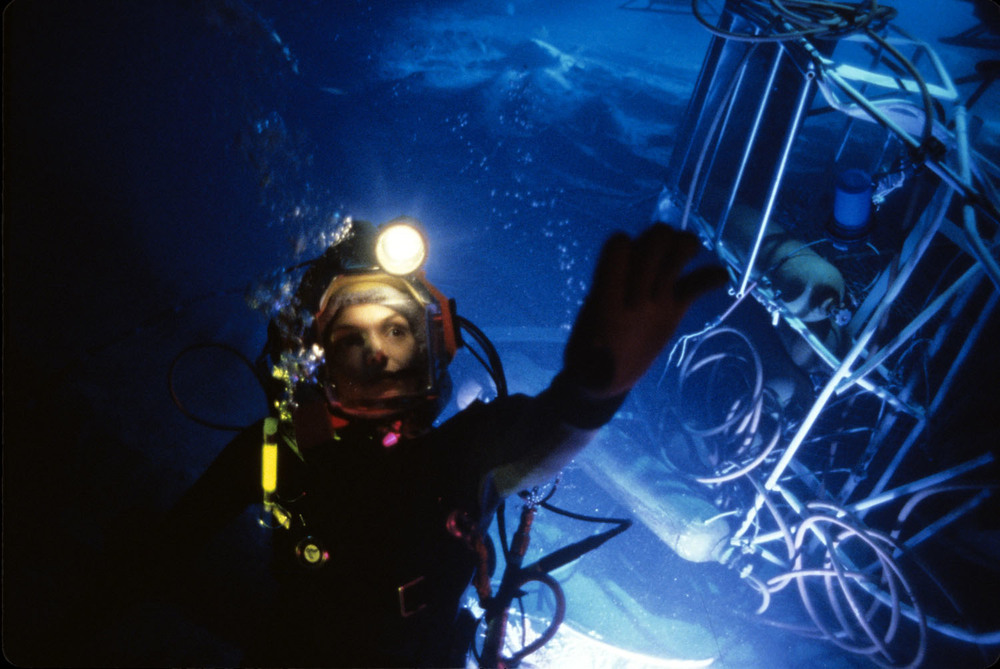
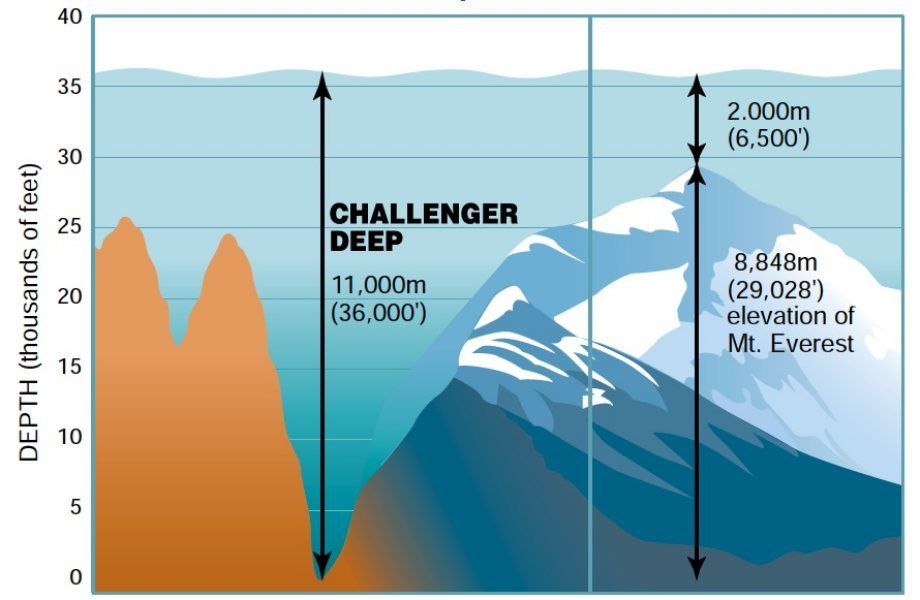
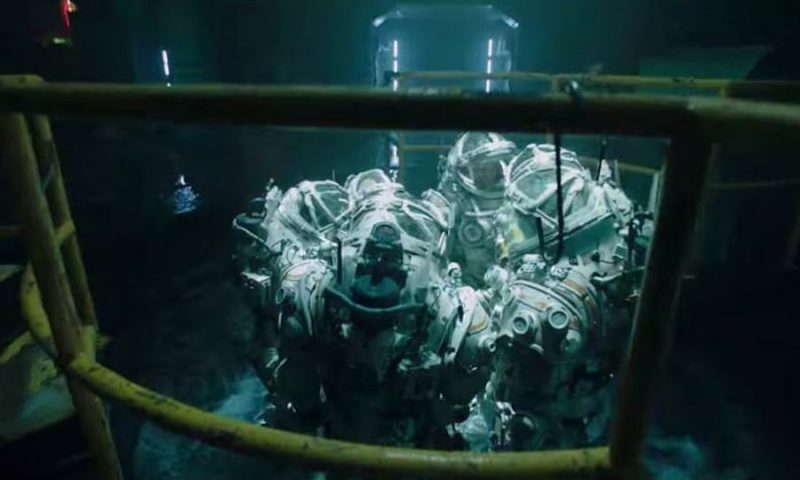

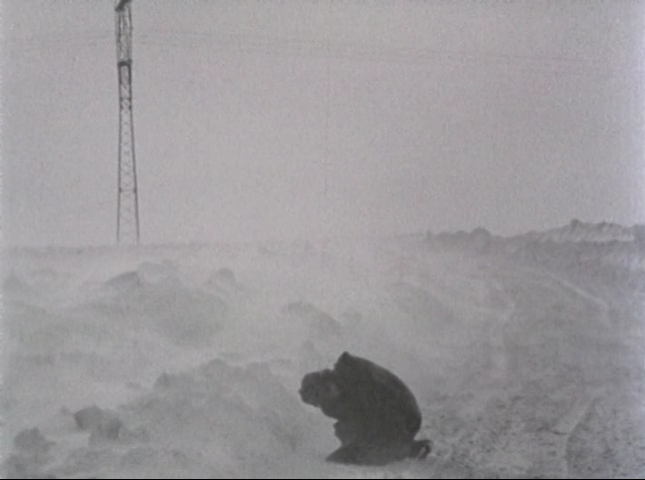
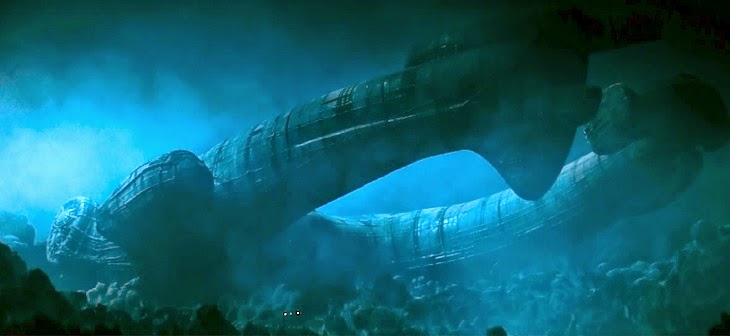
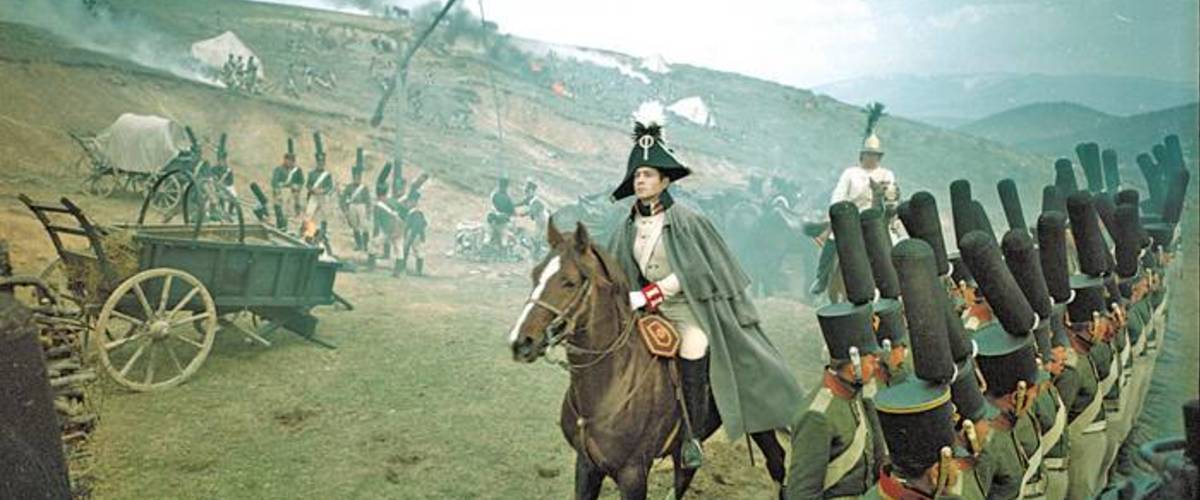
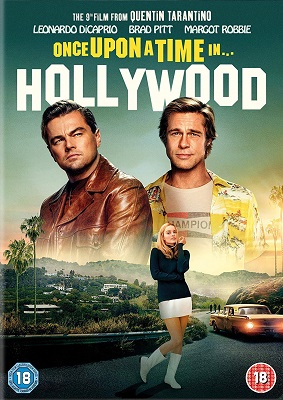
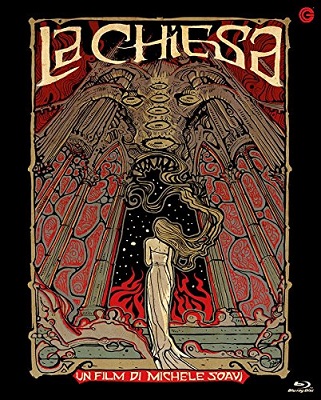
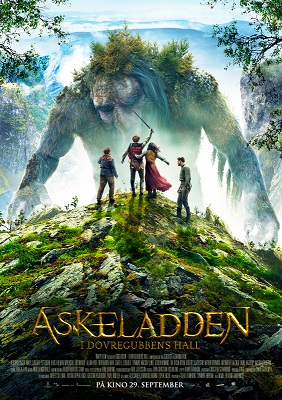
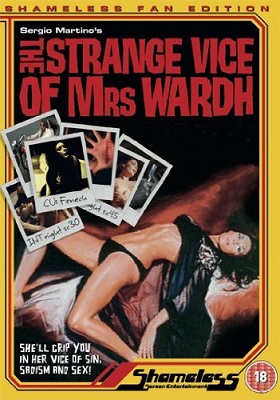
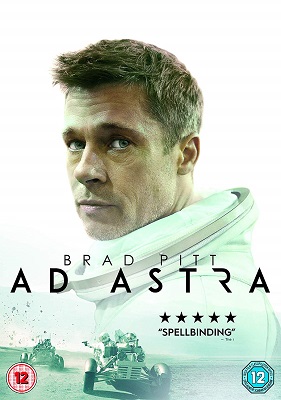
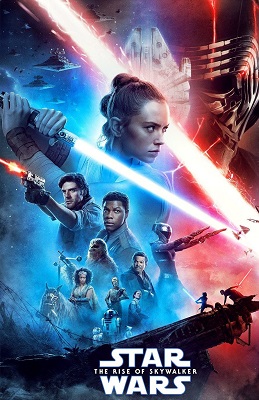
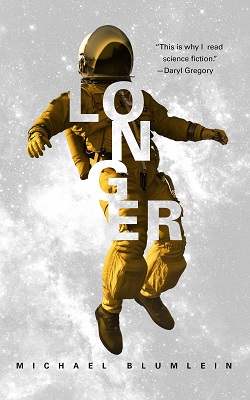
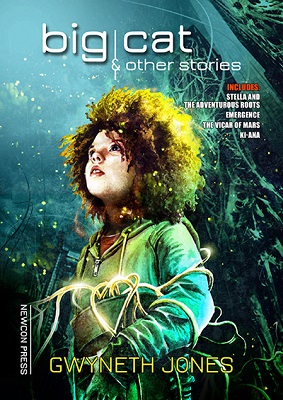

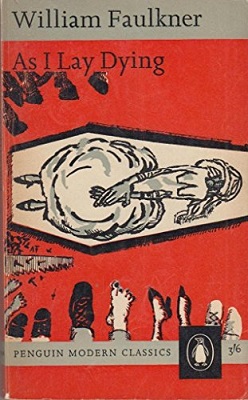
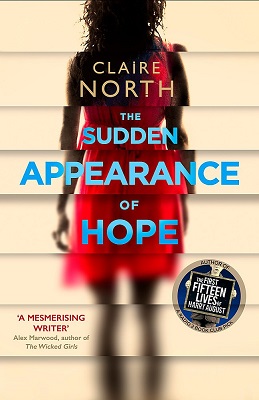

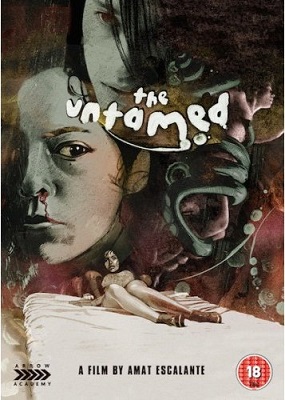
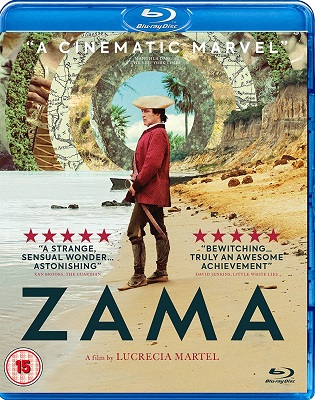
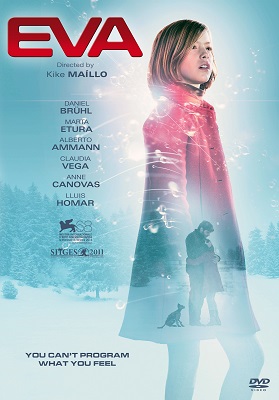



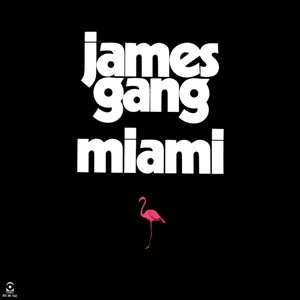
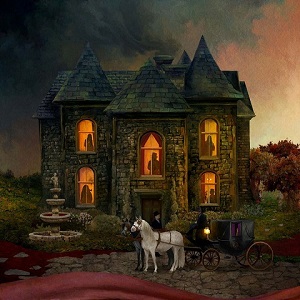
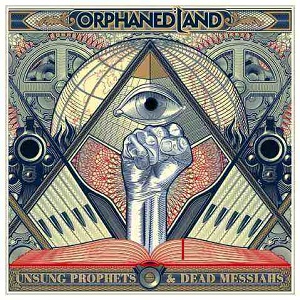



 It Doesn't Have To Be Right...