It Doesn't Have To Be Right…

… it just has to sound plausible


5 Comments

Moving pictures, #4

Yet more movies. What I have watched. I’ve been averaging two a night, due to the fact there’s been nothing worth watching on the terrestrial channels or cable television.
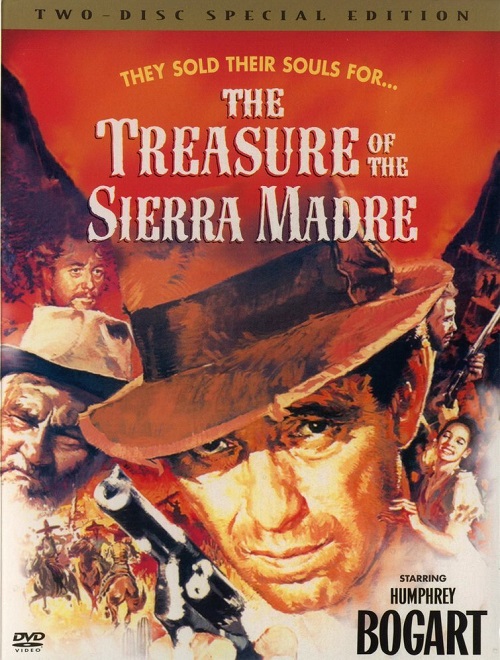
sierramadreThe Treasure of the Sierra Madre*, John Huston (1948, USA). Humph is stuck in Mexico, too poor to leave and look elsewhere for work. He’s offered a job, which he accepts, but when the job finishes, his employer doesn’t pay. Apparently, he’s known for doing this. That’s capitalism for you, folks. One man gets rich while others do the work; and all the better if he can get away without actually paying for it. Humph and a friend from the job hook up with an old prospector – played by the director’s father – and go looking for gold in them thar titular mountains. Which they find. But the prospect of great riches turns Humph all paranoid. And then bandidos turn up, bandidos with no stinking badges. Things go from bad to worse, Humph totally loses it, and it all ends badly. Not bad, although I thought Humph’s paranoia was a bit overdone. Huston senior was a complete star, however.

the_wind_risesThe Wind Rises, Hayao Miyazaki (2013, Japan). This is the Studio Ghibli one based on the life of Jiro Horikoshi, the designer of the Mitsubishi Zero, Japan’s most successful fighter plane of WWII. It apparently caused a bit of a fuss when it was released on the grounds it celebrated the life of a man who had designed a highly efficient killing machine. Despite all that, the film is well, a bit dull. Miyazaki livens things up a little by throwing in some weird dream sequences, featuring Italian aircraft designer Giovanni Batista Caproni. He also chucks in a doomed romance – the woman Horikoshi loves has tuberculosis, and dies shortly after they’re married. Horikoshi’s real wife was perfectly healthy. This element of the story was apparently adapted from a completely unrelated novel (and to which the film’s title is a reference). Incidentally, Werner Herzog provides the voice for a German character (in the English-language version), and it’s really quite strange hearing him in a Ghibli movie.
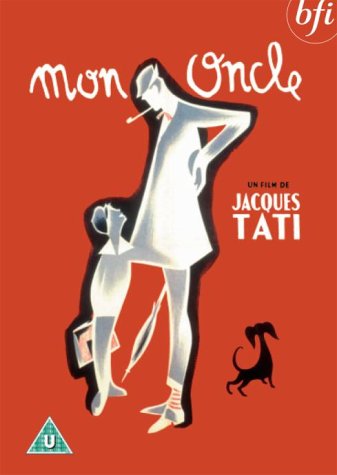
mononcleMon Oncle*, Jacques Tati (1958, France). This is how karma bites you on the ass. My rental agreement with Amazon involves them sending me 3 DVDs at a time, I watch them, return them, they send me 3 more. Except the copy of The Great Gatsby (see here) they sent me wouldn’t play. I reported it as faulty and returned it. They said they’d send me a replacement and it wouldn’t affect my agreement. Except they sent the replacement as one of my next lot of 3 DVDs. I complained, they apologised, and sent me an immediate fourth disc (The Virgin And The Gypsy, in fact). Situation resolved. And then they send Mon Oncle in my next 3, even though I’d bought the Jacques Tati box set only a week before – I’d forgotten to take it off my rental list. Argh. Anyway, this is definitely the next best Tati after Playtime, and it riffs off a similar conceit – but rather than city life being impersonal and oppressive, here it’s a single gadget-filled house, in which live Hulot’s sister and brother-in-law. There’s more of an actual plot than in Playtime, but again the film is built around a series of well-observed and cleverly executed set-pieces. More, please.

arriettyArrietty, Hiromasa Yonebayashi (2010, Japan). And this is the Studio Ghibli film based on The Borrowers, about a group of tiny little people who live behind the skirtingboard in a house. And, er, that’s it. Boy spots Borrower protagonist, who then reveals existence of Borrowers to him. Boy is ill and due to go into hospital for a risky operation. Parents discover evidence of Borrowers, and rings up a pest removal company. Boy helps Borrowers escape from pest removal experts. If I thought The Wind Rises was dull, this one has it beat. It didn’t even seem much like a Ghibli film.
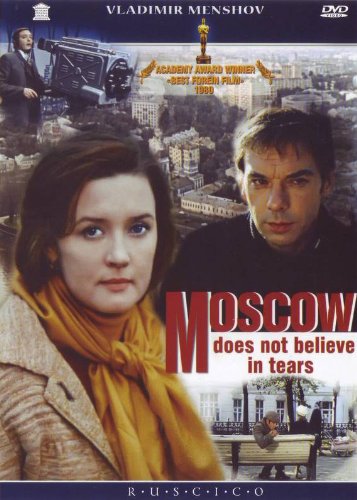
moscowMoscow does not Believe in Tears, Vladimir Menshov (1980, USSR). An odd film, this. It won the Best Foreign Film Oscar in 1980, the third Soviet film to do so (the others were War and Peace in 1968 and, er, Akira Kurosawa’s Dersu Uzala in 1975). It opens in the 1950s, with three young women from the country now living in Moscow. One works as a mechanic, but wants to go to university to train as an engineer. Another works in a bakery, but believes in having fun and finding a rich husband. The third has a boyfriend who’s a farmer and they intend to marry. The baker and mechanic are asked to house-sit a rich relative’s apartment. They pretend the place is theirs and throw a party for eligible men (it’s the baker’s plan, the mechanic goes along with it reluctantly). The mechanic’s university plans are then scuppered when she falls for a television engineer, who makes her pregnant but refuses to marry her. The baker meanwhile marries a rich and famous hockey player. The film then jumps ahead to the 1970s. The mechanic is now the director of a successful manufacturing plant and a single mother, the baker’s marriage ended badly when the hockey player became an alcoholic, and the third one has been happily married to her farmer for two decades. And then a tool and die maker at a scientific lab picks up the director woman, not realising she occupies such an important position, and the rest of the film is their romance. While the movie carefully ignores many of the hardships of living under the Soviet system, and presents the USSR as a relatively affluent society, there are a number of details which are peculiar to its setting – in the 1950s, the three women live in a women’s dormitory, for example; or the mechanic is interviewed on television at one point because she is a female mechanic. It’s a well-handled drama, and despite a tendency to soap opera melodramatics in places, gives an interesting glimpse of a society that no longer exists. Worth seeing.
virginThe Virgin And The Gypsy, Christopher Miles (1970, UK). I decided to read the DH Lawrence novella from which this film was adapted before watching it, which was probably a mistake. (The novella is also the source of “inexcusable puddings”, although the expression is not used in the movie.) Two daughters return from their French finishing school to their father’s East Midlands vicarage. Yvette, the virgin of the title, is flighty, but Lucille is made of more sensible stuff. Yvette’s character is blamed upon, and often alluded to, the vicar’s absconded wife (although she was Lucille’s mother too). While out motoring about with some local friends, the sisters come across a gipsy, and Yvette is taken with his macho charm. Even for Lawrence, this is all about as subtle as a black pudding in the face. The film ends with a dam burst which floods the area – and Yvette’s life is saved by the gipsy. The film didn’t quite portray the characters as they were written, if anything it seemed to tone them down a little (it also toned down the 1920s racism, thankfully). And it didn’t look like a very expensive production – although it did actually look like it was filmed on location (which it was; it’s more or less the part of the country I’m from).

michaelMichael, Carl Theodor Dreyer (1924, Germany). I think I’ve come to Dreyer’s films backwards, starting with his Danish (sound) movies and then watching his earlier silent films. I’ve still yet to see Vampyr and The Passion of Joan of Arc, two of his most famous movies. But, Michael. This apparently didn’t do very well on release, likely because it’s centred around a gay relationship between a famous painter and his model. A bankrupt countess approaches the painter for a portrait, but actually plans to seduce him and then take all his money. But the model instead falls for her, and they go off together. The model steals from the painter, which then inspires the painter to paint his masterpiece. Soon after the picture is unveiled, the painter takes ill and dies, without being reconciled with his lost love. This is not much like the Danish films, neither in subject nor presentation. There are similarities, of course – Dreyer’s use of close-up, for example; but the sets more resemble German Expressionism than they do the Scandinavian starkness of Ordet or Day Of Wrath. There are also a lot of intertitles.
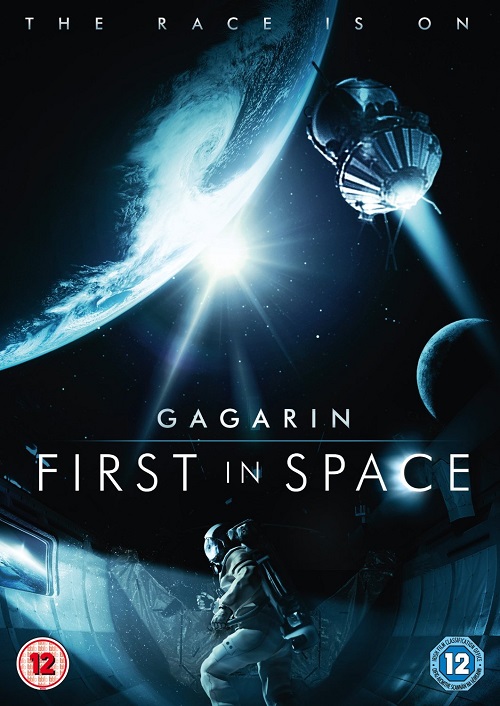
gagarinGagarin: First In Space, Pavel Parkhomenko (2013, Russia). The title is probably a bit of a clue to this film’s story. It’s a fairly straightforward biopic of the first man in space. I didn’t spot any glaring inaccuracies, although I’m no great expert on Gagarin’s life. There was quite a bit of emphasis on the camaraderie of the cosmonauts and Titov’s jealousy, but it also really pushed the idea that everyone thought Gagarin should be first right from the start – which I suspect is casting a somewhat rosier glow on history than was the case. Gagarin’s Vostok 1 spacecraft looked surprisingly roomy on the inside, and the film handled its spaceflight well. I enjoyed the film, but then I’m interested in its subject matter.

bride-of-frankenstein-dvd-001Bride Of Frankenstein*, James Whale (1935, USA). A classic piece of horror that tries to link back to Shelley’s novel with an opening scene set in the Villa Diodati (in which a peculiarly stiff Elsa Lanchester plays Mary Shelley). Other than that, the plot can be pretty much inferred from the title. Karloff’s Monster actually learns to speak in this movie, and it’s really quite silly. “Good … gooood! Bad! Bad!” And so on. Despite a couple of neat set-pieces, this is a film that shows its origins and its age far too plainly. And suffers for it.
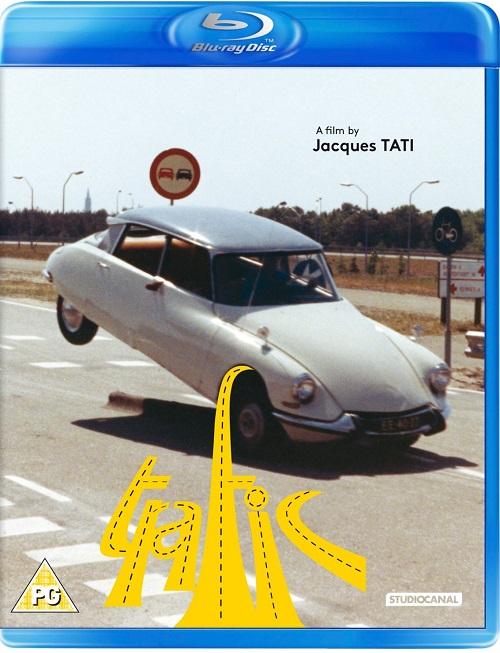
traficTrafic, Jacques Tati (1971, France). Apparently, Tati was only meant to co-direct this, but he fell out with his collaborator and ended up going it alone. He plays a car designer who works for a small French company, and is responsible a gadget-filled saloon car-derived caravanette. The company plans to display this at an automobile show in Amsterdam, and so transport it to the Netherlands in the back of a truck. But the journey doesn’t quite go as planned, as the truck keeps on breaking down. Like Playtime, the plot is carried as much by sound effects as it is by dialogue, and there are a number of impressively choreographed set-pieces. The car company’s PR agent, played by American model Maria Kimberley, is impressively high-handed and incompetent. One of the biggest “gags”, a multi-car pile-up, is spoiled a little by a few elements that are a little too intrusively faked. Not as good as Mon Oncle or Playtime, but still bloody good.

1001 Movies You Must See Before You Die count: 562

2 Comments

Moving pictures, #3

Well, my DVD-player decided to pack in. After seven and a half years of hard use. I guess I can’t complain too much. Fortunately, I also have a Blu-ray player, so there was no interruption of service. Having said that, I need to get a new Blu-ray player as the one I have is region-locked, so I can’t watch my Criterion Blu-ray of All That Heaven Allows. Bah. Stupid region-locking.

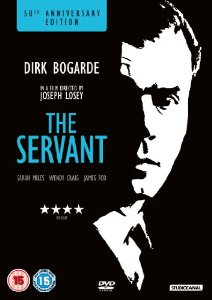
servantThe Servant*, Joseph Losey (1963, UK). James Fox is an upper crust bachelor, back in London after working abroad. He buys himself a townhouse, and advertises for a manservant. Dirk Bogarde is subsequently hired. Once the house has been decorated, the pair move in. Bogarde arranges for his sister, Sarah Miles, in Manchester to join him as a housekeeper, although the two seem suspiciously close for siblings. Fox’s girlfriend, Wendy Craig, doesn’t like Bogarde – she doesn’t think he’s appropriately servile. Miles and and Fox have sex, Fox comes increasingly under the sway of Bogarde… until their roles are pretty much reversed. Bogarde doesn’t quite convince as a Mancunian, but he plays a servant just on the edge of taking liberties perfectly. A proper creepy little film and worth seeing.

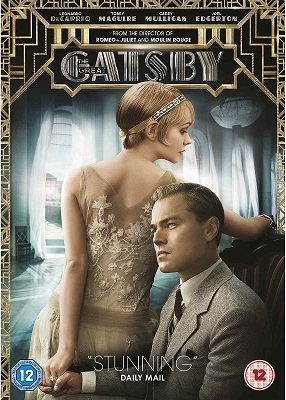
greatgatsbyThe Great Gatsby, Baz Luhrmann (2013, USA/Australia). F Scott Fitzgerald’s novel of the Roaring Twenties, when you think about it, should be pretty much ideal material for Luhrmann’s brand of spectacle. So it’s a bit of a shame that this film felt entirely pointless. Not the story – which everyone knows – but the film’s reason for existing. It didn’t help that I’ve always found both Maguire and DiCaprio a bit bland. And some of the scenery was pure CGI eye-candy, which made everything resemble a cartoon more than a classic of American literature. Nothing felt plausible, so what the story was actually about got lost in the fake world Luhrmann had created – and this is the film of a novel that comments on weighty topics like, to quote the Wikipedia page for the novel, “decadence, idealism, resistance to change, social upheaval, and success”. Disappointing.

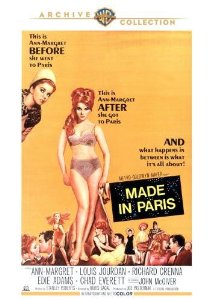
madeinparisMade in Paris, Boris Sagal (1966, USA). A silly sixties rom com starring Ann-Margret and the late Louise Jourdan. Ann-Margret plays a junior fashion buyer for a New York department store, sent for the first time to Paris to sign up fashion designer Jourdan’s latest collection. She discovers that the previous buyer and Jourdan had something of an “arrangement”. Since she has a clean-cut boyfriend back home, and she’s a nice girl, Ann-Margret’s certainly not going to continue it. So a telegram gets sent back home saying she’s falling down on the job. Boyfriend then turns up and jumps to conclusion. Jourdan oozes Gallic charm throughout, Ann-Margret makes a good ingenue… but it’s all just melodramatic froth and chock-full of French stereotypes.

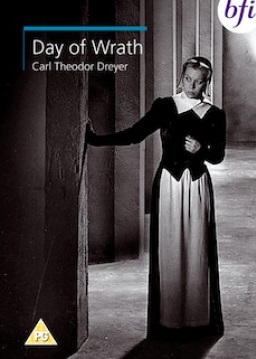
dayofwrathDay Of Wrath, Carl Theodor Dreyer (1943, Denmark). Dreyer’s Gertrud is a film that almost makes my top ten, so I’ve been picking up more of his films to watch. Day Of Wrath was Dreyer’s first film after more than a decade. It was also the first feature film he made in his native Denmark, and only his second with sound. It’s set in a village in 1623. A young woman is married to a pastor a good deal older than herself. When a local old woman is accused of witchcraft, the young woman hides her in the pastor’s house. The pastor’s son returns home from abroad shortly afterwards, and he and his father’s wife begin seeing each other. The wife, whose mother had been accused of witchcraft, but spared because the pastor wanted to marry the daughter, curses her husband. He dies. She’s accused of witchcraft. This is grim stuff, shot in stark black and white, with lots of close-ups of grim-looking faces. Sort of like Bergman, but without the cheerful optimism. I especially like how Dreyer stages his films, so that the sparse sets throw the focus on what’s going on beneath the words. He’s rapidly becoming one of my favourite directors.

starshiprisingStarship Rising, Neil Johnson (2014, USA). I bunged this on an order because the DVD had a pretty cover and it was cheap. What I didn’t know is that Johnson is a genre feature film cottage industry all his own, and churns out low budget movies like a one-man Global Asylum. He is apparently best known for directing over 500 music videos. Huh. While the CGI in Starship Rising is actually pretty respectable, the sets just about visible underneath look cheap (and badly-lit, to hide how really cheap they are). And the acting is poor, too. So was the script. There was something about a huge warship, which is ordered to destroy Earth, but one of the officers mutinies and, er, lots of other things happened. I will admit I wasn’t concentrating as much as I should have been – maybe there was something interesting happening on Twitter, there was certainly nothing interesting in the movie. One to avoid. There is apparently a sequel due, shot back-to-back with this one, but not yet released.

Devils-DVDThe Devils*, Ken Russell (1971, UK). I’ve actually read Russell’s science fiction novel, Mike And Gaby’s Space Gospel. It was fucking awful. And only the other night, I was flicking through channels and stumbled across The Lair of the White Worm, and after watching Amanda Donohe chew everything in sight, including the scenery and some poor lad’s genitals, while bumbling posh Englishman Hugh Grant played a bumbling posh Englishman, I couldn’t help noting how much of a perv Ken Russell had been (not an original observation, by any means). Which leads me to The Devils, which is the only one of Russell’s 18 feature films (and much more television work) to make it onto the 1001 Movies You Must See Before You Die list. The Devils was very controversial when it was released, probably because it has lots of naked and semi-naked nuns having sex in it. To be honest, it was all a bit much and overwhelmed the story a bit. The sets, however, all buttresses and high walls of white tile, looked pretty cool, and Oliver Reed was on top form. Despite its relentlessness and all those scenes of writhing naked flesh, I thought The Devils pretty good. Might watch some more Russell.

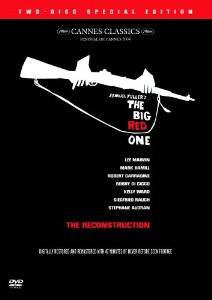
bigredoneThe Big Red One – The Reconstruction*, Samuel Fuller (1980, USA). I’ve mentioned before that I’m not a fan of war movies (and I have far less time for Vietnam War films than I do WWII ones), but there are a handful which are quite good. This, I discovered as I watched it, is one of them. Okay, so Israel makes a poor stand-in for, well, North Africa and most of Europe, and this was clearly a film done on the cheap as even the tight-focus shots couldn’t disguise the paucity of cast members. Not to mention that exactly the same type of tank – Israeli M51 HV tanks, apparently – stood in for all the tanks used during WWII. The film follows a platoon of soldiers from the US Army’s 1st Infantry Division (their badge is a, er, big red 1), led by taciturn sergeant Lee Marvin, as they fight in North Africa, Sicily, Normandy and Germany. The sergeant and four others survive each action, so much so other soldiers assigned to the platoon might as well have worn red shirts. A German Feldwebel pops up at intervals, usually trying to kill Marvin, as a sort of thematic reflection of Marvin’s character. The Big Red One is not a patch on The Thin Red Line, but I did think it better than those huge ensemble war movies they used churn out by the dozen in the 1960s and 1970s, like The Longest Day.

effiebriestEffi Briest, Rainer Werner Fassbinder (1974, Germany). Another film from the Fassbinder collection. The title character is a callow young woman who marries well, to a baron twice her age, but then has an affair with a male friend. Later, the family move to Berlin as the baron has got himself a position in government, but he finds the letters between Effi and her lover – this is many years after the affair finished – and so divorces her. Her parents won’t take her back because her reputation is in tatters. The baron meanwhile challenges the lover and kills him in a duel. Effi succumbs to illness, and her parents let her come home. She dies. There’s much more to it than that, of course, and in many respects the story bears similarities to Gertrud. It was adapted from a 1894 novel, of the same title, about which Thomas Mann apparently said that if a person’s library were reduced to six novels, Effi Briest should be one of them. This film also boasts one of the longest titles in cinema, although it wasn’t used by distributors; it is: Fontane Effi Briest oder Viele, die eine Ahnung haben von ihren Möglichkeiten und Bedürfnissen und dennoch das herrschende System in ihrem Kopf akzeptieren durch ihre Taten und es somit festigen und durchaus bestätigen.

throneofbloodThrone Of Blood*, Akira Kurosawa (1957, Japan). I will admit that Japanese cinema does not appeal to me as much as the cinema of some other countries, and while I’ve watched films by Kurosawa, Ozu and Mizoguchi, I’ve never felt the urge to watch everything in their oeuvres. But it’s no good watching the same sort of stuff all the time, so I occasionally bung a piece of classic Japanese cinema on my rental list… Throne Of Blood is, famously, Kurosawa’s take on Macbeth, and I enjoyed it a lot more than I expected to. That the final scene with the archers, as depicted on the cover of the BFI DVD, really is quite astonishing. The scenes set in the forest looked a bit stagey, but the rest of it – filmed high up on Mount Fuji – looked really effective. I think this is the Kurosawa I’ve enjoyed and appreciated the most of the ones I’ve seen, although – according to my records – the last one I saw before this was Ran in May 2009. I really should watch more of his films.

1001 Films You Must See Before You Die count: 558 (they’re the ones with the asterisked titles)


8 Comments

Moving pictures, #2

More marathon movie watching. I’ll keep the notes on each film short this time, otherwise I’ll end up writing more about films in 2015 than I will books or science fiction…

deepend2dDeep End*, Jerzy Skolimowski (1970, Germany/UK). This was an odd beast. A film set in Britain, with British stars, performed in English, but actually filmed in Germany, using German actors to fill out the cast, and by a Polish director. John Moulder Brown is a bit of a blank as the schoolboy who goes to work at the baths, but Jane Asher is good as the female attendant who’s using the job as a springboard to more. Munich stands in for London quite well, although there are odd moments that seem strangely not-English. Story-wise, it’s nothing new or innovative, just the usual mix of teenage lust and prudery, all a bit Holden Caulfield-ish, although it does turn interesting toward the end. Still, a good film. Definitely belongs on the 1001 Movies You Must See Before You Die list.

night_of_silenceNight of Silence, Reis Çelik (2012, Turkey). Set in rural Turkey, a man in his sixties returns to his village after serving a prison sentence and in order to end a feud between two families, he is married to a child bride. The film takes place entirely on their wedding night. What follows is a sensitive portrayal of both parties – the old man didn’t want the wedding, and he won’t do anything his new bride won’t have of him. But he is also expected to perform. The child bride, of course, doesn’t want to be there at all, and is frightened about what she expects will happen. During the night, the man reveals why he was sent to prison, and it’s unpleasant. Despite all that, Night of Silence succeeds because it treats its topic sensitively and shows how abhorrent it is, without making monsters of its characters. Worth seeing.

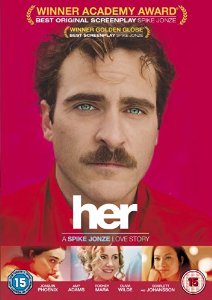
herHer, Spike Jonze (2013, USA). A man installs a new OS on his computer and phone, then customises its interface so he finds it more appealing – except rather than just choosing a nice desktop wallpaper, moving a few icons around or selecting a theme, this involves selecting a nice voice and a variety of interests and personal facts, sort of like for a dating agency. And because the man has designed himself an OS personality which will appeal to him – which proves to be, somewhat implausibly, some sort of sophisticated AI – then of course he finds himself liking his OS’s personality very much. Like a girlfriend. Except for the “girl” bit, or indeed any kind of physical presence. And then he discovers that his OS, voiced by Scarlett Johansson, has instantiated herself an uncountable number of times for other users. I thought this film a bit dull – and, since I work in computing, I’m always wary of movies whose stories depend on it and usually find them wholly unconvincing.

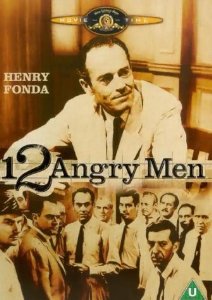
12_angry_men12 Angry Men*, Sidney Lumet (1957, USA). Essentially, a courtroom drama that, er, doesn’t take place in a courtroom. The jury have heard the evidence and closing arguments, now they have to reach a verdict. Except before they do that Henry Fonda pretty much builds a case for the defence, which is what the defendant’s attorney should have done in the, er, courtroom. End result: reasonable doubt. And the “obviously guilty” perpetrator is found innocent. Makes you feel all warm and fuzzy about the US system of justice… until you remember what it’s really like. Also, note the lack of women on the jury.

aliceAlice*, Jan Svankmajer (1988, Czech Republic). I’ve a feeling I’ve seen something by Svankmajer before, but I’m not really sure – and given the singular nature of Svankmajer’s vision, you wouldn’t think I’d forget. Ah well. As the title suggests this is Svankmajer’s take on Alice’s Adventures in Wonderland, and it sticks pretty much to the plot of the book. But some of the visuals are really disturbing. The White Rabbit, for example, belongs on that Bad Taxidermy twitter feed, and its glass eyes haunted me for a couple of nights after I’d seen the film.

transformers4Transformers: Age of Extinction, Michael Bay (2014, USA). Every time I think Hollywood has plumbed the depths of stupid, it manages to surprise me and dig a little deeper. I’m trying to remember the actual plot of this film, but all I have is some vague memory of Optimus Prime as a junked-up truck in an old theatre – no mention of how they got a big fuck-off truck (or a big fuck-off robot, for that matter) into the theatre – and something about a bounty hunter Transformer that’s working with nasty generic national security apparatus to kill all Transformers, but of course they’re really working with the Decepticons. Or something. I do remember the terrible broad-brush racist characterisation, the casual disregard for people’s lives, the way the Transformers were “rebooted” with shiny new paintjobs, and the corporate villain (Stanley Tucci, the only watchable actor in the entire film) doing a Jubal Harshaw when he’s introduced with his blonde, brunette and black-haired personal assistants. Mostly, however, I don’t remember why I watched the bloody thing in the first place.

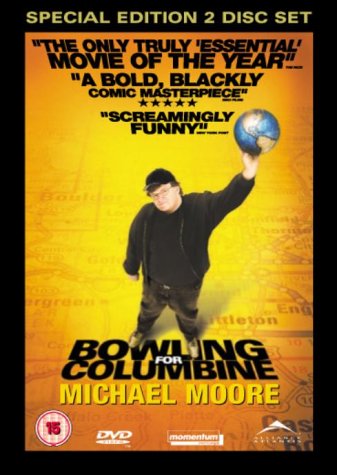
bowling_columbineBowling For Columbine*, Michael Moore (2002, USA). I often wonder if the USA realises that the rest of the world thinks its attitudes to guns is insane. Not the entire country, of course – as Moore demonstrates in this film. He explores US gun culture, and tries to work out why so many more Americans are killed each year by firearms than in any other nation on the planet. I’m not entirely sure I agree with his conclusion that big business and the media feeds the US populace a solid diet of fear and paranoia, and that this is chiefly responsible. While it’s true Canada may have as many guns as the US, and significantly less gun deaths, pretty much every Anglophone nation’s television is a solid wall of FUD masquerading as news and entertainment. Still, Moore asks some important questions – and, unsurprisingly, he remains unanswered.

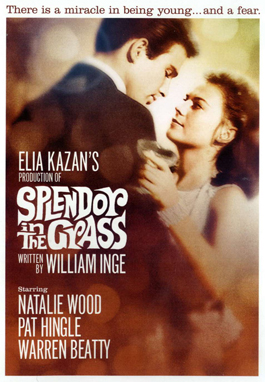
SplendorSplendor In The Grass*, Elia Kazan (1961, USA). It’s the 1920s, Warren Beatty is a dim high school football star, the son and heir of a rich oilman. Natalie Wood is a nice girl from a much less affluent family who is going out with Beatty. Oilman wants Beatty to go to Yale and then take over the business; Beatty wants to marry Wood and run the family ranch. Beatty’s sister is a flapper and a girl with a bad reputation. Beatty feels urges but doesn’t want to Wood to be like his sister, nor does she want to be like the sister. The two go their separate ways. Then the Great Depression hits, and oilman is reduced to penury. Later, Wood goes looking for Beatty, who is now happy running the ranch, and is married and a father. This is one of those worthy historical (as in, early twentieth-century American) dramas Hollywood used to bang out during the 1950s and 1960s as Oscar bait. It was nominated for two – best actress and best screenplay, but only won the latter. Didn’t find it all that interesting. I like a bit more melo- in my mid-twentieth century drama.

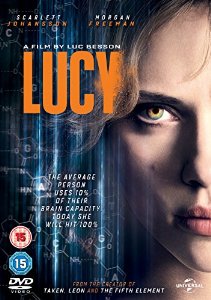
lucyLucy, Luc Besson (2014, France). I’m convinced this is a comedy, played absolutely straight by its cast. Those opening shots of cheetahs hunting, the sort of ham-fisted cinematic metaphor that were considered old when they introduced sound. The central conceit: we’ve known for decades that humans using only ten percent of their “cerebral capacity” is complete bollocks. Also, amongst Lucy’s first set of powers is the ability to talk to someone in another country using their television… Which is not to say Lucy isn’t an entertaining action-sf-comedy, and some of the special effects are quite effective. Johansson is good in the title role, particularly in the first half where she’s still, well, human. And Morgan Freeman demonstrates why he should handle the exposition in every single film Hollywood ever makes – I mean, he talks complete bollocks, but he actually makes it sound plausible.

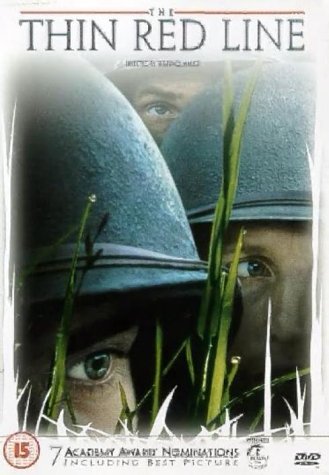
thin_red_lineThe Thin Red Line*, Terrence Malick (1998, USA). If I had to pick a favourite WWII film, and I’m not a fan of WWII films, it would have to be Das Boot. But I thought this was very good. From the opening, when a pair of deserters on a Pacific island are recaptured by their company to Nick Nolte’s idiot colonel, determined to prove himself against younger men who have been promoted above him, not to mention the company commander who believes his responsibility is to his men and not to whatever random tactical objective he is ordered to meet. WWII films traditionally present pretty straightforward moral landscapes – GIs good, Japanese bad; Allies good, Nazis bad – but The Thin Red Line shows the US soldiers just as far from the moral high ground as their enemy. Not to mention their general ineptitude. All too often, wars are presented as if everything went smoothly, casualties were, if not expected, certainly unavoidable, and the good guys won because better fighters. It’s all complete crap, of course; and it’s refreshing to see it applied to WWII (it’s pretty much a cliché in Vietnam films, of course).

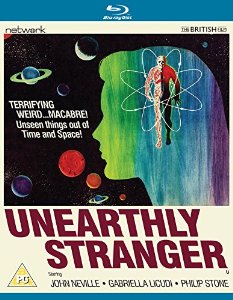
unearthly_strangerUnearthly Stranger, John Krish (1963, UK). I’m not really sure why I bunged this on an Amazon order, there must have been something in the description which persuaded me it might be worth seeing. It wasn’t a bad call. It’s a melodramatic Brit sf flick, with plenty of stark lighting and Dutch angles, not to mention a healthy dose of Cold War paranoia – although, perhaps in this case, it might be “sex war paranoia”. A scientist on a secret project fears for his life after the mysterious death of his predecessor, and it turns out the scientist’s “Swiss” wife has a number of unusual characteristics – she sleeps with her eyes open, she appears to have no discernible pulse, and she can handle burning hot objects with her hands. A nicely creepy film that just about manages to stay convincing, despite its outlandish premise.

1001 Movies You Must See Before You Die count: 555


Leave a comment

Moving pictures, #1

The first “films seen” post of 2015… Last year was a bit epic for DVD-watching, and I expect this year to be much the same… Three weeks into the year and I’ve already seen 29 films and rewatched season 1 of Babylon 5. I don’t document every movie I’ve watched in these posts – I mean, the less said about Solar Crisis the better (it was a charity shop find, okay?). Some films were rewatches, some were simply forgettable, and there’s not a lot I can say about Babylon 5 that’s not been said before by many others. So, it’s the usual mix of (mostly) classic films, I’m afraid…

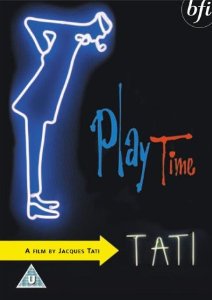
playtimePlaytime*, Jacques Tati (1967, France). I knew very little about this film when I sat down to watch it – I knew who Tati was, of course; in fact, I’d seen Les Vacances de M. Hulot the year before (see here). But I hadn’t known quite how much of an… undertaking Playtime had been, how expensive a production, how enormous a film it proved to be. Apparently, it was a bit of a commercial flop on release, although critics acclaimed it. I loved it. Right from the opening in the mock-up of Orly Airport, with its clean retro-futurist lines. I loved the modernist look of the film, its Brutalist interiors and futurist gadgets. The plot, in which Hulot wanders from set-piece to set-piece, is almost incidental. There are some genuine laugh-out-loud moments, more so than I seem to recall from the other Tati film I’d seen. And, of course, it just looks absolutely fantastic. So I bought a Blu-ray of it on eBay.

fearFear Eats The Soul*, Rainer Werner Fassbinder (1974, Germany). Fassbinder famously based this film on Sirk’s 1955 melodrama All That Heaven Allows and, to be honest, I was expecting it to closer resemble Sirk’s movie that it actually did. Partly, this was because it was my first Fassbinder, so I had no real idea what to expect – it was probably also the first New German Cinema film I’ve seen; but I suspect my expectations were unrealistic and likely spoiled by Todd Haynes’ take on All That Heaven Allows, Far From Heaven, which apes the look of Sirk’s film while extending its story. Fassbinder, on the other hand, makes free use of the story, but sets his story in present-day (for 1974) Munich. A widow in her sixties drops into a bar to get out of the rain, and so meets Ali, a Moroccan gastarbeiter who speaks broken German (the film’s actual title, Angst essen Seele auf, is broken German). The widow, Emmi, and Ali become friends, and then lovers, and she invites him to live with her. When the landlord tells Emmi that her lease doesn’t allow her to sublet, she tells him Ali is her fiancé. So Ali and Emmi marry – much to the disgust of Emmi’s adult offspring. But soon Emmi’s attitude toward her husband begins to align with those of her racist neighbours and friends, even though her children have come to accept Ali. Like Sirk’s masterpiece, Fear Eats The Soul shows a conventional woman entering into a relationship that which is uncomfortable to her family and peers, and then choosing to formalise that relationship (although Jane Wyman and Rock Hudson don’t actually get married in All That Heaven Allows). But where Sirk’s film is about class, Fassbinder’s is very much about race, and especially about the presence of gastarbeiters in Germany. It’s a powerful story, and works especially well because of its low-key realist approach (unlike Sirk’s colour-saturated mise en scène, which I admit I love). Having now seen it, I think Fear Eats The Soul is not so much a reflection or homage to All That Heaven Allows as it is a complement to it.

mariabraunThe Marriage Of Maria Braun*, Rainer Werner Fassbinder (1979, Germany). Did I mention I received a boxed set of Fassbinder DVDs for Christmas? It’s the Commemorative Collection 73-82 Volume 2. Obviously, I picked out the two best-known films in it to watch first. In The Marriage Of Maria Braun, the title character marries her boyfriend while he is home from the Front, they spend a day and a night together and then he’s off fighting again. Cut to the end of the war, and he doesn’t return home – she doesn’t know if he’s dead or still a POW held by the Russians. She gets a job at a bar that caters to American occupiers, and becomes the lover of one GI regular. At which point, her missing husband turns up and catches the pair in flagrante delicto. A struggle ensues, and Maria accidentally kills the GI. However, the husband takes the blame and is sentenced to prison for murder. Maria is determined to better her lot so when her husband is eventually released they can live a life of comfort. She meets a rich industrialist on a train, and he hires her as his personal assistant/mistress. She proves to have a head for business, and becomes rich. Meanwhile, the industrialist approaches the imprisoned husband, and the husband agrees to leave Germany on his release and not return to Maria. Later, after the industrialist has died, he returns – Maria has inherited everything, and is now very rich indeed. While Fassbinder didn’t evoke post-war Germany especially well – no doubt due to budgetary constraints; although von Trier, I thought, did a better job in Europa, albeit it was more representational – I thought this film a much more subtle piece than Fear Eats The Soul, and much the better for it. Maria Braun is a well-drawn and well-played character, and if the film puts the atrocities committed by the Nazis to one side (and, like Europa, paints the occupying Americans as heartless invaders rather than saviours), Maria’s profound selfishness and determination gives the story a solid anchor. Excellent stuff.

streetcar_named_desireA Streetcar Named Desire*, Elia Kazan (1950, USA). One from the 1001 Movies You Must See Before You Die list I watched only because it was on the list. I was aware of the film, and that it had made Marlon Brando a star, but that was about all. And, to be honest, what I knew of it didn’t really make me want to watch it. But it was on the list, so I bunged it on my rental list and, in due course, it popped through the letter-box. So I watched it. And… meh. It’s one of those films made on an indoor set whose stark lighting can’t hide the fact it’s as fake as a theatre flat. Brando was widely praised for his acting in the film, but I just found his put-on voice really annoying. Vivian Leigh was better, and managed to evoke the fragility of her character, but the final descent into madness was pure bathos. I can see how people would have liked it back in the day, but it’s all a bit OTT, a stage play turned up to 11, with much yelling and wailing and outbreaks of sudden violence. Ah well. One to cross off the list.

maleficentMaleficent, Robert Stromberg (2014, USA). The title character is, apparently, the evil queen in the Snow White story, although quite how this dark fantasy fits into the fairy tale is anybody’s guess – I think even Disney’s marketing department gave up on trying to persuade audiences of that one. Angelina Jolie, with prosthetic cheekbones and a pair of big fuck-off horns, plays the title character, who is really just misunderstood and not the evil piece of work the Brothers Grimm et al have painted her. Her peasant boyfriend, on the other hand, is. Evil, that is. Well, nasty. He even gets to be king – which is not how dynastic succession or divine right works, but this is a US film and they’ve never really understood the concept of royalty. For reasons I now forget, said king decides to raze the magic wood near his castle and in which Maleficent and her Thumper-y friends all live. So she seeks revenge by cursing the king’s new-born daughter. But I don’t recall the daughter being put to sleep – it may have been me who was sleeping – but instead she gallivanted about the magic forest and played  with all the weird faery creatures, while being maternally looked over by Maleficent. I’m not really sure what this film is meant to be – it reminded me of that other fairy tale mangled into a dark fantasy, Snow White and the Huntsman; and while I have no problem with using fairy tales as source material, I’m not convinced Maleficent reflects well on the Sleeping Beauty story.

cranesThe Cranes Are Flying*, Mikhail Kalatozov (1957, USSR). I’m a big fan of both Tarkovsky’s and Sokurov’s films, and I’ve seen a number of other Russian movies – including bonkers sf film Kin-Dza-Dza, yet more bonkers Через тернии к звёздам, and even mighty Soviet historical epic Ilya Muromets. But I’d not seen much socialist drama, so The Cranes Are Flying was something new for me. It’s a WWII film, centred around the character of Veronika, a young woman. Her boyfriend Boris volunteers to fight, but is posted missing in action. Her parents are then killed in a bombing raid by the Germans, so Boris’s parents invite Veronika to live with them. Boris’s cousin Mark is also staying there, and he begins to pursue Veronika – she, of course, does not know Boris is dead, and she rejects his advances. He assaults her and shames her into marrying him. The family are moved further east, and Veronika works in a hospital caring for wounded soldiers. After an incident in a hospital, she decides to commit suicide, but at the last minute saves a boy from being hit by a car and adopts him. Boris’s father then learns that Mark escaped conscription by bribing an official, so he boots him out of the house. A comrade of Boris’s then turns up and informs Veronika that her boyfriend died a hero’s death… It’s all very grim, and each of the characters quite clearly maps onto roles played by the people of the USSR during WWII, both good and bad. While Veronika’s ending is hopeful rather than happy, the bad guy is caught and punished for his anti-socialist actions. As propaganda goes, The Cranes Are Flying was entertaining, if a little heavy-handed. The stark black-and-white cinematography was effective, and Tatiana Yevgenyevna Samoilova was good as Veronika. Worth seeing.

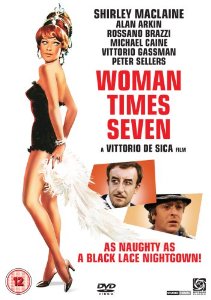
timesevenWoman Times Seven, Vittorio de Sica (1967, Italy). Shirley MacLaine has made some odd films throughout her career, and this, I think, qualifies as one of them. It’s an anthology film, in which MacLaine plays seven parts, and they’re pretty much all the same. In the first, she’s a widow following her husband’s hearse to the cemetery, while her late husband’s doctor, played by Peter Sellers, tries to persuade her to marry him. In the second, she’s a young wife who returns home to find her husband (a different husband, obviously; MacLaine is playing different women) in bed with her best friend, so she heads out and meets up with a bunch of prostitutes. In the third, she’s a hippie translator who reads poetry, while naked, to a Scot and Italian who are members of the congress where she’s interpreting. The fourth sees MacLaine married to a best-selling author who is more in love with his fictional character than his wife, so MacLaine tries to become the fictional character, prompting the husband to have her examined by a psychiatrist. In the fifth, a society woman goes to extraordinary lengths to ensure a rival doesn’t wear the same designer gown as herself to the opera. The sixth appears to be set in New York and features a young married couple who are determined to commit suicide, except the husband isn’t quite so determined. And the seventh has MacLaine being stalked by Michael Caine after she meets Anita Ekberg for lunch. An odd film, and not even remotely funny.

affairAn Affair to Remember*, Leo McCarey (1957, USA). Unbelievably, I’d never actually seen this TV perennial, and since it’s on the 1001 Movies You Must See Before You Die list, I thought I should. I like 1950s melodramas, so I expected to like An Affair to Remember, but… Cary Grant was at his most tea-bag-tan-ish, and didn’t really convince as a French playboy (the former more than the latter). There was a little bit too much singing, and as the film progressed the schmaltz began to heap up in droves. And yet it all started so well – the shipboard romance was nicely handled, with plenty of witty banter. But after Deborah Kerr had been hit by a car… and gives up her singing career to teach poor children (sticks fingers down throat)… Obviously, a happy ending was always going to happen, but McCarey made sure he hit every emotional beat in Hollywood’s lexicon before reaching it. To be honest, it felt like a good 1950s melodrama badly welded to an inferior non-musical remake of An American In Paris.


1 Comment

Moving pictures, #14

These are the last films I watched during 2014 – or at least, the last films I watched worth noting. One or two you might have heard of. As on previous Moving Pictures posts, asterisked titles are on the 1001 Movies You Must Watch Before You Die list.

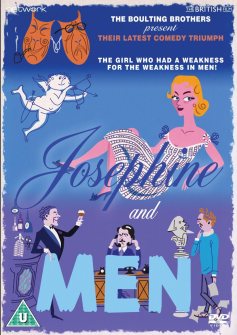
josephine-and-menJosephine and Men, Roy Boulting (1955, UK). I bunged this on an order from Amazon as a) it was cheap, b) the write-up sounded interesting, and c) I like 1950s films. Unfortunately, it proved less good than expected. The title character is played by Glynis Johns, who was apparently big in her day but was new to me. She plays the sort of woman who is attracted to men in need – fortunately, she comes from a well-off family, so she doesn’t have to suffer while attaching herself to them. Her first is a struggling playwright who, after marrying her, becomes a commercial success, so they retire to the country. Then an old beau who’s a rich and successful investment-something turns up, and apparently his firm has collapsed owing lots of money and his partner has probably done something fraudulent. So Josephine falls for him and… There’s probably a word for these sort of 1950s Brit rom coms, where everyone is terribly-terribly and the women all wear mink coats and you know the men all went to the best schools. It’s all very frothy and no more representative of this country than any contemporary Hollywood film or indeed a present day Conservative Party political broadcast. A film for a wet Sunday afternoon when you can’t be arsed to switch your brain on.

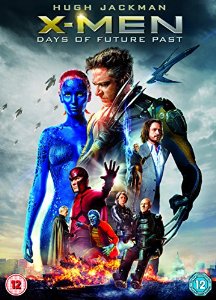
xmendaysX-Men: Days of Future Past, Bryan Singer (2014, USA). From what I’d read, I was expecting a twisty-turny plot that was more twisty and turny than a twisty-turny thing. Not quite up to Primer‘s level, but something a bit like, say, Looper. So my expectations were somewhere around the middle, and yet X-Men: Days of Future Past still failed to meet them. There’s no cunning time-paradox plot. The film opens in a future Earth decimated by the Sentinels, and the surviving X-Men use some magic superpower to send Wolverine back in time to the 1970s to prevent the Sentinels from being built. It’s mildly amusing, although perhaps chiefly entertaining for the po-faces pulled by the cast as they speak their ridiculous lines or strut about in their ridiculous costumes. I remember being really impressed with the first X-Men film when I saw it. I’d always had a fondness for the group and used to buy the comic as a kid. (I did try later rereading the Dark Phoenix Saga – I shouldn’t have done. It was shit. Don’t piss on your childhood heroes, keep them safely dry under rose-tinted glass.) Anyway, X-Men: Days of Future Past was I suppose entertaining, but this superhero movie thing, it’s all getting very silly now and I think it should stop.

lastdaysonmarsThe Last Days on Mars, Ruairi Robinson (2013, UK). I sort of feel a very tiny sense of ownership of Mars since I’ve written a novella and several short stories set on the planet’s surface, and I researched them all thoroughly… But seriously, having researched Mars, I’m somewhat sensitive to attempts to portray it realistically – and there have been several attempts. Sort of. Who remembers Red Planet and Mission to Mars? The Last Days on Mars makes a reasonable effort to depict the Martian surface – it was filmed in Jordan, apparently – but the plot is your usual sci-fi cinema nonsense. One of the scientists disobeys orders to go on one last survey – why are astronauts and scientists in films so unprofessional? Seriously, no one’s going to spend billions of dollars putting some maverick prick into space or on another planet. Anyway, said scientist discovers a weird hole in the ground, falls in and gets contaminated by some alien gunk that turns him into a zombie. And it’s contagious! And it’s zombies on Mars! And that’s it!

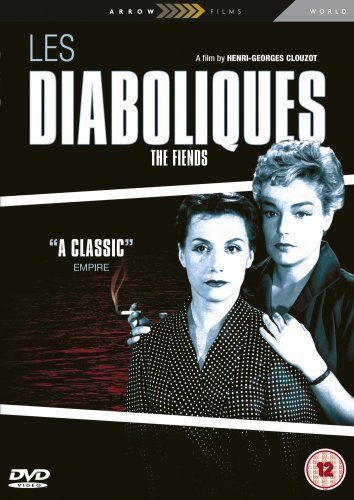
Les-DiaboliquesLes Diaboliques*, Henri-Georges Clouzot (1954, France). The only reason I watched this was because it’s on the 1001 Movies To Watch Before You Die list, but it’s one of those films which proves the worth of such lists. I’d seen another Clouzot earlier in the year, Wages of Fear, which I’d thought good if somewhat over-shadowed by later uses of the same formula. But when I shoved Les Diaboliques into the DVD player, I knew nothing about it. The title promised… Well, pretty much like Wages of Fear, the title promised a different story to that which unfolded as the film progressed. An abused wife of a schoolmaster gets her revenge, with the her husband’s mistress, also a teacher at the school. They drown him in a bath-tub, then roll his body into the school swimming-pool so it looks like an accident, but the body is never discovered… Casting his actual death into doubt. It’s all very cleverly done, but I did think it took a while to get going.

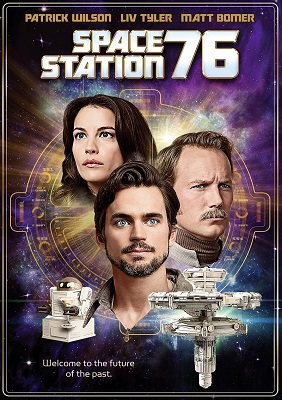
Space-Station-76-2014-R2Space Station 76, Jack Plotnick (2014, USA). A person of my acquaintance encouraged me on Twitter to watch this film by telling me how bad it was, because they quite clearly knew I’d be unable to resist it from their description. In actual fact, it wasn’t quite as bad as advertised, it was just mostly very dull. I can see how someone might have thought the central premise – it’s set on a space station! but like a space station from a bad 1970s sci-fi show! – might have sounded awesome for about, oh, a nanosecond or so. But really, this film should never have been green-lit. I’m having trouble remembering the actual story – in fact, I’m pretty sure there wasn’t one. Some of the jokes, piss-takes of 1970s sensibilities, were either not funny or borderline offensive. Like the gratuitous nude woman who appears a couple of times. She’s a hallucination by one of the male characters and serves no purpose in the plot. It was all a bit like an episode of one of those 1970s science fiction television shows, where you look away for five minutes, look back and it’s like you never looked away at all except it’s just struck you that you no longer give a fuck what’s happening.

lolaLola*, Jacques Demy (1961, France). I think this is the first Demy I’ve ever watched. When this movie opens with a big American convertible driving around the streets of a French port, the first thing it put me in mind of was Aki Kaurismäki. But then it sort of turns into a Nouvelle Vague drama, with a US sailor who falls for the eponymous singer/dancer in a bar – which looked a bit too wholesome and clean, to be honest – but Lola is still pining for her previous boyfriend, who left seven years before to make his fortune. There’s also an ingenu, who knew Lola as a teenager and bumps into her in the bar where she works. There are one or two musical numbers, which are cleverly integrated into the story. It’s all very charming and not what I was expecting. There was a matter-of-factness, a pragmatism, to Lola, which contrasted well with the various concerns of the supporting cast. By the time the film had finished, I’d decided I’d like to see more films’by Demy… but, of course, only two or three of them are available in the UK. Typical.

element_of_crimeEuropa, Lars von Trier (1991, Denmark). This is the third film in the E-Trilogy box set and it’s so much better than the first, Element of Crime (see here). An American, played by Jean-Marc Barr, visits Germany just after the end of WWII, and gets a job as a sleeping car attendant with the Zentropa train line. (Von Trier later named his production company for the train line.) Germany at this time is suffering due to a crashed economy, blasted infrastructure, demoralised population, heavy-handed and brutal occupiers, pogroms against anyone with Nazi connections, and a group of resistance fighters known as Werewolves. Barr gets involved with the daughter of Zentropa’s owner, and through her becomes embroiled in a plot by the Werewolves to bomb the train on which a new mayor is travelling to his town. Europa consciously mimics the old pulps – and it’s especially interesting comparing it to Kerry Conran’s un fairly-maligned Sky Captain and the World Of Tomorrow. Europa is B&W, and often superimposes characters and action against blown-up backdrops, something pulp serials often did. Sky Captain and the World Of Tomorrow, on the other hand, was filmed in colour, and used that back-screen technique less. The later film’s plot, however, better suits pulp cinema techniques than does the post-war noir of Europa. So far, I seem to hate one von Trier film and then like the next. Europa definitely falls in the “like” column.

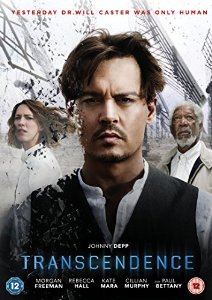
transcendenceTranscendence, Wally Pfister (2014, USA). Johnny Depp is like top of the field in AI research, but he’s sort of at odds with everyone else because, er, because no one in the film actually seems to know what AI is. And then he’s diagnosed with cancer and he hasn’t gone long to live, so he records his consciousness, and his wife and best friend/colleague upload him into his superfast quantum computer. And that sort of gives him god-like powers, not to mention overweening arrogance. And yes, it all pretty much plays out how you’d expect. Actually, bits of this film I liked. I thought the attempt at utopia versus AI-led autocracy made for an interesting story, which, of course, rapidly devolved into a shoot ’em up, but never mind. Depp never really convinced in the, er, title role, but to be honest there’s only a handful of films where he has done – which doesn’t actually make him either a bad actor or one that isn’t entertaining to watch. Transcendence wasn’t anywhere near as smart as it liked to think it was, and while it looked pretty in places, it was still as shiny and glossy and plastic as any Hollywood product. Meh.

realmofsensesIn The Realm of The Senses*, Nagisa Oshima (1976, Japan). This is perhaps chiefly famous for being, well, pornographic. And it is, it really is. I was expecting something typically 18-rated (if that rating still exists), plenty of artfully-framed sex scenes that reveal little but suggest plenty; but it’s not, it’s outright porn. The plot is based on a true story, about a maid at hotel in 1930s Tokyo who enters into an affair with the hotel’s owner.’The affair soon turns obsessive, before eventually ending badly with some consensual, er, bondage. To be honest, I found it all a bit slow and not every engaging. Despite being a period piece, it felt somewhat 1970s. The characters felt a bit flatly drawn and the scenery all looked a little washed out. I only watched it because it was on the 1001 Movies You Must See Before You Die list – honest! – but at least now I can cross it off.

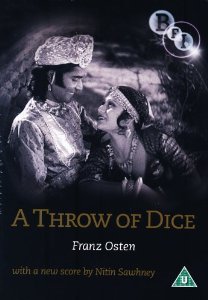
athrowofthediceA Throw Of Dice*, Franz Osten (1929, Germany/India). Apparently, in the 1920s and 1930s, Osten made 19 silent films in India – although he was arrested in 1939 as a Nazi and held until the end of the war. Many of his films were based on stories from the Mahabharata, with an Indian cast but mostly German crew. A Throw Of Dice tells the story of two kings who want to marry the same woman. They gamble for her hand, evil king wins, good king becomes his slave. To be honest, I don’t recall a great deal from this film – it’s been a few weeks since I watched it. It’s not especially long for a silent film, and the intertitles were neither too intrusive nor too opaque. It all looked very good, although a hunting scene I recall being a little, er, over-acted. But I’m glad I watched it. I’d watch more by Osten.

guardiansGuardians of the Galaxy, James Gunn (2014, USA). I have a soft spot for the Guardians of the Galaxy. Back in the 1970s, I used to buy the occasional Marvel comic, and when they weren’t X-Men ones, they were usually the anthology UK reprints which included Guardians of the Galaxy. And I quite liked the Guardians – I liked that they were actually science fiction, I thought Star Hawk an interesting character, I liked Vance Astro… Of course, this movie is based on the rebooted Guardians from the mini-series written by Dan Abnett and Andy Lanning in the early 2000s, although Disney have made a number of changes to the property. Cosmo the telepathic dog is out, although he does make a cameo, Knowhere is not their headquarters but some clichéd lawless frontier place, and the Guardians aren’t actually the Guardians but a group of roguish criminal misfits who sort of band together in adversity and become the Guardians. Which is just fucking nonsense. It would be a bit like the Kray Twins being made police commissioners. It only happens in stupid films. And, er, comics. But the film… It all felt a bit formulaic. New character, quick give us the back-history! There were huge indigestible chunks of exposition. Not to mention lots of things that made no logical sense. A galactic prison. And guards who wander among the prison population carrying powerful firearms. And the watch-tower can sort of detach and turn into a spaceship… except there’s no way out for it to go except the normal entrance. And, of course, prisons normally park inmates’ vehicles in their own parking lot, don’t they. And… why bother? Guardians of the Galaxy was a text-book script-writing in parts, narrative tools that really need to be retired in others, and the usual Hollywood nonsense when it came to world-building or logical story progression. Whatever they’re teaching scriptwriters these days, it’s complete bollocks.

snakepitThe Snake Pit*, Anatole Litvak (1948, USA). The title refers to a ward at a mental institution to which Olivia de Havilland is sectioned (although I don’t think they use that term in the US). De Havilland does legitimately suffer from a mental illness, and a sympathetic doctor eventually uses regression therapy to figure out the event which led to her condition. Which is not to say, of course, that all such conditions are the result of past trauma. The institution was a pretty uncivilised place, with the inmates either treated like criminals or wild animals, most of the staff were stuffed shirts, although the nice doctor and the husband were sympathetic. De Havilland screamed a lot, and it all seemed a bit overwrought in places – but I actually thought it much better than I’d expected. And one scene where de Havilland is interviewed by the staff to see if she’s ready to leave, but a doctor’s wagging finger sets her off, was done well. I’m not sure it belongs on the 1001 Movie list, but I’m glad I watched it.


6 Comments

2014, the best of the year

It’s that time of year again, when everyone is doing their best of the year lists. For some people, it’s the best of what was released during the year in question, for others it’s the best of what they consumed. For me, it’s the latter. While I’ve done better this year reading, watching and listening to new stuff, the bulk of the books, films and albums I’ve enjoyed are from previous years, decades and, er, even centuries.

For a change, this year I’ve included the positions of items from my best of the half-year (see here). That’s the number in square brackets after some of them.

books
I did some reading for the Hugo in the early part of the year, and a couple of those books make it into this post – although they didn’t make it onto the Hugo shortlist. But then the Hugo didn’t exactly cover itself in glory with its fiction categories this year. My top five includes three favourite authors, one new to me, and another who I’d read before.

1 Dark as the Grave Wherein My Friend is Laid, Malcolm Lowry (1968). Lowry came first last year as well, with Under the Volcano, so clearly my love for the man’s prose remains undiminished. This one, however, is a meta-fictional novel, and I do like me some meta-fiction. I wrote about it here.

all-those-vanished-engines-paul-park-base-art-co2 All Those Vanished Engines, Paul Park (2014). And this is another meta-fictional novel, but constructed from three separate novellas. One of those novellas, Ghosts Doing the Orange Dance, made my best of the half year list. I wrote about it here.

3 Life After Life, Kate Atkinson (2013) [1]. I read this for my Hugo nominations, and was surprised at how effortlessly good it was (it’s the first Atkinson I’ve ever read).

europe_in_autumn4 Europe in Autumn, Dave Hutchinson (2014) [5]. I fully expect this to be on a couple of award shortlists in 2015. I’m also very much looking forward to the sequel.

5 Home, Marilynne Robinson (2008). Just lovely writing. And, for me, a more believable character-study than Gilead.

Honourable mentions: Daughters of Earth, Justine Larbalestier, ed. (2006), excellent anthology of historical sf, with critical articles; Shaman, Kim Stanley Robinson (2013), Ice Age adventures from a writer I’ve long admired who seems to be entering something of a golden period; The Machine, James Smythe (2013) [3], Ballardian near-future, bleak but lovely writing; Busy About the Tree of Life, Pamela Zoline (1988) [4], excellent collection and the author’s only book, which I reviewed for SF Mistressworks here; HHhH, Lauren Binet (2013) [HM], meta-fictional treatment of the assassination of Reinhard Heydrich in 1942; Queen of the States, Josephine Saxton (1986) [HM], very good but not quite categorisable novel, I reviewed it for SF Mistressworks here; The Towers Of Silence, Paul Scott (1971), the third part of the Raj Quartet and featuring the brilliantly-drawn Barbie Bachelor.

films
It was a good year for films. Not only did I see many films but I also saw many good ones. Hence the somewhat large number of honourable mentions.

beau-travail1 Beau Travail, Claire Denis (1999, France) [1]. This was my No. 1 back in June, and it still is in December. A beautifully-shot film whose final scene lifts it from excellent to superb.

2 Mięso (Ironica), Piotr Szulkin (1993, Poland). This became an immediate favourite the moment I watched it. A history of Poland under communism told by an amateur cast using meat products as illustration? With dance interludes? What’s not to love?

3 Man of Marble, Andrzej Wajda (1976, Poland). I’d seen the sequel to this, Man of Iron, earlier in the year and thought it good, but this film is so much better.

4 Under The Skin, Jonathan Glazer (2014, UK) [2]. Beautiful and enigmatic, by far the best science fiction film to appear in cinemas in 2014. And a great improvement on the novel too.

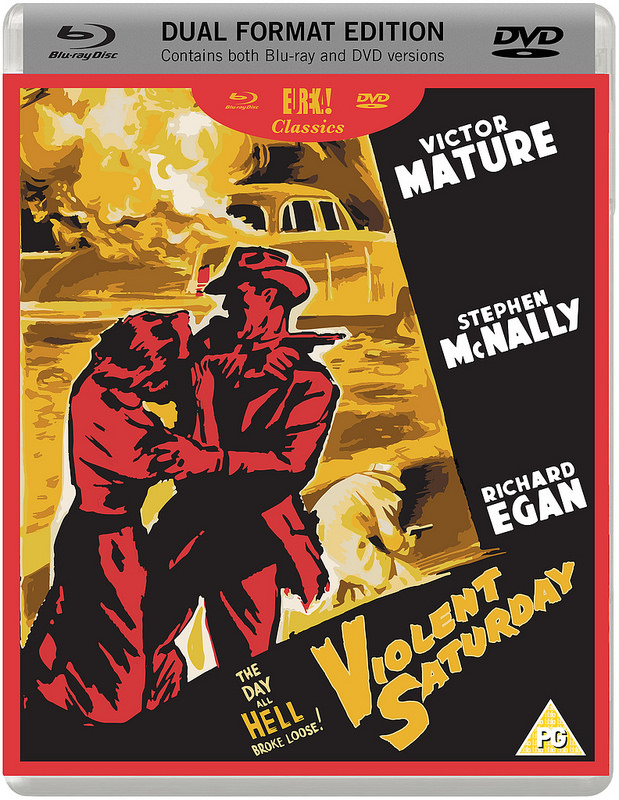
violentsaturday5 Violent Saturday, Richard Fleischer (1955, USA). I like 1950s melodramas, I like noir thrillers. So how could I not like a film that combines the two? In glorious Technicolour too.

Honourable mentions: Blow-Up, Michelangelo Antonioni (1966, UK) [3]; Call Girl, Mikael Marcimain (2012, Sweden) [4]; The Burmese Harp, Kon Ichikawa (1956, Japan) [5]; Upstream Colour, Shane Carruth (2013, USA) [HM]; Wojna Swiatów – Następne Stulecie (War of the Worlds – The Next Century), Piotr Szulkin (1983, Poland) [HM]; Gion Bayashi, Kenji Mizoguchi (1953, Japan); The Great White Silence, Herbert G Ponting (1924, UK); Cave Of Forgotten Dreams, Werner Herzog (2010, Canada/UK); The Act of Killing, Joshua Oppenheimer (2012, UK); Wadjda, Haifaa al-Mansour (2012, Saudi Arabia); Women Without Men, Shirin Neshat & Shoja Azari (2009, Iran). Not to mention some rewatches of Michael Haneke films, at least two rewatches of my all-time favourite film, All That Heaven Allows (I bought the Criterion Blu-ray but it proved to be region-locked. Argh), the same for another favourite, Aleksandr Sokurov’s The Second Circle, and a rewatch of Carl Theodor Dreyer’s excellent Gertrud.

Worst films: The Philadelphia Experiment, Paul Ziller (2012), dreadful remake with the crappiest CGI ever; Dr. Alien, David DeCouteau (1989), horribly unfunny straight-to-video comedy; Stranded, Roger Christian (2013), really bad cross between Alien and The Thing set at a base on the Moon, Christian Slater’s career has really gone downhill; Starship Troopers: Invasion, Shinji Aramaki (2012), CGI shoot-em-up with as much subtlety as an arcade game and a gratuitous female nude scene… in CGI; huh?

albums
During the summer, I started exploring bandcamp.com. I was aware of it, of course, and had even bought a couple of albums from it in previous years… but I’d never really made an effort to see what was on there. Lots of really good metal bands, it seems. That’s how I stumbled across In Vain, who quickly became a favourite. Toward the end of summer, I had to upgrade the Debian distro on my work PC, and afterwards the soundcard started working properly – which meant I could stream music at work, rather than just listen to my iPod. And that led to even further explorations of bandcamp.com. All of which means my top five for the end of the year bears no resemblance to the one from my best of the half-year. And of the five bands listed, four of them I discovered on bandcamp.com.

aenigma1 Ænigma, In Vain (2013, Norway). I discovered this band in back in July and immediately bought all three of their albums. I wish I could nominate all their albums, but that would be unfair, so I’ll limit myself to this, their latest.

2 Mantiis, Obsidian Kingdom (2014, Spain). The only band on this list I didn’t discover through exploring bandcamp.com. Because I saw them perform at Bloodstock. And they were excellent. So I bought the album as soon as I got home.

3 Kentucky, Panopticon (2012, USA). Black metal and blue grass… who knew it would actually work? And it does, more so on this album than Panopticon’s others. The subject matter is also unusual – not the usual black metal occult nonsense, but the exploitation of miners in the titular US state.

hreow4 Hrēow, Ashes (2014, UK). Does for Scotland what Winterfylleth does for England. ETA: Er no, they don’t. I seem to have got confused with Falloch, who are Scottish. Ashes are actually an English atmospheric black metal (from Devon, in fact), and a very good English atmospheric black metal too.

5 Citadel, Ne Obliviscaris (2014, Australia). The last thing you expect a progressive metal band to do is go all Rondo Veneziano on you, but that’s what this album does in places. And it works really well.

Honourable mentions: Shadows Of The Dying Sun, Insomnium (2014, Finland) [1], the dictionary definition of Finnish death/doom turn out another polished piece; From a Whisper, Oak Pantheon (2012, USA) [3], neofolk/black metal not unlike Agalloch, but a little more metal; Earth Diver, Cormorant (2014, USA) [5], epic metal that refuses to confine itself to a single genre, and that’s in each song; The Cavern, Inter Arma (2014, USA), a 45-minute track of metal epicness; Kindly Bent to Free Us, Cynic (2014, USA), seminal death metal band go all prog/jazz fusion, but their roots are still showing;  The Divination of Antiquity, Winterfylleth (2014, UK), more atmospheric black metal from the English masters of the genre; Comfort in Silence, Dryad’s Tree (2007, Germany), prog metal, the vocals need a little work but the music is excellent; Treelogia (The Album As It Is Not), The Morningside (2011, Russia), prog/black metal band, this EP is perhaps their best work so far.


8 Comments

Moving pictures, #13

It’s the second week of December, and all that’s left of the year is the culmination of our annual consumerism frenzy and all the excesses of food and drink which go with it. So I might as well finish my viewing diary now. 2014 was definitely the year of films for me. I watched 345 films† on television, DVD / Blu-ray and at the cinema. Although very few of the last. Er, only two, in fact: Under The Skin and Interstellar. Most of the DVDs I watched were rentals – I averaged three a week for the entire year. And many of them I put on my rental list because they were on 1001 Movies You Must See Before You Die (as before, films on that list mentioned here are asterisked).

element_of_crimeElement Of Crime, Lars von Trier (1984, Denmark) After watching Breaking the Waves, I decided to try some more von Trier, particularly his early stuff; so I picked up a copy of his E-Trilogy, which contains this film, Epidemic and Europa. And deciding that Element Of Crime was the most accessible of the three, I sat down to watch it… And it’s all a bit like a film school project. Orange neon lighting is used throughout, which makes everything look, well, orange. Michael Elphick plays an ex-detective who undergoes hypnosis in order to remember his last case, the hunt for a serial killer in post-war Germany. In order to solve the case, Elphick tries to identify with the killer, and soon begins to behave like him. It all felt a bit obscure for obscurity’s sake, and whatever cleverness was there seemed lost in an orange haze. I also seem to remember lots of Dutch angles and light reflected in water. There’s an interesting idea somewhere in this film, but I’m not convinced its presentation made the best use of it.

worlds_endThe World’s End, Edgar Wright (2013 UK) A bunch of school friends get together for reasons that never quite convince in order to complete a pub crawl they had previously failed to complete twenty years before in the invented town of Newton Haven, a crawl of twelve pubs which ends at the titular hostelry. The five friends are drawn pretty broadly, as are their relationships, both historical and during the film, and for the first hour or so you’re wondering if it could get any more pointless… when it suddenly transpires that the town of Newton Haven has been taken over by alien robots. Which is where it all turns very silly. Parts of the town of Newton Haven looked scarily familiar – something that doesn’t happen in films or television very often if you happen to be from the north of this country – so I checked online and discovered The World’s End was partly filmed in Letchworth Garden City, a city I remember particularly well, despite only visiting it once, thanks to a Christmas work night out when I worked at ICL in Stevenage back in the early 1990s. Anyway, The World’s End: very silly, but mildly amusing; a bit juvenile in parts; probably best seen after a few beers.

IKnowWhereImGoingI Know Where I’m Going*, Michael Powell & Emeric Pressburger (1945, UK) I think I had this film confused with another Archers film, A Canterbury Tale, because I had thought it was about soldiers during World War II, but I Know Where I’m Going is actually set in the Hebrides, and while Roger Livesey’s character is on furlough from the Navy, the war is barely mentioned. Wendy Hiller is heading for the invented Hebridean island of Kiloran in order to meet up with her wealthy fiancé and marry him. But when she gets to the Isle of Mull, the weather prevents a crossing to Kiloran. There, she meets Livesey, who is the laird of Kiloran, and the film moves smoothly into rom com territory. It is, as you’d expect from the Archers, a polished piece, with bags of charm. Livesey, who possesses a voice only marginally less fruity than Brian Blessed, is eminently watchable and a surprisingly good romantic lead; as is Hiller, who exhibits a similar spikiness to that which bought Katherine Hepburn a bagful of Oscars. I’ve always been a fan of the Archers, and there’s nothing in I Know Where I’m Going to make me change my mind.

kippurKippur*, Amos Gitai (2000, Israel) This is based on Gitai’s own experiences in the Israeli military during the Yom Kippur War. Two friends on military service fail to meet up with their unit thanks to the Syrian invasion, and eventually end up joining a helicopter rescue unit. This involves flying out onto battlefields to evacuate the wounded. It’s dangerous work, but at least they’re not shooting at anybody. It’s all very realistic, blackly comic, and quite gruesome. The two end up wounded themselves, when their helicopter enters Syrian territory and is shot down by a missile. A good film.

father_and_sonFather And Son, Aleksandr Sokurov (2003, Russia) I have a lot of time for Sokurov’s films, but boy are they slow. They make Tarkovsky’s look like they were made for the MTV generation. The plot of Father And Son is almost inconsequential. It’s about a man and, er, his son, and their relationship. The son is at a military academy, but he spends time with his father in his roof-top apartment and… it doesn’t really matter what happens. Father And Son is a microscopic examination of the relationship between the two, beautifully photographed and remorselessly documented. I’ve maintained for the last couple of years that Sokurov’s The Second Circle (a favourite film) is the epitome of the father-son film and, though you’d expect from its title Father And Son would be more so, I’m not sure  that it is. But I do really like this film, I like the gentle construction of its central relationship, and I especially like the visuals. Sokurov is without a shadow of a doubt one of the best film-makers currently working. I only wish more of his stuff were available in the UK.

in_lonely_placeIn A Lonely Place*, Nicholas Ray (1950, USA) Humph is an acerbic screenwriter who has been asked by a producer to adapt a best-selling novel. Since the book is trash and he has no intention of actually reading it, he asks a hat-check girl at the nightclub who admits to having read it to come home with him and tell him the story. She does so, but during her journey back to her own home later that night she is murdered. The police immediately suspect Humph. He is partly alibied by next-door neighbour Gloria Grahame, and the two later enter into a relationship. Humph gets cracking on the screenplay, but the police still suspect him and he’s such a nasty piece of work that pretty soon everyone thinks he murdered the hat-check girl, even Grahame. So she decides to leave him… but then the real killer confesses to the police, but Humph and Grahame’s relationship has already crashed and burned. A neat little noir this, although Humph’s character really was quite unpleasant. And while the did he/didn’t he aspect never quite convinced, tying it to his relationship with Grahame was a neat move.

noahNoah, Darren Aronofsky (2014, USA) When I was a kid I went to Sunday School, but I don’t remember any of this from those Biblical colouring books we had. Six-limbed angels made out of stone? A giant fantasy stonepunk empire? Two races of humans? I don’t even remember it from history lessons at school. There was the big boat, of course, and the Deluge. And the animals going in two by two, and even the stranger creatures which got left behind. Apparently, the religious nutjobs in the US more or less approved of Noah, which is surprising given that the word “God” is not mentioned once – it’s “the Creator” throughout. So it seems turning a bit of the Bible into a fantasy film is fine, but using a fantasy novel or film to comment on Christianity is not. The Golden Compass was a much better film than this, and it’s a shame the trilogy was spiked. But one man and his floating wooden fort full of sedated animals in fantasyland seems to be acceptable. Huh.

rocco_and_his_brothers_masters_of_cinema_series_uk_dvdRocco and his Brothers*, Luchino Visconti (1960, Italy) Mother and four sons head from their village in southern Italy to go live with the eldest son in Milan, although he apparently doesn’t seem to be expecting them. And their sudden appearance puts the kaibosh on his impending nuptials. The five brothers, ranging in age from early teens to mid-twenties, and their mother struggle to survive. The film is presented in five parts, one for each of the brothers – the title role, incidentally, is played by Alain Delon. One brother becomes a boxer, but fails and becomes a gangster. Another turns his back in the family and settles down. Another gets a job in a car factory, and supports the rest of the family. A prostitute befriended by Delon becomes embroiled in the lives of the brothers, and is brutally murdered by the boxer – but Delon won’t give him up to the police, so one of the others does so. I don’t know if Rocco and his Brothers was the first Italian Realism film, but it’s certainly a textbook example – and so very far from Visconti’s later work, such The Damned or Death In Venice. I can understand why this film is on the 1001 Films You Must See Before You Die list.

belle_de_jourBelle de Jour*, Luis Buñuel (1967, France) Catherine Deneuve is the bored wife of a doctor, with an active and somewhat dodgy fantasy life (featuring, among other things, being whipped by coach hands), and when the creepy older friend of her spouse drops hints – not to mention outright lewd proposals – about a brothel on a particular street in Paris, Deneuve makes her way there and joins the staff as a part-time sex worker. One of her early customers is a young and angry gangster, and the two fall in love – although, to be honest, I couldn’t understand what she saw in him. Then creepy older man from earlier turns up and the cat is out of the bag. Meanwhile young gangster has worked out who Deneuve really is, and lies in wait outside her apartment so he can kill her husband. It goes badly, but ends well for Deneuve. An odd film, and I’m not entirely sure what to make of it. The men are horrible, it all feels horribly bourgeois, and Deneuve is a complete cipher. I much preferred The Discreet Charm of Bourgeoisie.

wolf_of_wall_streetThe Wolf of Wall Street, Martin Scorsese (2013, USA) This has appeared on several best of the year lists from film critics (although released on 25 Dec 2013 in the US, it wasn’t released in the UK until 17 Jan 2014). To be honest, I’ve no idea why. It’s a well-made film, certainly; as Scorsese’s films always are. But the reason I don’t like Scorsese’s movies is that he valourises scumbags. If it’s not Mafia, bonkers billionaires or psychotic killers, then it’s the sort of amoral Gecko-like figure the title of this film refers to – and he’s a real person, Jordan Belfort. Just after joining a Wall Street firm, Belfort finds himself out of a job when it crashes and burns as a result of Black Monday. He stumbles across the penny stocks market, and jumps in with both feet, basically ripping off ordinary people in order to make a fortune for himself. And he makes a very large fortune. Which, of course, leads to a lifestyle of complete excess – the film opens with Belfort explaining the drugs he takes during a typical day. The FBI take an interest in him because, well, because what he’s doing is illegal, although they can’t prove it. Chiefly because he’s salted away most of his funds in a Swiss bank. Although Belfort loses access to the account when his courier, a British aunt of his wife, dies. Eventually, everything comes crashing down. Belfort is indicted and sentenced… to 36 months in a minimal-security prison. They should have thrown away the key. And taken every cent his firm earned and given it back to the people he ripped off. Belfort, of course, remains unrepentant and claims 95% of his business was legit. (Reading up on him, it seems much of the memoir on which the film was based is doubtful, Belfort was ordered to repay $110 million but has to date only repaid $11 million; and he now works as a motivational speaker, making more, he claims, than he did as a stock broker/fraudster.)

peeping_tomPeeping Tom*, Michael Powell (1960, UK) This film pretty much destroyed Powell’s career. Although he was well-regarded as one half of the Archers, British critics savaged Powell’s film on its release – so much that he never made another feature film in the UK. It’s tempting to say the film is tame to a twenty-first century viewer, but to be honest I suspect the reaction to it in 1960 was nine parts the British press monstering someone to one part actual outrage. After all, they did the same eleven years later over A Clockwork Orange. In actual fact, Peeping Tom is a smart thriller, similar to Hitchcock’s Psycho in many respects, but made with a British sensibility and incorporating a number of Archer touches. A young man who works in a film studio, and as a photographer on the side, murders women and photographs them at the moment of their deaths. The film follows him, so there’s no mystery to it; but the film does discuss the psychology, as outlined in a number of conversations with the young woman who lives downstairs. Moira Shearer makes an appearance halfway through the movie, only to become the next victim ten minutes later – given her stature in British cinema of the time, this struck me as similar to Hitchcock’s trick with Janet Leigh in Psycho. Especially since she performs a quick impromptu dance number. Definitely worth seeing.

cone_of_silenceCone Of Silence, Charles Frend (1960, UK) I forget why I put this on my rental list, possibly because it’s an aviation drama and I enjoy them. As it turned out, it wasn’t quite what I was expecting. Yes, it’s a drama about a particular aircraft, a jetliner called an “Atlas Phoenix” and which was played by an Avro Ashton – the Ashton was a prototype airliner which never entered production, but the one used in the film was actually a test-bed, fitted with two additional jets in wing nacelles for engine-testing. Bernard Lee plays a by-the-book captain who crashes a Phoenix at “Ranjibad” on take-off – the Phoenix flies the Empire route from the UK to Australia – and an inquest finds the crash the result of pilot error. Lee, and those who know him, of course disagree. Against the wishes of Atlas, Lee is permitted to once again captain the Phoenix. But some elements within the airline want to see him either fired or demoted to piston-engined airliners. And then he crashes again at Ranjibad, in identical conditions to the first crash. But this time everyone is killed. And it turns out Atlas didn’t let on that under certain conditions, the manual for take-off is incorrect. The story is, of course, based on the de Havilland Comet, and de Havilland’s reluctance to reveal data that might point to the aircraft itself being the cause of the crashes which grounded it. Given the prestige wrapped up in the Comet – not to mention the money – as it was the world’s first airliner, it’s no surprise de Havilland acted as they did, although many lives were lost as a result. Cone Of Silence spends perhaps too long on the lives of its characters, so the actual plot is wrapped up a little too quickly in the last ten minutes, but it’s a good solid piece of 1960s British cinema and worth seeing.

1001 Movies You Must See Before You Die count: 535

(† This includes complete seasons of television programmes I watched on DVD, but not on terrestrial or cable television.)


Leave a comment

Moving pictures, #12

More films seen recently, and it’s the usual mix. As if all that many of the films I’ve been watching this year could be described as “usual”…

fast_timesFast Times At Ridgemont High*, Amy Heckerling (1982, USA). Time has not been kind to this film. Pretty much everything in it has since been used in later high school films, so it now looks like a string of tired old clichés. Which is not to say much of it wasn’t clichéd to begin with. I’m not a fan of high school movies to start with, chiefly because I never went to an American high school – so such films mean pretty much nothing to me. I’ve no idea why this film was on the 1001 Movies You Must See Before You Die list. It was perhaps mildly amusing in 1982, but in 2014 it’ll make for an evening’s entertainment only if you’re easily please and if you’ve consumed several beers.

Au Hasard Balthazar*, Robert Bresson (1966, France). The title refers to a donkey, owned by the young daughter of a farmer. As she grows up, so the donkey changes hands, and undergoes a series of indignities and cruelties – it may be a beast of burden, but it’s not treated at all well. The farmer’s daughter also suffers abuse at the hands of the various people, although emotional rather than physical. In fact, the two lives broadly mirror one another, although the similarities seem to bounce between too obscure to be easily spotted, or glaringly signposted. But a good film, and worth seeing.

wearethebestWe Are The Best!, Lukas Moodysson (2013, Sweden). I’ve been a fan of Moodysson’s films since seeing Lilya 4-Ever several years ago, so anything new by him goes straight on the wish list. I did consider going to see this at the cinema earlier this year – it was on around the same time as Under The Skin – but in the event decided to hang on for the DVD. Which is what I did. The film is based on the graphic novel Aldrig Godnatt by Moodysson’s wife, Coco Moodysson. It’s about two early-teen punks in 1982 Stockholm – in the graphic novel, one is called Coco, so its plainly based on the author’s own childhood; but in the film, the character has been named Bobo. The two girls decide to form a band, and recruit a shy Christian girl as guitarist. They then link up with a boy punk band, which causes a few problems as two of the girls fancy the same boy. There’s a beautifully-handled scene in which one of the mothers lectures the girls on tolerance for Christianity, which is not something I ever thought I’d say about a film. We Are The Best! is effortlessly good, and the central trio play their parts superbly.

Journey To Italy*, Roberto Rossellini (1953, Italy). George Sanders and Ingrid Bergman are in Italy to sell a property they’ve inherited near Naples. Things happen. Sanders flirts with another woman, Bergman is jealous. Bergman goes off and does her own thing, Sanders assumes she has a man friend and is jealous. Then, just before the end, they reconcile. By all accounts the production was pretty chaotic, and it shows. Not the most captivating Italian realist film I’ve seen.

americanhustleAmerican Hustle, David O Russell (2013, USA). I’d seen the trailers for this back when it was out in the cinemas, and it looked like it might be enjoyable. Of course, you should never trust a trailer, it’s a marketing tool, and a good one can make a shit film appear to be worth shelling out £10+ to see it. And while I rented this on DVD, so it didn’t cost me anywhere near a tenner, it was still a waste of money as I didn’t like it very much at all. The characters were all horrible, the production design was garish – yes, it was set in the 1970s, but so was Life on Mars, which was a little bit of a spoof, and even that didn’t manage such horrible production design – but worst of all, American Hustle was boring. And while Robert De Niro was supposed to be speaking Arabic, it didn’t sound anything like it. But then he allegedly learnt the language while visiting his casinos in the Middle East – I think Abu Dhabi was mentioned – which is rubbish, as gambling is haram and no Islamic state would licence casinos. (At Nad -Al-Shiba racetrack, they used to offer a prize, usually a car or a racehorse, to anyone who guessed the winners of the night’s races correctly; it wasn’t gambling because it didn’t cost money to guess.)

Shame*, Steve McQueen (2011, UK). I picked this up in a charity shop, which is where it’s going now that I’ve watched it. Michael Fassbender plays a self-centred, er, executive of some sort, in New York who is addicted to sex – he downloads porn at work, he sneaks off to the bogs for a wank, he frequents prostitutes… Then his sister comes to stay with him, and she has a history of suicide attempts. Although beautifully shot, the characters were so unlikeable, the pace so glacial, and the story so uninteresting that I’m mystified by the high regard in which the film is held.

The Cabin In The Woods*, Drew Goddard (2011, USA). I might not think every film on the 1001 Movies To See Before You Die list belongs there, but for some of them it’s possible to make a case. But not this one. It’s a piss-take horror full of the usual allegedly witty Whedon banter, with some silly explanatory story driving the plot. This is a film better-suited to a midnight showing on some cable channel, to be watched after copious beers and a doner kebab.

hiroshima mon amour dvd (Small)Hiroshima Mon Amour*, Alain Resnais (1959, France). Resnais is one of those directors whose films I want to like, but every time I watch one I can’t bring myself to do so. He does interesting things, he pushes the boundaries of cinematic narrative. This one is a case in point – the central relationship between the two unnamed characters is handled beautifully, but the documentary footage of Hiroshima is disturbing and I’m far too squeamish to enjoy watching it . It’s too visceral to be likeable as a movie – I might have found it easier to appreciate as a book – but then, that was probably the whole point. Though I didn’t enjoy it, I can understand why Hiroshima Mon Amour is on the 1001 Movies To See Before You Die list.

Far_from_heavenFar From Heaven, Todd Haynes (2002, USA). This was a rewatch, as I’ve had the DVD for a couple of years. I originally bought it because it is, of course, famously inspired by Sirk’s All That Heaven Allows – in fact, the film sort of follows the basic plot of Sirk’s film, and its cinematography is clearly inspired by it. Like other Haynes films I’ve seen, I love some things about it and dislike others. Haynes’ 1950s small-town America is beautifully coloured and shot, but I’m not really convinced by Julianne Moore in the lead role. And while her relationship with her gardener works really well, I’m not sure about her husband’s homosexuality – it feels like Haynes has thrown in two scandals for the price of one.

monumentsmenThe Monuments Men, George Clooney (2014, USA). It’s WWII and Clooney recruits a bunch of art experts to hunt through Europe during the latter weeks of the war to hunt for art stolen by the Nazis. Each of them has a piece they obsess over, and would even die for – it certainly leads them to take risks, and results in at least one death. We all know the Nazis were very naughty boys, but stealing art is pretty low down on the list of their crimes. And, to be honest, I think we might have been better off if much of it had never been recovered. Great art should be there for the world to see, not changing hands for ridiculous amounts of money and then hidden away in private collections. That’s just turning paintings into substitute penises, which pretty much misses the whole point of Art. Films like this don’t help.

violentsaturdayViolent Saturday, Richard Fleischer (1955, USA). I didn’t have high expectations for this film, it looked like it might be a minor piece of 1950s noir, something to do with a riot in a small town on the titular day of the week. But when it opened with a car driving down into a working copper mine, and then an explosion to bring down a section of cliff-face, it was obvious this was not going to be your average noir. In fact, Violent Saturday is 1950s melodrama meets thriller, with a trio of bank robbers planning a heist on the day in question, while about them various dramas in the lives of the townsfolk take place, including but not limited to: the wastrel son of the mine owner failing to hold his marriage together, the mine’s manager trying to keep his son’s respect despite not fighting in the war, a bank clerk trying to work up courage to ask out the mine’s nurse… And all shot in beautiful widescreen Technicolor. Loved it.

cloudcappedThe Cloud Capped Star (Meghe Dhaka Tara)*, Ritwik Ghatak (1960, India). This was a bit grim. A young woman, a refugee from East Pakistan, lives with her family in a camp outside Kolkata. Her brother is a wastrel and wants to be a singer – he sings frequently throughout the film, and he’s good. Her fiancé is forever borrowing money off her so he can complete his studies. She is having trouble completing her own studies, with so many demands on her time and finances. And then things start to get worse. Filmed in a very stark black and white, intensely realist, and with an interesting and effective use of close-in mise-en-scène and much wider vistas, particularly across the Hooghly River, this is an excellent film, although perhaps a little long. Definitely a film that deserves repeated watches. And I might have a go at something else by Ghatak.

1001 Movies You Must See Before You Die count: 528


42 Comments

Best sf films since 2000

So Shaun Duke says Interstellar is one of the best sf films of this century and I’m like no way and he’s like way and so he challenges me to produce my own list of top ten sf films of the last fourteen years… And it’s actually quite difficult as I can think of two dozen off the top of my head that are better than Interstellar, but I have to whittle it down to only ten. Which I did. And here they are…

1 Cargo, Ivan Engler & Ralph Etter (2009) I’m surprised this film isn’t better known. Perhaps it makes a little too free and easy with some well-known tropes, but this Schweitzer Deutsch production puts them to excellent use, and still manages to ring some changes.

2 Avalon, Mamoru Oshii (2001) A Japanese film made in Poland with a Polish cast. It looks amazing, and the VR game plot with its layers of realities seriously messes with your head.

3 Primer, Shane Carruth (2004) Probably the best time travel film ever made. And it’s impossible to work out the plot.

4 Under The Skin, Jonathan Glazer (2013) An improvement on the book. Shot guerilla-style in Glasgow, with Scarlett Johansson as an enigmatic alien.

5 John Carter, Andrew Stanton (2012) Commercially a flop, but there’s much to like in this tentpole blockbuster – it looks gorgeous, the script is far smarter than the material had any right to expect, and the cast all play good turns.

6 Sky Captain and the World Of Tomorrow, Kerry Conran (2004) A CGI-fest which makes perhaps too much of a feast of its source material – while the pulp production design looks wonderful, the pulp narrative didn’t sit well with modern audiences.

7 Dredd, Pete Travis (2012) Who knew an art house version of the Mega City One lawmaker would work so well?

8 Upstream Colour, Shane Carruth (2013) Elliptical and even more of a mind-fuck than Primer.

9 Timecrimes, Nacho Vigalondo (2007) More time paradoxes than you can shake a reasonably large Moebius loop at.

10 Sound of My Voice, Zal Batmanglij (2011) A  clever study of the cult mentality, with Brit Marling as a “prophet” from the future.

Honourable mentions: Apollo 18 (2011), amazingly accurate rendition of an Apollo mission, with monsters; Gravity (2013), not quite as accurate, no monsters either; Possible Worlds (2000), odd and under-stated many worlds thriller; Natural City (2003), frenetic Korean cyberpunk actioner; Time Of The Wolf (2003), Haneke does post-apocalypse.


8 Comments

Hollywood does near-future science fiction

So I went to see Christopher Nolan’s Interstellar, which some have been saying is the best sf film ever made. But, of course, they always say that about a new film, probably because they’re just shills for the Hollywood marketing machine. But if you wait a bit – or a week, as I did – then a few more honest voices begin to appear… And they gave mixed reviews. Thing is, just because Hollywood decides to have a go at near-future sf, just as they had a go at a space movie last year, there’s no need to scream about how good it is… Having said that, I’ve now seen the trailer for the Wachowskis’ Jupiter Ascending twice and it looks proper awful.

interstellar

But Interstellar. It is supposed to be a rigorous and accurate vision of interstellar space travel – handwavy vastly superior aliens who create the wormhole notwithstanding. Matthew McConaughey plays NASA test pilot turned farmer Coop, since a global famine has resulted in anything remotely scientific being shut down. As one person puts it, “We’re a caretaker generation, we don’t need engineers, we need farmers”. Except the farming on display is some sort of pastiche of early twentieth century farming, with a small wooden house in the middle of a sea of maize. There are no equipment sheds, no garages, no silos, no storage. Just a house. And even though various events in the film take place at different times of the year, the maize is always just about ready to be harvested – in fact, it is being harvested by robot combine harvesters on a number of different occasions. Makes you wonder why there’s a famine if they can grow maize so quickly 365 days a year…

A “ghost” in the bedroom of Coop’s ten-year-old daughter, Murphy, causes books to fly off the shelf, but Murph works out there is a pattern to it. It proves to be binary, a set of coordinates. Murph, incidentally, was named for Murphy’s Law, “What can happen, will happen”. Except that’s wrong – Murphy’s Law, as popularised by John Paul Stapp, is “anything that can go wrong, will go wrong”. This is not the only little “joke” in Interstellar. At a parent-teacher meeting, Coop is told the Apollo missions were faked in order to bankrupt the USSR, which they did successfully. No mention of the arms race. Or the fact the Apollo missions ended twenty years before the USSR economy crashed. Or that by the second decade of the twenty-first century, the Russian space programme was the only one flying human-rated spacecraft.

Anyway, the coordinates lead Coop and Murph to a secret NASA facility, where kindly professor Brand, Michael Caine, helpfully explains the whole plot. I should note that it’s taken an hour to get to this point – Interstellar is a film in which very little happens for the first third. Thirty years earlier, NASA discovered a wormhole near Saturn, which leads to twelve habitable worlds in another galaxy. Ten years ago, they sent a crew of twelve to explore three of those worlds. Now they want to send a supply mission. And Coop just happens to have test-piloted the spacecraft they’re readying for the mission. So even though he has literally just walked in out of the fields, he’s the best man for the job. Murph doesn’t want him to go, because she thinks he won’t come back. Coop, of course, hates farming and immediately signs up. Also on the mission is Brand’s daughter, played by Anne Hathaway, and two spear carriers, Wes Bentley and David Gyasi. Oh, and a pair of AI robots that look like tourist information kiosks.

endurance

The spacecraft launches, rendezvouses with the Endurance, NASA’s last remaining interplanetary spacecraft, which has been parked in orbit. The crew go into hibernation for the two-year trip to Saturn – in a room which is apparently tiled like a bathroom, something I’d have thought too expensive weight-wise for a spacecraft. The shuttle craft too was unfeasibly large – not to mention a strange and not very aerodynamic shape. At Saturn, the crew wake up, the Endurance enters the wormhole (cue demonstration of how a wormhole works with a folded piece of paper; sigh). On the other side, they discover a planetary system orbiting a supermassive black hole, with three habitable worlds. The previous mission sent teams to all three of these planets. One world orbits inside the event horizon of the black hole, so that time dilation means seven years will pass for every hour spent on its surface. Which is just… WTF. Any such planet would have long been swallowed by the black hole, and radiation would fry everything on it anyway. The planet proves to be completely covered in about half a metre of water, and the previous mission did not survive an encounter with a giant wave – and, in fact, Coop’s mission only just makes it out alive. But they do stay far too long on the planet, and when they return to the Endurance, twenty-three years have passed. The chief effect of this, of course, has been to estrange Coop even more from his daughter… who is now Brand Sr’s protegé and helping him to complete the equations which will marry the theory of relativity with quantum mechanics and somehow or other lift a giant concrete spacestation built on the ground into orbit.

Since water planet was a bust, and it took so long for them to learn this, the Endurance only has enough fuel remaining to visit one of the other two worlds. Brand Jr admits she is in love with the leader of one of the missions – leading to a cringe-worthy monologue in which she declares “love is the only thing which transcends time and space”. But Coop over-rules her and they head for the other world instead. Where they find Dr Mann, Matt Damon. On a world of frozen clouds. Which is just as silly as it sounds – although it does look quite impressive…

interstellar_clouds

Damon admits that Brand Sr solved his equations years before and there is no solution possible without “quantum data” from inside a black hole. So the supply mission is actually a blind – the real plan is to seed the most suitable of the three worlds with the frozen gametes carried aboard Endurance. But ice-cloud world isn’t really fit for colonisation. Cue fisticuffs between Coop and Mann. Coop loses, and is in danger of asphyxiating in the ammonia-heavy atmosphere. Fortunately, he finds the doodad from his helmet that Mann removed which allows him to radio Brand Jr for help. Why he has a little thing on his helmet for long-range comms makes no sense. Brand Jr jumps into the lander and flies to his rescue. Despite Coop and Mann only spending about ten minutes walking away from the base, it takes the lander over five minutes to fly to where Coop is. Mann meanwhile steals the shuttle and heads for the Endurance.

But Coop remotely locks the Endurance, and Mann tries a manual docking but cocks it up – destroying himself and part of the Endurance. Which spins away. So Coop pilots the lander manually into a docking with the Endurance by rotating the lander to match. I’m not sure why he and Brand Jr were shown spinning with their heads pulled to the sides when it had already been established that their seats pivot so their heads would in fact have been toward the centre of rotation. Unfortunately, they’re now too close to the supermassive black hole, and the Endurance on its own can’t pull free. It needs the engines on the lander and the remaining shuttle too. But because plot reasons those spacecraft have to be piloted manually. One is taken by the surviving robot and the other by Coop. Both manfully sacrifice themselves so Brand Jr can head for her lover and take him the frozen gametes to found a new human race. However, the robot is going to try and get the “quantum data” from inside the black hole and transmit it out, so who knows? Maybe Murph will be able to solve Brand Sr’s equations after all…

I’m not entirely sure what to make of Interstellar. The world-building is terrible, despite its claim of scientific accuracy science is sacrificed to drama numerous times, as is plausibility, and its central message about love is the sort of puerile twaddle that Hollywood all too often mistakes for metaphysics. There are some neat ideas, and on several occasions the plot took turns I wasn’t expecting. Although the spacecraft look weird, the film-makers have made a serious attempt at presenting technology that looks plausible and fit for purpose.

lander

But the pacing of the film is awful – that first third is apparently an entirely separate movie that Nolan bolted onto the front of his… and it shows. Some of the concepts are simplified to the extent they come across as handwavy nonsense. And the ending is a complete let down. Part of the problem is, I think, that the movie bounces from the personal to the bigger picture without any kind of logic or pattern. I suspect it’s an attempt to humanise the big concepts, but it doesn’t work. It just shows how badly shored-up they are by the world of the story. In parts, Interstellar also feels like too much was crammed in, so much that it no longer knows where its focus lies. Clearly it’s meant to be Murph’s story, as we see her entire life through the eyes of her father, Coop. But Coop spends the most time on-screen, as if he were the star of an adventure film. The two stories don’t quite fit – you can certainly have a short linear narrative looping in and out of an episodic story spread over decades, it’s an interesting narrative structure; but for it work you need something to anchor the crossover points. Interstellar tries for this – but the ones that make emotional sense are too few and so Murph’s narrative ends up having to fill in too much story in between breaks from Coop’s adventures. It makes for a third act that is badly unbalanced… which is one reason why the ending has so little impact.

I like that Nolan made an attempt at a serious near-future sf film. And visually, Interstellar is quite impressive. But it’s certainly not the greatest sf film ever made – nowhere close to it, in fact. I’m reluctant to even classify it as a “superior” sf film, as scoring highly on visuals is hardly difficult these days. It has some interesting ideas, but it handles them badly, throws in a helping of philosophical twaddle, and badly mangles what could have been a clever narrative structure. Disappointing.