It Doesn't Have To Be Right…

… it just has to sound plausible


8 Comments

Fantasy Challenge #4: Colours in the Steel, KJ Parker

I just managed to squeeze this book into April so I am, for the time-being, back on track. Although, I have to admit, I’m starting to regret my choice of reading material for this year’s challenge. Probably because I’m asking too much of the books I selected.

Happily, April’s book, Colours in the Steel by KJ Parker, proved to be a good read. It’s Parker’s first novel, and the first book of the Fencer trilogy (followed by The Belly of the Bow and The Proof House). It was first published in 1998, but it doesn’t read like a fantasy that’s more than a decade old.

In the Triple City of Perimadeia, the outcome of court cases are determined by the two advocates fighting each other with swords, often to the death. Bardas Loredan is one such fencer-at-law, and the fact that he’s been practicing his profession for more than ten years indicates that he’s good at it. Temrai is the son of the chief of the plains people, Perimadeia’s on-and-off enemies, and he has come to the Triple City to make swords in its arsenal. Alexius is the city’s Patriarch, the head of the Order which studies the Principle, which is sort of like magic but much more like philosophy. Then there’s Venart and Vetriz, brother and sister traders from the Island, who keep on bumping into Loredan and Alexius…

Out of these characters, and a handful more, Parker sets up a chain of coincidences which eventually lead to the destruction of Perimadeia. While most plots are only fuelled by coincidence, in Colours in the Steel Parker has made the nature of the coincidences themselves a part of the plot. This all begins when Alexius tries to curse Loredan at the behest of a young woman. Which somehow drags Vetriz, who has a natural and unconscious ability in the Principle, into the story. The various cast-members keep on running into each other at fortuitously opportune moments, and they remark on it. Things seem to happen in just such a way as to lead to a specific outcome, and the characters discuss this. But they don’t know why it’s happening, or indeed how it’s happening. The explanation is, I assume, given later in the trilogy. It makes for an original alternative to the vague hints and snippets of back-history most secondary-world fantasies use to drive a series’ story-arc.

On the whole, Colours in the Steel is entertainingly-written. Admittedly, somewhere inside its 503 pages (in my Orbit paperback edition) there’s a 300-page novel fighting to get out. Parker has a tendency to go off on long discourses on subjects which do nothing to advance the plot, and little to flesh out the world. One example is a lecture given by the city’s Chief engineer to Temrai on the construction of trebuchets. True, he uses that knowledge later, but does the reader really need so much detail? And, to be honest, I was never entirely convinced by much of the detail Parker pours into Colours in the Steel. But it sounds plausible. There’s also a description of a typical courtyard in Perimadeia, where one of the characters is sitting, which stretches over several pages and in which nothing actually happens. There are other areas where the prose bogs down like this and the story is in danger of losing all the momentum it has built up to that point: Temrai explaining how he imagines the city cavalry will attack his army, for example; or Athli, Loredan’s clerk, comfort-shopping for stationery.

And yet the plot of the book is a little… odd. The more you read, the less you understand what’s driving the plot. The characters are the ones powering the story, but Parker keeps the engine itself hidden, revealing only hints and clues as the book progresses. For instance, the young woman who wants to curse Loredan – everyone conveniently forgets her name when they encounter her. This makes no sense, and feels whimsical. Even when her actual identity is revealed, knowing her name would have made no difference.

Despite the prolixity and the secretiveness at the heart of the plot, there’s an amusingly sly cynicism to Parker’s prose and world-building. This is perhaps best exemplified by Loredan’s “career” after being made commander-in-chief of Perimadeia’s defences – he’s alternately cast by the city’s leaders as hero, then traitor, then hero again, then traitor…

There’s no doubt that Colours in the Steel is the best of books I’ve so far read for this year’s reading challenge. And yes, if I see the remaining two books in the trilogy I’ll pick them up. I’d like to know how it all pans out. But even more than that, Colours in the Steel is Parker’s debut novel. She has written two more trilogies, and several other novels since. They can only be better than this one. I wouldn’t mind reading them, either.

16 Comments

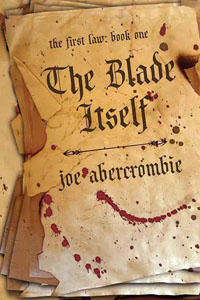
Fantasy Challenge #3: The Blade Itself, Joe Abercrombie

Yes, I should have posted this last month. But with one thing and another, I didn’t actually get to the book until early April, and I only finished it a couple of days ago. And I still have April’s book for the fantasy challenge to read and review.

But, The Blade Itself… I had high expectations for this novel, as I’ve yet to see a bad review of it. Admittedly, most of those reviews are by people who are bigger fans of secondary-world fantasy than I am. I may have read my fair share, but it’s by no means my first choice of reading. Or second. Or even third or fourth. And for all that I’ve read many of the popular fantasy writers – Tolkien, Jordan, Erikson, Martin, Moorcock, Donaldson, etc. – I’ve never found them an especially satisfying read. The Blade Itself then, I hoped, given its reputation, might prove something different. After all, it was in part because of books such as The Blade Itself – and their reputations – that I chose to make this year’s reading challenge a fantasy challenge.

So if I’ve laden down Joe Abercrombie’s novel with great expectations, I’ve done no more than all those book bloggers and reviewers out there who praise it. And… you just know I’m going to bury it. Sort of.

As far as I can determine, The Blade Itself‘s reputation rests in part on its subverting of genre stereotypes. There’s no peasant hero, no hidden king, no dark lord, no plot coupons or quest. This is a book which rejects templates and The Tough Guide to Fantasyland. Mostly. The novel’s plot is a case in point. The barbarians in the north have finally organised under a king, Bethold, and are threatening to invade Angland, a northern territory belong to the Union (a united island kingdom). To the south, the city of Dagoska is about to be besieged by the Gurkish Empire, which occupies the continent from which it depends Gibraltar-like. This story is told through the viewpoints of a handful of disparate characters: Logen Ninefingers, an exiled northern barbarian; Inquisitor Glokta, a war hero who is now a despised cripple and torturer; and Captain Jezal dan Luthar, a lazy, arrogant, and not too intelligent officer in the King’s army.

Once upon a time, I thought writing a story featuring a cast of unlikeable characters would be an interesting exercise. Many novels, for example, have anti-heroes – indeed Moorcock created an entire canon of fantasy works featuring anti-heroes. But unlikeable characters and anti-heroes are not the same thing. Abercrombie’s characters are unlikeable – more than that, they’re often despicable. This may be bucking the stereotypes in secondary-world fantasy literature, but Warhammer and other RPGs have been doing it for years. And while it may be an interesting writing exercise, it’s a less interesting reading exercise. I didn’t like Luthar or Glokta; Ninefingers was Conan without the boasting. I didn’t understand why I should want to read their stories. I don’t want to read about prats and pillocks, I see enough of them in real life.

Having said that, the cast of The Blade Itself – and one or two of the secondary characters are actually quite sympathetic – wouldn’t have been so annoying if they had been properly characterised. But Abercrombie uses a technique common in secondary-world fantasy: characterisation by quirk. Each character has a distinctive speech pattern – and some are so distinctive they’re pretty much parodies. Or, in the case of Glokta, Abercrombie presents his thoughts italicised in the prose. And because only Glokta’s thoughts are presented to the reader, he often feels as though he escaped from another book.

The plot has in its favour that it’s not a quest. Having said that, the build up to a war on two fronts is not the most exciting of stories – especially given that The Blade Itself tells it only from the Union’s point of view, and we have only its upper echelons’ prejudiced view of the motives of the northern barbarians and the Gurkish Empire. And those upper echelons are even more of a parody than the central cast. Abercrombie adds to this meagre plot through the introduction of Bayaz, First of the Magi. Ages past, apparently – although exactly when is unclear; certainly several centuries ago – a group of wizards did something which entered legend. Bayaz was one of them, but now he has come back to the Union’s capital, Adua. Except they’re not convinced he is who he says he is…

The Blade Itself is a secondary-world fantasy, which means its world is important. I’m tempted to think a secondary world is more of a hygiene factor – a bad one won’t ruin a book, but a good one will improve it – but perhaps that’s because so many are based on the same models. The world of The Blade Itself is vaguer than most – there’s no map, for example – which actually works to its advantage. Nothing is especially original, and the various societies’ models are plain, but by refusing to treat his novel like a role-playing game supplement, Abercrombie has pushed his story onto his characters. Which would be both a clever move and admirable, if only the characters weren’t such caricatures. Nonetheless, it’s an improvement on many other secondary-world fantasies.

There are some interesting bits in there. But, as in other books of this type, they’re buried in the back-story and it’s only their effect on the narrative which is described. In The Blade Itself, it’s the story of the Maker, and the visit by Bayaz and a handful of others into the House of the Maker, a vast tower in the centre of Adua. That bit I did like.

If there’s a word I’ve heard most associated with The Blade Itself more than any other, it’s “gritty”. I’m not sure if this refers to the unlikeable characters or the level of violence. Because it is a violent book. The damage inflicted in each of the many fight scenes is very detailed. You’d expect a secondary-world fantasy to be violent – it’s in the nature of the genre, they have swords and battles and good versus evil – but none seem to revel in the blood and guts as much as The Blade Itself does. But violence, in fiction as in real life, should be used sparingly. Too much gore on the page, and the story turns into little more than a framing mechanism for one fight after another. A plot needs to be more than that. Thankfully, Abercrombie likes his fight scenes, but he doesn’t let them take over his story.

It occurred to me as I read The Blade Itself that one of the reasons I often find secondary-world fantasy so dissatisfying is because there’s little in it to impress me. In science fiction, you have “eyeball kicks”, or concepts which appeal directly to your sense of wonder; in literary fiction, you can find lovely prose, or an insight whose truth seems so self-evident you wonder why you didn’t think of it yourself, or perhaps an artfully-turned plot that causes you to question everything that has gone before. Secondary-world fantasy offers none of these. It is world-building and story. And the world-building is so often built on historical, or earlier fictional, models that little of it comes as a surprise. The story likewise often follows a tried and tested formula. There’s nothing in them to impress me; I don’t find them satisfying reads.

The Blade Itself is a case in point. It’s undoubtedly better than Pawn of Prophecy (see here). Its prose is not as assured as Assassin’s Apprentice – it is, in fact, often clumsy, although it does improve as it progresses – but its world-building is not as dull as in Hobb’s novel (see here). Its plot is certainly less clichéd, and its cast of characters so much anti-stereotype they’ve turned into parodies.

I approached The Blade Itself with high expectations. For a secondary-world fantasy. Which was somewhat unfair. But then, if you approach a book with low expectations and it exceeds them, that doesn’t mean it’s a good book. When people say science fiction should not be held to the same standard as other branches of fiction, that cardboard characters and plonking prose are fine because it’s science fiction… they’re talking crap. The same holds true for secondary-world fantasy. A good secondary-world fantasy should still be a good book. There should be no caveats, no special generic dispensations.

Will I read the next book in The First Law trilogy? Given the size of the TBR pile – not to mention the two cardboard boxes of books I “quite fancy” reading I have in the other room – no, it’s not going to happen. I don’t especially care what happens to the characters, and if the trilogy’s story-arc is simply a war on two fronts, then I don’t especially care how the trilogy ends. The Blade Itself is the best of the three fantasy novels I’ve read for this challenge so far, but it remains to be seen whether it’ll be the best of the year…


Leave a comment

Nineteen Turns: authenticity and appropriation

The dictionary definition of “authentic” is “entitled to acceptance or belief because of agreement with known facts or experience; having the origin supported by unquestionable evidence”. At first glance, this doesn’t seem relevant when discussing science fiction or fantasy. Where are the “known facts or experience” in an invented world? Where is the “unquestionable evidence”?

Authenticity determines how immersive a story’s world is – the more real the world feels, the more immersive it is. Any wrong detail which trips up the reader prevents immersion. And, conversely, any detail which has the ring of authenticity makes immersion more likely. Because for an invented world, the story and its setting has to feel real. It has to convince, from large to small. The world of the story has to seem hermetic, a thing in and of itself. It has to seem as though it would continue to exist independently of the story set in it. (Unless not doing so is a deliberate artistic choice, of course.)

In October 2008, I read We Have Capture, the autobiography of astronaut Thomas Stafford (see my review here). In that book, Stafford describes the death of Soyuz 11 cosmonauts Georgi Dobrovolsky, Viktor Patsayev and Vladislav Volkov. He writes:

Seeing that the front hatch was still sealed, the crew realized that the leak was probably coming from that ventilation valve, which was located under Dobrovolsky’s seat. They tried to crank it shut – there was a backup master valve, but this unit, like a basic steam valve, was mounted over the crew’s shoulders and took nineteen turns to close.

That “nineteen turns” is authentic. It’s the sort of detail which tells you the author knows what they are writing about. It’s not a commonly-known fact; nor do many people have experience of the Soyuz spacecraft. But by including that one small detail, Stafford’s description is “entitled to acceptance or belief”.

But not all sf or fantasy stories are set in invented worlds. Equally, those invented worlds might well be based upon something real. In such cases, authenticity will to some extent be inherited from the real world. Yes, there’s still room for “nineteen turns”, but the broad strokes of the world are likely to be known by most readers. The little-known details will only add verisimilitude, and the authenticity is a product chiefly of those broad strokes.

But there’s another issue which has to be considered in such cases. Artistic integrity demands that the story’s setting be as close as possible to the real world, or real-world model, for “acceptance or belief”. It should not rely on clichés, myths or misinformation, or pander to prejudices or stereotypes. Bad research is bad research. If a writer is going to appropriate another culture for their world or model, courtesy alone suggests they should do so as accurately and as considerately as possible.

To most sf fans, “hard sf” refers to the branch of science fiction which is rigorous in its use of the “hard sciences” – physics, chemistry, biology, etc. But for genre writing to be authentic, all of it has to be “hard”. Science fiction or fantasy. The selfsame rigour that hard sf authors used with the sciences has to be applied to every element of world-building. A successful story has to convince in every aspect, and if it takes “nineteen turns” to do that… then the author has to go and hunt down that detail.

To do otherwise would not only insult any appropriated culture, but the readers too.


4 Comments

Getting to grips with the short stuff

This year, a number of people in the sf blogosphere have vowed to read more short fiction, or are blogging their way through issues of sf magazines. I’ve decided to do something similar. But I’m not going to blog about every short story I read, I’m just going to try and keep up to date with the magazines I subscribe to/follow. And if I come across any stories I think are particularly good, then I’ll mention them on my blog.

The magazines I read include Interzone, Jupiter, Postscripts, The Hub, Strange Horizons, Beneath Ceaseless Skies, Clarkesworld, Futurismic, Daybreak… plus any others I might stumble across.

I’m now up to date with my short fiction reading. Three stories from the magazines named above have especially impressed me. They are – and this wasn’t planned – of three different genres: science fiction, fantasy and steampunk. All three are also from online magazines.

The stories are:

I’ll probably post something like this again in another couple of months. Meanwhile, if anyone wants to suggest sf/fantasy magazines I should try – online or print – or has a recommendation for a short story published in the last two months that I should read…


11 Comments

Fantasy Challenge 2: Assassin’s Apprentice, Robin Hobb

Assassin’s Apprentice was not unknown to me when I picked it as one of my dozen fantasy novels for this year’s reading challenge. I knew that it was popular – the first book in a best-selling fantasy trilogy, in fact. I knew that Robin Hobb was a pen-name, used by Megan Lindholm (whose real name is actually Margaret Astrid Lindholm Ogden). I’d also heard that Lindholm, after ten fantasy novels, found it difficult to sell her next project as her sales had been declining. So she used the pen-name Robin Hobb instead. And Assassin’s Apprentice, her first book under that name, went on to become a best-seller. (A more cynical person than myself might have suggested that the perceived gender of Robin Hobb played a part…)

I’ve no idea how true how that is. Certainly some authors are deemed “category killers”, and subsequently find publication easier under a pseudonym. It seems more likely that Lindholm used the pseudonym simply to distinguish Assassin’s Apprentice and its sequels from her earlier work as it was a very different type of fantasy. Nonetheless, it did feed into my perception of the book…

Which was that Assassin’s Apprentice was a stereotypical secondary-world fantasy.

Except. The book is written in the first person – which is not typical of secondary-world fantasies. But it has a map – which is typical of secondary-world fantasies. I am, I admit, not a big fan of maps in books. I think they’re unnecessary… although I confess there’s a childish amusement to be gained looking up on them the places mentioned in the story. Also, the map in Assassin’s Apprentice did not bode well. I complained last month about Edding’s use of names in Pawn of Prophecy (see here). But at least he made an effort. Hobb instead chose to give the various parts of her fantasyland the most boring names ever – Near Isles, Mountain Kingdom, Neat Bay, South Cove, Cold River, Blue Lake… The characters’ names are no better: King Shrewd, Prince Chivalry, Prince Verity, Lady Patience… (It doesn’t help that Verity is a female name.)

But, the story: Fitz is the apprentice of the title. He’s the bastard son of Prince Chivalry, dumped on the royal family at the age of six. They acknowledge him as an illegitimate son, and he’s left in the charge of Burrich, the Stablemaster. Fitz grows up in the royal castle, Buckkeep Castle, learns how to look after animals, how to scribe, and becomes secretly apprenticed to the king’s assassin, Chade. Much of Assassin’s Apprentice covers Fitz’s childhood and early teen years – his various minor adventures, escapades and learning experiences during that time.

But it is only when he reaches the age of fourteen that the plot of the novel actually begins… Prince Verity is busy using his telepathic Skill to keep the evil Red Ship Raiders from the shores of the Six Duchies (which is the name of the kingdom). But his father, King Shrewd, has decreed he must marry. So Verity’s younger brother, Prince Regal, a nasty piece of work from the first chapter, finds him a bride, Princess Kettricken of the Mountain Kingdom. As part of a powerplay, Regal lies about Kettricken’s brother, the heir to the throne of the Mountain Kingdom, and so persuades King Shrewd to send Fitz with the wedding party to off the Mountain Kingdom prince.

It’s all a heinous plot, of course. And the nasty villains get their comeuppance. And you know they’re villains because they’ve been nasty since they first appeared. Although Hobb makes a decent fist of characterising her cast, she does signpost a bit too blatantly where the reader’s sympathies should lie.

As a secondary-world fantasy, Assassin’s Apprentice fails the immersion test. The world Hobb has created is, frankly, a bit dull. The convention of giving everything prosaic names evokes nothing, and suggests only a lack of imagination. The world itself is pretty much your bog-standard cod mediaeval world – although unlike the real Middle Ages, the royal family are just an ordinary bunch of folks with a bit more responsibility than most. Which seems a bit… egalitarian – a fault of many fantasies by US authors. There’s very little actual fantastic content – a mention of dragons, the Skill (telepathy), the Wit (empathy with animals), and the world itself. It seems odd that the world should feel as though it were painted in washed-out colours, given that over half of the book is essentially world-building.

Despite all that, I found myself enjoying Assassin’s Apprentice. It was an easy read, and Hobb has an engaging voice. I wasn’t convinced by Fitz, the narrator – the action starts when he’s fourteen, but he came across as somewhat older. It was certainly a better book than Pawn of Prophecy, but even so I’ve no plans to continue with the trilogy. Or indeed any other books by Hobb. There are some hints in Assassin’s Apprentice of a bigger story-arc and more interesting revelations. But. While the book is fairly typical of the genre, it also felt a lot like a fantasy with training wheels. It’s too much like a mediaeval boy’s adventure, sort of King Arthur meets Tom Sawyer, with very little actual secondary-world fantasy content.

A step up from last month’s read then, but still disappointing.


12 Comments

Fantasy Challenge 1: Pawn of Prophecy, David Eddings

My first choice of genre might well be science fiction, but I’ve also read a lot of fantasy. But not The Belgariad by David Eddings, for some reason. Perhaps it felt like too much of a cash-in on the popularity of the genre – back in the 1980s – so I gave it a miss. I don’t know. But I’ve now read the first book of the series. And…

I don’t think I missed anything.

Pawn of Prophecy is the first of five books known collectively as The Belgariad. It was first published in 1982, and is still in print now. But as a YA fantasy.

Garion is a fourteen-year-old orphan, who lives on a farmstead in central Sendaria. His guardian, Aunt Pol, is the cook. One day, a nameless storyteller – subsequently named Mister Wolf by Garion – makes one of his infrequent visits to the farmstead. Apparently, something very important has been stolen from somewhere, and Mister Wolf needs to discuss this with Aunt Pol. Which he does. The two decide to hunt down the thief and retrieve the stolen item. Afraid to leave Garion on his own at the farmstead – he is clearly more than just a simple orphan – they take him with them. Also accompanying them is the farm’s blacksmith, Durnik, who fancies Aunt Pol. They are then joined by Barak, a huge Viking-like warrior, and Silk, a weaselly merchant/spy.

The intrepid band head to Darine, a city on the north coast of Sendaria, but miss their quarry. So they head south to a trading city, then across to a major port, before being accosted by a platoon of royal guards and escorted north again – but this time to the Sendarian capital. Where they meet the king, and Mister Wolf, Aunt Pol, Barak and Silk are revealed as rather more important personages than they purported to be. And they’re needed yet further north at Val Alorn, the capital of Cherek, for a meeting of kings.

At Val Alorn, Garion kills a boar in a hunt, unmasks a spy, learns more about Mister Wolf and Aunt Pol, and learns a little more about who he is.

There is, plainly, nothing new here. There wasn’t back in 1982. The Belgariad is the very definition of a secondary world fantasy. Pawn of Prophecy even opens with a creation myth as a prologue – and which so clearly sets the plot of the series that the real natures of the central cast can only have come as a surprise to a complete nincompoop. In fact, there is very much a sense about Pawn of Prophecy of it being a manufactured book, as if it were written to a checklist. Perhaps this is because it’s so clichéd.

Each of the nations on the continent – there is, of course, the obligatory map at the front of the book – has a single characteristic. Sendaria is populated by practical peasants (and where better to hide your Peasant Hero?), Cherek is Viking-like berserkers, Drasnia is spies and shifty merchants, Algaria is Mongol-like nomads, Tolnedra is an empire… It’s world-building by numbers – there’s no real sense of place or culture to each city or nation, only of plugged-together borrowings.

The same is true of the characters. Garion is both the Peasant Hero and the Hidden King. Mister Wolf is the Good Magician. Barak is the Mighty Warrior. Durnik is the Loyal But Slightly Dim Peasant. All are straight from Central Casting. And Eddings makes little effort to further distinguish them from their archetypes. For example, Barak likes beer. A lot. Oh yes – his relations with his wife are somewhat strained. I suppose that “quirk” makes him a little bit different. Except, Silk – who is a typical thief/scout – is in love with his “aunt”, the king’s second wife (the king is his uncle, but she is no blood relation). So the cast are actually as much characterised by their relationships as they are their archetypes.

There’s a bizarre clumsiness to the naming of people and places in the book too. Sendaria is fine… but Ulgoland? Tolnedra? Angarak? Mimbrate knight? Some of the place-names read like accidents on a Scrabble board. They make the place feel even more invented. There doesn’t appear to have been any effort made to make names sound like they fit a particular culture.

The prose reads as though it were dictated. It has that sort of verbal rhythm, and a reliance on set phrases to characterise members of the cast. I lost count of the number of times I saw the sentence “Barak laughed”. Descriptive prose is thin at best. When, for example, Aunt Pol takes on the role of Duchess of Erat when the party reaches Muros, she is described as “wearing a blue dress” and “magnificent”. There are a number of action sequences, and in these the sparse prose works quite well. But the story itself seems to be mostly carried in the dialogue. The characters trek for leagues to some city, then have a discussion. They trek somewhere else and have another discussion. Then there’s an action set-piece. Afterward, they have a discussion.

So, not an impressive work. And I suspect I would have found it just as dissatisfying if I’d read it back in 1982 (when I was in my late teens). I can certainly understand why the Belgariad has been re-categorised as YA. A bratty fourteen-year-old, especially an ignorant one, is a protagonist only teenagers could like. I’d have preferred if he’d been killed early on – although, of course, that was unlikely, given that the series is about him…

I am reliably informed that Pawn of Prophecy is the weakest of the five novels. Certainly on the strength of it I have no desire to read the remaining books. I’ve read the series précis on Wikipedia (here), and neither does that encourage me to read further.

So, the first book in this year’s reading challenge, Pawn of Prophecy, fails to persuade me to try the next book. Let’s hope the next fantasy series I chose is more successful.


14 Comments

Advance warning: my reading challenge for 2010

Since starting this blog in late 2006, each year I’ve run a reading challenge – read one book per month to a theme, and blog the results. In 2007, it was my favourite sf novels. In 2008, it was twelve classic authors I’d not read before. This year, it’s a dozen sf novels I remember fondly from my teen years.

I’ve been thinking about what I should read next year.

And I had a jolly good idea. I’m going to read a fantasy novel each month. Specifically, I’m going to read the first novel in a fantasy series. And then I’m going to write about it, about what I thought to the book, about whether or not the book is good enough to make me want continue to read the series. However…

I don’t know which books to read. So I’m looking for suggestions. I’d like people to recommend the titles of epic fantasy novels, the first books in series. There are a few caveats – well, one caveat: there must be at least three books in the series currently available. I don’t want to read a book, only to discover I’ve got wait a few years until I can read the next one.

When I say “series”, I’m also including trilogies. Anything more than two, in other words. Er, that’s another caveat.

And before you start banging out suggestions, the following series are out because I’ve already read, or am reading, them: The Lord of the Rings, Robert Jordan’s Wheel of Time, Steven Erikson’s Malazan Books of the Fallen, Paul Park’s A Princess of Roumania, Samuel R Delany’s Nevèrÿon, anything by Michael Moorcock, George RR Martin’s A Song of Ice and Fire, Ricardo Pinto’s Stone Dance of the Chameleon, Mike Cobley’s Shadowkings, Roger Zelazny’s Amber Chronicles, Ursula LeGuin’s Earthsea , Stephen Donaldson’s Thomas Covenant or Mordant’s Need, M John Harrison’s Viriconium

So, to summarise:

  • epic fantasy
  • three books or more in the series
  • three books or more of the series published
  • not one of the above-named series

All suggestions welcomed – just leave me a comment. You’ve got nearly three months to persuade me which titles to read.


Leave a comment

Some Fantasies From A Fan of SF

The New Yorker published a list of seven essential fantasy reads, which were pretty much the usual genre heartland suspects. Mark Charan Newton provided his alternatives here, and Larry has done likewise on the OF Blog of the Fallen here. Both Mark and Larry are bigger fans of fantasy than I am – Mark, of course, writes it: his novel Nights of Villjamur has received much good press recently.

However, I have on occasion read the odd fantasy book. Some of them I liked a great deal more than others (yes, I’ve tried most of the big series). So here is my seven damn fine fantasy reads:

The Ægypt Cycle, John Crowley, comprising The Solitudes (originally published as Ægypt), Love & Sleep, Dæmonomania and Endless Things. This is one of the great works of fantastical literature, if not one of the great works of late twentieth century American literature. It is required reading.

A Princess of Roumania, Paul Park. Given Park’s previous works, that he then chose to write a secondary world fantasy with a female teenager as the protagonist was a surprise. But as this series progressed – through The Tourmaline, The White Tyger and The Hidden World – then what he was doing became far more typical of his oeuvre. This is a complex, beautifully written fantasy series, with, in Baroness Ceaucescu, one of the genre’s great villains.

The Lens of the World series, RA MacAvoy, is a trilogy – Lens of the World, King of the Dead and Winter of the Wolf – and they’re uncharacteristically thin books for fantasy. In other respects, it more closely resembles the typical secondary world / high fantasy… although not really. I’m surprised these books aren’t better known, they’re one of the best fantasy trilogies I’ve read. They’re out of print but definitely worth seeking out.

The Dragon Griaule, Lucius Shepard, is a series of novellas and short fiction, begun with ‘The Man Who Painted The Dragon Griaule’ published in F&SF in 1984. This was followed by The Scalehunter’s Beautiful Daughter, The Father of Stones, and Liar’s House… and The Taborin Scale is due from Subterranean Press later this year.

Lord of Stone, Keith Brooke, is not a well-known novel but it deserves to be. It’s a secondary world fantasy, but it’s not set in a cod mediaeval world. If anything, the setting is closest to Spain at the time of the Spanish Civil War. But with magic. Except the magic is dying out.

Viriconium, M John Harrison, is a series of stories and novels set in and around the eponymous city. The stories have been variously collected in Viriconium Nights and at least two books titled Viriconium; the novels are The Pastel City, A Storm of Wings and In Viriconium. These stories are an antidote to secondary world fantasies which, naturally, begin by appearing to be secondary world fantasies themselves.

The Stone Dance of the Chameleon, Ricardo Pinto, is the series title of three huge volumes – The Chosen, The Standing Dead and The Third God. This is world-building as an artform, with one of the most original secondary worlds I’ve ever come across – this again is no cod mediaeval England. The story which takes place there is equally ambitious and equally well put together.

honourable mentions
The Dragon Waiting, John M Ford, was in Gollancz’s Fantasy Masterworks series. Unlike the other novels mentioned in this list, The Dragon Waiting is more of an alternate history set in fifteenth century England. But with vampires.

Kirith Kirin, Jim Grimsley, is one of those books which reads entirely as secondary world fantasy, but has an appendix which makes you question its genre credentials. It was followed by The Ordinary and The Last Green Tree which are overtly science-fictional.

Shadowkings, Michael Cobley, is the first in a trilogy followed by Shadowgod and Shadowmasque. This is grim dark stuff, possibly because Cobley is Scottish.

The Iron Dragon’s Daughter, Michael Swanwick, like the Ford above was in Gollancz’s Fantasy Masterworks series. Swanwick has recently had a new novel in the same world published, The Dragons of Babel.


Leave a comment

The Year Ahead

There’s plenty to look forward to reading in 2009. Here’s what’s already on my wants list (warning: pimpage ahead):

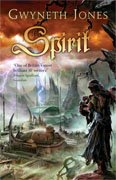
First, there’s Spirit: The Princess of Bois Dormant by Gwyneth Jones. The Count of Monte Cristo in space… well, sort of. Set in the universe of Jones’ Aleutian trilogy (White Queen, North Wind and Phoenix Café), this is 21st Century space opera from one on the UK’s best writers of science fiction. Actually published in December, but the copy I’ve ordered from Amazon has been delayed for some reason. Jones also has a short story collection, Grazing the Long Acre, due out some time in 2009 from PS Publishing.

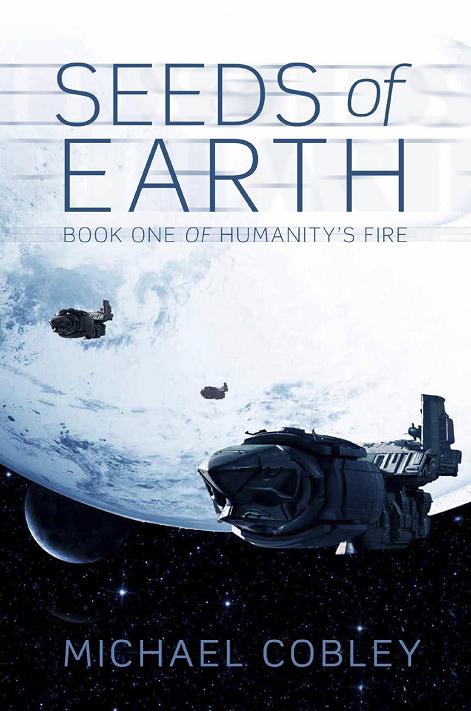
Speaking of space opera, there’s some excellent stuff due out in the coming twelve months… There’s The New Space Opera 2 (Eos) from Jonathan Strahan in July. The first one was excellent, so I expect the second will be too. The first of Michael Cobley’s Humanity’s Fire space opera trilogy, Seeds of Earth (Orbit), hits the shelves in March. And there’s the second of Gary Gibson’s Dakota Merrick trilogy, Nova War (Tor). But I have to wait until September for that. In April, Apex are publishing Paul Jessup’s surreal space opera, Open Your Eyes. Looks very interesting. I’ve pre-ordered it. Well, they did a deal and it sucked me in.

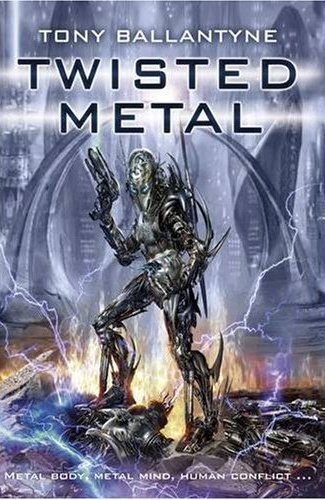
I’m not sure I’d call Tony Ballantyne’s novels “straight science fiction”, but then his new book, due in May from Tor, is titled Twisted Metal. Even if it’s as twisty-turny as a twisty-turny thing, I’ll be getting it. The excellent Keith Brooke has The Accord coming out in March from Solaris. Eric Brown has also been busy – the second book of his Bengal Station trilogy, Xenopath (Bantam), is out in June from Solaris.

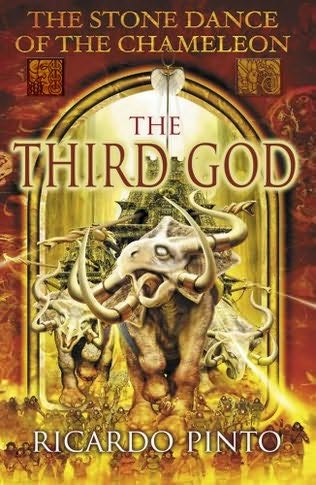
I do read some fantasy, just not as much as I read science fiction. Or mainstream, for that matter. I’m looking forward to Mark Charan Newton’s debut, Nights of Villjamur, out in June from Tor. I’m also eagerly awaiting the much-delayed final installment in Ricardo Pinto’s Stone Dance of the Chameleon trilogy, The Third God. That should be out in March.

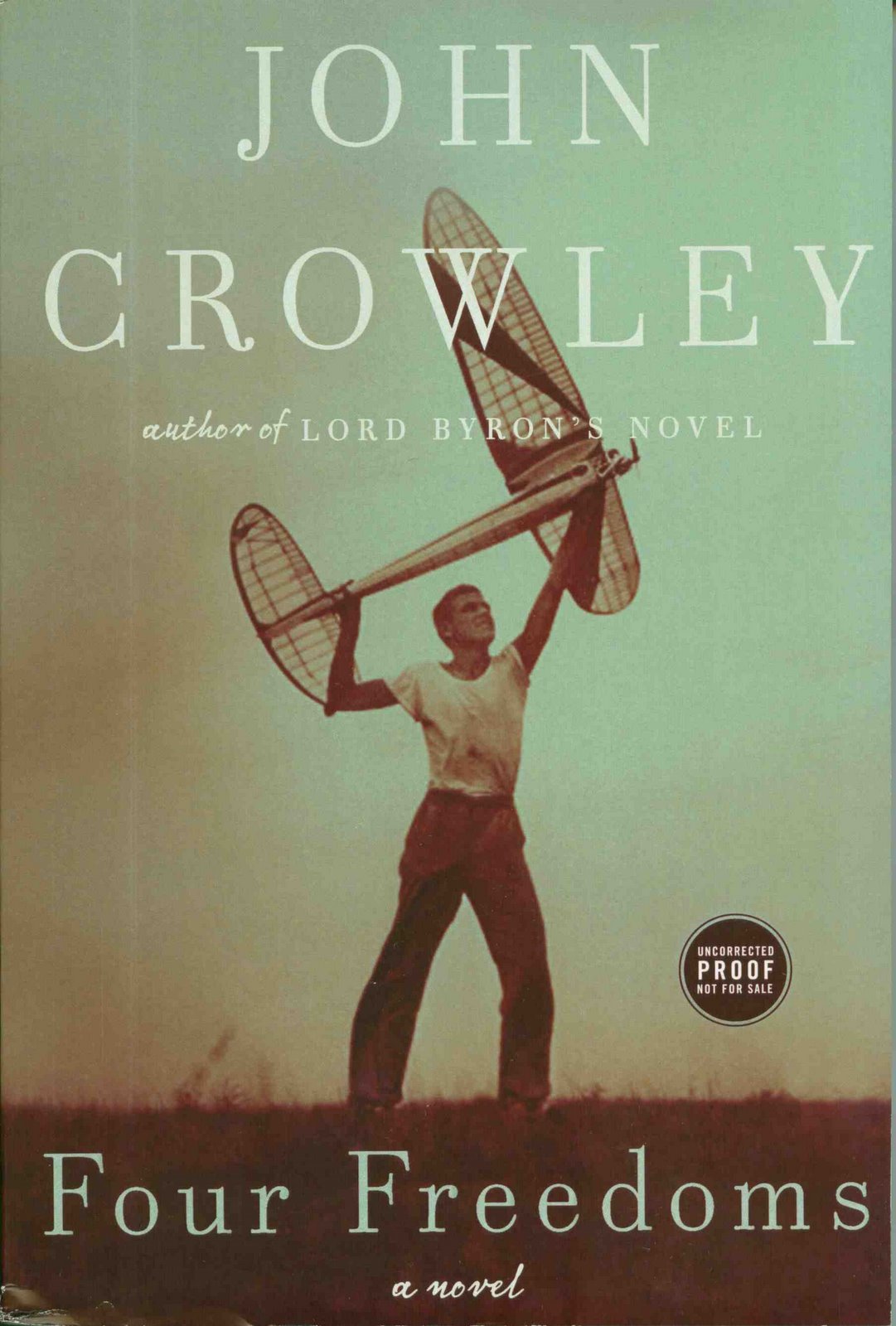
I know nothing about John Crowley’s Four Freedoms, but since it’s by him I’ll be buying it anyway. That’s out in June from Morrow. Likewise Iain Banks’ new novel, provisionally titled Transitions, due in September. Not to mention Richard Kadrey’s Sandman Slim from Eos in August.

Plus, of course, all the good short fiction that will be appearing in print magazines, online magazines, anthologies and the like.


1 Comment

The Joy of Cartography

It’s Monday, so let’s ramble…

World-building is like the proverbial iceberg. It’s only the top ten percent you see in the story. Or rather, it’s only the top ten percent you should see in a story. For example, drawing up a map of your galactic empire or fantasy continent is useful when working out how your characters get about, but is there any real need to share it with your readers? If you create it with the intention of sharing it with your readers, you’re going to be filling it with detail. Drawing little mountains and planets. Dreaming up names for all the worlds and hamlets the characters don’t actually visit. All time-consuming tasks.

Time that would be better spent working on your story.

Plus, of course, you’ll get it wrong somewhere. Rivers that flow uphill, earthlike planets orbiting outside a star’s habitable zone. You could, of course, research – to make sure you get all the details right. That’s time-consuming too.

Time that would be better spent working on your story.

It seems de rigeur these days to open a high fantasy novel with a map, but what do they actually add to the story? Very little. However, they do increase the immersive quality of the story. And that’s what many readers seem to want these days. The plot is almost incidental – a group of archetypes doing archetypal things, or perhaps stereotypes doing stereotypical things. The plot, as such, is often just an excuse to bimble about the fantasy world. With a bit of derring-do and suspense thrown in for good measure. Not to mention a good sword-fight or battle as well.

Maps are less prevalent in science fiction novels. The Evergence trilogy by Sean Williams and Shane Dix features a galactic map in an appendix. I’m fairly sure one or two novels by CJ Cherryh also have maps. There are likely plenty more, but I can’t think of any off the top of my head. But, as a general rule, they’re rare.

There’s an expectation these days that a fantasy novel will open with a map – created, of course, by the genre’s exemplar, The Lord of the Rings. It’s become a convention. In fact, given that much of fantasy’s furniture is filched from various historical periods, it strikes me that the genre’s conventions are not so much plot enablers as they are attributes of the story… Map. Quest. Plot coupons. Peasant-Hero. Hidden King. Dark Lord.

Perhaps that’s the chief difference between science fiction and fantasy. In sf, ideas enable the plot; in fantasy they’re the story’s framework.