All too often when people suggest science fiction titles to introduce non-sf readers to the genre, they pick something that will show them what the genre is capable of. But everybody knows that all ready – they can see it on telly, in the cinema. They know all about space battles, planets exploding, alien vistas, robots, cyberspace, weird ideas. Whether they recognise some of those ideas as science fiction is an entirely different matter – is The Adjustment Bureau, with its “magic fucking hats”, a sf movie, for example? The reason these people don’t read science fiction is because they think it’s badly-written, or mired in outdated sensibilities and so irrelevant to them. And we’re no help because we thrust shit books written ninety years ago by some dead old white bloke at them. So what if the men all wears hats and the women do the dishes, it’s about galactic empires! It’s a classic of the genre!
But, honestly, why should we expect them to plough through three hundred pages of tin-eared dialogue, cardboard cut-out characters and leaden prose just for an “idea”? The whole point of written sf is that it can do what media sf does, but it can do it better. The plots will be logically and internally consistent, it won’t insult your intelligence, it may challenge your preconceptions and prejudices, it will have themes and motifs, and it tries to say something beside “money, please, now park your bum here for 100 minutes”. Plus all those space battles and exploding planets, too. Nothing in a science fiction novel is likely to make you *headdesk* like the “cold fusion” in Star Trek Into Darkness.
So when we try to think of titles for a non-sf reader to read… we should pretty much bin all the classics of the genre. We should choose books that demonstrate sf can be well-written, even beautifully written, that it can handle ideas considered too outrageous for cinema audiences, that it can tell stories that are well-plotted, internally consistent, without dumb plot-holes, stupid bromances, or daddy-issues that obliterate the actual story… We should suggest books that are recent, relevant, and have something interesting, or perhaps even important, to say.
And such science fiction novels do exist. It took me a while, but I think I came up with five. They’re all twenty-first-century novels. I have also read them. One or two might have won or been nominated for prestigious genre awards. They are, in no particular order…
Intrusion, Ken MacLeod (2012) Because it’s a near-future thriller written with genre sensibilities, works brilliantly and recognisably as a cautionary tale on the world we live in, and yet it also does something a writer of near-future thrillers would never consider doing, or might even actually be afraid of doing.
Dark Eden, Chris Beckett (2012) Not only because it won the Arthur C Clarke Award a month or two ago, but because it’s a story everyone will recognise but set on a world which will be completely new to them; and it’s beautifully written too.
Spin State, Chris Moriarty (2004) Because written science fiction can do the fast-paced action/adventure but it can also, in the same story, ask big questions about identity, memory, the future of humanity… and try to answer them.
Solitaire, Kelley Eskridge (2002) Because if science fiction is not about the people, then what’s the point in it – and how much are those people products of the world in which they live?
Life, Gwyneth Jones (2004) Because sometimes science fiction is actually about science and scientists, and how their calling affects themselves, their lives, those around them, and the world.
So: five science fiction novels, published this century by genre imprints. All are currently available. One is the first book in a trilogy, the third part of which has just been published. One is by a small press. I count eleven appearances in genre award shortlists by the five books, and two wins. So it’s not just me who thinks they’re good books. All five books are, I believe, accessible to someone who has not read science fiction before but is familiar with many of its tropes from television or cinema. And all five books, I feel, will show why written sf can do so much more than sf on television or in the cinema…
“For a lazy Saturday”, says SF Signal (see here). It’s Saturday, I’m feeling lazy, so why not? Twelve SF/F/H-related questions on which to do the meme thing:
1. The last sf/f/h book I read and enjoyed was:
I just reread Eric Brown’s four Starship Seasons novellas – Starship Summer, Starship Fall, Starship Winter and Starship Spring – and enjoyed them. The last genre book I read that really impressed me was M John Harrison’s Empty Space.
2. The last sf/f/h book I read and did not enjoy was: Moonstar Odyssey, David Gerrold. A palimpsest novel in which Gerrold uses various stories and testimonies to build up a picture of the terraformed world of Satlik and its inhabitants, who chose their gender at puberty or “blush”. Unfortunately, somewhere along the way Gerrold forgot about his plot – three-quarters of the book is scene-setting before an actual plot is squeezed in at the end. I now have a copy for sale.
3. A sf/f/h book that I would recommend to new sf/f/h readers is: Dark Eden, Chris Beckett. Yes, it won the Clarke Award this year, but as sf texts go it’s quite low-level. By that I mean, despite being set on a rogue planet between galaxies, which features an entirely invented ecosystem, the story itself is as old as the Bible and even readers unfamiliar with the genre and its tropes should have little trouble sympathising with the book’s cast.
The same is also true of Joan Slonczewski’s The Wall Around Eden. It’s set in a small community protected from a post-apocalyptic Earth by a mysterious alien forcefield. The characters are beautifully drawn, the plot works like a well-oiled engine, and there’s nothing in the book at which a non-genre reader might balk.
Um, the Eden references in the titles are purely coincidental…
4. A sf/f/h book that I would recommend to seasoned sf/f/h readers is:
Obviously, I would recommend all the sf novels I most admire. But perhaps I should instead recommend a non-genre book that I think genre readers would enjoy – such as Girl Reading by Katie Ward, or The Explorer by James Smythe. Both were marketed as literary fiction but use sf tropes, and both are considerably better-written than is the norm for genre fiction. Girl Reading is, to my mind, the better of the two, but both are certainly worth reading.
For someone looking for fiction in smaller bites, the sf collection that comes to mind is The Universe of Things by Gwyneth Jones.
6. My favorite sf/f/h book series includes:
Tricky. I love the Dune series, but I don’t think the individual books in it are especially good. And the whole thing has been poisoned by the McDune books churned out by Kevin J Anderson and Brian Herbert. L Timmel Duchamp’s Marq’ssan Cycle is a series I really want to reread; the same is true of Kim Stanley Robinson’s Mars trilogy. But there’s no actual series, in which one novel follows directly on from another for more than three, four or five books, that I’d call a favourite. There are series that contain books I like a great deal and/or admire – the Culture, Eight Worlds, Hainish Cycle, Jurisdiction, Alliance-Union, Dumarest saga… But despite the many seemingly endless series currently being published, there’s none that I eagerly buy each installment the moment it is published.
7. I will read anything by this sf/f/h author:
Easy. Gwyneth Jones.
8. The first sf/f/h book I read was:
It was a Dr Who novelisation: Doctor Who and the Zarbi. Then, at school, a classmate introduced me to proper science fiction when he lent me Heinlein’s Starman Jones. After that it was EE ‘Doc’ Smith and I was hooked. Now, I can no longer read those books.
9. The sf/f/h book I’m most surprised that more people don’t like is:
Probably Coelestis by Paul Park, which I feel deserves to be in the SF Masterworks series. In the past, I’ve championed both Take Back Plenty and The Continuous Katherine Mortenhoe, and they’re now in the series so I live in hope.
10 .The sf/f/h book I’m surprised so many people do like is:
Basically, anything by Asimov. Especially the Foundation series. More recently, I’ve been baffled by the acclaim given to, among others, Wool, The Windup Girl, Leviathan Wakes, or A Song of Ice and Fire. And while I’ve read and enjoyed books by China Miéville, I still can’t see why he’s the poster boy for British genre fiction.
11. The most expensive sf/f/h book I own is:
A hardback first edition of The Dune Encyclopedia. Paperback copies are rare and not cheap, but I was lucky enough to find a hardback copy. It was very expensive, but it was worth it.
12. The number of sf/f/h books I own and have yet to read is:
Not sure; somewhere around the 300 mark, I expect. I did try reading a book on speed reading once, but it took me ages to finish it… But seriously, I typically read three to four books a week. Even so, it’s going to take me years to whittle down the TBR. Especially given that I continue to buy new books all the time…
I’ve been reading a lot for review recently – not just SF Mistressworks, but also Interzone, Vector, and Daughters of Prometheus. But I do occasionally read for pleasure as well – although the reads don’t always turn out to be pleasurable…
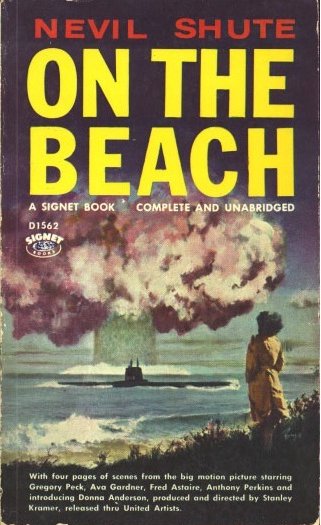
On The Beach, Nevil Shute (1957), is apparently a classic and is often claimed for science fiction since it depicts a world immediately after a nuclear holocaust. The Albanians started it all off, the Egyptians then attacked NATO, and NATO thought it was the Soviets and so the nations of northern hemisphere wiped each other out in Mutually Assured Destruction. Now the last few humans, in southern Australia, pass the few months remaining to them. A lone US nuclear submarine has survived the destruction of the US and made itself available to the Royal Australian Navy. When a series of signals in Morse code – mostly unintelligible, but occasionally a clear word comes through – is detected coming from the west coast of the US, the USS Scorpion is sent to investigate. Much of the novel describes the Australians coming to terms with their impending doom – nuclear fallout is drifting south across the equator, and no one will survive when it reaches them. The USN captain pretends he still has a family back in New England, the RAN officer aboard the submarine and his wife plan for the future of their young baby, Moira, the young woman who is paired off with the USN captain, drinks and parties a lot and falls in love with the captain, and the scientist who’s tracking the drift of the fallout starts racing fast cars, culminating in a fierce race in which most of the drivers die in crashes. The prose is clunky at best, though Shute draws his characters quite well. It’s easy to see why the book is so well-regarded, though it wasn’t as smooth a read as I’d expected. Happily, it’s better than the film adaption – which starred Gregory Peck as the USN captain, Ava Gardner as Moira (as an Australian with an American accent), and Fred Astaire as the car-racing scientist. You’d think the book would adapt well, but Stanley Kramer managed to make the whole thing extremely dull.
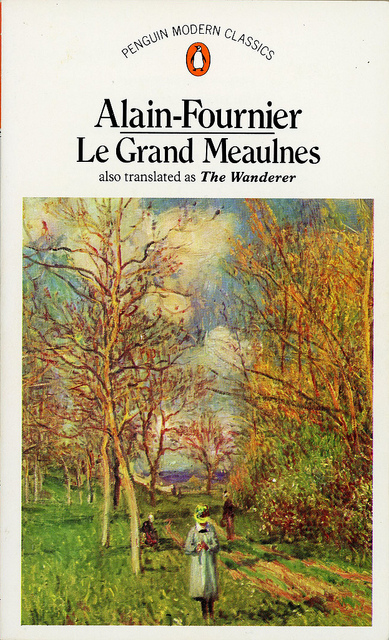
Le Grand Meaulnes, Alain-Fournier (1913), was one of my father’s Penguin paperbacks, and I thought it looked interesting enough to be worth a read. It’s framed as the reminiscences of François, who attended a village school in the Sologne run by his father. A new boy appears at the school, Augustin, but he runs away one day and stumbles across a wedding party at a small chateau. He is mistaken for one of the guests, and has a magical time. However, the wedding fails to take place, and Augustin leaves and returns to the school – but he cannot remember the location of the chateau, and desperately wishes to meet the sister of the bridegroom once again as he had fallen in love with her. The “lost domain” drives Augustin – le grand meaulnes of the title – but even when the MC of a travelling circus proves to be the bridegroom from the wedding, he is still no closer to finding the girl of his dreams. Eventually, François stumbles across the location of the chateau, makes friends with the young woman, and informs Augustin of his discovery. But Augustin has been on another quest, and things have changed… There’s a nicely elegiac atmosphere to Le Grand Meaulnes, though that’s hardly surprising in a story which covers both lost childhood and lost love. The writing in the translation I read was very good throughout and while the story was very slow to start, it was worth reading. A classic.
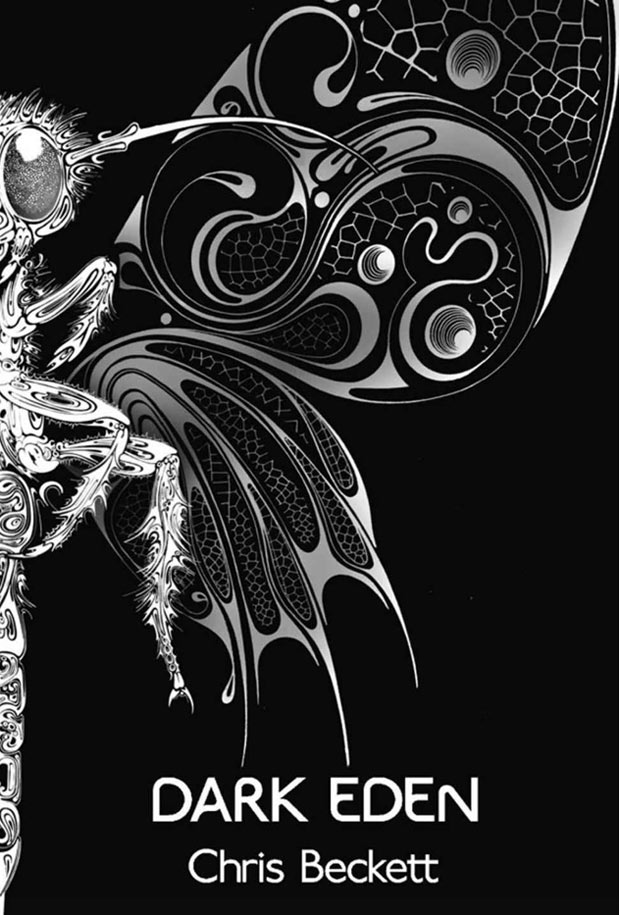
Dark Eden, Chris Beckett (2012), was shortlisted for the BSFA Award but did not win, and has now been shortlisted for the Arthur C Clarke Award. Set on a rogue planet travelling through, I think, intergalactic space, the novel plays out Cain and Abel among the 500 descendants of a single couple who were marooned there. The story is told by several narrators, in a strangely-random debased English – some words have devolved, but others haven’t. So the various words for local flora and fauna have remained unchanged, but the annual celebration of the landing has become “Any Virsry”. The inhabitants of the planet are also suffering from severe inbreeding, with many of them having deformed feet or severe hairlips. John Redlantern, however, is perfectly normal, although he is a good deal more thoughtful than everyone else. When he realises that the valley in which they live can no longer support further growth, he tries to persuade the elders to sanction a search for more living space. They reject his proposal because they believe they’re to wait for rescuers to appear… as they have been doing for nearly 200 years. Things come to a head, John is exiled and takes with him a small group of teenagers. But then his enemy back in the main colony foments hatred against John and his followers, there’s a clash, and John is forced to take his small colony across the frozen waste which surrounds the valley in search of a new valley in which to live. There’s an almost Biblical inevitability to the story of Dark Eden, and some members of the cast do play their roles with all the thudding predictability of characters from the Old Testament. But where Dark Eden does shine is in its presentation of its old story. The setting is a small work of genius, and beautifully described, and the integration of the characters in the setting is handled with real skill. It’s no surprise Dark Eden has appeared on the shortlists of the UK’s two most-prestigious science fiction awards.
Jamilia, Chingiz Aïtmatov (1958), I bought for my 2012 world fiction reading challenge, but I never managed to complete the challenge after getting bogged down in both Orham Pamuk’s My Name is Red and Javier Marías’ Your Face Tomorrow 1: Fever and Spear. But Jamilia is a slim work, more of a novella than a novel, so I picked it up one day earlier this month and read it on my way to and from work. It’s blurbed as “the most beautiful love story in the world” and, well, if it isn’t, it comes very close. It’s set in Aïtmatov’s native Kyrgyzstan sometime during the Second world War. The men have all gone off to fight, leaving the women, old men and boys to run the village and bring in the harvest. When Daniyar returns from the fighting, but his family are no longer alive, he is tasked with assisting the narrator’s family – especially transporting the grain by cart to the nearby town, along with the narrator and the narrator’s sister-in-law, Jamilia (whose husband is away fighting). Over several trips, Jamilia and Daniyar fall in love, but their relationship is forbidden as Jamilia is still married. The writing is simple but effective, although the translator has bizarrely mixed up Islamic oaths and Christian ones, which seems a pretty fundamental mistake to me. A fascinating little novella. Worth reading.
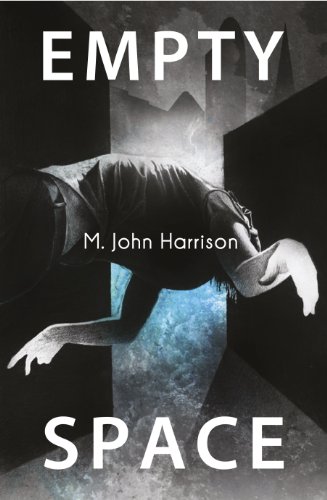
Empty Space, M John Harrison (2012), is the third and final book of Harrison’s Kefahuchi Tract trilogy, the first of which, Light, marked his return to science fiction after many years away. I’m not sure there’s any value in giving a précis of the plot, since in parts it’s wilfully opaque – as it has been throughout the entire the trilogy. Suffice it to say that some of the plot-threads from the preceding two novels do see some sort of resolution in this book. Harrison’s future is dirty and enigmatic, but it is also full of small inventive touches. The prose is like the roiling quantum foam of the strange physics it describes. Though the section set in the very near-future, featuring Anna Waterman, the widow of the physicist Michael Kearney from Light, reads more like the sort of literary fiction in which fantasy is injected sideways into the real world – much like Harrison’s earlier The Course of the Heart and Signs of Life; the narratives set on the worlds bordering the Kefahuchi Tract use the language of science fiction with a facility few genre writers can match. An alien installation, dubbed the Aleph, threads its way through the story, stitching together the various narratives as it manifests the strange physics emanating from the Tract. Strangely, though aliens are frequently mentioned in the book – and the tramp freighter Nova Swing’s cargo consists of mysterious alien “mortsafes” – they are entirely off-stage, or implied to have existed only in the deep past. Not every character is human, but the template of every character certainly is. Having finished Empty Space, but I can see the resolution and how it comes together, but I’m not entirely sure what has been resolved. It’s like the strange physics which informs the story – the effect is visible, the cause is unknowable and the process often seems to follow rules of its own. I think I shall have to reread all three books to get a real handle on it.
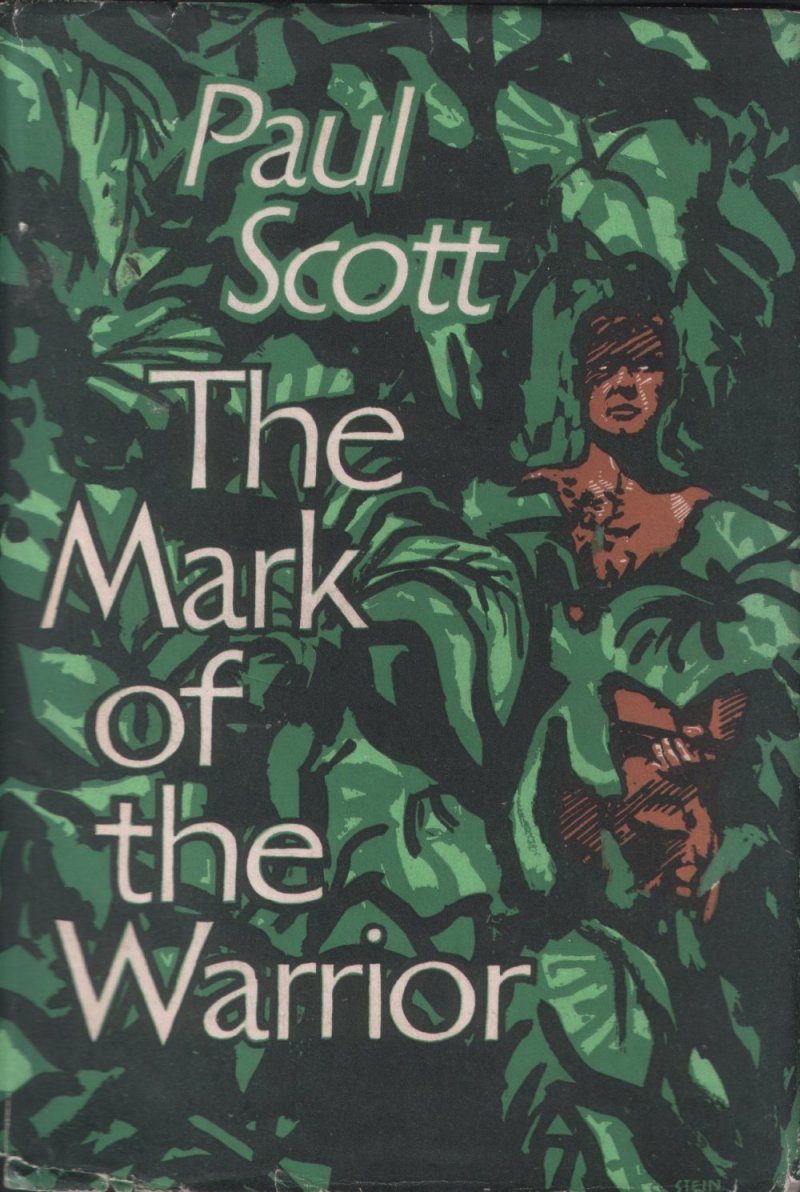
The Mark of the Warrior, Paul Scott (1958), is likely to remind genre readers of at least two books, even though it is set in India in 1942 and is about officer-cadets being trained for combat in the region. Major Craig is a veteran of the war in Burma – while he made it out of the jungle, as did most of his company, he did lose his second in command, John Ramsay. And now Craig has been assigned to an Officer’s Training School near Pune, as has Ramsay’s younger brother, Bob. Craig sees in Bob Ramsay the same thing he saw in John Ramsay – “the mark of the warrior”, a natural soldiering ability coupled with what are probably sociopathic tendencies. Certainly, young Ramsay proves to be the best cadet at the school – so much so that when the design of a final exercise is made into a cadet competition, Ramsay wins it by presenting a scheme both he and Craig know will prove the only useful one to those destined to fight in the region. Instead of previously setting up combat set-pieces on the nearby plains, Ramsay’s scheme involves an attack on a fortified position in the jungle thirty miles to the north of the school. Those who have read Gordon R Dickson’s Dorsai trilogy are going to find a lot in The Mark of the Warrior which seems familiar, and given that Scott’s novel beat Dickson’s The Genetic General into print by a year, you have to wonder… On the other hand, it’s not all that likely a US sf author would stumble across a novel by a British mid-list literary writer within a year of its publication. Nevertheless, the Dorsai seem to owe a lot to Ramsay. As does Orson Scott Homophobe’s Ender, though not having read that book, I’m not sure how close any resemblance might be. Genre comparisons aside, Scott’s novel is a minor work. It’s well-written, and the characters of Craig and Ramsay are drawn extremely well. I said of Scott’s The Bender when I read it that it would make a good British film, and the same is true of this one. It’s time for adaptation is long past, however; though perhaps the story could be updated to the present day without too much difficulty.
Owning books can be more fun than simply reading them. At least that’s what I tell myself when I eye the double-stacked book-shelves and piles of books on the floor of my house. Which is not to say that I plan to keep every one of the books mentioned in these book haul posts. Some of them will go to charity shops once I’ve read them, some of them will go elsewhere. But until I actually start reading more books each month than I buy, the piles are only going to get higher…
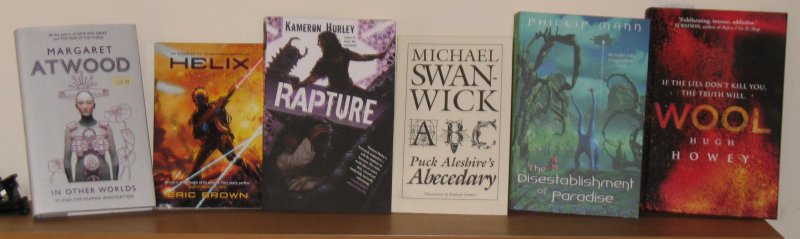
New science fiction: Wool I’m reviewing for Interzone. It has come close to being hurled at the wall a couple of times. The Disestablishment of Paradise is a new book by a favourite author, who hasn’t had anything published for a good many years. I should probably have hung on for the UK edition of Rapture, but I do like my trilogies to all match and I already have the Night Shade editions of the first two books. Puck Aleshire’s Abecedary is a small press chapbook I bought on eBay. Helix Wars was sent me by Eric, and In Other Worlds I picked up for £3.99 in a discount bookshop in Wetherby.
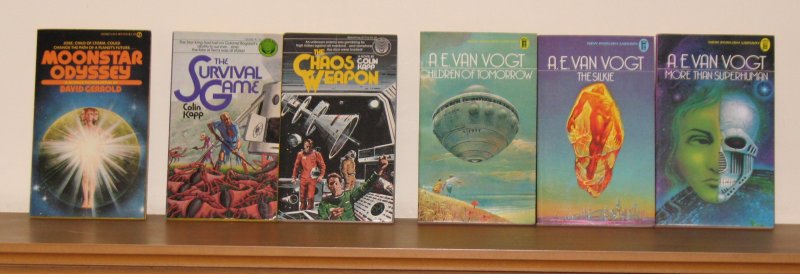
These six paperbacks I bought from Cold Tonnage. I may slag off van Vogt a lot, but some of his books transcend their chaotic bonkersness and I find them weirdly appealling. I don’t know if More Than Superhuman, Children of Tomorrow or The Silkie fit that bill. I guess I’ll find out. Colin Kapp is forgotten and under-rated Brit sf author who, like many of his 1960s and 1970s contemporaries, was chiefly published in the US. The Chaos Weapon and The Survival Game are among the last few of his I didn’t own. And Moonstar Odyssey I’ve been looking for a decent copy of for ages, though I can’t remember exactly why…
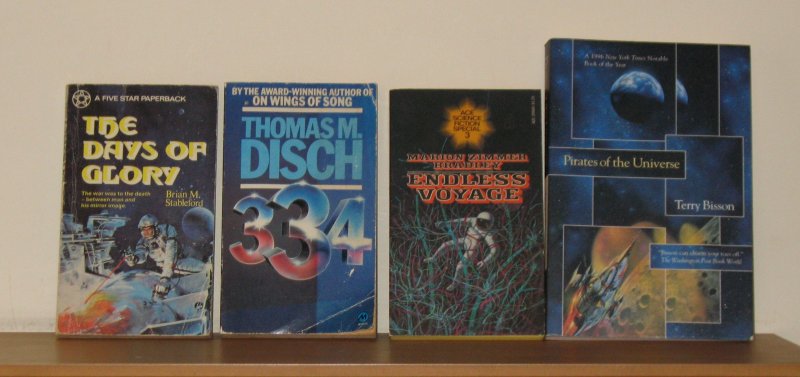
Some secondhand sf. Pirates of the Universe I’ve been after for a while. The last time I bought a copy, I received a refund instead as the book had apparently suffered a “scissors accident” while the buyer was packing it to send. I know nothing about Endless Voyage, but the new Ace special series from the mid-1970s contains some odd books among its eleven titles. I’ve decided to collect them. 334 is a genre classic which I’ve never read, and The Days of Glory is the first book of Stableford’s Dies Irae trilogy. Both the last were charity shop finds.
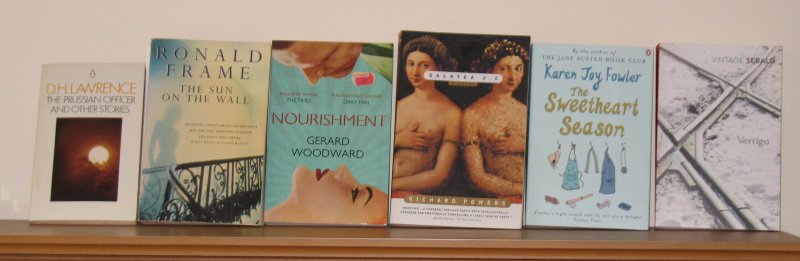
Vertigo was a birthday present, but all the rest were charity shop finds. I enjoyed the The Jane Austen Book Club, so I expect I’ll also enjoy The Sweetheart Season. Fowler’s genre work, of course, is excellent. Galatea 2.2 is literary-but-it’s-really-sf novel, which Powers has apparently done a couple of times. Nourishment is Woodward’s latest; I enjoyed his first, August (see here). I’ve been meaning to try Ronald Frame’s fiction, but it’s taken me a while to find one of his books. And I’ve not checked The Prussian Officer and Other Stories yet, but I suspect I’ve already about half of its contents. But at least that’s half I’ve not read.
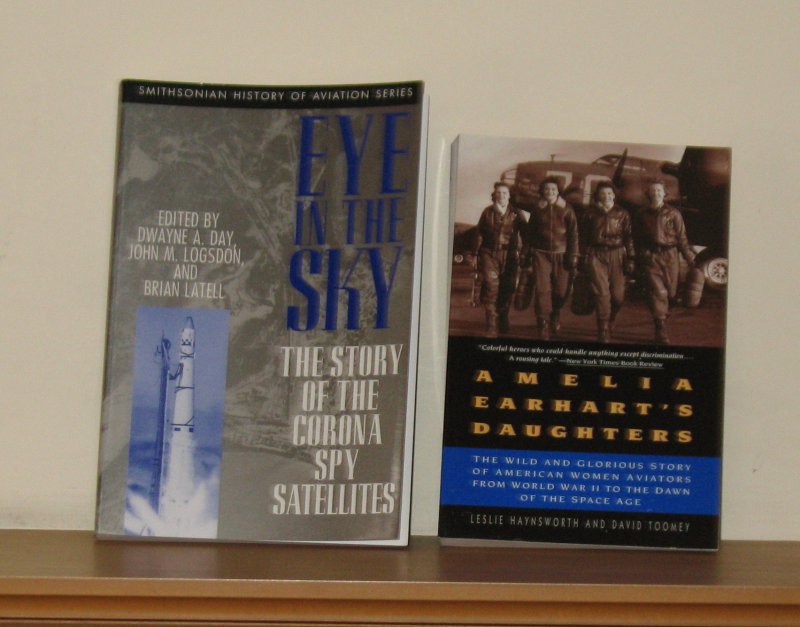
These are research books for the next book of the Apollo Quartet. They might give a clue as to its story.
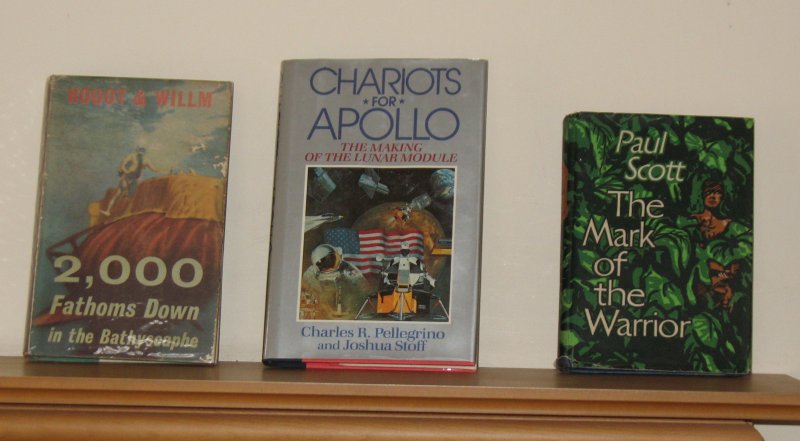
Three books for three collections: The Mark Of The Warrior is a first edition, to go with my other Paul Scott first editions; Chariots for Apollo is for the space books collection; and 2,000 Fathoms Down in the Bathyscape joins my (currently very small) collection of books on bathyscaphes and deep sea exploration.
After yet another argument on a science fiction forum, I decided to work out how many books I’ve reviewed – because in order to review a book, I have to read it critically. Which is not to say I don’t normally read critically, although sometimes the book simply isn’t worth doing so; but for a review, no matter how bad the book is, I have to.
I have a rough idea of how many books I’ve read. Since I started keeping records in 1991 I’ve read 3220 books, but I’ve no real idea how many I read before that. Probably a couple of thousand more. I have, after all, been reading books for about 40 years. And around two-thirds of those books have been science fiction. So I’ve been reading it a long time, and I’ve read a lot of it. This means that when I say Asimov is a bad writer, I’m not saying it having never read any of his books. In fact, I’ve read most of his novel-length oeuvre, and a good many of his short stories.
But, critical reading… I started out reviewing books in 1988 for Paperback Inferno, a review magazine for the British Science Fiction Association. In 1992, Paperback Inferno was folded into Vector, the critical journal of the BSFA, and I began reviewing for that magazine. I stopped a couple of years after I moved to the United Arab Emirates in 1994.
Between 1993 and 2003, I was in an APA called Acnestis, run by Maureen Kincaid Speller. Each month, we’d write a contribution – a combination of fan writing, criticism, reviews, commentary on previous months, etc – and produce thirty copies, which we’d post to Maureen. She would then sort those so each of us received an envelope containing a copy of each person’s contribution for that month. Acnestis helped keep me sane during my decade in the UAE. In my contributions, I usually mentioned the books I’d read that month. Sometimes it was just a capsule description, but occasionally I’d write a longer review. But only thirty people ever got to see those reviews.
In 2007, I started up this blog – originally on blogger.com, but now on WordPress – and among the many things I posted were several reviews of books I’d read. I also republished some of my Acnestis reviews. In 2008, I became a reviewer for Interzone. In 2010, I was asked to provide reviews for SFF Chronicles. In 2011, I set up SF Mistressworks. And in 2012, when Daughters of Prometheus started, I began contributing to that…
So that’s a lot of reviews. It is, in fact, 237 reviews. And here are a few tables breaking down that figure:
Reviews by year
(Note ten-year gap from 1997 to 2007.)
year
Total
1988
4
1989
4
1990
14
1991
9
1992
5
1993
20
1994
5
1995
1
1996
1
1997
4
2007
10
2008
24
2009
20
2010
26
2011
38
2012
44
2013
8
Grand Total
237
Reviews by venue
(I have counted reviews only by their original appearance.)
venue
Total
Daughters of Prometheus
5
Interzone
21
It doesn’t have to be right
88
Paperback Inferno
33
SF Mistressworks
36
SFF Chronicles
16
The Lyre*
6
Vector
32
Grand Total
237
The top ten by number of books reviewed of authors.
(Gwyneth Jones is no surprise, and I do have a habit of reviewing each new Iain Banks genre novel as it appears. Two of the Ian Whates books were anthologies he edited.)
author
Total
Gwyneth Jones
6
CJ Cherryh
5
Iain M Banks
5
Ian Whates
5
DG Compton
4
Carolyn Ives Gilman
3
Ken MacLeod
3
Louise Cooper
3
Pamela Sargent
3
Roger Zelazny
3
I have reviewed books by 182 different authors, not all of them genre. I’ve not included the capsule reviews I’ve posted to my blog in these numbers, though that would likely bump the figure by about another 100 or so. I can’t claim the quality of my reviews has been consistent, either over the years or within a single year. I like to think they’re readable, honest, and occasionally make useful points.
I don’t usually have the luxury of time to spend months giving a book a really deep read with the intent of writing several thousand words on it. There are far too many books I want to read, and a year in which I read only a dozen or so books would feel like a complete waste of twelve months to me. Of course, I don’t write a review of every book I read. Nor do I choose every book I read for review – for Interzone, for example, I can only pick from among what’s available, and I don’t always get my first choice.
But I’ve been doing this for a few years now, and I’d like to think I’ve sort of got the hang of it. I don’t consider myself a critic – I don’t have the toolset for that. And, to be honest, I’d sooner focus on writing my own fiction than study to be a critic. I think it is important, however, that if you want to seriously discuss science fiction, or any fiction for that matter, then you need to read critically. Otherwise it’s just squee. It’s no good being knowledgeable about a novel’s universe or story, you also need to understand how that story works, where the author has succeeded and where they have failed, and why. That’s what reviewers try to do, that’s what I try to do when I write about other people’s fiction. That’s what I’ve been trying to do since 1988, over the course of 237 book reviews…
* The Lyre was a small press genre magazine I co-edited in the early 1990s. We published two issues, featuring original fiction by Eric Brown, Simon Clark, Stephen Baxter, Michael Cobley, Keith Brooke, Gwyneth Jones, Peter F Hamilton, Peter T Garratt, and a few other less familiar names.
I have been a bit rubbish at posting here over the past month or so, and I’m not entirely sure why. I could claim it’s because I’ve been busy writing short stories, novellas and novels, but that wouldn’t be entirely true. I have been busy – but it’s been other stuff: writing reviews, family stuff. And I’ve only managed to squeeze in a bit of fiction writing in here and there. I have been reading, however. Though not as many books as I’d have liked. Here are some of them – chiefly the ones I’ve not already reviewed, or plan to review, for SF Mistressworks or Daughters of Prometheus…
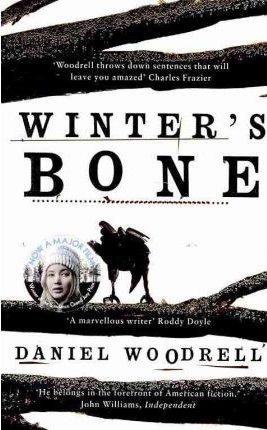
Winter’s Bone, Daniel Woodrell (2006)
I was interested in reading this after seeing, and being much impressed by, the film adaptation. I was expecting a genre crime novel with a plot much like that of the movie. What I wasn’t expecting was a well-written literary novel, which actually has less plot than the film. Sixteen-year-old Ree’s father has gone missing, and he put up the house and land as collateral for bail. Which means if he doesn’t turn up in court, they lose the house. So Ree goes looking for him. The story is set in the Ozarks, where everyone is related to everyone else and most of the men are involved in brewing up or distributing drugs. Ree’s questions are not welcome – and it takes much of this short novel before she discovers why. If the film is brutal and the people in it scary, then the book is more so. The film adds a scene set at a cattle auction, but loses one where Ree and her best friend help to catch a pig loose on a bridge. There’s some lovely writing in this, Ree is extremely well-drawn, and the setting is, well, just plain frightening. I’m going to read more Woodrell. Recommended.
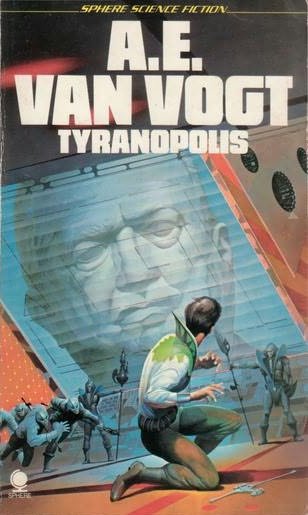
Tyranopolis, AE van Vogt (1973)
AE van Vogt really was a shit writer. He built his career on advice taken from a how-to-write book. And it shows. I still have a soft spot for his fiction because, every now and again, purely by accident, he manages to create something that’s almost mythic. But vast swathes of his oeuvre are unreadable meretricious tosh. He makes stuff up out of whole cloth, and it possesses neither plausibility nor rigour. Tyranopolis is a case in point. At some point in the future, a mysterious dictator rules the entire Earth with an iron fist. But an inventor, er, invents some sort of ray that allows him to see everywhere and be seen everywhere. Knowing the tyrant’s forces are closing in, he gifts the secret to his unborn son moments after the act of conception, by, er, putting it in his DNA or something. I don’t know. It makes no sense whatsoever. Whatever drugs van Vogt was on when he wrote, they were clearly more powerful than those used by Philip K Dick. The writing in Tyranopolis hovers on the cusp of sense, the plotting reads like he made it up as he went along, the central premise is complete nonsense, and yet… and yet… No, there is no “and yet”. Not for this one. It’s a rubbish book. Avoid it.
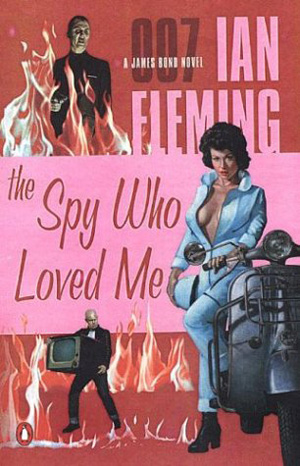
The Spy Who Loved Me, Ian Fleming (1960)
Fleming was a real pioneer, you know. The Spy Who Loved Me is ground-breaking, you know. Because it’s a Bond novel, but Bond isn’t the protagonist! He doesn’t even appear until about a third of the way in! And, get this, the entire novel is narrated by a woman! I know, shocking. So the title doesn’t refer to some KGB temptress who falls for 007’s manly charms, as it does in the film. Bond is actually the spy of the title. But he doesn’t really fall in love with the narrator. And she knows it – indeed, she says as much. She’s making her way through the US from Canada on a moped and stops off at a remote motel. She stays on to work there, and is made responsible for closing the place down for the winter. Two employees of the owner turn up and it transpires they’re there to torch the place for insurance purposes. Fortunately, Bond suffers a flat tyre nearby, so he’s around to foil their plot and save the girl… You know when an author falls in love with their own creation, and this persuades them that writing a story about said creation from the point of view of a lovestruck young woman is a good idea? That. And they say this is the best of the Bond novels… Pfft.
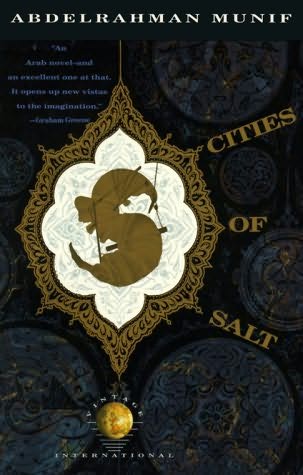
Cities of Salt, Abdelrahman Munif (1984, trans. 1987)
The lives of the Bedouin of Wadi al-Uyoun are disrupted by the discovery of oil. Eventually, they are moved and rehoused, but some instead move to the coastal village of Harran. Which then becomes the point of entry into the country for American oilworkers, and so the site of their camp and offices. The novel then charts the growth of Harran through the lives of some of its more notable inhabitants. The nation is meant to be an invented Gulf state, but Harran is clearly modelled on Dhahran. Munif is especially critical of the Americans and their interference and ignorance of Bedouin life, but he’s also critical of those Arabs who accepted US largesse and grew fat on the proceeds. I suspect Munif was not especially well served by his translator as some of the prose in Cities of Salt is clunky in places, but Munif certainly shows a sharp eye for characterisation. As far as I can determine, this book, and its two sequels, were never published in the UK – my copy is a US paperback – which is a shame as it’s definitely worth reading. I’ll have to get hold of the rest of the– Um, it’s apparently a quintet, but only the first three books were published in English. I guess I’ll have to start practicing my Arabic again, then…
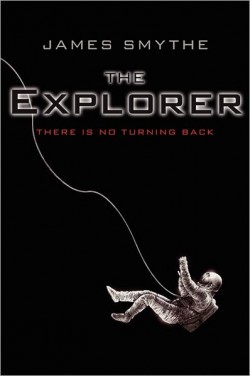
The Explorer, James Smythe (2013)
A handful of days into the first mission to send human beings as far from Earth as possible, and all of the crew have died except for the journalist, Cormac Easton. The first third of The Explorer explains how these deaths came about – and they’re senseless, mostly preventable deaths – and you start to wonder what the remaining two-thirds will be about… And then the second part starts, and the story kicks into a higher gear. James sent me a copy of this novel (a swap for a copy of Adrift on the Sea of Rains), and he did warn me I’d have to accept a certain lack of… scientific rigour in the set-up. And that’s certainly the case. In truth, the spacecraft seems more like something from a Hollywood film than genuine space fiction, with its mysterious engines, store rooms, and even room inside the walls in which Cormac hides like a rat. When the engines are running, there is no gravity. But when they stop, then there is gravity. Which is not something I can quite get my head round. Though I only saw a couple of episodes of it (but I was given the complete series on DVD for my birthday recently), I was reminded more of Defying Gravity than the Apollo programme, International Space Station or even one of my favourite fictional space television series, Space Odyssey: Voyage to the Planets. Happily, despite its creative use of space engineering, The Explorer very much worth reading. Cormac is well-drawn, and his descent in to madness is skilfully handled. Perhaps the rest of the crew tread a little close to stereotype, but that’s the nature of space fiction – astronauts are by definition stereotypes. Apparently, there will be a sequel, though I’m not entirely sure how that’s going to work…
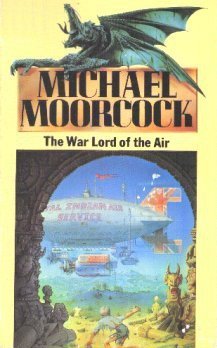
The Warlord of the Air, Michael Moorcock (1971)
If you’re a fan of all things steampunk, if you write steampunk, and you’ve not read this book, then you are doing it wrong. Though it starts inauspiciously, with a dirigible dropping ballast to descend, Moorcock’s airship opera is a clever commentary on imperialism framed in the language of pulp fiction. In 1902, Oswald Bastable visits the Shangri-la-like lair of an evil Indian high priest. An earthquake strikes, destroying the lair, and somehow throwing Bastable forward in time to 1973. He is rescued by an airship, and discovers that the Balance of Powers still holds good across the world, with most nations part of one or the other empire, all of which are ruled by means of vast fleets of airships. Bastable ends up inadvertently assisting Socialist terrorist Count Guevera escape the authorities, before being captured by Chinese warlord OT Shaw, who plans a future free of imperialism. This results in Shaw dropping a nuclear bomb, invented and built by his refugee scientists, on the airship yards of Hiroshima. Which throws Bastable back to 1903. The whole story is framed twice – once by Moorcock’s grandfather, who met Bastable and recorded his story, and by Moorcock himself, who found the manuscript in the attic. Bastable appears in another two novels – The Land Leviathan and The Steel Tsar. I’ll have to get hold of copies. Seems the trilogy is being reprinted this year, with nice new cover art.
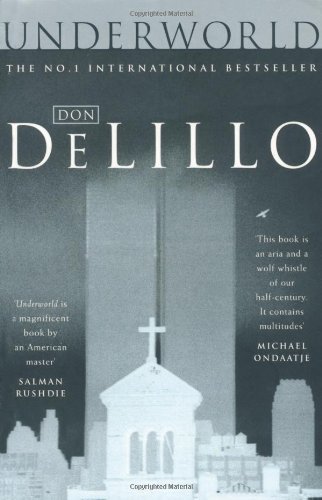
Underworld, Don DeLillo (1997)
Many many people had told me this is an excellent novel, so I was quite chuffed to find a copy in a charity shop last year. But its daunting size – 827 pages! – made me somewhat reluctant to give it a go. But at the beginning of this month, I found myself reaching for it and… Well, no one told me it opened at a baseball game. I hate baseball. And I hate fiction about baseball even more. Actually, I hate sport, and I hate fiction about sport. But. Underworld opens at the 1951 game between the New York Giants and the Brooklyn Dodgers, and describes the winning home-run apparently known as “the shot heard round the world”, which is a bit rich as only Americans actually give a shit about baseball. Underworld then introduces a number of characters, each of whom shares some link with the baseball from that winning home-run. The chronology bounces all over the place, describing events in various decades in no particular order. Some real world people make appearances – Frank Sinatra, J Edgar Hoover, Lenny Bruce, among others. The writing throughout is mostly lovely and sharp, and the dialogue is especially good – though its particular rhythm does have a tendency to blur some of the characters together. The Lenny Bruce sections I thought the least successful – they didn’t seem a sharp enough commentary on the zeitgeist to warrant inclusion. And it’s long novel, a very long novel. It’s a novel which will merit rereading. But it’s also a novel that’s too big and a bit too flabby to leap into my top ten novels of all time. Oh, and the premiere of the lost Eisenstein movie which gives the novel its title reminded me too much of Burroughs’ Casablanca Film Club and I found it hard to take that section seriously…
In other words, we’ll not bother mentioning the crap ones, or the ones that are meh – though I did include one that was so bad, people should be warned off it. I’ve also excluded those I’ve read for review elsewhere – on SF Mistressworks or Daughters of Prometheus (for which I have a backlog of reviews to finish and post).
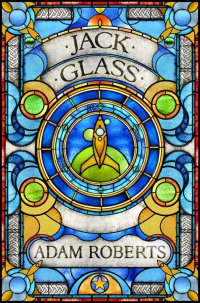
Jack Glass, Adam Roberts (2012)
Which I read too late in the year to consider for my best of the year post. Adam Roberts’ novels in précis always sound interesting and appealing, and yet I still need to find the right way to read them. This one I think I’ve come closest. It is, as Adam himself describes it, an attempt to “collide together some of the conventions of Golden Age science fiction and Golden Age detective fiction”. It opens with an impossible escape, told from the point of view of the escapee. Next is a murder-mystery. Finally, there is a locked-room mystery. All three involve the mysterious figure Jack Glass. This is a gruesome and quite Dickensian novel. The Solar System is filled with disenfranchised poor, living in fragile space habitats, while a hierarchy of the ultra-rich and privileged live a life of luxury. But the possibility of FTL – even though against the laws of physics – threatens this situation by providing an escape to the stars. And that’s the maguffin driving the three sections of the novel. The characters are a bit annoying, especially their speech patterns, and perhaps there’s a little too much authorial sleight of hand used in places to delay the solution, but it all hangs together very entertainingly and readably. Though I’ve only read about four or five of Adam’s novels, this one was the most enjoyable – perhaps because it felt the most authorial, despite managing to capture the tone and verve of Golden Age sf.
A Son of the Rock, Jack Deighton (1997)
A somewhat old-fashioned sf novel – it wouldn’t have looked out of place among British sf of the 1970s; and I hold British sf of the 1970s in high regard – and well-written, but with a mostly unlikable narrator. It’s set in a sort of future galactic human co-prosperity sphere, in which primitive worlds are exploited for raw resources. The population also undergoes an anti-ageing treatment, which is so endemic that signs of ageing, and old people themselves, are viewed with fear and hatred. The narrator works for a mining company, but before taking up his post he goes on a Grand Galactic Tour. On the world of Copper, he meets the titular character, an old man, who both repels and fascinates him. It also seems the old man sees a kindred spirit in the narrator. Later, after he joins the mining company, the narrator chooses not to take the anti-ageing drug – his grandmother reacted badly to it, and the condition is genetic so he could also suffer from it – and over time becomes a freak in society. There’s some very nice description in the book, and the premise is handled well, but it feels a little old-fashioned in places, and the supporting cast are nicer than the narrator is. Definitely worth reading, however.
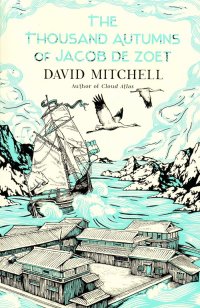
The Thousand Autumns of Jacob De Zoet, David Mitchell (2010)
I took this with me to Denmark to read over Christmas, as it had been sitting on my TBR since November 2010. And I’m glad I did. It is the late 1790s and the title character has arrived at the Dutch East-Indies Company’s trading post in Japan, Dejima in Nagasaki’s harbour, to assist a new manager root out corruption. But the novel is only sort of about de Zoet. It’s also about the Japanese midwife he falls in love with, and the bizarre shrine where she becomes a prisoner when her father dies, and how de Zoet beats the British attempt to muscle in on the Japanese market. It reads like straight historical fiction – although that shrine holds a horrible secret, which seems to have given its monks immortality. The period detail rings true and it’s clear Mitchell did plenty of research. They were a horrible venal, nasty, brutal and racist lot in those days, and Mitchell pulls no punches. It doesn’t make for sympathetic characters, so it’s impressive Mitchell manages to carry the story with such an ugly cast. I think this is the best of Mitchell’s novels – yes, even better than Cloud Atlas.
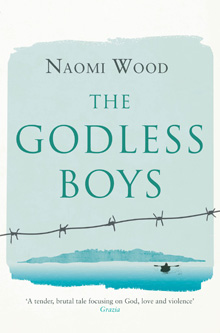
The Godless Boys, Naomi Wood (2011)
This one got a lot of positive word of mouth last year, so I thought it would be worth a go. In 1951, a Secular Movement opposed the increasing hold the churches had on British society. This prompted a government backlash. The secularists were rounded up and exiled to an island off the north-east coast of England. In 1977, there was another wave of church burnings, and yet more people were sent to the Island. And on the Island, a decade or so later, a group of youths, led by Nathaniel, see themselves as guardians of the inhabitants’ godlessness. That is until a young woman arrives, looking for her mother, who disappeared in 1977 and was implicated in the burning of a church. I wanted to like this book, but it was trying so hard to be A Clockwork Orange, and failing, that it annoyed me. The Island came across as some parody of “grim Up North”, the neologisms felt horribly forced, and I never really got a good handle on the age of the protagonists. It comes as no surprise to discover that Wood has a MA in Creative Writing.
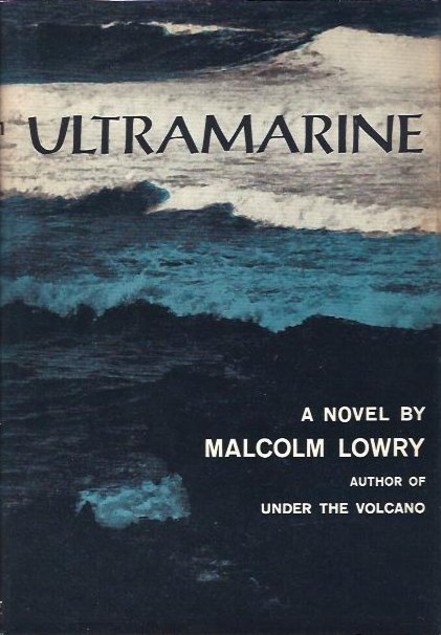
Ultramarine, Malcolm Lowry (1933)
So I read ‘Through the Panama’ in Lowry’s only collection, Hear Us O Lord from Heaven Thy Dwelling Place, and was blown away. Perhaps the rest of the collection wasn’t as impressive, but I wanted to read more. Happily, I’d grabbed the aforementioned collection, Ultramarine, Lowry’s first novel, and Under the Volcano from my father’s Penguin paperback collection. But I also went further and picked up some first editions of his other books. And, er, Ultramarine, his first novel. Again. The edition I have, in both paperback and hardback, is the 1962 revised edition of the 1993 original – revised, obviously, not by Lowry, who died in 1957, but very much based on his part-written revisions for the novel (which he had done in order to bring it in line with a planned seven-novel sequence titled The Voyage That Never Ends (actually used for a collection of Lowry’s “fictions, poems, fragments, letters”)). The narrator of Ultramarine – who is loosely based on Lowry himself, as indeed are most of his protagonists – joins the crew of a tramp freighter as a mess-boy, but is not liked by the rest of the crew. The book takes place in the Far East, while the ship is moored at Tsjang-Tsjang. This is a book you should read for the writing, which is excellent. There’s not much in the way of plot. The characters are superbly drawn, often just through dialogue. It’s easy to see why Lowry was such an important writer.
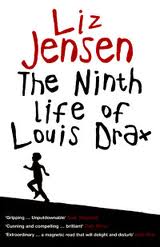
The Ninth Life of Louis Drax, Liz Jensen (2004)
Whenever I see a Liz Jensen book I’ve not read in a charity shop, I buy it. But I think I shall start buying them new because I’ve yet to be disappointed with any of her books I’ve read. And that’s not something I can say for many of the authors I read regularly. The Ninth Life of Louis Drax is set in France in the present day, and the eponymous character is an accident-prone ten-year-old boy currently lying in a coma after falling down a cliff at a family picnic. His father is also missing and, according to the mother, responsible for pushing the boy off the cliff. Louis has just been moved to a new hospital for coma patients in Provence, and the doctor in charge – who alternates the narrative with Louis himself (apparently speaking from within his coma) – finds himself unprofessionally drawn to the boy’s mother. Essentially, The Ninth Life of Louis Drax is a murder-mystery, but one eyewitness is lying and the other is comatose – but is speaking to the reader via a worldview which obfuscates their meaning. It’s all very cleverly-done, and if the ending comes as no great real surprise, the journey to that point was not wasted. Definitely must read more of Jensen’s books.
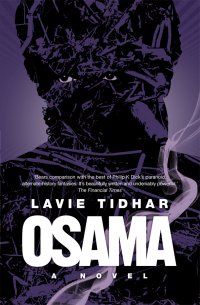
Osama, Lavie Tidhar (2011)
Originally published by PS Publishing – the edition I have – then brought out in massmarket paperback by Solaris. Winner of the World Fantasy Award last year, and a surprising omission from several other shortlists (though it made the BSFA Award shortlist). It would be unfair to say I did not come to this book with high expectations. Happily, they were met. A private detective based in Ventiane is tasked with tracking down Mike Longshott, the mysterious author of a series of pulp novels which feature Osama bin Laden as a vigilante hero. This is not, of course, the world we know. Though there are echoes of it there, and as the PI draws closer to Longshott so those echoes begin to ring louder and louder. Interspersed between the chapters are short pieces of reportage on terrorist attacks from our world. It’s not hard to figure out what’s going on, and the prose sometimes stumble – trying to pastiche pulp prose at one point, then not at another. There’s also an odd substitution of “dawdle” for “doddle”, and Lavie reveals his secret love for the music of Eva Cassidy. But it’s certainly a worthy award winner and fully lives up to its audacious title.
Far North, Marcel Theroux (2009)
This was shortlisted for the Arthur C Clarke Award in 2010, but lost out to Miéville’s The City & The City. It is yet another US post-apocalypse novel. The writer is British, but the son of US author Paul Theroux; and the novel is actually set in Siberia. The central premise is that Siberia was opened to American settlers, but then some sort of catastrophe did for the rest of the world, and those remaining in the “Far North” gradually succumbed to the usual violence, rape and warlordism. Theroux can’t decide if his settlers adopted Russian culture, or simply transplanted their own – he makes reference to both situations. The narrator of the story is a young woman who acts as constable for a town in which she is the only survivor. She encounters a group of slavers, and later witnesses a plane crash. That crash persuades her that somewhere there is a settlement with technology – albeit primitive technology. She sets off to find it, and is captured by those slavers… I’m a little puzzled how this made the Clarke shortlist. True, it’s literary fiction that’s science fiction in all but name, which means the quality of writing is generally much better than genre fiction displays. It also means the genre tropes are presented as if they’ve never been used before. Except post-apocalypse has been done before – in literary fiction. The first third of Far North, in fact, was trying hard to be The Road. And failing. The fact it later abandoned that template – and introduced some magic glowing substance, for no good reason – couldn’t prevent it from being as banal as most post-apocalypse novels are.
Before The Incal, Alejandro Jodorowsky & Zoran Janjetov (2012)
It’s not that The Incal required a prequel, but Jodorowsky has done a clever job here of explaining stuff you were perfectly happy to swallow unexplained in that book, as well as set things up beautifully for the later story. Janjetov’s art nicely emulates Moebius’ style – in fact, according to the introduction it was Jodorowsky’s observation that Janjetov’s style was similar to early Moebius that prompted him to write Before The Incal in the first place. All the characters from The Incal are here, and the story cleverly sets them up for the roles they will later play. The whole thing is not quite as bonkers as The Incal (though it is still quite insane), but it’s beautifully drawn, and this is a handsomely-produced volume on a par with Self Made Hero’s lovely edition of The Incal.
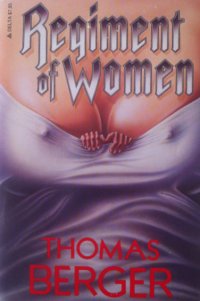
Regiment of Women, Thomas Berger (1973)
A 1970s sexual satire. Oh dear. I haven’t read a book as bad as this for quite a while, and I’ve seen more biting satire on gender roles in a Two Ronnies sketch. A century or so from now, in what amounts to the ruins of the twentieth century, the women are in charge. But they dress and behave just like men – in fact, “effeminate” means behaviour currently associated with dumb macho males. Men, of course, wear pretty dresses, make-up, high heels and pantyhose, and behave like the sort of women a dumb 1970s sexist imagines women behave. Men also have breast implants. Yes, that’s right: the women are in charge, but the men conform to male gaze. Georgie is a secretary at a publishing house, but after getting unintentionally drunk at a friend’s, he is caught in public dressed as a woman – ie, in trousers, shirt and tie. He is arrested. Transvestism is illegal, but the police are convinced he is some sort of dangerous subversive. Georgie manages to break out of prison, and meets the Male Underground. They persuade him to infiltrate a Sperm Camp, where men are milked for their sperm for ex-utero procreation. (Women’s sex with men consists solely of anal penetration with a dildo, usually without the women undressing; and, most often, it’s rape.) In prison and in the Sperm Camp, Georgie encounters Harriet. She’s a woman but she just wants to dress and behave like a man – ie, wear pretty dresses, make-up, high heels and pantyhose… It’s a monumentally stupid set-up. Berger has to go through so many contortions to overcome the obvious flaws in his world, and none of his “explanations” are even remotely plausible. And that’s not to mention the deeply offensive views on gender roles on which the entire plot is based. Mystifyingly, this book has a 3.46 average on Goodreads, with quite a few 5-star reviews. Incidentally, I don’t recall any POC characters in it.
There have been a few posts on anticipated genre 2013 releases around and about the internet, but most have either been uncritically exclusive, or squeeing fannishly over volume umpteen in various piss-poor epic fantasy series. Which is not to say the outlook for 2013 is entirely glum. Yes, there will be the usual badly-written tomes of badly-mangled mediaevalish adventure, all of which are interchangeable: swords! rape! magic! feisty princesses! rape! war! rape! But there are one or two books upon which I have my beady eye…
January Adam Robots, Adam Roberts
A collection of Mr Robot’s stories. Who could not want this? I’ve appeared in a couple of anthologies alongside Adam, which has sort of forced me to read his stories. But what I’ve read I have liked and thought very good, so I’d like to read more of them. I seem to react better to his short fiction than his novels. And, it has to be said, that is a pretty damn cool cover.
February The Best of All Possible Worlds, Karen Lord
This has been getting lots of good press and looks like one of the year’s more interesting sf releases. I’m not sure the précis on Amazon makes it sound wholly appealing – remnants of the galaxy’s once ruling elite is short on women, and a civil servant must accompany one such male on his search for a mate – but it all depends who’s writing it…
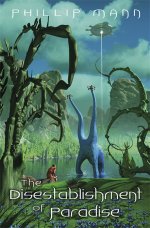
The Disestablishment of Paradise, Phillip Mann
I’ve been a big fan of Mann’s fiction for decades (oof, that makes me feel old) – see here – so I’ll buying this one in hardback the moment it is released. It will be Mann’s first book since 1996’s The Burning Forest, the final book in his A Land Fit for Heroes alternate history quartet. That’s quite a long silence – seventeen years. Alexander Jablokov spent a decade not writing before Brain Thief was published. I thought it very good, but it didn’t seem to do very well. Let’s hope Mann’s The Disestablishment of Paradise does better…
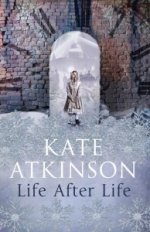
March Life After Life, Kate Atkinson
I’ve not read any Atkinson, though I understand she’s quite good. I did watch the television series with Jason Isaacs, however (though, to be honest, it clashed with Scott & Bailey, which I thought much the better series). This book, about a person who serially reincarnates, sounds like it might be worth a go. I’ll wait for the paperback, though.
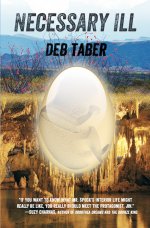
Necessary Ill, Deb Taber
According to Suzy McKee Charnas, this novel “offers hopeful glimpses of alternatives to the current cultural barrage of post-Apocalyptic savagery and regression to warlordism”. Am sick to bloody death of post-apocalypse novels in which people turn into animals and only some warped version of right-wing US society offers hope or a way forward. So, want.
April The Serene Invasion, Eric Brown
Eric has been churning out quality sf for more than two decades, and his novels and short fiction are always worth reading. It’s a shame his books seem to cause few, if any, ripples. Except, of course, he’s been shortlisted this year for the Philip K Dick – albeit bafflingly for Helix Wars, rather than the year before for The Kings of Eternity, which is by far the better book.
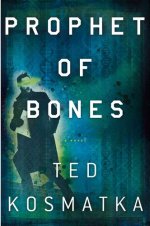
Prophet of Bones, Ted Kosmatka
To be honest, I’d sooner see a collection from Kosmatka. I’ve only read a handful of his short fiction, but what I’ve read I’ve thought very good – I even picked his ‘Divining Light’ for the Locus All-Centuries Short Fiction Poll. I’ve been meaning to pick up Kosmatka’s first novel, last year’s The Games, in paperback, and whether or not I get Prophet of Bones will depend on my reaction to that book.
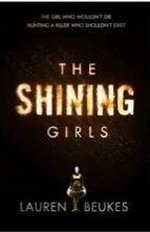
June The Shining Girls, Lauren Beukes
I really liked Zoo City (see here), so I’m keen to read this one, even if the plot has been described as “The Time Traveler’s Wife meets The Girl with the Dragon Tattoo“. Ugh. But I trust Lauren to produce something good despite that. (Incidentally, it really annoys me they never bothered correcting the spelling mistake in the title of The Time Traveler’s Wife (yes, I know, it’s the american spelling; but I don’t live in the US, and we use British English here).)
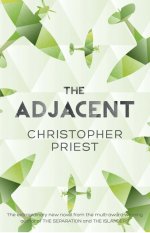
The Adjacent, Christopher Priest
I’m always late reading Priest’s novels, though I usually get there in the end. It’s useless speculating what it might be about, because Priest’s novels generally defy summary. This one is allegedly his “most complex yet”, although if anyone knows of a simple Priest novel I’ve yet to hear it. Santa brought me The Islanders for Christmas, so I’ll be reading that soon… two years after everyone else and a year after it won the BSFA Award…
August On the Steel Breeze, Alastair Reynolds
The second book of Poseidon’s Children and the sequel to Blue Remembered Earth. I liked the first book, I liked its optimism and its avoidance of sf’s usual panoply of magic bullshit technology. This one I will certainly be buying in hardback on its release.
September Proxima, Stephen Baxter
There’d be something wrong if there wasn’t at least one Stephen Baxter novel out each year. It’s deep future sf, with humans living on a dead world orbiting Proxima Centauri, and all sounds very Baxterian.
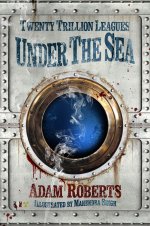
Twenty Trillion Leagues Under the Sea, Adam Roberts
A sequel to The Asylum’s “mockbuster” of Verne’s Twenty Thousand Leagues Under Sea by Adam Roberts has to be worth a go. Though, to be fair, I did think the ending to the film was pretty unequivocal – the Nautilus was destroyed by the nuclear warheads Nemo had planned to launch against the US, and everyone aboard, including Nemo, was killed. But I’m sure Adam will come up with some cunning trick to show how Nemo escaped death in a nuclear explosion at the very last second.
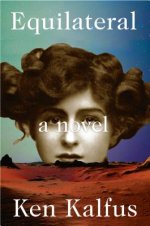
December Equilateral, Ken Kalfus
I saw mention of this on io9, and its description sounded interesting: British scientists at the turn of the century have come to believe there’s life on Mars, so they propose to build a massive triangle in the Egyptian desert. Yup, I’d read that. (io9 gives the publication date as April, but according to Amazon it’s December in the UK. I guess I’ll have to wait a bit longer than them, then.)
No doubt there will be more titles I want to read appearing throughout the year, but these are the only ones that have been announced so far that appeal to me. I’ll also probably end up reading other new books recommended to me but which, at first glance, I hadn’t thought worth trying, or hadn’t known about. So it goes.
I found this on Larry’s blog here, where he says the following list is the results of a recent online poll on Lit Net. Whatever that might be. Still, a meme. A book meme. Bold those you’ve read, italicise the ones sitting on the TBR…
1 The Bible (I bought a copy of this last year, the first time I’ve ever owned one. It’s for reference, of course. And yes, I have the Qur’an and the Talmud as well) 2 Hamlet by William Shakespeare 3 The Divine Comedy by Dante Alighieri 4The Great Gatsby by F Scott Fitzgerald 5 The Brothers Karamazov by Fyodor Dostoevsky 6Ulysses by James Joyce 7 Moby-Dick by Herman Melville 8 Don Quixote by Cervantes 9War and Peace by Leo Tolstoy 10 Crime and Punishment by Fyodor Dostoevsky 11 Anna Karenina by Leo Tolstoy 12The Odyssey by Homer (I have the illustrated version of this somewhere) 13 Paradise Lost by John Milton 14In Search of Lost Time by Marcel Proust (I really must tackle these one day) 15Lolita by Vladimir Nabokov 16 Les Fleurs du mal by Charles Baudelaire 17 The Illiad by Homer 18 One Hundred Years of Solitude by Gabriel Garcia-Marquez 19 Essays by Montaigne 20The Stranger by Albert Camus 21 The Oresteia by Aeschylus 22 Infinite Jest by David Foster Wallace 23 Heart of Darkness by Joseph Conrad 24 The Story of the Stone by Cao Xueqin 25Blood Meridian by Cormac McCarthy 26 To Kill a Mockingbird by Harper Lee 27 The Tale of Genji by Murasaki Shikibu 28 Emma by Jane Austen (the one Austen I haven’t read) 29 Jane Eyre by Charlotte Bronte 30 The Decameron by Giovanni Boccaccio 31 Eugene Onegin by Pushkin 32Watership Down by Richard Adams 33The Sound and the Fury by William Faulkner (my copy is one of my father’s Penguin classics) 34 Les Miserables by Victor Hugo 35 Walden by Henry David Thoreau 36 The Adventures of Huckleberry Finn by Mark Twain 37 Leaves of Grass by Walt Whitman 38Pride and Prejudice by Jane Austen 39 Tess of the d’Urbervilles by Thomas Hardy 40 The Trial by Franz Kafka 41Lord of the Rings by JRR Tolkien 42 Shahnameh by Ferdowsi 43 The Canterbury Tales by Geoffrey Chaucer 44 Madame Bovary by Gustave Flaubert 45 Fictions by JL Borges 46 El Aleph by JL Borges 47 A Christmas Carol by Charles Dickens 48 Tender is the Night by F Scott Fitzgerald 49The Magus by John Fowles 50 Life and Fate by Vasily Grossman 51 Testament by RC Hutchinson 52 Zorba the Greek by Nikos Kazantzakis 53A Song of Ice and Fire by George RR Martin (WTF? Certainly doesn’t belong on this list. Read the first three, gave up…) 54 Thus Spoke Zarathustra by Friedrich Nietzsche 55 Oedipus the King by Sophocles 56 The Hobbit by JRR Tolkien 57Slaughterhouse-Five by Kurt Vonnegut 58 Waiting for Godot by Samuel Beckett 59 The Marriage of Heaven and Hell by William Blake 60 Naked Lunch by William S Burroughs 61 Fifth Business by Robertson Davies 62 Notes from Underground by Fyodor Dostoevsky 63Tropic of Cancer by Henry Miller 64 No Exit by Jean-Paul Sartre 65Othello by William Shakespeare (have seen the BBC adaptation; you don’t read a play, you see it performed) 66 Gulliver’s Travels by Jonathan Swift 67 Vanity Fair by William Thackerey 68 Resurrection by Leo Tolstoy 69 Voss by Patrick White 70 Wuthering Heights by Emily Bronte 71 Manfred by Lord Byron 72 A Tale of Two Cities by Charles Dickens 73 Far from the Madding Crowd by Thomas Hardy 74 The Sun Also Rises by Ernest Hemingway 75 Outer Dark by Cormac McCarthy 76 Lonesome Dove by Larry McMurty 771984 by George Orwell 78 Atlas Shrugged by Ayn Rand (an even less deserving entry than GRRM’s) 79 The Gospel According to Jesus Christ by Jose Saramagos 80 Grapes of Wrath by John Steinbeck 81 Of Mice and Men by John Steinbeck 82 Tristam Shandy by Laurence Sterne 83 The Tree of Man by Patrick White 84 The Glass Menagerie by Tennessee Williams 85 Meditations by Marcus Aurelius 862666 by Robert Bolano 87 Cosmicomics by Italo Calvino 88 If on a winter’s night a traveler by Italo Calvino 89 The Murder of Roger Ackroyd by Agatha Christie 90 The Arrow of Gold by Joseph Conrad 91 The Recognitions by William Gaddis 92 The Castle by Franz Kafka 93 I Canti by Giacomo Leopardi 94 Man’s Fate by André Malraux 95 Death of a Salesman by Arthur Miller 96Dance to the Music of Time by Anthony Powell (have read the first, have a few more on the TBR) 97 Portnoy’s Complaint by Philip Roth 98 Confessions by Rousseau 99 The World as Will and Representation by Arthur Schopenhauer 100Julius Caesar by Shakespeare (have seen the BBC adaptation)
Well, it’s a very traditional list. The odd pre-19th century book can’t disguise all the obvious choices made for 19th and 20th century fiction. Not to mention a couple of frankly bizarre ones: A Song of Ice and Fire? Really? Atlas Shrugged? You think so? As for my “score”… Not so good: fourteen read (mostly), and a further eight on the TBR. I also count a mere six women (Austen appears twice), which is appalling. This is literature as the province of Dead White Men, and pretty much what the entire field has been fighting against for the past two decades or more. And, of course, it’s woefully US/UK-centric, with a handful of other nationalities. So, not a very good list at all, then.
This happens every year at this time – you look back at the year just ended, remember the good bits and try to forget the bad bits; you look ahead to the year just begun, and try to convince yourself it will be better than even last year’s best bits, or that you have any control over how it will turn out… Shit happens, the road to hell, etc, etc.
Which doesn’t mean you shouldn’t make an effort, of course. You may not, for example, be able to land yourself a book contract, no matter how wonderful your novel is, but if you don’t write the damn thing you stand even less chance. (Though debut novelists have been offered contracts before writing their novels.)
Likewise, the most reliable method of getting short fiction into print seems to be the Shotgun Method. Write as many stories as you can, submit them as many times as you can… Someone somewhere will usually buy them. Then you too can be ubiquitous, and subsequent sales will get easier.
In other words, Hard Work helps. But there are no guarantees. Certainly short cuts don’t always do the trick. There are stories of self-published authors selling phenomenally well, and subsequently being picked up by big publishing houses. They are in a very tiny minority. Most books published by anyone other than major publishing houses or long-established small presses are ignored. For instance, Rocket Science, published by Mutation Press, received plenty of positive reviews when it appeared back in April 2012. But it is also notably absent from lists of “best anthologies of the year”. I didn’t expect Adrift on the Sea of Rains to make it onto any lists – around 300 people, at a guess, have read it, and none of them were commentators with a large footprint within the genre. New small press… self-published… A not-unexpected result.
I worked quite hard during 2012 promoting those two books, but I suspect my message didn’t travel much beyond my own circle of friends, acquaintances and those I talk to within the genre. That’s as far as my “platform” reaches at present. It grew during 2012 – a little – but that sort of organic growth is too small and too slow to bounce my work to the next level. Because I made a tactical error in 2012: I spent so much time promoting Rocket Science and Adrift on the Sea of Rains, and writing The Eye With Which The Universe Beholds Itself, that I didn’t write any short fiction. And I need to do that in order to get my name out there…
So that’s one resolution for 2013. (I suspect it may have also been a resolution for each of the past few years.) I will write more short stories in 2013, I will submit more short stories in 2013. I have a bunch sort of started but far from finished, and I’ll focus initially on them. Unfortunately, my desire to not write the sort of science fiction currently appearing in genre mags and on genre websites may somewhat limit my chances of success. Take my current work in progress: I was hoping to have it done for 31 December 2012, the deadline for Eibonvale Press’s new railway-themed genre anthology, Rustblind and Silverbright. Have yet to actually finish it. And it’s going to be a hard one to sell. ‘The Incurable Irony of the Man Who Rode the Rocket Sled’ is barely science fiction, and barely has a plot. It’s sort of “magical realism with astronauts” (as my story ‘Faith’ was once described), except it has no astronauts in it.
I do have other stories to work on. Sorry, no exploding spaceships. No spaceships at all, in fact. I have two novellas I’d like to complete – one of them is an expanded version of ‘The Contributors’. There’s also book three of the Apollo Quartet, Then Will The Great Ocean Wash Deep Above; and possibly book four, All That Outer Space Allows. I have three novel ideas for which I need to write the first three chapters. I’d also like to see if I can do anything with my Nanowrimo effort from 2011.
And that’s just on the writing side. (You do realise, of course, that most of this will go undone, because… things.)
Oh, and I also experimented in 2012 with publishing a limited edition chapbook. It started out as a bit of a joke, but the twelve copies of Wunderwaffe I produced all sold. I then put it up on Kindle, where it has also sold (thought not in huge numbers). I’m planning to do something similar to another of my previously-published short stories, but I haven’t decided which one yet. I might do it to more than one…
On the reading side, I’ll be continuing to review books for SF Mistressworks. In the absence of other regular reviewers – I do have some irregular reviewers, however – I’ll have to read at least one suitable a book a week. That’s going to be a tough schedule to meet. I will need help. Please.
There’s also the TBR, which reached epic proportions several years ago. Over Christmas just gone, for example, I read The Thousand Autumns of Jacob De Zoet, and realised afterwards with some embarrassment that I’d bought the book in November 2010. That’s actually not too bad – it’s taken me ten years to read some of the books I own. And that’s despite reading 153 books during 2012 – twelve down on the previous year’s total; in fact, the number has been steadily dropping since 2008. I suspect the number of books I’ve bought each year, however, has been steadily rising…
So, in 2013, I want to read more sf by women writers, more Malcolm Lowry, more Paul Scott, more recent genre books that interest me, more literary fiction… more good books. I also want to read much more genre short fiction. That’s going to be another resolution – to read genre short fiction regularly. But only if it interests me. I’ll happily bail on a story if it’s not working for me. But by the end of the year, I should at least be able to make some informed choices for the BSFA Award. I’ll also be including a top five of short fiction in my end of the year round-up post.
I’ll not bother with resolutions for films or music. Each year, I try to get to at least one gig a month. I don’t always make it, but by year’s end I’m usually not far off. For the record, it was 11 gigs in 2012, including Bloodstock. The best one should have been Anathema and Opeth in Leeds in November, but the venue was awful – over-packed and over-heated – and ruined the experience. Insomnium and Paradise Lost back in April might be the best, or perhaps it was local bands Setsudan and Northern Oak supporting Evil Scarecrow in October.
There’s no point in resolving to go to the cinema more often, because I only go if there are films I really want to see being shown. There were three in 2012, which is something of a record for me – at least since I left the UAE, where I lived just around the corner from an excellent cinema. There might be one or two movies I’d be willing to shell out £13 to see in IMAX 3D in 2013, but we’ll have to see. I will, however, continue to watch DVDs by my favourite directors, as well as trying new ones – mostly foreign-language, of course. And the really good films, I will write about here…
…Because I will continue to blog. I don’t think I could stop, to tell the truth. Posting once or twice a week is a good schedule to keep, but I suspect I won’t be able to maintain that level. I didn’t in 2012. This year, I’ll retire the Rocket Science News blog, since it’s served its purpose. It’ll stay up, but I won’t post to it anymore. Besides I have enough on with this blog, SF Mistressworks, the Whippleshield Books blog, and my Space Books blog (which I really must post to more often). I’ll remove the sf poetry blog – and perhaps work on some of the poems from it and start submitting them. I’ve only had two poems published to date, I really should start sending out more.
2012 was a bit of a convention-going year for me, although more by accident than design. Lavie Tidhar persuaded me to attend the SFX Weekender in February in Prestatyn. Much fun was had. Then there was the Eastercon in Heathrow, where I launched Rocket Science and Adrift on the Sea of Rains and nearly won the BSFA Non-Fiction Award for SF Mistressworks (it’s still eligible, by the way). Shortly after that, it was alt.fiction in Leicester, then Edge-Lit in Derby, and in November, Novacon in Nottingham. I’m not planning to attend as many cons in 2013.
Outside of genre and literature and music and cinema, 2012 was a bit meh. Some family issues were resolved. I spent Christmas in Denmark yet again, and saw some snow on the first day – but it rapidly disappeared and the weather remained wet and drizzly and dull. Santa brought me some books I want to read and some DVDs I want to watch. Oh, and some socks. The food was good, the visit to Louisiana, a modern art museum, was fascinating, and much as I hate Christmas it was a pleasant way to spend it…
And there you have it. 2012 is dead, long live 2013. I’m hoping it’ll be a good year, but it’ll be what it’ll be. That’s the way it works, you know. Life. Huh.






 It Doesn't Have To Be Right...