Last weekend, I spent a couple of hours re-shelving my hardback books so that my purchases since the last re-shelving were in their proper place – alphabetical by author, and chronological within author, of course. As is always the case, as soon as I’d finished I found a couple of books I’d missed… By double-stacking the books on the shelves – I’m slightly worried a single shelf may not be able to take the weight of all my Alastair Reynolds hardbacks and my Kim Stanley Robinson ones – I actually had a two shelves left free. And then I realised I’d not done my most recent book haul post, so I was going to have to unstack some of the shelves to dig the new books out to photograph. Oh well.
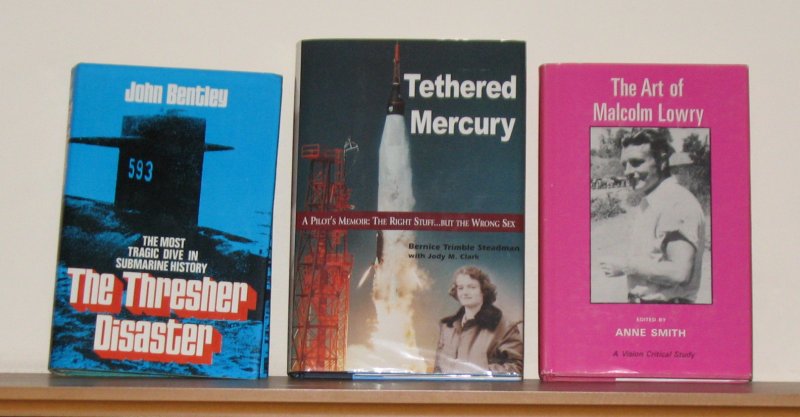
Some non-fiction, two of which are research material for Apollo Quartet 3: Then Will The Great Ocean Wash Deep Above. The Thresher Disaster is the second book I have on the incident. Tethered Mercury I only learnt of when I visited the Mercury 13 website, so I immediately tracked down a copy on abebooks.co.uk and ordered it. The Art of Malcolm Lowry is a series of essays on the author and his works.
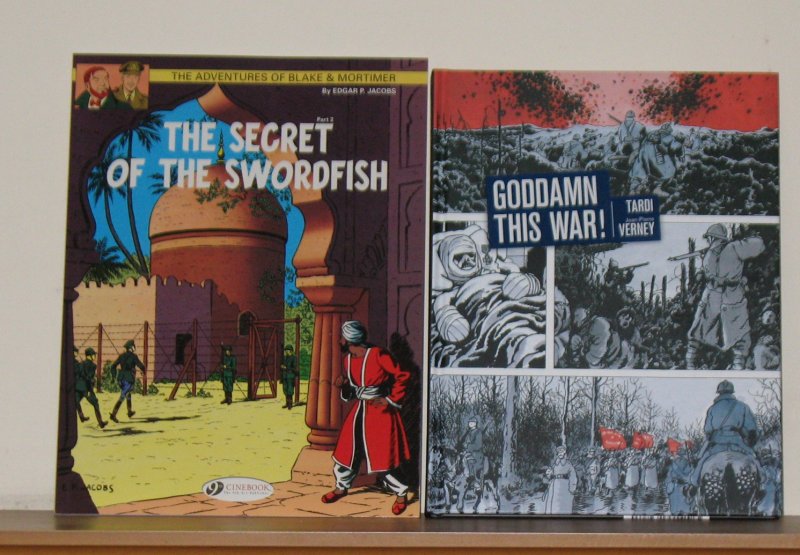
Just two graphic novels this month – number 16 in the Adventures of Blake and Mortimer, The Secret of the Swordfish, part 2. This is early Edgar P Jacobs and nowhere near as good as later ones. Goddamn This War! is Jacques Tardi telling frontline horror stories about World War I. Grim stuff.
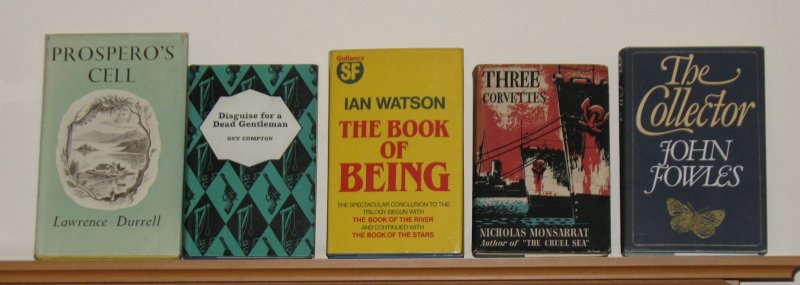
Some for the collection… A first edition of Prospero’s Cell popped up on eBay so I snapped it up. There’s only a handful of Durrell’s books now that I don’t have in first edition. Disguise For A Dead Gentleman is DG Compton in an earlier guise – under the impenetrable pseudonym of Guy Compton – as a crime fiction writer. This is a Mystery Books Guild edition, which is all I can find. The Book of Being completes the Yaleen trilogy – I have the first two books already as Gollancz first editions. Three Corvettes is not a first edition, but it’s an early reprint, in relatively good condition, and was cheap. Nor is The Collector a first edition, but a late 1970s reprint. But it is signed.
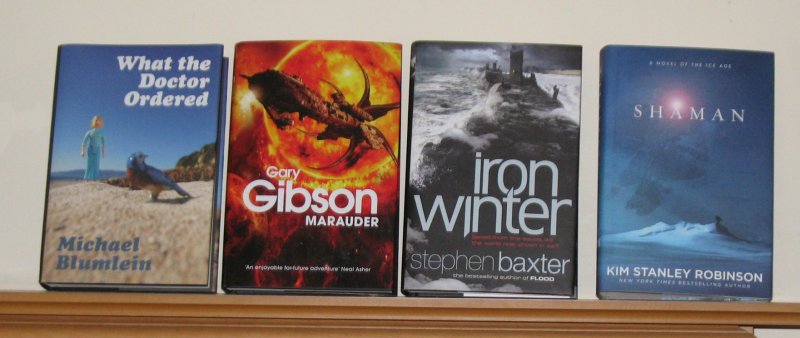
Some new hardbacks. I’ve been a fan of Blumlein’s fiction since first reading his short stories in Interzone back in the 1980s, but he’s not been especially prolific: three novels and two collections, the first collection back in 1990 and What The Doctor Ordered published only this year. Needless to say, I got quite excited when I stumbled across this new collection from Centipede Press, and ordered it immediately. Marauder is Gary Gibson’s latest novel and I believe is set in the same universe as the Shoal Sequence. Shaman is Kim Stanley Robinson’s latest, and I really must get around to reading The Years of Rice and Salt and Galileo’s Dream one of these days. And finally, Iron Winter is the final book in Steve Baxter’s Northlands trilogy.
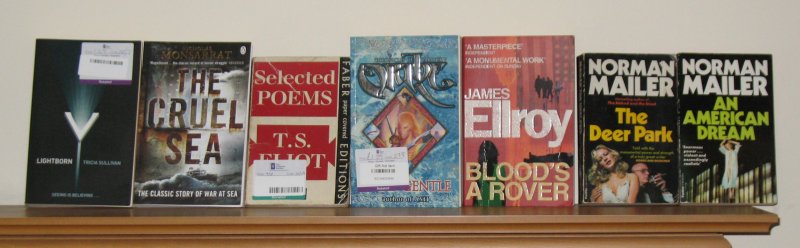
Lastly, some charity shop finds. Lightborn was on both the Clarke and BSFA award shortlists in 2011. The Cruel Sea I bought as a reading copy, as the signed hardback I have is a bit tatty. Of course, as soon as I got home I discovered I already had a reading copy. Oh well. I have both Golden Witchbreed and Ancient Light in hardback, but Orthe was cheap so I bought it as a reading copy as I’d like to reread the books one day. I read American Tabloid years ago and I have The Cold Six Thousand on the TBR, so Blood’s A Rover will complete the trilogy. Selected Poems by TS Eliot, er, does what it says on the tin. And last of all, I went back to the charity shop and picked up the other Mailer 1970s paperbacks, The Deer Park and American Dream. So we’ll see what they’re like…
Incidentally, since swapping from Amazon’s to Foyles’ affiliate scheme a couple of months ago, I’ve not made a single penny. Meanwhile, my Amazon links have made me £7.40 over the same period. So I’m having a little difficulty understanding why no one else can manage an affiliate scheme that’s as easy to use, and as effective, as Amazon’s…
Oh, and there’s no way I can physically triple-stack my book-shelves – not that I think they’d stand the weight anyway. But the rate I’m going, I’m going to have to do something. I’ve already got some books up for sale on the Whippleshield Books online shop here, but it’s not like people are rushing to buy them…
Some people go “ooh shiny”, others go “ooh book”. Clearly, I belong to the latter category. And just to make matters worse, I even make books myself. As Whippleshield Books, I add to the great mass of books that exists in the world today – and the somewhat smaller mass of books that exists in my house. Only two so far, but a third later this year and at least two next year. Meanwhile, I continue to buy books by other people because books. Like these ones:
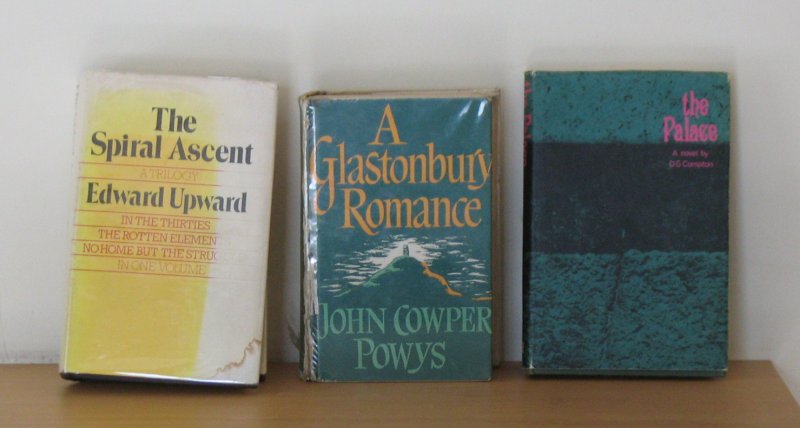
A trio of hardbacks: The Palace is DG Compton’s one and only (as far as I’m aware) mainstream novel, and very hard to find. I don’t think it even made it into paperback. I found this copy on abebooks.co.uk, it was not cheap. A Glastonbury Romance was a charity shop find; it’s ex-library and a bit tatty, but never mind. The Spiral Ascent is… Well, you see, it goes like this: I had a copy of the first book of the trilogy, In the Thirties, in its original Penguin paperback edition. I wanted books 2 and 3 to match… but I couldn’t find them. So I decided to get the omnibus edition instead – and I found this signed edition on abebooks.co.uk. The cover is a faded but still. Signed. Incidentally, you can download the entire trilogy in PDF format from here, but still… books. You can also get some lovely small press books by Upward from Enitharmon Press here.
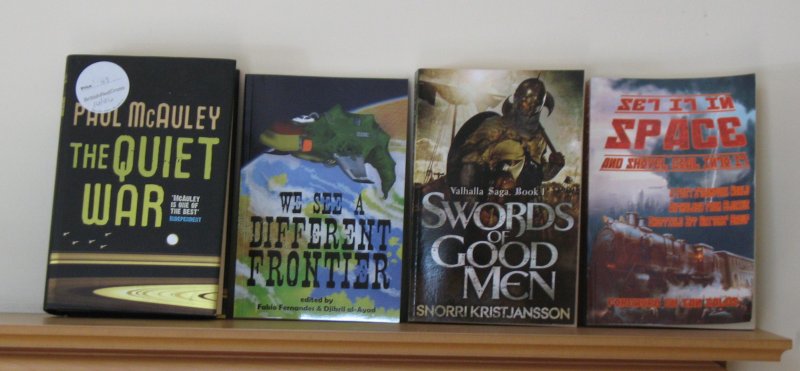
Last year, I bought a copy of The Quiet War on eBay because the seller said it was the hardback edition. It wasn’t, it was a trade paperback. I complained and received a partial refund. Earlier this year, I read the book… and I had problems with it. And then this month, I found this hardback copy of it in a local charity shop. So of course I bought it. Bargain. We See A Different Frontier is a collection of postcolonial genre stories. Swords of Good Men I have to review for Interzone. Fantasy, meh; but… Vikings. Set it in Space and Shovel Coal into it is the second anthology by the Sheffield Science Fiction and Fantasy Writers Group, and the introduction is by Yours Truly.
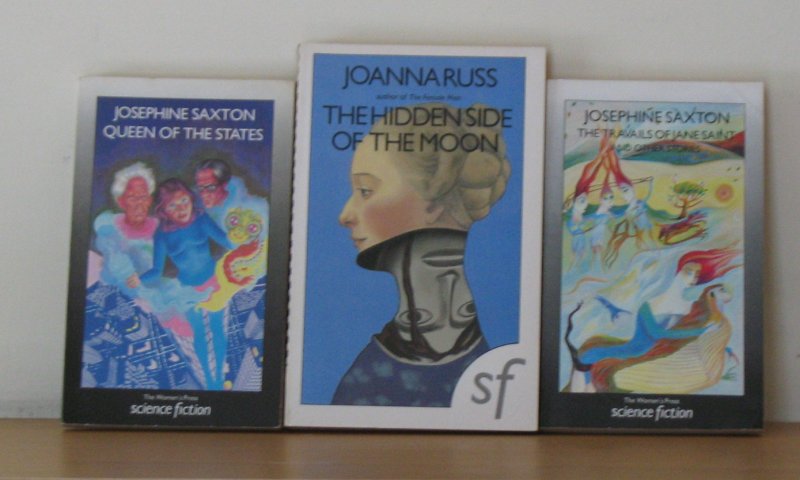
Three Women’s Press sf books for the collection – I now have two dozen of them – sent to me by The Space Merchants in exchange for a copy of Night and the Enemy, a graphic novel by Harlan Ellison and Ken Steacy I no longer wanted. Expect to see these three books reviewed on SF Mistressworks at some point.
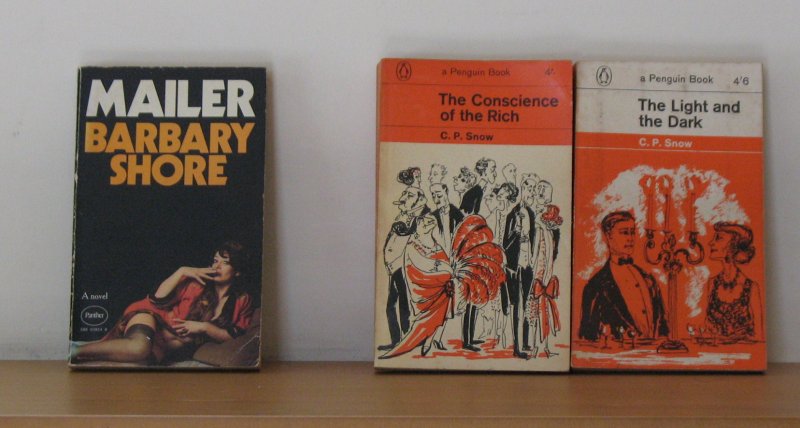
Three paperbacks by two dead white males. I’ve read the first book of Snow’s Strangers and Brothers and I plan to read the entire series. The Conscience of the Rich and The Light and the Dark are books three and four respectively (by internal chronology, not year of publication). Of course, I will only buy matching editions – the 1960s Penguin paperback editions. A local charity shop had a bunch of 1970s Norman Mailer paperbacks in – just look at that cover – and I picked out Barbary Shore. I may go back and buy the others, if they’re still there.
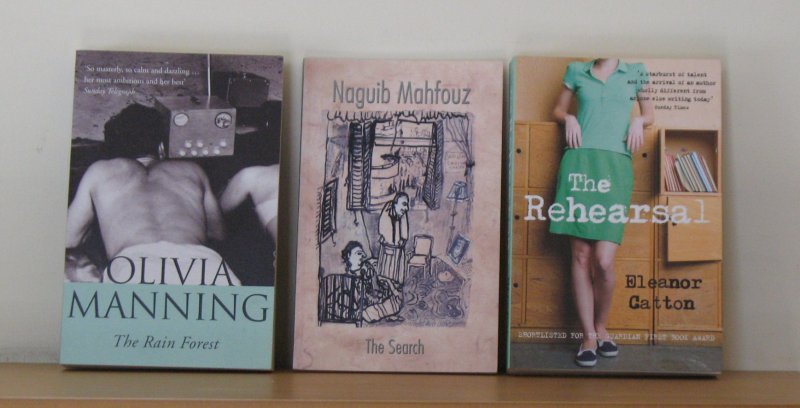
Three charity shop finds. Eleanor Catton’s The Luminaries has been longlisted for the Booker and looks very interesting, so I was quite chuffed to stumble on a copy of her first novel, The Rehearsal… which David Hebblethwaite tells me is the best book he’s read in the past five years. You don’t expect to find Naguib Mahfouz novels published by the American University in Cairo Press in Yorkshire charity shops, but I found one. I read Mahfouz whenever I stumble across copies of his books. I still have his Cairo trilogy – in Arabic, of course – to read… Olivia Manning’s The Balkan Trilogy and The Levant Trilogy – also adapted for television as Fortunes Of War – are brilliant, so she’s a name I certainly look out for during my frequent trawls through books in the local charity shops. The Rain Forest was her last novel.
Books, huh, what’re they good for? No, wait, that’s something else. Books are good for reading, which by some amazing coincidence is just what I’ve been doing recently with some of them. To wit…
Prague Fatale, Philip Kerr (2011) This is the eighth book in Kerr’s Bernie Gunther series, which nearly brings me up to date – there’s one more, A Man without Breath (2013), currently available; although Kerr has not said how many books the series will eventually comprise. Prague Fatale is set during Gunther’s war years. While not a Nazi, and clearly has trouble dealing with them, he’s respected enough by his superiors to be asked to Prague to solve the locked-room murder of an aide to Reinhard Heydrich. The crime itself is plainly an homage to the golden age of crime fiction, and Gunther has little trouble working out what happened. But there’s much more going on in the novel than just a puzzling murder. Early on, Gunther rescues a young woman from an attempted sexual assault, and then helps her out a little with food and money before eventually entering into a relationship with her. He takes her with him to Prague – when all the senior officers have mistresses, and even a select brothel for their use only, why should he not take his girlfriend? As Gunther makes a nuisance of himself at Heydrich’s chateau, asking impertinent questions (not all of which are related to his investigation) and making plain his contempt of the Nazis – so he gradually works out who killed Heydrich’s aide… and how his death ties in with earlier events in Berlin. More than any other of the recent Gunther books, Prague Fatale feels like a crime novel. But it also feels like Kerr is taking the piss a little by presenting the central murder as a locked-room mystery. The solution proves to be relatively straightforward, and delivered almost in passing – but having it as the core of the story turns the book into a warped country house mystery rather than an historical police procedural. It makes for a pleasant change after the complex spy-fiction plot of the preceding novel, Field Grey (2010). Good stuff.
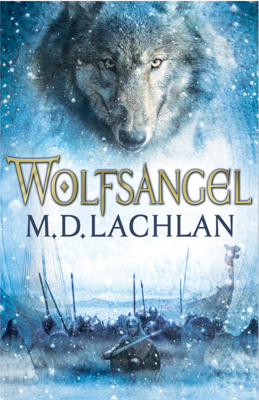
Wolfsangel, MD Lachlan (2010) Much praise has been heaped on this, the first in a series, and at an Edge-Lit the author begged me to buy a copy despite it not being my thing at all (actually, he didn’t; it looked interesting, so I bought it; but Mark did sign it for me). On finally getting around to reading it, I was surprised by two things: it was more commercial than I’d expected, and it was a lot more interesting than I’d thought it would be. The story opens strikingly, with a loyal warrior of a Viking king stepping from a longship to drown in mid-sea. He and the king were the sole survivors of a raid on an Anglo-Saxon monastery, the object of which was to steal a pair of twin baby boys. The king’s wife cannot give him a son, so a witch told the king where to find one – her part of the bargain was the other twin. But no one must know the true origin of the king’s “son”, so no warriors must make it back alive from the raid. Initially Wolfsangel reads like an historical novel as it describes Prince Vali’s life as a ward of a rival king – there’s a vague feeling that some of the more fantastical elements are the results of worldview rather than actual magic – but as those fantastical elements slowly begin to intrude more and more into the story so the magical side of the story begins to take over. The giant wolf’s head on the cover, not to mention the title, is a clue as to which supernatural creature is central to the book, and Lachlan’s put an interesting spin on the trope. He’s integrated the werewolf into his take on Norse mythology, and it works really well. He pulls a fast one initially, presenting one of the twins as the werewolf, only for the truth to later reveal itself. After finishing the book, I could understand why it had been so highly praised, and I’m keen to read the next on the series, Fenrir (2011). So that’s a shock – I actually thought a fantasy novel was good.
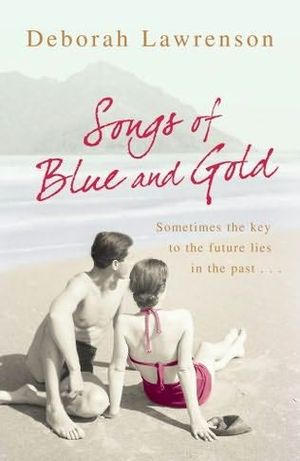
Songs of Blue and Gold, Deborah Lawrenson (2008) I put this one on the wishlist after learning that its story was based on Lawrence Durrell and his time in Corfu, and some time later I was lucky enough to stumble across a copy in a charity shop. When Melissa’s mother passes away, she finds among her possessions a signed and dedicated poetry collection by famous author Julian Adie. Melissa knew that her mother had spent time in Corfu during the 1960s, and is surprised to discover she knew Adie, who lived there at the time. So Melissa heads for the Greek island to learn as much as she can about her mother’s time there. Adie, of course, is Durrell, and Lawrenson does a good job of fictionalising his life and stitching Melissa’s mother into it. There’s a slight mystery attached, which is neither hard to figure out, and resolved offhandedly, and the writing throughout is of a type you’d sort of expect from a novel boasting such cover art if you did have any expectations regarding prose style from the book’s presentation… I enjoyed it, but I suspect I wouldn’t have done so as much if I hadn’t been familiar with Durrell and his life and oeuvre.
Murder by the Book, Eric Brown (2013) This is the first crime novel by Brown, and the first in the “Langham and Dupree Mysteries”. Set in the 1950s, the book’s protagonist is Donald Langham, a crime writer who has churned out a dozen well-received novels. Dupree is Maria Dupree, the well-heeled daughter of an upper-class French emigré, and the personal assistant of Langham’s agent. When a series of people involved in the world of 1950s crime writing die under mysterious circumstances, and Langham’s agent is framed for one of the deaths, Langham turns reluctant detective with Dupree’s help. The template, of course, dictates that as the two spend more time together so they are drawn to each other. The murders are a succession of “book murders”, ie, the sort of tricksy killings you only really find in crime novels, especially crime novels of the genre’s golden age. But then Murder by the Book is not trying to do something different genre-wise, but is as centrally-placed in crime as Brown’s sf novels are in science fiction. The period is handled well, without an excess of detail and nothing that jumps out as anachronistic. Langham is a solid hero, likeable but not too firmly wedded to 1950s sensibilities that he’s not sympathetic to a modern reader. Dupree might be a little too good to be true, if not teetering on the edge of cliché, but she’s just as engaging as Langham and the growing relationship between them works. Not being a crime fan per se, though I’ll read the books and am certainly a fan of the oeuvres of a couple of crime writers, I have to wonder if the mechanics of the central murders occupy a similar place in the genre as “ideas” do in science fictions. The complex murders in Murder by the Book seem to operate much like “nova” do in sf, but I suspect that may be a modus operandi (so to speak) more suited to the story’s setting than the modern crime genre marketplace.
Whirlpool of Stars, Tully Zetford (1974) This is the first book in the Hook quartet, and it’s pretty much hackwork. But then Tully Zetford was really Kenneth Bulmer, who was a complete hack – as Alan Burt Akers, he wrote over fifty books in the Dray Prescott series between 1972 and 1997. Whirlpool of Stars opens with a starship breaking down – something in the engineroom blows up as a result of shoddy maintenance. The passengers and crew are forced to flee in lifeboats, though this is no orderly evacuation. Hook is aboard, and he manages to get a seat aboard one of the lifeboats. The nearest planet, however, is run by a rival corporation to that which had operated the starship, and everyone who lands would be subject high fees… which they can pay off by indentured labour… Hook evades the authorities and, with a woman in tow, runs about the planet, trying to avoid slavery and also the Boosted Men, who are after him. You can tell this is complete hackwork because it panders to the worst prejudices of the sf audience. Hook is an alpha-male protagonist, but one with a weakness – he is a Boosted Man himself, but an early iteration and his powers only operate when he is close proximity to a real Boosted Man. The women in the story exist only as set-dressing, trophies, or damsels in distress. The villains are aliens. The background is a typical right-wing corporatist future, with slavery, success oriented purely on wealth and the power it brings, a blithe disregard for the value of human life, ineffective government and murderous and overly-powerful police forces. Whirlpool of Stars is tosh, distasteful badly-written tosh, and while Bulmer was clearly doing it for the money, you have to wonder what excuse present-day writers of similar science fictions have. Oh, and I have another three of these books to read. Sigh.
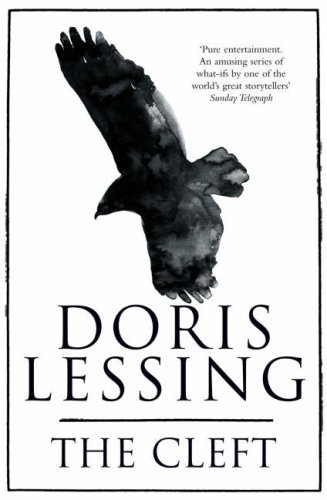
The Cleft, Doris Lessing (2007) There is a phrase in Brian W Aldiss’s story ‘Confluence’, a “dictionary” of alien terms, that goes: “YUP PA: A book in which everything is understandable except the author’s purpose in writing it; an afternoon sleigh-ride”. That pretty much describes The Cleft. A Roman historian has been handed a bunch of writings, normally kept hidden, and which he plans to turn into a treatise of his own. The documents are purportedly the written-down oral history of the earliest human civilisation, long before agriculture, nations, cities, kings or government. Apparently, humanity was originally female-only, and they lived in caves beside a sea. They reproduced parthogenically, and would occasionally sacrifice their offspring in a nearby rock chimney they called the Cleft. Every so often, mutant children called “squirts” – ie, not “clefts” – were born and left out for giant eagles to take – presumably to feed their chicks. But when one is left to grow to adulthood, he – because, of course, the squirts are men – leaves the women to found a community of his own over Eagle Mountain. More squirts are born, the squirts and clefts discover sex, the two communities begin to interact, one squirt leader leads an expedition away from the two communities along the coast… and I really have no idea what Lessing hoped to achieve with this novel. The Roman historian interjects at various points of the oral history he is supposedly working on – this was denoted using different font sizes, but as the book progressed this seemed to go wrong somewhere until the font size was completely random. There’s very little that’s Edenic about the society in the book and the gender politics once the “squirts” appear runs along somewhat clichéd lines. This has a tendency to reduce all of those early people to one-note characters, and while Lessing throws in some interesting speculation on their physiology, their society doesn’t feel like that much thought has gone into it. Disappointing.
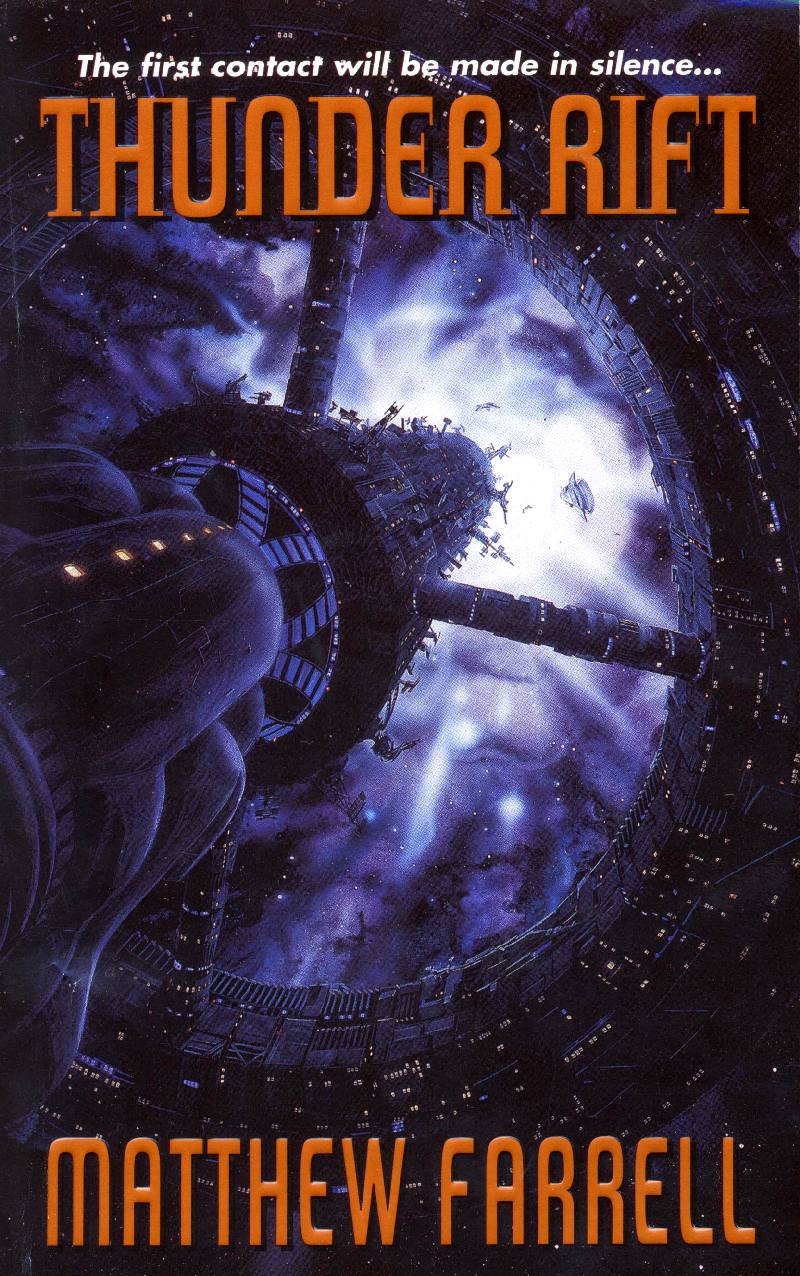
Thunder Rift, Matthew Farrell (2001) Matthew Farrell is really Stephen Leigh, and I suspect this book was published as by Farrell because by 2000 Leigh had become a category killer. In fact, since 2003 he’s been writing fantasy under the pen-name SL Farrell. In all other respects, Thunder Rift reads like a Stephen Leigh sf novel, and fans of Leigh’s earlier Dark Water’s Embrace and Speaking Stones will probably enjoy it. Unfortunately, familiarity with Leigh’s oeuvre does make Thunder Rift a somewhat predictable read. The titular wormhole has mysteriously appeared in the Solar System, out by the orbit of Jupiter, and the EMP generated by its sudden arrival pretty much wipes out all the technology on Earth, resulting in the deaths of hundreds of thousands of people. Yet thirty years later, the nations have not only recovered, they’ve even managed to build a huge military spacecraft to send through the wormhole to see if they can find the wormhole’s creators. On this spacecraft is maverick exo-anthropologist Taria Spears, who is obsessive, uncompromising and all-together difficult. On the other side of the wormhole, the humans find an inhabited world, but its alien civilisation does not appear advanced enough to have created the wormhole. Nonetheless, they send down a contact team… but it doesn’t go very well, and the alien ambassador/chief priestess-type person will only allow Taria to remain on the world. While she tries to learn more about the strange alien culture – their eyesight is so poor, they pretty much use sonar to perceive their surroundings; and they sing a lot – the military aboard the spacecraft set about trying to explore the planet. And then the wormhole vanishes. But something doesn’t want the humans to colonise the alien world. And Taria discovers the secret of the aliens and… This is heartland sf, written with competence if not style or vigour, reliant on far too many familiar tropes and used furniture, but given just enough spin not to generate déjà vu from start to finish. There are lots of sf novels about like Thunder Rift, and they’re all pretty much of a muchness. Fans of this type of sf will likely not to be able to tell it from other books of its ilk, and so enjoy it for that reason.
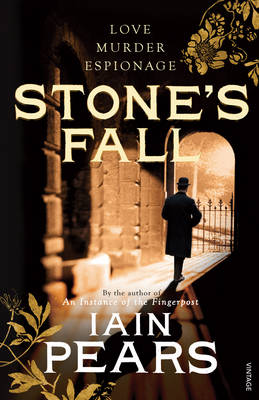
Stone’s Fall, Iain Pears (2009) Pears started out writing crime novels about a detective art historian, the few of which I’ve read I found quite ordinary; but he also writes complicated historical novels which are several levels of magnitude better. The last of his Jonathan Argyll series was published in 2000, so it would seem he now writes only the historical novels. Of which Stone’s Fall is the most recent – it was preceded by An Instance of the Fingerpost (1998), The Dream of Scipio (2002) and The Portrait (2005), all of which I have read. Stone is an Edwardian industrialist, the wealthiest and most powerful in Britain, and one night in 1909 he falls from the window of his third-floor study and is killed. But was he pushed? His will makes reference to a child he had not previously known about, so Stone’s widow, Elizabeth, hires a freelance reporter, Braddock, to track down the missing heir. The first third of the book – framed as the reminiscences of Braddock, who has just attended Elizabeth’s funeral in Paris in 1953 – attempts to explain Stone’s success in business. The second third is set in Paris in 1890, and is the reminiscences of a British spy whose career began around that time, and who knew Elizabeth, a Parisian socialite at the time, and witnessed her meeting, and growing relationship, with Stone. The final section is set in Venice in 1867 and is written as an apologia by Stone himself, attempting to explain the event which led to him becoming so powerful and also documenting an affair he had at the time which… There’s a mystery at the heart if Stone’s Fall, and it’s not hard to figure out what it is, but it’s only as the Venetian section progresses that the solution slowly starts to reveal itself. Stone’s Fall is not as complex as Pears’ earlier historical novels, but it is very readable and handles its historical detail impressively. Bizarrely, someone has used Wikipedia to give historical notes for the book, most of which are blindingly obvious, rather than summarise the plot or book’s reception…
Yet more books purchased since my last book haul post. For some of them, I have an excuse – it’s research, dammit! or, it’s for SF Mistressworks; or, I read the first x books in the series, so… But some of the others: nope, sorry, no excuse, no idea why I bought them. Oh well, never mind.
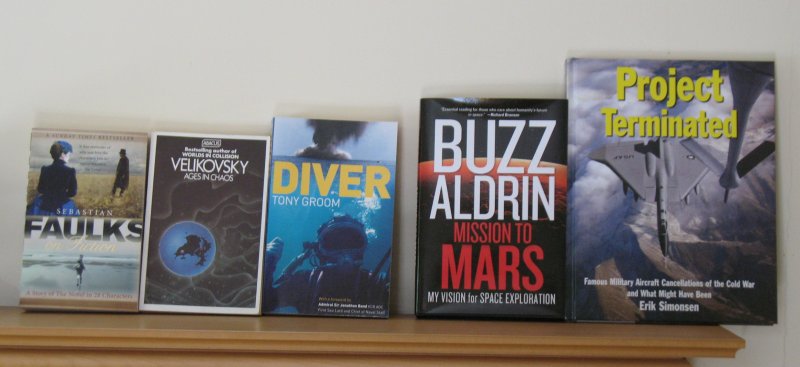
Some non-fiction: Faulks on Fiction because it’s one of the few books by him I’ve not read; Ages in Chaos from the closing down sale of my local book shop because it looked interesting; Diver is a charity shop find to go with the other books on deep sea exploration; Mission to Mars is for the space books collection and is signed; and Project Terminated because Cold War aircraft that never made it off the drawing-board or beyond prototype – such as the Avro Arrow, North American Aviation XF-108 Rapier or BAC TSR.2 – are cool.
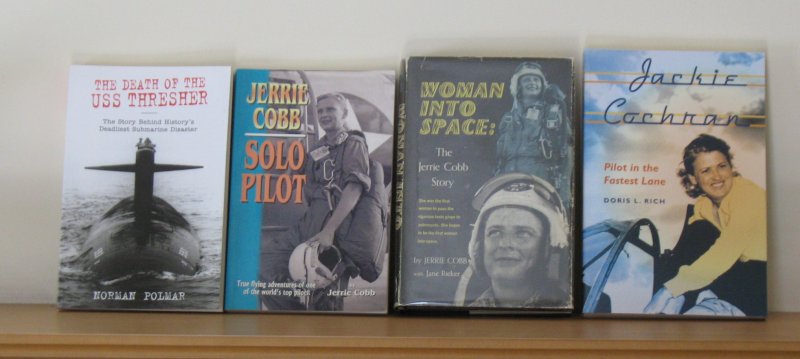
Some research books for Apollo Quartet 3: The Death of the USS Thresher because the bathyscaphe Trieste was used to investigate the wreck; Jerrie Cobb – Jerrie Cobb, Solo Pilot and Woman Into Space – is a major character; and Pilot in the Fastest Lane because once I started writing the novella I realised Jackie Cochran played a much more important role than originally envisaged.
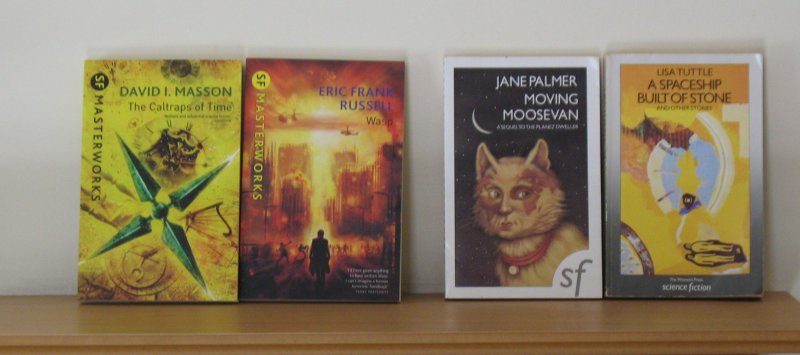
Some science fiction, because I do still read it, you know. A pair of SF Masterworks: Wasp, which I’m pretty sure I read years ago; and The Caltraps of Time, which is new to me. In fact, I’d never heard of Masson until this collection appeared in the SF Masterwork series, and I consider myself well-read in the genre. A pair for SF Mistressworks: Mooving Moosevan is the sequel to The Planet Dweller, which I reviewed on SF Mistressworks here; and A Spaceship Built of Stone and Other Stories is a collection of Tuttle’s short fiction and will also be reviewed at some point.
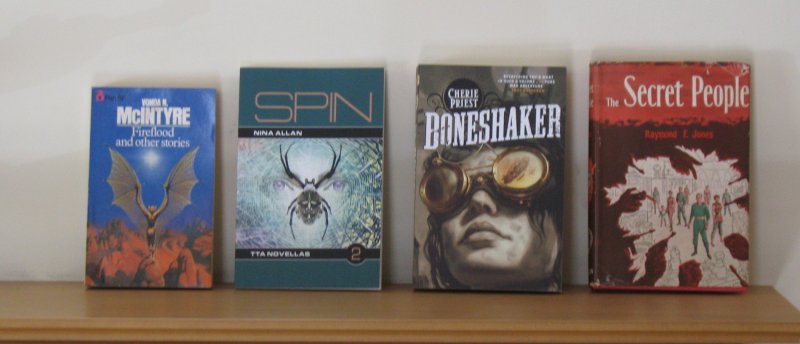
More science fiction. Fireflood and Other Stories for SF Mistressworks; Spin I bought at Edge-Lit 2 because I like Nina’s fiction; Boneshaker was a freebie from Edge-Lit 2 and while I’m no fan of steampunk I might give this one a go to see what all the fuss is about; and The Secret People was really difficult to find and the only reason I wanted a copy was so I could read the original version before I read the spiced-up Beacon Books’ version, The Deviates. I really must make a start on my Beacon Books reading project one of these days…
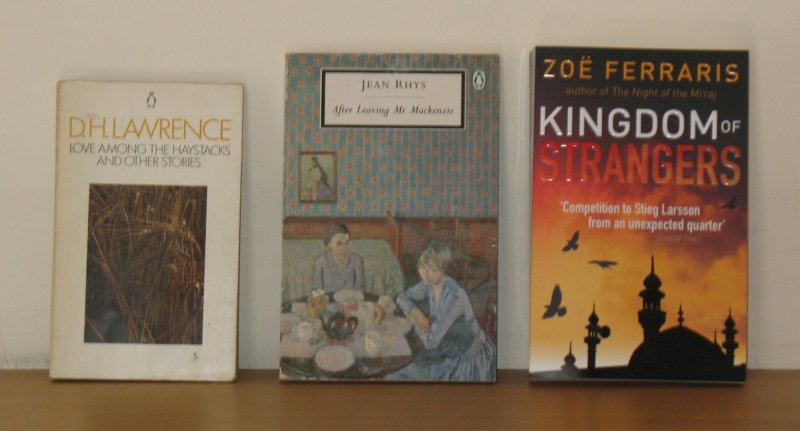
And finally some mainstream fiction: a short story collection from DH Lawrence, Love Among the Haystacks, though I might have read some of the contents elsewhere – I’m pretty sure I’ve read the title novella; After Leaving Mr Mackenzie is another from my local book shop’s closing down sale, picked up because M John Harrison recommended Rhys ages ago; and Kingdom of Strangers is the third in a crime series set in Jeddah and I quite enjoyed the earlier two books.
(Again, except for one small press title and a couple of OOP books all the links on this post go to Foyles.)
Okay, so SF Signal posted this last Sunday, but I was in Berlin then, with no access to a computer. And yes, I had an excellent time, despite the weekend’s inauspicious start: getting up at 2:30 am, wandering down to the kitchen to make breakfast and stepping on a slug; and then getting to the airport and realising I’d left my credit and debit cards at home (fortunately, I had plenty of cash). Anyway, the meme…
My favorite alien invasion book or series is…?
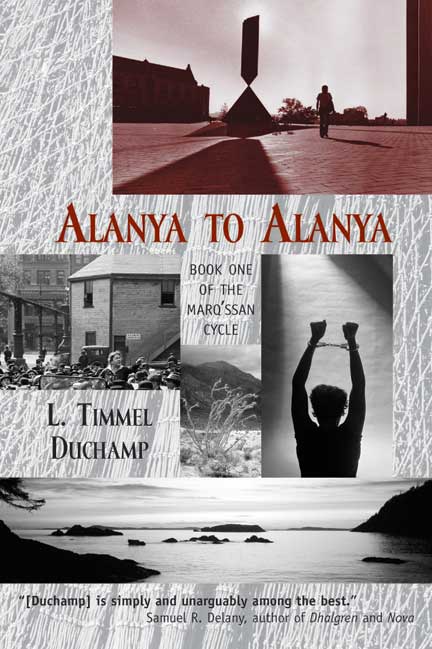
Probably the Marq’ssan Cycle by L Timmel Duchamp, although Gwyneth Jones’ Aleutian trilogy runs a close second. Duchamp’s five novels – Alanya to Alanya, Renegade, Tsunami, Blood in the Fruit and Stretto – document the arrival on a near-future Earth of an alien mission which will only talk to women. Supporting character turned chief villain Elizabeth Weatherall is one of the genre’s best creations. Jones’ White Queen, North Wind and Phoenix Café cover similar ground, but from a more global perspective. It also features, like Duchamp’s quintet, an extremely well-drawn antagonist in Braemar Wilson. Both series are intensely political and among the smartest books in science fiction.
My favorite alternate history book or series is…?
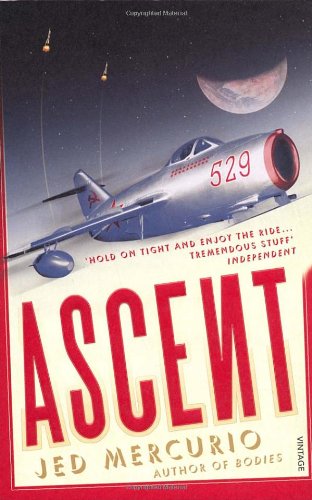
The Apollo Quartet, of course. But seriously: I’d say Ascent by Jed Mercurio, but naming it as alternate history might constitute a spoiler. It could also be argued that the superb Ash: A Secret History by Mary Gentle is alternate history. I think I’ve read my fair share of Hitler-victorious alternate histories, and I suspect there are very few changes remaining to be rung on that particular trope. Not being American, I’ve little interest in their civil war and how it might have ended differently. Stephen Baxter’s alternate take on the US space programme, Voyage, appeals for obvious reasons. And many sf novels of the past written about exploring Mars and the Moon may not have been written as alternate history, but they pretty much qualify as it now. Unfortunately, most twentieth-century sf novels about twenty-first space travel, such as those by Steele or Bova, suffer from being, well, not very good. Sadly, early and alternate space travel doesn’t seem to be an area of the genre that has attracted writers with much in the way of writing chops. Which is a shame.
My favorite cyberpunk book or series is…? Metrophage by Richard Kadrey, the book which folded cyberpunk back into science fiction. Everything that came after is just the twitchings of a dead subgenre.
My favorite Dystopian book or series is…?
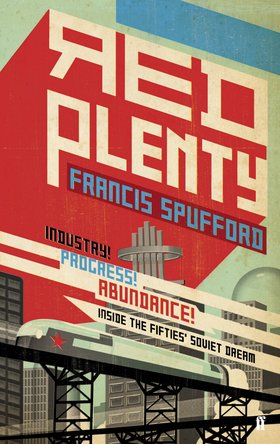
Dystopia is in the eye of the beholder. If you read Francis Spufford’s excellent Red Plenty, you’ll see that not everyone thought the USSR was a dystopia. And for all the UK’s fabled streets of gold, it’s starting to look more and more like a dystopia each day to those of us living here. As for reading about dystopias… I don’t think it’s been done especially well in science fiction – but then Nineteen Eighty-Four casts a long shadow. Some of DG Compton’s works from the 1970s might be considered dystopian, such as The Continuous Katherine Mortenhoe; and in Ascendancies, he manages to find a dystopian story in a near-utopian society. JG Ballard wrote plenty of novels and short stories which might qualify, but no specific title springs to mind – it’s probably best to consider his entire oeuvre as dystopian fiction. And you can’t really go wrong by reading them all.
My favorite Golden-Age sf book or series is…?
AE van Vogt’s The House That Stood Still (AKA The Undercover Aliens), which mixes California noir and pulp sf and just about manages to get away with it, is one of my favourite sf novels. It’s completely bonkers, of course; but it’s one of van Vogt’s more coherent works. Which isn’t saying much. Recently, I’ve read some early sf by women writers and found it much better than the so-called classics I read as a kid – these days, I find EE ‘Doc’ Smith, Robert A Heinlein and Isaac Asimov near-unreadable. There’s also an early Brian Aldiss novel, Equator, which I really like, though it’s more like spy fiction with added aliens than science fiction per se. Which may be one reason why I find it so appealing.
My favorite hard sf book or series is…?
The Apollo Quartet, of course. But seriously: it’s probably Kim Stanley Robinson’s Mars trilogy. I don’t read that much hard sf as such. When I need my real science kicks, I read books about space or deep sea exploration. There are very, very few hard sf novels which come even remotely close to emulating the authenticity those books possess.
My favorite military sf book or series is…?
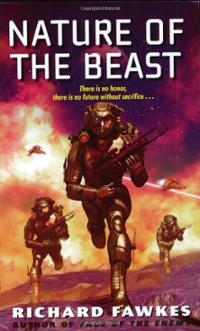
I don’t have much time for military science fiction, though in the past I’ve read my fair share – including David Weber, Tanya Huff, Elizabeth Moon, Jack Campbell, David Feintuch, John Steakley, and probably a few others. The only such books left on my book-shelves, and which may well get purged should I ever get around to rereading them, are Richard Fawkes’ Face of the Enemy and Nature of the Beast, which I remember as quite interesting. Also worth a go is Shariann Lewitt’s debut novel, Angel at Apogee, and her two Collegium novels, Cyberstealth and Dancing Vac. And if any of CJ Cherryh’s books qualify, then they’re certainly worth reading.
My favorite near-future book or series is…?
I don’t think I have one. I’ve always been a fan of John Varley’s Eight Worlds novels and short stories, but do they count as near-future? Gwyneth Jones’ Kairos, a favourite novel, was near-future when it was published, but that was back in 1988 – and these days it reads more like alternate history. The same might well prove true of Ken MacLeod’s excellent Intrusion a decade from now. Another excellent near-future novel is Maureen F McHugh’s China Mountain Zhang, though despite being two decades old it has yet to become alternate history – perhaps because it doesn’t feel like it’s set in a near-future which might well happen.
My favorite post-apocalyptic book or series is…?
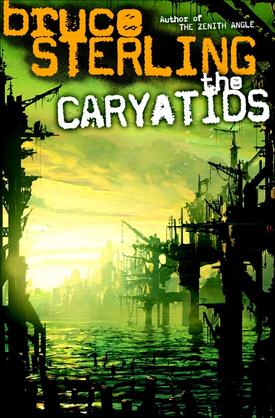
To be honest, I’m not interested in how Americans would react should their society collapse, nor do I believe that every single person on the planet would react in that way. Which pretty much discounts ninety-nine percent of post-apocalyptic novels. The only one that springs to mind as different is Bruce Sterling’s The Caryatids, which shows the world – all of it – coping with the aftermath of climate crash and nation-state failures. Perhaps the best of the more traditional post-apocalyptic novels is Joan Slonczewski’s The Wall Around Eden, in which mysterious aliens save isolated pockets of humanity. It reads like a masterclass in sf and deserves to be back in print.
My favorite robot/android book or series is…?
Science fiction’s treatment of robots has always been silly. They’re either human in all but name and yet treated like slaves, or blatant signifiers for slaves. In remarkably few sf stories do they actually resemble real robots.
My favorite space opera book or series is…?
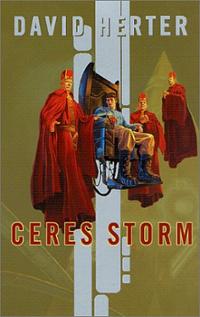
I’ve always enjoyed Iain M Banks’ Culture novels, though I think the individual parts are not as impressive as the sum of them. Colin Greenland’s Take Back Plenty has always been a favourite space opera too, and I remember being impressed by Scott Westerfeld’s The Risen Empire when I read it many years ago. Likewise David Herter’s Ceres Storm, which I read back when it was published in 2000. I really must reread it one of these days…
My favorite steampunk book or series is…?
I don’t read steampunk. There’s nothing in it that appeals to me. Airships? Pfft. Give me supersonic jets every time. Brass? Useless metal. And anyway, steel is more emblematic of the British Empire than brass. Difference engines? NASA didn’t put twelve men on the Moon using clockwork computers, did they?
My favorite superhero book or series is…?
I used to read superhero comics by the likes of Warren Ellis and Alan Moore, but went off the whole genre several years ago. I can no longer think of anything nice to say about the genre.
My favorite time travel book or series is…?
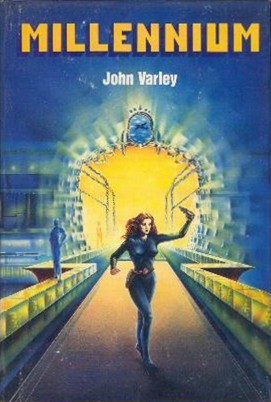
I’m more likely to read and enjoy an historical novel than I am a time travel one. I can’t off the top of my head think of any time travel novels that I hold in especially high regard. I remember enjoying Peter Delacorte’s Time on My Hands, which is set in 1940s Hollywood. And Stephen Baxter’s The Time Ships takes Wells’ The Time Machine and runs with it… and runs… and runs… I’m a big fan of John Varley’s short story ‘Air Raid’, and I still have a soft spot for the film adaptation Millennium, despite its godawful production design… which does mean I really like the novel written by Varley of the film adapted by Varley of the short story written by Varley…
My favorite young adult sf book or series is…?
I don’t read YA books. I am no longer sixteen, and haven’t been for a few decades.
My favorite zombie book or series is…?
I don’t read zombie books. I don’t even like zombie films. Maybe one day somebody will do something interesting with the trope, but I’m not holding my breath.
The 3 books at the top of my sf/f/h to-be-read pile are…?
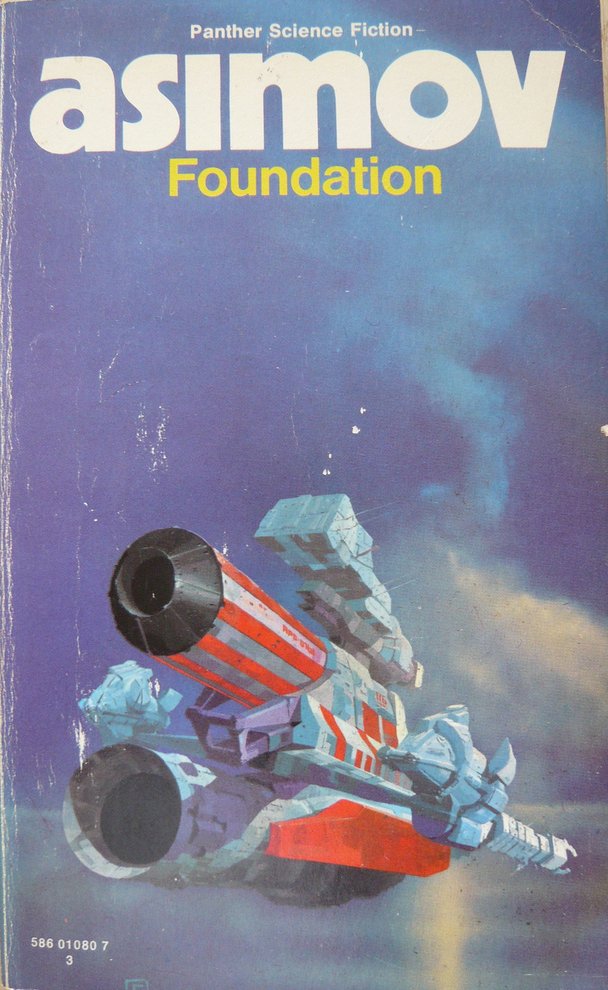
Last month, I foolishly agreed to read and blog about half a dozen classic sf novels, so I have The Moon is a Harsh Mistress and Foundation to look forward to over the next couple of weeks. Other than that, I have some reading for SF Mistressworks, and I hope to sneak in a few more recent genre novels as well, but I’ve yet to decide which ones. In fact, when you have a TBR of around 700 books, it’s often difficult to pick what to read next and I can sometimes spend ten or twenty minutes feeling really indecisive as I wander from one bookcase to the next…
And now I’ve finished this I’ll no doubt think of books I should have mentioned. Oh well. The more observant among you might also have noticed that all the links on this post go to Foyles using their affiliate scheme (except for the one link to a DVD). I found it relatively easy to use – a little fiddlier than Amazon’s, but not unworkably so. We’ll see how it works out.
According to a piece on the Bookseller website here, authors should not link to Amazon because by supporting the tax-evading giant they are contributing to the slow death of independent booksellers. The article names a number of authors, and the books they are linking to are their own – which is something that doesn’t apply to me since I’m both the publisher and author of the Apollo Quartet, so of course I link to my own Whippleshield Books online store. Except for the edition I published on Kindle, that is.
However, I do write about books, films and music here on this blog, and I link the titles through to Amazon. I’m a member of their affiliate scheme, and each sale from a link nets me about 2% of the purchase price. It’s not, in the grand scheme of things, a massive earner – typically about £50 a year, but that’s £50 I can spend on MOAR BOOKS. I initially joined Amazon’s scheme for a number of reasons – they stock books, DVDs and CDs on the one site, it costs nothing to join, and it’s very very simple to use (you just cut and paste a link into your blog). I did at one point swap over to using Book Depository’s affiliate scheme, which was more complex; but when Amazon bought Book Depository the whole point of changing over was lost.
The thing is, I don’t actually want to support Amazon. I don’t like their business practices, I don’t like their tax evasion, and I don’t like their routinely poor treatment of their employees. On the other hand, they are often the only people who have particular items in stock, their customer service is excellent (Nook take note), and they are usually the first port of call for online shoppers. I have sold more copies of Adrift on the Sea of Rains through Amazon than I have through my own online shop, even though the prices are identical. (Which is especially annoying as Amazon gouge a 60% discount from me on the books they sell, so I make a loss on every sale.)
There are plenty of online sellers I could use instead of Amazon: Waterstones, HMV, The Hive, ABEBooks, Foyles, even specialist booksellers such as Cold Tonnage, Porcupine Books, etc. (Having said that, it has always been my policy on this blog to link small press titles directly to the small presses themselves.) If I’m going to drive traffic to an online seller such as Waterstones, then I would like some reward for doing so. But no online seller that I’ve found so far operates an affiliate scheme as simple to use as Amazon’s. Foyles and Waterstones use a scheme run by Zanox, The Hive uses one from Japanese internet giant Rakuten, and both of those demand a £5 sign-up fee. And they have to approve you (which takes 10 working days). AbeBooks runs a scheme based in the US – yes, even the UK site – which means your earnings will be taxed by the US government unless you jump through a bunch of stupid bureaucratic hoops to prove that, like most of the fucking planet, you’re not actually a citizen of the USA…
I could, perhaps, link to my local independent book shop. But my local book shop is unlikely to be the local book shop for a reader of my blog. So that’s not going to work either. If there were a central site listing independent booksellers which I could link to, and which would determine a reader’s local book shop from their IP address… that would be pretty cool. But that doesn’t exist. And we’ve only had the World Wide Web for twenty years… Perhaps publishers could run some sort of affiliate scheme, then I could link in-print titles directly to their online catalogues. Except publishers’ website often contain incorrect details, not all them actually sell the books they publish, and such a scheme wouldn’t cover out-of-print titles.
Nonetheless I’m going to try a couple of affiliate schemes run by other booksellers, just to see how easy they are to use. And I’ll blog about what happens. On Saturday, I signed up for Foyles’ scheme, but I can’t use it until my application is approved. I’m going to limit my trials to UK-based schemes because I’ve no desire to be fucked about by the American IRS.
If I don’t find a suitable alternative, then I’m pretty much stuck with Amazon.
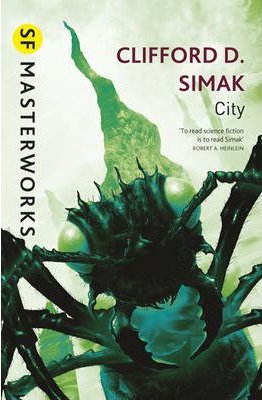
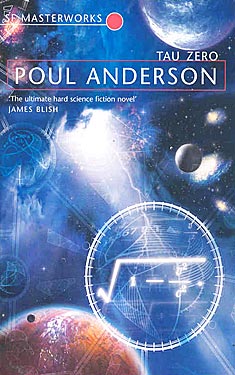
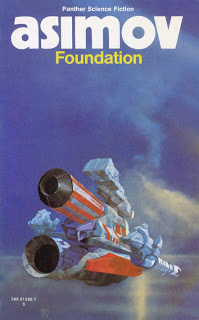
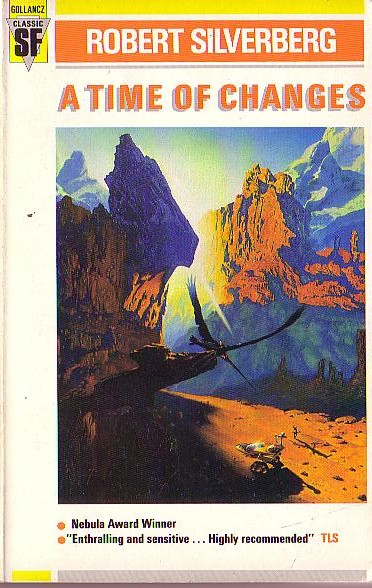
Back on 22 June, I posted a poll to see which six allegedly classic science fiction novels you would like me to read as my summer reading project. I promised to read the books and then write a blog post on each one. In hindsight, it was clearly a foolish thing to promise, although perhaps there were one or two books in the seventeen I chose for the poll that I sort of wanted to read/reread. Sadly, only one of those made it to the final six. Which are, for the record:
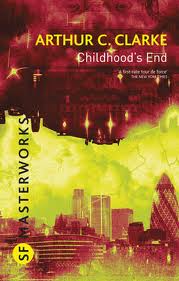
You lot must really hate me – The Moon is a Harsh MistressandFoundation. Still, a promise is a promise. Foundation is one of three rereads of the six books. I last reread it in 2006, thugh for some reason I don’t appear to have written about it then. Childhood’s End I read some time back in the early to mid-1980s, I think. I’ve not reread it since. A Time of Changes I’ll have read around the time my Gollancz Classic SF edition was published, which was 1986. The remaining three books I’ve never read before. They’re also in the SF Masterworks series, and those are the editions I own – in fact, Foundation and A Time of Changes are the only books in the six that aren’t SF Masterworks.
Anyway, some time in July I will start my summer project, and after I have finished each book I will write a review here on the blog. I am not expecting my reviews to be positive, but you never know, I might be pleasantly surprised…
It’s halfway through 2013, and it’s proven quite a year so far in ways both good and bad. This post is to celebrate some of the good stuff – namely the best of the books I’ve read, the films I’ve seen, and the albums I first heard during the previous six months.
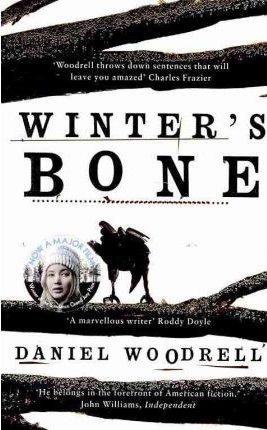
Books Winter’s Bone, Daniel Woodrell (2006) I read this after seeing and liking the film and I was much surprised to discover it was not some piece of cheap commercial fiction with an unusual setting, but instead a beautifully-written literary novel which happened to use a genre plot. The film is pretty damn good too. I plan to read more by Woodrell. I wrote about this book here.
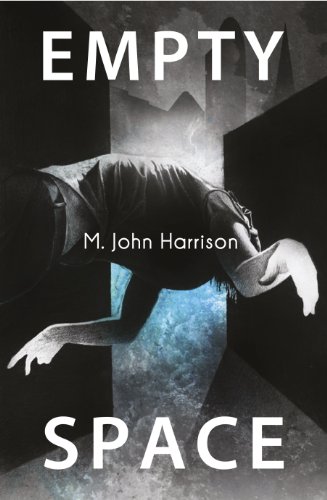
Empty Space, M John Harrison (2012) is the third book in the Kefahuchi Tract trilogy and I really must reread Light and Nova Swing one of these days. If at first I thought Empty Space felt a little undisciplined in its spraying of tropes across its narrative threads, the more of it I read the more I realised how very carefully engineered it was. I wrote about this book here.
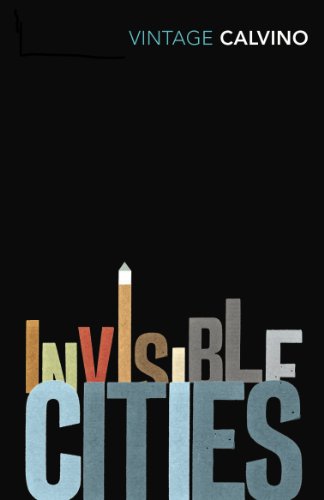
Invisible Cities, Italo Calvino (1972) is the most recently-read book to appear in this list. I had no real idea what to expect when I picked it up, but its lyrical and oblique descriptions of the cities (allegedly) visited by Marco Polo immediately captivated me. I wrote about this book here.
The Wall Around Eden, Joan Slonczewski (1989) is one of those books I read and enjoyed, but only realised how well-crafted it was when I came to write a review of it for SF Mistressworks. It reads like a masterclass in science fiction. This book really needs to be back in print. See my review here.
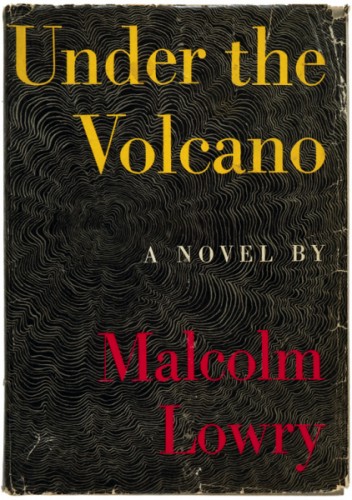
Under the Volcano, Malcolm Lowry (1947) Some books just leave you speechless at the quality of the prose, and while I’d already fallen in love with Lowry’s writing when I read his novella ‘Through the Panama’, there was always a chance this, his most famous and most lauded novel, would not appeal as much. Happily, it did. Even more so, perhaps. A bona fide classic of English-language literature. I wrote about it here.
Honourable mentions go to Osama, Lavie Tidhar (2011), whose grasp may not quite match its reach but it comes damn close; Before The Incal, Alejandro Jodorowsky & Zoran Janjetov (2012), which matches The Incal for bonkersness and sheer bande dessinée goodness; Underworld, Don DeLillo (1997), which is a bit of a bloated monstrosity, and contains too much baseball, but also features moments of genius; The Steerswoman’s Road, Rosemary Kirstein (2003), which is actually a cheat as its an omnibus of The Steerswoman (1992) and The Outskirter’s Secret (1993) and I only read the latter this year, but it’s an excellent series and deserves praise; Jamilia, Chingiz Aïtmatov (1958), which proved to be a lovely little novella set in the author’s native Kyrgyzstan; and Sons and Lovers, DH Lawrence (1913), which shows with beautiful prose how psychology should be used in fiction.
Um, not that much science fiction there. I seem to be failing at this science fiction fan business…
Films Le Mépris, Jean-Luc Godard (1963) I am not a huge fan of Godard, so I was somewhat surprised how much I liked this film. Perhaps it’s because it feels a little like Fellini’s 8½ (both are about film-making), which is also a favourite film, and looks a bit like something by Antonioni.
Only Yesterday, Isao Takahata (1991) I’ve been working my way through Studio Ghibli’s output, though I find most of it either twee, cloyingly sentimental or a little juvenile. But not this one. I wrote about it here.
About Elly, Asghar Farhadi (2009) For much of its length, this film feels like an art house mystery, but then it takes a turn into something completely different and wholly Iranian. I wrote about it here.
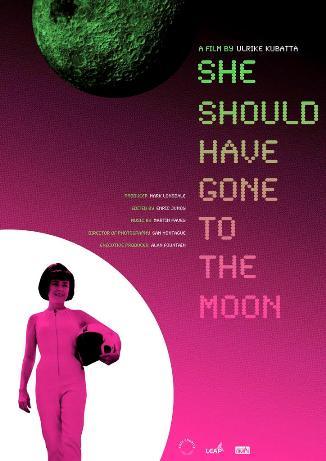
She Should Have Gone to the Moon, Ulrike Kubatta (2008) I bought this as research for the Apollo Quartet, and was surprised to discover it was a beautifully-shot documentary and meditation on the thirteen women who successfully passed the same medical tests as the Mercury astronauts.
Honourable mentions go to Gertrud, Carl Theodor Dreyer (1964), grim and Danish and beautifully subtle; Man With A Movie Camera, Dziga Vertov (1929), an astonishing and meta-cinematic document of 1920s Russia; Black Cat, White Cat, Emir Kusturica (1998), broad comedy but also very funny; Le Havre, Aki Kaurismäki (2011), typically deadpan but somewhat cheerier than usual; and The Sun, Aleksandr Sokurov (2005), a human portrait of Emperor Hirohito at the end of WWII.
Well, will you look at that, not a single Hollywood film in the entire lot. Instead, we have films from France, Germany, Japan, Iran, Denmark, Russia, the former Yugoslavia, Finland and a documentary from the UK.
Music Construct, Dark Tranquillity (2013) A new album from one of my favourite bands, and with each new album they just get better and better. Can’t wait to see them live.
Death Walks With Me, Noumena (2013) A new album from Finnish melodic death metal masters after far too long a wait. Trumpet!
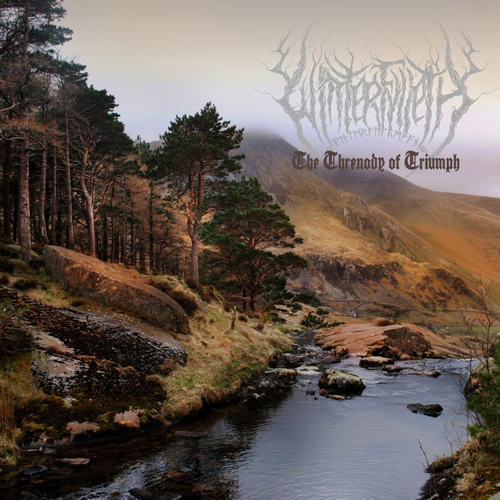
The Threnody Of Triumph, Winterfylleth (2012) They call it English heritage black metal, though I’m not entirely sure what that means – a wall of guitars, with howling vocals layered over the top, some lovely acoustic interludes, and they’re bloody good live too.
Dustwalker, Fen (2013) More English heritage black metal but also very atmospheric, perhaps even a bit shoegazer-y in places; a formula that works extremely well.
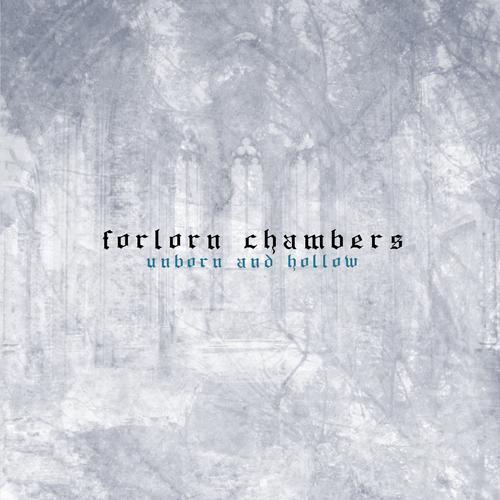
Unborn and Hollow, Forlorn Chambers (2013) A demo EP from a new Finnish band, which mixes and matches a couple of extreme metal genres to excellent effect. Very heavy, very doomy, with a lot of death in it too. I’m looking forward to seeing an album from them.
Honourable mentions: Conflict, Sparagmos (1999), classic Polish death metal; Of Breath and Bone, Bel’akor (2012), Australian melodic death metal; Deathlike, Ancient VVisdom (2013), strange acoustic doom from Texas; Where the End Begins, Mentally Blind (2013), accomplished demo from a Polish death metal band.
Something must be wrong with me. How else to explain it? It’s been over a month since my last book haul post, and look how few books I’ve bought since then. The mantlepiece, at least, is grateful, as its load was somewhat lighter as I was putting together this post. And the rate of increase in the TBR has decreased a little. You know you’re in trouble when you’re measuring the rate of change in the TBR rather than the actual number of books you own but have yet to read. So it goes.
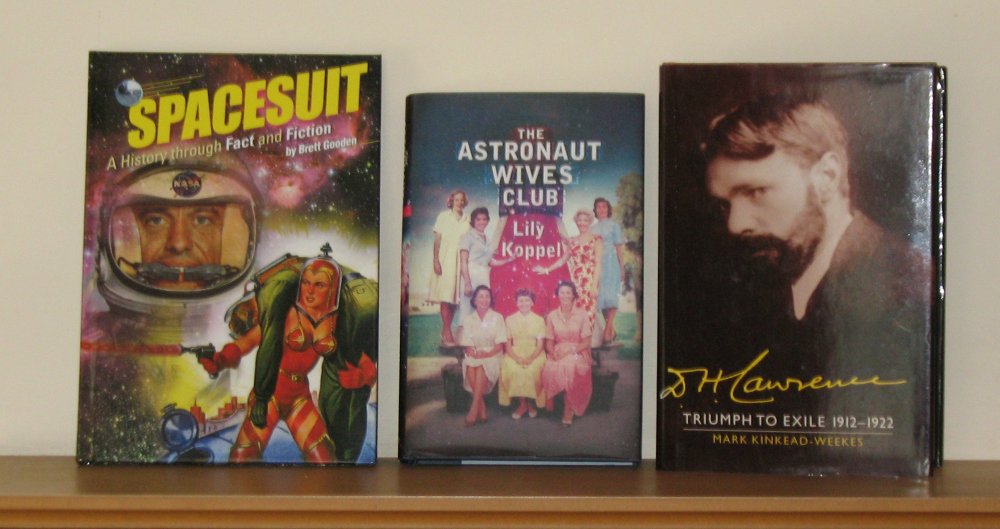
Some non-fiction: Spacesuit I fancied the look of, chiefly because it includes spacesuits from fiction; but we’ll see how it stacks up against the other books on the topic I own. The Astronaut Wives Club is research for Apollo Quartet 4, and it’s nice when you decide on a topic to write about and someone then goes and publishes a factual work on that very subject. DH Lawrence: Triumph to Exile 1912 – 1922 is the second volume of a three-volume biography of the writer and belonged to my father. I have the first, but now I’m going to have to see if I can get hold of a hardback edition of the third book.
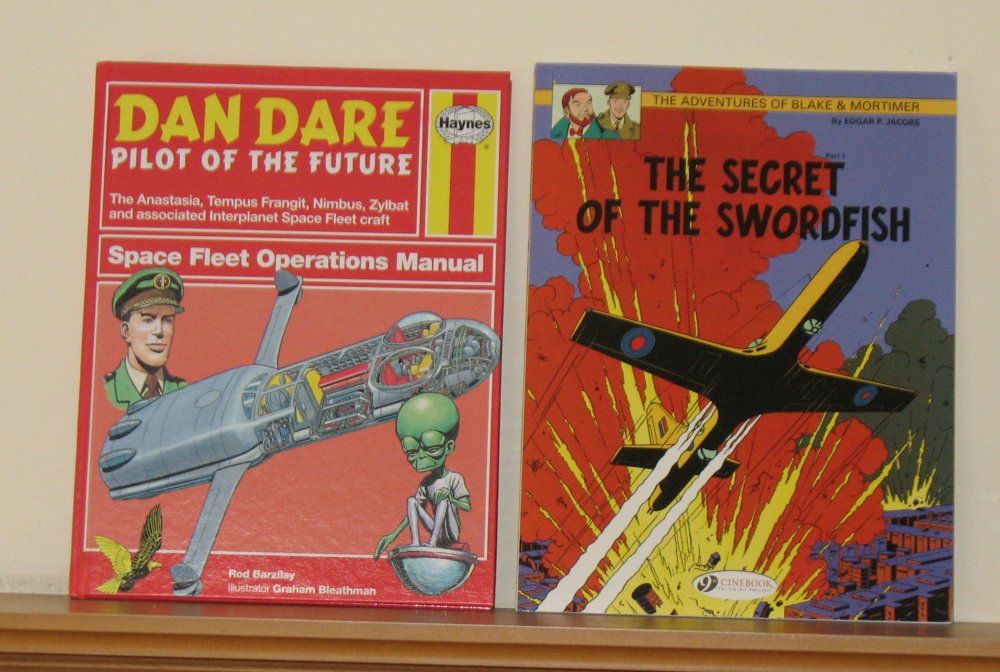
Haynes have branched out from car owners’ workshop manuals, and while I can understand them applying the same formula to various famous aircraft, such as the Avro Vulcan and Supermarine Spitfire, or even the Space Shuttle and Lunar Rover, some of the fictional “vehicles” they cover make less sense – like the U.S.S. Enterprise, the Millennium Falcon, or Gerry Anderson’s Thunderbirds. Still, I’ve been a fan of Dan Dare for years, so I thought the Space Fleet Operations Manual worth a go. It’s… okay. Cutaways of the various spacecraft, thumbnail sketches of the characters and alien races. There’s not much detail. Ah well. The Secret of the Swordfish, Part 1 is the fifteenth volume in the series, and there’s only a few to go before it’s all done. This is the first Blake and Mortimer story, originally published in 1950, and it shows. The artwork is Jacobs’ usual ligne claire style but the story is neither as complex nor as clever as much later volumes.
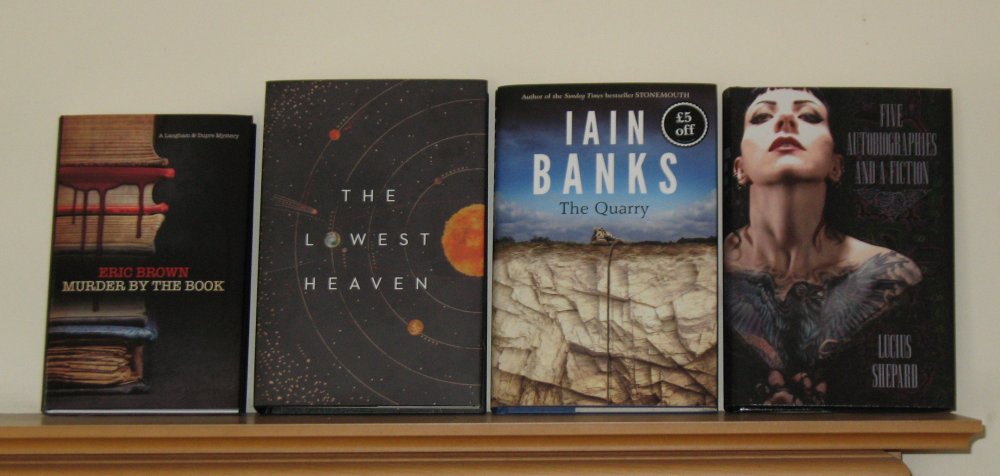
For the collections: Murder by the Book is Eric Brown branching out into crime, and I’m looking forward to reading it (especially since I know what one of its touchstone works was). I was kindly sent an ARC of The Lowest Heaven but after reading the first story by Sophia MacDougall I decided it was worth buying the limited edition. So I did. Review to follow shortly-ish. The Quarry I bought from Waterstones, and it’s not like I was never going to buy the book in hardback. Five Autobiographies and a Fiction I bought direct from Subterranean Press. Idiot HMRC decided to charge VAT on it, even though books are exempt. I have applied for a refund but it’ll be weeks before I get it. So, of course, they did it to the next book I ordered from the US. I’ve been buying books from publishers and eBay sellers in the US for years without a problem, and then twice in one month they wrongly stiff me for VAT. Stupid HMRC are stupid.
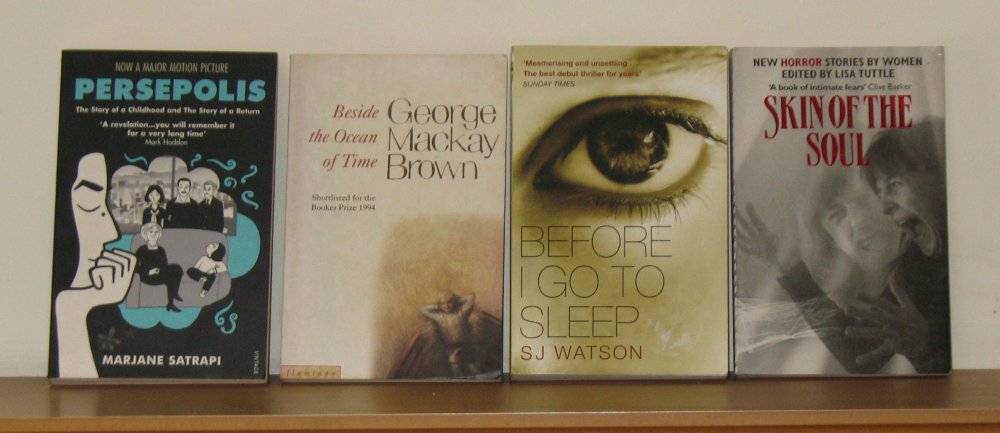
Some charity shop finds: Persepolis, a graphic novel about a woman growing up in Iran. I’ve been there, you know: Persepolis. It was in the early 1970s, we went on holiday to Iran, and stayed in Isfahan, Shiraz and Tehran. At one point, we went to see the ruins at Persepolis. I really ought to see about digitising the cine film my father shot when we were there. Beside the Ocean of Time was a lucky find – I’ve been interested in trying something by George Mackay Brown since seeing him mentioned on, I think, Eve’s Alexandria. Before I Go To Sleep I vaguely recall being one of those literary/mainstream novels based on a sf idea from a couple of years ago. I can’t actually remember what people said about it, however. I guess I’ll find out for myself. Skin of the Soul is a Women’s Press anthology of horror stories by women writers. I wavered on this one – I mean, it’s not sf so I can’t review it for SF Mistressworks; and I’m not a huge fan of horror, anyway. But then I saw Suzy McKee Charnas and Karen Joy Fowler on the TOC, and I decided to buy it.
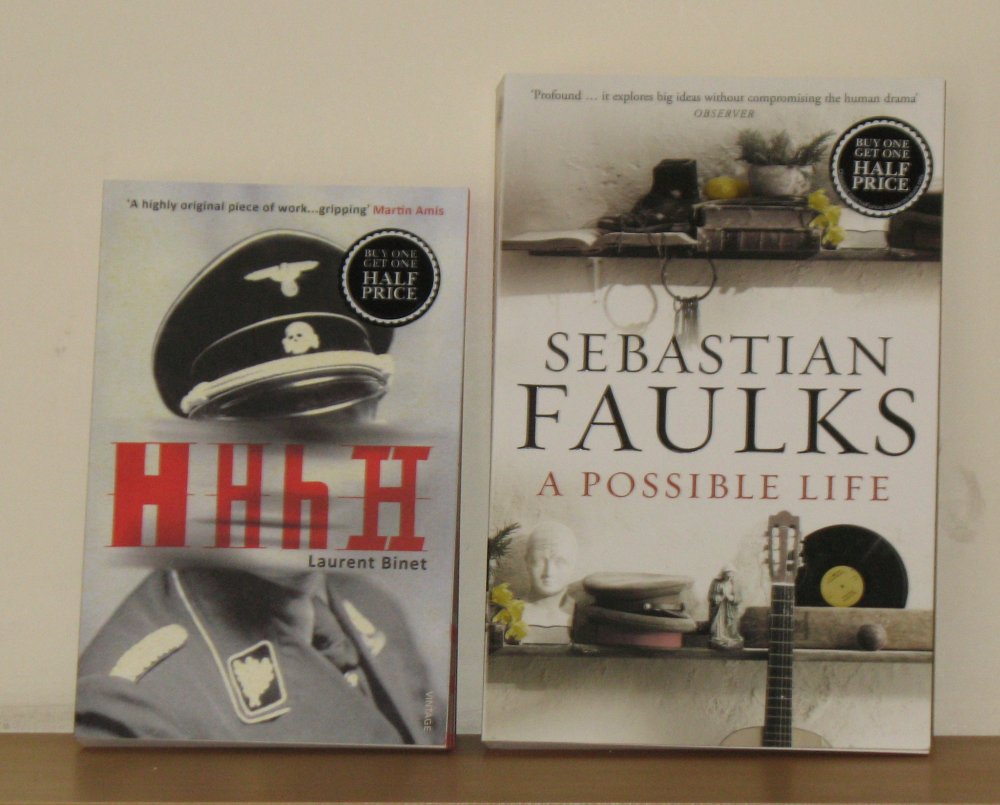
Finally, two books I bought from Waterstones’ “buy one get one half price promotion”. Guess which one I got for half price: is it HHhH at £8.99 or A Possible Life at £12.99? I really wanted HHhH as I’d heard so many good things about it, but as is always the way with these promotions finding a second book proved difficult. Yes, I did want to read A Possible Life, but not enough that I’d pay near enough thirteen quid for the trade paperback. But there was nothing else that looked remotely interesting. I must have been in a good mood.
Considering I think of myself as a science fiction fan and the stories I write I classify as science fiction, I don’t seem to read that much of it – only two sf novels since my last reading round-up post. (Actually, it’s four as I read a further two for SF Mistressworks (here and here), so I’ve not mentioned them in this post.) I suspect by the end of the year, however, genre will still form more than half of my reading. [Checks spreadsheet of books read] Ah, so far this year, 57% of the books I’ve read were science fiction. Well, there you go: this last lot of books must have been an aberration. No matter.
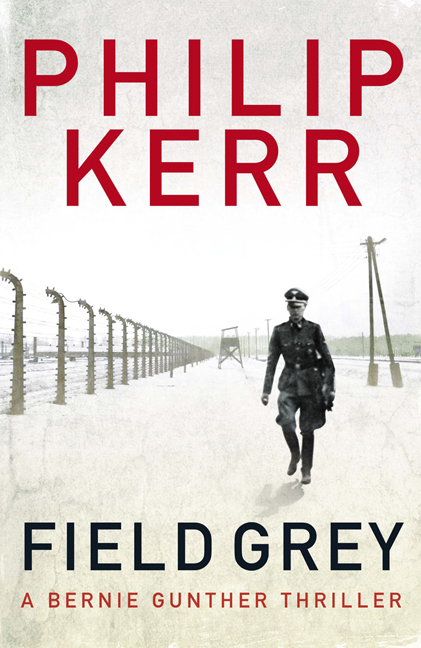
Field Grey, Philip Kerr (2010) Bernie Gunther seems to have settled in Cuba after the events of If the Dead Rise Not, except things take a turn for the worse when he finds himself having to say no to either the Cuban secret police or his gangster boss. So he skips town in a boat; but is pulled over by a US Navy cutter out of Guantanamo, and once (they think) they’ve identified him, they summarily imprison him for a bit and then send him back to Germany to stand trial for war crimes. Only it transpires that what the Amis really want is his help in identifying a French war criminal who is being repatriated from the USSR, where he was a POW. Except that’s not what they really want… And this has to be the most confusingly-plotted of Kerr’s novels I’ve read, with its plots-within-plots-within-plots, er, plot. It’s excellent on detail, as usual – when Bernie spends time in a Soviet gulag, for example, it’s clear Kerr has done his research. With nine books now in the series, Kerr is building up quite a back-story for Bernie – like some of the others, Field Grey spends as much time on Bernie’s war-time exploits as it does in the 1950s when the story opens. Good stuff.
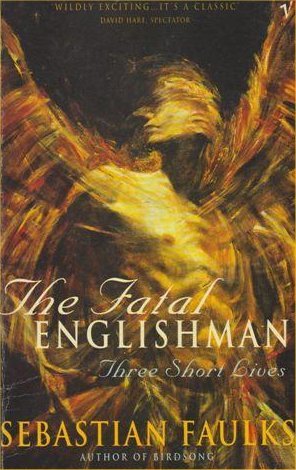
The Fatal Englishman, Sebastian Faulks (1996) I’ve now read all of Faulks’ books, except his first, A Trick of the Light, which is impossible to find, and his latest, A Possible Life (which I bought in Waterstones only this last weekend). Birdsong is obviously his best, though I did like Human Traces a lot as well. The Fatal Englishman, however, is non-fiction, and about three men who all died at a relatively young age, though their lives to that point had promised much. The first is Christopher Wood, a talented painter in the 1920s, who fell foul of opium just as he was beginning to produce his best work. Richard Hilary was a Spitfire pilot during the Battle of Britain and was horribly burned in a crash. He underwent pioneering plastic surgery, and then wrote a book on his experiences, The Last Enemy, which made him famous. He desperately wanted to return to flying fighters, but his injuries made it difficult. He did manage to wangle a posting flying night fighters, but died in a mysterious crash some weeks later. The last of the three is Jeremy Wolfenden, son of Jack Wolfenden of the Wolfenden Report. Extremely clever, a bit of a rebel, homosexual and a heavy drinker, Wolfenden was expected to go far but got himself mixed up with the intelligence services while serving in Moscow as a journalist in the 1950s. He fled the USSR for the USA, got married and seemed to be dealing with his drinking. But it killed him at the age of 31. He never even got to see the Wolfenden Report published, which would have legalised his sexuality.
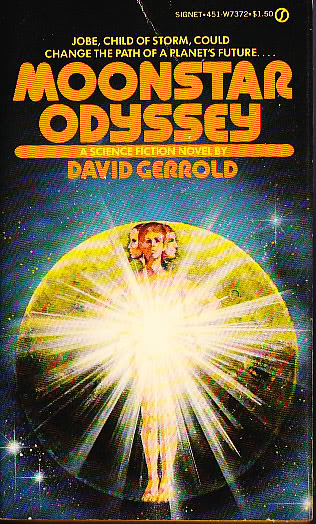
Moonstar Odyssey, David Gerrold (1977) This has been on my wishlist so long, I’ve forgotten why I put it there; and having now read it I’m even more mystified. The world of Satlik has been terraformed and shallow seas now cover its lunar-like landscape. The climate is maintained by a number of orbital mirrors, which also provide day and night. The inhabitants are not ordinary humans, however, but remain genderless until puberty, or “blush”, when they choose which sex they will be as an adult. Moonstar Odyssey is allegedly about Jobe, who is “different”, and while the stories and accounts which make up the novel repeatedly say as much, there’s little in there to suggest it. For a start, the plot doesn’t actually start until three-quarters of the way in, and when it does Jobe doesn’t actually do that much – she doesn’t save the planet, her family, a group of strangers, or anything. While Gerrold has built an interesting world in Satlik, he hasn’t written a story anywhere near as interesting in Moonstar Odyssey. Rather than working in its favour, its palimpsest nature leaves you waiting for much of the book for something to actually happen.
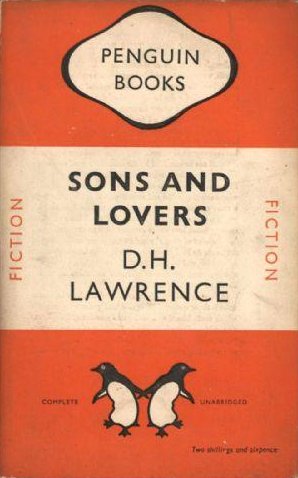
Sons and Lovers, DH Lawrence (1913) I’m slowly working my way through Lawrence’s oeuvre and am continually surprised I’d not read him years ago. Perhaps knowing of him and his work from a young age – my father was a huge fan of his books, so much so he dragged my mother to see Lawrence’s shrine in Taos on a visit to the US – I heard enough about him to think his works would hold no interest for me. After all, they’re around a century old, and it’s proper literature which, like most kids, I’d only read if I was told to. I finally read Lady Chatterley’s Lover a few years ago, and loved it. So now I’m reading all of his books. Opinions are divided as to which is his best: Lady Chatterley’s Lover, Women in Love or this, his third novel, Sons and Lovers. I’ve only read two of the three, so I’m unable to judge the matter; but certainly Sons and Lovers seems a more human story than Lady Chatterley’s Lover – perhaps because it isn’t simply focused on a central love triangle, but is more of a family saga (albeit focusing a lot on Paul Morrel and his relationships, especially his relationship with his mother). If The White Peacock felt a bit arbitrary and haphazard in places, Sons and Lovers is a remarkably controlled novel. While the story skips forward in uneven chunks at times, and the change in focus from eldest son William to second son Paul is a little disconcerting at first, the handling of the characters is beautifully done and the Nottingham of the time feels like a real, historical place. After finishing the book, I watched the 2003 ITV adaptation starring Sarah Lancaster as Mrs Morrel, but it was more Barbara Taylor Bradford than DH Lawrence and seemed to miss the point of the book. It also changed the story’s chronology, so that it ended on the even of World War I. I initially read Lady Chatterley’s Lover because it’s a classic of English literature, and was surprised to find I really liked it. I decided to read more of Lawrence’s works because my father was a fan and I wanted to read them for him. Having now read Sons and Lovers, I’m turning into something of a fan of Lawrence’s fiction.
Under the Volcano, Malcolm Lowry (1947) I’m glad I read some of Lowry’s short fiction and Ultramarine before I read Under the Volcano. Lowry is a very autobiographical writer, and part of the fun in reading him is spotting those parts of his life he’s used before in stories. In this book, for example, some of the background of the brother, Hugh – specifically his time at sea – echoes both Lowry’s own time as a seaman and the events in Ultramarine. The plot, as is true for much of Lowry’s fiction, is relatively simple: Geoffrey Firmin used to be the British Consul in the Mexican town of Quauhnahuac, but has been let go because of his excessive drinking. He is, in fact, killing himself with booze. The Consul’s wife, Yvonne, had left him but she has now returned. Also visiting is Hugh, the Consul’s step-brother. It is the Day of the Dead in 1938, and the three visit the nearby town of Tomalin by bus to view the local celebrations. And then things sort of happen. Lowry is another author I discovered via my father’s book collection, and who has since become a favourite – although I admire his prose more than I do Lawrence’s. I love its discursive nature, its occasional bouts of postmodernism, the way Lowry immerses you in the character of the narrator, no matter who that narrator is. And like both DH Lawrence and Lawrence Durrell (another favourite writer), Lowry’s descriptive prose is often very beautiful, especially when describing the landscape. Under the Volcano is considered an important book in English literature – in fact, Modern Library ranked it number 11 in their list of 100 best English-language novels of the 20th century (ignore the Readers’ List, which has clearly been poisoned by moronic right-wingers and Scientologists).
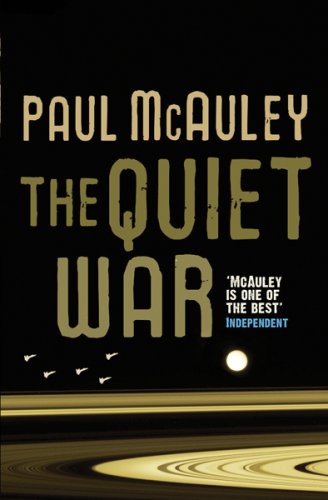
The Quiet War, Paul McAuley (2008) I’d been looking forward to finally reading this and so about a quarter of the way in was somewhat surprised to discover that I really didn’t like it. It’s not that it’s a bad book – on the contrary, it’s very well done, and paints a convincing portrait of life on the Jovian and Saturnian moons. But, for me, The Quiet War fares badly in comparison to Kim Stanley Robinson’s 2312, probably because it’s a far more traditional sf novel, and that’s not something I especially value in my reading at this time. I didn’t like the future McAuley was writing about, with its technological feudalism ruled by families of (pretty much) gangsters; I didn’t like that McAuley had his characters justifying that political set-up; I didn’t like that the political systems on Callisto and Ganymede and the other moons were often characterised as foolish or immoral. Having said that, I did like the technological side of McAuley’s future and thought it quite inventive. But still, it’s a novel about a war, and a war for the thinnest and most repugnant of reasons, and no amount of eyeball kicks can hide the bad taste that leaves. That the end of the story somewhat redeems it is in the book’s favour, and leaves me more likely to consider the sequel, Gardens of the Sun, than I would had The Quiet War ended a chapter or two earlier. All the same, I’d much prefer to read near-ish future novels which don’t rely on stupid wars for their narrative impetus, and which seem to recognise that people are products of their environments and that such future environments would be greatly different to the present day – and so the people living in them would be too. I don’t much see the point in extrapolating sociologically from the nineteenth century and pretending the twentieth century never happened, even if some days the last one hundred years do feel a bit like a great social experiment that has now ended…
Rise, L Annette Binder (2012) I received this as a birthday present from my sister and was a little puzzled why she’d bought it until I remembered it was on my wishlist. Then I wondered why it was on my wishlist. A small press collection of literary/fantasy stories – not my usual choice of reading material. I eventually worked out – with help – that I’d seen a review of it on Larry Nolen’s blog and it must have taken my fancy enough for me to wishlist it. And yes, it was a pretty good call. The fourteen stories in this collection hover on the edge of the fantastic. Some are slipstream, some are explicitly fantasy, and some contain no fantastic element at all. They are also very domestic. All of them are beautiful written, although Binder does have a tendency to cut things short and several of the stories seem to end somewhat abruptly. The level of observation and sharpness of detail is especially impressive. The opening story, ‘Nephilim’ is among the more fantastical and very good. ‘Shelter’ is heart-breaking, as is ‘Mourning the Departed’. Also very good is ‘Dead Languages’. Definitely worth reading.
Invisible Cities, Italo Calvino (1972) A book I’d wanted to read for a long time, although I knew nothing about it. But it appears on lots of 101 Book You Must Read Before You Die and 100 Best Books of the 20th Century lists, so clearly it’s thought to be very good indeed by very many people. I eventually scored a copy on readitswapit.co.uk, bunged it on the TBR… and finally got around to reading it. It took me a day. It’s a thin book, only 148 pages and many of the pages aren’t even full. Marco Polo is at the court of Genghis Khan, and he tells him of the various cities he has visited. A framing narrative in italics comments on the interaction between the two, and the effect on Khan of Polo’s tales. The remainder of the book is organised in short chapters, often no more than half a page, in which Polo gives allusive descriptions of the cities he claims he has been to. And they really are wonderful. None of the cities are real, but they could be – and yet this is not a travelogue of an invented place(s), like Jan Morris’ Hav. Having said that, as I was reading it, I kept on thinking, this is what The City & The City should have been if only Miéville had not stuck on that silly mystery plot. I’ve no idea if Invisible Cities was an inspiration for The City & The City, but I suspect it might have been. This is a book everyone should read. Go out and buy yourself a copy.






 It Doesn't Have To Be Right...