It Doesn't Have To Be Right…

… it just has to sound plausible


2 Comments

Reading diary, #2

Most of the reading I’ve been doing over the past month or so has been dipping into research books as I wrangle Apollo Quartet 4 into shape. (Not long now. Honest.) So there’s not been that much of yer actual reading of fiction. Except for, well, the following…

The Luck of Brin’s Five, Cherry Wilder (1977). I read this for SF Mistressworks. My review is here.

darebioDan Dare: A Biography, Daniel Tatarsky (2010). Back in the late 1970s, my parents bought me a Hamlyn anthology of Dan Dare stories one Christmas, containing ‘The Red Moon Mystery’ and ‘Safari in Space’, both of which remain my favourite Dare stories. Several years ago, I collected the full set of Hawk Publishing Dan Dare reprints (see here). So when a “biography” of Dare was published a couple of years ago, I picked up a copy. And… it’s not very good. The book tells the story of Marcus Morris and Frank Hampson, and how Eagle was begun. But the writing throughout is terrible, and I spotted several inaccuracies (on things not related to Eagle, to be fair). There are some nice colour plates, particularly of the mock-ups of the first issue, and a useful appendix giving plot summaries of all the Dan Dare stories published in Eagle. But there are better books about Hampson, and reading about Dan Dare is no substitute for reading the actual Dan Dare comic strips.
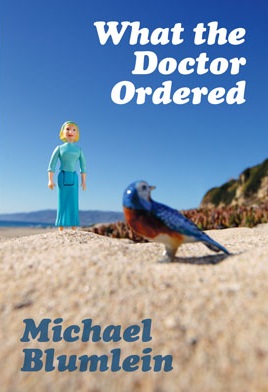
whatdoctororderedspread0What The Doctor Ordered, Michael Blumlein (2013). I’ve been a fan of Blumlein’s fiction since first reading him in Interzone back in the 1980s. Unfortunately, he has not been exactly prolific – three novels to date, and What The Doctor Ordered is only his second collection after 1990’s The Brains of Rats. Which doesn’t mean there aren’t a few stories still uncollected. What The Doctor Ordered collects fourteen stories, dating from 1997 to 2012, and originally appearing in a variety of venues, such as F&SF, Asimov’s, Flurb and a handful of original anthologies, mostly horror or dark fantasy. The one thing I’d forgotten during all the years I’d not read Blumlein was how bloody good he is. His three novels are all too different to really get a handle on him as a novel writer. But his short fiction really is very, very good. Best story in here is ‘Isostasy’, although ‘The Roberts’ is also excellent. Blumlein’s fiction is unsettling in ways that I think few authors manage to be. His prose is clinical and sharp, and he paints realistic pictures… into which he drops something fantastical that nonetheless manages to fit in. And then he twists it in ways that makes it seem all the more uncomfortable. One of the best collections I’ve read in recent years.
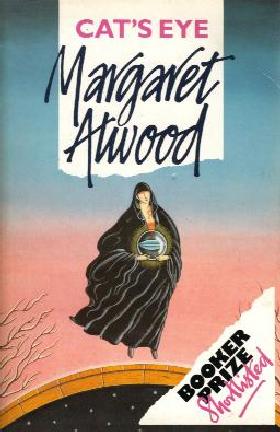
catseyeCat’s Eye, Margaret Atwood (1988). The narrator of this novel is a middle-aged artist, Elaine, who has returned to Toronto to attend a retrospective of her career. This triggers a series of long extended flashback sequences, in which she remembers her childhood in the city, particularly her friendship with three schoolfriends, one of whom was a cruel bully; but she also remembers her college years and her early years as an artist. That bullying schoolfriend, Cordelia, haunts Elaine, even in the present – although the tables did eventually turn, and while Elaine never bullied Cordelia to the extent she was bullied herself, Elaine does recount how Cordelia unravelled over the years and eventually ended up in a sanatorium. If Cordelia’s decline is signposted throughout the novel, then I missed most of it, though her fall as an ironic mirror image of Elaine’s rise to success did seem a little too obvious. Cat’s Eye was a surprisingly easy read, and if the early chapters, detailing Elaine’s childhood, were a little grim and hard to take in places, there was plenty more in the novel to balance them. Worth reading.

Cautionary Tales, Chelsea Quinn Yarbro (1978). Another book read for review on SF Mistressworks. My review is here.

raj4A Division Of The Spoils, Paul Scott (1974). The fourth book of the Raj Quartet, and the war is over in Europe, the Americans have dropped their atom bombs, but there is still Malaysia to be taken back from the Japanese. In India, demission of power from the UK is a certainty – the socialist government back home are focusing on domestic issues, and are not interested in Empire. This novel introduces Guy Perron, played by Charles Dance in the TV adaptation (and probably the character most remembered after Timothy Piggot-Smith’s Ronald Merrick), who despite his privileged background has managed to stay a sergeant throughout the war. He meets Merrick, who is now a major dealing with the Indian army deserters who joined the Germans and Japanese, and is detached to his staff. Through Merrick, he also meets Sarah Layton, whose narrative figured prominently in both The Day Of The Scorpion and The Towers Of Silence. Also prominent in the narrative is Nigel Rowan, who made a brief appearance in one of the earlier books. Rowan and Perron are old school-mates, as was Hari Kumar – whose false imprisonment as a political detenu by Merrick, who is wrongly convinced Kumar raped Daphne Manners (the events surrounding this form the core of the first book, The Jewel In The Crown). Through Rowan, Perron and the Laytons, Scott examines the route to independence and its effect on Britons living in India, weaving in and out of the plot of the preceding three books as they relate to Perron, Rowan and Sarah Layton (the TV adaptation went for a straight chronological structure, and misses a lot of the books’ arguments and subtleties). Scott is quite scathing in his critique of the Raj, and of the British who ruled India. It’s not hard to understand why these four books are considered classics, they’re certainly amongst the best post-war British literature I’ve read. I suspect I’ll be rereading them again one day.
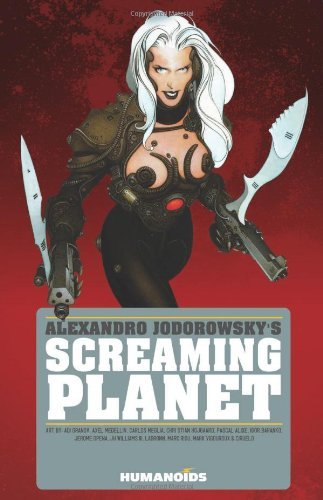
screamingplanetAlexandro Jodorowsky’s Screaming Planet, Alexandro Jodorowsky & various artists (2013). I’m a fan of Jodorowsky’s films and bandes dessinée, but I knew nothing about this title when I bought it. Still, Jodorowsky… It proved to be a linked anthology of short pieces, written by Jodorowsk but drawn by a variety of artists, which featured in the relaunched Métal Hurlant. A sentient planet is mistreated by its natives so badly it somehow makes them build an enormous metal head, into which it decants its personality, and which is then blasted into space – this is the “screaming planet”. And as it journeys through the cosmos, it passes by other worlds and its presence affects one or more people on those worlds. The story themselves are linked only by the giant head passing in the sky. Some work better than others. This is minor Jodorowsky – although he does confess in an introduction that he is used to working at longer lengths and found writing these “short stories” challenging.

4 Comments

The bookcase is not enough

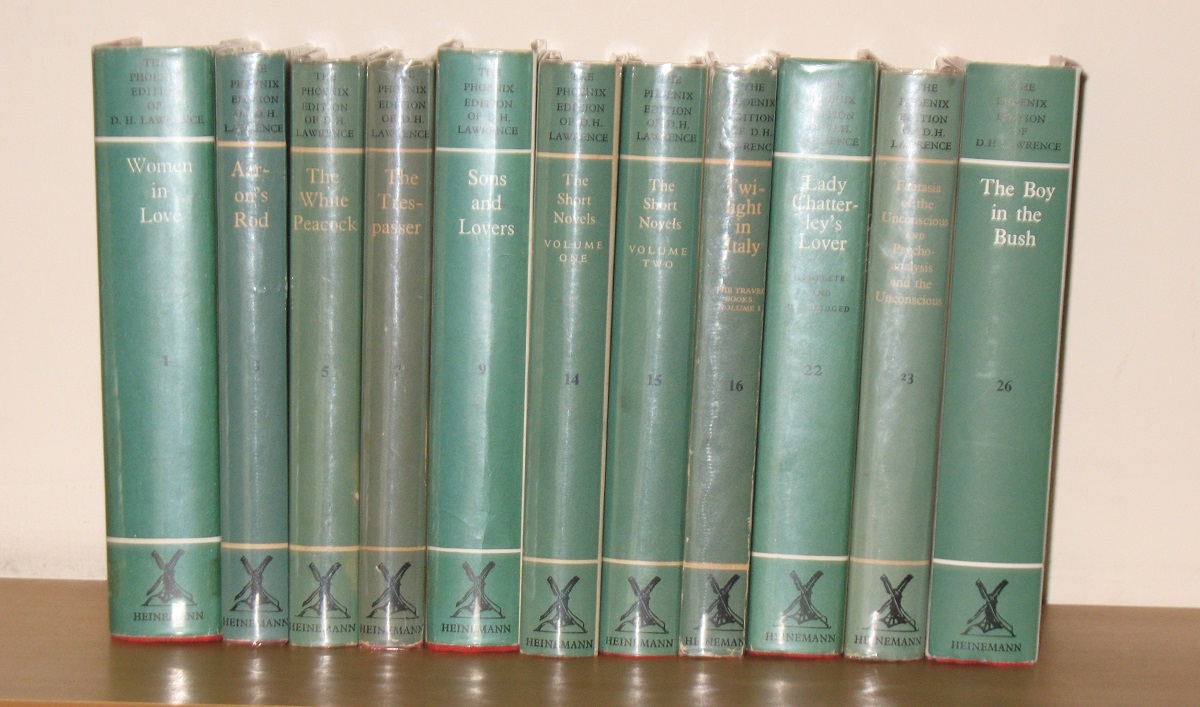
I was very good in January and purchased only three books, but then I went a little mad once February started. So while the TBR actually shrank during the first month of the year, I’m not sure it will do so this month. I was finding it increasingly difficult to track down copies in good condition of the specific paperback editions of DH Lawrence’s books that I’m collecting – which was not made easier by the big secondhand book sellers on eBay putting up photos of different editions to the ones they were actually selling… But then I discovered that during the fifties, sixties and seventies, Heinemann had published a set of, I think, twenty-six “Phoenix Edition” hardbacks of Lawrence’s books. And there just happened to be someone on eBay selling ten of them as a job lot for a reasonable price… And I bought another one too. Now I’ve got eleven of the books, of course, I’ve got no room for them. So it goes.

2015-02-09 12.38.37

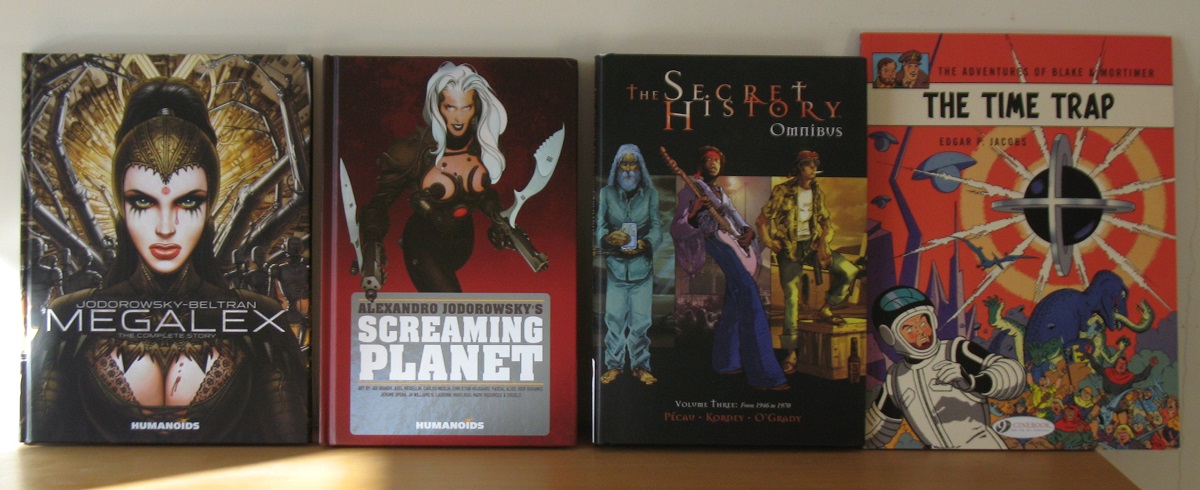
There’s a tale and a half to tell about The Adventures of Blake & Mortimer 19: The Time Trap and Amazon Logistic’s inept attempts to deliver it – suffice it to say, I ended up with three copies of the book (one of which is in Denmark). It’s an early story from the series, and not as good as later ones. I’ve been waiting a couple of years for the third volume of The Secret History, so I’m glad it’s finally available. Might have to reread the first two volumes first, though, to remind me of the story… And finally, well, Jodorowsky – what more needs to be said? Jodorowsky’s Screaming Planet is new to me. It’s apparently ten stories Jodorowsky was commissioned to write for Métal Hurlant. I have the first volume of the Megalex series, but the subsequent instalments never appeared in English. I was planning on getting the lot in French, but then Humanoids went and published an English-language omnibus,  Megalex: The Complete Story. Might still the get the French editions one day, though.

2015-02-07 13.28.29

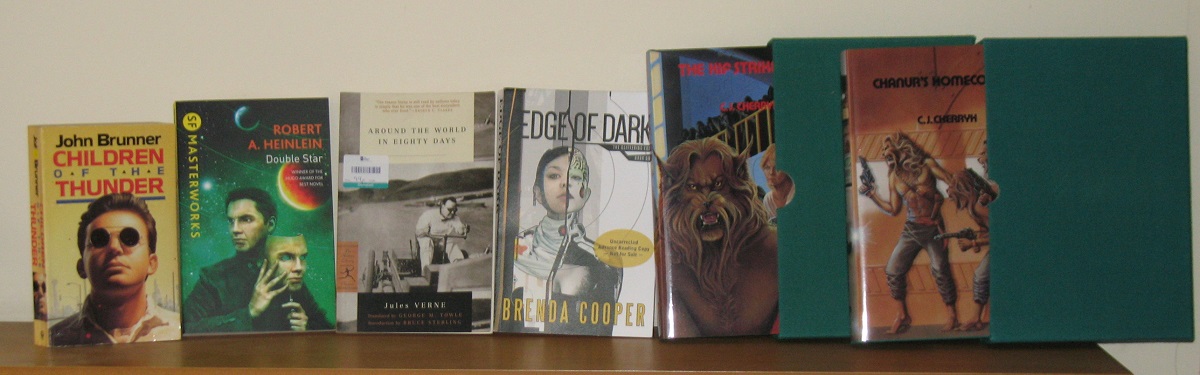
After buying the Phantasia Press editions of The Pride of Chanur and Chanur’s Venture a few months ago after one too many glass of wine, and then discovering that several years ago I’d bought a signed first edition of Chanur’s Legacy, the final book of the quintet (published by DAW but never in a Phantasia Press edition)… Well, I just had to complete the set, didn’t I? So The Kif Strike Back and Chanur’s Homecoming; both of which will, of course, be reviewed on SF Mistressworks some time this year. I have been somewhat lax over the last year or so in keeping up with the SF Masterwork series, chiefly because many of the more recent books have either been reprints from the original series, or are of books I’ve previously read and am not bothered about owning a copy… But but but Heinlein, I hear you cry. Well, I’ve never actually read Double Star, and the last SF Masterwork I bought was the Tiptree collection, so I think it’s allowed. Edge of Dark is an ARC from Pyr, which I reviewed for Interzone. It was a bit meh – as you will no doubt learn should you subscribe to Interzone. Children of the Thunder and Around the World in 80 Days were both charity shop finds.

2015-02-07 13.29.00

I’m a fan of Terrence Tiller’s poetry and have several of his collections, so I was quite chuffed when Unarm, Eros popped up on eBay. It’s also a review copy, and includes the review slip… from 15th January 1948.

2015-02-07 13.29.46

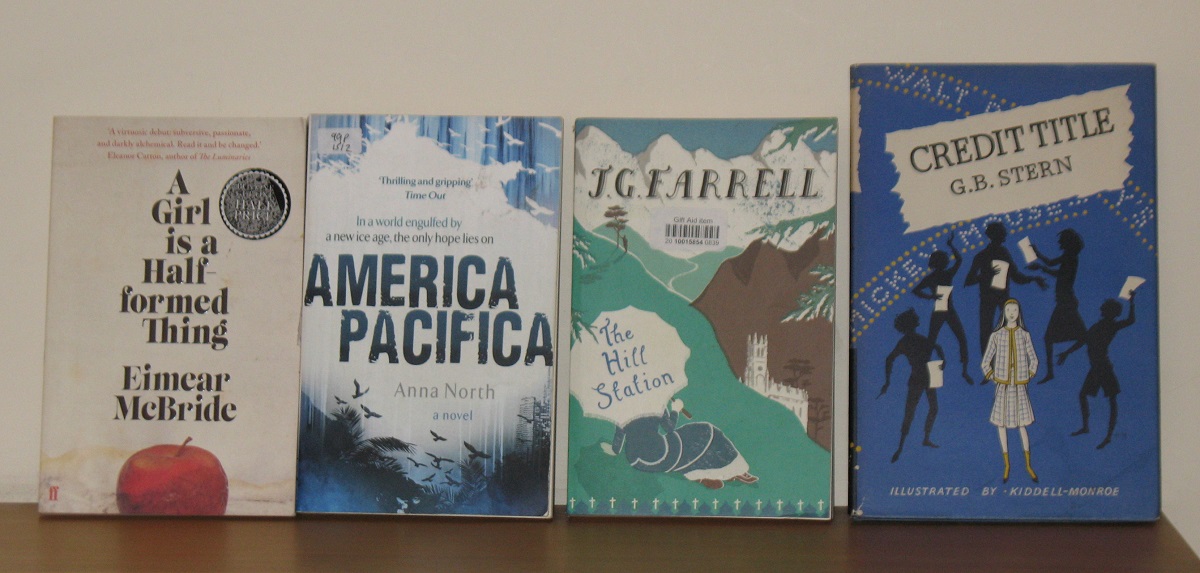
I read Farrell’s The Siege Of Krishnapur over Christmas 2013 and was much impressed, so when I spotted The Hill Station in a charity shop it was an easy decision to buy. I plan to read more Farrell. America Pacifica was, I seem to recall, one of those literary novels that borrows from science fiction and which was talked about a couple of years ago. It was also a charity shop find. A Girl Is a Half-formed Thing was a charity shop find too, and another book I remember being highly praised. Credit Title is by one of the authors from my informal project to read some postwar British fiction by women writers – GB Stern is Gladys Bronwyn Stern – and I suppose I should have guessed from the cover art, but the book cover flap describes Credit Title as a “junior novel”.

2015-02-07 13.30.23

I mentioned the DH Lawrence Phoenix Editions earlier, and here are the eleven volumes I now own, in all their green-jacketed glory. They are: 1 Women in Love, 3 Aaron’s Rod, 5 The White Peacock, 7 The Trespasser, 9 Sons and Lovers, 14 The Short Novels Volume 1, 15 The Short Novels Volume 2, 16 Twilight in Italy, 22 Lady Chatterley’s Lover, 23 Fantasia of the Unconscious & Psychoanalysis and the Unconscious, and 26 The Boy in the Bush. I will certainly be tracking down more…

2015-02-07 13.31.05

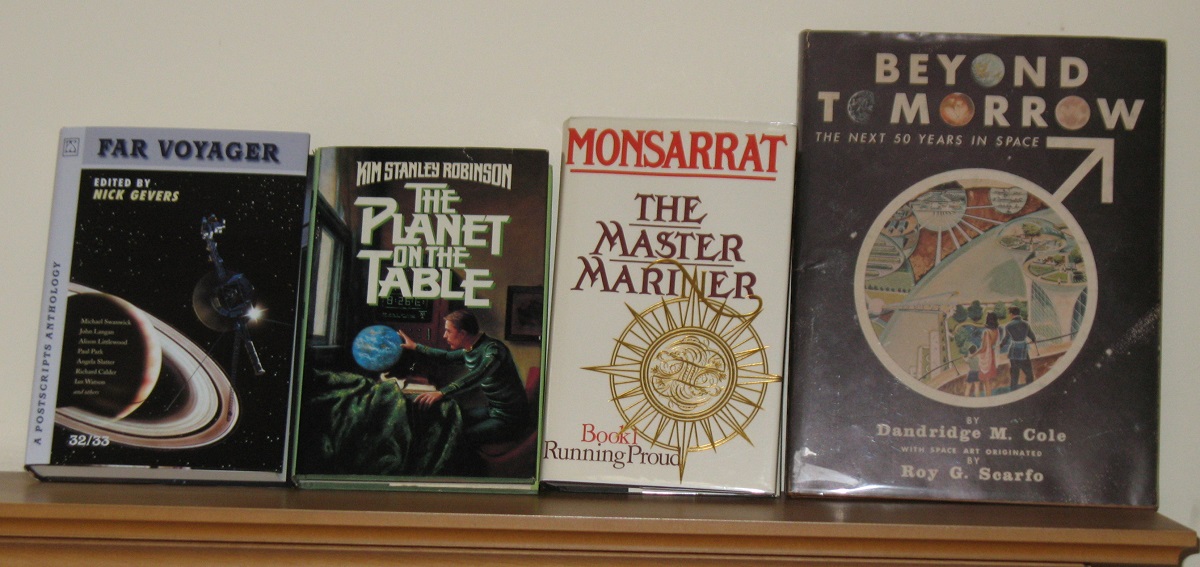
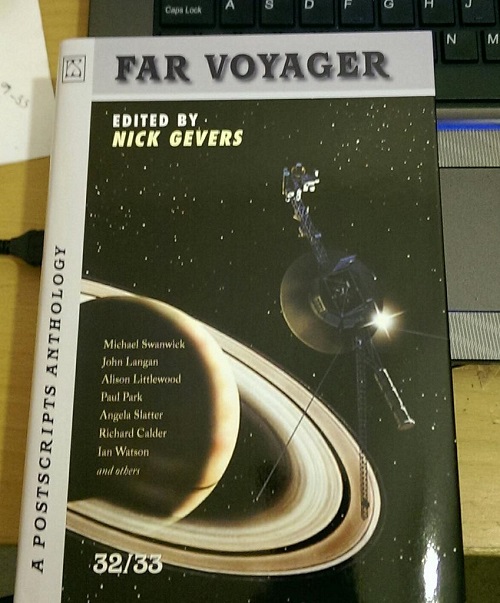
I found some illustrations from Beyond Tomorrow online on some blog, and liked them enough to hunt down a copy of the book. It took a while, as it’s quite hard to find. But I managed it. I might well write about it at some point. Postscripts 32/33 Far Voyager is the latest “issue” of the magazine that became an anthology, and I’m in it. In fact, it’s my story which provided the title for the book. The Master Mariner: Running Proud is a favourite novel. A signed first edition popped up on eBay, so I bought it… only to discover I already had a signed first edition. Ah well. At least this new copy is in much better condition. And I guess I now have a signed first edition of The Master Mariner: Running Proud for sale. The Planet on the Table is also signed, but the only edition I already owned was a paperback, so that’s all right. It could do with a new jacket, however.


2 Comments

Postscripts Far Voyager

My contributor copy of Postscripts 32/33 Far Voyager landed with a thud on my mat this weekend. I’m especially pleased about this one, because my story provided the anthology’s title. (I didn’t get named on the cover, though.) ‘Far Voyager’ is another of my alt space stories, based around the premise that one of the Voyager probes was manned. There are a few clues to the identity of the astronaut, although he’s not actually named.

ps3233

Also in the anthology are many excellent writers, including Paul Park, Ian Watson, Michael Swanwick, Alison Littlewood, Richard Calder and Angela Slatter.


7 Comments

Reading diary, #1

As I did last year, I plan to document my reading throughout 2015. Some books I may pull out and dedicate a full post to, others I will only mention in passing as I’ll have reviewed them elsewhere (chiefly on SF Mistressworks or in Interzone). Again, as in 2014, I’m going to try and alternate genders in my long fiction reading, although from the looks of it I seem to have failed a bit during these first few weeks…

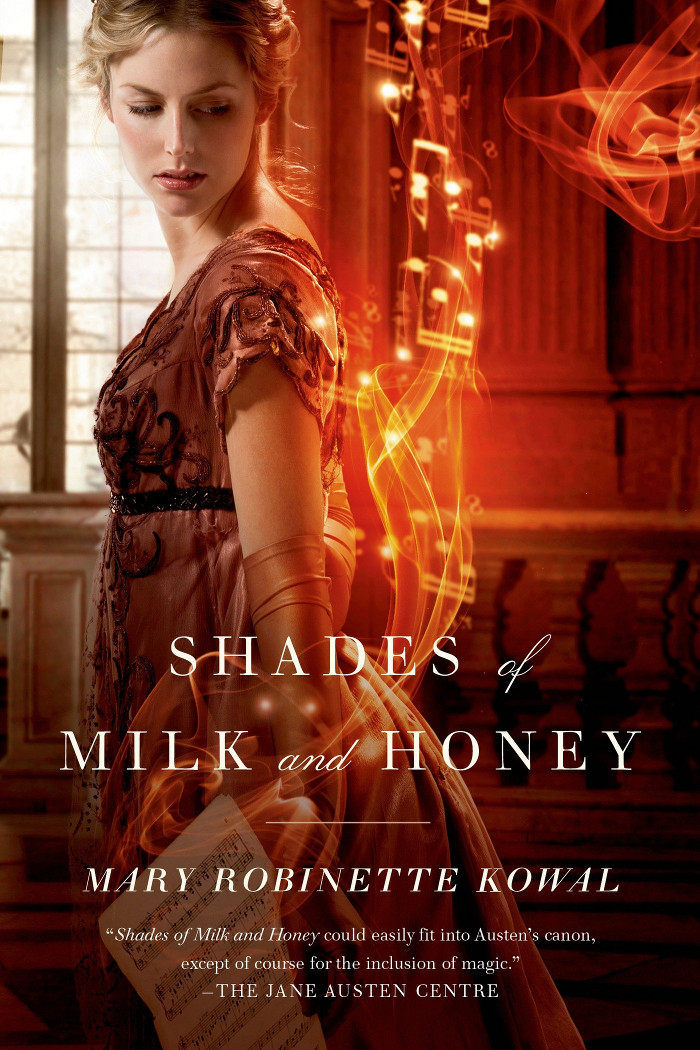
Shades-of-Milk-and-Honey-by-Mary-Robinette-KowalShades of Milk and Honey, Mary Robinette Kowal (2010). I am, I freely admit, a fan of Heyer’s novels, and while I wouldn’t call myself an Austen fan, I’ve certainly read her books. So when I first saw Kowal’s Regency fantasy, I knew that sooner or later I’d be picking up a copy. In fact, I received this book as a Christmas present. And read it during the journey back to the UK. It’s pretty much as you’d expect – old-maid-ish daughter of comfortably well-off provincial family gets all excited when eligible men turn up at the local nob’s house. The difference here is that people can practice a sort of light-based magic, “glamour”, which allows them to create illusions – and this has become a new… well, not art-form, but certainly a form of “accomplishment”. Jane is the plain older sister of beautiful Melody, whose charms are sure to land her a good match, except Jane is gifted at glamour – so cue a pair of “interesting” gentlemen who are drawn to Jane, Melody’s bitterness because she’s smart enough to realise a pretty face is not enough, the return of a childhood friend who proves to be a bounder, a young girl who Jane takes under her wing… It’s a polished piece, perhaps a little too polished – there was something that didn’t quite ring true about it all, not that it prevented me from enjoying it. Kowal handles the relationships well, and the glamour is nicely done – but the story seemed wrapped up almost as an afterthought with a throwaway happy-ever-after ending. At the moment, I’m not sure if I’ll be bothering with the rest of the series.
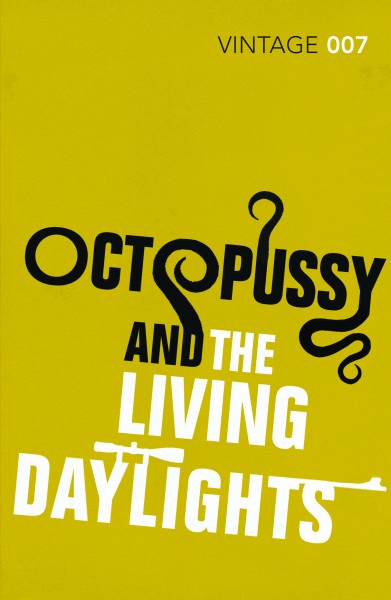
octopussyOctopussy & The Living Daylights, Ian Fleming (1966). The last of Fleming’s 007 books, and that means I’ve now read the lot. I can now cross them off the list. Yay. Although, to be honest, I’m not entirely sure why I decided I had to read them all – because it turned out they were all pretty terrible. Octopussy & The Living Daylights is, as the title might suggest, a collection – and both story titles have been used for Bond movies, although the films bear zero resemblance to the source material (as usual). In ‘Octopussy’, an ex-SOE man who was a bit naughty with some gold in Italy just after the war finished is visited at his home in Jamaica by Bond. Certain hints are dropped, but the man accidentally gets stung by a stonefish while feeding it to an octopus he has sort of adopted. In ‘The Living Daylights’, Bond has been charged with killing a sniper who they’ve learnt will make an attempt on a defector who’s making a run for it from East to West Berlin. Bond has always been brutal, but this one is more brutal than most. ‘The Property of a Lady’ sees Bond trying to flush out a Soviet spy during an auction for a Fabergé globe. The last story is a squib in which Bond flies to New York, daydreams about the day ahead… only to cock up the reason he’s been sent there. Meh.

Chanur’s Venture, CJ Cherryh (1984). The second book of the Compact Space quintet. I reviewed it on SF Mistressworks here.

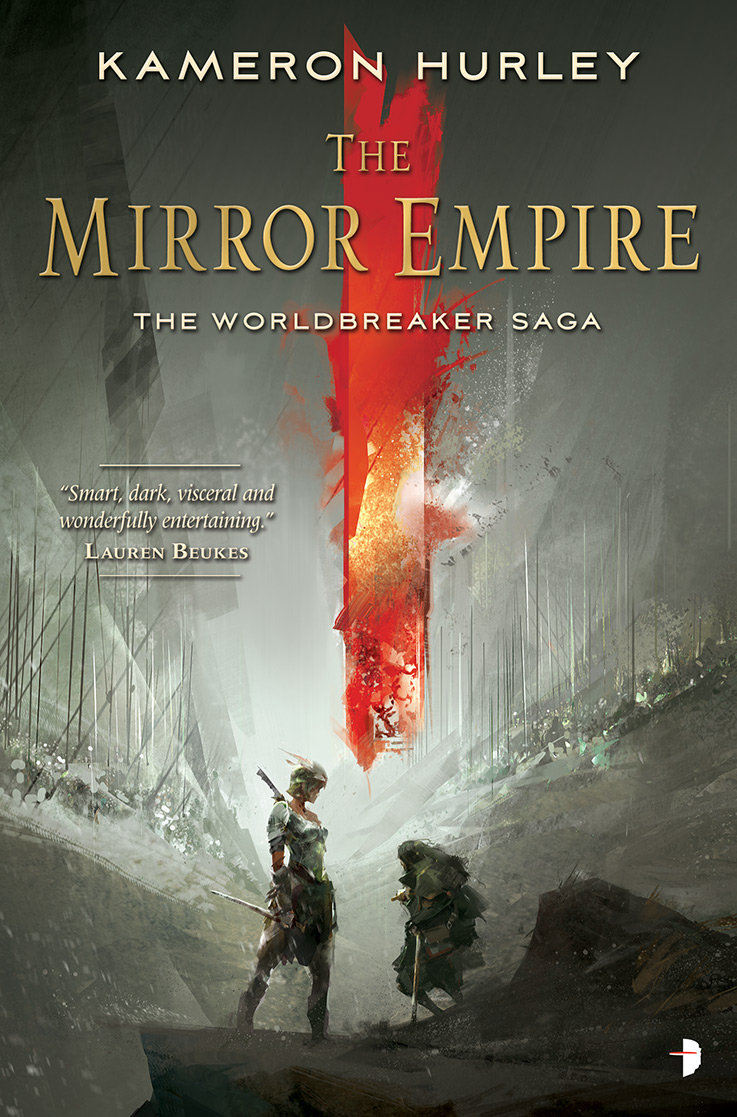
TheMirrorEmpire-144dpiThe Mirror Empire, Kameron Hurley (2014). I’d been sufficiently impressed by Hurley’s Bel Dame Apocrypha to overcome any reluctance I might have at reading a secondary-world fantasy. I’d also seen a lot of positivity for this book on social media. So it would not be unfair to say my expectations were reasonably high… And yet, as I read it, I just couldn’t get that excited. Partly, it was the casual brutality – in particular, a world in which a people have been enslaved for thousands of years and their masters are now slaughtering them like cattle. Fight-scenes, even battles, are one thing, but the systematic butchery in The Mirror Empire read more like an attempt to up the ante in grimdark’s brutality arms race, and I’ve yet to be convinced such a race is even a good thing. The much-touted five-genders – a neat idea – is only mentioned half a dozen times in passing, and matriarchal societies in epic fantasy are not actually all that new… But. The world-building was mostly done well, even if it does take a while to get the hang of things; and the characters were (relatively) sympathetic, although some were more successful than others. But the plot really does take a long time to get into gear, and you’re two-thirds through the book before any kind of shape becomes apparent. As epic fantasies go, The Mirror Empire is not as innovative as has been claimed, although it’s plainly a notable, if overly dark, example of the genre. More than anything, it put me in mind of Ricardo Pinto’s Stone Dance of the Chameleon trilogy, although they’re the better books. I don’t think I’ll be bothering with volume 2 of the Worldbreaker Saga. I will, however, give Hurley’s new sf series a go when that appears.

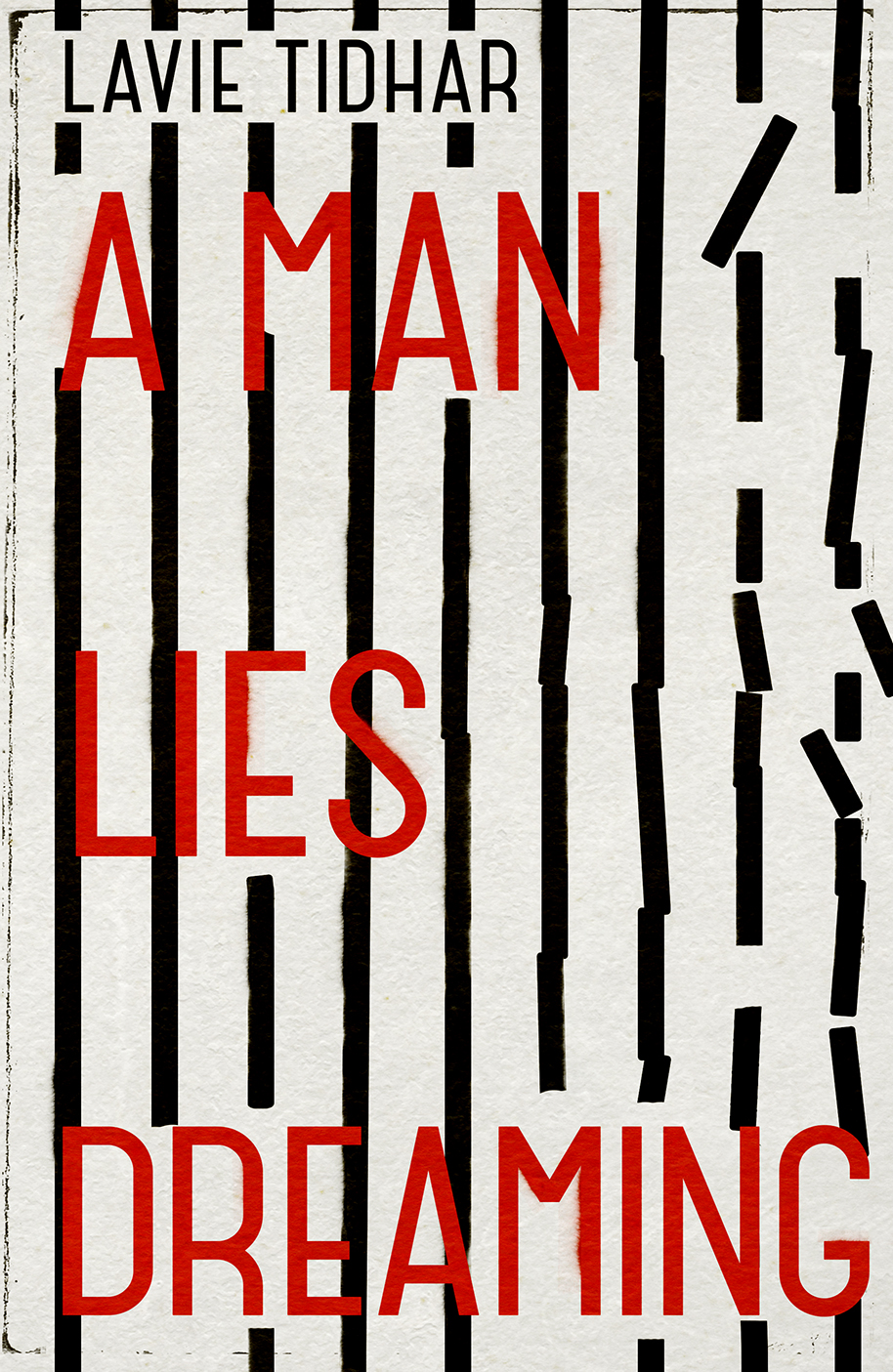
a-man-lies2207A Man Lies Dreaming, Lavie Tidhar (2014). The Nazis were ousted by the Communists in the early 1930s, and now Hitler is scratching a living in London, under the name Wolf, as a private eye. There’s something about the conceit that doesn’t really work – whether it’s Hitler downtrodden in London, or just a Chandleresque PI in 1930s London – but Tidhar nonetheless makes it work. Though Wolf is by definition a nasty piece of work, it’s hard not to sympathise with him as he’s beaten and attacked by all and sundry, even those you’d expect to be on his side. While presented as pulp, Wolf’s narrative is really an excellent black comedy – it uses the language of the former, deliberately spoofing Chandler and Hammet in several places, but it is its shape which identifies it as black comedy. Even those characters whose sensibilities align with Wolf’s turn on him, and eventually the biggest irony of all lands him on a ship emigrating to Palestine under a Jewish name. The title of the novel, however, refers to the other narrative in the book, about a prisoner at Auschwitz, who used to write shund, or Yiddish pulp fiction. Wolf is his invention. Comparisons with Osama are inevitable as both books posit a real-world villain occupying the role of a pulp fiction hero in an invented universe. On finishing A Man Lies Dreaming, I’d have said the earlier novel was the better, but as I came to write this quick review I decided I preferred this one. A Man Lies Dreaming is an effortless read, and Wolf is an excellent fictional creation. It’s easy to overlook how cleverly done it is. Which is a shame.

Skirmish, Melisa Michaels (1985). This was one of only two books The Women’s Press published under their YA sf imprint, Livewire. It was originally published in the US as a sf novel for adults. I reviewed it on SF Mistressworks here.

Edge of Dark, Brenda Cooper (2015). Although sneakily presented as the first book of a diptych, this is actually part of an ongoing series set in the same universe. I reviewed it for Interzone.


Leave a comment

Rounding off the TBR in 2014

This is not the first book haul post of 2015 but the last book haul post of 2014. I have yet to purchase a book this year, and I’m trying to resist the urge for a few weeks longer. Meanwhile, here are assorted Christmas presents, charity shop finds and drunken purchases on eBay…

2015-01-01 12.52.19

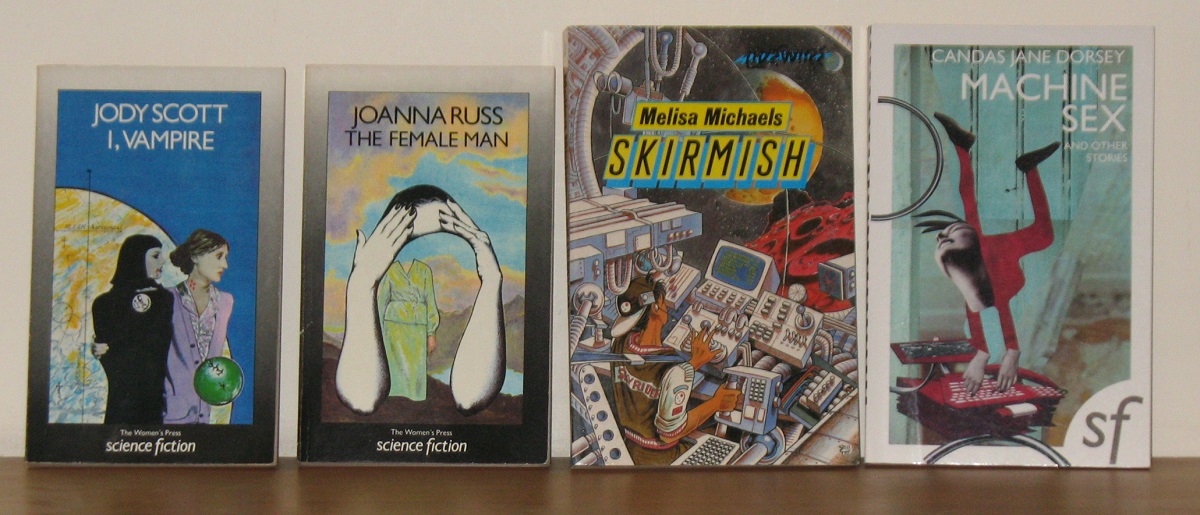
Four more books for the Women’s Press SF collection, which brings the total to 40 (out of 52, by my count). I, Vampire, The Female Man, Skirmish and Machine Sex… and Other Stories were all bought from Porcupine Books. I already have the SF Masterwork edition of The Female Man, but never mind. I’d also previously read Machine Sex… and Other Stories. Skirmish is one of only two sf YA novels published by the Women’s Press under the Livewire imprint – the other was Gwyneth Jones’s The Hidden Ones (I’ve owned a copy for years, of course). Skirmish, the first book of the Skyrider quintet, was originally published in the US, but not as YA.

2015-01-01 12.53.48

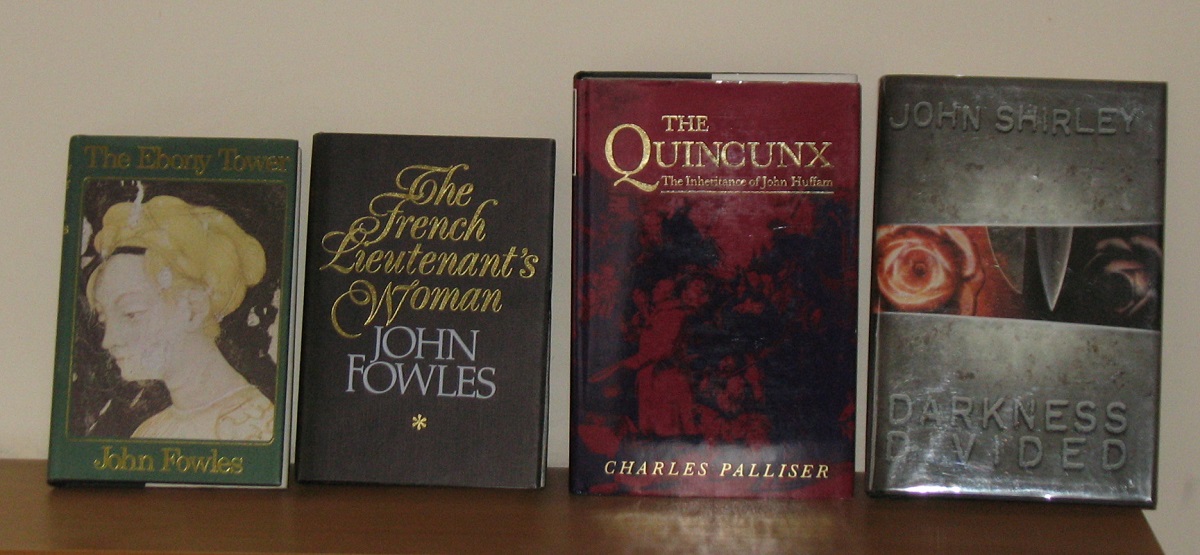
I already had paperback copies of both The Ebony Tower and The French Lieutenant’s Woman, but these are signed reprint hardbacks and were relatively cheap. The Quincunx is a first edition by a favourite author. Darkness Divided is a hard-to-find first edition from a US small press. It’s signed, of course.

2015-01-01 12.54.37

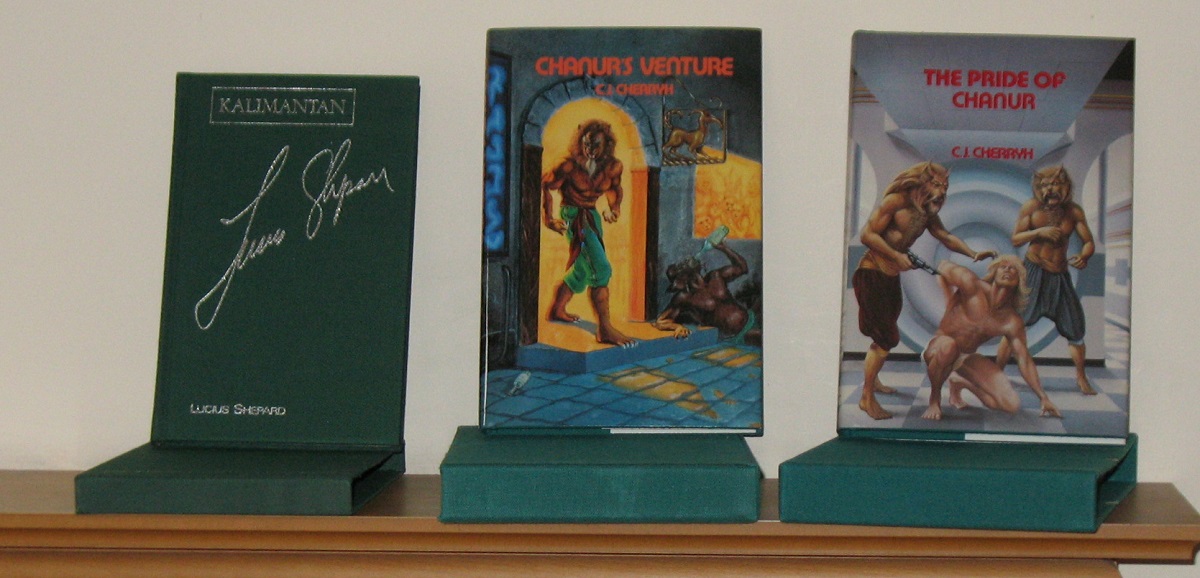
The slipcased signed edition of Kalimantan was a bargain find. The Pride of Chanur and Chanur’s Venture – both signed – were purchased on eBay after perhaps one glass too many of wine. Having said that, I’ve owned a signed first edition of the final book of the series, Chanur’s Legacy, for years, so I really ought to complete the set…

2015-01-01 12.57.52

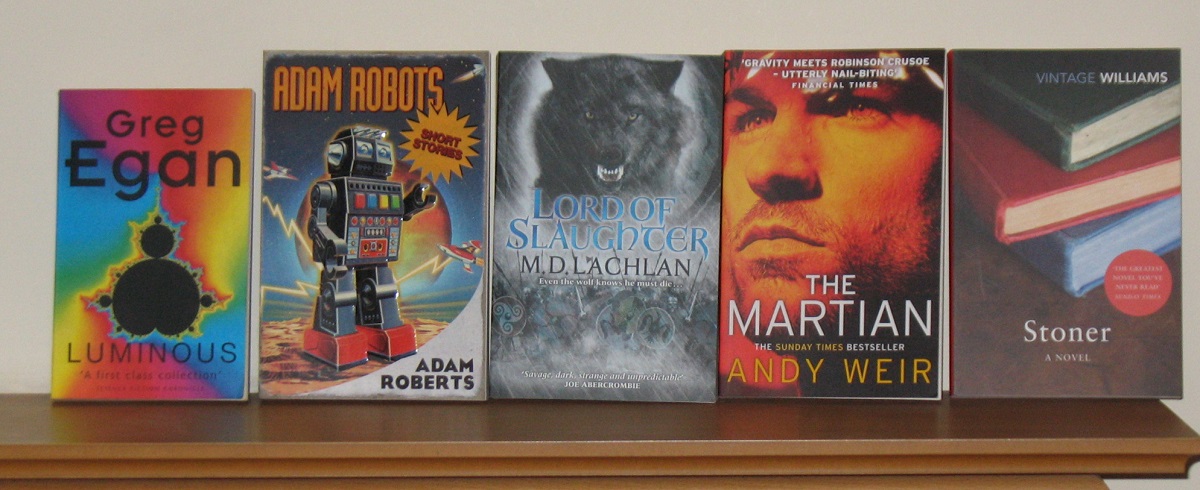
Luminous was a charity shop find. Adam Robots, Lord of Slaughter, The Martian and Stoner were all Christmas presents. I’ve received a Lachlan novel for the last three Christmases – it’s almost become a tradition. Fortunately, they’re good books. I’ve already read The Martian – I was not impressed (see here). John Williams is an author new to me.

2015-01-01 12.58.26

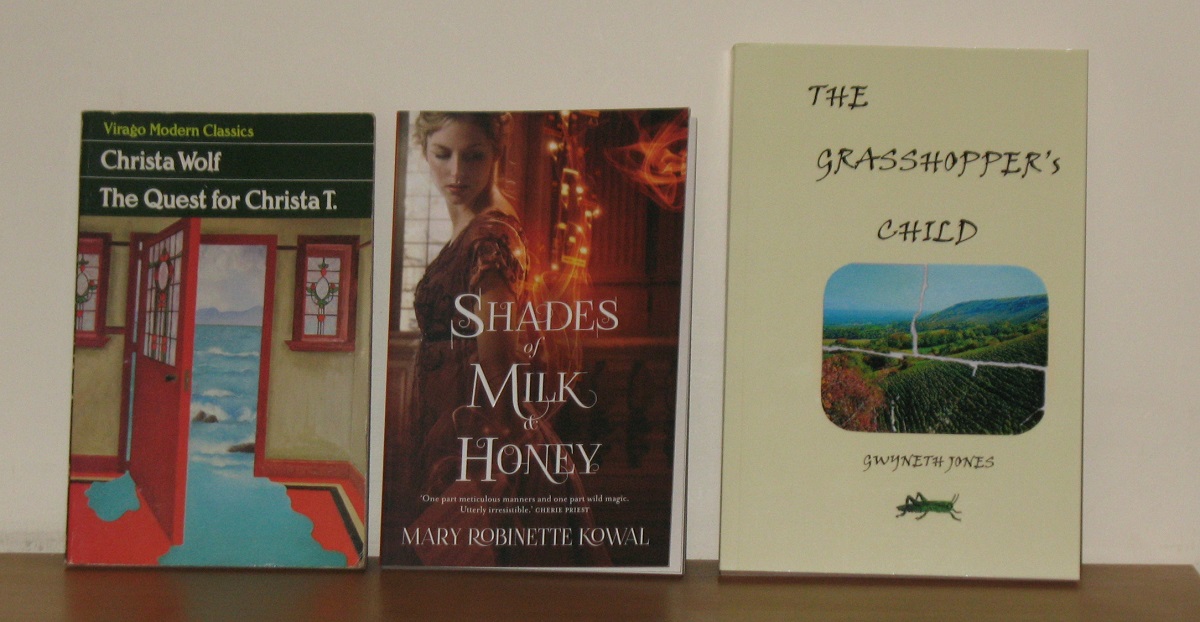
Can I say how chuffed I am I have a copy of The Grasshopper’s Child? I’m reviewing it for Vector, and I’m really looking forward to reading it. Shades of Milk and Honey was a Christmas present. I received a few odd looks reading it on the train journey home. The Quest for Christa T. was a charity shop find. I keep an eye out for the green Virago paperbacks now, so I can expand my reading of postwar UK women writers. Not shown is The First Fifteen Lives of Harry August, which I found in a charity shop, read over Christmas, and left in Denmark for my sister to read. I thought it pretty good (see here).


12 Comments

Reading diary, #12

The last bunch of books read in 2014… Almost. There’s one more I’m currently reading, but I’ll lead off my first reading diary post of 2015 with it. I’ll do a numbers post once the year is actually over.

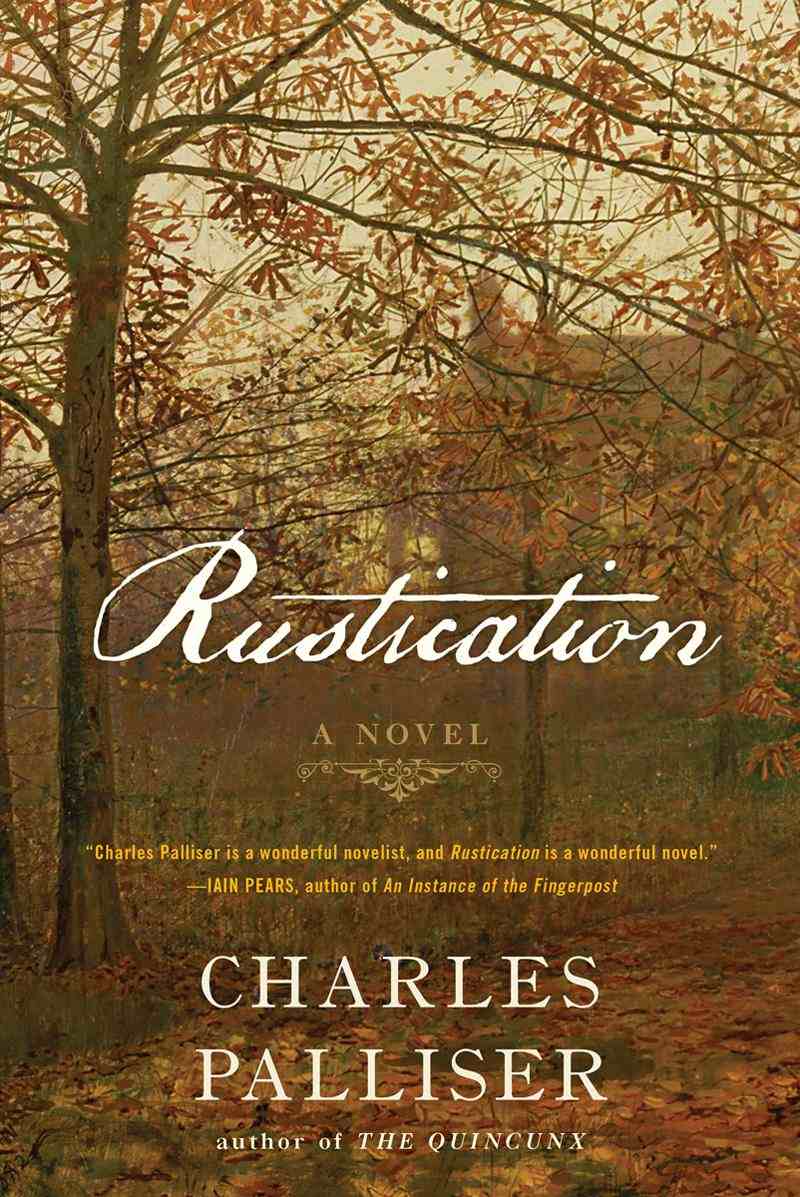
rusticationRustication, Charles Palliser (2014) I’ve been a fan of Palliser’s works for years, but he doesn’t produce much. In fact, I thought he’d packed it in. But during this summer I’d spotted a new charity shop in town, near Fanoush, where I occasionally go for a falafel wrap at lunch-time. So one day after getting my wrap – they’re actually made with proper khubz, not stupid tortillas – I popped into the charity shop. And spotted Rustication. Result. The novel is set in 1863 over the Christmas holiday and takes the form of a journal, with anonymous letters inserted. Richard Shenstone has been rusticated from Cambridge after the suspicious death of a friend. His father died earlier in disgrace, and his near-destitute mother and sister are now living in a run-down house on the edge of a salt marsh near the town of Thurchester. Shortly after Richard’s arrival, someone starts sending obscene poison pen letters to the worthy women of the area and their daughters, and sneaking about at night and killing farm animals in horrible ways. Clues suggest Richard is responsible, although since it’s his journal which forms the narrative it’s clears it’s not him. Having said that, he does have an opium habit, which leads him to do a number of stupid things which make him look guilty. It all comes to a head when the local earl’s nephew and heir is murdered returning from an Assembly at which Richard had threatened him for compromising his sister’s honour. Rustication is pure Gothic, but tricked up as a literary thriller. It’s a slighter work than The Quincunx or Betrayals, but I’m still a fan.

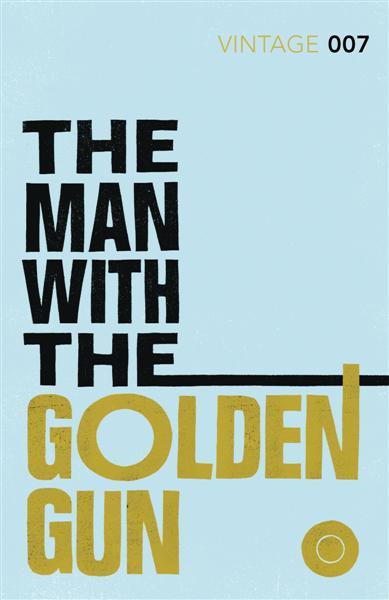
the-man-with-the-golden-gunThe Man with the Golden Gun, Ian Fleming (1965) There’s a story that Fleming had told people he planned to become a writer once World War II ended, but one of his upper crust friends told him, “Oh Ian, don’t. You don’t have the brains for it.” And he didn’t, you know. Have the brains for it. The 007 novels, and I’ve now read them all except for Octopussy & The Living Daylights (which is on the TBR), range from bad to terrible. And The Man with the Golden Gun is toward the terrible end of the scale. Of course, the film bears no resemblance to it. (The only film which follows the plot of the novel is Thunderball, and that’s because it’s actually a novelisation of the script… and  a rights battle between Fleming and four others subsequently tied up the title for decades.) In The Man with the Golden Gun the novel, Scaramanga plies his trade in the Caribbean and has links to the Castro regime. Bond has been sent after him because he returned from You Only Live Twice brainwashed by the KGB to kill M. But now he’s had electro-shock therapy and he’s back to his normal self. M is still wary, however: hence the mission to terminate Scaramanga. Either Bond will prove his mettle, or Scaramanga will get rid of an embarrassing loose end. Bond stumbles across a clue revealing that Scaramanga is in a town in Jamaica, heads there, meets the man in a brothel, and is hired as security for an upcoming meeting Scaramanga is hosting at his half-finished luxury hotel nearby, where “investors” (ie, mobsters) will be persuaded to hand over more cash to finish the hotel. Scaramanga talks like a hoodlum from a cheap television series, Bond is his usual two-dimensional self, and Fleming can’t resist getting in his usual offensive digs at homosexuality, women and non-whites. Parts of the novel simply don’t ring true at all, as if Fleming has done little or no research; the only bits that are convincing are his descriptions of the countryside (Fleming, of course, lived in Jamaica). As with the bulk of the Bond books, you’re better off sticking with the film.

languedotdocLangue[dot]doc 1305, Gillian Polack (2014) A team of scientists have been sent back in time to the titular place and time, and they have a single historian with them – who was parachuted in at the last minute after the original two historian members of the team pulled out. Artemisia Wormwood, however, is not an expert on 14th-century Languedoc, but on mediaeval saints. Fortunately, she knows considerably more about the time and place than the scientists, who are there to refine their theory of time travel and investigate the natural environment. The team set up in a system of caves under a hill beside the village of St-Guilhelm-le-Désert and, while they keep apart from the villagers (only Wormwood speaks old French, and she does that haltingly), they make no secret of their presence. In fact, the scientists behave like a bunch of spoilt kids. They don’t seem to care about the impact they may be having on the lives of those in the village. Wormwood acts as an unofficial liaison between the two groups, via disgraced knight Guilhelm. This one is definitely a slow-burner. Not much happens during the course of the novel, it’s more a diary of incidents experienced by the time team. However, it definitely packs a sting in the tail. The prose is polished, Polack evokes her period extremely well, and the whole thing is very readable if somewhat languidly paced. I thoroughly enjoyed it.

The Race, Nina Allan (2014) Allan’s first novel-length piece of fiction is actually four linked novellas, and also very lightly meta-fictional. I wrote about it here.

From the Legend of Biel, Mary Staton (1975). This was the first book of the second series of Ace Specials. I read it for SF Mistressworks. My review is here.

The Moon King, Neil Williamson (2014). I’m working on a longer review of this, so I’ll just mention it in passing here. I will say, however, that I enjoyed it much more than I had expected to. (I’ve known Neil for ages, so I expected it to be well-written, but had thought it wouldn’t be quite to my taste – I was wrong.) Anyway, a post on this novel should appear here soon-ish.

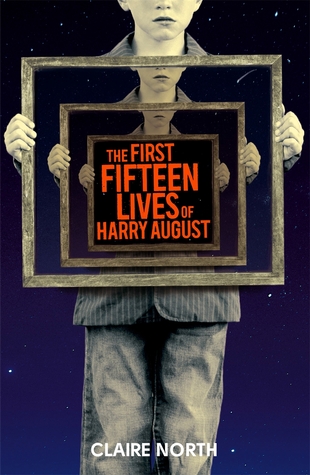
firstfifteenThe First Fifteen Lives of Harry August, Claire North (2014). Found this in a charity shop, had heard it mentioned here and there, understood it to be not unlike Kate Atkinson’s Life After Life (which I thought good), so decided to give it a go. And yes, I did enjoy it. The prose is nice and breezy, the central premise – people who relive their lives over and over again – was handled quite cleverly, and the eponymous protagonist was sympathetic and plausible. Plot-wise, the book is less successful – although hinted at on the first page, the plot didn’t actually kick into gear until over halfway in, and even then it spent more time on the silly maguffin at the core of the book than it did the far more interesting process by which the villain removed all his enemies. I’d seen mention of North’s Touch, due out early in 2015, and thought it might be worth a go. On the strength of The First Fifteen Lives of Harry August, I’ll almost certainly be picking up a copy.

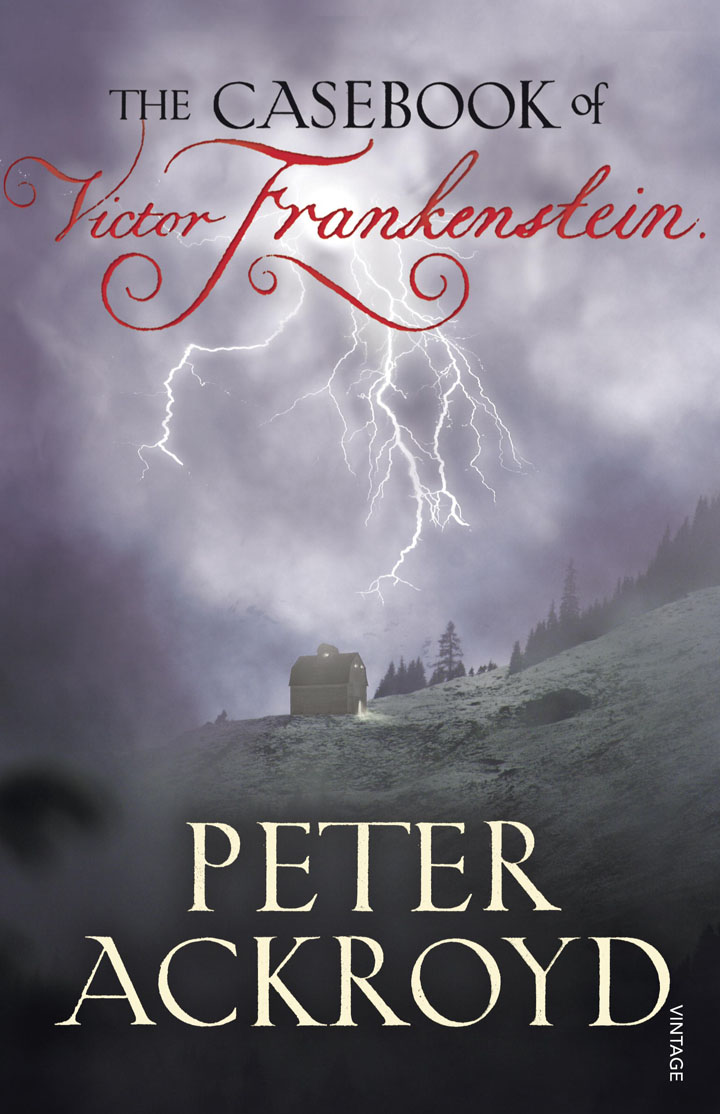
Casebook2The Casebook of Victor Frankenstein, Peter Ackroyd (2008). Victor Frankenstein, a young man from Switzerland, joins Oxford University, where he meets Percy Bysshe Shelley. The two become friends, although their interests only just coincide – Frankenstein wants to understand how life is created, and focuses his investigations on reanimating dead bodies using “the electrical fluid”, whereas Shelley’s investigations are more metaphysical. Even after Shelley is expelled, the two remain close – Frankenstein even moves to London to be near him. In order to further experiment, Frankenstein contacts some “resurrection men” and has them deliver cadavers to his laboratory in Limehouse. Most of his experiments are failures, but when he is handed the body of Jack Keat, a few short hours after he committed suicide (he was dying of consumption), Frankenstein successfully brings him back to life… And you just know the story going to end up at the Villa Diodati. Ackroyd takes a few liberties with Shelley’s life, and Byron comes across as a dickhead, but the whole adds up to an entertaining take on the Frankenstein story and the Romantic poets. The period detail is impressively handled, Frankenstein is a sympathetic narrator, and there are a number of neat touches to the scientific thought of the day which I found amusing. A good book.
femalespeciesThe Female of the Species, Carol Joyce Oates (2006). My second Oates. This one is a collection of short stories, many of which originally appeared in genre magazines. I think I can safely say now that Oates doesn’t quite work for me. According to the blurb, in these stories “women are confronted by the evil around them and surprised by the evil they find within them”. I thought the most successful story was ‘Madison at Guignol’, in which a trophy wife polished to a lacquer-like gloss learns of a secret door at one of her favourite high-end boutiques and insists on admittance through it: Fifth Avenue meets Gothic horror. Another one I liked was ‘Hunger’, a much longer piece about a bored wife who, after a holiday affair with a younger man, is horrified when he turns up at her home. Even though she loves him – though it seems to be more of a passion – she’s not willing to jeopardise her marriage. Not all of the stories worked for me – the one about the nurse felt too much like reportage, in some of the others the prose seemed too focused on effect rather than the story. The reason for Oates’ stature is plain to see in this collection, but there are other writers I’d sooner read.

themartianandyweirThe Martian, Andy Weir (2014). This is an odd one. The book has been hugely successful, so much so Ridley Scott is apparently making a film of it. Yet most of the praise for the book I’ve seen has been outside fandom. Is this because the book was originally self-published, and did so well on Kindle it was then picked up by a major imprint? Or is it that hard science fiction has fallen out of favour with genre fandom? Actually, I think it’s neither, but rather the fact that a) The Martian is a resolutely commercial book, and in style and approach has more in common with technothrillers than it does science fiction novels, b) it is completely hollow, there’s no meaty idea for a sf reader to get their teeth into, and c) it’s actually not very good, just pages and pages of a very irritating narrator explaining how he managed to survive on Mars after accidentally being left behind. It’s basically “Home Alone on the Red Planet”, with the planet itself playing the part of the inept burglars. (Sticking Val Kilmer, or his lookalike, on the cover, probably didn’t harm its chances either.) The original self-published novel has been padded out with scenes set at NASA, as they learn the narrator, Mark Watney, is still alive and then set about putting together a rescue plan. But the characterisation is paper-thin and everyone sounds pretty much the same. Watney’s various predicaments are interesting, and some of his solutions are mildly clever – but Weir throws so much bad luck at him, it soon beggars belief. We also get little real idea of what it would be like to be on the surface of Mars. A handful of mentions of the 0.4G, no mention at all of the surface radiation, but lots about the cold. Lots. It was also my understanding that at such low atmospheric pressures, gale-force winds would actually cause very little damage. The Martian could have taken place pretty much anywhere, even the Antarctic, and very little would need to change (well, the technology would have to be dialled down a little). I’m completely mystified by all the praise this book has been receiving. We might as well claim Clive Cussler’s latest sweatshop effort is one of the best sf novels of the year…


20 Comments

My 10 works for inclusion in the SF Masterwork series

This is something Joachim Boaz (see here) and some other bloggers did yesterday, and I was then challenged by Joachim on Twitter to produce my own list. Ten books I think Gollancz should add to their SF Masterwork series. There are a number of “rules”, to be followed at your own discretion: one book per author; no books by an author currently in the series; and a goodly number of years between publication and 2014 – I chose twenty years, so a publication of date of 1994 or older. Of course, this list totally ignores any rights issues that might prevent Gollancz from including the books.

So, in chronological order of publication…

detective_houseThe House That Stood Still, AE van Vogt (1950) I’m surprised there’s no van Vogt in the SF Masterwork series – he was, after all, hugely popular for many decades. Admittedly, most of his books are complete tosh, and he was second only to Philip K Dick in making shit up as he went along (and there is, of course, at lot of Dick in the series). But I still rate The House That Stood Still (AKA The Undercover Aliens). I once described it as “if Philip Marlowe and Flash Gordon had a baby, it would look like this book”, and I stand by that description.

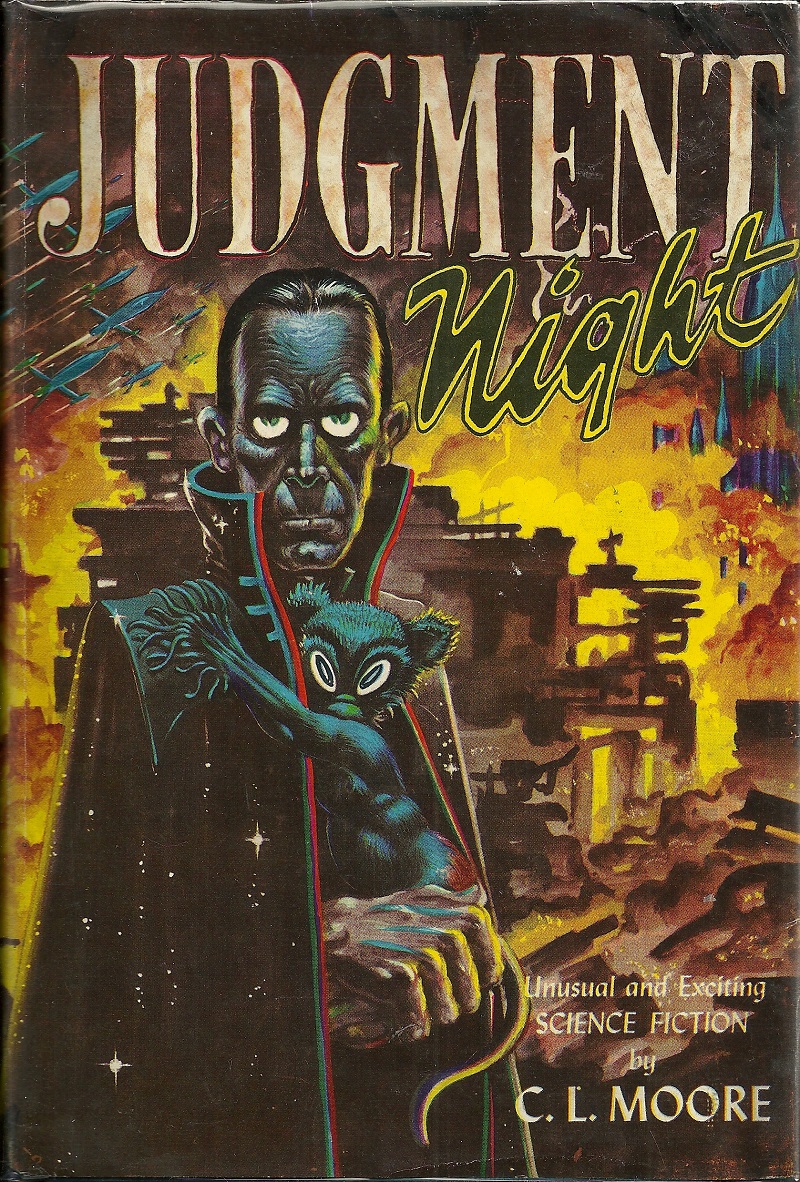
Judgment-NightJudgment Night, CL Moore (1952) I will admit I wasn’t expecting much of this short novel when I read it – a typical piece of Planet Stories space opera nonsense, I thought. But it proved to be a lot more interesting than I’d expected. The plot is relatively straightforward, but the characterisation of the protagonist, the warlike Princess Juille, is clever, and there are some really interesting ideas in the world-building. It’s a very short novel, however, only 156 pages in its first paperback publication; so perhaps it ought to be bundled with another of Moore’s novels, or a Northwest Smith novella, or something. I reviewed Judgment Night on SF Mistressworks here.

HelloSummerGoodbye_CoverHello Summer, Goodbye, Michael G Coney (1975) There are few sf novels written from the viewpoint of the alien, and among them even fewer in which humans never appear. Hello Summer, Goodbye is an elegiac coming-of-age novel set on an alien world with an entirely alien cast and an alien culture. And it works really well. It’s also a lovely piece of writing. I’m actually surprised this hasn’t appeared in the series yet. There is a sequel, I Remember Pallahaxi, which I’ve not read.

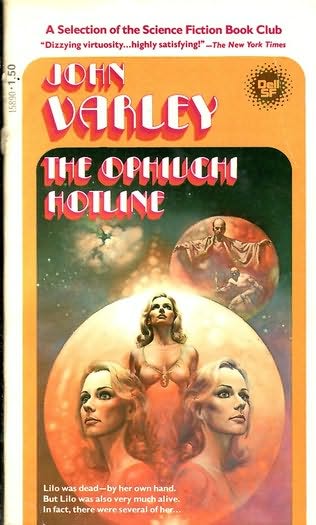
ophiuchiThe Ophiuchi Hotline, John Varley (1977) Varley’s Eight Worlds – in which the mysterious Invaders threw humanity off the Earth, so we now eke out an existence on various moons – is one of sf’s more memorable middle-distance futures, and while he explored it to better effect in numerous stories, The Ophiuchi Hotline is the first of three novels set in that universe. It’s also the best of them. The ending throws away an entire novel’s worth of ideas in a single paragraph, but the journey to that point is strange and wonderful.

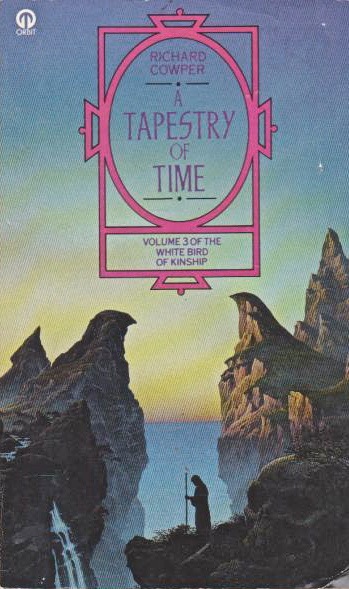
Cowper- A Tapestry of TimeThe White Bird of Kinship, Richard Cowper (1978 – 1982) This one is a bit of a cheat as it’s an omnibus of three short novels – The Road to Corlay (1978), A Dream of Kinship (1981) and A Tapestry of Time (1982). There’s also a novella, ‘Piper at the Gates of Dawn’, which inspired the novels, so perhaps we should throw that in as well. The story is set in a UK after water levels have risen so the country now comprises many small islands. It is very British sf. The SF Gateway has published the four in an omnibus, but it belongs in the SF Masterwork series too.

SerpentsReachSFBCHCbyKenBarrSerpent’s Reach, CJ Cherryh (1980) I’m guessing rights issues have prevented Cherryh from appearing in the SF Masterwork series so far. Because given her stature in the genre during the 1980s, she certainly qualifies for inclusion. Of course, there is then the question of which book to include… My favourite is Angel with the Sword, but it’s not her best. Downbelow Station and Cyteen are worthy contenders, but I plumped for Serpent’s Reach because its plot is closer to heartland science fiction.

queenofstatesQueen of the States, Josephine Saxton (1986) There are lots of books in the SF Masterwork series which never got within sniffing distance of an award, so why ignore one that appeared on two shortlists during its year of publication? Queen of the States was shortlisted for both the BSFA Award and the Clarke Award in 1987 – it lost out to The Ragged Astronauts, Bob Shaw, and The Handmaid’s Tale, Margaret Atwood, respectively. Queen of the States is also a great novel. I reviewed it for SF Mistressworks here.

wallaroundedenThe Wall Around Eden, Joan Slonczewski (1986) I picked up this book and read it just so I could review it on SF Mistressworks – see here. I knew very little about it or the author, so I was somewhat surprised to discover it was a masterclass example of accessible science fiction. It is one of the best-constructed sf novels I have come across, and I’m surprised it’s long out of print. It needs to be introduced to a new audience. As soon as possible.

kairosKairos, Gwyneth Jones (1988) This is one of my favourite sf novels and appears pretty much on every “top” or “classic” science fiction list I put together. It’s set in a Thatcherite near-future of its time of writing which, of course, now makes it alternate history – but it captures the fears and anxieties of that period with clinical precision. And it’s beautifully-written. In many ways, Kairos prefigures Jones’s Bold As Love sequence in that it remakes the political landscape of the UK using people outside mainstream culture as catalysts. Sf authors don’t write enough of this sort of science fiction.

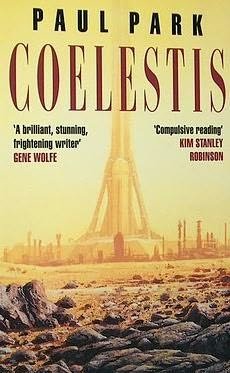
coelestisCoelestis, Paul Park (1993) Another favourite science fiction novel and mainstay of the various “best” sf lists I put together on this blog every so often. An intelligent commentary on postcolonialism – a subject not often explored in sf, which seems to prefer rehashing First World colonialist imperatives of earlier, and less enlightened, centuries – Coelestis then goes on to deconstruct the colonial identity of one of its protagonists. An important book that deserves to be back in print.

There were a further two books I would have liked to include in my list of ten, but since both authors already had entries in the SF Masterwork series I ruled them ineligible. And one was a bit of a cheat, anyway. They were Synthajoy, DG Compton (1968), which I think is actually a better book than The Continuous Katherine Mortenhoe (Compton’s only entry in the SF Masterwork series), though it reads a little more dated than that book; and The Collected Joanna Russ, because Russ is an author who deserves to have all her fiction collected together into big career-defining collection, and the SF Masterwork series is the perfect venue for that.

ETA: The other bloggers giving their own choices for inclusion in the SF Masterwork series are: the aforementioned Joachim Boaz at Science Fiction and Other Suspect Ruminations, 2theD at Potpourri of Science Fiction, Admiral Ironbombs at Battered, Tattered, Yellowed & Creased, Jesse at Speculiction and From Couch to Moon at, er, From Couch to Moon.


6 Comments

2014, the best of the year

It’s that time of year again, when everyone is doing their best of the year lists. For some people, it’s the best of what was released during the year in question, for others it’s the best of what they consumed. For me, it’s the latter. While I’ve done better this year reading, watching and listening to new stuff, the bulk of the books, films and albums I’ve enjoyed are from previous years, decades and, er, even centuries.

For a change, this year I’ve included the positions of items from my best of the half-year (see here). That’s the number in square brackets after some of them.

books
I did some reading for the Hugo in the early part of the year, and a couple of those books make it into this post – although they didn’t make it onto the Hugo shortlist. But then the Hugo didn’t exactly cover itself in glory with its fiction categories this year. My top five includes three favourite authors, one new to me, and another who I’d read before.

1 Dark as the Grave Wherein My Friend is Laid, Malcolm Lowry (1968). Lowry came first last year as well, with Under the Volcano, so clearly my love for the man’s prose remains undiminished. This one, however, is a meta-fictional novel, and I do like me some meta-fiction. I wrote about it here.

all-those-vanished-engines-paul-park-base-art-co2 All Those Vanished Engines, Paul Park (2014). And this is another meta-fictional novel, but constructed from three separate novellas. One of those novellas, Ghosts Doing the Orange Dance, made my best of the half year list. I wrote about it here.

3 Life After Life, Kate Atkinson (2013) [1]. I read this for my Hugo nominations, and was surprised at how effortlessly good it was (it’s the first Atkinson I’ve ever read).

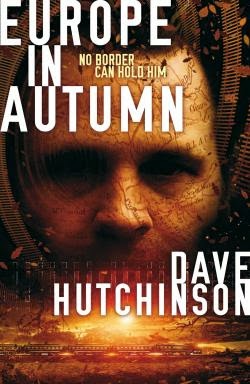
europe_in_autumn4 Europe in Autumn, Dave Hutchinson (2014) [5]. I fully expect this to be on a couple of award shortlists in 2015. I’m also very much looking forward to the sequel.

5 Home, Marilynne Robinson (2008). Just lovely writing. And, for me, a more believable character-study than Gilead.

Honourable mentions: Daughters of Earth, Justine Larbalestier, ed. (2006), excellent anthology of historical sf, with critical articles; Shaman, Kim Stanley Robinson (2013), Ice Age adventures from a writer I’ve long admired who seems to be entering something of a golden period; The Machine, James Smythe (2013) [3], Ballardian near-future, bleak but lovely writing; Busy About the Tree of Life, Pamela Zoline (1988) [4], excellent collection and the author’s only book, which I reviewed for SF Mistressworks here; HHhH, Lauren Binet (2013) [HM], meta-fictional treatment of the assassination of Reinhard Heydrich in 1942; Queen of the States, Josephine Saxton (1986) [HM], very good but not quite categorisable novel, I reviewed it for SF Mistressworks here; The Towers Of Silence, Paul Scott (1971), the third part of the Raj Quartet and featuring the brilliantly-drawn Barbie Bachelor.

films
It was a good year for films. Not only did I see many films but I also saw many good ones. Hence the somewhat large number of honourable mentions.

beau-travail1 Beau Travail, Claire Denis (1999, France) [1]. This was my No. 1 back in June, and it still is in December. A beautifully-shot film whose final scene lifts it from excellent to superb.

2 Mięso (Ironica), Piotr Szulkin (1993, Poland). This became an immediate favourite the moment I watched it. A history of Poland under communism told by an amateur cast using meat products as illustration? With dance interludes? What’s not to love?

3 Man of Marble, Andrzej Wajda (1976, Poland). I’d seen the sequel to this, Man of Iron, earlier in the year and thought it good, but this film is so much better.

4 Under The Skin, Jonathan Glazer (2014, UK) [2]. Beautiful and enigmatic, by far the best science fiction film to appear in cinemas in 2014. And a great improvement on the novel too.

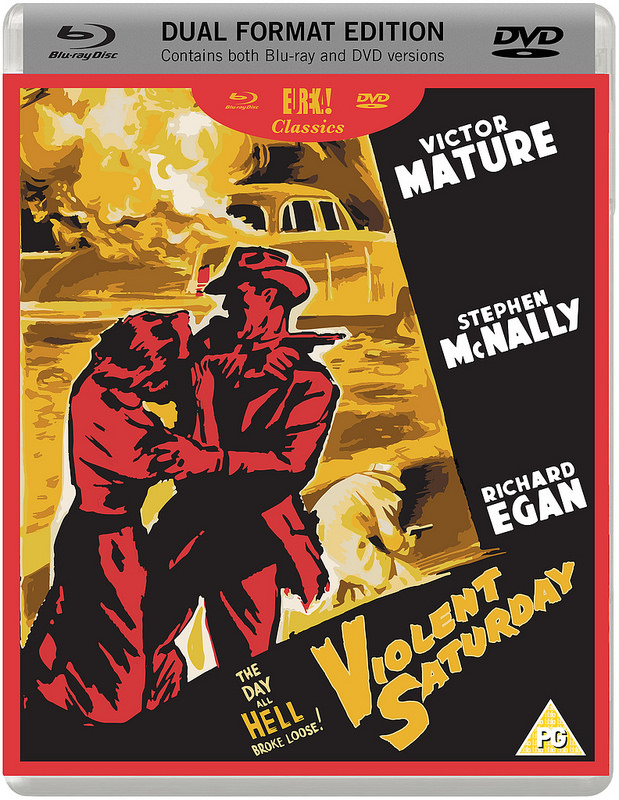
violentsaturday5 Violent Saturday, Richard Fleischer (1955, USA). I like 1950s melodramas, I like noir thrillers. So how could I not like a film that combines the two? In glorious Technicolour too.

Honourable mentions: Blow-Up, Michelangelo Antonioni (1966, UK) [3]; Call Girl, Mikael Marcimain (2012, Sweden) [4]; The Burmese Harp, Kon Ichikawa (1956, Japan) [5]; Upstream Colour, Shane Carruth (2013, USA) [HM]; Wojna Swiatów – Następne Stulecie (War of the Worlds – The Next Century), Piotr Szulkin (1983, Poland) [HM]; Gion Bayashi, Kenji Mizoguchi (1953, Japan); The Great White Silence, Herbert G Ponting (1924, UK); Cave Of Forgotten Dreams, Werner Herzog (2010, Canada/UK); The Act of Killing, Joshua Oppenheimer (2012, UK); Wadjda, Haifaa al-Mansour (2012, Saudi Arabia); Women Without Men, Shirin Neshat & Shoja Azari (2009, Iran). Not to mention some rewatches of Michael Haneke films, at least two rewatches of my all-time favourite film, All That Heaven Allows (I bought the Criterion Blu-ray but it proved to be region-locked. Argh), the same for another favourite, Aleksandr Sokurov’s The Second Circle, and a rewatch of Carl Theodor Dreyer’s excellent Gertrud.

Worst films: The Philadelphia Experiment, Paul Ziller (2012), dreadful remake with the crappiest CGI ever; Dr. Alien, David DeCouteau (1989), horribly unfunny straight-to-video comedy; Stranded, Roger Christian (2013), really bad cross between Alien and The Thing set at a base on the Moon, Christian Slater’s career has really gone downhill; Starship Troopers: Invasion, Shinji Aramaki (2012), CGI shoot-em-up with as much subtlety as an arcade game and a gratuitous female nude scene… in CGI; huh?

albums
During the summer, I started exploring bandcamp.com. I was aware of it, of course, and had even bought a couple of albums from it in previous years… but I’d never really made an effort to see what was on there. Lots of really good metal bands, it seems. That’s how I stumbled across In Vain, who quickly became a favourite. Toward the end of summer, I had to upgrade the Debian distro on my work PC, and afterwards the soundcard started working properly – which meant I could stream music at work, rather than just listen to my iPod. And that led to even further explorations of bandcamp.com. All of which means my top five for the end of the year bears no resemblance to the one from my best of the half-year. And of the five bands listed, four of them I discovered on bandcamp.com.

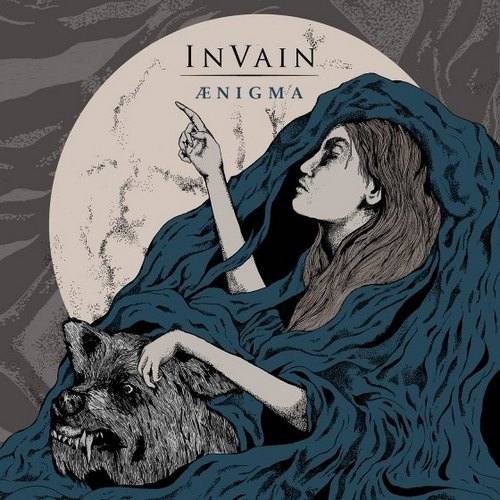
aenigma1 Ænigma, In Vain (2013, Norway). I discovered this band in back in July and immediately bought all three of their albums. I wish I could nominate all their albums, but that would be unfair, so I’ll limit myself to this, their latest.

2 Mantiis, Obsidian Kingdom (2014, Spain). The only band on this list I didn’t discover through exploring bandcamp.com. Because I saw them perform at Bloodstock. And they were excellent. So I bought the album as soon as I got home.

3 Kentucky, Panopticon (2012, USA). Black metal and blue grass… who knew it would actually work? And it does, more so on this album than Panopticon’s others. The subject matter is also unusual – not the usual black metal occult nonsense, but the exploitation of miners in the titular US state.

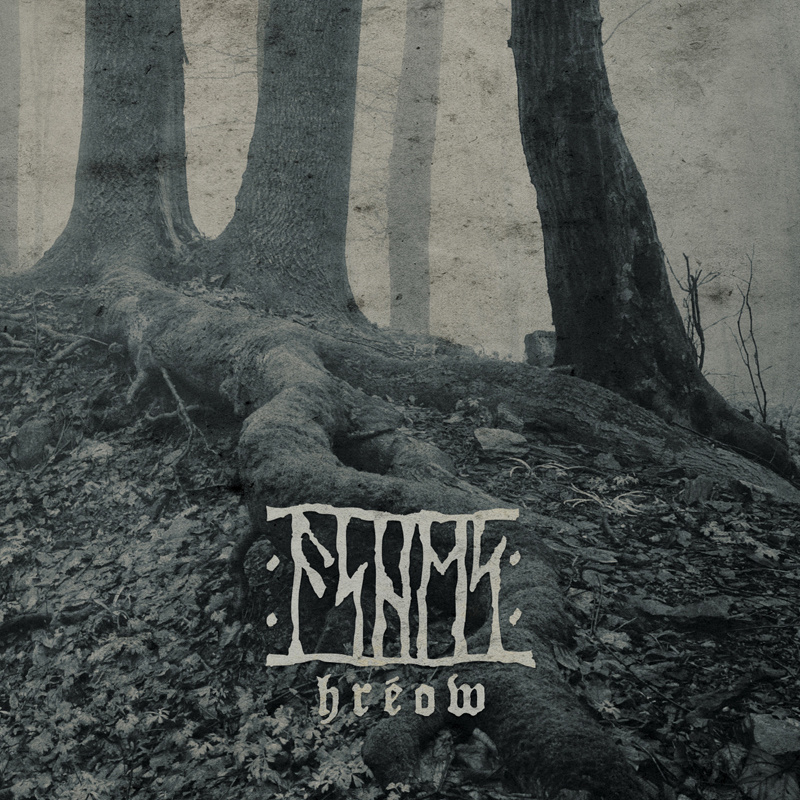
hreow4 Hrēow, Ashes (2014, UK). Does for Scotland what Winterfylleth does for England. ETA: Er no, they don’t. I seem to have got confused with Falloch, who are Scottish. Ashes are actually an English atmospheric black metal (from Devon, in fact), and a very good English atmospheric black metal too.

5 Citadel, Ne Obliviscaris (2014, Australia). The last thing you expect a progressive metal band to do is go all Rondo Veneziano on you, but that’s what this album does in places. And it works really well.

Honourable mentions: Shadows Of The Dying Sun, Insomnium (2014, Finland) [1], the dictionary definition of Finnish death/doom turn out another polished piece; From a Whisper, Oak Pantheon (2012, USA) [3], neofolk/black metal not unlike Agalloch, but a little more metal; Earth Diver, Cormorant (2014, USA) [5], epic metal that refuses to confine itself to a single genre, and that’s in each song; The Cavern, Inter Arma (2014, USA), a 45-minute track of metal epicness; Kindly Bent to Free Us, Cynic (2014, USA), seminal death metal band go all prog/jazz fusion, but their roots are still showing;  The Divination of Antiquity, Winterfylleth (2014, UK), more atmospheric black metal from the English masters of the genre; Comfort in Silence, Dryad’s Tree (2007, Germany), prog metal, the vocals need a little work but the music is excellent; Treelogia (The Album As It Is Not), The Morningside (2011, Russia), prog/black metal band, this EP is perhaps their best work so far.


19 Comments

Books to look forward to in 2015

2014 was a pretty good year for new releases, and saw new fiction by some of my favourite authors. It looks like 2015 might be the same. Here are the books I’m particularly looking forward to next year. I’ve put them alphabetically by author rather than by month of release as the latter can – and often does – change.

Poems, Iain Banks. I think the title pretty much says it all.

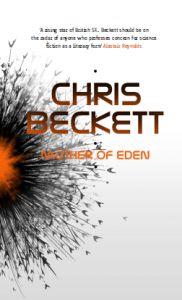
Mother-of-Eden-cover-182x300Mother of Eden, Chris Beckett. The follow-up to the Clarke Award-winning Dark Eden.

Dark Orbit, Carolyn Ives Gilman. A murder-mystery set during the exploration of a new planet and a possible first contact. “Intellectually daring, brilliantly imagined, strongly felt. This one’s a winner,” according to Ursula K Le Guin. I’m especially looking forward to this one as I thought Gilman’s Isles of the Forsaken and Ison of the Isles very good indeed.

A Song for Europe, Dave Hutchinson. The sequel to the excellent Europe in Autumn. There’s no information online at present for this book, but as far as I’m aware it’s due out next year.

The Buried Giant, Kazuo Ishiguro. Set in post-Roman Britain, a couple set out to find their missing son.

touchTouch, Claire North. I’ve not read anything by North, but the premise to this sounds appealing: a person who can switch bodies just by touching. I’m pretty sure sf has covered similar ground before, but this one does sound really good.

Other Stories, Paul Park. I’m not sure when this’ll be out (it has yet to appear on the PS Publishing website), but a collection by one of my favourite writers is a cert for my wishlist.

Arcadia, Iain Pears. I’ve really liked Pears historical novels, and although this one opens in 1962 it apparently also features a future dystopia. Should be interesting.

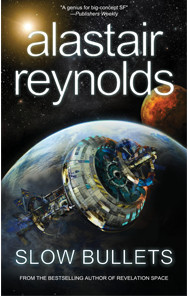
SlowBulletsPoseidon’s Wake and Slow Bullets, Alastair Reynolds. The first is the final book in the Poseidon’s Children trilogy; the second is a small press novella from Tachyon Press.

Aurora, Kim Stanley Robinson. A generation starship story, set at the point at which the ship approaches its destination.

The Glorious Angels, Justina Robson. I heard Justina read an excerpt from this at the York pub meet in November. “On a world where science and magic are hard to tell apart a stranger arrives in a remote town with news of political turmoil to come.”

The Woman in the Green Coat, Katie Ward. A novel about suffragette Lady Constance Georgina Bulwer-Lytton. I loved Ward’s debut Girl Reading, so I’m expecting to love this too. It certainly sounds fascinating.

Anything I’ve missed? Yes, I know there’s the final book of the Imperial Radch trilogy due next year, and no doubt a number of fantasy novels – de Bodard, for example; possibly the second book of the Worldbreaker Saga from Hurley. But while I may or may not give them a go, I have very little interest in epic fantasy. There may also be one or two debuts which create a bit of a buzz, and which I might be persuaded to read. But is there anything not mentioned here which I really should make a note of?