Having found myself no longer enjoying genre fiction as much as I once did, I went and read a load of it – four science fiction books and one fantasy novel. The lone mainstream is by a Norwegian writer, and I doubt I’ll be bothering with any more books by him.
Memoirs of a Spacewoman, Naomi Mitchison (1962, UK). One from my Women’s Press SF collection and read for review on SF Mistressworks – see here. It felt more fabulist than science-fictional, with a chatty narrator and an almost childish approach to genre trope, although the book is anything but childish. The prose is a good deal sharper than is typical of the genre, but not, it must admitted, of the novels published under the Women’s Press SF imprint. I’d like to read more Mitchison, I think, and her The Corn King and the Spring Queen (1931) is, according to Wikipedia, “regarded by some as the best historical novel of the 20th century”.
Rimrunners, CJ Cherryh (1989, USA). Also read for SF Mistressworks, although the review has yet to appear there. I’ve always been a fan of Cherryh’s writing, and have been reading her books since first stumbling across them in the early 1980s. She used to be ubiquitous in the UK back then, you’d see a dozen or so titles in your local WH Smith, back when WH Smith was better known for selling books than selling stationery. I’ve got quite a few Cherryh first editions, some of them signed. When I lived in the UAE, I used to order her books from Amazon as soon as they appeared, and I’ve been half-heartedly collecting her ever since. I really ought to see about completing the collection – but the science fiction only, I’m not interested in the fantasy novels.
Marauder, Gary Gibson (2013, UK). I’ve known Gary for a couple of decades now, and I’ve been buying his books and reading them right from the start. Marauder is a return to the universe of Stealing Light (2007), Nova War (2009) and Empire of Light (2010), and is in part an extension of that trilogy’s plot. Gary does some things very well, sometimes a little too well, and that can result in him over-doing it. And the thing he does well is: scale. These are stories that cover thousands of light years, that throw out mentions of histories going back millions of years. But this sense of scale is also one of the things that really annoyed me about Marauder… and which also fed into some thoughts I’ve been having recently about science fiction in general. The title refers to a vast starship from a machine civilisation – so we’re in Fred Saberhagen, Greg Benford and Alastair Reynolds territory here – which once aided a civilisation hundreds of thousands of years before and raised its tech level substantially in a short period of time. Meanwhile, in the recent past, the Three Star Alliance has had to hand over its FTL starships to the Accord, a much larger and more powerful human polity, because the FTL nova drive is also the deadliest weapon known to humanity, the nova mine. This seriously pisses off the plutocrats who run the TSA and they decided to try and negotiate with the Marauder, having figured out where it is, for some of that ancient high tech. The pilot on their mission is Megan, a machine-head (ie, she has implants), and the leader of the expedition uses her best friend as a conduit to speak to the Marauder, burning out his brain in the process. The mission is a failure and the Marauder destroys their starship. Megan manages to escape. Some years later, her new ship is hijacked by the same people (who, it seems, were eventually rescued), because they’re determined to try again. Meanwhile, there’s Gabrielle, who has been born for a specific purpose and now, aged twenty-one, it has come upon her: she must go to the Magi (another ancient alien race with FTL, now extinct) starship which crashed on her planet, Redstone, and try to eke more technological goodies out of its AI’s databanks for her theocratic regime. This is all good stuff, and the two plots not only slot together pleasingly but there’s a nice twist that serves to tighten the links between them. It’s all good space opera, but sometimes the vast distances feel a bit too much and the sense of scale sort of fades from 3D to 2D, if you know what I mean. But that over-egging of scale is also what spoiled the novel for me, as mentioned earlier. Gabrielle, it transpires, is important to the TSA’s return visit to the Marauder. But they can’t just invite her along, because of her role in the theocracy. So they kidnap her. But they don’t just send in a special forces team and abduct her. No, they arrange for something – a huge starship carrying antimatter – to crash into the planet and cause a tsunami which kills tens of millions of people, just so they can kidnap Gabrielle in the confusion and hope everyone assumes she died in the disaster. This is one of the things that pissed me off about Leviathan Wakes, and why I’ve never read further in the series. Seriously, killing tens of millions of innocent people just to kidnap one? WTF? I find it hard to believe someone would consider that a defensible plan. I get that the leaders of the TSA are desperate (and, from their later actions, it must be said, also unbelievably psychopathic; but even with the Accord running things, they’d still be rich and powerful, so why behave like monsters?), but when your story covers millions of years and thousands of light years there’s a tendency to upscale the villains too. And I think that’s not only wrong, it also feeds into the whole right-wing mindset of science fiction. Good sf is not about extraordinary people in extraordinary circumstances, it’s about ordinary people in extraordinary circumstances – and that includes the villains too. Science fiction needs to scale back on the bodycounts and fascism, otherwise it’s just one of the many things in popular culture normalising such behaviour.
Rubicon, Agnar Mykle (1965, Norway). My mother found this in a charity shop somewhere, and asked me if I’d be interested, I said go on then, so she bought it and gave it to me. And… Well, after going on a rant about normalising fascism, Mykle sets a quarter of his novel in your actual Nazi Germany of 1939 and doesn’t manage more than a handful of back-handed criticisms. True, the book is more about the narrator’s home circumstances, from which he is fleeing, and his romantic ideas about Paris, and clearly positioned as comedy – there’s even a scene in which he encounters a French toilet for the first time. The narrator is painted as part-naïf part-idiot part-bumpkin, and while his romantic misconceptions provide a good base for some of the humour, some of it is also a bit too, well, adolescent, male adolescent. Mykle died in 1994, and his last novel was… Rubicon – chiefly, it seems, because of the controversy caused by an earlier novel, 1957’s The Song of Red Ruby (which resulted in an obscenity trial in Norway). I’m tempted to have a go at that controversial novel – secondhand copies in English seem to be readily available – but I can’t say that Rubicon motivates me to track down a copy. Rubicon is a well-crafted novel, with a good control of voice, but it all felt a bit meh to me. Incidentally, inside the book I found an Air France boarding card dated January 1978. It’s not the oldest bookmark I’ve found in a book. I found one once dated 1945…
The Graveyard Heart / Elegy for Angels and Dogs, Roger Zelazny / Walter Jon Williams (1964/1990, USA). I have almost a complete set of the Tor doubles, which I started collecting after finding half a dozen of the early ones in a remainder book shop in Abu Dhabi. I’m not convinced there’s been a consistent editorial agenda with this series – which topped out at 36 books in two years – given that earlier volumes were just two novellas back-to-back (tête-bêche, to be precise), but that was dropped in favour of printing both the same way up, as if it were an anthology of two stories. Some of the later ones also featured classic novellas with modern sequels by another hand, as this one does. ‘The Graveyard Heart’ by Roger Zelazny is from 1964. ‘Elegy for Angels and Dogs’, a direct sequel, is from 1990. To be honest, I’ve never really understood the appeal of Zelazny’s fiction. He’s reckoned to be one of science fiction’s great wordsmiths, and while he may be a great deal better at stringing a sentence together than many of his peers, I’ve never really understood why his prose is held in such high regard. It’s… okay. And in ‘The Graveyard Heart’, some of it is actively bad. In the novella, a subset of the jet set, a group of rich young party animals sleep in cryogenic suspension for most of the year, and only appear for exclusive and expensive social events. They are the Party Set. So while they live the sort of life capitalist society continues to valourise, they also travel forward through time, experiencing years in subjective weeks. But then one of them is murdered and… yawn. Dull murder-mystery in totally unconvincing setting ensues. Williams’s sequel moves the action forward a couple of centuries, tries to show the changes in Earth society the Party Set are missing (and that does, in fact, drive part of the plot), but also throws in a couple of murders for good measure. The result is something which isn’t sure how direct a sequel it should be. It’s more inventive than its inspiration, the language is plainer and better for it, but its lack of focus tells against it. Both are no more than average.
Lord of Slaughter, MD Lachlan (2012, UK). I bought the first book of this series, Wolfsangel (2010), at a convention after meeting the author, and got it signed. But I’ve been continuing with the series, despite my general apathy toward fantasy, and especially urban fantasy, because they’re actually bloody good. They’re more like historical novels, but based on Norse mythology and featuring werewolves. This one is set in Constantinople during the reign of, I think, Basileios II, 953 – 1025 BCE, certainly an emperor of that name appears in the book. A wolfman sneaks into the emperor’s tent just after a battle and asks the emperor to kill him. Instead, he takes him prisoner, and throws him into the Numera, Constantinople’s chief prison. Somewhere in the caves under the Numera is the well of knowledge, from which Odin drank, and for the privilege he paid with an eye. And that’s how the story plays out. Aspects of Odin, hidden in two of the characters, along with aspects of the three Norns, all descend on the well, while chaos rages in Constantinople. Because the Norns want Fenrir released so he will kill Odin, but Odin is not ready to die just yet and is happy for his aspects to be reborn throughout history, all with a vague desire to cause death and destruction. The story’s told from a variety of viewpoints, some of which are instrumental in the final showdown, some of which are just enablers. The setting is convincing, and if the characters have a tendency to blur into one another a little, it doesn’t detract from the story. This is superior fantasy, assuming you can define historical novels with werewolves and Norse gods as fantasy. And why not. There’s a fourth book available in the series, Valkyrie’s Song, which I plan to buy and read. Good stuff.
1001 Books You Must Read Before You Die count: 129
I try to read more books than I buy each month – or buy less books than I read, I guess it depends on how you look at it. Otherwise, the To Be Read pile would just continue to grow, and it’s already stupidly large. And this month, I’ve actually been quite good, and not bought a silly number of books.
The more astute among you may remember a Sursum Corda appearing in a previous book haul post. That was Volume 1. This is, er, Volume 1andVolume 2. Because someone on eBay was selling both volumes at a good price, and I’d been having trouble finding a copy of the second volume (I think the first was published in Canada and the UK, but the second only in Canada). Malcolm Lowry’s Poetics of Space is the fourth book in the University of Ottawa’s critical series on Lowry’s work.
Some bandes dessinées. The World of Edena started out as an advert for Citroën, but Moebius expanded and expanded it over the years. I wrote about it here. The Living Weapons is the fourteenth episode in the long-running Valerian and Laureline series, which I also wrote about here. There is a film adaptation by Luc Besson due for release, I think, later this year. I’m looking forward to seeing it.
The Silent City is for the Women’s Press SF collection. I was pleased at how good condition it proved to be in, because with some of these eBay sellers you never can tell. I thought Ouředník’s Europeana very good indeed when I read it back in 2006, and though I thought his next, Case Closed, not quite as good, I still liked it a lot. So it was about time I picked up third book by him, The Opportune Moment, 1855, published in English by Dalkey Archive. And… I’ve just discovered he’s written nineteen books, in Czech and French, but only the three I have have been translated into English – and both Case Closed and The Opportune Moment, 1855 were actually originally published in the same year.
For reasons that probably made sense when I made the decision, I’m keeping the reading diary numbering scheme going, even though it’s a new year. Not that I posted 42 reading posts in 2016, anyway. This year, I’m also going to document the country of origin of the books I read, as I plan to read geographically more widely in 2017 than I have done in previous years. This will likely mean less science fiction, although the percentage of my reading that can be categorised as genre has been steadily dropping for a long time. I still call myself a sf fan, and the genre usually offers me something as a reader I don’t get from other modes of fiction, or even non-fiction. But. There’s also a lot that sf is mostly very, very bad at, and I want to read books where those things are done well. And, I’d like to hope, that feeds into my own writing – which is, of course, predominantly science fiction…
Heart of Stone, Denny DeMartino (2001, USA). And speaking of things that sf does badly… I read this book for SF Mistressworks, and its protagonist and narrator is, quite frankly, the most ineptly-drawn British character I have ever come across in fiction. See my review on SF Mistressworks here for some choice quotes. I forget where I stumbled across mention of the book, and its sequel Wayward Moon, but the cover art looked quite appealing… A cheap copy of Wayward Moon in good condition appeared on eBay, I bought it… but no good condition copy of Heart of Stone followed and so I ended up buying a tatty one just so I could read the book. And having now read that tatty paperback, I think I would have been overcharged if it had cost me a penny. I will probably one day read Wayward Moon just to complete the pair on SF Mistressworks, but I can’t say I’m looking forward to it…
The Princes of the Air, John M Ford (1982, USA). Ford is one of those sf authors whose books are held in high regard by a small number of discerning people. He’s perhaps best remembered for his Trek novelisations, but everyone who has read his non-Trek output has only good words to say of it. True, his alternate history/fantasy The Dragon Waiting was in the original Fantasy Masterwork series, but pretty much everything he wrote is long out of print and most of it was never even published in the UK. Having read Ford’s collection, Heat of Fusion, several years ago and thought it very good, I’d kept a weather eye open for his other non-tie-in novels, and The Princes of the Air popped up on eBay for a reasonable price some time last year, so I bought it. And I’m glad I did. This is well put-together stuff, even if it does borrow overmuch from the models it uses. But, to Ford’s credit, those models are plucked from more high-brow sources than your average science fiction novel. The title refers to three young men who decide to make the most of themselves. One is indentured to become a diplomat, if he passes all his training; the other two are so practiced on battle simulation VR games, one as a tactician, the other as a pilot, that they soon find work for themselves in those roles. But then there’s a plot to seize the throne from the queen, and the three work together to foil it. The chess references are a bit heavy-handed, but there was something else the book kept on reminding me of as I read it, and for the life of me I can no longer remember what it was. The plot of one of Shakespeare’s plays? Something like that. The world-building is put together well but feels a little dated. Ford’s prose is cut above the average, and he’s clever in subtle ways – the diplomatic language, for example, is rendered as iambic pentameter. The Princes of the Air has a sort of Tron-ish feel about it: good for its time, but very much the product of an earlier decade. If you stumble across a copy, it’s worth giving it a go.
Valerian and Laureline 14: The Living Weapons, Jean-Claude Mézières & Pierre Christin (1990). I’ve been buying these translations of Valérian et Laureline since Cinebook started publishing them, although I really should get the original French ones… But Cinebook are now up to volume 14 (originally published in 1990) of the current twenty-two books. This is good stuff although, to be fair, the shortness of each individual episode does mean the quality of the story can be a little variable. This is one of the less good ones… Valerian and Laureline land on a planet, not entirely in control, and hook up with a circus, each of whose four members have talents that make them closer to weapons than entertainers. There’s an ongoing war on the planet, and one war leader hopes to use the circus to “end war” – by winning it comprehensively of course, the sort of solution that Trump and Putin and your usual right-wing morons cannot see beyond – but Valerian has another plan… and, er, so he does it. Ironically, the “living weapons” eventually end up joining the Moscow State Circus. If only Gorbachev had known they were there, maybe he could have made glasnst actually work. On the other hand, I’m not sure this is what is meant when science fiction is described as an “ironic” mode of fiction…
The Peripheral, William Gibson (2014). The last Gibson novel I read before tackling this one was Virtual Light back in 1994, although I’d read the Sprawl trilogy and Burning Chrome prior to that. I then sort of lost interest in what he was writing, and it’s only in recent years that I decided to give his novels another go… So when I spotted The Peripheral in a charity shop, I bought it and it sat on my bookshelves for about six months before I picked it up and started reading it… I believe The Peripheral is more science-fictional than the novels Gibson has been writing since the late 1990s, given he’s no longer published as genre – not, of course, that The Peripheral was published as category science fiction anyway – but this novel’s story is, I believe, more overtly sfnal than the rest of Gibson’s output of the last decade or so. There’s a really cool idea at its core, although the mechanics of it are left unexplained: a mysterious server on the Internet (there’s a running joke it’s located in China) in the early twenty-second century allows people to communicate with the past. But only just less than a century into their past. And any intereference in that past causes it to branch off, and form a “stub”. Meanwhile, in near-future small-town USA, a young woman substitutes for her brother in what she thinks is an online game… but she’s actually flying a drone in twenty-second century London, working security for the sister of a famous performance artist. And she witnesses that sister being murdered by nanobots. Which kicks off a police investigation in London, a symptom of a struggle for power between two immensely wealthy factions, and which then leads to heavy interference in the near-future USA in order to protect the witness (like making her and her family the richest people in the country). (The title, incidentally, refers to the android avatar the young woman uses when visiting the future (to her) London.) About halfway through the novel, it’s revealed – although there are some pretty heavy hints – that eighty percent of the world’s population had died during the latter half of the twenty-first century, thanks to climate crash, economy crashes, epidemics, etc. You’d think with all this going on, I’d have been more impressed with The Peripheral. But… Everyone in the novel is near-superhuman – in the US, they’re ex-special forces or something; in London, nanotechnology gives everyone something like superpowers. No one in the book comes across as a human character. And then there’s callousness with which people are treated – this a book with a high bodycount. There’s even mention that in the twenty-third century, interfering in “stubs” is a hobby. In other words, those people enjoy fucking up the lives, often fatally, of more than six billion people. Which, I guess, makes them little different to the immensely rich today. But I don’t want to read novels in which stuff like that is treated casually, novels which set their stories in worlds which operate with all the morality of a computer game. Science fiction has always been a genre which seems happy to dehumanise every one except the protagonist and his, or her, band of hardy chums. That’s one way in which science fiction seriously needs to grow up. But it’s disappointing to see a writer of Gibson’s stature seemingly subscribing to that view.
The World of Edena, Moebius (2016). I’m a big fan of The Incal, although I’ve never really made an effort to track down Moebius’s solo work, possibly because it’s so hard to find in English-language editions. I’ve mentioned before, for example, the beautiful collections published in Danish I saw in Faraos Cigarer in Copenhagen (and, I discovered last Christmas while showing them to one of my nephews, actually published by Faraos Cigarer’s own imprint). Which is a bit of a long-winded way of getting around to the fact that last year Dark Horse collected all of Moebius’s Stel/Atana bandes dessinées and published them in a 350-page collection under the title The World of Edena, and I spotted it on Amazon but they had run out of stock so I ended up buying it from an eBay seller and saving myself a fiver… The original Stel/Atana story was written for Citroën for an advert in 1983, but Moebius expanded it a great deal over the years following. Basically, Sten and Atan visit a friend on an asteroid community, but it crashes onto the giant featureless planet it orbits… where Stel and Atan discover a giant pyramid, around which is a city 700,000 years old containing members of all the intelligent races in the galaxy, living and extinct. It transpires the pyramid is a giant spaceship and Stel is the pilot it has been waiting for. It transports everyone to the paradise planet of Edena… Once forced to live off the land, Stel and Atan develop secondary sexual characteristics and Atan proves to be Atana, a woman. The two are separated and the rest of the story describes their attempts to find each other, which are prevented by the masked inhabitants of the Nest, who are a particularly cool invention, and especially their semi-godlike creator, the Paternum. The action takes place both in dreams and on Edena itself, and it sometimes gets a little confusing. And even the final twist, with its deliberate attempts to leave everything unresolved, doesn’t quite work… But the artwork is gorgeous throughout, the Nesters are brilliant, and it’s clear from page one this is high-quality bandes dessinées which any self-respecting fan should own.
Chernobyl Prayer, Svetlana Alexievich (1997). So, one evening on Twitter I was chatting with some friends about female Nobel laureates for literature and I decided to put my money where my mouth was and read some – other than those I’d already read, Lessing and, er, Jelinek… And so I bought myself copies of Herta Müller’s The Appointment (see here) and Alexievich’s Chernobyl Prayer. I knew nothing about either writer, other than the fact they had been awarded the Nobel Prize for Literature. Chernobyl Prayer is… probably going to be one of my top five reads of the year come December. Yes, it is that good. Read it now. Alexievich has made a career out of publishing the stories told to her by people regarding certain events, and in Chernobyl Prayers she interviewed lots of people in Belarus and Ukraine about the nuclear reactor meltdown in that town, and used their accounts to build a narrative of events and the effects of the accident. I remember Chernobyl being on the news and, like most people in Western Europe, I never really understood the damage wrought by the disaster. It was severely downplayed by governments and the media throughout the world – but nowhere quite as extensively as it was in the USSR, especially in the areas most affected by Chernobyl. Chernobyl Prayers is not only eye-witness accounts of the disaster and its immediate aftermath, but every account editorialises on the incident, on the USSR and Russian character, and so provides a rich and deep portrait. I’ve heard it said Alexievich “embellishes” the testimonies she collects, but I was under the impression going in that Chernobyl Prayers was on the borderline between fact and fiction, and that’s an area I enjoy exploring in literature. So I consider that a value-add, not a criticism. I’ve since added Alexievich’s next book, Second-Hand Time, to my wishlist.
1001 Books you Must Read Before You Die count: 129
Well, the promised catch-up with female authors didn’t exactly happen, so 2016 ended with male authors just slightly ahead of female authors. Women will probably take back the lead in 2017. That seems to be the way it works…
Where My Heart Used to Beat, Sebastian Faulks (2015). I’ve read each of Faulks’s novels as they’ve hit paperback, and I’ve never really worked out why I fastened onto him as a modern author to read. I think he’s much better than McEwan, who managed a couple of stonkers early in his career, but then Faulks’s career has never really matched Birdsong… although I thought the story of Human Traces danced about a pretty interesting idea… And that same idea sort of crops up in Where My Heart Used to Beat. Faulks has… odd ideas about consciousness, and the historical origin of human awareness. In a science fiction writer, they’d be understandable, if not even defensible. But Faulks writes lit fic. In Where My Heart Used to Beat, which is set in the 1980s, a UK doctor is invited to a small French island to meet a famous neurologist at the end of his life and career. The neurologist wants the doctor to be his literary executor, partly because he commanded his father during WWI and holds a secret about that, and partly because the doctor’s career hints that he might be receptible to the neurologist’s Big Idea. The narrative dips in and out of the doctor’s life, mostly focusing on WWII, when he was involved in the Allied invasion of Italy. During that time, he met a young Italian woman and weas convinced she was the love of his life; but she turned out to be married, and he never really recovered. And it’s the concept of love, and Faulks’s previously trotted-out theory on inter-brain communication, that provides the substrate for Where My Heart Used to Beat. It’s a very readable novel – Faulks’s prose is never less than readable – and a more coherent one that his last couple… but it doesn’t have the… weight of Human Traces, and so its central premise dosn’t in the slightest convince. Faulks produces polished middle-brow material, and he does it well, much better than McEwan – but every time I read one of his novels I find myself wondering why I continue to read him. I still don’t know.
Hodd, Adam Thorpe (2009). I have made a habit of picking up Thorpe’s novels when I see them in charity shops and I’m not entirely sure why. True, Ulverton was very good indeed – an English village’s history described through a variety of narrative forms – but the collection Shifts was, to be honest, a bit dull. But I have three or four of his books, and I grabbed this one to read over Christmas. Which I did. I knew it was about Robin Hood, a legendary figure I feel somewhat protective toward, given that I was born in Mansfield, which was once within the precincts of Sherwood Forest (in fact, there’s a plaque in Mansfield which declares the “dead centre” of Sherwood Forest was once at that spot). On the other hand, I’m well aware that Robin Hood is as real an historical figure as Jesus Christ. And, much as I love the 1938 Technicolor movie The Adventures of Robin Hood, starring Errol Flynn in the title role, I know it has as much connection to real actual history as the Bible does – ie, none. Hodd is fiction, and clearly presented as fiction… but it’s also yet another version of Robin Hood. In this case, he’s a heretic who lives in the woods north of Doncaster, and his story is told as a manuscript, found by a British officer in a bombed-out church in Belgium during WWII, written by a ninety-year-old monk who was once “Much the Miller’s son” in Hodd’s band. It’s very cleverly done. There are footnotes by the officer who translated the manuscript, which explain some of the lesser known facts about mediaeval life (and also feature some editorial comments by him). The plot will come as no surprise to those who know the Hood legend, even if it’s only from the Flynn movie, and while Thorpe’s recasting of Hood as Hodd doesn’t seem to asdd all that much to the story, the way the story is presented definitely does. It put Thorpe back in my, so to speak, good books. Hodd is a clever and convincing historical palimpsest of a novel, and it’s a joy to see how well it is put together. Recommended.
Starlight, Mark Millar & Goran Parlov (2014). So many English-language graphic novels and trade paperback collections involve over-entitled fascists in Spandex costumes. And if it’s not superheroes, it’s noir. Like that’s a new thing. I wanted science fiction. But I spent a good while perusing the English-language shelves of Faraos Cigarer in Copenhagen, and there was very little that appealed. Starlight looked like it might – a test pilot is pulled to another dimension, defeats a planet’s tyrant, Flash-Gordon-fashion, and returns to Earth… only to be disbelieved by all and sundry, and so treated as something of a joke by friends and family. Forty years later, his help is required again, this time to overthrow invaders who have enslaved the world. So back he goes, only to discover his legend has grown to a level he couldn’t possibly match it, especially now he’s four decades older. The brutal occupiers also consider him something of a joke, and the populace too weak to rise up under his leadership. The art has a nice pulp sf sensibility to it, although the story seems unable to decide if its hero is pulp sf hero or a superhero. In fact, that’s not the only thing that’s a little confused, as Starlight tries to gives its story a modern spin while at the same time throwing in references to early sf serials. So, tonally, it’s a bit all over the place. Good in parts, though.
The Beautiful Indifference, Sarah Hall (2011). Unlike some people I know, I’m not a fan of Hall’s writing – but then, her writing is very tied to her region – Cumbria – so much so that many of the stories in this collection are written in local dialect, or use local dialect terms. They’re good stories, they’re polished stories. There are seven of them in The Beautiful Indifference, some of which are set in Cumbria, one of which is set in Finland. They’re worth reading, although fans of her writing will get more from them than I did. I found this book in a charity shop, and I’ll continue to keep an eye open for her works, but I do find her prose a bit too much in your face for my taste. I like my fiction distant and bolstered by fact, and I find it hard to accept a facility with local dialect as a substitute for fact. Or rather, I appreciate fiction that includes elements which can be looked up on Wikipedia, and while Hall’s use of Cumbrian dialect is, as far as I know, accurate, it adds only a thin wash of colour to the stories, where a reference to a real event or thing defined in Wikipedia would add depth. But that’s a personal thing. Certainly, Hall is a good writer, and these are some polished pieces of work. Worth reading.
Saga Volume 1, Brian K Vaughan & Fiona Staples (2012). Many people, many many people, have recommended this, and so I had initially avoided it. But there I was in Faraos Cigarer in Copenhagen, and I picked out Starlight as worth a read and all the graphic novels I really wanted were upstairs and by Moebius and in Danish… so I eventually succumbed and bought the first volume of Saga. I could have bought the Danish bandes dessinées by Moebius, of course, or even the hardback volumes of Valerian and Laureline, also in Danish, but it would mean learning a new language to read them, which seems daft when they’re originally French and that’s a language I can actually read (with a dictionary at hand, admittedly). Anyway, Saga… I didn’t like it. I really didn’t. It is allegedly a space opera, but there’s zero rigour to the setting, one side uses magic, there are a race of robots who have human bodies but TVs for heads, and people actually use mobile phones and apps. See, you have a man and a woman, from each side of a generational war – one lot have wings, the others have horns – and they have a child. Er, so why do you need science fiction to tell this story? I guess calling a race war story a “space opera” makes it more palatable to readers. And, of course, it means the story is not “politicized”. FFS. So there you have it: weak title, paper-thin allegory, paper-thin setting, and a total lack of rigour. Nice art, though.
1001 Books You Must Read Before You Die count: 129
I’ve already done my best of the year post – see here – but until the year is actually over I never know how I’ve been reading – total number of books, by genre, by decade, by gender, etc… Well, 2016 is well and truly over, and I’ve been doing some number-crunching.
I read 144 books in 2016, just missing my Goodreads Challenge target of 150, and down from last year’s total of 152. I put this down to the fact I picked several weighty books to read during the year, although, to be fair, I don’t think I was reading as much as I did in 2015 anyway. Of those 144 books, the bulk were published this decade – 63, in fact, so slightly less than half. The rest were scattered across every decade from the 1920s onwards. The graph looks like this:
It doesn’t look much different to 2015, to be honest, although the 1970s scored a little higher then.
For the last couple of years, I’ve been trying to keep my fiction reading split evenly between male and female writers. In 2016, men just pipped women at 34% to 32%. The remainder were anthologies, graphic novels and non-fiction:
And subject-wise, science fiction still forms the majority of my reading, although it’s less than half at 40% (down from 47% last year). Mainstream takes second place at 27% (up from 23% last year). The single Young Adult title was from my reading of the underwhelming 2016 Clarke Award shortlist.
At the end of 2015, I’d planned to read more mainstream and less sf in 2016, so that was one target met. But I also wanted to read more non-fiction, particularly criticism, space exploration and deep-sea exploration – but that I failed to do.
I also worked out my reading by nationality of the writer. I discounted anthologies, because while their contents could be from a single nation, many are not. I had expected the US to be the source for much of what I’d read, but it turned out to be the UK – 40% to the US’s 35%. I seem to recall the same happening last year. Next highest was Germany, with 4% (that’ll be those Jenny Erpenbeck books, then). Other nations include: Argentina, Canada, China, Denmark, Norway and Spain, among others.
Compared to 2015’s reading, this is a distinct improvement – not only a few more more countries, but also more titles that weren’t from the UK or US. I plan to read more translated fiction in 2017, so I expect this chart will look very different this time next year.
Reading books, however, is only, er, half the story. Books, after all, do not magically appear out of thin air – well, I guess ebooks do, but I much prefer hardbacks and paperbacks. I didn’t keep every book I purchased in 2016, however – some of those I picked up from charity shops, I donated back after I’d read them. In total, during 2016 I bought 150 books I’d not previously read… which means the To Be Read pile increased by six books, except… I got rid of a few books I’d never got around to reading, and likely never would, so the TBR actually shrank by twenty-two books. (At that rate, it’d take me about 50 years to completely read my TBR.) Of the books I purchased, it’s about a 50:50 split between bought new and bought secondhand, but only 21 were actually first published in 2016. I’ve no plans to change that in 2017 – I certainly don’t choose my reading based on the shiny new, and, to be honest, and a lot of the currently popular genre stuff doesn’t take my fancy at all. So I shall continue explore the oeuvres of those writers I like and seek out books by writers new to me, from whatever decade, whose works are more tuned to my tastes. And, hopefully, I’ll make a bigger dent in the TBR over the next twelve months…
An odd selection this time around. I normally like to plan my reading but the following were all pretty much random choices, grabbed when I needed a fresh book for my morning commute. Well, all except the last one, of course.
Midnight at the Well of Souls, Jack Chalker (1977). I’ve had this series on my bookshelves for several years and I’m not entirely sure why. I think Chalker was an awful writer, slapdash, fixated on a handful of not very original ideas, and content to pad out the thinnest of stories to trilogy, and longer, length. I don’t think he wrote a single good book, but he does have legions of fans. Which, I guess, makes him much like every other science fiction author. Anyway, Midnight at the Well of Souls is the first book in Chalker’s The Saga of the Well World series, which had reached seven books by the time Chalker died in 2005. A group of archaeological students studying a Markovian ruin on a dead world are murdered by their instructor after he has figured out how to access the Markovian world-computer. He, and the one surviving student, find themselves transported to the Well World. Some time later, spaceship captain Nathan Brazil is transporting a handful of passengers through space when he receives a distress call. It’s from that same world where the instructor murdered his students. And so Brazil and his passengers find themselves also in the Well World. Which is an artificial planet in another dimension or something, and is divided into 1,560 hexagons, each one 355 by 615 kms and containing a completely different ecosphere and associated alien races. Brazil and his passengers are scattered across different hexes, each transformed into a native of that hex. Well, except Brazil isn’t. Because it turns out he’s some sort of immortal, and he knows how to work the Well World’s controlling computer, which is just as well because the aforementioned instructor wants to use the controlling computer for his own ends (and which will in consequence destroy the real universe). So Brazil and allies must trek across half a dozen hexes, having adventures along the way, in order to reach the equatorial wall and the secret entrance to the control room. It’s science fiction by numbers, light on invention, characterisation, rigour and, er, substance. It has all the originality of a basement RPG session by a group of twentysomething nerds. I doubt I’ll be continuing with the rest of the series.
The Book of Words, Jenny Erpenbeck (2005). Words are powerful, though you’d not know it from the bulk of novels written. As the title of this short novel, perhaps even a novella, shows, its story is about words and their uses and the way in which they can create a world for a protagonist and hint to the reader at the context for that world. The narrator discusses words as she describes her childhood in an unnamed country suffering under an oppressive regime, and in which her father works. It’s a completely self-centre narrative, as every word in the book is about the narrator or her world. But what she writes does provide clues to the reality underlying the narrative. The mother is German, and had fled her country for political reasons – mostl likely because she was a Nazi. Though the Germans have contributed to the father’s country, they are not liked. The regime is brutal – the father talks openly about torture, and even describes atrocities committed by some unnamed Germans (one of which is clearly Mengele). The Book of the Words is closer to The Old Child than it is Visitation or The End of Days. It’s not an easy read – and in parts, it is quite gruesome – but it is very clever in the way it doles out information to the reader, aithout breaking the narrator’s character. Erpenbeck has to date published six books, although, I think, only four have been translated into English. My German is probably too rusty to fully appreciate her prose in that language. So can someone publish those other two books in English, please?
The Other Wind, Ursula K LeGuin (2001). I have a lot of time for LeGuin’s writing, although I can’t say I’ve enjoyed everything she’s written. I knew The Other Wind was a sequel of sorts to the Earthsea quartet, and I do think those books are very good. Nonetheless, my expectations for The Other Wind were middling, perhaps because I was under the impression it was YA. True, the Earthsea books were published for many years in the UK by Puffin, the children’s imprint of Penguin; but I’ve never really thought of them as YA. The Other Wind is set late in the lives of Ged and Tenar, Ged has long since retired as Arch-mage and no longer has any magic powers. He is visited by Alder, a village magician who has been dreaming about meeting his much-loved late wife at the wall between the land of the living and the land of the dead. Ged advises Alder to consult with Tenar, and their daughter Tehanu, currently on Havnor, advising King Lebannen on recent incursions by dragons. It turns out the dragons are upset because the humans of the archipelago do ont return to the world on dying, but instead gather in the land of the dead. Dragons are apparently trans-dimensional. And all those dead folk are cluttering up their private dimension. It’s a completely new view of the afterlife as presented in the Earthsea quartet, and yet it doesn’t contradict it. There’s a wonderfully elegiac, and yet matter-of-fact, tone to the prose, and a beautifully-drawn cast, from Alder through Tehanu to King Lebannen… but especially the princess from the Kargad Empire who has been sent to Havnor to marry the king. It feels like damning the book with faint praise, especially since the last LeGuin collection I read was a bit dull, but The Other Wind is a thoroughly charming novel. I loved it. It made me want to reread the Earthsea quartet, it made me want to read more LeGuin. Recommended.
Borderliners, Peter Høeg (1995). Høeg’s 1992 novel Miss Smilla’s Feeling for Snow was an international sensation, and rightly so, and was made into a film directed by Bille August and starring Julia Ormond and Gabriel Byrne. Borderliners was Høeg’s next novel (he had published two before Miss Smilla’s Feeling for Snow), and it’s a very different novel. Peter, the narrator, and Katerina and August are all pupils at a private school in the 1970s. All three are orphans – Peter has spent most of his life in children’s homes, Katerina’s parents died shortly before she was sent to the school, and August is on licence after killing his abusive parents. Shortly after his arrival at the school, Peter realises that everything in it is governed by schedule – he thinks of it as governed by time – and he theorises that this generates a particular way of seeing the world, which is what leads to the school’s success (it boasts a prime minister among its alumni). Although the three are not supposed to mingle, and make a secret of their friendship, they pass notes back and forth, meet in odd corners, and generally try to upset the school’s effect on themselves. August proves a handful, as he erupts into violence when threatened. Readers going into Borderliners expecting something like Miss Smilla’s Feeling for Snow will be disappointed – even Wikipedia states that Høeg’s novels tend to defy easy categorisation. Fortunately, I already knew this going in, although it’s certainly true Borderliners doesn’t have the immediate appeal of the earlier novel. Nonetheless, Høeg is an author whose work is worth exploring, I think. And, thanks to my brother-in-law, I now know how to pronounce the author’s name correctly.
The Iron Tactician, Alastair Reynolds (2016). There are few things as dependable in science fiction as an Alastair Reynolds novella. Even before you turn the first page, you know you’re going to get an entertaining story larded with eyeball kicks and laid on a substrate of some big idea or other. It’s almost the dictionary definition of twenty-first century sf… except, well, the genre now covers so much ground, and is so diverse, that Reynolds’s ur-sf is only one strand among many. Which is a good thing, I hasten to add. The Iron Tactician is about as dictiuonary-definition Reynolds sf as you can get, on the other hand. It’s a sequel of sorts to ‘Minla’s Flowers’ and ‘Merlin’s Gun’. Merlin stumbles across a cold swallowship and decides to see if it has a working syrinx (used to access a NAFAL network created by mysterious aliens). There’s one survivor aboard the derelicxt, and she reveals that the ship traded its syrinx centuries before to a nearby star system locked into a planetary war. So Merlin and Teal head for the planetary system, planning to trade back the syrinx. The locals ask them to perform a task in payment: recover the titular AI from a pirate band, because they need it to win the centuries-long war against their enemies. Of course, nothing is quite as it seems – not the Iron Tactician, nor the the prince who represents the owners of the syrinx, or indeed the syrinx itself. I enjoyed the novella, even though something slightly familiar about it nagged me as I read it. I’m not sure what it was, but something in it felt second-hand and I had not expected it. It’ll probably end up on a coyuple of award shortlists, because genre awards these days are totally corrupt, although I don’t think it deserves to. (No reflection on Alastair or his work, he’s very good at what he does – but I’d hate to think The Iron Tactician is one of the best novellas the genre has produced in 2016, and I know it’s not the best Alastair has written.)
1001 Books You Must Read Before You Die count: 129
Christmas is now over and, as he does every year, Santa brought me some books. But I’d also bought some for myself in the weeks leading up to the festivities and since my last book haul post…
I managed to find a couple more of the Newcastle Forgotten Fantasy books on eBay – The Haunted Woman, Aladore and The Roots of the Mountain – which are numbers 4, 5 and 19 respectively. Still got a way to go yet, however…
A trio of secondhand sf novels. I’m currently reading Heart of Stone for SF Mistressworks. I have the sequel, Wayward Moon, somewhere as well. Soldier of Another Fortune finally completes my Destiny Makers quintet. I used to correspond with Shupp back in the 1990s, but we lost touch. And The Princes of the Air is a book I’ve often heard spoken of approvingly, but it’s been hard to find.
From the Christmas holiday: Santa brought me Elizabeth Taylor’s Complete Short Stories (no, not that Elizabeth Taylor; the writer, not the actress) and the second book of My Struggle, A Man in Love. I bought Starlight and Saga Volume 1 in Faraos Cigarer, the former because it looked interesting and the latter because lots of people have praised it.
Three collectibles… The copy of Whipping Star is the first UK hardback edition, but it wasn’t published until 1979, nine years after the US first edition (the first UK edition was a paperback in 1972). Hogg I’d wanted for a while but first editions are hard to find. One eventually popped up on eBay. The Iron Tactician is a new signed and numbered novella from NewCon Press.
Some new books, just to prove I do read them. Having been impressed by Europe in Autumn and Europe at Midnight, I was certainly going to get a copy of Europe in Winter. Golden Hill I stumbled across in Waterstone’s while purchasing Sebastian Faulks’s latest, Where My Heart Used to Beat (not pictured, because I read it over Christmas and left it with my sister for her to read).
It’s been a funny old year. Not only have we hit that time when the icons of our youth are in their (late) sixties, seventies and eighties, and so coming to the end of their lives… but some of the British people had a fit of madness and voted to leave the EU in the dumbest referendum in British political history… And then the US went one better, as it always has to, and voted in as president Donald Trump, an orange-skinned baboon, a man who makes Nigel Farage look like a mostly-harmless over-educated clown. Trump doesn’t even have his arse officially in the Oval Office yet, and he’s already abusing his powers. We’ve had ten years of damaging and unnecessary austerity here in the UK, and we’re looking down the barrel of a deeper recession, thanks to the morons and racists who voted Leave. But I think the next four years in the US might well be worse than anything we experience…
On the personal front, the day job got really busy around March, when a colleague left the company and a major project he was working on was dumped on my desk. As a result, I’ve not had much energy or enthusiasm for anything other than just consuming culture… which has meant lots of blog posts on films I’ve watched, books I’ve read, and, er, films I’ve watched. I did manage to publish a whole four stories in 2016, however; ‘Geologic’ appeared in Interzone in January; ‘Red Desert’ and ‘Our Glorious Socialist Future Among the Stars!’ appeared in Dreams of the Space Age, a collection of my alt space stories; and Coda: A Visit to the National Air and Space Museum I published as a pendant to the Apollo Quartet… but only the last was actually written in 2016. I also worked on the third book in my space opera trilogy, A Want of Reason, in fits and starts. So, overall, not a very productive year.
Fortunately, some of the films I watched and some of the books I read made up for it. A new favourite writer and two new favourite films is not bad going for a single year. And a number of other “discoveries”, both writers and directors new to me in 2016, I thought so good I will be further exploring their oeuvres. But. There can only be, er, five. In each category. Yes, it’s that time of the year – ie, pretty close to the end – when I look back over the aforementioned consumed culture – of which there has been quite a bit, particularly on the movie front – and pick my top five in books, films and albums. And they look something like this…
books
Not a very good year for genre fiction, it seems. Not a single category science fiction novel makes it into my top five. And one gets bumped from the half-year top five (those are the numbers in square brackets) to the honourable mentions. Four other genre writers also make my honourable mentions – Charnock, Whiteley, Duchamp and Park – although I’ve been a fan of Duchamp’s and Park’s writing for many years.
1The End of Days, Jenny Erpenbeck (2012) [1]. Erpenbeck was my discovery of the year. I forget who recommended The End of Days, but I loved it… and then later bought everything else by Erpenbeck translated into English (she’s German). The End of Days re-imagines the life of a Jewish woman born in the early years of the twentieth century in Galicia, and follows her through several variations on her life, as she variously moves to Vienna, becomes a communist, moves to Austria, then settles in East Germany. Erpenbeck’s prose is distant and factual, a style that appeals greatly to me, and I especially like the “facticity” of her protagonist’s many lives. The End of Days is not as readable, or as immersive, a novel as Kate Atkinson’s Life After Life, a book it resembles in broad conceit, but I much prefer Erpenbeck’s novel because I love the authority of its reportage-like prose, and I find the life of its protagonist much more interesting than that of Atkinson’s. I think The End of Days is a superb novel – I’ve already bought everything by Erpenbeck published in the UK, and I eagerly await whatever new works might appear.
2Vertigo, WG Sebald (1990) [2]. Sebald is a genre all to himself, and his novels defy easy summary. They also – particularly in this case – tread that fine line between fact and fiction which I find so appealing, even more so when the fact is autobiography. (In hindsight, I could have included Vertigo as an inspiration for Coda: A Visit to the National Air and Space Museum, but then Austerlitz had partly inspired Adrift on the Sea of Rains, so…) The novel is divided into four parts, all first person narratives – the first is by Stendahl and describes his entry into Italy with Napoleon’s army, the second is by an unnamed narrator presumed to be Sebald and covers two trips he makes to a village in the Alps, the third is about Kafka, and the final section recounts the narrator’s return to his home village and his reflections on the changes, and lack of change, he sees there. Despite its discursive nature, there’s a deceptive simplicity to Sebald’s prose, which tricks the reader into thinking the story carries a smaller intellectual payload than it actually does. I don’t know of another author who writes at such length, and so indirectly, on a topic and yet still manages to make it all about the topic. Sebald did not write many novels – only four, in fact – but I suspect by the end of 2017 I will have read all of them.
3Nocilla Dream, Agustín Fernández Mallo (2006). I’m pretty sure it was David Hebblethwaite who mentioned this, and the description sounded intriguing enough I decided to give it a go. It was almost as if it had been written for me – a fractured narrative, split into 113 sections, some of which are factual, some of which hint at further stories. There’s a sense the novel is a work in progress, inasmuch as it’s an approach to narrative that has not been tried and tested – indeed, it led to a “Nocilla Generation” of writers in Spain. I suspect Mallo is guilty of over-selling his concept, but then narrative structure is one of my interests and I should think most writers – including myself, of course! – often think they’re being much cleverer than they actually are… What Mallo has created here may not be wholly new, but it is different enough to be worth keeping an eye on. And yes, I still find it a little disappointing that “Nocilla” is just a Spanish brand-name for a Nutella-like spread. It’s like when I thought Nirvana’s ‘Smells like Teen Spirit’ was a really poetic title until I learnt Teen Spirit is just the brand name of a deodorant…
4Rites of Passage, William Golding (1980). I found this in a local charity shop and bought it on the strength of Golding’s reputation and a half-remembered reading of Lord of the Flies from my school days… In other words, I went into Rites of Passage pretty much blind. I will happily admit I’m not over-fond of journal narratives, and the early nineteenth century is not a period that really interests me (especially in British history), but… this novel was so superbly put together, its control of voice, its management of story, so stunningly good, that after reading it I immediately decided I’d like to read not only the rest of the trilogy, of which this book is the first, the others are Close Quarters and Fire Down Below, but also anything else by Golding. Fortunately, I’d also bought The Inheritors and The Spire when I bought Rites of Passage, so I have those two books on the TBR to look forward to…
5The Golden Notebook, Doris Lessing (1962). I’d bought this a couple of years ago on the strength of its reputation – and having read several Lessing novels… but it sat there on my bookshelves unread for quite a while because, well, partly because of its reputation, but also because of its size… But I took it with me on a train journey to Scarborough… and discovered it was a great deal less polemical than I’d expected, hugely readable, and fascinating in its depiction of the life of protagonist Anna Wulf (and her fictional/meta-fictional counterparts). The nested fictional/meta-fictional narratives are no longer as excitingly experimental as they were in 1962, so in one respect the book’s impact has been somewhat blunted by time – although, to be honest, I much prefer literature which plays such narrative tricks. Having said that, this diminution in shock factor solely from structure shows how readable and coherent the various narratives actually are. It is slightly sad and frightening that The Golden Notebook enjoys the reputation it does when you think what a reader must be like, and believe, in order to be shocked and horrified by the novel’s content. Even more worryingly, I suspect more people these days will reject the novel due to its politics – Wulf is a member of the Communist Party – and so completely miss its commentary on sexual politics. But I thought it was bloody great.
Quite a few books from my best of the half-year got bumped down to honourable mentions, but I suspect their authors will not be too upset given what replaced them. Three of the honourable mentions are from small presses – Unsung Stories, Aqueduct Press and PS Publishing – and it’s about fifty-fifty category sf versus mainstream. The gender balance is 2:3 in the top five for female:male, but 8:7 including the honourable mentions. That’s not too shabby. All books mentioned above are, of course, recommended.
films
A bit of a change in this list from July, but then I’ve watched a lot of films this year. Some of the ones in the top five below have even become favourites, which makes 2016 an especially good year in that respect. Of course, my taste in movies has changed a lot over the last couple of years, but even so…
1A River Called Titas, Ritwik Ghatak (1973, India). I watched Ghatak’s A Cloud-Capped Star back in 2014, after, I think, seeing it mentioned in Sight & Sound, but it wasn’t until this year I saw the only other film by him available on DVD in the UK, A River Called Titas. (Ghatak’s Subarnarekha is on the 1001 Movies you Must See Before You Die list, but I had to source a copy via alternative means in order to see it.) I have no idea why I love A River Called Titas as much as I do. It tells the story of a young woman during the 1930s in a village on the bank of the eponymous river, who is married against her will, then kidnapped, rescued by strangers, and subsequently builds a life for herself and her new child in another village not knowing who her husband ever was… until she one day stumbles across him. But he has lost his mind. Then they die, and the film follows their son and the woman who adopted him. It’s based on a novel by Adwaita Mallabarman, which I now really want to read. The BFI DVD is not a brilliant transfer, which is a shame as the composition of some of the shots is beautiful. I’ve watched this film five times already this year – and the final watch was of the Criterion remastered edition, which is such a huge improvement over the BFI print – so much so that it was almost like watching a new, and much better, movie.
2Lucía, Humberto Solás (1968, Cuba). I watched this because it was on the 1001 Movies You Must See Before You Die list (something of a familiar refrain, I admit), and I knew nothing about it when I put it in the DVD player – indeed, I knew nothing about Cuban cinema. But I loved it. It tells the stories of three women, all called Lucía – the first in the 1860s, the second in the 1930s and the third in the 1960s. It’s a long film and it covers a lot of ground, but it’s a wonderfully human movie. The Mr Bongo transfer is pretty poor – but it’s the only DVD of the film I can find, so can someone please remaster it? – and the film is black-and-white, so the poor quality is not as noticeable as it might otherwise be… The acting feels appropriate to each of the historical periods, although it does tend to drift into melodrama at times… but when I started watching this I’d never have guessed I’d love it, so much so that Lucía has, like A River Called Titas, become a favourite film.
3An Autumn Afternoon, Yasujiro Ozu (1962, Japan) [1]. I’d seen Ozu’s Tokyo Story back in 2009, but it wasn’t until this year that I really started to explore Ozu’s oeuvre. I admit it, I bought An Autumn Afternoon because the cover of the Criterion edition (although I actually bought the BFI edition pictured) reminded me of Antonioni’s Red Desert, a favourite film. And while An Autumn Afternoon was nothing like Red Desert, it is a beautifully observed domestic drama. Ozu had a tendency to use the same actors in different roles, which did intially confuse – Chishu Ryu is playing the patriarch of which family in this film? – but I also think An Autumn Afternoon has the clearest illustration of inside and outside in Japanese culture of all of Ozu’s films I’ve so far seen. There’s a lovely matter-of-fact courtesy among the characters, despite the fact it’s obvious they know each so well they’re extremely comfortable in each other’s company; and it’s the interactions between the characters which are the true joy of Ozu’s movies. The plot, when you think about it, is almost incidental. There’s an effective scene in An Autumn Afternoon, in which Ryu encounters a petty officer from a ship he captained during WWII. It is not, in and of itself, a particularly shocking discovery about Ryu’s character, but it is a powerful reminder that for much of the twentieth century WWII defined a great many peoples’ lives, on both sides of the conflict… and that is something we should not forget.
4Robinson in Ruins, Patrick Keiller (2010, UK). I forget who mentioned Keiller to me, but I received his London as a Christmas present last year and, having thought it was very good, bought myself Robinson in Ruins, a belated sequel, in 2016. The central conceit, that the films are narrated by a friend of the titular Robinson as secondhand reportage, still occurs in Robinson in Ruins – the original narrator, Paul Scofield, died in 2008, and Vanessa Redgrave takes his place in Robinson in Ruins, and, I thought, she actually worked better. The idea that Robinson had spent the intervening years in prison gave the film a freshness, because we’re seeing what it depicts through Robinson’s eyes. But, more than that, its commentary on Tory politics and finances, at an almost Adam-Curtis-like level of detail and interconnectedness, gave the film an added bite Keiller’s earlier films had lacked. This is not the bite of a Great White, it must be admitted, more the savaging of a tenacious spaniel, but the fact it exists only illustrates how much more of this type of cinema we need. Having said that, Redgrave’s narration is erudite, interesting and perfectly played; and Keiller’s imagery is often beautifully shot. More, please.
5Entranced Earth, Glauber Rocha (1967, Brazil) [2]. I watched this because it was on the 1001 Movies You Must See Before You Die list (where have we heard that before?), although I knew nothing about Rocha’s movies – or indeed about Brazilian cinema. I loved it. So much so I bought all three of Rocha’s films available on DVD in the UK – Entranced Earth, Black God White Devil and Antonio das Mortes. Rocha was a leading light of Brazil’s Cinema Novo movement, which sought to bring realism and social conscience into Brazilian films. Entranced Earth has bags of the latter, but not so much of the former. It’s an often hallucinogenic account of an election in an invented South American country, between an established candidate and a populist candidate (back when “populist” didn’t mean orange-faced fascist or goose-stepping Mr Blobby), but neither candidate is ideal – as an investigating journalist discovers. The narrative is non-linear, some of the photography is brilliant (a shot from the top of a TV aerial stands out), and the films wears its politics proudly on its sleeve. Kudos to Mr Bongo for distributing these films in the UK – even if the transfers are not of the best quality – but Rocha made four feature films and five documentaries, so it would be nice to see those too… not to mention actual UK releases of films by another Brazilian Cinema Novo director, Nelson Pereira dos Santos… or indeed any other Cinema Novo director…
Only a single US film in the lot, which I consider an achievement – although I’ve been accused of “going too far in the opposite direction”. But I do like classic Hollywood movies, and I love me some 1950s Rock Hudson melodramas, but… that doesn’t necessarily mean I think they’re good films. The above is a pretty eclectic mix, from 13 different countries, of which India manages three entries (which came as a surprise, although I do really like the work of those three Indian directors). If anything, I’m hoping 2017 will be even more of a world cinema year, and I’ll find interesting films from countries whose cinemas I have yet to explore.
Oh, and for the record, my top ten favourite films, as of this post, currently looks like this: 1All That Heaven Allows, Douglas Sirk (1955, USA) 2A River Called Titas, Ritwik Ghatak (1973, India); 3Alien, Ridley Scott (1979, UK/USA); 4Red Desert, Michelangelo Antonioni (1964, Italy); 5Lucía, Humbert Solás (1968, Cuba); 6The Second Circle, Aleksandr Sokurov (1990, Russia); 7Mięso (Ironica), Piotr Szulkin (1993, Poland); 8The White Ribbon, Michael Haneke (2009, Austria/Germany); 9Divine Intervention, Elia Suleiman (2002, Palestine); 10Fahrenheit 451, François Truffaut (1966, USA).
music
It’s been a, er, quiet year for music for me. I went to Bloodstock Open Air, as I have done since 2007 (minus 2009 and 2010), and enjoyed it a great deal. It was excellent to see Akercocke back together again (and I saw them a second time a couple of months later in Sheffield), but I think the stand-out performance of the weekend for me was Shining, who I’d never even heard of until I saw them at Bloodstock in 2014. That was pretty much it, gig-wise, for 2016. I also saw Arch Enemy, who I’d last seen at Bloodstock in 2007, but their set felt a bit lacklustre. Akercocke were better second time around, playing a small nightclub rather than a giant field in Derbyshire. And then there was a one-off gig by Anathema in Holmfirth, and they were as bloody good as they ever are (and yes, they played my two favourite songs, ‘Closer’ and ‘Fragile Dreams’).
I’ve not bought that many albums this year, either as MP3 downloads or olde stylee silver discs, although a couple of my favourite bands have had new releases out. Partly because I used to listen to music a lot at work, but I’ve been so busy there I’ve sort of got out of the habit. I’ve also been carded once too often by couriers because I didn’t hear the doorbell over the music when I’ve been at home. But the year has not been a total dead loss, because I did actually buy some music, and a lot of it was very good indeed. And, amazingly, my top five are all 2016 albums…
1A Year with No Summer, Obsidian Kingdom (2016) [1]. I discovered this group when I saw them play live at Bloodstock in 2014, and I enjoyed their set so much I bought their album. This second album has been long-awaited, and it’s particularly good because it’s not more of the same. It is, if anything, even more progressive than the band’s debut, Mantiis. There must be something about the Spanish metal scene that leads to bands which generate these complex soundscapes from drums, bass, guitars and synth, more so than the metal of any other nation – not just Obsidian Kingdom, at the progressive end of the scale, but NahemaH, a favourite and now sadly defunct band, from the death metal end of the scale, not to mention Apocynthion somewhere in between. Whatever it is, I welcome it: A Year with No Summer is a listening adventure from start to finish, and never gets tiring.
2On Strange Loops, Mithras (2016). And speaking of long-awaited albums… Mithras’s last album, Behind the Shadows Lie Madness, was released in 2007. There was an EP, Time Never Lasts, in 2011, but it’s been a long wait for a new album-length work from this favourite band. This is pretty much down to the band’s perfectionism, a trait with which I can certainly empathise – and releasing on your own label, or self-publishing, as least gives you the freedom to release when and only when you feel the work is fit for release. Happily, and after all this time, On Strange Loops is definitely worth the wait. It is, of course, more of the same – massively intense and intricate death metal with ambient interludes. It works because of the contrasts and because the muscianship is of such a high level. Mithras toured this year, but I didn’t get the chance to see them perform, which I regret. Maybe next year.
3Rooms, Todtgelichter (2016) [3]. A friend had this on their wishlist on Bandcamp, so I gave it a listen as we often like a lot of the same stuff. I liked it. A lot. Back in June, I described Todtgelichter’s music as “a sort of guitar-heavy post-black metal”, and I still think that’s the best description because, well, it doesn’t sound at all like black metal but it does sound like the band were at some point a black metal band. If that makes sense. I don’t know; perhaps it’s the sensibility with which they construct their songs. It’s not particularly heavy, inasmuch as the guitar sound is more like heavy rock turned up to eleven than your actual metal guitar, but the whole is metal. Frank Zappa once said that writing about music is like dancing about architecture (Googles quickly, discover Zappa didn’t coin it, oh well). But the point remains – there is something in Todtgelichter’s music which appeals to me, and I can’t quite identify what it is. But they made my top five for the year.
4Vessels, Be’lakor (2016). I’ve been a fan of Australian melodic death metallers Be’lakor since first hearing their 2012 album Of Breath and Bone. It taken four years for a sequel – happily not so long for me, as I found their earlier works, The Frail Tide (2007) and Stone’s Reach (2009) during the years in-between – but Vessels is easily as good as, if not better than, Of Breath and Bone. It’s not just that Be’lakor create polished melodic death metal, as there as many varieties of that as there are bands who profess to play it (not to mention bands who profess not to play it but do), but more that they create layered songs with intricate but melodic guitar parts, with strong melody lines carried by the vocals. It’s a winning combination.
5Atoma, Dark Tranquillity (2016). A new album by a favourite band, so it’s no surprise to find it here – but it’s at number five because it’s a recent release and I’ve not listened to it as much I’d have liked to. It sounds very much like a Dark Tranquillity album, of course, although nothing on the few listens I’ve had struck me as “anthemicly” stand-out in the way tracks on earlier albums have done, like ‘The Wonders At Your Feet’, ‘Lost to Apathy’, or ‘Shadow in Our Blood’, but, still, this is Dark Tranquillity. They’ve been creating excellent death metal since 1989, and they’ve never stood still, which is one reason why I treasure them so much. Dark Tranquillity are the moving line which defines melodic death metal.
Honourable mentions:Afterglow, In Mourning (2016) [2]; Eidos, Kingcrow (2015) [4]; Changing Tides, Trauma Field (2016) [5]; Departe, Clouds (2016); and Pure, In the Woods (2016).
An odd year for music. A few favourite bands released new albums, not all of which I bought. I went to very few gigs – ten years of Austerity has noticeably reduced the number of bands I’d like to see performing in Sheffield, now they just play Leeds or Manchester. Even the local metal scene seems to have been affected: some of the bigger bands have called it a day, others have not performed as often as in previous years. I’ve certainly listened to less music, and less new music, and bought less music, in 2016 than in previous years. Partly that’s because I’ve spent less time exploring metal on Bandcamp and other sites, but also because I’ve spent less time listening to music than in other years. And partly because fewer bands I want to see have performed locally. Let’s hope 2017 proves a better year musically…
I’m not sure what’s been going on with my reading recently. I usually alternate genders in my fiction reading, but I seem to have had a run of male authors. I’ll probably make up for it before the end of the year.
The Hollow Man, John Dickson Carr (1935). Whenever I spot one of these Crime Masterworks in a charity shop, I pick it up. I’m not a big fan of crime fiction, although it does seem many sf fans are, and when I do read crime I tend to stick to a handful of favourite authors, like Sara Paretsky or Sue Grafton. But some of the classic stuff makes for an easy light read, along with the sf, amongst all the literary fiction I seem to mostly read these days… I’ve read Dickson Carr before – I seem to remember buying one of his books at a remainder book shop in Abu Dhabi during the 1990s – but I couldn’t tell you anything about him or his oeuvre. The Hollow Man was apparently voted the “best locked room mystery of all time”, so it comes as no surprise to discover its one of those completely contrived murder mysteries which are set up in order to make the protagonist – eccentric detective Gideon Fell, who is based on London – appear enormously clever. The Hollow Man is split into three sections. In the first, an emigré professor is threatened in a pub, and then is later murdered in his room after admitting a stranger – but when the locked door is forced, the stranger has vanished and there’s no other exit. In the second section, the chief suspect is then shot in the middle of an empty street, with no visible assassin, by witnesses. The final section reveals the back-history of the two dead men (they were brothers) and Fell explains, with diagrams, how both murders were committed. The first was deliberately contrived to be a locked room mystery, the second only became a mystery through a sequence of unlikely events. Although set in London, Dickson Carr completely fails to evoke time or place, and most of the characters are painted very broadly. It’s a mildly entertaining, but slight, intellectual exercise, and requires about as much suspension of disbelief as your average space opera.
The Sign in the Moonlight, David Tallerman (2016). I was given a copy of this by the author, and I’ll freely admit horror, or dark fantasy, is not really my thing. Even so, if there was one thing which jumped out at me about the stories in this collection, it’s that they pastiched their inspirations a little too effectively. In fact, for much of the collection, it felt like the author had no voice of their own. Granted, it takes good craft to pastiche so effectively, and in an individual story read in, say, a magazine or anthology, it wouldn’t present a problem… but in a collection of such stories, you start to wonder who has actually written them… I wasn’t as taken with the Lovecraft-kiddie story, ‘My Friend Fish Finger By Daisy, Aged 7’, which I first heard at a York pub meet, as much as I know others have been; and I thought the title story, an Aleister Crowley story, suffered from a lack of, well, Aleister Crowley… although I thought it quite effective otherwise. The stories are, on the whole, well-crafted and polished, and wouldn’t look out of place in any random Weird Tales sort of anthology or magazine. The collection is also very nicely illustrated, with a page of art introducing each story. But for me, that lack of a voice felt like a deal-breaker, and it all seemed somewhat too polished, so your attention tended to slide from the prose. It has occurred to me that short stories succeed when they contain a high concept conceit that resonates with readers or a strong voice – and the best stories have both. In terms of strong conceits, some of the stories in The Sign in the Moonlight get close, and in isolation those conceits might have seemed stronger. I’ve always liked collections, I much prefer them, in fact, to anthologies… but reading this one made me think about why I prefer them, and why some are more successful than others.
A Game of Authors, Frank Herbert (2013). Of course, Frank Herbert didn’t write this novel in 2013. WordFire Press – better known as Kevin J Anderson – has been publishing Herbert’s previously unpublished work, and this mainstream thriller is one of those. And I can see why it never saw print back in the day. A journalist is sent a letter in broken English which reveals that a long-missing Pulitzer Prize-winning author is hiding out in Mexico. The journalist persuades his paper to let him check it out… but it’s all a plot by the missing author, who has been imprisoned in a hacienda, with his nubile daughter, by the head of the local communist cell, because the author has been writing propaganda stories for them and selling them under pseudonyms to US slicks. The writing in A Game of Authors is definitely Herbert’s, but it’s much cruder than his later work and some of the dialogue is embarrassingly bad. The Mexican characters are all stereotypes, and the communist conspiracy plot is too weak to justify the violent showdown which results. If you’re interested in Herbert’s career, A Game of Authors might be worth a read; but letting it see the light of day will not do his reputation all that much good.
One, David Karp (1953). This was from my father’s collection of Penguin paperbacks and, despite being a literary dystopia, it wasn’t a novel I’d heard of until I came across his copy. I mean, I’ve read Nineteen Eighty-four and Brave New World and I’m aware of We and ‘When the Machine Stops’… but I don’t recall ever seeing mention of One in discussions of dystopian fiction. Has it dropped out of favour? Is it considered not sfnal enough to mention in discussions of dystopias? Because it’s a damn sight more science-fictional than Nineteen Eighty-four. (And is no longer in print, I see.) A couple of centuries from now, the “benevolent State” rules the entire planet. A college professor is a secret informer for the State and writes regular reports on his colleagues and students. But then he is called in for a random check, mistakes his interview with the Department of Internal Examination as an indication the department is about to reward him for his diligence, and so reveals himself to be a “heretic”. But a senior member of the department believes heretics such as the professor are curable, and tries to do so. (Normally, they’re simply executed.) The professor is brainwashed and rejoins society under a different name and with an entirely different personality. But his subsequent behaviour, although he appears to be a model citizen, reveals that his heresy has not been completely eradicated… Clearly, the 1950s US fear of communism is the driving force behind the world and plot of One, but such novels reveal more about the flaws of the writer’s society than they do those of their invented dystopia (hello there, Fahrenheit 451). The benevolent State is crime-free and the vast majority of its citizens are happy. Why is this a bad thing? A handful of malcontents who believe their dissatisfaction is a result of their “individualism” being curtailed is no reason to write off the entire society. But, of course, that’s how dystopian fiction works. It reinforces present-day values by valourising one single aspect of the writer’s society that a “dystopia” might diminish, while ignoring all the social problems said dystopia might actually fix. Obviously, the USSR was far from a utopia, but at least it tried to become one – which is more than can be said for the US (or indeed most nations). One has its flaws – it’s simplistic, it’s all a bit men-in-hats sf, and its prose is functional rather than evocative (although better than most sf novels of the time). It also makes a meal of the whole “individualism” thing, when it actually does a better job of disproving the need for it. It’s still worth reading.
Mars 1999, Brian O’Leary (1987). I bought this a few years ago when I was collecting books on missions to Mars, and while its title alone indicated it was now alternate history, I hadn’t expected it to posit such a, well, utopian vision of the early twenty-first century. It’s all very well imagining NASA will expand their space programme and put together a mission to Mars. It’s even plausible such a mission might be a joint mission with the USSR (because, of course, in 1987, everyone thought the Soviet Union was still in rude health). But it’s a frankly bizarre stretch to think that a US-USSR mission to Mars might lead to a world government two decades later… O’Leary covers some of the necessary science in basic fashion, then documents the design of spacecraft which would be used in his preferred mission plan (including some not very good illustrations of the spacecraft), and even intersperses his discussion of his topic with short chapters of a fictionalised mission featuring an international crew. Well, not precisely international – there’s a Soviet spacecraft and a US spacecraft travelling in formation, but the US crew is not entirely American. The commander is, however. And another American in the crew gets to be the first human being to step onto the Martian surface. I didn’t read Mars 1999 looking for a fictional treatment of the first mission to Mars, but I was expecting something a little heavier on the science and engineering that what I found. I suspect the book was among the first on its topic to be published, so all due credit to the author, but thirty years later it reads like, er, science fiction, or alternate history. And not particulary good science fiction or alternate history. One for those interested in the topic, I suspect.
Labyrinths*, Jorge Luis Borges (1962). I had a copy of this years ago but it seems to have gone missing at some point, and I’d never got around to reading it. So I bought a replacement copy, and ended up reading it a couple of weeks after it had arrived. There’s not much you can say about Borges or this collection – either you know what he writes, or you don’t, because explaining it is pretty difficult. Labyrinths contains some of Borges’s best-known stories, such as ‘The Library of Babel’, which describes an infinite library and those who live in it; or ‘Funes the Memorious’, about a boy who falls from a horse, injures his head, and develops a perfectly eidetic memory; or ‘Tlön, Uqbar, Orbius Tertius’, about an encylopaedia which includes an article on a country which does not exist and triggers an obsessive search for more information by the narrator; or ‘Pierre Menard, author of the Quixote‘, which discusses an author who plans to become Cervantes in order to write a word-for-word copy of Don Quixote… The stories have a sort of dry, academic tone, almost reportage in places, but certainly a demonstration, much like I found Blixen’s Anecdotes of Destiny to be, that “show, don’t tell” is a relatively recent writing fad. I particularly liked ‘The Immortal’, but ‘Three Versions of Judas’ read like uninteresting biblical scholarship. Labyrinths also includes ten essays and eight “Parables”. This is erudite, intelligent stuff, and while Borges is fully deserving of his reputation, I can’t see anyone writing anything like it today – at least, writing it and being published… Every self-respecting literature fan should have a copy of Labyrinths on their book shelves, real or virtual.
1001 Books You Must Read Before You Die count: 129
Reading that massive Vargas Llosa tome derailed my reading timetable somewhat, and I’m currently ten books behind on my Goodreads reading challenge of 150 books read in 2016. So I’m going to have to do some intensive reading to catch up. Meanwhile…
Valerian and Laureline 13: On the Frontiers, Jean-Claude Mézières & Pierre Christin (1988). The previous two volumes in this series saw Galaxity, the organisation for which Valerian and Laureline work, wiped out of history, and now the pair are trapped on 1980s Earth. The frontiers in the title refer to those on our planet. The story opens with Valerian helping the Soviets to determine the cause of a nuclear accident – it’s sabotage, but it’s not clear who was responsible, or why they did it. The story then abruptly shifts to a galactic space liner, and a pair of aliens who wear golden armour. There are apparently so few of the Wûûm left, that a meeting between them is exceedingly rare… and so leads to a shipboard romance. Except the male Wûûm is really a human, and he kills the woman and steals her psychic power so he can use it to kick off a nuclear war on Earth, by, for example, sabotaging nuclear power plants, and so bring about the creation of Galaxity earlier than in now-disappeared timeline. I’ve said all along the Valerian and Laureline series is superior space opera, but it’s also a clever commentary on the world at the time of publishing. It’s easy enough to deride France’s tradition of science fiction as bandes dessinée – they’re comics! – but many of them are a damn sight more intelligent than actual written-words novels published at that time in the US. I mean, seriously, do you think Larry Niven wrote more intelligent sf than Moebius?
In the Valley of the Statues, Robert Holdstock (1982). These days, Holdstock is best known for his Mythago Wood sequence of novels, beginning with the novel of that name. But he originally started out writing science fiction – in fact, his sf novel Where Time Winds Below is still one of my favourites, and I’m glad I had the opportunity to tell him as much at a con way back in the early 1990s. The 1970s were an especially strong period in British sf. It’s mostly forgotten, or ignored, now, of course, but you had writers like DG Compton, Richard Cowper, Josephine Saxton, Keith Roberts, churning out some blinding stuff; and even into the early 1980s, with Gwyneth Jones, Robert Holdstock, Christopher Evans… But the so-called history of science fiction has wiped them all from the narrative, preferring to focus on the best-selling shit produced by US writers like Niven, Asimov, Heinlein. In the Valley of the Statues is very much a short story collection of its time, containing eight well-written and thoughtful science fiction stories, including the original ‘Mythago Wood’ novella. The considered prose would probably be thought dated in some quarters, but it’s actually better than the bulk of award-winning genre fiction being produced today. I enjoyed Mythago Wood, and its sequel Lavondyss, but when Holdstock continued working that – commercially successful – vein, fantasy’s gain was science fiction’s loss.
The Old Child, Jenny Erpenbeck (1999). I’ve seen this desccribed as a difficult read, and I wonder that there is such a thing. Because it’s not a quality of the book, it’s a consequence of the effort put in by the reader. Which is not to say that everyone wants to put that effort into reading, or indeed that every book deserves such an effort (either deliberately or not). The Old Child is the story of an orphan accepted into a children’s home, who is either wise beyond her years or far too innocent for her purported age. She spends much of the story as a tabula rasa, and deliberately so from her perspective, and only begins to engage with the other kids when her ability to keep silent becomes of use to them. It’s a bleak tale and told in a distant tone, which really appeals to me. It’s a way of looking at East Germany and its fate, but it’s not a point that’s belaboured or even made explicitly. Erpenbeck is a supremely clever writer, and the way she uses prose is both interesting and expertly done. I’ve made no secret of the fact I consider Erpenbeck my “discovery” of 2016. This is the third book by her I’ve read so far this year, and I have one more on the TBR which I plan to get to shortly. Then it’ll be a little harder to track down the rest of her oeuvre, as it’s only been intermittently translated from German to English. (I’m tempted to try the German, but my skill in that language is a bit rusty these days.) Anway, read Erpenbeck; she is quite brilliant.
Dream Dancer, Janet Morris (1980). Back in the mid-1980s, I picked up a copy of Cruiser Dreams, the middle book in Morris’s Kerrion Consortium trilogy, in, I seem to remember, a junk shop in C oventry. I read it and enjoyed it enough to want to read the rest of the trilogy. Eventually, I tracked down copies of the first book, Dream Dancer, and the third, Earth Dreams. I’ve no idea where and when I found this particular book, Dream Dancer, but I apparently bought Earth Dreams at a Novacon in 2007. And yes, it’s taken me since then to get around to actually reading the trilogy. Although I’m seriously starting to doubt my memories of Cruiser Dreams as Dream Dancer is one of the worst-written books I’ve come across in a long time. I don’t think it was even edited. If it was, the editor should hang their head in shame. “Irregardless” is not a word. There are also lots of malapropisms. And the prose is so over-written most of it makes no sense. Now, I like lush prose, I’m a huge fan of Lawrence Durrell, after all; but the writing in this book is complete nonsense. Anway, a more detailed review appears on SF Mistressworks here.
Dan Dare: The 2000AD Years Vol 2, Lowder, Finley-Day & Gibbons (2016). My first memory of the 2000AD Dare is a Bellardinelli centre-spread depicting Dan Dare arriving in London and being shocked at the changes while he had been frozen. But I also remember Dave Gibbon’s cleanly-drawn lines in a story in which Dare had the “Cosmic Claw”, a mystical alien weapon which had “chosen” Dare as its wielder. I’d missed much of the story of Dare’s acquisition of the Cosmic Claw, so it was good to read that in this volume, except… Well, the artwork is nice, but the stories really were shit. Hoary old crap any sf magazine editor would have bounced without a second thought. But for comics it was considered acceptable. I don’t understand this. Of course, at the time, I was a kid and I gleefully swallowed whatever crap was fed me. It’s true, I marvelled at the artwork and let the story wash over me… but I can’t do that now. I have to consider both. And the 2000AD Dan Dare stories were shit. I’m not saying the Eagle ones were any better, because many of them were also complete bollocks. But some of Hampson’s work was actually amazing – ‘Safari on Venus’, for example – whereas the 2000AD Dare was never even close to mediocre, never mind good. I bought this book out of nostalgia; by reading it I promptly set fire to said nostalgia. Be wise, readers, do not do as I have. Leave your childhood illusions as they were, let the memories comfort you in your dotage.
Sleeping Embers of an Ordinary Mind, Anne Charnock (2015). When someone names half a dozen writers, and includes both myself and another couple of writers whose fiction I like, then it stands to reason I’ll probably like the others I’d not previously read. So I bought a couple of Aliya Whiteley novellas, and read them and thought them very good (although one more so than the other – see here). And now to Anne Charnock… and I have to admit I’d not otherwise have given the book a second look given that title – and yes, I know my own stuff has long and none-too-informative titles. But I’d have missed out. Sleeping Embers of an Ordinary Mind comprises three stories, set in 2013, 2113 and 1469. The links between the three are tenuous (yes, it does remind me a bit of my own writing). In 2113, Toniah has returned to London, is living with her parthogenetic sister (they’re third-generation partho) and has taken up a position as an art history researcher at the Academy of Restitution, which seeks to promote women in history whose contributions were unfairly forgotten, and likewise reassess those of men whose reputation is undeserved (a lovely idea, we should have one of these now). Toniah begins researching the career of… Antonia Uccello, the daughter of Paolo Uccello, a fifteenth-century Italian known for having introduced perspective into Italian Renaissance painting. Although there are a small handful of women painters, it is a male career. Those women were only permitted to paint because they are nuns – and so Antonia, who is talented, must join a convent. By the twenty-second century only her name survives, and only a single painting found in a provincial museum’s archive. The third story follows Toni, a thirteen-year-old Brit, whose father is a professional copyist and whose mother died in a freak accident before the story opens. After a visit to meet a client in China, Toni is inspired to ask her friends and online acquaintances to contribute to her history homework, and so she learns of a great-uncle who died in the Great War before he could marry his betrothed. So Toni and her father go on holiday to France to visit his grave. There’s no neat resolution to the three narratives, to the novel in fact. It tells its stories and lets the reader draw their own conclusions. In some respects, it reminds me of Katie Ward’s excellent Girl Reading (and still no follow-up novel from her, which I would really love to see). I think Ward’s prose style is more to my taste than Charnock’s, which is not to say the latter is bad: it’s unadorned and straightforward, with an enviable clarity. Whoever called out Charnock has done me a favour, and I’ve already put her other two novels (one due in January next year) on my wishlist.
1001 Books You Must Read Before You Die count: 128

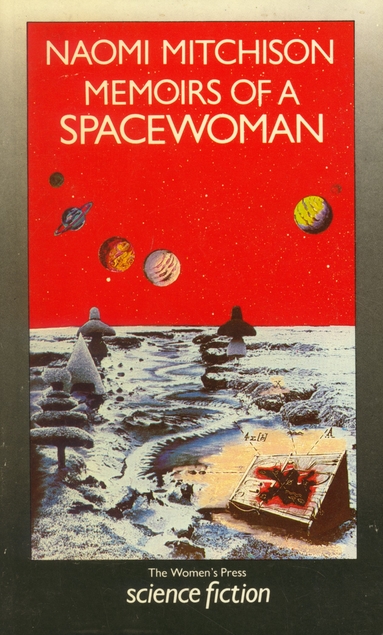 Memoirs of a Spacewoman, Naomi Mitchison (1962, UK). One from my Women’s Press SF collection and read for review on SF Mistressworks – see here. It felt more fabulist than science-fictional, with a chatty narrator and an almost childish approach to genre trope, although the book is anything but childish. The prose is a good deal sharper than is typical of the genre, but not, it must admitted, of the novels published under the Women’s Press SF imprint. I’d like to read more Mitchison, I think, and her The Corn King and the Spring Queen (1931) is, according to Wikipedia, “regarded by some as the best historical novel of the 20th century”.
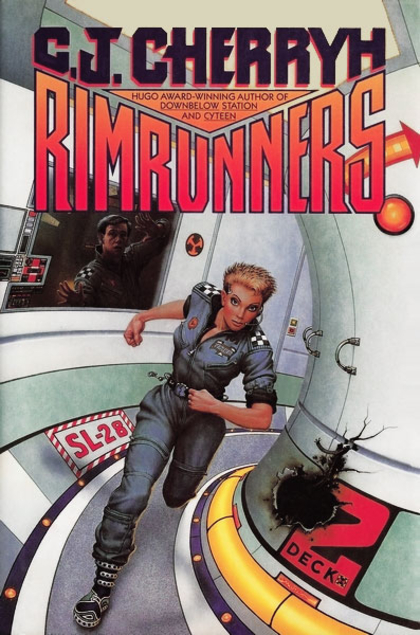 Rimrunners, CJ Cherryh (1989, USA). Also read for SF Mistressworks, although the review has yet to appear there. I’ve always been a fan of Cherryh’s writing, and have been reading her books since first stumbling across them in the early 1980s. She used to be ubiquitous in the UK back then, you’d see a dozen or so titles in your local WH Smith, back when WH Smith was better known for selling books than selling stationery. I’ve got quite a few Cherryh first editions, some of them signed. When I lived in the UAE, I used to order her books from Amazon as soon as they appeared, and I’ve been half-heartedly collecting her ever since. I really ought to see about completing the collection – but the science fiction only, I’m not interested in the fantasy novels.
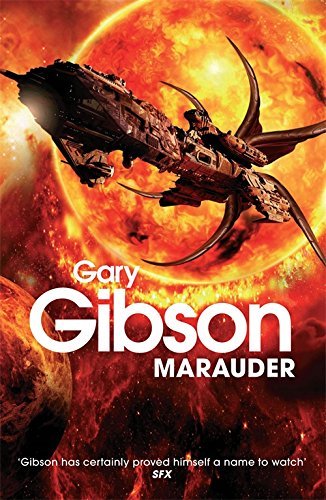 Marauder, Gary Gibson (2013, UK). I’ve known Gary for a couple of decades now, and I’ve been buying his books and reading them right from the start. Marauder is a return to the universe of Stealing Light (2007), Nova War (2009) and Empire of Light (2010), and is in part an extension of that trilogy’s plot. Gary does some things very well, sometimes a little too well, and that can result in him over-doing it. And the thing he does well is: scale. These are stories that cover thousands of light years, that throw out mentions of histories going back millions of years. But this sense of scale is also one of the things that really annoyed me about Marauder… and which also fed into some thoughts I’ve been having recently about science fiction in general. The title refers to a vast starship from a machine civilisation – so we’re in Fred Saberhagen, Greg Benford and Alastair Reynolds territory here – which once aided a civilisation hundreds of thousands of years before and raised its tech level substantially in a short period of time. Meanwhile, in the recent past, the Three Star Alliance has had to hand over its FTL starships to the Accord, a much larger and more powerful human polity, because the FTL nova drive is also the deadliest weapon known to humanity, the nova mine. This seriously pisses off the plutocrats who run the TSA and they decided to try and negotiate with the Marauder, having figured out where it is, for some of that ancient high tech. The pilot on their mission is Megan, a machine-head (ie, she has implants), and the leader of the expedition uses her best friend as a conduit to speak to the Marauder, burning out his brain in the process. The mission is a failure and the Marauder destroys their starship. Megan manages to escape. Some years later, her new ship is hijacked by the same people (who, it seems, were eventually rescued), because they’re determined to try again. Meanwhile, there’s Gabrielle, who has been born for a specific purpose and now, aged twenty-one, it has come upon her: she must go to the Magi (another ancient alien race with FTL, now extinct) starship which crashed on her planet, Redstone, and try to eke more technological goodies out of its AI’s databanks for her theocratic regime. This is all good stuff, and the two plots not only slot together pleasingly but there’s a nice twist that serves to tighten the links between them. It’s all good space opera, but sometimes the vast distances feel a bit too much and the sense of scale sort of fades from 3D to 2D, if you know what I mean. But that over-egging of scale is also what spoiled the novel for me, as mentioned earlier. Gabrielle, it transpires, is important to the TSA’s return visit to the Marauder. But they can’t just invite her along, because of her role in the theocracy. So they kidnap her. But they don’t just send in a special forces team and abduct her. No, they arrange for something – a huge starship carrying antimatter – to crash into the planet and cause a tsunami which kills tens of millions of people, just so they can kidnap Gabrielle in the confusion and hope everyone assumes she died in the disaster. This is one of the things that pissed me off about Leviathan Wakes, and why I’ve never read further in the series. Seriously, killing tens of millions of innocent people just to kidnap one? WTF? I find it hard to believe someone would consider that a defensible plan. I get that the leaders of the TSA are desperate (and, from their later actions, it must be said, also unbelievably psychopathic; but even with the Accord running things, they’d still be rich and powerful, so why behave like monsters?), but when your story covers millions of years and thousands of light years there’s a tendency to upscale the villains too. And I think that’s not only wrong, it also feeds into the whole right-wing mindset of science fiction. Good sf is not about extraordinary people in extraordinary circumstances, it’s about ordinary people in extraordinary circumstances – and that includes the villains too. Science fiction needs to scale back on the bodycounts and fascism, otherwise it’s just one of the many things in popular culture normalising such behaviour.
 Rubicon, Agnar Mykle (1965, Norway). My mother found this in a charity shop somewhere, and asked me if I’d be interested, I said go on then, so she bought it and gave it to me. And… Well, after going on a rant about normalising fascism, Mykle sets a quarter of his novel in your actual Nazi Germany of 1939 and doesn’t manage more than a handful of back-handed criticisms. True, the book is more about the narrator’s home circumstances, from which he is fleeing, and his romantic ideas about Paris, and clearly positioned as comedy – there’s even a scene in which he encounters a French toilet for the first time. The narrator is painted as part-naïf part-idiot part-bumpkin, and while his romantic misconceptions provide a good base for some of the humour, some of it is also a bit too, well, adolescent, male adolescent. Mykle died in 1994, and his last novel was… Rubicon – chiefly, it seems, because of the controversy caused by an earlier novel, 1957’s The Song of Red Ruby (which resulted in an obscenity trial in Norway). I’m tempted to have a go at that controversial novel – secondhand copies in English seem to be readily available – but I can’t say that Rubicon motivates me to track down a copy. Rubicon is a well-crafted novel, with a good control of voice, but it all felt a bit meh to me. Incidentally, inside the book I found an Air France boarding card dated January 1978. It’s not the oldest bookmark I’ve found in a book. I found one once dated 1945…
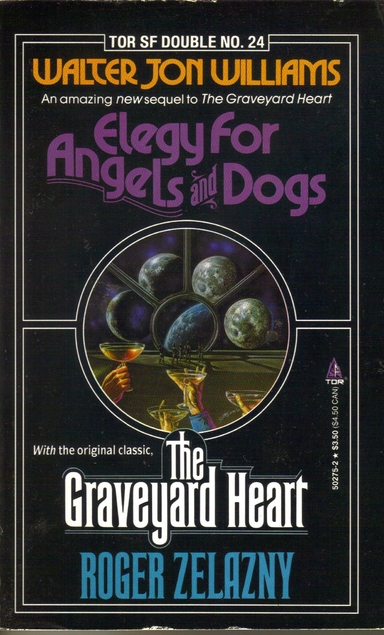 The Graveyard Heart / Elegy for Angels and Dogs, Roger Zelazny / Walter Jon Williams (1964/1990, USA). I have almost a complete set of the Tor doubles, which I started collecting after finding half a dozen of the early ones in a remainder book shop in Abu Dhabi. I’m not convinced there’s been a consistent editorial agenda with this series – which topped out at 36 books in two years – given that earlier volumes were just two novellas back-to-back (tête-bêche, to be precise), but that was dropped in favour of printing both the same way up, as if it were an anthology of two stories. Some of the later ones also featured classic novellas with modern sequels by another hand, as this one does. ‘The Graveyard Heart’ by Roger Zelazny is from 1964. ‘Elegy for Angels and Dogs’, a direct sequel, is from 1990. To be honest, I’ve never really understood the appeal of Zelazny’s fiction. He’s reckoned to be one of science fiction’s great wordsmiths, and while he may be a great deal better at stringing a sentence together than many of his peers, I’ve never really understood why his prose is held in such high regard. It’s… okay. And in ‘The Graveyard Heart’, some of it is actively bad. In the novella, a subset of the jet set, a group of rich young party animals sleep in cryogenic suspension for most of the year, and only appear for exclusive and expensive social events. They are the Party Set. So while they live the sort of life capitalist society continues to valourise, they also travel forward through time, experiencing years in subjective weeks. But then one of them is murdered and… yawn. Dull murder-mystery in totally unconvincing setting ensues. Williams’s sequel moves the action forward a couple of centuries, tries to show the changes in Earth society the Party Set are missing (and that does, in fact, drive part of the plot), but also throws in a couple of murders for good measure. The result is something which isn’t sure how direct a sequel it should be. It’s more inventive than its inspiration, the language is plainer and better for it, but its lack of focus tells against it. Both are no more than average.
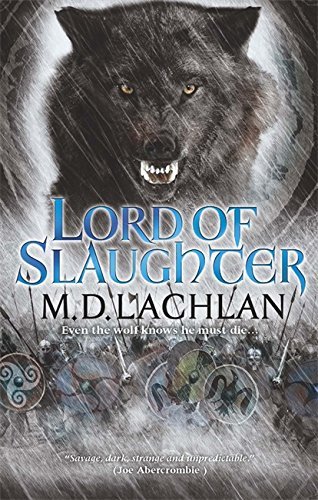 Lord of Slaughter, MD Lachlan (2012, UK). I bought the first book of this series, Wolfsangel (2010), at a convention after meeting the author, and got it signed. But I’ve been continuing with the series, despite my general apathy toward fantasy, and especially urban fantasy, because they’re actually bloody good. They’re more like historical novels, but based on Norse mythology and featuring werewolves. This one is set in Constantinople during the reign of, I think, Basileios II, 953 – 1025 BCE, certainly an emperor of that name appears in the book. A wolfman sneaks into the emperor’s tent just after a battle and asks the emperor to kill him. Instead, he takes him prisoner, and throws him into the Numera, Constantinople’s chief prison. Somewhere in the caves under the Numera is the well of knowledge, from which Odin drank, and for the privilege he paid with an eye. And that’s how the story plays out. Aspects of Odin, hidden in two of the characters, along with aspects of the three Norns, all descend on the well, while chaos rages in Constantinople. Because the Norns want Fenrir released so he will kill Odin, but Odin is not ready to die just yet and is happy for his aspects to be reborn throughout history, all with a vague desire to cause death and destruction. The story’s told from a variety of viewpoints, some of which are instrumental in the final showdown, some of which are just enablers. The setting is convincing, and if the characters have a tendency to blur into one another a little, it doesn’t detract from the story. This is superior fantasy, assuming you can define historical novels with werewolves and Norse gods as fantasy. And why not. There’s a fourth book available in the series, Valkyrie’s Song, which I plan to buy and read. Good stuff.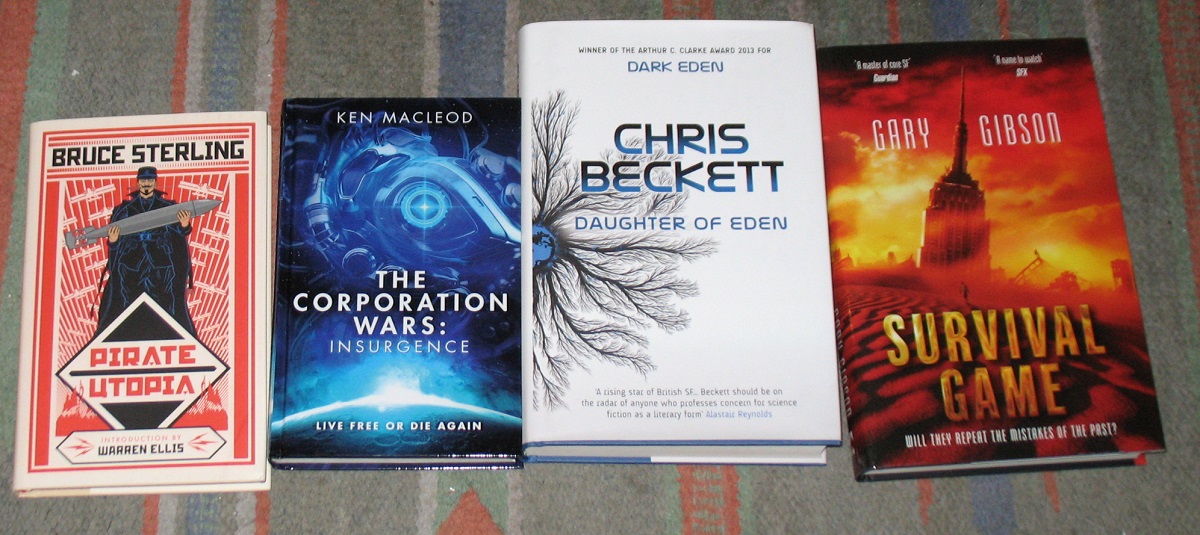
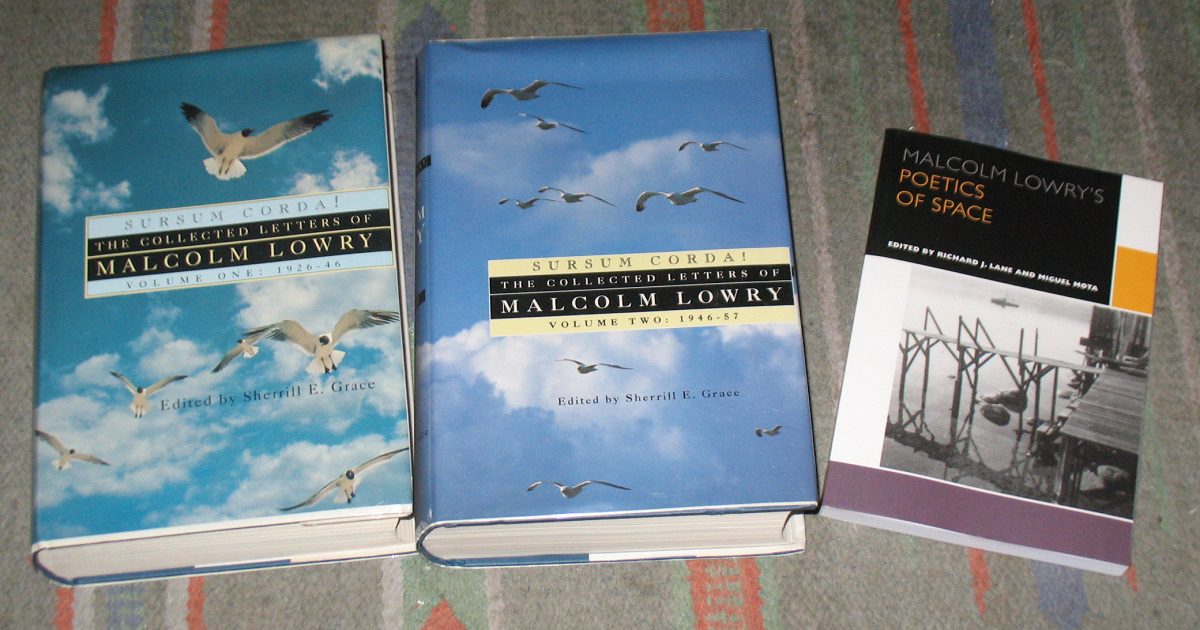
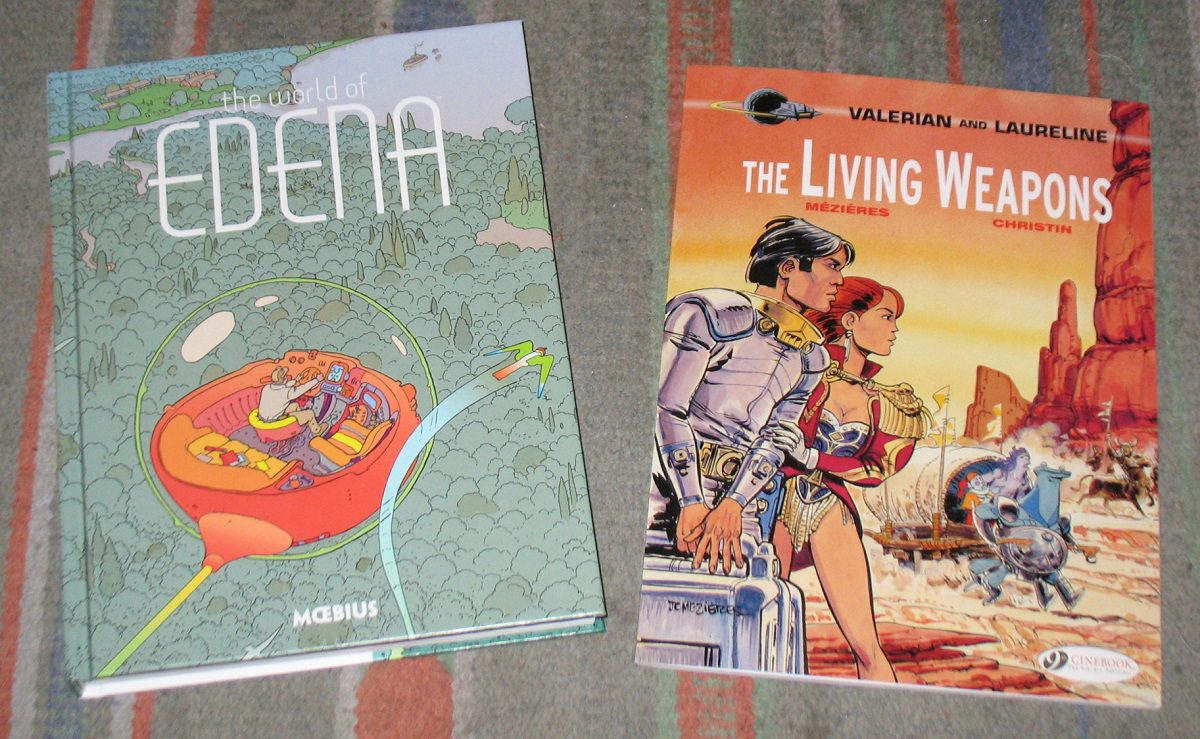
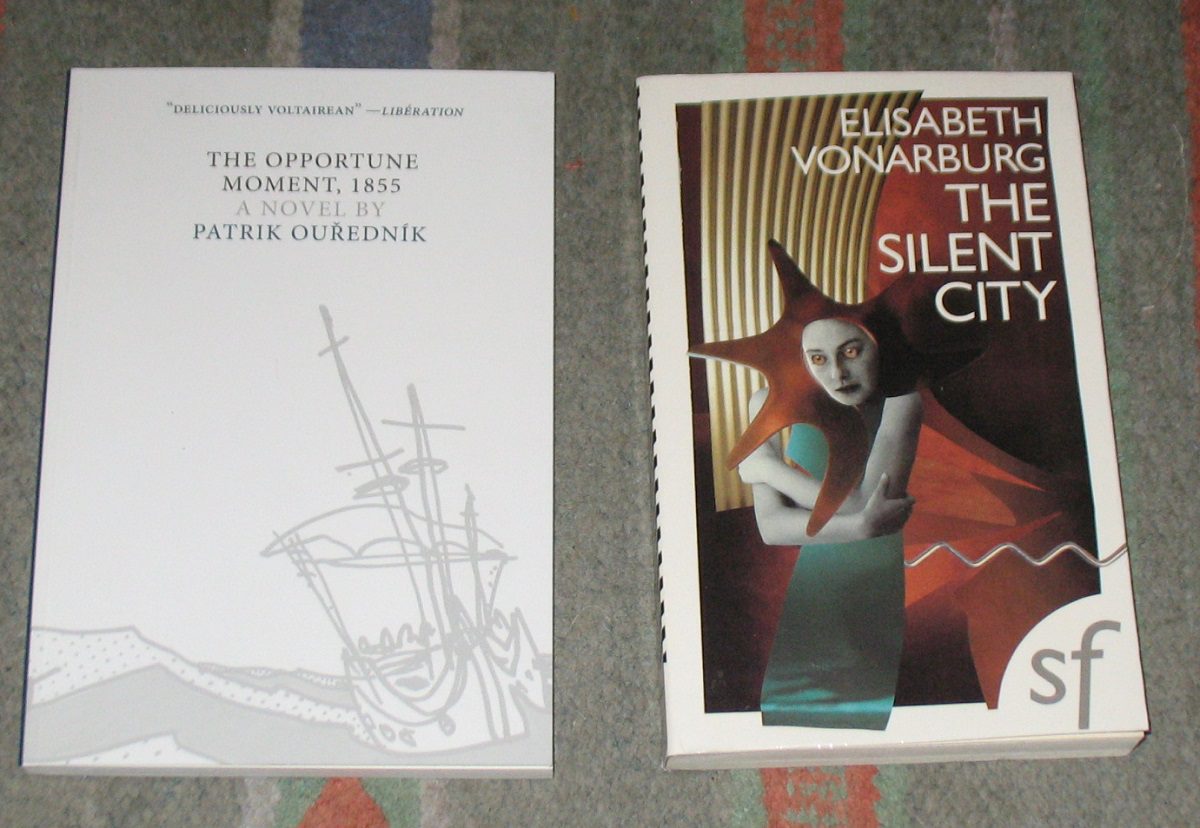
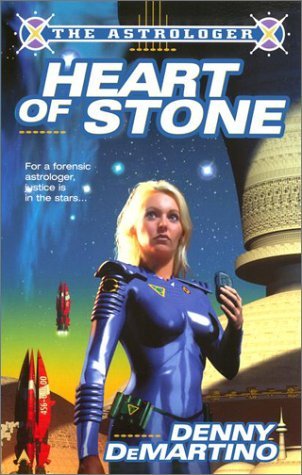
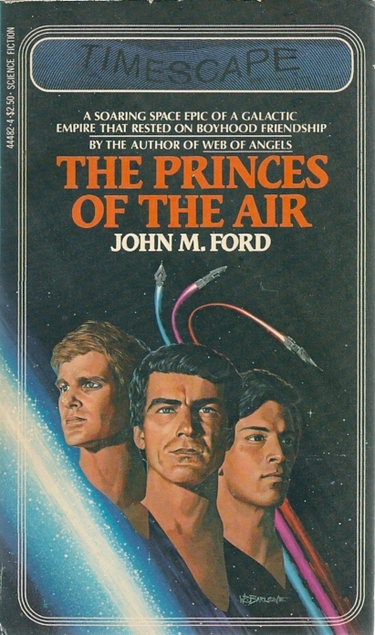
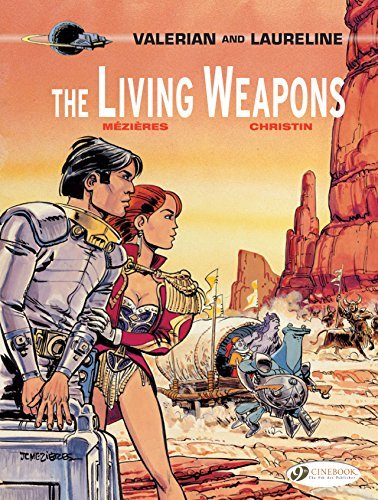
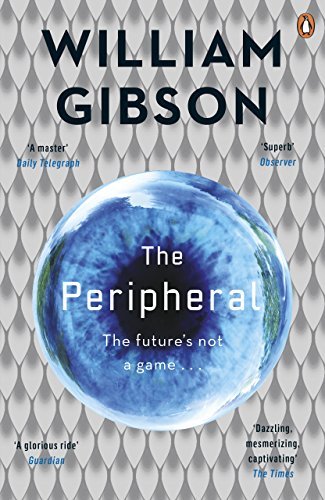
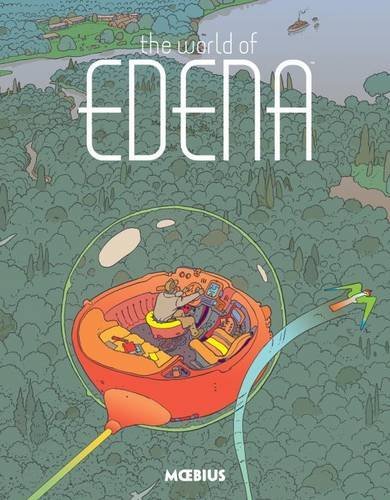
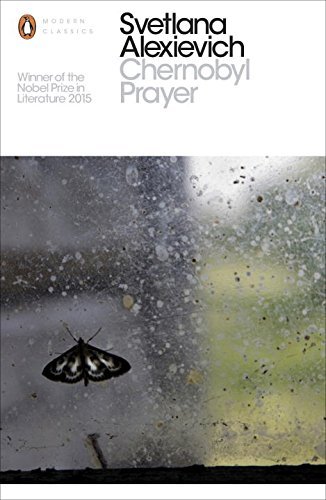
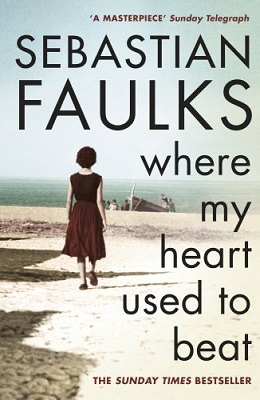
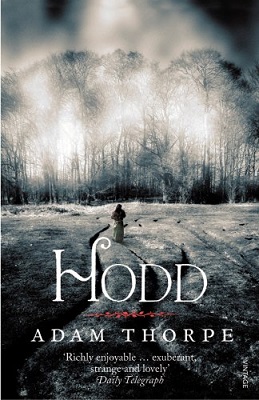
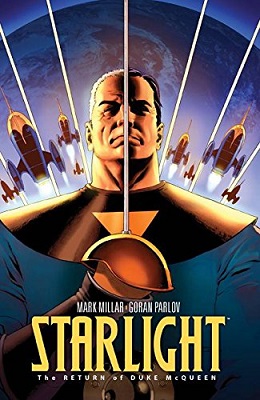
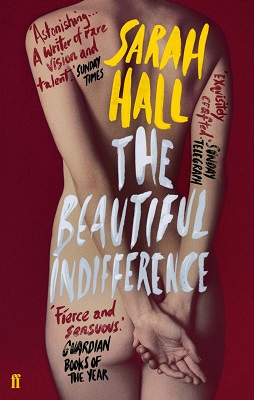
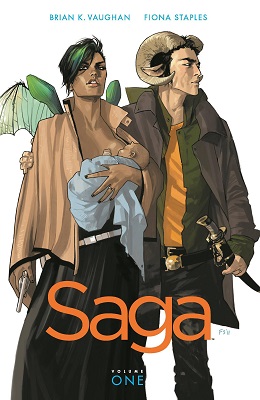
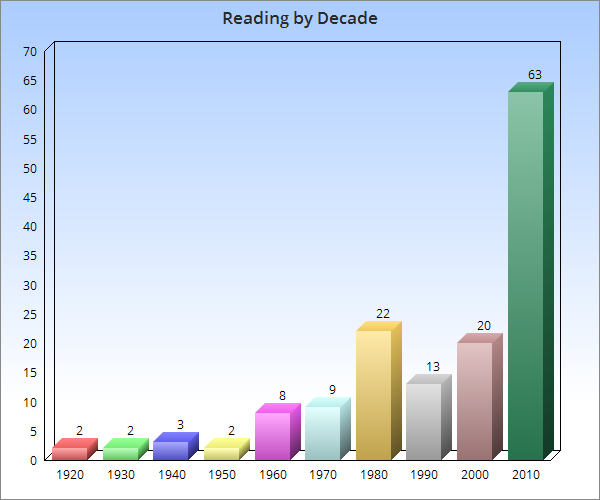

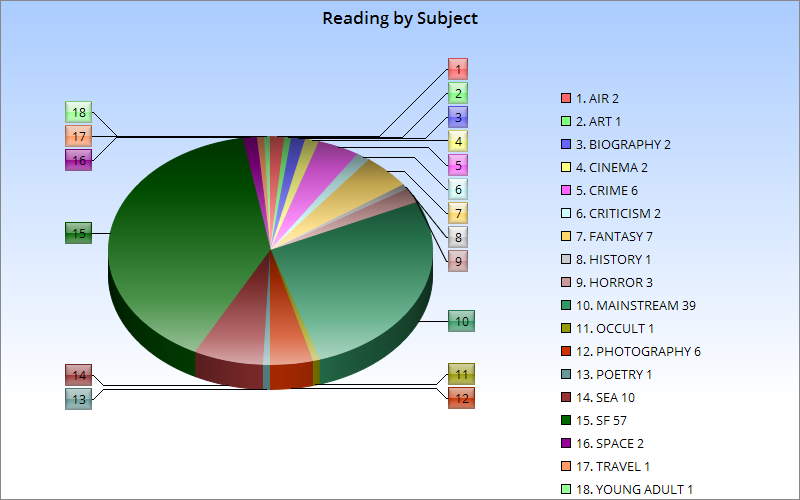

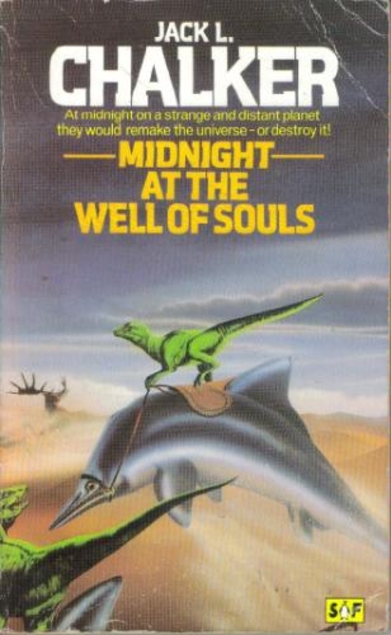
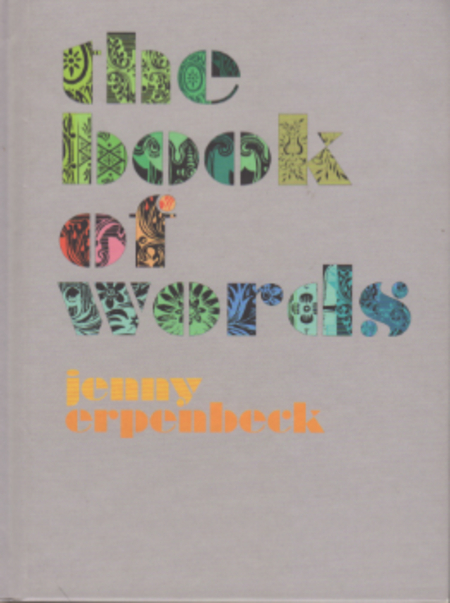
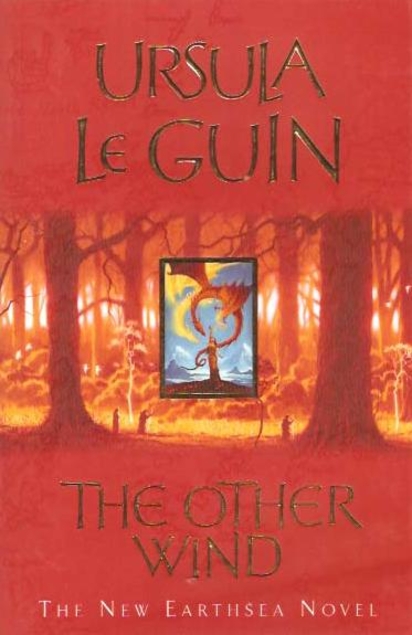
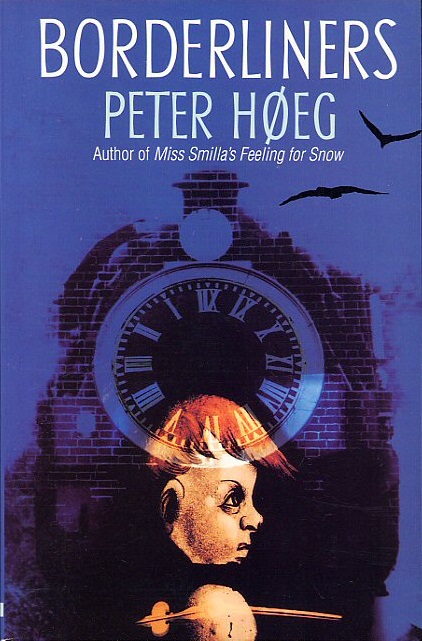
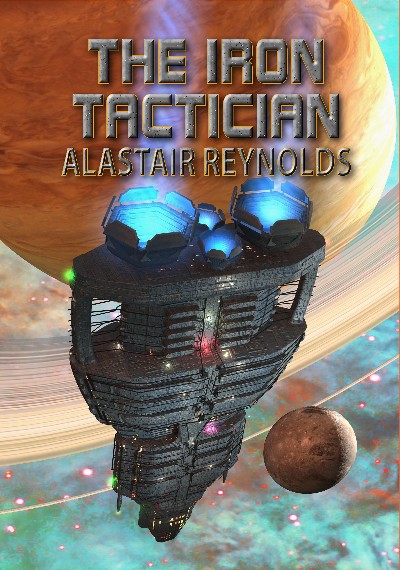
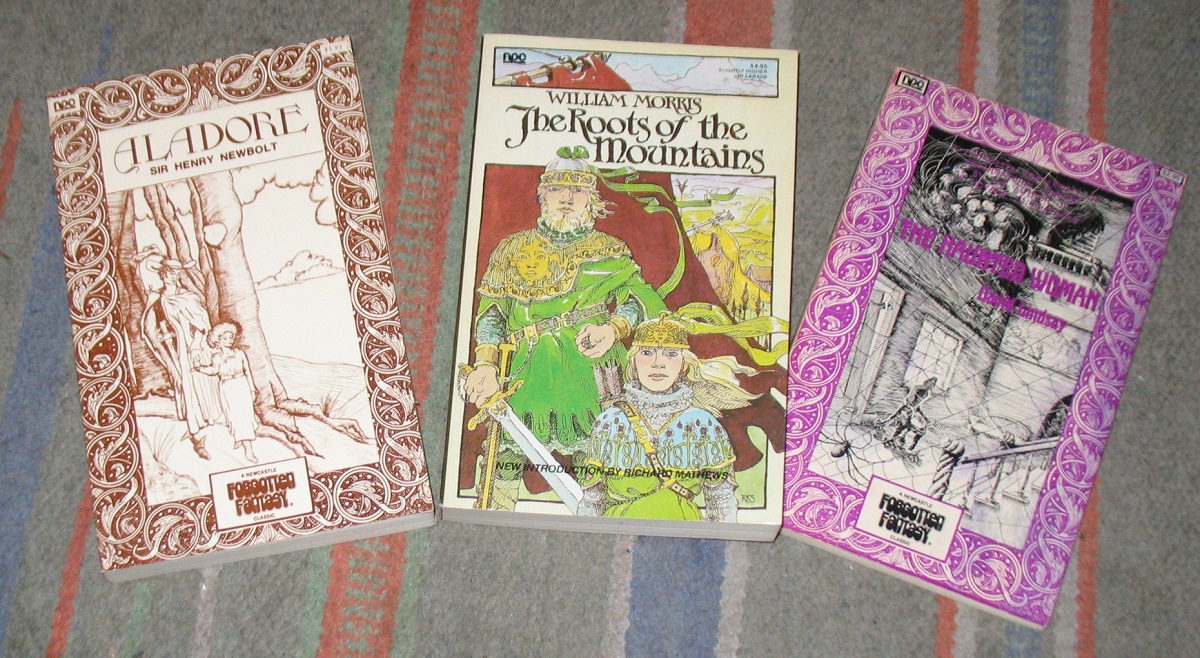
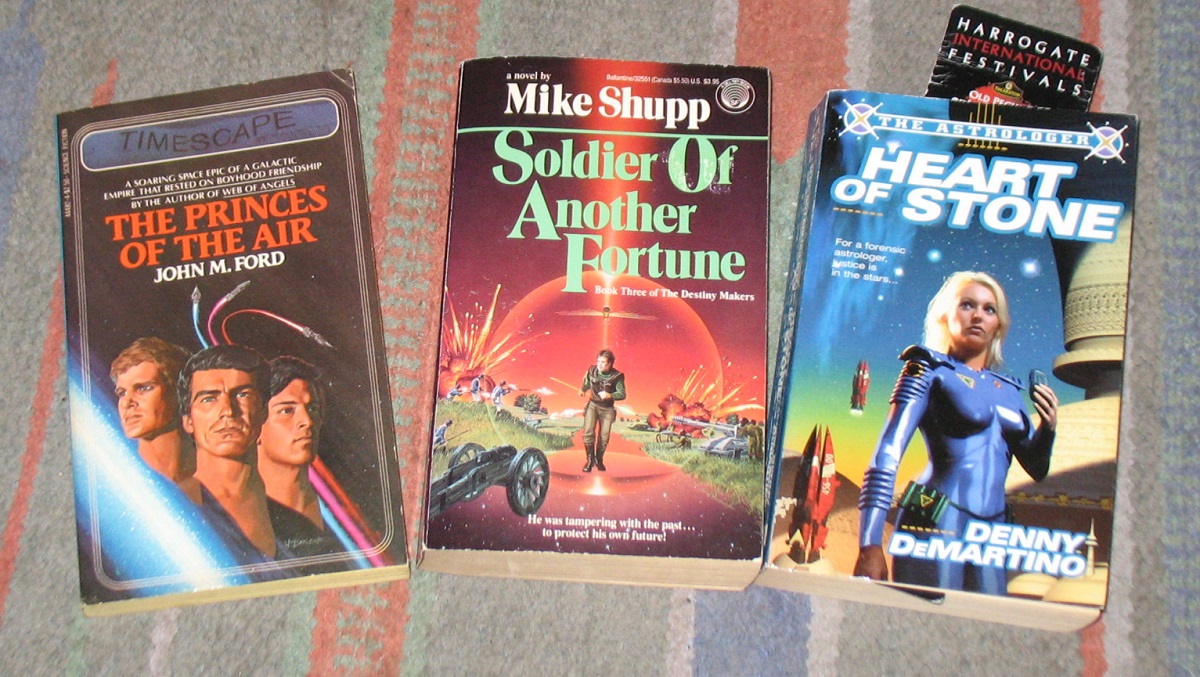
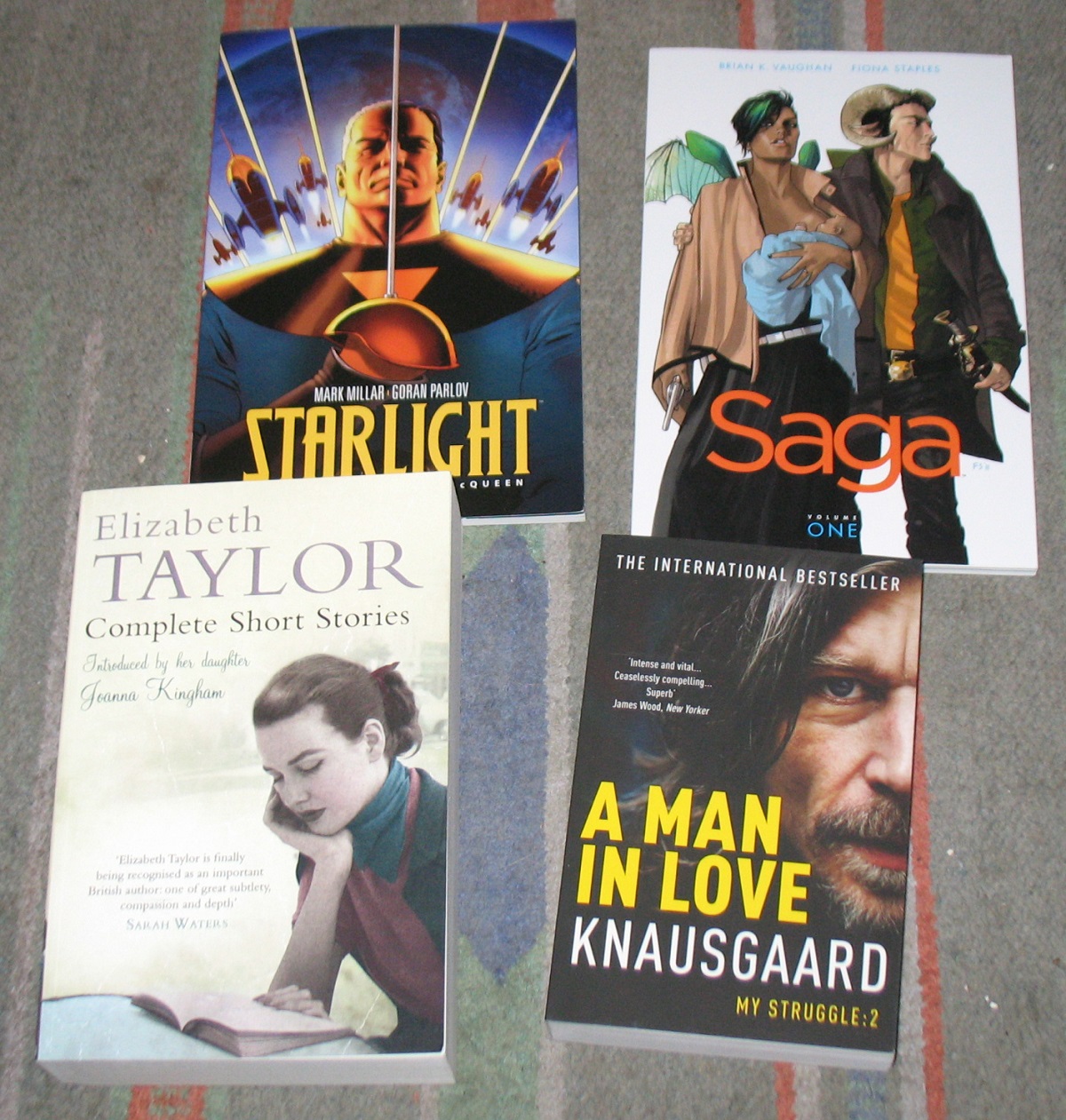
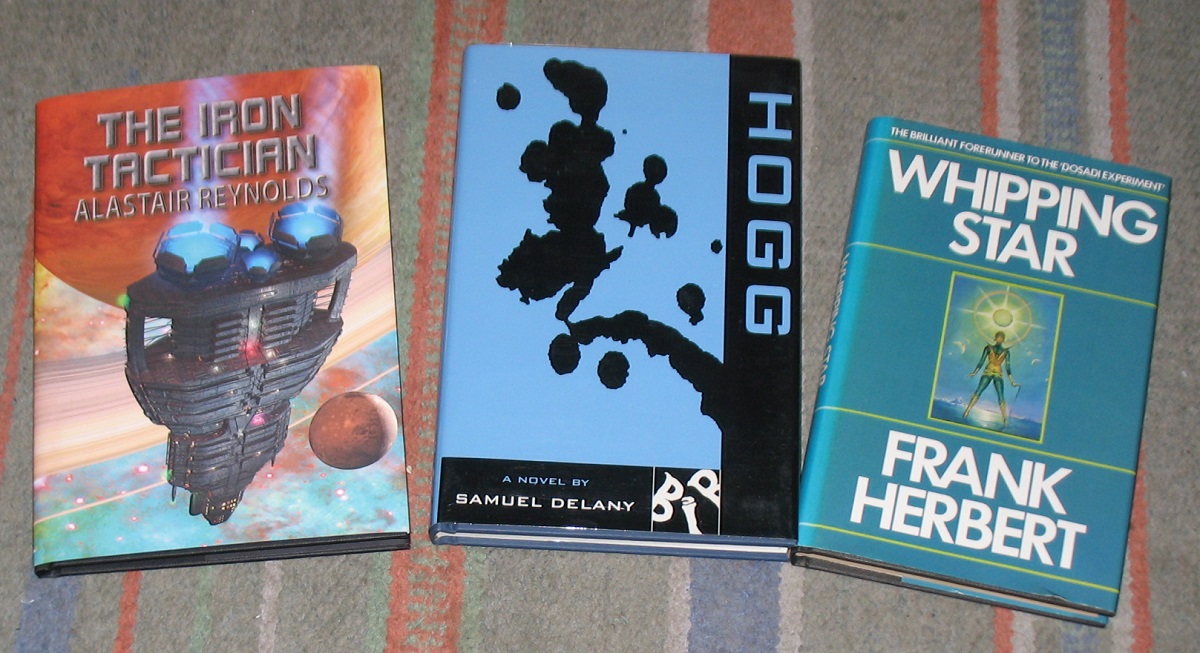
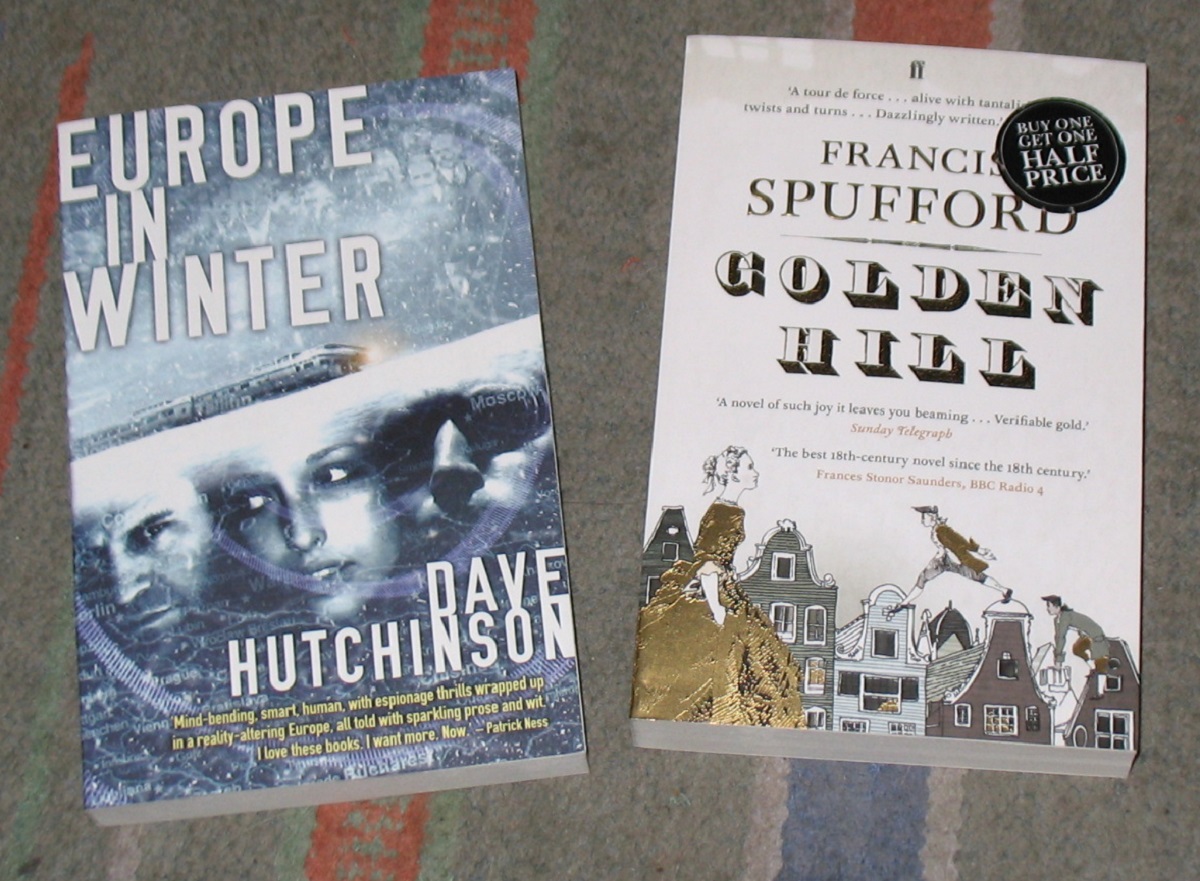
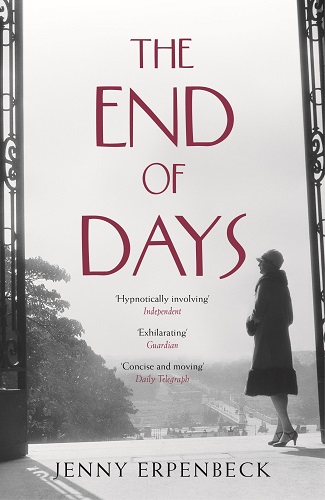
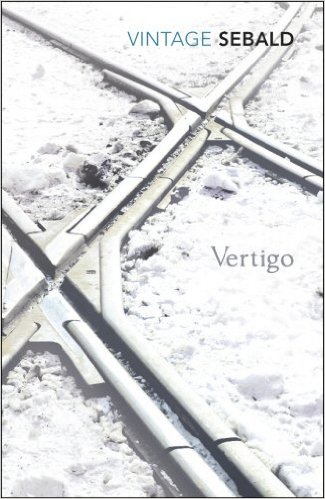
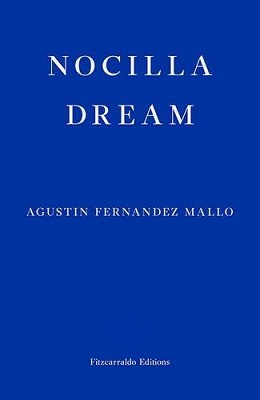
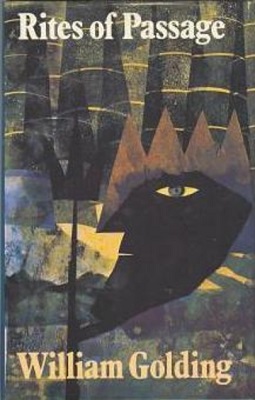
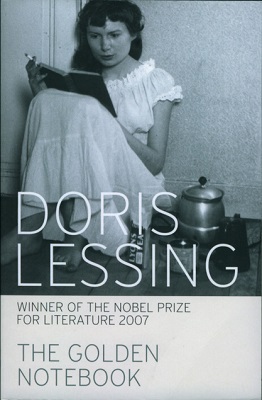
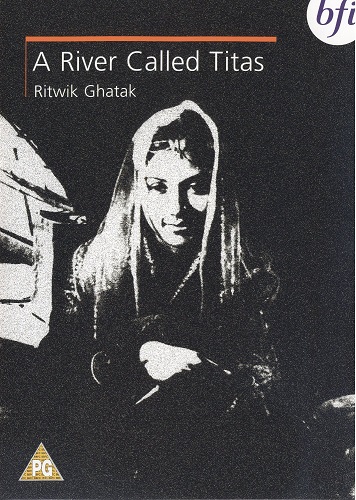

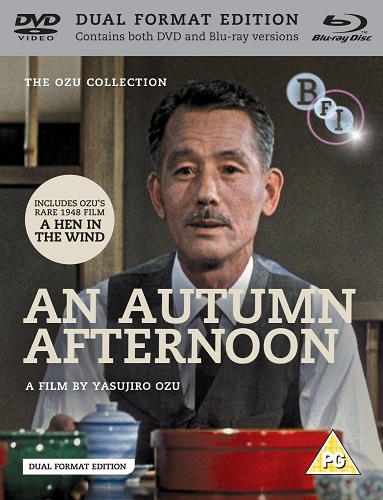
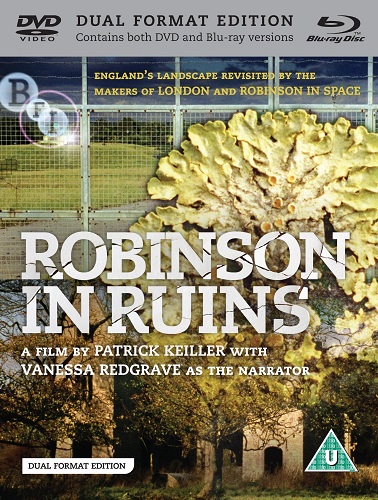
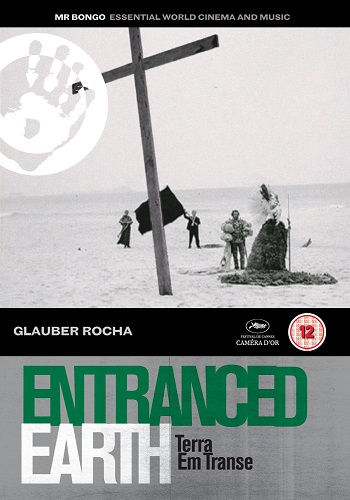
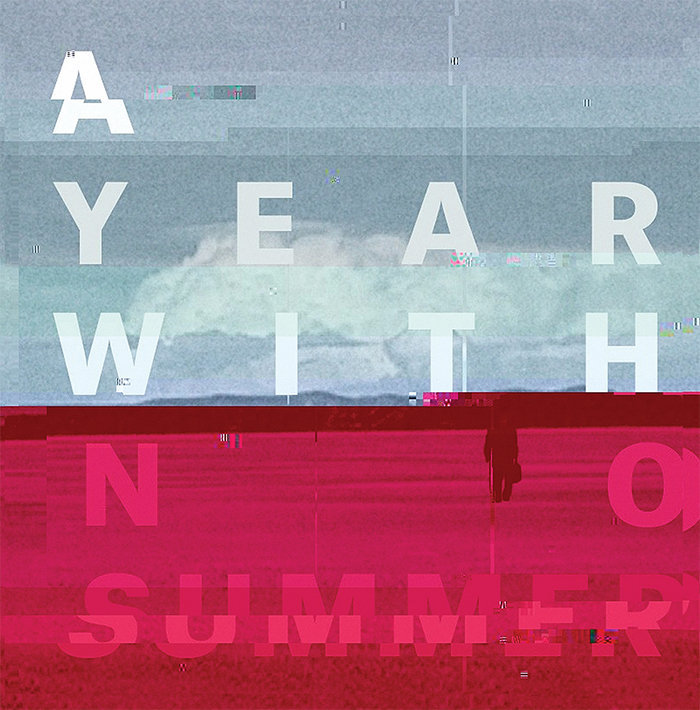


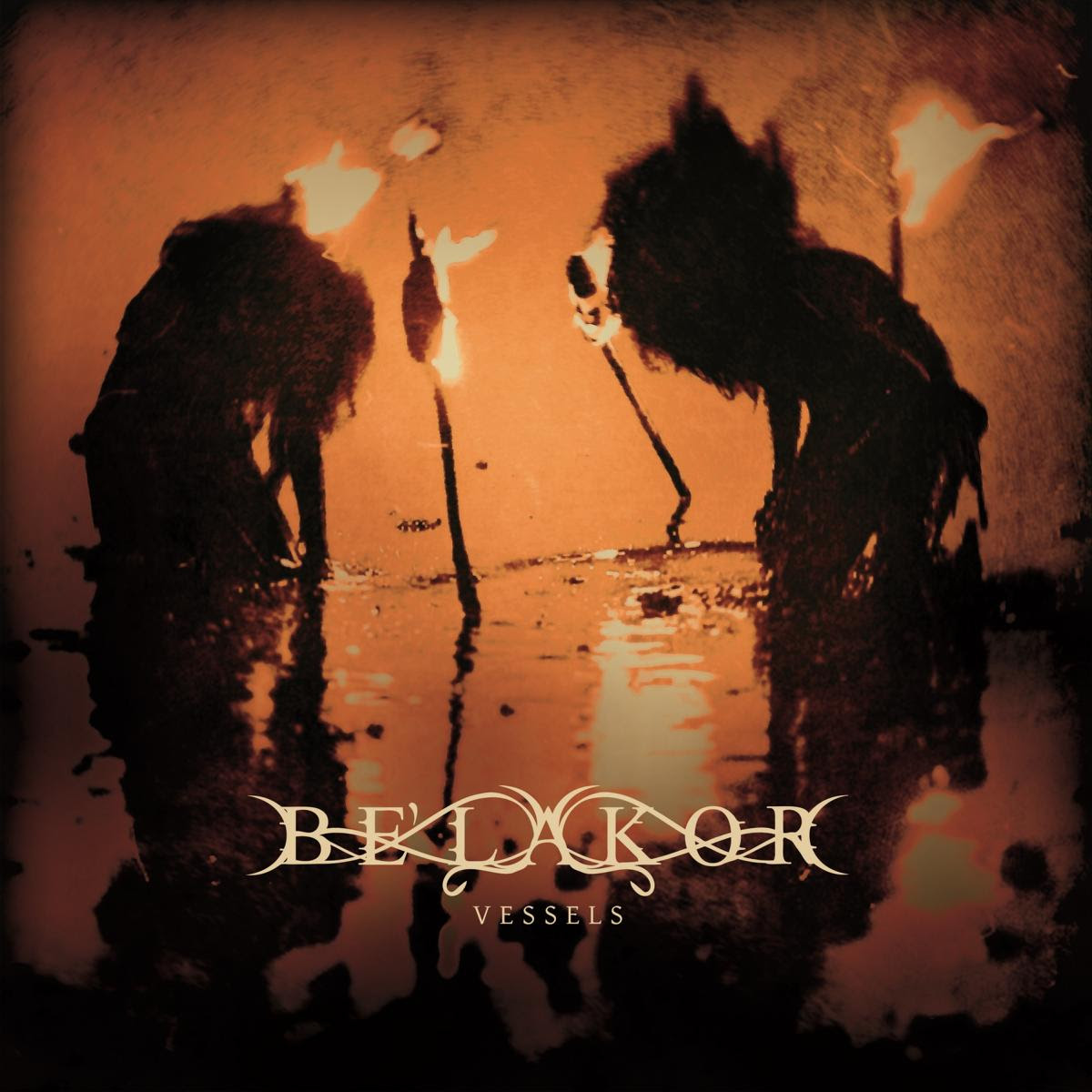
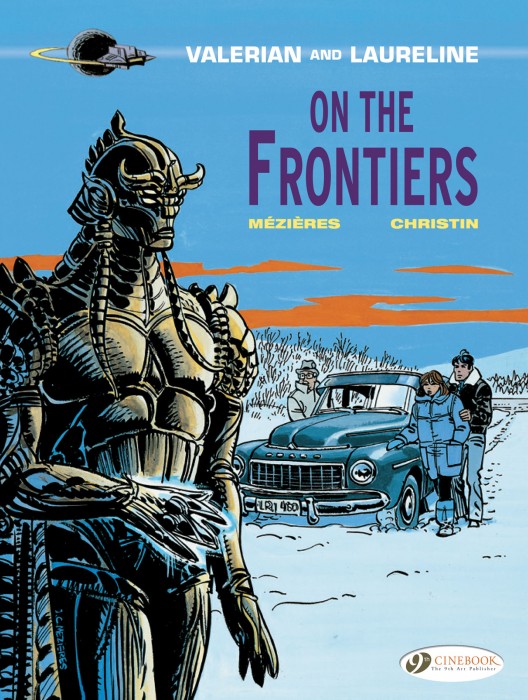

 It Doesn't Have To Be Right...