It Doesn't Have To Be Right…

… it just has to sound plausible


6 Comments

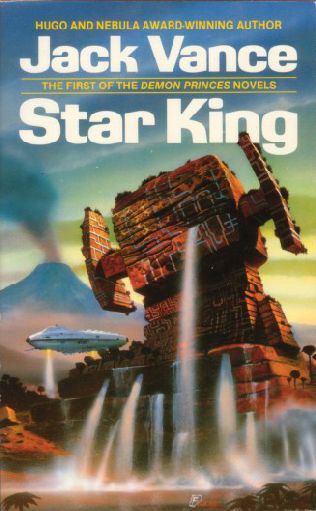
Reading Challenge #3 – Star King, Jack Vance

Ringworld and Rendezvous With Rama could certainly be considered classics of science fiction. And Jack Vance is certainly a classic sf author, and has written a couple of classic sf novels. But Star King is not one of them. However, Vance has always been a singular voice in sf, and I’ve always liked his books. So sticking one of his titles on the list for my 2009 Reading Challenge was a no-brainer. And I decided to choose one I’d not read for many years – for a couple of decades, even.

Star King is the first book of the Demon Princes quintet. The series’ story follows Kirth Gersen as he wreaks his revenge on five interstellar criminals who were responsible for enslaving his town when he was a child. Each novel details his revenge on one of the criminals. The first criminal is Attel Malagate the Woe, a member of an alien race known as Star Kings.

Star Kings are actually humanoid amphibians, but appear entirely human. They are also intensely competitive and driven to excel. The fact that Malagate is a member of this race does help Gersen eventually identify him…

Gersen has been brought to be an instrument of revenge by his grandfather. He has all the necessary skills, and is especially effective at unarmed combat. His grandfather dies and leaves him with a single name, a pirate captain he recognised who was present when the town was enslaved. In a flashback, Gersen visits the pirate, tortures him until he gives up the names of the five criminals – the demon princes of the series’ title – and then kills him.

While meditating on this information at Smade’s Tavern on Smade’s World, Gersen meets Lugo Teehalt, a locator who has discovered an Edenic world ripe for settlement. However, Teehalt has learnt that his sponsor is Malagate, and he doesn’t want to hand over the location of the world to the criminal. Teehalt is then murdered by three other guests of the tavern – who admit they work for Malagate. They take Gersen’s ship, assuming it is Teehalt’s.

Gersen finds Teehalt’s ship, and there are enough clues in it to indicate that Malagate is one of three administrators at Sea Province University on the world of Alphanor… But which one?

I read Star King in a day. There’s not much in it. My edition, the 1988 Grafton paperback, has only 208 pages. And even then, there’s not that much plot. Gersen fortuitously meets Teehalt. Gersen stumbles on a clue to Malagate’s real identity. Gersen puts into effect plan to identify Malagate. Plan works – albeit with one or two minor hurdles to overcome.

Vance has fleshed this out by having Gersen questioning everything he learns and everything he does. It makes the story somewhat… conditional. It’s bad enough that the plot starts with a coincidence, but the continual second-guessing only makes it seem as if Gersen is being driven by the plot rather than vice versa. Even the resolution relies on events Gersen could not have foreseen or planned for. He has his plan, yes; but the final clues which reveal which of the three administrators is Malagate are not part of it.

Still, this is a novel by Jack Vance. And you read his books as much for his voice as for the story. In that respect, Star King does not disappoint. It might be a thin work, but it could never be mistaken for another writer’s novel. Perhaps it’s more lightweight than I’d remembered, but it’s still a fun read. There are worse ways to kill a couple of hours, and certainly worse books available in any book shop.

I’m tempted to read the other four books of the Demon Princes series, but… the to-be-read pile is big enough already. Another day perhaps.


10 Comments

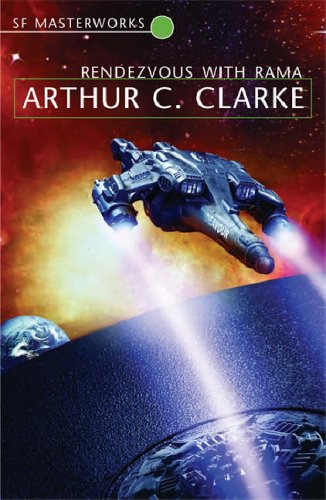
2009 Reading Challenge #2 – Rendezvous with Rama, Arthur C Clarke

There’s a fitting synchronicity to my choice of Rendezvous With Rama by Arthur C Clarke as the second book of my 2009 Reading Challenge. Like Larry Niven’s Ringworld, it is a book that’s dominated by a Big Dumb Object. It also won both the Hugo and Nebula Awards for Best Novel, and is in the SF Masterworks series. So, another highly-regarded science fiction novel. In fact, it’s probably considered Clarke’s best novel, and he’s one of the “Big Three” of the genre, with Robert Heinlein and Isaac Asimov.

The plot of Rendezvous With Rama is not complicated. In 2131 AD, an object – named Rama by Spaceguard – is detected entering the Solar system. It is determined to be artificial, and the nearest spaceship is sent to investigate. The crew of Endeavour discover that Rama is an alien artefact, a cylinder fifty kilometres long and sixteen kilometres in diameter. Its interior is hollow, and it is roatating fast enough to provide gravity on its inside surface. Endeavour‘s crew explores Rama as it travels through the inner Solar system towards the Sun. They find no clues to its makers or origin. In fact, it is deserted but for a wide variety of “biots”, or biological machines. Eventually, the explorers abandon Rama, and the artefact uses the Sun to boost itself on a path out of the Solar system. End of story.

In other words, very little actually happens in the book. There is no explanation, no resolution. Rama is presented as a puzzle, but there is no solution. It is alien.

Rendezvous With Rama is a strange book in many ways. Not just the complete lack of narrative closure, or the way it resolutely fails to answer the questions it poses. It is also a book which has aged both gracefully and badly.

The framing narrative, which introduces the world of the future and then describes the deliberations of the committee overseeing the exploration of Rama, reads as though it’s taking place in the 1950s. Even in 1972, it must have seem dated. In 2009, of course, it reads even more out-of-date: for example, “when he was able to get computer time to process the results” (page 14). In 1972, perhaps, when mainframes were prevalent, this might have seemed plausible. But the novel is set in 2131. One hundred and fifty nine years later. One hundred and twenty-two years in our future.

The main narrative details the exploration by Commander Norton, captain of Endeavour, and his crew. The emphasis is on Rama itself, which helps distance the novel from its time of writing. The characters are also so bland they could be from any age. Admittedly, it’s also very Anglophonic Americo- and Euro-centric – far more so than any vision of the future written now would be. But their concerns are immediate, direct and almost entirely related to the story, so nothing especially jars.

However, like Ringworld, Rendezvous With Rama is over-shadowed by its eponymous BDO. It’s Rama that stays with you. There’s not much in the way of plot, anyway. And the characters aren’t remotely memorable.

But.

Should a science fiction novel be remembered for its furniture or for its story? Both Ringworld and Rendezvous With Rama have been lauded, and are held in high esteem, for the invented artefacts their casts discover and/or explore. Not for their story, or their writing, or indeed any of their characters. It’s little wonder the genre is held in low regard, when the fans themselves apply such reductive appreciation to the works they deem “classics”. After all, Dickens’ Great Expectations is not notable for Miss Havisham’s ruined mansion.

Rendezvous With Rama is an odd book. There’s a timelessness to its story, but its narrative firmly dates it. Its refusal to explain itself makes it more interesting than, by rights, it actually should be. If science fiction were only about “sense of wonder”, then Rendezvous With Rama succeeds as a science fiction novel. But it has not aged as gracefully as memory might insist it has. It’s the product of an imagined world, which in turn created imaginary worlds, which never really existed. And that tells against it.

In the final analysis, Rendezvous With Rama is, I suppose, another partial success. I’m glad I reread it. I may do so again one day. While it’s certainly not a very good novel, I’m beginning to wonder if it’s a good science fiction novel and if “good science fiction novel” means it doesn’t have to be a “good novel”…


5 Comments

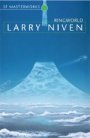
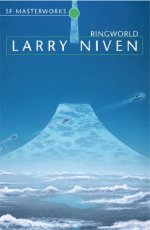
2009 Reading Challenge #1 – Ringworld, Larry Niven

I forget when I last read this book. I seem to recall reading it several times during my early teens, but I’ve avoided it since. I’m not sure why – perhaps I was afraid it would disappoint. I’ve learnt to my cost that “nostalgia ain’t what it used to be”. Few books I loved as a teenager have survived a reread now that I’m just over halfway through my three score years and ten.

Having said that, I may well have not reread it simply because my To Be Read pile is big enough already. And continues to grow…

But Ringworld.

The novel won both the Hugo and Nebula Awards in 1971. It’s also No 60 in the SF Masterworks series. So it’s safe to say it’s highly regarded by sf fans. But I’m not convinced sf novels stand the test of time as well as most fans would have us believe, and Ringworld is now 39 years old.

Everyone knows that the first edition had Earth rotating the wrong way – but this was corrected in subsequent editions. But there are other mistakes (in my 1981 Sphere paperback). On page 22, there is a description of the Long Shot: “The ship would carry practically no cargo, though it was over a mile in diameter.” Yet when they finally see the ship: The Long Shot was a transparent bubble over a thousand feet in diameter” (pg 46). The last time I looked, a mile was 5,280 feet. There’s also a strange mix of metric and Imperial units: “The ring masses two times ten to the thirtieth power in grams, measures .95 times ten to the eighth power miles in radius, and something less than ten to the sixth power miles across.” (pg 70). These are minor complaints, however.

Louis Wu is a 200-year-old adventurer in the 29th Century. He is recruited by Nessus, a Pierson’s Puppeteer, for a mysterious mission. Also recruited are Speaker-to-Animals, a kzin, which is a large feline war-like alien; and Teela Brown, a young woman descended from five generations of winners of the Birthright Lotteries and so supposed to be very lucky. The mission requires a trip to an unspecified destination 200 light years from Earth. This would normally take several decades, but Nessus has use of a ship fitted with a secret “quantum II hyperdrive shunt”, which travels orders of magnitude faster. This ship, the Long Shot, and the secret of its drive, will be Louis Wu and his team-mates’ payment for the mission.

The team head for the home world of the Pierson Puppeteers… which proves to be a fleet of five worlds travelling through space at 80% of the speed of light. The puppeteers are a cowardly race and are fleeing the explosion of the galactic core, whose wavefront won’t reach Known Space for another 20,000 years. Recently, they had discovered an artefact a couple of light years from their present position. A ringworld – a single band of material approximately one million miles in width and 600 million miles in circumference, orbiting one AU from its primary, and comprising the surface area of three million Earths. The puppeteers do not know who built the ringworld, and want Louis and the others to investigate it.

In a second ship provided by the puppeteers, Louis, Teela, Nessus and Speaker-to-Animals travel to the ringworld. While investigating one of the “shadow squares”, which orbit nearer the sun and provde night and day on the ringworld, they are attacked by automated defences and crash on the ringworld’s surface. They must then trek some 250,000 miles to the rim to seek help…

Niven’s ringworld is one of the most famous Big Dumb Objects in science fiction. And justifiably so. It’s huge. And Niven mostly succeeds in getting across its size to the reader. From the crash-site, for example, Louis can see for thousands of miles, but still can’t make out the rim to either side. Compare that with Earth – on flat ground the horizon would be around three miles away for someone six feet tall.

And, I suppose, that if I’d forgotten anything about Ringworld, it was that sense of vast scale. Louis Wu is a protagonist very much in the mould of a US 1970s Competent Man. Teela Brown is decorative, screams a lot, and occasionally manages to surprise Louis with her perceptiveness and intelligence. He still refers to her as “my woman”, however. The kzin is war-like, and the puppeteer is cowardly. Much of the universe of the novel, Known Space, was worked out in earlier novels and short stories. The prose is efficient at best, neither impeding the reading experience nor enhancing it.

But still.

The ringworld casts a huge shadow. It’s the ringworld you remember when you close the book. It’s the ringworld you remember decades later when you pick up the book to reread it. The rest is, well, just a story. The ringworld is sense of wonder. And if that’s all you want in a science fiction novel, then you’ll get it in Ringworld. If you’re looking for more, you’ll perhaps come away disappointed. Niven makes no attempt to explain the origin of the ringworld. The book’s plot is little more than a trek to find a way off it. There are, I admit, one or two interesting sub-plots: for example, the puppeteers’ meddling in both human history and kzin, the first to breed a “lucky” human and the second to make the kzin more docile; and the various speculations these revelations generate. Niven also manages to create a human but slightly off-kilter civilisation-in-ruins on the ringworld, although the name of one of its city, Zignamuclickclick, generates a wince.

I enjoyed my reread, but it did leave me somewhat dissatisfied. Not from the book’s shortcomings – but because I’d forgotten how glibly sf writers of the 1970s used to make stuff up. They made very little effort to convince, they just waved their hands a little more vigorously. That’s a style which is no longer in fashion. Science fiction in the 21st century is a far more rigorous genre, and it’s better for it.

There are more novels following on from this one – The Ringworld Engineers, The Ringworld Throne, and Ringworld’s Children – and these explain who built the ringworld, and why. I vaguely recall reading The Ringworld Engineers back in my teens, but I’ll not bother this time. Nor have I any desire to read more of the series.

That’s not, I hasten to add, because this first book in my 2009 Reading Challenge was a failure. On the contrary, it achieved pretty much what I expected it to achieve. I enjoyed the book, was reminded of some of the reasons why I’d liked it in the first place, and will someday no doubt read it again. But it’s no great work of literature, and there are many science fiction novels I’d consider better than it.

7 Comments

The 2009 Reading Challenge

This’ll be the third year I’ve done a reading challenge. I never intended them to be an ongoing annual thing. But they’ve been fun so far (well, mostly), so why not?

In 2007, I reread my favourite science fiction novels: Undercover Aliens, AE van Vogt; The Ophiuchi Hotline, John Varley; Stations of the Tide, Michael Swanwick; Where Time Winds Blow, Robert Holdstock; Soldier, Ask Not, Gordon R Dickson; Kairos, Gwyneth Jones; Against A Dark Background, Iain M Banks; Metrophage, Richard Kadrey; Coelestis, Paul Park; Dune, Frank Herbert; Take Back Plenty, Colin Greenland; and Dhalgren, Samuel R Delany.

In 2008, I read (or tried to read) classic novels by authors I’d not read before: The Talented Mr Ripley, Patricia Highsmith; From Whom The Bell Tolls, Ernest Hemingway; Kim, Rudyard Kipling; A Question of Upbringing, Anthony Powell; Orlando, Virginia Woolf; Nostromo, Joseph Conrad; The Garden Party & Other Stories, Katherine Mansfield; My Family & Other Animals, Gerald Durrell; The Jewel in the Crown, Paul Scott; The Good Soldier, Ford Madox Ford; On The Road, Jack Kerouac; and The Fountainhead, Ayn Rand.

For 2009, I’m going to reread twelve science fiction classics. These are books I’ve not read for a long time – decades, in fact, in several cases. The list is a little idiosyncratic, for good reason. First, my taste in books is a little idiosyncratic. Second, I have very low opinions of some books which are considered sf classics, such as Asimov’s Foundation trilogy. Third, some sf classics I’ve already reread in the past few years – for example, I reread Wolfe’s The Book of the New Sun last year (see here), the aforementioned Dune in 2007 (see here), Bester’s The Stars My Destination a few years before that, and likewise Pohl’s Gateway… And finally, some on the list might only be considered minor classics, but I wanted to reread them anyway. So there.

The list goes like this (in order of year of publication):

I’ll not be reading them in the above order – I’ll just pick and choose what I feel like reading each month. Quite a few I’ll admit I’m looking forward to. One or two I suspect might prove a chore (that’ll be Stranger in a Strange Land and Second Stage Lensman, then). But you never know. And some might turn out to be less fun than I remember. But that’s the nature of these sort of things. And part of the fun, too. As before, each month I’ll write about the book I’ve read.