It Doesn't Have To Be Right…

… it just has to sound plausible


1 Comment

Films you must see: About Elly

about-elly-dvdLast year, two Iranian films made my top five best of the year, The Circle and No One Knows about Persian Cats, and a further two I gave honourable mentions, A Separation and The Wind Will Carry Us. About Elly (2009) is an earlier film by the director of A Separation, Asghar Farhadi. Three young middle-class couples from Tehran, with children, are spending the weekend on the shores of the Caspian Sea. Also along is Ahmad, visiting from Germany where he now lives, and recently divorced from his German wife; and Elly, the teacher of Sepideh’s young daughter, who Sepideh is hoping will make a good wife for Ahmad. Right from the start, it’s plain Sepideh is desperate for the weekend to work. When it turns out the villa they had originally booked is only available for one night – and Sepideh knew this – the group end up taking a near-derelict one on the beach. They clean it up and settle in, and so the weekend starts.

Elly, however, appears to be uncomfortable with being treated as a prospective wife for Ahmad. Though the two seem to like each other, Elly is stand-offish. When she tries to leave after the first night, Sepideh persuades her to stay, and even goes so far as to hide her bag.

The following day, the kids are playing on the beach. Nazy is making sure Arshad, the young son of Peyman and Shohreh, remains safe in the water. She goes inside to do some cleaning, and asks Elly to keep an eye out instead. But Sepideh’s daughter is having trouble with her kite, so Elly goes to help her…

Minutes later, Sepideh’s daughter runs up to the men, who are playing volleyball behind the house, screaming that Arshad is in the water. The men rush to rescue him. After some frantic searching they find the boy, floating face-down, but they manage to revive him. Then they notice that Elly is missing. Did she drown while trying to save Arshad? They hunt for her but find nothing. They call the police, but they too cannot find her. Or perhaps she left without saying anything? Was she the sort of woman who would do that?

It soon transpires that no one knows much about Elly, not even Sepideh. They contact her mother, but she didn’t even know Elly had gone to the seaside. From Elly’s mobile, they ring the number she last dialled, and get through to her brother. They tell him she has had an accident and is in hospital, and he immediately leaves Tehran for their villa.

But he’s not Elly’s brother, he’s her fiancé. As Sepideh reluctantly admits when she learns he is coming. For an affianced woman to go away to meet another prospective husband is not good. Elly’s honour is now at stake. If she did it without the knowledge of the party… While Sepideh’s husband, Amir, admits that he and his wife see nothing wrong with this behaviour, others in the party are less tolerant.

About Elly is not just a slow-burning thriller, it’s also a very clever character study of its cast. It begins innocently enough – a group of friends going away for the weekend, laughing and joking among themselves – then settles down to a friendly domestic drama… before taking an abrupt and horrifying turn. When Elly vanished, I will confess I was waiting for the other shoe to drop, for some additional twist to compound the tragedy. But About Elly is an Iranian film, and the turn it takes after Elly’s disappearance is entirely Iranian. It’s not about twisty turny plots, and how many times the director can wrongfoot the viewer, it’s about character and people and Iran. As a result, the ending is even more affecting.

The cast are uniformly excellent, with Golshifteh Farahani as Sepideh especially good. The direction throughout is also excellent, with Farhadi managing to evoke the mood of each section of the story without using any incidental music whatsoever.

On balance, I think About Elly is a better film than A Separation, even though the latter did win an Oscar; but Farhadi is certainly a director worth watching. I think I shall be tracking down some of his other films…


1 Comment

The future we used to have, part 13

I’ve not done one of these for a while, and since it looks miserable and grim outside – and I don’t just mean the weather – it must be about time I did another one. So here’s some retro-futurism:

buildings
(the following were taken from the excellent tumblr site Fuck Yeah Brutalism)

13_building_architect_house

House of the architect, Casablanca, Morocco, 1960s

13_building_hotel_ashkhabad

Hotel Ashkhabad, Ashgabat, Turkmenistan, 1969

13_building_mailman_center

Mailman Center for Child Development, University of Miami, Florida, 1972

13_building_pavilion_casablanca

Pavilion of the City of Casablanca, International Fair of Casablanca, Morocco, 1960

13_building_tech_college_busto_arsizio

Technical College, Busto Arsizio, Italy, 1963-64

air

13_air_tupolev_tu-114

Tupolev Tu-114 Rossiya (‘Cleat’)

13_air_first_class_lounge

1970s proposed first class lounge aboard an airliner

13_air_Seamonsters_of_the_Navy_03012012_3_GALL

Martin P6M SeaMaster

13_air_yak28pp-1

Yakovlev Yak-28PP ‘Brewer-E’

cinema
(a few posters from 1960s sf films, taken from Wrong Side of the Art)

13_cinema_12_to_the_moon_poster_02

I suspect those pressure suits wouldn’t keep the 12 alive for long

13_cinema_battle_in_outer_space_poster_02

NASA might be a bit upset their X-15s are being used to battle aliens in outer space

13_cinema_mission_stardust_poster_02

The hero is apparently using the female star as a human shield – that’s not very heroic behaviour

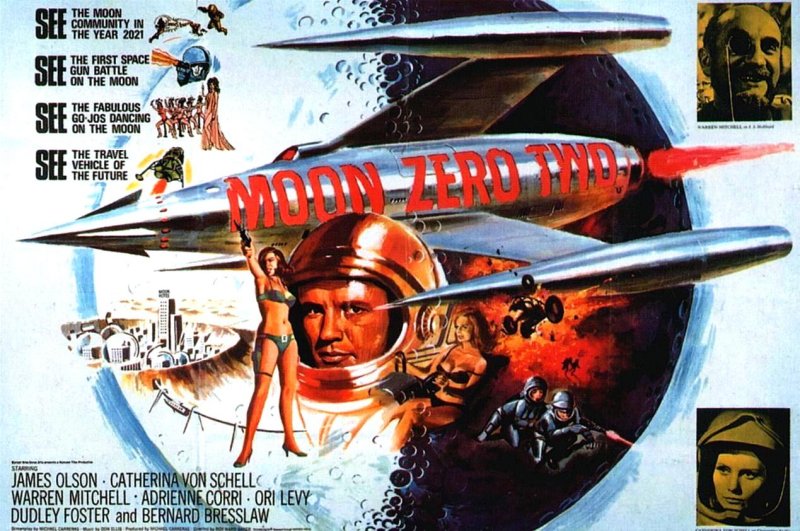
13_cinema_moon_zero_two_poster_02

Even on the Moon, women can wear bikinis

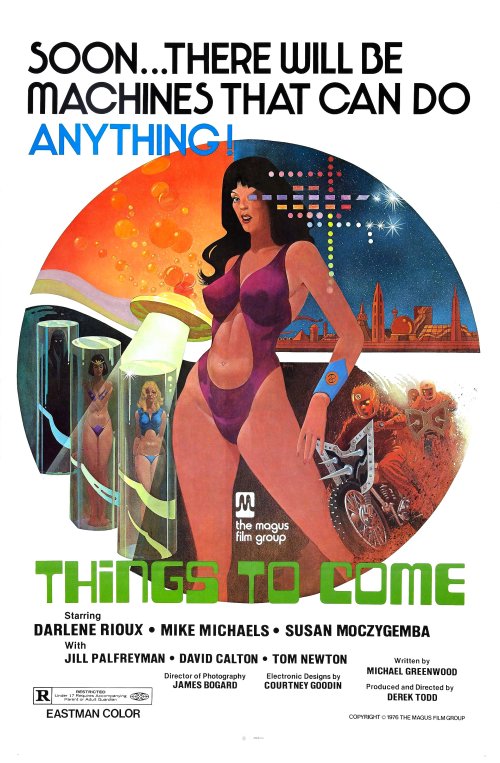
13_cinema_things_to_come_1976_poster_01

Although apparently not everything, such as ride motorbikes with big spikes on the front

fashion

13_fashion_tumblr_maxyfcDyPk1qzdzwdo1_500

It is important that some, if not all, of your outfit is colour-coordinated with the giant computer brain

13_fashion_1969 CLAIROL vintage ADVERTISEMENT women health and beauty NEW YORK CITY Central Park 1960s Bubble Photo

A 1969 Clairol advert, aparently – and no, I don’t understand why they’re in a giant transparent ball above a park, either

13_fashion_psa_flight_attendants

Pacific Southwest Airlines flight attendants – normally, they flew inside the aircraft with the passengers

13_fashion_steam_room

Back in the 1960s, the CIA was only just figuring out how to use waterboarding


3 Comments

The north face of Mount TBR

Owning books can be more fun than simply reading them. At least that’s what I tell myself when I eye the double-stacked book-shelves and piles of books on the floor of my house. Which is not to say that I plan to keep every one of the books mentioned in these book haul posts. Some of them will go to charity shops once I’ve read them, some of them will go elsewhere. But until I actually start reading more books each month than I buy, the piles are only going to get higher…

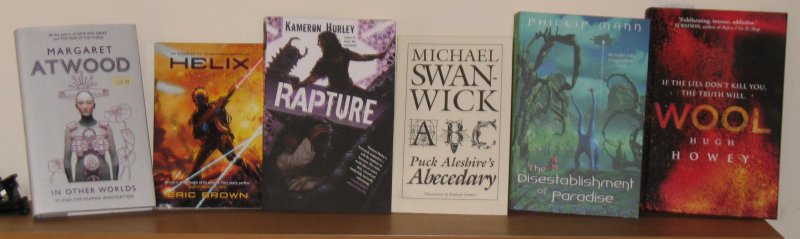
20130316a

New science fiction: Wool I’m reviewing for Interzone. It has come close to being hurled at the wall a couple of times. The Disestablishment of Paradise is a new book by a favourite author, who hasn’t had anything published for a good many years. I should probably have hung on for the UK edition of Rapture, but I do like my trilogies to all match and I already have the Night Shade editions of the first two books. Puck Aleshire’s Abecedary is a small press chapbook I bought on eBay. Helix Wars was sent me by Eric, and In Other Worlds I picked up for £3.99 in a discount bookshop in Wetherby.

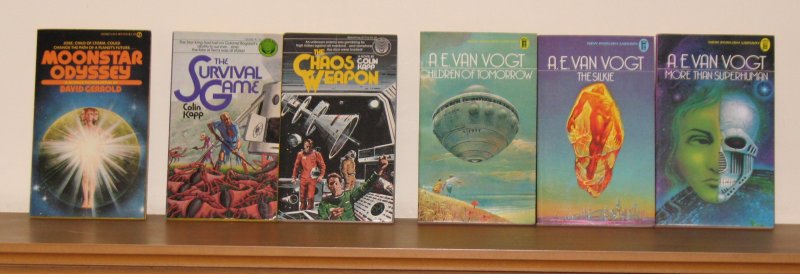
20130316b

These six paperbacks I bought from Cold Tonnage. I may slag off van Vogt a lot, but some of his books transcend their chaotic bonkersness and I find them weirdly appealling. I don’t know if More Than Superhuman, Children of Tomorrow or The Silkie fit that bill. I guess I’ll find out. Colin Kapp is forgotten and under-rated Brit sf author who, like many of his 1960s and 1970s contemporaries, was chiefly published in the US. The Chaos Weapon and The Survival Game are among the last few of his I didn’t own. And Moonstar Odyssey I’ve been looking for a decent copy of for ages, though I can’t remember exactly why…

20130316c

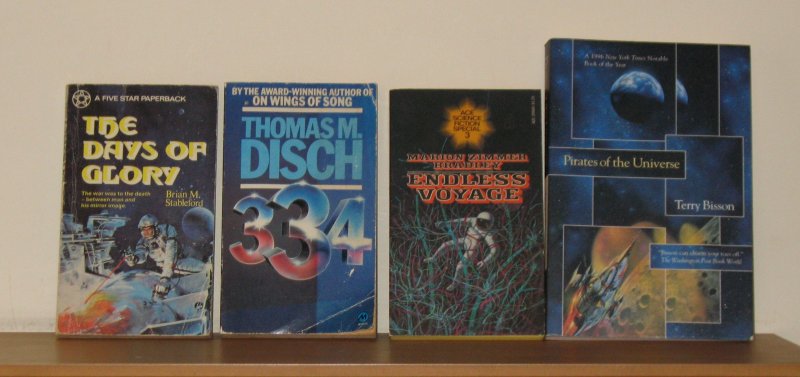
Some secondhand sf. Pirates of the Universe I’ve been after for a while. The last time I bought a copy, I received a refund instead as the book had apparently suffered a “scissors accident” while the buyer was packing it to send. I know nothing about Endless Voyage, but the new Ace special series from the mid-1970s contains some odd books among its eleven titles. I’ve decided to collect them. 334 is a genre classic which I’ve never read, and The Days of Glory is the first book of Stableford’s Dies Irae trilogy. Both the last were charity shop finds.

20130316d

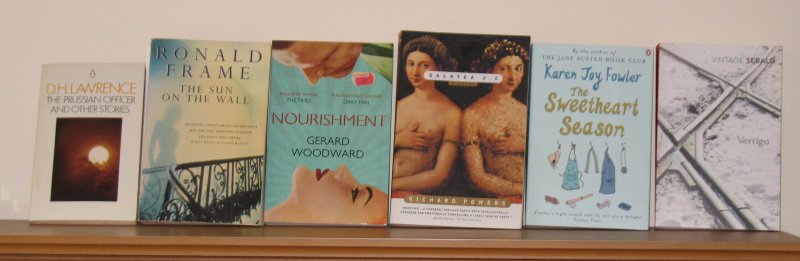
Vertigo was a birthday present, but all the rest were charity shop finds. I enjoyed the The Jane Austen Book Club, so I expect I’ll also enjoy The Sweetheart Season. Fowler’s genre work, of course, is excellent. Galatea 2.2 is literary-but-it’s-really-sf novel, which Powers has apparently done a couple of times. Nourishment is  Woodward’s latest; I enjoyed his first, August (see here). I’ve been meaning to try Ronald Frame’s fiction, but it’s taken me a while to find one of his books. And I’ve not checked The Prussian Officer and Other Stories yet, but I suspect I’ve already about half of its contents. But at least that’s half I’ve not read.

20130316e

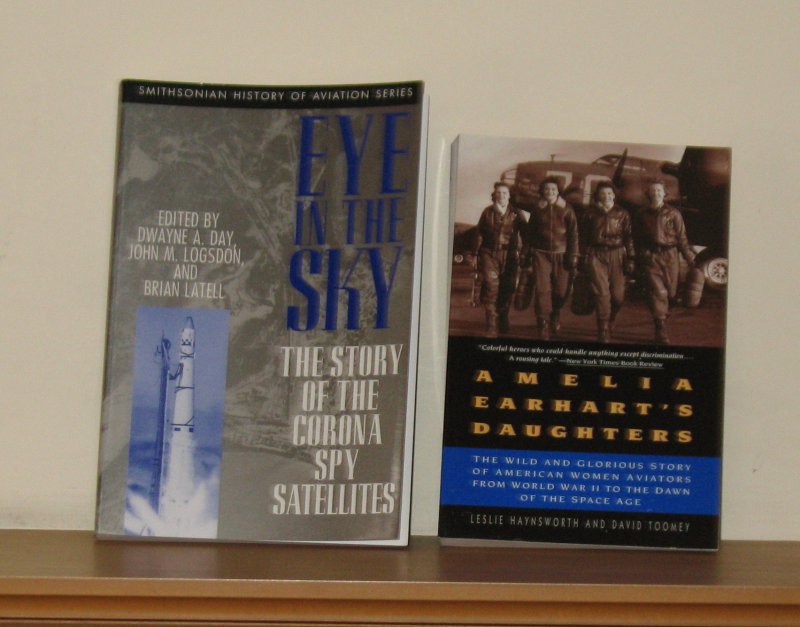
These are research books for the next book of the Apollo Quartet. They might give a clue as to its story.

20130316f

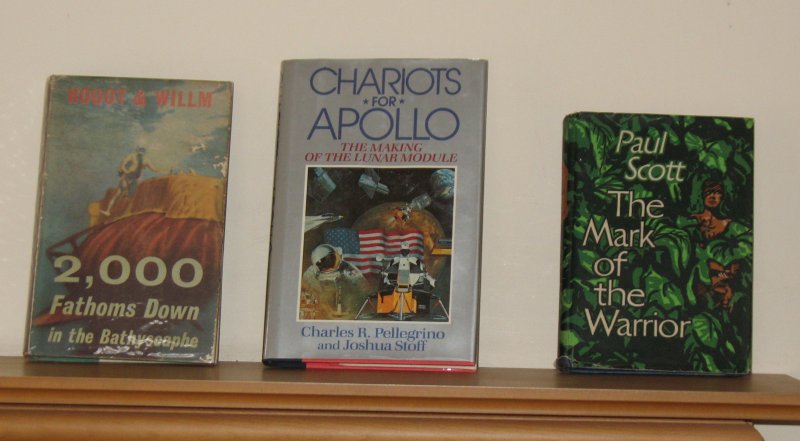
Three books for three collections: The Mark Of The Warrior is a first edition, to go with my other Paul Scott first editions; Chariots for Apollo is for the space books collection; and 2,000 Fathoms Down in the Bathyscape joins my (currently very small) collection of books on bathyscaphes and deep sea exploration.


4 Comments

Reading by numbers

After yet another argument on a science fiction forum, I decided to work out how many books I’ve reviewed – because in order to review a book, I have to read it critically. Which is not to say I don’t normally read critically, although sometimes the book simply isn’t worth doing so; but for a review, no matter how bad the book is, I have to.

I have a rough idea of how many books I’ve read. Since I started keeping records in 1991 I’ve read 3220 books, but I’ve no real idea how many I read before that. Probably a couple of thousand more. I have, after all, been reading books for about 40 years. And around two-thirds of those books have been science fiction. So I’ve been reading it a long time, and I’ve read a lot of it. This means that when I say Asimov is a bad writer, I’m not saying it having never read any of his books. In fact, I’ve read most of his novel-length oeuvre, and a good many of his short stories.

But, critical reading… I started out reviewing books in 1988 for Paperback Inferno, a review magazine for the British Science Fiction Association. In 1992, Paperback Inferno was folded into Vector, the critical journal of the BSFA, and I began reviewing for that magazine. I stopped a couple of years after I moved to the United Arab Emirates in 1994.

Between 1993 and 2003, I was in an APA called Acnestis, run by Maureen Kincaid Speller. Each month, we’d write a contribution – a combination of fan writing, criticism, reviews, commentary on previous months, etc – and produce thirty copies, which we’d post to Maureen. She would then sort those so each of us received an envelope containing a copy of each person’s contribution for that month. Acnestis helped keep me sane during my decade in the UAE. In my contributions, I usually mentioned the books I’d read that month. Sometimes it was just a capsule description, but occasionally I’d write a longer review. But only thirty people ever got to see those reviews.

In 2007, I started up this blog – originally on blogger.com, but now on WordPress – and among the many things I posted were several reviews of books I’d read. I also republished some of my Acnestis reviews. In 2008, I became a reviewer for Interzone. In 2010, I was asked to provide reviews for SFF Chronicles. In 2011, I set up SF Mistressworks. And in 2012, when Daughters of Prometheus started, I began contributing to that…

So that’s a lot of reviews. It is, in fact, 237 reviews. And here are a few tables breaking down that figure:

Reviews by year
(Note ten-year gap from 1997 to 2007.)

year Total
1988 4
1989 4
1990 14
1991 9
1992 5
1993 20
1994 5
1995 1
1996 1
1997 4
2007 10
2008 24
2009 20
2010 26
2011 38
2012 44
2013 8
Grand Total 237

Reviews by venue
(I have counted reviews only by their original appearance.)

venue Total
Daughters of Prometheus 5
Interzone 21
It doesn’t have to be right 88
Paperback Inferno 33
SF Mistressworks 36
SFF Chronicles 16
The Lyre* 6
Vector 32
Grand Total 237

The top ten by number of books reviewed of authors.
(Gwyneth Jones is no surprise, and I do have a habit of reviewing each new Iain Banks genre novel as it appears. Two of the Ian Whates books were anthologies he edited.)

author Total
Gwyneth Jones 6
CJ Cherryh 5
Iain M Banks 5
Ian Whates 5
DG Compton 4
Carolyn Ives Gilman 3
Ken MacLeod 3
Louise Cooper 3
Pamela Sargent 3
Roger Zelazny 3

I have reviewed books by 182 different authors, not all of them genre. I’ve not included the capsule reviews I’ve posted to my blog in these numbers, though that would likely bump the figure by about another 100 or so. I can’t claim the quality of my reviews has been consistent, either over the years or within a single year. I like to think they’re readable, honest, and occasionally make useful points.

I don’t usually have the luxury of time to spend months giving a book a really deep read with the intent of writing several thousand words on it. There are far too many books I want to read, and a year in which I read only a dozen or so books would feel like a complete waste of twelve months to me. Of course, I don’t write a review of every book I read. Nor do I choose every book I read for review – for Interzone, for example, I can only pick from among what’s available, and I don’t always get my first choice.

But I’ve been doing this for a few years now, and I’d like to think I’ve sort of got the hang of it. I don’t consider myself a critic – I don’t have the toolset for that. And, to be honest, I’d sooner focus on writing my own fiction than study to be a critic. I think it is important, however, that if you want to seriously discuss science fiction, or any fiction for that matter, then you need to read critically. Otherwise it’s just squee. It’s no good being knowledgeable about a novel’s universe or story, you also need to understand how that story works, where the author has succeeded and where they have failed, and why. That’s what reviewers try to do, that’s what I try to do when I write about other people’s fiction. That’s what I’ve been trying to do since 1988, over the course of 237 book reviews…

* The Lyre was a small press genre magazine I co-edited in the early 1990s. We published two issues, featuring original fiction by Eric Brown, Simon Clark, Stephen Baxter, Michael Cobley, Keith Brooke, Gwyneth Jones, Peter F Hamilton, Peter T Garratt, and a few other less familiar names.


5 Comments

Notable recent reads

I have been a bit rubbish at posting here over the past month or so, and I’m not entirely sure why. I could claim it’s because I’ve been busy writing short stories, novellas and novels, but that wouldn’t be entirely true. I have been busy – but it’s been other stuff: writing reviews, family stuff. And I’ve only managed to squeeze in a bit of fiction writing in here and there. I have been reading, however. Though not as many books as I’d have liked. Here are some of them – chiefly the ones I’ve not already reviewed, or plan to review, for SF Mistressworks or Daughters of Prometheus

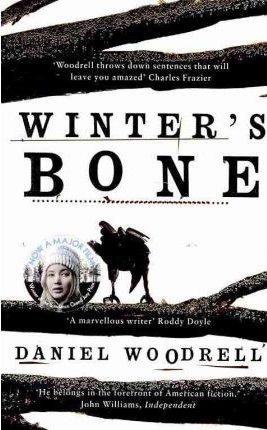
wintersboneWinter’s Bone, Daniel Woodrell (2006)
I was interested in reading this after seeing, and being much impressed by, the film adaptation. I was expecting a genre crime novel with a plot much like that of the movie. What I wasn’t expecting was a well-written literary novel, which actually has less plot than the film. Sixteen-year-old Ree’s father has gone missing, and he put up the house and land as collateral for bail. Which means if he doesn’t turn up in court, they lose the house. So Ree goes looking for him. The story is set in the Ozarks, where everyone is related to everyone else and most of the men are involved in brewing up or distributing drugs. Ree’s questions are not welcome – and it takes much of this short novel before she discovers why. If the film is brutal and the people in it scary, then the book is more so. The film adds a scene set at a cattle auction, but loses one where Ree and her best friend help to catch a pig loose on a bridge. There’s some lovely writing in this, Ree is extremely well-drawn, and the setting is, well, just plain frightening. I’m going to read more Woodrell. Recommended.

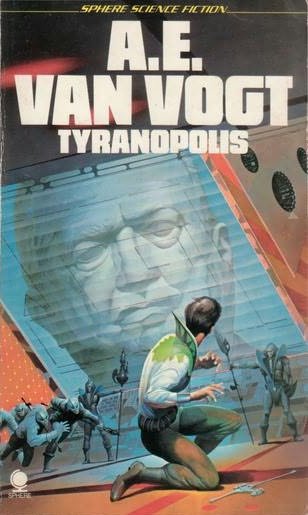
tyranopolisTyranopolis, AE van Vogt (1973)
AE van Vogt really was a shit writer. He built his career on advice taken from a how-to-write book. And it shows. I still have a soft spot for his fiction because, every now and again, purely by accident, he manages to create something that’s almost mythic. But vast swathes of his oeuvre are unreadable meretricious tosh. He makes stuff up out of whole cloth, and it possesses neither plausibility nor rigour. Tyranopolis is a case in point. At some point in the future, a mysterious dictator rules the entire Earth with an iron fist. But an inventor, er, invents some sort of ray that allows him to see everywhere and be seen everywhere. Knowing the tyrant’s forces are closing in, he gifts the secret to his unborn son moments after the act of conception, by, er, putting it in his DNA or something. I don’t know. It makes no sense whatsoever. Whatever drugs van Vogt was on when he wrote, they were clearly more powerful than those used by Philip K Dick. The writing in Tyranopolis hovers on the cusp of sense, the plotting reads like he made it up as he went along, the central premise is complete nonsense, and yet… and yet… No, there is no “and yet”. Not for this one. It’s a rubbish book. Avoid it.

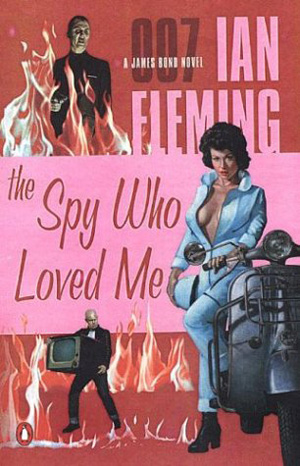
the-spy-who-loved-me-novelThe Spy Who Loved Me, Ian Fleming (1960)
Fleming was a real pioneer, you know. The Spy Who Loved Me is ground-breaking, you know. Because it’s a Bond novel, but Bond isn’t the protagonist! He doesn’t even appear until about a third of the way in! And, get this, the entire novel is narrated by a woman! I know, shocking. So the title doesn’t refer to some KGB temptress who falls for 007’s manly charms, as it does in the film. Bond is actually the spy of the title. But he doesn’t really fall in love with the narrator. And she knows it – indeed, she says as much. She’s making her way through the US from Canada on a moped and stops off at a remote motel. She stays on to work there, and is made responsible for closing the place down for the winter. Two employees of the owner turn up and it transpires they’re there to torch the place for insurance purposes. Fortunately, Bond suffers a flat tyre nearby, so he’s around to foil their plot and save the girl… You know when an author falls in love with their own creation, and this persuades them that writing a story about said creation from the point of view of a lovestruck young woman is a good idea? That. And they say this is the best of the Bond novels… Pfft.

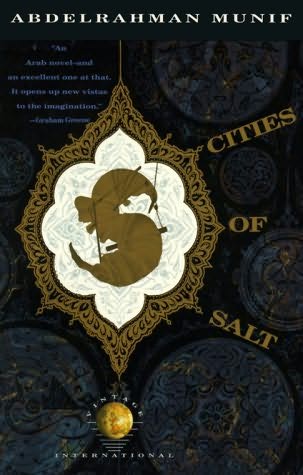
citiesofsaltCities of Salt, Abdelrahman Munif (1984, trans. 1987)
The lives of the Bedouin of Wadi al-Uyoun are disrupted by the discovery of oil. Eventually, they are moved and rehoused, but some instead move to the coastal village of Harran. Which then becomes the point of entry into the country for American oilworkers, and so the site of their camp and offices. The novel then charts the growth of Harran through the lives of some of its more notable inhabitants. The nation is meant to be an invented Gulf state, but Harran is clearly modelled on Dhahran. Munif is especially critical of the Americans and their interference and ignorance of Bedouin life, but he’s also critical of those Arabs who accepted US largesse and grew fat on the proceeds. I suspect Munif was not especially well served by his translator as some of the prose in Cities of Salt is clunky in places, but Munif certainly shows a sharp eye for characterisation. As far as I can determine, this book, and its two sequels, were never published in the UK – my copy is a US paperback – which is a shame as it’s definitely worth reading. I’ll have to get hold of the rest of the– Um, it’s apparently a quintet, but only the first three books were published in English. I guess I’ll have to start practicing my Arabic again, then…

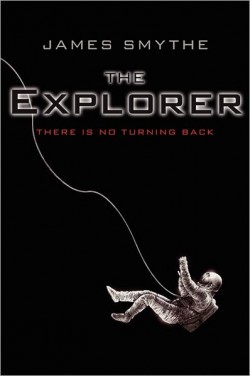
theexplorer-e1356978432870The Explorer, James Smythe (2013)
A handful of days into the first mission to send human beings as far from Earth as possible, and all of the crew have died except for the journalist, Cormac Easton. The first third of The Explorer explains how these deaths came about – and they’re senseless, mostly preventable deaths – and you start to wonder what the remaining two-thirds will be about… And then the second part starts, and the story kicks into a higher gear. James sent me a copy of this novel (a swap for a copy of Adrift on the Sea of Rains), and he did warn me I’d have to accept a certain lack of… scientific rigour in the set-up. And that’s certainly the case. In truth, the spacecraft seems more like something from a Hollywood film than genuine space fiction, with its mysterious engines, store rooms, and even room inside the walls in which Cormac hides like a rat. When the engines are running, there is no gravity. But when they stop, then there is gravity. Which is not something I can quite get my head round. Though I only saw a couple of episodes of it (but I was given the complete series on DVD for my birthday recently), I was reminded more of Defying Gravity than the Apollo programme, International Space Station or even one of my favourite fictional space television series, Space Odyssey: Voyage to the Planets. Happily, despite its creative use of space engineering, The Explorer very much worth reading. Cormac is well-drawn, and his descent in to madness is skilfully handled. Perhaps the rest of the crew tread a little close to stereotype, but that’s the nature of space fiction – astronauts are by definition stereotypes. Apparently, there will be a sequel, though I’m not entirely sure how that’s going to work…

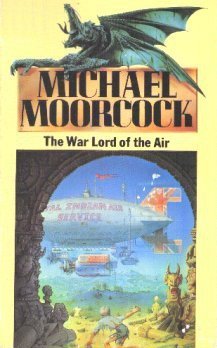
The_Warlord_of_the_Air-Michael_MoorcockThe Warlord of the Air, Michael Moorcock (1971)
If you’re a fan of all things steampunk, if you write steampunk, and you’ve not read this book, then you are doing it wrong. Though it starts inauspiciously, with a dirigible dropping ballast to descend, Moorcock’s airship opera is a clever commentary on imperialism framed in the language of pulp fiction. In 1902, Oswald Bastable visits the Shangri-la-like lair of an evil Indian high priest. An earthquake strikes, destroying the lair, and somehow throwing Bastable forward in time to 1973. He is rescued by an airship, and discovers that the Balance of Powers still holds good across the world, with most nations part of one or the other empire, all of which are ruled by means of vast fleets of airships. Bastable ends up inadvertently assisting Socialist terrorist Count Guevera escape the authorities, before being captured by Chinese warlord OT Shaw, who plans a future free of imperialism. This results in Shaw dropping a nuclear bomb, invented and built by his refugee scientists, on the airship yards of Hiroshima. Which throws Bastable back to 1903. The whole story is framed twice – once by Moorcock’s grandfather, who met Bastable and recorded his story, and by Moorcock himself, who found the manuscript in the attic. Bastable appears in another two novels – The Land Leviathan and The Steel Tsar. I’ll have to get hold of copies. Seems the trilogy is being reprinted this year, with nice new cover art.

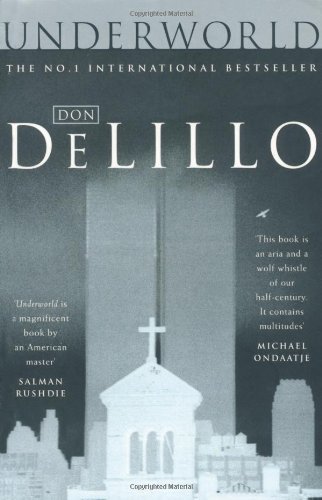
underworldUnderworld, Don DeLillo (1997)
Many many people had told me this is an excellent novel, so I was quite chuffed to find a copy in a charity shop last year. But its daunting size – 827 pages! – made me somewhat reluctant to give it a go. But at the beginning of this month, I found myself reaching for it and… Well, no one told me it opened at a baseball game. I hate baseball. And I hate fiction about baseball even more. Actually, I hate sport, and I hate fiction about sport. But. Underworld opens at the 1951 game between the New York Giants and the Brooklyn Dodgers, and describes the winning home-run apparently known as “the shot heard round the world”, which is a bit rich as only Americans actually give a shit about baseball. Underworld then introduces a number of characters, each of whom shares some link with the baseball from that winning home-run. The chronology bounces all over the place, describing events in various decades in no particular order. Some real world people make appearances – Frank Sinatra, J Edgar Hoover, Lenny Bruce, among others. The writing throughout is mostly lovely and sharp, and the dialogue is especially good – though its particular rhythm does have a tendency to blur some of the characters together. The Lenny Bruce sections I thought the least successful – they didn’t seem a sharp enough commentary on the zeitgeist to warrant inclusion. And it’s long novel, a very long novel. It’s a novel which will merit rereading. But it’s also a novel that’s too big and a bit too flabby to leap into my top ten novels of all time. Oh, and the premiere of the lost Eisenstein movie which gives the novel its title reminded me too much of Burroughs’ Casablanca Film Club and I found it hard to take that section seriously…


2 Comments

200 Significant Science Fiction Books by Women

Yesterday someone tweeted the following list from the New York Review of Science Fiction – 200 Significant Science Fiction Books by Women, 1984–2001, by David G. Hartwell. The list was published on 15 February this year and was apparently put together for a panel at a convention or something. And what a peculiar list it is too. A selection of the best-known women sf writers leavened with a handful of obscure names. Every book published by CJ Cherryh during the period, for instance, is apparently significant. There are some YA titles, and some which are not science fiction by any definition of the term – Sheepfarmer’s Daughter, which is a straight secondary world fantasy, for example; or The Silver Kiss, a YA vampire novel. Hartwell’s decision to exclude books “published out of genre” means no Clarke Award-winning The Handmaid’s Tale, but he still includes The Journal of Nicholas the American, which wasn’t published by a genre imprint. Neither was Sarah Canary, but that’s also on the list.

There are indeed many good books on the list, but it’s a baffling piece of work nonetheless. It doesn’t give a true indication of the contribution made by women writers to science fiction as it focuses only on those who won awards or appeared on “best of the year” lists during the seventeen years in question. Exceptionalism is not representational. Vast swathes of genre fiction have been overlooked and ignored because it was written by women, and Hartwell’s list does nothing to address this.

It doesn’t help that the choices appear so random – no The Sparrow or Children of God, nothing from Tepper between 1990 and 2000, the first two books of Jones’ Aleutian trilogy but not the third, no Mary Gentle or Tricia Sullivan or Josephine Saxton, and all but a couple of the titles which appeared under The Women’s Press sf imprint completely ignored… Hartwell’s decision to include collections also skews the list, since many likely include stories written before 1984. James Tiptree Jr is a case in point: she’s represented by one novel and three collections, and yet only two of the books listed were actually published during her lifetime.

I’ve re-sorted the list alphabetically, which better shows how some writers dominate it. (And I’ve corrected the mispelling of Susan M Shwartz’s name.) I’ve also asterisked those books which have  been reviewed by SF Mistressworks (some more than once). Still, at the very least, any self-respecting sf fan should be aware of, or have read, most of the books on this list. In that respect it should make quite a good meme. I’ve had a go and done the usual – bold for read, italics for TBR…

Brother Termite, Patricia Anthony (1993)
A Woman Of The Iron People, Eleanor Arnason (1991)
Ring of Swords, Eleanor Arnason (1993)
Primary Inversion*, Catherine Asaro (1995)
The Last Hawk, Catherine Asaro (1997)
The Quantum Rose, Catherine Asaro (2000)
Unwillingly to Earth, Pauline Ashwell (1992)

Crash Course, Wihelmina Baird (1993)
In the Garden of Iden, Kage Baker (1998)
Sky Coyote, Kage Baker (1999)
The Best of . . ., Marion Zimmer Bradley (1985)
The Warrior’s Apprentice, Lois McMaster Bujold (1986)
Borders of Infinity, Lois McMaster Bujold (1989)
Falling Free, Lois McMaster Bujold (1988)
The Vor Game, Lois McMaster Bujold (1990)
Mirror Dance, Lois McMaster Bujold (1994)
Cetaganda, Lois McMaster Bujold (1996)
Dreamweaver’s Dilemma, Lois McMaster Bujold (1996)
Memory, Lois McMaster Bujold (1996)
A Civil Campaign, Lois McMaster Bujold (1999)
Falcon, Emma Bull (1989)
Bone Dance, Emma Bull (1991)
Dawn, Octavia Butler (1987)
Adulthood Rites, Octavia Butler (1988)
Imago, Octavia Butler (1989)
Parable of the Sower, Octavia Butler (1994)
Bloodchild and Other Stories, Octavia Butler (1995)
Parable of the Talents, Octavia Butler (1998)

Mindplayers, Pat Cadigan (1987)
Patterns, Pat Cadigan (1989)
Synners, Pat Cadigan (1991)
Home by the Sea, Pat Cadigan (1992)
Dirty Work, Pat Cadigan (1993)
Promised Land, Pat Cadigan (1999)
Dervish Is Digital, Pat Cadigan (2001)
The Furies, Suzy McKee Charnas (1994)
The Conqueror’s Child, Suzy McKee Charnas (1999)
Chanur’s Venture, CJ Cherryh (1984)
Voyager in Night*, CJ Cherryh (1984)
Cuckoo’s Egg, CJ Cherryh (1985)
The Kif Strike Back, CJ Cherryh (1985)
Chanur’s Homecoming, CJ Cherryh (1986)
Visible Light, CJ Cherryh (1986)
Cyteen, CJ Cherryh (1988)
Rimrunners, CJ Cherryh (1989)
Heavy Time, CJ Cherryh (1991)
Hellburner, CJ Cherryh (1992)
Foreigner, CJ Cherryh (1994)
Invader, CJ Cherryh (1995)
Rider at the Gate, CJ Cherryh (1995)
Inheritor, CJ Cherryh (1996)
Precursor, CJ Cherryh (1999)
Defender, CJ Cherryh (2001)
Mainline, Deborah Christian (1996)
Mutagenesis, Helen Collins (1993)
Beholder’s Eye, Julie Czerneda (1998)
In the Company of Others, Julie Czerneda (2001)

A Paradigm of Earth, Candas Jane Dorsey (2001)

Native Tongue*, Suzette Haden Elgin (1984)
Jaran, Kate Elliott (1992)
City of Diamond, Jane Emerson
The Start of the End of It All and Other Stories, Carol Emshwiller (1990)
Rainbow Man, MJ Engh (1993)

Infinity’s Web, Sheila Finch (1985)
Artificial Things, Karen Joy Fowler (1986)
Sarah Canary, Karen Joy Fowler (1991)
Black Glass, Karen Joy Fowler (1998)
In Conquest Born, CS Friedman (1987)

Halfway Human*, Carolyn Ives Gilman (1998)
The Dazzle of Day, Molly Gloss (1997)
A Mask for the General, Lisa Goldstein (1987)
Queen City Jazz*, Kathleen Ann Goonan (1994)
The Bones of Time, Kathleen Ann Goonan (1996)
Mississippi Blues, Kathleen Ann Goonan (1997)
Crescent City Rhapsody, Kathleen Ann Goonan (2000)
Flesh and Gold, Phyllis Gotlieb (1998)
Ammonite*, Nicola Griffith (1993)
Slow River*, Nicola Griffith (1995)

Winterlong*, Elizabeth Hand (1990)
Æstival Tide*, Elizabeth Hand (1992)
Icarus Descending*, Elizabeth Hand (1993)
Glimmering*, Elizabeth Hand (1997)
Last Summer At Mars Hill, Elizabeth Hand (1998)
Midnight Robber*, Nalo Hopkinson (2000)

Divine Endurance, Gwyneth Jones (1984)
Escape Plans*, Gwyneth Jones (1986)
Kairos*, Gwyneth Jones (1988)
White Queen*, Gwyneth Jones (1991)
North Wind, Gwyneth Jones (1994)
Bold as Love*, Gwyneth Jones (2001)

Hellspark, Janet Kagan (1988)
Mirabile, Janet Kagan (1991)
The Journal of Nicholas the American*, Leigh Kennedy (1986)
Polar City Blues, Katherine Kerr (1990)
The Silver Kiss, Annette Curtis Klause (1990)
Trinity and Other Stories, Nancy Kress (1985)
An Alien Light, Nancy Kress (1988)
Brain Rose, Nancy Kress (1990)
The Aliens of Earth, Nancy Kress (1993)
Beggars in Spain, Nancy Kress (1993)
Beggars & Choosers, Nancy Kress (1994)
Beggars Ride, Nancy Kress (1996)
Beaker’s Dozen, Nancy Kress (1998)
Probability Moon, Nancy Kress (2000)
Probability Sun, Nancy Kress (2001)

Dreams of Dark and Light, Tanith Lee (1986)
Night’s Sorceries, Tanith Lee (1987)
Always Coming Home, Ursula K LeGuin (1985)
Buffalo Gals and Other Animal Presences, Ursula K LeGuin (1987)
A Fisherman of the Inland Sea*, Ursula K LeGuin (1994)
Four Ways to Forgiveness*, Ursula K LeGuin (1995)
Unlocking the Air and Other Stories, Ursula K LeGuin (1996)
The Telling, Ursula K LeGuin (2000)

Arachne, Lisa Mason (1990)
Summer of Love, Lisa Mason (1994)
An Exchange of Hostages*, Susan R Matthews (1997)
The Chronicles of Pern: First Fall, Anne McCaffrey (1993)
The Girl Who Heard Dragons, Anne McCaffrey (1994)
China Mountain Zhang*, Maureen McHugh (1992)
Mission Child*, Maureen McHugh (1998)
Nekropolis, Maureen McHugh (2001)
Murphy’s Gambit, Syne Mitchell (2000)
The Ragged World, Judith Moffett (1991)
Remnant Population, Elizabeth Moon (1996)
Once a Hero, Elizabeth Moon (1997)
The City, Not Long After*, Pat Murphy (1989)
Points of Departure, Pat Murphy (1990)
Sheepfarmer’s Daughter, Elizabeth Moon (1988)
Lunar Activity, Elizabeth Moon (1990)

Deception Well, Linda Nagata (1997)
Vast, Linda Nagata (1998)
Limit of Vision, Linda Nagata (2001)

Becoming Alien, Rebecca Ore (1987)
Being Alien, Rebecca Ore (1989)
Alien Bootlegger and Other Stories, Rebecca Ore (1993)
Gaia’s Toys, Rebecca Ore (1995)

The Annunciate, Severna Park (1999)

Little Sisters of the Apocalypse, Kit Reed (1995)
Silver Screen*, Justina Robson (1999)
Synthesis and Other Virtual Realities, Mary Rosenblum (1996)
Chimera, Mary Rosenblum (1993)
The Drylands, Mary Rosenblum (1993)
Alien Influences, Kristine Kathryn Rusch (1994)
Extra(Ordinary) People*, Joanna Russ (1984)
The Hidden Side Of The Moon, Joanna Russ (1988)

Venus of Dreams, Pamela Sargent (1986)
The Best of . . ., Pamela Sargent (1987)
The Healer’s War, Elizabeth Ann Scarborough (1988)
The Game Beyond, Melissa Scott (1984)
Trouble and Her Friends*, Melissa Scott (1994)
Shadow Man*, Melissa Scott (1995)
Night Sky Mine, Melissa Scott (1996)
The Shapes of Their Hearts, Melissa Scott (1998)
Reef Song, Carol Severance (1991)
Heritage of Flight, Susan M Shwartz (1989)
Legacies, Alison Sinclair (1995)
A Door into Ocean, Joan Slonczewski (1986)
The Children Star, Joan Slonczewski (1998)
Code Of Conduct, Kristine Smith (1999)
Other Nature, Stephanie Smith (1995)
The Arbitrary Placement of Walls, Martha Soukup (1997)
Alien Taste, Wen Spencer (2001)
Chance and Other Gestures of the Hand of Fate, Nancy Springer (1987)
Larque on the Wing, Nancy Springer (1994)

After Long Silence, Sheri S Tepper (1987)
Grass*, Sheri S Tepper (1989)
Raising the Stones, Sheri S Tepper (1990)
The Fresco, Sherri S Tepper (2000)
Virtual Girl*, Amy Thomson (1993)
The Color of Distance*, Amy Thomson (1995)
Through Alien Eyes, Amy Thomson (1999)
Brightness Falls from the Air, James Tiptree Jr (1985)
Tales of the Quintana Roo, James Tiptree Jr (1986)
Crown of Stars, James Tiptree Jr (1988)
Her Smoke Rose Up Forever, James Tiptree Jr (1990)
Lost Futures, Lisa Tuttle (1992)

World’s End, Joan D Vinge (1984)
Phoenix in the Ashes, Joan D Vinge (1985)
Catspaw, Joan D Vinge (1988)
Opalite Moon, Denise Vitola (1997)
The Silent City*, Élisabeth Vonarburg (1988)
In the Mother’s Land, Élisabeth Vonarburg (1992)
Reluctant Voyagers, Élisabeth Vonarburg (1995)

Whiteout, Sage Walker (1996)
Mother Grimm, Catherine Wells (1997)
Children of the Wind, Kate Wilhelm (1989)
And the Angels Sing, Kate Wilhelm (1992)
The Ghost Sister, Liz Williams (2001)
Sea as Mirror, Tess Williams (2000)
Fire Watch, Connie Willis (1985)
Doomsday Book*, Connie Willis (1992)
Impossible Things, Connie Willis (1993)
To Say Nothing of The Dog*, Connie Willis (1998)
Passage, Connie Willis (2001)
Looking for the Mahdi*, N Lee Wood (1996)

Sister Emily’s Lightship and Other Stories, Jane Yolen (2000)

Reclamation*, Sarah Zettel (1996)
Fool’s War, Sarah Zettel (1997)
Playing God, Sarah Zettel (1998)
Busy About the Tree of Life, Pamela Zoline (1988)

I make that 48 read and 5 on the TBR. Not a good showing out of 200. But there are several authors with multiple entries that I don’t normally read – like Nancy Kress, Pat Cadigan, Connie Willis or Lois McMaster Bujold. A lot of the books were also never published in the UK. A large number of the titles, however, are on my wishlist, and I will eventually find copies and read them. And review them on SF Mistressworks, of course.


23 Comments

Lessons in bestsellerification

I forget my reason for visiting amazon.co.uk, but while I was on the site I had a look at the various beseller charts. The science fiction one proved especially interesting. Here are the top ten “Bestsellers in Science Fiction” on Amazon for 8 March 2013:

1 Wool, Hugh Howey (Kindle edition)
2 Cloud Atlas, David Mitchell (Kindle edition)
3 The Mongoliad Book Two, Neal Stephenson (Kindle edition)
4 The Martian, Andy Weir (Kindle edition)
5 Three Feet of Sky 2: Outside Eternity, Stephen Ayres (Kindle edition)
6 The Meaning of Liff, Douglas Adams (paperback)
7 In Her Name: Redemption, Michael R Hicks (Kindle edition)
8 The Phoenix Rising, Richard Sanders (Kindle edition)
9 Wool, Hugh Howey (hardback)
10 Les Misérables, Victor Hugo (Kindle edition)

And no, I’ve no idea why Les Misérables has been classified as science fiction.

Eight of the ten books are Kindle editions. As far as I can determine, six of them were self-published (I’m including Wool, although the edition which appears twice on this list is from a major imprint). Two of the books started life as serials on their authors’ websites – Wool and The Martian. Three are sequels, and one is an omnibus edition of a trilogy.

So what does this tell us? That most sf sold on Amazon these days is sold via Kindle. That self-published sf is out-selling sf from major imprints on Amazon. That the best way to build a platform for a self-publish sf novel is to serialise it on your website. And that I’m not the only person to have written a realistic treatment of a mission to Mars (and we both called our Mars programmes Ares, too).

Aside from the last point, all of the above seem to run counter to what is actually the case. Paper books still outsell ebooks, as far as I’m aware. And fiction from established imprints still far outsells self-published novels. And where are the big sf names? George RR Martin appears at #11 (and it’s fantasy not sf, but never mind), followed by Stephenie Meyer at #13. John Scalzi sneaks in at #19. But where’s Peter F Hamilton, Iain M Banks, Neal Asher, China Miéville?

It’s probably worth pointing out that all 20 books in the “Bestsellers in Fiction” list are all Kindle editions. I checked the Amazon list against the one given in the Guardian Reviews section for 23 February 2013. Only two titles are in both lists – Life Of Pi (#2 on Amazon, #5 in Guardian) and The Unlikely Pilgrimage Of Harold Fry (#19 on Amazon, #2 in Guardian).

So if there’s a conclusion to be drawn from all this, I’m not entirely sure what it is. It seems self-evident that Amazon has “massaged” its figures… But to what end?


13 Comments

Metaphorising the metaphors

To some people, science fiction is a toy-box packed with neat gadgets and shiny gewgaws, which they pull out and deploy in service to their story. They need, for example, a locale in which certain events happen a certain way, so they invent an alien world. That alien world needs to be distant, so some form of travel to reach it is required. And since distance in most people’s minds equates to time taken to reach the destination, some type of long-journey travel is required. To early writers of science fiction, there was only one model they could use: sea travel. And that worked pretty well because distant lands were exotic, and the distance – ie, journey time – itself was a signifier of exoticism.

Initially, Mars was pretty distant, but as we learned more about the Red Planet, so it became closer and less “colourful”. Locales in sf thus moved further afield. But by that point, the limits of the knowledge of the time had been reached, so imagination took over. The worlds were made-up, with no basis in reality. The universe itself became a fiction.

We now know a great deal more about the universe than we did in the 1920s and 1930s. We know that it is unimaginably vast, that the distances between stars preclude any meaningful relationship in human terms. The universe is no longer a fit place on which to map distant shores and strange new lands.

We also have over fifty years actual space travel, and we know how difficult it is to keep alive in space the fragile human organism and to travel useful distances in useful times. We also know there is an enormously expensive barrier between our world and the rest of the universe: our gravity well.

The spaceship-as-ocean-liner trope belongs to the fictional universe, not the real one. But the metaphor for the journey to far-off places has become so embedded in genre that it’s used as if it were no more than setting – as if it were a signifier of the genre itself. And while sf writers over the decades have rung a variety of changes over the spaceship trope – inventing new and more imaginative ways to explain how it circumvents the real universe, how it can traverse those distances beyond imagination in an eyeblink – the spaceship still operates very much as it did back in sf’s earliest days.

Except now, the spaceship trope is not enough. Now it has to be disguised, by referring to it metaphorically.

I work in computing, so the illustration of this which works best for me is that of the operating system. An OS is, according to Operating Systems Design and Implementation, by Andrew S Tannenbaum and Albert S Woodhull, a fundamental system program “which controls the computer’s resources and provides the base upon which the application programs can be written”. In the beginning, as Neal Stephenson once said, was the command line. Using it, computer operators could call on programs which would perform specific tasks. They understood that listing files from an area of the filesystem entailed reading data embedded in a magnetic media and then rendering that data in a human-readable format. But when computers moved onto the desks of business people and then into the home, that knowledge was unnecessary. Worse, it was potentially confusing. So someone invented the idea of a metaphor to represent the data on the magnetic media and the programs which performed operations on the data: the Graphical User Interface. (Invented by Alan Kay at Xerox PARC in 1973.) A GUI such as Windows or OS X or X11 is a metaphor which allows users to easily and simply perform complex operations on a computer using its built-in resources.

An interesting aside: several people have researched, and even built, orthogonally persistent operating systems. These are ones which run entirely in memory, and the complete memory-state is flashed to persistent storage (disk, flash card, etc) at regular and frequent intervals. Should the computer crash, the last memory-state image can be loaded back into memory, and the user returns to exactly where they were before the crash. The interesting thing about an orthogonally persistent operating system is that it needs a new metaphor. The existing one has become uncoupled from the underlying reality. The orthogonally persistent OS does not keep files in folders on a disk because it doesn’t need to put data way somewhere safe while it’s not in use. It doesn’t need to organise the stored data so it can be navigated. Everything is in use all the time. So it has a workspace, and everything is accessible within it all the time.

This concept of the operating system metaphor is one of the chief problems I had with cyberpunk as a subgenre – aside from its uncritical use, and tacit approval, of neoliberalism, of course. It took the metaphor that was the GUI and then layered another metaphor, cyberspace, on top of it. Cyberpunk writers wrote about the metaphor as if it were the thing itself.

And that’s what I see some twenty-first century sf writers doing. They’ve taken sf’s tropes, and are not only using them as if they were the thing itself but are adding a layer of metaphor on top. So when you dig deep into the story, you don’t find reality, you find a metaphor which has become uncoupled from its underlying reality. This is how I interpreted Paul Kincaid’s reference to “exhaustion”.

Personally, I think understanding how something works is key to learning how to do it better. It’s important to my development as a writer, I feel, to know what science fiction does, how it does it, and in what ways I can bend or break or subvert it to best effect. The uncritical use of tropes, and subsequent disguising of them, doesn’t appeal to me as a technique for writing sf. It pushes all the emphasis to the presentation layer, to the prose. Yes, good prose is important, I appreciate good writing. And I like to think my prose is good. But choosing pretty words is not enough for me.

I would sooner explore science fiction itself. I think as a genre we’ve stopped doing that. We’re either playing postmodernist shellgames, or metaphorising the metaphors, or deep-mining the genre for tropes as if those tropes were its sole raison d’être. Some might say these are indicators of decadence. Perhaps they are. But I don’t think it means science fiction is dead or dying, just that it needs a good kick up the bum…


8 Comments

England 3 Scotland 0

Last month, Neil Williamson was bemoaning his lack of productivity in short fiction on his blog, so I proposed a friendly competition to motivate him and myself. For each story we completed and submitted we would score one point. (Resubmissions didn’t count.) And for each story we sold or placed, we would earn another point. The one with the least points at the end of the year would buy the winner a slap-up meal in Glasgow at the 2014 Eastercon.

At the moment, I’m in the lead. With three points. I finished and submitted a story, ‘The Incurable Irony of the Man who Rode the Rocket Sled’, to Rustblind and Silverbright, an anthology of railway-themed genre stories edited by David Rix and to be published by Eibonvale Press, but… Rocket sleds ran on rails, yes, but I knew the link to the theme was tenuous. And so it proved. Which proved a bit of a problem, as I didn’t think the story was really sellable. It’s a mixture of fiction and non-fiction, has no plot, is only really genre if seen in a certain light, and is far more literary than most genre venues are comfortable with. Happily, The Orphan has taken it for their next issue. And I see from the contents of previous issues that it’s in excellent company.

‘The Last Men in the Moon’, however, is more overtly science fiction, but it’s also quite literary. I really must get that t-shirt printed up: “too literary for genre fiction, too genre for literary fiction”. (Joke.) Happily, literary serial anthology The Fiction Desk has taken it – my second sale to them after ‘Faith’ in The Maginot Line last year. ‘The Last Men in the Moon’ is a bit of a piss-take of sf, and it’s a bit of a deconstruction of the hoary old alien invasion / conquest of the earth trope, and I also get to flatten Sheffield in it.

I describe myself as a science fiction writer, but I’m starting to wonder if what I write really qualifies as sf. But the Apollo Quartet!, you cry. Except, as someone said to me recently, “I’m just waiting for someone to twig that the Apollo Quartet is not hard SF”. And it’s sort of true. The novellas are set in the past, they’re about real space hardware, and the central tropes to date are handwavy things like the Bell and a FTL drive I don’t bother to explain. And then I look at my last few stories to see print and… ‘Faith’ features real named astronauts but inexplicable irrational woo-woo things happen to them (it’s available free here). ‘The Way The World Works’ is set in an alternate 1984 and the ending is in no way science fiction. ‘Wunderwaffe’ is a Nazi / Metropolis / alternate history / time travel mashup, and probably deserves a genre all its own. ‘Dancing the Skies’ is just pure fantasy, with flying monsters and Spitfires. On the other hand, ‘Words Beyond the Veil’ is heartland hard sf, even if it does quote from the lyrics of a death metal album (you can read it here).

I think I write with a sf sensibility, even if what I write isn’t always science fiction. What I read is reflected in my writing, and I read a mix of science fiction and literary fiction. But I admire the prose of the latter more, and so try to emulate that. However, when I try to write straight-down-the-middle sf, I find I can’t do it. It feels… too arbitrary, too ungrounded. It’s not anchored to the real world. Even my fantasies have to be grounded in the real world – Spitfires and Wellingtons and the ATA in ‘Dancing the Skies’, for example.

Or perhaps I write with a literary fiction sensibility, which is why my sf usually turns out to be weak sf. It has been mooted that some of the most interesting science fiction being written these days is being written outside the genre. There are certainly literary fiction novels which use genre tropes that I consider better than most genre novels, like The Road or Girl Reading or Never Let Me Go. I used to think such books felt old-fashioned because their writers didn’t know how to deploy their tropes, didn’t have the experience of practiced sf authors in doing so, but what those literary authors have actually done is make the tropes more accessible.

And that I think is a problem with a lot of modern sf – it’s too abstruse, too much the product of, and for, a private members’ club. I complained, for example, that Leviathan Wakes was regressive, a throwback to the hegemonic space operas of the 1970s, but how many people actually care about that, or know enough about sf and its history to realise it? A small group within the small group that is the readers and fans of science fiction. Which makes me wonder what a space opera written by a literary fiction writer would look like. Not one of Banks’ Culture novels, there’s far too much pure genre in them. Is such a story possible? It would be a wonderful experiment, I think.

I’ve a feeling science fiction as a genre is no longer as willing to experiment as it once was. It’s settled into a happy rut, a happy series of ruts, in which expectation plays a large part – as it does in so much of twenty-first century life. This is a century defined by the management of expectation. Yes, there is stuff that challenges those expectations, but it’s way out on the long tail. And we’re happy with that because it can’t destabilise the centre from there. And yet everything that has destabilised science fiction in the past has made it a stronger, better genre – the New Wave, Cyberpunk, New Space Opera. Even if it did eventually get co-opted by the establishment as it became a core fixture.

It is time, I think, to repudiate science fiction’s core values. We need a New New Wave.


7 Comments

Films you must see: Only Yesterday

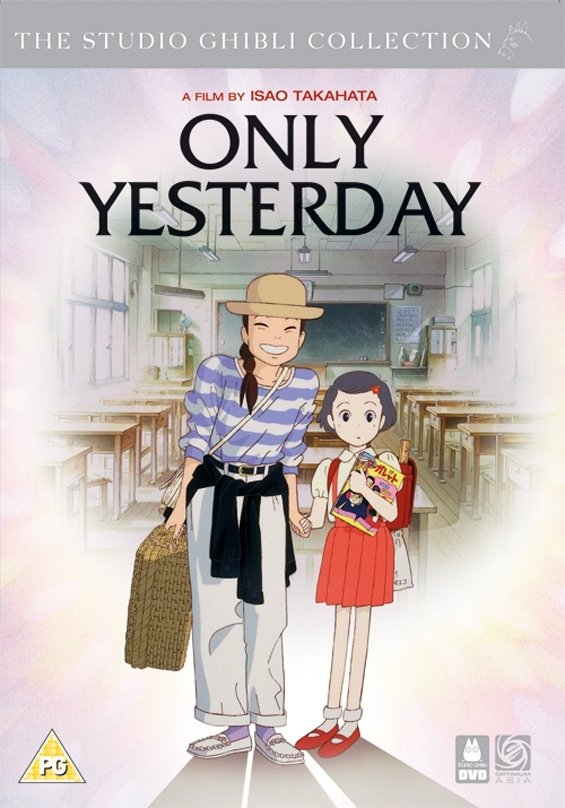
onlyyesterday_54849I vaguely recall seeing Porco Rosso (1992) back in the early 1990s, but the first Studio Ghibli film I ever watched knowing it was a Studio Ghibli film was 2001’s Spirited Away. It was only a couple of years after its release. I’m not a huge fan of anime or animated films, though I’ve seen most of the big ones, so I only bothered adding later Studio Ghibli films to my DVD rental list if someone had recommended them. And that’s how I came to see Howl’s Moving Castle (2004) and Tales from Earthsea (2006) (though the latter wasn’t exactly “recommended”…).

But a couple of years ago, I decided to work my way through all of the Studio Ghibli films, so I stuck them on my DVD rental list in their order of release. Nausicaä of the Valley of the Wind (1984), which is not strictly speaking a Studio Ghibli film, I found an interesting, if slightly odd, sf film. Laputa – Castle in the Sky (1986) was also fun, especially some of the steampunkish bits. Grave of the Fireflies (1988) I described here on my blog last year as a “sad story spoiled by mawkishness”. My Neighbour Totoro (1988) and Kiki’s Delivery Service (1989) I thought were overly twee.

But then last weekend I watched Only Yesterday

Released in 1991, Only Yesterday is unlike the other Studio Ghibli films in that it is a realistic drama, and contains no genre elements at all. It was adapted from a manga of the same title by Hotaru Okamoto and Yuko Tone, and written and directed by Isao Takahata. The plot is relatively straightforward. Taeko, a young woman resident in Tokyo, decides to get away from city life for a while and travels out into the country to help a relative with the safflower harvest. During the train journey to Yamagata, Taeko remembers incidents from her life when she was ten years old. The film then flips back and forth between Taeko’s present in 1982 and her childhood in 1966. The sections set in the past are drawn with backgrounds which resemble watercolours, while the 1982 sections are much more realistic – and in many cases, quite beautifully painted.

Given my previous experience with Studio Ghibli films, Only Yesterday was completely unexpected. It wasn’t just that the quality of artwork seemed to stand out more because it depicted the real world, but also that the characters were so well-written. Taeko is both an interesting and engaging heroine, at both ages, and the two narratives played off each other extremely well. Even the supporting cast were good – from the grandmother who’s perhaps a little too blunt, to Toshio, the love interest, whose understated matter-of-factness anchors one of the film’s best scenes. And the ending, where Taeko’s childhood self and her school friends appear and help her make a decision which changes her life, was beautifully judged. I’ll not be surprised if this film makes it onto my best of the year list.

Meanwhile, I still have eleven Studio Ghibli films to watch, though I suspect I’ve just watched the best of them…