It Doesn't Have To Be Right…

… it just has to sound plausible


36 Comments

Summer reading #1: The Moon is Harsh Mistress

I’m starting to wonder what I’ve done that you should all hate me so much you’d make me read Robert Heinlein’s The Moon is a Harsh Mistress. Because surely you knew it was going to be worse than I expected. I had reasonable expectations for it – after all, it’s in the SF Masterworks series (that’s the edition I own – that’s the old, numbered SF Masterworks; it’s number 72). I’d also read a bunch of Heinlein back in the dim and distant past and remembered enjoying them… Also, the first true sf novel I ever read, aged ten or eleven, was Heinlein’s Starman Jones, Anyway, I’d expected to not like The Moon is a Harsh Mistress, much as I’d not liked Stranger in a Strange Land a few years ago when I reread it…
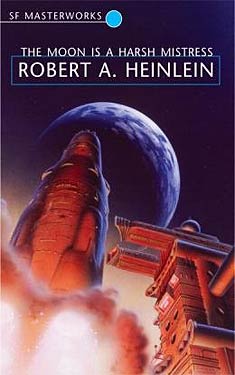
the-moon-is-a-harsh-mistress

But it’s worse than I imagined. It really is. Given the size of Heinlein’s oeuvre, am I supposed to seriously believe The Moon is a Harsh Mistress is the best of his books SF Masterworks could get the rights to? Because it is shit, so shit that I am revising my opinion of all the people I know who insist it is a good book… Perhaps that’s a bit harsh, but I can see no good reason why it is so well-regarded. In fact, I suspect its reputation is symptomatic of everything that is wrong with the genre and fandom.

The Moon is a Harsh Mistress is a first person narrative by Manuel Garcia O’Kelly who speaks in some sort of pidgin English throughout. It’s supposed to be a creole, the sort of English spoken by people who came from several different language groups but settled on English as a lingua franca. A lot of those people were apparently Russian speakers. You can tell this because sometimes Manuel, or Mannie, forgets to use the indefinite article and sometimes he forgets to use the definite article and sometimes he even forgets to use the first person pronoun. Oh, and his dialogue is liberally peppered with da, nyet and spasebo – because of course the last words you learn in any new language are “yes”, “no” and “thank you”. Mannie, or Man, is a “computerman” in Luna City, which is the sort of computer-related job someone who knows nothing about hardware, software, databases or systems administration might imagine an IT professional would do. It takes Mannie a while to realise, for instance, that a vocoder doesn’t need to actually generate sound in order to use the telephone. To be fair, The Moon is a Harsh Mistress was first published in 1966 (so it’s as old as me but, to be honest, I think I’ve aged better – and I’m no oil painting), but even back then computing was a deal more sophisticated than represented by Heinlein’s invented late twenty-first century (the DEC PDP-10, for example, was introduced in 1966).

Mannie spends a lot of time working on Luna City’s High-Optional, Logical, Multi-Evaluating Supervisor, Mark IV – HOLMES IV – which is what’s known in the IT industry as a “bollocks backronym”. The HOLMES IV is Luna City’s master computer – it runs everything. Because in the future, we will have a Giant Computer Brain in charge of everything, just like we had in the past– no, wait. Anyway, the HOLMES IV is so sophisticated it has developed sentience. But only Mannie knows this. The computer – nicknamed Mike for Mycroft Holmes by Mannie – has not made any effort to hide the fact it is an AI, but everyone else is so stupid they haven’t noticed. Except Mannie.

One day, Mannie decides to attend a political meeting. There he meets Wyoming Knott, a beautiful blonde political agitator. The “beautiful” bit is important, because every male that meets her has to look her up and down and whistle appreciatively. This is common practice when meeting an attractive female on the Moon. All women exist to be ogled by men, but it’s okay because they like it and they’re really in control. We know this from, well, from every book Heinlein has written, pretty much. There is in fact a nice long speech in Stranger in a Strange Land by one of the female characters explaining why it is a Good Thing for her to show off her naked body to dirty old men (p 280 in my NEL edition).

Luna City is an ex-penal colony and is administered by the Lunar Authority, headed by a Warden, and is just as draconian as it was back when everyone was a convict or transportee. Those at the meeting want to change that. The Warden gets wind of the meeting and sends along some goons. They try to arrest everyone present but instead the attendees kill them. Have a problem with someone on the Moon? Kill them. Disagree with someone on the Moon? Kill them. Don’t like someone’s politics on the Moon? Kill them. This is how Luna City with its “no laws” works. They kill each other. As a result, they’ve learned to be polite and courteous to each other. So that’s all right then. They might kill a person for the slightest of infractions, but at least they say “please” and “thank you” – well, they say spasebo.

A case in point: an Earth tourist who is supposed to be some sort of French/Scottish aristocrat, but is a “dinkum cobber” nonetheless – did I mention the really annoying Comedy Australian used in the novel? Anyway, said tourist is on the receiving end of some flirting by a fourteen-year-old girl in a bar, so he moves in for “a kiss and a cuddle”… only to be hauled away by a bunch of male teenagers. Rather than just kill him, their first inclination, they uncharacteristically decide to look for a judge, and come across Mannie, who stands in for the absent judge. Cue lecture on Luna City mores, and everyone gets fined. The tourist had no intention of having sex with the girl, that would be statutory rape. Except there’s no such thing on the Moon. If she wanted sex, then it’s fine. Except… kissing and cuddling a fourteen-year-old girl is still skeevy as fuck:

Had wandered into a taproom which lets stilyagi hang out, a sort of clubroom. This simple female had flirted with him. Boys had let matter be, as of course they had to as long as she invited it. But at some point she had laughed and let him have a fist in the ribs. He had taken it as casually as any Loonie would… but had answered in distinctly earthworm manner; slipped arm around waist and pulled her to him, apparently tried to kiss her.

LaJoie shivered. “At her age? It scares me to think of it. She’s below the age of consent. Statutory rape.”

“Oh, bloody! No such thing. Women her age are married or ought to be. Stu, is no rape in Luna. None. Men won’t permit it…” (p 164)

This is a fourteen-year-old girl, remember. Note that the situation is still her fault, that girls of her age are expected to be married, and that men get to decide what is and what isn’t rape.

The whole idea of a society succeeding because its members are free to kill each other without consequence – other than becoming a target for another murdering citizen – is just so stupidly dumb, I’m amazed Heinlein ever thought it workable. No, it wouldn’t lead to polite people, it would lead to dead people. And the survivors would be those more willing to kill than anyone else. This is not a village in some foreign land, either. It is on the Moon, where people cannot survive without technological assistance. So what happens if you kill the person who runs the air-plant? Everyone dies.

Heinlein is fond of pointing out that air is free on Earth but not on the Moon. Except, well, it is. You can crack it out of the regolith. And how else would the Moon be able to support a population of several million if it didn’t use such a method to generate air? The power for the process is also free – solar power. And, rather than measure living space in area, Heinlein uses the term “cubic”. Not volume, which is to three dimensions what area is to two dimensions. Cubic. Stupid.

Heinlein has been celebrated within science fiction as some sort of proto-feminist because of his “strong female characters”. While he certainly gives them voices in his narratives, and even occasionally some agency, they are still usually wives and mothers. Which is what all of the women in The Moon is a Harsh Mistress are – even Wyoh, the beautiful blonde political agitator all the men whistle at, who effectively disappears a quarter of the way into the story, and is only wheeled out whenever Mannie needs a hero’s welcome. (She marries into Manny’s extended family and becomes a hairdresser – I kid you not.) Mannie needs several hero’s welcomes because he’s an important figure in Lunar city’s fight for revolution. Not because he is political, not because he is smart, not because he is a charismatic leader. No, because he is the only person who knows the Giant Computer Brain is actually sentient, and he is friends with it. Bernado de la Paz is the brains behind the revolution – and he’s another Heinlein mouthpiece, full of shit which he spouts with as much authority as Heinlein can muster in his narrative.

The revolutionaries form a secret terrorist organisation, and the Giant Computer Brain impersonates their invented human leader, Adam Selene. Things start to get a bit hairy, so the Warden calls in the troops. But, of course, these trained military professionals are no match for spree-killing Loonies with no moral compass, and are readily vanquished. When Earth tries to get even heavier, the revolutionaries threaten to bomb cities using rocks fired from the mass-driver they normally use to send grain. Mannie and the Prof travel to Earth in order to argue their case before the various nations of Earth, but the perfidious politicians of Earth stab them in the back. Of course, what Mannie and the Prof are doing isn’t politics – that would make them just as bad as the nasty earthworms. There is another attack on Lunar City by Earth forces, and again it fails. As does a second attack. The Loonies bomb Earth, the Earth accepts Luna’s independence. The Prof is elected leader but dies, so Mannie and Wyoh take over. But they don’t like what the revolutionary party has become, so they resign.

The Moon is a Harsh Mistress irritated me from the first page, and as the story progressed, and Heinlein spouted his bullshit through his various characters and manipulated situations to make points with all the subtlety of Arnold Schwarzenegger, so I grew to really dislike the book. I’d throw it, but it’s number 72 in the SF Masterwork series and that would make my collection incomplete. But I shall certainly never read it again. And I will cheerfully mock anyone who claims it as a classic of the genre. It is didactic in the worst possible sense, its politics are risible, its moral landscape is hopelessly confused, and it reads like the wet dream of the dirty old uncle everyone ignores at the family barbecue.
5 Comments

A hard defence

On his blog, Paul Kincaid has been writing recently about hard science fiction and its politics. It all started with a reprint of a piece originally published in a magazine in 2008, in which Paul argued that hard sf was intrinsically right-wing – see here. Which promptly generated some comments,and which in turn Paul replied to with a second post – see here. I was one of the commentors. Well, I have written hard sf – the Apollo Quartet has been described as “art house hard sf” – and I certainly don’t consider myself right-wing. Quite the opposite, in fact. But that’s me, the writer; not the subgenre.
It seems to me there are two problems with Paul’s thesis. First, he’s defined hard sf as Campbellian sf. While it’s certainly true the origin of hard sf lies in the pages of Astounding under Campbell’s editorship, and Campbell had a very heavy hand on the tiller, that was fifty or more years ago. Genres and subgenres change, definitions evolve. The term space opera was originally coined as a pejorative; it isn’t one now. The generally accepted definition used today for hard sf is based upon either the sciences a text references – the so-called hard sciences of physics, chemistry, cosmology, etc; or the rigour with which the science is treated in the text. Nothing in that definition mentions politics.

Paul’s argument – and I hope I’m paraphrasing correctly – is that the rigour, ie, the adherence to inviolable natural laws, in hard sf is subsequently transferred to human laws and, as a result, hard sf presents authoritarian spaces in which to tell its stories. The example he uses is Tom Godwin’s ‘The Cold Equations’ (a story he discusses in an earlier blog post – see here – reprinted from Vector, the critical journal of the BSFA). ‘The Cold Equations’ has long been seen as the epitome of hard sf, but I don’t think it actually qualifies. It’s certainly the very definition of Campbellian sf, but I contend that Campbellian sf no longer maps onto hard sf.

In a nutshell, the plot of Godwin’s story is as follows… A rescue starship is carrying vital medical supplies to another world. A young girl stows away aboard the starship because she wants to visit her brother on that world. But her presence aboard means the starship is overweight and cannot land. The only excess weight which can be ditched in order to safely land with the medical supplies… is the young girl herself. Clearly, the situation is completely artificial: why does the starship only carry the exact amount of fuel needed for the journey and its load? Surely there is something else aboard which weighs as much as, if not more than, the girl which could be ditched instead? The only fixed limit in the story, the only natural law in the story, is the amount of energy the pilot can get from the fuel he carries. That is unchangeable. Though the plot of the story is predicated on that limit, it uses arbitrarily applied human limits to present a dilemma… and then completely fails to solve it.

Hard sf generally does the opposite: it presents dilemmas predicated on fixed natural limits, and then finds solutions using human ingenuity. (Godwin apparently submitted three different attempts at such a resolution, but each was rejected by Campbell, who wanted the girl to die.)

Of course, that’s no more comprehensive a description of hard sf than Paul’s reliance on ‘The Cold Equations’ as a defining text. Certainly, “Analog-style” stories fit that mould (Astounding renamed itself to Analog, so Campbell’s legacy does continue to some extent), and there are plenty of examples of such hard sf stories by the likes of Clarke, Clement, Bova, Steele or Nordley. But then what about ‘Hardfought’ by Greg Bear – that’s certainly hard sf, but it’s hardly Campbellian. Or hard sf stories by Kim Stanley Robinson, Stephen Baxter, Paul McAuley, Joan Slonczewski, Linda Nagata, Julie E Czernada, Catherine Asaro or CJ Cherryh…

I don’t think it follows that authoritarian spaces must result from a strict adherence to natural laws. Some hard sf stories are set on Mars, but that doesn’t mean all hard sf stories are. Likewise, not all stories set on Mars are hard sf. It doesn’t help that most writers of hard sf appear to have politics that lean to the right – either conservative or libertarian. But that’s an attribute of the writers, not of the subgenre in which they’re writing. I can’t think of any Marxist hard sf stories off the top of my head – in fact, Marxist sf stories of any type are in remarkably short supply. But there are certainly hard sf stories set in the USSR (as was), such as Fellow Traveler by William Barton and Michael Capobianco, or ‘Red Star, Winter Orbit’ by William Gibson and Bruce Sterling (which appeared in Mirrorshades: The Cyberpunk Anthology but is patently not cyberpunk). The USSR also makes an appearance in Kim Stanley Robinson’s Icehenge, a hard sf novel which is not right-wing. Nor indeed is his Mars trilogy, perhaps the most-celebrated hard sf series of recent decades.

Certainly a lot of hard sf is right-wing, especially the near-future variant. But that’s a characteristic brought to it by the writers, not something innate to the subgenre. That ‘The Cold Equations’ presents a right-wing aspect is irrelevant, because it is not emblematic of hard sf, even if it is emblematic of Campbellian sf. The two modes have diverged in the forty-two years since John W Campbell died, and whatever artificial constraints exist in Godwin’s story – and they were editorially, not authorially, applied – I don’t think they arise from a rigorous adherence to purely natural laws.


4 Comments

Goings on and off

Last weekend saw numerous awards handed out in science fiction and fantasy. Sadly, Adrift on the Sea of Rains didn’t win the 2012 Sidewise Award for Short-Form Alternate History. That went to Rick Wilber’s ‘Something Real’, first published in Asimov’s and apparently about a baseball player who turns spy during an alternate WWII. Still, I was surprised, and very pleased, to be shortlisted – and while The Eye With Which The Universe Beholds Itself may be predominantly hard sf, Then Will The Great Wash Deep Above is pretty much pure alternate history… So maybe next year.

Of course, the best-known award handed out over the weekend was the Hugo Award. In sixteen separate categories. The Hugo is a popular vote award, and its results reflect that. The winner was John Scalzi’s Redshirts, a book I will admit appeals to me not one bit, nor from the reviews I’ve read would it seem to qualify as the best science fiction novel published in 2012. But that’s the way the award works. Good to see Pat Cadigan win a long-deserved Hugo for best novelette, though I think it’s long past time the category was hurled into the outer darkness. The short story ballot contained only three stories and I was disappointed Aliette’s ‘Immersion’ didn’t win, but Ken Liu’s brand of sentimentality seems to be serving him well – this is his second Hugo win in two years. I’m not much interested in the other categories, especially those which cling to old modes of fandom for dear life and are being badly distorted by recent years’ results.

Other big sf news includes the death of Frederik Pohl at the age of 93. He wrote a huge number of books, and I think I’ve read around a dozen of them. Some of them I remember as pretty good, possibly even genre classics – like Gateway and Man Plus – but others seemed very forgettable, such as Narabedla Ltd, Mining the Oort or Homegoing. But that’s an occupational hazard of being so prolific, or having so long a career. However, Pohl was also an influential editor and like a lot of sf authors and editors of his generation helped shape the genre of science fiction as we now know it – for good or ill. Pohl is the second author of his generation to die this year. The other was Jack Vance, who was also very prolific. I think I’ve read about two-thirds of Vance’s sf output. He died back in May. Vance’s fiction had a very distinctive voice, and while his novels were of variable quality they were also very recognisable. He wrote pulp, but it was better-than-average pulp, and occasionally it transcended its pulpish origins. While it’s always sad when writers whose fiction has brought you pleasure die, the books of the late Iain Banks meant far more to me than those of Vance or Pohl.

On a personal note, I recently dropped the price of the paperback edition of The Eye With Which The Universe Beholds Itself for UK buyers by £1 on the Whippleshield Books online shop, so order your copy now. I’ve dropped the ebook price as well – across all platforms and sites. Also, you can now listen to the audio version of Adrift on the Sea of Rains on Starship Sofa (part one is currently up, I assume part 2 will appear this week). Rather than have narrator Logan Waterman read out the glossary, we agreed I would post it online – you can find it here.

I also decided a couple of weeks ago that Whippleshield Books is going to publish a series of mini-anthologies in paperback and ebook, each one containing no more than four or five stories. The submission period doesn’t open until 1 November, and I’ll post more about it then, but here’s the original announcement. I’m also playing around with an idea for a non-genre-specific ebook-only mini-anthology series, but we’ll see how Aphrodite Terra goes. Meanwhile, Apollo Quartet 3 Then Will The Great Wash Deep Above is taking shape nicely. I hope to be able to post the cover art and the back-cover blurb soon.

SF Mistressworks has had to go to a fortnightly schedule. I’ve been providing every other review for the last twelve months, and writing a book review once a fortnight was affecting all the other things I have – or would like – to do. Every other review will still be by me – at least until I build up a bigger backlog of reviews – but now I only have to write one a month. I’d been hoping to get more short fiction done this year but had been finding it difficult. This should help. Incidentally, I have no plans to let SF Mistressworks lapse or close. It’s been going now for over two years, and I plan to keep it running until there are no more eligible books to review – although given its policy of allowing multiple reviews of books, that might never happen…

My list of 100 Great Science Fiction Stories by Women continues to get hits every day – in fact, it’s the most popular post on this blog by quite a margin. I never managed to figure out how many times it was reblogged on Tumblr, but I think it was in triple figures; and it was also linked to by a number of blogs and other sites. Perhaps it’s time to start working on a 100 Great Science Fiction Novels by Women list… though I’d expect that to prove a lot more contentious (“where’s x?! How dare you miss out y?!). We shall see.

Meanwhile on this blog, I shall continue to write about the books I’ve read, post photographs of the books I’ve bought, try and define science fiction, post pictures of cool aircraft, ships, submersibles, cars, Brutalist buildings and futurist fashions… and write posts on any other topic which takes my fancy at the time. Blogging is allegedly on its way out – why generate original content when you can just reblog someone else’s content? why comment on something when you can just click “like”? – but I think I’ll carry on doing it for a while yet…


5 Comments

Biblioholics not-so-anonymous

Some people go “ooh shiny”, others go “ooh book”. Clearly, I belong to the latter category. And just to make matters worse, I even make books myself. As Whippleshield Books, I add to the great mass of books that exists in the world today – and the somewhat smaller mass of books that exists in my house. Only two so far, but a third later this year and at least two next year. Meanwhile, I continue to buy books by other people because books. Like these ones:

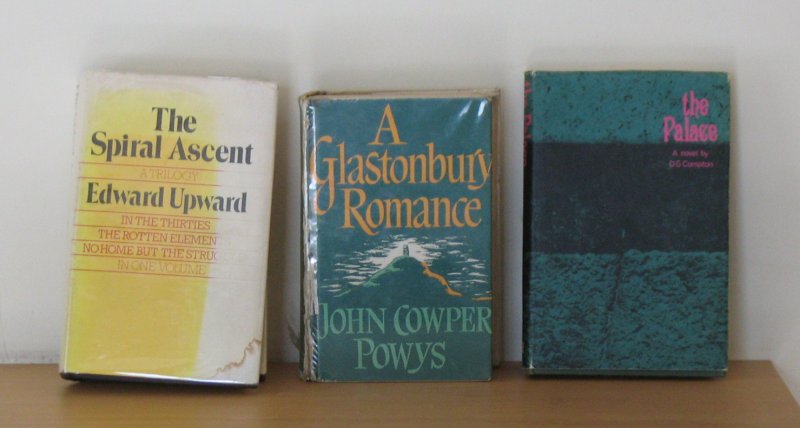
20130831a

A trio of hardbacks: The Palace is DG Compton’s one and only (as far as I’m aware) mainstream novel, and very hard to find. I don’t think it even made it into paperback. I found this copy on abebooks.co.uk, it was not cheap. A Glastonbury Romance was a charity shop find; it’s ex-library and a bit tatty, but never mind. The Spiral Ascent is… Well, you see, it goes like this: I had a copy of the first book of the trilogy, In the Thirties, in its original Penguin paperback edition. I wanted books 2 and 3 to match… but I couldn’t find them. So I decided to get the omnibus edition instead – and I found this signed edition on abebooks.co.uk. The cover is a faded but still. Signed. Incidentally, you can download the entire trilogy in PDF format from here, but still… books. You can also get some lovely small press books by Upward from Enitharmon Press here.

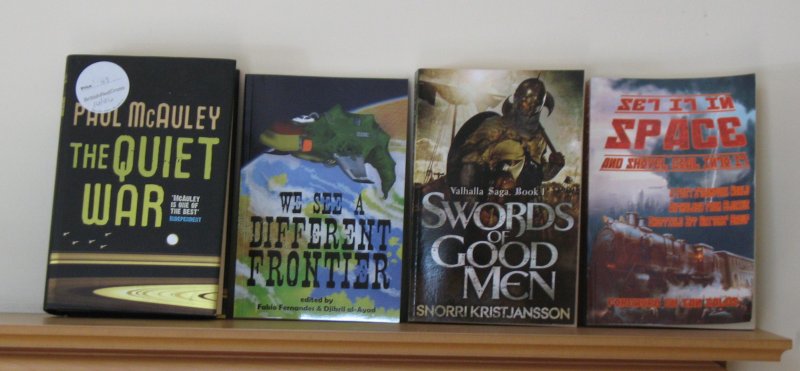
20130831b

Last year, I bought a copy of The Quiet War on eBay because the seller said it was the hardback edition. It wasn’t, it was a trade paperback. I complained and received a partial refund. Earlier this year, I read the book… and I had problems with it. And then this month, I found this hardback copy of it in a local charity shop. So of course I bought it. Bargain. We See A Different Frontier is a collection of postcolonial genre stories. Swords of Good Men I have to review for Interzone. Fantasy, meh; but… Vikings. Set it in Space and Shovel Coal into it is the second anthology by the Sheffield Science Fiction and Fantasy Writers Group, and the introduction is by Yours Truly.

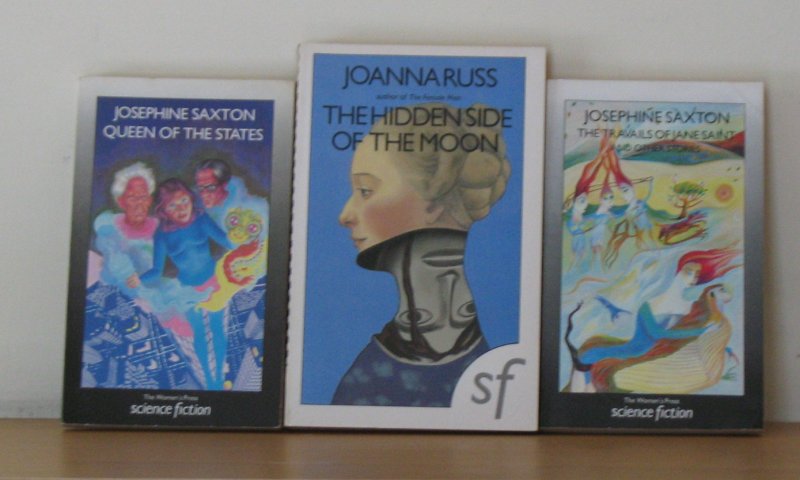
20130831c

Three Women’s Press sf books for the collection – I now have two dozen of them – sent to me by The Space Merchants in exchange for a copy of Night and the Enemy, a graphic novel by Harlan Ellison and Ken Steacy I no longer wanted. Expect to see these three books reviewed on SF Mistressworks at some point.

20130831d

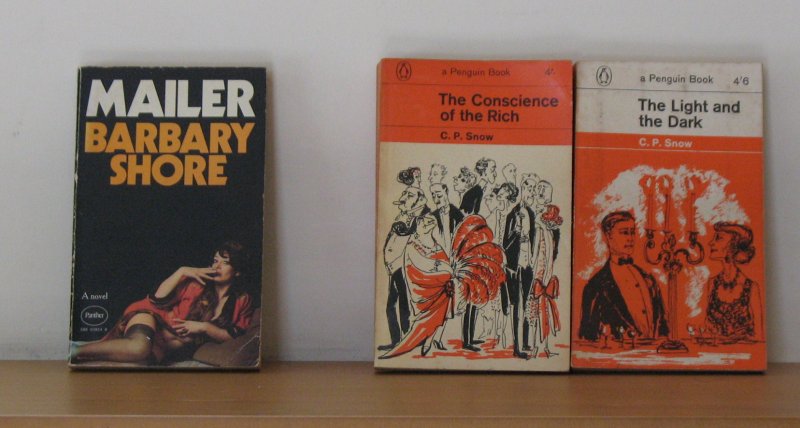
Three paperbacks by two dead white males. I’ve read the first book of Snow’s Strangers and Brothers and I plan to read the entire series. The Conscience of the Rich and The Light and the Dark are books three and four respectively (by internal chronology, not year of publication). Of course, I will only buy matching editions – the 1960s Penguin paperback editions. A local charity shop had a bunch of 1970s Norman Mailer paperbacks in – just look at that cover – and I picked out Barbary Shore. I may go back and buy the others, if they’re still there.

20130831e

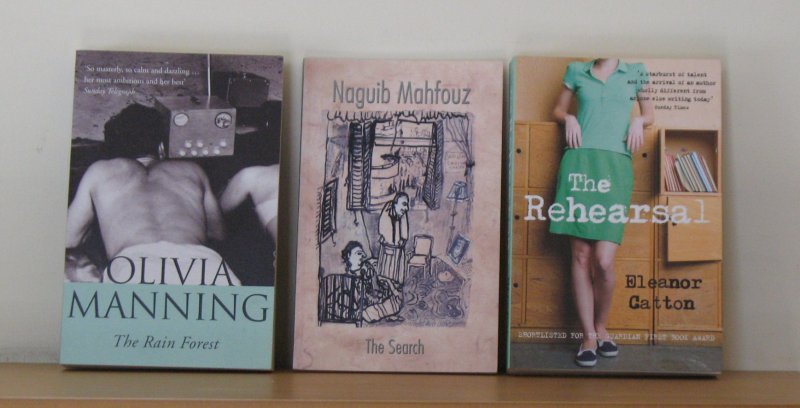
Three charity shop finds. Eleanor Catton’s The Luminaries has been longlisted for the Booker and looks very interesting, so I was quite chuffed to stumble on a copy of her first novel, The Rehearsal… which David Hebblethwaite tells me is the best book he’s read in the past five years. You don’t expect to find Naguib Mahfouz novels published by the American University in Cairo Press in Yorkshire charity shops, but I found one. I read Mahfouz whenever I stumble across copies of his books. I still have his Cairo trilogy – in Arabic, of course – to read… Olivia Manning’s The Balkan Trilogy and The Levant Trilogy – also adapted for television as Fortunes Of War – are brilliant, so she’s a name I certainly look out for during my frequent trawls through books in the local charity shops. The Rain Forest was her last novel.


3 Comments

Adrift on the Sea of Rains: the podcast

An audio version of Adrift on the Sea of Rains has just been published by Starship Sofa – see here. I didn’t really believe the story would work as a podcast but, with some careful editing by Adam Pracht and myself, I think we managed it. Go and check it out and you’ll see what I mean.

However, we couldn’t really have the narrator read out the glossary, and since that’s part of the whole Adrift on the Sea of Rains reading experience, I’ve published it on the Whippleshield Books blog, both as a blog post and a downloadable PDF. See here.


2 Comments

The cost of doing business

During the Bank Holiday weekend, while working on Apollo Quartet 3: Then Will The Great Ocean Wash Deep Above, I stumbled across a book I’d not known about and which would prove very useful for research. So I promptly tracked down a copy on abebooks.co.uk and ordered it. As I added it to the bibliography, it occurred to me that I’d spent more on research books for Then Will The Great Ocean Wash Deep Above than I had for the previous two novellas of the quartet.

It’s a somewhat unfair observation as both Adrift on the Sea of Rains and The Eye With Which The Universe Beholds Itself were written chiefly using books I already owned – books I’d collected for my A Space About Books About Space blog over a number of years. But because Apollo Quartet 3 is partly based on something about which I don’t already own reference books… I had to buy them. But exactly how much had I spent?

Totaling up the cost of all the books, and DVDs, mentioned in each of the Apollo Quartet books’ bibliography proved a bit of an eye-opener. It looked like this:

AQ1 £480.02
AQ2 £452.81
AQ3 £477.77
Grand Total £1410.60

That’s a hidden cost of writing, that is. Yes, I write science fiction, so I could just make it all up. And it would cost me nothing. Or I could just rip off ideas from other science fiction novels (I have quite a few of them too). On the other hand, maybe I could borrow books I need from the library – although I suspect at least 80% of the ones I used wouldn’t be available, even through inter-library loans. However, if I include only the books I bought specifically as research for the three novellas, then the figures are considerably reduced:

AQ1 £9.86
AQ2 £62.52
AQ3 £262.93
Grand Total £335.31

That’s not to say that reading all those books for research has been a chore. Having said that, don’t read about the Mercury 13 unless you need more anger in your life. But, on the whole, everything I’ve read for research has proven very interesting. Who knows; I’ve read books on women aviators before – such as Diana Barnato Walker’s Spreading My Wings – and so I might well have sooner or later ended up reading about the Mercury 13 anyway. I’ll certainly be hanging onto the books, and perhaps even re-using some of the research in later fiction… So it’s not like they were a waste of money.

Besides… books.


4 Comments

Cold War (book) pron

So Jared of pornokitsch.com and I had this cool idea: we would each post something about the various books we owned which were about, or set during, the Cold War. His are here. I’m old enough to remember the Cold War, although not all of it, of course. I’ve not been around quite that long. Anyway, I had a quick look through my book collection and discovered that I had almost 100 books on military aircraft used during the 1950s and 1960s and 1970s. I don’t remember buying so many. Some, I can pass off as research for various pieces of fiction. Honest. But others… Er, no. I put together a post about some of these aircraft books, but then I realised it wasn’t very interesting. So I binned it. Maybe I’ll inflict it in you another day. Instead, I decided to write about some other Cold War books instead… And yes, one or two of them are about military aircraft. But never mind.

One feature of the Cold War was the Space Race. Which didn’t actually amount to a race. At least, NASA always insisted it was never one. But then they did lie on occasion. Not about putting a man on the Moon, however. That was real. And I find it really annoying when people claim it was all faked. But anyway, the Cold War… Science fiction was more than happy to take the Space Race and run with it – and extend the Cold War to low earth orbit, the Moon, and wherever else US sf authors and their manifest destiny thought the Soviets might try and compete with them. Even as late as 1984, Kim Stanley Robinson had Americans versus Soviets in space in his Icehenge. The following sf novels, however, actually predate Gagarin’s momentous flight… which means they get a lot of the details, er, wrong. But never mind.

cold_war01According to the back cover of First on the Moon (1958), it is “a thrilling adventure of the very near future. Written with up-to-the-minute accuracy by a professional aviation research engineer…” Aviation research is, of course, all about spaceflight. Not. So it’s no surprise that First on the Moon hews pretty closely to early 1950s visions of missions to the Moon. But we mustn’t forget those pesky Soviets, who are determined to use “assassination and sabotage”, or “an H-bomb loaded rocket missile”, or even “a Red spaceship with a suicide crew” to prevent the noble Americans from claiming the Moon for “Old Glory”. First on the Moon was Jeff Sutton’s debut novel, and it’s the sort of alarmist Cold War claptrap that normally appeared from publishers of cheap thrillers rather than genre imprints. For the record, the Americans get to the Moon, but then there’s a game of cat and mouse between astronauts and cosmonauts, as illustrated by the cover art. I’m assuming the guy in the red spacesuit is a Russian, because of course being Reds they’d have spacesuits that colour. You can just make out that the bloke shooting at the Red is wearing a blue spacesuit. He must be a good guy, then.

cold_war03cold_war04Bombs in Orbit (1959), Sutton’s second novel, is more of the same. Not only does the cover art feature a pair of Convair F-102 Delta Daggers (Sutton worked for Convair at the time), which of course can’t reach orbit, but the back cover boasts the immortal strapline  “SPACE FROGMEN!” (which, I freely admit, is what prompted me to buy the book in the first place). The titular bombs… “Now the Russian space lead had taken a fatal turn – they had three controlled H-bomb Sputniks circling the Earth ready to drop when and where they wished.” Oh no! Not the H-bomb Sputniks! Bombs in Orbit is “a novel that cannot be put down until the last taut page.” This is blatantly untrue as I have done it many times.

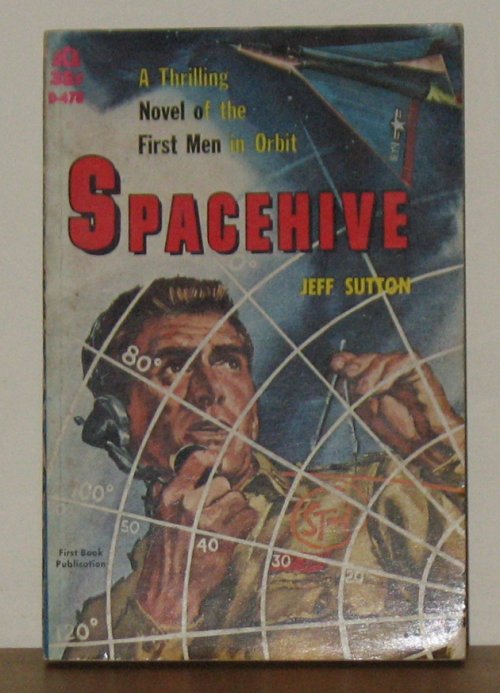
cold_war05Sutton continued writing his Cold War space novels with Spacehive (1960), which boasts – I think – another Convair delta-winged fighter on the cover. I’m not sure which one, however; perhaps it’s one of the research aircraft used when they were developing the B-58 Hustler supersonic bomber– Ahem, anyway… The Spacehive is some sort of project in low earth orbit – “The United States was tossing the parts of Project Spacehive into orbit like bits of a jigsaw puzzle” –  but the US has not quite thought things through because “how do you get any work done when you’re a sitting duck every ninety minutes for Russian rocket snipers?” Oh no! Not the Russian rocket snipers! I’ve yet to read this book, or Bombs in Orbit (all the quotes here and above are taken from the back-cover blurbs), but they but look very… manly, all stony glances and blazing eyes. And gruff, lots of gruff.

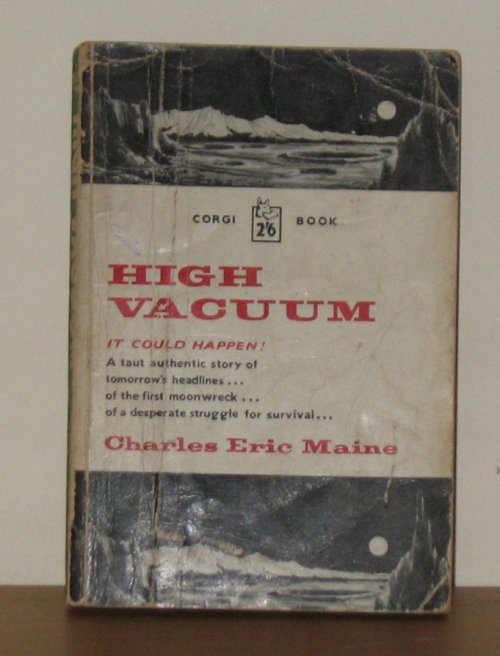
cold_war02Charles Eric Maine, on the other hand, was a Brit and an actual science fiction writer. High Vacuum (1956) was his fourth novel and is a straight-up Moon disaster novel. A US rocket crashes in the Sea of Rains – a little bit of prescience by him there (I mean Apollo 15, which of course didn’t crash, but you know what I mean; and not Adrift on the Sea of Rains). “There is enough oxygen to keep alive four survivors for five weeks – or two for ten – or one for twenty…” It’s fortunate the crashed astronauts haven’t lost their ability to add up or take away. In actual fact, only three astronauts survive the crash and must struggle to survive… and try to figure out how to get back to Earth – um, this is starting to sound a little familiar…

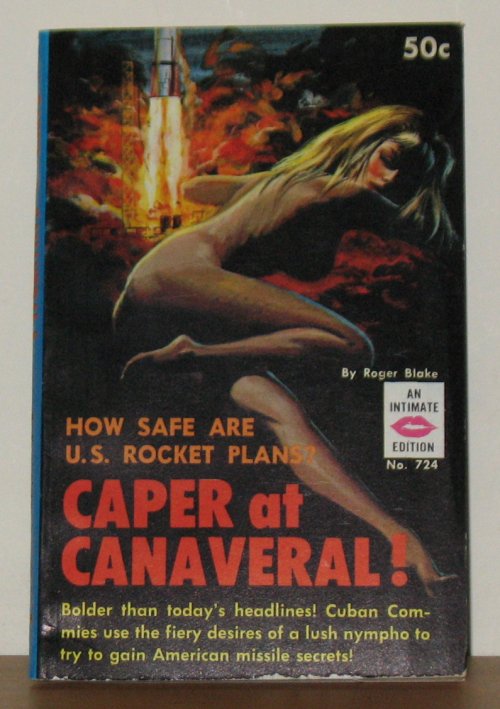
cold_war07cold_war08The moment I saw Caper at Canaveral (1963) by Roger Blake on eBay, I had to have it. Just look at that strapline: “Bolder than today’s headlines! Cuban Commies use the fiery desires of a lush nympho to try to gain American missile secrets!” They don’t write them like that any more. Fortunately. And the back-cover’s no better, with its “COUNTDOWN FOR SEX!”. And just in case you don’t know what that is: ” 5 4 3 2 1″. The blurb is, well, it’s… “Gary’s public relations job meant getting the top scientific brains to join his firm. And his formula for winning them over was simple: FREE WHEELING SEX!” So there you go, back during the Cold War even the pencil-necks were manly stallions.

I did say I was going to mention some books about Cold War military aircraft, but in my defence they’re not real Cold War military aircraft. They are in fact aircraft that never got off the drawing-board or beyond the prototype stage.

cold_war10

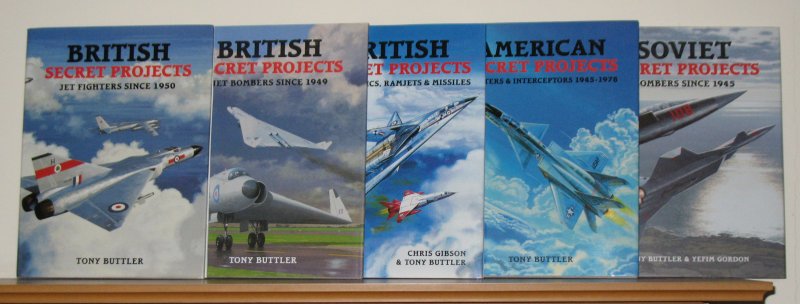
There were some pretty cool ideas floating about at the time – all in an effort to go higher, further and faster than the enemy. Midland Publishing specialises in military aviation books, and has produced a series on the, er, blue sky thinking prevalent at the time. I don’t have all of the Secret Projects books – there’s another British Secret Projects (which I have but haven’t included here), an American Secret Projects on bombers which I don’t own, and a Soviet Secret Projects on fighters which I also don’t own. Midland have also published several books on Luftwaffe Secret Projects. But Nazi secret technology and occult flying saucers is probably a post for another day…

cold_war09Some of those proposed Mach 3 bombers and fighters may have been cool, but the coolest machine of all was the Caspian Sea Monster. Caspian! Sea! Monster! It was actually an ekranoplan, or ground effect vehicle, which flew a handful of metres above the ground or sea surface. Only the Soviets bothered to build them, and some of them really were monsters, huge things capable of carrying tanks at 500 kph. Unfortunately, they did require a very placid sea-state, which limited their usefulness. Still, they are cool. An ekranoplan makes an appearance in Sebastian Faulks’ James Bond novel, Devil May Care, and I believe Charlie Stross has mentioned them too in his fiction. But really they should be in every story ever written.

cold_war11After all that money spent designing and building aircraft that could fly as fast as possible, during the 1960s a bunch of politicians decided supersonic bombers were an inefficient method of delivering nuclear warheads to the enemy. Build a faster bomber, and the enemy only went and spoiled things by building a faster interceptor. And they were expensive too. Even when they were controlled by Giant Computer Brains, like SAGE – which was used to direct interceptors to bombers entering US airspace. At the time it was built, SAGE was the biggest computer in the world, with each of its 24 machines weighing 250 tons. Yay for miniaturisation and the integrated circuit. Anyway, no supersonic bombers and no supersonic interceptors. Instead, it was all about ballistic missiles. These were buried in silos hidden in the countryside, or carried on submarines. I don’t have any books on ballistic missile submarines but I do have this one on missile silos. Nowadays, you can buy abandoned missile silos, and several have been converted into homes. We may laugh now, but they’ll be the ones laughing after World War III…

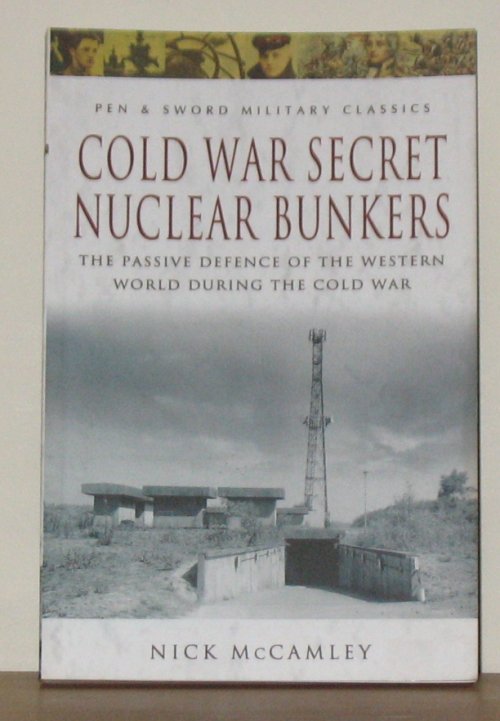
cold_war13Speaking of which, should there be an exchange of missiles, the government and military command structure need somewhere safe to carry on the fight. A nuclear bunker. Or several of them. The general public had fall-out shelters of their own, of course, but they had to build them themselves in their own backyards. It’s doubtful they would have been very effective. The shelters documented in Cold War Secret Nuclear Bunkers – which, of course, are not all that secret anymore – were only for the government and military. And they were pretty damn big. Most have now been abandoned. Of course, fall-out shelters were only effective if you managed to get inside them before the missile hit. In the UK, we had the “three-minute warning”, which didn’t really give enough time to do anything except perhaps say “Oh shit”. The government successfully sold this to the British public as crucial and important because the US told them to. In actual fact, putting early warning stations on British soil gave the US a ten- to fifteen-minute early warning, which was plenty of time for them to see about defending themselves. If the UK got turned into a post-apocalyptic wasteland in the process, why should they care? That’s what allies are for, right? Recently, a military nuclear bunker in Scotland was put up for sale – very useful for the family who needs a Giant Nuclear Bomb Proof Basement.

cold_war12Other countries beside the UK had not-so-secret-now nuclear bunkers. In the US, they had enormous secret underground command complexes built into mountains. Like NORAD, and that one where they keep the stargate. And the ones where they keep all the aliens. Underground Bases and Tunnels was published by Adventures Unlimited Press, which probably tells you all you need to know about it. If you need a hint, here’s the back-cover blurb: “This is a disturbing and important book, revealing a massive level of secret underground engineering activity on the part of the federal government” and “A must read for students of conspiracy, technology suppression, UFOs and the New World Order”. There is a companion volume, Underwater and Underground Bases, but I’ve yet to pick up a copy. All that money Western governments spent on secret bases full of reverse-engineered alien technology, and all they really needed to control their populations was… neoliberalism! And we bought into it, even though it’s all based on a spreadsheet that contains equations that don’t add up. Economics: it’s magical. Personally, I’d sooner governments used alien technology. That would be much more fun.

So there you have it, a small slice of the Cold War in fiction and fact. Four decades of the twentieth century in which the two largest industrial nations postured and blustered… and a complete waste of time. Because the USSR just collapsed on its own. Apparently, when the USSR did crash, many powerful officials in the US intelligence community didn’t believe it. They thought it was a trick. The Soviets were only pretending their entire nation had come crashing down about their ears! In actual fact, they were going to go: Aha! Fooled you, imperialist yankee running dogs! And then invade everywhere. Still, history often makes fools of even the cleverest among us (not that there are any of those in government, of course). But at least the Cold War made an excellent topic for fiction, both science fiction and otherwise. It allowed various writers to fight the good fight under alien skies, or present secret services that weren’t collections of over-educated incompetent nincompoops. At least the Cold War was good for art. And cool aeroplanes. Don’t forget the cool aeroplanes. And the ekranoplans as well, of course. At least the Cold War gave us ekranoplans. And for that we should be properly thankful.


2 Comments

Recent readings since the last recent readings

Books, huh, what’re they good for? No, wait, that’s something else. Books are good for reading, which by some amazing coincidence is just what I’ve been doing recently with some of them. To wit…

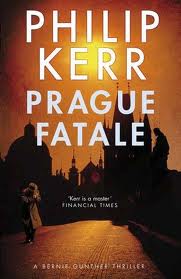
praguefatalePrague Fatale, Philip Kerr (2011) This is the eighth book in Kerr’s Bernie Gunther series, which nearly brings me up to date – there’s one more, A Man without Breath (2013), currently available; although Kerr has not said how many books the series will eventually comprise. Prague Fatale is set during Gunther’s war years. While not a Nazi, and clearly has trouble dealing with them, he’s respected enough by his superiors to be asked to Prague to solve the locked-room murder of an aide to Reinhard Heydrich. The crime itself is plainly an homage to the golden age of crime fiction, and Gunther has little trouble working out what happened. But there’s much more going on in the novel than just a puzzling murder. Early on, Gunther rescues a young woman from an attempted sexual assault, and then helps her out a little with food and money before eventually entering into a relationship with her. He takes her with him to Prague – when all the senior officers have mistresses, and even a select brothel for their use only, why should he not take his girlfriend? As Gunther makes a nuisance of himself at Heydrich’s chateau, asking impertinent questions (not all of which are related to his investigation) and making plain his contempt of the Nazis – so he gradually works out who killed Heydrich’s aide… and how his death ties in with earlier events in Berlin. More than any other of the recent Gunther books, Prague Fatale feels like a crime novel. But it also feels like Kerr is taking the piss a little by presenting the central murder as a locked-room mystery. The solution proves to be relatively straightforward, and delivered almost in passing – but having it as the core of the story turns the book into a warped country house mystery rather than an historical police procedural. It makes for a pleasant change after the complex spy-fiction plot of the preceding novel, Field Grey (2010). Good stuff.

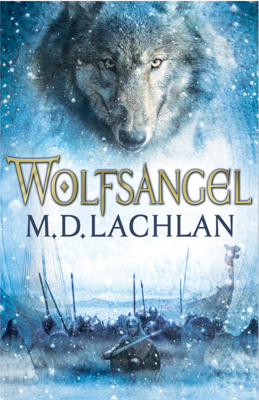
wolf viz 2:Layout 1Wolfsangel, MD Lachlan (2010) Much praise has been heaped on this, the first in a series, and at an Edge-Lit the author begged me to buy a copy despite it not being my thing at all (actually, he didn’t; it looked interesting, so I bought it; but Mark did sign it for me). On finally getting around to reading it, I was surprised by two things: it was more commercial than I’d expected, and it was a lot more interesting than I’d thought it would be. The story opens strikingly, with a loyal warrior of a Viking king stepping from a longship to drown in mid-sea. He and the king were the sole survivors of a raid on an Anglo-Saxon monastery, the object of which was to steal a pair of twin baby boys. The king’s wife cannot give him a son, so a witch told the king where to find one – her part of the bargain was the other twin. But no one must know the true origin of the king’s “son”, so no warriors must make it back alive from the raid. Initially Wolfsangel reads like an historical novel as it describes Prince Vali’s life as a ward of a rival king – there’s a vague feeling that some of the more fantastical elements are the results of worldview rather than actual magic – but as those fantastical elements slowly begin to intrude more and more into the story so the magical side of the story begins to take over. The giant wolf’s head on the cover, not to mention the title, is a clue as to which supernatural creature is central to the book, and Lachlan’s put an interesting spin on the trope. He’s integrated the werewolf into his take on Norse mythology, and it works really well. He pulls a fast one initially, presenting one of the twins as the werewolf, only for the truth to later reveal itself. After finishing the book, I could understand why it had been so highly praised, and I’m keen to read the next on the series, Fenrir (2011). So that’s a shock – I actually thought a fantasy novel was good.

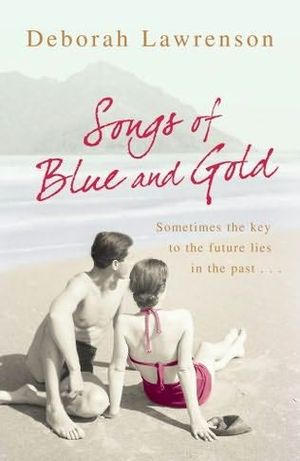
songsofbandgjpgSongs of Blue and Gold, Deborah Lawrenson (2008) I put this one on the wishlist after learning that its story was based on Lawrence Durrell and his time in Corfu, and some time later I was lucky enough to stumble across a copy in a charity shop. When Melissa’s mother passes away, she finds among her possessions a signed and dedicated poetry collection by famous author Julian Adie. Melissa knew that her mother had spent time in Corfu during the 1960s, and is surprised to discover she knew Adie, who lived there at the time. So Melissa heads for the Greek island to learn as much as she can about her mother’s time there. Adie, of course, is Durrell, and Lawrenson does a good job of fictionalising his life and stitching Melissa’s mother into it. There’s a slight mystery attached, which is neither hard to figure out, and resolved offhandedly, and the writing throughout is of a type you’d sort of expect from a novel boasting such cover art if you did have any expectations regarding prose style from the book’s presentation… I enjoyed it, but I suspect I wouldn’t have done so as much if I hadn’t been familiar with Durrell and his life and oeuvre.

murder-by-the-book-vis-1aMurder by the Book, Eric Brown (2013) This is the first crime novel by Brown, and the first in the “Langham and Dupree Mysteries”. Set in the 1950s, the book’s protagonist is Donald Langham, a crime writer who has churned out a dozen well-received novels. Dupree is Maria Dupree, the well-heeled daughter of an upper-class French emigré, and the personal assistant of Langham’s agent. When a series of people involved in the world of 1950s crime writing die under mysterious circumstances, and Langham’s agent is framed for one of the deaths, Langham turns reluctant detective with Dupree’s help. The template, of course, dictates that as the two spend more time together so they are drawn to each other. The murders are a succession of “book murders”, ie, the sort of tricksy killings you only really find in crime novels, especially crime novels of the genre’s golden age. But then Murder by the Book is not trying to do something different genre-wise, but is as centrally-placed in crime as Brown’s sf novels are in science fiction. The period is handled well, without an excess of detail and nothing that jumps out as anachronistic. Langham is a solid hero, likeable but not too firmly wedded to 1950s sensibilities that he’s not sympathetic to a modern reader. Dupree might be a little too good to be true, if not teetering on the edge of cliché, but she’s just as engaging as Langham and the growing relationship between them works. Not being a crime fan per se, though I’ll read the books and am certainly a fan of the oeuvres of a couple of crime writers, I have to wonder if the mechanics of the central murders occupy a similar place in the genre as “ideas” do in science fictions. The complex murders in Murder by the Book seem to operate much like “nova” do in sf, but I suspect that may be a modus operandi (so to speak) more suited to the story’s setting than the modern crime genre marketplace.

hook1Whirlpool of Stars, Tully Zetford (1974) This is the first book in the Hook quartet, and it’s pretty much hackwork. But then Tully Zetford was really Kenneth Bulmer, who was a complete hack – as Alan Burt Akers, he wrote over fifty books in the Dray Prescott series between 1972 and 1997. Whirlpool of Stars opens with a starship breaking down – something in the engineroom blows up as a result of shoddy maintenance. The passengers and crew are forced to flee in lifeboats, though this is no orderly evacuation. Hook is aboard, and he manages to get a seat aboard one of the lifeboats. The nearest planet, however, is run by a rival corporation to that which had operated the starship, and everyone who lands would be subject high fees… which they can pay off by indentured labour… Hook evades the authorities and, with a woman in tow, runs about the planet, trying to avoid slavery and also the Boosted Men, who are after him. You can tell this is complete hackwork because it panders to the worst prejudices of the sf audience. Hook is an alpha-male protagonist, but one with a weakness – he is a Boosted Man himself, but an early iteration and his powers only operate when he is close proximity to a real Boosted Man. The women in the story exist only as set-dressing, trophies, or damsels in distress. The villains are aliens. The background is a typical right-wing corporatist future, with slavery, success oriented purely on wealth and the power it brings, a blithe disregard for the value of human life, ineffective government and murderous and overly-powerful police forces. Whirlpool of Stars is tosh, distasteful badly-written tosh, and while Bulmer was clearly doing it for the money, you have to wonder what excuse present-day writers of similar science fictions have. Oh, and I have another three of these books to read. Sigh.

cleftThe Cleft, Doris Lessing (2007) There is a phrase in Brian W Aldiss’s story ‘Confluence’, a “dictionary” of alien terms, that goes: “YUP PA: A book in which everything is understandable except the author’s purpose in writing it; an afternoon sleigh-ride”. That pretty much describes The Cleft. A Roman historian has been handed a bunch of writings, normally kept hidden, and which he plans to turn into a treatise of his own. The documents are purportedly the written-down oral history of the earliest human civilisation, long before agriculture, nations, cities, kings or government. Apparently, humanity was originally female-only, and they lived in caves beside a sea. They reproduced parthogenically, and would occasionally sacrifice their offspring in a nearby rock chimney they called the Cleft. Every so often, mutant children called “squirts” – ie, not “clefts” – were born and left out for giant eagles to take – presumably to feed their chicks. But when one is left to grow to adulthood, he – because, of course, the squirts are men – leaves the women to found a community of his own over Eagle Mountain. More squirts are born, the squirts and clefts discover sex, the two communities begin to interact, one squirt leader leads an expedition away from the two communities along the coast… and I really have no idea what Lessing hoped to achieve with this novel. The Roman historian interjects at various points of the oral history he is supposedly working on – this was denoted using different font sizes, but as the book progressed this seemed to go wrong somewhere until the font size was completely random. There’s very little that’s Edenic about the society in the book and the gender politics once the “squirts” appear runs along somewhat clichéd lines. This has a tendency to reduce all of those early people to one-note characters, and while Lessing throws in some interesting speculation on their physiology, their society doesn’t feel like that much thought has gone into it. Disappointing.

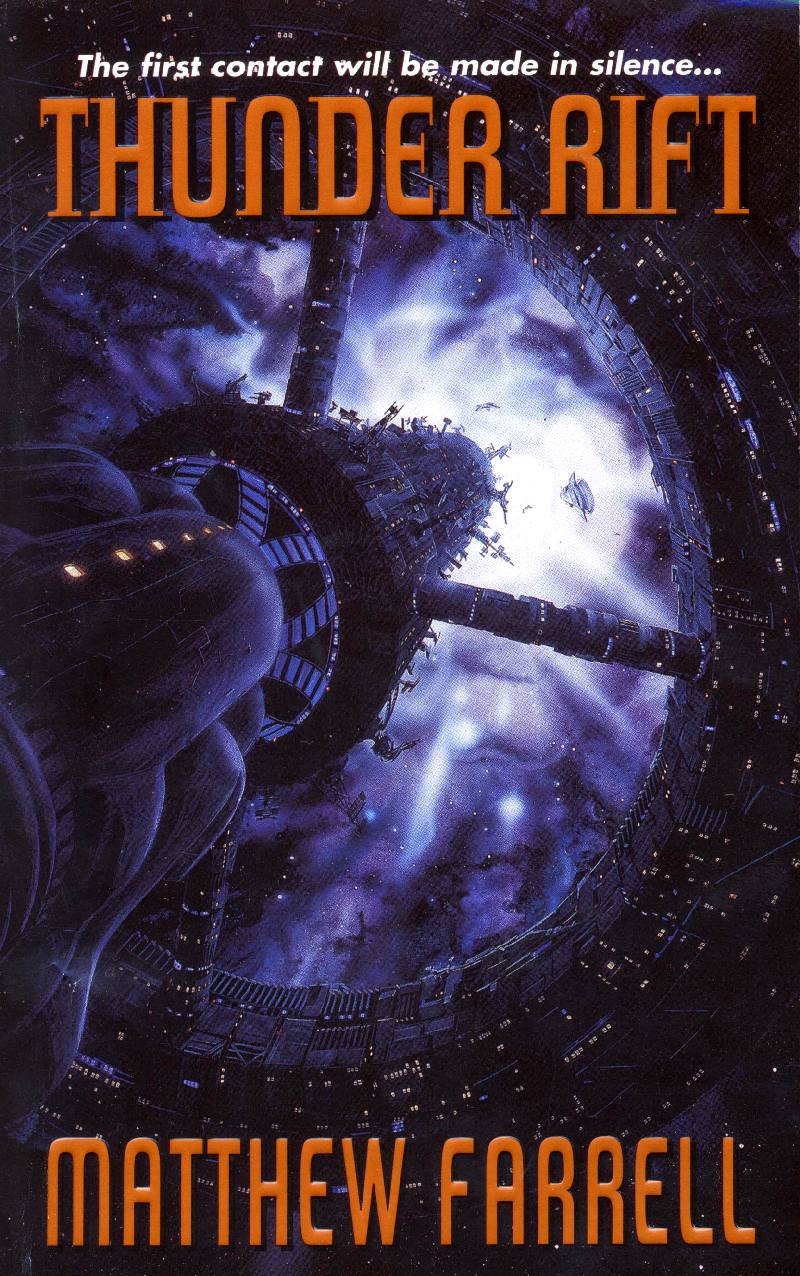
Matthew Farrell_2001_Thunder RiftThunder Rift, Matthew Farrell (2001) Matthew Farrell is really Stephen Leigh, and I suspect this book was published as by Farrell because by 2000 Leigh had become a category killer. In fact, since 2003 he’s been writing fantasy under the pen-name SL Farrell. In all other respects, Thunder Rift reads like a Stephen Leigh sf novel, and fans of Leigh’s earlier Dark Water’s Embrace and Speaking Stones will probably enjoy it. Unfortunately, familiarity with Leigh’s oeuvre does make Thunder Rift a somewhat predictable read. The titular wormhole has mysteriously appeared in the Solar System, out by the orbit of Jupiter, and the EMP generated by its sudden arrival pretty much wipes out all the technology on Earth, resulting in the deaths of hundreds of thousands of people. Yet thirty years later, the nations have not only recovered, they’ve even managed to build a huge military spacecraft to send through the wormhole to see if they can find the wormhole’s creators. On this spacecraft is maverick exo-anthropologist Taria Spears, who is obsessive, uncompromising and all-together difficult. On the other side of the wormhole, the humans find an inhabited world, but its alien civilisation does not appear advanced enough to have created the wormhole. Nonetheless, they send down a contact team… but it doesn’t go very well, and the alien ambassador/chief priestess-type person will only allow Taria to remain on the world. While she tries to learn more about the strange alien culture – their eyesight is so poor, they pretty much use sonar to perceive their surroundings; and they sing a lot – the military aboard the spacecraft set about trying to explore the planet. And then the wormhole vanishes. But something doesn’t want the humans to colonise the alien world. And Taria discovers the secret of the aliens and… This is heartland sf, written with competence if not style or vigour, reliant on far too many familiar tropes and used furniture, but given just enough spin not to generate déjà vu from start to finish. There are lots of sf novels about like Thunder Rift, and they’re all pretty much of a muchness. Fans of this type of sf will likely not to be able to tell it from other books of its ilk, and so enjoy it for that reason.

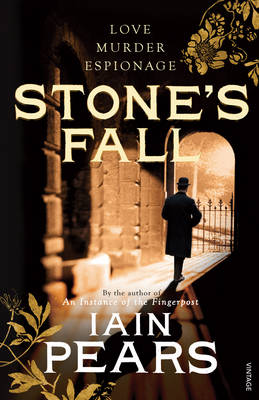
StonesFallStone’s Fall, Iain Pears (2009) Pears started out writing crime novels about a detective art historian, the few of which I’ve read I found quite ordinary; but he also writes complicated historical novels which are several levels of magnitude better. The last of his Jonathan Argyll series was published in 2000, so it would seem he now writes only the historical novels. Of which Stone’s Fall is the most recent – it was preceded by An Instance of the Fingerpost (1998), The Dream of Scipio (2002) and The Portrait (2005), all of which I have read. Stone is an Edwardian industrialist, the wealthiest and most powerful in Britain, and one night in 1909 he falls from the window of his third-floor study and is killed. But was he pushed? His will makes reference to a child he had not previously known about, so Stone’s widow, Elizabeth, hires a freelance reporter, Braddock, to track down the missing heir. The first third of the book – framed as the reminiscences of Braddock, who has just attended Elizabeth’s funeral in Paris in 1953 – attempts to explain Stone’s success in business. The second third is set in Paris in 1890, and is the reminiscences of a British spy whose career began around that time, and who knew Elizabeth, a Parisian socialite at the time, and witnessed her meeting, and growing relationship, with Stone. The final section is set in Venice in 1867 and is written as an apologia by Stone himself, attempting to explain the event which led to him becoming so powerful and also documenting an affair he had at the time which… There’s a mystery at the heart if Stone’s Fall, and it’s not hard to figure out what it is, but it’s only as the Venetian section progresses that the solution slowly starts to reveal itself. Stone’s Fall is not as complex as Pears’ earlier historical novels, but it is very readable and handles its historical detail impressively. Bizarrely, someone has used Wikipedia to give historical notes for the book, most of which are blindingly obvious, rather than summarise the plot or book’s reception…


14 Comments

An epistemological model of (speculative) fiction

All too often people point at the trappings of a fiction and claim that they identify it. Book A contains spaceships and robots, therefore it must be science fiction. Book B has dragons and castles, so it must be fantasy. But as a means of defining a fiction, it’s imprecise, often inaccurate and very much open to abuse. For every book which can be definitively identified by its tropes, there are countless others that can’t, or that require the trope itself to be re-defined. Tropes do not identify a genre: if you paint a car yellow, it does not make it a banana.

To date, the one definition of science fiction that has generated the least argument is Damon Knight’s 1952 comment, science fiction “means what we point to when we say it”. It makes the definition purely personal and subjective. Which makes it completely bloody useless as a tool. And I think it’s important to know what science fiction is you’re going to write it or write about it. Having said that, most of the definitions of sf in Wikipedia – see here – are by sf writers. And most of those definitions are completely ineffective.

A useful definition has to describe something intrinsic to the text, not something extra-textual. We don’t, for example, assume every book with a robot on the cover is science fiction – though many sf novels have robots on the cover, and many books with robots on the cover are sf. And to assume that every book which features a robot in the story is science fiction is identification by trope, which is also wrong. A bildungsroman novel set in a car factory, for example, would feature robots.

I’ve been thinking about agency in fiction and how it can be used to differentiate between fantasy and science fiction. In fantasy, objects which do not have agency in the real world are given it by authorial fiat. In science fiction, the agency is applied systemically by the natural world – the laws of physics, cosmology, biology, etc. Just like it is in mimetic fiction. Things happen in mimetic fiction as the real world dictates they happen – planes fly because their wings generate lift, boats float because they displace water equal to their weight, apples fall from trees because of the law of gravity, and so on. The same holds true in science fiction, though some of the elements of the natural world may be invented, such as that allowing FTL travel.

Also important in science fiction is wonder, which is the bit that fills your imagination up to the brim and then spills over. It is the chief reason people read science fiction in the first place. But wonder also applies to fantasy – dragons are objects of wonder, for example. I have in the past had a go at defining wonder – see here – and even managed to turn it into a (slightly tongue-in-cheek) equation.

Then it occurred to me that if I used both agency and wonder, it gave me a handy way to categorise fiction:

epistemo

Works can, of course, straddle borders, which can lead to interesting effects. But as means of distinguishing between various genres, the above chart doesn’t rely on tropes – in fact, it completely ignores them. A story can, for example, feature dragons, defined as cryptozoologic reptiles, and be science fiction. A fantasy novel can feature spaceships which fly between worlds because some person in a cloak waves their hands and mutters gibberish.

Now, of course, someone is sure to think of examples where my definition doesn’t fit…


Leave a comment

The future we used to have, part 19

While we wait for the next Chicxulub meteor to end the experiment we laughingly call “civilisation”, here’s a few of the more aesthetically-pleasing things we’ve managed to produce since we stumbled out of the Rift Valley. I say, “aesthetically-pleasing” because machines expressly designed to kill people in large numbers are not what you would call admirable…

air

19_martin_mercator

Martin P4M Mercator maritime reconnaissance aircraft (1950 – 1960)

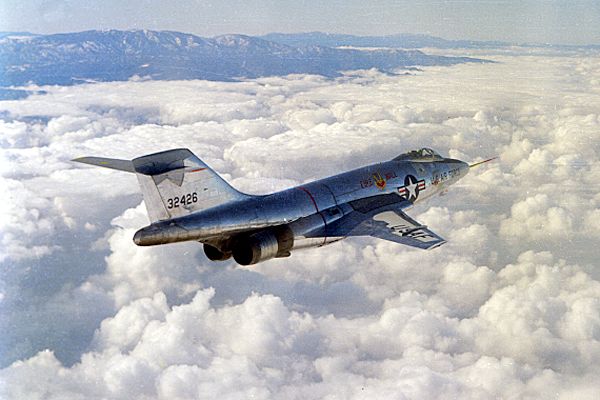
19_F-101 (36)

McDonnell F-101 Voodoo supersonic jet fighter (1957 – 1972)

sea

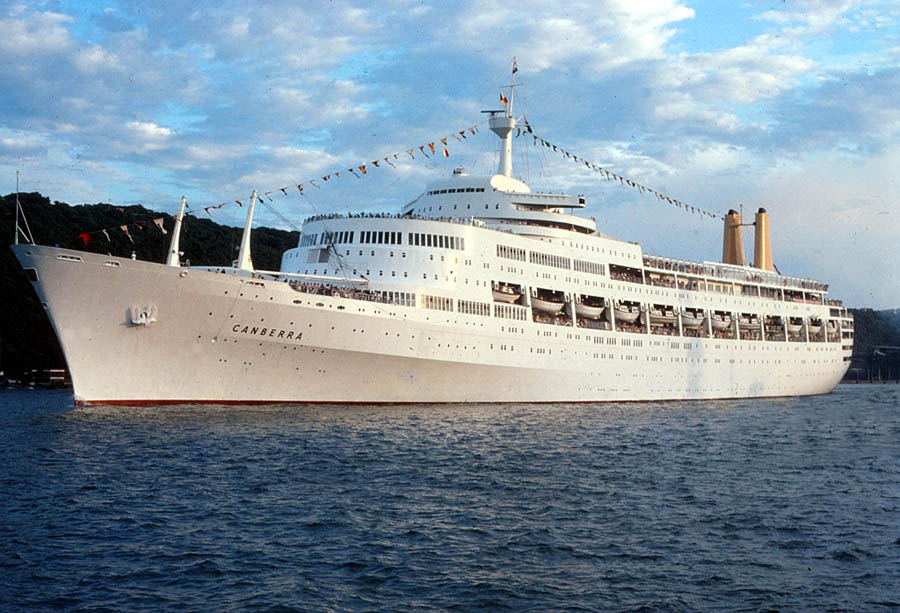
19_Canberra-UN

SS Canberra (1960 – 1997)

19_USS_Enterprise_(CVN-65),_island_1990

USS Enterprise (1960 – 2012)

land

19_stockwell_bus_garage

Stockwell Bus Garage, London (1952)

19_trinity_urc

Trinity United Reform Church, Ecclesall Road, Sheffield

19_fiesta_night_club

Fiesta Nightclub, Pond Street Development, Sheffield (1966)

19_fiesta_cinecenta

Pond Street Development, Sheffield, seen across bus station (1966)

people

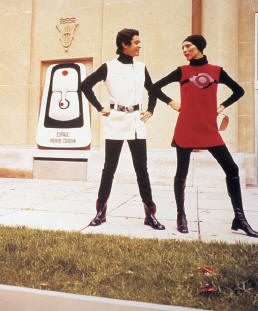
19_cardin02

Pierre Cardin fashion

19_cardin04

Pierre Cardin fashion

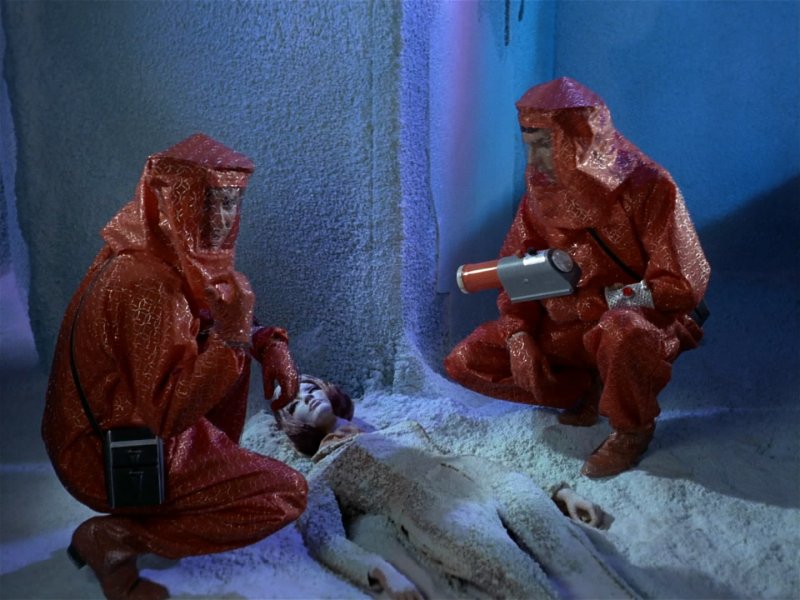
19_naked-time-spock1

from Star Trek, ‘The Naked Time’. I have no idea what they’re wearing or why they’re inspecting a frozen shop window dummy

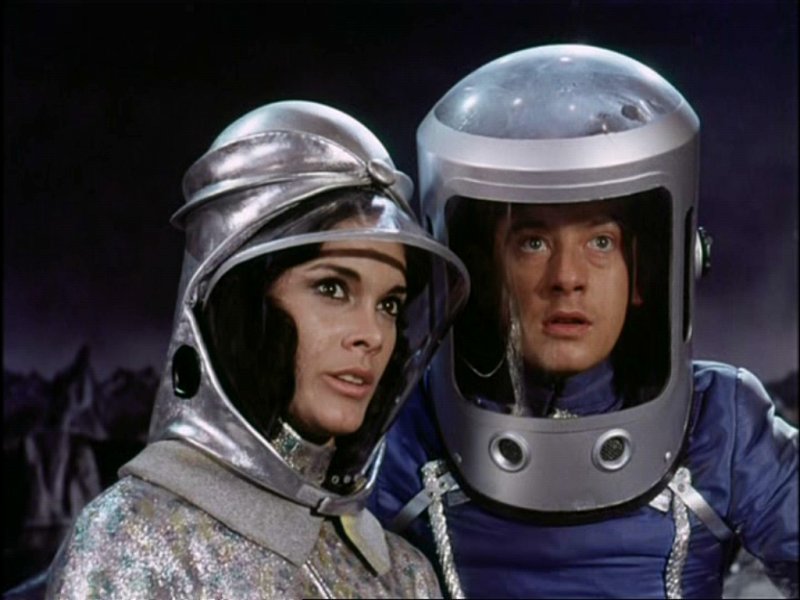
19_solarnauts

from The Solarnauts, an unsold pilot for a UK sf television series

notes

Check out this website for even more fun futuristic fashion, from both designers and media.
And here’s the full pilot of The Solarnauts. It is ace – the credit sequence alone is brilliant.