It Doesn't Have To Be Right…

… it just has to sound plausible


2 Comments

Moving pictures, #32

The films I watch, and document in these moving pictures posts, are pretty much dictated by the rental services I use. While I might set the priorities for the various movies on my rental lists, it’s still random what actually gets sent to me. But then, of course, there are those DVDs and Blu-rays I’ve actually purchased for myself (usually because I want to see them and they’re not available for rental, like the, er, Benning DVDs). So, anyway, more films, of varying degrees of obscurity and/or classic status.
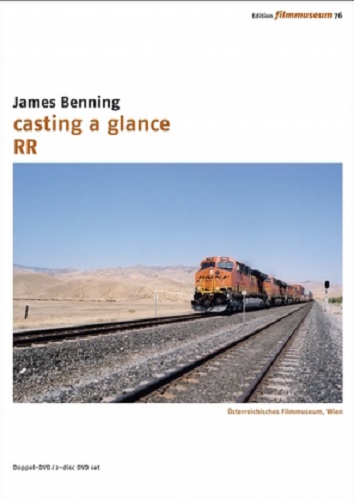
rrRR / casting a glance, James Benning (2007/2007, USA). RR stands for “railroad” and that’s pretty much what you get – 77 minutes of middle-distance shots of US locomotives travelling across the screen, some on urban railways (not “railroad”, because I am British) and some on tracks passing through some amazing landscapes. There is no voiceover, no scrolling text, just ambient noise. I now have some experience with Benning’s films, and while I can certainly sympathise with his desire not to compromise in art, RR is much harder film to watch than others by Benning I’ve seen. It follows in broad form his other works, but its lack of concessions to the viewer can make for difficult viewing. It is, like his other films, often mesmerising (I keep on using that word, I must find another one), and the landscape of the North American continent is in places absolutely stunning (yes, even with a railway track running through it). Benning’s films are an acquired taste, but totally worth it. And yet… casting a glance even manages to test a fan’s endurance. It is a series of shots over two years of Robert Smithson’s artwork ‘Spiral Jetty’. Which is exactly as its name says – a jetty made of stone, in spiral form, in the Great Salt Lake in Utah. What makes this film especially interesting is that although Bennig filmed the artwork over a two year period, he actually documents its lifetime since its creation in 1970 – as the sixteen shots of it depict “the historical water levels (mathematically reconstructed)”. The end result is more like a screensaver than any other Benning film I’ve seen, but still manages to keep interest. Narrative does intrude at one point, when the ambient noise is replaced by the song ‘Love Hurts’, a film released in the same year that Smithson died. I totally agree with making the viewer work to understand a film – culture is not babyfood, it should not be spoonfed – but Benning’s extra-textual references are often just too… extra. I still love his films – and the more about them I learn, the more I love them. But like Sokurov’s movies, there is a story taking place outside of the story on the screen, and knowledge of that totally changes the viewer’s perspective. I have maintained for years that X-Factor is a cross-platform event – the television show makes little sense unless you’ve been following the various dramas in the gutter press. I love the idea of cross-platform and extra-textual intellectual properties – a sort of implementation of Frank Zappa’s “interconnectedness of all things” – but it all needs to be available. Without the booklets in these Österreichisches Filmmuseum DVDs, I’m pretty sure I’d miss a lot of the commentary Benning embeds in his films. Which is a shame.

The-Blue-Angel-1930-Front-Cover-95283The Blue Angel*, Josef von Sternberg (1930, Germany). This is the film from which Marlene Dietrich’s public persona likely depends. It’s certainly the source of the most iconic presentation of her. The title refers to a nightclub in Weimar Republic Berlin, at which Dietrich’s character performs. However, the actual focus of the story is the schoolteacher who falls under Dietrich’s spell. Initially, he goes to the club to remonstrate with its star because naughty postcards of her (which she sells as souvenirs) are distracting his students. But he falls under her spell, and returns to watch her so often that he marries her, loses his job and ends up working as a clown in her show. The film was banned by the Nazis, which is obviously a point in its favour – but for all that it seems a fairly unexceptional film. I’ve no way of judging if it was more titillating than was the norm in the 1930, but there’s little enough in it that clearly signals it as belonging on the 1001 Movies You Must See Before You Die list. I’ve seen a number of films from the same era that were clearly innovative, if not seminal, for the period, or that simply stood out for a variety of reasons. The Blue Angel, sadly, is not one of them.
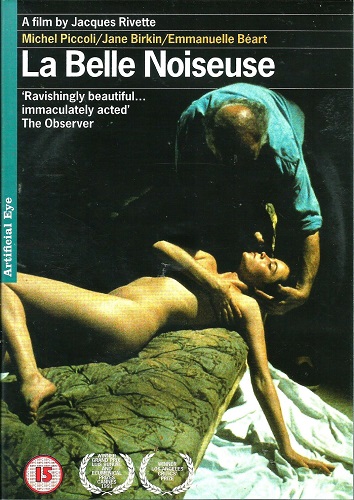
labellenoiseuseLa belle noiseuse*, Jacques Rivette (1991, France). I suspect I may like the idea of Rivette’s films more than I like Rivette’s films – although that’s hardly fair as La belle noiseuse is the first film by Rivette I’ve ever seen, But it is also 237 minutes long – and not that much actually happens during it. A young artist and his girlfriend turn up at the rural retreat of a famous artist who has not produced any new work in years. The girlfriend is asked to model for the famous artist. We see the artist make lots of sketches of the girlfriend, as well as start but not finish a number of paintings. Eventually he does finish one, and everyone assures him it’s a masterpiece, but the viewer doesn’t get to see it. I liked the film, it is very French, and like many of the best French films it subjects its characters’ relationships to much intense analysis. But it did test my patience at times – we see each of the sketches the artist draws, line by line, and it’s not exactly exciting viewing. But I liked that Rivette chose to show us that, I liked that he decided this was the way his film would proceed. As has no doubt become obvious over these Moving pictures posts, I like films by those who do things differently… I see there’s a Rivette Blu-ray box set now available, and it’s definitely tempting me…
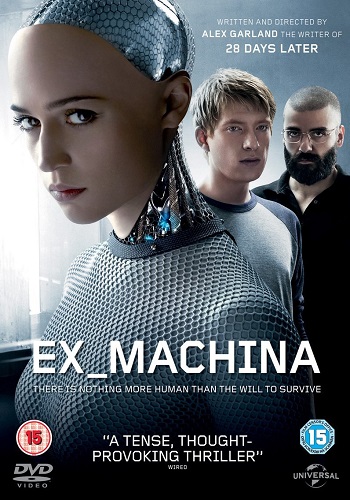
ex_machinaEx Machina, Alex Garland (2015, UK). I’d seen this film highly praised, and while I may be perverse, I’m not so perverse I’ll dislike a movie because it is popular – although certainly what I value in a film is not what most film audiences seem to. But ten minutes into Ex Machina, a movie I was expecting to be about AI, and all it appeared to be about was some ultra-rich knob who lived in the middle of nowhere (how did they supply his house?) and I was already thinking bad thoughts… only for it be pointed out on Twitter that this was the desired response. The person behind Ava, the AI robot (as seen on the DVD cover, because of course you’d give an AI a human face and a chicken-wire body), is meant to be an entitled prick. Because that then pushes the viewer’s emtional engagement onto Ava. The poor old programmer, Caleb, invited by Nathan to his billionaire hideway – and who has to be asked, “Do you know what the Turing Test is?” Of course, he does, he’s a programmer – finds himself a patsy for both Nathan and Ava by turns, and the fact he is emotionally engaged with the AI only makes you wonder why Garland chose to stack the deck so heavily in Ava’s favour. And having done that, the end of the film can hardly come as a surprise. I really didn’t like Ex Machina. I found it annoying, crude and a not very intelligent study of its premise. I much preferred the far less pretentious Chappie.
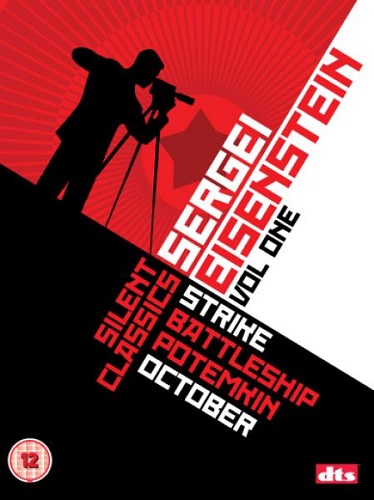
eisenstein_1October* Sergei Eisenstein (1927, Russia). I picked up a copy of Sergei Eisenstein Volume 2 at the end of last year – it contains Alexander Nevsky, Ivan the Terrible Part 1 and Ivan the Terrible Part 2 – but volume 1 proved much harder to find (since it had been deleted several years ago). Admittedly, I already owned a copy Battleship Potemkin and Strike, and October wasn’t exactly hard to find on DVD… but I wanted Volume 1 to go with my Volume 2, so I hung on until one popped up on eBay. Which it did. For a reasonable price. So I bought it. And I’ve now watched October twice and I’m still not sure what to make of it. For a start, it’s unashamed propaganda, a cinematic reconstruction of the October 1917 revolution, featuring many of the people who were involved in the actual event itself. Also, Eisenstein uses a surprisingly large number of modern cinematic techniques – or rather, techniques that have become standards in film-makers’ lexicons and are now used so unthinkingly that their origin is ignored. Anyone looking to put together a DVD collection of important films really should include both the Eisenstein collections (assuming they can find copies, that is).
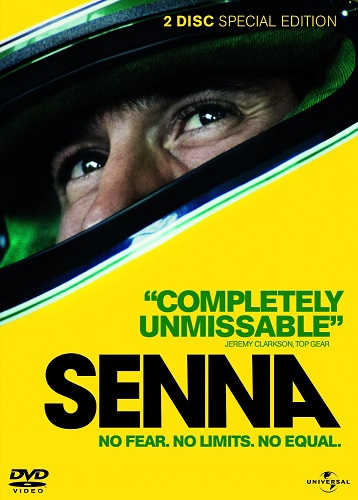
sennaSenna*, Asif Kapadia (2010, UK). This was available on Amazon Prime and since it was on the 1001 Movies you Must See Before You Die list, I watched it, despite motor racing being a sport in which I have zero interest. (Not that there is in fact any sport in which I have a more-than-zero interest.) Unsurprisingly, I found much of Senna not especially interesting, although I’d known almost nothing about Ayrton Senna prior to watching the film and he at least did come across as an interesting person – although chiefly through his work to improve the safety of F1 Racing – a sport in which a handful of rich pricks risk the lives of drivers in order to further line their own pockets, which is frankly disgusting. In fact, F1 comes across as little more than a playset for billionaire regressives. It’s telling that since Senna died and the increased safety he campaigned for came into effect, there has been only a single death during a race – and that was last year, ten years after Senna’s death. Having said all that… I’m not really sure why this film is on the 1001 Movies you Must See Before You Die list.

1001 Movies You Must See Before You Die count: 658


Leave a comment

The future we used to have, part 29

We can look back on the Cold War with fondness now, because it’s not going to be national posturing, missiles or nuclear bombs that are going to do for us all, but climate crash or economic crash. Which doesn’t, of course, mean that scumbag world leaders are not going to lie through their arses in order to justify illegal invasions of sovereign nations who just happened to be on someone’s shit list. But back in the day, NATO and the Warsaw Pact strutted back and forth in front of each other, showing off their military hardware… and a hell of a lot of it was damn cool-looking hardware. Normally, when I touch on the Cold War in these posts, I stick to aircraft, ships, submarines and the occasional rocket. But for this one, it’s all… missiles! Big pointy blowy-uppy things that went whoosh from assorted ships, silos, mobile launchers or fixed launchers. And then went BOOM! I’ve covered the early warning side in earlier posts, but I might do it again in a dedicated post later. Because SAGE. Because Texas Towers.

But, right now, because guided missiles.

Bristol Bloodhound: UK surface to air missile (1958 - 1991)

Bristol Bloodhound: UK surface to air missile (1958 – 1991)
Sea Slug missile: UK surface to air missile carried aboard County class destroyers (1961 - 1991)

Sea Slug missile: carried aboard County class destroyers (1961 – 1991)

Blue Steel - UK nuclear missile, carried by V-bombers (1963 - 1970)

Blue Steel – UK nuclear missile, carried by V-bombers (1963 – 1970)

Douglas Skybolt: US air-launched ballistic missile, bought by the UK but cancelled by the US before it went into service

Douglas Skybolt: US air-launched ballistic missile, bought by the UK but cancelled by the US before it went into service

De Havilland Blue Streak: UK nuclear ballistic missile, never went into service

De Havilland Blue Streak: UK nuclear ballistic missile, never went into service

Nike Hercules: US nuclear surface to air missile (1958 - 1988)

Nike Hercules: US nuclear surface to air missile (1958 – 1988)

Boeing CIM-10 Bomarc: US supersonic interceptor anti-aircraft missile (1959 - 1972)

Boeing CIM-10 Bomarc: US supersonic interceptor anti-aircraft missiles (1959 – 1972)

Thor: US ballistic nuclear missile, deployed in the UK (1959 - 1963)

Thor: US ballistic nuclear missile, deployed in the UK (1959 – 1963)

Atlas: US ICBM (1959 - 1965)

Atlas: US ICBM (1959 – 1965)

Titan I: US ICBM (1959 - 1965)

Titan I: US ICBM (1959 – 1965)

Scud: Soviet, and now Russian, tactical ballistic missile (1957 - present))

Scud: Soviet, and now Russian, tactical ballistic missile (1957 – present))

SS-20 Saber: Soviet, and now Russian, intermediate range ballistic missile (1976- 1988)

SS-20 Saber: Soviet, and now Russian, intermediate range ballistic missile (1976- 1988)


Leave a comment

Reading diary, #15

Still not reading as much as I’d like – I’m currently seven books behind on the 150 book challenge, according to goodreads.com – but it’s not a bad spread in this post… Incidentally, I’m still alternative genders in my fiction reading, and it currently stands at 37% women writers, 33% men.

palefirePale Fire*, Vladimir Nabokov (1962). Though I’ve seen Kubrick’s Lolita, and Nabokov is hardly a name unfamiliar to me, I’d never actually read any of his books. So I’m always on the look-out for copies of his novels in charity days. Except he doesn’t seem to be an author whose books are discarded much. But I did find Pale Fire – in Harrogate, no less – so of course I snapped it up. The back-cover copy makes quite a meal of descrbing Pale Fire as “an extraordinary, uncategorizable book”, which might well have been true in 1962 but feels a bit like over-selling in the twenty-first century. The story is told in the form of an introduction to a narrative poem, then the poem itself, and followed by copious (more than copious) notes on the poem. The author of the introduction and notes is not the author of the poem, but claims to have been the poet’s closest friend in the year leading up to his murder. Two things occurred to me as I read the book: a) the poem is actually complete doggerel, and b) the narrative voice reminded me throughout of Adam Roberts’s prose (there’s a particular line, “The crickets cricked”, which felt like it could have come from any random Roberts story). Threaded throughout the notes is the commentator’s own history, which involves some sort of Mittel-Europa principality whose monarchy was violently overthrown. The Appalachian academia and the Ruritanian adventure make for interesting bedfellows, and the prissy prose fitted the story extremely well. I liked it a lot and I plan to read more Nabokov.

spyuzSoyuz: Owners’ Workshop Manual, David Baker (2014). Sadly, this is not an owners’ workshop manual for Soyuz spacecraft in the same form as the owners’ workshop manuals Haynes has been publishing for various cars for decades. It won’t teach you how to change a leaky valve or an oxygen tank. If your Soyuz breaks down in orbit, even if you have a copy of this book with you, you’re still pretty much fucked. It is, however, a pretty comprehensive look at Russian crewed spacecraft, from Vostok through Voskhod and the various iterations of Soyuz, in pretty impressive factual detail. I found it all fascinating, but I suspect the book will also prove to be a useful reference for any future stories I might write involving Soyuz space craft. There are similar Haynes manuals for Gemini, Space Shuttle, Lunar Rover and, er, Millennium Falcon.

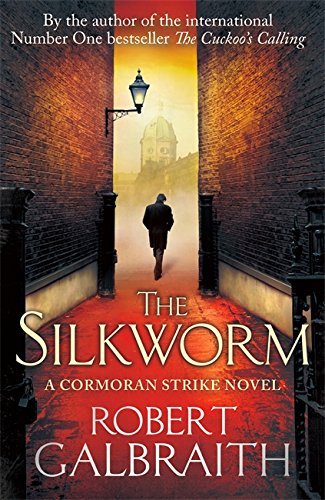
silkwormThe Silkworm, Robert Galbraith (2014). I wasn’t that impressed with Rowling’s first pseudonymous crime novel, The Cuckoo’s Calling, nor, as far as I remember, was anyone else. The book sold modestly, and received a handful of good reviews – which is pretty much what you would expect from a debut crime novel. Strange then, that the back cover of her second Galbraith novel, The Silkworm, boasts quotes about The Cuckoo’s Calling such as “One of the most unique and compelling detectives I’ve come across in years” and “One of the best crime novels I have ever read”… Which suggests crime fiction must be in dire straits, or Rowling’s name really does affect how people – even reviewers in newspapers – judge books. I thought The Cuckoo’s Calling somewhat padded, but The Silkworm at least feels like its the right length. It’s also about the publishing industry, something you’d imagine Rowling would know about since she is, after all, a best-selling author. The actual crime investigated by Cormoran Strike, however, seems more like something from an episode of CSI. A woman hires Strike to find her missing novelist husband, Owen Quine. He’s done it before, but his agent usually tracks him down quite quickly. But this time Quine seems to have really vanished. Making matters worse is the fact his new book is libellous (shades of Burgess’s The Worm & the Ring) and more or less unpublishable. It doesn’t Strike long to find Quine – or rather, his body. And his corpse has been mutilated in a manner which links back to his manuscript. There’s nothing startlingly original here – the plot moves on well-oiled wheels, the characters teeter on the brink of caricature but Galbraith manages to rein them in, and the prose is smooth and readable without being too literary for a crime novel or too commercial for those who prefer their crime novels to have some ambition. The novelists at the centre of the plot were all literary enfants terribles, and though mostly well-respected now their novels as described don’t much read like twenty-first century British literary fiction. Oh, and the title is a reference to Quine’s unpublishable novel, Bombyx Mori, which title only seems to exist because it justifies a particularly gruesome murder.

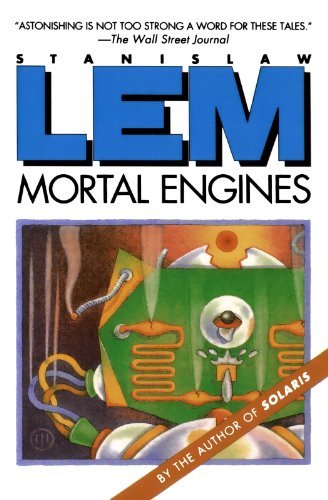
mortal_enginesMortal Engines, Stanisław Lem (1977). I somehow got it into my head I needed to read more Lem, but I suspect I like the idea of Lem more than I like the fiction of Lem. Which is not to say this collection of short stories is bad. But I can’t say I agree with the person who collated the collection, Michael Kandel, who loves Lem’s “robot fables” so much he chose to bring them all together into one book. Because while they’re clever little fairy tales, with one or two clever puns, they do get a bit wearying en masse. Happily, the book is rounded off with an Ijon Tichy story, a Pilot Pirx story, and one which is completely unrelated to the others in the book but is still about robots. This is not the best sf collection in the world, and even Lem’s snide bleakness can’t hide the datedness of some of the stories. I suspect this one might end up as a raffle prize at one of the pub meets some time next year…

The Monitor, the Miners and the Shree, Lee Killough (1980). That’s a pretty awful title for a book that’s actually not that bad. Not as enjoyable as A Voice Out of Ramah (see here), but certainly not awful. A review to appear soon on SF Mistressworks.

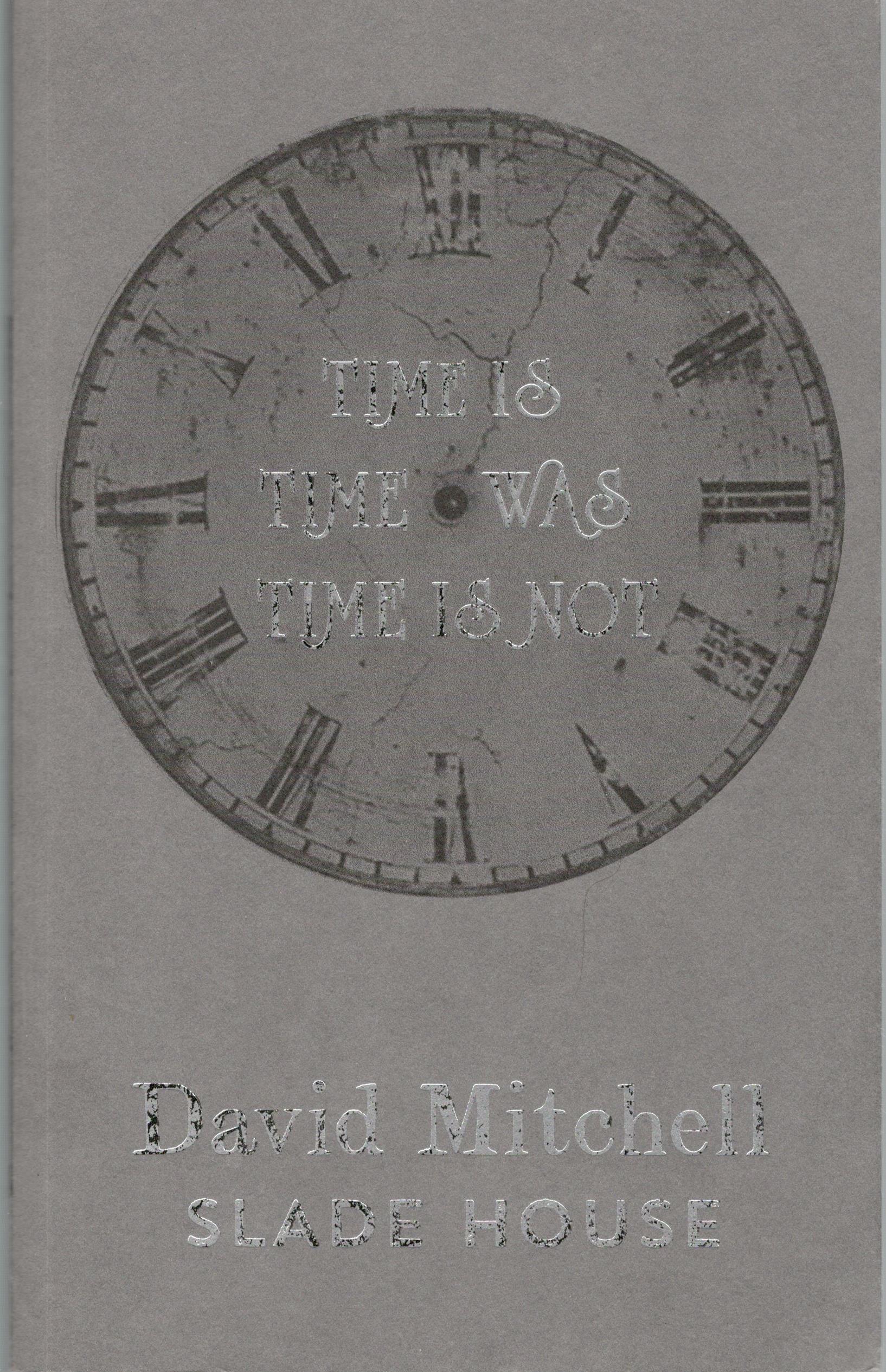
slade_houseSlade House, David Mitchell (2015). I was sent an ARC of this by Interzone to review (they also wanted to send me a copy of The Bone Clocks, but I’d already bought one – using a voucher given to me by my employer as a reward for five years of service). Overall, I don’t think Slade House is as successful as The Bone Clocks, and that’s not just a consequence of its significantly shorter length. Mitchell’s trademark ventriloquism is in fine, er, voice, but the fifth of its six sections is almost pure exposition, some of the tropes are a bit cheesy, and the whole thing doesn’t add anything of note to the mythology of The Bone Clocks. Which is not to say it’s a bad book – Mitchell is a fine writer and always worth reading – but it is a little disappointing after last year’s epic.

1001 Books You Must Read Before You Die count: 117


1 Comment

On writing and how to

I’m probably the last person who should be giving writing advice, which is as good a reason as any for a blog post on the topic. If you want to know how to write short stories which are guaranteed to sell, look elsewhere. I suspect no one else really knows either, they’re just not honest enough to admit it. “Hey, it worked for me – sure it’ll work for you!” Yeah right. If you’re looking for rules on writing readable saleable fiction, I’m the wrong person to ask. If that makes me a dilettante, then so be it. I’m interested in fiction, I’m interested in how fiction works, and I’m interested in using that knowledge to create fiction which does something different. At least, that is, within my chosen genre.

It often seems wannabe writers can’t make a move without bumping into some “rule” or other: “show, don’t tell”, “prose must be transparent to let the story shine through”, “there are only seven plots”, “use a three-act structure”… They’re all bollocks. Fiction, least of all science fiction, is not a programming language. It doesn’t need to be compiled, and it won’t break the reader if, for example, you chose not to use quotation marks around dialogue.

And no one knows why some fiction succeeds and some doesn’t. It is not true that good novels will always see print (never mind sell by the boatload). There are a lot of excellent novels that have never been published, there are a lot of bad novels that have seen print (and some have even been phenomenally successful). There are also a lot of hugely popular novels which garnered a raft of rejections before someone eventually took a chance on them.

As for posterity… Dickens was a hack, an unashamedly populist writer – he even let his readers choose how one novel ended. And Jane Austen was allegedly neither the best writer of her generation nor the most popular – but her novels have endured, while the others are forgotten. Mary Shelly wrote seven novels, but it is her debut, Frankenstein, which is remembered two hundred years later by most people.

Science fiction should be willing to stretch the boundaries of narrative and genre. That it usually doesn’t is a result of the fact it is, at heart, a form of pulp fiction. It had its beginnings in pulp magazines, and though it has at times tried to throw off its origins – the New Wave being the most celebrated attempt – the basic form usually ends up prevailing. And not necessarily for the right reasons.

0423-planetstories

It’s a long-accepted truism science fiction readers are more open-minded, more willing to accept the Other, than readers of other genres… Or are they? Has sf become a victim of its own success? Its most prevalent models have proven so popular across most media that all forms of science fiction are assumed to be of that type. It’s an easy argument to believe – the Sad Puppies certainly fell for it – but it’s not in the slightest bit true. Science fiction is a broad church, and it’s long been my contention that those who take the trouble to admire, and understand, how the genre operates will make better use of the tools available to a writer.

So it’s all very well just blithely introducing FTL into a science fiction text, because the story requires several different locations and the genre insists they be separated by light-years. Except… Firefly put all its worlds in a single planetary system. Not, it has to be said, a particularly plausible solution, but at least it was an attempt to address a common sf stumbling block: space is big, hugely mind-bogglingly big. There are remarkably few science fiction novels which take account of that – notable examples being the current fad (see below) for generation starship stories, such as Aurora and Children of Time.

But if Whedon failed to interrogate the tropes he deployed – no real surprise there – there’s no reason why other writers cannot. There is no GREAT BIG BOOK OF TROPES which must be obeyed. There are no rules which dictate how tropes should be deployed. No matter what some people might insist. Making use of them the same way everyone else has done is just lazy writing, cheap shorthand for complex objects (as is hiding those tropes under a thin veneer of metaphor – but that’s a rant for another time). Each trope certainly exists for a reason, and it makes for much more interesting fiction, to me, if it is the reason that’s interrogated.

The big point about writing, the thing that drives all others, is that you get out what you put in. But your readers probably won’t. There are tricks you can use to trigger a specific reader response, but sooner or later your readers will spot those tricks and they will no longer work. So you might as well write something which meets your own objectives and not those of some mythical reader. The market does not exist, it’s an emergent phenomenon – so it’s no good writing “to the market” because there’s no such thing. And should you decide to try – well, by the time you’ve written your novel, the fad is likely over, unless you’re uncannily good at trendspotting. You can only write to please yourself and hope it pleases others…

It’s not like I’m one to talk. The Apollo Quartet has sold in total some 3000 copies over 3.5 years, of which just over half were sales of Adrift on the Sea of Rains. I was surprised during a conversation at Fantasycon 2015 to be told the Apollo Quartet is held in high regard. It often feels like “regard” should have a number attached and I know – from tracking my own sales – what that number is for the Apollo Quartet. Certainly among my friends and acquaintances, the four books have their fans. But not every review of them has been complimentary or fulsome.

I wrote each book of the Apollo Quartet to deliberately not be what readers of the preceding book had praised. People liked that Adrift on the Sea of Rains was literary, so I wrote The Eye With Which The Universe Beholds Itself to be a science fiction puzzle narrative. With each book I tried to push the boundaries of narrative and narrative structure. I made a number of artistic decisions which readers have questioned – not just the lack of quotation marks, but also the lack of closure, the refusal to spell out acronyms, the use of inference to link two narratives… the choice by myself to make the reader work to understand the story. I didn’t intend the Apollo Quartet to be light reading, and that dictated how I approached writing it.

apollo17

There is, now I think about it, another reason why I’m a poor choice of person to write about writing science fiction: I can’t stick to the point, and I’m not entirely sure if this piece is in any way helpful. Writing advice is a poisoned chalice at the best of times – success is too individual for any particular technique to be held up as a general guideline. (I’m assuming a basic facility with language, of course). Having said that, one piece of advice I can give: get yourself a sympathetic group of beta readers. They will tell you what works and what doesn’t. Don’t just bang your novel up on Kindle, unseen by anyone else. (And don’t get me started on self-published 99p science fiction novels – that’s a rant for another day.)

There’s an unspoken compact between writer and reader. You can either stick to it… or have a bit of fun with it. Personally, I think the latter makes for more interesting fiction. Unfortunately, the former is more likely to result in successful fiction. You pays your money and you takes your choice…


Leave a comment

Moving pictures, #31

More movies! Some good, some bad – well, some good, some meh. But mostly good, I think. Perhaps a few too many from the US, but that seems to be how it worked out. I did actually put together my own list of 101 must-see films (rather than 1001) on listchallenges.com – 101 Films for a Cineaste. Of course, I now realise there are films I’ve missed, so I’ll probably have to do a second list… And, no doubt, when I’ve seen yet more films, I’ll want to put together a third list…

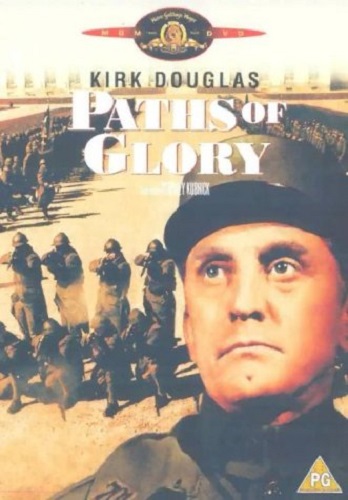
paths_of_gloryPaths Of Glory*, Stanley Kubrick (1957, USA). I think I might have seen this before, on television or something back in the 1980s (I spent most of the 1990s in the Middle East, so it was unlikely to be there – UAE television was shit). Certainly, bits of it felt familiar, although it’s a story that, in general form, has been told a number of times in film, book and even bande dessinée. During World War I, a general orders a division to attack a German redoubt, even though the attack will certainly fail and result in high casualties. As indeed it does. The general is so enraged, he orders three men, chosen at random from the survivors, be tried for cowardice, pour encourager les autres. Cowardice was a capital crime. It’s worth bearing in mind that in the British Army less than thirty percent of battlefield executions were upheld once the war was over. That’s seven out of ten men shot by courts martial should not have been executed. In a civilised world, that would qualify as a war crime. And the same is true of General Mireau’s actions in Paths Of Glory. But, of course, the wealthy and influential can do wrong. As Kirk Douglas, playing the colonel who defends the three men, discovers. The film is actually based on a novel, which was loosely based on real events – apparently, the invented bit is the random picking of three men; the French Army shot lots of men for cowardice, but its victims were not randomly chosen. A pity they didn’t shoot the generals*.

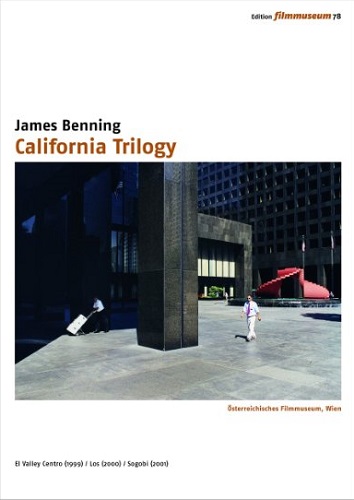
californiaEl Valley Centro, Los and Sogobi, James Benning (1999/2001/2002, USA). After three films in which Benning imposes narrative on his trademark series of static shots through either voice-over or scrolling text, these three films are nothing but pure imagery. Which, unsurprisingly, renders them more like art installations than actual cinema – although I can’t really see someone standing in front of a screen in a gallery for 87 minutes (the length of each film). Each film comprises 35 shots of precisely 2.5 minutes’ duration each. The first is about LA’s Central Valley, with shots of farms, oil fields, even fighter jets taking off from a USAF air base. Los is the urban part of the trilogy, with street scenes from greater LA. And Sogobi (the Shoshone word for “earth”) is the California wilderness, consisting of shots of mountains, rivers, deserts and chaparral. In all three films, the shots are carefully composed – in the first, the screen is split horizontally, usually by the horizon, across which objects move; in the second, it is the vertical lines of the city, and the spaces that creates; and the third’s nature shots are increasingly encroached upon by humanity’s presence. The final credits also give the names of the corporate owners of all the locations shown in the films, pointing out just how “free” the Land of the Free really is. Unlike the other Benning films I’ve watched, these require a great deal of work on the viewer’s part – though they’re also completely mesmerising to watch – in working out the narrative. They tell a story, but they make no concessions – there are no clues, no handy voiceover, no scrolling text. I am enormously glad the Österreichisches Filmmuseum is releasing Benning’s work on DVD, or I might never have come across it.

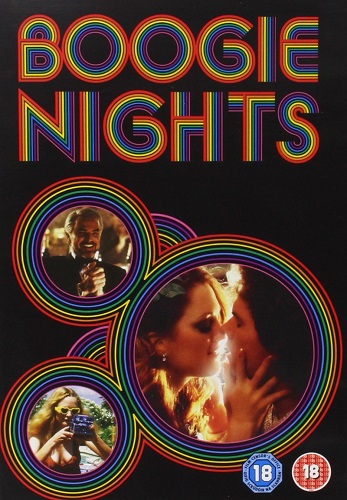
boogie-nights-mysBoogie Nights*, Paul Thomas Anderson (1997, USA). I’m aware of Anderson’s standing as a director, and I’ve seen several of his films… but I’ve never really understand why he’s so lauded. Is it simply that he’s a bit of a maverick? Certainly I can understand the topic of Boogie Nights not being a, well, mainstream movie topic, given it’s about the porn industry in LA. Mark Wahlberg plays a young man with an impressively large todger, which is, of course, never actually seen on screen (this being neither a DH Lawrence adaptation nor a comic book movie). He comes to the attention of Burt Reynolds, a porn director, who then casts him in some of his films. As Dirk Diggler, Wahlberg becomes rich and famous, and lives the rock star lifestyle to excess. Which is pretty much what this film is, a typical rags-to-riches-to-drug-addled-decline story, the only difference is it’s porn rather than music. I’m not entirely sure why Boogie Nights is on the 1001 Movies You Must See Before You Die list (a sadly frequent complaint of these Moving pictures posts).

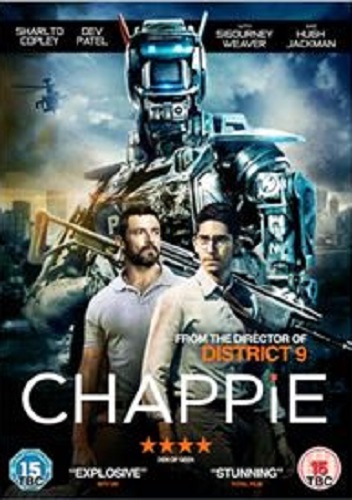
chappieChappie, Neil Blomkamp (2015, USA). I hadn’t really liked Blomkamp’s two earlier films, District 9 and Elysium, even though they were hugely popular. So I wasn’t expecting much of this one, especially since it hadn’t been all that well-received. So, of course, totally perversely, I actually enjoyed it and thought it rather good. The title refers to a police robot operated by the Johannesburg police force. After being damaged in a firefight with gangsters – its batteries have fused to its chassis, and so cannot be removed; in other words, it has five days of power left and then it’s irretrievably dead – the robot is pulled from the scrapheap by the inventor of the robots, Deon, for him to use on his home project: an AI. But on his way home with the dead robot, he’s hijacked by a trio of inept gangsters, who want him to reprogram a police robot to obey them. So he gives them his AI instead. But on booting up it has the mentality of a child, and though Deon tries to tech it morality, the gangsters trick it into committing crimes by the gangsters… It’s not the most original story on the planet. But Sharlto Copley gives Chappie real character, and the CGI robot itself is well done. It’s more of a comedy than a sf action/adventure film, but that I think is one of its strengths. The villains of the piece are a bit one-note; and the rival robot is plainly based on RoboCop‘s ED-209, and as far as homage it’s not exactly subtle. But I liked this one, it’s much better than Blomkamp’s earlier two films.

great_beautyThe Great Beauty, Paolo Sorrentino (2013, Italy). I loved Sorrentino’s The Consequences Of Love when I saw it back in 2013, I even picked it as one of my five best of the year films. So I’m a little surprised it’s taken me so long to watch The Great Beauty. Having said that, there’s now a Five Films by Sorrentino DVD box set available, so I might well get it… Anyway, The Great Beauty. I was not initially taken with this film as it took a while to settle into its story. The main character is a cultural commentator, skating by on the fame of a  highly-respected novel he wrote decades before, but now content to write newspaper columns and magazine articles. He wanders the streets of Rome at night, meets people and talks to them; he throws parties in his apartment – at one of which, he delivers a devastating takedown of a female friend who had called his bluff on “honesty” – and he has relationships with various women. The story seems to grow out of the film, rather than provide a structure for its narrative. Which means it does take you somewhat by surprise, as it pulls you in and then wins you over. I didn’t like it as much as The Consequences Of Love, but in channelling “faded glory” rather than “stylish” it makes for an interesting, if overly Fellini-esque, film (and there are several nods to Fellini throughout the film). On reflection, it might be worth waiting for that box set to appear on Blu-ray…

fassbinder1The Bitter Tears Of Petra von Kant*, Rainer Werner Fassbinder (1972, Germany). The title character is a fashion designer and the entire film is restricted to her small apartment. It also has an all-female cast. The movies open with von Kant being awoken by her assistant, Marlene. Several visitors appear throughout the course of the film, one of whom, Karin, von Kant takes a shine too. They enter into a relationship. Six months pass. Nowe the relationship is not so loving. Karin admits to have slept with a man, and it then turns out she has been seeing her ex-husband and they plan to get back together. Von Kant feels betrayed. And, er, that’s about it. Fassbinder made a remarkable number of films during his relatively short career, and he had the artistic courage to experiment with cinematic formats and narratives (much as von Trier does). The result are not always successful. Admittedly, The Bitter Tears Of Petra von Kant is on the 1001 Movies You Must See Before You Die list, and I think some of his other films are actually more interesting. But there’s certainly plenty ot chose from, and I’ve not watched all of his oeuvre. Yet.

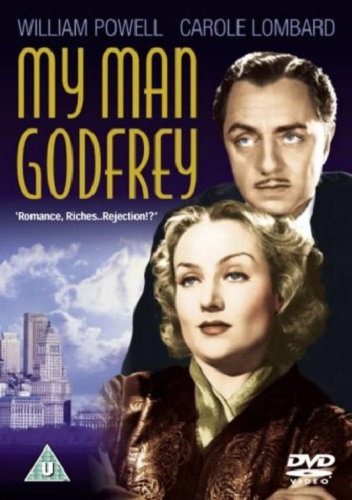
my_man_godfreyMy Man Godfrey*, Gregory La Cava (1936, USA). A bunch of nincompoop socialites play a game, the prize going to whoever can find most unwanted thing. One woman tries to persuade a homeless man (Powell) to be her item, but he refuses. Her sister (Lombard), however, is sympathetic to his plight, so he decides to help her show up her sister and so volunteers to be her unwanted thing. They win. Lombard is so grateful and so full of philanthropic goodwill, she offers Powell a job as her family’s butler. This has in the past proven a hard position to fill, as the family are demanding, scatter-brained, and often partying a bit too hard. Powell is the perfect butler and a boon to the family. Lombard falls in love with him – but this film isn’t that transgressive, as it turns out Powell is a runaway son from a rich patrician Boston family. Having said that, he does use his money to develop the city dump where he had been living into a nightclub, with homes and jobs for the people who had been living there. But philanthopy is no alternative to social welfare, and any society that relies on it has no business calling itself civilised. Still, to be fair, My Man Godfrey does run a good line in witty banter, and for a 1930s screwball romance it’s a reasonably good example. That the happy ending encompasses more than just the lovebirds is commendable, as is the somewhat feeble attempt to show that poor people are really people too; but the classism is bad, and so too is the easy acceptance that the largesse of the rich is a viable way to run a society.

1001 Movies You Must See Before You Die count: 654

* to wit:

The General inspecting the trenches
Exclaimed with a horrified shout
‘I refuse to command a division
Which leaves its excreta about.’

But nobody took any notice
No one was prepared to refute,
That the presence of shit was congenial
Compared to the presence of Shute.

And certain responsible critics
Made haste to reply to his words
Observing that his staff advisors
Consisted entirely of turds.

For shit may be shot at odd corners
And paper supplied there to suit,
But a shit would be shot without mourners
If somebody shot that shit Shute.


3 Comments

This has been going on

A few bits and pieces of news from these parts, just for a change. I keep on forgetting to do this sort of stuff. Bad me.

First up, Karen Burnham reviewed the entire Apollo Quartet in Strange Horizons here. SH do good, thorough reviews – and this is one of them.

I wrote a small piece on breaking the fourth wall in fiction for a guest post on Gillian Polack’s blog. You can find it here.

Adrift on the Sea of Rains is now available in Spanish! It’s the title story in the anthology, A la Deriva en el Mar de las Lluvias y Otros Relatos, which is now available from a variety of places, including Amazon.

A Conflict of Orders, the sequel to A Prospect of War, is now available as an ebook (Amazon UK | Amazon US). The signed limited hardback will appear at the end of October.

ACOO

There’s a “story behind the story” piece on A Conflict of Orders on upcoming4.me here. Meanwhile, work on the third and final book of the trilogy, A Want of Reason, continues.

I sold a science fiction short story to Interzone. It’s called ‘Geologic’, is set on an exoplanet with high atmospheric pressure, and should be appearing in issue 262 in January 2016. I also contributed an editorial to issue 260, about the Sad/Rabid Puppy Hugo mess.

Oh, and I have a new cat, a ginger tom called Oscar. Say hello.

oscar


1 Comment

Moving pictures, #30

A wider spread of films this week – in terms of years (five decades) and countries of origin (five nations). Only one from 1001 Movies You Must See Before You Die list, however. And another film that is really bad and I’ve no idea why I bothered buying it or watching it. Eh.

bulldogDeadlier Than The Male and Some Girls Do, Ralph Thomas (1967/1969, UK). There must have been something in the water back in the 1960s, with all the debonair spy movies that appeared – not just the early 007s, but Derek Flint, Matt Helm, Maroc 7, Our Man in Marrakesh and… these two starring Bulldog Drummond. Who, er, isn’t strictly speaking a spy. And he originally appeared in the 1930s. He’s some sort of man-about-town who acts as a troubleshooter for an uncle in insurance. Or something. But he does do battle with a megalomaniac. And there are plenty of daft gadgets and nubile women in bikinis. Deadlier Than The Male opens with Elke Sommer poisoning an oil baron aboard his private jet, and then parachuting to safety as the plane explodes behind her. It transpires she was paid to do this by a UK oil company, but the oil company decides not to pay her fee – at least not until one of the directors is killed. But now there’s another person standing in the way of the oil company’s expansion, this time the ruler of a small Arab sheikhdom, who Drummond just happened to go to school with. So Drummond heads off to visit his chum on the Italian Riviera, partly to protect the sheikh and partly to discover who is Sommer’s boss. The film ends with a shoot-out on a giant mechanical cheesboard. Bonkers. Some Girls Do is more of the same. This time it’s a UK project to build the world’s first supersonic airliner (hey, we did that for real!), but the project is being sabotaged. It turns out the saboteurs are nubile young women with “robot brains”. Or something. The science is complete nonsense. The villain, for example, uses a subsonic ray to take control of the supersonic airliner. Good luck with that. “Supersonic” means “faster than sound”. Your ray will never catch up with the plane. Even for its subgenre, this is pretty brainless entertainment, without either the silly humour of Matt Helm and Derek Flint, the po-facedness of Bond, or the colourful locations of Maroc 7 and Our Man in Marrakesh.

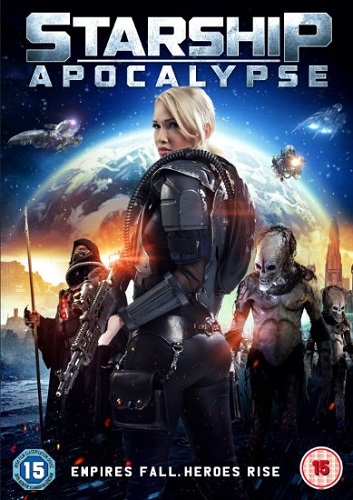
starship_apocStarship Apocalypse, Neil Johnson (2014, USA). This is the sequel to Starship Rising, a film that was so bad I, er, bought the sequel. Johnson specialises in low-budget genre films, which I guess sort of makes him the self-published Kindle genre writer of the movie world. The set dressing in the two films by him I’ve now watched is cheap and nasty, the acting is poor, the dialogue terrible, and the stories derivative. This one has a disfigured, allegedly immortal emperor, and a small group – the entire cast of the film probably numbers less than a dozen – of rebels, who have this fantastic starship, or something. The only way to watch this film is pissed, which does sort of make figuring out what’s going on a bit difficult. I’ll probably have to watch both films again, but I’m not sure I want to…

american dreamsAmerican Dreams (lost and found), James Benning (1984, USA). It probably comes as no surprise that Benning has become one of my favourite directors. He hasn’t knocked Sokurov off the top spot – their oeuvres are almost impossible to compare, but Sokurov has at least made several narrative films (or rather, not documentaries) – but I’d definitely put Benning in the top five. And it’s because of films like American Dreams (lost and found). I can see why Benning’s Deseret made the 1001 Movies You Must See Before You Die list as it’s probably the most accessible of his films (that I’ve seen to date) – and even then it comprises static shots of scenery in Utah, countryside and towns, while a voice reads out stories from the New York Times from 1851 to 1995. American Dreams (lost and found) uses a much more interesting technique to tell its story. In fact, it uses three techniques. The images are of baseball cards and ephemera about Hank Aaron (apparently a great baseball star, although his fame is lost on me as I’ve never followed the sport). The soundtrack consists of a variety of spoken word excerpts, such Martin Luther King’s famous speech, or the first words spoken on the Moon, all iconographic moments in US recent history, alternating with popular music from the 1950s through to the very early 1970s. As well as both of these, a line of handwritten text scrolls across the bottom of the screen. This last is from the diary of a man who plans to murder Richard Nixon, and it reads exactly like the sort of thing written by someone who would plan such a thing – weird spelling mistakes, completely deluded, an oddly prurient but obscene fascination with women… As the film progresses, the story told by the diary deepens, until it is eventually revealed as the real diary of Arthur Bremer, who attempted to kill US presidental candidate George Wallace in 1972. Fascinating stuff.

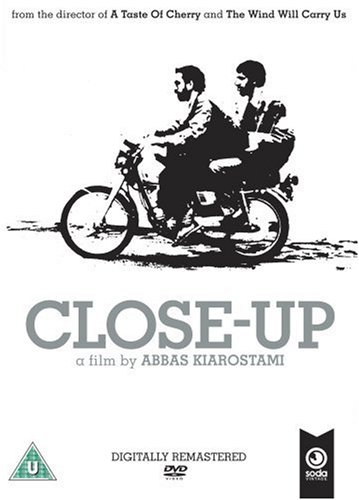
close_upClose-Up*, Abbas Kiarostami (1990, Iran). I believe this is the film which brought Kiarostami to western critics’ notice, and it’s easy to understand why. It’s a documentary in which the people involved re-enact the events of the film’s topic, intercut with footage of the actual court case which results. A man meets a woman in a bus and tells her he is the famous director Mohsen Makhmalbaf. The man visits the woman and her family several times, and tries to raise cash from them for his next film. A journalist meets the imposter, realises he is not Makhmalbaf, and the police are called in to arrest him. Kiarostami interviews the journalist, the imposter and the family, and also films them re-enacting the events which led to the arrest. After the court case, the real Makhmalbaf turns up and gives the imposter a lift on his motorbike to the family’s home so he can apologise for trying to con money out of them. It all adds up to a very clever film, which feels partly like a documentary and partly like fiction, and which plays games with the viewer compact, to the extent it’s not clear where the lines blur. Kiarostami is one of the most important directors currently making films, and this film gives ample reason why.

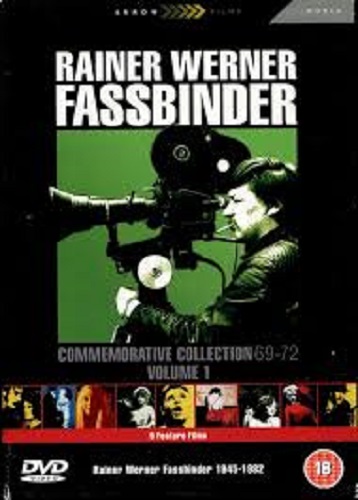
fassbinder1The Niklashausen Journey, Rainer Werner Fassbinder (1970, Germany). I have a soft spot for films which are little more than actors declaiming political arguments instead of dialogue in a story, such as Miklós Jancsó’s The Confrontation… And now this one. The story is based on a true story from the fifteenth century, about a shepherd who claimed to have seen the Virgin Mary in a vision and promptly tried to start an uprising against the church and landowners. It didn’t succeed. Fassbinder uses a mix of contemporary and historical costumes, and has his actors discuss revolutions and historical forces while notionally acting out the life of the shepherd. It works surprisingly well. Most of the scenes are static, with the cast either standing or sitting still while they speak. And yes, I ended up buying the Rainer Werner Fassbinder Commemorative Collection 69-72, Volume 1, so now I have both sets – and they’re worth it even if not every film in them is entirely successful.

rabidRabid, David Cronenberg (1977, Canada). A charity shop find. Sadly, it was the only early Croneneberg they had. It is, unsurprisingly, distinctively one of his. A young couple are involved in a motorbike accident. She is badly burned, but fortunately the accident took place near a famous plastic surgery clinic. The head of the clinic employs an experimental method to graft skin over the burned area, and as a result the young woman, er, grows an orifice in her armpit, yes really, which has a stinger inside, yes really. She uses this to feed. Her victims cannot remember afterwards what happened, and then some time later they turn into zombies. Whoever the zombies bite, also becomes a zombie. It turns into an epidemic, its cause completely flummoxing the Canadian authorities. It’s a bit too daft a premise to shock as horror, although it works quite well as a completely bonkers thriller. Porn actress Marilyn Chambers plays the young woman, in her first straight acting role. Not a bad film, although it’s clear not much money was thrown at it.

1001 Movies You Must See Before You Die count: 650


Leave a comment

Moving pictures, #29

A few too many US films this time, although the Benning is actually only available on a DVD published by the Österreichisches Filmmuseum. But then the Satyajit Ray is a Criterion Collection DVD, and they’re only published in the US, so…

music_roomThe Music Room (Jalsaghar)*, Satyajit Ray (1958, India). I’ve been trying to watch more Ray as he’s an important director and to date I’ve only watched two-thirds of his Apu trilogy. The asterisk indicates this film is on the 1001 Movies you Must See Before You Die list, and while Ray is quite well-served in terms of UK DVD releases (thanks to the inestimable Artificial Eye), I decided to pick up the Criterion Collection DVD of The Music Room. The story is a common one, perhaps even common to Indian cinema (it’s certainly one shared with Mother India in part), in that it’s about the death of old ways and the rise of the new. The main character of The Music Room is a Bengali zamindar, wealthy and indolent, but good-hearted and more fond of music than he is looking after the lands and people he is responsible for. His decline is contrasted with the rise of a commoner who beocmes rich through business. The film cleverly shifts sympathy from the zamindar to the commoner, especially given whatever defence might be mounted of the zamindar system the example portrayed in The Music Room is far from a good advert. The film also makes  a great deal of its music, and apparently it was the use of classical Indian music in The Music Room which contributed to its success in the West (it was intended to be a commercial success in India as Ray’s previous film had flopped). I’m reminded of a night I once spent in a Bengali nightclub in Abu Dhabi, when after listening to a fifteen-minute song I asked the person sitting at a nearby table to explain the lyrics. They were surprisingly banal. That’s not something which can be said of this film, which maintains an impressive elegiac tone throughout.

prizziPrizzi’s Honour*, John Huston (1985, USA). There are a number of films whose presence on 1001 Movies you Must See Before You Die list is, quite frankly, baffling. This is one of them. It’s a fairly ordinary comedy-drama about Hollywood’s version of the Mob, notable only for Jack Nicholson’s gormless expression throughout and his tortured Brooklyn accent (at least, I think it’s Brooklyn, a native New Yorker would probably know what particular district it’s intended to portray). Nicholson’s character is an enforcer for a Mob don, and he falls in love at first sight with Kathleen Turner at a family wedding. But she’s from out of town (LA, in fact), so he never finds out who she is… Until some time later, when he’s out in LA and it turns out she’s involved in the hit he’s making. The two enter into a relationship, it transpires Turner is a contract killer, and later that she has ripped off the Mob and… well, it’s about as twisty-turny as the first two minutes of your average twenty-first century thriller movie. Turner plays a femme fatale, a role which has defined much of her career; I’m not sure if Nicholson was doing a comedy turn, it’s hard to tell. This is light entertainment, it’s not classic cinema, and you can happily live your life without having never seen it.

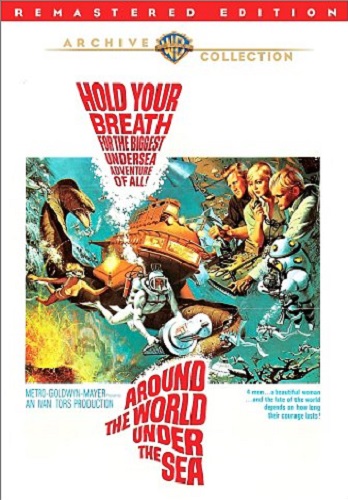
around_the_worldAround The World Under The Sea, Andrew Marton (1966, USA). The threat of increased, and more powerful, earthquakes, persuades the UN to back a plan to install earthquake sensors at strategic points around the globe on the ocean bottom. The plan is Lloyd Bridges’s, so he gets to lead the mission – which will involve a globe-spanning trip in a large submersible. Also aboard are five other scientists – Shirley Eaton, Brian Kelly (who doesn’t think a woman should be on board), David McCallum, Keenan Wynan and Marshall Thompson. This film is… tosh. Complete tosh. Wynan initially refuses Bridges’s invite, so Bridges goes to visit him… in his undersea home more than 700 feet below the surface of the sea. And Bridges dives to it on air. It’s also remarkably light down there, in fact the sea bottom is the sort of pale sand you’d find around, say, twenty feet below the surface. There are also other episodes where the crew go diving at depths of greater than 20,000 feet – and it’s unlikely the submersible itself would survive such a depth – on air and without bothering to either compress before or decompress afterwards. There are films which make a reluctant nod in the direction of scientific accuracy, and are those which don’t give a shit. This falls into the latter camp – and it’s not improved by it. The actual premise is complete bollocks, and the presentation of submersibles and diving is complete and utter nonsense. Best avoided.

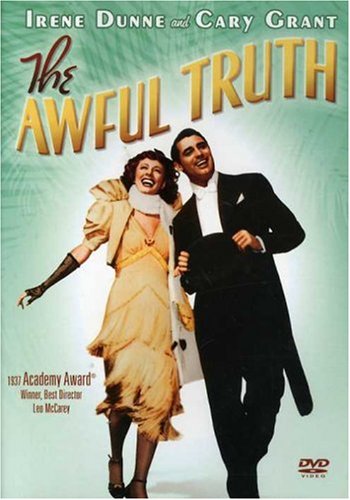
awful_truthThe Awful Truth*, Leo McCarey (1937, USA). There are films in which Cary Grant seems to glide through the proceedings, sliding along on charm and his perfect delivery of one-liners. Not every film, or even necessarily good films – he is better, for example in Operation Petticoat than he is in North by Northwest. But The Awful Truth is an early film – actually his thirtieth, if the filmography on Wikipedia is any guide – and his first attempt at the debonair leading man in a comedy-drama, a role which later came to define him. In this, he often seems a bit too eager to deliver the punch-line, and it gives him an earnestness which sits at odds with his later on-screen persona (but that’s what you get for watching an actor’s oeuvre in non-chronological order, which is I suspect the way most people end up seeing films starring a particular actor). The plot of The Awful Truth is typical screwball romance fodder: Grant and Irene Dunn are due to divorce, but by parading unsuitable new partners in front of each other, they eventually realise they belong together. Again. The script is witty, Dunne more than holds her own, and if Grant does smirk and gurn a little too often, it doesn’t detract all that much from the film’s essential charm.

american dreamsLandscape Suicide, James Benning (1986, USA). This is cinema as art installation, although Benning pushes the definition of that by including narrative. Yet his films are also documentaries – there is nothing fictional about the material he presents. Landscape Suicide is about two murder cases: one in Wisconsin, one in California; one in 1984, one in 1957. The earlier of the two is the capture of Ed Gein. Benning has an actor play Gein and act out his interrogation by the police. The second is Bernadotte Prott, who stabbed a high school friend to death, and is again portrayed by an actor who acts out her police interrogation. Landscape Suicide is built up from these static talking head shots and equally static shots of the areas in which the crimes were committed, in Wisconsin and California. Although there is nothing in this film which actually tells a story, Benning imposes narrative through his choice of images and his editing. I’ll admit he’s not to everyone’s taste: 90 minutes of static 16mm shots of three or so minutes duration, not always with narration or even people talking – both El Valley Centro and Los, for example, are images and ambient sound only – but it’s the actual procession of images which tells the story, and it’s very cleverly done. Quite meserising too.

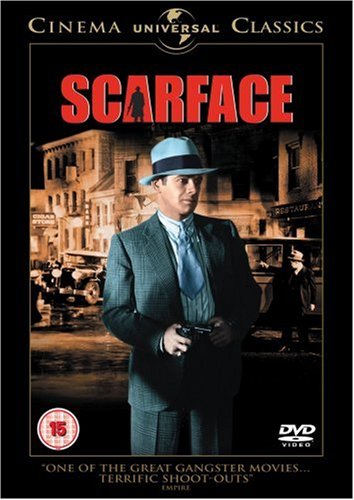
scarfacerScarface*, Howard Hawks (1932, USA). I’ve seen about half of Hawks’s oeuvre to date, and some of them I’ve found very good – if very much of their time and very much a product of the Hollywood system (neither necessarily being a bad thing, of course). I will admit to not having high expectations of this movie, a thinly-disguised biopic of Al Capone, even down to re-staging the Valentine’s Day Massacre. Its opening ten or twenty minutes aren’t especially prepossessing, as Paul Muni moves in on deals other gangs have made with speakeasies for their supply of beer (not that the speakeasies had much choice). But then the violence escalates, and it’s all very realistic – so much so, it captures the attention and holds it. Admittedly, I missed the whole “X equals death” thing, although I did wonder why the camera lingered on the ceiling joists of the garage where the massacre took place. Muni seems a bit too much like his role in I am a Fugitive from a Chain Gang to convince as a ruthless mobster, and Boris Karloff is far too lugubrious and, well, English, in a similar role. Despite that, the story speeds along at a breakneck, and accelerating, pace, and it’s not hard to understand why Scarface is considered a seminal film of its genre. Worth seeing.

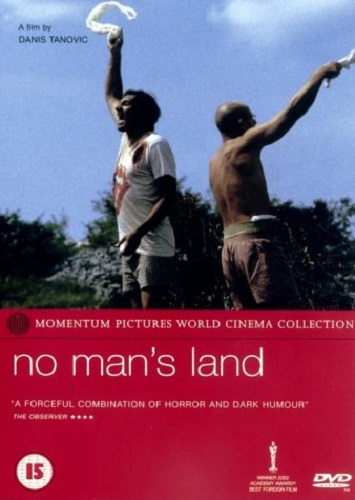
no_mans_landNo Man’s Land*, Danis Tanović (2001, Bosnia). The only film by Tanović I’d seen previously was Hell, his film of a screenplay by Krzysztof Kieślowski and Krzysztof Piesiewicz, the second of a new trilogy they were working on just prior to Kieślowski’s death (the first, Heaven, was filmed by Tom Tykwer after Kieślowski’s death; the third has never been made). All of which is completely irrelevant as that later film bears little or no resemblance to this one, which takes place mostly between the Bosniak and Bosnian Serb frontlines during the Bosnian War. After a patrol gets lost in a heavy fog, and another patrol is sent out to look for them, two soldiers, one from each side, end up trapped in an abandoned trench in no man’s land. Neither can leave, at risk of getting shot by the opposite side. Just to make matters worse, Bosnian Serbs have boobytrapped a dead Bosniak by putting a bouncing mine under his body. Except he’s not dead. A French sergeant in the UN Peacekeeping Force gets involved, but his superiors veto any resolution of the situation. But then the media arrives on the scene, especially a tenacious British reporter for a news channel. The decision to help gets bounced up the chain of command to Simon Callow’s colonel, but it seems the mine can’t be disarmed. The Bosniak and Bosnia Serb end up shooting each other, and the UN Peacekeepers lie to the media and tell everyone the third man has been rescued, even though he hasn’t. This humour isn’t black, it’s stygian. Like proper humour of this type, everything in it is completely inevitable, including the stupidity and dishonesty of the people involved. It is also completely convincing. Definitely worth seeing.

1001 Movies You Must See Before You Die count: 649


Leave a comment

We’re gonna need a bigger bookcase

I’ve been mostly good this year, and not bought as many books as in previous years. This does the mean the TBR is slowly getting whittled down… although I still reckon I have about a decade’s worth of reading on it.

2015-10-12 17.19.07

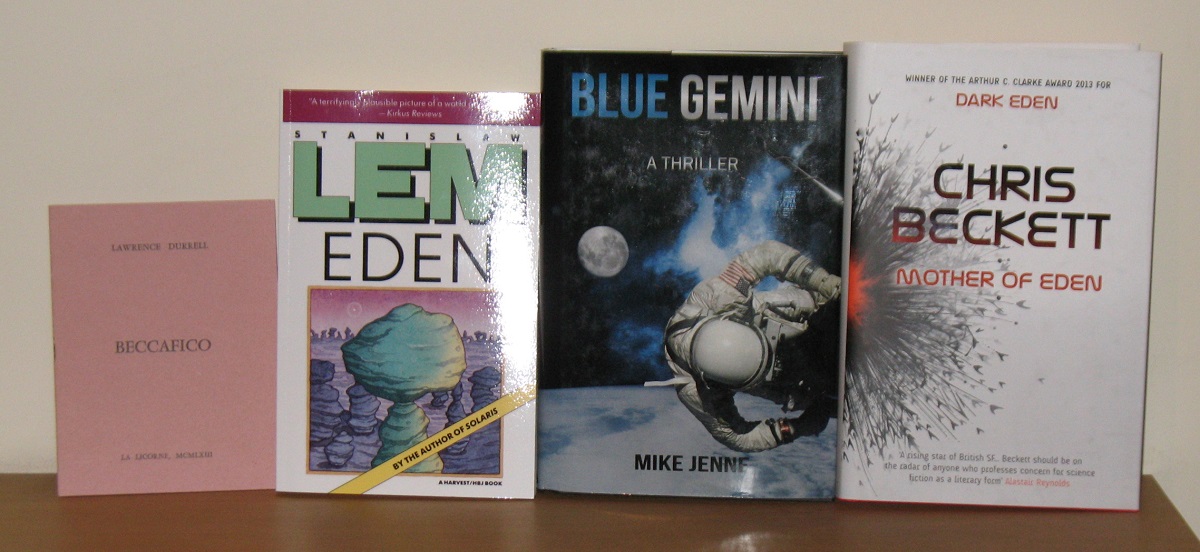
Dark Eden, of course, won the Arthur C Clarke Award back in 2013. Mother of Eden (2015) is the sequel. Eden (1959) is a reprint, rather than a first edition, but given its title, I couldn’t not mention it alongside the Beckett. Blue Gemini (2015) is a thriller based on an extended Gemini space programme, so its premise alone appeals. We shall see whether its story does. The small pamphlet, Beccafico, is actually a signed and numbered (I have #87 of 150) chapbook by Lawrence Durrell, published in 1968, and was a lucky eBay find.

2015-10-12 17.21.55

Déjà Vu (2014), Bête (2014) and Gestapo Mars (2015) I won in the raffle at the recent York pub meet. Ancillary Mercy (2015) I bought because I’ve read the previous two books, and given that the second book, Ancillary Sword, contributed very little to the shape of the trilogy, I’m intrigued to see how Leckie manages to pull it all together.

2015-10-12 17.23.29

A few charity shop finds. I’m a big fan of Marilynne Robinson’s fiction, but I’d never read her first, Housekeeping (1980) (I have her other three novels as signed first editions). Apparently, it was made into a film. Eustace & Hilda (1958) just looked like it might appeal, and since they didn’t have his Fly Fishing… Actually, it’s an omnibus edition of The Shrimp and the Anemone (1944), The Sixth Heaven (1946) and Eustace and Hilda (1947). And I’ve been picking up CP Snow’s Strangers and Brothers series when I find them, but only the 1960s Penguin editions seen here in Homecomings (1956) and The Affair (1959) with the orange and white design. I have seven of the eleven books so far (I’ve read the first two).

2015-10-12 17.25.23

Haynes have been branching out from car manuals for a few years, not just books about real spacecraft, such as Soyuz and Gemini as here, but also fictional ones – not to mention aircraft, ships, submarines and even tanks. The books don’t actually show you how to repair, say, a Soyuz, should you find yourself drifting helplessly in orbit in one, but they do present good solid and factual coverage of their topic. Manned Submersibles (1976) was an eBay find, and covers exactly what its title claims.


2 Comments

Reading diary, #14

In an effort to increase my reading, I’ve decided to spend an hour reading without distractions as soon as I get home from work. Previously, I’d either be straight onto the computer, making dinner, or watching telly. I’m still chipping slowly away at the TBR, but there are so many books on it I want to read. I’d also like to tackle some weightier books, without spending a whole month on a single novel. I’ve averaged around 150 books a year for the past five or six years, but that’s been steadily dropping from a high of around 220 back in the late 1990s. But that was when I was in Abu Dhabi, where the telly was shit and I had no internet connection at home…

malechildA Male Child, Paul Scott (1956). Scott’s Raj Quartet is an astonishing set of novels and, for good reason, considered a classic of postwar British literature. I loved and admired it so much, I started collecting Scott’s other novels – not an easy task as only the Raj Quartet, and its sequel, Staying On, remain in print. But I managed it. And… The Raj Quartet is definitely a high-water mark in his writing career. Which is not to say his other books are bad. They’re just… not as interesting. I can see how for their time they might be a little out-of-the-ordinary, but from the twenty-first century I suspect the differences are too slight to stand out. A Male Child is set in 1947, just after the war has finished. The narrator, Ian Canning, has returned to the UK after service in India. During the war, he caught a tropical disease and has suffered from ill health ever since. He doesn’t have much of a career – he was a publisher’s reader before the war, and he tries to pick this up again. Then he bumps into Alan Hurst, a fellow officer and friend from India, who suggests the narrator writes a biography of HUrst’s aunt, a popular writer during the 1910s and 1920s. To this end, he suggests Canning comes to live with him and his mother – given Canning’s flat was sublet to a friend while he was in India and said friend is reluctant to vacate, it seems a good idea. He’s given the bedroom of Hurst’s younger brother, killed during the War, and idolised by their mother, in a large house that once belonged to the family but has now been broken up into flats. The plot is basically Canning trying to come to terms with civilian life and his illness, while caught up in a somewhat uncomfortable family situation. It’s a nice, well-observed piece of prose, with some lovely writing. But there’s little in it to stand out.

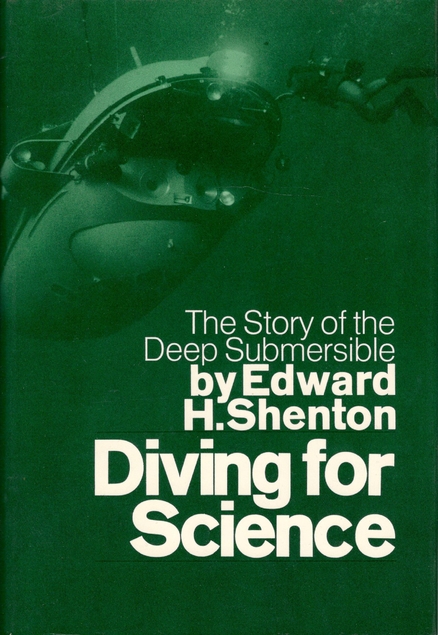
divingDiving for Science, Edward H Shenton (1972). The subtitle to this book does a pretty good job of describing its contents: “The Story of the Deep Submersible”. It’s a potted history, and a rough guide to the workings, of research submersibles, chiefly those which descend to around 2,000 feet or deeper. Some of the more interesting incidents in which submersibles have been involved – Trieste’s descent to Challenger Deep, the sinking and recovery of DSV Alvin, the hunt for the USS Thresher, the recovery of a lost USAF atom bomb off the coast of Spain, the Ben Franklin two-thousand mile underwater journey – are mentioned, but in no great detail. There’s a chapter on how submersibles function, and another on their legal certification. An appendix lists details for every submersible built up to that point. The book does point out that by 1970, their use was beginning to wane, and many had been mothballed – chiefly because they’re expensive to build and run, and cheaper options were available. These days, of course, ROVs and AUVs are more often used than actual submersibles and, except for James Cameron’s Deepsea Challenger and four bathyscaphes built and operated by China (there’s very little info about these online), the handful of deep-diving submersibles currently operating are generally limited to 20,000 feet (6,000 metres). Despite being more than forty years old, this is still a useful book.

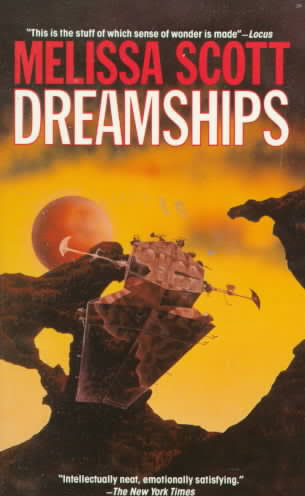
dreamshipsDreamships, Melissa Scott (1992). I’ve always suspected that if I’d come across Scott’s novels in the 1980s I’d have probably started following her career. Admittedly, this is only the third novel by her I’ve read, but I did really like the previous two, Shadow Man and The Kindly Ones. But Scott’s books were not easy to find in the UK back then – only her Silence Leigh trilogy and The Kindly Ones appear to have been published here. Having said all that, Dreamships was a little disappointing. Anyway, a review of it will be appearing soon on SF Mistressworks.

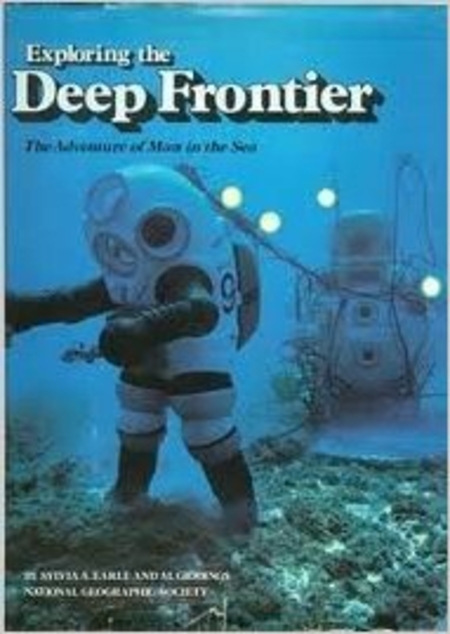
exploring_deepExploring the Deep Frontier, Sylvia A Earle & Al Giddings (1980). I don’t normally bother to mention coffee table books, especially ones published by National Geographic (not that I own many of them, in fact I think this is the only one). But Exploring the Deep Frontier is a pretty good run-through of underwater exploration – the history and the state-of-the-art as of 1980 – and, unsurprisingly, contains a number of especially nice photographs. That’s Earle there on the cover in a JIM suit. She also leads an all-female team in the Tekton underwater habitat, rides in a submersible, and dives in various places around the world. She provides the text of the book, which switches between her own first-person experiences, and a quick history of underwater exploration. Giddings is the photographer. A pretty book. It’s just a shame my copy is so tatty (an eBay purchase, natch), but given it’s 36 years old I suppose that’s understandable. It’s also sadly disappointing that Exploring the Deep Frontier is subtitled “The Adventure of Man in the Sea” when the author is a woman and the bulk of the text covers her adventures.

wolvesWolves, Simon Ings (2014). I missed reading this earlier in the year even though it was shortisted for the BSFA Award. (It lost out to the disappointing Ancillary Sword.) I’d actually read five of the eight shortlisted books, but had I read Wolves when I filled in my ballot I might well have made it my first choice. I’m surprised it didn’t make it the Clarke. Anyway, the narrator works for a start-up which is developing Augmented Reality – a combination of Google Glasses, Heads-Up Displays and VR – which is bought out by a media mogul. Much of the novel, however, covers the narrator’s past, when he grew up in a hotel used chiefly as a hospice for blinded soldiers, who were fitted with a form of seeing-eye technology by his inventor father. His mother suffered from mental health problems, and would often disappear often to some Greenham Common-type protest camp for weeks at a time. One day, he finds her body in the boot of his father’s car. She has committed suicide. Too scared to tell his father, he disposes of the body himself. It is never found. The mystery of her “disappearance” is one of the narrative threads in Wolves. Another describes the slow collapse of country (I may be misremembering, but I don’t think its setting is categorically stated). And then there’s the identity of the mogul, who proves to be one of his father’s patients all those years ago. The plot is perhaps a little confused in places, but the writing is excellent, the dark surreal tone extremely well done, and, like Marcel Theroux’s Strange Bodies, I’m surprised this book didn’t generate more of a fuss when it was published. But then, like Theroux’s novel, it’s not the sort of book that fits in with the genre’s current narrative…

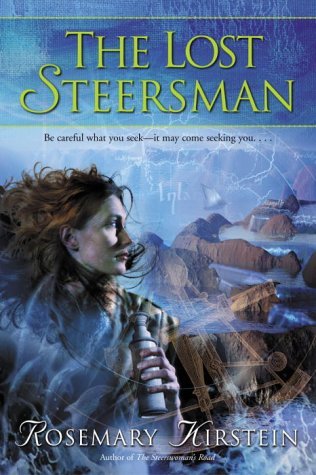
steersmanThe Lost Steersman, Rosemary Kirstein (2003). I stumbled across the first book of this series, The Steerswoman, in a charity shop several years ago and bought it because I vaguely recalled someone telling me it was good. I really liked it – and said so in my review on SF Mistressworks (here). I liked the sequel, The Outskirter’s Secret, even more (see here). So it’s fair to say I had high expectations of The Lost Steersman. And… it sort of almost nearly met them. Rowan is now in the port town of Alemeth after leaving the Outskirts. There’s a Steerswomen’s Annex there, so she hopes to consult its thousands of volumes for more clues about Routine Bioform Clearance, the spell which opens up new lands to the east and so allowing for human expansion, but which appears to have stopped and is being misused by the evil wizard Slado. But the Alemeth steerswoman has died and has left the Annex in a right state, so Rowan has to get it all sorted out. And then demons, creatures from the Outskirts, begin to attack the town… Although couched in the language of fantasy, this is clearly science fiction, and Kirstein cleverly reveals more of the ecology of the world as Rowan investigates. Unfortunately, the first half of the novel is slow and a bit dull, and things only begin to get really interesting when Rowan sails south looking for Slado’s hidden fortress. She doesn’t find it – but what she does find tells the reader more about the world than it tells Rowan. They’re good books, these. The paperbacks are long out of print, but they’re still available as ebooks. Worth getting.

1001 Books You Must Read Before You Die count: 116