It Doesn't Have To Be Right…

… it just has to sound plausible


3 Comments

Reading diary, #50

Oops. I appear to have missed a number. I went straight from Reading diary, #47 to Reading diary, #49. I could have gone back and corrected the numbering, but I can’t be arsed. So this forty-ninth post is numbered fifty, and it’ll just have to carry on from there. All together now: deal with it.
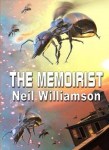
The Memoirist, Neil Williamson (2017, UK). This is the fourth and final novella in NewCon Press’s new series of novella quartets (I wonder where they could have got that idea from?). These first four are straight-up sf, so I will admit to some surprise at seeing Neil Williamson’s name, since he’s not known for straight-up sf. But, thankfully, The Memoirist certainly qualifies as that, and even better, it’s a pretty damn good piece of straight-up science fiction. A ghost writer is hired to write the memoirs of the lead singer of a long-since defunct rock band that had a Moment a couple of decades previously. That Moment was at a near-legendary gig in a small club, of which no recordings or footage exists. And yet the myth of the gig overshadows what meagre impact the band itself ever had. In this world, ubiquitous “bees” provide 24/7 surveillance… but it seems that mythical gig triggered something which led to a new type of “bee”… and to say any more would give the plot twist away. I’ll admit I thought the mystery dragged out a little, but the way the plot then shifted into left-field more than made up for it. I enjoyed this, a good piece of near-future sf, almost McLeod-esque in places, with an interesting premise and an in interesting, and nicely oblique, approach to that premise (okay, it was a little Espedair Street too, but that’s hardly a complaint). Good stuff.
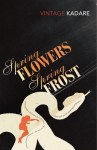
Spring Flowers, Spring Frost, Ismail Kadare (2000, Albania). So I went looking for novels from countries I’d not read literature from before, and came up with this one. Kadare has won several international prizes, and been mooted as a Nobel laureate a number of times. Spring Flowers, Spring Frost is his eleventh book, and his entire oeuvre – of novels, at least – appears to have been translated into English. Mark Gurabardhi is an artist in the provincial town of B—– and, well, things happen. Beginning with a bank robbery. People also tell each other stories, and each chapter is followed by a counter-chapter which expands on that story, as if it were the plot of the novel (but the counter-chapters are not a single narrative). Some sections of the novel deal with the old Albanian mountain code of Kanun, blood vendettas that go back generations, so far no one remembers what they were actually about, and how they’re in danger of kicking off again now that Hoxha’s communist regime has collapsed. Much as I enjoyed Spring Flowers, Spring Frost, it didn’t blow me away. I’m glad I read it, but I doubt I’ll read anything else by Kadare. But at least I can cross Albania off the list.
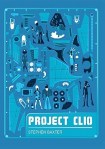
Project Clio, Stephen Baxter (2016, UK). I remember seeing this at the 2016 Eastercon in Manchester, but I own so many Baxter novels and novellas already, and had been badly disappointed by the last few I’d read, that I’d decided to give Project Clio a pass. But then recently I placed an order for the final novella of Eric Brown’s Telemass quartet and this novella sort of accidentally fell into my basket… It reads a little like Baxter had watched Danger: Diabolik, or any number of similar films, once too often, and while it’s a lot of fun it does read somewhat compressed and elided. It’s a carry-on from two earlier stories, which I have not read, even though I own the collection, Universes, in which the stories appear, which does mean Project Clio throws the reader in at the deep end since it assumes prior knowledge of the characters and set-up. There’s mention of Brutalist architecture in the novella, but I can’t work out if it’s approving, because being unapproving of Brutalist architecture would of course be unforgivable. The novella ends with a bit of a Dr-Who-style finish, which didn’t work for me. I liked the use of 1960s iconography, and the piss-takes of 1960s cultural artefacts, but the plotting did feel more like that of a television episode than an actual novella.
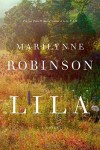
Lila, Marilynne Robinson (2014, USA). I’m still not entirely convinced by Robinson’s books, but they’re so beautifully written I’m prepared to forgive them much. Lila is written from the point of view of the wife of John Ames, the protagonist of Gilead and the patriarch depicted in Home. She was stolen as child, a neglected child, by a woman who calls herself Doll (and who gave Lila her name), and subsequently dragged about the Midwest looking for work. This was during the Great Depression, and anyone who has read Steinbeck, or even seen the film of The Grapes of Wrath, will have some idea of the abject poverty these people experienced. Eventually, Lila fetches up in Gilead as a young woman, and slowly, in much the same way a wild animal would, begins to explore the small town and its inhabitants. She starts working in the pastor’s garden, in return for his unprovoked acts of kindness toward her, and the two sort of drift together until he asks her to marry him and she says yes. While both Lila and Ames are drawn with an impressive amount of sensitivity – and Ames is clearly a remarkably, perhaps a little too remarkably, sensitive man for his time – and the interactions between the two are beautifully-written… but there’s that leap from friends who know very little about each other to marriage that seems somewhat ungrounded. I really do like Robinson’s prose – it’s deceptively simple – and I also really like the gentle pace of her novels, and the depth to which she explores her cast and their various interactions. But… they do also feel like they’re missing an edge, a bit of bite to temper the smoothness. The depiction of Lila’s childhood during the Great Depression is too bland to do the job. It means Robinson’s novels can feel a bit too, well, too pleasant. But still worth reading.

vN, Madeline Ashby (2012, Canada). According to my database, I bought this at the 2014 Fantasycon for £1. So it’s taken me nearly three years to get around to read it. I seem to recall it being quite well-received at its time of release, but, to be honest, I wasn’t all that impressed. The title refers to von Neuman machines, although in this novel they’re actually AI in humanoid bodies thatare faster, stronger, etc, than humans. They’ve integrated into society such that the story opens with a man, his vN wife and vN child (vN children are identical copies of their parent – created by both female and male vN; and, in fact, all vN come in a limited number of “models”, each one identical to the original vN of their line). In order for the child vN, Amy, to “grow” along a similar time-frame to a human child, her parents have been limiting her “food” intake. But when her vN grandmother, Portia, turns up to her kindergarten graduation and goes berserk, Amy eats her. And so grows almost immediately to adult size.  And goes on the run… The problem with vN is that the vN over-balanced the world-building, and Amy was a completely unconvincing character. The vN are so physically superior to human beings they made no sense unless they were non-sentient. But they’re AIs, and supposedly not dangerous because they have a “failsafe” (sort of Asimov’s Three Laws rolled up into one maguffin). Except Portia has overriden hers. And it’s likely Amy will be able override hers too. But since the entire novel is told from Amy’s POV- and she’s a very implausible five-year-old – we can only guess at what this might actually mean to society at large. If you want to read a book about robots and humans, Machine by Jennifer Pelland is much better. There’s apparently a sequel to vN, titled iD. I’ll not be bothering with it.

Blood Enemies, Susan R Matthews (2017, USA). I’ve been a fan of Matthews’s Under Jurisdiction series since reading the first book, An Exchange of Hostages, back in the 1990s when it was published. so I was pretty disappointed when Matthews’s original publisher, Avon Books, dropped the series after the original trilogy. It was then picked up by Roc, who published a further three novels before dropping it. A seventh novel was published four years later by Meisha Merlin, who went into administration shortly afterward. And now, eleven years later, we finally have the next book in the series, published by, of all people, Baen. Which at least explains the shit cover art. Happily, Baen are also rereleasing the earlier books in omnibus editions, which is just as well as Blood Enemies follows straight on from the previous book, 2006’s Warring States, and would be hard to follow without knowledge of the preceding books, despite Matthews’s lengthy introduction. Kosciusko had sent his freed bondsmen off into the Gonebeyond, but when he tried to follow them he found himself stuck on Safehaven. Meanwhile, Cousin Stanosz, an agent of the Malcontent (the Dolgurokij Combine’s unofficial secret service), has been investigating a series of brutal terrorist attacks on Gonebeyond colonies. He thinks Kosciusko’s brother is involved, and so impersonates Kosciusko to visit the brother in the company station he inhabits in Gonebeyond, travelling there in the bondsmen’s ship. Except Kosciusko manages to escape his house-arrest and tracks his b0ndsmen to the company station, inadvertently ruining Cousin Stanosz’s plan… This book is better-written than I remember the earlier books in the series being, and Kosciusko seems to have settled down as a character. But a lot happens in its 256 pages, and the constant referring back to events and people in the earlier books does tend to confuse in places. The Under Jurisdiction novels don’t have quite the same level of shine as they did back in the late 1990s and, while the genre has moved on in the eleven years since Warring States, although it has moved in much the same direction as the Under Jursidiction books were sort of heading… Blood Enemies still doesn’t feel much like a 2017 science ficiton novel. The world-building is strong, but it’s not the focus of the narrative. Nor are the characters’ emotions. Which does make it feel, when compared to present-day sf, as though everything in Blood Enemies is slightly off-centre. I’m not all that interested in the current sf narrative style, to be honest – world-bling and feels and word salad – but Blood Enemies reads like it’s trying to catch up rather than do its own thing. Having said that, I still intend to continue reading the series.

1001 Boks You Must Read Before You Die count: 129

4 Comments

Moving pictures 2017, #32

Two Hollywood films in this batch, although I’m not entirely sure that label can be applied to the first US film mentioned – Noomi Rapace as the female lead! Isabelle Huppert as her mother! Although otherwise, it’s solid mid-Hollywood casting down the line – Colin Farrell, F Murray Abraham, Armand Assante… But there’s also two Indian films, although one isn’t actually Bollywood… plus another Filipino movie, and the second film I’ve seen by Lucía Puenzo. In fact, aside from the shitty animated one, it’s a pretty good collection of movies.

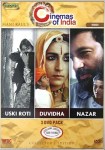
Uski Roti, Mani Kaul (1970, India). There are two 20-DVD box sets released by the National Film Development Corporation of India, but I’ve had trouble finding copies at reasonable prices. Meanwhile, individual films – or in this case, three films in a single case – seem to be readily available… but are almost impossible to find on Amazon because the data entry is so piss-poor. And don’t get me started on big data… Anyway, I recognised the cover design of this Mani Kaul triplet as being from NFDC, and spotting that the back-cover described the films’ genre as “offbeat/social”, I decided they were worth a punt despite having never heard of the director… Only to later discover that Wikipedia describes him as “arguably the greatest Indian director of Hindi films” and also points out he was a student of Ritwik Ghatak (a favourite director of mine). The greatest Indian director Hindi films… and yet the DVD here is the only one of his films available in the UK.  (Not entirely the UK’s fault, as most Bollywood movies available here on DVD are released by Indian labels, not UK ones.) Had I known of the Kaul-Ghatak link, I might have guessed that Uski Roti is “parallel cinema” rather than Bollywood. No singing and dancing here. In fact, the first line of dialogue isn’t spoken until ten minutes into the film. And there isn’t a great deal of dialogue anyway. Kaul seems to like static shots in which there’s very little action or movement. He also likes voice-over narration, and indirect dialogue (if there is such a term – I mean where the character is on-screen, but the dialogue is voice-over). Despite watching Uski Roti twice, I’m still not entirely clear about the plot. Roti is a type of unleavened bread, and Uski Roti appears to be about a woman who makes lunch for her husband, a driver, and then walks to the road along which he drives to hand it to him when he passes. But he spends most of his time away from the family home. The pacing is languorous at best, there are lots of carefully-framed shots, and the whole thing feels like it was consciously made to be nothing like a Bollywood film. Worth seeing.

Insiang, Lino Brocka (1976, Philippines). This was the second disc included with Manila in the Claws of Light (see here), and also stars Hilda Koronel, this time in the title role. Insiang is a young woman living with her mother in a Manila slum district. She has a boyfriend, but her mother’s boyfriend rapes her. Her mother believes her boyfriend and not her daughter, and so Insiang runs off with her boyfriend. But after having consensual sex with her, he deserts her. So Insiang returns to her mother’s boyfriend, seduces him and persuades him to enact her revenge on her boyfriend. She also tells her mother she has slept with her boyfriend… and so her mother stabs and kills him. This is definitely social drama, but not, I think, Pinoy-style. It’s played very straight, the cast are excellent, and the scenes are all shot on location. Koronel is good in the title role – hugely better, in fact, than she was in Manila Claws of Light. I think, on balance, the earlier film is the better of the two, perhaps because its story has wider scope. Insiang is quite claustrophobic – deliberately so, I imagine, in order to evoke life in the slums – but it’s also a very incestuous story, which means it has a small cast. Manila in the Claws of Light was a bigger story, and while Insiang‘s narrower focus works well for it, I don’t think it’s as good as the other film. But the DVD set is definitely worth seeing. And I heop we’ll see more films by Brocka made available.

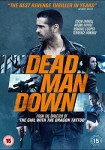
Dead Man Down, Niels Arden Oplev (2013, USA). I found this on Amazon Prime, and I’ve no idea what possessed me to watch it. I’m by no means a Colin Farrell fan, and while the thrillers in which he appears – Euro or Hollywood – are nowhere near as bad as those in which Liam Neeson appears, they’re often thin and implausible stuff. As, er, was this one. But in Oplev it had an interesting choice of director, which led to an entirely unexpected direction for the film, and, as mentioned above, Noomi Rapace plays the female lead and Isabelle Huppert is her mother. Farrell is an enforcer for a gangster, except it seems he isn’t. He has infiltrated the gang in order to exact revenge, because they accidentally killed his young daughter, and then killed his wife and himself (but failed the latter, obvs) when the couple chose to act as witnesses against the gang. However, Rapace, who lives in a neighbouring skyscraper on the same floor as Farrell, so their windows look onto each other’s flats, saw Farrell kill a man. And she’s disfigured from a car crash caused by a drunk-driver who was only lightly sentenced and still continues to drink-drive. She wants revenge, and blackmails Farrell into committing it for her. And there’s the problem… This is a dull dull dull ganster/revenge/lone hero plot, and there a zillion films like it, pretty much all of which are bad. Oplev, however, has chosen to approach the film entirely differently, and he slows down the pace, pulls back on the glorification of violence, and puts the emotional landscapes of the characters of Farrell and Rapace front and centre. And the whole lot is filmed in a low-lit style with a limited colour palette. With a good story, this would have been a superior thriller. With the story it has, it’s a dog food gateau. Oplev could not apparently lift inferior material to something more than inferior, even with a good cast and an art-house look and feel.

The Secret Life of Pets, Chris Renaud & Yarrow Cheny (2016, USA). My finger must have slipped or something, that’s the only explanation. Okay, so Hollywood has churned out some big-budget well-regarded animated feature films over the last couple of years… but every good one there are thousands of inferior ones. And since these days it’s almost impossible to tell the difference between marketing copy and critical commentary, I had mistaken believed this might be one of the few good ones. It wasn’t it. In fact, it was really bad. With a voice cast who seem to have made careers out of sounding like much more famous actors. I can’t even remember what the film was about, something to do with some house pets and the sewers, I seem to recall, but it was just one long uninterrupted stream of clichés and hoary old potted routines. Even the stylised animation looked a bit 1990s, albeit being digital it looked cleaner and smoother than it would have done in that decade. Avoid.

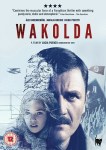
Wakolda, Lucía Puenzo (2013, Argentina). I think it was a trailer on another rental DVD that persuaded me to add this to my rental list. I’d seen a film by Puenzo several years ago, XXY, but had not at that time taken note of the director’s name. It was only after watching Wakolda that I put two and two together… and on the strength of these two films, I’d like to see more by her. A family heading south to Patagonia are asked by a German immigrant if he can drive with them as the roads are dangerous. They agree. After arriving at their destination – a hotel on a lake the family plan to re-open, the German goes on his way. But he reappears a couple of days later and asks to move into the hotel. He is a doctor, and he has noticed that the young daughter is small for age, due to her premature birth, and often sickly. He offers free treatment to improve her health, but the father is sceptical. Meanwhile, a photographer working locally turns out to be a Mossad agent and she identifies the doctor as Mengele. The film is based on Puenzo’s own novel of the same title. Mengele is portrayed as something close to a sociopath, so obsessed with his medical researches that he doesn’t even consider his patients as human beings, and his acts of kindness are merely part of his strategy to get people to agree to his plans. The film is told partly in flashback voice-over narration by the young daughter, and it’s all presented as a sort of gentle drama with an undercurrent of thriller. Good film, definitely worth seeing.

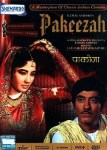
Pakeezah, Kamal Amrohi (1972, India). I forget why I added this to my rental list – it’s certainly not on the 1001 Movies You Must See Before You Die list, although it certainly belongs on it, but perhaps it was on some list of best Bollywood  movies or something. Anyway, I bunged it in the player not expecting much, I mean, a forty-five year old Bollywood film… boy meets girl, boy loses girl, boy gets girl back again, lots of singing and dancing, and probably a terrible print as well… But, well, it was all that, but it was also bloody good. It was if the Archers – Michael Powell and Emeric Pressburger, that is – had made a Bollywood film. Which in no way is to erase Amrohi’s achievement, which apparently took some sixteen years. But Pakeezah had that same Archers look of detailed interior sets built to resemble exteriors. And some of the photography is, despite the poor print, really quite astonishingly good. In fact, everything about the way this film was made is good. It’s set in Lucknow at the turn of century. It opens with a woman dying in childbirth, and her baby being taken by her sister, who brings the child up in her brothel, where she becomes a much fêted singer and dancer. The local nawab takes to her, and starts wooing her. While on a river trip, their boat is attacked by elephants and the dancer is thrown into the river. She is rescued by a forest ranger, and the two fall in love… There is plenty of singing and dancing in Pakeezah, but it’s classical Indian music rather than the popular musuic you might find in a more recent Bollywood film. The sets are fantastic, and the costumes are amazing… so it’s a shame the DVD transfer isn’t especially good. I’ve seen worse – the Guru Dutt ones, for example; and at least one of the recent Bollywood films I’ve seen was a really low res picture – but it’s a shame that a film that’s held in such high regard isn’t available in a better edition. Excellent film.

1001 Movies You Must See Before You Die count: 869


1 Comment

Moving pictures 2017, #31

I managed to cross a few films off the 1001 Movies You Must See Before You Die list this time, although two of them were US films by directors whose works I don’t especially like – and no, I don’t understand how the films made the list in the first place. This post also marks my first Singaporean film, wihch I stumbled across on eBay and which seemed intriguing enough to buy. The seller contacted me to point out the DVD was region 3, but I replied I’d bought a multi-region Blu-ray specifically because I want to watch DVDs and Blu-rays from other regions. This post has my first Jordanian film too – although I’m fairly sure this is a Jordanian film for the international market, rather than the Arabic-language market.

The Color Purple*, Steven Spielberg (1985, USA). I’m not a big Spielberg fan – in fact, I’m not a fan of his films at all, especially not of his push-button emotional content films – and that’s what The Color Purple is (despite my dislike of US spelling, it seems to fit in this case). I’ve not read the novel by Alice Walker but I fervently hope it’s not as bad as this film, which is an over-sentimental drama covering an African-American family over several decades from the 1920s onward. Whoopi Goldberg plays a poor and uneducated woman (when she’s an adult) in rural Georgia. She is married off to Danny Glover, even though he had turned up at the house intending to marry another sister. That sister runs away, and goes to “Africa” (I don’t recall the actual African nation being named) with a missionary couple. In the novel, at least according to Wikipedia’s plot synopsis, she ends up marrying the missionary husband after his wife dies; in the film, she marries a young man she meets in the “African” village in which she is living. Goldberg, meanwhile, is abused by Glover over many years, decades even. There are also some scenes at a bar, where a musical number is performed by the fallen wife of the local preacher… leading to a frankly ludicrous scene later where said fallen wife hears the choir singing and marches around a mile, singing all the while, and being heard by the congregation as she marches. I really didn’t like this film. It was manipulative to a degree I’ve not seen in a Spielberg film before, and he’s entirely about manipulating his audience. I also fail to understand why it made the 1001 Movies To See Before You Die list instead of like, say, Black Girl, a Senegalese film which makes a similar point albeit much more honestly. Still, I guess there was a lot of money pumped into The Color Purple

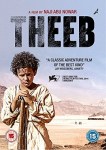
Theeb, Naji Abu Nowar (2014, Jordan). I’ve watched a number of Arabic-language films, but they’ve mostly been ones aimed at non-Arabic audiences – not badly-acted Egyptian dramas, in other words. Even the films of Elia Sulieman, a favourite director, are not really made for a Palestinian audience, although they are very Palestinian films. Amd while I’m all too happy to watch such films, it not the same as watching a Bollywood movie, which is a movie designed to appeal to its home audience. It seems to me, though I have no proof, that Theeb, a film made in Jordan by a Jordanian/British director, is a film designed more to appeal to an international audience than a Jordanian audience. And as a big fan of non-Anglophone cinema I have no real problem with that, but as someone who dislikes the concept of “world cinema” I’m less approving. Theeb is a good film, of that there’s no doubt. It’s an excellent historical drama, set in Jordan during WWI, and a clever character study of its central character, a young boy caught up in events he does not understand. But different countries have their different populist cinemas – I’ve mentioned Nigeria’s Nollywood before, and the difficulty of finding its popular films with English subtitles – but what I fail to understand is why it is assumed populist non-Anglophone cinema cannot find an Anglophone audience and only non-Anglophone auteur films are worth releasing in English-language markets. True, the English movie market is pretty much 99% Hollywood, and they can’t even work out how to handle Spanish-speaking audiences, which is a huge part of the US population. But in the UK, we have Welsh and Cornish and the two varieties of Gaelic, and TV channels and programmes and films for each, albeit small scale. And, personally, most of my favourite directors do not make English language films, so I have to watch with subtitles. In fact, subtitles are a passport to a world of cinema and only a fool would ignore them. Subtitles are good. And so is this Theeb.

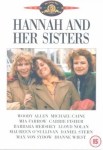
Hannah and Her Sisters*, Woody Allen (1986, USA). I really don’t understand the appeal of Woody Allen’s films, and I certainly don’t understand why he has six movies on the 1001 Movies You Must See Before You die list, since none of them to my mind are all that good. Hannah and Her Sisters fools the viewer initially because it opens with a voice-over by Michael Caine, and no one on-screen resembles Allen. But then he appears, and it all begins to  slide downhill. Caine is married to Hannah, but fancies one of her sisters. Allen is an ex-husband of another sister, but once went on a date with yet another sister which ended badly. And, oh god, this sort of middle-class American bed-hopping drawing-room farce is tedious at best and embarrassing at worst. Allen at least manages not to entirely embarrass his viewers or his cast, but it’s a close-run thing. Caine does not do needy very well, and the film pretty much hinges on his needy desire for sister Barbara Hershey, Max von Sydow’s wife. I watched this film so I could cross it off the list. I only have one more Allen film left on the list to watch – Crimes and Misdemeanours – and then I never have to watch another Woody Allen film ever again.

Manila in the Claws of Light*, Lino Brocka (1975, Philippines). When I set out to watch all the films on 1001 Movies You Must See Before You die list, copies of this film were almost impossible to find. But then Martin Scorsese’s World Cinema Project went and restored it – yay for Scorsese – and then the BFI released it in the UK on dual format – yay for the BFI. And… it’s good, good enough to make want to watch more films by Brocka. Fortunately, as the DVD cover art indicates, there is another film bundled with Manila in the Claws of Light, Insiang. But my chances of finding any further Brocka movies is, I suspect, extremely remote. Anyway, Manila in the Claws of Light… A young man from the provinces (well, an island other than Luzon – the Philippines is an archipelago, after all) moves to Manila to track down his girlfriend, who had left earlier after being promised employment in the capital by a visiting woman promising jobs there for young women (yes, yes, it’s pretty obvious to us, but these are unsophisticated probincianos). The guy ends up working on a building site as casual labour, where he learns how they are treated, how their wages are garnished, and what life is like at the bottom of the heap. But he spends all his spare time looking for his girlfriend. And eventually finds her. Which is where, of course, things start to go wrong. The film opens in black-and-white, and the print quality is not especially good, which I thought odd for 1975… but then as the opening credits end it changes to colour and the print quality greatly improves. I’m not sure this adds anything to the film, or why Brocka chose to do it. Manila in the Claws of Light treads a fine line between melodrama and social realism, but manages not to fall off in either direction. Brocka is apparently “one of the most influential and significant Filipino filmmakers” (according to Wikipedia), and while I’ve known of Pinoy cinema for many years – there used to be a column in Gulf News’ weekly magazine dedicated to it; and one to Lollywood too – I’ll admit I didn’t take much notice of the directors’ names (although such columns tend to focus on the stars anyway), but even in my years of following “world cinema” (ugh) I’d not come across Brocka’s name before. Mostly my fault, yes, but given how so many directors from other countries are lauded in Anglophone cinema – Tarkovsky, Ray, Kiarostami, Kurosawa, Almodóvar, Tati, Fassbinder, Bergman, etc. – I’m surprised I’d not stumbled across Brocka’s name before. But then, as mentioned previously, Manila in the Claws of Light was, until this edition appeared, extremely hard to find. Perhaps the appearance of Two Films by Lino Brocka means more films by him, and other Filipino/Filipina directors, are going to be released in the Anglophone world. I hope so.

Girl Gets Girl, Sonia Sebastián (2015, Spain). I forget where I came across this – probably a trailer on another rental DVD – and decided to add it to my rental list. Bur I thoroughly enjoyed it. The film was almost like someone trying to out-Almodóvar Almodóvar himself. Ten years after running away from a wedding, Inés returns to Spain from Miami, just when her ex-girlfriend’s ten-year-old daughter is have a “first period party”. There then follows a series of mildly comic and well-written scenes in which each of the characters at the party try to get their own way. A previous girlfriend, for exmaple, turns up with a dodgy guy as her “boyfriend”. and he tries to drug her drink but the wrong woman drinks it. One of the two mothers of the young girl is desperately trying to hide her sexuality from her mother. The other mother thinks Inés still loves her, but Inés is basically just hiding from some enemies she made in Miami, And not just enenies, as one is an editor who fell in love with her and follows her to Spain to win her heart and/or get back her money. The script is witty, the characters are likeable, the plot is, despite being a but obvious in places, is clever. It’s by no means great cinema, but it is a fun film that entertains without annoying or insulting the viewer’s intelligence. Oh, and it doesn’t just pass the Bechdel Test, it comes top of the class. Worth seeing.

In the Room, Eric Khoo (2015, Singapore). As mentioned above, I stumbled across this on eBay and decided to take a punt on it (it’s not actually available on Amazon). It was a good call. The title refers to a room in the Hotel Singapura (an alternative title for the film) in which events happen over several decades. The story opens in 1942, in black-and-white, with a Brit and a Singaporean lamenting the loss of the Brit’s livelihood – a plantation – but also quite clearly about the love affair between the two men. Another story is about a madam who trains young women to be prostitutes in the early 1960s in the room, and in this sequence the production design and colour scheme is appropriate to the decade. There’s a rock band who occupy the room in the 1970s… and so on. There’s a variety of styles on display, all of which seem appropriate to the decade being depicted, but it does mean In the Room doesn’t feel like it presents a singular vision. Sometimes it feels like Wong Kar-Wai’s In the Mood for Love, other times it feels a bit like Almodóvar. Or maybe not. It’s not the most original plot on the planet – I can think of at least two bad films that have the same premise – and Khoo’s decision to give each sequence an appropriate flavour does tend to dilute his vision. But I still thought this was rather good, and I’m glad I took a chance on it.

1001 Movies You Must See Before You Die count: 867


2 Comments

Moving pictures 2017, #30

Six films, four countries… and they’re all countries from which I’ve seen many films before. Some favourite directors – including one who’s becoming more of a favourite, and one whose works I don’t like as much as I used to…

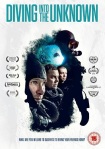
Diving into the Unknown, Juan Reina (2016, Finland). I stumbled across this true story last year on the BBC website, but had forgotten a film was being made of it. So I was chuffed when I came across Diving into the Unknown, and immediately added it to my rental list. It’s intended to be a fly-on-the-wall film of a difficult cave dive. But the dive turned into tragedy, and the documentary crew continued to film those involved as they tried to come to terms with the tragedy, and what it meant to them in their pursuit of their sport. A team of Finnish technical cave divers planned to swim through a cave system in Plurdalen, Norway, which stretched some two to three kilometres but reached a depth of 130 metres, with many tight and narrow passages. At the deepest part of the dive, two of the team drowned – despite being experienced divers, and as a consequence of events not entirely explained in the film. An attempt by the authorities – aided by a team of British divers – to retrieve the bodies failed, and further entry to the caves was prohibited. So the Finns decided to illegally re-enter the caves and fetch their colleagues’ bodies. Which they did. With the original documentary crew following their every move. Their “rescue” mission was successful, and the Norwegian authorities chose not to prosecute them. The film is a combination of talking heads – the divers discussing their sport, the dive, and the tragedy – and footage from both the tragic dive and the rescue dive, with some fly-on-the-wall footage of the group preparing for each of the dives. The divers are completely normal people – mostly men, but there are some women – and not the sort of egotistical assholes you usually find in extreme sports (although, on reflection, all the documentaries I’ve seen about divers has shown them to be disconcertingly ordinary). Diving into the Unknown is the sort of story Hollywood would have a field day with (who know, there may be a fictionalisation in the works already), but the matter-of-fact presentation of the documentary I find much more effective. Definitely worth watching.

Finally, Sunday, François Truffaut (1983, France). The more Truffaut I watch, the more I like Truffaut. I’d seen Jules et Jim and Les Quatre Cent Coups many years ago, and not been all that taken with them, although I did, and still do, love Fahrenheit 451. But the Truffaut films I’ve watched since, I’ve liked a great deal, including Tirez dur le pianiste, which may actually be one of my favourite New Wave films.  Finally, Sunday, or Vivement dimanche!, was Truffaut’s last film and, as I tweeted while watching it, probably “the Truffautest film Truffaut ever Truffauted”. For a start, it’s shot in black and white, which immediately suggests Truffaut’s New Wave movies, and it is, in fact, very New Wave, in look and tone and construction. A rich man is shot while hunting, and a business associate, an estate agent, is the prime suspect. The estate agent’s secretary, played by Fanny Ardant, sets out to prove her boss’s innocence. So you have that noir link, a New Wave favourite, right there in the plot. It’s also very Hitchcockian, of course, as Truffaut was an expert on Hitch, and was instrumental in rehabilitating the director and his oeuvre. I too am a big fan of Hitchcock and own pretty much all of his movies on either DVD or Blu-ray (and I’ve also seen Truffaut’s interview with Hitchcock, Hitchcock/Truffaut, although I’ve not read the book). In places, it’s hard to tell what in Finally, Sunday is homage and what is pastiche, but then the lines between those two are often blurred in the New Wave (although perhaps more so in Godard’s films). I am becoming a bit of a fan of Truffaut, despite being initially cool to his films. I think Truffaut is the better director, but Godard is the better film-maker, if that makes sense. Happily, most of Truffaut’s oeuvre is available in the UK – including a pair of reasonably-priced Blu-ray collections – which is not the case for Godard.

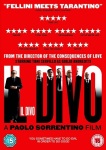
Il Divo, Paolo Sorrentino (2008, Italy). The first Sorrentino film I saw was The Consequences of Love and I thought it great – the aesthetics of a European car commercial married to a, somewhat langorous, thriller plot. And so beautifully shot. And I liked The Great Beauty too, even if it felt like Fellini on prozac – because the cinematography was once again exquisite – although to be fair, the languid pace did suit the story (or rather, it suited the character of the film’s protagonist). But Youth was a disappointment, a trite story of the over-privileged at a Swiss sanatorium, albeit still with lovely photography. But my appreciation of Sorrentino’s work was definitely on the wane. And so, Il Divo… This is an earlier work than those mentioned previously, and is a lightly fictionalised account of the career, and fall from grace, of the Italian politician Giulio Andreotti, prime minster from 1972 to 1973, 1976 to 1979 and 1989 to 1992. He was accused of corruption and ties to the Mafia, but was aquitted in court due to a lack of evidence. The film is as stylish, and as stylised, as Sorrentino’s later works, with beautifully-lit and -shot interiors, but Toni Servillo, who also played the lead in The Great Beauty, plays Andreotti with a weird lack of affect that seemed to make the man more of a caricature than a character. It was a bit like watching a political cartoon wandering through Rome’s many historical buildings. It all felt like it wasn’t taking Andreotti’s transgression expecially seriously – not an attempt to rehabilitate, but more of a trivialisation of his crimes. An odd film.

Gone to Earth, Michael Powell & Emeric Pressburger (1950, UK). The Archers must surely be in the top ten of British directors, if not the top five, although many of their films these days are so much of their time the sheer technical brilliance involved in their making is often overlooked. My favourite of their movies remains Black Narcissus, which is such a beautifully-made piece of cinema it’s mind-blowing it was done entirely in a studio. But the Archers, Michael Powell and Emeric Pressburger, are best known for three other films – The Red Shoes, A Matter of Life and Death and The Life and Death of Colonel Blimp – all of which are excellent… but it does mean the rest of their oeuvre tends to get overlooked. Including this mid-career piece set in Cornwall. Although, to be fair, Gone to Earth is a bit hokey, and while there’s lots of good Archer-ish things about it, the story is somewhat over-melodramatic and perhaps even a bit bodice-ripper-ish. Jennifer Jones plays the flighty nature-loving and nubile daughter of a coffin-maker and harpist in 1890s Shropshire. She also has a pet fox. But then the local squire takes a shine to her… but she marries the new vicar instead. And then runs away to be with the squire. But the vicar wins her back, although by this point her name is mud in the community. It all comes to a head with a tragedy that was carefully telegraphed in the first act. This is not a great Archers film, although the fact it was made by them means it’s better-made than most of its contemporaries. It seems a bit chrulish to complain about the story, since most of the Archers’ films are overloaded melodramas, and part of their formula was making such melodramas play like plain dramas. Gone to Earth doesn’t manage the charisma of the aforementioned films, perhaps because it feels like a cut-price Austen story, or because the characters are just a tad too archetypal… A film worth seeing, but not a great film.

The Duke of Burgundy, Peter Strickland (2014, UK). I stumbled across this on Amazon Prime, and a quick google persuaded me it might be worth watching. Which it was. It’s very slow, which I like; but I’m not sure on it being inspired by the films of Jess Franco. But then, I don’t think I’ve actually seen any films by Franco (isn’t he a bit like Tinto Brass? Deeply sexist exploitation films from the 1970s?). A young woman turns up at the house of a slightly older woman – I’m not sure where this was filmed, the cast speak English but it doesn’t look like the UK (and the two leads are Italian and Swedish, anyway) – where she is apparently taken on as a maid/housekeeper… although the mistress of the house appears very demanding, if not over-demanding. It transpires the maid is a student of the older woman, who is a lepidoptery expert. And the two are lovers. The film charts their exploration of a BDSM relationship, in which it is soon revealed that the submissive is actually controlling the mistress. It’s all filmed totally like an art film, and not at all like the soft porn its story suggests. In fact, in places it closer resembles video art than it does narrative cinema. Clearly, Strickland is a man with a singular vision, and the wherewithal to get projects with such, on the surface, salacious plots green-lit. The film certainly makes the viewer feel like they’re peeping on a private affair, which is clearly the effect Strickland was striving for (there are shots taken through keyholes, for example). It makes for an uncomfortable experience, that razor-edge between titillation and invasion of privacy the film manages to straddle quite successfully. Not everything in it works, but enough does to make it an interesting movie.

La Commune (Paris, 1871), Peter Watkins (2000, France). This, to be honest, was a bit of a slog. I’m fully in tune with Watkins’s objectives and sensibilities, but 345 minutes (5¾ hours!) is a lot of time to spend watching a pretty obvious story unfold. There’s a lot of good things in this – it’s a Watkins, so that’s a given – such as the insistence on historical verisimilitude but the presence of modern media. But it’s also a blow-by-blow account of the founding of the titular government, which ruled Paris for just over a month in 1871. The film is presented as re-enactments of events, using a very large and mostly non-professional cast, some documentary footage about the making of the film, fake news broadcasts by a contemporary (ie, 1871) television station (yes, really), and a series of historical notes given as lengthy intertitles. It comes across as a comprehensive documentary, or Open University film, about its subject, but with added commentary and, on top of that, meta-commentary about the media and the role of media in the sort of events which both created and led to the destruction of the Paris Commune. The film makes a large number of interesting, and important, points, but watching all 345 minutes of it is a real test of endurance. It’s going to take me several goes to digest it all, so I’m glad I have my own copy (albeit from a France-released box set – why is there no UK box set of Watkins’s films?).

1001 Movies To See Before You Die count: 869


Leave a comment

The half year in numbers

I’ve already posted my best for for the first six months of 2017 (well, obviously, not really six months – more like, “up to June”), and you can find it here. But what I usually do is also is work out what I’ve been reading and watching in terms of gender, genre and nationality.

books
Since 1 January, I’ve read forty-nine books, which is down on previous years. In fact, I’m running aroundna dozen books behind on reading challenge this year, and I set my target at 140 books despite managing 150 books last year.

In terms of gender, I’ve done quite well, as male and female authors are running neck-and-neck. I’ve not always alternated, which is what I try to do, but if I read a run of books by male authors, then I follow it with a run of female authors. I only track this for fiction, incidentally.

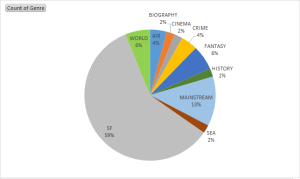
Genre-wise, I self-identify as a science fiction fan, but in recent years I’ve found myself reading less sf… Or so I thought. As you can see from the chart above, science fiction has accounted for 59% of my reading in 2017 so far, and mainstream only 13% (although if you add in the world fiction, a new category, it rises to 19% – and yes, I dislike the term “world cinema” but I wanted to track the books I’d read my non-Anglophone writers and “world fiction” seemed the easiest way to do it).

And speaking of “world fiction”, this year I’ve been tracking the nation of origin of the authors whose books I read. I’d imagined that since I read a lot of sf, most of my reading would compromise US authors, but it seems I actually read more UK sf than US. Quite a bit more, in fact. I’ve also made an effort this year to read fiction from other countries – hence the presence of Albania, Belarus, and Estonia. The Norwegian book was one I’d had my shelves for several years, the Bangladeshi one was the novel from which a favourite film was adapted, the Czech was an author whose books I like and have read previously, and the French ones are all bandes dessinées.

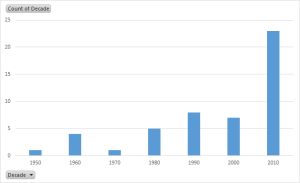
Finally, the decades in which the books I’ve read were published… I never think of myself as someone who always go for the new shiny, so it came as a surprise to see how much books of the last seven years dominate my reading. The 1990s was the decade in which I first became active in sf, so perhaps that accounts for its high showing.

films
I started recording the films I watched back in 2001, although I didn’t bother tracking rewatches of films I’d already seen until a year or two later. And it wasn’t until 2010 that I began noting down the country of origin of the movies. In the last few years, I’ve made an effort to watch more films from non-Anglophone countries – or, at the very least, to reduce the percentage of films I watch that are from the US.

Overall, counting all the films I’ve seen since 2001, US films account for 52% of my viewing. Happily, so far this year, that’s down to 23%. China is next at 13%, and then the UK at 10%. In 2017, I have to date watched movies from thirty-eight different countries: Argentina, Australia, Austria, Belgium, Canada, Chile, China, Colombia, Cuba, Czech Republic, Denmark,Estonia, Finland, France, Georgia, Germany, Greece, India, Iran, Italy, Jamaica, Japan, Mexico, Netherlands, Peru, Poland, Romania, Russia, Senegal, South Africa, South Korea, Spain, Sweden, Switzerland, Taiwan, UK, USA and Vietnam.

If I exclude rewatches, the total drops from 266 to 215 movies watched, the US rises to 25%, China drops to 12% and the UK to 9%. So I guess it wasn’t US films I mostly rewatched.

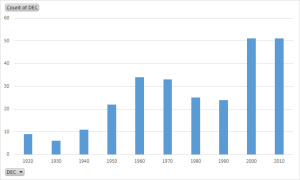
I also prefer to spread my viewing across the decades, and not just watch the latest films. But then, I do like me some 1950s cinema… although this year I seem to have watched more 1960s movies. And it’s weird that both the current decade and the last decade score exactly the same at 51 films each.

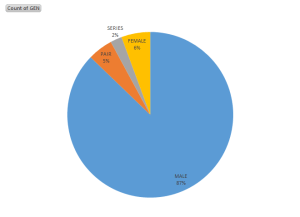
This year, I’ve also started tracking the gender of the directors of the films I watch. I know that most of the films I watch are made by men, but I was a little dismayed at how low the percentage of women director was, even though this year I’ve discovered some new female directors whose oeuvres I’d like to explore, such as Claudia Llosa and Lucía Puenzo. (Incidentally, “pair” means two or more directors, and “series” means television programmes.) Discounting rewatches and other films by the same director, I’ve actually watched films by 176 directors, but only a dozen of them were women. I need to improve that.

The genre of the films I watch: I tend to think of most films as “drama”, which is why that category is so big. And “animated” includes anime films, but not Disney ones, which, for some reason I decided to split out into a category of its own. Also, “wu xia” is a bit of a cheat, as not all of the films I classified as that are actually fantasy – some were big Chinese historial epic films. Oh, and I watched a few Elvis movies, so I felt he deserved his own genre too. But only 5% of the movies I’ve watched so far in 2017 were science fiction films… but then I’ve never been that big a fan of sf cinema, although I do rate a handful of sf films pretty highly.

Finally, I’ve been working my way through the 1001 Movies You Must See Before You Die list (the 2013 edition) for a couple of years, and so far in 2017, I’ve watched twenty-six films new to me from that list. The results have been… mixed. Some were good, some were merely okay, but none turned me into a fan of the director, as has happened in previous years. To date, I’ve watched 867 films on the list (some of them before I even started recording my film-watching), so that’s 33 to go… I’m unlikely to complete the list this year – I may never complete it, as some of the films are near-impossible to find. But we’ll see.


2 Comments

Moving pictures 2017, #29

Another mixed bag, including some films I didn’t expect to like but did, and some I expected to like but didn’t…

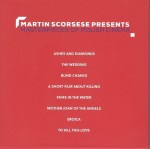
The Wedding, Andrzej Wajda (1972, Poland). I find Wajda a bit and miss, to be honest. I really like both Man of Marble and Man of Iron, but didn’t take to Ashes and Diamonds. Two of those films are in the Masterpieces of Polish Cinema box sets, along with Innocent Sorcerors, Promised Land and… The Wedding. That’s quite a showing, out of twenty-four films. I suspect some of Wajda’s films require several watchings, and The Wedding is one of them. As the title, er, informs, it’s set at a wedding, in 1900 in Kraków, between a middle-class poet and his peasant fiancée. The film is apparently based on a play by Stanisław Wyspiański, and is concerned chiefly with the history of Poland, particularly how it relates to class. The play is apparently held in high regard – and Wajda has also directed the play, it seems – but some of the reviews I’ve seen online of Wajda’s film are less complimentary – although the non-Polish reviews seem uniformly approving. The play has rhyming dialogue, but Wajda dispenses with it for the film, although many lines spoken by the cast use a lot of poetic imagery. As everyone at the wedding gets more pissed, so they start to see apparitions which represent people and incidents from Polish history. In 1900, Poland didn’t exist as a nation, as it was occupied by Russia, Austria and Prussia, and it would not regain its independence until The Treaty of Versailles in 1918. The Wedding takes place at a time when an uprising might have happened – The Wedding partly symbolises the inability of the intelligentsia and peasants to work together. The film has an externsive cast, and crams a lot into its 106 minutes. It doesn’t feel at all stagey, chiefly because Wajda films several important scenes outdoors (I don’t know how the play handles them). But even the interior scenes feel very cinematographic, as Wajda uses close-ups, zoom shots and pull back shots. The Wedding was definitely a film that improved on a second viewing. I’ll probably have to watch it again sometime.

The Eye of Silence, Emmanuel Sapolsky (2016, China). I found this on Amazon Prime, and the synopsis sounded reasonably interesting so I sat down to watch it. Amèlie is a young Chinese woman in Beijing, who enjoys going out clubbing with her friend Coco. They’re both beautiful and looking for a good time. Coco already has a boyfriend, a young and rich property developer. Amèlie makes her living pretending to be French – she lived in France and speaks the language – for a friend who scams companies looking for overseas investment. Amèlie also has extremely sensitive vision and can see in the dark – but she has to wear sunglasses in the light. At a party thrown by Coco’s boyfriend, Coco goes into a diabetic coma and then dies while being raped by the boyfriend and his friends. Even though the lights are out, Amèlie witnesses this, but she doesn’t know what to do. Sapolsky is, I think, a French director, and Xin Wang, the actress who plays Amèlie, has appeared in a couple of his projects – including Ex-Model a series of webisodes about a Chinese fashion model in Paris who discovers she is too old (at thirty) to get more work. They’re also available on Amazon Prime and are quite amusing. Xin Wang is a face to watch, and while the seeing-in-the-dark thing is an important plot-point – it makes her witness to the crime without the perpetrators realising it, and leads to a somewhat bathetic ending – it does feel a bit unnecessary. The Eye of Silence is clearly a star vehicle for Xin Wang, but she’s very good so that’s no problem. Worth watching.

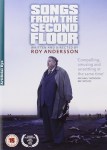
Songs from the Second Floor, Roy Andersson (2000, Sweden). The night before I flew out to Sweden for a convention, I decided to watch something Swedish. As you do. And I found this film on Amazon Prime, which seemed to have added a number of good films in the week or two prior (including the one above). However, I’m not sure Songs from the Second Floor was a good choice of film to put me in a Swedish frame of mind as it was fucking weird as shit. It’s a series of vignettes, all of which are completely depressing, are played totally deadpan, and in which the cast wear white face make-up that makes them look like cadavers. It makes Finnish films look like the Marx Brothers. The vignettes sort of interlock, inasmuch as characters move through them while also having their own stories. In one, a man who has just been fired, clings to the leg of his boss, and is dragged begging for a second chance along the corridor. In another, a man on a subway train carries a bag full of burnt paper. A naval officer gets into a taxi which is stuck in traffic, even though he is late for an important funeral. The film has a very washed-out look, which does everyone the appearance of warmed-over corpses, but given that it’s a mordant commentary on modern life, it’s quite effective. It presents a different character of black humour to that of films from other nations I’ve seen, more absurd and surreal, I think, than, say, Finnish black-comedies. And less cataclysmic than Polish ones. I’m not sure I liked it, but I think I’ll probably have a go at the two “sequels”, You, the Living and A Pigeon Sat on a Branch Reflecting on Existence.

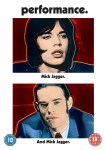
Performance*, Nicolas Roeg (1970, UK). I think I had the wrong idea about this film in my head prior to watching it. Because when it opened as a mockney gangaster flick, with James Fox as a dapper but psycho enforcer for a London gang boss, I wondered if I were watching the right movie. But after Fox pisses off his boss and is forced to go on the run, he ends up hiding out in the house of retired rock star Turner (played by Jagger), and the film I’d been expecting began to manifest. But there was little in it, I thought, to justify a place on the 1001 Movies You Must See Before You Die list. As an ultra-violent film with flashes of surrealism, it predated Pete Travis’s Dredd by several decades, but didn’t seem to add anything to either ultra-violent films of its time or surrealist movies. But then the film reached ‘Memo from Turner’, almost a promo video, performed by Jagger, and the whole film went up a level. That happens sometimes: a film is mostly meh, and then something happens to cause you re-appraise what you’ve just watched. Performance still feels like a so-so 1970s British gangster film, and I couldn’t decide if Jagger was actually acting or not (as in, he wasn’t that bad, and he’s usually a terrible actor), but the ‘Memo from Turner’ sequence was really good, and if only for that I think better of this film than I otherwise would.

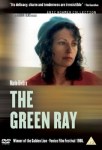
The Green Ray, Éric Rohmer (1986, France). Among the people I know who actually know who Rohmer is – and it’s a small number of people – The Green Ray is generally proffered as Rohmer’s best film. So I was surprised to find it so disappointing. Rohmer’s films are very talky, but this one seemed even more so than others I remembered. Perhaps I expected too much of it. But his films also tackle thorny moral situations and problems, and YMMV almost certainly given those subjects. In The Green Ray, a young woman’s relationship has just ended, and her holidays planned are torpedoed when her travelling companion pulls out. She joins a beach party, but she’s the only single person there and doesn’t fit in (I know that feeling). She bounces around Europe, looking for a companion but unwilling to engage in the sort of mindless mating games people use when looking for one-night stands (I know that feeling too). You’d think, with Rohmer tackling a situation with which I can sympathise, I’d like The Green Ray more than I did. But Delphine, the main character, felt a little too flat to be sympathetic, and perhaps the over-reliance on dialogue told against the film. Also, when I think of the Rohmer films I like – Chloe in the Afternoon, Pauline at the Beach – the emotional problem which forms the core of the film feels stronger and a more powerful engine for the plot. The Green Ray – a reference to both Verne’s novel of the same name, and the near-mythical green flash sometimes seen at sunset – feels at times as unfocused as Delphine’s holiday plans. I still like Rohmer’s films, and am happy to work my way through his oeuvre, and I suspect The Green Ray is going withstand a rewatch much better than some of his other films… One of these days I’ll have to see if I can pick up a DVD collection of his movies; there are several available.

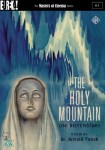
The Holy Mountain, Arnold Fanck (1926, Germany). I had thought Leni Reifenstahl – of Triumph of the Will fame – had directed this, but it turns out she was its star, not its director. She plays a dancer who falls in love with a mountaineer, but then he gets jealous when she gives one of her scarves to one of his friends, leading the friend to believe she loves him and the mountaineer to think she has betrayed him. The film makes much of the fact its mountaineering scenes were actually filmed in the mountains and not faked up in a studio, and, while there are plenty that were certainly filmed on location, a pivotal scene in which the mountaineer has to hold his friend all night after he’d fallen off a cliff does look a bit like it was done in a studio. About all I can remember from the film is the dancing scenes (bad) and the climbing scenes (good). If the film was sold on its location shooting, it at least did a good job on it. The story – boy meets, girl, boy loses girl, boy gets girl back again after much difficulty – may not have been all that original, and Reifenstahl as an actress has nothing like Louise Brooks’s on-screen charisma, and the film does not go somewhat off-piste towards the end (leading to the film’s title)… but I did enjoy it. And while silent films require a different viewing protocol to “talkies”, I’ve seen aneough them now to appreciate how it’s done. And some silent films, in fact, I’ve thought absolutely blinding. Worth seeing, but probably not worth a rewatch.

1001 Movies you Must See Before You Die count: 866


8 Comments

Onwards to Uppsala

The weekend of 26 to 28 May saw me in Uppsala, Sweden, for Kontur 2017, this year’s Swecon. The Guests of Honour were Ann Leckie, Kameron Hurley and Siri Pettersen. It was my third Swecon and my fourth Nordic con. And, I fervently hope, not my last of either. I’d previously attended two Swecons in Stockholm, but since Uppsala is pretty close to Arlanda Airport, closer than Stockholm in fact, and it sounded like a really nice town, I signed up for Kontur.

In Manchester Airport, I bumped into Luke Smith, who was also on his way to Uppsala. It turned out we were on the same flight to Sweden. And the same flight back. We hung out together until our flight was called, and then met up once we’d landed in Sweden. After making our way through immigration and customs, we headed for Sky City and the airport’s main train station. Neither of us had travelled on the Swedish railways before (I’d used the Arlanda Express on my previous visits), which proved our undoing. I bought a ticket from a machine, Luke bought his from the counter. We went down to the platform. A SJ train pulled in. Luke’s ticket, it transpired, wasn’t valid on it, but mine was. But mine wouldn’t be valid on the next train, which Luke could catch as he had a UL ticket. So we ended up travelling to Uppsala on separate trains…

Kontur 2017 took place in the Clarion Hotel Gillet on Dragarbrunnsgatan, right in the centre of town and about a ten-minute walk from the railway station. We arrived there just after two pm, which made it about ten hours (taking into account the hour’s time difference) of travelling door-to-door. Not too bad. It takes about six hours from Sheffield to Glasgow. After checking in, I showered and changed, and then headed down to the first floor, where the convention was due to take place. The conference facilities at the Clarion Hotel Gillet are laid out in an L-shape, with a large bar area occupying the angle. Unfortunately, it had no comfy chairs for chilling out, only stools and chest-high tables. Programme items took place in rooms along both arms of the L. There was also a dealers’ room, containing some Swedish small presses and a woman who made fancy dragons out of paper; a room for the Alvarfonden, which sells secondhand UK and US books; and a games room.

At previous Swecons, I’d attended far more programme items than I typically do at conventions. In part, I think that was because of the venue, the Dieselverkstaden, which didn’t really have an area where you can just hang out (Swecon 2018 is back there, by the way). The bar at Kontur, however, because everyone had to pass through it from one wing to the other, was good for socialising. So I actually only made two programme items… and those were the ones I was moderating. Oh, and I went to the closing ceremony as well.

Both of my panels were on the Saturday. The first was “Make Art not War: Sentience and Narrative in science fiction”, with Ann Leckie, Karolina Fedyk and Markku Soikkeli. I thought the panel went quite well, even if it was my first go at moderating. Ann talked about Ancillary Justice, of course, Karolina is a neuroscientist and spoke about neuroaesthetics , and Markku mentioned the AI in Gibson’s Sprawl trilogy which makes art out of found objects. My second panel was “Environmentalism and science fiction”, with, once again, Markku, plus Christin Ljungvist and Saara Henriksson. (Markku, incidentally, moderated the one panel I was on at Swecon 2016.) This panel didn’t go as well as the other one. I’d done my research, so I knew what the other panellists had written, even if it was only available in Swedish or Finnish… But environmentalism is a subject I know little about – enough to be dangerous, I suppose… We asked the audience for examples of environmentalist sf, and ended up writing twenty or so titles up on the whiteboard, but the discussion jumped about a bit without reaching any sort of point. I asked a member of the audience afterwards if he’d thought it was any good. “No,” he said. So much for my second attempt at moderating a panel…

I like city centre conventions because you don’t have to be confined to the hotel. And Kontur was slap bang in the middle of Uppsala. On the Friday night, a group of us went to a Lebanese restaurant beside the river for dinner. Anders also took me to a nearby Irish pub to try one of their beers. And on the Saturday night, Steve Savile dropped into the con as he lives in a nearby town, as did George Berger, who lives in Uppsala, so half a dozen of us went to Bastard Burger (yes, really) for dinner, which was just down the street from the hotel. There was also a supermarket in a shopping centre next to the hotel, where I could buy dairy-free sandwiches (as the hotel bar didn’t have any).

Later that night, Jukke Halme staged his famous quiz, although this time the format was slightly different. Three contestants were volunteered, and each had to answer a number of questions in three rounds: Call My Bluff, a fan version of Jeopardy, and Charades. The questions were, of course, fiendishly difficult, especially the “Fanopardy” round on a past Swecon (only three people knew the answers to the questions: one of them was Jukka, the other two were in the audience). After the quiz, I joined people downstairs in the hotel’s main bar, and stayed there until closing time.

On the Sunday, Tobias, with his son in tow, showed me around Uppsala. We drove out to Gamla Uppsala, which is pretty much just a small museum, five huge barrows, a small cafe and a church. We’d planned to eat in the cafe, but they had nothing I could eat. So we walked up to the top of one of the barrows, where we had a good view of the surrounding countryside. We popped into the gift shop in the museum, where I saw some bottles of mead – but it was alcohol-free, disappointingly. Tobias suggested getting some food from a supermarket and then having a picnic at Uppsala castle. So that’s what we did. We sat in the gardens, looking over the Botanical Garden.

Back at the hotel, we made the closing ceremony, and then people began drifting across to the Bishop’s Arms, where the dead dog party was being held. The Bishop’s Arms is an “English pub”, although more like the sort of English pub you’d find in Dubai than Durham. It was so committed to the theme, it even played Manic Street Preachers over the PA in the toilets. The beers on offer were very good, although most were considerably stronger than I’m used to. As the evening progressed, people drifted away to catch their trains, but there were still quite a few of us left when the bar closed around eleven o’clock. We headed into the town centre, but couldn’t find anywhere still open. Fortunately, it turns out Swedish hotels sell bottles of beer (and wine) at the reception desk after the bars have closed. So we hung around in the hotel lobby, drinking, for another hour or so.

After our lack of success with the trains on the Friday, Luke and I were determined to get it right for the trip from Uppsala to Arlanda Airport. We failed. We bought our tickets from the same machine, so we were definitely going to be on the same train… but we should have looked which train was departing for the airport first and bought tickets for it. We had to wait over an hour for a SJ train…

The trip home was uneventful – other than me leaving the book I was reading on the plane by accident, although, to be honest, I was more annoyed about losing the 100 Yugoslavian Dinar banknote I was using as a bookmark than the book itself. My plane was supposed to land five minutes before the hourly train from Manchester Airport to Sheffield, which obviously I could never have caught, but the landing was delayed by twenty minutes, and then there was a massive queue in Immigration, and I missed the next one, so had to wait an hour for the one after that. The worst part of every journey abroad is the final leg home from the airport by rail. There is only one train an hour from the UK’s third busiest airport (and the busiest outside London) to the country’s sixth largest city, and they’re only seventy kilometres apart! British railways are shit, and it’s all due to privatisation. In virtually every case in this country where nationalised industries have been privatised, the privatised service or utility has proven much worse. Privatisation doesn’t work. But the Tories push it because it’s a way for them, and those who own the Conservative Party and its MPs, to make more money. It’s a form of theft.

Anyway, Kontur… was an excellent convention. My first tries at moderating panels weren’t entirely successful, but never mind. Hopefully, I’ll have further opportunities to improve. I had a great time chatting with friends, and making new ones. I met up with some people I’d known only online in person for the first time – hi, George. If I name everyone I spoke to or hung round with over the weekend, I’d probably miss someone out. But certainly Sunday night and Monday morning were spent saying, “See you in Helsinki!” to a lot of people. Swedish fandom reminds me of why I joined fandom in the first place – there’s a similar atmosphere to the UK cons I remember from the early 1990s. Okay, so people don’t actually talk about genre all the time, at least not in the bar, but there’s a genuine sense of community, and an international community, which British cons no longer seem to have. I don’t think that’s due to the fact Swecon is typical three to four times smaller than a UK Eastercon, so perhaps it’s simply because of the way Swedish fandom works – and how it integrates with Nordic fandom.

I only bought three books, and they were from the Alvarfonden – Her Pilgrim Soul, The Birth of the People’s Republic of Antarctica and The Final Circle of Paradise. I didn’t want to buy too many, not just because I’d have to carry them back in cabin baggage (memo to self: remember to take a suitcase to go in the hold for Worldcon75, so I don’t have to worry about buying too many books), but also because I’d bought too many books in May already.

Finally, I leave you with a photo I took in the abovementioned supermarket. It shows an entire aisle filled with varieties of crispbread. Välkommen till sverige!


6 Comments

2017, Best of the half-year

It’s that time of year again, ie, halfway through the twelve months, when I look back over the books I’ve read, the films I’ve watched and the music I’ve listened to, and try to work out which was the best so far. I do this at the end of every year as well, of course, but I like seeing what has lasted the course, or if the back half of the year has proven better than the front half.

The last couple of years it’s been quite difficult to put together these lists, chiefly because I’ve watched so many films, sometimes more than a dozen a week. And I choose films to watch that I think might be good, which they generally are… and that makes picking the best of them even harder. On the other hand, I’ve not read as much so far this year as I have in previous years, but my selection of books is just as random…

books
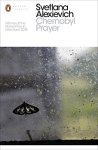
1 Chernobyl Prayer, Svetlana Alexievich (1997, Belarus). I was chatting with friends on Twitter one night earlier this year, and the conversation drifted onto Nobel Prize laureates, especially female ones, and I realised I’d read very few female winners of the Nobel. So I went onto Amazon and ordered some books. Herta Müller’s The Appointment was a good read but not so good I wanted to read more by her. But Alexievitch’s Chernobyl Prayer was brilliant, a fantastic revoicing of the people Alexievich had interviewed about Chernobyl and its after-effects. I have since bought a copy of Alexievich’s most recent book, Second-Hand Time, and I may well pick up more books by her. I wrote about Chernobyl Prayer here.

2 A River Called Titash, Adwaita Mallabarman (1956, Bangladesh). This is the novel from which one of my favourite films was adapted, so I was keen to read it to see how the book and film compared. And the answer is: pretty well. The film simplifies the novel’s plot, which is pretty much a series of vignettes anyway, but both suceed admirably as ethnological documents depicting a lost way of life. Mallabarman was brought up on the Titas river, but he later moved to Kolkata and became a journalist and writer. A River Called Titash is partly based on his own childhood, so it’s a first-hand depiction of a now-lost culture. I wrote about the book here.

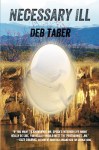
3 Necessary Ill, Deb Taber (2013, USA). I bought this a couple of years ago from Aqueduct Press after hearing many good things about it. But it took me a while to get around to reading it, which was a shame – as I really really liked it. It’s by no means perfect, and a on a prose level is probably the weakest of the five books listed here. But I loved the premise, and fund the cast completely fascinating. Other than half a dozen short stories, this is the only fiction Taber has so far had published. But I hoping there’ll be another novel from her soon. I wrote about Necessary Ill here.

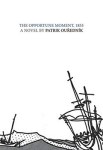
4 The Opportune Moment, 1855, Patrik Ouředník (2006, Czech Republic). Ouředník’s Europeana made my best of list a few years ago, so I’ve kept an eye open for his books ever since. Unfortunately, Dalkey Archives have only translated three of his books to date, and I thought the second, Case Closed, interesting but not as good as Europeana. But then The Opportune Moment, 1855 is not as good as Europeana… but it’s a deal more interesting than Case Closed (on the other hand, maybe I should reread Case Closed). I wrote about The Opportune Moment, 1855 here.

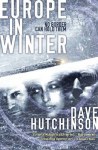
5 Europe in Winter, Dave Hutchinson (2016, UK). This is the third book in the trilogy-that-is-no-longer-a-trilogy about a fractured near-future Europe in which an alternate universe, where the entire European continent has been populated by the British, is now linked to our universe – or rather, the universe of the main narrative. These books have drifted from sf-meets-spy-fiction to something much more sf-nal. In a good way. Happily, there is at least one more book due in thrilogy series. I wrote about Europe in Winter here.

Honourable mentions Proof of Concept, Gwyneth Jones (2017, UK), a piece of characteristically smart but grim sf from a favourite author; The World of Edena, Moebius (2016, France), a beautifully drawn bande dessinée; Lord of Slaughter, MD Lachlan (2012, UK), the third book in a superior Norse mythos/werewolf fantasy series; The Language of Power, Rosemary Kirstein (2004, USA), the fourth book in Kirstein’s fun Steerswoman series; The Possibility of Life’s Survival on the Planet, Patrick Keiller (2012, UK), an accompanying text for a nexhibition related to Keiller’s documentary, Robinson in Ruins; Lila, Marilynne Robinson (2014, USA), the third of Robinson’s Gilead novels, following the wife of the narrator of Gilead.

films
1 I Am Cuba, Mikhail Kalatozov (1964, Cuba). I bought the 50 Years of the Cuban Revolution box set because I wanted a copy of Memories of Underdevelopment – and yes, it had Lucía, a favourite film, in the set, which I already owned, but I could pass the copy I had onto a friend… But I was surprised to discover that I Am Cuba, a film about which I knew nothing, proved so good. It’s an astonishing piece of work, Soviet propaganda, that the authorities deemed a failure, but which is technically decades ahead of its time. I wrote about it here.

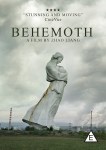
2 Behemoth, Zhao Liang (2015, China). I went on a bit of a Chinese film kick earlier this year, after watching a couple of films by Sixth Generation directors such as Jia Zhangke and Zhang Yuan, and I’d thought Zhao Liang was one such. But he’s not. And he makes documentaries, not feature films. Zhao’s films are deeply critical of the Chinese regime, which makes you wonder how he manages to get them made, but Behemoth is also beautifully shot, with quite arresting split-screen sections at intervals. I wrote about it here.

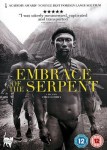
3 Embrace of the Serpent, Ciro Guerra (2015, Colombia). I found this on Amazon Prime, and then David Tallerman recommended it, so I moved it up the to-be-watched queue… and was very pleased I had done so. It’s set in the Amazonian jungle, and covers a pair of expeditions for a legendary plant, one in 1909 and the other in 1940. There’s a bit of Herzog in it, and probably some Rocha too, and the cinematorgaphy is often amazing. I wrote about it here.

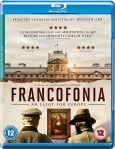
4 Francofonia, Aleksandr Sokurov (2015, France). I’ve made no secret of the fact Sokurov is my favourite director, so anything by him is almost certain to make my top five. The only reason Francofonia isn’t higher in this list is because I expected it to be excellent. And so it was. It reminds me more of Sokurov’s “elegy” films than it does Russian Ark, although comparisons with the latter will likely be inevitable for most. The production values are also probably the highest I’ve seen in a Sokurov film, and I hope Francofonia‘s international success gives his career the sort of boost it has long deserved. I wrote about Francofonia here.

5 The World, Jia Zhangke (2004, China). The first film by Jia I saw A Touch of Sin, and I thought it excellent. So I added more of his films to my wishlist, and ended up buying the dual edition of The World because its premise intrigued me – it’s set in a theme park comprised of small-scale copies of famous buildings from around the world. It immediately became my favourite Jia film, and possibly one of my all-time top ten films. Despite having little or no plot, it feels more of a piece than A Touch of Sin. Jia is now one of my favourite directors. I wrote about The World here.

Honourable mentions The Epic of Everest, JBL Noel (1924, UK), astonishing silent documentary of an early attempt to climb Everest; Marketa Lazarová, František Vlačíl (1967, Czech Republic), grim mediaeval drama, something the Czechs seem to do well; Elena, Andrey Zvyagintsev (2011, Russia), languidly-paced character study of a rich man’s wife as she attempts to provide for her son from an earlier marriage, beautifully shot; Reason, Debate and a Story, Ritwik Ghatak (1974, India), more ethnographical film-making and political debate from a favourite director; Shanghai Dreams, Wang Xiaoshuai (2005, China), grim semi-autobiographical drama from a Sixth Generation director; Suzhou River, Lou Ye (2000, China), cleverly-structured mystery from another Sixth Generation director; Madeinusa, Claudia Llosa (2006, Peru), affecting story of a young woman in a remote village in the Andes; The Case of Hana and Alice, Shunji Iwai (2015, Japan), a lovely piece of animation.

music
Um, well, embarrassingly, I don’t seem to have bought any new music so far this year. I used to listen to music a lot at work, but I’ve not been able to do that for over a year. Some of my favuorite bands have released albums in 2017, such as Persefone, but I’ve not yet got around to buying them. And, in fact, I’ve only been to one gig in the past six months, and that was to see Magenta, a band I last saw live over five years ago. It was a good gig. But it’s been a quiet year musically, so to speak, this year…


3 Comments

Reading diary, #49

I seem to have made up for the last post’s male heaviness, so to speak…

Necessary Ill, Deb Taber (2013, USA). A lot of people whose opinion I respect had said approving things about this book, and yet within less than a year after its publication conversation about it seemed to fade away. Nonetheless, it remained on my radar, and when I placed an order with Aqueduct Press – an excellent small press, by the way – I included it; or it may have been that I wanted this book and waited until there were others before ordering it, I forget which. Either way, that order also contained Flesh and Wires (see here) and A Day in Deep Freeze (see here), so it was a good purchase. All of which makes it a little embarrassing it’s taken me so long to get around to reading Necessary Ill. And, even more embarrassingly, I loved it. I don’t think it’s perfect, and at least one of the reasons I love it is because one of its elements fits so badly. It’s by no means a beautifully-written book, although its prose is generally better than average for sf, and its world-building does feel a bit hit and miss in places. But it’s premise has so much going for it, that I couldn’t help liking the book. At some point in the future, some babies are born neuter. They’re considered freaks, and those that do make it to adulthood disguise themselves as gendered people (those that haven’t had gender surgically forced on them as kids, that is). By the time the novel’s story starts, there’s a secret colony of them living deep in the Carlsbad Caverns in New Mexico. The earth is also in serious trouble, thanks to a failing climate and scarce resources, and cannot handle its current population levels. Some of the neuters engineer plagues, which they release throughout the US, in an effort to cull the population. Jin is one such “spreader”, and is the chief character of the novel. While travelling about Texas, carefully spreading one of its plagues, Jin tangles with a man who seems to know a lot about the spreaders, and who appears to be behind an anti-neuter movement which is gathering steam. Meanwhile, Sandy, a young woman rescued by another neut, is now living with the neuts in their underground home. The plot spends a while exploring the world and the chief characters – but it’s all good stuff – before turning into the redemption of Jin, and by extension, all the neuts. This is done through a feature film about Jin, lightly fictionalised, and made by all the neuts who have infiltrated the film industry (inasmuch as they’re disguised as gendered people). The secret world of the neuts is handled really well, and if some of the science behind the plagues doesn’t quite sound like it could be true, it’s all presented with sufficient scientific grounding to be plausible. I think this book will make it into my top five for the first half of 2017, and might even make it to the end of year one.

Valerian and Laureline 16: Hostages of Ultralum, Jean-Claude Mézières & Pierre Christin (1996, France). I do love this series, but not every album in it is all that memorable. And this, er, is one of the unmemorable ones. Ultralum is an important mineral used to fuel spaceships, but it only exists in areas of high spatio-temporal instability. Valerian and Laureline are still bouncing around after a previous album saw Galaxity, the pan-galactic peace-keeping organisation for which they worked, wiped out of existence and out of memory. There are a few references in this story to earlier albums, but from what I remember the plot was pretty thin and it felt more like the series was treading water than anything else. Plot-wise, that’s disappointing, but there are other aspects to the series which appeal – not least the mordant wit, which felt sadly lacking in the trailer for Besson’s film, although, to be fair, that focused on the visuals because that’s what modern audiences appear to want. But one of the strengths of the Valerian and Laureline series has been the shift in emphasis from Valerian to Laureline, and it would be a crying shame if the film characterised Valerian as the omni-competent hero and Laureline as his decorative sidekick. Because, to be honest, I had thought we were better than that. Still, this is Besson, so who knows. Mézières is apparently happy with the film, although as the illustrator I’d expect him to be concerned chiefly with the visuals. But I may be doing him a disservice – and Besson too, of course. We shall see. Meanwhile, the comics are readily available and definitely worth reading. Up to volume 17, at least.

Mappa Mundi, Justina Robson (2001, UK). I bought this when it was published 16 years ago, but I seem to have missed reading it and it’s only now I’ve finally got around to it. The novel opens with six prologues, each of which is based around one of the main narrative’s major characters. I’ve never been a big fan of prologues, but I like books that play around with narrative structure… And six introductory prologues strikes me as an interesting structural choice, even if their content doesn’t add all that much to the plot. Which concerns a pair of government projects, one in the UK and one in the US, based around some sort of neurological mapping technology, which could allow governments to control, and program, the thoughts of their citizens. Elements within the US security apparatus want control of the technology – and have already run a hugely illegal, and unsuccessful, test on human beings on a Native American reservation. In the UK, the research is being performed by a company owned by a mysterious Russian scientist (whose chain of identity changes forms one of the six prologues). When a test on a human subject is sabotaged, leading to a Dr Manhattan-like series of events, and infecting main character Natalie Armstrong with a more powerful version of the Mappa Mundi software… it kicks off a transatlantic techno-thriller plot that reminds me a little of a Cronenberg film, and in which the science-fictional technobabble floats uneasily on a well-realised real-world setting. The two main characters, Armstrong and half-Cheyenne FBI agent Jude Westhorpe, also felt a little good to be true. I suspect I’d have been more impressed with Mappa Mundi had I read it in 2001 (it made the Clarke Award shortlist, but lost out to Gwyneth Jones’s Bold as Love, and rightly so), but Robson’s subsequent novels have all been very good indeed and she’s one of the authors whose books I buy as soon as they’re published – even if it takes me sixteen years to get around to reading them…

Career of Evil, Robert Galbraith (2015, UK). I forget why I read the first of Rowling’s pseudonymous crime novels (her disguise had been rumbled before I read it, so I knew it was by Rowling). Possibly it was because my mother had a copy and asked me if I wanted to read it and I said, go on then. And then she got hold of the second book in the series… And now the third… The prose is a little better than average for the crime genre, but not quite good enough to be called literary. And the crime elements are not especially well put together or convincing, perhaps about as poorly done as you’d expect in a literary novel. So the Cormoran Strike novels fall uneasily between two stools, without being quite good enough to be one or the other. Having said that, they’re easy reads, and the two protagonists – Strike himself, and his business partner, Robin – are engaging characters. In this one, an old enemy of Strike’s sends Robin the leg of a young female murder victim by courier, and clues suggest the perpetrator is an enemy from Strike’s past – two men he investigated when in the RMP, and a stepfather he hated. Rowling drags out the mystery for far too long, sending Strike and Robin up and down the country in search of clues. Meanwhile, Robin’s relationship with her fiancé hits a rocky patch – as the fiancé thinks Robin and Strike are attracted to each other (Rowling has been doing a Mulder/Scully thing with them). Oh, and the reference to Blue Oyster Cult in the title? (I spotted it immediately, I’m a BOC fan.) The entire book is filled with references to the songs and lyrics of Blue Oyster Cult. As a fan of the band, that was a draw, but I can’t see it being the same to those who aren’t. It’s not like the references add anything to the plot that could not have been done by a fictional band (and, let’s face it, Rowling could hardly write worse lyrics than some of Sandy Perlman’s). Of the three Strike novel so far published – and more will undoubtedly appear – Career of Evil was more likeable than its predecessors, but less satisfactory as a crime novel. I suspect that may be the series’ future…

Proof of Concept, Gwyneth Jones (2017, UK). New science fiction from my favourite sf author? That went straight onto the wishlist the moment it was announced… Two scientists from different fields, and with opposing views on how to conduct their science, join forces to run an experiment in a recently-discovered “void”, a hollow space deep in bedrock, in which they plan to make changes to “information space” and so instantaneously relocate their facility to an exo-planet. In the facility are the IS scientists and a “crew”, a group of reality TV stars who have been involved in several television interstellar mission simulations. The main character, Kir, is a young woman who grew up feral and now has an AI embedded in her skull. The Information Space thing reminds me of Buonarotti Drive from Jones’s Aleutian trilogy, and may in fact be the same thing. Proof of Concept starts out as an exploration of two incompatible groups of people living in a facility sealed off from the outside world, and in which tensions are heightened after a series of deaths – heightened to the point where the experiment is jeopardised. But then the experiment has also been dangerously compromised, and is not quite what it’s been presented to be. Reading Proof of Concept reminded me of all the reasons why Jones is my favourite sf author – that clear clinical prose, the knotty ideas, the sense there’s so much more to the story that’s not being told… Jones sketches in her near-future lightly, but there’s more than enough there to ground the story, even if current taste is for an excess of detail. She also pitches the readers straight into the story, which can leave readers floundering a little. But Jones’s fiction has always required work from the reader – as should all good fiction – and if Proof of Concept feels a little thin in places, it nevertheless has an interesting protagonist in Kir, and a fascinating idea, Information Space, at its core. More, please.

Monsieur d’Eon is Woman, Gary Kates (1995, USA). I have no idea how long I’ve had this book. I sort of found it a couple of weeks ago and decided to read it. (Um, according to my database, I bought it cheap on eBay in 2005.) Anyway, I found it in a pile of books while I was doing a little light tidying in the study. I’d heard of the Chevalier d’Eon, of course, and thought I knew the basic details of his story… But apparently not. Kates bases his biography chiefly on d’Eon’s own writings – which, he is careful to point out, often contained fabricated and/or embroidered details (and in some cases, Kates provides historical evidence that d’Eon had lied in his autobiographical writings). The popular story has it that d’Eon was a spy for Louis XV, and he infiltrated the Imperial Russian court purporting to be a woman. After a period in England, he returned to France, adopted a female identity, and lived out the rest of his days as the Chevalière d’Eon. He claimed to have been born female, but brought up male because his father needed a son or they’d lose the family holdings. But on d’Eon’s death, it turned out d’Eon was male. Much of this history was fabricated by d’Eon himself. Kates maintains that d’Eon got himself in such bad favour with Louis XV, and yet was privy to so many embarrassing secrets, that the only way to neutralise d’Eon was to make him a woman – by royal decree. The book explains the historical and political background to d’Eon’s life and adventures, but it’s never quite clear why everyone thought a gender-change was suitable. Or what triggered the rumours he was really female. What is clear, however, is that d’Eon was an astonishing person, widely-read, learned, a gifted diplomat, a prolific author, and a minor war hero. He led a peculiar life – the first half as male, and a spy/diplomat for the French king; the second half in exile as a woman. Some of the details on d’Eon on his Wikipedia page are contradicted in Monsier d’Eon is a Woman – especially the bit about the Russian court. Kates maintains d’Eon invented the cross-dressing element years later (although he was indeed sent to the Russian court by Louis XV). A fascinating book about a fascinating person.

1001 Book You Must Read Before You Die count: 129
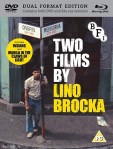

Leave a comment

Moving pictures 2017, #28

Another mixed bag…

Passengers, Morten Tyldum (2016, USA). This didn’t do too well at the box office, and was panned by critics; and was especially panned by many of the people I follow on Twitter/read on blogs. Chiefly because it was characterised as a rape/stalker fantasy. What many of those critics had failed to mention is that Pratt’s character agonises over his decision, but goes ahead and does it despite knowing he’s in the wrong. Although that in no way justifies his action, or makes it right. And Lawrence’s character roundly rejects him when she learns the truth. It’s an unpleasant story, but it’s disingenuous to claim it presents it without commentary. On top of which, the film has plenty of other problems. Briefly, Chris Pratt is a glorified mechanic being shipped in cold sleep to a distant colony world aboard a fancy CGI starship. A meteorite strike causes a glitch and he’s awakened ninety years before the starship reaches its destination. He cannot go back into cold sleep. And he’ll be dead by the time the ship reaches its destination. In the cold sleep chamber, he spots Jennifer Lawrence, fancies her, looks into life – she’s a celebrated writer – and falls in love with her. So he wakes her and pretends it was another glitch. They have a good time aboard the deserted starship, despite knowing they’ll not live to see the destination. Then she discovers he deliberately woke her. She rejects him. Then the reactor or something goes berserk because of the meteroid strike or something, and they have to work together to save the ship. Ship fixed, rift healed. The two of them live happily ever after… True, Passengers shows Pratt doing something unthinkable, and then shows him enjoying the fruits of that act – it is, in effect, a death sentence for Lawrence, triggered wholly by Pratt. But the consequences of that act are not left unexplored, or presented without commentary. In fact, the shit third act’s bullshit jeopardy, thrown into the plot in order to effect a reconciliation, is probably more offensive. Boy wakes girl, thus consigning her to an early death aboard a starship populated only by him, but fusion reactor meltdown makes it all okay… And yeah, he did wrong, he was being punished for it… and the film then fakes a situation to make it all work out okay. That’s the really bad thing about Passengers. I probably should have avoided it, as advised.

A Girl At My Door, July Jung (2014, South Korea). Another film David Tallerman added to my rental list. And another good call. (This is not to say they’ve all been good calls, but we seem to be averaging quite a high hit rate each.) A policewoman has been assigned as station chief at a small seaside town after a scandal back in Seoul. On her first day, she witnesses some schoolkids bullying a a girl their own age. Later, she spots the girl’s father beating the same girl, and she stops it. The policeman gets reluctantly involved when the girl turns up at her house, and she takes her in so she will no longer be beaten by her father. This, of course, causes talk. And is not helped by the policewoman drinking. It all comes to a head when the father – a drunkard, and manager of the town’s main business – accuses the policewoman of abusing his daughter. Which is only made worse when the daughter, in all innocence, gives answers to the police which can be easily misconstrued. But the girl has her revenge – she fakes an incident of rape from her father while her phone is on and afte rshe has called a policeman. A Girl At My Door can’t decide if it’s a drama or a thriller, and flips between both registers… but that works in its favour. It goes for dead-pan throughout, which means the spin put on events later in the film can be seen purely as perspective. Having said that, the teenage girl is a bit creepy – although in a way you can never quite put your finger on. The fact everything starts to go horribly wrong for the policewoman comes as no real surprise, but the way the girl turns the tables is a neat twist. Definitely worth seeing.

The Great Dictator, Charlie Chaplin (1940, USA). I admit I thought this was on the 1001 Movies You Must See Before You Die list, perhaps because it’s possibly Chaplin’s most famous film (it’s also an important plot point in Iron Sky)… but I’d never actually seen it. And then it popped up on Amazon Prime… And, well… It seems it’s not on the 1001 Movies you Must See  Before You Die list and I can see why: it’s a bit rubbish. It’s more Benny Hill than your actual Charlie Chaplin. The title refers to Hynkel who is, well, Hitler. But there’s also a Jewish tailor (that’s the actual name of the character) who closely resembles him. Both played, of course, by Chaplin. But the tailor loses his memory after being injured in WWI. He returns to the Jewish ghetto and tries to rebuild his life, but Hynkel’s stormtroopers are proesecuting a campaign of antisemitic violence and intimidation against the ghetto’s inhabitants. When the Jewish tailor becomes a target, he ‘s first helped out by Paulette Goddard, and later by an officer high in Hynkel’s regime, whose life the Jewish tailor saved during WWI (an early sequence in the film shows this: it’s a pretty dumb flying comedy routine). Having seen several Chaplin films, and thought them good, I was expecting more of The Great Dictator. It didn’t deliver. There were some clever gags in the films – the ack-ack gun, for example – but they were usually book-ended by weak comedy. It’s probably worth seeing this, so you can cross it off your list. But it’s far from being one of Chaplin’s best.

Operation Avalanche, Matt Johnson (2016, Canada). Someone, a known and plainly deluded denier, asked Buzz Aldrin to swear on a Bible that he had been to the Moon… and Aldrin punched him in the face. Since 1969 there have been conspiracy theories claiming Apollo 11, or all of the Apollo missions, were faked. It’s all complete bollocks, of course. (Hint: when a cover-up is more expensive and complicated than the event is it is supposedly covering up, chances are the event actually took place.) But while faked Moon landings have appeared in fiction during the past four and a half decades, the nearest Hollywood came was Capricorn One, which posited a faked landing on Mars. Until now. In the past two years, there have been two films about faked Moon landings – both, incidentally, suggesting Kubrick was involved – but neither of which have been US films. First was Moonwalkers (see here), which was French, and not entirely successful; and now we have Operation Avalanche from Canada. In this one, an ambitious young CIA agent persuades his bosses to allow him to a film a faked Apollo 11 moon landing because all indications are NASA will fail to achieve Kennedy’s target of the “by the end of the decade”. The agent and his team pose as a documentary crew, and the enture film is presented as found footage – ie, the footage they shot. And it makes a better fist of the found footage angle than Apollo 18 (which remains the best fictional representation of Apollo on film). The DVD’s cover art does Operation Avalanche no favours – nor, in fact, does the the title. The synopsis led me to expect something like Moonwalkers, which was not especially good, or funny. But Operation Avalanche is actually pretty good. It maintains an impressively earnest tone throughout, evokes its period especially well, and its cast of unknowns and barely-seens do a good job of convincing the viewer it’s all really quite real. Worth seeing.
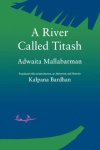
Cumbres, Gabriel Nuncio (2013, Mexico). I stumbled across this on Amazon Prime – it is proving not entirely useless, and despite being full of shit films, does actually have the odd gem buried in there. And it’s no good searching for it, because the search function is shite. You just… stumble across it. And hope it doesn’t disappear before you get the chance to watch it. I guess it’s little different, in effect, to channel-hopping… and discover ing that one of your 200+ cable channels is not showing an episode of NCIS or Friends by is ten minutes into a hard-to-find film you really want to see… Which is all somewhat irrelevant, as I knew nothing about Cumbres when I came across it – but the synopsis sounded intriguing, and it was a Mexican film and I’ve not seen many Mexican films (er, Jodorowsky… and that’s about it). A father wakes up his teenage daughter and tells her she has to drive her older sister out to relatives in the country because something bad has happened. And, er, that’s pretty much it. Nuncio takes his time revealing what the elder sister has done, although it’s mentioned early that it involves her boyfriend. The film is shot entirely in black-and-white, and is mostly set in the car in which the two drive south. It’s well-played, Nuncio’s coyness over revealing the reason for the sudden flight quickly ceases to be annoying, and it all hangs together exceedingly well. Good film.

Fat City*, John Huston (1972, USA). I’ve yet to figure out why Huston is important, or at least important enough to appear eight times on the 1001 Movies You Must See Before You Die list. Eight times. Some of his early stuff is clearly seminal Hollywood film-making – and he was part of a Hollywood dynasty too. But I’m not sure this grim drama about a has-been boxer and an up-and-coming boxer was all that good. Stacey Keach plays a boxer fallen on hard times, forever promising he’ll get fit and return to the sport, but usually ending up back on the booze. Jeff Bridges plays the amateur Keach decides has talent, and who he pushes into a career in the sport. It’s set in a run-down area of Los Angeles, featuring a cast of alcoholics and low-lives, and is based on the only novel published by Leon Gardner. When I started working my way through the 1001 Movies You Must See Before You Die list, Fat City was unavailable on DVD, but a posh new dual format edition has just been released. Which was lucky for me. I guess. Although why it ever ended  up on the list is a mystery. True, I’m no fan of boxing films – or indeed of the sport (and it’s a bit rich actually calling it a “sport”, if you ask me), so much of its appeal is lost on me. But I am a fan of films, and nothing about Fat City especially stood out for me. Meh.

1001 Movies You Must See Before You Die list count: 865