It Doesn't Have To Be Right…

… it just has to sound plausible


4 Comments

Rounding up the Readings & Watchings

I seem to have been a bit busy lately, which is why I’ve not posted here recently as often as I have done in the past. Here, anyway, is another catch-up post on what I’ve read and what I’ve watched.

Books
The Handmaid’s Tale, Margaret Atwood (1985), I bought in Abu Dhabi, so I’ve had it at least seven years. I’ve no idea why it sat there neglected on my book-shelves for so long, because I expected it to be a good book. And so it proved to be. Admittedly, I’d also expected it to be a more straightforward approach to its premise – a US theocratic dystopia – that it actually was. But couching the story as the reminiscences of the narrator I thought worked very well. Some of the scenes were especially powerful. For all the bollocks Atwood talks in trying to distance herself from sf, it can’t be denied that she’s a very good prose stylist. An excellent book. Now I’d like to see the film.

The Power Of Starhawk, Stever Gerber (2009), is the second of Marvel’s collection of early Guardians of the Galaxy comics. These ones are at least better than the previous collection (see here). The Guardians are an odd group – they weren’t popular on their debut in 1969, but in the years following various people have tried to revive them – Gerber in 1976 (collected in this volume), Jim Valentino in 1990, and now Dan Abnett and Andy Lanning from 2008. It’s the Gerber ones – from Marvel Presents #3 to #12 – that I remember from my childhood. The artwork is typical of Marvel for the period, and the story has its moments. One for, er, fans, I suppose.

Sicilian Carousel, Lawrence Durrell (1977). I adore Durrell’s writing, and there’s plenty of good stuff in this one to salivate over. It’s one of his Mediterranean travel books, which, of course, are not travel books per se. In Sicilian Carousel, Durrell joins the eponymous package tour of Sicily, and writes as much about his fellow travellers as he does the island. As usual, he evokes place with near-perfect prose, and characterises his companions with a mixture of affection and pomposity. Typical Durrell – brilliant, in other words.

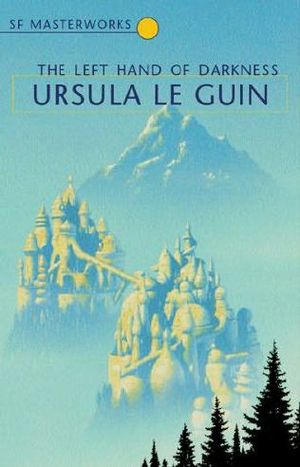
The Left Hand of Darkness, Ursula K Le Guin (1969), was August’s book for my 2009 reading challenge. I wrote about it here.

De Secretis Mulierum, L Timmel Duchamp (2005), is a novella originally published in F&SF magazine in 1995, but now available from Aqueduct Press as one of their “Conversation Pieces” series of fiction and non-fiction. A time-viewing project discovers that Leonardo da Vinci was a woman masquerading as a man… and that the same was also true of Thomas Aquinas. A female history doctoral student, against the wishes and advice of her sexist controlling male professor, continues with her thesis on da Vinci. I liked the central conceit, and the discussion of history and women’s roles in it that the conceit generated… but the professor was such a complete wanker he seemed a little as though he had been deliberately made so as a counterpoint to the conceit. A very good novella.

The Buonarotti Quartet, Gwyneth Jones (2009), is also a Conversation Piece, and is a collection of four short stories set in the same universe as Jones’ excellent Spirit, or The Princess of Bois Dormant (see here). The four stories are ‘Saving Tiamaat’ (originally published in The New Space Opera, edited by Gardner Dozois & Jonathan Strahan), ‘The Fulcrum’ (Constellations, edited by Pete Crowther), ‘The Voyage Out’ (Periphery: Erotic Lesbian Futures, edited by Lynne Jamneck), and ‘The Tomb Wife’ (F&SF, August 2007). The last story was also shortlisted for the 2008 Nebula Award. Like the novel, these are rich stories, and while sometimes that richness feels like it’s obfuscating the story, it also helps create a physicality to the invented universe. Of the four, I liked ‘The Fulcrum’ the best, although some of the characters felt as though Jones was having too much fun with the space opera furniture.

Stars in My Pocket Like Grains of Sand, Samuel R Delany (1984), I read for the LibraryThing sf reading group and… it was a bit of a slog. Delany is a writer I admire, and his Dhalgren (see here) has long been a favourite. But for some reason I find Stars in My Pocket Like Grains of Sand really hard to get into. I tried three times to read it back in the 1980s when it was first published, and failed. This time at least I finished the book. I’m not sure what it is that gives me so much of a problem – perhaps it’s the way the story gets heavier and heavier under the weight of accumulated detail, and so the plot gradually grinds to a halt. Perhaps it’s the bizarre society Delany has invented – in which everyone is addressed using the female gender, but the masculine gender is reserved solely for objects of lust – and which Delany seems determined to explain as much as possible about. Stars in My Pocket Like Grains of Sand doesn’t feel like a novel. It’s not just that it’s half of a diptych – which is unlikely to ever be completed – but it reads like 500 pages of set-up, of prologue, and the real novel, which would probably rival anything by Peter F Hamilton in size, isn’t there. One day I may have another go at reading it.

One Small Step, PB Kerr (2008), I reviewed on my Space Books blog here.

Renaissance, AE van Vogt (1979), is late van Vogt and… oh dear. There’s something I find entertainingly bonkers about van Vogt’s fiction, but his later novels are embarrassingly bad. This one is based on a premise so slight, so badly put together, and so stupidly old-fashioned in its attitudes, it made for a difficult read. Aliens have conquered Earth, put women in charge, and through the use of a drug made all men near-sighted so they are forced to view the world through “rose-tinted” spectacles (which have made them meek and mild and non-sexual). But when one man’s glasses are broken, he starts to regain masculine mastery, shows his wife who’s boss, and goes head to head against the aliens. If this had been written in the 1940s and 1950s, the attitudes in it might have been understandable. Definitely one for laying down and avoiding.

Orbital Vol 1: Scars, by Sylvain Runberg & Serge Pellé (2009), is one of the many French sf comics Cinebook is publishing in English editions. It’s not unlike Valérian: Agent Spatio-Temporel (see here), which I like very much. A couple of hundred years from now, Earth joins a galactic federation, although a faction of isolationists still cause trouble. A human and an alien Sandjarr are teamed together as diplomats, sort of federal marshals and mediators, to resolve a dispute between a human colony and their world’s owners, the alien Jävlodes. There’s a nasty info-dump in the middle of the story, but otherwise this is pretty good stuff. The sequel is on my Amazon wish list.

Nights of Villjamur, Mark Charan Newton (2009), is a debut-that’s-not-a-debut which landed earlier this year with quite a splash. (Newton’s actual first novel was The Reef, published in 2008 by small press Pendragon Press.) Nights of Villjamur was very well-received – except here, where a negative review caused a bizarre backlash in the comments thread. So, is the book worth the hype? Sadly, no. Newton has created an interesting world, but there are infelicities in the prose – caused, I suspect, by him trying too hard; his writing’s better when he sticks to plain language – and a couple of the narrative threads didn’t seem to add much to the plot. It shows plenty of promise; and yes, it’s a better book than The Reef. While it’s certainly a respectable debut, I’ll be surprised if we see it on any shortlists next year.

Films
One Of Our Aircraft Is Missing, dir. Powell & Pressburger (1942), is one of the Archer’s wartime films, and while it’s done with wit and style the heavy hand of propaganda flattens parts of the story. The crew of B for Bertie, a Wellington bomber, bail out over the occupied Netherlands when their plane is damaged by flak – but it flies on, unmanned, to cross the Channel and crash in England. The Dutch resistance take the downed crew in hand and smuggle them to the coast, where they’re given a boat and must row for Britain. Bizarrely, the film ends, and then a series of title cards appear on screen explaining that the cast, crew and everyone associated with the film wanted to know what happened to the crew of B for Bertie after their rescue. So there’s a brief epilogue showing the airmen doing their bit for Blighty.

Nosferatu, dir. FW Murnau (1922), is a famous silent film, the first to put Bram Stoker’s story of Dracula on celluloid – the names were changed because it was an unauthorised adaptation. I have yet to quite figure out how to approach silent films. I find them slow, and often my attention begins to wonder… but afterward I want to be able to watch them again. Nosferatu was a rental DVD, but I’m tempted to buy a copy of my own so I can watch it again. While the presentation – silent, black & white, the odd mugging style of the acting in those days, dialogue carried on infrequent intertitles – is something of a barrier to someone used to cinema as it exists now, that difference also forms part of the appeal.

Valerie and Her Week of Wonders, dir. Jamoril Jires (1970), is like Jodorowsky meets Buñuel. I didn’t understand one bit of it. The titular Valeria floats about; there’s a vampire-like figure who pops up every now and again, and who might or might not be her father; there’s her mother, who gets bitten by the vampire and grows younger; and… lots of other bits and pieces I couldn’t quite fathom, It’s all very dream-like… which is the apparent intent. I like strange films, but for some reason this one didn’t really appeal to me.

A Comedy of Power, dir. Claude Chabron (2006), stars the excellent Isabelle Huppert. In this films she’s a judge heading an investigation into a government-supported body which donates money to other nations for large infrastructure projects – the French equivalent of the Overseas Development Agency, in other words. And, like the OSDA, just as corrupt. There’s not much that’s actually funny in A Comedy of Power, despite its title; except perhaps the drôlerie of a system in which corrupt officials are protected by officials who are themselves corrupt… except for the one they’ve decided to sacrifice, of course. A surprisingly lightweight thriller.

Outland, dir. Peter Hyams (1981), may be High Noon in space – well, on a moon of Jupiter – but it never pretends to be anything else. Sean Connery plays the local marshal, who uncovers a conspiracy at the mine. So the mine owners send a team of assassins to Io to rid themselves of the troublesome sheriff. Mostly, it works; except for repeated instances of people exploding in vacuum. That doesn’t happen – in fact, it’s believed a person can survive for about three minutes in vacuum. Even then they won’t inflate like a balloon and then burst. If it hadn’t been for that, and the mysterious earth-like gravity (on a moon with a diameter 3,642 kilometres) – oh, and the lack of vulcanism on Io’s surface – Outland might have been quite a good sf film.

A Kind of Loving is a 10-episode television drama from 1982 I reviewed for videovista.net. See here.

Let The Right One In, dir. Tomas Alfredson (2008), is a vampire film from Sweden, which has deservedly won a bunch of awards. Oskar, a twelve-year-old boy, is being bullied at school. He makes friends with the girl who has just moved in next door, Eli, and who only appears at night and seems a bit odd. I’m not a big fan of horror films, or vampire films for that matter – notwithstanding Nosferatu above – but Let The Right One In really is very very good. It’s perhaps slower than I’d expected, more of a drama than a horror film per se. But it’s very effective, and definitely worth seeing.

Event Horizon, dir. Paul WS Anderson (1997), I remember first seeing at the cinema in Abu Dhabi. I wasn’t impressed then, and I’m still not impressed after watching it again more than a decade later. There’s nothing wrong with the central premise per se – Earth’s first FTL ship goes missing on its maiden voyage, and it transpires its FTL drive opened a portal into another dimension, Hell. Yes, the eponymous ship is little more than a haunted house in space; but the “hauntings” are effectively done. But that doesn’t mean it has to look like a haunted house. It should look like a spaceship. It doesn’t matter how cool it looks, it still has to look plausible.

Equilibrium, dir. Kurt Wimmer (2002), I’d heard vaguely good things about. So it came as a bit of surprise to discover that this film was rubbish from start to finish. The opening exposition is clumsy. The main character (Christian Bale, putting on a terrible American accent) is a “Grammaton Cleric”, which sounds like something out of a fourteen-year-old’s Dungeons & Dragons campaign. The story is ripped off from 1984. The final reveal that “Father” died years before is obvious right from the start. Throughout the film, everyone is supposed to be emotionless, thanks to a wonder drug called Prozium, yet all the dialogue references feelings and emotions. Even the “Gun Kata”, the firearm/martial art, is daft – watch any of the firefights and there’s no way any of the clerics could have survived. The film is stupid nonsense from start to finish.

Ordet, dir. Carl Theodor Dreyer (1955), is a film from the Time Out Centenary Top 100 Films list. It’s also very grim and dour. Perhaps that’s because it’s Danish (joke). It’s filmed in black and white, with a small cast, none of whom ever seem to smile. Anders Borgen wants to marry Anne Petersen, but their parents won’t allow it because each family belongs to a different Christian sect. The Borgens are, ironically, “Glad Christians”, while the Petersens are “Inner Mission”. Then Anders’ sister-in-law, Inger, suffers a stillbirth and then dies. Petersen relents and allows Anders and Anne to be betrothed. Then Anders’ older brother, Johannes, who is mad and believes himself to be Christ, reappears after vanishing earlier, and resurrects Inger. He also appears to be sane. Despite the flatness of its presentation – the sparse décor of the interior sets, the black and white film stock, the monotonous landscape – Ordet is a study in opposites: one faith against another, science against religion, sanity against insanity…. Perhaps it’s the straight face, which never cracks a smile, with which the film is played that makes the final scene so affecting.

Even Dwarfs Started Small, dir. Werner Herzog (1970), is the final film in the Werner Herzog Collection and… I’m not entirely sure what to make of it. The entire cast are dwarfs and the plot is, well, there’s little plot, in fact (no pun intended). A bunch of dwarfs are behaving anarchically outside an institution, and demanding the return of their leader who is imprisoned within by another dwarf. One dwarf rides round on a motorbike. Later, he hotwires a van and ropes the steering-wheel so it drives round continually in a tight circle. Another dwarf, Helmut Döring, has the most bizarre chuckle I’ve ever heard. Some films you are better if you have a bottle of wine or a few cans of beer as you watch them; Even Dwarfs Started Small is one of those films which are better if you have a bottle of wine or a few cans of beer before you watch them.

2 Comments

Top 10 Displacement Activities

Ten things you find yourself doing when you should be working on a short story or novel:

1. browsing the Internet
2. reading
3. watching telly
4. playing a computer game
5. alphabetising your book-shelves
6. re-tagging your MP3 collection
7. daydreaming about the short story or novel you’re going to write
8. thinking up a top ten list of something
9. housework
10. writing blog posts about displacement activities…


6 Comments

Reading Challenge #8 – The Left Hand of Darkness, Ursula K Le Guin

Le Guin is an author who grows as you grow. You can read and admire her at thirteen, and you can read and admire her at forty-three. As I have done. Because I think it must be around thirty years since I last read The Left Hand of Darkness. I’d never really felt the need to reread it because I knew the story. It’s one of those novels whose plot and characters have entered science fiction common knowledge – we all know about it even if we’ve not read it.

Which is a shame. Because it’s definitely worth reading, and certainly stands up to rereading.

The book is set in Le Guin’s Ekumen, a loose mystical/economic interstellar polity of eighty-odd human planets with the world of Hain at its centre. Earth was seeded by the Hainish. The Left Hand of Darkness is set on Gethen, also known as Winter, which has just been invited to join.

The Gethenians have no space travel and, strangely – and uniquely among the humans of the Ekumen – they are hermaphrodites. For three weeks of every month they are effectively neuter, but for a week they are in heat, or “kemmer”. And the gender they take during kemmer depends entirely on those around them.

The Left Hand of Darkness is essentially a character study of a Gethenian called Estraven. He is the royal contact of Genly Ai, the Ekumen’s lone Envoy to the world. And it is through Ai’s, er, eyes that we come to know Estraven and, by extension, the people of Gethen. The novel is essentially world-building, and it’s a fascinating society Le Guin has created – a result of both the Gethenians’ sexuality and the planet’s harsh near-Arctic climate.

The plot of The Left Hand of Darkness is considerably less complex than the world itself. Estraven falls from favour and is banished from Karhide. The king’s new adviser is not interested in joining the Ekumen, only in provoking a war with the neighbouring police state of Orgoreyn. Ai visits Orgoreyn, hoping to have more luck with its “commensals”. He meets the exiled Estraven, who warns him that no one is interested in the Ekumen, only in using the Envoy to improve their own political fortunes. When those machinations fail, Ai is arrested and shipped off to a “Voluntary Farm”, where he is continually drugged and interrogated. There is an ongoing discussion amongst the Gethenians regarding Ai’s true nature – is he what he claims to be, or just the perpetrator of an elaborate hoax? This is purely Gethenian speculation; for the reader, Ai’s nature is never in doubt.

Estraven rescues Ai from the farm, and the two trek across the northern ice shield to return to Karhide. Since the commensals had claimed Ai had died of a virulent fever, his miraculous return should be enough to provoke the king of Karhide into inviting the Ekumen ambassadors to Gethen.

The story is told by Ai, who begins the novel with the line:

I’ll make my report as if I told a story, for I was taught as a child on my homeworld that Truth is a matter of the imagination.

Ai’s narrative is interspersed with excerpts from the journal of Estraven. And between the two they cover the entire period between Estraven’s exile from Karhide and the landing of the ship containing the Ekumen ambassadors. The focus remains firmly on the two narrators.

Since the Gethenians are neuter for 75% of the time, and can be either gender when in kemmer, their society is essentially single-gendered. So The Left Hand of Darkness is as much a book about gender-roles as it is an exploration of an alien Other. And, while it was first published in 1969, perhaps in order to better contrast Gethenian society with the reader’s, Le Guin seems every now and again to drop into gender stereotypes – especially for women, since Ai is male and Estraven is neither. But that’s a minor quibble.

The Left Hand of Darkness is Gethen. And Gethen is one of the best-realised worlds in science fiction. I’d last read this book years ago, but had since then reread The Dispossessed… and decided the latter was the better of the two. But having now read The Left Hand of Darkness once again, I find I’m not sure. There’s no doubt they’re the best two of Le Guin’s Hainish novels – which makes them amongst the best the genre has produced – but I suspect I’ll never decide which is best and which is second-best.

Unlike the other books I’ve reread for this year’s challenge, The Left Hand of Darkness did not disappoint. In fact, it did the opposite – I like it even more than I thought I did. I will definitely be reading it again one day. I might even add it to the bottom of my favourite novels list…


Leave a comment

Some Fantasies From A Fan of SF

The New Yorker published a list of seven essential fantasy reads, which were pretty much the usual genre heartland suspects. Mark Charan Newton provided his alternatives here, and Larry has done likewise on the OF Blog of the Fallen here. Both Mark and Larry are bigger fans of fantasy than I am – Mark, of course, writes it: his novel Nights of Villjamur has received much good press recently.

However, I have on occasion read the odd fantasy book. Some of them I liked a great deal more than others (yes, I’ve tried most of the big series). So here is my seven damn fine fantasy reads:

The Ægypt Cycle, John Crowley, comprising The Solitudes (originally published as Ægypt), Love & Sleep, Dæmonomania and Endless Things. This is one of the great works of fantastical literature, if not one of the great works of late twentieth century American literature. It is required reading.

A Princess of Roumania, Paul Park. Given Park’s previous works, that he then chose to write a secondary world fantasy with a female teenager as the protagonist was a surprise. But as this series progressed – through The Tourmaline, The White Tyger and The Hidden World – then what he was doing became far more typical of his oeuvre. This is a complex, beautifully written fantasy series, with, in Baroness Ceaucescu, one of the genre’s great villains.

The Lens of the World series, RA MacAvoy, is a trilogy – Lens of the World, King of the Dead and Winter of the Wolf – and they’re uncharacteristically thin books for fantasy. In other respects, it more closely resembles the typical secondary world / high fantasy… although not really. I’m surprised these books aren’t better known, they’re one of the best fantasy trilogies I’ve read. They’re out of print but definitely worth seeking out.

The Dragon Griaule, Lucius Shepard, is a series of novellas and short fiction, begun with ‘The Man Who Painted The Dragon Griaule’ published in F&SF in 1984. This was followed by The Scalehunter’s Beautiful Daughter, The Father of Stones, and Liar’s House… and The Taborin Scale is due from Subterranean Press later this year.

Lord of Stone, Keith Brooke, is not a well-known novel but it deserves to be. It’s a secondary world fantasy, but it’s not set in a cod mediaeval world. If anything, the setting is closest to Spain at the time of the Spanish Civil War. But with magic. Except the magic is dying out.

Viriconium, M John Harrison, is a series of stories and novels set in and around the eponymous city. The stories have been variously collected in Viriconium Nights and at least two books titled Viriconium; the novels are The Pastel City, A Storm of Wings and In Viriconium. These stories are an antidote to secondary world fantasies which, naturally, begin by appearing to be secondary world fantasies themselves.

The Stone Dance of the Chameleon, Ricardo Pinto, is the series title of three huge volumes – The Chosen, The Standing Dead and The Third God. This is world-building as an artform, with one of the most original secondary worlds I’ve ever come across – this again is no cod mediaeval England. The story which takes place there is equally ambitious and equally well put together.

honourable mentions
The Dragon Waiting, John M Ford, was in Gollancz’s Fantasy Masterworks series. Unlike the other novels mentioned in this list, The Dragon Waiting is more of an alternate history set in fifteenth century England. But with vampires.

Kirith Kirin, Jim Grimsley, is one of those books which reads entirely as secondary world fantasy, but has an appendix which makes you question its genre credentials. It was followed by The Ordinary and The Last Green Tree which are overtly science-fictional.

Shadowkings, Michael Cobley, is the first in a trilogy followed by Shadowgod and Shadowmasque. This is grim dark stuff, possibly because Cobley is Scottish.

The Iron Dragon’s Daughter, Michael Swanwick, like the Ford above was in Gollancz’s Fantasy Masterworks series. Swanwick has recently had a new novel in the same world published, The Dragons of Babel.


3 Comments

Reading & Watching – Aug 2009

More reading and watching over the past few weeks…

Books
The Affinity Trap, Martin Sketchley (2004), is solid twenty-first century British space opera: take some Banks, mix vigorously with Reynolds, add a pinch of Morgan, a soupçon of McAuley and garnish with a sprinkle of Warhammer 40K. Which is not to say that the end result is not done well. If my TBR weren’t already approaching Olympian heights, I’d be tempted to pick up books two and three in the trilogy begun by this novel.

Guardians Of The Galaxy: War Of Kings Book 1, Dan Abnett & Andy Lanning (2009), is the further adventures of the “re-booted” Guardians of the Galaxy sfnal superhero team from Marvel. The plot thickens, the dialogue continues to entertain, and the art is (mostly) high quality. I’ll admit I don’t understand why Marvel change artists from episode to episode on these mini-series things. I’d have thought consistency would be best. But perhaps they have to spread the work around to hit the planned publication date.

Return to Earth, Buzz Aldrin (1973), I reviewed for my Apollo 40 celebration on my Space Books blog here.

Carrying the Fire: An Astronaut’s Journeys, Michael Collins (1974), I reviewed for my Apollo 40 celebration on my Space Books blog here.

First Man: The Life of Neil Armstrong, James R Hansen (2005), I reviewed for my Apollo 40 celebration on my Space Books blog here.

A Fair Day’s Work, Nicholas Monsarrat (1964), is a potboiler which paints its characters with a little too broad a brush to be entirely plausible. It’s set aboard a liner on the eve of departure from Liverpool. Except the new “breed” of stewards – the first post-war generation, in other words – are lazy goodfornothing union layabouts, and they keep on staging strikes to delay the ship. It’s up to the captain – the best-drawn character in the book – to sort it out. Which he does.

Never Let Me Go, Kazuo Ishiguro (2005), I read on the train travelling up to Glasgow for Satellite 2. It was not the book I’d expected it to be. Set in an alternate recent past, it posited a UK in which clones exist as an underclass to provide replacement organs. They’re treated worse than slaves. Except for those at Hailsham, a boarding school where they were given special treatment. I suspect Ishiguro has never attended boarding-school. And a stylistic tic, in which the narrator mentions some event or past incident, and then breaks from the main plot to to describe it, became increasingly irritating as the novel progressed. But it was nice to read a science fiction novel with real characters and lovely prose, even if it was a very thin on ideas. Why can’t we have sf novels with all three, eh?

Atomised, Michel Houellebecq (1999), I read on the train travelling down from Glasgow after Satellite 2. An odd book, and I’m not entirely sure how successful it was. It’s certainly bleak, and the didactic tone of the early part of the novel made for an interesting read. But when one character started telling their life story to another character for no good reason, my sense of disbelief began to falter… and when I got to the final section in which a narrator describes Michel’s work following the years described in the rest of the novel, well, at that point my suspension of disbelief just gave up the ghost and expired. I like the idea of a postscript which changes all that has gone before, but you have to do the necessary preparation for it. Atomised didn’t. I’d still like to read more by Houellebecq, however.

Open Your Eyes, Paul Jessup (2009), describes itself as a “surreal space opera”, but I was reminded more of Delany’s early works than anything else – especially Nova, Babel-17 and ‘The Star Pit’. This is not a bad thing; they are fine antecedents. The universe of this novella was weirdly original, the writing worked more often than it failed, and the ideas may not have been entirely original but were given interesting spins. Unfortunately, the characters were a little flat. Nevertheless, a good novella, and I think it’d make a more interesting nomination for an award next year than most of those which end up on shortlists.

The Steel Remains, Richard Morgan (2008), is a book which promised so much before its arrival, but seems to have slowly faded from sight in the year since its publication. Morgan Does Fantasy. You can understand why this made many salivate – high fantasy as a genre is turning moribund, and after Black Man I can’t think of another writer better suited to inject some fresh vigour. But. Morgan made some interesting choices for his novel – his protagonist, Ringil Eskiath, is an out homosexual, in a world in which such a sexual orientation is a sin and illegal; his world is high fantasy, but hints at an underlying science-fictional nature; he begins his story with his “hardy band of adventurers” (so to speak) leading separate lives, so it takes a while to get them together for the climax…. Morgan wields his genre clichés as though they were morning stars, dirty great maces with heads covered in lethal spikes – blunt trauma and puncture wounds. It all makes for a high fantasy novel which struggles to escape the straitjacket of its genre trappings and succeeds only in rolling about loudly on the floor. All the same, The Steel Remains is a superior example of its type, and I’m a little disappointed its brightness seems to have waned over the past twelve months.

The Eyre Affair, Jasper Fforde (2001), was a book of which I had high hopes. I was told it was funny, and I do like literary metafictional tricks – even populist stuff like Lost In Austen (but not, I have to admit, Pride and Prejudice and Zombies). So The Eyre Affair promised much… but delivered very little. It’s a first novel, and it shows. Fforde breaks out of PoV all over the place, telling the reader stuff his narrator could not know; he can’t decide whether to focus on his alternate world with its 130-year-long Crimean War and high literature pop culture, or on the “Prose Portal” which allows characters to visit the world’s books; and there were a couple of places where the logic of the story broke down. Oh, and the puns were bad too. It didn’t help that I read a US edition, so the shoehorned-in references to US cultures, such as car models, just seemed really odd. I’ll not be bothering with the rest of the series….

Films
Taxi Driver, dir. Martin Scorsese (1976). I consider Scorsese the second most over-rated director after Tim Burton. His first few films weren’t bad, although they were pretty much the same movie with the same cast playing different parts. Once he stopped making his wiseguy picture, he started churning out Hollywood “product”. Taxi Driver is about the best of Scorsese’s early works, and if you have to watch one film by him then, yes, I’d say it was this one.

The Sheltering Sky, dir. Bernardo Bertolucci (1990), I didn’t expect to like very much. It was slow to start, and the characters were really unlikable. But then scenery began to take over the film… and for the second half I was hooked. Now I want to read the book.

Knowing, dir. Alex Proyas (2008), was reviewed for videovista.net. See here.

Fata Morgana (1971), Heart Of Glass (1976), The Enigma of Kaspar Hauser (1974), and Stroszek (1977), dir. Werner Herzog, are four of the five films in the Werner Herzog Box Set, and I was a bit surprised at which I discovered I liked and which ones I didn’t. Fata Morgana sounded as though it would appeal – it has no plot, and consists solely of footage shot in Africa while a voice reads out creation myths, strange observations, song lyrics, etc. Despite the arresting photography, it proved uninvolving. It probably needs a second attempt at watching it. Heart Of Glass is notable chiefly because the entire cast acted their parts while under hypnosis. It’s… odd. Not the story, but the way the cast behave. Not a very successful experiment, I suspect. The Enigma of Kaspar Hauser was held together by Bruno S’s bizarre performance. It’s a more traditional film than the previous two, but for Bruno S and his odd declamatory method of acting. It’s certainly easy to understand why Herzog was so taken with him that he went on to write Stroszek specially for him. And that last film proved the most watchable and involving of the four. Bruno S is released from prison, is bullied by his prostitute girlfriend’s pimps, and leaves with her for the US. In deepest, darkest Wisconsin, he struggles to survive as the American Dream drowns him in debt. Bruno S is still odd, and his peculiar acting style gives Stroszek a near-documentary feel which works in its favour. Easily the best of the four.
Lions For Lambs, dir. Robert Redford (2007), is one of those movies Hollywood releases at intervals as a sort of “sorry for being so venal and mercenary” note. It attacks Bush’s Administration with all the impact of a wet haddock across the face, is as wishy-washy in its criticisms as Bush’s government was in its justifications, and is basically little more than muddled moralising from a high ground no more than one step up from its target. Hollywood should stick to brainless action movies.

Time Regained, dir. Raoul Ruiz (1999), is, I think, the only cinematic adaptation ever made of Marcel Proust’s In Search of Lost Time. And even then it’s not especially faithful to the books; although, I suspect, it is in spirit. I have the novels on my bookshelves, but I’ve yet to read them. The film is surreal in parts, and a relatively straightforward historical movie in others. Definitely a film which bears rewatching. It’d be interesting to see it again after I’ve finally got round to reading the books.

The Quiet Man, dir. John Ford (1952), is a film from the Time Out Centenary Top 100, and I have absolutely no idea why. John Wayne returns to the Irish village where he was born, and woos fiery spinster Maureen O’Hara. The village is populated by stage Oirish stereotypes, Wayne happily beats O’Hara when she refuses to do his bidding – a female villager even offers him a stick as a weapon! – and even the film’s colour palette seems better suited to Oz than Eire. Most blarney is more plausible than this old-fashioned, offensive rubbish.

Pierrot Le Fou, dir. Jean-Luc Godard (1965). The version I watched was dubbed rather than subtitled, and it’s amazing how much more pretentious Nouvelle Vague films seem when the dialogue is in English. You can more or less forgive the pretentious bollocks most of the characters speak when you’re reading a subtitle or puzzling out the spoken French. But when drawled in American English, it sounds like the sort of stuff that makes you doubt the sanity of the speaker. Mind you, I’m not a big fan of the Nouvelle Vague – I quite like Alphaville, but not those of Godard’s other films I’ve seen; I love Fahrenheit 451, but have not enjoyed any of Truffaut’s other movies; and Last Year In Marienbad is tosh. Give me Tarkovsky any day of the week.

10,000 BC, dir. Roland Emmerlich (2008), is the latest film by a director who seems to have carved out a career making films which present in believable detail worlds which are complete and utter tosh. In this one, slavers on horses attack the village of a tribe of mammoth hunters, and cart off several. The film’s hero, a Hollywood Cro-Magnon with good teeth and male model looks, follows them to effect a rescue. This means crossing a huge mountain range, stumbling into the territory of a Nilotic race, trekking through a jungle and then through a desert, to reach… the pyramids of Egypt. Er, hang on. Caucasian Cro-Magnon travels south to the Nile via a jungle, the African plains and a desert? Not to mention all the fauna he meets, most of which went extinct a million years before 10,000 BC. And the stupid put-on accents didn’t help, either. Gah.

eXistenZ, David Cronenberg (1999), is a film which has sort of passed its sell-by date. Perhaps there were people out there ten years ago who would have found the nested virtual realities of eXistenZ‘s story confusingly impressive. But it’s old hat now, and the “are we still in the game or not?” mind tricks of the film are ho-hum and predictable. But, this is a Cronenberg film, so there’s a patina of strangeness which sort of makes the movie less dated than it should be. Jude Law’s bad America accent throughout is a bit annoying, though.


3 Comments

Reading Challenge #7 – Jack of Eagles, James Blish

This month’s book was somewhat delayed as I’ve been focusing on reading and writing about books related to Apollo 11 for my celebration of the 40th anniversary of the lunar landing. You can find those reviews on my Space Books blog here.

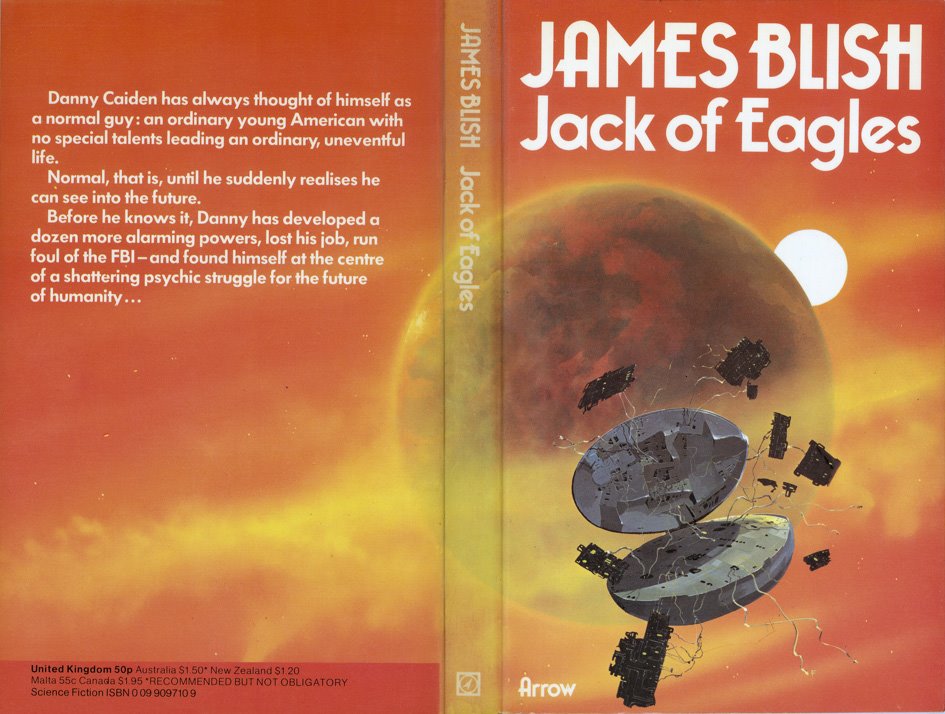
But on with the reading challenge…. My edition of James Blish’s Jack of Eagles is a 1977 Arrow paperback with cover art by Chris Foss. I suspect it was bought for me some time around then. So I must have been twelve or thirteen when I first read it. I actually have a number of Blish novels from that period – all with Foss cover art – as he was one of my favourite sf authors at the time. Which made rereading Jack of Eagles an interesting exercise.

The novel is about Danny Caiden, a young man who develops psychic powers – precognition, telepathy, teleportation, telekinesis, etc. – and subsequently becomes embroiled in a secret war between two groups of powerful psychics, one of which is bent on taking over the world. With the help of a parapsychology professor at a local university, Caiden learns how to control his new-found powers… but it is only when he comes into conflict with the Brotherhood In Psi that he discovers he is the most powerful psi ever.

There’s a definite sense of time and place to Jack of Eagles. It was expanded from a 1949 novelette, ‘Let the Finder Beware’, and with its mention of the GI Bill and other details, it’s clearly set a few years after the end of World War 2. The book is also, like much of Blish’s fiction, well written. But. And this is a problem I had with his The Quincunx of Time when I read it at the end of last year. That too had originally been a short story – which I’d read – but Blish had not chosen to expand the plot, or provide more details of the setting. Instead, he’d used the greater wordcount to waffle on about the bogus science and philosophy which underpinned the book’s central idea – a faster-than-light communication device which allowed people to pick up signals from the future.

And I suspect the same thing happened in Jack of Eagles. The first half of the novel is a relatively straightforward action story – Caiden loses his job, and seeks to learn more about his burgeoning powers by visiting various “experts”. But there’s a long section in which the parapsychologist, Dr Todd, tries to explain the scientific basis of Caiden’s powers, referencing some mangled form of quantum mechanics and the Many Worlds Hypothesis. It’s pointless, implausible guff, and it slows down the story to a crawl.

Later, during Caiden’s battle with the Brotherhood, he escapes by travelling into alternative futures – explained once again by the bogus science of earlier. Each of the futures he visits is interesting, but Blish spends far too long trying to explaining the how of it and his explanations ring false and spoil the atmosphere.

I can’t remember what it is about Blish’s stories and novels that appealed to me when I was in my early teens. Rereading them now, thirty years later, it’s plain that Blish was a good writer. But he seems to have this bad tendency to pad out his novels with implausibly bogus science and philosophy. He should have just finessed it. The explanations interrupt the pace of the narrative and add little or nothing to the story. They probably seemed impressive to a naive thirteen-year-old. Perhaps that was the attraction of Blish’s novels. That and the Chris Foss cover art, of course.

I’m tempted to try reading or rereading a Blish novel that wasn’t expanded from a shorter piece, just to see if it’s the expansion process which led to him padding out the story with scientific bollocks. Perhaps he didn’t do that for stories which were originally planned to be novel-length. The only difficulty is finding such a novel in his oeuvre.

Jack of Eagles was certainly better than the other books I’ve read for this challenge. I’m not entirely sure what it is about the book which originally appealed to me all those years ago, but I doubt I’d have become a fan if I’d read it at my current age. All the same, I still think Blish is a pretty good sf writer, and I won’t be purging my shelves of his books…


2 Comments

Relaxestcon

I spent last weekend at Satellite 2, a small sf con in Glasgow. Actually, it wasn’t just about science fiction; it was also about spaceflight, falling as it did just after the 40th anniversary of Apollo 11. The guest of honour was Iain Banks.

It was a very quiet convention – at least it was inside the Crowne Plaza hotel. Outside was the Glasgow River Festival, so there were many thousands of Glaswegians wandering up and down either side of the Clyde by the SECC. Satellite 2 was chiefly confined to the rear entrance / bar area of the hotel (the one that looks onto the Armadillo’s rear, for those who know the SECC).

Highlights of the weekend included…

… meeting up with the usual suspects; an interesting presentation on the Apollo Guidance Computer by Frank O’Brien – he has a book out on the subject early next year, so that’s gone on the wants list (unfortunately I missed the other panel items about Apollo); six-year-old Emma Steel saying in the dealers room, “I like books but I can’t read”; the discussion about the Puffer Fish Chain Gun on the Saturday evening; discussing NewSpace with Charlie Stross; being present when Mike Cobley was asked to sign a copy of his Seeds of Earth by a fan of, he admitted, Banks, MacLeod and Stross; starting up a discussion on the Roberts vs Scalzi Hugo novel shortlist debate after forgetting that Charlie Stross was sitting at the table…. And no doubt other conversations and incidents that I’ve forgotten.

Satellite 2 was an unusual con for me on two counts. I spent more money getting there than I did at the con. And my bag was lighter coming home than it had been going to the con. Well, it was a small con, and the dealers’ room reflected that. In other words, I didn’t buy anything.

In all, a good weekend. Many thanks to the redoubtable Steels for putting me up. The con programming was an interesting mix, and I wish I’d managed to attend more items. That may usually be the case after a con, but there were more I’m sorry I missed at Satellite 2 than at an eastercon. If there’s a Satellite 3, then I’d seriously consider going.


1 Comment

Favourite SF Stories

SF Signal today posted a couple of Mind Melds on “Memorable Short Stories to Add to Your Reading List” parts one and two. An excuse, in other words, to ask a bunch of people to name their favourite genre stories.

So I thought I’d do the same – list my favourite stories, that is. And here they are in chronological order of publication (where copies exist online, I’ve linked to them):

‘Aye, And Gomorrah’, Samuel R Delany – first appeared in Dangerous Visions (1967), edited by Harlan Ellison, and while much of the contents of that anthology weren’t exactly memorable, Delany’s story has stuck with me through the years. It’s very 1960s, very lyrical, and notably thin on plot. But I think it’s the evocativeness of the prose which appeals most.

‘And I Awoke And Found Me Here On The Cold Hill Side’, James Tiptree, Jr – was originally published in Fantasy & Science Fiction‘s March 1972 issue, although I read it in Tiptree’s collection 10,000 Light-Years From Home. This story is a classic, a simple idea approached using an entirely original angle of attack. It’s bleak and a perfect antidote to most space opera. Everyone who likes space opera should read it.

‘The Lake of Tuonela’, Keith Roberts – was a more recent discovery for me (see here). It first appeared in New Writings in SF 23 (1973), edited by Kenneth Bulmer, but I read it in Roberts’ collection The Grain Kings. Roberts’ prose is impressive, and in this story he manages to evoke the titular lake, and the long tunnel to it, with some beautiful writing. If the story had actually done more, and had managed to really evoke its alien setting, then it would have been very nearly perfect.

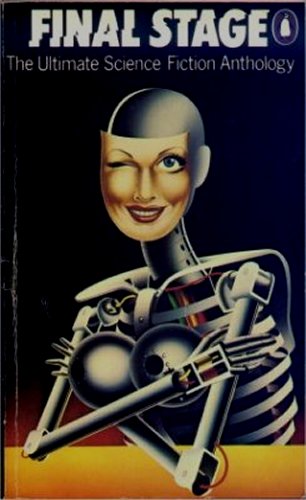
‘A Little Something For Us Tempunauts’, Philip K Dick – I first read in the anthology in which it was first published, Final Stage (1974), edited by Edward L Ferman & Barry N Malzberg; and which was, I think, one of the first sf books my parents bought for me. It also contains one of the few Harlan Ellison stories I remember liking, ‘Catman’. Like the Delany above, this is another story which is very much of its time – it feels very early 1970s to me, all Apollo and Grateful Dead and the like. But that works very much in its favour.

‘Air Raid’, John Varley – was originally published under the name Herb Boehm in Isaac Asimov’s SF Magazine Spring 1977 issue, because Varley already had a novelette, ‘Goodbye, Robinson Crusoe’, in the issue. ‘Air Raid’ was adapted as film, Millennium, and Varley later expanded his own screenplay into a novel, also titled Millennium. The story’s premise is certainly original – people from the future snatch passengers from planes just before they crash in order to repopulate their own time – and the pace never lets up from start to finish. The later novel rounds out the background and characters, and adds an interesting twist in that the different narratives follow the events of the plot in a different order, but the original story’s brevity gives the central idea greater impact.

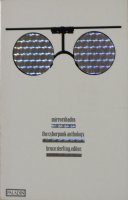
‘The Gernsback Continuum’, William Gibson – was first published in Universe 11 (1981), edited by Terry Carr, but also appears in Mirrorshades: The Cyberpunk Anthology, edited by Bruce Sterling. Elegiac is not a word I’d normally associate with Gibson’s prose, but it’s certainly one that fits this story. For all its insistence of looking forward, sf has a curious tendency to gaze fondly at its past, and at the futures of its past. ‘The Gernsback Continuum’ is an excellent description of that tendency.

‘A Gift From The Culture’, Iain M Banks – is the first of three Interzone stories on this list. Interzone is probably my chief source of short sf, and has been since I first subscribed to the magazine back in the late 1980s. ‘A Gift from the Culture’ appeared in #20, Summer 1987, but can also be found in Banks’s only collection to date, The State of the Art. Banks’s Culture is one of the great sf invented universes, and ‘A Gift from the Culture’ is one of the few pieces of short fiction set in that universe. It’s also quite a sad story and, like ‘A Little Something For Us Tempunauts’, there’s an inexorable quality to its resolution – although it’s driven by character and emotion, rather than the laws of physics.

‘Forward Echoes’, Gwyneth Jones – is another Interzone story, this time from #42, December 1990. A slightly reworked version was also published three years later as ‘Identifying the Object’ in a chapbook collection of the same name from Swan Press. ‘Forward Echoes’ introduced the two main characters of Jones’s novel White Queen, and the Aleutians, the alien race of that novel and its sequels North Wind and Phoenix Café (and, of course, the recent and excellent Spirit: The Princess of Bois Dormant – see my review here). I think what first appealed to me about this story was its strangeness. It’s one of the most sfnally-evocative (to coin a phrase) stories I’ve ever read.

‘FOAM’, Brian Aldiss – was later expanded into a section of Aldiss’s 1994 novel, Somewhere East of Life. In 1991, Gollancz relaunched the magazine New Worlds as a paperback anthology edited by David S Garnett (in those days, Garnett was almost ubiquitous), and the story first appeared in that. Aldiss manages to layer strangeness upon strangeness in a somewhat picaresque plot set in the central Asian republics in the near-future (as was). This is another story, like the Jones, which makes something peculiar and sfnal of our world.

‘The Road To Jerusalem’, Mary Gentle – is the third and final Interzone story, from #52 in October 1991. It’s also the only alternate (alternative) history story in the list. In it, the knights templar have continued to exist to the present, and the world is a very different place. But it’s only as the story progresses does it become clear exactly how different.

The most recent story of the ten above is nearly eighteen years old. Which means it’s probably about time I brought the list up-to-date. I’ve certainly read some excellent stories published since Mary Gentle’s ‘The Road to Jerusalem’, but none seem to have stuck with me as much as the above ones have done. Perhaps I need to read stories a couple of times before they grow on me enough to be tagged as “favourites”. Perhaps that’s an exercise for another day – looking back over the short fiction I have access to which was published after 1991, and seeing if any of them have the same impact on me the above ten did.