It Doesn't Have To Be Right…

… it just has to sound plausible


2 Comments

Movie roundup 2020, #22

I ran out of TV series to box-set binge – well, TV series that interest me – and it occurred to me my Amazon Prime watchlist had reached three figures and I really should watch some of the movies on it… So I did. Not always with welcome results. But some of them turned out to be fun and/or interesting…

There were, however, a few TV series in among the movies. The BBC’s His Dark Materials continues to impress – I hope the BBC sorts out its political reporting soon, it’s a fucking disgrace. The Mandalorian is basically fan-fiction, and if I had any investment in the universe I’d probably be annoyed at the way it cherrypicks some parts of the canon and runs roughshod over others. Lovecraft Country was a pleasant surprise – good, but… seriously, how can you watch that and think the USA was ever great? No one said the UK wasn’t racist, but Brits never put burning crosses on people’s lawns. And I’m reminded of stories from WWII when UK villagers welcomed black American servicemen into their pubs, and even fought white US servicemen and MPs who tried to stop that. I spot anyone wearing a “MAGA” hat and all I see is someone wearing a “I am a massive racist” hat.

Moving quickly on… The “roundup” format seems to have failed, as I always write more than the intended sentence or two on the films I watch. I think I shall revert to my previous format next year.

Arianna, Carlo Lavagna (2015, Italy). A young woman in her late teens is troubled by her lack of menstruation. When on a summer holiday with her family, she experiences sex for the first time and she finds it too painful to consummate. She tries to find out why from her parents, but their claim it is a result of a childhood hernia are unconvincing. A doctor persuades her to access her records at the hospital where she was initially treated for the hernia, which she does through a subterfuge. It’s hardly a spoiler to reveal what she discovers. She was born intersex, and her parents unilaterally decided to surgically transition her to female. By the end of the film, she admits she has yet to discover her gender but she feels she should have been given the choice. JK Rowling might like you to think gender is synonymous with sex, there are only two sexes, and everything else is post-millennial nonsense. But she’s wrong on every count – about sex, about gender, and about the expression of gender. Recently, a BBC dimwit clumsily compared her infamous TERF blog post to Enoch Powell’s infamous “rivers of blood” speech, and I’m fine with that – she’s proven herself just as intolerant and hateful as he ever did.

Run, Waiter, Run!, Ladislav Smoljak (1981, Czechia). The title in Czech is classic, Vrchni, prchni! Most languages only dream of such alliteration! The owner of a not entirely successful bookshop is mistaken for a waiter while popping into a restaurant for a bottle of wine while dressed for a party. He then decides to supplement his income by impersonating a waiter, visiting restaurants and taking money from customers who assume he actually works there. He even becomes notorious and has to disguise himself. This is a black comedy in the finest Middle European tradition, but it is also surprisingly funny. The protagonist is no paragon – he’s not only prospering from his fraud, but he’s also happily cheating on his wife. I really enjoyed it. Definitely worth seeing.

Warning from Space, Koji Shima (1956, Japan). I’m not sure on the exact term for these sorts of films. Tokusatsu, I believe, refers to live-action film or television that relies heavily on special effects, but most properties I’ve seen labelled as such the special effects have been focussed on the heroes. Warning from Space is the first Japanese sf film to be produced in colour, which only makes its characteristic weirdness, well, colourful. Aliens debate how to warn Earth of an imminent collision with a rogue planet, only for the usual paranoia and misunderstandings to jeopardise their efforts, before everything finally comes right in the end. Classic stuff. This is more the expression of an aesthetic than it is the telling of a coherent story, and it’s an aesthetic I have come to love. (Bizarrely, the Blu-ray edition I bought is apparently no longer available – more Brexit nonsense?)
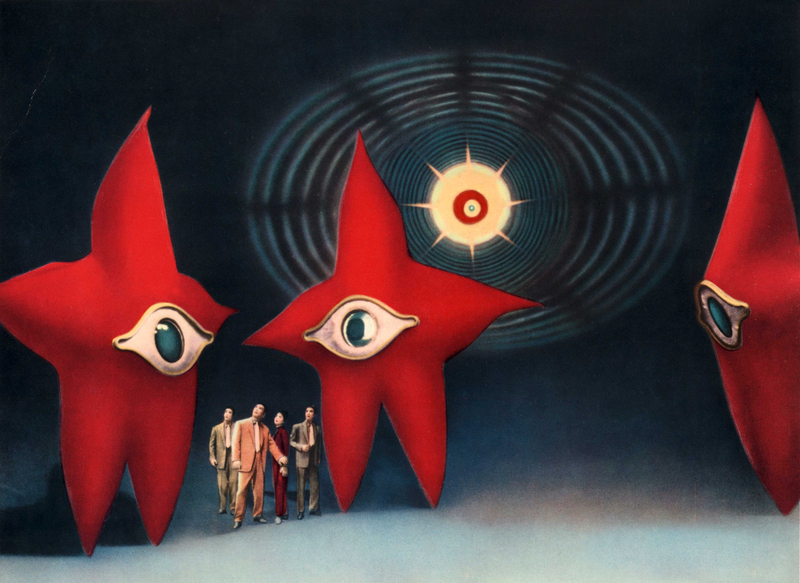
Battle in Outer Space, Ishiro Honda (1959, Japan). And here is perhaps the perfect exponent of that aesthetic. Honda is best-known for his Gojira films, of which there were many, but he pioneered an expression of tokusatsu cinema which spread widely and continues to this day. The plots are mostly nonsense – as is this one – but, like Gerry Anderson and his productions, it’s all about the look and feel, and the models and concepts. I think this is the movie where they needed to film a rocket launch, but didn’t have enough room, so they dug a hole in the floor of the studio and were later fined for the damage. This is great stuff – absolute bonkers, resolutely science-fictional, often more representational than its Western peers, and while not entirely coherent as a story, more coherent as a genre, to an extent unmatched in the West until the rise of MCU and SWEU.

The Mystery of DB Cooper, John Dower (2020, USA). I have a sort of personal connection to this, although it is extremely tenuous. Back in 2015, I wrote an editorial for Interzone about the Hugo Awards and the Sad Puppies. This resulted in my favourite Amazon review of anything I have ever written: “Starts off with long winded political diatribe in the slanted style of the basest 9/11 Truther, you can almost feel the spittle from the editor’s shouting as he hammers at the keyboard, surrounded by vintage Soviet propaganda posters and little shrines to Trotsky and Marx.” The review was apparently by DB Cooper. Of course, the real culprit was some moronic puppy (they’re not very bright… Well, they are right-wingers, so it goes with ideology), but it did introduce me to the whole myth of DB Cooper, the only unsolved air hijacking in US history. Which this documentary sort of attempts to solve. In 1971, a man using the name DB Cooper hijacked an internal US flight, demanded $200,000 and parachuted out of the aircraft with the money somewhere in Washington state. He was never caught, nor the money found. Over the years, four people have claimed responsibility or been identified as responsible. This film covers the details of all four’s claims, without actually explaining which is the most likely culprit. Mildly interesting stuff – certainly an education in how different air travel, particularly internal US air travel, was at that time, and how easy the crime was, not to mention the incompetence of the FBI. But this is not even a footnote in history, and any claim it’s US mythology is giving it far more importance than it deserves… which is no doubt why it’s popular among the intellectually-challenged right-wing.

Mortal, André Øvredal (20202, Norway). An odd film that does some interesting thing but is chiefly notable for looking extremely pretty while doing very little. A young man from the US visits Norway to look up ancestors. He is involved in a fire in a northern farm, and then blamed for the deaths of whose who died in it. An incident brings him to the attention of a local police chief, who arrests him. A local psychologist interviews him, and is horrified by what she discovers – he can apparently cause fires and electric shocks. But she helps him escape – from a vengeful and thinly-drawn US government agent – and eventually leads him to discover who he really is. Thor’s sons, apparently, settled down on a farm after Ragnarok, and kept with them all the knowledge of the Æsir, and guess who the American is descended from… Not a bad film. It made a good fist of its premise, provided an interesting twist in the end, and included some gorgeous cinematography of Norwegian scenery. Worth seeing.

Enola Holmes, Harry Bradbeer (2020, USA). This is pretty much a star vehicle for UK actress Millie Bobby Brown, who appears to be some kind of wunderkind (she’s sixteen), has won awards, been deemed one of the world’s 100 most influential people by Time magazine, and appointed as a UNICEF goodwill ambassador. Excellent stuff; more power to her. The film is based on a YA series of six books by Nancy Springer, a US fantasy author with a long career, some of whose books I’ve read, although I only remember Larque on the Wing, an urban fantasy in which a fortysomething woman is transformed into a young gay man. Anyway, Enola Holmes is the young sister of, yes, you guessed it, Sherlock and Mycroft. But the film is set before the brothers became really famous. Their mother disappears, and Enola sets off to learn her fate. It’s all very jolly, and the breaking of the fourth wall works well, but Enola seems a bit shit as a heroine and has to be constantly rescued, which does sort of undermine the whole empowering message. I’d have preferred Enola to have been a more effective character and the story to rely less – when it remembers its story, that is – on the teenage aristocratic drip whose single vote (yes, really) could change Britain for the better or bring it closer to Gammonland, that mythical country in which ignorant bald-headed white men consider themselves the superior of all except over-privileged and over-educated nincompoop gentry, which of course is not reciprocated, and everyone else thinks of the two groups as first against the wall should the revolution ever come. Bit harsh perhaps for a piece of Edwardian-set YA fluff, but Millie Bobby Brown needs better vehicles than this.

Sorry We Missed You, Ken Loach (2019, UK). No one expects a Ken Loach to be cheerful, but this one was grimmer than many I’ve seen. Perhaps because it’s set in Tory Britain. No, wait… A Mancunian, living in the north-east with wife (a carer) and two teenage kids, takes a job as a delivery driver for a courier. The courier industry comes in for a lot of stick in the UK, and if this film is any indication it needs to be burned to the ground and rebuilt from scratch. It is as bad as Uber. And Uber are scum. The company in the film does not employ drivers, it offers franchises to people who own vans. Which means the company has no obligations to its “employees”. As is abundantly made clear in this film. Everyone who defended the business model used by the delivery company was basically trotting out the same shit peddled by the SS. True, this is a movie – but it’s not that different to many people’s reality in the UK. Like the zero-hours contracts and corruption of the welfare state in I, Daniel Blake, Sorry We Missed You is a heart-breaking and rage-inducing drama-documentary based on the rentier class’s exploitation – of the “white van man”, in this instance. It needs to stop. And those who profit from it should be prosecuted. Do not watch this film unless you’re in a good mood. Because you won’t be when you finish it. And, sadly, going out and taking a baseball to your local capitalist is frowned upon by the law.

Woke Up Like This, John Elbert Ferrer (2017, Philippines). I commented on Facebook while watching this that body swap comedies have yet to produce a good movie, and while there may be a handful of borderline examples, this one from the Philippines pretty much proves the point. It takes the genre’s most obvious example – a basketball player and a top model swap bodies. I forget the mechanism. And to be honest, I forget what life lessons either of them were meant to learn. The comedy mostly lies in them trying to come to terms with their new identity. And, er, that’s it. Yes, they become better people as a result, but it’s a bit much expecting such a drastic transformation not to cause change when the words, “You’re being a fucking arsehole”, should be equally effective. Although, to be fair, not as comedic. I’m aware Pinoy – in terms of cinema – is pretty much lowest common denominator film-making, and few Filipino films make it west – but the country has produced some excellent movies and nurtured some excellent directors. Sadly, Woke Up Like This belongs in neither category. A substandard comedy that Hollywood only manages to beat because it has better production values.

Sam, Nicholas Brooks (2017, USA). And here’s a variation on the same story, and this is, I think, its third cinematic outing. A misogynist wakes up as a woman and learns life lessons. There was a play called Goodbye Charlie, which first appeared in 1959, and adapted for the cinema by Vincente Minelli in 1964 under the same title, and which I like quite a bit (it has a good cast), and later remade as Switch in 1991, which I do not like so much at all. Unfortunately, Sam is much much worse than either of those. An ad exec, who is is a throwback to the 1970s, meets Stacy Keach in a mysterious curio shop while staggering home drunk from a stag party, is fed some strange tea… and wakes up the following morning as a woman. The story runs on well-oiled rails, so well-oiled that nothing is surprising or dramatic except the misogyny in the first two acts of this, a twenty-first century film. People are not like that any more, except perhaps in weird backward pockets of the US or UK, so the entire story fails because it’s less believable than The Last Jedi. It doesn’t help the production is cheap, the cast nobodies, and the humour at least three decades out of date. Nicholas Brooks is the son of Mel Brooks. It seems trickle-down theory is just as much bullshit with talent as it is in economics.

2 Comments

Reading diary 2020, #15

I feel like I’ve been reading a lot recently, and then I look at a list of what I’ve read recently and it doesn’t seem like very many books at all. There are some I’ve read which I don’t bother writing about, typically Heyer rereads, but during these dark Scandinavian winters I’d expected to be reading more than I am. Oh well.

Speaking of Heyer… I’m a little embarrassed at my choice of comfort reading. I find the books fun, but there’s so much wrong with them. The whole thing about “Quality”- which they really aren’t – being better than everyone else and not subject to the laws of the land to the same degree, and their marrying only in the same sector of society, which is why we have royalty with six fingers on each hand who drool all the time, not to mention the current UK government, who can’t muster a single working brain cell between the lot of them. Heyer is not political, but the society she depicts, and appears to promote, is vile. The women are always young, and the men a decade or more older. The plots are entertaining, and I won’t deny they’re reasonably accurate in their historical depictions, nor indeed that stories set among common folk would never fit the plots she devises – but we are better people than this and it feels like I’ve abandoned my principles a little because I read and enjoy these books.

The Big Sleep, Raymond Chandler (1939, USA). I’m not sure if I’ve read this book before. I know I’ve seen the film several times. Which meant some details were familiar but some weren’t and I couldn’t work out if I remembered them from the movie. The Big Sleep is Chandler’s first novel and its plot is as convoluted as any of the later ones, if not more so. Marlowe is hired to investigate a blackmail demand received by a wealthy retired general, but there proves to be more to the case. The general’s youngest daughter has been photographed nude, and the husband of the older daughter disappeared some weeks before and the general is keen to learn his whereabouts. The relationship between Marlowe and the older daughter generates sparks in the novel, but apparently Bogart and Bacall were much more so during the film shoot so they recut the movie to forefront their relationship at the expense of the plot. There are apparently two cuts of the film, one more faithful to the book, the other more of a Bogart-Bacall star vehicle. I’ve no idea which I’ve seen, the latter I suspect. The book at least has the canonical plot, and while it’s not Chandler’s best, it does demonstrate his style was pretty much fully formed from the start. It does not read like a novel written by someone finding their way.

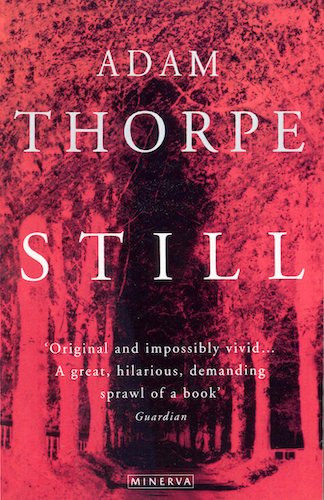
Still, Adam Thorpe (1995, UK). This is the fourth book by Thorpe I’ve read, and I’ve decided he’s possibly a great unacclaimed, and perhaps even collectable, writer. He has received some acclaim, but I’m pretty sure he’s much better than a great many writers who have been more lauded. But this is not unusual. Thorpe’s first novel, Ulverton, is remarkable, a gallop through the history of the eponymous village in numerous impressively-rendered voices. His short story collection, Shifts, I found more impressive in the variety of its voices than its stories. Hodd was a fascinating and clever take on the Robin Hood legend. And then we come to Still. Which is his second novel. (The bibliography on Wikpedia is a mess, as usual, giving his US publisher when he’s British and was first published in the UK… as usual). Still is an impressive achievement, a verbal narrative by a film director, a not entirely successful or famous one,  which maintains its voice for all 320 of its pages. Richard Thornby knows all the greats in mid-twentieth century Hollywood, and witnessed a great many of its events. The entire novel is told as if Thornby is doing a podcast, or something, about his career, which makes the title a joke on the book’s contents. It’s pretty clear from what I’ve read so far that Thorpe’s strength is his ability to do voices, but he is so much better at it than most other contemporary writers I can name. For me, voice is an important element of prose, tied in with rigour and verisimilitude, that lifts one work of fiction above another. Thorpe’s books are difficult reads and I’ve been slow to appreciate precisely how good he is, but my appreciation of his works has definitely increased in the last few years.

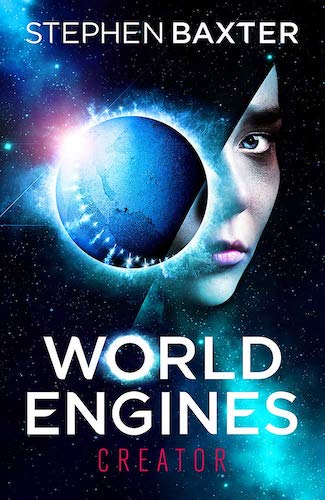
World Engines: Creator, Stephen Baxter (2020, UK). The sequel to, of course, World Engines: Destroyer. Baxter, I’ve found, is good at starting series, but not so good at continuing them. And this duology suffers from the same problem. Having said that, the first book did feel like an off-cut from another project… Reid Malenfant, or rather, a Reid Malenfant, is defrosted in the twenty-third century after an unexpected SOS from his ex-wife sent from Phobos. Except she vanished centuries before. It turns out Phobos is some sort of portal to alternate universes. Malenfant and crew meet up with a spaceship from a triumphant British Empire – it’s not all ripe gammon, however, as Baxter does indeed critique colonialism, although it’s a very middle-class English take – and, anyway, they bounce through several universes, puzzle out the secret of the portal and… it’s a bit, well, weak. Baxter, as usual, fluffs the dismount. The final third of World Engines: Creator is pretty much entirely exposition, and it doesn’t really tally up with the preceding plot. There are plenty of good ideas in here, more than most sf writers can manage in an entire career, but Baxter fluffs half of them, and pulls his trilogy back into a duology with an info-dump. Having said all that, this is Baxter as Baxter does – if you know, and like, his work, you’ll get exactly what you expect; if you’re looking for a more rounded exploration of the ideas its presents, this is not the author for you.

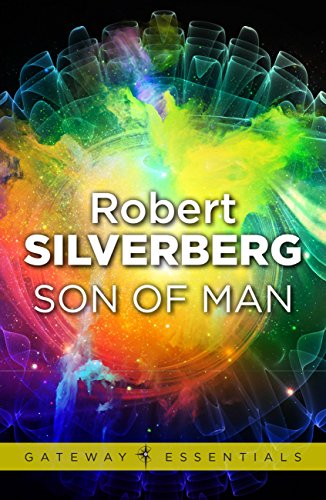
Son of Man, Robert Silverberg (1971, USA). I fancied reading something old school, saw this mentioned somewhere and it sounded intriguing, and it was very cheap. I wish I’d never bothered. A man contemporary to the time of writing wake sup in the far future, and has various encounters – most of which are sexual, although, to be fair, there is a lot of genderfluidity – with denizens of that age and earlier. The Time Machine this is not. In parts, it reads like a writing exercise, Silverberg using his thesaurus with a vengeance, albeit not abusing it as Fanthorpe did; but, all the same, it’s still a novel desperately in search of a story. I can’t decide if the book reads like a novel written to fulfil a contract or a book written as an experiment in style and content. The fact it fails so dismally on the latter suggests the former, but then it was published in 1971, so perhaps it was intended as a literary experiment. Still, no matter how you look at it, Son of Man is an historical document that’s best forgotten. Much as I admire SF Gateway for making older works of science fiction available, there are some that are perhaps better not re-issued, and this would be one of them.

The Green Man’s Silence, Juliet E McKenna (2020, UK). This is the third book in a series which hadn’t been planned. The first book, The Green Man’s Heir, was, I believe, a one-off, but proved so successful McKenna dug out an old project and rewrote it to provide a sequel, The Green Man’s Foe. Which did equally well. And with good reason. These are fun, well-crafted urban fantasy novels, more Mythago Wood than fang-banger, which is a decided advantage. In this novel, written from scratch as part of the series – and I’m not alone in hoping there are more – has narrator Dan Mackmain, son of a dryad, in the Fens, preventing a nasty piece of work from using John Dee’s crystal ball, as used by Edward Kelley, for nefarious – and, it has to be said, petty – purposes, which unfortunately are having an adverse effect on the various folklore creatures of the Fens. So not only do we have local English mythology, and Mackmain’s life as revealed in earlier instalments, but also John Dee and his alchemy. It’s a clever mix, and it works extremely well. I thought this a much better book than the preceding volume, and its combination of modern life, English folklore and Elizabethan occultism worked perfectly. Given The Green Man’s Foe was nominated for awards, then this one deserves to win them.


Leave a comment

Movie roundup 2020, #21

I found season 18 of Law & Order: Special Victims Unit on Amazon Prime… and had forgotten how grim and depressing it was. And how its dialogue was written so explicitly to make a specific point. True, it made many important points – for example, New York apparently doesn’t consider “sex under false pretences” as rape, unlike civilised countries, or at least it didn’t in 2016. But forcing characters to say or do things that appear out of character purely in service to a point gets really annoying after a while.

I did try watching Welcome to Sweden, a sitcom by and starring Greg Poehler, brother of Amy Poehler (no idea who the fuck she is), based partly on his own personal experiences. Basically, accountant to celebs in US jacks in job and moves to Sweden to be with Swedish girlfriend. Before the first episode had even finished, it had hit all the major clichés. It was sort of interesting watching a bi-lingual series and following both languages, but the comedy was so bad and the treatment of Swedish culture so cack-handed, it was embarrassing. Avoid.

Films…

Portrait of a Soldier, Marianna Bukowski (2015, UK). A documentary about female soldiers in Warsaw during WWII. It’s mostly an interview with one of those soldiers, interspersed with actual footage from the Warsaw Uprising. The stories are grim and brutal, but this was WWII and the Nazis, and nothing is going to change as long as popular culture valourises the dangerous values used by sociopaths to motivate angry, and not very bright, young men who define their existence using toxic masculinity criteria. I sympathise with the Poles, and this film is an important historical document. But, given current world events, you sometimes wonder if making bad history disappear from the record might not be a bad strategy after all.

Kaili Blues, Bi Gan (2015, China). I don’t know the name Bi Gan, and this film was, until I’d watched it, completely unknown to me, but I’m pretty sure Bi is a Sixth Generation film-maker. Kaili Blues has all the hallmarks. But I can’t find anything to suggest Bi has any link to the Sixth Generation, but then I can’t find much about Bi. At least not on the English-language internet. I like Chinese films, both the commercial ones and the art house stuff, but little information about them makes it west, unless the director is a film festival darling, like Jia Zhangke. Kaili Blues is notable for one third of it being a single take. Apparently, they blew the entire budget on that shot, and then had to scrabble for cash to complete the film. The whole single-take thing has caused a bit of a fuss recently. 1917 garnered much praise for being (apparently) a single-, or double-take movie, but the take(s) was put together in post-production. There are actual single-take films out here, the first of which was Sokurov’s Russian Ark, but also Sebastian Schipper’s Victoria, so why celebrate a fake single-take film when real ones exist? Oh wait, 1917 is a Hollywood film… Anyway, Kaili Blues contains a 41-minute long take, out of 113 minutes, and it’s hugely effective. All the more so because the story is so small scale. An excellent film. Worth seeing.

Battalion, Dmitry Meskhiev (2015, Russia). The battalion in question is the First Battalion of Death, which is not my first choice of a name for a battalion, but is notable for being the first female-only battalion in the Red Army. The film opens with it being formed and women from numerous walks of life volunteering to serve it. It’s clear it’s not taken seriously, but it proves its worth. But it’s not until the battalion reaches the front that things get really, well, scary. There’s already a battalion of (male) soldiers there, but they’ve decided not to fight anymore. They’re sitting it out, and they resent the women soldiers actually fighting. Which all comes to a head when the Germans attack. The women’s battalion suffers great losses but manages to beat back the German advance. The men sit it out. Like most Russian historical films, the story takes liberties with history – the founder of the First Battalion of Death, Maria Bochkareva, has not always been a Soviet hero, and her profile has risen and fallen depending who was in power. She strikes me as a genuine female hero, even if her politics were not always in line with the regime. (Which is not to say than indefensible politics are, well, defensible.)  A good film, slickly-made, if not an entirely accurate depiction of the events it, er, depicts, but still much closer than any Hollywood would likely get.

Chinese Zodiac, Jackie Chan (2012, China). I wrote in an earlier blog post that Bleeding Steel was the worst Jackie Chan film I’d seen, but this one must come a close second. It’s actually a sequel to Armour of God II, but only loosely. Chan plays a treasure hunter who works with a team to recover stolen Chinese artefacts. Several group of people are after bronze heads depicting various Chinese years – this bit wasn’t entirely clear as Hong Kong films are never good at exposition. Anyway, Chan leads an expedition to a remote island where a pirate disappeared centuries before, allegedly in possession of several of the heads. The expedition runs into a bunch of pirates, and thugs from an antiquity counterfeiting ring – who are behind the entire plot, it seems – and it’s at their secret factory where the countdown place. The film is an odd mix of its prequels and James Bond, without being as good as either of them. There are some entertaining fight scenes, but the plot all feels a bit well-oiled and reliant more on cliché than anything else. Watchable, but this is from the bottom end of Chan’s oeuvre.

The Chant of Jimmie Blacksmith*, Fred Schepisi (1978, Australia). A difficult film to find, and then it suddenly appears on Amazon Prime. That happens sometimes. It’s a shame it took so long for this one. The title character is an Indigenous Australian, and abused by white people as he tries to make a living. He puts up fences but is not paid for his work. This is in late nineteenth-century Australia. When they were actually more racist than they are now. If that is possible. Jimmy marries a white woman, and they have a baby. But then their employers encourage the wife to leave him and seek a distant service position. When he learns of this, he complains and his attempt at retribution goes badly wrong and he murders all the white women. So he goes on the run. With a half-borther and a mate. The film covers the pursuit. It’s an excellent film, and makes an excellent fist of its premise. Not that it changed anything. Forty years later and indigenous Australians are probably no better off, at least in terms of popular perception. Recommended.

The Spy Gone North, Yoon Jong-bin (2018, South Korea). This is apparently based on a true story, although given the details it’s a little hard to believe. A military officer is persuaded to go undercover in North Korea. But first he has to torpedo his career, because who would believe a serving military officer had suddenly turned into a sleazy salesman for a cross-border trading company? Er, not me? He does this by becoming an alcoholic, and borrowing money from his friends and family and not paying it back. And then he manages to worm his way into the confidences of an official high up in the North Korean government. I hadn’t realised how much each Korea depended on trade from the other. I had, foolishly perhaps, imagined their trade links were greater with their allies. But, of course, Brexit. People assume the UK can simply trade with nations independent of the EU, when more than half of the UK’s trade is with the EU. But then Brexiteers are stupid. Or venal. Or both. Probably the last. The food, medicine and service shortages resulting from Brexit will entirely be on them. Anyone brags about supporting Brexit, it’s okay to punch them. They’re probably racists and Nazis, anyway. The Spy Gone North, however, is a good Korean thriller, and sheds surprising light on the relationship between the two countries. Noirth Korea may well be what post-Brexit UK will look like. After the famines, that is.

The Curse of the Werewolf, Terence Fisher (1961, UK). Another classic Hammer film. Despite their low budgets, Hammer really did produce some good stuff. Apparently, the story was originally set in Paris, but a Spanish-set film planned by Hammer was dropped when the BBFC objected to the script, so they decided to re-use the sets and re-wrote The Curse of the Werewolf and set it in Spain. Oliver Reed, in his first starring role, plays a young man who turns into a werewolf every full moon and kills people. And, er, that’s it. Other than his adoptive father having to kill him using a silver bullet. The setting may be a bit odd, but the story hits all the usual tropes. Reed over-acts, as usual, but he’s supported by a solid cast, including Warren Mitchell and Peter Sallis, and an uncredited appearance by Desmond Llewelyn. Hammer made good films. They’re very much historical documents – but for the time they were made, even with their low budgets, they were still good stuff. Respect them.

Cannonball, Paul Bartel (1976, USA). The title may be a clue to this film’s story. I think this was the first to be based on the illegal across-America road race, and it was, of course, a Roger Corman movie. David Carradine plays a race-car driver out on bail who decides his best route to a new career is to compete in the Trans-America Gran Prix, despite the fact the race is illegal and it would break his parole. But never mind: he’s the good guy. And there are several bad guys. Who each get their just deserts. This is cheap but slightly prescient film-making, inasmuch as it was the first of a series of films, which arguably became a genre (ie, Fast and Furious). It’s New World Pictures in all the ways that name implies. Cheap. Borderline original. Semi-convincing action sequences. Slightly subversive in small ways. But, overall, what feels like a cheap copy of a much slicker film… which actually was made later. New World Pictures did a lot of good stuff. Respect them, too.

The Other Side of Sunday, Berit Nesheim (1996, Norway). This was described as a “black comedy”, but even for a black comedy there wasn’t much in the way of laughs. The teenage daughter of a village priest, in 1950s Norway, does not subscribe to her father’s strict religious worldview, which manifests as arguments and a cynical voice-over. Coming-of-age films like this are ten-a-penny, and this one is only notable for not being some weird variety of fringe American Christianity. The copy I watched looked like it had been transferred from a VHS tape, with subtitles burned in. Can’t recommend it, but I’m glad I watched it.

Sami Blood, Amanda Kernell (2016, Sweden). The Sami are the people who live in the north of Sweden, Norway and Finland and, like most indigenous people, have been mistreated throughout their history. This film, based partly on the life of the director’s grandmother, makes explicit the racism directed at the Sami by the Swedes. The film opens in the present day with an old woman driven north by her son for the funeral of her younger sister, who, it is revealed, was Sami. But the old woman refuses to admit she speaks Sami. The film then flashes back to the 1930s, and the two sisters are sent to a  school for Sami children. Elle-Marja is drawn to the Swedes in the area, especially after sneaking into a dance given by the local Swedes for some visiting young soldiers, where she lies and gives her name as Christina (her teacher’s name). She meets a boy who lives in Uppsala, but is told she can’t go there to study because Sami can’t handle education. So she runs away. The film makes explicit the treatment of the Sami – the systemic racism, the treatment of them as “protected aborigines”, almost a subspecies to some, their exclusion from mainstream Swedish culture, the ambivalence of young Swedes to them, a combination of tolerance and Othering… An excellent movie, about an important topic. Racism is, any shape or form, intolerable – and I use that word deliberately. Being tolerant does not mean tolerating intolerance.

L.O.R.D.: Legend of Ravaging Dynasties, Guo Jingming (2016, China). This was fun. Annoyingly, it was the first in what appears to be, at least, a two-part series, and the second part wasn’t available. So I’ve no idea how the story concludes. To tell the truth, I didn’t have much idea what the story actually was as I watched the film, but then the last ten minutes are basically the characters explaining to each other what just went down. Which is helpful. Although not an especially good narrative technique. Anyway, there’s a fantasy land, which Wikipedia calls the “Aslan Empire”, even though that name has already been taken, and I don’t recall seeing it in the subtitles of the version of the film I saw. And it has “dukes” (subtitles) or “noble lords” (Wikipedia), who each have unique magical abilities. They were given these by some sort of gods. The young barman at an inn narrowly escapes death when one of the dukes attacks, and is subsequently conscripted as apprentice by another duke. And it’s all to do with a duke who turned himself into an island in order to imprison the most powerful duke… but it turns out the gods are actually criminals from another world… I think… But there’s lots of weird fight scenes, some real uncanny valley CGI, and two hours of world-building that makes no sense until all is explained in the final act. Fun. But not a well-constructed film.


Leave a comment

Movie roundup 2020, #20

Have slowed down recently on the box-set bingeing. Chiefly from a failure to find anything interesting. Just finished Scooby Doo! Mystery Incorporated, and the story arc took a swerve in the second season, so no criminals dressing up as monsters only to be unmasked by those “meddling kids”, but an actual supernatural plot about an evil interdimensional being imprisoned beneath Crystal Cove. Still lots of excellent jokes, and you’ve got to love a series that throws in the Red Room from Twin Peaks, not to mention spoofing David Lynch’s Dune for the opening of the final episode…

Borat Subsequent Moviefilm, Jason Woliner (2020, USA). Did Borat really need a sequel? That could be said of many movies. It got one anyway. And it’s very much a movie of its time. It’s a direct attack on Trump’s mishandling – or lack of handling – of Covid-19 in the US, although it makes sure to hit several other targets along the way, such as the US’s rampant racism. And this last leads to one of the film’s best scenes, which I think went viral earlier in the year, when Borat disguises himself and raps about the “Wuhan flu” to an appreciative audience of white supremacists. On the one hand, I think this film is too much about a specific moment in time to remain great comedy; on the other, when you attack targets who are just too fucking stupid to understand why they should be the targets of satire in the first place, it sort of undermines the satire. I thought Borat Subsequent Moviefilm a better film than Grimsby, but I think its best-by date is fast approaching.

Jab Jab Phool Khile, Suraj Prakesh (1965, India). A Bollywood classic, in which the daughter of a rich industrialist rents a houseboat in Kashmir (my parents did it once, it’s a real thing), and the boat’s owner, a simple villager, falls in love with her… And the plot does the usual Bollywood thing. Her father won’t accept the villager as his daughter’s suitor, so the villager makes himself over, but then the daughter doesn’t like him as much… This was one of those Bollywood films where a lot of the outdoor scenes were shot on a soundstage, much like Hollywood used to do back in the day, and there’s a weird almost super natural appearance to some of the scenery. Good musical numbers, too. This is classic Bollywood, with all that phrase entails. Worth seeing.

Madame Bovary, Claude Chabrol (1991, France). The perfect novel, it’s said, and adapted numerous times. I really should read it (seconds after writing this I bought the ebook for 99p; I guess I’ll be reading it, after all). I’m not sure how many adaptations I’ve seen, but this one stars Isabelle Huppert, which is a definite plus, even if it’s directed by Chabrol, who I find a bit hit and miss. The pleasure comes not from seeing how Chabrol interpreted the novel, but from watching Huppert at work. The title character wants a life better than she would normally have, and maniputates the local doctor into marrying her. But this isn’t enough for her, and she has affairs with men of higher social standing, spends all her husband’s money trying to maintain the lifestyle she wants but he cannot afford, and eventually comes a cropper. It all comes out and she commits suicide to avoid the shame. It’s strong stuff and it’s easy to see why it’s resonated for so long – the original novel was published in 1857, yet, strangely, the majority of adaptations have been period dramas. Anyway, a relatively unexciting adaptation but for the presence of Huppert.

Emma, Autumn de Wilde (2020, UK). Austen has been adapted for cinema and television numerous times – even more times than Madame Bovary, probably – but I’m going to go out on a limb and guess Emma is probably her most adapted novel, not Pride and Prejudice. I’m probably wrong. Emma is a match-maker, and not a very good one, despite one success. She upsets everyone and has to be defended by local eligible bachelor, Mr Knightley, and of course they end up falling in love. It’s the least subtle of Austen’s plots, but perhaps the most subtle of her social commentaries. The problem is, Regency social commentary means very little to a twenty-first century audience. Emma has to be some form of spectacle, or it’s nothing. Happily, de Wilde has resisted that reading, and produced a film that stays faithful to the book and still manages to explain its social conventions. Unfortunately, in the process the director decided to make Regency England, well, bright. Or, rather, well-lit. The interiors of the houses in the film are so bright, it’s unnatural. They have better lighting than twenty-first century homes. It sort of spoils the attempt to produce an accurately-set Regency film. Oh well.

New Rose Hotel, Abel Ferrara (1998, USA). Gibson’s fiction has produced remarkably few cinema adaptations, which is ironic give that his career is a consequence of an attempt to promote his first novel, Neuromancer, in Hollywood so someone would make a film of it. Which they never did. And given the books he writes now, that’s probably just as well. ‘New Rose Hotel’, however, was a short story, and this film adaptation – difficult to find for many, many years – is over twenty years old. And it shows. It’s a two-hander, with Christopher Walken and Willem Defoe, and a lot of the plot is told to the viewer, and, to be honest, the plot is horribly early 1980s. It’s not just the whole cyberpunk thing – bearing zero relevance to geopolitics in the decades since the story was published – but that the plot is basically two grifters using a woman to entice a valuable employee to move to a competitor. That it’s all double- and triple-crosses doesn’t hide the fact these are 1950s sexual politics. I can’t say I’m surprised it’s taken so long for this film to surface.

Meet Him and Die, Franco Prosperi (1976, Italy). Another poliziottesco, and fairly typical of the genre. A cop goes undercover in a prison, and gains the trust of an imprisoned mob boss. They escape, and go on the run, while the mob boss tries to put together a new pipeline to import drugs into Italy. But the cop is not in it for justice, but to revenge the death of his mother, killed by one of the mob boss’s henchmen. It gets a bit tricky toward the end, when Elka Sommer is introduced as the secretary of a major player but later turns out to be the secret boss behind it all. A solid thriller but, like most poliziotteschi, it makes up for in enthusiasm, and a studied coolness, what it lacks in production values or plot rigour.

Sudden Fear, David Miller (1952, USA). A typical black and white Hollywood noir. Joan Crawford is a wealthy heiress and a successful playwright. After firing Jack Palance from the lead in her most recent Broadway play, she bumps into him on the train during her return trip to San Francisco. They fall in love, she marries him. But then an old girlfriend of Palance’s turns up, and he learns Crawford is going to leave all her money to a charitable foundation… The final unfolding of the plot on Crawford, and how it actually goes down, is cleverly done. A good example of its type – well-plotted, and Crawford is always worth watching.

Raiders of the Lost Ark (1981, USA), Indiana Jones and the Temple of Doom (1984, USA), Indiana Jones and the Last Crusade (1989, USA) and Indiana Jones and the Kingdom of the Crystal Skull, Steven Spielberg (2008, USA). The first film is reckoned a Hollywood classic, and the last a classic case of a franchise gone bad. Watching these films back to back, some after not seeing them for decades, I noticed several things: how much Raiders of the Last Ark was a rip-off of a Bond film, how racist was Indiana Jones and the Temple of Doom, that Indiana Jones and the Last Crusade seemed more interested in its stars than its weak plot, and that Indiana Jones and the Kingdom of the Crystal Skull had no way of recovering after Indy survived an atom bomb, and being blown several miles, in a fucking fridge. There’s more, of course. Raiders of the Lost Ark, for all its plaudits, shows a contempt toward rigour and plausibility that became the Hollywood modus operandi. Bombs in space are just the latest example. When film-makers and film studios hold the intelligence of their audiences in such contempt, how can anyone admire their films? I should not have to reduce my IQ to single digits in order to enjoy a film. That’s not entertainment, that’s slavery. And in Raiders of the Lost Ark, we can see an early example of the rot setting in. Michael Cimino’s Heaven’s Gate famously killed New Hollywood, but it was the arrogance and contempt of Lucas and Spielberg that created the Hollywood we know today. They might well love movies, and film as a medium, but they certainly don’t feel the same toward their audiences. It shows.

A Midsummer Night’s Dream, Peter Hall (1968, UK). Flaubert and Austen are nowhere near Shakespeare when it comes to adaptations. Strange to think he was pretty much forgotten for 200 years after his death. He certainly isn’t now. He’s almost a shibboleth of high culture. Which is complete fucking nonsense as his plays were not aimed at the intellectual and cultural elite of his day. This much we know. A Midsummer’s Night Dream is one of his better-known plays, even if its details are not so well-known. This film version is only the second cinema adaptation of the play, but was received so poorly it was only broadcast on TV in the US. To a British viewer, it’s notable chiefly for its cast. But it does do that bizarrely British thing, familiar to fans of Ken Russell (I am one), in which stately homes stand in for fantastical castles and such. That, and a touch of Peter Greenaway in parts. And, bizarrely, Peter Watkins’s Privilege. Oh, and Derek Jarman. And 1960s/1970s BBC. It’s a good example of a type of English culture which feels entirely foreign to me and which I find fascinating – classical, unconsciously amateurish, convinced of its own unmerited, er, merit, and bearing no resemblance to the culture of the UK I actually know. It’s English art, and all the purer to me because it’s not the “English” I know.

Synecdoche, New York, Charlie Kaufman (2008, USA). A man wins a valuable arts grant and decides to stage a play in which people live out their lives as if they were, well, living out their lives. So he builds a giant soundstage, and hires a bunch of actors to play people. Then he hires people to play the parts of the crew who are staging the play. Including himself, the director. And that’s only part of this somewhat unclassifiable movie. Kaufman clearly felt his premise wasn’t enough for a feature-length film – memo to Kaufman: it is – so he had to embellish it. The playwright’s marriage collapses, his wife moves to Berlin, and his daughter grows up to be a tattooed porn star. He suffers from inexplicable neurological problems. He has an affair with a woman whose house is permanently on fire. It’s like Kaufman didn’t believe in the strength of his concept. So he bolstered it with jokes. Not very funny jokes, or not very subtle metaphors. Kept as a high-concept film, this would have worked better. Kaufman gilded the lily, to the lily’s cost.

Fist of Fury, Lo Wei (1972, China). This is the film that made Bruce Lee a star although there’s little in it to justify that. He fought well, but he was a terrible actor – and that’s the biggest take-way from this film. That, and the racism of the Japanese to the Chinese. Reviews complained about the film’s anti-Japanese element, but it seems entirely justified given the time and place it was set. Lee returns to his kung fu school only to discover his beloved teacher has died. And a local Japanese school are causing problems. He beats them up, yes, all of them, which only increases tensions. It’s unlikely this film paints an accurate historical portrait of the period, but it’s probably not far off the reality. And while I recognise the film-makers wanted the audience to sympathise with Lee’s character, you’d have to be pretty heartless not to, and a complete fascist to think he was in the wrong. This is by no means a great film – the fight choreography may be good, but the acting is terrible, the sets are cheap, and the story is heavily weighted toward the Chinese. I’m not convinced it’s a classic worth seeing, but chiefly because I think the US fetishes Lee to an undeserved extent.


1 Comment

Reading diary 2020, #14

There has been an entirely predictable second wave here in Uppsala. It wasn’t predictable simply because the rest of Europe is suffering a second wave, but predictable because Uppsala is a ghost town during the summer and now all the students are back. The same has happened to university cities in the UK. The majority of the new cases reported here by the Akademiska Sjukhus have been students. As a result, slightly tighter restrictions have been imposed, which means my employers have closed the office and I’m once again working from home. And it looks like that might now be until the New Year, given a recent ban by the government – and this is an actual law, not advice from Folkhälsomyndigheten (people’s health authority) – of public gatherings of more than eight people.

Personally, I prefer working in an office. It creates a better separation of work and, well, not-work. Which, understandably, means that that when I work from home, not-work suffers. Such as writing blog posts. I spend all day on the sofa doing database things, so once I sign off from the company VPN I prefer to do stuff that doesn’t require creativity – in other words, reading, or watching films. Also, spending all day on the sofa is not good for my back.

But on with the relatively recent reads…

The Dollmaker, Nina Allan (2019, UK). Of the handful of genre writers to gain attention in the UK in the past decade, Nina Allan is certainly one of the better ones. At a prose level, she’s an excellent writer, but I’ve never been quite convinced by the way she puts her stories together. They’re very clever, and they make smart use of genre conventions while, at the same time, exploring or even subverting those same conventions. But, to my mind, at times, it all feels a bit forced. Allan’s writing is driven by effect, rather than allowing effect to be a consequence of story. Which is not to say it doesn’t result in a good read. But when the two finally align, Allan will produce something really notable. For the time-being, we have only the merely good. The Dollmaker is less overtly genre than other Allan works, if not explicitly not genre. The title refers to a man of short stature who is an expert on dolls and makes them for a living. He is corresponding with a fellow doll collector currently resident in sanatorium on Bodmin Moor. He decides to visit her unannounced, despite not being entirely sure about her situation. She sends him a short story collection by a Polish writer and doll-maker she has been researching. He reads the collection as he travels south, and the stories he reads are reproduced in The Dollmaker. Which is, I think, where The Dollmaker begins to unravel. Two of the writer’s stories were previously published by Allan (in 2010 and 2012), which explicitly means there’s little or no literary ventriloquism happening here. And I think there needs to be when a writer is as centred as this one in a novel.

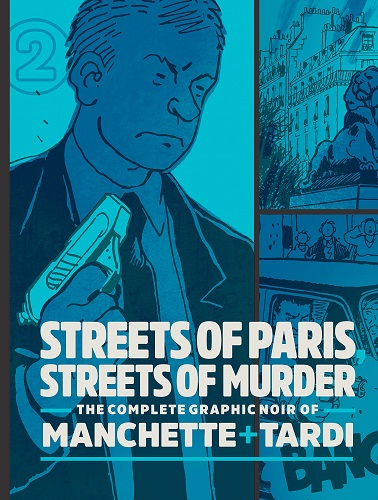
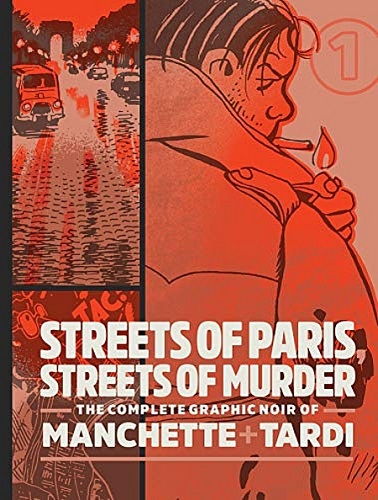
Streets of Paris, Streets of Murder Vol 2, Jacques Tardi & Jean-Patrick Manchette (2020, France). This volume includes ‘Like a Sniper Lining Up his Shot’ and ‘Run Like Crazy, Run Like Hell’, both of which I already own as Fantagraphics graphic novels, so I’m somewhat mystified by the need for this book. True, they’re excellent stories… but they’d already been published. Equally annoying, Fantagraphics have now released both Streets of Paris, Streets of Murder volumes in a boxed set. So, Streets of Paris, Streets of Murder Vol 2 is of limited value if you’ve been following Fantagraphic’s publication of Tardi’s works. Otherwise, it’s a good intro to his work. Well, their work, as it’s explicitly Tardi’s adaptations of Manchette’s novels. I’m not familiar with the novels, but if the stories here are any indication they’re pretty brutal. And Tardi’s art can border on gruesome in places. This is not the noir of Nouvelle Vague films. Recommended.

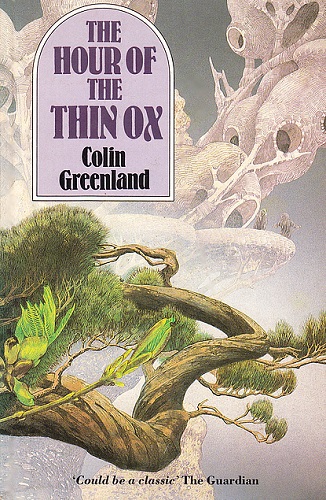
The Hour of the Thin Ox, Colin Greenland (1987, UK). I’ve been a fan of Greenland’s writing for many years, especially the Plenty books and Harm’s Way. He was very active throughout the 1980s and 1990s, as a critic, an editor of Interzone, and a writer, but his last published novel was Finding Helen in 2002. Which is a shame. The Hour of the Thin Ox is one of three literary fantasies, the Daybreak trilogy, he published in the 1980s. I don’t actually recall if they’re set in the same universe – I suspect yes, if only because they’re lumped together as a trilogy. Anyway, in The Hour of the Thin Ox, the heir to a wealthy merchant family in Bryland finds her fortunes so diminished she ends up joining the army to fight the empire invading the countries to the north. This is not a novel that would really pass muster in 2020. It’s well written, but there’s an uncomfortable thread of orientalism running throughout the story, with its emphasis on the Far-East-inspired Escalans and their drive to expand and assimilate other nations and cultures. The second half of the novel takes place in a jungle region, partly conquered by the Escalans, but they’re in the process of killing off its indigenes. The Brylander now leads a small guerrilla group against the Escalan invaders. And, of course, the indigenes are neither as savage nor as primitive as the Escalans insist. The story seemed like it was going somewhere with its jungle warfare plot, but other than a big set-piece, it more or less petered out. A novel that felt like it was part of a larger series and not a complete instalment, despite being well written with some effective world-building.

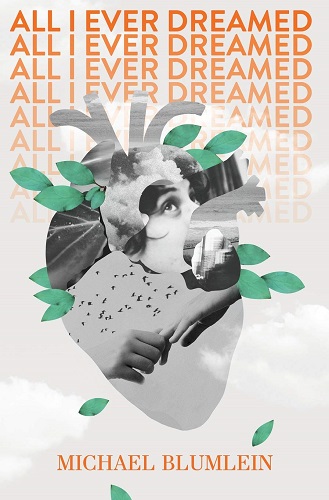
All I Ever Dreamed, Michael Blumlein (2018, USA). A Locus review by Gary K Wolfe claims this is a collection of all of Blumlein’s fiction, which is not true. If anything, it’s a collection of his less obviously genre short fiction, although most of it was actually previously published in genre venues. It does indeed contain some of the stories also in What The Doctor Ordered (2013, USA), but with four additional ones – ‘Bloom’, ‘Y(ou)r Q(ua)ntifi(e)d S(el)f’, ‘Success’ and ‘Choose Poison, Choose Life’, but they appeared in Interzone, F&SF and Asimov’s SF, and ‘Y(ou)r Q(ua)ntifi(e)d S(el)f’ is original to this collection. Blumlein has been a favourite writer for many years, and I’ve championed his works whenever I could, but we lost him last year to cancer, and I can only be grateful he was held in high enough regard that pretty much all of his short fiction output has been collected over the years. His novels, however, are mostly out of print, and have been for a long time. The stories in All I Ever Dreamed are not heartland sf, and one or two hew closer to dark fantasy than science fiction. The three novellas are probably the strongest works. ‘The Roberts’ is available separately from Tachyon Publications, and is typical of Blumlein’s work: dense, intense and set somewhere at the intersection of science and technology and human relationships. ‘Success’, on other hand, does not use science and technology to fix a relationship, but to comment on it. The third novel sees three women, all named for flowers, each involved with a man, for better or for worse, on a desert island. There’s almost no obvious genre content, but the way the three narratives reflect on each other is cleverly done. Blumlein was a singular talent in science fiction, and there were, and are, few genre writers of his generation who matched his level of thoughtful rigour.

We, Yevgeny Zamyatin (1924, Russia). This book was written between 1920 and 1921 but not published until 1924 – in English. The USSR authorities may have seen it as a commentary on themselves. I wonder why. To be fair, it’s hardly subtle. But this is the 1920s, and science fiction didn’t do subtle in those days. The idea of a unifying state state can hardly be said to be Zamyatin’s invention – insects beat him to it, for one thing – but certainly We influenced a number of later works, and even arguably created an entire subgenre. The problem with said subgenre, however, is that it magnifies the fears and sensibilities of the writer, without actually making any kind of cohesive argument either for or against the society described in the book. David Karp’s One is a good example: most Americans will read it as a dystopia, most Europeans with read it as a utopia. We‘s United State is a state regimented to the nth degree, to such an extent the plot is pretty much narrator D-503 discovering he has a “soul” and the changes in perspective and sensibility that wreaks on him. It’s triggered by his relationship with a woman who clearly is not a typical state drone, and even on occasion dresses up in “old-fashioned” clothing like dresses. Unfortunately, the book is all a bit over-wrought, with excessive use of ellipses, and references to “ancient times” that are clearly the time of writing, as if there were no history between the novel’s present and the 1920s. I can see how it’s a seminal and influential work, but it’s not an enjoyable read and I’d sooner stick to works without such fevered prose. Most certainly an historical document, and important in that respect, but don’t read it for pleasure.


Leave a comment

Movie roundup 2020, #19

I’ve continued to binge-watch Unforgettable, but I’ve no idea why. The series was cancelled after its first series, and that was probably unfair, but after the network changed their mind the producers retooled the series for the second season… which saw the two leads move to New York’s “Major Crimes Section” and investigate crimes which jumped the shark ever higher each episode. They’re no longer solving murders, they’re now chasing special forces-trained international assassins – and beating them in a fist-fight! – or ripping off the plot of Die Hard and assorted other movies. Not to mention all the bollocks about hacking and computers. And the complete disregard for actual police procedure. Each episode turned into an exercise in spotting what the makers had got completely wrong. Unforgettable clearly didn’t spend money on its scripts, or even its wardrobe, as lead Poppy Montgomery seemed to wear the same pair of Louboutins in every episode requiring her to get dressed up…

I then moved onto Vikings, which has proven slightly better, despite a tendency toward pantomime villains in its early episodes. And Scooby-Doo! Mystery Incorporated, a reboot of the series from 2010, which was bigger on self-referential humour than it was on rigour. A running joke is the villains’ avoidance of the phrase “meddling kids”. But some of the jokes are cool, and it’s neat how it deconstructs itself each episode.

Incidentally, I renamed my film posts “Movie roundup” this year because I planned to write only a few sentences about each film I watched. But I seem to have ended up writing similar-length reviews to previous years’ “Moving Pictures” posts. Oh well…

Dangerous Ishhq, Vikram Bhatt (2012, India). You know all Bollywood plots are just variations on “boy meets girl, boy loses girl, boy wins girl back”, right? Some of the variations are frankly bonkers, but some are actually quite clever, like this one, although they may not seem like it at first. For a start, in Dangerous Ishhq it’s gender-flipped. And it’s a timeslip romance. Sort of. Sanjana is all set to start a modelling career in Paris, but decides instead to stay and marry her boyfriend, Rohan. But he’s kidnapped by masked thugs, who demand an enormous ransom. Sanjana starts experiencing flashbacks… to an earlier life, during partition in 1947. And her boyfriend back then is Rohan (with another name). With the help of clues from her flashback, and the police inspector in charge of the case, she tries to rescue her boyfriend and uncover the identity of the kidnapper. After the 1947 flashback, she experiences one set in the 1700s, in which a similar story plays out – she and her lover are separated by a third man, who kills them both. And finally, a third flashback all the way back in the fourteenth century which explains what’s going on. I really enjoyed this. The production values were good, the historical sections were interesting, and while it all felt a bit plotting by coupons, it hung together entertainingly. Critics, however, apparently hated it. Ah well.

Salt and Fire, Werner Herzog (2016, Germany). A Herzog film is a Herzog film, and if you don’t go into one having a good idea of what to expect – no matter what the story or subject matter – then why are you watching it? In Salt and Fire, three UN scientists investigating an ecological disaster in South America are kidnapped – and it turns out the kidnapper is the CEO of the consortium responsible for the disaster. He maroons the chief scientist with two near-blind Andean boys on a rock outcrop in the middle of Salar de Uyuni, a toxic salt flat. Herzog has the actors play their roles flat, and their dialogue is stilted at best – Herzog reportedly wrote the screenplay in five days; it shows – but the cinematography is as good as you would expect. The characters have a tendency to lecture each other, and some of the plot reverses are delivered as expositional dialogue, which is a bit cringe-worthy. But there’s a strangeness to the story that is typical Herzog, and its swerve off-piste in the final act results in a beautiful piece of cinema. Critics were not impressed. It’s too clumsy in its first act to be a good Herzog film, but it gets a lot better as it progresses, and finishes up in an interesting place. Worth seeing.

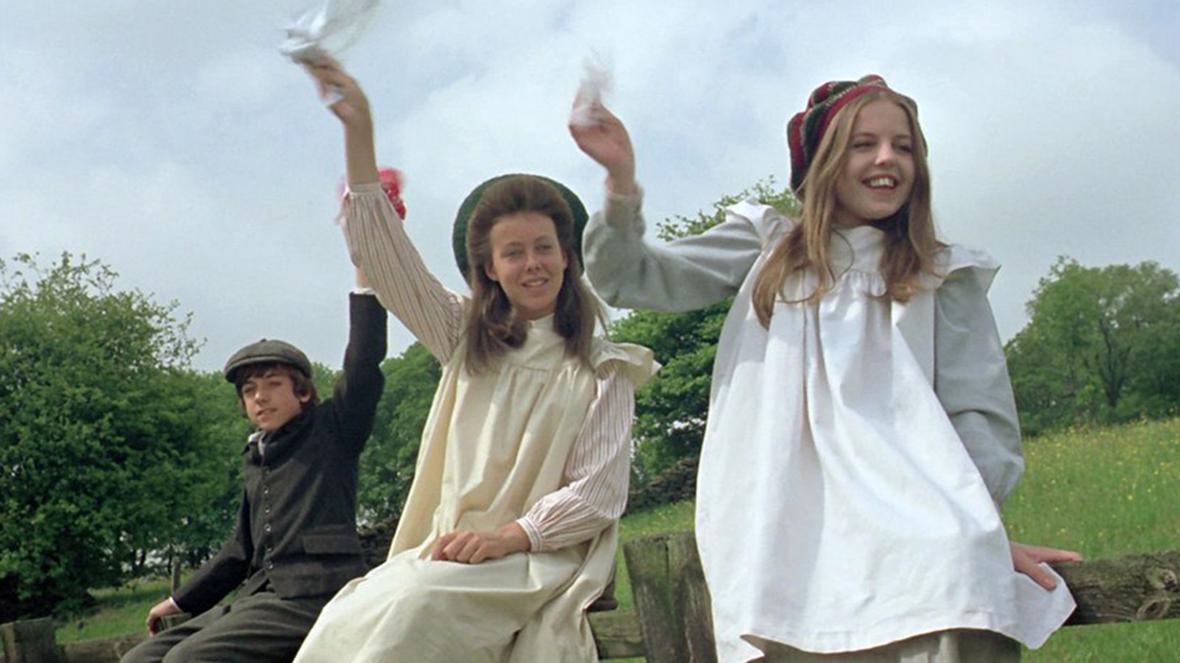
The Railway Children, Lionel Jeffries (1970, UK). This is a piece of my childhood. It’s a film I remember seeing as a kid, possibly more than once, although I’ve no idea where or when – Dubai Country Club, possibly? the mid-1970s? – and some parts of which I’ve not forgotten in all the years since. But much of it, apparently, I had forgotten. It’s based on a 1906 novel by E Nesbitt, in which the three children of a man arrested for treason – that was something I had bizarrely forgotten – move to film-land’s version of Yorkshire, in which Bernard Cribbins, a Lancashire man famous for playing Londoners, proves a friendly local contact. The three kids spend a lot of time watching the local railway, and it’s all very innocent – until they manage to prevent a train from derailing and are lauded as heroes. A bit different from the time I sat in a train from Manchester Airport that was delayed for 60 minutes because of kids playing on the tracks… It’s all very “chocolate box” and most Tories probably think England should be like that again, and even for Edwardian fiction this is closer to Narnia than England. The film is a piece of my childhood, and it’s a good film, but it’s an historical document and no longer relevant.

And God Created Woman, Roger Vadim (1988, USA). This is not a remake of Vadim’s 1956 French film of the same title – the only thing the two movies share is the title. The first famously launched Brigitte Bardot’s career; this 1980s movie is, well, embarrassingly 1980s. And pretty bad. Rebecca De Mornay plays a convict who escapes, is offered a lift in a passing limo, which it turns out is carrying a gubernatorial (I love that word; we don’t have it British English because we don’t have governors) candidate, who persuades Mornay to break back into prison, and he’ll speak up for her at her parole hearing. And that’s what happens: de Mornay is released, marries a local builder, has an affair with the governor, is promoted as a success in the new governor’s rehabilitation programme, screws it up, has an arrest warrant sworn out on her, but gate-crashes the governor’s ball, or something, and sings a very 1980s song and everybody lives happily ever after. I did not have a high opinion of Vadim’s films – Barbarella is a guilty pleasure – and this one did nothing to dispel that opinion. Avoid.

Eddie the Eagle, Dexter Fletcher (2016, UK). Eddie the Eagle is possibly a more accurate representation of the English character than any person, real or fictional, the gammons admire. Michael ‘Eddie’ Edwards was determined from an early age to be an Olympiad despite being unqualified to be one. The film implies he was dropped from the Winter Olympic skiing team because he was the wrong class – which is entirely plausible – but his attempts at ski jumping are… Well, he was shit at it. Happily, that was not a barrier to his Olympian dreams. He found a sympathetic trainer – this part of the film was, I believe, completely fictional – and eventually made the jumps he needed to qualify – this part was entirely factual, as was the UK’s Olympic committee’s attempts to prevent him from competing. On the one hand, I rue the rule introduced after Eddie the Eagle which prevents his like from ever competing again – the Olympics are, after all, allegedly “amateur”, but the IOC is actually even more corrupt than FIFA, which is an achievement – but on the other hand, I can understand the need to set a minimum standard for competitors. On balance, my sympathies are with Edwards. The IOC is notoriously corrupt, so I won’t take their word for anything.

Kanarie, Christiaan Olwagen (2018, South Africa). Sometimes, hunting around on Amazon Prime for non-US movies throws up some some odd films that you might never have watched otherwise. And certainly a gay coming-of-age film set in an army choir of conscripts in early 1980s South Africa is not something I’d have normally watched. I’m not entirely sure what I got from watching this one. Everything seemed so horrible. Other than the central handful, the characters were mean – and the officers were completely intolerant and racist. The music was pleasant, if somewhat more religious than I preferred. Later, the film drifted into drag… Drag is pretty much mainstream these days – it might not appear in many Hollywood blockbusters, but it has huge media conventions and touring shows, and some of the bigger stars are international celebrities. So the whole drag-as-affirmation trope never quite convinces given its current media profile.

Conquest, Lucio Fulci (1983, Italy). There were a shedload of low-budget sword & sorcery films released in the early 1980s, but this one usually gets missed off the list. Perhaps because it was directed by Fulci, who is known primarily for gialli and responsible for several “video nasties”. As a fantasy film… it’s pretty much a failure. It’s in love with its monsters, and it shows. A naif with a magic bow travels to a fog-shrouded land and falls foul of an evil masked sorceress. He’s joined by a nomadic warrior – the actual hero of the film – and the story then follows the usual beats. The plot is a staple, and the characters are equally clichéd, but some of the production design is slightly off-the-wall and that’s a little interesting. Worth seeing – for fans of Fulci, or fans of 1980s sword & sorcery movies.

La Terra Trema, Luchino Visconti (1948, Italy). One of my favourite films is Ritwik Ghatak’s A River Called Titas (1973, India), and while Visconti’s La Terra Trema, The Earth Trembles, covers similar material I found it a less interesting film. Which is not to say it’s not good. It’s about the fishing families of a small Sicilian village, and it’s told in a semi-documentary style, with voice-over, although it does have a dramatic plot. Much like A River Called Titas (although that has no voice-over). But La Terra Trema is very much an Italian neorealist movie, and in terms of presentation echoes them in all respects. It’s entirely in Sicilian, which would certainly have meant something to an Italian audience, but seems almost incidental to an non-Italophone audience. The cinematography is really quite beautiful, but if Italian neorealism did one thing really well it was beautifully photograph the damage caused by WWII on Italian towns and cities. Which is a shame… up until the point when you realise the Italians were the enemy. As an example of Italian neorealism, La Terra Trema is probably a defining one. Visconti went on to make historical dramas – very good ones, it must be said – and other directors made films  closer to the Neorealist ideal. But La Terra Trema feels like it embodies more of the genre than similar films. Perhaps it’s too long, perhaps it’s not dramatic enough. But on reflection I feel I may have under-rated it. Nonetheless, worth seeing.


3 Comments

Reading diary 2020, #13

I remember once upon a time I used to read good books. Something seems to have gone wrong. The Chandler wasn’t bad, and the Cho managed a fair fist of its setting, but the rest were pretty bad. True, my expectations were not high for the Jordan – I’d thought it terrible the first time I read it twenty years ago… although it did seem to be much worse than I remembered it. The Farmer – also a reread, although I’ve no memory of reading it before – was also shit.

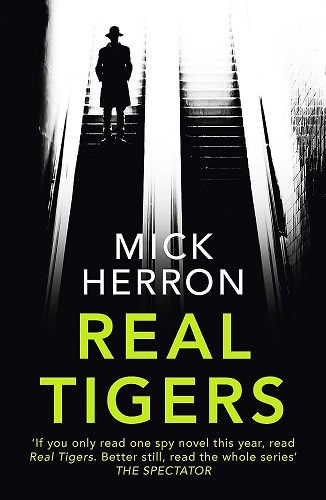
Spook Street, Mick Herron (2017, UK). As a writer, you often wonder if it’s possible to tell a story using completely unlikeable characters. But then you grow up and realise no reader is interested in a story involving characters who repel them. Unless you’re Mick Herron. In this installment, a suicide bomber kills a bunch of teens in a shopping mall and then one of the Slough House agents is murdered, and the dead agent’s grandfather, the “Old Bastard”, an ex-MI5 bigwig, goes missing… and it’s all to do with a rogue CIA agent who set up a secret school in France to raise kids as terrorists and everyone is surprised when they turn out to be terrorists… The Slough House books do not score well on plausibility when it comes to their plots, but this one is even less believable than the ones preceding it. Herron seems keen to depict MI5 as a bunch of criminals – although he lavishes real contempt on Tory politicians – but his so-called heroes are all unlikeable incompetents. Sigh. The first book in the series is possibly worth a go, but the sequels are entirely missable.

The Man Who Fell to Earth, Walter Tevis (1963, USA). This is one of those rare cases where I’ve seen the film – several times – before I read the book. And the film isn’t exactly a faithful adaptation. It covers the main points, but the movie is very much about its visuals and the book is just a bog-standard early 1960s sf novel that’s actually set in the early 1960s. Which at least means mean wearing hats is plausible. The title character is Thomas Jerome Newton, an alien from Anthea – implied to be Mars – who has infiltrated Earth – ie, the US – in order to save his home world. He introduces technological innovations from his planet and so makes a vast fortune, which he uses to build a spaceship. But the government are suspicious and eventually arrest him. The CIA uncover his secret, but they keep it from the FBI, who bungle their investigation and blind Newton. The point of the book is that Newton is discovered. And despite a long list of technological innovations introduced by Newton, the government still manages to fuck things up. I’m surprised this was considered a shocking perspective in 1963, especially in the US, a nation famous for its distrust of its government (to be fair, for good reason). But the idea of an alien not being an actual evil invader seems to have struck US sf fans as something, well, entirely novel. Seriously? That says more about US sf fandom than it does this book. Which is otherwise ordinary, and you would be better off watching the film as it’s more rewarding.

Lord of Chaos, Robert Jordan (1994, USA). I’d say this is where the rot sets in, but given the how the series was put together, I don’t think that’s entirely fair. This is, after all, the sixth novel of a series that was intended to be ten volumes long, but that length wasn’t decided until after the second volume… You can just imagine how the conversation went – RJ: it’s three books. Publisher: make it one. Publisher (later): it’s going really well, we’ve sold loads, how does ten books sound? RJ (Ker-ching!): Shit shit fuck fuck fuck. RJ (later): this ten book thing is not working out, can we make it a few more? Publisher (ker-ching!): no problemo. It doesn’t help that the title of this book is a title assigned to series hero Rand Al’Thor that has never been mentioned before. Because, of course, why would it? Jordan only invented it when he set out to write this installment. Meanwhile we have the rest of the cast doing exactly what they did at the end of the last book. With added recaps. Lots of fucking recaps. If, perhaps, we’d not read the preceding five books, these might be useful. But we have! Because who the fuck starts reading a fantasy series at volume six? And, if we had, Jordan explains what happened in the preceding five volumes. Several times. I seem to remember from my prior read back in the late 1990s that book seven was where things started to go downhill, but I’d thought book six, Lord of Chaos, was one of the last good ones. Only, it turns out it’s the first of the bad ones. Although, to be fair, that term is relative. I have this desire to complete the Wheel of Time, and there’s no way I’m going to do that based on my readings of the books from the 1990s. So I have to reread them all. It’s proving, entirely predictably, easier said than done. Sadly.

Sorcerer to the Crown, Zen Cho (2015, Malaysia). I should have been on this like, well, like really quickly, since it is after all a fantasy set in Regency England and I’m a big fan of Georgette Heyer (and, more recently, Alice Chetwynd Ley). But I am not, to be fair, a fan of Regency fantasy. It’s not a large genre – unless you include timeslip romances – and most examples I’ve read have not been especially good, mostly because they’ve been by US authors who haven’t quite understood Regency England (at least not to the extent it convinces an experienced Heyer reader), and while I have mostly positive memories of Sorcery & Cecelia, that was a) pretty much the first Regency fantasy, b) an epistolary novel, and c) I read it a long time ago and would reread it except it’s now in storage. Anyway. Anyway. Zen Cho is not an English author, but has lived and worked in the UK for a number of years and so is to all intents and purposes an English author. If Sorcerer to the Crown falls over sometimes in terms of its Regency prose, that’s a failure of craft – Cho knows the period inside-out, that much is clear – and Regency diction can be a little convoluted at the best of times. Having said that, not everything in the plot actually adds up. Britain’s magic has been decreasing, and the witches of Bandar Jaik are partly responsible, but the decrease predates their involvement and is never explained. But Sorcerer to the Crown is more concerned about the race of its title character, the emancipated son of slaves, who takes the title of the, er, title under mysterious circumstances, and his colour of course makes him a number of enemies as well. I wanted to like this book, and I did like it – but I have caveats: the plotting needed to be more rigorous, some of it doesn’t quite add up, and the Regency prose slips on occasion. Heyer, this is not; but then its sensibilities are twenty-first-century and that’s definitely a plus over Heyer. I understand a sequel appeared last year. I would definitely read it. Oh, and apparently there are two sequels to Sorcery & Cecelia, which I didn’t know.

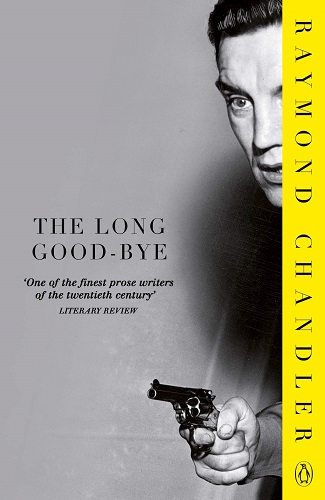
The Long Good-bye, Raymond Chandler (1954). I was introduced to Chandler through my father, who had a collection of his books in Penguin paperbacks from the 1960s. Chandler has always been there for me as an early writer of crime fiction, certainly more so than Dorothy L Sayers or Nicholas Blake or Margery Allingham. So my knowledge of early crime fiction is more California noir than English aristocratic sleuths. The Long Good-bye is a well-known title by Chandler, as well as a movie set in the 1970s starring Elliott Gould. I like Chandler’s fiction. I think he’s over-rated – or rather, I think his influence on the genre is greater than he deserved. But I do like his books. One of the things I like is his certitude. Chandler was certain about everything he wrote and how he wrote it. I’m amused by the fact he despised Philo Vance of SS Van Dine’s hugely successful novels, and can only imagine his ire was stoked by Vance, and by extension Van Dine, clearly being gay. Marlowe was, of course, famously a womaniser, and all of Chandler’s novels are predicated on Chandler’s relationship with a woman. Which is not, surprisingly, how The Long Good-bye opens. Marlowe makes friends with a man, and helps the man escape justice when he brutally murders his wife. But then the murderer is murdered in Mexico… But Marlowe never believed he was guilty, and never believed the account of his suicide was legit. Throw in a California millionaire (what would be a billionaire now), a literary writer who found success as a writer of historical best-sellers but despises himself and has hit the bottle big time, and the writer’s manipulative wife… This is classic Chandler, but it’s also a book that doesn’t go where you expect it to. If you have to read a Chandler novel, it’s a good one to choose. On the other hand, I don’t think it’s especially typical of the Marlowe novels. You might as well read a couple of them. You won’t regret it.

The Day of Timestop, Philip José Farmer (1960, USA). I had it in my mind Farmer was one of those off-beat sf authors of the 1960s and 1970s who never scored big but produced interesting work nonetheless. We’ve all heard of Riverworld, and despite a reread a few years ago of To Your Scattered Bodies Go not exactly impressing, the concept seems to be “high” enough to keep interest in Farmer’s works alive. Sadly, his reputation doesn’t seem to stand up to scrutiny. I’d previously read The Day of Timestop under the title A Woman a Day, because it was also republished by Beacon Books under that title, and I have the Beacon Books edition. Which I’ve not actually read yet – and, of course, it’s currently in storage. So, anyway, I bought the SF Gateway edition as it was cheap, but I was still robbed because this book is really bad. More than a thousand years in the future, after much of humanity was wiped out, the world has split into three main blocs – the religious Haijac Union, the Israeli Republics (because a US author has to promote Israel, even if he’s not Jewish) and I forget what the third one was. Oh, and Marcher, a neutral state in west Europe. The story takes place in the Haijac Union, specifically in Paris, where a Marcher agent has infiltrated the Haijac Union to the highest level – he’s a lamech-man, ie, beyond reproach, beyond suspicion, incorruptible, so pretty much how Tories see themselves despite all evidence to the contrary, you know, like letting kids starve over Christmas – but then Tories are scum – and while Farmer sets up his  world with economy, it makes zero sense, and the plot which follows on from it makes even less. There’s a woman who’s an alien because she has some sort of organic battery wired to her vagina (really!), but then it turns out she’s not an alien. And there are some Bantu who have been literally whitewashed – “depigmentized” (really!) – and they’re some weird sort of hippy Christians, and the initials “JC” seem to refer to half a dozen messiahs – and the title actually refers to one of them, who is supposed to return from his time-travelling on the “Day of Timestop” to trigger Rapture for everyone in the Haijac Union. Everything in this book is wrong – the ideas are complete nonsense, the sensibilities are all over the place and not in a good way, the prose is functional at best, and if the story doesn’t go where you expect it to that’s because Farmer probably didn’t know himself where he was going. A book to avoid.


Leave a comment

Movie roundup 2020, #18

This post’s box-set bingeing has been Morden i Sandhamn, a murder-mystery series set in the Stockholm archipelago, mostly in the village of Sandhamn on an island some 60 km due east of central Stockholm. It’s all a bit chocolate box and heavy with the clichés – they even did that one where a person drowns, and the person giving them CPR gives up, and then gets angry and thumps them on the chest… and brings them back to life – but it’s entertaining enough and a good way to improve my Swedish. Also Miss Truth, a Chinese series set in Tang Dynasty Suzhou, about a young woman who is a forensic examiner and helps an assistant minister in the Ministry of Penalties solve puzzling murders, and who also happens to be affianced to an assassin. It’s got it all: sword-fights and kung fu, cleverly worked out solutions to the murders, colourful costumes, a good-looking cast, and good production values. The subtitles can be a little… creative, however. And, finally, Unforgettable, a US series about a cop with hyperthymesia, who uses her photographic memory to solve murders for the NYPD. It’s entertaining enough, and the gimmick is well-used, but the lead character is just a little bit too good to be plausible. And, unfortunately, they introduced a “kooky” computer forensics technician in episode 11 – going for an Abby Sciuto – and she’s really annoying (she also talks complete bollocks).

I did try watching Mutant X as well, but it was fucking terrible, a knock-off X-Men that still managed to feel more like one of those bad straight-to-VHS sf movies from the late 1980s. Best avoided.

X: The Unknown, Leslie Norman (1956, UK). This is one of the films that helped established Hammer Films as a maker of horror and science fiction movies, and it’s pretty much an exemplar of the sf films they made. A platoon of soldiers are training  to use Geiger counters, in case of nuclear war, in a gravel pit of course, when they discover evidence of a radioactive creature beneath the earth. And, er, that’s pretty much the plot. Radioactive blob from underground wreaks havoc. Hammer Films didn’t get complicated – it was one of their strengths. The US lead here is Dean Jagger, because all UK films of course had to have US leads in order to appeal to the parochial US market. X: The Unknown doesn’t do anything a number of similar films, including later Hammer Films, haven’t done, but one of the advantages of the brand was you always knew pretty much what you were getting. Which was mid-twentieth-century British budget horror. And that was actually a good thing.

Who Killed Captain Alex?, Nabwana IGG (2010, Uganda). My first Ugandan film. And it was reportedly made on a budget of under $200. Unfortunately, the director – who edited the film, and added the special effects, on his cobbled-together desktop PC – wiped his hard-disk to make room for his second feature film. But then a power surge wiped that, so he had to start over again from scratch. Fortunately, DVD copies of Who Killed Captain Alex? survived. Unfortunately, they were “VJ copies”, apparently a thing in Ugandan cinema – films are accompanied by a “video jockey” or “video joker” voiceover, who comments and jokes about what’s happening on screen. Who Killed Captain Alex? is a pretty ordinary overly-violent and overly-cheap thriller about a clash between local police and the Tiger Mafia. The acting is terrible, the special effects are cheap and obvious, but the fight choreography is surprisingly good. There’s also a good musical interlude. Given the budget, and the complete absence of film-making experience in Wakaliga, a suburb of Kampala, Who Killed Captain Alex? is surprisingly watchable. Nabwana IGG apparently went on to make a couple of other films and I’d actually like to see them.

Where’s that Fire?, Marcel Varnel (1940, UK). Will Hay was a big comedy star in the UK from the 1920s through to the 1940s, and inspired a number of comedians I remember from my childhood years. But until watching Where’s that Fire? I don’t actually recall watching a Will Hay movie. It’s not a lack that’s ever bothered me, and after watching this film I don’t think it’s a lack I should ever be bothered about. Which is not to say it’s a bad film. It’s funny. The slapstick is cleverly done, and some of the set-pieces are hilarious. But it posits a village fire brigade with a horse-drawn appliance at a time – WWII, basically – when everywhere else had motorised decades before – see Humphrey Jennings, for example. It feels likes it’s trying too hard for comic effect. I would have preferred a film that was more of its time and not one that tried to pretend everywhere outside London was two decades behind.

The Court-Martial of Billy Mitchell, Otto Preminger (1955, USA). Yes, that Billy Mitchell. The one who’s referred to as “the father of the US Air Force”. And even had a bomber, the B-25, named after him during WWII. Apparently, he wasn’t so well-regarded initially. After WWI, which the US entered late, as usual, and claimed all the credit, as usual, Mitchell was vocal in his desire for a US air force. Unfortunately, his superiors were not so convinced. They set him a test – to sink a battleship with bombs – and he cheated because their conditions made it impossible for him to succeed. So they demoted him, and he spent years on a letter writing campaign. Mitchell is a fascinating subject. Unfortunately, this is not a fascinating film. Gary Cooper plays Mitchell like a teenager, which is really weird, and Preminger’s direction is unobtrusive at best. I suspect Preminger made it because Mitchell continued to be a controversial figure even in the 1950s, but this is far from his best work. An uninspiring biopic.

The Diamond Mercenaries, Val Guest (1976, Ireland). This is one of those films that seems to have been made strictly as a cash investment, and if it returned anything more than a small a profit I’d be very surprised. A handful of big names can’t disguise the cheapness of the film, or the parochial nature of its story. A group of men plan to rob a profitable diamond mine in South Africa – actually, they plan to smuggle out the diamonds collected by a plant inside the mine. They’re up against security chief Telly Savalas. Peter Fonda, a security guard, is persuaded to infiltrate the robbers, but things are not what they seem. An entertaining thriller, with amusingly low production values, that thirty years ago would have been shown on a Sunday afternoon on some cable channel no one watched. And, er, still would be now.

Airplane!, Jim Abrahams, David Zucker & Jerry Zucker (1980, USA). I probably don’t need to describe the plot of this film. Not that it really has one. I’d seen it before – several times – of course, but before I started recording my film-watching. A lot of it is, surprisingly, still funny. It’s aged a good deal better than I’d have expected. I mean, yes, it’s explicitly a spoof of 1970s disaster movies, and in terms of pastiching those it certainly hits its targets, and it’s still very much a late 1970s/early 1980s film, with all that period’s sensibilities, but it’s light on the sorts of those sensibilities and still entertaining viewing in 2020. Which surprised me. Not a great film, and not one that belongs on the 1001 Movies you Must See Before You Die list, but good fun with a few beers on a weekend night.

Love and Other Cults, Eiji Uchida (2017, Japan). A young Japanese woman is left at a weird religious cult by her mother, but then the leader of the cult is arrested, and she floats from family to family looking for somewhere to belong and for an identity. The film is nominally told from the point of view of a schoolboy, something of an outsider himself, who meets Ai at school, and then bumps into her at various points during her life. Ai’s life goes from cult member to dutiful schoolgirl to school drop-out to Japanese counter-culture and, to be honest, I have no idea what this movie was trying to say. I enjoyed it, but it felt like it was making a point that completely opaque. The director is not a name I know, and his other films are also unknown to me.


Leave a comment

Movie roundup 2020, #17

Once again, I’ve been mostly binge watching TV series the last few weeks. This time it was Wire in the Blood, a UK crime series based on characters created by Val McDermid. I read a couple of her books many years ago, and thought them quite good. I also saw her interview Sara Paretsky (a favourite author) at a Harrogate Crime Festival programme item – my mother bought tickets for myself and her as my birthday present that year. It was an excellent present. Anyway, Wire in the Blood is okay, but seriously jumps the shark in the fifth season. I also watched Murder Call, an Australian police procedural from the 1990s built around detective Tessa Vance, who solves murders by putting together all of the clues subcobscuously three-quarters of the way through each episode. It was easy viewing.

I also watched Raised by Wolves, the new high-profile science fiction TV series partly produced (and directed) by Ridley Scott, and… It looks good – but that means only that a lot of money has been thrown at it. In terms of world-building and story… Oh dear. Nasty atheists versus nice Mithracists (who bizarrely quote the Bible). Pro-religious bollocks. I shall probably writing about it in more detail in another post.

Meanwhile, some movies…

No Man’s Woman, Franklin Adreon (1955, USA). Minor US noir in which the owner of a small gallery whose profitable, if not entirely ethical (or indeed legal), business is about to end, and so sets out to destroy the lives of all those around her. So, of course, someone murders her. Everyone has a motive, and none of the alibis stand up to scrutiny. But the detective figures it out, and it’s the nasty one wot dunnit. As I said, minor US noir. Interesting that it’s a female-led film – it passes the Bechdel Test with flying colours – but the central character is a bit of a misogynistic stereotype.

Plot of Fear, Paolo Cavara (1976, Italy). One of those films that straddles the line between giallo and poliziottesco, which is why I end up lumping the two genres into one. A serial killer leaves illustrations from a kids’ book at the scenes of his crimes – which somehow justifies an erotic animated sequence mid-film. The victims are all members of a high society sex club, but the biggest mystery here is why anyone would care why such people are being murdered. Meanwhile, the detective in charge has sex a lot – with his girlfriend and with one of the witnesses – but doesn’t seem to make much headway in solving the crimes. Tom Skerrit makes a bizarre dubbed cameo as a senior police officer. I do like me some giallo, but it’s not a genre that’s known for its quality. I guess that makes it more of a guilty pleasure. Even so, there are occasions when you still feel like you’ve been had…

Island of Fire, Kevin Chu (1990, China). I watched this because it’s a Jackie Chan film, but it isn’t really. He plays a minor character. I’m not sure what the title refers to – the film is set in a prison, mostly, but the prison is not on an island. Or on fire. Anyway. There’s this sort of gang leader in the prison, played by Tony Leung Ka-fai (who had helped Chan in a dispute on another film and so Chan repaid him by appearing in this movies(, but he finds himself up against the warden, who has this neat little scheme going. The warden sentences inmates to death, but fakes their executions and employs them as assassins. Chinese prison wardens obviously have more power than Western ones. It’s the sort of premise that would make only sense in a Hong Kong movie. Sammo Hung plays an inmate who repeatedly tries to escape, and fails, often comically. There’s lots more going on, of course – corrupt cops, gangsters, gladiatorial fights inside the prison, etc. The film has its moments, but its link to Chan has been oversold.

Invasion, Fyodor Bondarchuk (2020, Russia). Although not marketed as such, the full title, Attraction 2: Invasion, makes it clears this is the sequel to Attraction, and the opening credits retell that earlier film’s story in an animated sequence… Even so, there’s a lot in Invasion that references Attraction, and I should probably have rewatched the first film before watching its sequel. Basically, in Attraction, an alien scoutship crashed in Moscow, and a young woman and its pilot fell in love (while the military was fighting off alien robots around them). The young woman – whose father was the general in charge of Russia’s defence against the aliens – apparently now has near-magical powers. The scoutship was from a much bigger spaceship, which has now been taken over by an EVEN MOAR BIGGA alien spaceship, and the Earth – well, Russia (but hey, makes a change from the US being the whole planet)- is under attack, and the young woman and the scoutship pilot have to find a way to call off the attack… Invasion looks good but is somewhat short on narrative logic. I suspect that’s mostly down to the fact it feels like an episode in a franchise that’s been thoroughly explored in other installments, which, other than the first film is, as far as I know, not the case.

The Magnificent Cuckold, Antonio Pietrangeli (1964, Italy). This is an Italian adaptation of a Belgian play, and while it seems like a good fit for Italian drama, it does play in parts like a transplanted story. Happily, it looks very chic, that sort of Sixties style that came so effortlessly to the Italians and which the Nouvelle Vague tried to hard to emulate, with mixed success. (Happily, the Nouvelle Vague directors were equally interested in US noir, and were much more successful in appropriating that.) A successful business man with a beautiful wife has a one-off fling and, as a result, begins to suspect his wife of being unfaithful. And he interprets everything she says and does in that light. She is, of course, entirely faithful. But his treatment of her results in her having an affair… This is a 1960s Italian movie, so along with the stylishness you have some pretty heavy everyday sexism, signalled pretty early in a scene in which the husband invites another man to ogle his wife’s legs. There are better films, by better directors, from Italy during the decade, and while this one looks good, it’s pretty disposable.

The Hobbit: An Unexpected Journey, The Desolation of Smaug and The Battle of the Five Armies, Peter Jackson (2012 – 2014, New Zealand). The Lord of the Rings films became a sort of family ritual. Back in 2001, we wanted to go see a film as a family on Christmas Eve. The Fellowship of the Ring had just been released, with a massive marketing campaign, and while myself and my UK-resident sister had read Tolkien, neither of my parents had. But they were willing to watch the film. The next year, The Two Towers was released at Christmas. And we went to watch it in the cinema. The year after that, it was The Return of the King. And so it became a tradition to watch a tentpole Christmas release at the cinema the day before Christmas. It wasn’t always genre – it depended on what was available. We saw The Golden Compass and The Lion, the Witch and the Wardrobe, but also Avatar and Australia. Later, when we started celebrating Christmas in Denmark, we still went to the cinema – for the most recent Star Wars trilogy, the remake of The Girl with the Dragon Tattoo (which, even though I’m in danger of being deported for saying it, I still like more than the original Swedish version), and, er, Aquaman. Which is a somewhat long-winded way of saying I made no effort to watch the Hobbit films and, until all three appeared on Amazon Prime, was not especially bothered about missing them. In hindsight, I made the right call. The problem is the films expand so much on the book, they might as well be a different story. True, Tolkien spent decades working on his legendarium, and seeing more of it up there on the screen might well appeal to Tolkien fans… Middle-Earth is a major artistic achievement, but I’m not convinced it’s well-served by this film trilogy. It doesn’t help that parts of it come across more like a videogame than a film narrative, or that the physics of the final battle – which makes up around, er, three-quarters of the third film – is just wrong all the time. Gandalf is a powerful wizard, so why does he only fight usibg his staff? Zap the fuckers with a fireball, FFS. Orcs swing massive heavy weapons that seem to do little damage, but are felled by one blow from a puny human. It’s bobbins. It’s Hollywood’s sliding scale of power for dramatic effect, as seen in every superhero movie. Objects in the mirror may be nearer than they appear, as the saying has it, but that doesn’t mean they’re actually physically bigger than they appear. Except in fantasy and superhero films…

Killing Cars, Michael Verhoeven (1986, Germany). This is a serious contender for the most 1980s film ever. It opens with Jürgen Prochnow in shades and a white suit, driving a Porsche, being challenged to a street race by a blonde in a Jaguar. He wins the race, drives to a bar, enters the bar, which falls silent when he walks in, crosses to a table, sits down and… starts playing backgammon. Prochnow is the designer of the “worldcar”, an electric-powered speedster, so sort of like Tesla, but corporate shenanigans means the project is likely to be cancelled. Nextdoor to the factory, an anarchist commune has taken over an abandoned building, but the car company wants them out so it can flatten the building and expand. Verhoeven – no relation to the Dutch director – was big on social commentary, and he squeezes it into Killing Cars, for all that the movie is supposed to be a semi-sf corporate thriller. It’s mildly interesting, it’s just that it’s all so very eighties.

Heckle, Robbie Moffatt (2013, UK). A popular comedian – ie, he appeared on a few comedy shows – has pissed off his agent and found himself playing a small pub in Selby. Which is in North Yorkshire. But, weirdly, a few of the cast of this film had Lancashire accents, and one was doing a bad job of hiding a Scouse accent… Anyway, the comedian dies on stage and is heckled by a local woman, who works at a supermarket – actually a Premier Store, which I thought were mostly found at petrol stations, but this is deepest darkest Yorkshire, so who knows. So the woman gets up on stage and does an off-the-cuff routine that impresses the comedian enough he offers to help her apply for the local heat of a national stand-up comedy competition. This is a resolutely local low-budget film, with a no-name cast, and I was surprised to find myself enjoying it. The script relies a little too much on cliché, and the acting wasn’t always one hundred percent, but the characters were relatable and the story worked. I liked it. More than I’d expected to.

Dr M, Claude Chabrol (1990, Germany). I’ve never been a big fan of Chabrol’s film but I may have to rethink that. A Story of Women I rated very highly, and if his others films weren’t always especially good they were at least somewhat out of the ordinary. And out of the ordinary certainly appeals to me. Dr M is a remake of the Fritz Lang film Dr Mabuse the Gambler from 1922, but it doesn’t use its plot. It’s set in the near future – although US critics complained the Berlin Wall still exists in the film, and while the Wall did indeed fall in 1990, albeit not until after the film was made, if Americans assumed the Wall would fall in any future they could imagine that says more about their narrow-mindedness than it does German, or European, history. Imagine thinking the Berlin Wall would not exist in the future, but not predicting 9/11… Anyway, Alan Bates plays the title character, a media mogul. There have been a spate of inexplicable suicides across Berlin and the police are baffled. The detective in charge is convinced Jennifer Beals – whose face is plastered across the city as part of a campaign for a holiday resort called, a thumpingly obvious reference, Thanatos – is involved and, lo and behold, the two of them end up in a realtionship. And in Thanatos. There’s a fascinating aesthetic on display here, very much a future we used to have, and the film’s intellectual payload is a great deal heavier than is common… but the movie never quite gels, and in the latter stages starts to fall to pieces before your very eyes. A noble failure, I think, although it was apparently several years in the making.


4 Comments

Reading diary 2020, #12

Bit of a cheat this post, as two of the books are graphic novels – well, bandes dessinées. But both are from series I’ve been following. Also here is the third book of Mick Herron’s Jackson Lamb series, which I am no longer enjoying but I bought six of the damn things so I’ll work my way through them, FFS. Who knows, they might improve. Tremain I used to read when I lived in the UAE, and I decided to start reading her again a couple of years ago. Tom Toner I’ve met several times at conventions – we’ve even been on a few panels together – but I’d never read any of his fiction, and last year his debut novel was only 99p on Kindle. Whitely has been getting a lot of critical acclaim in the UK the last few years. Her career is almost textbook… for the 1990s. A decade of short stories in genre magazines, then some novellas and novels from small presses… Next step, a major imprint. While I don’t particularly like the type of genre fiction she writes, there’s no denying she has strong writing chops, and it’s heartening to see writers can still achieve success by actually following an actual career path and not being held up as the Next Best Thing because they happen to be on-message with the fad du jour.

Real Tigers, Mick Herron (2016, UK). While the first book in this series, Slow Horses, was a good, if somewhat off-beat, spy thriller, and the second, Dead Lions, occasionally came close to jumping the shark, Real Tigers hurdles that fish with abandon. Lamb’s PA, Catherine Standish, a recovering alcoholic, once used as a smokescreen by MI5’s biggest traitor, has been kidnapped. And it’s all because the kidnappers want access to MI5’s “grey files”, where all the nutjob stuff – UFOs, lizard Royals, Brexit’s benefits, QAnon – is recorded, and also where the current head of MI5 hid some compromising material. All this leads to a 007-like raid on an underground archive and a pitched battle between a security company’s wannabe mercenaries, actual ex-SAS kidnappers, and Jackson Lamb’s bully boys (ex-members of that MI5 department that kicks in doors, you know, just like Special Branch, except it never gets mentioned in the news because, well, Special Branch usually does it). The Herron books score well on characterisation, unfortunately all of the characters are unlikeable shits. And as the books progress, and those characters display yet more exceptional skills, then the fact they’ve been sent into the outer darkness, AKA Slough House, seems increasingly unlikely. Herron also has a really annoying writing tic, in which the prose steps back and does this hyper-observant, and yet snide, omniscient POV which speculates on what the purported observer might see. It’s over-used. I’m hoping the next book, Spook Street, will be better than this one.

The Gustav Sonata, Rose Tremain (2016, UK). I read several books by Tremain when I lived in Abu Dhabi, and might even have read one or two before I moved there, and found her an excellent prose stylist, perhaps more interesting at short story length than novel length. A couple of years ago, I decided to reconnect with her oeuvre. That went quite well. So it’s fortunate I didn’t pick The Gustav Sonata at that time. It’s not that it’s a bad book – on the contrary, it’s a good one. But when I look at all the admiring reviews of The Gustav Sonata, all I see is reviewers finding something in the novel that doesn’t, well, exist. The title refers to a boy who grows up in a small unimportant town in post-war Switzerland. His mother has never emotionally bonded with him, and his father lost his prestigious position as assistant police chief after helping Jews fleeing the Nazis. Gustav makes friends with a delicate and musically-talented Jewish boy whose family have recently moved to the town, an affluent family in direct contrast to the straitened circumstances now experienced by Gustav’s family. Gustav tries to provided emotional support to Anton during his piano competitions, but nerves get the better of Anton. The story then jumps back to the early years of Gustav’s parents, but since we never learn who shops his father to the authorities, there seems little point. And finally, the book leaps ahead to Gustav’s and Anton’s forties. Gustav runs a well-regarded small hotel in the town, and still burns a torch for Anton. Who is now a music teacher at a prestigious local school and has obviously never thought about Gustav in that way. Anton is offered the chance to record some piano sonatas – and in a recording studio his nervousness before audiences is irrelevant. And that’s pretty much it. Several interconnected relationships, some of which are left unrequited, some of which are temporary, but all of which have some small impact on those involved. It all felt a bit, well, inconsequential. I will admit that classical music, of whatever kind, as a motif in fiction leaves me completely cold. I know nothing about it and it does not appeal to me. And yet vast swathes of literary fiction seem to treat is as the only genre of music in existence. Where’s the literary fiction about death metal? prog? bubblegum pop? It’s either classical music or, if the author is being really edgy, punk. Disappointment.

Orbital 8: Contacts, Serge Pellé & Sylvain Runberg (2019, France). This is the second book of the fourth story featuring the mixed human-Sandjarr law enforcement/troubleshooter team of Caleb and Mezoke. The Neuronomes, alien living spaceships, have been launching suicide attacks on Confederation population centres. It’s up to Mezoke and Caleb, now renegades, to uncover why… and it’s all to do with something that’s attacking the original home world of the race which turned themselves into the Neuronomes millennia previously. I like this series, chiefly because it looks good and the world-building is interesting; but the plotting leaves a little to be desired. It’s not that it’s bad, just that it’s so frantic, with a couple of panels of exposition followed by several pages of chase scenes. It makes for somewhat uneven pacing. I have no idea how many more books there’ll be in this series, but given Mezoke is lost at the end of this volume, I’m guessing at least two more…

Streets of Paris, Streets of Murder Volume 1, Jacques Tardi & Jean-Patrick Manchette (2020, France). While Tardi has produced a number of original bandes dessinées, he has also adapted several stories and novels by French thriller writer Jean-Patrick Manchette. He has even tried adapting a couple, but given up after a few pages. This is the first volume of two which publish those complete and incomplete adaptations. The two completes here are ‘West Coast Blues’ (which was also published as a separate volume in 2009 by Fantagraphics, and which I own) and ‘Griffu’. Both are French noir, which is to say American noir but with added existentialism. In ‘Griffu’, a private detective finds himself embroiled in a plot with developers and gangsters. There’s not much in the way of wisecracks, but everything else is there. It’s surprisingly brutal. ‘West Coast Blues’ is equally brutal. An executive finds himself the target of two hitmen through being in the wrong place at the wrong time. He manages to kill one, more by accident than design, then runs away from his family and hides out for months in the French Alps, before being tracked down by the surviving hitman. I’ve been picking up these Tardi volumes published by Fantagraphics as they appear, and they’re definitely worth collecting.

The Promise of the Child, Tom Toner (2015, UK). Titles are important when it comes to books, especially genre books, and I’m really not convinced The Promise of the Child works as a title for a space opera novel. The only clue here to the book’s contents – other than the fact it’s published by a genre imprint – is the cover art, which is sort of vaguely Banksian and does far more to position the novel than its title. And The Promise of the Child is indeed Banksian space opera… mashed up with Warhammer 40k. I’m still unsure what to make of it. There are three types of novel – single narrative, multiple narrative in which the relationship between the narratives is clear, and multiple narrative in which the relationship between the narratives is not clear. (There are more than three types of novel, of course.) In the distant future of The Promise of the Child – the 140th century – a few hundred thousand achieved immortality in the twenty-first century, and those that have survived the following twelve thousand years are now known as the Amaranthine. They rule several star systems and live in hollowed-out planets known as Vaulted Lands. There are also a confusing number of human derivatives, some of which serve the Amarathine, some of which are allied with the Amaranthine, and some of which are independent and somewhat hostile to the Amaranthine. The oldest living human is made emperor of the Amaranthine, but the current incumbent has descended into senility. The appearance of a mysterious figure who claims to be older than anyone else alive – and many of the oldest Amaranthine seem to sort of remember him – has upset the current succession. As has the invention of the Shell, or Soul Engine, a mysterious device which appears to bring people back from the dead. Several narratives run alongside each other, with no seeming connection between them, until the final set-piece, a giant battle. There’s a lot here that doesn’t quite add up – a plot that features too many reverses to easily follow, one narrative that goes from bucolic romance to racist violence without any grounding in the world-building, and an opening act of destruction that is never really justified by the story. I will say I didn’t see the final reveal coming at all, and it was an excellent twist, and clearly sets up the rest of the trilogy. And I did like the prose, which was much better than is typical of space opera… But I couldn’t get on with the Warhammer 40k aesthetics, the steampunk magic technology, and the massively high body-count. I doubt I will read the sequels.

Skein Island, Aliya Whitely (2019, UK). Whitely is clearly a singular talent, and I’m happy her star is currently in the ascendant – not just because she is a female UK genre writer, a group that can never be too big, but also because she seems to have followed a fairly traditional career path. Short stories published in UK small press magazines. Then pro mags. Then books published by small presses. And now the big league. Except not really – Skein Island was published by Titan Books, but her next book, Greensmith, is due from a small press. Whitely certainly has writing chops, and I am all for writers who are known for their writing rather than their world-building. But the latter is not something Whitely will ever be praised for because she writes a sort of unsettling soft fantasy that relies on subtle changes to the real world. It doesn’t always work for me. I am, by temperament, a hard sf reader, and I value rigour in stories. Whitely does write rigorous stories but that rigour follows her own rules – and when those rules are revealed in the text, it works; and when they’re not, I find it less successful. Skein Island falls into the former category. The Fates – or rather, the single mythical figure on which they were based, called Moira – has been imprisoned, as a statue, and so controlled. Water filtered through her is given away in pubs as part of a game involving cubes of four colours – red , blue, green and yellow. Which refer to hero, sidekick, sage and villain. The four roles men play out in that pub game. But only when Moira is safely imprisoned. Once she is released, as she is, men start following their archetypal roles. It’s not an entirely convincing scenario, but Whitely gives it a viable history and is rigorous in its effects on society. Whitely is definitely a name to watch, and this novel made it clear why.