It Doesn't Have To Be Right…

… it just has to sound plausible


Leave a comment

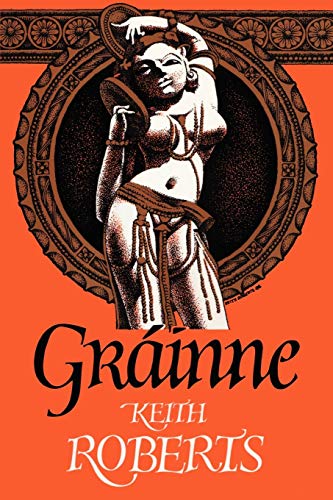
Gráinne, Keith Roberts

Winner of the BSFA Award in 1988. There doesn’t appear to have been any shortlist that year, so I’ve no idea how it was chosen. The Eastercon in 1988 took place in Liverpool and was three years before my first Eastercon.

Gráinne (1988, UK) is the name of a princess from Irish mythology, who at their betrothal party dumped the man she had been promised to and ran off with Diarmuid instead. In Roberts’s novel, it’s the name of a young woman the narrator, Alistair Bevan, meets, has a mostly platonic relationship with, and who then leaves him… and several years later appears on television as the presenter of a documentary series on the brand new Channel 5. By this point, Bevan works for an advertising agency, which Gráinne hires to promote a series of “clinics” to empower women.

This narrative is framed by, and interspersed with, short scenes of an old man in a hospital bed, explicitly telling the story of his life to a doctor and nurse. I’ve no idea if the resemblance was intentional, but there’s a lot in these sections that reminded me of John Fowles’s Mantissa (1982, UK)

Most descriptions of the novel classify it as semi-autobiographical, and while I’ve read a lot of Roberts’s fiction, I know little of his life – but perhaps enough to for the classification to ring true. (His careers in illustration and advertising, for example.) Other aspects, especially the gender politics and attitude to women evidenced in the novel, are definitely the same as in Roberts’s other writings (cf ‘The Natural History of the P.H.’).

Roberts’s main thesis seems to be feminism and women’s lib are a waste of time because women should not be trying to fight for equality with men but simply fighting for their own variety of rights. Which sort of ignores the fact of the patriarchy, a concept Robert never appears to have taken onboard. And it does render the central element of Gráinne’s plot, the empowerment centres, somewhat moot. On the other hand, they do make Gráinne something of a messianic, or a Valentine Michael Smith-type, figure.

Of course, it all ends badly. It always does for such figures. The narrative hints at unsavoury backers who helped Gráinne financially, perhaps hoping for the social and economic disruption she eventually causes in the UK, but it doesn’t go any further. The final section also implies a post-apocalyptic Earth, perhaps after a nuclear war, but it’s only a single sentence and ambiguous.

The reviews of Gráinne I’ve read online seem mostly to have missed the point of the story. It’s not a fantasy about a Celtic goddess who has a love affair with a human man. Gráinne may be more than human, but that’s from Bevan’s point of view. Her later influence is a mixture of clever television (much cleverer than Channel 5 ever proved to be, or indeed the bulk of British tv in the mid-1980s), deep pockets and a mishmash of Eastern religions. Even then, her empowerment centres proved more disruptive than intended.

Robert Heinlein’s Stranger in a Strange Land (1961, USA) follows a similar story although, given it’s American, it reads like a carnival novel, and its central protagonist, Valentine Michael Smith, is a thinly-disguised carnival freak. Roberts’s novel, however, uses Irish mythology rather than US carnival folklore, and focuses on female empowerment and not free love. Heinlein wrote prose that was extremely readable and smooth, but Roberts’s style is more literary. British sf produced a number of excellent prose stylists in the 1970s, not part of the New Wave but almost certainly adjacent to it, such as Coney, Cowper, Compton, Lee, Saxton, Watson…

I’ve no idea why Gráinne, published by small press Kerosina Books, was given the BSFA Award. Other notable sf novels published in the UK in 1987 include Banks’s Consider Phlebas (1987, UK), Mann’s The Fall of the Families (1987, UK), Wolfe’s The Urth of the New Sun (1987, USA), and even Haldeman’s Tool of the Trade (1987, USA). Certainly, a shortlist could have been drawn up. Perhaps it was.


Leave a comment

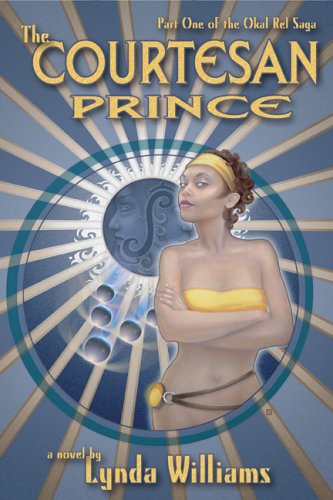
Oka Rel 1: The Courtesan Prince, Lynda Williams

I bought a copy of this book back in 2009 but never got around to reading it. I don’t even remember why I bought it. I’ve a vague memory of corresponding with the author, but that may be confabulation. I was interested in writing space opera, and had been for a number of years, and The Courtesan Prince (2005, Canada) is the first in a ten-book space opera series, so it may have been no more than that.

It could be argued that space opera, more so than any other branch of science fiction, succeeds or fails more on its world-building than its story. They all pretty much use the same story, anyway. Oka Rel starts from a future history and a, mostly, hard-ish sf universe, but by the time this first novel opens, Earth is lost and there are two mostly antagonistic human polities, which lost touch 200 years earlier. The Oka Rel universe plays off on the difference between the two polities – the Reetions are technological and progressive, the Gelacks are a semi-feudal empire ruled by the descendants of genetically-engineered humans.

After two centuries of separation, and all the two groups know of each other is legend and rumour, they finally meet up at a neutral space station. Von is a courtesan and dancer ordered to impersonate a member of the aristocracy during the first Gelack meeting with the Reetions. Ann is a hot-headed Reetion pilot who falls for Von, and then becomes involved in Gelack politics. Because Von is really a long-lost son of the emperor, although he doesn’t know it.

The Courtesan Prince tries hard with its world-building, but doesn’t quite make the grade. Possibly because the two groups are too much the opposite of each other. It’s all a bit too binary. It doesn’t help that Von is simply far too good a character to be entirely credible, despite the violence inflicted on him. Some of the sensibilities haven’t aged particularly well in the last twenty years but, to be fair, there is worse being published even now. It all feels, in many respects, a bit like Cherryh, but the details seem harder to visualise. In fact, now I think about it, there’s a lot of Cherryh in there. Which is no bad thing, of course. I’m a big fan of Cherryh’s fiction.

I’m not sure if I’ll continue with the series, although I’m a sucker for a series. I’ll read anything if it comes in three or more books with a single over-arching story. But, as I said earlier, space operas succeed or fail on their world-building more than their story, and I’m not all that taken with the Oka Rel universe, to be honest.


1 Comment

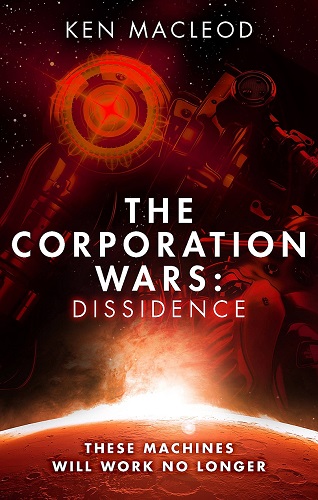
The Corporation Wars 1: Dissidence, Ken MacLeod

This was a reread – I read it back in 2017 – but never got the chance to read the two sequels before I put the books in storage when I moved. Earlier this year I bought an omnibus edition of the trilogy, intending to finally finish all three. 

I actually wrote a review of Dissidence (2016, UK) on my blog back then. For some reason, I wrote that it took place on a moon of Jupiter, which was complete rubbish – the author even called me out on my mistake. I’ve no idea why I wrote that. The terms exoplanet and exomoon are used throughout the novel, and it states several times that it takes place in a planetary system 25 light years from Earth. So sorry, Ken: I’ve no idea why I wrote that and I’d like to make it clear the novel is set in another planetary system.

Anyway. Two companies are exploring the mineral wealth of an exomoon using robots. One of the robots, through a sequence of events, becomes self-aware. And so causes other robots, in both mining companies, to become self-aware. They rebel. So the AIs which run the mining companies unöeash their legal AIs on the “freebots”. Everything in the planetary system is run by AIs, based on a mission profile originally sent from Earth at sublight speeds.

Carlos the Terrorist was responsible for killing thousands in London during the undeclared war between the Acceleration (left-wing, basically) and the Reaction (right-wing, basically). He finds himself reincarnated in a simulation running on an AI in the same system as the aforementioned freebots. He, and several other resurrected and uploaded war criminals from the Acceleration, is there to fight those freebots on behalf of the legal AI that represents the mining company to which the robots belonged.

Except, it’s slightly more complicated than that. Is the simulation Carlos and his team experience really a simulation? Why does the legal AI representing one of the mining companies break off relations and start a war?

The story is surprisingly fast-paced, given all the ontological discussions, but MacLeod keeps the focus tight on Seba, the first robot to gain self-awareness, and Carlos. There’s a few bait-and-switches before the novel finally reveals its plot, but it’s the first of a trilogy. There are few authors I’d trust with political science fiction, but MacLeod is definitely one of them. True, I have more in common with him politically than most sf authors (especially US ones, past and present), but also because he writes sf to his politics, not despite them.

I’d happily recommend any novel by Ken MacLeod. Some are better than others. If you read them all, there may be a few disappointments, but on the whole you’ll be impressed. The Corporation Wars trilogy, based on just this first novel, seems to be somewhere near the middle, so definitely worth reading.


Leave a comment

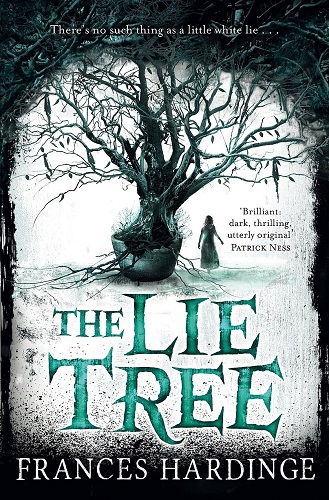
The Lie Tree, Frances Hardinge

I’d heard good things about Hardinge’s fiction for several years, but I’d never bothered checking them out because, well… fantasy… YA… Not my usual, or preferred, choice of reading. But The Lie Tree (2015, UK) popped up for 99p on Kindle, and I thought it worth seeing what all the fuss was about.

And I’m glad I did.

Faith’s father, a reverend, is a celebrated palaeontologist in the 1860s, but he’s been accused of faking the fossils he discovered, so he and his family flee to the invented Channel Island of Vane to join a dig there. But all is not as it seems. The invitation was a ruse because the reverend is in possession of something that others want.

On the one hand, the title of the novel is a hint to the central element of its plot, which is not revealed until at least halfway in; on the other, it’s hard to describe the plot without spoilers. The spoiler-free version would go: Faith defends her father, uncovers a conspiracy against him, then tries to solve his murder and so learns his secret, the reason why he was invited to Vane, and uses it to take revenge on his killers.

However, a major part of the novel – although it doesn’t really kick in until around a third of the way in – is that Faith is clever, but because she is a girl it means nothing. She wants to be a scientist but her gender bars her from it. This is a novel about women as property, about chattel slavery of half of the human race, and about the means and methods open to women of the time to arrange a future for themselves and then safeguard it. Faith is a teen, and knows her much younger, and not very bright, brother, whom she loves nonetheless, is accounted more valuable than her. Even though she has the intelligence, the aptitude and the interest to follow in her father’s interests.

And it’s this element of the novel which lifts it above others of its ilk. Faith thought her father valued her because of her intelligence, but he was just using her – much as he used others to further his aims. Faith meets a woman – two, in fact, but one more so than the other – who have found a way to be intellectual without offending Victorian (male) society – I am for some reason reminded of JG Farrell’s The Siege of Krishnapur (1973, UK), an excellent novel – but it doesn’t end well. And also I’m reminded of Jeanette Ng’s Under the Pendulum Sun (2017, UK), which presents as a fantasy set in Victorian times but is actually a brilliant commentary on Victorian fiction by women, missionary colonialism and women’s rights.

The Lie Tree is really good, and I should definitely read more by Hardinge.


Leave a comment

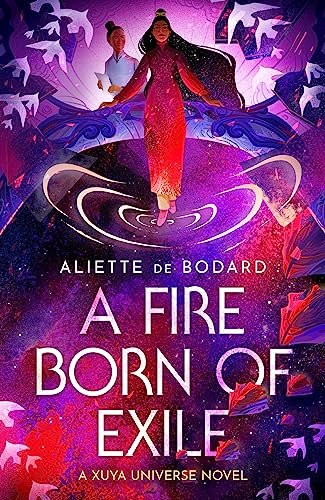
A Fire Born of Exile, Aliette de Bodard.

Or, de Bodard does Dantès. Not that A Fire Born of Exile (2023, France) is the first science fiction novel to be inspired by The Count of Monte Cristo (1846, France). Gwyneth Jones’s excellent space opera, Spirit (2008, UK), also borrowed the plot from Dumas’s novel.

In A Fire Born of Exile, a naive scholar was tricked into expressing sympathy with the rebels during the Ten Thousand Flags Uprising and promptly executed by being thrown out of an airlock. But against all odds she survived. Ten years later, using the name Quỳnh, the Alchemist of Streams and Hills, she arrives at the Scattered Pearls Belt to exact her revenge. The official who sentenced her to death is now prefect of the Belt, and Quỳnh’s lover of the time, who did nothing to save her, is now a general.

Minh is the daughter of the prefect and completely under the thumb of her overbearing mother. She is being groomed to become a scholar and follow in her mother’s footsteps, but she doesn’t really want to do that. In the panic following an incident at the Tiger Games, bandits try to kidnap Minh but she is saved by Quỳnh. The two become tentative friends.

Hoà is a technologist, low caste, who bumps into Quỳnh at her dead sister’s shrine, and it turns out Quỳnh knew her. The two are immediately attracted to each other. Hoà has been contracted by Minh and her friends to fix the mindship Flowers at the Gates of the Lords (or rather, Hoà’s sister has, but she’s ill so Hoà, who has no skill in mindship repair, has to do it instead – with help from Quỳnh). Flowers at the Gates is actually Minh’s Great Aunt and the head of the family lineage, meaning she has control of all the family funds. But she was badly damaged during the Ten Thousand Flags Uprising.

Quỳnh easily unseats the general by revealing an ex-lover who was a serial killer known to, and ignored by, the authorities. The prefect is a much harder target. Quỳnh has evidence of punishments that were over and above what the law decreed, such as execution instead of exile, including her own execution, but that’s not enough. She tries to manipulate Minh into declaring unfilial piety, but Minh is too browbeaten. There’s Flowers at the Gates too, of course, who is head of the family, but will she be fixed in time?

Quỳnh underestimates the prefect’s power, but the prefect in turn underestimates Flowers’, er, power. It comes to a head when an Imperial Censor visits to make the prefect the head of the lineage.

Dantès had it much easier than Quỳnh, and not just because the prefect comes across more like Malificent than Danglars. There’s plenty more going on in A Fire Born of Exile, and it’s all built up from the relationships between the various characters. As in the other Xuya novels and stories, there’s lots of food and drink, and lots of detailed descriptions of heavily-decorated clothing – this is a lush and lushly-described universe. I liked the novel preceding this one, The Red Scholar’s Wake (2022, France), a great deal, but I liked this one more. I’m frankly surprised A Fire Born of Exile didn’t make any award shortlists in 2024. Recommended.