It Doesn't Have To Be Right…

… it just has to sound plausible


Leave a comment

Up the Walls of the World, James Tiptree Jr

Tiptree, whose real name was Alice Sheldon, not only convinced the science fiction world she was a male writer for much of her career, she also wrote a number of stone cold classic science fiction short stories. I am definitely a fan of her short fiction. She only wrote two novels, however: Up the Walls of the World (1978, USA), and Brightness Falls from the Air (1985, USA). This was my first read of Tiptree at novel-length.
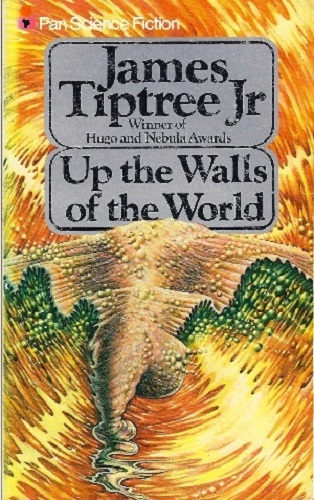
The title refers to the “walls” of a vast maelstrom in the atmosphere of a gas giant, Tyree. It is inhabited by huge manta ray-like aliens, who communicate using light but also seem to experience some radiation as “sound”. It takes a while before the synaesthesia Triptree uses makes sense, and I’m not entirely convinced it, and the fact the males nurture the young, makes the aliens as, well, alien as Tiptree intended.

Meanwhile, on Earth, Dr Dan Dann (yes, really) is the medical support for a US Navy-sponsored experiment in ESP involving a handful of varied subjects – a pair of identical twins, two teenage girls, a a matronly housewife, an embittered dwarf, and a somewhat dim-witted young man. The experiment is moved to a remote Navy camp, when the twins are used to test telepathic communication between land and a submarine.

A third narrative, written entirely in CAPITALS, which proves really irritating to read, is the stream of consciousness of some sort of distributed interstellar intelligence, which has been destroying stars.

The Destroyer’s attack on Tyree’s star prompts the aliens to attempt to take over the minds of Earth’s humans, and a “test mission” results in some of those involved in the Navy experiment finding themselves in alien bodies on Tyree. One of the experiment’s staff, however, a POC computer programmer instead becomes part of the Destroyer. Which she tries to control, using her knowledge of programming.

There are things to like in Up the Walls of the World, but I’m puzzled at the praise given to the novel around the time it was published. I get that a novel from Tiptree, a controversial figure and a well-known writer of top-notch science fiction short stories, is worthy of serious consideration… But I suspect time hasn’t been especially kind to the book. The descriptions of Tyree are good, and its inhabitants are original and well-presented – but not all that, well, alien. Dr Dan Dann (yes, really) is very much a typical narrator for US science fiction of the time (and Tiptree does well at channelling her inner Jubal Harshaw), and her POC character is unusual for the late 1970s and handled sensitively.

As I read Up the Walls of the World, I couldn’t help wondering if CJ Cherryh’s Voyager in Night (1984, USA), published six years later, was partly written in response. It’s another novel that hasn’t quite survived the millennium. Nonetheless, I still recommended reading everything Tiptree wrote.
Leave a comment

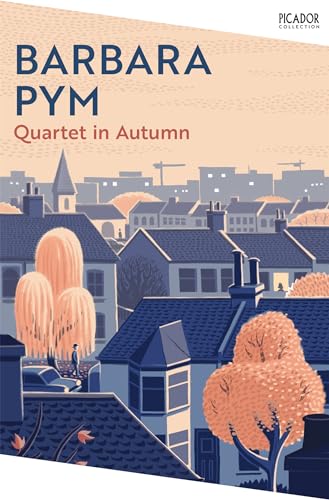
Quartet in Autumn, Barbara Pym

Shortlisted for the Booker Prize in 1977. (It has always puzzled me that books can be shortlisted for the Booker in their year of publication, sometimes before they’re even published – but, of course, the award is totally fair and impartial, of course.) And (breaking out of parentheses) I can hardly point to Quartet in Autumn (1977, UK) as evidence, as it’s apparently unlike Pym’s previous work (so much so, she’d been unable to sell a novel for fifteen years).

Letty, Marcia, Norman and Edwin work in an office for a company in London. They have worked there for many years. The novel doesn’t explain what they actually do – although apparently the rest of the company, as well as the author, have no idea either. All are in their sixties – in fact, the two women retire halfway through the novel (women retired at 60 until 2010). You see what Pym did there with her title: “in autumn” means the “autumn” of the lives of her quartet of protagonists. Clever, that.

The four are lonely and mean-spirited. Edwin is active – although perhaps “interfering” would be a better word – in his local church. High Anglican, I think. Norman lives in a bedsit, and seems to have no hobbies other than the occasional flutter. Letty also lives in a bedsit, and seems the most active and pleasant of the four. When the house she shares is bought by a Nigerian reverend, Letty decides to move. (Some racism here, although Letty does like the Nigerian family.) Marcia is a hoarder, and grows increasingly frail following a mastectomy.

The UK in the 1970s was a mostly grim place. I remember visiting London in 1975 or 1976 (I vividly recall reading a Tarzan annual containing a story in which Tarzan makes a special fireproof suit so he can walk through flames; unfortunately, the covers for the Tarzan annual in 1975 and 1976 are very similar, so I’m not sure which annual it was in). We stayed in a hotel somewhere in the centre, with a shared bathroom on each floor and a TV lounge.

Pym’s depiction of London in 1977 reminds me of that hotel, and the dourness of it all is reinforced by her four characters. They’re petty and narrow-minded. Even the supporting cast – such as Marcia’s visiting social worker, or her neighbours – are snide and contemptible. It makes for an unpleasant read. There’s a thing you sometimes see in British television and films from the early 1960s through to the mid-1970s, especially those set in London, where the city is plainly culturally and politically important globally, but Londoners live small lives of impotence, pettiness and middle-class scrimping. Quartet in Autumn documents the latter but ignores the former. I didn’t like it.


Leave a comment

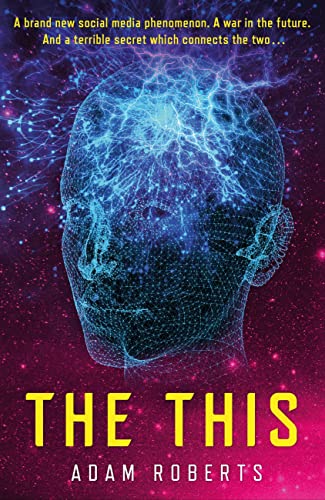
The This, Adam Roberts

It has been suggested good Bruce Willis movies are the ones where he has hair, and in bad ones he is bald. Obviously the same wouldn’t work for Adam Roberts’s novels, because, well, his hairline may be receding but it doesn’t vary by book. I did think, however, something similar might operate with the titles of his novels – those which start with the word “the” were excellent, those without are merely good. But, according to Wikipedia, of Roberts’ twenty-four novels, only three have the definite article as the first word in their title… 

True, I liked two of them, including The This (2022, UK); but I’ve not read the third. And, to be honest, I did like some of the ones without an initial “the”. So, not a good theory then. I suppose I was trying to find a reason why I liked The Thing Itself (2015, UK) and The This so much more than the other novels I’d read by Roberts. The answer was, of course, there in the books: they are explicitly explorations of the ideas of individual philosophers, Kant and Hegel, respectively. What I know about philosophy and philosophers can be written on a small post-it note, so perhaps it’s the discipline which hewing to the particular philosopher’s works has forced on Roberts – sort of like Oulipo, I guess – which has, to my mind, produced works of science fiction I find I much prefer.

On the other hand…

The title refers to a company which creates a hands-free app for social media. In the future, a war between Hive Mind Theta, the end-result of all those people having the hands-free social media client implanted in their brains, and the rest of humanity takes place in orbit about Venus, which HMΘ are intending to terraform. 

The two main narratives are set around a century apart. In the very near future, Rich Rigby, a freelance journalist, interviews a PR person from The This. The company then sets out to recruit him to their network, so intently it draws the attention of, er, HMG. They persuade him to join The This, but he’ll have a computer virus embedded in his brain. This will allow the authorities to spy on the hive mind.

Then there’s Adan Vergara, a none-too-bright New Yorker of a century or so after Rigby, who is cut off by his mother and has to join the military. They’re fighting HMΘ, but Vergara seems to be able to shutdown HMΘ droids on the battlefield simply by uttering a single gnomic phrase. He was told this phrase by someone, or something, who hacked his Phene (a semi-aware sexbot, essentially), which Adan profoundly loves.

As the war ends, Adan is pulled into the far distant future, where he meets the embodiment of Hegelian world spirit, which was threatened by the existence of the hive mind. He is told how he, and Rich Rigby, helped put humanity back on track, so the universe would end with a Prime Mover as intended. 

As I read the final section of The This, I was reminded of AE van Vogt’s The Universe Maker (1953, Canada), where the hero is pulled into the far distant future to have the plot of the novel explained to him by a giant space brain. The This is, of course, considerably better written, and a “novelisation” of Hegel’s Phenomenology of Spirit (1807, Germany) is hardly the same as Van Vogt’s crackpot science and dream-inspired haphazard plotting.

To be honest, I was more taken with Rigby’s and Vergara’s narratives. The opening section, a piece of experimental prose, was good, but experimental prose is best in small doses. But Rigby and Vergana – it’s superior prose. I do wonder how much of Roberts’s The Black Prince (2018, UK) project, the completion of an unfinished novel by Anthony Burgess, rubbed off on The This, because there’s a distinct Burgessian feel to the language. I also suspect one of the earlier sections, which features a string of social media posts as marginalia, was included only so Roberts could include some of his bad Twitter jokes – but perhaps that’s unkind.

The This is the best of Roberts’s novels I’ve read so far (which is around half of them). Recommended.


Leave a comment

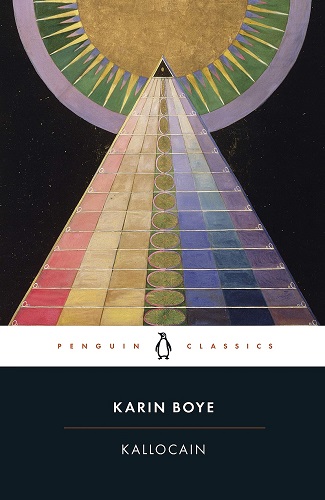
Kallocain, Karin Boye

I’m not a big fan of dystopian fiction, mostly because it all seems so obvious. Oh noes, things are bad, this is what they will look like if they carry on in the same vein… Which , of course, they rarely do. And there’s no real evidence dystopian fiction helps prevent what it describes – if anything, it’s the reverse, as pointed out by the oft-repeated meme about a Torment Nexus…

Of course, dystopia is in the eye of the beholder – or rather, the politics of one era define that era’s dystopia but may not hold true a decade or a generation later. (On a side-note, I find fascinating dystopias where the citizens have been programmed – chemically, technologically, or neuro-surgically – to be happy with their lot; Alastair Reynolds describes one such in one of his Glitter Band novels, John Varley has written something similar.)

Boye, a Swede who lived in Nazi Germany, wrote Kallocain (1940, Sweden) very much as a response to her experiences living there. In the world of Kallocain, there is a World State. But it has enemies. And a border. Which means it’s not a world state. But that’s just a name. Leo Kall is a chemist in a Chemistry City (which sounds very Soviet). He discovers a new truth serum, which he names after himself and for which the book is named. It allows the authorities to interrogate people while they are only thinking about crimes – pre-crime, as Philip K Dick has it.

Kall uses his discovery to better his situation, and to destroy his superior, who he believes (wrongly) is having an affair with his wife. What follows is pretty much inevitable. There are hints the leaders live lives of luxury and freedom, which reads as a direct dig at the Nazi leadership. The general air of paranoia and deprivation echo both the USSR and the final years of the Nazi regime. 

If you’ve read Orwell’s Nineteen Eighty-four (1948, UK) or Zamyatin’s We (1924, Russia), there’s little here that’s different, although Kallocain is less brutal than the former and less science-fictional than the latter. It should by rights be held in as high regard as those two novels, but it wasn’t translated into English until 1966 and, of course, its author is female. A good historical dystopian novel that stands alongside better-known examples.


Leave a comment

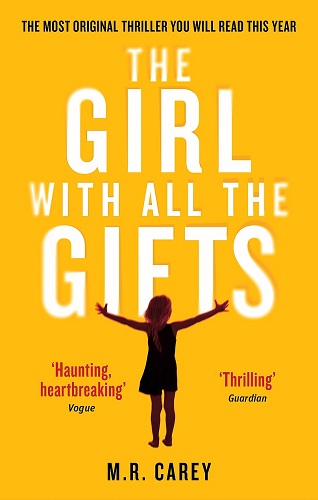
The Girl with All the Gifts, MR Carey

I’d heard The Girl with All the Gifts (2014, UK) was zombie fiction, and I don’t like me zombie fiction no matter how you spin it, and that includes The Passage (2010, USA), so I had no great expectations for this, even though: a) it was nominated for the Clarke Award (but lost out to Station Eleven (2014, USA), a book I admit I did not like), b) I’ve met Mike Carey and he’s a nice guy, and c) it was on offer at 99p.

There’s a “but” implicit in all that, and yes, I did think The Girl with All the Gifts was actually pretty good. It opens firmly focused on the titular girl, Melanie, who is in some sort of research facility. Clearly, she’s not an ordinary girl – she has to be locked into a wheelchair for classes, she eats once a week (a bowl of worms), and the staff of the underground bunker where she lives is scared of her and her classmates. 

Carey doles out his information slowly and carefully. The UK – the world – has collapsed following a plague of some sort, which has reduced the bulk of the population to flesh-eating zombies, or “hungries”. But Carey provides a rationale – the zombie fungus which infects ants, takes over their bodies and forces them to climb plants in order to provide a higher platform to spore (and which really exists), has crossed the species barrier and infected humans.

Melanie is infected, but she is different. As are her classmates. She may crave human flesh, when triggered by pheromones, but she’s not mindless, she can think like a normal human being – if anything, she actually has a genius-level IQ.

Junkers  – Mad Max-like survivalists – attack and overrun the military base holding Melanie and her classmates. Melanie escapes with Sergeant, the head of base security, a trooper, Dr Caldwell, the head of the research programme, and Miss Juneau, a teacher on whom Melanie has a crush. They must travel south to Beacon City, the sole bastion of uninfected humans in the UK.

As they make their way through a deserted London, populated only by “hungries”, they learn more about the fungus. Sadly, Caldwell is something of a Mengele figure, happy to sacrifice people if it leads her to a better understanding of the fungus, and her willingness to let the others die gets annoying quickly. Having said that, she does discover Melanie’s secret – although her proposed “cure” would kill Melanie, and the kids like her they’ve encountered as they travelled toward Beacon – but not necessarily save humanity.

I do not, as I said, like zombie fiction much, and The Girl with All the Gifts is pretty much a zombie novel. But the use of the real-life zombie fungus to explain it, the focus on the disease, rather than just using it as a mechanism for menace, lifts this novel above others of its ilk. I rather enjoyed it. A good Clarke nominee, I think.


Leave a comment

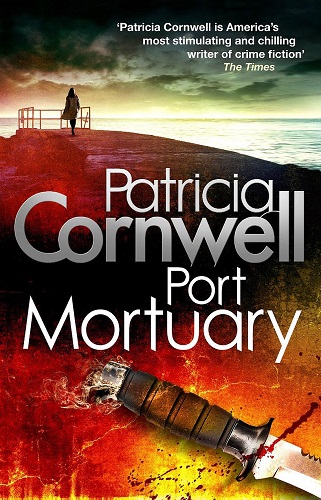
Scarpetta 18: Port Mortuary, Patricia Cornwell

I read Port Mortuary (2010, USA) while travelling back home from Copenhagen by train. These books are becoming increasingly easier to polish off in a single sitting, even if they seem to be getting longer. Mostly, I suspect, that’s because I know the character of the protagonist, Dr Kay Scarpetta, pretty well now after 18 novels, and also probably because the plots are beginning to settle into something of a rut. Again, a puzzling murder is the springboard to a conspiracy to attack Scarpetta’s profile, credibility and relationships.

Scarpetta has spent six months at Dover Air Force Base, where US casualties from the invasion of Iraq are shipped. Shortly before this, she had set up a new forensic centre in Cambridge (Massachusetts), and left it under the command of Dr Jack Fielding, a character familiar from earlier books. But when a body appears to have bled out while in the freezer in this new centre, and Fielding has gone AWOL, Scarpetta is helicoptered in to fix things.

Unfortunately, nothing looks good. The centre is falling apart, things cannot, er, hold. The dead man in the fridge was murdered using some strange weapon which left pockets of air in his chest cavity. Benton is meanwhile treating a young man on the spectrum, a near-genius working in the R&D department of  a nearby defence contractor, who has confessed to murdering a small boy by hammering nails into his head. Benton is convinced the man has been manipulated into confessing – but by whom?

Scarpetta is also having flashbacks to the autopsy of two young women she performed for the US military in South Africa, back at the beginning of her career. She knows their murders were staged, likely by government agents to foment hatred – Cornwell seems to think Afrikaaners were black South Africans, which is, well, the exact opposite – but has always regretted following the party-line.

The murder of the boy and the man who bled in the fridge turn out to be linked, and clues point back to the defence contractor’s R&D lab. Fielding is also involved somehow. It all slots together neatly – Cornwell has been doing this for a while – but it does, unfortunately, fall back on Cornwell’s favourite solution: the super-intelligent psychopath who manipulates everyone around them. And Cornwell throws in an ending she over-used in the first few books of the series, where the villain of the piece attacks Scarpetta at home and is defeated.

Port Mortuary has moved back to first person, and is far more introspective than earlier books. There are a lot of words on the process, and means, of discovering the facts surrounding the two murders. Plus, everyone seems to know what’s going on, but is deliberately keeping Scarpetta in the dark. It makes for a frustrating read at points.

I’m not sure where to rank Port Mortuary among the Scarpetta books I’ve read. Too much in it feels like retcon, and Cornwell’s changes in narrative style – we’re eighteen books into the series here! – make it hard to get a real purchase on the series arc. Lucy’s inconsistent aging notwithstanding – cf Sue Grafton’s Kinsey Millhone books, which stuck so rigorously to their internal chronology her last book, Y is for Yesterday (2017, USA), was set in 1989. I do like the Scarpetta novels, I like their focus on the science and, increasingly, technology of forensic pathology. But they’re nowhere near as rigorous – perversely – than other series in the same space I like.


Leave a comment

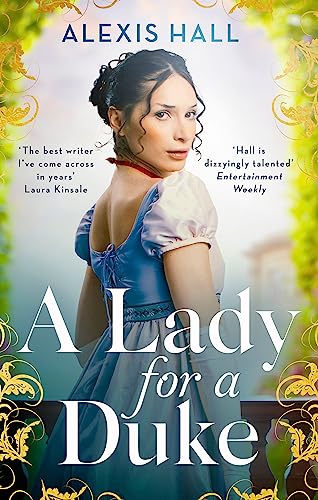
A Lady for a Duke, Alexis Hall

Not much to say about this one. A Regency romance with a transgender heroine and a hero who’s suffering with PTSD after Waterloo. I’m a fan of Heyer, so I know my Regency romances, and Hall does a spot-on job here. Yes, the dialogue is a little more “modern” than Heyer’s interpretation of Regency speech patterns, but that’s a deliberate choice by the author (explained in an afterword) and works well given what the story covers. (It’s also been argued Heyer’s dialogue was more invented than accurately historical.)

Viola Carroll returned from France after Waterloo determined to be her true self. But it seems her childhood friend, Gracewood, who fought alongside her at Waterloo, believes she’s dead, and has consequently been suffering, addicted to laudanum, ever since. A rescue mission north to Gracewood’s Northumbrian castle to ensure his younger sister gets a season in London results in Viola and Gracewood coming face to face – and he eventually realises who she is.

Of course, they end up in London, where young sister is a hit. Gracewood and Viola reconcile –  even more so they realise they’ve always loved each other… but then young sister is kidnapped by a rake, so everyone pulls together, and a happy end is comfortably achieved.

Hall deftly navigates all the Regency tropes, and is careful to make sure the fact Viola transgender is not a plot-driver. If anything, Gracewood’s PTSD – unknown at the time, of course – impacts the plot more. This does however lead to far too many conversations where you want the two to stop ignoring propriety and accept what’s in front of them, but that’s in the nature of the genre.

It seems churlish to complain a romance is feel-good, when it features PTSD and possible transphobia, but Hall manages it. The updated speech patterns work well, and help ground the concerns of the novel. I recently reread Georgette Heyer’s The Masqueraders (1928, UK), and it all felt a bit inconsequential, and even a little offensive in parts, after A Lady for a Duke (2022, UK). I do think we should learn from fiction, and my opinion on Heyer’s novels has changed over the years, although I still find them fun, but when something comes along and uses that same language, and points out where, really, her novels haven’t done good by their subjects or inspirations… we should take notice.