
The debut novel of a South Korean illustrator, recently translated and published in English, and one of four winners of the Otherwise Award this year. The narrator is an alien living in Seoul who must concentrate on presenting a human appearance, or they’re liable to sprout arms and legs and eyes in odd places. They enjoy dating people online, arranging to meet them at home for sex and then, well, eating them. Yes, the narrator presents as both male and female during the story, and the title refers in part to the different gaits required to pass as each gender.
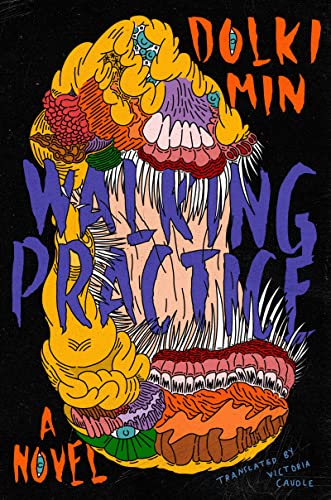
The prose tries to maintain a chatty tone, which I found grating. I know almost nothing about contemporary Korean literature, so I’ve no idea if it’s a popular style there (although I recall something similar in Greek Lessons (2011, South Korea) by last year’s Nobel laureate Han Kang when I read it earlier this year). I’ve read enough translated fiction, and even fiction in its original language and then translated into English (Swedish and French fiction, mostly) to know there’s a difference between translation and transliteration – and sometimes the latter often fails to take culture into account, both the original and that of the language being translated into (the same occurs all the fucking time from UK to US English, of course). The English translation of Roadside Picnic (1972, USSR) by the Strugatsky brothers didn’t work for me because it relied too much on American idioms, and I don’t expect to find them in a Russian novel. Larsson’s Millennium trilogy was translated by an American who’d lived and studied in Denmark but was unfamiliar with many elements of Swedish culture and society. It showed. On the other hand, the English subtitles for a Swedish detective show I watched recently failed completely to transliterate a common Swedish expression because there was no obvious way to do so and keep the original sense.
Then there’s the writing system… Korean, of course, has its own writing system, Hangeul, and it’s very different to the variations on the Latin alphabet used by many other languages. An afterword by the translator points out the difficulties she had representing the author’s Hangeul orthographic tricks in the Latin alphabet. The nearest she could manage was through varying the kerning – which, as she admits to worrying about, does indeed look like bad typography or misprints.
Obviously, there’s more to Walking Practice (2023, South Korea) than the tone of its narrative and the fact the English reading experience is a poor copy of the Korean reading experience. There’s a cinematic feel to the story, but unlike a movie there’s no story arc or resolution. Korean cinema doesn’t follow Hollywood story paradigms – it’s something to do with cats at present, isn’t it? – which is a good thing, and I’ve seen many excellent South Korean films. In future, I think, I’ll stick to their movies.
 It Doesn't Have To Be Right...