
These are a lot of fun, but my reading of them has been, and will forever be, coloured by the 1980s TV series starring Stephen Fry as Jeeves and Hugh Laurie as Bertie Wooster. To Brits, it was perfect casting (Americans, knowing Laurie from House, may feel differently).
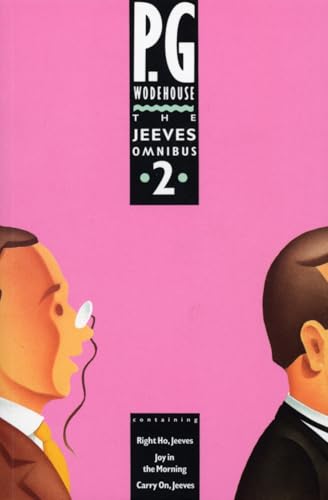
As I was reading Right Ho, Jeeves (1934, UK), I was sure I’d read it before, even though some of the details were new to me. It’s probably because it’s a plot Wodehouse used several times – I came across it first, I think, in The Code of the Woosters (1938, UK), which is actually a later novel. Friends of Wooster are engaged but then the engagement is broken for the slightest of reasons, and Wooster decides to intervene and reunite the two broken hearts. Chiefly because he might be forced to marry the girl. But often because the break-up might impact Wooster’s enjoyment of the meals prepared by Anatole, Aunt Dahlia’s much-feted cook. I mean, certainly Aunt Dahlia appears in The Code of the Woosters (which may be the third Jeeves & Wooster novel but appears in the first Jeeves Collection omnibus, for reasons best known to Penguin), and I definitely remember reading a Wooster novel in which he attempts to repair relationships between one or more couples…
None of which really matters, because these are comic novels and funny ones at that. Even if they’re set among the same people both Nancy Mitford and Evelyn Waugh satirised in their novels – she because she was part of that world, and he because he wanted to be part of that world. (Waugh was good, but Mitford was just as good and much less racist.)
Gussie Fink-Nottle is in love with Madeline Bassett but does not have the courage to tell her. He asks Jeeves for help, But Bertie steps in, offended that his butler’s advice would be preferred over his own. Bertie invites Gussie to Brinkley Court, to stay with his Aunt Dahlia, where Madeline is also a house-guest. He also volunteers Gussie to give the prizes at the local school, a task Aunt Dahlia had originally blackmailed Bertie into undertaking.
There are further problems. Aunt Dahlia spent all her money at the casinos in Cannes, and needs more cash to keep her ladies magazine afloat – but is afraid to ask her husband. Also, Aunt Dahlia’s daughter, Angela, is at Brinkley Court, with her betrothed, Tuppy. And then they decide to break their engagement.
When Bertie arrives at Brinkley Court, he has to: persuade Gussie to declare his undying love to Madeline, fix Angela and Tuppy’s relationship, figure out a way for Aunt Dahlia to get cash out of her husband, and prevent all the upsets from prompting chef Anatole from resigning, which he does several times. Of course, everything Bertie does only makes the situation worse… but Jeeves is there to subtly direct things to the proper conclusions.
I think the reason these books work is because even though Bertie is a dimwit, and Jeeves is supercilious, Wodehouse treats them both with the same level of affection. If anything, their personalities are treated as scaffolding for the story, much as the settings and situations are. It’s a form of humour that can easily turn cruel, but in Wodehouse’s hands it never does.
There are five Jeeves omnibuses. All five were on offer for 99p on Kindle during 2025, so I have them. I’m looking forward to reading them.
 It Doesn't Have To Be Right...