It Doesn't Have To Be Right…

… it just has to sound plausible


3 Comments

Moving pictures, #10

I think I maintain a good spread of films in my viewing – current movies, classic movies and art house movies. Working my way through the 1001 Movies You Must See Before You Die list has introduced me to some good films I might otherwise have never seen, as well as some right crap I’d have been better off avoiding. Either way, I recommend using the list to supplement your own viewing. However, one thing has been readily apparent over the past few years, and it’s that I find current Hollywood product less and less appealing. I used to watch US films, as most people do, it was pretty much all I knew. But movies from other countries do exist, other nations do have cinematic traditions… and many of them are, well, actually much better than Hollywood. You can’t call yourself a film fan if you only watch Hollywood films. That’s like describing yourself as a gourmet despite only eating burgers.

So here is some haute cuisine (with a little fastfood thrown in):
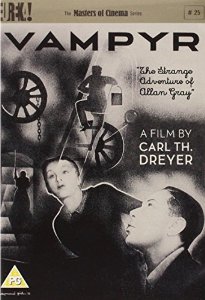
vampyrVampyr*, Carl Theodor Dreyer (1932, Germany). Subtitled “The Strange Adventure of Allan Gray”. This eureka! edition is actually the German print, although, as was common at the time, multiple language versions were filmed – in this case, German, French and English. Gray is a somewhat saturnine-looking young man, who visits the village of Courtempierre and rents a room at the local inn. Vampyr uses both intertitles and spoken dialogue to tell its story – which in terms of vampire mythology is relatively straightforward. The lord of the manor’s oldest daughter is ill, and it transpires it’s from the bite of a vampire. Gray tries to help, gets sucked into events as they unfold… but it all ends well. Dreyer is especially good on atmosphere in this, and even though the pace is somewhat slow he manages to lay it on thick. The ending, in which the vampire’s servant is drowned in flour, is also pretty effective. On balance, I much prefer Dreyer’s later work – his three Danish films are superb – but this one, on the cusp of his early German silent work and later Danish films with sound, is still very good.
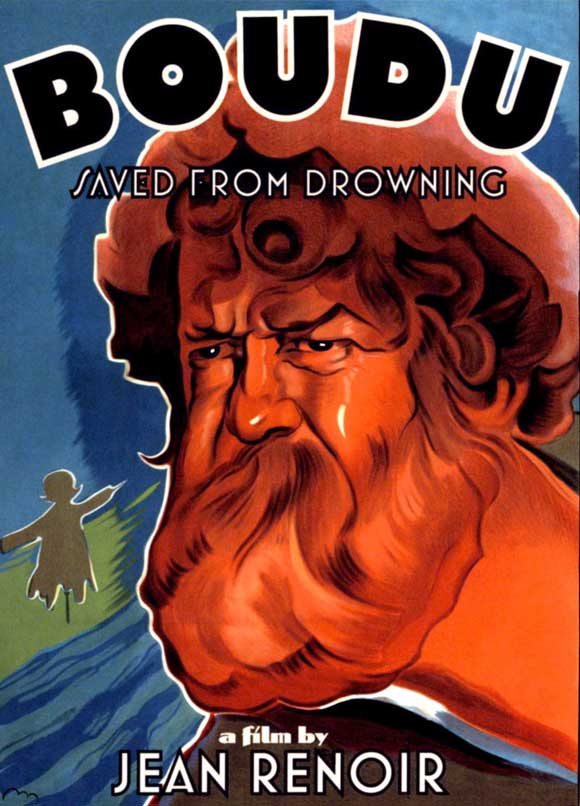
Boudu-PosterBoudu Saved From Drowning*, Jean Renoir (1932, France). There are films which clearly belong on the 1001 Movies You Must See Before You Die list, but there are also other movies on there, by directors of films which deservedly belong on the list, whose presence is, quite frankly, a bit of a puzzle. La Règle du jeu and La Grande illusion are stone-cold classic movies… but Boudu Saved From Drowning? Really? It’s mildly amusing, and even though the social commentary is biting, it’s still somewhat obvious. Technically, it’s clearly ahead of its time – at no point while watching it does it seem like a film made in 1932. But its story of a tramp rescued from, er, drowning, who his saviours then try to turn into a useful member of society, is a little too broadly comical to be pointed – if that’s not a contradiction. It didn’t help that Boudu with a beard bore an uncanny resemblance to Stephen Fry. Whatever – a diverting film even if not one that clearly belonged on the list.
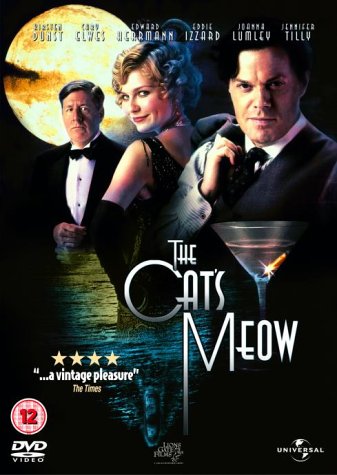
catsmeowThe Cat’s Meow, Peter Bogdanovich (2001, USA). This is apparently based on a true story. In 1924, a group of people spent the weekend aboard William Randolph Hearst’s luxury yacht, ostensibly to celebrate the birthday of Thomas H Ince, a cinema pioneer who owned one of the first movie studios. Other guests included Charlie Chaplin, gossip columnist Louella Parsons, writer Elinor Glyn, and Hearst’s mistress, actress Marion Davies. Allegedly, Ince died of a heart attack but rumour has it he was shot by Hearst over Marion Davies. The film suggests his death was an accident – Hearst thought he was firing at Chaplin, who had been trying to persuade Davies to leave Hearst and marry him. The film is a well-played period piece, although Eddie Izzard as Chaplin is actually pretty bad. The story is the sort of ultra-rich privileged crap that all too often gets accepted as the natural order of things, which is just offensive bollocks. Entertaining but forgettable.
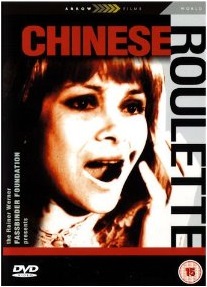
chineserouletteChinese Roulette, Rainer Werner Fassbinder (1976, Germany). Fassbinder, I think – and I say this having only seen eight of his films – did better when the plots of his films were more tightly constrained, either by their literary origin, as in Effi Briest, or the need to present an historical period, as in The Marriage Of Maria Braun, or by, as in this case, the tight focus of the story. An affluent husband and wife make arrangements for separate trips away, only to turn up together with their lovers at the family holiday home in a piece of really bad planning. But never mind, they all get along fine, and so behave as two couples – even if they’re not quite coupled as their marriage certificate defines it. At which point the crippled young daughter and her mute nanny arrive, and events take an odd turn… culminating in a parlour game among them all, in which each asks a speculative question demanding an honest answer from everyone. It’s a living-room drama, with some externally-filmed scene-setting, but it does a beautifully-paced job of setting up its situation and characters, and as a piece of writing probably betters the two Fassbinder films mentioned earlier. If the final frame of the truth or dare game feels a bit seventies television drama, with the cast walking about too much while speaking their lines, Chinese Roulette is certainly a masterclass in defining a dramatic situation. Definitely one of the good ones in the box set.
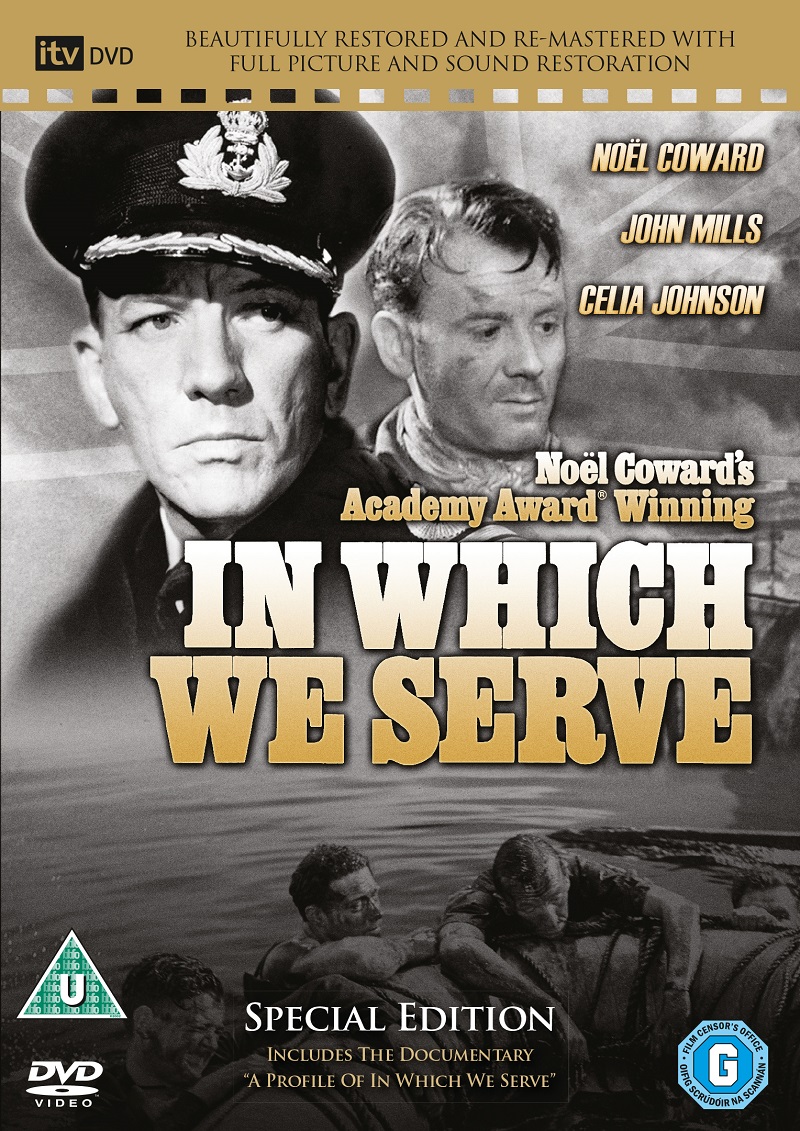
InWhichWeServeIn Which We Serve, Noël Coward and David Lean (1942, UK). Allegedly, this was based on the wartime exploits of Lord Mountbatten. Noël Coward plays the captain of a RN destroyer during the first two years of WWII. It’s careful to show life both for the ratings and the officers of the ship – the film was made with the assistance of the Ministry of Information. The model-work is a bit naff – the UK film industry never did quite manage to make model warships look like the real thing – and Coward is far too fruity to be a steadfast navy officer, no matter how plummy his background. The film is at its best when it’s belowdecks, and John Mills puts in a good turn as an ordinary seaman. But, to be honest, In Which We Serve is not even a wartime curiosity, just one in a long line of not very good war films the UK churned out during the 1940s, mostly for propaganda purposes. Not even Lean directing the “action scenes” is a saving grace (although, to be fair, I can never make up my mind about Lean – he made a handful of excellent films, but a number of very ordinary ones too). If you’re interested in UK wartime cinema, you’re probably better off checking out a few “quota quickies”.
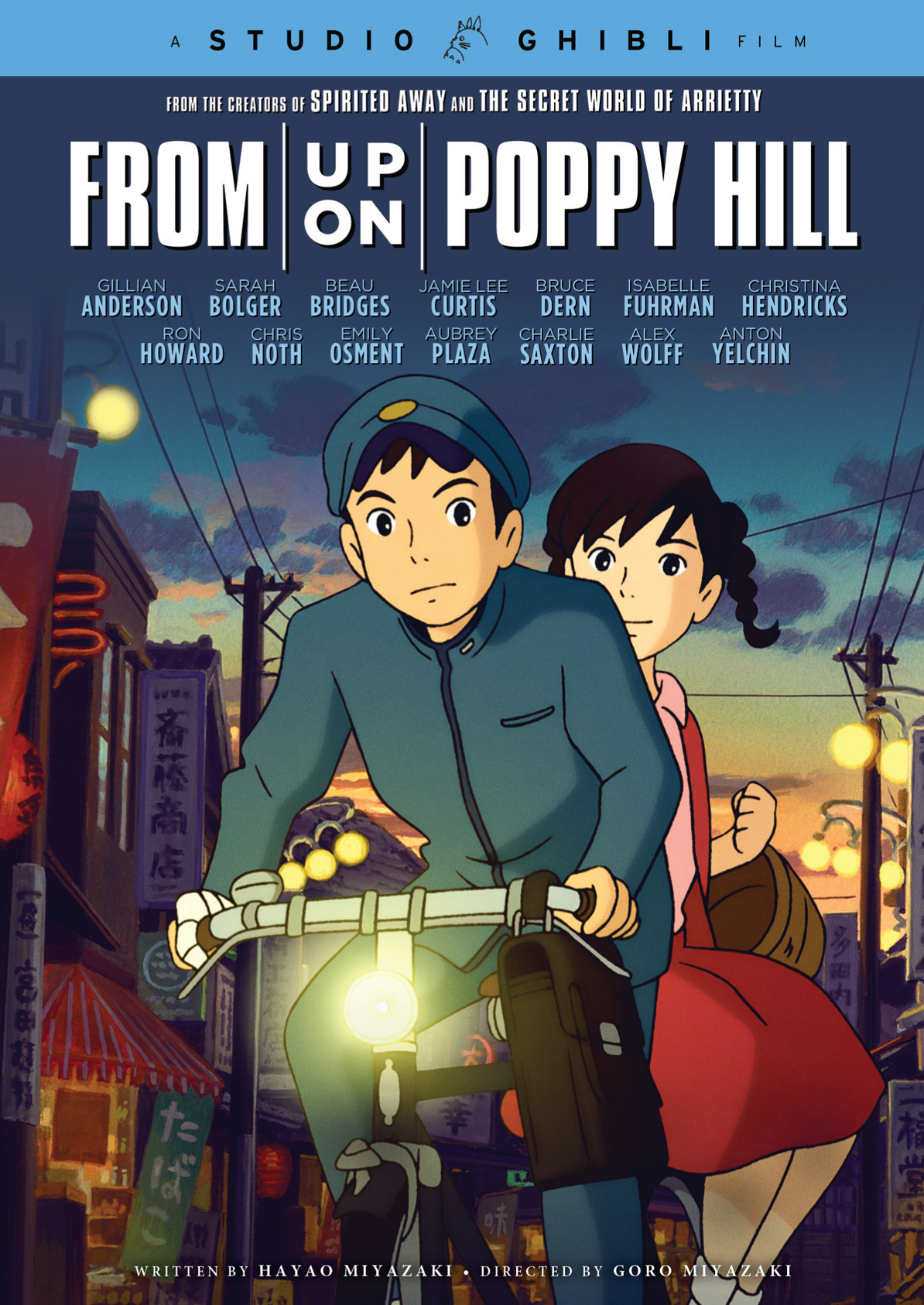
FromUpOnPoppyHillFrom Up On Poppy Hill, Goro Miyazaki (2011, Japan). I’ve enjoyed the Ghibli films the most when they are not genre – such as this one is. Er, isn’t. I mean, it’s not genre. It’s a relatively straightforward – and genre-free – story about a pair of students in early 1960s Yokohama, who are attracted to one another and then learn they may in fact be brother and sister. Wrapped around this is a student protest to prevent a building used by the various student clubs, called the Latin Quarter, from being demolished by a Tokyo businessman. From Up On Poppy Hill is at its best when it’s about the relationship between the two leads, Umi and Shun, but the comedy antics as the students clean and refurbish the Latin Quarter feel like they detract from the real story. Enjoyable, but I don’t think anyone will be calling this their favourite from Studio Ghibli.

edgeoftomorrowEdge of Tomorrow, Doug Liman (2014, USA). Confused. I saw this film advertised on theatrical release as Edge of Tomorrow, but it seems to have been retitled Live Die Repeat for the sell-through (which is the name of the Japanese source text), so obviously it’s such a good film it can’t even decide what its title is. And, okay, perhaps it was a little facile to describe it as Groundhog Day meets Starship Troopers, but that’s pretty much the plot in a nutshell. Nasty aliens invade Earth, obviously the only way to defeat them is to throw human cannon fodder at them, although strangely enough this strategy doesn’t appear to be working. As Tom Cruise repeatedly discovers because he keeps on waking up back on his first day of basic training (although no training actually takes place) and all because he was covered in a particular type of alien’s blood on the battlefield. But that’s okay, since it allows him to figure out there is a hidden mega-alien thing somewhere running the whole show and if he kills that then humanity wins – stop me if you’ve heard this before. Oh, you have? Lots of times? Seriously, if Edge of Tomorrow is being held up as a good sf film, then that says a lot about the piss-poor state of sf cinema – oh, wait, Interstellar was supposed to be the best sf film of last year, so yes, it looks like sf cinema is in a piss-poor state…

bela_tarr_collectionDamnation, Béla Tarr (1988, Hungary). I think I’m going to have to withhold judgement on Tarr’s films for now. I’ve now seen all three in the pictured box set – and while Tarr is noted for the glacial pace of his movies, and I actually like films that take time to tell their stories, I’ve not yet plugged into Tarr’s languorous way of movie-making. Damnation is, I suppose, the most straightforward of the three films, but there are long stretches where no one speaks, there is only music… And then characters speak dialogue that feels more like it should be… declaimed, like in a Jancsó film. Their naturalistic speech is… odd, perhaps even a little off-putting. Having grown up reading science fiction, I’m all too familiar with mouthpiece characters – but where Jancsó’s are overt, Tarr appears to sneak his into the story in the guise of ordinary people engaged in ordinary activities. Tarr’s films will not only bear rewatching, I strongly suspect they demand it. Meanwhile, I shall sort of hover on the edge of liking and admiring them.
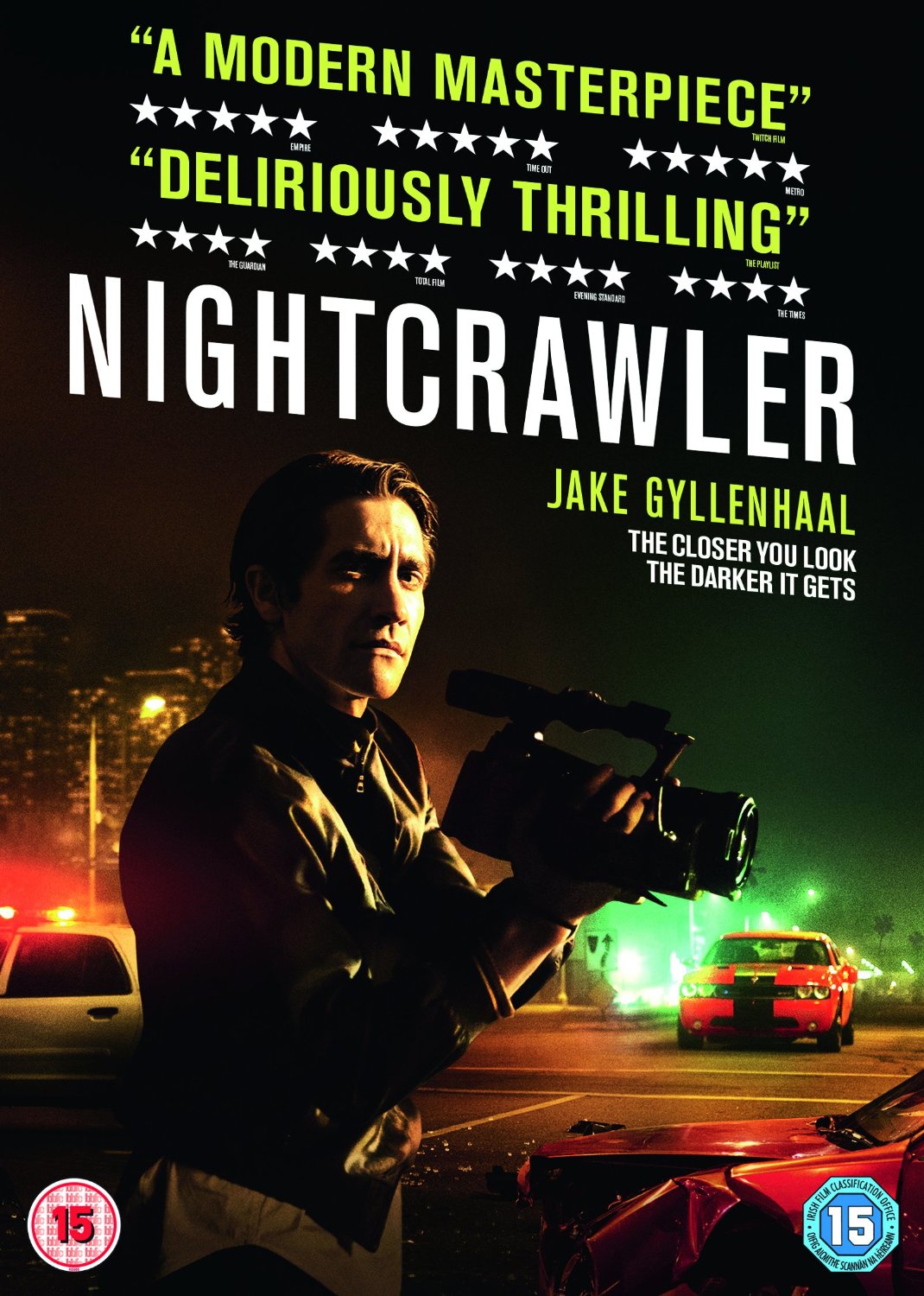
nightcrawlerNightcrawler, Dan Gilroy (2014, USA). Watching this film prompted an interesting discussion on Twitter. Since thrillers depend upon violence and fear to drive their plots and maintain viewer interest, I suggested they were morally bankrupt, if not morally corrupt. In order to generate “story”, they over-state the incidence of violence and harm in the real world. And while the protagonist of Nightcrawler – played by a frankly creepy Jake Gyllenhall – does cover road traffic accidents, it’s his relationship with violent crime which comprises the plot of the film. He’s a freelance cameraman – or rather, he starts on a career as one after witnessing Bill Paxton at work – who forms a business, and increasingly poisonous and misogynistic, relationship with news channel producer Rene Russo. When Gyllenhall gets too close to his subjects, and starts crossing the line between reportage and incitement… it all goes horribly wrong. Yawn. This sort of moral conundrum is completely banal, and has been covered repeatedly in both books and films. Perhaps Nightcrawler‘s take on it rings a few trivial changes, but all we’ve really got here is a creepy update of His Girl Friday. Without the wit.
spiritualvoicesSpiritual Voices, Aleksandr Sokurov (1995, Russia). I have no idea how to write about this. I was lucky enough to find a copy on eBay going for a reasonable price – it typically goes for $95 or more, but at 327 minutes split over five episodes, I suppose that’s not bad value for money (I paid less than half that). Spiritual Voices is a documentary filmed at a Russian army dugout in northern Afghanistan – but its opening episode consists of forty minutes of time-lapse photography of a village in Siberia, as night falls and dawn breaks, while Sokurov talks about Mozart and then Beethoven. The second, and following, episodes are hand-held documentary footage of Russian soldiers going about their duties night and day, sometimes interacting with the camera, but usually ignoring its presence. The soldiers, of course, are conscripts; they are also young men. And though they wear the uniform, and spend their days following orders, there is something not quite real about their situation. Sokurov also films the landscape surrounding them, and he’s extremely good at using landscape to paint a moral picture of the story he’s telling. Spiritual Voices is a long film, a very long film, and after a single viewing I’m not entirely sure what to make of it. That first episode is an amazing work of art – I’ve now watched it three times – but I’ve yet to determine how it fits in with the piece as a whole… This is just one of the reasons why I find Sokurov one of the most fascinating directors currently working, and why I’ve tracked down as much of his oeuvre on DVD I can find.

1001 Movies You Must See Before You Die count: 584

5 Comments

Moving pictures, #9

Yet more films wot I have watched of late. This brings the moving pictures posts pretty much up to date, so I won’t need to spam my blog with them quite so much from now on. Although I’m still watching rather a lot of movies, due to a lack of anything interesting on terrestrial or cable television. Perhaps I should turn the damn thing off some evenings and read a book or something…

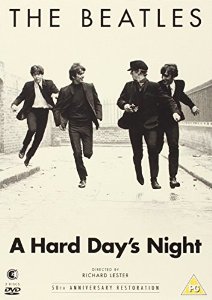
aharddatsnightA Hard Day’s Night*, Richard Lester (1964, UK). I think I must have seen this, perhaps back in the 1970s or something, because it seems an unlikely film to have missed. Having said that, I could remember almost nothing about it – and even now, a couple of weeks after watching it, I’m having trouble recalling the actual plot. Not, it has to be said, that there was much of one. The Fab Four travel to London with Paul McCartney’s grandfather (played by Wilfred Brambell), their manager and their road manager. The band are due to perform on a television programme. It was pretty clear the cast had fun making the film, and there was definitely a manic energy to it – but Lennon’s snidery palled quite quickly, a couple of long-running jokes ran too long, and the music was, well, frankly not that great.

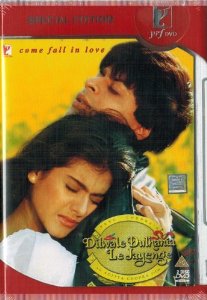
dulwaleDilwale Dulhania le Jayenge*, Aditya Chopra (1995, India). This one was a surprise. I’ve seen bits and pieces of Bollywood films over the years, but I don’t think I’ve sat all the way through one. Nonetheless, I thought I knew what to expect and I suspected watching this film was going to be a chore… but I really enjoyed it, it was actually really good. Wastrel son of a wealthy NRI in London decides to go Interrailing before joining the family firm. Meanwhile, eldest daughter of a hard-working NRI who manages a petrol station will soon be married to the son of her father’s best friend back in Kashmir… so she too decides to go Interrailing first. The two bump into each other as they travel about Europe, fall in love, with much singing and dancing and comedy. Afterwards, she has to go to Kashmir for the wedding, there’s no getting out of it, but he follows and tries to win over her family (the two pretend not to know each other). A smart well-made rom com, with some fun song and dance routines, a well-handled plot and a pair of likeable leads. If you fancy trying a Bollywood film, put this one at the top of your list.

thesunThe Sun, Aleksandr Sokurov (2005, Russia). This is the second of Sokurov’s quartet of films about men in power, and the subject of it is Emperor Shōwa of Japan. (While we in the West know him as Emperor Hirohito, that was his personal name and he’s now actually referred to using his posthumous name, Shōwa.) The Sun concerns the days immediately following Japan’s surrender and the emperor’s meetings with General MacArthur. Apparently, the film caused a bit of a fuss on release, perhaps because it suggests the emperor is almost an innocent, a mild-mannered educated man who tinkers with marine biology and lives in a hermetically-sealed world in which he is considered divine by all about him. That is, until he meets MacArthur. It’s considered likely he was actually a war criminal, and very much responsible for Japan’s conduct of the war – but he seemed to escape justice. Sokurov, however, is not concerned with the truth, or as in Moloch, an historically accurate portrayal. The Imperial Palace depicted in The Sun, for example, is simply a large 1920s villa and bears no resemblance to the actual Tokyo Imperial Palace. The film depicts the emperor’s descent from divine to human – not an actual change, of course, but a matter of perception. I’m not convinced it’s as successful as Moloch, perhaps because it follows a more considered approach, which tends to flatten the story’s affect, whereas Moloch‘s manic infantilism suited its topic perfectly. I still want to know why Taurus isn’t available in an English-language edition, however.

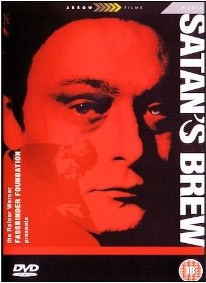
satansbrewSatan’s Brew, Rainer Werner Fassbinder (1976, Germany). Not the most successful Fassbinder film I’ve seen so far. A previously-successful poet, now suffering from writer’s block, shoots his mistress, and then sort of runs around manically, demanding sex from Ingrid Caven, who is married someone else, visiting his own wife and intellectually disabled brother? brother-in-law?, and charging around various places demanding money. The Wikipedia plot summary, which is not very long, concludes with, “Some more obscure things happen but in the end everyone is back on stage”. Which is as good a way of describing it as any. The contents of this Fassbinder box set have been somewhat variable, but I’m glad I’ve seen the films.

bela_tarr_collectionWerckmeister Harmonies, Béla Tarr (2000, Hungary). I’ve yet to decide what to make of Tarr’s films. That they’re slow, with very long takes, and filmed in stark black-and-white, and that sort of film-making appeal to me far more than the frenetic jump-cuts of your present-day Hollywood tentpole franchise movies. (But I also like Technicolor movies, too.) Tarr’s films are also allusive, which again is something I appreciate, in both film and literature. But I think what’s preventing me from really falling for this movie, or the other Tarr I have seen, The Man from London, is that there’s something very play-like about the way they’re put together. And for some reason the mismatch between theatrical presentation and cinematic technique never quite  works for me. In Werckmeister Harmonies, a travelling circus, whose chief attraction is a stuffed whale, appears in a Hungarian town, and triggers a wave of violence. I’m going to have to watch this film again, I think, as while some bits of it seemed to work really well, the allegorical skeleton on which the plot was hung didn’t articulate quite as well for me as it was likely intended to. But at least I bought the box set, so I can rewatch the films at my leisure. Incidentally, I also bought mysql a copy of Sátántangó, so I’ll be able to watch all seven hours of that at my leisure…

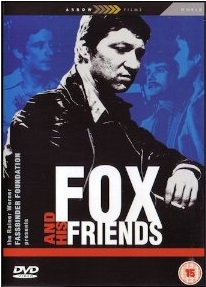
foxFox and his Friends*, Rainer Werner Fassbinder (1975, Germany). A young gay man, played by Fassbinder himself, is obsessed with winning the lottery. Which he does, shortly after entering into a relationship with an older man, an antiques dealer. When the antique dealer’s friends discover that the oick they’re looking down their nose at is worth half a million DMs, they set about swindling him out of his money, seducing him and persuading him to pay their way out of their financial difficulties. Which he happily does, wrongly impugning more than just mercenary motives to their treatment of him. Prior to receiving this Fassbinder box set for Christmas, I had never seen one of his films. And I’ve now seen seven (of the eight films in the box set), and there have been some good ones and some not so good ones. I’ve yet to decide whether I want to explore more of Fassbinder’s oeuvre – and he made a lot of films – probably because so many of the contemporary ones seem very similar in tone and presentation. Perhaps I just watched too many of his films in too short a period – like the time I watched three seasons of The X-Files back-to-back, three or four episodes a night, and could hardly sleep afterwards I felt so paranoid…

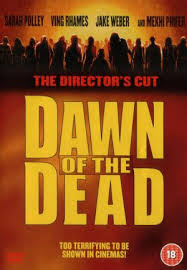
dawnofdeadDawn of the Dead*, George A Romero (1978, USA). No, I’ve never actually seen this before, and no, I probably would never have bothered if it hadn’t been on the 1001 Movies You Must See Before You Die list (and how many films on the list have I said that about?), and I’ve never been a fan of zombies, a trope that’s been used intelligently perhaps a handful of times since it first appeared. And, to be brutally honest, this isn’t one of them. Something has caused the dead of the US to rise as flesh-eating zombies – your basic zombie trope, in other words – and a group of people escape various encounters with them, including an extended sequence set in a shopping mall. The film was made of the cheap, and looks it; and the some of the special effects, while gruesome, look cheap and stagey. Apparently, I watched a director’s cut but there’s some confusion over which particular one. All I remember is that it was long, and while there was plenty of action there wasn’t much plot. I’ll admit I’m not a fan of horror films – I’m far too squeamish – and I can perhaps understand how Dawn of the Dead might be seen as a “classic”… But there wasn’t a fat lot there to appeal to me, and I’m happy to just cross it off the list.

1001 Movies You Must See Before You Die count: 582


4 Comments
Moving pictures, #6

I’m trying to get caught up on these, since I’ve been watching so many films recently – all that bloody sportsing on television. Damn sportsing. Have never understood its appeal.

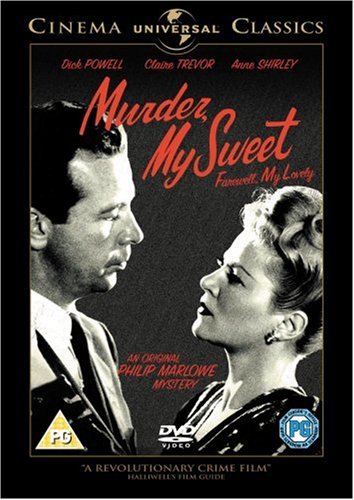
murderMurder, My Sweet*, Edward Dmytryk (1944, USA). Despite the title, this is pretty much a faithful adaptation of Raymond Chandler’s Farewell, My Lovely. Dick Powell plays Marlowe and he doesn’t look quite rumpled enough to pull it off. Apparently, the studio changed the title from that of the book because they thought audiences might otherwise think it was a musical. Um, yes. The only other adaptation stars Robert Mitchum as Marlowe, and I seem to remember that being a better version than this. Incidentally, I have a lot of time for Chandler’s fiction – and yes, I’ve read this one – but I’ve found most of the movie adaptations disappointing in some way, even the Humph ones.

largo-winchLargo Winch, Jérôme Salle (2008, France). This is what we used to call a “Euro-thriller” – ie, lots of different locations around the world, very glossy production design, plenty of action… and a plot that doesn’t make much sense. It’s adapted from a bande dessinée by Philippe Francq and Jean van Hamme (the latter, incidentally, has written several of the Blake and Mortimer bandes dessinées). The title character is an orphan secretly adopted by billionaire Nerio Winch. Some twenty-eight years later, Nerio is murdered and it triggers a fight for control of his Hong Kong-based company. Largo, meanwhile, has been bumming around the world. He’s arrested in Brazil but manages to escape, and heads to Hong Kong, where he declares himself to the board of directors. Some of them, however, don’t believe him. Handily, Nerio invested his stocks in some sort of bearer bonds, which he then hid. If Largo presents these to the board, then the company is his. Of course, the same is true if anyone else does. And the rival for Largo’s position turns out to be his adoptive brother. Plus there’s a shady rival who wants to buy the Winch corporation… and Largo makes a deal with him to secure his position. It’s all very cosmopolitan, with lots of action and exotic locales, and a plot that sort of lurches about in search of a coherent narrative. But it was also reasonably entertaining, and it didn’t take a pair of steel toe-capped boots to your intelligence, as Hollywood is wont to do.

umbrellasThe Umbrellas Of Cherbourg*, Jacques Demy (1964, France). I really liked Demy’s Lola, and despite knowing that this was a musical – even more, the dialogue is sung throughout – I sort of thought I might like this too. But I didn’t. Oh, it’s French and it’s 1960s and it looks mostly lovely and Catherine Deneuve is eminently watchable in one of the lead roles, but… Maybe it was because I’d watched Les Misérables only a week or so before, but the sung dialogue turned irritating quite quickly, and though the visuals were often quite eye-catching, I sort of lost interest. I think it deserves a rewatch, and given how much I liked Demy’s Lola, there’s a Demy DVD collection that looks quite tempting… except it’s bloody expensive. I shall stick some more Demy on the rental list, and see how I get on with them.

esisensteinAlexander Nevsky, Sergei Eisenstein (1938, USSR). I seem to have ended up with quite a few Eisenstein films, despite not being especially a fan. Several years ago, The Guardian gave away a free DVD each weekend – remember when newspapers used to do that? – and one of them was Eisenstein’s Battleship Potemkin. Which is considered a classic of cinema. And I picked up a copy of Stachka (AKA Strike) because it was on the 1001 Movies You Must See Before You Die list… and now I have a box set containing Alexander Nevsky and Ivan the Terrible parts 1 and 2. (It’s volume 2, and volume 1 appears to almost impossible to find. Argh.) Anyway, Alexander Nevsky… It’s about the eponymous prince, who led the Russians of Novgorod to victory against the Teutonic Knights at the Battle of the Ice (which takes place on a frozen lake). It’s a good solid historical epic, with a few more personal story arcs thrown in, but I couldn’t help comparing it to Tarkovsky’s Andrei Rublev, and it didn’t wear the comparison especially well. Worth seeing, but I’m a little puzzled by the extremely high regard in which it’s held.

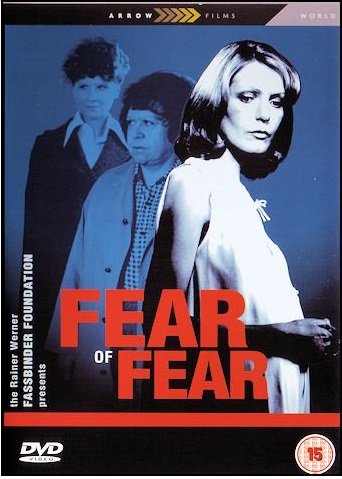
fearoffearFear Of Fear, Rainer Werner Fassbinder (1975, Germany). This was a made-for-tv film, and having now seen three or four Fassbinder films I don’t think I could have mistaken it for anything but a Fassbinder film. Fassbinder regular Margit Carstensen plays a housewife who becomes addicted to Valium and alcohol following a series of increasingly stronger anxiety attacks. Her husband’s family, who live in the same apartment block, treat her as though she’s not good enough, which only worsens her condition. Eventually, she is committed, whereupon she seemingly recovers. A good, solid family drama, without much that struck me as essentially Fassbinder; but I enjoyed it and I thought Carstensen was especially good in the lead.

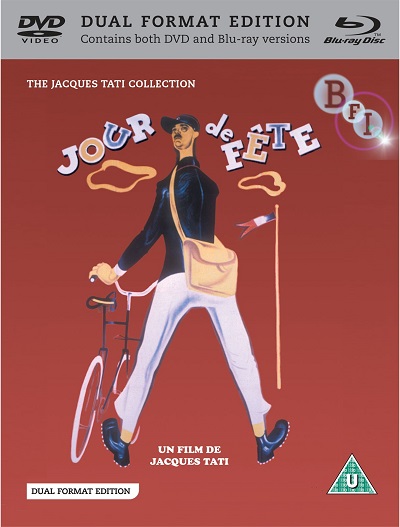
jour-de-feteJour de fête, Jacques Tati (1949, France). I have now seen all of Tati’s feature films, and of course I left his first until last. In this one he plays a postman in rural France and the film is a series of set-pieces in which first Tati does his usual round, and then, in the second half, he tries to introduce “American” methods in order to deliver letters faster. There are some excellent gags – in that respect, Jour de fête scores higher than Mon Oncle or Playtime, although it does not have the visual genius of those films – but a number of the set-pieces were recycled from the short L’école des facteurs (1947). Anyway, the Tati box set was an excellent buy, and despite never having watched any Tati before August last year, I can now happily call myself a fan.

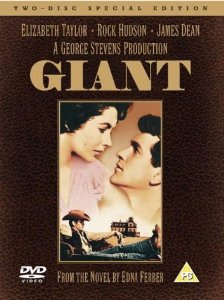
giantGiant*, George Stevens (1956, USA). This is one of those films I always thought I’d seen but when I came to watch it very little of it actually proved familiar. It’s the sort of nonsense dynastic family saga the US – and especially Hollywood – likes to tell itself is proper art… especially when it involves oil. It’s not, of course, It’s not even melodrama. They try to throw in some social commentary – in this particular case, a Texan rancher turned oilman (Rock Hudson) discovers all his fellow whites are racist after his son marries a Latina woman. This, of course, comes as no particular surprise to, well, the rest of the planet. Hudson I could watch all night, and I do like films from the fifties, but this was long and not very inventive and all a bit thuddingly obvious from the start. James Dean was a bit rubbish in it, and not at all convincing – but then he’s another actor, like Brando, whose reputation mystifies me.

unbelievableThe Unbelievable Truth*, Hal Hartley (1989, USA). There are several Hal Hartley films in the 1001 Movies You Must See Before You Die list, and I’m not sure why. There are more interesting independent directors – such as John Waters, or John Sayles – but I guess the list-makers are fans of Hartley’s movies. I can’t say I am. I’ve seen two now, and they’ve both been pretty forgettable, certainly not something that’s worthy of the 1001 list. In this one, a man returns home after years in prison for manslaughter. He takes up with a local girl, while rumours after his “crime” grow ever wilder, but his putative girlfriend goes off to be a model in New York. There’s a family crisis, and relationship difficulties and… yawn. Not very interesting.

1001 Movies You Must See Before You Die count: 571


1 Comment

Moving pictures, #5

And now it seems the Blu-ray player is starting to act up. Bugger. Annoyingly, I recently discovered it’s also region-locked for DVDs, although I was sure it was region-free when I bought it. I definitely need to get myself a new one – region-free for both formats. Sigh.

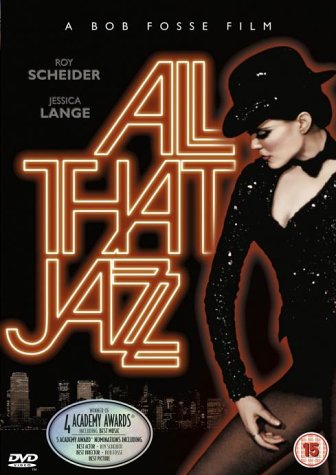
allthatjazzAll That Jazz*, Bob Fosse (1979, USA). There are some movies I’d never have come to watch if they hadn’t been on the 1001 Movies You Must See Before You Die list, and not just because I’d otherwise never have known about them. On first pass, All That Jazz doesn’t really seem to be my sort of film. It’s a semi-autobiographical musical, based on Fosse’s own experiences staging a big Broadway musical and editing a feature film, a work-load which led to health problems and hospitalisation. I am not much of a musicals-type person – in fact, there’s only one I actually rate, High Society – and if I were I think I’d prefer ones from the 1950s… But All That Jazz is also one of those films in which an unexpected dance sequence makes something very interesting of it. And “unexpected” is not a word associated with dance sequences you’d think would apply to All That Jazz. But there it is. As Roy Scheider lies in his hospital death, he hallucinates a big dance production number featuring the Angel of Death, and it’s cleverly and affectingly done. I found myself really liking All That Jazz, and I hadn’t expected to.

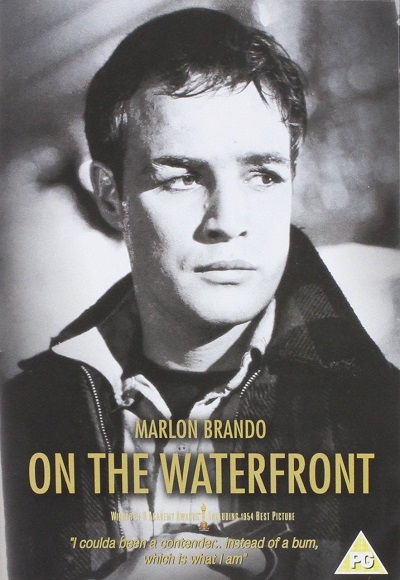
onthewaterfrontOn the Waterfront*, Elia Kazan (1954, USA). Marlon Brando is apparently one of the great actors, but I’ve seen him now in two of his most famous roles – in A Streetcar Named Desire and this one – and, well, he’s just annoying. That stupid voice. I guess that must be Method Acting. Brando plays a dim-witted ex-boxer whom circumstances force into going up against his chapter of the longshoremen union and its corrupt chief. It’s the sort of story which is, I guess, meant to celebrate a good man, but all it does to me is demonstrate that the capitalist model is corrupt, open to abuse and a piss-poor end-result after ten thousand years of civilisation. Seriously, we’re meant to just accept the injustice and violent coercion which was apparently standard operating procedure on the docks of New York some sixty years ago? We shouldn’t be cheering on Terry Malloy as he battles the union, we should be asking why the US government is apparently so inept, corrupt or just plain evil to have allowed the situation to arise in the first place. Either way, this doesn’t really meet my criteria for a good movie.

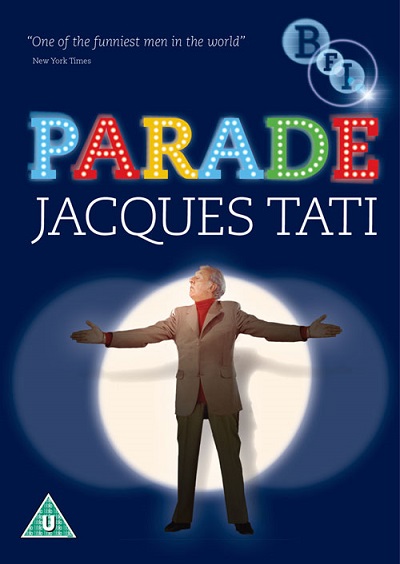
paradeParade, Jacques Tati (1974, France). I’ve almost finished the Tati box set, and it was definitely one of my better purchases – even if this isn’t one of Tati’s better films. It’s a made-for-TV piece, set in a circus, in which Tati himself occasionally appears as a clown. It is also a film chock-a-block with dungarees. I’ve never seen so many pairs in a single movie before. There are some amusing set-pieces, but if this weren’t Tati it would be just another fly-on-the-ringside documentary, albeit a very 1970s one. Worth seeing, but buy the Tati box set for the other films.

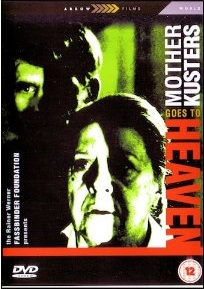
motherkustersMother Küsters Goes To Heaven, Rainer Werner Fassbinder (1975, Germany). And I’m about halfway through the Fassbinder box set. I like box sets. (I received a Bergman one for my birthday, only a week or so ago, incidentally). One thing I’m coming to realise from watching these Fassbinder films is that he definitely made use of a stable of actors. Brigitte Mira, who played the female lead in Fear Eats the Soul, plays the title character, a working-class widow who loses everything when her husband kills his supervisor and commits suicide at the factory. She and her family are interviewed by the press, who then libellously paint the dead man as a drunk who was violent toward his wife and a bully to his children. A pair of middle-class communists offer to help Mother Küsters clear her husband’s name, although her family are suspicious of the communists’ motives. But they prove too slow for Mother Küsters and she falls in instead with some anarchists… who invade the local office of the newspaper which published the libellous article. This isn’t exactly the most subtle Fassbinder film I’ve watched so far – he sets out to show the perfidy of the press and the way they monster people, and does precisely that. Interestingly, the film has two endings. One is represented by stills, while a voice-over reads the script, but the other was actually filmed. The latter apparently was written especially for the US market (it’s the happier ending), but I do wonder why the first ending was never actually put on film.

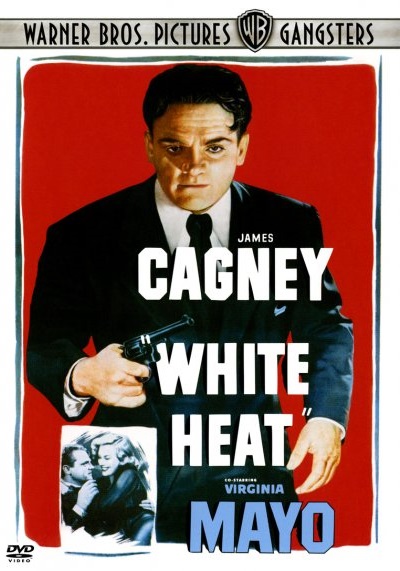
White_HeatWhite Heat*, Raoul Walsh (1949, USA). “Look at me, ma! I’m on top of the world!” Yup, this is where that line comes from. It’s a classic gangster film, in which Cagney plays a complete psychopath – albeit a somewhat tame one by today’s standards, in fact superheroes in twenty-first century films show about as much remorse as Cagney’s character does after killing someone. That’s progress for you. Anyway, Cagney gives himself up for a crime he didn’t commit because it provides an alibi for one he did, a particularly brutal train robbery. A cop goes undercover in the prison, breaks out with Cagney and joins his gang. The film ends with an attempt to rob the payroll from a refinery, and Cagney ends up stuck on the top of a storage tank, starts of a gun battle… which causes the storage tank to blow. KABOOM. A good bit of classic noir.

lesmisLes Misérables*, Tom Hooper (2012, USA/UK). Here’s another film that I’d have otherwise assiduously avoided if it hadn’t been for the 1001 Movies You Must See Before You Die list, but unlike All That Jazz I can’t really say I’m glad I watched it. I knew going in it wasn’t going to be the sort of film I like and, lo and behold, I really didn’t like it. The singing was terrible, the songs were awful – even that brain-burning one popularised by Susan Boyle – the characters were unredeemable, and the CGI was so over the top it might as well have taken place in some fantasy world. Rubbish.

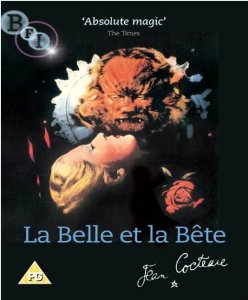
labelleLa Belle et la Bête*, Jean Cocteau (1946, France). I thought Cocteau’s Orphée really good, but this retelling of ‘The Beauty and the Beast’ fairy tale was a bit dull. While the staging was cleverly done, particularly for the time, the production design did resemble some amateur dramatic pantomime production (although the Beast’s make-up was good). Perhaps it deserves a second watch – but it was a rental disc and it’s gone back. On the other hand, I’m only just over halfway through the 1001 Movies You Must See Before You Die list… although I would like to see more films by Cocteau.

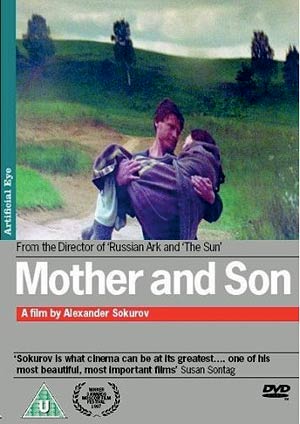
mother-and-sonMother And Son, Aleksandr Sokurov (1997, Russia). I’ve watched this a couple of times now, and I continue to find it completely mesmerising. A young man cares for his mother as she lies on her death-bed. He reads to her, he carries her outside and shows her the surrounding countryside, he feeds her and nurses her. There is a dream-like quality to the visuals, so much so that some of the landscape shots actually resemble oil paintings. This is a beautiful film, one of the most beautiful I’ve ever watched. I’d place it a close second after The Second Circle as my favourite Sokurov, and while it doesn’t quite make my top ten it certainly makes my top twenty. But I also suspect that more often I watch it, the more my opinion of it will rise. I’ve been watching a lot of Sokurov recently, and have even tracked down copies of some of his hard-to-find DVDs. I think he’s one of the most interesting directors currently making films. There’s something very… literary about his movies. Watching them is like reading a beautifully-written short story.

1001 Movies You Must See Before You Die count: 567


2 Comments

Moving pictures, #3

Well, my DVD-player decided to pack in. After seven and a half years of hard use. I guess I can’t complain too much. Fortunately, I also have a Blu-ray player, so there was no interruption of service. Having said that, I need to get a new Blu-ray player as the one I have is region-locked, so I can’t watch my Criterion Blu-ray of All That Heaven Allows. Bah. Stupid region-locking.

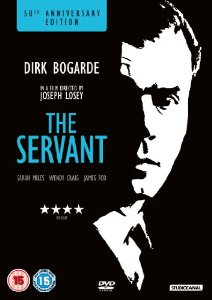
servantThe Servant*, Joseph Losey (1963, UK). James Fox is an upper crust bachelor, back in London after working abroad. He buys himself a townhouse, and advertises for a manservant. Dirk Bogarde is subsequently hired. Once the house has been decorated, the pair move in. Bogarde arranges for his sister, Sarah Miles, in Manchester to join him as a housekeeper, although the two seem suspiciously close for siblings. Fox’s girlfriend, Wendy Craig, doesn’t like Bogarde – she doesn’t think he’s appropriately servile. Miles and and Fox have sex, Fox comes increasingly under the sway of Bogarde… until their roles are pretty much reversed. Bogarde doesn’t quite convince as a Mancunian, but he plays a servant just on the edge of taking liberties perfectly. A proper creepy little film and worth seeing.

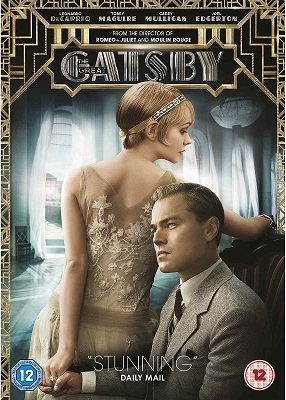
greatgatsbyThe Great Gatsby, Baz Luhrmann (2013, USA/Australia). F Scott Fitzgerald’s novel of the Roaring Twenties, when you think about it, should be pretty much ideal material for Luhrmann’s brand of spectacle. So it’s a bit of a shame that this film felt entirely pointless. Not the story – which everyone knows – but the film’s reason for existing. It didn’t help that I’ve always found both Maguire and DiCaprio a bit bland. And some of the scenery was pure CGI eye-candy, which made everything resemble a cartoon more than a classic of American literature. Nothing felt plausible, so what the story was actually about got lost in the fake world Luhrmann had created – and this is the film of a novel that comments on weighty topics like, to quote the Wikipedia page for the novel, “decadence, idealism, resistance to change, social upheaval, and success”. Disappointing.

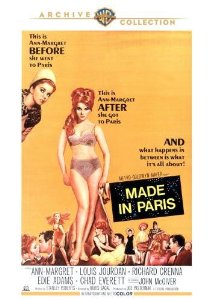
madeinparisMade in Paris, Boris Sagal (1966, USA). A silly sixties rom com starring Ann-Margret and the late Louise Jourdan. Ann-Margret plays a junior fashion buyer for a New York department store, sent for the first time to Paris to sign up fashion designer Jourdan’s latest collection. She discovers that the previous buyer and Jourdan had something of an “arrangement”. Since she has a clean-cut boyfriend back home, and she’s a nice girl, Ann-Margret’s certainly not going to continue it. So a telegram gets sent back home saying she’s falling down on the job. Boyfriend then turns up and jumps to conclusion. Jourdan oozes Gallic charm throughout, Ann-Margret makes a good ingenue… but it’s all just melodramatic froth and chock-full of French stereotypes.

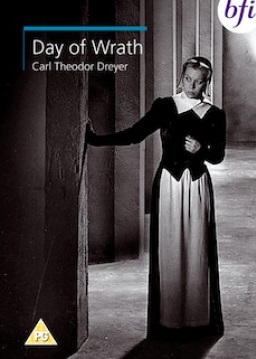
dayofwrathDay Of Wrath, Carl Theodor Dreyer (1943, Denmark). Dreyer’s Gertrud is a film that almost makes my top ten, so I’ve been picking up more of his films to watch. Day Of Wrath was Dreyer’s first film after more than a decade. It was also the first feature film he made in his native Denmark, and only his second with sound. It’s set in a village in 1623. A young woman is married to a pastor a good deal older than herself. When a local old woman is accused of witchcraft, the young woman hides her in the pastor’s house. The pastor’s son returns home from abroad shortly afterwards, and he and his father’s wife begin seeing each other. The wife, whose mother had been accused of witchcraft, but spared because the pastor wanted to marry the daughter, curses her husband. He dies. She’s accused of witchcraft. This is grim stuff, shot in stark black and white, with lots of close-ups of grim-looking faces. Sort of like Bergman, but without the cheerful optimism. I especially like how Dreyer stages his films, so that the sparse sets throw the focus on what’s going on beneath the words. He’s rapidly becoming one of my favourite directors.

starshiprisingStarship Rising, Neil Johnson (2014, USA). I bunged this on an order because the DVD had a pretty cover and it was cheap. What I didn’t know is that Johnson is a genre feature film cottage industry all his own, and churns out low budget movies like a one-man Global Asylum. He is apparently best known for directing over 500 music videos. Huh. While the CGI in Starship Rising is actually pretty respectable, the sets just about visible underneath look cheap (and badly-lit, to hide how really cheap they are). And the acting is poor, too. So was the script. There was something about a huge warship, which is ordered to destroy Earth, but one of the officers mutinies and, er, lots of other things happened. I will admit I wasn’t concentrating as much as I should have been – maybe there was something interesting happening on Twitter, there was certainly nothing interesting in the movie. One to avoid. There is apparently a sequel due, shot back-to-back with this one, but not yet released.

Devils-DVDThe Devils*, Ken Russell (1971, UK). I’ve actually read Russell’s science fiction novel, Mike And Gaby’s Space Gospel. It was fucking awful. And only the other night, I was flicking through channels and stumbled across The Lair of the White Worm, and after watching Amanda Donohe chew everything in sight, including the scenery and some poor lad’s genitals, while bumbling posh Englishman Hugh Grant played a bumbling posh Englishman, I couldn’t help noting how much of a perv Ken Russell had been (not an original observation, by any means). Which leads me to The Devils, which is the only one of Russell’s 18 feature films (and much more television work) to make it onto the 1001 Movies You Must See Before You Die list. The Devils was very controversial when it was released, probably because it has lots of naked and semi-naked nuns having sex in it. To be honest, it was all a bit much and overwhelmed the story a bit. The sets, however, all buttresses and high walls of white tile, looked pretty cool, and Oliver Reed was on top form. Despite its relentlessness and all those scenes of writhing naked flesh, I thought The Devils pretty good. Might watch some more Russell.

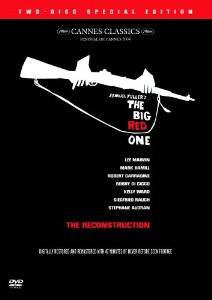
bigredoneThe Big Red One – The Reconstruction*, Samuel Fuller (1980, USA). I’ve mentioned before that I’m not a fan of war movies (and I have far less time for Vietnam War films than I do WWII ones), but there are a handful which are quite good. This, I discovered as I watched it, is one of them. Okay, so Israel makes a poor stand-in for, well, North Africa and most of Europe, and this was clearly a film done on the cheap as even the tight-focus shots couldn’t disguise the paucity of cast members. Not to mention that exactly the same type of tank – Israeli M51 HV tanks, apparently – stood in for all the tanks used during WWII. The film follows a platoon of soldiers from the US Army’s 1st Infantry Division (their badge is a, er, big red 1), led by taciturn sergeant Lee Marvin, as they fight in North Africa, Sicily, Normandy and Germany. The sergeant and four others survive each action, so much so other soldiers assigned to the platoon might as well have worn red shirts. A German Feldwebel pops up at intervals, usually trying to kill Marvin, as a sort of thematic reflection of Marvin’s character. The Big Red One is not a patch on The Thin Red Line, but I did think it better than those huge ensemble war movies they used churn out by the dozen in the 1960s and 1970s, like The Longest Day.

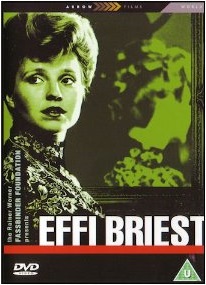
effiebriestEffi Briest, Rainer Werner Fassbinder (1974, Germany). Another film from the Fassbinder collection. The title character is a callow young woman who marries well, to a baron twice her age, but then has an affair with a male friend. Later, the family move to Berlin as the baron has got himself a position in government, but he finds the letters between Effi and her lover – this is many years after the affair finished – and so divorces her. Her parents won’t take her back because her reputation is in tatters. The baron meanwhile challenges the lover and kills him in a duel. Effi succumbs to illness, and her parents let her come home. She dies. There’s much more to it than that, of course, and in many respects the story bears similarities to Gertrud. It was adapted from a 1894 novel, of the same title, about which Thomas Mann apparently said that if a person’s library were reduced to six novels, Effi Briest should be one of them. This film also boasts one of the longest titles in cinema, although it wasn’t used by distributors; it is: Fontane Effi Briest oder Viele, die eine Ahnung haben von ihren Möglichkeiten und Bedürfnissen und dennoch das herrschende System in ihrem Kopf akzeptieren durch ihre Taten und es somit festigen und durchaus bestätigen.

throneofbloodThrone Of Blood*, Akira Kurosawa (1957, Japan). I will admit that Japanese cinema does not appeal to me as much as the cinema of some other countries, and while I’ve watched films by Kurosawa, Ozu and Mizoguchi, I’ve never felt the urge to watch everything in their oeuvres. But it’s no good watching the same sort of stuff all the time, so I occasionally bung a piece of classic Japanese cinema on my rental list… Throne Of Blood is, famously, Kurosawa’s take on Macbeth, and I enjoyed it a lot more than I expected to. That the final scene with the archers, as depicted on the cover of the BFI DVD, really is quite astonishing. The scenes set in the forest looked a bit stagey, but the rest of it – filmed high up on Mount Fuji – looked really effective. I think this is the Kurosawa I’ve enjoyed and appreciated the most of the ones I’ve seen, although – according to my records – the last one I saw before this was Ran in May 2009. I really should watch more of his films.

1001 Films You Must See Before You Die count: 558 (they’re the ones with the asterisked titles)


Leave a comment

Moving pictures, #1

The first “films seen” post of 2015… Last year was a bit epic for DVD-watching, and I expect this year to be much the same… Three weeks into the year and I’ve already seen 29 films and rewatched season 1 of Babylon 5. I don’t document every movie I’ve watched in these posts – I mean, the less said about Solar Crisis the better (it was a charity shop find, okay?). Some films were rewatches, some were simply forgettable, and there’s not a lot I can say about Babylon 5 that’s not been said before by many others. So, it’s the usual mix of (mostly) classic films, I’m afraid…

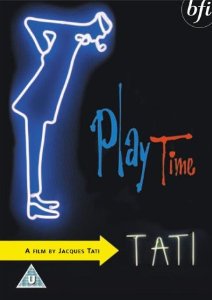
playtimePlaytime*, Jacques Tati (1967, France). I knew very little about this film when I sat down to watch it – I knew who Tati was, of course; in fact, I’d seen Les Vacances de M. Hulot the year before (see here). But I hadn’t known quite how much of an… undertaking Playtime had been, how expensive a production, how enormous a film it proved to be. Apparently, it was a bit of a commercial flop on release, although critics acclaimed it. I loved it. Right from the opening in the mock-up of Orly Airport, with its clean retro-futurist lines. I loved the modernist look of the film, its Brutalist interiors and futurist gadgets. The plot, in which Hulot wanders from set-piece to set-piece, is almost incidental. There are some genuine laugh-out-loud moments, more so than I seem to recall from the other Tati film I’d seen. And, of course, it just looks absolutely fantastic. So I bought a Blu-ray of it on eBay.

fearFear Eats The Soul*, Rainer Werner Fassbinder (1974, Germany). Fassbinder famously based this film on Sirk’s 1955 melodrama All That Heaven Allows and, to be honest, I was expecting it to closer resemble Sirk’s movie that it actually did. Partly, this was because it was my first Fassbinder, so I had no real idea what to expect – it was probably also the first New German Cinema film I’ve seen; but I suspect my expectations were unrealistic and likely spoiled by Todd Haynes’ take on All That Heaven Allows, Far From Heaven, which apes the look of Sirk’s film while extending its story. Fassbinder, on the other hand, makes free use of the story, but sets his story in present-day (for 1974) Munich. A widow in her sixties drops into a bar to get out of the rain, and so meets Ali, a Moroccan gastarbeiter who speaks broken German (the film’s actual title, Angst essen Seele auf, is broken German). The widow, Emmi, and Ali become friends, and then lovers, and she invites him to live with her. When the landlord tells Emmi that her lease doesn’t allow her to sublet, she tells him Ali is her fiancé. So Ali and Emmi marry – much to the disgust of Emmi’s adult offspring. But soon Emmi’s attitude toward her husband begins to align with those of her racist neighbours and friends, even though her children have come to accept Ali. Like Sirk’s masterpiece, Fear Eats The Soul shows a conventional woman entering into a relationship that which is uncomfortable to her family and peers, and then choosing to formalise that relationship (although Jane Wyman and Rock Hudson don’t actually get married in All That Heaven Allows). But where Sirk’s film is about class, Fassbinder’s is very much about race, and especially about the presence of gastarbeiters in Germany. It’s a powerful story, and works especially well because of its low-key realist approach (unlike Sirk’s colour-saturated mise en scène, which I admit I love). Having now seen it, I think Fear Eats The Soul is not so much a reflection or homage to All That Heaven Allows as it is a complement to it.

mariabraunThe Marriage Of Maria Braun*, Rainer Werner Fassbinder (1979, Germany). Did I mention I received a boxed set of Fassbinder DVDs for Christmas? It’s the Commemorative Collection 73-82 Volume 2. Obviously, I picked out the two best-known films in it to watch first. In The Marriage Of Maria Braun, the title character marries her boyfriend while he is home from the Front, they spend a day and a night together and then he’s off fighting again. Cut to the end of the war, and he doesn’t return home – she doesn’t know if he’s dead or still a POW held by the Russians. She gets a job at a bar that caters to American occupiers, and becomes the lover of one GI regular. At which point, her missing husband turns up and catches the pair in flagrante delicto. A struggle ensues, and Maria accidentally kills the GI. However, the husband takes the blame and is sentenced to prison for murder. Maria is determined to better her lot so when her husband is eventually released they can live a life of comfort. She meets a rich industrialist on a train, and he hires her as his personal assistant/mistress. She proves to have a head for business, and becomes rich. Meanwhile, the industrialist approaches the imprisoned husband, and the husband agrees to leave Germany on his release and not return to Maria. Later, after the industrialist has died, he returns – Maria has inherited everything, and is now very rich indeed. While Fassbinder didn’t evoke post-war Germany especially well – no doubt due to budgetary constraints; although von Trier, I thought, did a better job in Europa, albeit it was more representational – I thought this film a much more subtle piece than Fear Eats The Soul, and much the better for it. Maria Braun is a well-drawn and well-played character, and if the film puts the atrocities committed by the Nazis to one side (and, like Europa, paints the occupying Americans as heartless invaders rather than saviours), Maria’s profound selfishness and determination gives the story a solid anchor. Excellent stuff.

streetcar_named_desireA Streetcar Named Desire*, Elia Kazan (1950, USA). One from the 1001 Movies You Must See Before You Die list I watched only because it was on the list. I was aware of the film, and that it had made Marlon Brando a star, but that was about all. And, to be honest, what I knew of it didn’t really make me want to watch it. But it was on the list, so I bunged it on my rental list and, in due course, it popped through the letter-box. So I watched it. And… meh. It’s one of those films made on an indoor set whose stark lighting can’t hide the fact it’s as fake as a theatre flat. Brando was widely praised for his acting in the film, but I just found his put-on voice really annoying. Vivian Leigh was better, and managed to evoke the fragility of her character, but the final descent into madness was pure bathos. I can see how people would have liked it back in the day, but it’s all a bit OTT, a stage play turned up to 11, with much yelling and wailing and outbreaks of sudden violence. Ah well. One to cross off the list.

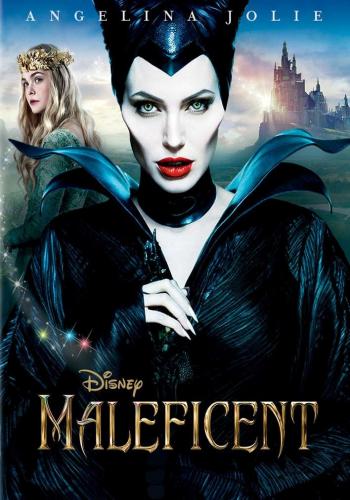
maleficentMaleficent, Robert Stromberg (2014, USA). The title character is, apparently, the evil queen in the Snow White story, although quite how this dark fantasy fits into the fairy tale is anybody’s guess – I think even Disney’s marketing department gave up on trying to persuade audiences of that one. Angelina Jolie, with prosthetic cheekbones and a pair of big fuck-off horns, plays the title character, who is really just misunderstood and not the evil piece of work the Brothers Grimm et al have painted her. Her peasant boyfriend, on the other hand, is. Evil, that is. Well, nasty. He even gets to be king – which is not how dynastic succession or divine right works, but this is a US film and they’ve never really understood the concept of royalty. For reasons I now forget, said king decides to raze the magic wood near his castle and in which Maleficent and her Thumper-y friends all live. So she seeks revenge by cursing the king’s new-born daughter. But I don’t recall the daughter being put to sleep – it may have been me who was sleeping – but instead she gallivanted about the magic forest and played  with all the weird faery creatures, while being maternally looked over by Maleficent. I’m not really sure what this film is meant to be – it reminded me of that other fairy tale mangled into a dark fantasy, Snow White and the Huntsman; and while I have no problem with using fairy tales as source material, I’m not convinced Maleficent reflects well on the Sleeping Beauty story.

cranesThe Cranes Are Flying*, Mikhail Kalatozov (1957, USSR). I’m a big fan of both Tarkovsky’s and Sokurov’s films, and I’ve seen a number of other Russian movies – including bonkers sf film Kin-Dza-Dza, yet more bonkers Через тернии к звёздам, and even mighty Soviet historical epic Ilya Muromets. But I’d not seen much socialist drama, so The Cranes Are Flying was something new for me. It’s a WWII film, centred around the character of Veronika, a young woman. Her boyfriend Boris volunteers to fight, but is posted missing in action. Her parents are then killed in a bombing raid by the Germans, so Boris’s parents invite Veronika to live with them. Boris’s cousin Mark is also staying there, and he begins to pursue Veronika – she, of course, does not know Boris is dead, and she rejects his advances. He assaults her and shames her into marrying him. The family are moved further east, and Veronika works in a hospital caring for wounded soldiers. After an incident in a hospital, she decides to commit suicide, but at the last minute saves a boy from being hit by a car and adopts him. Boris’s father then learns that Mark escaped conscription by bribing an official, so he boots him out of the house. A comrade of Boris’s then turns up and informs Veronika that her boyfriend died a hero’s death… It’s all very grim, and each of the characters quite clearly maps onto roles played by the people of the USSR during WWII, both good and bad. While Veronika’s ending is hopeful rather than happy, the bad guy is caught and punished for his anti-socialist actions. As propaganda goes, The Cranes Are Flying was entertaining, if a little heavy-handed. The stark black-and-white cinematography was effective, and Tatiana Yevgenyevna Samoilova was good as Veronika. Worth seeing.

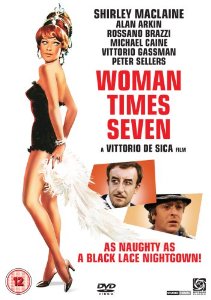
timesevenWoman Times Seven, Vittorio de Sica (1967, Italy). Shirley MacLaine has made some odd films throughout her career, and this, I think, qualifies as one of them. It’s an anthology film, in which MacLaine plays seven parts, and they’re pretty much all the same. In the first, she’s a widow following her husband’s hearse to the cemetery, while her late husband’s doctor, played by Peter Sellers, tries to persuade her to marry him. In the second, she’s a young wife who returns home to find her husband (a different husband, obviously; MacLaine is playing different women) in bed with her best friend, so she heads out and meets up with a bunch of prostitutes. In the third, she’s a hippie translator who reads poetry, while naked, to a Scot and Italian who are members of the congress where she’s interpreting. The fourth sees MacLaine married to a best-selling author who is more in love with his fictional character than his wife, so MacLaine tries to become the fictional character, prompting the husband to have her examined by a psychiatrist. In the fifth, a society woman goes to extraordinary lengths to ensure a rival doesn’t wear the same designer gown as herself to the opera. The sixth appears to be set in New York and features a young married couple who are determined to commit suicide, except the husband isn’t quite so determined. And the seventh has MacLaine being stalked by Michael Caine after she meets Anita Ekberg for lunch. An odd film, and not even remotely funny.

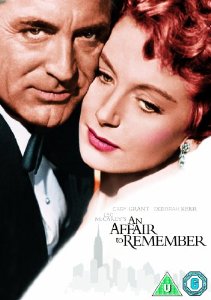
affairAn Affair to Remember*, Leo McCarey (1957, USA). Unbelievably, I’d never actually seen this TV perennial, and since it’s on the 1001 Movies You Must See Before You Die list, I thought I should. I like 1950s melodramas, so I expected to like An Affair to Remember, but… Cary Grant was at his most tea-bag-tan-ish, and didn’t really convince as a French playboy (the former more than the latter). There was a little bit too much singing, and as the film progressed the schmaltz began to heap up in droves. And yet it all started so well – the shipboard romance was nicely handled, with plenty of witty banter. But after Deborah Kerr had been hit by a car… and gives up her singing career to teach poor children (sticks fingers down throat)… Obviously, a happy ending was always going to happen, but McCarey made sure he hit every emotional beat in Hollywood’s lexicon before reaching it. To be honest, it felt like a good 1950s melodrama badly welded to an inferior non-musical remake of An American In Paris.