
It Doesn't Have To Be Right…

… it just has to sound plausible


Leave a comment

The Night Manager, John le Carré

I recently watched the second series of The Night Manager and was dissatisfied with it. It didn’t feel like something le Carré might have written, and I didn’t like the ending. So I decided to read The Night Manager (1993, UK), the actual novel by le Carré, on which the first series, broadcast in 2016, was based.

I was, it turned out, both right and wrong. For the right and wrong reasons.
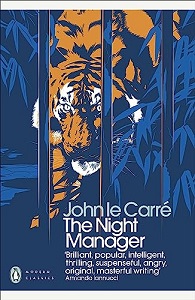
The first series of the television adaptation follows the basic beats of the novel’s story. Ex-Army officer now hotelier Jonathan Pine is given reason to hate international arms dealer Richard Onslow Roper, and is recruited by a UK government agency to infiltrate Roper’s inner circle. For obvious budgetary reasons, the setting for the TV series was moved from the Caribbean and Central America to the Mediterranean. Likewise the change, but perhaps more due to the number of years since publication than budget, from South American cartel villains to Middle Eastern ones. Pine’s handler, Burr, was also gender-swapped from man to woman – which was a good call (especially as she was played by Olivia Coleman). Other changes were less understandable. Roper’s girlfriend Jed is, in the novel, a vacuous upper-class English deb, but in the TV series she was re-imagined as American, and with a secret kid. Some of the characters names were also changed.

Events from the plot of the novel are there in the TV series – the murder of Sophie in Cairo, the fake murder in Cornwall, the staged kidnapping of Roper’s young boy, the incident with lobster salad… Sections were also cut-out in order to streamline the story. Pine’s adventures in Canada. His time in Cornwall is also shortened, and its nature changed – in the book, he’s well-liked and the “murder” he commits comes as a shock; in the TV series, he’s a not very convincing villain from the day of his arrival.

And then there’s the ending. In the novel, Burr’s operation to bring down Roper is being derailed by corrupt officials in the UK and US intelligence communities. They out Pine to Roper, but Burr manages to stage a monumental bluff which saves both Pine and Jed. In the TV series, Roper is brought down by Burr and Pine. To be honest, I prefer the TV ending. It’s also telling that in the book Pine is tortured and beaten before being released, but in the TV series it’s Jed who is beaten.

But then I don’t think The Night Manager is an especially good le Carré novel. He was a bloody good writer and his chosen genre has likely obscured how important he was. He was always anti-establishment, much more so in later years, but the cast of The Night Manager are, well, establishment caricatures. They’re ineptly corrupt, they talk like Harry Enfield lampooning 1950s Whitehall mandarins, and le Carré layers on the contempt so heavily it’s hard to take them seriously. In real life, members of the British establishment are corrupt or paedophiles or both, and have always been seen as such by the working class. And they have always been untouchable.

Which is why Roper remains untouched at the end of the novel.

All of which, ironically, are reasons why I didn’t like the second series of The Night Manager and accused it of not feeling like le Carré… When it’s set in South America, much like part of the original novel, and Roper escapes unscathed as he did in the book. Which actually makes it closer to le Carré’s novel than the first series…

The ebook edition I read includes an essay by le Carré on the various adaptations of his novels. He thought his work better served by TV than film, and in general agreed with the changes made to The Night Manager. Having now read the novel, I suspect he would have been happy with series two, even though strictly speaking it’s not an adaptation.

Leave a comment

A Legacy of Spies, John le Carré

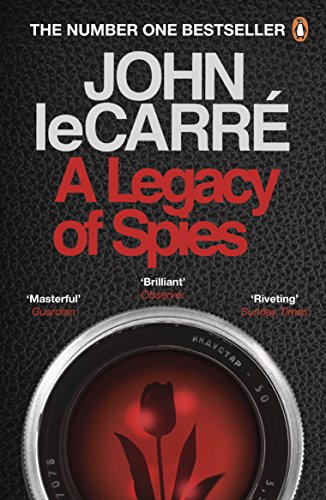
After a gap of 17 years, le Carré returns to George Smiley, although A Legacy of Spies (2017, UK) is actually a retrospective look at the events it describes, most of which centre around the stories of The Spy Who Came in from the Cold (1963, UK) and Tinker Tailor Soldier Spy (1974, UK).

Peter Guillam has retired to Brittany, to the farm which has belonged to his family for generations. He is visited by an officer from the Circus. At the end of The Spy Who Came in from the Cold, agent Leamas and his girlfriend, Liz Gold, attempted to escape over the Berlin Wall, but were both shot and killed. Now Leamas’s son and Gold’s daughter are suing the British government for compensation. And the Circus paperwork detailing the affair is not as complete as it should be.

Which, of course, is as was intended. Because Smiley kept the details of the operation from everyone, given it was a double bluff, and he hadn’t wanted the mole in the Circus, Haydon, to warn the Soviets and the East Germans.

Guillam wasn’t aware of all the operational details involving Leamas, but as he tries to prevent the current Service leadership from learning about the operation, so he discovers more about it himself. There was, for example, the East German woman Guillam helped defect, and with whom he fell in love – only for her to apparently commit suicide a handful of days after arriving in the UK. Not to mention numerous other details about the operation – all carefully concealed so Haydon would not know of them.

Guillam manages to deflect suspicion from himself, although not until after several threats by those involved, and tracks Smiley down in Germany. Who promises to clear Guillam’s name. I was, I admit, surprised Smiley was still alive – he seemed middle-aged in the first novel, Call for the Dead (1961, UK), so by the late 2000s or early 2010s, he would be in his eighties or nineties. But still active. As an indication, Alec Guinness was 60 when he played George Smiley in the 1974 TV adaptation of Tinker Tailor Soldier Spy, so even in 2000, years before Guillam recounts the events of A Legacy of Spies – an assumption, but not unlikely – Smiley would be 86. All perfectly believable – and Guillam’s disinclination to name the actual year makes it plausible.

Le Carré apparently wanted to write a novel about the stupidity that was the Brexit Referendum, and indeed Brexit itself. We all know it has failed, and has cost the UK more than the UK actually paid the EU in all the decades it was a member state. The only people still championing it are moronic racists and those grifters who profited from it – which is most of the Conservative Party, and the leadership of Reform UK. I’m not sure A Legacy of Spies makes this message clear, or that it actually adds anything worthwhile to the literary conversation around Brexit – but then neither does Ali Smith’s Autumn (2016, UK), which was written in direct response to Brexit, and may have been shortlisted for the Booker Prize, but had little impact on public discourse about the referendum. Preaching to the choir, no doubt.

Despite all that I’m not wholly convinced A Legacy of Spies adds anything to the plots of The Spy Who Came in from the Cold or Tinker Tailor Soldier Spy. I mean, don’t get me wrong, A Legacy of Spies is a good book – le Carré was an excellent writer and all of his books are worth reading. But it’s not even a pendant; it fills out a few details but offers no substantial changes.

A Legacy of Spies may have been written for the right reasons, but it doesn’t feel like it adds anything worthwhile to the Smiley series. Read it because it’s a le Carré novel rather than because it’s a capstone to the Smiley series.