
A wider spread of films this week – in terms of years (five decades) and countries of origin (five nations). Only one from 1001 Movies You Must See Before You Die list, however. And another film that is really bad and I’ve no idea why I bothered buying it or watching it. Eh.
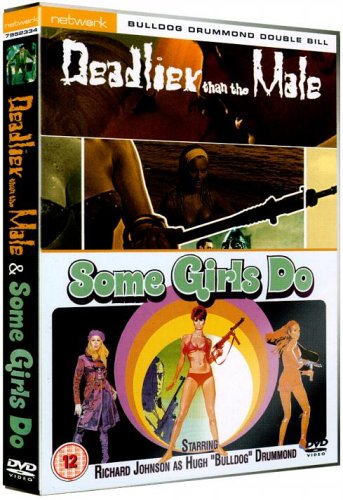 Deadlier Than The Male and Some Girls Do, Ralph Thomas (1967/1969, UK). There must have been something in the water back in the 1960s, with all the debonair spy movies that appeared – not just the early 007s, but Derek Flint, Matt Helm, Maroc 7, Our Man in Marrakesh and… these two starring Bulldog Drummond. Who, er, isn’t strictly speaking a spy. And he originally appeared in the 1930s. He’s some sort of man-about-town who acts as a troubleshooter for an uncle in insurance. Or something. But he does do battle with a megalomaniac. And there are plenty of daft gadgets and nubile women in bikinis. Deadlier Than The Male opens with Elke Sommer poisoning an oil baron aboard his private jet, and then parachuting to safety as the plane explodes behind her. It transpires she was paid to do this by a UK oil company, but the oil company decides not to pay her fee – at least not until one of the directors is killed. But now there’s another person standing in the way of the oil company’s expansion, this time the ruler of a small Arab sheikhdom, who Drummond just happened to go to school with. So Drummond heads off to visit his chum on the Italian Riviera, partly to protect the sheikh and partly to discover who is Sommer’s boss. The film ends with a shoot-out on a giant mechanical cheesboard. Bonkers. Some Girls Do is more of the same. This time it’s a UK project to build the world’s first supersonic airliner (hey, we did that for real!), but the project is being sabotaged. It turns out the saboteurs are nubile young women with “robot brains”. Or something. The science is complete nonsense. The villain, for example, uses a subsonic ray to take control of the supersonic airliner. Good luck with that. “Supersonic” means “faster than sound”. Your ray will never catch up with the plane. Even for its subgenre, this is pretty brainless entertainment, without either the silly humour of Matt Helm and Derek Flint, the po-facedness of Bond, or the colourful locations of Maroc 7 and Our Man in Marrakesh.
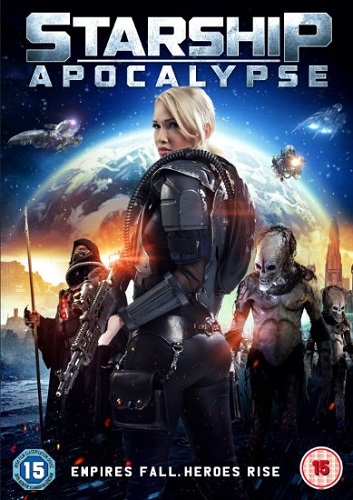 Starship Apocalypse, Neil Johnson (2014, USA). This is the sequel to Starship Rising, a film that was so bad I, er, bought the sequel. Johnson specialises in low-budget genre films, which I guess sort of makes him the self-published Kindle genre writer of the movie world. The set dressing in the two films by him I’ve now watched is cheap and nasty, the acting is poor, the dialogue terrible, and the stories derivative. This one has a disfigured, allegedly immortal emperor, and a small group – the entire cast of the film probably numbers less than a dozen – of rebels, who have this fantastic starship, or something. The only way to watch this film is pissed, which does sort of make figuring out what’s going on a bit difficult. I’ll probably have to watch both films again, but I’m not sure I want to…
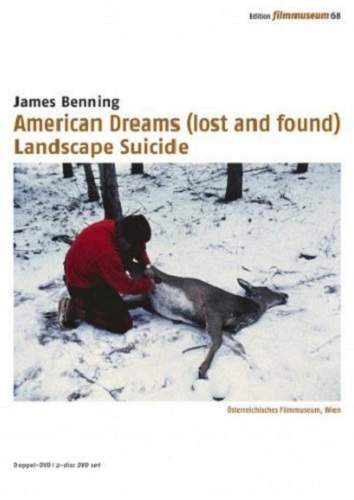
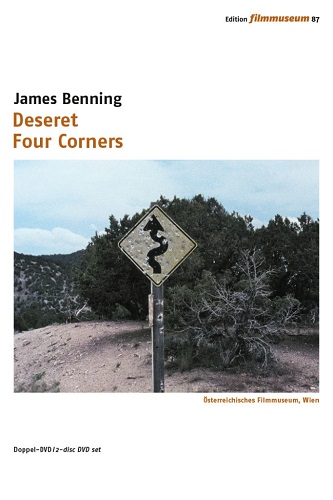
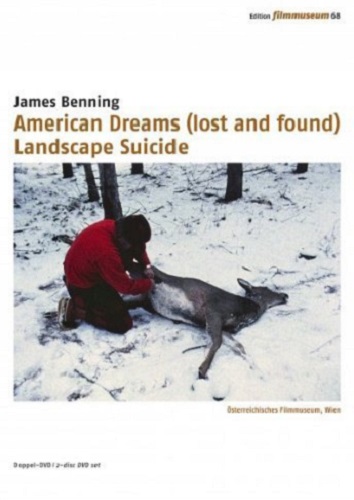 American Dreams (lost and found), James Benning (1984, USA). It probably comes as no surprise that Benning has become one of my favourite directors. He hasn’t knocked Sokurov off the top spot – their oeuvres are almost impossible to compare, but Sokurov has at least made several narrative films (or rather, not documentaries) – but I’d definitely put Benning in the top five. And it’s because of films like American Dreams (lost and found). I can see why Benning’s Deseret made the 1001 Movies You Must See Before You Die list as it’s probably the most accessible of his films (that I’ve seen to date) – and even then it comprises static shots of scenery in Utah, countryside and towns, while a voice reads out stories from the New York Times from 1851 to 1995. American Dreams (lost and found) uses a much more interesting technique to tell its story. In fact, it uses three techniques. The images are of baseball cards and ephemera about Hank Aaron (apparently a great baseball star, although his fame is lost on me as I’ve never followed the sport). The soundtrack consists of a variety of spoken word excerpts, such Martin Luther King’s famous speech, or the first words spoken on the Moon, all iconographic moments in US recent history, alternating with popular music from the 1950s through to the very early 1970s. As well as both of these, a line of handwritten text scrolls across the bottom of the screen. This last is from the diary of a man who plans to murder Richard Nixon, and it reads exactly like the sort of thing written by someone who would plan such a thing – weird spelling mistakes, completely deluded, an oddly prurient but obscene fascination with women… As the film progresses, the story told by the diary deepens, until it is eventually revealed as the real diary of Arthur Bremer, who attempted to kill US presidental candidate George Wallace in 1972. Fascinating stuff.
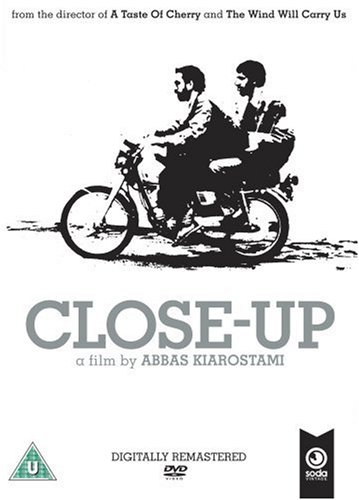 Close-Up*, Abbas Kiarostami (1990, Iran). I believe this is the film which brought Kiarostami to western critics’ notice, and it’s easy to understand why. It’s a documentary in which the people involved re-enact the events of the film’s topic, intercut with footage of the actual court case which results. A man meets a woman in a bus and tells her he is the famous director Mohsen Makhmalbaf. The man visits the woman and her family several times, and tries to raise cash from them for his next film. A journalist meets the imposter, realises he is not Makhmalbaf, and the police are called in to arrest him. Kiarostami interviews the journalist, the imposter and the family, and also films them re-enacting the events which led to the arrest. After the court case, the real Makhmalbaf turns up and gives the imposter a lift on his motorbike to the family’s home so he can apologise for trying to con money out of them. It all adds up to a very clever film, which feels partly like a documentary and partly like fiction, and which plays games with the viewer compact, to the extent it’s not clear where the lines blur. Kiarostami is one of the most important directors currently making films, and this film gives ample reason why.
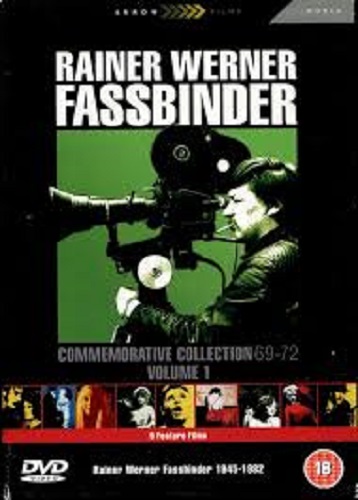 The Niklashausen Journey, Rainer Werner Fassbinder (1970, Germany). I have a soft spot for films which are little more than actors declaiming political arguments instead of dialogue in a story, such as Miklós Jancsó’s The Confrontation… And now this one. The story is based on a true story from the fifteenth century, about a shepherd who claimed to have seen the Virgin Mary in a vision and promptly tried to start an uprising against the church and landowners. It didn’t succeed. Fassbinder uses a mix of contemporary and historical costumes, and has his actors discuss revolutions and historical forces while notionally acting out the life of the shepherd. It works surprisingly well. Most of the scenes are static, with the cast either standing or sitting still while they speak. And yes, I ended up buying the Rainer Werner Fassbinder Commemorative Collection 69-72, Volume 1, so now I have both sets – and they’re worth it even if not every film in them is entirely successful.
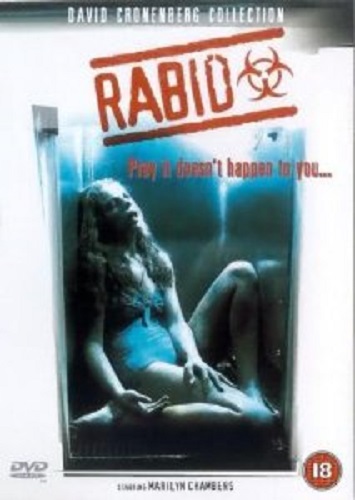 Rabid, David Cronenberg (1977, Canada). A charity shop find. Sadly, it was the only early Croneneberg they had. It is, unsurprisingly, distinctively one of his. A young couple are involved in a motorbike accident. She is badly burned, but fortunately the accident took place near a famous plastic surgery clinic. The head of the clinic employs an experimental method to graft skin over the burned area, and as a result the young woman, er, grows an orifice in her armpit, yes really, which has a stinger inside, yes really. She uses this to feed. Her victims cannot remember afterwards what happened, and then some time later they turn into zombies. Whoever the zombies bite, also becomes a zombie. It turns into an epidemic, its cause completely flummoxing the Canadian authorities. It’s a bit too daft a premise to shock as horror, although it works quite well as a completely bonkers thriller. Porn actress Marilyn Chambers plays the young woman, in her first straight acting role. Not a bad film, although it’s clear not much money was thrown at it.
1001 Movies You Must See Before You Die count: 650



 It Doesn't Have To Be Right...