It Doesn't Have To Be Right…

… it just has to sound plausible


3 Comments

2016, the best of the year

It’s been a funny old year. Not only have we hit that time when the icons of our youth are in their (late) sixties, seventies and eighties, and so coming to the end of their lives… but some of the British people had a fit of madness and voted to leave the EU in the dumbest referendum in British political history… And then the US went one better, as it always has to, and voted in as president Donald Trump, an orange-skinned baboon, a man who makes Nigel Farage look like a mostly-harmless over-educated clown. Trump doesn’t even have his arse officially in the Oval Office yet, and he’s already abusing his powers. We’ve had ten years of damaging and unnecessary austerity here in the UK, and we’re looking down the barrel of a deeper recession, thanks to the morons and racists who voted Leave. But I think the next four years in the US might well be worse than anything we experience…

On the personal front, the day job got really busy around March, when a colleague left the company and a major project he was working on was dumped on my desk. As a result, I’ve not had much energy or enthusiasm for anything other than just consuming culture… which has meant lots of blog posts on films I’ve watched, books I’ve read, and, er, films I’ve watched. I did manage to publish a whole four stories in 2016, however; ‘Geologic’ appeared in Interzone in January; ‘Red Desert’ and ‘Our Glorious Socialist Future Among the Stars!’ appeared in Dreams of the Space Age, a collection of my alt space stories; and Coda: A Visit to the National Air and Space Museum I published as a pendant to the Apollo Quartet… but only the last was actually written in 2016. I also worked on the third book in my space opera trilogy, A Want of Reason, in fits and starts. So, overall, not a very productive year.

Fortunately, some of the films I watched and some of the books I read made up for it. A new favourite writer and two new favourite films is not bad going for a single year. And a number of other “discoveries”, both writers and directors new to me in 2016, I thought so good I will be further exploring their oeuvres. But. There can only be, er, five. In each category. Yes, it’s that time of the year – ie, pretty close to the end – when I look back over the aforementioned consumed culture – of which there has been quite a bit, particularly on the movie front – and pick my top five in books, films and albums. And they look something like this…

books
Not a very good year for genre fiction, it seems. Not a single category science fiction novel makes it into my top five. And one gets bumped from the half-year top five (those are the numbers in square brackets) to the honourable mentions. Four other genre writers also make my honourable mentions – Charnock, Whiteley, Duchamp and Park – although I’ve been a fan of Duchamp’s and Park’s writing for many years.
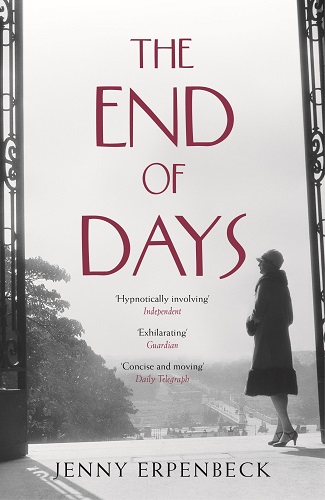
end_days1 The End of Days, Jenny Erpenbeck (2012) [1]. Erpenbeck was my discovery of the year. I forget who recommended The End of Days, but I loved it… and then later bought everything else by Erpenbeck translated into English (she’s German). The End of Days re-imagines the life of a Jewish woman born in the early years of the twentieth century in Galicia, and follows her through several variations on her life, as she variously moves to Vienna, becomes a communist, moves to Austria, then settles in East Germany. Erpenbeck’s prose is distant and factual, a style that appeals greatly to me, and I especially like the “facticity” of her protagonist’s many lives. The End of Days is not as readable, or as immersive, a novel as Kate Atkinson’s Life After Life, a book it resembles in broad conceit, but I much prefer Erpenbeck’s novel because I love the authority of its reportage-like prose, and I find the life of its protagonist much more interesting than that of Atkinson’s. I think The End of Days is a superb novel – I’ve already bought everything by Erpenbeck published in the UK, and I eagerly await whatever new works might appear.
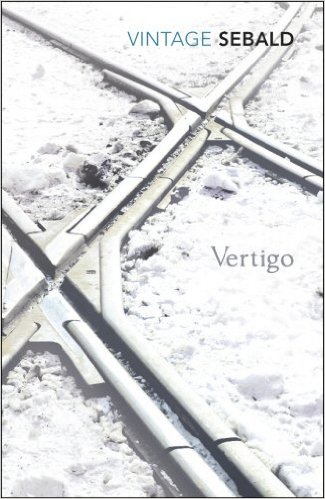
vertigo2 Vertigo, WG Sebald (1990) [2]. Sebald is a genre all to himself, and his novels defy easy summary. They also – particularly in this case – tread that fine line between fact and fiction which I find so appealing, even more so when the fact is autobiography. (In hindsight, I could have included Vertigo as an inspiration for Coda: A Visit to the National Air and Space Museum, but then Austerlitz had partly inspired Adrift on the Sea of Rains, so…) The novel is divided into four parts, all first person narratives – the first is by Stendahl and describes his entry into Italy with Napoleon’s army, the second is by an unnamed narrator presumed to be Sebald and covers two trips he makes to a village in the Alps, the third is about Kafka, and the final section recounts the narrator’s return to his home village and his reflections on the changes, and lack of change, he sees there. Despite its discursive nature, there’s a deceptive simplicity to Sebald’s prose, which tricks the reader into thinking the story carries a smaller intellectual payload than it actually does. I don’t know of another author who writes at such length, and so indirectly, on a topic and yet still manages to make it all about the topic. Sebald did not write many novels – only four, in fact – but I suspect by the end of 2017 I will have read all of them.
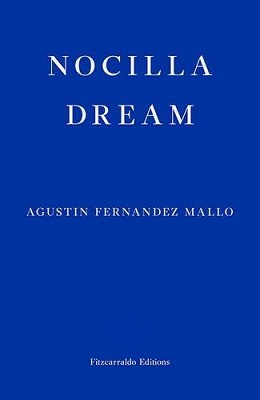
nocilla3 Nocilla Dream, Agustín Fernández Mallo (2006). I’m pretty sure it was David Hebblethwaite who mentioned this, and the description sounded intriguing enough I decided to give it a go. It was almost as if it had been written for me – a fractured narrative, split into 113 sections, some of which are factual, some of which hint at further stories. There’s a sense the novel is a work in progress, inasmuch as it’s an approach to narrative that has not been tried and tested – indeed, it led to a “Nocilla Generation” of writers in Spain. I suspect Mallo is guilty of over-selling his concept, but then narrative structure is one of my interests and I should think most writers – including myself, of course! – often think they’re being much cleverer than they actually are… What Mallo has created here may not be wholly new, but it is different enough to be worth keeping an eye on. And yes, I still find it a little disappointing that “Nocilla” is just a Spanish brand-name for a Nutella-like spread. It’s like when I thought Nirvana’s ‘Smells like Teen Spirit’ was a really poetic title until I learnt Teen Spirit is just the brand name of a deodorant…
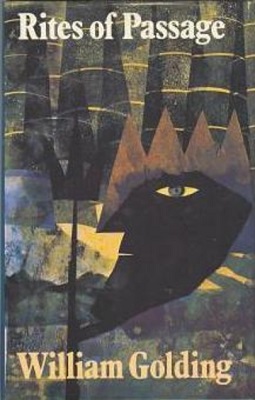
rites_of_passage4 Rites of Passage, William Golding (1980). I found this in a local charity shop and bought it on the strength of Golding’s reputation and a half-remembered reading of Lord of the Flies from my school days… In other words, I went into Rites of Passage pretty much blind. I will happily admit I’m not over-fond of journal narratives, and the early nineteenth century is not a period that really interests me (especially in British history), but… this novel was so superbly put together, its control of voice, its management of story, so stunningly good, that after reading it I immediately decided I’d like to read not only the rest of the trilogy, of which this book is the first, the others are Close Quarters and Fire Down Below, but also anything else by Golding. Fortunately, I’d also bought The Inheritors and The Spire when I bought Rites of Passage, so I have those two books on the TBR to look forward to…
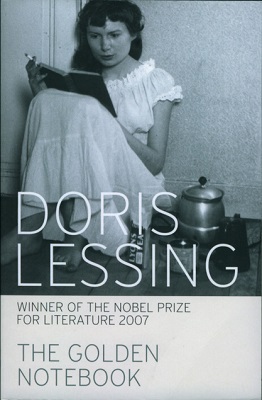
golden_notebook5 The Golden Notebook, Doris Lessing (1962). I’d bought this a couple of years ago on the strength of its reputation – and having read several Lessing novels… but it sat there on my bookshelves unread for quite a while because, well, partly because of its reputation, but also because of its size… But I took it with me on a train journey to Scarborough… and discovered it was a great deal less polemical than I’d expected, hugely readable, and fascinating in its depiction of the life of protagonist Anna Wulf (and her fictional/meta-fictional counterparts). The nested fictional/meta-fictional narratives are no longer as excitingly experimental as they were in 1962, so in one respect the book’s impact has been somewhat blunted by time – although, to be honest, I much prefer literature which plays such narrative tricks. Having said that, this diminution in shock factor solely from structure shows how readable and coherent the various narratives actually are. It is slightly sad and frightening that The Golden Notebook enjoys the reputation it does when you think what a reader must be like, and believe, in order to be shocked and horrified by the novel’s content. Even more worryingly, I suspect more people these days will reject the novel due to its politics – Wulf is a member of the Communist Party – and so completely miss its commentary on sexual politics. But I thought it was bloody great.

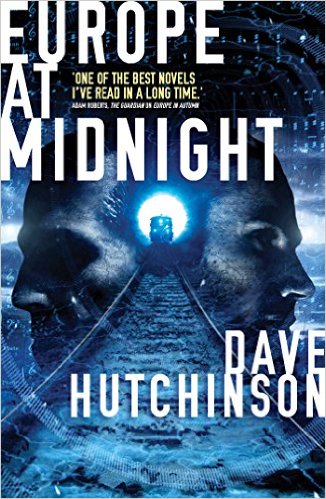
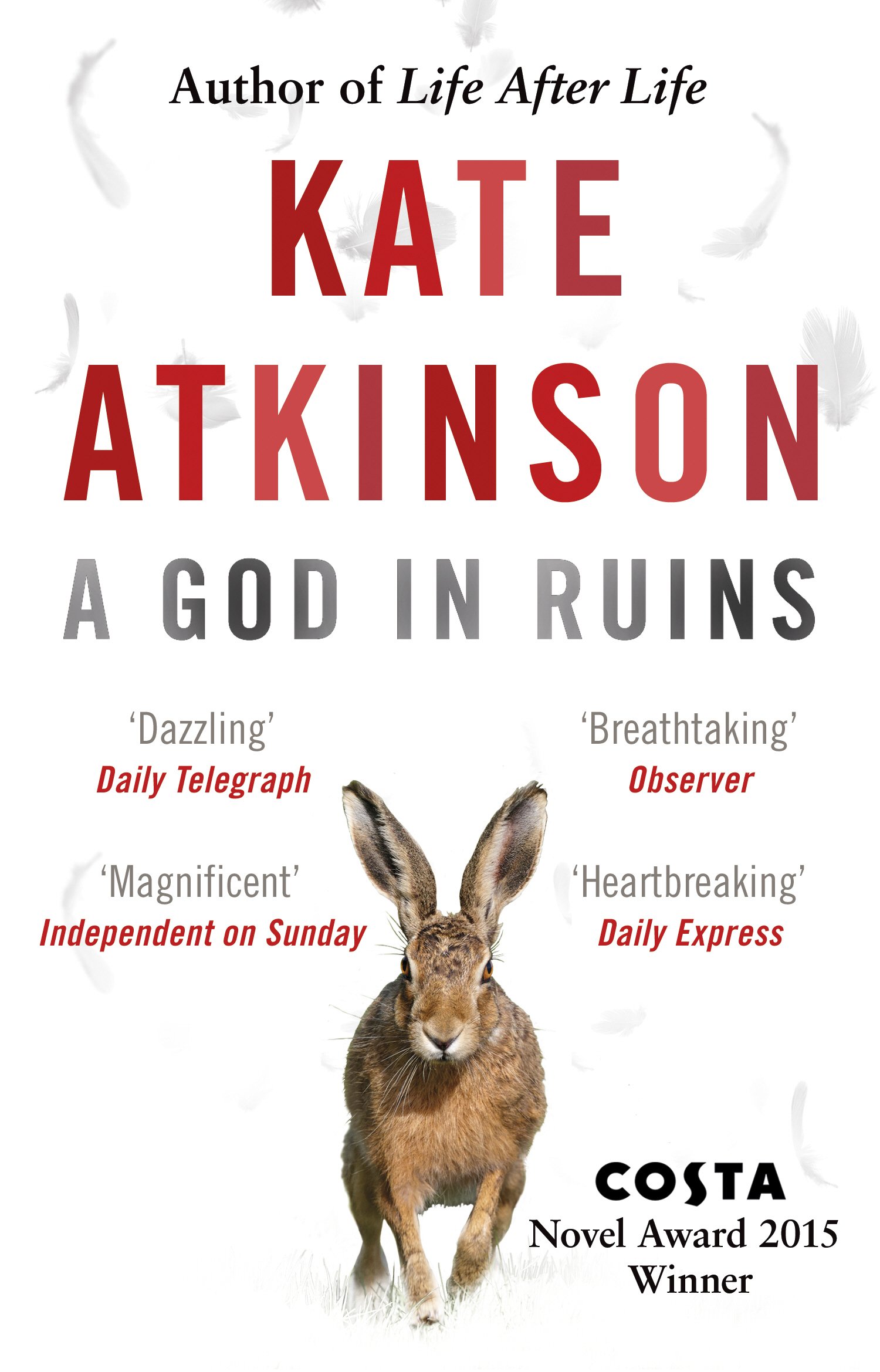
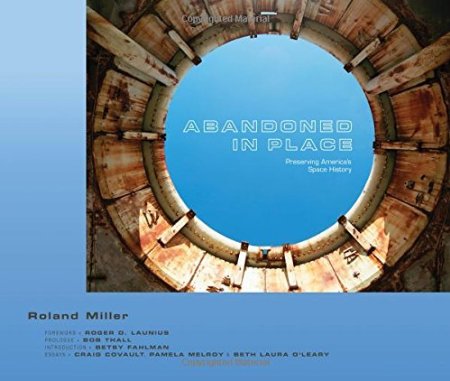
Honourable mentions: Europe at Midnight, Dave Hutchinson (2015) [3]; A God in Ruins, Kate Atkinson (2015) [4]; Abandoned in Place, Roland Miller (2016) [5]; Visitation, Jenny Erpenbeck (2008); Sleeping Embers of an Ordinary Mind, Anne Charnock (2015); The Arrival of Missives, Aliya Whiteley (2015); Never at Home, L Timmel Duchamp (2011); Cockfosters, Helen Simpson (2015); Blindness, Henry Green (1926); and Other Stories, Paul Park (2015).

Quite a few books from my best of the half-year got bumped down to honourable mentions, but I suspect their authors will not be too upset given what replaced them. Three of the honourable mentions are from small presses – Unsung Stories, Aqueduct Press and PS Publishing – and it’s about fifty-fifty category sf versus mainstream. The gender balance is 2:3 in the top five for female:male, but 8:7 including the honourable mentions. That’s not too shabby. All books mentioned above are, of course, recommended.

films
A bit of a change in this list from July, but then I’ve watched a lot of films this year. Some of the ones in the top five below have even become favourites, which makes 2016 an especially good year in that respect. Of course, my taste in movies has changed a lot over the last couple of years, but even so…
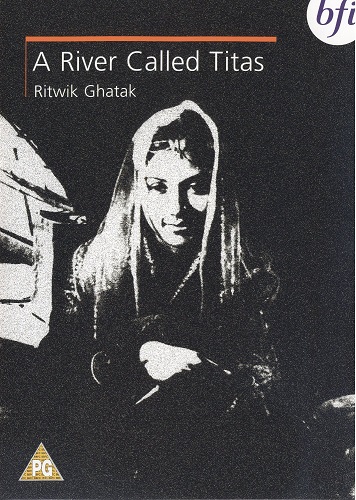
river_titas1 A River Called Titas, Ritwik Ghatak (1973, India). I watched Ghatak’s A Cloud-Capped Star back in 2014, after, I think, seeing it mentioned in Sight & Sound, but it wasn’t until this year I saw the only other film by him available on DVD in the UK, A River Called Titas. (Ghatak’s Subarnarekha is on the 1001 Movies you Must See Before You Die list, but I had to source a copy via alternative means in order to see it.) I have no idea why I love A River Called Titas as much as I do. It tells the story of a young woman during the 1930s in a village on the bank of the eponymous river, who is married against her will, then kidnapped, rescued by strangers, and subsequently builds a life for herself and her new child in another village not knowing who her husband ever was… until she one day stumbles across him. But he has lost his mind. Then they die, and the film follows their son and the woman who adopted him. It’s based on a novel by Adwaita Mallabarman, which I now really want to read. The BFI DVD is not a brilliant transfer, which is a shame as the composition of some of the shots is beautiful. I’ve watched this film five times already this year – and the final watch was of the Criterion remastered edition, which is such a huge improvement over the BFI print – so much so that it was almost like watching a new, and much better, movie.
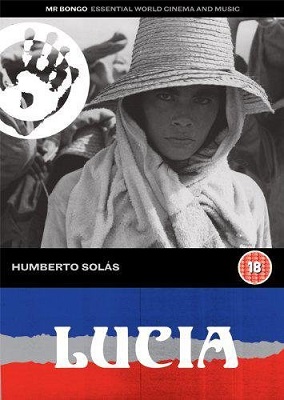
lucia2 Lucía, Humberto Solás (1968, Cuba). I watched this because it was on the 1001 Movies You Must See Before You Die list (something of a familiar refrain, I admit), and I knew nothing about it when I put it in the DVD player – indeed, I knew nothing about Cuban cinema. But I loved it. It tells the stories of three women, all called Lucía – the first in the 1860s, the second in the 1930s and the third in the 1960s. It’s a long film and it covers a lot of ground, but it’s a wonderfully human movie. The Mr Bongo transfer is pretty poor – but it’s the only DVD of the film I can find, so can someone please remaster it?  – and the film is black-and-white, so the poor quality is not as noticeable as it might otherwise be… The acting feels appropriate to each of the historical periods, although it does tend to drift into melodrama at times… but when I started watching this I’d never have guessed I’d love it, so much so that Lucía has, like A River Called Titas, become a favourite film.
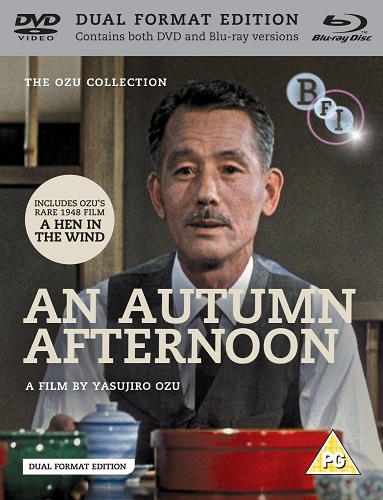
autumn_avo3 An Autumn Afternoon, Yasujiro Ozu (1962, Japan) [1]. I’d seen Ozu’s Tokyo Story back in 2009, but it wasn’t until this year that I really started to explore Ozu’s oeuvre. I admit it, I bought An Autumn Afternoon because the cover of the Criterion edition (although I actually bought the BFI edition pictured) reminded me of Antonioni’s Red Desert, a favourite film. And while An Autumn Afternoon was nothing like Red Desert, it is a beautifully observed domestic drama. Ozu had a tendency to use the same actors in different roles, which did intially confuse – Chishu Ryu is playing the patriarch of which family in this film? – but I also think An Autumn Afternoon has the clearest illustration of inside and outside in Japanese culture of all of Ozu’s films I’ve so far seen. There’s a lovely matter-of-fact courtesy among the characters, despite the fact it’s obvious they know each so well they’re extremely comfortable in each other’s company; and it’s the interactions between the characters which are the true joy of Ozu’s movies. The plot, when you think about it, is almost incidental. There’s an effective scene in An Autumn Afternoon, in which Ryu encounters a petty officer from a ship he captained during WWII. It is not, in and of itself, a particularly shocking discovery about Ryu’s character, but it is a powerful reminder that for much of the twentieth century WWII defined a great many peoples’ lives, on both sides of the conflict… and that is something we should not forget.
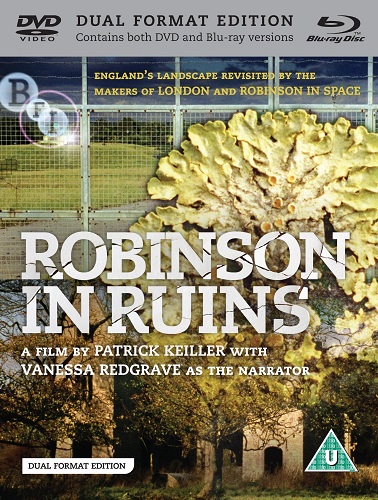
robinson4 Robinson in Ruins, Patrick Keiller (2010, UK). I forget who mentioned Keiller to me, but I received his London as a Christmas present last year and, having thought it was very good, bought myself Robinson in Ruins, a belated sequel, in 2016. The central conceit, that the films are narrated by a friend of the titular Robinson as secondhand reportage, still occurs in Robinson in Ruins – the original narrator, Paul Scofield, died in 2008, and Vanessa Redgrave takes his place in Robinson in Ruins, and, I thought, she actually worked better. The idea that Robinson had spent the intervening years in prison gave the film a freshness, because we’re seeing what it depicts through Robinson’s eyes. But, more than that, its commentary on Tory politics and finances, at an almost Adam-Curtis-like level of detail and interconnectedness, gave the film an added bite Keiller’s earlier films had lacked. This is not the bite of a Great White, it must be admitted, more the savaging of a tenacious spaniel, but the fact it exists only illustrates how much more of this type of cinema we need. Having said that, Redgrave’s narration is erudite, interesting and perfectly played; and Keiller’s imagery is often beautifully shot. More, please.
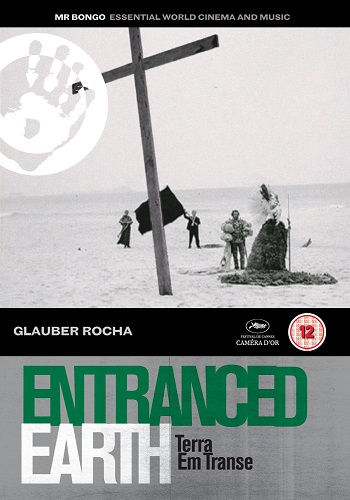
entranced_earth5 Entranced Earth, Glauber Rocha (1967, Brazil) [2]. I watched this because it was on the 1001 Movies You Must See Before You Die list (where have we heard that before?), although I knew nothing about Rocha’s movies – or indeed about Brazilian cinema. I loved it. So much so I bought all three of Rocha’s films available on DVD in the UK – Entranced Earth, Black God White Devil and Antonio das Mortes. Rocha was a leading light of Brazil’s Cinema Novo movement, which sought to bring realism and social conscience into Brazilian films. Entranced Earth has bags of the latter, but not so much of the former. It’s an often hallucinogenic account of an election in an invented South American country, between an established candidate and a populist candidate (back when “populist” didn’t mean orange-faced fascist or goose-stepping Mr Blobby), but neither candidate is ideal – as an investigating journalist discovers. The narrative is non-linear, some of the photography is brilliant (a shot from the top of a TV aerial stands out), and the films wears its politics proudly on its sleeve. Kudos to Mr Bongo for distributing these films in the UK – even if the transfers are not of the best quality – but Rocha made four feature films and five documentaries, so it would be nice to see those too… not to mention actual UK releases of films by another Brazilian Cinema Novo director, Nelson Pereira dos Santos… or indeed any other Cinema Novo director…

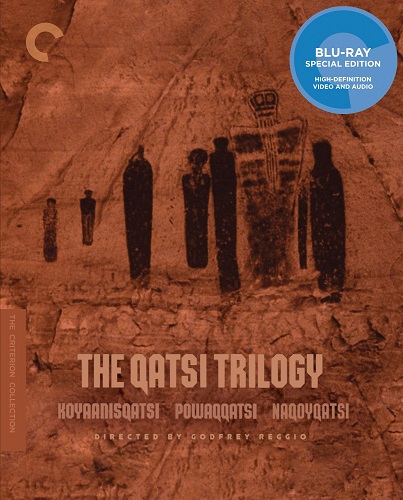
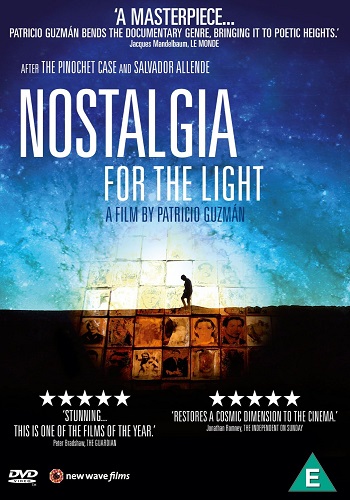
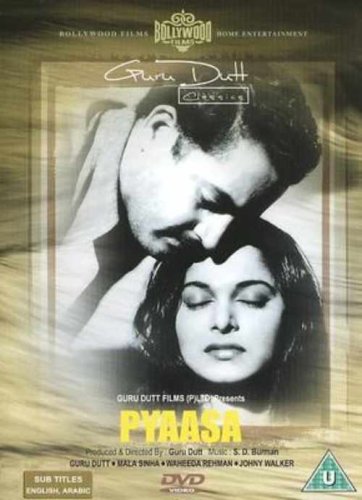
Honourable mentions: Koyaanisqatsi, Godfrey Reggio (1982, USA) [3]; Nostalgia for the Light, Patricio Guzmán (2010, Chile) [4]; Pyaasa, Guru Dutt (1957, India) [5]; Timbuktu, Abderrahmane Sissako (2014, Mauritania); Nuummioq, Otto Rosing & Torben Bech (2009, Greenland); A Touch of Sin, Jia Zhangke (2013, China); 12:08 East of Bucharest, Corneliu Porumboiu (2006, Romania); A Flickering Truth, Pietra Brettkelly (2015, New Zealand); Jeanne Dielman, 23 Quai de Commerce, 1080 Bruxelles, Chantal Akerman (1975, France); and Charulata, Satyajit Ray (1964, India).

Only a single US film in the lot, which I consider an achievement – although I’ve been accused of “going too far in the opposite direction”. But I do like classic Hollywood movies, and I love me some 1950s Rock Hudson melodramas, but… that doesn’t necessarily mean I think they’re good films. The above is a pretty eclectic mix, from 13 different countries, of which India manages three entries (which came as a surprise, although I do really like the work of those three Indian directors). If anything, I’m hoping 2017 will be even more of a world cinema year, and I’ll find interesting films from countries whose cinemas I have yet to explore.

Oh, and for the record, my top ten favourite films, as of this post, currently looks like this: 1 All That Heaven Allows, Douglas Sirk (1955, USA) 2 A River Called Titas, Ritwik Ghatak (1973, India); 3 Alien, Ridley Scott (1979, UK/USA); 4 Red Desert, Michelangelo Antonioni (1964, Italy); 5 Lucía, Humbert Solás (1968, Cuba); 6 The Second Circle, Aleksandr Sokurov (1990, Russia); 7 Mięso (Ironica), Piotr Szulkin (1993, Poland); 8 The White Ribbon, Michael Haneke (2009, Austria/Germany); 9 Divine Intervention, Elia Suleiman (2002, Palestine); 10 Fahrenheit 451, François Truffaut (1966, USA).

music
It’s been a, er, quiet year for music for me. I went to Bloodstock Open Air, as I have done since 2007 (minus 2009 and 2010), and enjoyed it a great deal. It was excellent to see Akercocke back together again (and I saw them a second time a couple of months later in Sheffield), but I think the stand-out performance of the weekend for me was Shining, who I’d never even heard of until I saw them at Bloodstock in 2014. That was pretty much it, gig-wise, for 2016. I also saw Arch Enemy, who I’d last seen at Bloodstock in 2007, but their set felt a bit lacklustre. Akercocke were better second time around, playing a small nightclub rather than a giant field in Derbyshire. And then there was a one-off gig by Anathema in Holmfirth, and they were as bloody good as they ever are (and yes, they played my two favourite songs, ‘Closer’ and ‘Fragile Dreams’).

I’ve not bought that many albums this year, either as MP3 downloads or olde stylee silver discs, although a couple of my favourite bands have had new releases out. Partly because I used to listen to music a lot at work, but I’ve been so busy there I’ve sort of got out of the habit. I’ve also been carded once too often by couriers because I didn’t hear the doorbell over the music when I’ve been at home. But the year has not been a total dead loss, because I did actually buy some music, and a lot of it was very good indeed. And, amazingly, my top five are all 2016 albums…
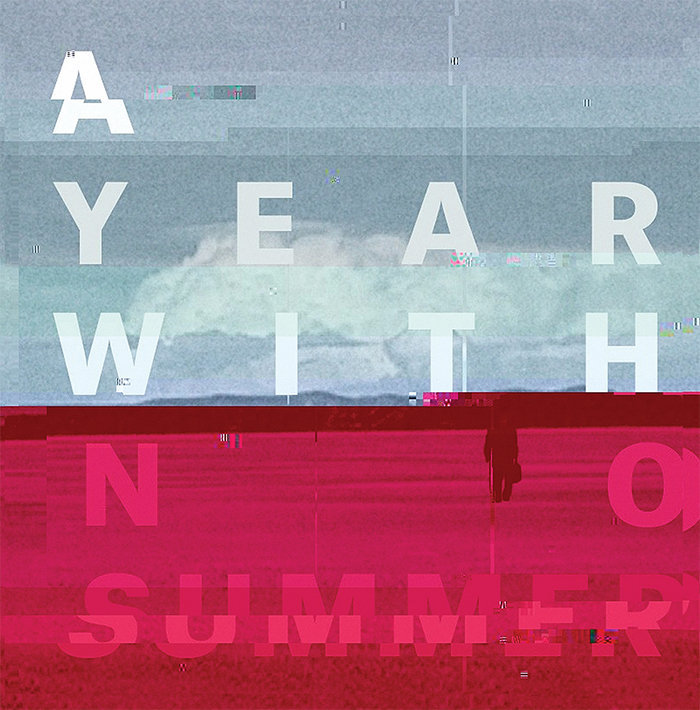
no_summer1 A Year with No Summer, Obsidian Kingdom (2016) [1]. I discovered this group when I saw them play live at Bloodstock in 2014, and I enjoyed their set so much I bought their album. This second album has been long-awaited, and it’s particularly good because it’s not more of the same. It is, if anything, even more progressive than the band’s debut, Mantiis. There must be something about the Spanish metal scene that leads to bands which generate these complex soundscapes from drums, bass, guitars and synth, more so than the metal of any other nation – not just Obsidian Kingdom, at the progressive end of the scale, but NahemaH, a favourite and now sadly defunct band, from the death metal end of the scale, not to mention Apocynthion somewhere in between. Whatever it is, I welcome it: A Year with No Summer is a listening adventure from start to finish, and never gets tiring.

on_strange_loops2 On Strange Loops, Mithras (2016). And speaking of long-awaited albums… Mithras’s last album, Behind the Shadows Lie Madness, was released in 2007. There was an EP, Time Never Lasts, in 2011, but it’s been a long wait for a new album-length work from this favourite band. This is pretty much down to the band’s perfectionism, a trait with which I can certainly empathise – and releasing on your own label, or self-publishing, as least gives you the freedom to release when and only when you feel the work is fit for release. Happily, and after all this time, On Strange Loops is definitely worth the wait. It is, of course, more of the same – massively intense and intricate death metal with ambient interludes. It works because of the contrasts and because the muscianship is of such a high level. Mithras toured this year, but I didn’t get the chance to see them perform, which I regret. Maybe next year.

rooms3 Rooms, Todtgelichter (2016) [3]. A friend had this on their wishlist on Bandcamp, so I gave it a listen as we often like a lot of the same stuff. I liked it. A lot. Back in June, I described Todtgelichter’s music as “a sort of guitar-heavy post-black metal”, and I still think that’s the best description because, well, it doesn’t sound at all like black metal but it does sound like the band were at some point a black metal band. If that makes sense. I don’t know; perhaps it’s the sensibility with which they construct their songs. It’s not particularly heavy, inasmuch as the guitar sound is more like heavy rock turned up to eleven than your actual metal guitar, but the whole is metal. Frank Zappa once said that writing about music is like dancing about architecture (Googles quickly, discover Zappa didn’t coin it, oh well). But the point remains – there is something in Todtgelichter’s music which appeals to me, and I can’t quite identify what it is. But they made my top five for the year.
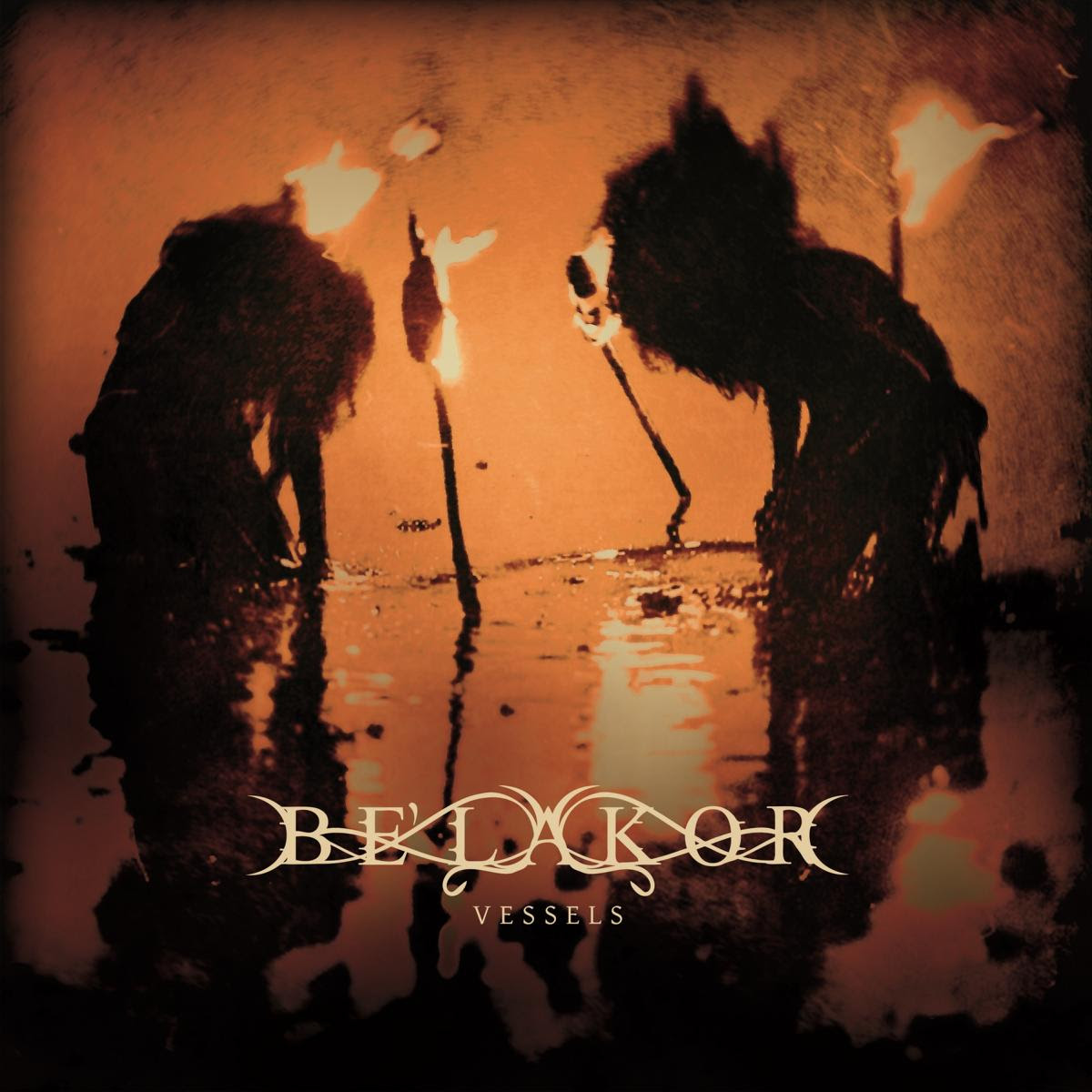
belakor-vessels4 Vessels, Be’lakor (2016). I’ve been a fan of Australian melodic death metallers Be’lakor since first hearing their 2012 album Of Breath and Bone. It taken four years for a sequel – happily not so long for me, as I found their earlier works, The Frail Tide (2007) and Stone’s Reach (2009) during the years in-between – but Vessels is easily as good as, if not better than, Of Breath and Bone. It’s not just that Be’lakor create polished melodic death metal, as there as many varieties of that as there are bands who profess to play it (not to mention bands who profess not to play it but do), but more that they create layered songs with intricate but melodic guitar parts, with strong melody lines carried by the vocals. It’s a winning combination.
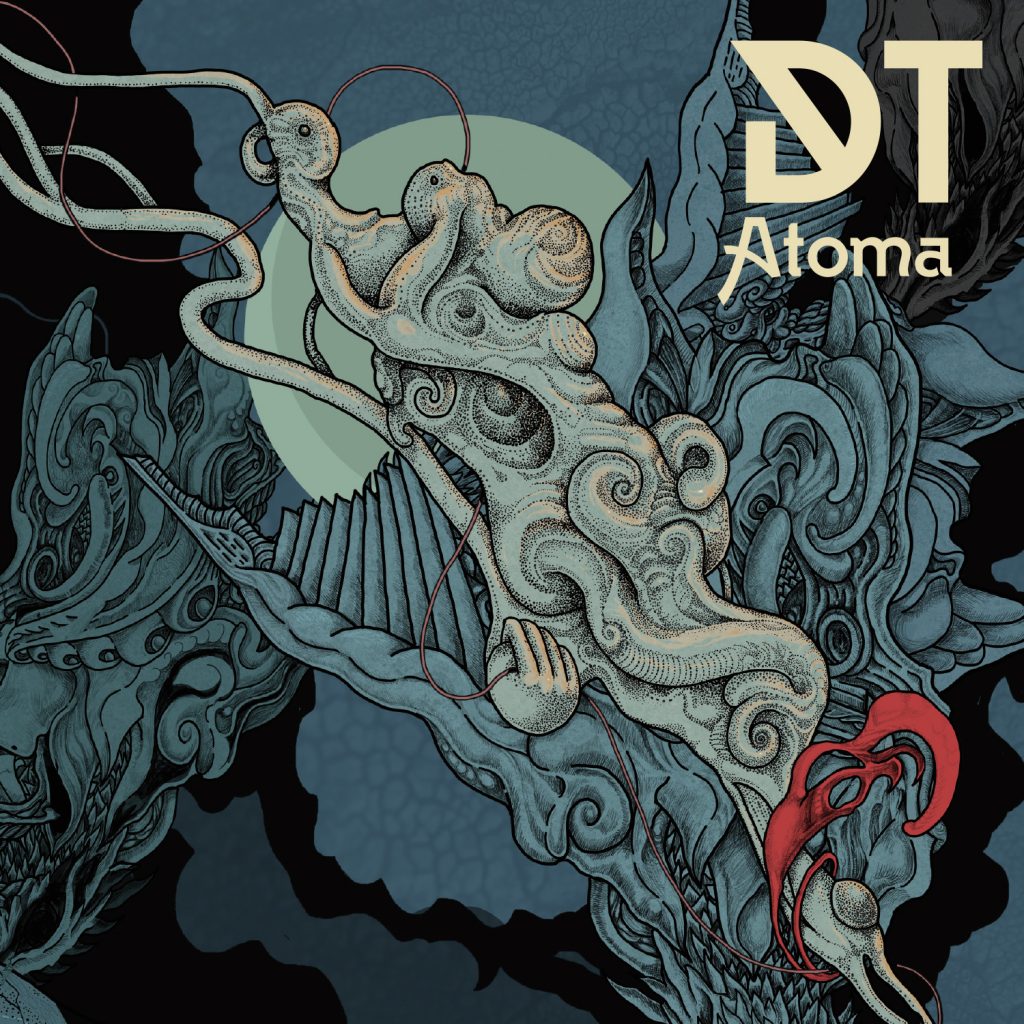
atoma5 Atoma, Dark Tranquillity (2016). A new album by a favourite band, so it’s no surprise to find it here – but it’s at number five because it’s a recent release and I’ve not listened to it as much I’d have liked to. It sounds very much like a Dark Tranquillity album, of course, although nothing on the few listens I’ve had struck me as “anthemicly” stand-out in the way tracks on earlier albums have done, like ‘The Wonders At Your Feet’, ‘Lost to Apathy’, or ‘Shadow in Our Blood’, but, still, this is Dark Tranquillity. They’ve been creating excellent death metal since 1989, and they’ve never stood still, which is one reason why I treasure them so much. Dark Tranquillity are the moving line which defines melodic death metal.

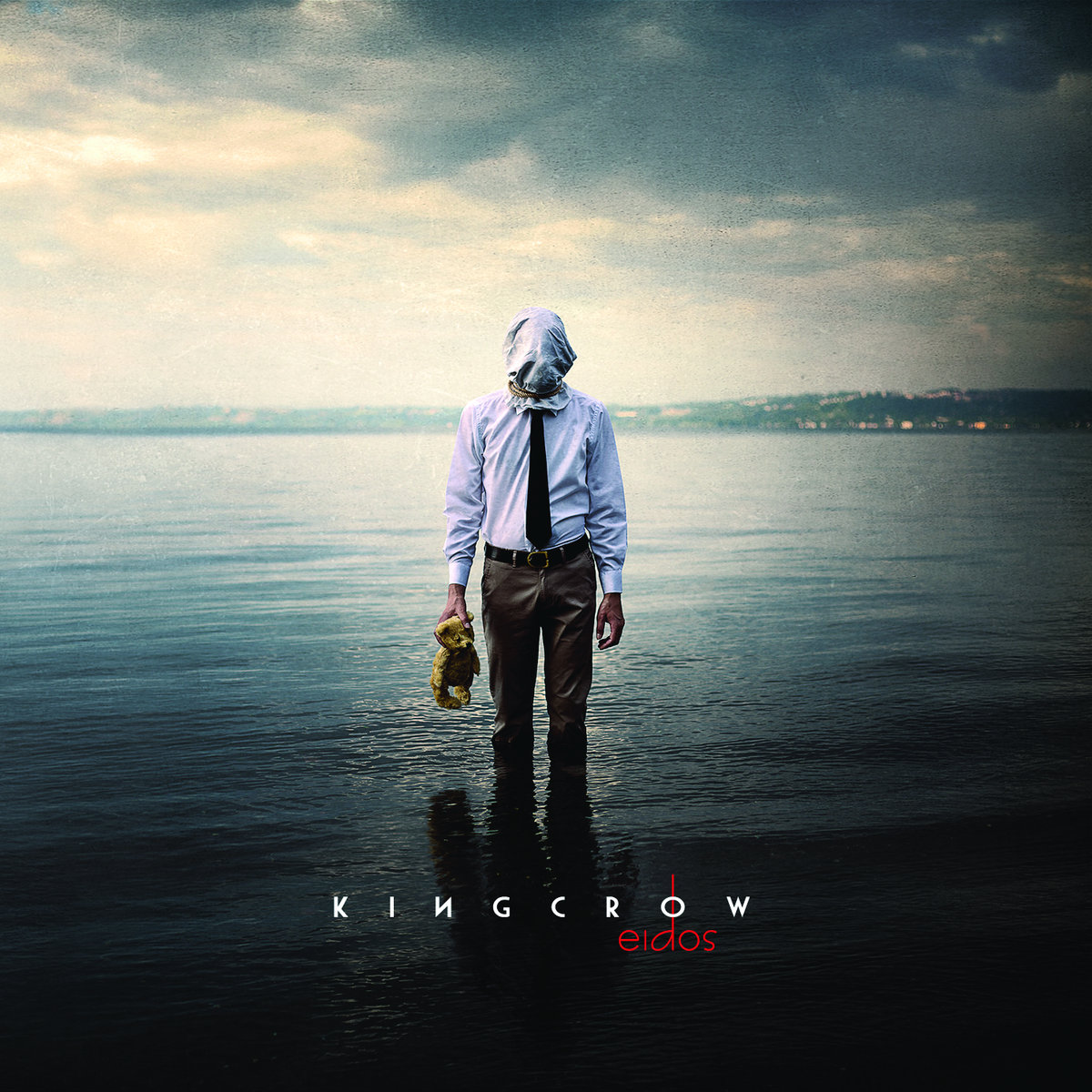
Honourable mentions: Afterglow, In Mourning (2016) [2]; Eidos, Kingcrow (2015) [4]; Changing Tides, Trauma Field (2016) [5]; Departe, Clouds (2016); and Pure, In the Woods (2016).

An odd year for music. A few favourite bands released new albums, not all of which I bought. I went to very few gigs – ten years of Austerity has noticeably reduced the number of bands I’d like to see performing in Sheffield, now they just play Leeds or Manchester. Even the local metal scene seems to have been affected: some of the bigger bands have called it a day, others have not performed as often as in previous years. I’ve certainly listened to less music, and less new music, and bought less music, in 2016 than in previous years. Partly that’s because I’ve spent less time exploring metal on Bandcamp and other sites, but also because I’ve spent less time listening to music than in other years. And partly because fewer bands I want to see have performed locally. Let’s hope 2017 proves a better year musically…
Leave a comment

Best of the half-year, 2016

A lot of people do best of the year posts, but I also like doing these best of the half-year ones, as I find it interesting to see how they change as the year progresses. The two sets of lists are rarely the same, of course – new works make each top five that I hadn’t read, watched or listened to in the first half of the year. But sometimes, works from the honourable mentions get promoted to the top five as my opinion changes of them.

books
Every time I write one of these best of posts, I seem to start them with: it’s been an odd year for reading but I’m not sure why… Which I guess means they haven’t really been odd since they’ve pretty much been the same. It could mean, I suppose, that the last few years have felt like my reading lacks shape or direction because it’s not in step with the genre commentary I see online. After all, while science fiction still forms the bulk of my reading at forty percent, with mainstream fiction a distant second at 26%, I don’t generally read the genre books which are getting the buzz… And when I do, as I did with this year’s Clarke Award shortlist, then I have no idea why those books are receiving so much praise… Which is no doubt why only one category sf novel makes my top five – and only two genre titles appear in my honourable mentions… And yes, the one sf novel in my top five is on the Clarke Award shortlist (because it’s an exception to my earlier comments, of course).
end_days1 The End of Days, Jenny Erpenbeck (2012). I knew the moment I finished this book it would make my top five for the half-year, and I’ve not read anything since (I read it back in March) that has impressed me as much. I plan to read more by Erpenbeck – although not all of her books have been translated into English. Although not published as genre, either here or in Germany, its central conceit is certainly genre – a young woman, who is born in the latter days of the Austro-Hungarian empire, lives out her life during the turbulent years of the early twentieth century. Sometimes, she dies; other times, she survives. It’s a similar premise to Kate Atkinson’s Life After Life; it’s also beautifully written and feels like a much more substantial read. The historical side is handled with skill, and the view it gives on elements of European history during the period in question is fascinating. I wrote about it here.

vertigo2 Vertigo, WG Sebald (1990). Sebald is in a class of his own, so his presence in this list is probably no surprise. Vertigo is a collection of stories which have no overt link, but because of Sebald’s voice they read as a seamless whole. I’ve no idea how much of the novel is fact or fiction – it is, like Austerlitz, very autobiographical I suspect, but I’m not familiar enough with Sebald’s life and career to determine if parts of this novel – especially the section in which the narrator returns to his childhood village of W., notes the changes and reminisces about his time living in the village – although does not lessen my admiration of the book in the slightest (and learning the truth may well increase it). I’ve only read two Sebald books so far, and both made my best of the year lists. I still have one more, The Rings of Saturn, on the TBR. I think I should save it until next year. Anyway, I covered Vertigo in a blog post here.

europe3 Europe at Midnight, Dave Hutchinson (2015). It’s been a good year for this book, with appearances on various award shortlists. And rightly so. It’s not quite a sequel to the earlier Europe in Autumn, but it’s better for not being one. And thanks to the rank irresponsibility of our government in calling this stupid referendum, Europe at Midnight has become unfortunately topical. I say “unfortunately” because it’s obviously not the book’s fault, and although its creation of a pocket universe England might map onto the wishes of assorted Brexit fuckwits, I know the author’s sympathies don’t lie there and the novel’s Gedankenexperiment is in no way an endorsement of them. Of course, no one ever accused Le Carré of being pro-Soviet but then his novels presented the USSR as the enemy… And I’m digging myself into a bit of a hole here as Hutchinson’s Community is also presented as the enemy. But never mind. I wrote about this book here.

agodinruins4 A Gods in Ruins, Kate Atkinson (2015). Like the Hutchinson, this is a sequel of sorts to an earlier novel, Life After Life, although it neither continues the plot, nor uses the same cast, as its predecessor. I thought Life After Life good – an immensely readable novel – and even nominated for the Hugo (of course, it didn’t make the shortlist). A God in Ruins is, I think, slightly better. Its central conceit is dialled back more in the narrative, but it’s just as hugely readable as Life After Life. A God in Ruins is the story of the life of a man who fought during WWII and so tries to live a blameless live afterwards. It is, sort of, a variation on A Matter of Life and Death; but in a way that is neither obvious nor intrusive. For much of its length, it’s a lovely piece of historical writing, of personal history stretching much of the length of the twentieth century; but there’s an added dimension which is only hinted at. I wrote about it here.

abandoned5 Abandoned in Place, Roland Miller (2016). It’s all very well celebrating the achievements of past years, but often all we have as evidence are words in books. True, there is evidence aplenty on the surface of the Moon to prove that twelve men once walked there (assorted fuckwits who insist it was all faked aside), but in order to view that evidence we would have to, er, visit the surface of the Moon. There is, however, a lot of evidence remaining on Earth that something involving trips to the Moon took place – launch platforms, rocket test stands, etc – and it’s hard to imagine anything with such concrete (in both senses of the word) physicality being part of a great confidence trick. Is there a word which means the opposite of “paleo-archaeology”? Hunting through the abandoned remains of great engineering projects from last century, which either failed or have long since run their course? Neo-archaeology? This book celebrates one particular engineering project that ended over forty years ago – and it’s one that’s fascinated me for years. I wrote about Abandoned in Place in a post here.

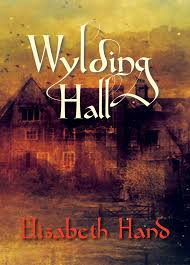
Honourable mentions: Sisters of the Revolution, Ann & Jeff VanderMeer, eds. (2015), an excellent reprint anthology of feminist sf, containing a couple of old favourites, and much that was new to me – some of which became new favourites; Soviet Ghosts, Rebecca Litchfield (2014), another photographic essay, this time of abandoned buildings and plants in what was the USSR and its satellites; Wylding Hall, Elizabeth Hand (2015), strange goings-on when a 1970s UK folk band record at a haunted manor, handled with a lovely elegiac tone; Cockfosters, Helen Simpson (2015), a new collection by a favourite writer, so of course it gets a mention; In Ballast to the White Sea: A Scholarly Edition, Malcolm Lowry (2014), a “lost” novel and never before published, it’s certainly not among his best but the copious annotations make for a fascinating read; Women in Love, DH Lawrence (1920), his best-known novel after Lady Chatterley’s Lover and just as notorious back in the day for its rumpy-pumpy, but I love Lawrence’s prose… and if the philosophy and politics in this are somewhat dubious, I still have that; and The Robber Bride, Margaret Atwood (1993), not since Alias Grace have I read an Atwood novel I enjoyed so much on a prose level, so for me this is currently her “second-best” book.

films
My project to watch all the films in the 1001 Movies You Must See Before You Die list is now in its second year and has continued to introduce me to new directors I might otherwise never have discovered. Two films in my top five certainly qualify as such, and a third I’d long been aware of but would probably never bothered watching if it hadn’t been on the list. Of the remaining two, one was on the list but I’d seen at least one film by the director before; and the other movie was on a version of the list different to the one I’ve been using…

autumn_avo1 An Autumn Afternoon, Yasujiro Ozu (1962, Japan). My introduction to Ozu’s work was Tokyo Story which, at the time, I didn’t really take to. But he has been repeatedly recommended to me, and Floating Weeds was on the 1001 Movies You Must See Before You Die list, so I rented it… and liked it quite a lot. But the (I think) Criterion edition DVD cover art of An Autumn Afternoon reminded me a great deal of Michelangelo’s Antonioni’s Red Desert, a film I love, so I wanted to watch that. And after a false start, buying Late Autumn by mistake, but loving it all the same, I eventually got myself a copy of An Autumn Afternoon… And that convoluted route to it totally worked in its favour. Late Autumn I thought really good, but An Autumn Afternoon struck me as a somewhat satirical take on similar subject matter – and so perversely reminded me of my favourite Douglas Sirk movies – but it also seemed a distillation of all those elements of Ozu’s cinema I had noted in Tokyo Story and loved so much in Late Autumn. I have now added the rest of the BFI editions of Ozu’s films to my wants list.

entranced_earth2 Entranced Earth, Glauber Rocha (1967, Brazil). This wasn’t quite a “Benning moment”, where I loved a film so much I immediately went and bought everything I could find by the director… although I did indeed love this film and immediately went and bought everything I could find by Rocha. But, I must confess, wine was involved in the Rocha purchase, whereas it wasn’t in the Benning one. Not that I regret buying Black God White Devil, Entranced Earth or Antonio das Mortes, as all three are fascinating films – but Entranced Earth remains my favourite of the three. Not only is the Brazilian landscape unfamiliar enough I find it strangely compelling, but the film also features scene of political declamatory dialogue, which I love. The film is part of Brazil’s Cinema Novo movement, which seems to be like France’s Nouvelle Vague in parts but Italy’s Neorealism in others. There’s a crudity in production which, perversely, seems a consequence of, as well as an enabler for, a film closer to the director’s vision than might otherwise have been the case. And I really like that, I really like that movies like this are closer to the creative process than is typical in our commodified homogenised product-placement Hollywoodised cinema world. There are those directors who muster sufficient clout in their nation’s cinema industry they can make whatever they like, but there are also those who make great films because of their total lack of influence… and it’s the latter who often produce the more lasting work. Like this one.

qatsi3 Koyaanisqatsi, Godfrey Reggio (1982, USA). I’ve no idea how many years I’ve known about this film, but I’d never actually bothered watching it. Something about what I’d heard about it persuaded me I wouldn’t enjoy it – and while that may have been true twenty years ago, it could hardly be true now given my love of Benning’s work. But it was on the 1001 Movies You Must See Before You Die list, so I stuck it on the rental list, it duly arrived… and I was capitivated. The score and cinematography worked perfectly together – and while it’s a more obvious approach to its material than anything by Benning, that doesn’t mean it isn’t a beautifully-shot piece of work. I ended up buying the Criterion Blu-ray edition of all three Qatsi films, which, in hindsight, was a mistake, as the transfers of the first two don’t really do the format justice. The sequel, Powaqqatsi, is very good, although not as good as Koyyanisqatsi; but the third film, Naqoyqatsi, sadly suffers because its use of CGI (in 2002) makes it appear a little dated. All three are worth getting. But not on Blu-ray.

nostalgia4 Nostalgia for the Light, Patricio Guzmán (2010, Chile). The problem – if that’s the right word – with documentary films, is that no matter how beautifully-shot they might be, if the subject does not appeal then you’re not going to like the film. But then it’s not really fair to say the subject of Nostalgia for the Light “appeals”, because it’s an unpleasant subject and no one’s world is a better place for knowing about it. Nostalgia for the Light contrasts the hunt for stars by astronomers at an observatory in Chile’s Atacama Desert with the search for the remains of the Disappeared, the thousands of victims Pinochet’s brutal regime massacred for… whatever feeble-minded self-serving reasons such fascist regimes use. It’s a heart-breaking film, all the more so because it interviews those who survived the regime; but Guzmán’s intelligent commentary also gives context and commentary to the interviews. I now want to see more films by Guzmán – and oh look, there’s a boxed set of his documentaries available on…

pyaasa5 Pyaasa, Guru Dutt (1957, India). There are a couple of Bollywood films on the 1001 Movies You Must See Before You Die list, and so I rented them and enjoyed them; and while they may be superior examples of the genre (if “Bollywood” could be called a genre) and great fun to watch, to be honest they struck me as no more worthy of inclusion than a great many of the US films on the same list. But then I stumbled across a list of Bollywood classic films, and decided to try a few more than the two or three on the 1001 Movies You Must See Before You Die list… Which is how I discovered Guru Dutt. He’s been described as “India’s Orson Welles”, which I think is a somewhat unfair label as it suggests he’s an imitator; but while Dutt’s films certainly follow the forms of Bollywood movies, they’re also well-constructed, cleverly-written dramas. After seeing Pyaasa, I bought a copy of his Kagaaz Ke Phool, which I also thought very good; and I have his Aar Paar on the To Be Watched pile (as well as the 1985 film of the same title, because the seller buggered up my order). I think Dutt would be a perfect candidate for the BFI to release on DVD/Blu-ray.

Honourable mentions: Yeelen, Souleymane Cissé (1987, Mali), an old Malian fantasy tale told in a straightforward way that only highlights its strangeness; Come and See, Elem Klimov (1985, Russia), the banal title hides a quite brutal look at WWII in Russia; Shock Corridor, Samuel Fuller (1963, USA), a low budget thriller that rises above its production values, but then Fuller was good at that; Falstaff – Chimes at Midnight, Orson Welles (1966, Spain), a mishmash of Shakespeare’s various depictions of the title character, but it works really well and after watching it my admiration of Welles moved up a notch; Story of Women, Claude Chabrol (1988, France), a heart-breaking story of France’s mistreatment of its women during WWII, played strongly by the ever-excellent Isabelle Huppert; Osama, Siddiq Barmak (2003, Afghanistan), an even more heart-breaking film about the mistreatment of women by the Taliban; A Simple Death, Aleksandr Kaidanovsky (1985, Russia), a stark and beautifully-shot adaptation of Tolstoy’s ‘The Death of Ivan Ilyich’; Evangelion 1.11 and 2.22, Hideaki Anno (2007/2009, Japan), giant mecha piloted by high school kids battle giant alien “angels”, which as a précis does very little to describe these bonkers animes; Storm over Asia, Vsevelod Pudovkin (1928, Russia), a beautifully-shot silent film set in Mongolia; Fires Were Started, Humphrey Jennings (1943, UK), firemen during the Blitz by one of Britain’s best directors, but I probably need to rewatch his films to decide if this is his best; London, Patrick Keiller (1994, UK), it reminds me a little of Benning, but the arch commentary by Paul Scofield is hugely appealing; and Jeanne Dielman, 23 Quai de Commerce, 1080 Bruxelles, Chantal Akerman (1975, France), a mostly-silent, almost entirely unadorned depiction of three days in the life of the title character, which makes for fascinating viewing despite its lack of action or, er, plot.

albums
You’d think that given the amount of music I listen to that this would be the easiest category to fill in each year. But, perversely, it usually proves the hardest. Probably because I don’t document my music purchases and I rarely write about music. I also don’t purchase albums in anything like the number of films I watch or even books I read. Having said all that, I managed to pick five albums I first listened to in the first half of 2016, and they are…

no_summer 1 A Year With No Summer, Obsidian Kingdom (2016). I saw this band perform at Bloodstock in 2014 and thought them so good I bought their album as soon as I got home. And now, after four years, a second album finally appears. In some respects, Obsidian Kingdom remind me of fellow countrymates NahemaH and Apocynthion, although they’re not as heavy as those two bands. They’re progressive metal, of a sort, and they build up a wall of sound with guitars and drums, not to mention the odd electronic effect, that’s extremely effective. The songs are complex, often very melodic, and move from dreamy to aggressive and back again very cleverly.

afterglow 2 Afterglow, In Mourning (2016). I’ve been a fan of In Mourning since first hearing the monumental The Weight of Oceans, which remains one of the best progressive death metal albums of recent years. Afterglow doesn’t start as strongly as that earlier albums, but a couple of tracks in it turns more progessive and the melodic hooks which characterise the band begin to appear. By the time the last song fades away, you know it’s another excellent album.

rooms 3 Rooms, Todtgelichter (2016). The name of a band isn’t always a clue to its origin, but yes, Todtgelichter are German. And they play a sort of guitar-heavy post-black metal that works really well. Most post-black bands – I’m thinking of Solefald as much as I am Arcturus – tend to incorporate all sorts of musical influences; but Todtgelichter keep it simple and heavy and hard-hitting, and it works extremely well.

eidos 4 Eidos, Kingcrow (2015). It’s an entirely international line-up this top five, with Spain, Sweden, Germany, and now Italy. Kingcrow play progressive metal, although this is no Dream Theatre. They sound in parts very like Porcupine Tree – which is a perfectly good band to sound like – and on one track, ‘Adrift’, the main guitar part is almost pure Opeth. As influences go, you can’t really do better than that.

changing_tides 5 Changing Tides, Trauma Field (2016). I stumbled across Trauma Field a year or two ago when I found their 2013 album Harvest on bandcamp. It seem to me there were bits of fellow Finns Sentenced in there – although Sentenced never used a female vocalist that I can recall – but also a more progressive element than that band had ever incorporated. This new album feels a little lighter in tone, much more atmospheric, and is definitely less Sentenced-like… which is, of course, good.

Unfortunately, there are no honourable mentions so far this year. I’ve just not been listening to enough new music. I do most of my listening at work, and I’ve been so busy there I’ve not had a chance.


Leave a comment

Acquisitions

… and unlike a company which specialises in student accommodation which “aquired” some land locally a few years ago, I know there’s a “c” before”the “q”. Yes, I can hold spelling grudges for years. I can also keep books for years on my shelves… before either reading them or giving them away because I’m never going to read them and whatever possessed me to buy them in the first place has long since evaporated… But some of the following may well become members of the Ian Sales Permanent Book Collection – which does not necessarily result in an eventual state of “having been read”. I really need to get the TBR down to manageable levels. I think my current record is eleven years between buying a book and actually reading it – and, perversely, it turned out to be my favourite book of that year…

2016-02-05 09.48.28

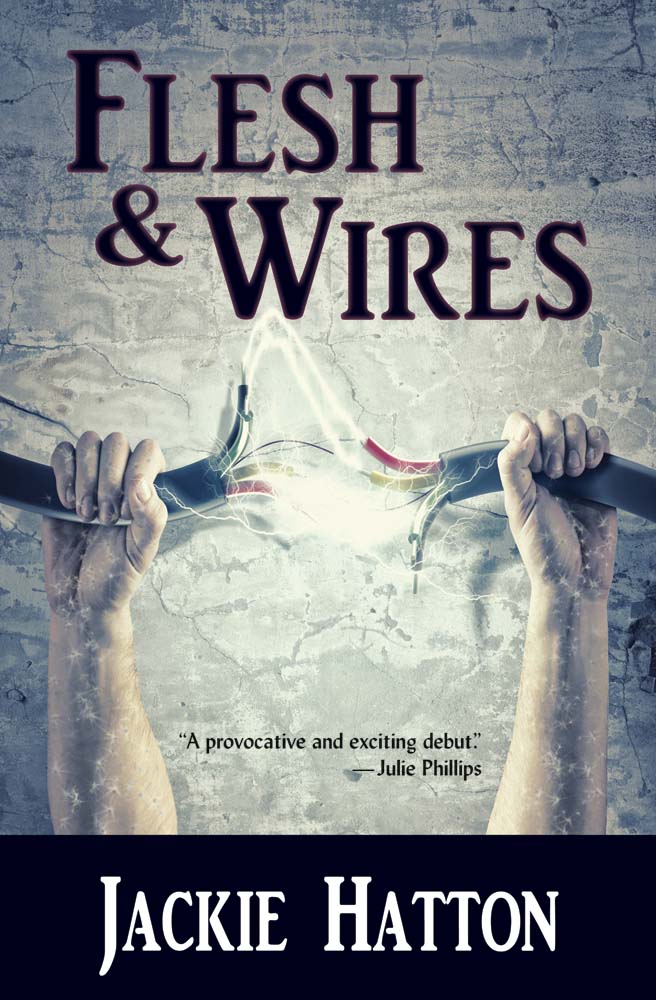
Flesh & Wires, Elysium, Necessary Ill, The XY Conspiracy and A Day in Deep Freeze were all ordered from Aqueduct Press. The second and third I’d heard good things about, and that prompted the order – the rest were thrown in to make it worthwhile… and Shapter’s novella I immediately nominated for the BSFA Award. I wrote about Flesh & Wires here.

2016-02-05 09.50.26

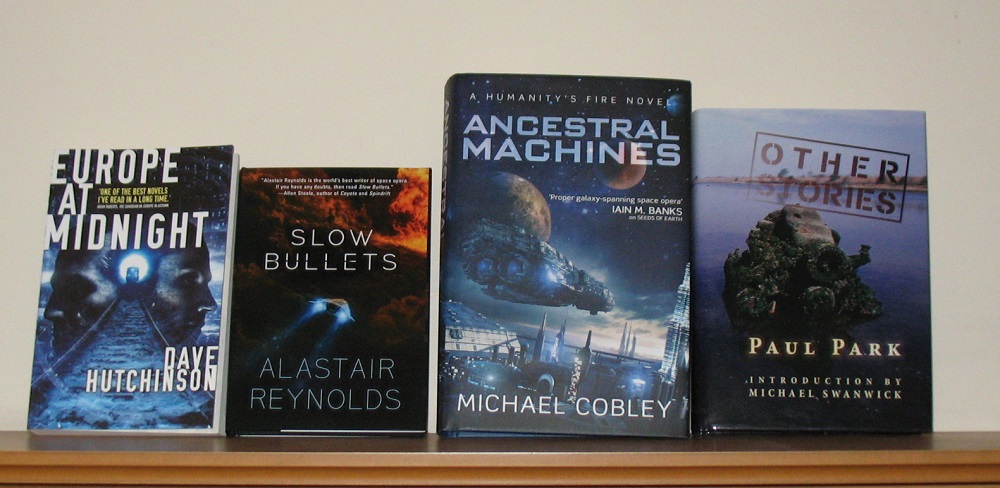
Europe at Midnight was sent to me by the author, who is a good friend, and excellent it is too – see here. It was on my BSFA Award ballot. I hung on for the signed limited hardback of Slow Bullets, only to discover WSFA had given it the same ISBN as one of their previous books. You would not believe how many things that fucks up. Argh. I wrote about it here. And Mike Cobley is a friend of many decades, so I only buy his books out of a sense of duty – hence Ancestral Machines. (Only kidding, Mike’s space operas are smart twenty-first century examples of the subgenre, and worth reading.) Other Stories is a long-awaited collection from a favourite writer – and it’s another lovely job from PS Publishing.

2016-02-05 09.52.13

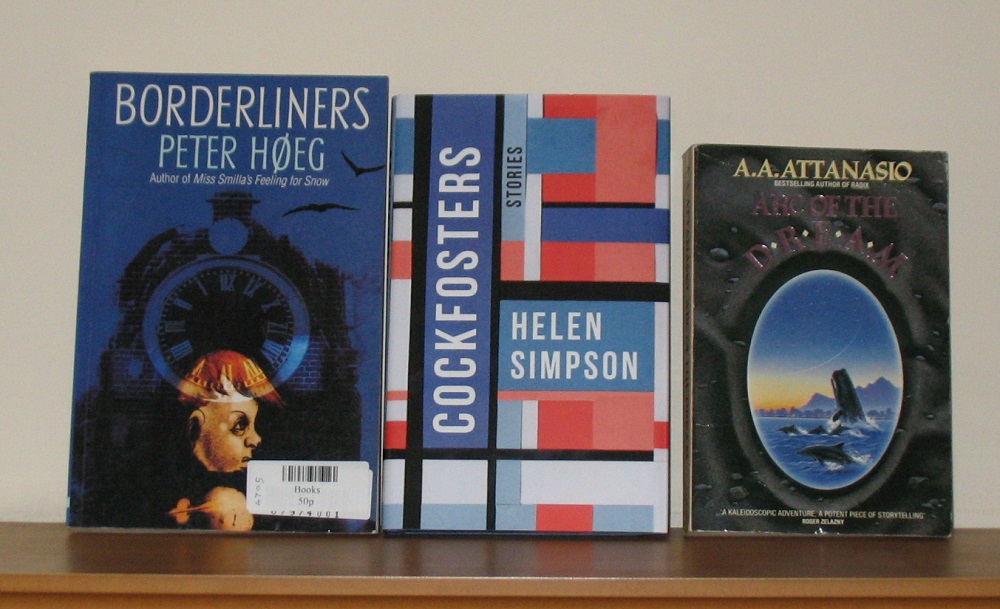
Borderliners is by one of those authors whose books I pick up when I see them in charity shops. I’ve been a big fan of Helen Simpson’s short stories for many years, so a new collection by her – which is what Cockfosters is – is worth celebrating. And I’ve always been meaning to complete my Radix Tetrad by picking up a copy of Attanasio’s Arc of the Dream, but completely failed to do so until now – but I’d sooner have one in better condition than this one.

2016-02-05 09.55.31

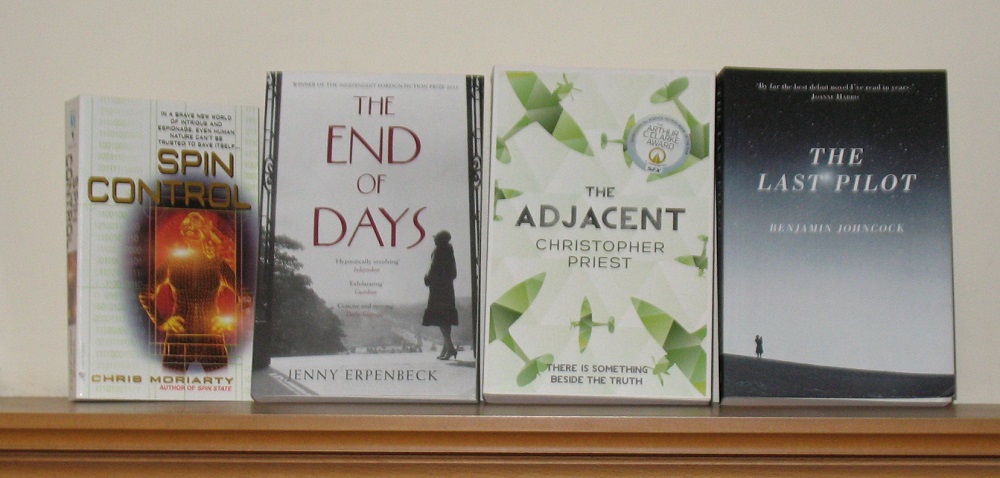
Spin Control, The End of Days, The Adjacent and The Last Pilot were all Christmas presents. My family obviously know my tastes in books – or have access to my Amazon wishlist… So far I have read only The Last Pilot – see here.

2016-02-05 09.56.50

Caliban and Lady Killer are a pair of graphic novels I bought in Faraos Cigarer in Copenhagen over Christmas, and wrote about here.

2016-02-05 09.57.54

Atoms Afloat I’ve been after for a while. I think the NS Savannah, the first commercial nuclear-powered ship, is a beautiful vessel. DH Lawrence: The Story of a Marriage came from my mother, who found it in a charity shop, I think. And I love me some photographs of Soviet/East European modernist architecture (second only to Niemeyer’s designs for Brasilia), so Roman Bezjak: Socialist Modernism was a must-purchase.

2016-02-05 09.59.06

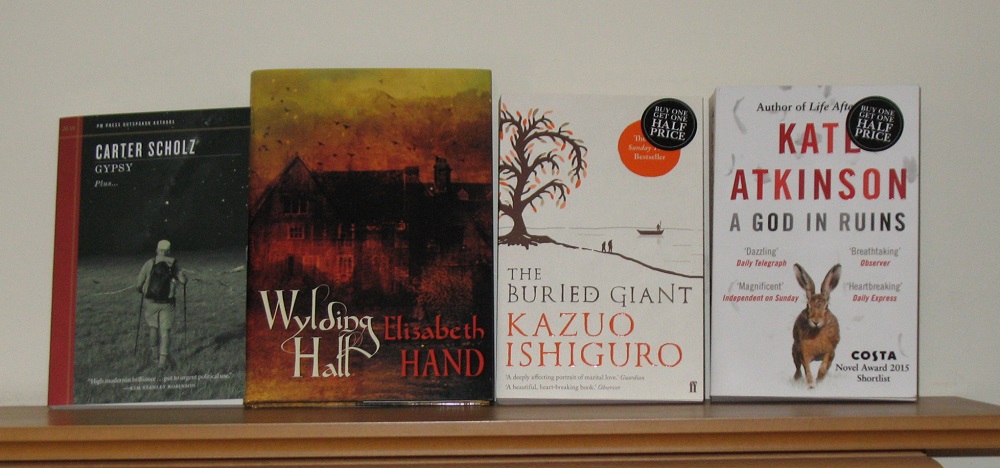
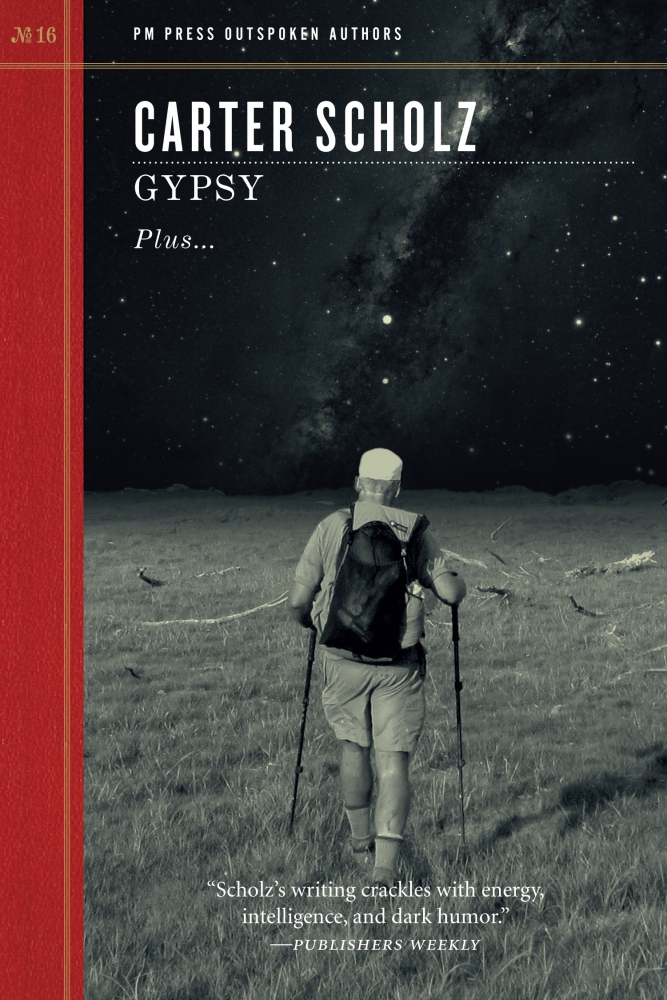
Gypsy was recommended to me by a number of people, and the title novella is indeed very good – sadly it wasn’t longlisted for the BSFA Award, although I think it was eligible. Happily, Wylding Hall, also recommended to me by, er, the same people, was longlisted, is very good, and it took one of my nominations. The Buried Giant didn’t make it to the longlist, but A God in Ruins did… so I read it, thought it very good indeed , and promptly nominated it for the BSFA Award. Gypsy and Wylding Hall I wrote about here.


Leave a comment

My BSFA ballot

I’ve now posted my votes for the BSFA Award – the deadline is midnight 31 January. And only works on the longlists here can be nominated.

In previous years, members of the BSFA simply nominated works in each of the categories they felt deserving of an award – initially as many as they wanted, but then restricted to four choices – and the final shortlist comprised those works with the most nominations. This year, a first round of nominations (again, four per person per category) produced the longlists linked to above, and now the second round of nominations will lead to the shortlists. Which will then be voted on at the Eastercon at the end of March. It’ll be interesting to see what effect this new process has on the award. Certainly, anyone that didn’t get their act together in December last year, and so didn’t get their chosen works onto the longlists, has now missed their chance. I suspect a few works that might have proven popular with the BSFA membership have missed out as a result. I’m pretty sure, for example, that Carter Scholz’s ‘Gypsy’ – the novella, not the collection – was eligible, but no one nominated it for a longlist (I didn’t read it until after the longlists were published, or I might have done).

Anyway, there are longlists. And I have selected my four choices for each category which I think deserve to be on the shortlist. The novel category wasn’t too difficult, although I was determined to avoid easy picks. I suspect, for example, that Kim Stanley Robinson’s Aurora might make the final cut, although I didn’t think it his best. The longlist certainly helped when it came to the art category – instead of trawling across the internet for suitable works, I had only to look at the longlist (and yes, I did nominate four pieces for it myself, so it’s not like I didn’t do some trawling across the internet). My non-fiction candidates are exactly those I nominated for the longlist. The short fiction category… Well, I worked my way through all those that were available to me, and even went so far as to buy a copy of Wylding Hall from PS Publishing – which was certainly worth it as it has made my ballot.

So, for what it’s worth, here are my nominations from the longlists for the BSFA Award shortlists (in alphabetical order):

novel
1 A God in Ruins, Kate Atkinson (Doubleday)
2 Europe at Midnight, Dave Hutchinson (Solaris)
3 Glorious Angels, Justina Robson (Gollancz)
4 Children of Time, Adrian Tchaikovsky (Tor)

I expect the Hutchinson to make the shortlist as there’s been a bit of buzz about it – and deservedly so. The Robson might make it on name recognition – she’s been shortlised four times before – and I think Glorious Angels is less polarising than her Quantum Gravity quintet might have been. The Tchaikvosky will, I think, lose out to KSR, which would be a shame. The Atkinson is a long shot – a few people have recommended it, but despite Life After Life I don’t think she has much traction among BSFA members.

short fiction
1 Wylding Hall, Elizabeth Hand (PS Publishing)
2 ‘Islands off the Coast of Capitola, 1978’, David Herter (tor.com)
3 ‘Manifesto of the Committee to Abolish Space’,’ Sammy Kriss (The New Inquiry)
4 A Day in Deep Freeze, Lisa Shapter (Aqueduct Press)

The Hand was recommended and proved a good call – but it’s a PS novella, so not free to read. That might count against it. The Shapter is my own nomination for the longlist – but again, it’s from a small press and can’t be read for free online. A shame as it’s really very good (so is the Hand too, of course). Both the Herter and the Kriss are free to read online. I’ve been a fan of Herter’s fiction for many years, and only wish he were more prolific. The Kriss is… a beautifully judged piece of trolling, and award-worthy for that reason.

non-fiction
1 ‘What Price, Your Critical Agency?’, Jonathan McCalmont (Ruthless Culture)
2 Rave and Let Die, Adam Roberts (Steel Quill Press)
3 ‘{and then} a writing life beyond reviews’, Maureen Kincaid Speller (Paper Knife)
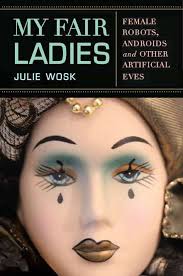
4 My Fair Ladies, Julie Wosk (Rutgers University Press)

Maureen Kincaid Speller and Jonathan McCalmont are some of the best fan-writers we have in the UK (even if both would dispute the label). (And I see no good reason to nominate a piece of US fan-writing for this UK-based award.) The two pieces above are important elements in a conversation which I think deserves to be read by more people in genre. Adam Roberts is one of our best genre critics, and I don’t want him to pack it in. The Wosk caught my fancy on a certain very large online retailer one day, and it’s a fascinating piece of work, if focused more on media sf rather than written sf.

art
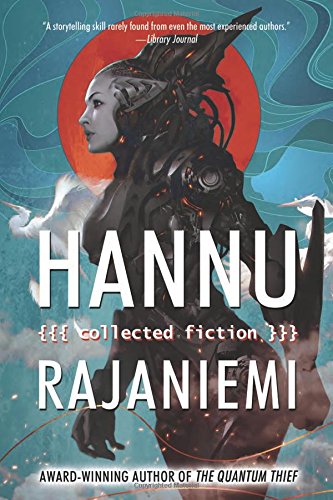
1 cover of Hannu Rajaniemi: Collected Fiction, Luis Lasahido (Tachyon)
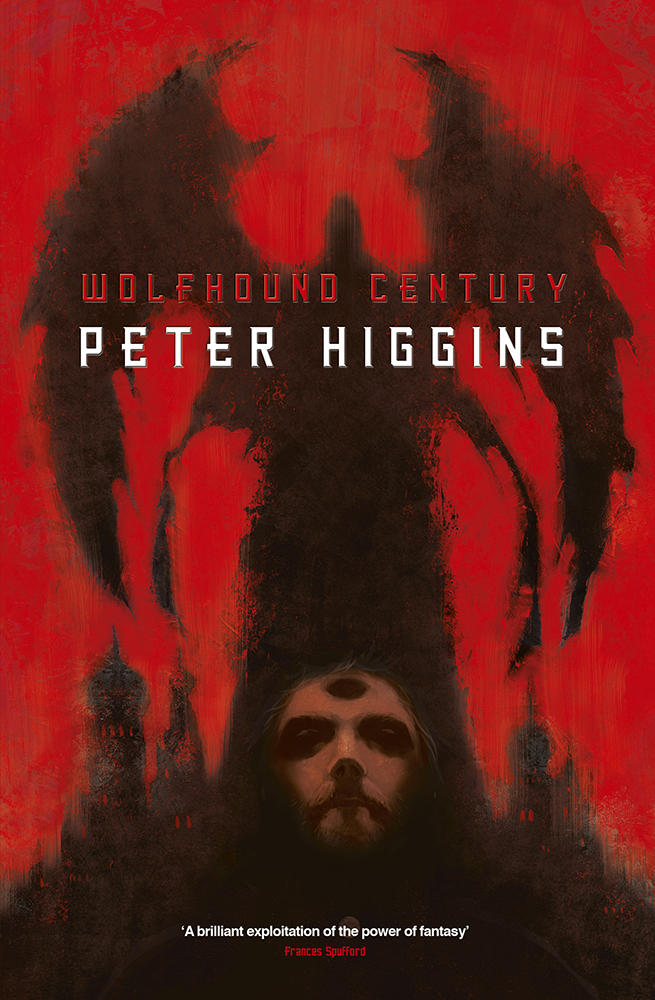
2 cover of Wolfhound Century (2015 edition), Jeffrey Alan Love (Gollancz)
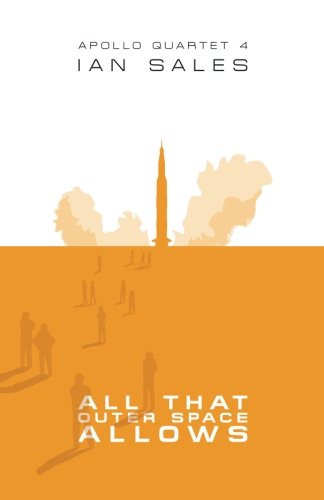
3 cover of All That Outer Space Allows, Kay Sales (Whippleshield Books)
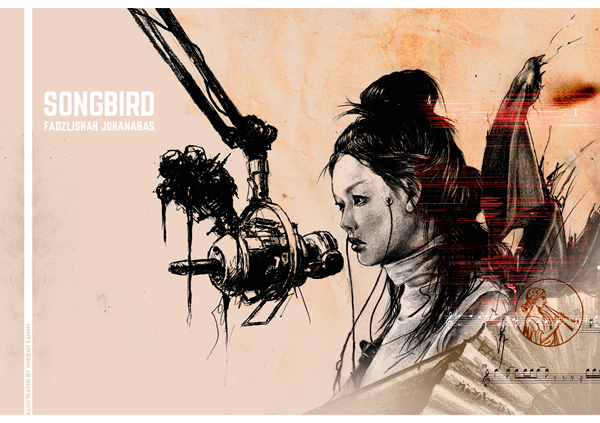
4 illustration for ‘Songbird’, Vincent Sammy (Interzone # 257)

Four lovely pieces of design, covering a variety of styles. If the cover of a certain self-published novel appears in my list of four, it’s because I think all four quartet covers are excellent but it’s only this last which is eligible – and all four covers are brilliantly done, relevant to each book, and yet each one a simple but highly effective design. But then I do like that sort of stuff a lot – as does my sister, of course – and was fascinated by a visit at Christmas to Finn Juhl’s House at the Ordrupgaard Museum.


8 Comments

Reading diary, #21

The first batch of 2016’s reading, which, er, seems to be entirely works from last year. I don’t normally read a great deal of recent fiction, and especially books that are less than twelve months old – although, to be fair, I need to get my choices in for the BSFA Award before the end of the month… And some of them feature below. It’ll be interesting to see if the longlist approach has made much of a difference to the shortlist. (I note that ‘Gypsy’, the title novella of the PM Press collection, see below, was actually eligible but no one appears to have nominated it for the long list. Which is a shame.)

fleshandwiresFlesh & Wires, Jackie Hatton (2015). So I went on the Aqueduct Press website with the intention of buying both Elysium and Necessary Ill, both books I’d been planning to pick up for a while… and I saw mention of Flesh & Wires, as well as a pair of novellas, A Day in the Deep Freeze (which I’ve nominated for the BSFA Award) and The XY Conspiracy, bunged them into my basket and bought them… And the first of the three novels I read was Flesh & Wires. To be honest, the blurb made the novel sound more interesting than it proved to be. Which is not to say it wasn’t good. The set-up worked, the plot worked, the characters were well-drawn, there were just some elements of the background which read as confused and a little, well, clichéd. The Earth was invaded by aliens, who killed off most of the population, but kept some women, and turned them into sort of cyborgs by means of “wires”. But then the aliens died of an Earthly disease, and a new set of aliens, Orbiters, turned up, and sort of helped the surviving women – and handful of men – to rebuild. The novel is set in a small town just south of New York, and told chiefly from the point-of-view of a powerful “wired” woman who is the de facto leader of the town. When her brother, long thought dead, turns up and proves to be representing the Orbiters – and is not not at all honest about his intentions; and then a group of Orbiters exiled to Earth also appear, casting doubt on what the protagonist had believed of the current state of affairs… The end result is a solidly feminist sf novel that perhaps relies over much on somewhat dodgy tropes but manages to put a fresh spin on its plot. I’d also like to go on record as stating that Aqueduct Press publish some bloody good sf, and it’s always a pleasure to place orders with them.

my_fair_ladiesMy Fair Ladies, Julie Wosk (2015). Subtitled “Female robots, androids and other artifical eves”, which pretty much describes its topic to a tee. The author was inspired by the discovery of a mannequin’s head in a street fair, and from that starting point goes on to cover historical representations of artificial women in Greek mythology, by Shaw and other late nineteenth-century/early twentieth-century writers, before moving into films, television, robots occupying the uncanny valley, and finally artists, such as Cindy Sherman (although no mention of Gillian Wearing or Lenae Day), who explore the concept of “perfect manmade” women through their art. While the book goes into detail on early literary artificial women, later literature – particularly science fiction – is mentioned only in relation to film or television adaptations. So, no Susan Calvin, Asimov’s robot psychologist who behaved like a robot herself; nor the women of EE ‘Doc’ Smith’s Masters of Space, who are all too eager to be uploaded into replacement robot bodies because it means “their tits won’t sag”; nor even Helen O’Loy. The list of fictional female robots and cyborgs on Wikipedia gives remarkably few examples from sf stories or novels, so perhaps it’s a topic written sf hasn’t tackled that much… although it feels like it has done; too prudish, perhaps, or maybe it required more self-examination than male writers of two-fisted space adventures were capable of; and female writers had more than enough material writing about real women. Anyway, fascinating stuff. One for the non-fiction BSFA Award.

large_737_gypsyGypsy, Carter Scholz (2015). I’d never heard of Scholz, although apparently he is held in high regard. Looking at some of the comments on this book, it’s clear he has plenty of genre friends in San Francisco/Oakland, where he lives – including Kim Stanley Robinson – and where PM Press is based. None of which is a reflection on Scholz’s ability, more on the requirement of connections and patronage in genre in order for good fiction to get noticed. And ‘Gypsy’, the title novella of this collection, is very good indeed. It’s 2015’s third generation starship story, and probably the best of the three as a generation starship story. Tchaikovsky’s Children of Time scores well because of its spider civilisation, Kim Stanley Robinson’s Aurora has some good bits about narratology… but Scholz’s ‘Gypsy’ goes for real science and engineering and paints a bleak picture – one not helped by the driving force behind the flight being the immanent collapse of Earth’s biosphere. Not that the flight itself provides any answers. The remainder of the collection comprises a somewhat tired epistolary short story, an essay about US economic shenanigans, a story presented as house committee testimony, and an interview with Scholz. I have a lot of time for Scholz’s approach to genre, as given in his interview, but only the title novella seems a good expression of it.

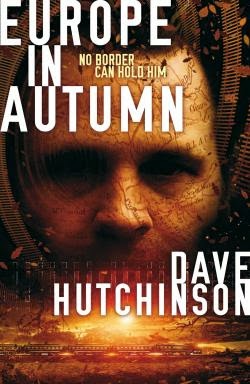
europeEurope at Midnight, Dave Hutchinson (2015). I thought Europe in Autumn a very good, if a little confused, novel – a superior near-future spy novel, it took an unexpected swerve around two-thirds in, which unsettled the plot but managed not to upset it. And now the sequel, Europe at Midnight, follows that swerve further around the curve and results in a very different novel of a type of science fiction that likely occupies a small place all its own in the genre’s corpus. In the nineteenth century, a wealthy family invented a new English county, which somehow came into being in a reality sideways from ours, and then subsequently expanded into Europe to form a Little England writ large: the Community. Which, it seems, has teeth. The novel opens in the Campus, a pocket universe 200 miles across which comprises one huge university, now having difficulty recovering after a bloody coup. The new Professor of Intelligence is suspicious of the Faculty of Science, but his investigations result in the termination of his position and a take-over by the Science people, who have suspiciously modern weapons. Fortunately, he escapes to our Europe… where he comes under the control of the UK intelligence services. Despite that disconcerting start, we’re now back in future spy novel territory… but even then, Europe at Midnight seems to slip across hidden borders into parallel fictions – much as some of its cast do – as it tells a story about Europe, the Campus and the Community which is only actually revealed in the final chapter. This is good stuff – a novel that cleverly runs our future alongside our memories of our past, and sets the scene for a war between the two. I’ll be nominating this for the BSFA Award.

wylding_hallWylding Hall, Elizabeth Hand (2015). This appeared on the BSFA Award short fiction longlist, and was recommended by several people whose opinions I trust – and, it had to be said, the précis did sound interesting… so I bought it, read it, and I’m giving it one of my four slots on my BSFA Award ballot. An acid folk group in the very early seventies hires the eponymous country manor to rehearse and record their second album (following the suicide of the group’s original singer; she was also the girlfriend of the band’s main creative force). Wylding Hall is a strange place, but this novella doesn’t go for in-your-face ghosts and apparitions but a much more effective general atmosphere of uncertainty. Windhollow Faire come across as a believable band, and the links to the darker side of English folklore are well-handled. The story is told as the decades-later reminiscences of the band members, a technique which is especially effective as it gives it the authority of a Sky Arts documentary. I have only a couple of minor niggles – back then, a grammar school would have been more posh than a comprehensive, and Radio 3 – not BBC 3 – was always more into classical and jazz, not folk; and John Peel was on Radio 1, which was the station mostly likely to play electric folk at that time.

1001 Books You Must Read Before You Die count: 121


2 Comments

BSFA and Kitschies – the shortlists

Two genre shortlists announced in one day, UK ones too. First, the BSFA Awards, for which I nominated works (see here), and usually vote. The four shortlists look like this:

Best novel
The Race, Nina Allan (NewCon Press)
Cuckoo Song, Frances Hardinge, (Macmillan)
Europe in Autumn, Dave Hutchinson (Solaris)
Wolves, Simon Ings (Gollancz)
Ancillary Sword, Ann Leckie (Orbit)
The First Fifteen Lives of Harry August, Claire North (Orbit)
Lagoon, Nnedi Okorafor (Hodder)
The Moon King, Neil Williamson (NewCon Press)

Well, three of my nominations made it – Hutchinson, North and Williamson. The Allan and and Leckie are no surprise – the first because it’s probably the most talked-about UK sf novel of 2014 among the people who nominate for the BSFA, and the Leckie because of Ancillary Justice‘s huge success. Also, is this the first time the BSFA Award has more women than men on the novel shortlist? I think it might well be. The large shortlist does, however, suggest that the actual number of nominations to make it through were somewhat low. Which, if true, is in one respect slightly worrying, but also heartening in that it demonstrates last year was pretty damn good for UK sf novels.

Best short fiction
‘The Honey Trap’, Ruth EJ Booth (La Femme, Newcon Press)
‘The Mussel Eater’, Octavia Cade (The Book Smugglers)
Scale Bright, Benjanun Sriduangkaew (Immersion Press)

None were nominated by myself. In fact, I’ve read none of them. An all-female list, too. The less said about Sriduangkaew’s presence, the better.

Best non-fiction
Call and Response, Paul Kincaid (Beccon Publications)
‘Deep Forests and Manicured Gardens: A Look at Two New Short Fiction Magazines’, Jonathan McCalmont (Ruthless Culture)
Science Fiction and Fantasy Writers and the First World War website, Edward James, ed.
‘The State of British SF and Fantasy: A Symposium’, Strange Horizons
Greg Egan, Karen Burnham (University of Illinois Press)

Surprisingly, two of my nominations made it through – Kincaid and Strange Horizons – and while I nominated another blog post from Ruthless Culture, it’s good to see McCalmont getting some recognition.

Best artwork
Cover of The Mirror Empire by Kameron Hurley, Richard Anderson (Angry Robot Books)
Cover of Bête by Adam Roberts, Blacksheep (Gollancz)
The Wasp Factory sculpture, Tessa Farmer
Cover of Wolves by Simon Ings, Jeffery Alan Love (Gollancz)
Cover of Mars Evacuees by Sophia McDougall, Andy Potts (Egmont)

Another surprise: two of my choices made it onto the shortlist. I didn’t attend Loncon3, so I didn’t see the Wasp Factory sculpture. Blacksheep won the BSFA in 2013, for the cover of… an Adam Roberts novel (and this is Blacksheep’s third time on the shortlist with a Roberts cover). The Mirror Empire has been much discussed since its publication, although I admit I can’t see the appeal of its cover art. And I see there’s now a hardback edition of Mars Evacuees (US, perhaps?), with much inferior cover art.

Congratulations to all the nominees, and I know who I hope will win each category.

The other UK genre award announced today is the Kitschies, a juried award, which also has four categories: Red Tentacle (novel), Golden Tentacle (debut novel), Inky Tentacle (cover art) and, new this year, Invisible Tentacle (“natively digital” fiction). The shortlists look like this:

The Red Tentacle
Lagoon, Nnedi Okorafor (Hodder & Stoughton)
Grasshopper Jungle, Andrew Smith (Egmont)
The Peripheral, William Gibson (Viking)
The Way Inn, Will Wiles (4th Estate)
The Race, Nina Allan (NewCon Press)

I’ve read only the Allan and I didn’t think it quite gelled as a novel – which was why I didn’t nominate it for the BSFA.

The Golden Tentacle
Viper Wine, Hermione Eyre (Jonathan Cape)
The Girl in the Road, Monica Byrne (Blackfriars)
Memory of Water, Emmi Itäranta (Voyager)
The Long Way to a Small, Angry Planet, Becky Chambers (self-published)
The People in the Trees, Hanya Yanagihara (Atlantic Books)

I’ve heard of the Byrne and Itäranta, but the others didn’t even ping on my radar. The Guardian is making a big thing of a self-published novel being shortlisted for the award, conveniently forgetting that a self-published novel won the Aurealis Award for Best Fantasy Novel in Australia last year and a self-published novella won the BSFA in 2013. Oh well, yesterday’s news and all that.

The Inky Tentacle
Cover of The Ghost of the Mary Celeste by Valerie Martin, X (Weidenfeld & Nicolson)
Cover of A Man Lies Dreaming by Lavie Tidhar, Ben Summers (Hodder & Stoughton)
Cover of Through the Woods by Emily Carroll, Emily Carroll and Sonja Chaghatzbanian (Faber and Faber)
Cover of The Book of Strange New Things by Michel Faber, Rafaela Romaya and Yehring Tong (Canongate)
Cover of Tigerman by Nick Harkaway, Glenn O’Neill (William Heinemann)

The only one of these I own is the Tidhar, and  didn’t really like the cover (I liked the book, though). The Faber and Harkaway I’ve seen.

The Invisible Tentacle
@echovirus12 (Twitter fiction), created/curated by Jeff Noon (@jeffnoon), Ed (@3dgriffiths), James Knight (@badbadpoet), violet sprite (@gadgetgreen), Richard Biddle (@littledeaths68), Mina Polen (@polen), Uel Aramchek (@ThePatanoiac), Graham Walsh (@t_i_s_u), Vapour Vox (@Wrong_Triangle)
Kentucky Route Zero, Act III, Cardboard Computer
80 Days, Inkle Studios
Sailor’s Dream, Simogo

Again. congratulations to all the nominees.


3 Comments

My BSFA nominations

I’m not really a big fan of popular vote awards, but having been a member of the British Science Fiction Association for over twenty years, and having attended, on and off, the annual Eastecon for around the same period, I’ve usually voted in the BSFA Award. I’ve also found that the shortlists frequently align quite well with my own tastes in the genre – something, obviously, that isn’t all that surprising when you’re a member of the core constituency.

Recent years have seen several changes to the awards. While the categories have finally settled at four – novel, short fiction (ie, any length shorter than novel), non-fiction and art – rules on eligibility have been affected by the advent of the internet and ebooks. Novels have to be published in the UK in the previous calendar year, which is pretty straightforward. Unless – and this is a fairly recent change – they’re ebook-only, in which case, as long as they’re available to UK residents (except the new EU VAT rules on digital products may scupper that from 2015 onwards). Back in the 1990s, short fiction also had to be UK-published, but now there is no such restriction. Likewise for non-fiction and art.

This year, however, a couple of more fundamental changes have been put in place. First, voters can now only nominate four works in each category. Previously, they could nominate as many as they wanted. And novels don’t have to be published in the UK, providing the author is British. The BSFA has also begun crowdsourcing a list of eligible works – although the list could do with some serious curating as there’s a lot of ineligible and duplicated entries on it.

This is all a long-winded way of presenting my own four choices in each category. Which are these:

novel
1 Europe in Autumn, Dave Hutchinson (Solaris)
2 The Grasshopper’s Child, Gwyneth Jones (TJoy Books UK)
3 The Moon King, Neil Williamson (NewCon Press)
4 The First Fifteen Lives of Harry August, Claire North (Orbit)

The first two were easy picks. I’ve spent this month completing my 2014 reading, but still failed to get to some possible contenders, such as Bête, Station Eleven*, Ancillary Sword, The Girl in the Road, The Echo, Wolves, Annihilation or The Bone Clocks – all of which sounded like the sort of novels which would appeal to me and might have made the cut. Novels that didn’t make it onto my ballot, though it was a close-run thing, include The Race, A Man Lies Dreaming, The Mirror Empire and Descent.

* Having said that, I find most literary post-apocalypse novels, no matter how beautifully written, extremely banal.

short fiction
1 ‘Cimmeria: From the Journal of Imaginary Anthropology’, Theodora Goss (Lightspeed, July 2014)
2 ‘Four Days of Christmas’, Tim Maughan (Motherboard, 24 December 2014)
3 ‘Diving into the Wreck’, Val Nolan (Interzone #252, May-Jun 2014)
4

I really went off short fiction in 2014. Everywhere I looked, the same sort of genre short stories were being published, and it wasn’t a sort I much cared for. As a result, I had to do some last minute reading, which meant some skim-reading of various magazines (I only read one anthology published in 2014 and it was poor; I didn’t buy any published during the year), some clicking through of links on posts of recommendations… and even then I couldn’t actually find four pieces of short fiction I felt were any good. The three listed above were ones that stood out for me during my headlong reading. It’s not the best way to pick something for an award, but then is there a best way?

non-fiction
1 Call and Response, Paul Kincaid (Beccon Publications)
2 ‘The State of British SF and Fantasy: A Symposium’ (Strange Horizons, 28 July 2014)
3 ‘Short Fiction and the Feels’, Jonathan McCalmont (Ruthless Culture, 6 October 2014)
4 Nina Allan’s “live blogging” of her read of The Mammoth Book of SF Stories by Women (The Spider’s House, November 2014)

Paul Kincaid has been an insightful genre critic for a long time, so a collection of his essays gets my first pick, especially since the book contains pieces on many of my favourite genre writers. The Strange Horizons Symposium I thought particularly well done, and I’m surprised it didn’t generate more comment. McCalmont has been writing some really interesting stuff about genre fandom for a while now, but I thought his piece on current short fiction was especially good. Allan is one of my favourite online genre critics, and her extended review, over some twenty posts, of The Mammoth Book of SF Stories by Women was a text-book example of the right way to review a large anthology.

art
1 Cover of Mars Evacuees by Sophia McDougall, Andy Potts (Egmont)
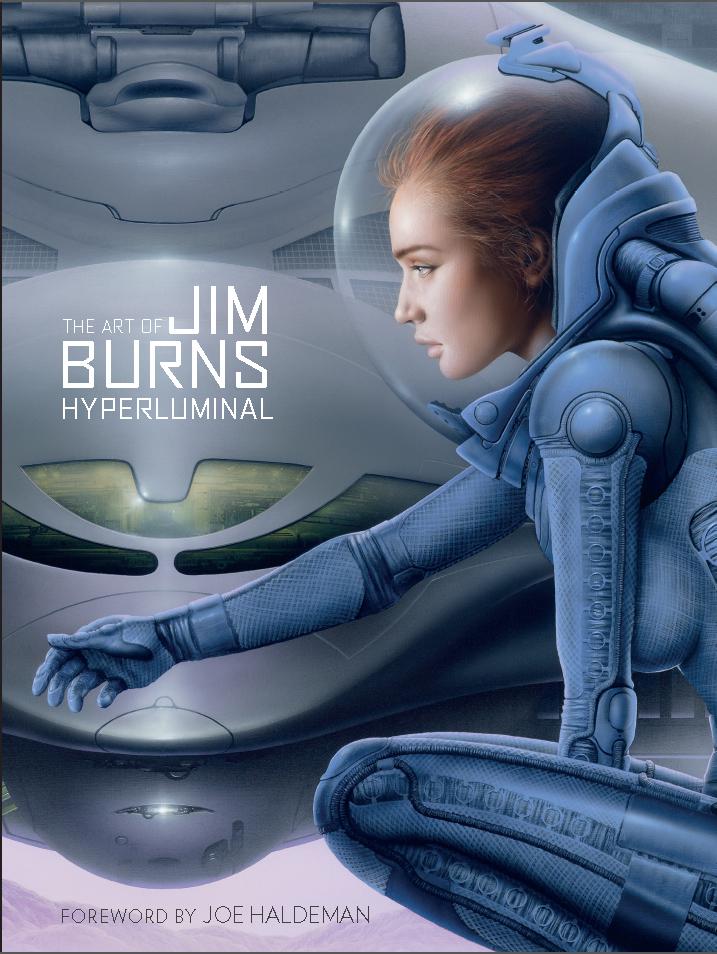
2 Hyperluminal, Jim Burns (Titan Books)
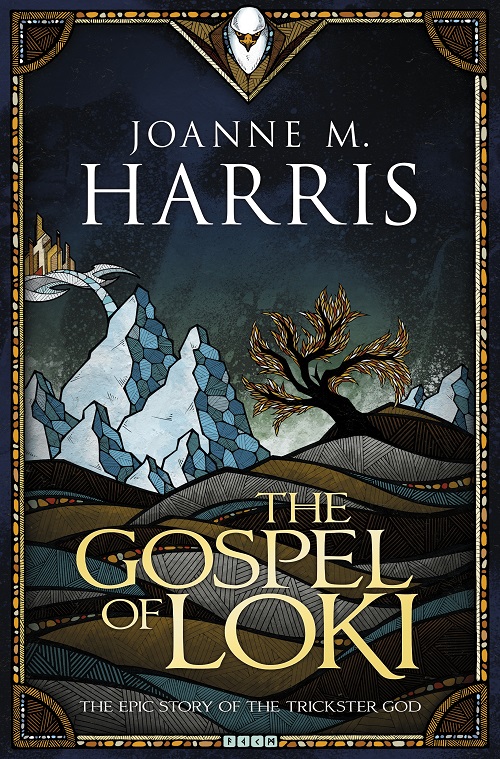
3 Cover of The Gospel of Loki by Joanne M Harris, Andreas Preis (Gollancz)
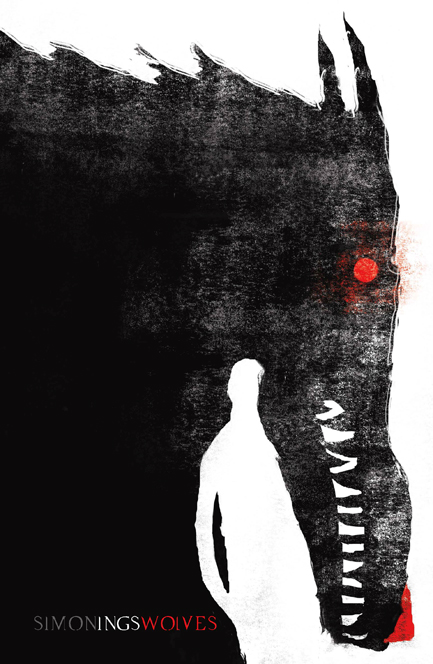
4 Cover of Wolves by Simon Ings, Jeffrey Alan Love (Gollancz)

mars_evacuees hyperluminal The-Gospel-of-Loki ings-wolves

My first choice was an easy pick. That really is a striking piece of cover art. I wasn’t sure whether Hyperluminal counted as art or non-fiction, but it’s a book about art, and I’ve always loved Jim Burns’s art, so I’m putting it here. I then spent one evening last weekend trawling through SF Signal’s forthcoming books posts for inspiration… and both The Gospel of Loki and Wolves jumped out at me. So to speak.

ETA: Apparently, the art award is for “single image” only, which means Hyperluminal is ineligible. So I need to find something else to nominate instead. I’ll update this post when I’ve found something, but for now I’ll Hyperluminal in place even though I’m not nominating it.


6 Comments

2014, the best of the year

It’s that time of year again, when everyone is doing their best of the year lists. For some people, it’s the best of what was released during the year in question, for others it’s the best of what they consumed. For me, it’s the latter. While I’ve done better this year reading, watching and listening to new stuff, the bulk of the books, films and albums I’ve enjoyed are from previous years, decades and, er, even centuries.

For a change, this year I’ve included the positions of items from my best of the half-year (see here). That’s the number in square brackets after some of them.

books
I did some reading for the Hugo in the early part of the year, and a couple of those books make it into this post – although they didn’t make it onto the Hugo shortlist. But then the Hugo didn’t exactly cover itself in glory with its fiction categories this year. My top five includes three favourite authors, one new to me, and another who I’d read before.

1 Dark as the Grave Wherein My Friend is Laid, Malcolm Lowry (1968). Lowry came first last year as well, with Under the Volcano, so clearly my love for the man’s prose remains undiminished. This one, however, is a meta-fictional novel, and I do like me some meta-fiction. I wrote about it here.

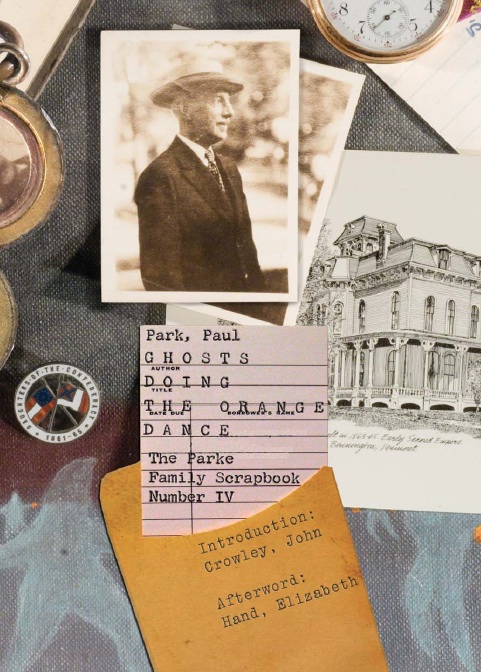
all-those-vanished-engines-paul-park-base-art-co2 All Those Vanished Engines, Paul Park (2014). And this is another meta-fictional novel, but constructed from three separate novellas. One of those novellas, Ghosts Doing the Orange Dance, made my best of the half year list. I wrote about it here.

3 Life After Life, Kate Atkinson (2013) [1]. I read this for my Hugo nominations, and was surprised at how effortlessly good it was (it’s the first Atkinson I’ve ever read).

europe_in_autumn4 Europe in Autumn, Dave Hutchinson (2014) [5]. I fully expect this to be on a couple of award shortlists in 2015. I’m also very much looking forward to the sequel.

5 Home, Marilynne Robinson (2008). Just lovely writing. And, for me, a more believable character-study than Gilead.

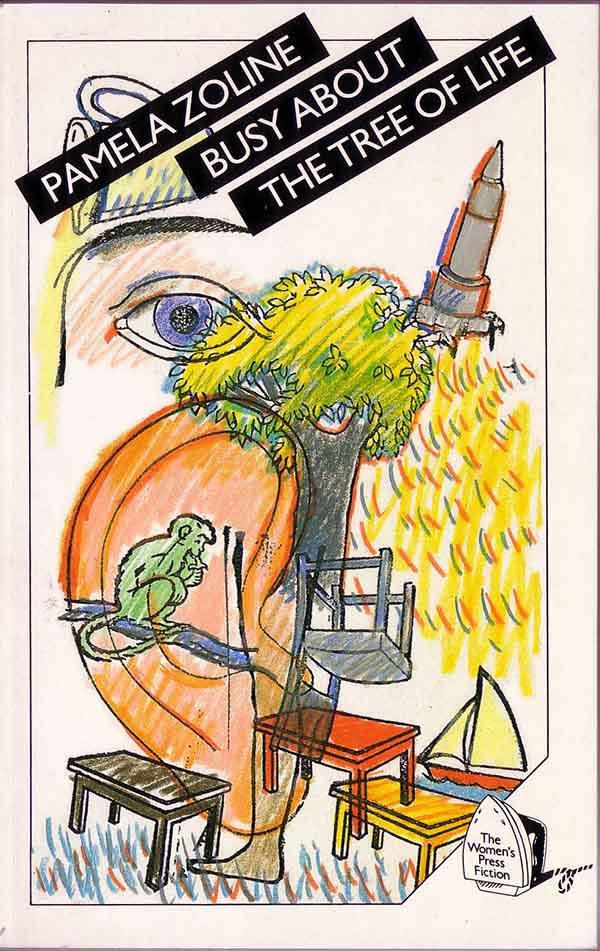
Honourable mentions: Daughters of Earth, Justine Larbalestier, ed. (2006), excellent anthology of historical sf, with critical articles; Shaman, Kim Stanley Robinson (2013), Ice Age adventures from a writer I’ve long admired who seems to be entering something of a golden period; The Machine, James Smythe (2013) [3], Ballardian near-future, bleak but lovely writing; Busy About the Tree of Life, Pamela Zoline (1988) [4], excellent collection and the author’s only book, which I reviewed for SF Mistressworks here; HHhH, Lauren Binet (2013) [HM], meta-fictional treatment of the assassination of Reinhard Heydrich in 1942; Queen of the States, Josephine Saxton (1986) [HM], very good but not quite categorisable novel, I reviewed it for SF Mistressworks here; The Towers Of Silence, Paul Scott (1971), the third part of the Raj Quartet and featuring the brilliantly-drawn Barbie Bachelor.

films
It was a good year for films. Not only did I see many films but I also saw many good ones. Hence the somewhat large number of honourable mentions.

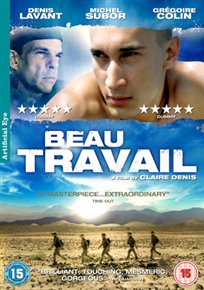
beau-travail1 Beau Travail, Claire Denis (1999, France) [1]. This was my No. 1 back in June, and it still is in December. A beautifully-shot film whose final scene lifts it from excellent to superb.

2 Mięso (Ironica), Piotr Szulkin (1993, Poland). This became an immediate favourite the moment I watched it. A history of Poland under communism told by an amateur cast using meat products as illustration? With dance interludes? What’s not to love?

3 Man of Marble, Andrzej Wajda (1976, Poland). I’d seen the sequel to this, Man of Iron, earlier in the year and thought it good, but this film is so much better.

4 Under The Skin, Jonathan Glazer (2014, UK) [2]. Beautiful and enigmatic, by far the best science fiction film to appear in cinemas in 2014. And a great improvement on the novel too.

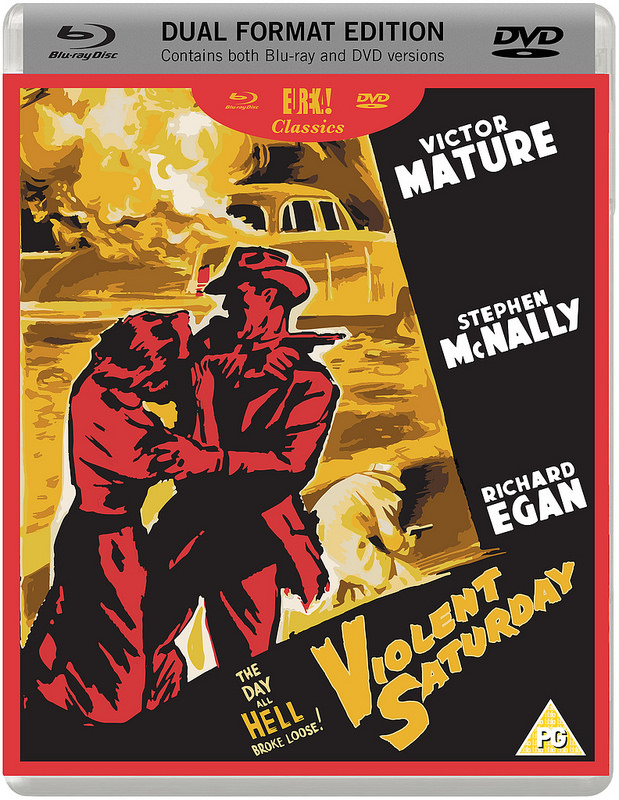
violentsaturday5 Violent Saturday, Richard Fleischer (1955, USA). I like 1950s melodramas, I like noir thrillers. So how could I not like a film that combines the two? In glorious Technicolour too.

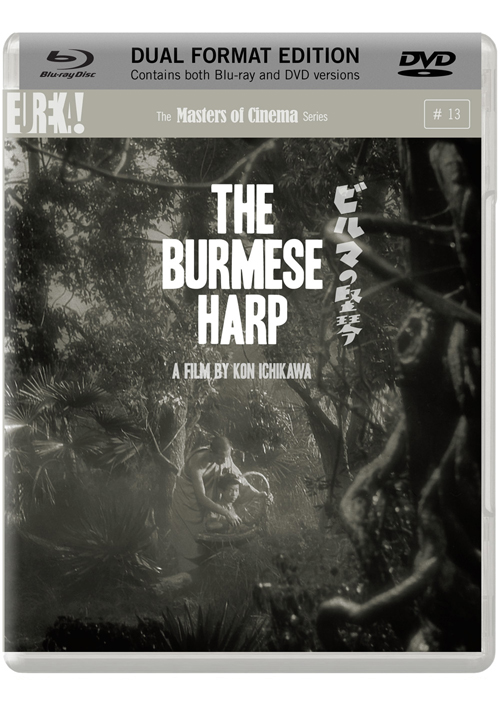
Honourable mentions: Blow-Up, Michelangelo Antonioni (1966, UK) [3]; Call Girl, Mikael Marcimain (2012, Sweden) [4]; The Burmese Harp, Kon Ichikawa (1956, Japan) [5]; Upstream Colour, Shane Carruth (2013, USA) [HM]; Wojna Swiatów – Następne Stulecie (War of the Worlds – The Next Century), Piotr Szulkin (1983, Poland) [HM]; Gion Bayashi, Kenji Mizoguchi (1953, Japan); The Great White Silence, Herbert G Ponting (1924, UK); Cave Of Forgotten Dreams, Werner Herzog (2010, Canada/UK); The Act of Killing, Joshua Oppenheimer (2012, UK); Wadjda, Haifaa al-Mansour (2012, Saudi Arabia); Women Without Men, Shirin Neshat & Shoja Azari (2009, Iran). Not to mention some rewatches of Michael Haneke films, at least two rewatches of my all-time favourite film, All That Heaven Allows (I bought the Criterion Blu-ray but it proved to be region-locked. Argh), the same for another favourite, Aleksandr Sokurov’s The Second Circle, and a rewatch of Carl Theodor Dreyer’s excellent Gertrud.

Worst films: The Philadelphia Experiment, Paul Ziller (2012), dreadful remake with the crappiest CGI ever; Dr. Alien, David DeCouteau (1989), horribly unfunny straight-to-video comedy; Stranded, Roger Christian (2013), really bad cross between Alien and The Thing set at a base on the Moon, Christian Slater’s career has really gone downhill; Starship Troopers: Invasion, Shinji Aramaki (2012), CGI shoot-em-up with as much subtlety as an arcade game and a gratuitous female nude scene… in CGI; huh?

albums
During the summer, I started exploring bandcamp.com. I was aware of it, of course, and had even bought a couple of albums from it in previous years… but I’d never really made an effort to see what was on there. Lots of really good metal bands, it seems. That’s how I stumbled across In Vain, who quickly became a favourite. Toward the end of summer, I had to upgrade the Debian distro on my work PC, and afterwards the soundcard started working properly – which meant I could stream music at work, rather than just listen to my iPod. And that led to even further explorations of bandcamp.com. All of which means my top five for the end of the year bears no resemblance to the one from my best of the half-year. And of the five bands listed, four of them I discovered on bandcamp.com.

aenigma1 Ænigma, In Vain (2013, Norway). I discovered this band in back in July and immediately bought all three of their albums. I wish I could nominate all their albums, but that would be unfair, so I’ll limit myself to this, their latest.

2 Mantiis, Obsidian Kingdom (2014, Spain). The only band on this list I didn’t discover through exploring bandcamp.com. Because I saw them perform at Bloodstock. And they were excellent. So I bought the album as soon as I got home.

3 Kentucky, Panopticon (2012, USA). Black metal and blue grass… who knew it would actually work? And it does, more so on this album than Panopticon’s others. The subject matter is also unusual – not the usual black metal occult nonsense, but the exploitation of miners in the titular US state.

hreow4 Hrēow, Ashes (2014, UK). Does for Scotland what Winterfylleth does for England. ETA: Er no, they don’t. I seem to have got confused with Falloch, who are Scottish. Ashes are actually an English atmospheric black metal (from Devon, in fact), and a very good English atmospheric black metal too.

5 Citadel, Ne Obliviscaris (2014, Australia). The last thing you expect a progressive metal band to do is go all Rondo Veneziano on you, but that’s what this album does in places. And it works really well.

Honourable mentions: Shadows Of The Dying Sun, Insomnium (2014, Finland) [1], the dictionary definition of Finnish death/doom turn out another polished piece; From a Whisper, Oak Pantheon (2012, USA) [3], neofolk/black metal not unlike Agalloch, but a little more metal; Earth Diver, Cormorant (2014, USA) [5], epic metal that refuses to confine itself to a single genre, and that’s in each song; The Cavern, Inter Arma (2014, USA), a 45-minute track of metal epicness; Kindly Bent to Free Us, Cynic (2014, USA), seminal death metal band go all prog/jazz fusion, but their roots are still showing;  The Divination of Antiquity, Winterfylleth (2014, UK), more atmospheric black metal from the English masters of the genre; Comfort in Silence, Dryad’s Tree (2007, Germany), prog metal, the vocals need a little work but the music is excellent; Treelogia (The Album As It Is Not), The Morningside (2011, Russia), prog/black metal band, this EP is perhaps their best work so far.


7 Comments

2014, best of the half-year

We’re halfway through 2014, which is a year, I believe, of no prior literary, cinematic or even science-fictional significance. No matter, I have certainly consumed some significant literature, cinema and music for the first time during 2014, or at least during this first half of the twelve-month. As usual, there’s a top five and a paragraph of honourable mentions for each.

Et voilà!

BOOKS
1 Life After Life, Kate Atkinson (2013) I nominated this for the Hugo, but since it features no spaceships or dragons it was always going to be a long shot. And, what a surprise, it didn’t get a look-in. I’d never read Atkinson before – my only exposure to her work was the BBC Jackson Brody adaptations with Jason Isaacs – so I was surprised at just how effortlessly good this book was.

2 Ghosts Doing the Orange Dance, Paul Park (2013) I also put this novella on my ballot, and it too never made the shortlist. The title refers to a painting, painted by one of Park’s relatives, which may or may not show an encounter with extraterrestrials. This is an astonishingly clever piece of meta-fiction, in which Park explores his own family tree and fiction, and creates something strange and interesting. And beautifully written too.

ghosts-doing-the-orange-dance-hc-by-paul-park-1622-p

3 The Machine, James Smythe (2013) And a third book I read for the Hugo. And also nominated. And – yup, you guessed it – it didn’t appear on the shortlist either. Ah well, my first – and last – attempt at involving myself in the Hugo awards… I won’t make that mistake again. The Machine, however, did make it onto the Clarke Award shortlist, and was even considered by many the favourite to win. A Ballardian near-future with some sharp prose.

4 Busy About the Tree of Life, Pamela Zoline (1988) I read this for SF Mistressworks, but my review has yet to appear there. Zoline is best-known for her 1967 short story ‘The Heat Death of the Universe’, and she didn’t write much else – a further four stories, in fact. All are collected here. Unsurprisingly, this is one of the strongest sf collections around. It really should be back in print.

Zoline-Tree

5 Europe in Autumn, Dave Hutchinson (2014) This is a surprise – a book in my best of the year in its actual year of publication. I’m pretty sure that’s a first for me. Europe in Autumn is a pleasingly cosmopolitan near-future thriller that takes an interesting twist reminiscent of Ken MacLeod’s novels… but very different all the same. Sure to be on some shortlists next year.

Honourable mentions: Two books from my Hugo reading made it onto my top five – even if they didn’t make the award shortlist (as if) – and I’m going to give another one a mention here: Anne Carson’s Red Doc> (2013), a narrative poem which managed more art in its 176pp than all fourteen volumes of The Wheel of Time; also very good was Olivia Manning’s last novel, The Rain Forest (1974), a somewhat Lowry-esque farce set on a small island in the Indian Ocean; from reading for SF Mistressworks, Joanna Russ’s collection Extra(ordinary) People (1984, my review here), her novel We Who are About To… (1977, my review here) and Josephine Saxton’s Queen of the States (1986, my review here); and finally Laurent Binet’s HHhH (2013), which offers a fascinating perspective on literature, history and writing about history as fiction.

Two women and three men in the top five, and five women and one man in the honourable mentions. I have made an effort in 2014 so far to maintain gender parity in my fiction reading – and, as can be seen, it does make a difference. On the other hand, there seems to be more genre fiction in my picks this year than is normally the case – over half were published explicitly as genre, and a further three published as mainstream but make use of genre conceits. Which makes a top five that is entirely genre – which I think is a first for me for a good many years.

FILMS
1 Beau Travail, Claire Denis (1999, France) Beautifully photographed – and if that seems common to my choices, cinema is a visual medium – but also sharply observed. However, what knocks this film from merely good to excellent is the final scene – and if you’ve seen it, you’ll know what I mean.

beau-travail

2 Under The Skin, Jonathan Glazer (2014, UK) Scarlett Johansson guerilla-filming in Glasgow, playing the part of an alien harvesting men for some unexplained reason (in the film, that is; in the book it’s for meat). It’s the film’s refusal to annotate or explain that makes it.

3 Blow-Up, Michelangelo Antonioni (1966, UK) After you’ve finished marvelling how young both David Hemmings and Vanessa Redgrave look in this film, you begin to realise how beautifully each shot is framed. It’s perhaps not as painterly a film as Antonioni’s stunning Red Desert, and perhaps its plot boasts too many echoes of that of L’Avventura… but this is excellent stuff.

4 Call Girl, Mikael Marcimain (2012, Sweden) A political thriller based on a real scandal during the 1970s, known as the Bordelhärvan scandal, involving senior politicians and under-age prostitutes. Filmed with that sort of stark Scandinavian realism that is its own commentary.

5 The Burmese Harp, Kon Ichikawa (1956, Japan) A Japanese soldier in Burma just after WWII chooses to stay in the country as a travelling Buddhist monk, with the intention of providing a proper burial for all the soldiers killed during the fighting and whose bodies have been left to rot. What really makes this film, however, is that the rest of his company use choral singing to maintain their morale, and throughout the film they put on impromptu performances.

burmese-harp-blu-ray-cover

Honourable mentions: Upstream Colour Shane Carruth (2013, USA), is an elliptical, often beautiful, film and the complete antithesis to Hollywood mind-candy; Kin-Dza-Dza!, Georgiy Daneliya (1986, Russia), is completely bonkers but somehow manages to make its more ludicrous aspects seem completely normal in its world; Head-on Fatih Akın (2004, Germany), an intense drama about a Turkish-German couple and a marriage of convenience; Man of Iron, Andrzej Wajda (1981, Poland), is based on the strikes in the Gdańsk Shipyard during the 1970s, and mixes real fact and fiction – Lech Wałęsa appears himself and is also played by an actor; The Best of Everything, Jean Negulesco (1959, USA), its first half is the sort of well-photographed 1950s melodrama that really appeals to me, but it’s a shame about the film’s second half; Like Someone in Love Abbas Kiarostami (2012, France), displays Kiarostami’s typically elliptical approach to story-telling which, coupled with its realness, makes for beautiful cinema; and finally, a pair of films by Piotr Szulkin: Ga, Ga. Chwała Bohaterom (1986, Poland), the blackest of comedies, takes a hero astronaut and subjects him to a litany of inexplicable indignities; and Wojna Swiatów – Następne Stulecie (1981, Poland), even blacker and more cynical, in which a popular TV presenter becomes first a tool of the oppressors, then a rebel, but will be remembered ever after as a collaborator.

And once again I have failed to pick a single Hollywood film – well, okay, the Negulesco is a Hollywood film, but it’s also 55 years old. So perhaps I should have said a recent Hollywood film. This doesn’t mean I haven’t watched any, just that none of them were any good.

ALBUMS
1 Shadows Of The Dying Sun, Insomnium (2014) A new album by Insomnium on this list is hardly a surprise, but this band really is bloody good. As I’ve said before, if you look up “Finnish death/doom metal” in the dictionary, all it says is “Insomnium”.

2 Valonielu, Oranssi Pazuzu (2013) I actually purchased this in 2013, but too late to make that year’s best of. It’s… well, it’s a recipe that doesn’t deserve to work, but actually does so brilliantly – space rock plus black metal. Weird and intense and very very strange. It should come as no surprise to learn the band are from Finland.

Oranssi_Pazuzu-Valonielu

3 From a Whisper, Oak Pantheon (2012) A US band that plays a similar black/folk/atmospheric metal as Agalloch, but seems a little more… metal in places. This is their first full-length album after a debut EP, and I’m looking forward to whatever they produce next.

4 The Frail Tide, Be’lakor (2007) This Australian band’s latest album made last year’s Top 5, so why not their debut this year? Their complex melodic death is enlivened with some nice acoustic passages in this. Excellent stuff.

5 Earth Diver, Cormorant (2014) Another self-release by a band that refuses to be pigeon-holed and quite happily shifts through a number of metal genres during each epic track. And they do write epic tracks.

Cormorant-Earth-Diver

Honourable mentions: 25th Anniversary of Emptiness, Demilich (2014) is a compilation of unreleased and rerecorded material from classic Finnish vocal fry register death metal band, an important document; Stone’s Reach, Be’lakor (2007), the band’s sophomore release and every bit as good as their other two, but their debut’s acoustic sections gave it the edge; The Void, Oak Pantheon (2011), is the band’s debut EP and an excellent harbinger of their later material; Restoration, Amiensus (2013), any band that manages to mix Agalloch and Woods of Ypres gets my vote; Older than History, Master of Persia (2011), Iranian death metal which makes good use of Iranian music traditions to produce something excellent.


3 Comments

2014 reading diary, #1

This year, I’m going to try and be a little more disciplined about writing up what I’ve read. So I’ve decided to title the series of posts a “reading diary” and I hope to put one up every month or so. As usual, however, the choice of books will be somewhat eclectic – a mix of genre and literary fiction and, er, other stuff – and I’ll also mention any non-fiction I’ve read for research. You’ll notice that the fiction alternates between male and female writers. That was one of my New Year’s Resolutions, and so far I’ve managed to stick to it.

lachlan-fenrir7Fenrir, MD Lachlan (2011). I really liked Lachlan’s debut, Wolfsangel, to which Fenrir is a sequel, so I had pretty high hopes for this. Unfortunately, it didn’t quite meet them. The plot – deliberately – echoes that of Wolfsangel, but this time takes place in the late ninth century, and in France. Three characters unknowingly act out the romantic triangle from the earlier book, which apparently echoes some Norse god romantic triangle and will bring about Odin’s return to Earth. Fenrir opens with the Siege of Paris (885 – 886), and ends 532 pages later in Aldeigjuborg, a Viking-ruled Russian kingdom near what is now St Petersburg. The first member of the triangle is Aelis, the sister of the ruler of Paris, who manages to escape the siege and then has to evade capture by the marauding Vikings. The other two members are male – Jehan, a crippled monk, and Raven, a Viking shaman. The ruler of Aldeigjuborg wants Aelis for his wife, and has sent a trader, Leshii, and a wolfman, Chakhlyk, to fetch her. She doesn’t want to go, of course. And Raven is after her for his own – and his sister’s – nefarious purposes. And when the wolf is awakened in Jehan, by Norse magic, then he becomes fit and able, and he gets involved too. I said when I read Wolfsangel that werewolves and Vikings were not really my thing, but that novel did something very interesting with them – and Fenrir continues in that vein, but unfortunately it’s a bit too long for its story. The first half dragged badly in parts. It also didn’t help that “dirham” was incorrectly spelled as “dihram” throughout, or that one character’s name went from Swava to Suava and back again. Having said that, some of the set-pieces are really good, and I’ve every intention of continuing with the series.

minaretMinaret, Leila Aboulela (2005). The narrator is the daughter of a well-to-do Sudanese businessman – or rather, he was well-to-do. He prospered under the country’s old regime, and he and his family were almost aristocracy. But when that government was overthrown, he was arrested and executed as a symbol of its corruption. So now the narrator, Najwa, is in London, and working as a nanny since all the family’s riches (justly earned or not) have been seized. The woman she works for is a young Arab who grew up in the Gulf states, is married to an Egyptian currently working in Oman, and is studying for a PhD at a London university. She’s not especially religious. Her younger brother, also a student, however, is religious. And Najwa, who has discovered religion since coming to London, is drawn to him. But it’s not a match the family condone. Minaret is more about Najwa, how she became the woman she is, than it is about her burgeoning relationship with her employer’s brother. The writing is very good throughout – Aboulela writes in English – and Najwa is a beautfully-drawn character. I thought this a much better book than Aboulela’s earlier The Translator.

squarescityThe Squares of the City, John Brunner (1965). An Australian traffic analyst is invited to a South American model city clearly patterned on Brasilia (although the invented country in which it is located is Spanish-speaking) because the visionary president of the nation believes traffic analysis will cure his lovely city of its unsightly slums. From the moment of his arrival, the narrator is in over his head, as it turns out there are two main political factions in the city and he’s being used as a tool by one of them. Though he repeatedly says he can provide short-term solutions to the slums, but in the long term proper housing and education is the only way to really fix the problem, the city authorities want a quick result. And then people start to get killed. I liked that Brunner had based his invented city of Vados on Brasilia, and it seemed to me he sort of captured a similar architectural flavour. The characters also seemed to suit the setting, although the narrator drifted a little too close to Overcompetent Man at times. However, The Squares of the City is apparently notable because the plot is based on a famous chess match, with each of the characters representing various pieces. To be honest, not knowing this in no way changes how you read the story, nor does knowing it actually help you parse the plot. It’s a gimmick that means nothing to the reader, and I’m surprised Brunner even bothered mentioning it. Yes, it turns out the two chief movers and shakers in Vados – the president and the leader of the opposition – have been playing a chess game with people, and that’s why there have been deaths, but it seems too abstracted to make any real difference. I think that makes the novel more of a curiosity than anything else.

Journey, Marta Randall (1978). See my review on SF Mistressworks here.

violent-century-lavie-tidharThe Violent Century, Lavie Tidhar (2013). This novel landed in October last year with quite a thud. In fact, only last weekend a friend mentioned he was thinking of reading the book because it had received so many positive notices. Which is, I suppose, as good a reason to read a book as any. The Violent Century covers, well, not even a century really – it opens in the 1920s, but the present of the story is labelled only “the present”, although clues suggest it is near the turn of the millennium, if not just after. Back in the early part of the twentieth century, Dr Vomacht inadvertently released a probability wave which changed a small proportion of the world’s population, effectively giving them superpowers. In Britain, these superpowered people were recruited as spies and undercover agents, and spent much of WWII trying to track down Vomacht, or eliminate Germany “Übermenschen”. The book’s two protagonist are Fogg and Oblivion, a pair of British agents, and the novel covers their escapades during WWII and the Cold War, as told in flashback from the present-day. Fogg has been brought out of retirement because something has happened, and the flashbacks lead up to the explanation of that. The structure works well, although there’s a niggling sense at times that some information is left unsaid when it needn’t be because the requisite flashback has yet to take place. And speaking of niggling, The Violent Century reminded me of something else but I could never quite put my finger on it. It borrows heavily from comicbook mythologies, of course; and there’s a pulpish flavour to its alternate history… but there was something in the mix that was quite heavily reminiscent of… something. I also thought the ending was a bit weak. A strong novel, yes; but not, I think, one I’ll be putting on my Hugo ballot.

Fireflood and Other Stories, Vonda N McIntyre (1979). A review of this will be posted up on SF Mistressworks in a couple of weeks.

Europe in Autumn, Dave Hutchinson (2014). I reviewed this for Vector.

breakdownBreakdown, Sara Paretsky (2012). I’ve been a fan of Paretsky’s VI Warshawski novels since first stumbling across them in the UAE in the early 1990s. In recent years, the politics have been much more in your face – not necessarily a bad thing, though it does sometimes over-balance the story. Breakdown is a case in point. It opens with Warshawski stumbling across a recently-murdered man in a cemetery while trying to track down a group of missing teenage girls who have gone there to practice a ritual tied into their love of an urban fantasy series of books (plainly based on Twilight). The plot spirals out from there to feature the right-wing media, particularly the sort of moronic far right television pundit who presently seems bafflingly popular in the US at the moment. There’s also an ultra-rich Jewish industrialist, possibly with a shady past, who is the chief target of the  TV pundit’s attacks, and even a pair of senators battling for the local seat – a liberal, backed by the industrialist; and a Tea Party-type loon, backed by the right-wing media. If Paretsky’s novels are overly target-rich from a liberal perspective, Warshawski is turning increasingly quixotic with each subsequent book. Parestsky chooses big themes, but gives Warshawski small victories; it’s a strategy guaranteed to leave you angry when you finish the book. And no matter how righteous that anger, Warshawski’s – and by extension, the reader’s – inability to change things makes you wonder what the point of it all is. But I like Warshawski as a character, I like that Paretsky wears her politics on her sleeve (and I mostly agree with them), and so I’ll continue to read these books.

Evening-empireEvening’s Empires, Paul McAuley (2013). I read this because it has been shortlisted for the BSFA Award this year, even though it’s the fourth book in a loose series – preceded by The Quiet War, Gardens of the Sun and In the Mouth of the Whale, and only the first of which I’ve read (and I didn’t really like it; see here). Evening’s Empires can be read as a standalone, but it also makes numerous references to the events in those earlier novels. All the same, I didn’t find that an obstacle, though it did leave me curious about the earlier two books. But. I’d not really taken to The Quiet War, and I suppose I’d not really expected to take to Evening’s Empires, although something about its blurb did suggest I might be mistaken. Perversely, I found myself underwhelmed by the novel thanks to something I’d not even considered… Evening’s Empires opens with Gajananvihari Pilot marooned on a tiny asteroid on the outer edges of the Belt. The asteroid had once been inhabited – most recently by an ascetic – so there is enough infrastructure present for Hari to survive. He’s been marooned because dacoits captured his father’s ship but he managed to escape. The hijackers were after the fruits of Dr Gagarian’s research into the Bright Moment, a single vision granted to every member of humanity at precisely the same moment when Sri Hong-Owen “vastened” and melded with the alien intelligence present in Fomalhaut’s gas giant (which is apparently what happened during In the Mouth of the Whale). When a pair of dacoits come to capture Hari – and Dr Gagarian’s head, with which he has absconded – he kills them and uses their scooter to escape… and promptly follows a series of clues around the Asteroid Belt, and out to Saturn, in order to have his revenge on the hijackers and discover why Dr Gagarian’s research was so important to them. McAuley describes a Solar System in decline – the places Hari visits are long past their glory days. There have been system-wide wars, empires have risen and fallen, and in many cases, those that are left are just living in, or have re-purposed, the ruins of earlier centuries. Which means that while Evening’s Empires is very much hard sf, it mostly reads like space opera. McAuley has also filled his story with in-jokes. Each of the sections, for example, is named for a sf classic of the past. And part of the plot’s climax takes place at the Memory Whole, an Earth-orbiting asteroid which hosts a virtual environment for avatars of early uploaded post-humans. One of these avatars is quite cutting to Hari about humanity’s predilection for living in the fantasies of earlier ages. Given that the Memory Hole is a real-life UK-based fanzine collection, I can’t decide if McAuley is taking the piss or writing a savage indictment of science fiction…

therainforestThe Rain Forest, Olivia Manning (1974). I loved Manning’s The Balkan Trilogy and The Levant Trilogy when I read them several years ago, so I always keep an eye open for books by her when I visit charity shops. Which is where I found this copy of The Rain Forest. It’s her last novel, and set on the invented Indian Ocean island of Al-Bustan (clearly based on Mauritius; there are several mentions of the dodo). Hugh and Kristy Foster have moved temporarily to Al-Bustan so Hugh can take up a position in the local British administration of the island. He’s actually a screenwriter – and Kristy is a successful novelist – but the industry has collapsed in the UK and left him out of work and out of cash. The couple are put up in the Daisy Pension, a boarding-house populated by a cast of minor grotesques. They make friends with the owner’s profligate son, who is shunned by the pension’s guests, and through him meet some of the island’s colourful inhabitants. Although published in the early 1970s, and clearly meant to be set around that time – there’s mention of fashion designers Pucci and Gamba; a helicopter is the chief means of reaching the island – everything felt like it was a couple of decades older. There’s a feel of 1940s Raj to it all – I mean, I was an expat in the Gulf states in the 1970s, and while I was only a child then, I don’t remember it being how Manning describes it on Al-Bustan. Having said that, Al-Bustan is a small island with a native population descended from waves of earlier immigrants from Africa and the Arabian peninsula, so the situation hardly maps onto that, say, of the Trucial States as was. The plot of The Rain Forest bumbles along, there’s a feeling that in the hands of a male writer the story would have been more comic, played for laughs, though to be honest I prefer Manning’s approach. It’s not entirely clear what role the titular woodland plays, and certainly some of the events described in the novel don’t quite gel with it – the Fosters’ treatment by the other residents of the pension, the small war they fight with the new owner after the original owner dies, Kristy’s pregnancy, even the trip Hugh takes to the rain forest in the final section. The cast are mostly unlikeable, except for the Fosters, and what little pathos is present seemed to fall flat more often than not. The Rain Forest is nowhere near as good as those two earlier trilogies – though I do have to wonder if it’s as autobiographical as they were (after all, Kristy is a successful novelist) – but all the same, I’ll continue to keep an eye out for Manning’s novels.