I shamelessly stole this idea from Pornokitsch, who did the same yesterday. Since I’m not doing my readings & watching posts this year, I thought thirty words on the last thirty novels I’ve read might be a good way of mentioning my recent reading. But 30 words is actually harder to do than it looks…
Final Days, Gary Gibson (2011)
Discovery on planet orbiting distant star reached by wormhole suggests future is fixed and immutable. World starts to fall apart. Nice Apollo re-enactment but otherwise not that much stands out.
The Member of the Wedding, Carson McCullers (1946)
Tom Sawyer-ish Frankie daydreams of brother’s wedding. A GI mistakes her age, wants to get frisky. Lovely writing, though it’s hard not to suspect Frankie is wrong in the head.
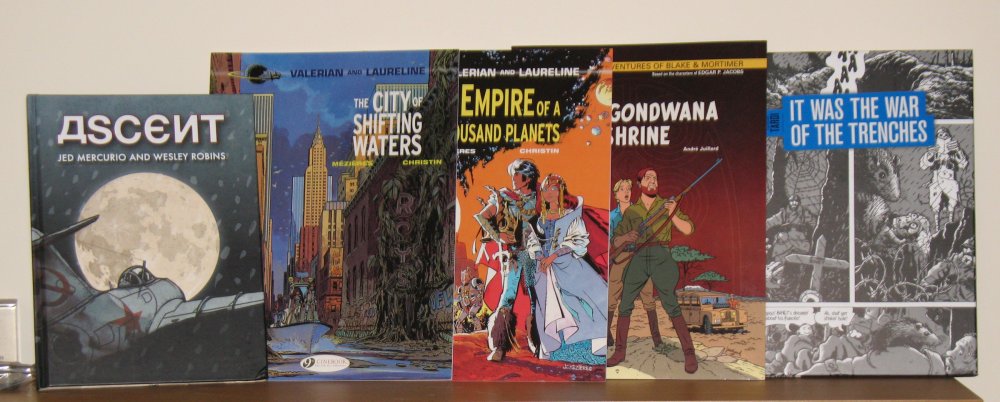
Like A Sniper Lining Up His Shot, Jacques Tardi (2010)
Graphic novel adaption of French thriller set in the UK. Assassin like father like son. With guns. And gore. Not much more to be said. Tardi is definitely worth reading.
Bodies, Jed Mercurio (2002)
Incompetent doctors get away with murder on the NHS. New houseman is horrified. He learns to work with the system. A favourite writer but it will scare you off hospitals.
City of Pearl, Karen Traviss (2004)
First human colony disappears, rescue mission discovers aliens protecting them. Mix of hard sf and space opera. Nice heroine, not so interesting aliens. Oozes competence without suggesting more. Review here.
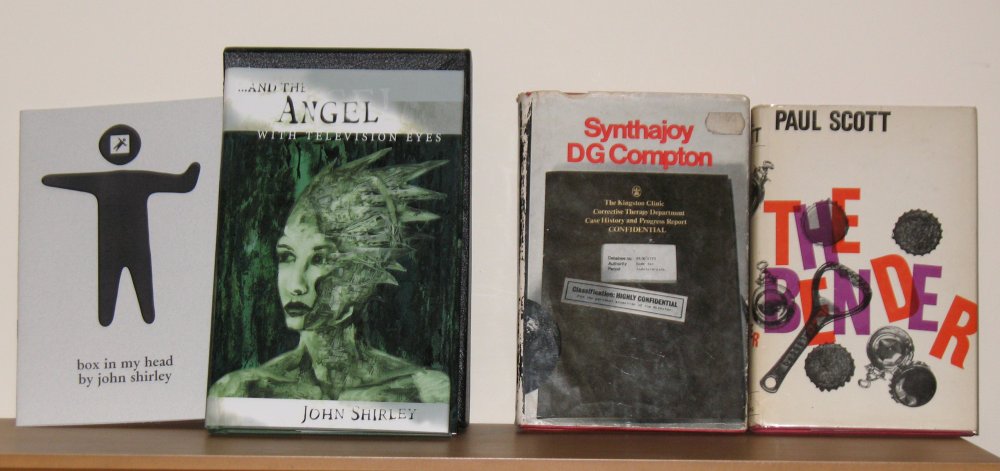
The Bender, Paul Scott (1963)
Should have been a film with Dirk Bogarde. 1960s wastrel goes begging for cash and sparks family crisis. Great wit, great writing, and an astonishing postmodern interlude. Recommended. Review here.
Leviathan’s Deep, Jayge Carr (1979)
Freak alien resembles humans. They want to conquer her planet and fall in love with her. She scuppers their plans. Somewhat old-fashioned sf, though protagonist well-drawn. Review on SF Mistressworks.
The Bookman, Lavie Tidhar (2010)
Literary and pulp potage which stripmines steampunk tropes. Orphan adventures, starts cleverly in Victorian Lizard London but loses steam about halfway through before Bond-esque Vernian finish. The first of three.
Omega, Christopher Evans (2008)
Man recovering from terrorist bomb explosion dreams himself into alternate self in a world where WWII never ended. Very cleverly done, alternate world very real, great writing. Recommended. Review here.
Angel At Apogee, SN Lewitt (1987)
Princess pilot, a hot-shot of course, proves to be catalyst which rejoins three sundered races on three separate planets. Interesting debut, though perhaps a little over-egged. Review on SF Mistressworks.
The Fat Years, Chan Koonchung (2009)
China prospers while rest of world in financial crisis. Interesting window on Chinese society, though unsatisfactory as a novel – the plot is explained in a final chapter info-dump. Review here.
The Fall, Albert Camus (1957)
Pompous ex-lawyer monologues at stranger in Amsterdam bar and over several days tells him of his somewhat boring fall from grace. Mercifully short, though there’s some insightful writing in it.
Selected Poems, Lawrence Durrell (1956)
It’s a book of poems. And they were selected. By Lawrence Durrell. He did this several times. Except when he wasn’t collecting his poems for his Collected Poems. More here.
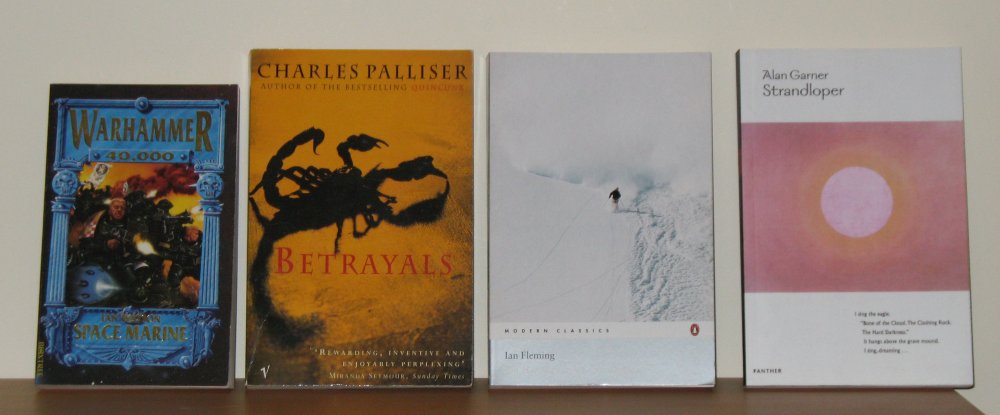
Betrayals, Charles Palliser (1994)
A story told through several stories – including a superb pisstake of Taggart, and a righteous skewering of Jeffrey Archer. Superbly done, though perhaps needed the stories tying together more. Recommended.
Leviathan Wakes, James SA Corey (2011)
Solar system shenanigans as alien virus wreaks havoc for corporate profit. Who needs New Space Opera? Regressive: no diversity, old school sexism, implausible villainy. Mostly right physics. Avoid. Review here.
Native Tongue, Suzette Haden Elgin (1984)
Men repeal rights of women, so they secretly develop women’s language. Interesting linguistics, good female characters, though characterisation of men not so convincing and world-building weak. Review on SF Mistressworks.
This Island Earth, Raymond F Jones (1952)
Manly engineer saves the galaxy by demonstrating good old US engineering know-how. Womanly PhD does his ironing and cooking. Happily they don’t write them like this any more. More here.
The Lady in the Lake, Raymond Chandler (1944)
Mixed-up femme fatales don’t fool Marlowe in hunt for rich man’s missing wife. Not the cunningest murder-mystery plot and Marlowe often gets away with murder. Strong on place and time.
The Door, Magda Szabó (1987)
In Hungary, writer hires housekeeper, who proves to be old school peasant and a right character. Fascinating portrait of housekeeper, thoroughly enjoyed it. Soon to be major film. Review here.
The Unorthodox Engineers, Colin Kapp (1979)
Collection of sf shorts in which lateral thinking engineers solve seemingly intractable problems. Dated, problems not especially unsolvable, nor especially original. Entirely forgettable, in fact. Hard book to find, though.
Journey to the Centre of the Earth, Jules Verne (1864)
Story not as good as Nemo’s though text is more pleasingly detailed. Science horribly dated, of course, and often wrong. Characters bizarrely emphatic – except for phlegmatic Icelandic guide. Historical document.
Arkfall, Carolyn Ives Gilman (2008)
Novella set on human-colonised Europa-like planet with interesting socialist society. Woman and male tourist find themselves on unintended journey after seaquake. Promises more than it delivers but still worth reading.
Kamikaze l’Amour, Richard Kadrey (1995)
Kadrey channels Ballard and Shepard in rock star epiphany in California overrun by Amazonian jungle. Not sure how original was 17 years ago but is not now. After Metrophage, disappointing.
Smart-Aleck Kill, Raymond Chandler (1958)
Collection of four shorts. Simple direct prose, strong on place and time, though plotting something of a direct line and characterisation sketchy. More for noir fans than normal readers, possibly.
Embassytown, China Miéville (2011)
Truthful aliens get hooked on impossible Ambassador’s speech. World falls apart. Narrator teaches aliens to lie and saves planet. Interesting ideas but old-fashioned science fiction. Likely award-winner. Sigh. Review here.
Dr No, Ian Fleming (1958)
Bond in Jamica. Again. Racial stereotype has evil plan to do evil. Bond foils, with help of trusty local. He nearly dies in the process, but he gets girl. Again.
The Incal, Alejandro Jodorowsky & Moebius (1981)
Seminal bande dessinée allegedly cobbled together from failed Dune film project. Light and dark Incal combine to save galaxy from evil Darkness. Completely bonkers. Lovely art. Everyone should own copy.
Alias Grace, Margaret Atwood (1997)
Character study of true life murderess from 1840s. Clevery done – never quite determines innocence or guilt, though very detailed on life and crime. Lovely writing. Possibly Atwood’s best novel. Recommended.
The Planet Dweller, Jane Palmer (1985)
Hot flushes and giant aliens that live inside planets. Cartoon aliens that want to conquer galaxy. Hit and miss comedy, but too fantastical for sf. Review soon on SF Mistressworks.
The Ginger Star, Leigh Brackett (1974)
By-the-numbers swords and planets. Manly hero brought up by animals battles way across barbarian planet to save mentor. Been there, done that. Yawn. Review soon on SF Mistressworks.
 It Doesn't Have To Be Right...