It Doesn't Have To Be Right…

… it just has to sound plausible


6 Comments

The best of the half-year: 2012

It’s halfway through 2012, and it must be shaping up to be one of the wettest years on record in the UK. But that’s okay because my hobbies are chiefly indoor ones – reading books, watching films and listening to music. I occasionally do a bit of writing too. But, since we’re in June, with around six months to go until the end of the year, it’s time to look back and determine what was the best of what I read, watched and heard in 2012. And it goes something like this…

Words
I seem to have read a lot of books that were good without being great; and possibly a larger number of books that weren’t good at all. Picking the best five proved harder than expected, though one or two titles were obvious…
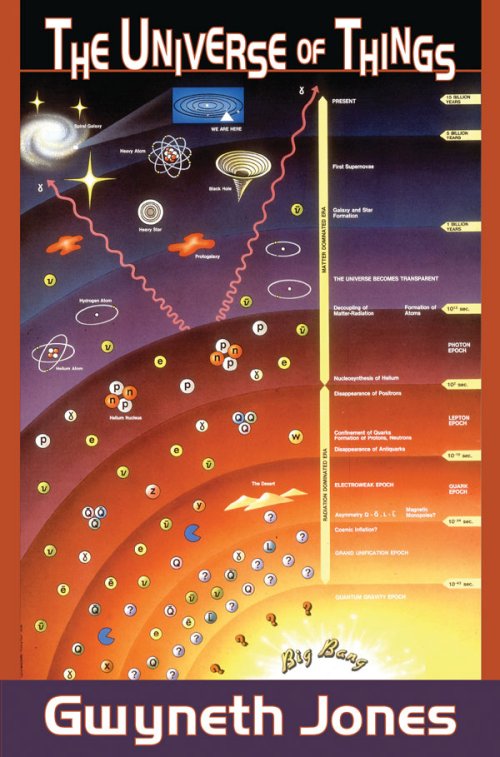
The Universe of Things, Gwyneth Jones (2011). Jones has been my favourite writer for many years, so this collection’s appearance on the top five is no surprise. I had, in fact, read most of the stories in The Universe of Things before (I even published one; sort of), but rereading them only cemented my admiration of them. Jones has not written many stories, but there are no clunkers among them. This collection is an excellent introduction to her fiction. I wrote a review of the book for Daughters of Prometheus.

Omega, Christopher Evans (2008). I’ve long admired Evans’ fiction, but he seemed to stop writing after 1995’s Mortal Remains… until Omega four years ago. I won’t say it was worth the wait, because it’s never good when a writer whose books you enjoy and admire disappears for more than a decade. But certainly Omega is a good book, a clever alternate history dimension-slip thriller partly set in a world where World War II continued on throughout the twentieth century. I wrote about Omega on my blog here.
The Door, Magda Szabó (1987). This year for my reading challenge I decided to read books by non-Anglophone writers I’d never read before. The Door was the second book I read for the challenge, and I really enjoyed it. Unfortunately, the challenge has got a little bogged down of late – I failed to finish March’s book, read April’s book late, and have yet to even start May’s. Anyway, I wrote about The Door on my blog here.
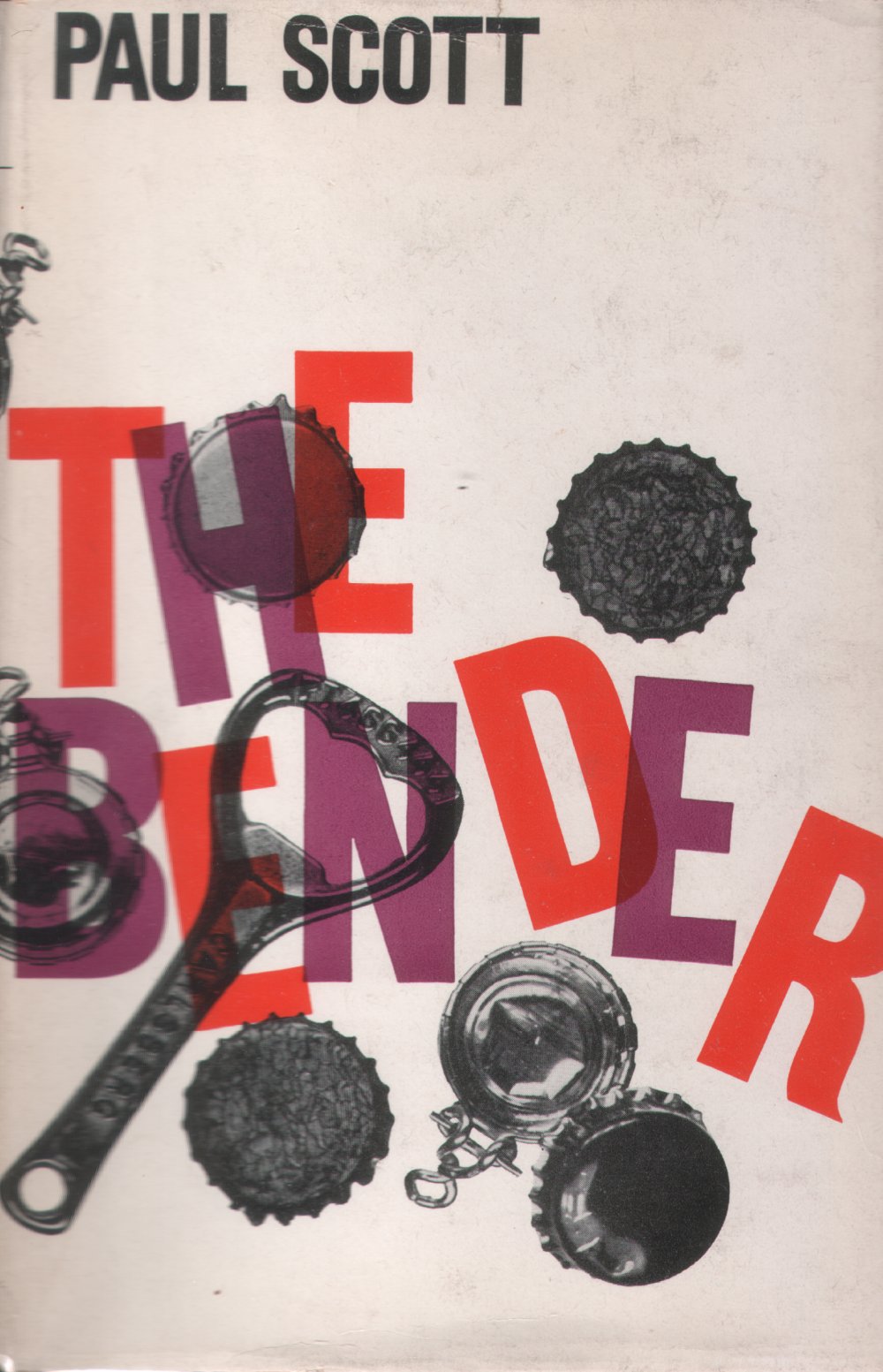
The Bender, Paul Scott (1963). I read the first book of the Raj Quartet for one of my reading challenges, and thought the book was superb. As a result, I added Scott to the list of authors whose books I track down to read. In first edition. The Bender predates the Raj Quartet and is not as weighty as those four books. It’s a very 1960s comedy, but also a beautifully witty one. I wrote about it on my blog here.

Betrayals, Charles Palliser (1994). I’m surprised this book isn’t better known. It’s an amazingly-put-together series of stories which form a much greater story. It opens with a series of Victorian travellers, trapped on a train by snow, who tell each other stories… and then proceeds to unravel and then stitch together the stories told by those travellers. There’s a superb take-down of a cult semiotician, a clever spoof of the Scottish detective programme Taggart, and a brilliant pastiche of Jeffrey Archer. Perhaps the links between the stories aren’t quite strong enough to carry the story-arc, but Betrayals is a very clever, very amusing, and excellent novel.

Honourable mentions go to Eastermodern by Herta Hurnaus, Oscar Niemeyer Houses by Alan Weintraub and Building Brasilia by Marcel Gautherot, which are books of photographs of modernist and brutalist buildings. Niemeyer’s work perfectly encapsulates the future we could have had, and all cities should resemble Brasilia. Also worthy of note are How to Suppress Women’s Writing by Joanna Russ, which every writer and critic should read; Alias Grace, which is probably Margaret Atwood’s best novel; and Hear Us O Lord from Heaven Thy Dwelling Place by Malcolm Lowry, a collection by an author new to me which contains some excellent novellas and some not so interesting short stories.

Pictures
I’ve already visited the cinema twice so far this year, which is something of a record for me. One of the films I saw in IMAX 3D makes it onto my top five; the other one was rubbish, so it doesn’t. The other films I’ve seen were all on DVD – some borrowed, some bought, and some rented.

Red Psalm (Még kér a nép), Miklós Janscó (1972). I bought this after seeing a review of the DVD in Sight & Sound. I wasn’t sure what to expect, but it certainly wasn’t a group of hippie-looking Hungarians wandering around a farm spouting socialist rhetoric and singing folk songs, and then getting shot at by soldiers. I loved it. I wrote about Red Psalm on my blog here.
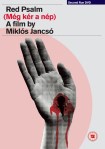
Red Desert (Il deserto rosso), Michelangelo Antonioni (1964). I’ve admired Antonioni’s films since first seeing L’Avventura several years ago. Red Desert was his first film in colour, and it shows – it’s an amazingly painterly film. Unlike in most films, the characters do not over-shadow their world but are very much a part of it. It creates a distance between viewer and cast, but there’s an immersive quality to the mise en scène which renders that of little importance. Films don’t need viewer analogues – that’s just confining the medium to the simplicity of oral storytelling: films use images just like books use words, and that’s where their focus should lie. I wrote about Red Desert on my blog here.
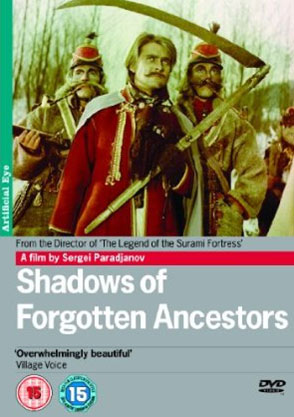
Shadows of Forgotten Ancestors (Тіні забутих предків), Sergei Parajanov (1965). I watched Parajanov’s The Colour of Pomegranates last year. That film is perhaps the zenith of “poetical cinema”, but Shadows of Forgotten Ancestors is definitely a way-station on the climb to it. It is, on the face of it, a simple story of one young man’s trials and tribulations. He is a member of Ukrainian Hutsul culture, and the film is rich with its costumes, music and traditions. Shadows of Forgotten Ancestors is by no means an easy film to watch, however, as it operates on so many levels – but it at least has a coherent plot, which is more than can be said for The Colour of Pomegranates.

On the Silver Globe (Na srebrnym globie), Andrzej Żuławski (1978/1988). If you can imagine a film that out-Tarkovskys Solaris, then you might have some idea of what On the Silver Globe is like. It’s based on a trilogy of novels published in Poland in 1911 by Jerzy Żuławski, which have apparently never been translated into English. On the strength of this film, they should be. It’s probably evident that I’m not a huge fan of traditional Hollywood-style cinema; it often feels to me like a waste of the medium’s potential. And yet films such as Red Psalm and On the Silver Globe, with their declarative dialogue, often feel like they’re only partway to what film could truly be. I like the painterly mise en scène of poetical cinema, but often find the declarative dialogue as clumsy as science fiction’s crude use of exposition. And so it is in On the Silver Globe – characters run around and gurn at the camera, and then speechify on the meaning of life. However, it’s in the story and the imagery that the film really impresses – enough, in fact, to offset the fact the film was never completed – much like Andrzej Munk’s Passenger. The Polish Ministry of Culture closed down the production of On the Silver Globe when the film was only 80% complete. It was ten years before Żuławski returned to it, and then he could only complete it by using stock footage and voice-over for some parts. It works surprisingly well. I plan to write more about On the Silver Globe on this blog.

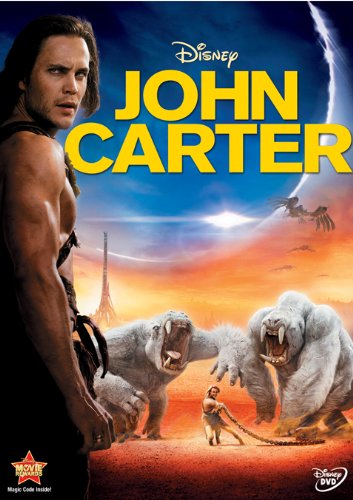
John Carter, Andrew Stanton (2012). John Carter received a mauling at the US box office, so much so it was officially declared a flop by its studio, Disney. Happily, the world outside the US had more discerning taste and went to see the film in sufficient numbers for it to eventually turn a profit. But the profitability of a film is measured solely on its performance at the US box office – which is both dumb and parochial – so it’s unlikely a sequel to John Carter will ever be made. Which is a shame. John Carter was a spectacle, with a clever script that managed to make something twenty-first century of its early twentieth-century source material. It had its flaws – some longeurs, and an inelegant info-dump to explain the plot – but other parts more than made up for it. I wrote more about it on my blog here.

Honourable mentions go to , Federico Fellini (1962), which after seeing La Dolce Vita many years ago and disliking it, I had expected to hate – I didn’t; I loved it. Troll Hunter, André Øvredal (2010), was another deadpan Norwegian spoof and cleverly done, though not quite as good as Norwegian Ninja. The Third Part of the Night, Andrzej Żuławski (1971), was the first Żuławski I saw, and it’s off-the-wall Hitchcockian style appealed to me greatly (as did Andrzej Korzyñski’s superb soundtrack). Went the Day Well?, Cavalcanti (1942), was a surprisingly brutal piece of wartime propaganda in which a German fifth column try to conquer a small English village. It goes badly. The Extraordinary Adventures of Adèle Blanc Sec, Luc Besson (2010), gets a mention as an entertaining adaptation of Jacques Tardi’s bande dessinée, and though it’s completely silly it was great fun. Finally, some quality telly: Twin Peaks (1990 – 1991), which has not dated at all, and is still great entertainment despite being completely bonkers; and Caprica (2010), which promised so much more than it ever got the chance to deliver.

Sounds
I knew from early this year that 2012 was going to be good for music. Perhaps few of my favourite bands are releasing albums, or touring the UK, but I’ve stumbled across some bands new to me that have been on almost constant play on the iPod.

Dwellings, Cormorant (2011). The band self-released this last year and it’s a powerful mélange of half a dozen metal genres. I loved it from the first listen, and even went back and got copies of their earlier two albums.
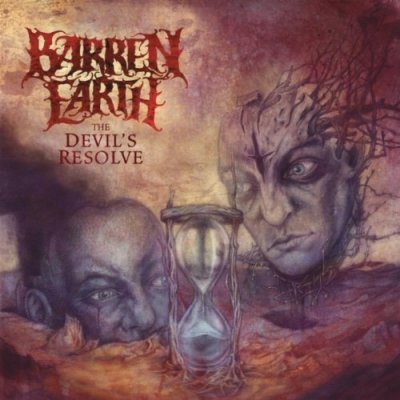
The Devil’s Resolve, Barren Earth (2012). This is the superband’s second album, and it’s a heavier and yet proggier effort than their first. The riffs are not quite as memorable as they are on The Curse of the Red River, but the lead breaks are much more impressive, and the proggy break-outs even stranger. Opeth’s Heritage proved there was a market for 1970s-inspired weird Scandinavian prog, and Barren Earth have taken that and melded it with Scandinavian death/doom to create a winning combination.

The Weight of Oceans, In Mourning (2012). I saw a review of this and it sounded appealing, so I ordered a copy from a Finnish website. It’s death/doom in that way the Finns do so well, but with added slow modern progginess. It’s not proggy like Barren Earth is proggy, inasmuch its acoustic parts feel more of a piece with the heavy parts. I’ve been playing it constantly since it arrived.

Nostalgia, Gwynbleidd (2009). Another band I came across mention of and who I thought I might like. So I bought the album. And yes, I do like them. Very much. They’re a sort of mix between Opeth and Northern Oak, but also not much like either. There are long sustained death metal parts, interspersed with folky acoustic guitar, and it all hangs together exceedingly well.
Legacy, Hypnos 69 (2010). I’ve been a fan of Hypnos 69 since hearing their The Intrigue of Perception several years ago. I’s taken me a while to get hold of Legacy, chiefly because it was released by a small label in Germany and wasn’t available in the UK. Recently I discovered it was on bandcamp, so I bought it from there. It’s Hypnos 69 doing Hypnos 69-type stuff, and I love it.

Honourable mentions go to Finnish death metallers (Psychoparalysis), who have self-released three excellent EPs; Weather Systems by Anathema (2012), which I much prefer to the previous album; Wood 5: Grey Skies & Electric Light by Woods of Ypres, which is folky black metal that sounds a little like Type O Negative in places  and includes strings and oboe; and finally, All Spawns, a recent compilation of Czech death metal pioneers Apalling Spawn’s two released from the late 1990s (now, if I can only find a copy of the Sparagmos compilation, I’ll be really happy…).
Leave a comment

Whippleshield Giveaway!

I’m running a competition on the Whippleshield Books blog to give away a pair of limited edition hardbacks of Adrift on the Sea of Rains. All you have to do is answer three easy questions – and no, the answers are not in the book; you’ll have to search the Internet. So head over there and have a go. Please.


19 Comments

Alien zero

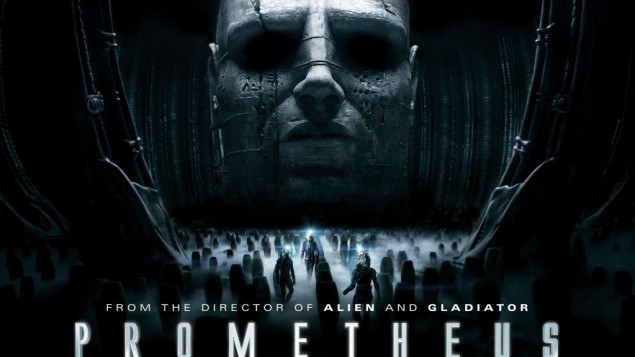
Prometheus – for a film which is not a prequel to the Alien franchise no honest well okay maybe it is – appropriately asks a ton of questions. Sadly, it either ignores them or gives dumb answers that don’t stand up to a second’s scrutiny. Having said that, as a film, it looks great. Pretty pictures, after all, trump everything.

The movie opens on a verdant planet beside a waterfall. There is a giant hairless humanoid standing on the shore, and a giant flying saucer hovering in the sky nearby. The giant opens a small container and eats its contents. It kills him. He falls into the water and his body dissolves down to its constituent DNA. This, we are supposed to believe, is an alien seeding human life on Earth.

But wait.

Did the giant humanoid mean to dissolve into primordial goop? Was it suicide? Or a really badly planned delivery method for planetary seeding, in which someone has to commit suicide? Maybe it was murder, maybe that was humankind’s original sin. But if we’re descended from them, why did we evolve to be so short and so hairy?

Cut to the Isle of Skye, later this century. Two palaeontologists have discovered 35,000-year-old cave paintings in a, er, cave. These paintings depict a giant pointing to a pattern of five circles. If it’s the same giants from the flying saucer, then they must have returned to Earth. Why? So they could prompt Upper Paleolithic humans to paint their picture? (We’ll ignore for the moment the fact that the oldest settlement so far discovered on Skye is younger than these cave paintings by about 30,000 years.)

This painting of a giant pointing the way to a pattern of five circles is apparently not unique to Skye. In fact, variations on it appear on artefacts from a wide variety of ancient civilisations, not all from the same time period – suggesting a number of visits, or a stay of a couple of millennia. This, apparently, is sufficient evidence for the two palaeontologists, Shaw (Noomi Rapace) and Holloway (Logan Marshall-Green), to persuade zillionaire Weyland to fund a mission to the “galactic configuration” represented by the five circles. “Galactic configuration”? What’s that then? A planetary system? Or a constellation of five stars? As seen from Earth? Thirty-five thousand years ago? Stars move, you know. Planets move too. Over time, their positions change – and so too does our viewpoint, as the Earth itself moves.

No matter. Movie logic says there’s something in the heavens which can lead our intrepid palaeontologists to a specific planet. Well, actually a moon of a gas giant. We’ll ignore the vast amounts of radiation the gas giant is likely producing, or its magnetosphere has trapped – this is a movie, after all. Weyland’s spaceship – called the Prometheus – lands on the moon, LV-223 (the first two Alien films took place on LV-426).

All this is handily explained in a briefing given by Shaw and Holloway to the members of the mission aboard Prometheus. However, rather than hire competent scientists for this trip, Weyland appears to have chosen to use rejects from Central Casting. It’s bad enough that the two leaders, Shaw and Holloway, believe in some von Däniken-type rubbish about gods from outer space creating humanity, but the rest of the team are no better. One tells another to fuck off when he introduces himself. Right. You’re zillions of kilometres from Earth – not “half a billion miles,” as one character later says; that would put you about twice as far from Earth as the Moon. Anyway, you’re light-years from Earth, in a spaceship with a small group of people, en route to an alien world. It is not a good time or place to act like an arsehole.

So there’s the scientific mission, the crew of Prometheus, the representative from Weyland, named Vickers, and an android, David. Vickers lives in a “lifeboat”, which is like a luxury flat stuck on the back of the spaceship. This lifeboat also contains a “medpod” – like the original Alien‘s “autodoc”, I imagine – but this one only works on human males. Er, right…

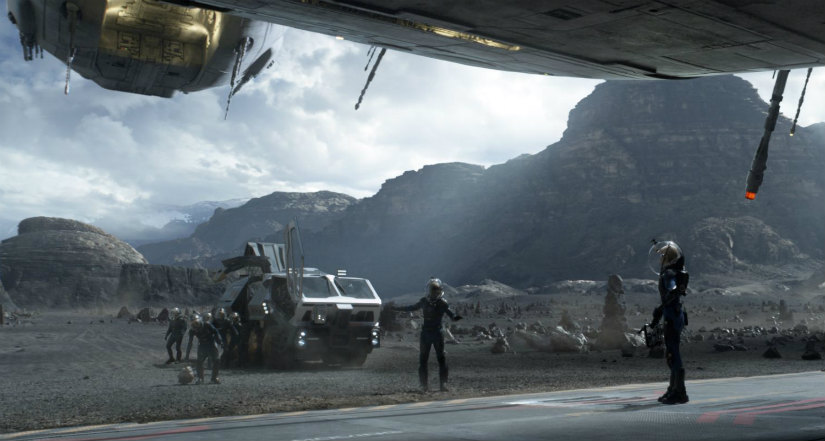
Prometheus lands on LV-223, and discovers a row of strange giant buildings. They’re like giant weathered pyramid-things, inside circular walls. Shaw and the others explore the nearest one. It contains lots of tunnels… and a room with a giant humanoid head. Also jars, lots of jars. Which start to ooze black gunk once the room is breached. Later, they determine the pyramid is a tomb.

Except most tombs don’t have spaceships buried under them. And these are the Giger boney boomerang spaceship from Alien… and the space jockey proves to be one of the giant hairless humanoids wearing a spacesuit. Which does make you wonder why they turned up to Earth in a giant flying saucer.

The boomerang spaceship also contains lots of jars, which the scientific team realise are a weapon. But a very strange weapon. It has different effects on different people. It made the giant at the beginning of the film turn into gunk, and so seeded the Earth. It makes the preserved head of a giant they find in the tomb explode. It turns one of scientific team into a super-strong diseased madman. It allows Holloway to impregnate Shaw with a tentacled monster. (She later uses the medpod to extract it – clearly it has been programmed to deal with pregnant males.)

When they find a surviving giant humanoid, and David manages to speak to him because he’s studied comparative linguistics and can somehow cobble together a working patois of the alien language from that… well, you don’t need that alien gunk to make your head explode. (Oh wait, maybe human languages are genetic too… Not.) But by this point in the film, the plot has already imploded into a black hole of illogic and nonsense and implausibility, so you only have yourself to blame. Prometheus is not a film to watch with your brain engaged. Just admire the pretty visuals. It makes for a much more entertaining 124 minutes.

Yes, Michael Fassbender pwns the film as the android David. Noomi Rapace’s character makes little sense, not least because religion has been fisted into a story it doesn’t fit. The rest of the cast might as well have worn red shirts. Vickers (Charlize Theron) tries to do a robot-or-not thing, but in the end proves she’s human the only way a woman in a movie possibly could: she fucks the captain (Idris Elba). At one point, Shaw is referred to as Holloway’s “zealot girlfriend”. Shaw and Vickers, incidentally, are the only two women in the film. So by 2093, we’ll have cool interstellar spaceships, but no gender equality. Plus ça change…

I saw Prometheus on IMAX 3D. It cost me £13. It was not worth it. I should have waited for the DVD and rented it. I also saw John Carter on IMAX 3D. That film was worth it. John Carter was a much better film. It also flopped. It’s unlikely Prometheus will flop – in fact, it’s probable the sequel implied by the ending will be made.

If you want to see a good sf film with giant spaceships and scary thrills, watch Cargo.


1 Comment

Fragment

So a year or two ago I had this idea for a postmodern planetary romance, a Leigh Brackett-style story as much about story as it was about the events in its strange and implausible world. But like most such projects – and I have an embarrassingly large number of them – it never got beyond some vague ideas and a couple of hundred words. I had a great title, ‘Gods of Saturn’, and what I thought was a pretty cool opening, but then other new shiny ideas captured my attention and my postmodern planetary romance got filed away in a forgotten folder. Until now. Maybe one day I’ll do something with it, actually finish it off perhaps, but for now it qualifies as one of those “stories that never were”, of which I have far more than I care to enumerate. But rather than let it go totally to waste and, in part, to perhaps prompt me into actually working on it and maybe finishing it, here’s the opening of ‘Gods of Saturn’ for you to enjoy…

Of all the winds which blow across the sand seas, an easterly is the most disagreeable. From that quarter, the town of Kumpara boasts no defence against the scouring grains of sand. The western wall of Pu Chou rises behind Kumpara’s tumbled blocks, and curves enfolding arms to north and south. But to the east: nothing.

There was, however, much which could be said about the couple who strolled along Kumpara’s long stone jetty one day in the Age of Helium, as small wisps of easterly wind whipped up dancing devils of sand.

Kumpara had seen better years, but had yet to reach the nadir of its decline; or its subsequent rise to quiet gentility. See it now, and perhaps you would find it hard to picture the narrow streets thick with blinding red dust, the sand whipped into fountains fifty feet high, and every house shuttered and doors firmly bolted. Those who lived there knew better than to risk the wind’s wrath.

A local spy – and there was one – who watched the young couple will have deduced they were strangers to Kumpara. The wind was not yet dangerous, but only the foolhardy or ignorant remained out once it began to blow. So too did their garments advertise their origins. The young lady was dressed in a fashion yet to be seen in the town. The eye in the telescope might have glimpsed the split skirt which was common at that time in the capital city, Xu; the high-collar, with its arcane symbols of rank and allegiance; the long gloved sleeves. Her companion was equally well-dressed.

As they turned to stroll back along the jetty, some feeling or whim caused the young woman to look back. She halted, head turned and, as if conjured into being by her gaze, features formed on the face of Saturn. The lemon and orange and tan stripes swirled like the ingredients of some decadent cocktail. It was a vast face, a face which filled the planetary canvas on which it appeared, and it caused the spy to drop his telescope and scramble from his vantage point.

As a result, he did not see the reactions of the Xuan lady and her companion. He did not see her turn her back on the face in disdain.

If such an occurrence sounds remarkable but the couple’s reaction does not, it is because at that time the gods of Saturn would often manifest on the face of the gas giant. From their celestial vantage point, they would gaze on each of the moons and on each of its civilisations. Their impact depended very much on the moon’s distance from Saturn. Here on Janus, where Saturn occupies a significant portion of the horizon, the gods held sway more than on, say, distant Iapetus.

When a god appears, all see him or her. When a god speaks, only those to whom they direct their instructions hear.

Lady Eresu turned to Captain Quradu and took his arm. She gently pulled him about. “Ignore him, Quradu,” she said softly. “He cannot harm us.”

The captain dropped his hand from the butt of his tantalum-pistol. That looming face – its presence alone in the sky suggested great power. Quradu looked up at Lady Eresu – as befitted her rank, she was a head taller than he – and noted her lack of concern.


Leave a comment

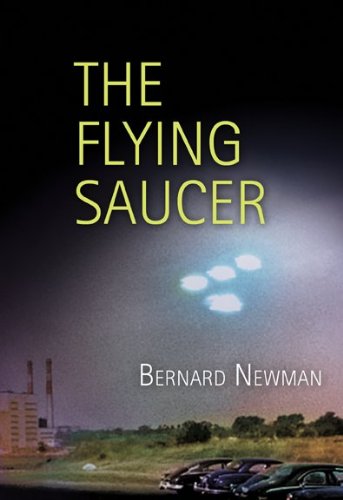
The Flying Saucer, Bernard Newman

The Flying Saucer, Bernard Newman
(2010 Westholme Publishing, $14.95, 250pp)

America Reads is a series of books which are “rediscovered fiction and nonfiction from key periods in American history”. The Flying Saucer by Bernard Newman is the first of three books in the series subtitled “1950s: Visions of the Future”. Strange then, that America apparently reads a novel by a British writer as a vision of its future. Further strangeness lies in the title. This novel was apparently the first to use the phrase “flying saucer” as a title, and yet no flying saucer actually appears in the story. They are, like the novel’s central conceit, smoke and mirrors. Project Blue Book is just as much a work of fiction as The Flying Saucer, but the author is not the United States Air Force.

The author is, in fact, Bernard Newman, who, as Bernard Newman the author, narrates the story of The Flying Saucer. Such postmodern narrative games sit oddly in what is essentially postwar pulp fiction – especially given the book’s overt nods towards HG Wells and prewar scientific romances. Newman, riffing off The Shape of Things to Come, looks to a scientific elite to save the world from itself, despite only five years having passed since World War Two ended with its frenetic technological progress resulting in V-2s and jet-fighters and radar. The opening chapter of The Flying Saucer recounts a conversation between Newman, eminent polymath scientist Drummond, and ex-spy and comedy Frenchman Pontivy. Together, they hatch a cunning plot, based on the canard that Earth’s nations will unite against a common foe. They chose Mars to be the home of Earth’s enemy. Drummond invents a rocket, made of some indestructible substance, and powered by mysterious means. It lands in Leicestershire, but unlike in Wells’ The War of the Worlds, contains only a message in a strange “alien” alphabet.

As the story progresses, as more rockets land in various parts of the world, the central trio recruit more scientists to their cabal. The messages, for example, were written by the world’s leading linguist. Who is subsequently asked by the UN to translate it. Newman, the author, adds to the global tension by placing stories of UFO encounters in various newspapers and magazines. A British film about aliens invading the Earth becomes a worldwide blockbuster after it is hyped by Newman’s contacts in the media. Meanwhile, Pontivy’s plan to extort more money for the plot from a French criminal backfires badly when the criminal tries to take over the self-created scientific elite. It all comes to a head when a Martian lands in Africa. It carefully manages to escape before the deception can be unmasked. By this point, the nations of the Earth have put away their atomic toys, are in thrall to Drummond’s League of Scientists, and eventually line up to vote in a world leader who proves to be Winston Churchhill in all but name.

It’s all wildly improbable and implausible. There’s no science in this science fiction, only vague handwaving by the narrating author. The central conceit is as old as Tsun Tsu, the book owes many of its ideas to the oeuvres of Verne and Wells, and Pontivy is an offensive racial stereotype. The end result is a potboiler which fails to convince on almost every level, yet remains mostly entertaining. It’s certainly not a definitive or seminal work, by any means. Likely it owes its alleged importance only to an accident of titling. Newman can’t have known a handful of years after the term “flying saucer” was coined that the term, that ufology itself, would prove so popular, or indeed that it would still be going strong sixty years later.

It is good to hear that America Reads. But it’s a shame, if The Flying Saucer is any indication, that it has such poor taste in books.

This review originally appeared in Interzone 232, January – February 2011.


Leave a comment

The future we used to have, part 10

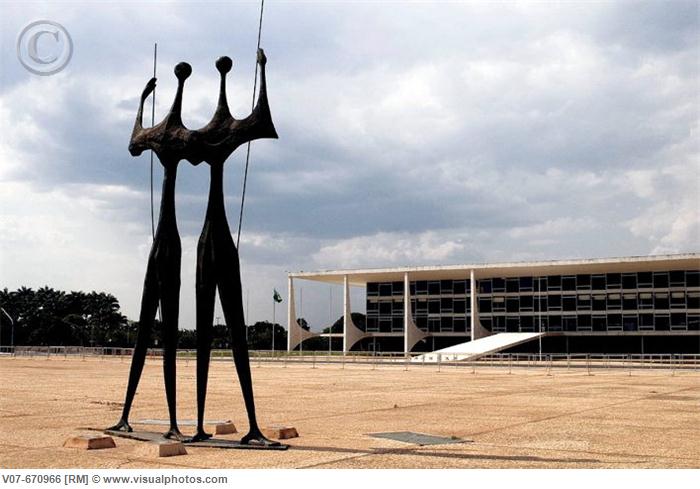
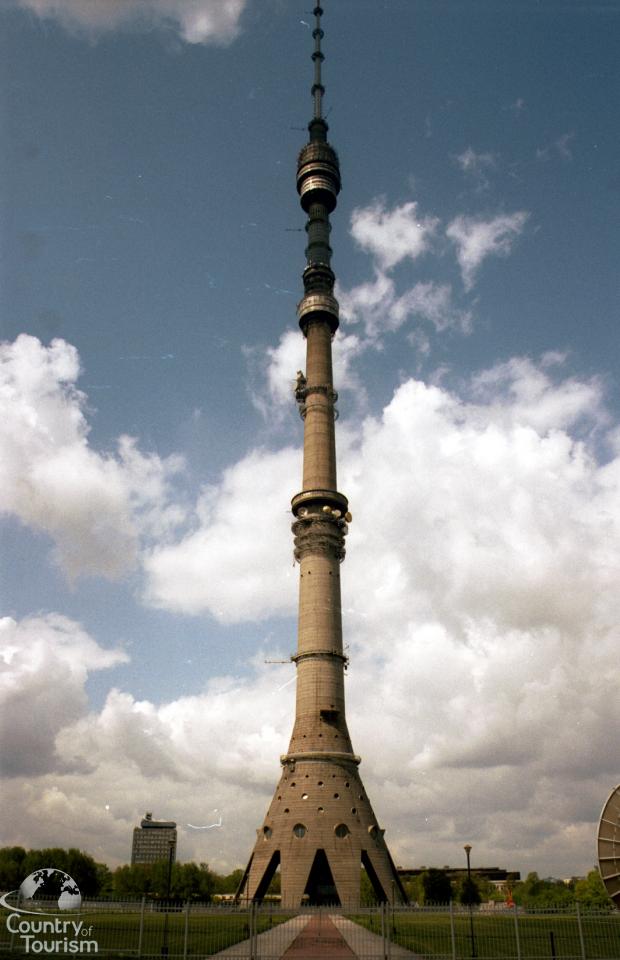
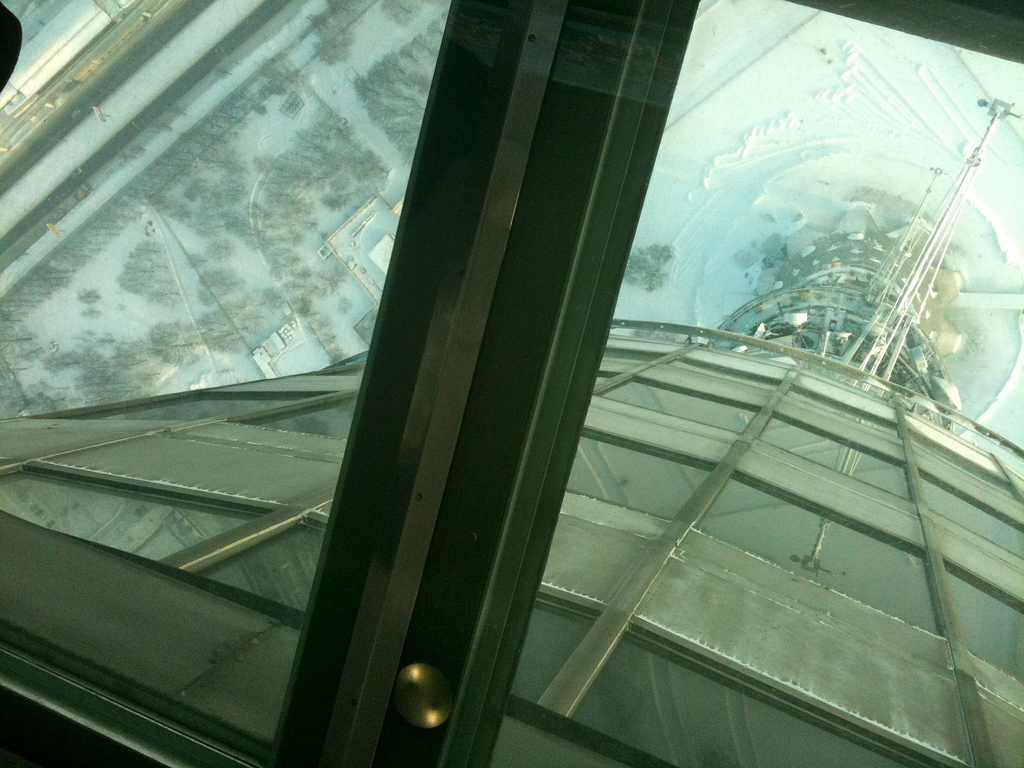
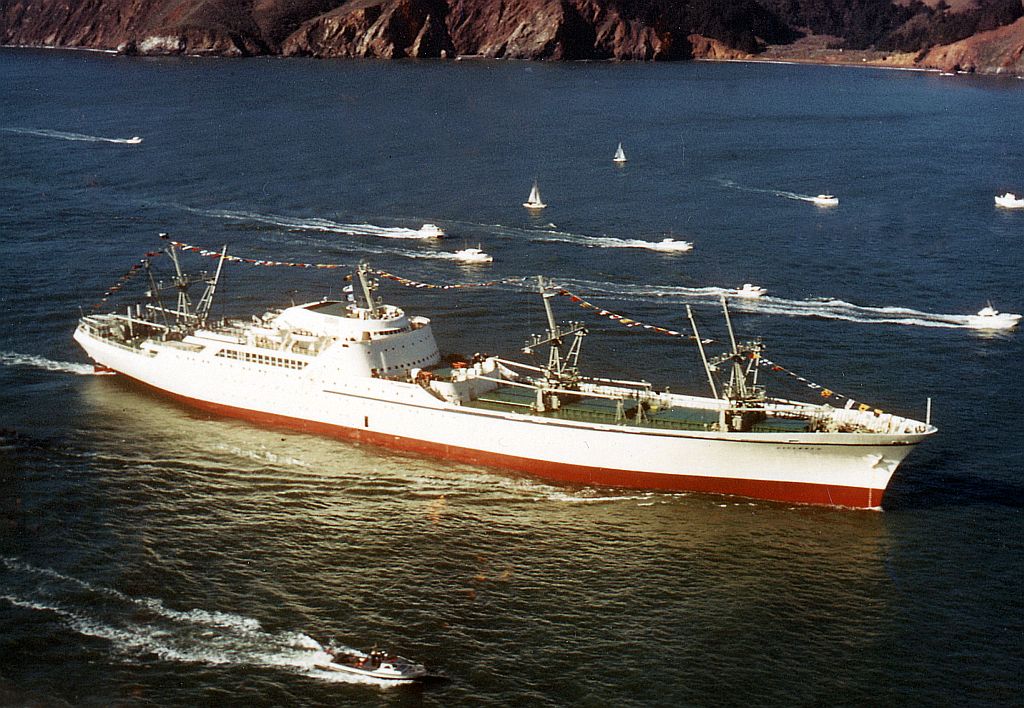
Since we’re supposed to be celebrating sixty years of Queen Elizabeth II on the throne, but watching a bunch of boats covered in bunting float down the Thames is dull, how about looking at some cool planes and cars and buildings from the last sixty years instead?

air

Hawker P.1121

Gloster Javelin

Mikoyan MiG-25 ‘Foxbat’

Mikoyan MiG-31 ‘Foxhound’

land

Supreme Court Building, Brasilia (Oscar Niemeyer)

Parque do Ibirapuera, São Paulo (Oscar Niemeyer & Roberto Burle Marx)

Ostankino TV Tower, Moscow (Nikolai Nikitin)

Observation deck of Ostankino TV Tower

water

NS Savannah, the first nuclear-powered passenger/cargo ship

NS Savannah

Bridge of the NS Savannah

A Stateroom aboard NS Savannah


12 Comments

You don’t know… what you just went and looked up

There’s an excellent review of Stina Leicht’s Of Blood and Honey on Martin McGrath’s blog here. Of Blood and Honey is an urban fantasy set in Northern Ireland during the Troubles, and it’s been widely praised. Martin finds much that’s troubling in the book regarding its setting – details which ring untrue to someone who grew up in the time and place in question.

And then there’s the Hugo Award-winning Blackout/All Clear by Connie Willis, whose claim of historical accuracy has been met with howls of derision on this side of the Atlantic. Not to mention the historical blunders perpetrated in earlier novels, such as those in Doomsday Book outlined by Adam Roberts here.

How much trouble would it have taken Stina Leicht to discover that the Royal Military Police wear red berets – and not the Parachute Regiment, who wear maroon berets? Or that the British Army has never been referred to as the “BA” by anyone? BA is an airline, of course; and it was founded in 1974, three years before the time during which Of Blood and Honey is set.

How much trouble would it have taken Connie Willis to discover that the Jubilee Line of the London Underground was opened in 1977, in celebration of Queen Elizabeth II’s Silver Jubilee, and so wouldn’t have existed during World War 2? Or that people burned wood and not coal in their fires in 14th Century England? Or that no one has used the phrase “trunk call” in the UK since the 1970s?

True, most readers will either miss these errors, or let them slide. Providing the mistakes don’t pull them out of the story, many readers don’t much care. But there are those who will notice – and they will not only be unimpressed, they might be also be offended.

Without drifting into a discussion on cultural appropriation or First World Gaze (to coin a phrase), I believe a writer has a responsibility to their readers, and to themselves, to get the details right. Writers need to strive for verisimilitude (not authenticity). Research is vital in all areas – not just setting, but also science; technology; language… Anything which exists in the real world and which affects the story in any way, no matter how seemingly trivial.

In these days of the Internet, there’s no excuse. Readers can go and look something up online – and frequently do. Wikipedia has made expert knowledge available and convenient for everyone. Writers should not only be prepared for that, they should armour their writing against it. The old days of genre writers getting away with the most egregious bollocks because they didn’t know better, because their readers were unlikely to know better… they’re over. There is no excuse for sloppiness. Writers must fact-check. Everything.

Because they’ll look very, very foolish if they don’t.


86 Comments

You don’t know good

I’ve lost count of the number of times I’ve been told “good is subjective” or “best is subjective”. Every time I hear it, it makes me howl with rage. Because it is wrong.

If there is no such thing as good – because if it’s entirely subjective and personal, then it’s completely useless as a descriptive term – then how do editors choose which books to publish, how do judges choose which books to give prizes to, how do academics chose which books to study? And why don’t they all choose completely different books?

They can do all this because the quality of a book can be determined objectively. It is not an exact science, and it is subject to changes in taste and/or re-evaluation in light of changes in attitudes and sensibilities. But there are certain key indicators in fiction which can be used to determine the quality of that piece of fiction. It’s what makes one writer more talented, more skilled than another writer. It’s what makes one story worthy of study and another not worth giving away for free. It’s why we have classics of literature, andwhy some books are still in print two hundred years after they were first published.

If good is subjective, then awards are completely pointless. And studying literature, well, that’s a complete waste of time too. After all, how can you be an expert in a topic in which one individual’s value judgment is worth exactly the same another person’s? There’d be no such thing as an expert. All books would have exactly the same artistic value.

This is patently nonsense.

Perhaps it’s easier to describe what is bad – if good is subjective, then by definition bad must be too. Except, strangely, everyone seems to agree that the following do indeed indicate that a piece of fiction is bad: cardboard cutout characters, idiot plotting, clumsy prose, tin-earred dialogue, lack of rigour, graceless info-dumping, unoriginality, bad research…

So if we can determine with a reasonable degree of accuracy what constitutes a bad book, then it logically follows we can do the same for a good book. And since this is a scale of sorts, then there must be an objective element to determining a piece of fiction’s position on the scale. Which means it is not subjective.

And “best”? It means “of the highest quality”, “most excellent”. It is the superlative form of “good”. Go and look it up in a dictionary. If good is not subjective, then best cannot be either.

If you want to describe a book in entirely subjective terms, then tell people how much you enjoyed it, how much you liked it. That’s your own personal reaction to it. It appealed to you, it entertained you. That’s the book directly affecting you. Another person may or may not react the same way, the book might or might not do the same to them.

Because that’s subjective, that is.


1 Comment

Template, Matthew Hughes

Template, Matthew Hughes
(2008, PS Publishing, £20, 253pp)

Comparisons between Matthew Hughes and Jack Vance are inevitable, because if any writer is a template for Hughes’ fiction then it is Vance. Hughes’ Archonate novels are set on an Earth not unlike the Dying Earth, or on the worlds of a formless galactic polity called The Spray which resembles the Alastor Cluster (in fact, hussade, from Vance’s Trullion: Alastor 2262, is mentioned in Template).

Like many of Vance’s novels, Template is a bildungsroman, and one in which the protagonist is involuntarily pitched into a quest for his true identity. Said protagonist is Conn Labro, a highly-skilled and indentured duellist on the world of Thrais. Despite his abilities, Labro is a naïf and Thrais, with its culture based on contracts and transactions, has given him poor social skills. So when a regular customer is murdered, leaves him a fortune and an encrypted bearer deed to a planet, and an attempt is made on his own life, Labro has no idea how to respond. Happily, there is a young woman at hand to help him. Labro buys out his indenture and determines to discover his origin and the location of the planet he apparently now owns. The young woman, Jenore Mordene, he “hires” as a guide.

It’s in the nature of such a story’s template that the naïf’s voyage of discovery is as much literal as it is metaphorical. Labro’s bearer deed has determined his destination, Earth, and so he must travel there. En route, he learns something of The Spray – which gives Hughes opportunity to discourse on various cultural templates for societies. For example, one character posits a theory of societies each built upon one of the seven deadly sins. Thrais, with its “transactionalism”, is of course Greed. Unfortunately, Hughes makes little of this idea, using it merely as the topic of conversation.

On Earth, Labro sees all social interactions as a form of transaction. Mordene, however, is from a region of Earth which eschews money, and sees something different. This provides some interesting repartee, but does not advance the plot as such. But it certainly sets the template for their relationship.

It’s only when Labro learns what he has inherited that the villain of the piece steps in to the story. Now the template is Gothic. Not only does the villain remain masked but, as is often the case in such fictions, there is a greater enemy hiding behind him. And this greater villain must be defeated if Labro is to win and keep knowledge of his origin, his legacy, and the girl. And yes, the book’s climax does reveal Labro’s origin. It also explains the story’s title – there is indeed a very real template in the story.

At some point reading Template, everyone is sure to ask why we need Hughes when we have Vance. And the answer is: because we can never have too much Vance. And providing it’s done with invention and wit, then it’s as enjoyable as the real thing. Happily, Hughes matches the wit and invention of Vance. He also brings slightly off-kilter philosophical musings to his stories, and they provide a depth Vance sometimes lacks. Having said that, the writing in Template is a little stilted. While clearly intentional, it’s not entirely successful. Further, Labro is somewhat stiff a character, and Mordene is under-written. Neither characteristic is unexpected – at that intersection of bildungsroman and travelogue, where both protagonist and world are mapped, there’s little room for immersion.

This review originally appeared in Interzone 218, October 2008.


2 Comments

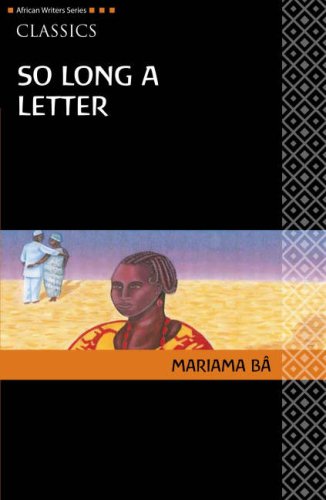
World fiction reading challenge #4: So Long A Letter, Mariama Bâ

The more observant among you will have noticed there’s no third installment in this year’s reading challenge. That’s because March’s book was My Name is Red by Orham Pamuk and I got stuck about halfway into it. At some point I plan to return to it, but for now I’m giving it a rest. I can’t really say why I lost interest so comprehensively in the book, especially since its topic is something that normally interests me: Islamic history (albeit Turkish rather than Arabic). After reading Magda Szabó’s The Door in February, I wrote, “Two books in and already this year’s reading challenge is shaping up to be one of the best I’ve done.” Clearly, I spoke too soon…

Anyway, April’s book, which I read late, is So Long A Letter by Mariama Bâ, a Sengalese writer. In fact, So Long a Letter won the first Noma Award for Publishing in Africa in 1980, and was later called one of Africa’s Best 100 Books of the 20th Century by the Zimbabwe International Book Fair. So Long A Letter was originally published in French as Une Si Longue Lettre, and was Bâ’s first novel. It was also the only one she saw in print. She died in 1981, five years before her second novel, Scarlet Song, was published.

So Long A Letter is a short book of 95 pages. Ramatoulaye is a schoolteacher and the wife of Modou. He has just died and she is now in mourning. During this period, she writes to her closest friend, Aissatou, and recounts her life – much of which involves episodes involving Aissatou. The epistolary structure allows for greater intimacy, but the fact that Ramataoulaye is telling Aissatou of events which her friend herself directly experienced does seem to spoil the effect somewhat.

Though Ramatoulaye is an educated woman – Bâ herself had to fight her parents to be educated – I’m guessing much of her life is not atypical for a Sengalese wife and mother. Such as, for instance, her husband taking up with a younger woman and marrying her – in fact, not a “woman”, but a school friend of Ramatoulaye’s oldest daughter. Also, the declaration after the funeral by Modou’s brother that he will marry Ramatoulaye – ie, “inherit” her. She turns him down. Which is not typical. In fact, Ramatoulaye is adamant she will remain single now that she is widowed. When Daouda Dieng,a past suitor from before she married Modou, asks for her hand in marriage, she also turns him down. Neither the brother-in-law nor Daouda take their rejections well.

A lot of the novel concerns the family connections of the cast. Aissatou’s marriage was considered controversial because she came from a less affluent family than her husband. Likewise, when Ramatoulaye’s oldest daughter wants to marry an impoverished student, friends of the family try to persuade Ramatoulaye to prevent it. Ramatoulaye, however, knows that her daughter loves the man, and that’s good enough for her.

There are one or two moments of outright racism:

Right from Form One, he had been top of his class in this subject; but this year for every capital letter forgotten, for a few commas omitted, for a misspelt word, his teacher knocks off one or two marks. Because of this, Jean-Claude, a white boy who has always come second, has moved up to first position. The teacher cannot tolerate a black coming first in philosophy. (p 76)

The story is filled with details of life among the Sengalese, both as Muslims and as Sengalese. At one point, Daouda delivers a lecture on the importance of true democracy in a newly-formed nation (Senegal gained independence in 1960), and though he rues the male dominance of the Assembly and admits they need more women in government, his suit to Ramatoulaye seems to expect a much more traditional “partnership”. There is also much about polygamy and its effect on women involved; not to mention their huge families – Ramatoulaye herself has twelve children.

So Long A Letter is, unsurprisingly, a very reflective novel, and it is likely it is partly auto-biographical. Though only a slim book, it does an excellent job of painting Ramatoulaye, her life and the society in which she lives. It’s a classic for good reason. I’m not so sure the story quite leads to the final paragraph – various incidents recounted in So Long A Letter demonstrate that Ramatoulaye has both witnessed the happiness of others, actively worked towards it for yet more, and even experienced it herself during the early days of her marriage:

The word ‘happiness’ does indeed have meaning, doesn’t it? I shall go out in search of it. Too bad for me if once again I have to write you so long a letter… (p 95)

So Long A Letter was a good choice for my reading challenge. I’m glad I read it. I might even one day have a go at Bâ’s other novel, Scarlet Song.