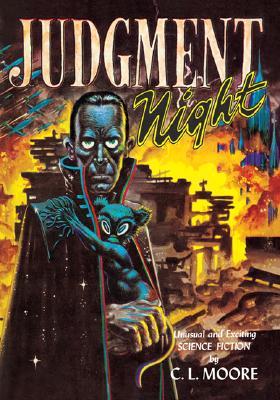
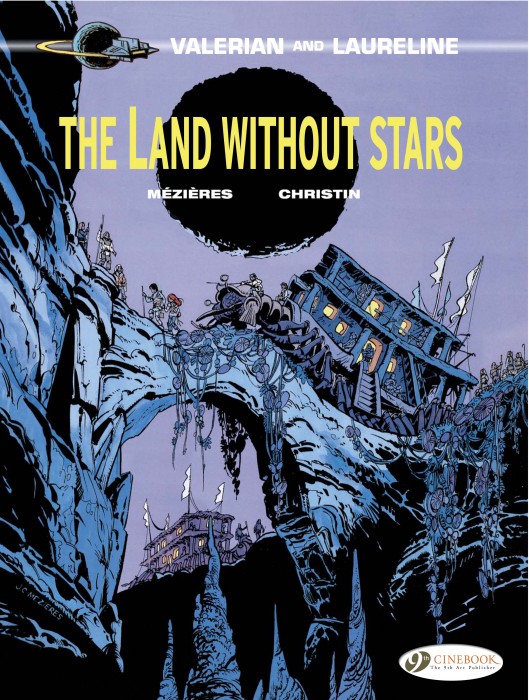
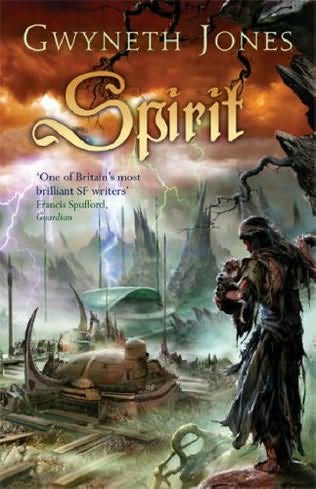
It Doesn't Have To Be Right…

… it just has to sound plausible


3 Comments

Reading diary, #3

It’s been a bit of an odd month, reading-wise. Mostly science fiction, both new and old – three for review, one for Vector and two for SF Mistressworks.

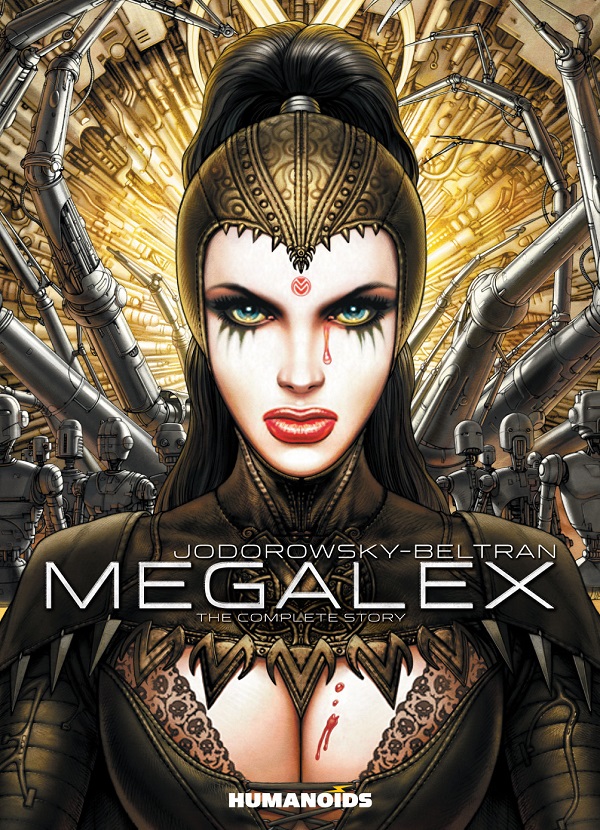
MegalexCoverMegalex, Alejandro Jodorowsky & Fred Beltran (2014). I picked up a copy of the first volume of this several years ago, but parts two and three never seem to have appeared in English. I thought about getting the original French editions – and might well have done so, had this omnibus edition not been published last year. The original bandes dessinées – L’anomalie, L’ange Bossu and Le cœur de Kavatah – appeared in 1999, 2002 and 2008, respectively. Beltran’s art apparently tends to the pneumatic, and two of the lead female characters are implausibly buxom. The plot borrows a number of devices Jodorowsky has used before – in fact, even the setting feels a little second-hand too. A world has been turned into one giant city, except for a small area of forest. A glitch in the clone factory results in a dimwitted giant of a clone, who manages to escape and join the rebels living underground, who are led by a hunchback. The king’s daughter is searching for love, but her touch kills. The rebels attack the palace and kidnap the princess – but the hunchback is not killed by her touch. And his hunch turns out to conceal a pair of wings. The princess and winged man conjoin and become a winged hermaphrodite, which leads the rebels to victory over the evil king and queen. It’s not Jodorowsky’s best work by any means. It all feels a bit recycled, and though Beltran’s art is gorgeous, it’s a far too much objectifying. Despite a career in bandes desinées stretching back to 1966, Jodorowsky hasn’t really done anything science-fictional that beats The Incal.

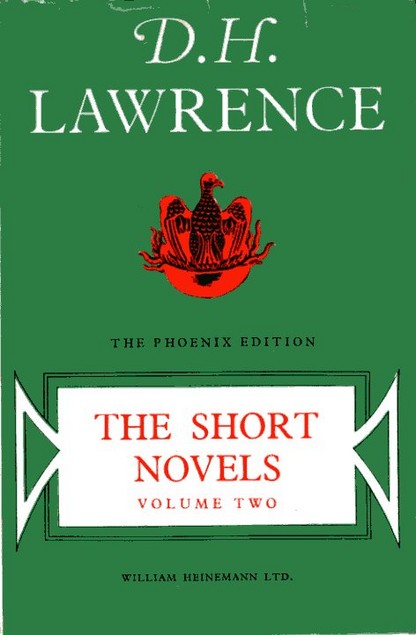
shortnovels2The Virgin and The Gipsy, DH Lawrence (1930). I decided to read this “short novel” before watching the 1970 film adaptation sent to me by Amazon rental. It was apparently written around 1926, but discovered among DH Lawrence’s papers after his death in 1930 (the novel, that is, not the film adaptation), and published later that same year. It… actually reads like a parody. Flighty virginal young woman is attracted by animal charm of handsome gipsy, but then a local dam bursts and floods the area and the gipsy saves the young woman from the waters. So that’s 1930’s prize for Most Obvious Sexual Metaphor Ever to David Herbert, and this is a man who never let a metaphor for sex or sexuality go unmolested. There’s also some anti-semitism on display – the virgin makes friends with a Jewish divorcee (who is not actually divorced) and her laid-back boyfriend, and there are over-frequent references to the woman’s ethnicity. Lawrence was always very good about writing about landscape, although that’s not so much in evidence in this short novel. But he was also really good at interiority and there’s plenty of that on display here. It’s not Lawrence’s best work of those I’ve read – although it seems to have been critically well-received.

The Kif Strike Back, CJ Cherryh (1985). I reviewed this on SF Mistressworks here.

The Grasshopper’s Child, Gwyneth Jones (2014). A new novel from Jones. W00t. It’s a YA novel set in the world of the Bold as Love series. I reviewed it for Vector.

ultimaUltima, Stephen Baxter (2014). The sequel to Proxima – did you see what he did there? Proxima: nearest; Ultima: furthest. Where the first was near-future sf, this one drags in Baxter’s other great interest, alternate history. It seems that the Hatches which allow for easy travel over interstellar distances (instantaneous for the traveller, but light-speed is not violated), also trigger “resets” of history – or shift the protagonists into alternate histories. In the first, the Roman Empire makes it into space but despite making use of “kernels” (magic energy wormhole-y type things) as a power source, it doesn’t appear to have progressed much beyond the first century CE. And then it’s an interstellar Aztec Empire, which also uses kernels and has built a giant fuck-off O’Neill cylinder but still runs pretty much along the same lines as it did when Cortés stumbled across Tenochtitlan. It’s quite an impressive sustained act of imagination, but not in the least bit plausible. The book also suffers from juvenile characterisation – a running joke involving a lead character, a grizzled Roman legionary – wears thin soon after the third mention but Baxter keeps it going right to the bitter end. There’s lots of clumsy exposition, and a central premise that doesn’t really convince. Baxter has done much better than this, and it all feels a bit by-the-numbers and banged out over a quick weekend. Disappointing.

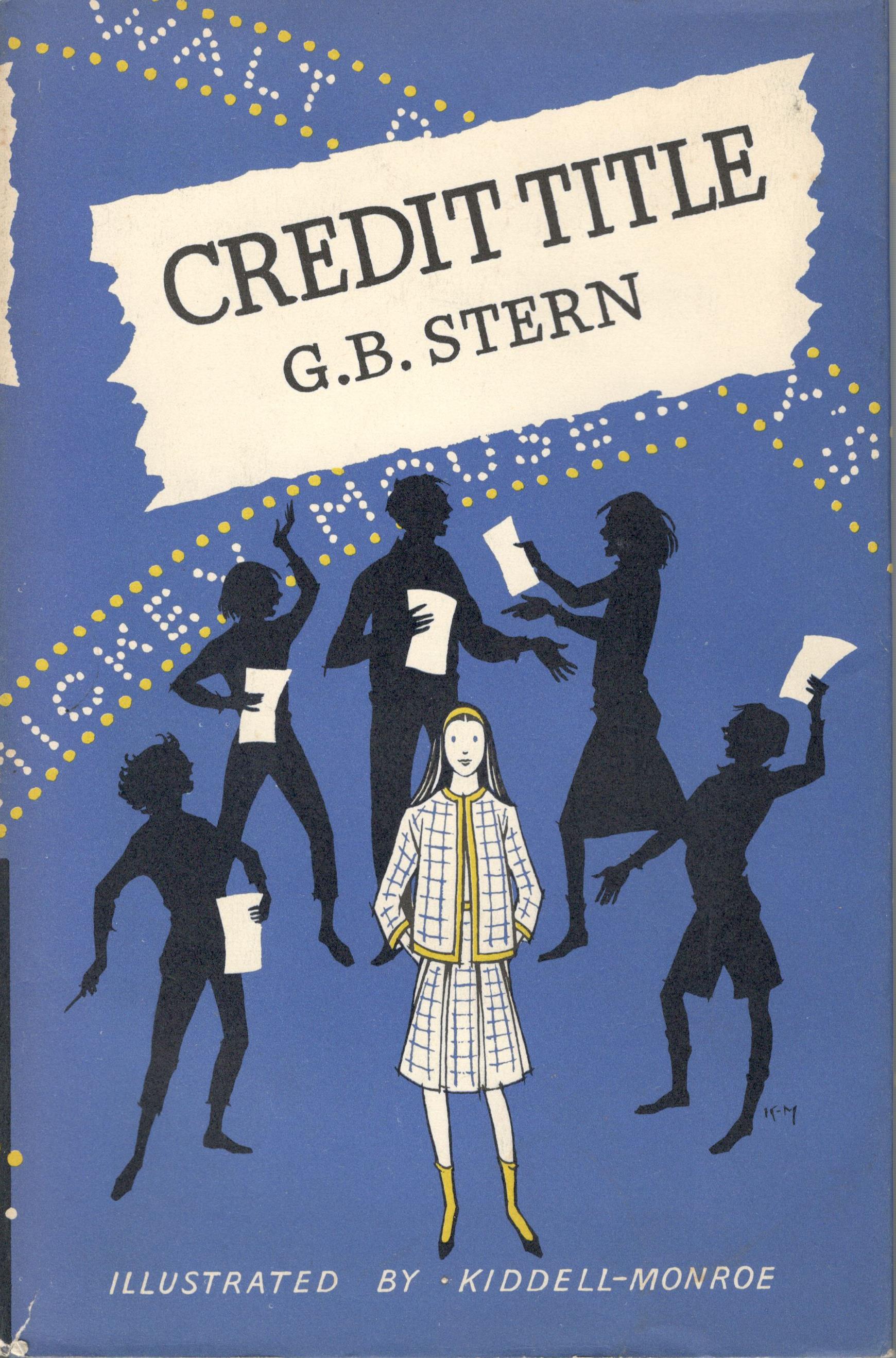
credit_titleCredit Title, GB Stern (1961). GB Stern is Gladys Bronwen Stern, a British writer who published some forty novels between 1914 and 1964. I should have guessed from the cover art, but I didn’t realise Credit Title was a “junior novel” when I bought it on eBay. Oh well. It’s set in 1933. Sharon’s father is a director in Hollywood, but they move back to England when he marries Meryll Armstrong, who already has six children. Sharon has been dreaming of being part of a large family – inspired by a series of books about the “Rectory Family” – but the reality proves disappointing. They expect her to be stuck-up because she’s lived in Hollywood, and this colours the way they treat her. It’s all very terribly-terribly and breathless and patronising, a bit like the Narnia books – and I should have picked another Stern book to see what she’s like.

The Power of Time, Josephine Saxton (1985). Review to appear on SF Mistressworks soon.

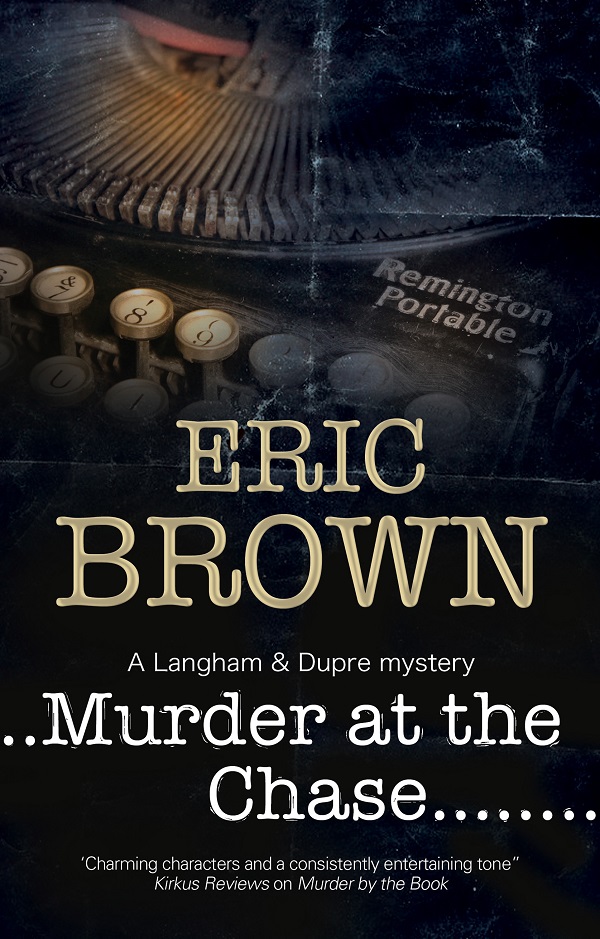
murder-at-the-chase-2Murder at the Chase, Eric Brown (2014). This is the second of Brown’s 1950s-set murder mysteries featuring thriller writer Donald Langham and his fiancée literary agent Maria Dupré. In this book, they’re invited to unravel a locked-room disappearance of another mystery writer, and it turns out it’s all to do with a satanist who may or may not have been born over one hundred years earlier. Brown evokes his period well, and his two protagonists are eminently likeable. He even manages a nicely liberal view of humanity that wasn’t common in 1955 – two of the secondary characters are gay, and despite it being illegal at the time, pretty much everyone seems surprisingly tolerant when confronted with it. The locked-room puzzle is disposed of disappointingly quickly, but then there’s a murder and what looks like a suicide… And it all gets wrapped a little quickly and tidily for comfort. I suspect these are not written to be cosy mysteries, but they’re beginning to resemble them. They need to be a bit edgier – Brown is capable of it, he handles his period with aplomb and his characters with assuredness. But the plot is all a bit rushed, and the ending is far too tidy.

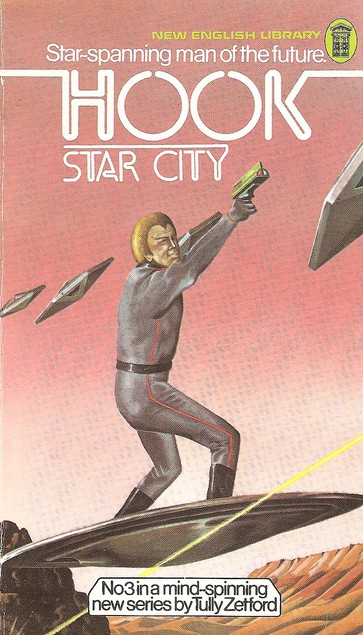
hook3Hook 3: Star City, Tully Zetford (1974). This is the third book in the quartet featuring Hook of the funny eyebrows. Zetford was a pseudonym of Ken Bulmer, and it’s even more hacky than the stuff he put out under his own name. In this one Hook has teamed up with four others to steal a collection of cultural artefacts (weighing 50 kg), but the other four intend to cut him out of the deal. But Hook turns the tables on them, loses his payment for the haul at the titular star city, and then loses the money he steals to make good on his losses… before he ends up saving the unsophisticated natives of the planet the star city orbits who are being hunted for sport. This is disposable stuff, a couple of hours’ reading you’ve forgotten ten minutes after chucking the book onto the pile of books that are going to the charity shop. Best forgotten, and I suspect the author felt that way too.


5 Comments

Moving pictures, #4

Yet more movies. What I have watched. I’ve been averaging two a night, due to the fact there’s been nothing worth watching on the terrestrial channels or cable television.

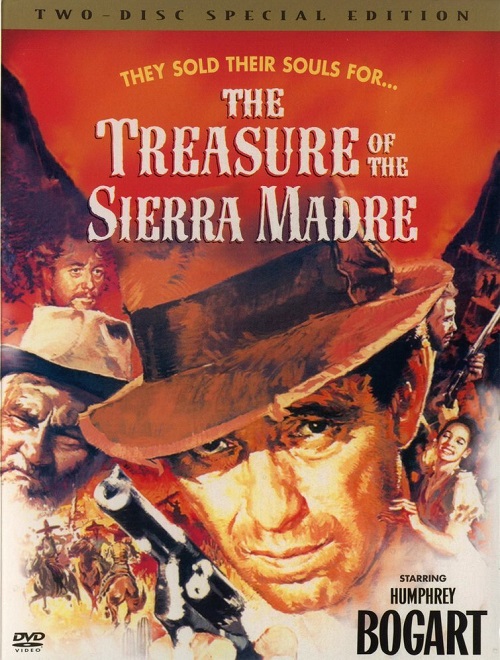
sierramadreThe Treasure of the Sierra Madre*, John Huston (1948, USA). Humph is stuck in Mexico, too poor to leave and look elsewhere for work. He’s offered a job, which he accepts, but when the job finishes, his employer doesn’t pay. Apparently, he’s known for doing this. That’s capitalism for you, folks. One man gets rich while others do the work; and all the better if he can get away without actually paying for it. Humph and a friend from the job hook up with an old prospector – played by the director’s father – and go looking for gold in them thar titular mountains. Which they find. But the prospect of great riches turns Humph all paranoid. And then bandidos turn up, bandidos with no stinking badges. Things go from bad to worse, Humph totally loses it, and it all ends badly. Not bad, although I thought Humph’s paranoia was a bit overdone. Huston senior was a complete star, however.

the_wind_risesThe Wind Rises, Hayao Miyazaki (2013, Japan). This is the Studio Ghibli one based on the life of Jiro Horikoshi, the designer of the Mitsubishi Zero, Japan’s most successful fighter plane of WWII. It apparently caused a bit of a fuss when it was released on the grounds it celebrated the life of a man who had designed a highly efficient killing machine. Despite all that, the film is well, a bit dull. Miyazaki livens things up a little by throwing in some weird dream sequences, featuring Italian aircraft designer Giovanni Batista Caproni. He also chucks in a doomed romance – the woman Horikoshi loves has tuberculosis, and dies shortly after they’re married. Horikoshi’s real wife was perfectly healthy. This element of the story was apparently adapted from a completely unrelated novel (and to which the film’s title is a reference). Incidentally, Werner Herzog provides the voice for a German character (in the English-language version), and it’s really quite strange hearing him in a Ghibli movie.

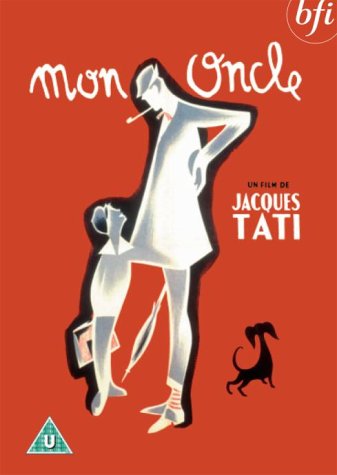
mononcleMon Oncle*, Jacques Tati (1958, France). This is how karma bites you on the ass. My rental agreement with Amazon involves them sending me 3 DVDs at a time, I watch them, return them, they send me 3 more. Except the copy of The Great Gatsby (see here) they sent me wouldn’t play. I reported it as faulty and returned it. They said they’d send me a replacement and it wouldn’t affect my agreement. Except they sent the replacement as one of my next lot of 3 DVDs. I complained, they apologised, and sent me an immediate fourth disc (The Virgin And The Gypsy, in fact). Situation resolved. And then they send Mon Oncle in my next 3, even though I’d bought the Jacques Tati box set only a week before – I’d forgotten to take it off my rental list. Argh. Anyway, this is definitely the next best Tati after Playtime, and it riffs off a similar conceit – but rather than city life being impersonal and oppressive, here it’s a single gadget-filled house, in which live Hulot’s sister and brother-in-law. There’s more of an actual plot than in Playtime, but again the film is built around a series of well-observed and cleverly executed set-pieces. More, please.

arriettyArrietty, Hiromasa Yonebayashi (2010, Japan). And this is the Studio Ghibli film based on The Borrowers, about a group of tiny little people who live behind the skirtingboard in a house. And, er, that’s it. Boy spots Borrower protagonist, who then reveals existence of Borrowers to him. Boy is ill and due to go into hospital for a risky operation. Parents discover evidence of Borrowers, and rings up a pest removal company. Boy helps Borrowers escape from pest removal experts. If I thought The Wind Rises was dull, this one has it beat. It didn’t even seem much like a Ghibli film.

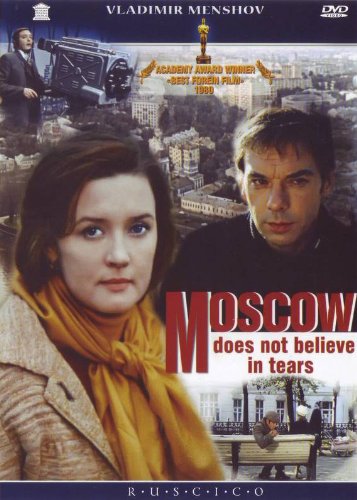
moscowMoscow does not Believe in Tears, Vladimir Menshov (1980, USSR). An odd film, this. It won the Best Foreign Film Oscar in 1980, the third Soviet film to do so (the others were War and Peace in 1968 and, er, Akira Kurosawa’s Dersu Uzala in 1975). It opens in the 1950s, with three young women from the country now living in Moscow. One works as a mechanic, but wants to go to university to train as an engineer. Another works in a bakery, but believes in having fun and finding a rich husband. The third has a boyfriend who’s a farmer and they intend to marry. The baker and mechanic are asked to house-sit a rich relative’s apartment. They pretend the place is theirs and throw a party for eligible men (it’s the baker’s plan, the mechanic goes along with it reluctantly). The mechanic’s university plans are then scuppered when she falls for a television engineer, who makes her pregnant but refuses to marry her. The baker meanwhile marries a rich and famous hockey player. The film then jumps ahead to the 1970s. The mechanic is now the director of a successful manufacturing plant and a single mother, the baker’s marriage ended badly when the hockey player became an alcoholic, and the third one has been happily married to her farmer for two decades. And then a tool and die maker at a scientific lab picks up the director woman, not realising she occupies such an important position, and the rest of the film is their romance. While the movie carefully ignores many of the hardships of living under the Soviet system, and presents the USSR as a relatively affluent society, there are a number of details which are peculiar to its setting – in the 1950s, the three women live in a women’s dormitory, for example; or the mechanic is interviewed on television at one point because she is a female mechanic. It’s a well-handled drama, and despite a tendency to soap opera melodramatics in places, gives an interesting glimpse of a society that no longer exists. Worth seeing.

virginThe Virgin And The Gypsy, Christopher Miles (1970, UK). I decided to read the DH Lawrence novella from which this film was adapted before watching it, which was probably a mistake. (The novella is also the source of “inexcusable puddings”, although the expression is not used in the movie.) Two daughters return from their French finishing school to their father’s East Midlands vicarage. Yvette, the virgin of the title, is flighty, but Lucille is made of more sensible stuff. Yvette’s character is blamed upon, and often alluded to, the vicar’s absconded wife (although she was Lucille’s mother too). While out motoring about with some local friends, the sisters come across a gipsy, and Yvette is taken with his macho charm. Even for Lawrence, this is all about as subtle as a black pudding in the face. The film ends with a dam burst which floods the area – and Yvette’s life is saved by the gipsy. The film didn’t quite portray the characters as they were written, if anything it seemed to tone them down a little (it also toned down the 1920s racism, thankfully). And it didn’t look like a very expensive production – although it did actually look like it was filmed on location (which it was; it’s more or less the part of the country I’m from).

michaelMichael, Carl Theodor Dreyer (1924, Germany). I think I’ve come to Dreyer’s films backwards, starting with his Danish (sound) movies and then watching his earlier silent films. I’ve still yet to see Vampyr and The Passion of Joan of Arc, two of his most famous movies. But, Michael. This apparently didn’t do very well on release, likely because it’s centred around a gay relationship between a famous painter and his model. A bankrupt countess approaches the painter for a portrait, but actually plans to seduce him and then take all his money. But the model instead falls for her, and they go off together. The model steals from the painter, which then inspires the painter to paint his masterpiece. Soon after the picture is unveiled, the painter takes ill and dies, without being reconciled with his lost love. This is not much like the Danish films, neither in subject nor presentation. There are similarities, of course – Dreyer’s use of close-up, for example; but the sets more resemble German Expressionism than they do the Scandinavian starkness of Ordet or Day Of Wrath. There are also a lot of intertitles.

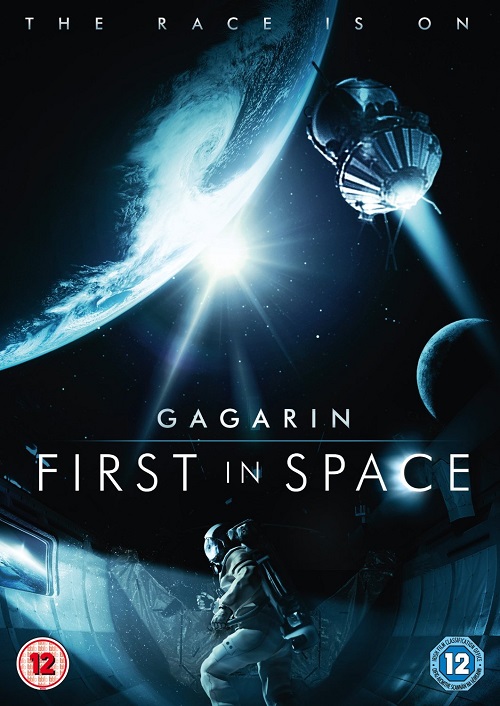
gagarinGagarin: First In Space, Pavel Parkhomenko (2013, Russia). The title is probably a bit of a clue to this film’s story. It’s a fairly straightforward biopic of the first man in space. I didn’t spot any glaring inaccuracies, although I’m no great expert on Gagarin’s life. There was quite a bit of emphasis on the camaraderie of the cosmonauts and Titov’s jealousy, but it also really pushed the idea that everyone thought Gagarin should be first right from the start – which I suspect is casting a somewhat rosier glow on history than was the case. Gagarin’s Vostok 1 spacecraft looked surprisingly roomy on the inside, and the film handled its spaceflight well. I enjoyed the film, but then I’m interested in its subject matter.

bride-of-frankenstein-dvd-001Bride Of Frankenstein*, James Whale (1935, USA). A classic piece of horror that tries to link back to Shelley’s novel with an opening scene set in the Villa Diodati (in which a peculiarly stiff Elsa Lanchester plays Mary Shelley). Other than that, the plot can be pretty much inferred from the title. Karloff’s Monster actually learns to speak in this movie, and it’s really quite silly. “Good … gooood! Bad! Bad!” And so on. Despite a couple of neat set-pieces, this is a film that shows its origins and its age far too plainly. And suffers for it.

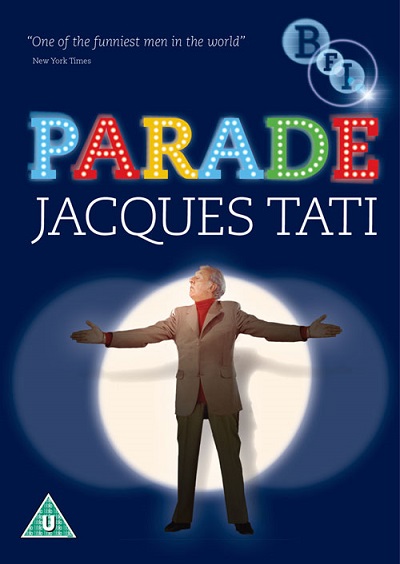
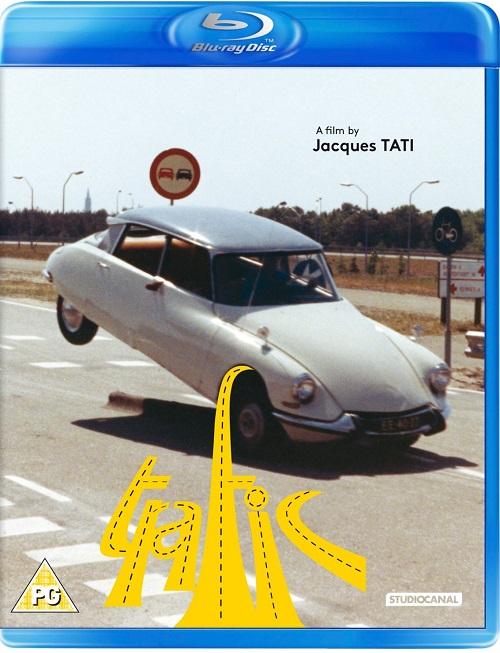
traficTrafic, Jacques Tati (1971, France). Apparently, Tati was only meant to co-direct this, but he fell out with his collaborator and ended up going it alone. He plays a car designer who works for a small French company, and is responsible a gadget-filled saloon car-derived caravanette. The company plans to display this at an automobile show in Amsterdam, and so transport it to the Netherlands in the back of a truck. But the journey doesn’t quite go as planned, as the truck keeps on breaking down. Like Playtime, the plot is carried as much by sound effects as it is by dialogue, and there are a number of impressively choreographed set-pieces. The car company’s PR agent, played by American model Maria Kimberley, is impressively high-handed and incompetent. One of the biggest “gags”, a multi-car pile-up, is spoiled a little by a few elements that are a little too intrusively faked. Not as good as Mon Oncle or Playtime, but still bloody good.

1001 Movies You Must See Before You Die count: 562


2 Comments

Seoul Survivors, Naomi Foyle

seoul_survivorsSome time in the near-future, an asteroid is detected on a collision course with Earth. Its existence is denied by media and governments, but hackers find evidence of the “truth” in military and governmental computer systems. Damien is a slacker who believes in the asteroid. His plan is to find the safest place on the planet and then move there, but to do that he needs money. So he agrees to smuggle drugs into Korea for a friend; and then he stays on in Seoul to earn more cash by illegally teaching English to the kids of rich Koreans.

Sydney is a Canadian prostitute who has been taken to Korea by her boyfriend, Johnny Sandman, and is now working as a model. Johnny, an ex-gangbanger, works for ConGlam, which is some sort of shadowy transnational. One of the projects he is overseeing in Korea is VirtuWorld. This is the brainchild of genetics genius, Dr Kim Da Mi, who also plans to build a faux-European mediaeval theme-park village in the mountains north of Seoul, where her genetically-engineered “children” will survive the impending catastrophe.

Lee Mee Hee is a North Korean villager who has had herself smuggled out of the country. By ConGlam. She is taken to China, where she meets a number of other women from North Korea. After they have recovered from their ordeal, they are taken to the purpose-built village in South Korea, where they are to become surrogate mothers for Da Mi’s “children”. Sydney will be the egg donor and Johnny the father. But Johnny proves to have some genetic abnormalities which rule him out. Damien, who resembles Hugh Grant, is a much better candidate. When he learns of this, Johnny is not happy; he’s also losing Sydney, first to a Korean artist and then to Damien, and he’s not happy about that either.

Seoul Survivors is a readable pacey near-future thriller but it seems a little confused as to what it is actually about. Mee Hee’s narrative is wholly about the village of soon-to-be genetically-engineered children, but Sydney’s story chiefly concerns her love-life. Damien is living the life of an illegal immigrant, saving up for a false passport and an airline ticket to Canada. When Da Mi recruits Sydney to the VirtuWorld project and Sydney persuades Damien to donate sperm, he’s not told the true reason. And the objective of the Virtuworld technology is initially presented as the ProxyBod – real-life avatars put together from corpses and various electronic systems. (Only one ProxyBod appears in Seoul Survivors, and it is used by Da Mi.)

Despite having been published by a genre imprint, Seoul Survivors doesn’t read much like science fiction. The near-future it describes so closely resembles the present, it’s hard to determine exactly what are meant to be genre tropes and what are simply setting. There is a vague move in the direction of one or two science fiction ideas – Da Mi introduces Sydney to a therapeutic VR tool; there’s the ProxyBod; and then there’s the asteroid itself lurking somewhere in the background (or not). The world-building is almost wholly reliant on depictions of present-day Seoul, although there are one or two mentions of climate-crash elsewhere and there’s a terrorist attack offstage in London two-thirds of the way through the story.

Foyle has chosen to present many of her Korean characters as speaking pidgin English throughout – in fact, the first line of the novel is: “‘Ni-suh, Sy-duh-nee – Omhada – look at camera – thank you – better – pro-fesh-ional – Now, play with Hot-Cold, plea-suh!” Though this may give the narrative some verisimilitude, these days it’s a difficult trick to pull off without causing offence. And, annoyingly, Foyle refers to the mobile phone throughout as a MoPho rather than mobile or cell or the actual term the Koreans use (which translates “handy phone”, apparently).

None of this, in and of itself, prevents the book from being readable and entertaining, but the cast are something of an obstacle. Sandman is racist, sexist and violent, thoroughly unpleasant, and responsible for several incidents of sexual violence which leave a sour taste. Damien is passive and not very interesting. Sydney is none too bright, while Mee Hee Lee is unworldly and naive. Even Da Mi is self-centred and arrogant and far from likeable. It’s not a particularly edifying group of characters on which to hang a story.

There’s a feeling throughout Seoul Survivors that it’s a book whose whole is not greater than the sum of its parts. While there are some well-handled set-pieces, the story-arc is sign-posted far too blatantly, and the violent climax comes across as somewhat cartoonish because it tries to resolve all of the narratives at once. The advance publicity calls Seoul Survivors a “cyber thriller”, and it certainly feels more like a thriller than science fiction. Whether this is a strength or a weakness… is hard to say.

Seoul Survivors, Naomi Foyle (2013, Jo Fletcher Books, £16.99, 978-1780875989)

This review originally appeared in Interzone #247, July-August 2013.


1 Comment

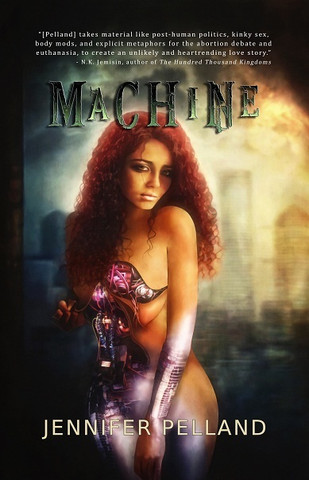
Machine by Jennifer Pelland

machinecover3_largeCelia Krajewski has a fatal genetic condition. Since it’s unique to her it will take some ten years before a cure is possible. Unfortunately, by that point she will have suffered irreparable brain damage. Happily, in the USA of the late twenty-first century, it’s possible to put Celia’s body into stasis until the cure is ready. And so that she does not miss out on her life during that period, her mind can be uploaded into a bioandroid body which mimics her appearance in all particulars.

This decision has unintended consequences: Celia’s wife leaves her, convinced that the bioandroid Celia is not the real Celia. There is a great deal of popular support for this position – so much so, in fact, that those in the bioandroid programme must keep their participation secret or they might be subjected to violence.

It comes as little surprise, then, that Celia begins to doubt her own humanity. She cuts herself, but beneath the skin is some sort of ceramic surface. Unwilling to accept that her identity is unchanged, Celia feels a need to explore her machine self. She visits online clubs where “bot freaks” hang out, and through one meets the Mechanic, a hacker who can give her what she wants. Through him, she meets a group of “mechanicals” who have altered their bioandroid bodies such they they no longer resemble or work like their biological originals. One in particular, called 1101, especially attracts Celia. 1101 has changed its bioandroid body to resemble an artist’s dummy. It recognises no gender, nor its previous humanity. Another, Gyne, has a body that can morph between male and female.

It is the fetishistic side of Celia’s situation which occupies much of the story of Machine. At one point, for example, she accompanies two of the mechanicals as they act as “love doll” prostitutes; and later plays the part of a love doll herself. Machine is at its best when it’s exploring this response to Celia’s machine identity. The exposition explaining the origin of the bioandroid programme is inelegant and unnecessary; and the popular reaction to bioandroids is clearly based on the US’s anti-abortion movement, but still feels a little too arbitrary to convince. In fact, the world-building throughout mostly feels a little too light to really convince. But these are minor quibbles.

There’s a disturbing prurience to the mechanicals and the changes they’ve made of, and the uses to which they put, their new bodies. Rather than explore how her new body makes her stronger, hardier, or no longer requiring food or oxygen, Celia chooses not to make herself more than human, but instead less than human. That she does so by changing her appearance to look less human, and through participation in the sex trade, seems only fitting. In Machine, Pelland has chosen an odd way to explore her theme, and though it’s skillfully done, it’s not an approach that will appeal to everyone.

Machine, Jennifer Pelland (2012, Apex Publications, $14.95, 978-1937009137)

This review originally appeared in Vector 271, Winter 2012.


2 Comments

Moving pictures, #3

Well, my DVD-player decided to pack in. After seven and a half years of hard use. I guess I can’t complain too much. Fortunately, I also have a Blu-ray player, so there was no interruption of service. Having said that, I need to get a new Blu-ray player as the one I have is region-locked, so I can’t watch my Criterion Blu-ray of All That Heaven Allows. Bah. Stupid region-locking.

servantThe Servant*, Joseph Losey (1963, UK). James Fox is an upper crust bachelor, back in London after working abroad. He buys himself a townhouse, and advertises for a manservant. Dirk Bogarde is subsequently hired. Once the house has been decorated, the pair move in. Bogarde arranges for his sister, Sarah Miles, in Manchester to join him as a housekeeper, although the two seem suspiciously close for siblings. Fox’s girlfriend, Wendy Craig, doesn’t like Bogarde – she doesn’t think he’s appropriately servile. Miles and and Fox have sex, Fox comes increasingly under the sway of Bogarde… until their roles are pretty much reversed. Bogarde doesn’t quite convince as a Mancunian, but he plays a servant just on the edge of taking liberties perfectly. A proper creepy little film and worth seeing.

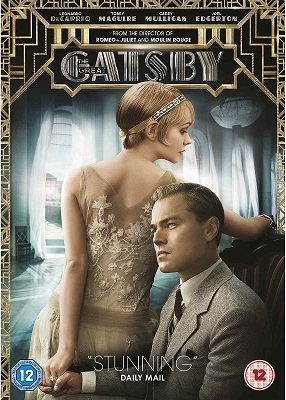
greatgatsbyThe Great Gatsby, Baz Luhrmann (2013, USA/Australia). F Scott Fitzgerald’s novel of the Roaring Twenties, when you think about it, should be pretty much ideal material for Luhrmann’s brand of spectacle. So it’s a bit of a shame that this film felt entirely pointless. Not the story – which everyone knows – but the film’s reason for existing. It didn’t help that I’ve always found both Maguire and DiCaprio a bit bland. And some of the scenery was pure CGI eye-candy, which made everything resemble a cartoon more than a classic of American literature. Nothing felt plausible, so what the story was actually about got lost in the fake world Luhrmann had created – and this is the film of a novel that comments on weighty topics like, to quote the Wikipedia page for the novel, “decadence, idealism, resistance to change, social upheaval, and success”. Disappointing.

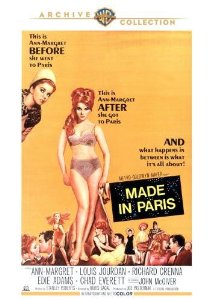
madeinparisMade in Paris, Boris Sagal (1966, USA). A silly sixties rom com starring Ann-Margret and the late Louise Jourdan. Ann-Margret plays a junior fashion buyer for a New York department store, sent for the first time to Paris to sign up fashion designer Jourdan’s latest collection. She discovers that the previous buyer and Jourdan had something of an “arrangement”. Since she has a clean-cut boyfriend back home, and she’s a nice girl, Ann-Margret’s certainly not going to continue it. So a telegram gets sent back home saying she’s falling down on the job. Boyfriend then turns up and jumps to conclusion. Jourdan oozes Gallic charm throughout, Ann-Margret makes a good ingenue… but it’s all just melodramatic froth and chock-full of French stereotypes.

dayofwrathDay Of Wrath, Carl Theodor Dreyer (1943, Denmark). Dreyer’s Gertrud is a film that almost makes my top ten, so I’ve been picking up more of his films to watch. Day Of Wrath was Dreyer’s first film after more than a decade. It was also the first feature film he made in his native Denmark, and only his second with sound. It’s set in a village in 1623. A young woman is married to a pastor a good deal older than herself. When a local old woman is accused of witchcraft, the young woman hides her in the pastor’s house. The pastor’s son returns home from abroad shortly afterwards, and he and his father’s wife begin seeing each other. The wife, whose mother had been accused of witchcraft, but spared because the pastor wanted to marry the daughter, curses her husband. He dies. She’s accused of witchcraft. This is grim stuff, shot in stark black and white, with lots of close-ups of grim-looking faces. Sort of like Bergman, but without the cheerful optimism. I especially like how Dreyer stages his films, so that the sparse sets throw the focus on what’s going on beneath the words. He’s rapidly becoming one of my favourite directors.

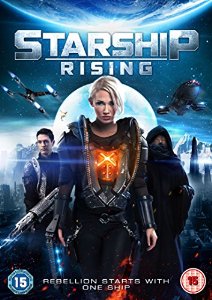
starshiprisingStarship Rising, Neil Johnson (2014, USA). I bunged this on an order because the DVD had a pretty cover and it was cheap. What I didn’t know is that Johnson is a genre feature film cottage industry all his own, and churns out low budget movies like a one-man Global Asylum. He is apparently best known for directing over 500 music videos. Huh. While the CGI in Starship Rising is actually pretty respectable, the sets just about visible underneath look cheap (and badly-lit, to hide how really cheap they are). And the acting is poor, too. So was the script. There was something about a huge warship, which is ordered to destroy Earth, but one of the officers mutinies and, er, lots of other things happened. I will admit I wasn’t concentrating as much as I should have been – maybe there was something interesting happening on Twitter, there was certainly nothing interesting in the movie. One to avoid. There is apparently a sequel due, shot back-to-back with this one, but not yet released.

Devils-DVDThe Devils*, Ken Russell (1971, UK). I’ve actually read Russell’s science fiction novel, Mike And Gaby’s Space Gospel. It was fucking awful. And only the other night, I was flicking through channels and stumbled across The Lair of the White Worm, and after watching Amanda Donohe chew everything in sight, including the scenery and some poor lad’s genitals, while bumbling posh Englishman Hugh Grant played a bumbling posh Englishman, I couldn’t help noting how much of a perv Ken Russell had been (not an original observation, by any means). Which leads me to The Devils, which is the only one of Russell’s 18 feature films (and much more television work) to make it onto the 1001 Movies You Must See Before You Die list. The Devils was very controversial when it was released, probably because it has lots of naked and semi-naked nuns having sex in it. To be honest, it was all a bit much and overwhelmed the story a bit. The sets, however, all buttresses and high walls of white tile, looked pretty cool, and Oliver Reed was on top form. Despite its relentlessness and all those scenes of writhing naked flesh, I thought The Devils pretty good. Might watch some more Russell.

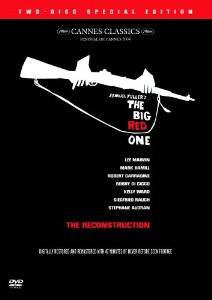
bigredoneThe Big Red One – The Reconstruction*, Samuel Fuller (1980, USA). I’ve mentioned before that I’m not a fan of war movies (and I have far less time for Vietnam War films than I do WWII ones), but there are a handful which are quite good. This, I discovered as I watched it, is one of them. Okay, so Israel makes a poor stand-in for, well, North Africa and most of Europe, and this was clearly a film done on the cheap as even the tight-focus shots couldn’t disguise the paucity of cast members. Not to mention that exactly the same type of tank – Israeli M51 HV tanks, apparently – stood in for all the tanks used during WWII. The film follows a platoon of soldiers from the US Army’s 1st Infantry Division (their badge is a, er, big red 1), led by taciturn sergeant Lee Marvin, as they fight in North Africa, Sicily, Normandy and Germany. The sergeant and four others survive each action, so much so other soldiers assigned to the platoon might as well have worn red shirts. A German Feldwebel pops up at intervals, usually trying to kill Marvin, as a sort of thematic reflection of Marvin’s character. The Big Red One is not a patch on The Thin Red Line, but I did think it better than those huge ensemble war movies they used churn out by the dozen in the 1960s and 1970s, like The Longest Day.

effiebriestEffi Briest, Rainer Werner Fassbinder (1974, Germany). Another film from the Fassbinder collection. The title character is a callow young woman who marries well, to a baron twice her age, but then has an affair with a male friend. Later, the family move to Berlin as the baron has got himself a position in government, but he finds the letters between Effi and her lover – this is many years after the affair finished – and so divorces her. Her parents won’t take her back because her reputation is in tatters. The baron meanwhile challenges the lover and kills him in a duel. Effi succumbs to illness, and her parents let her come home. She dies. There’s much more to it than that, of course, and in many respects the story bears similarities to Gertrud. It was adapted from a 1894 novel, of the same title, about which Thomas Mann apparently said that if a person’s library were reduced to six novels, Effi Briest should be one of them. This film also boasts one of the longest titles in cinema, although it wasn’t used by distributors; it is: Fontane Effi Briest oder Viele, die eine Ahnung haben von ihren Möglichkeiten und Bedürfnissen und dennoch das herrschende System in ihrem Kopf akzeptieren durch ihre Taten und es somit festigen und durchaus bestätigen.

throneofbloodThrone Of Blood*, Akira Kurosawa (1957, Japan). I will admit that Japanese cinema does not appeal to me as much as the cinema of some other countries, and while I’ve watched films by Kurosawa, Ozu and Mizoguchi, I’ve never felt the urge to watch everything in their oeuvres. But it’s no good watching the same sort of stuff all the time, so I occasionally bung a piece of classic Japanese cinema on my rental list… Throne Of Blood is, famously, Kurosawa’s take on Macbeth, and I enjoyed it a lot more than I expected to. That the final scene with the archers, as depicted on the cover of the BFI DVD, really is quite astonishing. The scenes set in the forest looked a bit stagey, but the rest of it – filmed high up on Mount Fuji – looked really effective. I think this is the Kurosawa I’ve enjoyed and appreciated the most of the ones I’ve seen, although – according to my records – the last one I saw before this was Ran in May 2009. I really should watch more of his films.

1001 Films You Must See Before You Die count: 558 (they’re the ones with the asterisked titles)


2 Comments

Reading out loud

One week tomorrow, I’ll be giving a reading at the Sheffield Fantasy & Science Fiction Social Club, along with US author Dana Fredsti. This takes place on Sunday 1 March, from 4 pm onwards, in the Old Queen’s Head (next to Sheffield bus station). There will also be a raffle, with lots of prizes (people rarely go home empty-handed), and plenty of friendly chat. This is the second event put on by SFSF Social – the first was on 24 January and was very successful.

Time permitting, I plan to read a very short excerpt from Apollo Quartet 4 All That Outer Space Allows, and then another very short excerpt from my forthcoming space opera, A Prospect of War. I’ve no idea how well it’ll go – if the Apollo Quartet has taught me not to give books long titles because typing them out all the time is a complete faff, I suspect reading from A Prospect of War will probably teach me to pick character names I can actually pronounce…

So, come along – it costs nowt and it’s an excellent way to spend a Sunday evening.

oldqueenshead


2 Comments

Reading diary, #2

Most of the reading I’ve been doing over the past month or so has been dipping into research books as I wrangle Apollo Quartet 4 into shape. (Not long now. Honest.) So there’s not been that much of yer actual reading of fiction. Except for, well, the following…

The Luck of Brin’s Five, Cherry Wilder (1977). I read this for SF Mistressworks. My review is here.

darebioDan Dare: A Biography, Daniel Tatarsky (2010). Back in the late 1970s, my parents bought me a Hamlyn anthology of Dan Dare stories one Christmas, containing ‘The Red Moon Mystery’ and ‘Safari in Space’, both of which remain my favourite Dare stories. Several years ago, I collected the full set of Hawk Publishing Dan Dare reprints (see here). So when a “biography” of Dare was published a couple of years ago, I picked up a copy. And… it’s not very good. The book tells the story of Marcus Morris and Frank Hampson, and how Eagle was begun. But the writing throughout is terrible, and I spotted several inaccuracies (on things not related to Eagle, to be fair). There are some nice colour plates, particularly of the mock-ups of the first issue, and a useful appendix giving plot summaries of all the Dan Dare stories published in Eagle. But there are better books about Hampson, and reading about Dan Dare is no substitute for reading the actual Dan Dare comic strips.

whatdoctororderedspread0What The Doctor Ordered, Michael Blumlein (2013). I’ve been a fan of Blumlein’s fiction since first reading him in Interzone back in the 1980s. Unfortunately, he has not been exactly prolific – three novels to date, and What The Doctor Ordered is only his second collection after 1990’s The Brains of Rats. Which doesn’t mean there aren’t a few stories still uncollected. What The Doctor Ordered collects fourteen stories, dating from 1997 to 2012, and originally appearing in a variety of venues, such as F&SF, Asimov’s, Flurb and a handful of original anthologies, mostly horror or dark fantasy. The one thing I’d forgotten during all the years I’d not read Blumlein was how bloody good he is. His three novels are all too different to really get a handle on him as a novel writer. But his short fiction really is very, very good. Best story in here is ‘Isostasy’, although ‘The Roberts’ is also excellent. Blumlein’s fiction is unsettling in ways that I think few authors manage to be. His prose is clinical and sharp, and he paints realistic pictures… into which he drops something fantastical that nonetheless manages to fit in. And then he twists it in ways that makes it seem all the more uncomfortable. One of the best collections I’ve read in recent years.

catseyeCat’s Eye, Margaret Atwood (1988). The narrator of this novel is a middle-aged artist, Elaine, who has returned to Toronto to attend a retrospective of her career. This triggers a series of long extended flashback sequences, in which she remembers her childhood in the city, particularly her friendship with three schoolfriends, one of whom was a cruel bully; but she also remembers her college years and her early years as an artist. That bullying schoolfriend, Cordelia, haunts Elaine, even in the present – although the tables did eventually turn, and while Elaine never bullied Cordelia to the extent she was bullied herself, Elaine does recount how Cordelia unravelled over the years and eventually ended up in a sanatorium. If Cordelia’s decline is signposted throughout the novel, then I missed most of it, though her fall as an ironic mirror image of Elaine’s rise to success did seem a little too obvious. Cat’s Eye was a surprisingly easy read, and if the early chapters, detailing Elaine’s childhood, were a little grim and hard to take in places, there was plenty more in the novel to balance them. Worth reading.

Cautionary Tales, Chelsea Quinn Yarbro (1978). Another book read for review on SF Mistressworks. My review is here.

raj4A Division Of The Spoils, Paul Scott (1974). The fourth book of the Raj Quartet, and the war is over in Europe, the Americans have dropped their atom bombs, but there is still Malaysia to be taken back from the Japanese. In India, demission of power from the UK is a certainty – the socialist government back home are focusing on domestic issues, and are not interested in Empire. This novel introduces Guy Perron, played by Charles Dance in the TV adaptation (and probably the character most remembered after Timothy Piggot-Smith’s Ronald Merrick), who despite his privileged background has managed to stay a sergeant throughout the war. He meets Merrick, who is now a major dealing with the Indian army deserters who joined the Germans and Japanese, and is detached to his staff. Through Merrick, he also meets Sarah Layton, whose narrative figured prominently in both The Day Of The Scorpion and The Towers Of Silence. Also prominent in the narrative is Nigel Rowan, who made a brief appearance in one of the earlier books. Rowan and Perron are old school-mates, as was Hari Kumar – whose false imprisonment as a political detenu by Merrick, who is wrongly convinced Kumar raped Daphne Manners (the events surrounding this form the core of the first book, The Jewel In The Crown). Through Rowan, Perron and the Laytons, Scott examines the route to independence and its effect on Britons living in India, weaving in and out of the plot of the preceding three books as they relate to Perron, Rowan and Sarah Layton (the TV adaptation went for a straight chronological structure, and misses a lot of the books’ arguments and subtleties). Scott is quite scathing in his critique of the Raj, and of the British who ruled India. It’s not hard to understand why these four books are considered classics, they’re certainly amongst the best post-war British literature I’ve read. I suspect I’ll be rereading them again one day.

screamingplanetAlexandro Jodorowsky’s Screaming Planet, Alexandro Jodorowsky & various artists (2013). I’m a fan of Jodorowsky’s films and bandes dessinée, but I knew nothing about this title when I bought it. Still, Jodorowsky… It proved to be a linked anthology of short pieces, written by Jodorowsk but drawn by a variety of artists, which featured in the relaunched Métal Hurlant. A sentient planet is mistreated by its natives so badly it somehow makes them build an enormous metal head, into which it decants its personality, and which is then blasted into space – this is the “screaming planet”. And as it journeys through the cosmos, it passes by other worlds and its presence affects one or more people on those worlds. The story themselves are linked only by the giant head passing in the sky. Some work better than others. This is minor Jodorowsky – although he does confess in an introduction that he is used to working at longer lengths and found writing these “short stories” challenging.


2 Comments

BSFA and Kitschies – the shortlists

Two genre shortlists announced in one day, UK ones too. First, the BSFA Awards, for which I nominated works (see here), and usually vote. The four shortlists look like this:

Best novel
The Race, Nina Allan (NewCon Press)
Cuckoo Song, Frances Hardinge, (Macmillan)
Europe in Autumn, Dave Hutchinson (Solaris)
Wolves, Simon Ings (Gollancz)
Ancillary Sword, Ann Leckie (Orbit)
The First Fifteen Lives of Harry August, Claire North (Orbit)
Lagoon, Nnedi Okorafor (Hodder)
The Moon King, Neil Williamson (NewCon Press)

Well, three of my nominations made it – Hutchinson, North and Williamson. The Allan and and Leckie are no surprise – the first because it’s probably the most talked-about UK sf novel of 2014 among the people who nominate for the BSFA, and the Leckie because of Ancillary Justice‘s huge success. Also, is this the first time the BSFA Award has more women than men on the novel shortlist? I think it might well be. The large shortlist does, however, suggest that the actual number of nominations to make it through were somewhat low. Which, if true, is in one respect slightly worrying, but also heartening in that it demonstrates last year was pretty damn good for UK sf novels.

Best short fiction
‘The Honey Trap’, Ruth EJ Booth (La Femme, Newcon Press)
‘The Mussel Eater’, Octavia Cade (The Book Smugglers)
Scale Bright, Benjanun Sriduangkaew (Immersion Press)

None were nominated by myself. In fact, I’ve read none of them. An all-female list, too. The less said about Sriduangkaew’s presence, the better.

Best non-fiction
Call and Response, Paul Kincaid (Beccon Publications)
‘Deep Forests and Manicured Gardens: A Look at Two New Short Fiction Magazines’, Jonathan McCalmont (Ruthless Culture)
Science Fiction and Fantasy Writers and the First World War website, Edward James, ed.
‘The State of British SF and Fantasy: A Symposium’, Strange Horizons
Greg Egan, Karen Burnham (University of Illinois Press)

Surprisingly, two of my nominations made it through – Kincaid and Strange Horizons – and while I nominated another blog post from Ruthless Culture, it’s good to see McCalmont getting some recognition.

Best artwork
Cover of The Mirror Empire by Kameron Hurley, Richard Anderson (Angry Robot Books)
Cover of Bête by Adam Roberts, Blacksheep (Gollancz)
The Wasp Factory sculpture, Tessa Farmer
Cover of Wolves by Simon Ings, Jeffery Alan Love (Gollancz)
Cover of Mars Evacuees by Sophia McDougall, Andy Potts (Egmont)

Another surprise: two of my choices made it onto the shortlist. I didn’t attend Loncon3, so I didn’t see the Wasp Factory sculpture. Blacksheep won the BSFA in 2013, for the cover of… an Adam Roberts novel (and this is Blacksheep’s third time on the shortlist with a Roberts cover). The Mirror Empire has been much discussed since its publication, although I admit I can’t see the appeal of its cover art. And I see there’s now a hardback edition of Mars Evacuees (US, perhaps?), with much inferior cover art.

Congratulations to all the nominees, and I know who I hope will win each category.

The other UK genre award announced today is the Kitschies, a juried award, which also has four categories: Red Tentacle (novel), Golden Tentacle (debut novel), Inky Tentacle (cover art) and, new this year, Invisible Tentacle (“natively digital” fiction). The shortlists look like this:

The Red Tentacle
Lagoon, Nnedi Okorafor (Hodder & Stoughton)
Grasshopper Jungle, Andrew Smith (Egmont)
The Peripheral, William Gibson (Viking)
The Way Inn, Will Wiles (4th Estate)
The Race, Nina Allan (NewCon Press)

I’ve read only the Allan and I didn’t think it quite gelled as a novel – which was why I didn’t nominate it for the BSFA.

The Golden Tentacle
Viper Wine, Hermione Eyre (Jonathan Cape)
The Girl in the Road, Monica Byrne (Blackfriars)
Memory of Water, Emmi Itäranta (Voyager)
The Long Way to a Small, Angry Planet, Becky Chambers (self-published)
The People in the Trees, Hanya Yanagihara (Atlantic Books)

I’ve heard of the Byrne and Itäranta, but the others didn’t even ping on my radar. The Guardian is making a big thing of a self-published novel being shortlisted for the award, conveniently forgetting that a self-published novel won the Aurealis Award for Best Fantasy Novel in Australia last year and a self-published novella won the BSFA in 2013. Oh well, yesterday’s news and all that.

The Inky Tentacle
Cover of The Ghost of the Mary Celeste by Valerie Martin, X (Weidenfeld & Nicolson)
Cover of A Man Lies Dreaming by Lavie Tidhar, Ben Summers (Hodder & Stoughton)
Cover of Through the Woods by Emily Carroll, Emily Carroll and Sonja Chaghatzbanian (Faber and Faber)
Cover of The Book of Strange New Things by Michel Faber, Rafaela Romaya and Yehring Tong (Canongate)
Cover of Tigerman by Nick Harkaway, Glenn O’Neill (William Heinemann)

The only one of these I own is the Tidhar, and  didn’t really like the cover (I liked the book, though). The Faber and Harkaway I’ve seen.

The Invisible Tentacle
@echovirus12 (Twitter fiction), created/curated by Jeff Noon (@jeffnoon), Ed (@3dgriffiths), James Knight (@badbadpoet), violet sprite (@gadgetgreen), Richard Biddle (@littledeaths68), Mina Polen (@polen), Uel Aramchek (@ThePatanoiac), Graham Walsh (@t_i_s_u), Vapour Vox (@Wrong_Triangle)
Kentucky Route Zero, Act III, Cardboard Computer
80 Days, Inkle Studios
Sailor’s Dream, Simogo

Again. congratulations to all the nominees.


4 Comments

The bookcase is not enough

I was very good in January and purchased only three books, but then I went a little mad once February started. So while the TBR actually shrank during the first month of the year, I’m not sure it will do so this month. I was finding it increasingly difficult to track down copies in good condition of the specific paperback editions of DH Lawrence’s books that I’m collecting – which was not made easier by the big secondhand book sellers on eBay putting up photos of different editions to the ones they were actually selling… But then I discovered that during the fifties, sixties and seventies, Heinemann had published a set of, I think, twenty-six “Phoenix Edition” hardbacks of Lawrence’s books. And there just happened to be someone on eBay selling ten of them as a job lot for a reasonable price… And I bought another one too. Now I’ve got eleven of the books, of course, I’ve got no room for them. So it goes.

2015-02-09 12.38.37

There’s a tale and a half to tell about The Adventures of Blake & Mortimer 19: The Time Trap and Amazon Logistic’s inept attempts to deliver it – suffice it to say, I ended up with three copies of the book (one of which is in Denmark). It’s an early story from the series, and not as good as later ones. I’ve been waiting a couple of years for the third volume of The Secret History, so I’m glad it’s finally available. Might have to reread the first two volumes first, though, to remind me of the story… And finally, well, Jodorowsky – what more needs to be said? Jodorowsky’s Screaming Planet is new to me. It’s apparently ten stories Jodorowsky was commissioned to write for Métal Hurlant. I have the first volume of the Megalex series, but the subsequent instalments never appeared in English. I was planning on getting the lot in French, but then Humanoids went and published an English-language omnibus,  Megalex: The Complete Story. Might still the get the French editions one day, though.

2015-02-07 13.28.29

After buying the Phantasia Press editions of The Pride of Chanur and Chanur’s Venture a few months ago after one too many glass of wine, and then discovering that several years ago I’d bought a signed first edition of Chanur’s Legacy, the final book of the quintet (published by DAW but never in a Phantasia Press edition)… Well, I just had to complete the set, didn’t I? So The Kif Strike Back and Chanur’s Homecoming; both of which will, of course, be reviewed on SF Mistressworks some time this year. I have been somewhat lax over the last year or so in keeping up with the SF Masterwork series, chiefly because many of the more recent books have either been reprints from the original series, or are of books I’ve previously read and am not bothered about owning a copy… But but but Heinlein, I hear you cry. Well, I’ve never actually read Double Star, and the last SF Masterwork I bought was the Tiptree collection, so I think it’s allowed. Edge of Dark is an ARC from Pyr, which I reviewed for Interzone. It was a bit meh – as you will no doubt learn should you subscribe to Interzone. Children of the Thunder and Around the World in 80 Days were both charity shop finds.

2015-02-07 13.29.00

I’m a fan of Terrence Tiller’s poetry and have several of his collections, so I was quite chuffed when Unarm, Eros popped up on eBay. It’s also a review copy, and includes the review slip… from 15th January 1948.

2015-02-07 13.29.46

I read Farrell’s The Siege Of Krishnapur over Christmas 2013 and was much impressed, so when I spotted The Hill Station in a charity shop it was an easy decision to buy. I plan to read more Farrell. America Pacifica was, I seem to recall, one of those literary novels that borrows from science fiction and which was talked about a couple of years ago. It was also a charity shop find. A Girl Is a Half-formed Thing was a charity shop find too, and another book I remember being highly praised. Credit Title is by one of the authors from my informal project to read some postwar British fiction by women writers – GB Stern is Gladys Bronwyn Stern – and I suppose I should have guessed from the cover art, but the book cover flap describes Credit Title as a “junior novel”.

2015-02-07 13.30.23

I mentioned the DH Lawrence Phoenix Editions earlier, and here are the eleven volumes I now own, in all their green-jacketed glory. They are: 1 Women in Love, 3 Aaron’s Rod, 5 The White Peacock, 7 The Trespasser, 9 Sons and Lovers, 14 The Short Novels Volume 1, 15 The Short Novels Volume 2, 16 Twilight in Italy, 22 Lady Chatterley’s Lover, 23 Fantasia of the Unconscious & Psychoanalysis and the Unconscious, and 26 The Boy in the Bush. I will certainly be tracking down more…

2015-02-07 13.31.05

I found some illustrations from Beyond Tomorrow online on some blog, and liked them enough to hunt down a copy of the book. It took a while, as it’s quite hard to find. But I managed it. I might well write about it at some point. Postscripts 32/33 Far Voyager is the latest “issue” of the magazine that became an anthology, and I’m in it. In fact, it’s my story which provided the title for the book. The Master Mariner: Running Proud is a favourite novel. A signed first edition popped up on eBay, so I bought it… only to discover I already had a signed first edition. Ah well. At least this new copy is in much better condition. And I guess I now have a signed first edition of The Master Mariner: Running Proud for sale. The Planet on the Table is also signed, but the only edition I already owned was a paperback, so that’s all right. It could do with a new jacket, however.